
Haunted Places in Northern Ireland: A First-Hand Guide to Castles, Gaols, and Ghost Stories
| Northern Ireland’s most haunted places include Crumlin Road Gaol in Belfast, Ballygally Castle Hotel in Antrim, Dunluce Castle on the Causeway Coast, Grace Neill’s pub in Donaghadee, and the Dark Hedges in Antrim. Most are free or low-cost to visit, and several offer guided paranormal tours. The best time to visit is October, when Derry’s Samhain festival transforms the city into one of Europe’s largest Halloween celebrations. |
What You Will Find in This Guide
- Why Northern Ireland is a world-class dark tourism destination
- What dark tourism means and how Irish folklore shapes it
- How to plan a haunted Northern Ireland road trip, step by step
- 19 haunted places with first-hand notes, parking, tickets, accessibility, and nearby dining
- Where to stay, including genuinely haunted castle hotels
- Connections to Titanic Belfast and free attractions
- Haunted Places in Northern Ireland: A First-Hand Guide to Castles, Gaols, and Ghost Stories
- What You Will Find in This Guide
- Why Northern Ireland Is a Dark Tourism Destination You Cannot Ignore
- What Is Dark Tourism in Ireland?
- How to Plan a Haunted Northern Ireland Road Trip
- 1. Grace Neill's Pub, Donaghadee, County Down
- 2. Crumlin Road Gaol, Belfast
- 3. Ballygally Castle Hotel, County Antrim
- 4. Dunluce Castle, County Antrim
- 5. The Dark Hedges, County Antrim
- 6. Carrickfergus Castle, County Antrim
- 7. The Giant's Ring, Belfast
- 8. Tollymore Forest Park, County Down
- 9. Castle Ward, County Down (Winterfell)
- 10. Springhill House and Gardens, County Londonderry
- 11. Crom Estate, County Fermanagh
- 12. Cairndhu House, Larne, County Antrim
- 13. Scrabo Tower, Newtownards, County Down
- 14. Rathlin Island, County Antrim
- 15. Black Nun's Grave, Ballycastle, County Antrim
- 16. Newcastle Harbour, County Down
- 17. The White Horse Hotel, Derry / Londonderry
- 18. Antrim Castle and Gardens, County Antrim
- 19. Conway Mill, Belfast
- Connecting Northern Ireland's Haunted Sites to Wider Experiences
- Free Things to Do in Northern Ireland
- Where to Stay Near Northern Ireland's Haunted Places
- Irish Folklore and Why Northern Ireland's Places Feel Haunted
- Frequently Asked Questions About Haunted Places in Northern Ireland
- Explore More Irish Culture, Folklore, and Travel
Why Northern Ireland Is a Dark Tourism Destination You Cannot Ignore
Haunted places in Northern Ireland are not a niche interest. They sit at the intersection of ancient Irish folklore, medieval castle ruins, Victorian institutions, and a very recent history of political conflict that is still within living memory. Almost nowhere else in Europe layers those things so densely in such a small geography.

I have been to every location in this guide more than once, often bringing friends and visitors from overseas with me. Some places send a genuine chill down the spine the moment you step inside. Others are deeply atmospheric without a ghost in sight. All of them have stories worth knowing.
This guide covers 19 of the most haunted places in Northern Ireland. For each one you will find the ghost story, the actual history behind it, practical visitor information including parking for both able-bodied and disabled visitors, ticket costs, accessibility notes, and places to eat within reach. Whether you are a serious ghost hunter, a dark tourism traveller, or simply someone who finds history most compelling when it has an edge, there is something here for you.
| What are haunted places in Northern Ireland? Haunted places in Northern Ireland are historic sites associated with ghost sightings, paranormal activity, or Irish folklore traditions around the supernatural. They include medieval castles such as Dunluce and Carrickfergus, Victorian institutions such as Crumlin Road Gaol, ancient Neolithic monuments such as the Giant’s Ring, and atmospheric pubs and manor houses. Northern Ireland has a particularly dense concentration of such sites because of its layered history: thousands of years of Celtic settlement, centuries of plantation and conflict, and a 20th-century political conflict that left deep marks on its buildings and communities. |


What Is Dark Tourism in Ireland?
Dark tourism is travel to places associated with death, tragedy, suffering, or the supernatural. Ireland, both North and South, is one of the world’s most naturally suited dark tourism destinations, a fact recognised by researchers at the Institute for Dark Tourism Research at the University of Central Lancashire.
| Dark tourism: a definition Dark tourism refers to the practice of visiting sites associated with death, atrocity, tragedy, or the paranormal. In the Irish context it encompasses medieval battlefields, famine-era workhouses, political prisons, haunted castles, and ancient burial grounds. Ireland’s deep tradition of Irish folklore, particularly around banshees, fairy forts, and cursed landscapes, gives its dark tourism sites an additional mythological dimension not found in most European destinations. |
What distinguishes Northern Ireland specifically is the layering of this ancient Irish folklore tradition over a more recent and raw history of political violence. When you walk Crumlin Road Gaol you are not just exploring a Victorian prison. You are standing in a place where real people were hanged, where political prisoners lived through one of Europe’s longest modern conflicts, and where the weight of that is still palpable in the stone. Ghost stories here are sometimes not about the supernatural at all. They are a community’s way of keeping certain histories alive.
How to Plan a Haunted Northern Ireland Road Trip
A well-planned circuit of Northern Ireland’s haunted highlights takes three to four days from Belfast. Here is a practical sequence that works well for visitors arriving by air:
- Fly into Belfast City Airport (George Best, BHD) for city-centre arrivals, or Belfast International Airport (BFS) for more flexibility. Both have car hire desks at the terminal. A car is strongly recommended for visiting most sites outside Belfast.
- Base yourself in Belfast for nights one and two. This gives easy access to Crumlin Road Gaol, the Giant’s Ring at Shaw’s Bridge, Conway Mill on the Falls Road, and any Shadow Hunters NI events at the Belfast Barge or Downpatrick Railway Museum.
- On day two, drive the Causeway Coastal Route north. Stop at Carrickfergus Castle on Belfast Lough, continue to Cairndhu House near Larne for a roadside view, then on to Ballygally Castle Hotel (consider an overnight stay here), and finish at Dunluce Castle near Bushmills.
- On day three, start at the Dark Hedges on Bregagh Road before 8am to beat the crowds. Then head west toward Crom Estate in Fermanagh if time allows, or south toward County Down.
- Spend your final day in County Down: Tollymore Forest Park in the Mournes, Newcastle Harbour, Grace Neill’s pub in Donaghadee, and Castle Ward on Strangford Lough.
- Before you travel, check the Shadow Hunters NI schedule at shadowhuntersni.com. Their public paranormal investigation nights at the Belfast Barge and Downpatrick Railway Museum sell out well in advance, particularly around October.
1. Grace Neill’s Pub, Donaghadee, County Down
Grace Neill’s Pub in Donaghadee, is Ireland’s oldest pub, established in 1611 under the name The King’s Arms. It has been serving locals, travellers, smugglers, sailors, and the occasional ghost for over four centuries.
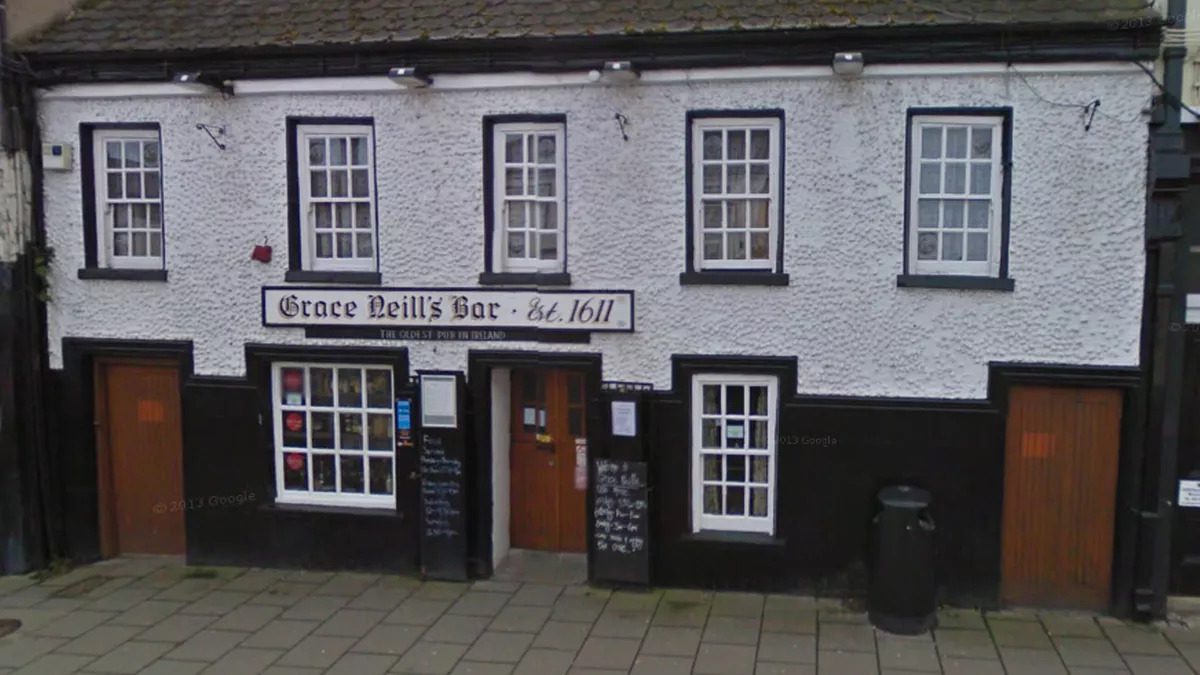

Grace Neill herself ran the inn through much of the 19th and 20th centuries and is said to keep an active eye on proceedings from beyond the grave. Staff report glasses and books moving on their own and lights switching on and off without explanation.
The pub’s authenticated historical visitors read like a curiosity cabinet: author Daniel Defoe, composer Franz Liszt, and Peter the Great of Russia have all been documented here. Paranormal interest aside, it is a genuinely excellent place to eat and drink, with a bistro serving modern locally sourced food, a beer garden with an open fire, and live music most weekends.
| Address | 33 High Street, Donaghadee, County Down, BT21 0AH |
| Opening hours | Mon-Wed 11:30am-11pm | Thu 11:30am-midnight | Fri-Sat 11:30am-1am | Sun 11am-11pm |
| Food served | Mon-Thu 12pm-9pm | Fri-Sat 12pm-9:30pm | Sun 11am-8pm |
| Entry | Free (pub and restaurant) |
| Parking | Street parking on High Street and at Donaghadee Harbour car park, a short flat walk and accessible for wheelchair users |
| Accessibility | The original front snugs have a step. The main bistro area is more accessible. Contact the pub in advance if you have specific mobility requirements. |
2. Crumlin Road Gaol, Belfast
Crumlin Road Gaol, known locally as the Crum, opened in 1845 and operated as a working prison for 150 years until 1996. Designed by Sir Charles Lanyon, the Victorian architect responsible for much of Belfast’s civic infrastructure, it held everyone from child prisoners and suffragettes to republican internees and loyalist paramilitaries. Seventeen people were executed here between 1854 and 1961.
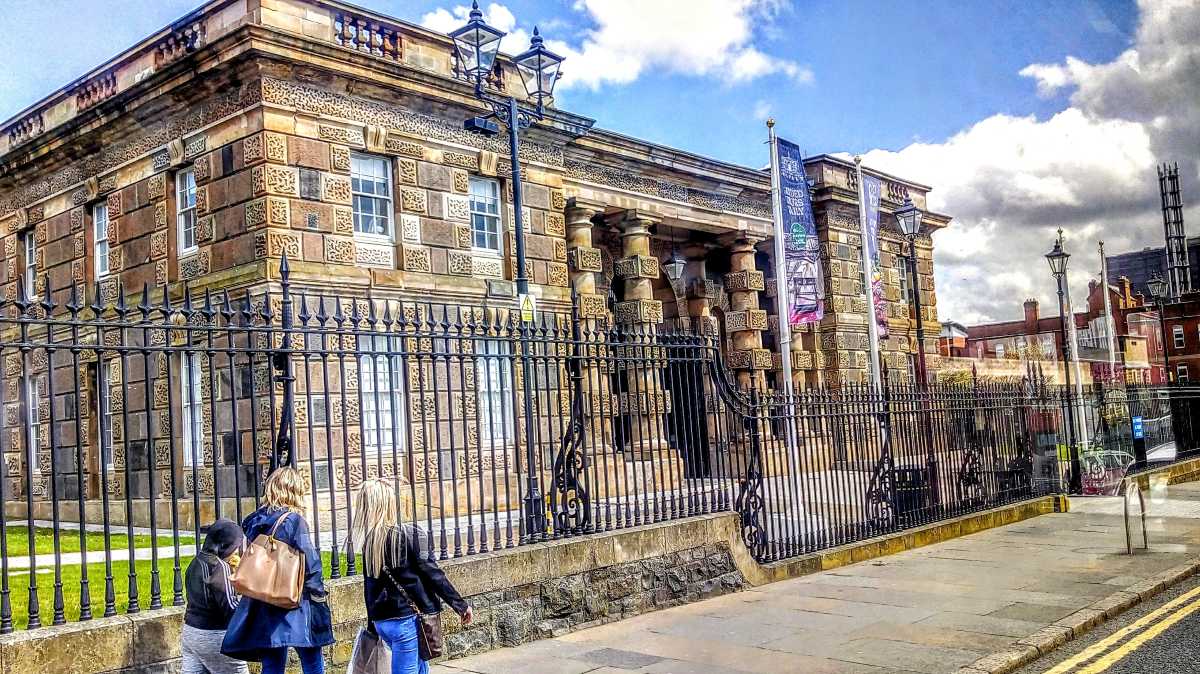
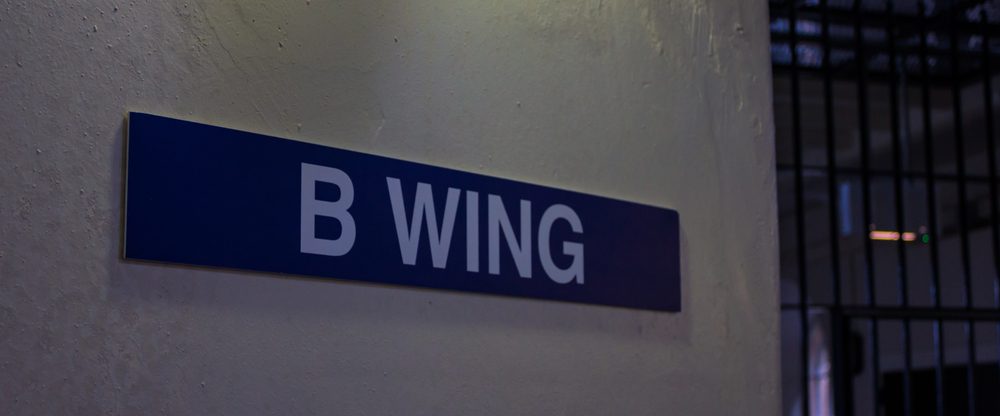
The experience of walking its echoing wings, standing in the condemned man’s cell, and descending the tunnel beneath the Crumlin Road is genuinely affecting. Regular paranormal investigation events are held here. Since April 2024 the A-Wing also houses the McConnell’s Irish Whisky distillery, a GBP 12 million development with its own tours and cocktail bar, which adds an unexpected pleasure to the visit.
Accessibility across most of the site is excellent: ramps, lifts, disabled car parking, and BSL video guides are all provided. The only area not wheelchair accessible is the tunnel, for which a video alternative is offered. Carers enter free.
On site dining includes The Cuffs Bar and Grill and The Yard Cafe, both within the gaol grounds. The McConnell’s distillery bar adds a third option.
| Address | 53-55 Crumlin Road, Belfast, BT14 6ST |
| Opening hours | Mon-Fri 10:30am-3:30pm last entry | Weekends 10am-4pm last entry |
| Tickets | Adult approximately GBP 17.50-18.50 for self-guided experience. Check crumlinroadgaol.com before travel as prices update regularly. Book online to avoid disappointment. |
| Parking | Free on-site parking via Cliftonpark Avenue and Summer Street entrances. Disabled parking bays on site. |
| Public transport | Translink Metro 57 and 12B stop outside the gaol Mon-Sat. Sunday: use 12A, alight at Carlisle Circus (short walk). |
| Accessibility | Ramps and lifts throughout. Disabled toilets. Wheelchairs available to borrow (GBP 10 deposit, book in advance). Tunnel not accessible; video provided. BSL video guides available. Carers free. |
| On-site dining | The Cuffs Bar and Grill | The Yard Cafe | McConnell’s Whisky distillery bar |
3. Ballygally Castle Hotel, County Antrim
Built in 1625, Ballygally Castle is Northern Ireland’s only 17th-century castle still in use as a hotel. It sits on the Causeway Coastal Route, 26 miles north of Belfast, with views across Ballygally Bay to the Irish Sea and, on clear days, the Mull of Kintyre.
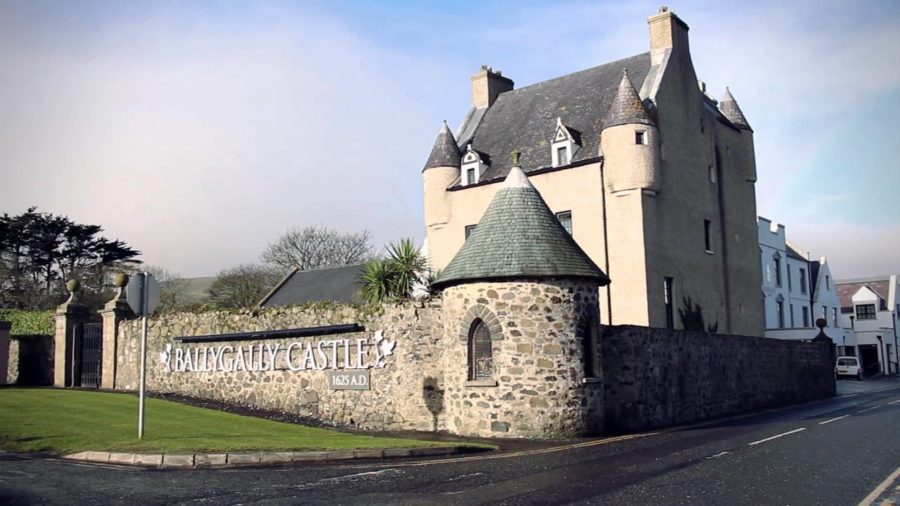
The resident ghost is Lady Isabella Shaw, imprisoned in the tower by her husband Lord Shaw when she gave birth to a daughter rather than the son he demanded. He took the baby and locked her in the tower room. She fell from the window trying to reach her child. Guests report knocking on their door in the night with nobody on the other side, icy cold patches in the tower corridor, and the figure of a woman in period dress.
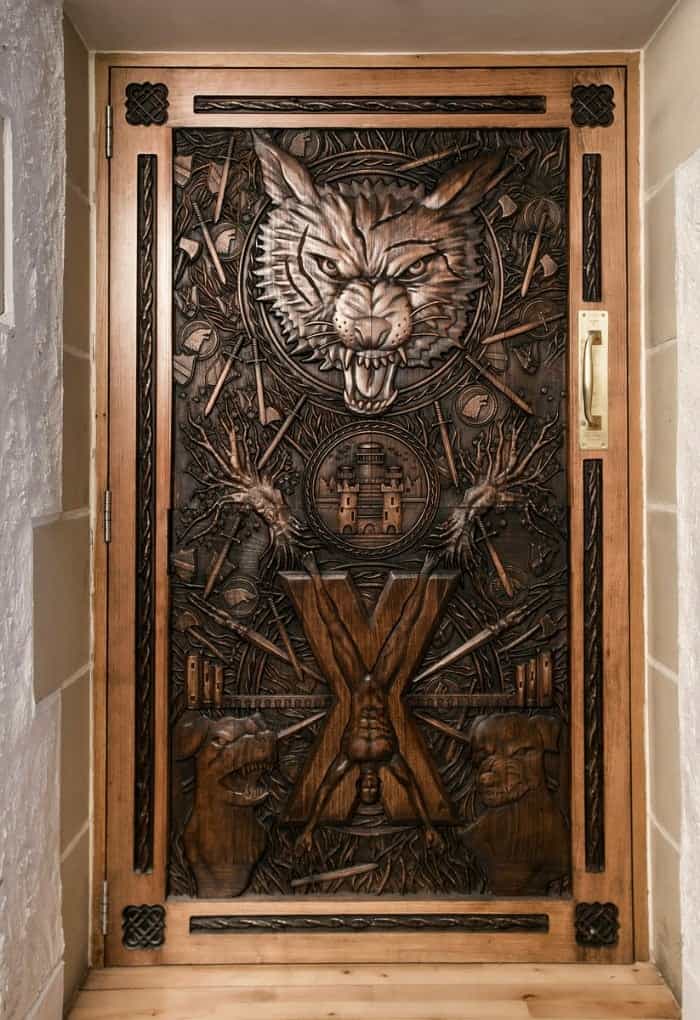
The hotel leans into its haunted reputation with a dedicated Ghost Room open around the clock. The Garden Restaurant serves lunch and evening dining using local produce, with afternoon tea in the lounge and a renowned Sunday buffet. Inside the hotel you will also find one of the carved Game of Thrones Doors, part of the Doors of Thrones passport trail along the Causeway Coastal Route.
| Address | Coast Road, Ballygally, Larne, BT40 2QZ |
| Parking | Free on-site car park with 70 spaces, disabled bays, and EV charging points |
| Accessibility | 2 fully accessible bedrooms with wet rooms. Facilities for disabled guests throughout. Contact res@bgc.hastingshotels.com in advance to discuss requirements. |
| Dining | The Garden Restaurant (lunch and evening) | Afternoon tea in the lounge | Sunday buffet in the River Room. Open to non-residents. |
| Ghost Room | Open to all guests 24 hours a day |
4. Dunluce Castle, County Antrim
Perched on a basalt stack above the Atlantic, Dunluce Castle is one of the most photographed ruins in Ireland and among the most atmospheric. The castle dates from the 13th century and was the seat of the MacDonnell clan. In 1639 part of the kitchen collapsed into the sea during a storm, killing the entire kitchen staff inside.
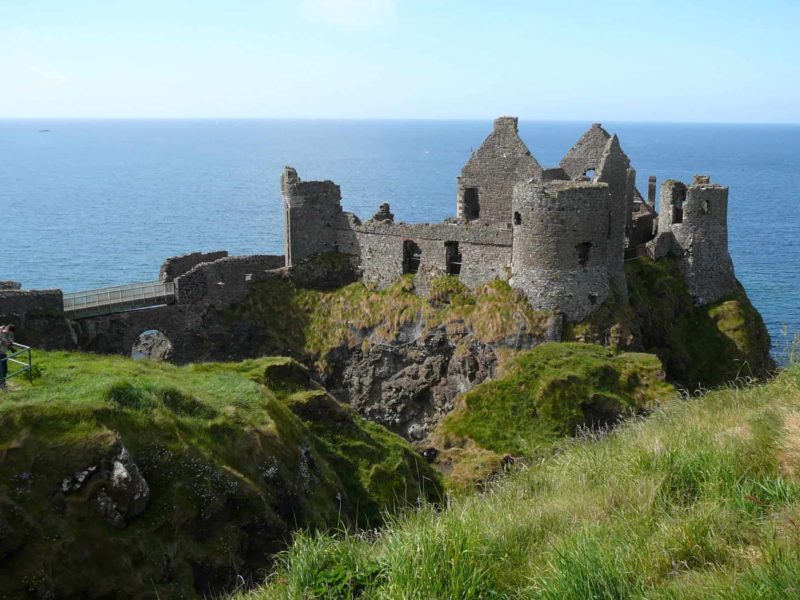

The legends of Dunluce involve ghostly sailors and a banshee who wails from the cliffs before disasters at sea. The combination of crashing waves, exposed wind, and sheer cliff-edge drama makes this one of those places that feels genuinely unsettling regardless of whether you believe in ghosts. The visitor centre on site has strong exhibitions on the castle’s history, and the coastal path is part of the wider Causeway Coastal Route walking trail.
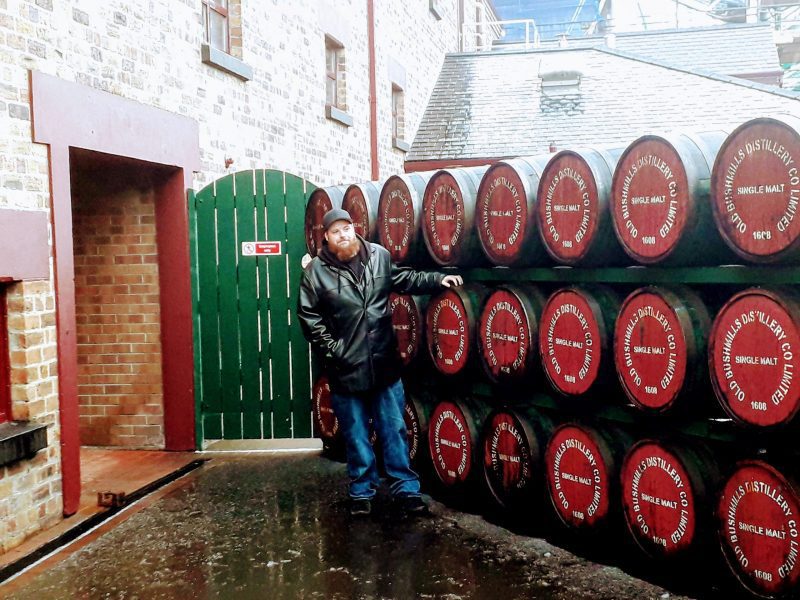
Bushmills village, less than a mile away, has the Old Bushmills Distillery (the world’s oldest licensed whiskey distillery, founded 1608) and the outstanding Bushmills Inn restaurant, one of the finest dining experiences in Northern Ireland.
| Address | 87 Dunluce Road, Bushmills, BT57 8UY |
| Tickets | Check nidirect.gov.uk for current admission prices. Managed by Historic Environment Division, Department for Communities. |
| Parking | Car park on site off Dunluce Road. Accessible parking bays available. The path to the castle involves steps; contact the site before visiting if you have mobility requirements. |
| Nearby dining | The Bushmills Inn (0.8 miles): one of Northern Ireland’s finest restaurants in a beautifully restored coaching inn. The Old Bushmills Distillery also offers tours and tasting experiences. |
5. The Dark Hedges, County Antrim
The Dark Hedges are a tunnel of intertwined beech trees planted by the Stuart family in the 18th century along Bregagh Road near Armoy. They became internationally famous as the King’s Road in HBO’s Game of Thrones, but the ghost story predates Westeros by centuries.

The Grey Lady is said to appear at dusk, gliding silently along the road before vanishing at the final tree. She is believed to be the spirit of a servant girl who died nearby. The site is free to visit. Arrive before 8am or after 7pm in summer for the best atmosphere and to avoid the coach tour crowds, which can be significant at peak times.
| Address | Bregagh Road, Armoy, Ballymoney, BT53 8PX |
| Entry | Free, open at all times |
| Parking | Small car park at the Hedges Hotel on Dark Hedges Road. On-street parking on Bregagh Road is limited. Road surface is uneven; accessible visitors should note this. |
| Nearby dining | The Hedges Hotel on Dark Hedges Road serves food and is a convenient stop before or after your visit. |
6. Carrickfergus Castle, County Antrim
Carrickfergus Castle stands on the shore of Belfast Lough and is one of the best-preserved Norman castles in Ireland, begun by John de Courcy around 1177. It has been garrisoned almost continuously for seven centuries, seen off French, Scottish, and English forces, and watched King William III land on its shore in 1690.


Its ghost is a soldier known as Buttoncap, the nickname given to a man called Jennings. A soldier named Robert Rainey attacked a man he believed had been with his fiancee, only to discover he had the wrong target. Jennings survived long enough to name Rainey and swear he would haunt the castle forever. Shadowy figures in military uniform have been reported in the lower sections of the castle by visitors and guides alike.
| Address | Marine Highway, Carrickfergus, BT38 7BG |
| Tickets | Check nidirect.gov.uk for current admission prices. Managed by Historic Environment Division. |
| Parking | Pay and display car parks along Marine Highway and in Carrickfergus town centre. Disabled bays available on the waterfront. |
| Accessibility | Main courtyard and ground floor accessible. Contact site for full accessibility details before visiting. |
| Nearby dining | A range of cafes and pubs along the High Street and waterfront in Carrickfergus town centre. |
7. The Giant’s Ring, Belfast
| What is the Giant’s Ring? The Giant’s Ring is a Neolithic henge monument in the Shaws Bridge area of south Belfast, dating to approximately 2700 BC. It consists of a roughly circular earthwork bank enclosing about four hectares, with a megalithic dolmen at its centre made of five stones. It is one of the most significant prehistoric monuments in Ireland and is free to visit. |


Visitors have reported disorientation and strange experiences within the ring, including thick mist appearing on clear days and people finding themselves back at the central dolmen without remembering walking there. Whether these are supernatural experiences or the natural effect of a vast, ancient, open space is something each visitor decides for themselves.
The site sits in a quiet public park beside the River Lagan and is free to visit at any time. It is one of Northern Ireland’s most undervisited significant monuments, which adds to the atmosphere considerably.
| Address | Ballylessonroad, Shaw’s Bridge, Belfast, BT8 8LE |
| Entry | Free, open daily at all times |
| Parking | Free car park off Ballylessonroad. The site is flat grassland and broadly accessible for wheelchair users, though ground can be soft in wet weather. |
| Nearby | Shaw’s Bridge is popular for River Lagan towpath walking. Cafes available in the nearby Barnett Demesne area. |
8. Tollymore Forest Park, County Down
Tollymore Forest Park in the Mourne Mountains is known for its Gothic bridges, 18th-century follies, and ancient woodland. It was chosen as the Haunted Forest of the opening scenes in Game of Thrones because it already looked the part. Local stories about the Blue Lady, a spirit said to be the ghost of a former resident of the now-demolished Tollymore House, predate the show by generations.

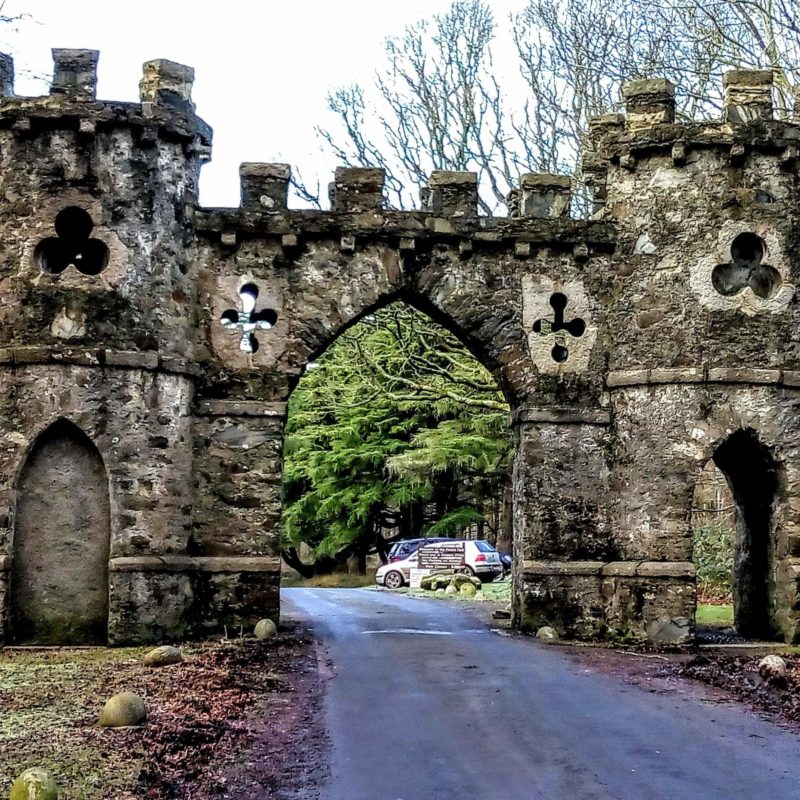
The forest covers over 600 hectares, managed by the Forest Service of Northern Ireland, and offers walking trails ranging from accessible riverside paths to more demanding mountain routes. It is genuinely excellent in all weather, and the light in autumn, when the beech trees turn, is something photographers come from across Europe to capture.
| Address | 176 Tullybrannigan Road, Newcastle, BT33 0PT |
| Parking | Car parks at the Tullybrannigan Road entrance with disabled bays. Car admission charged seasonally; check daera.gov.uk. Pedestrian access is free. |
| Accessibility | Main lower forest paths are suitable for wheelchair users. Steeper mountain trails are not. Contact the park for the current accessible route map. |
| Nearby dining | Newcastle town centre is ten minutes away. The Anchor Bar and Restaurant on the Main Street is a reliable local option. The Slieve Donard Hotel (five minutes) offers afternoon tea and fine dining. |
9. Castle Ward, County Down (Winterfell)
Castle Ward is a National Trust estate on the shores of Strangford Lough, famous internationally as the filming location for Winterfell in Game of Thrones. The 18th-century mansion has two contrasting facades, one Gothic and one Classical, because the original owners could not agree on a style. This architectural indecision gives it a slightly uncanny quality even in daylight.

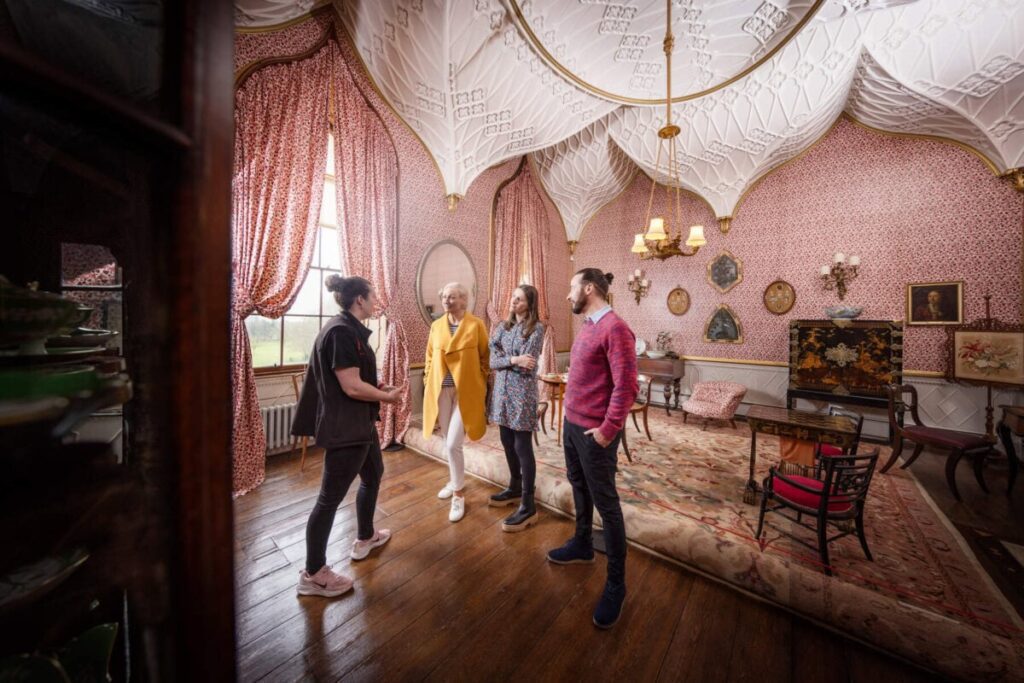
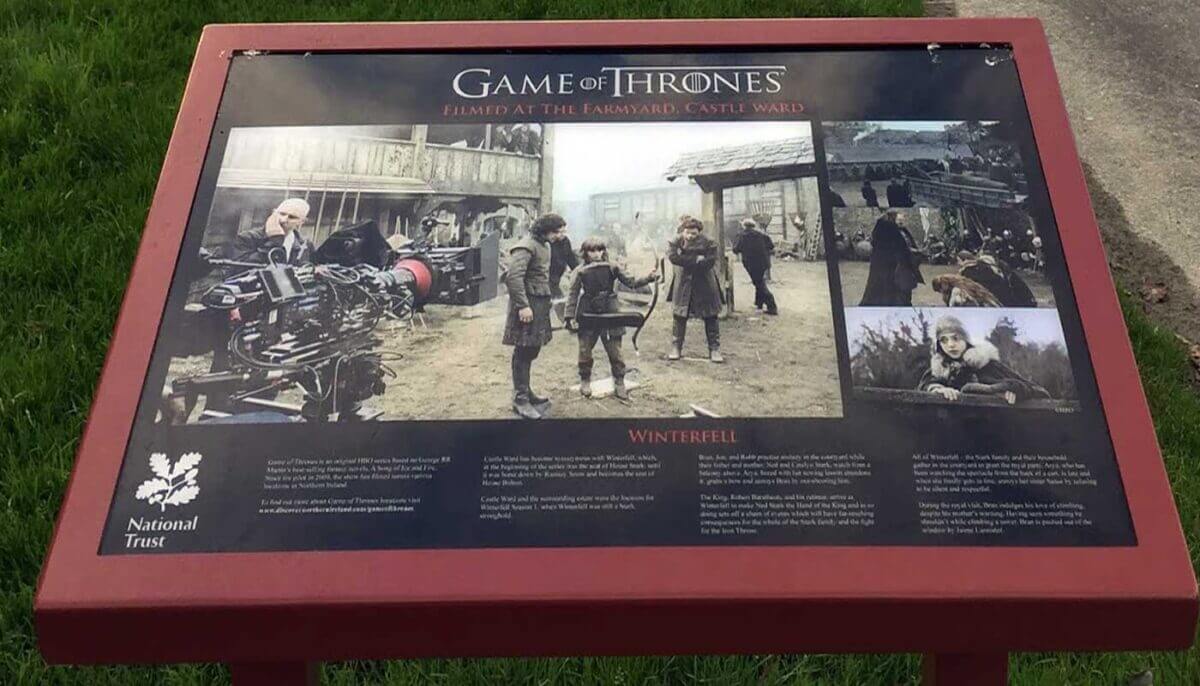
The estate has been occupied in various forms since the 13th century. Visitors report shadowy figures in the grounds, unexplained lights in the upper windows, and whispers in empty rooms. The Game of Thrones archery experience and costumed tours run seasonally and are popular with families.
| Address | Strangford, Downpatrick, BT30 7LS |
| Tickets | National Trust admission applies. Members enter free. Check nationaltrust.org.uk/castle-ward for current prices. |
| Parking | Free for National Trust members. Pay per visit otherwise. Disabled parking at main entrance. Vehicle track access through the estate available for those with mobility challenges. |
| Nearby dining | National Trust tea room on site. The Cuan Restaurant in Strangford village (2 miles) is one of Northern Ireland’s best seafood restaurants, overlooking the Lough. |
10. Springhill House and Gardens, County Londonderry
Springhill House near Moneymore is a charming early plantation house built in the late 17th century and now managed by the National Trust. Its ghost, Olivia Lenox Conyngham, is one of the friendliest in Northern Ireland. She is said to wander the gardens and rooms of her former home, seemingly welcoming visitors rather than frightening them.
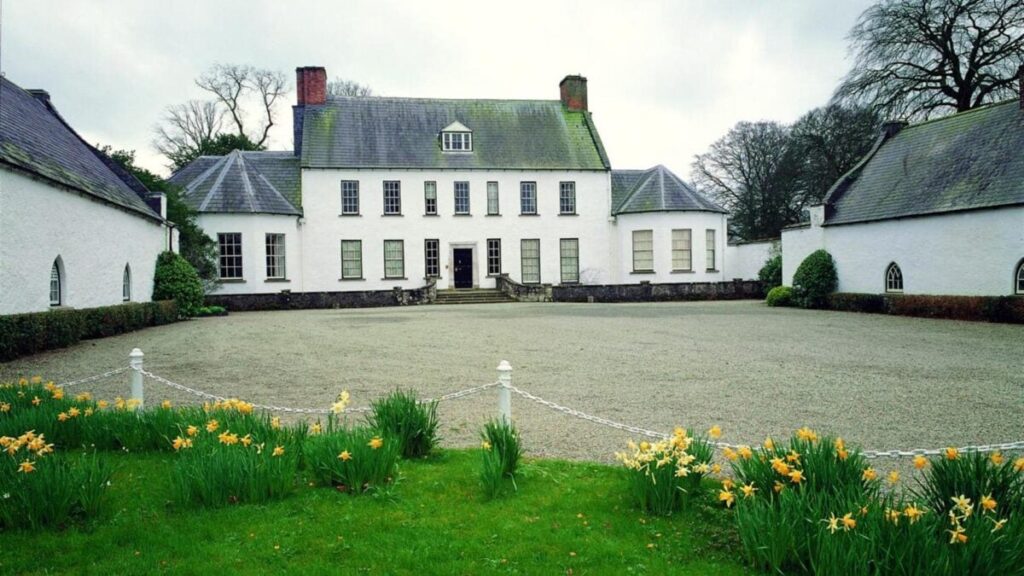
Staff and visitors have reported seeing her floating figure in the garden and sensing her presence in the upstairs rooms. The house also has an excellent period costume collection and beautiful walled garden, making it a worthwhile visit for its history and atmosphere regardless of any spectral encounter.
| Address | 20 Springhill Road, Moneymore, BT45 7NQ |
| Tickets | National Trust admission. Members free. Check nationaltrust.org.uk/springhill for current prices and seasonal opening hours. |
| Parking | Free car park on site with disabled bays. Ground floor of the house and gardens are accessible. |
11. Crom Estate, County Fermanagh
Crom Estate on the shores of Upper Lough Erne is one of Ireland’s most important nature conservation areas and one of its most atmospheric landscapes. The ruins of the old castle, the ancient yew trees (among the oldest in Ireland, dating to the 17th century), and the vast, still waters of the lough create a setting that feels genuinely otherworldly.

Ghostly lights have been reported above Lough Erne and the voices of chattering servants allegedly heard near the old castle ruins at dusk. A wing of the new Crom Castle is available to rent through the National Trust for private stays. The estate is also the starting point for the Stairway to Heaven trail up Cuilcagh Mountain, one of Northern Ireland’s finest hikes, and the nearby Boa Island holds the ancient Janus Head stone idol.
| Address | Crom Estate, Newtownbutler, BT92 8AP |
| Tickets | National Trust admission to the estate. Members free. Check nationaltrust.org.uk/crom-estate for seasonal hours. |
| Parking | Car park at the visitor centre with disabled bays. Boat trips on the lough are available and can be arranged for those who find extended walking difficult. |
| Nearby dining | Facilities within the estate are limited. Newtownbutler village has local options. Enniskillen, 14 miles, has a much wider range including Dollakis on Townhall Street for good casual dining. |
12. Cairndhu House, Larne, County Antrim
Cairndhu House is a derelict Victorian mansion on the Antrim coast road north of Larne, built in 1880 and considered by paranormal investigators to be one of the most actively haunted locations in Northern Ireland. Reports include at least three distinct presences, one of which appears to be a former resident of the house.

The house is not open to the public and must not be entered due to severe structural instability. It is clearly visible from the A2 coast road and forms a natural dramatic stop on any Antrim coast haunted road trip. The image of its tall crumbling facade against the sea is one of the most striking in Northern Ireland.
| Access | Viewable from the A2 coastal road near Larne. Do not enter the building under any circumstances. |
| Parking | Roadside viewing only. Pull in carefully and exercise caution on the A2. |
13. Scrabo Tower, Newtownards, County Down
Scrabo Tower stands on a volcanic hill above Strangford Lough and was built in 1857 as a memorial to the third Marquess of Londonderry. The name Scrabo derives from the Irish meaning cow pasture, and a cairn and stone huts once stood on this hill marking an ancient chieftain’s burial site, giving the location a far older significance than its Victorian tower suggests.

Locals report phantom whispers and unexplained banging sounds near the tower, and some claim to have seen the apparition of a woman in period clothing on the internal stairwell. Scrabo Country Park surrounding the tower offers excellent views across Strangford Lough and the Ards Peninsula.
| Address | 203A Scrabo Road, Newtownards, BT23 4SJ |
| Entry | Country park is free. Tower opening is seasonal; check with the Northern Ireland Environment Agency before visiting. |
| Parking | Free car park at Scrabo Country Park with disabled bays. The path to the tower is steep and not suitable for all wheelchair users. |
14. Rathlin Island, County Antrim
Rathlin Island lies seven miles off the north Antrim coast and is Northern Ireland’s only inhabited offshore island. About 130 people live here year round. The island is reached by ferry from Ballycastle and offers one of the most genuinely remote and atmospheric experiences in Northern Ireland.

Manor House, Rathlin Island
Built around 1760, the Manor House is considered the most haunted spot on the island. Visitors report shadowy figures including a woman and a child carrying a candle, poltergeist activity, and unexplained footsteps echoing through empty rooms.

Bruce’s Castle Ruins, Rathlin Island
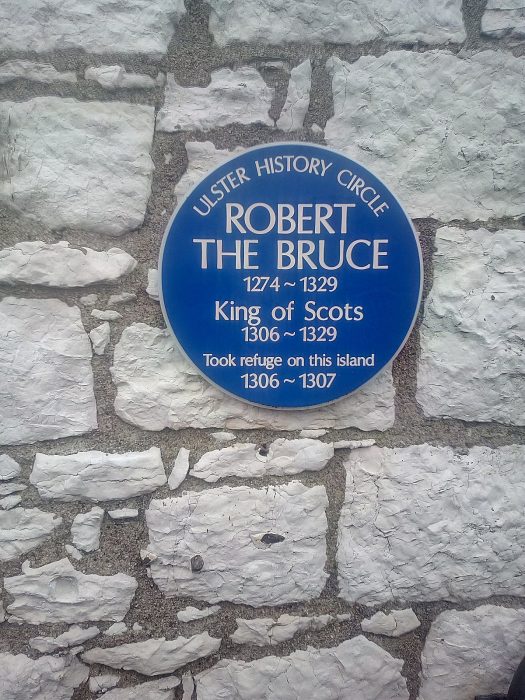
The ruins of Bruce’s Castle are associated with Robert the Bruce, King of Scots, who sheltered on Rathlin after his defeat by Edward I’s forces. Local legend tells that fishermen taking shelter in the ruins saw a mysterious hand reach out to them holding a cup. Whether this is supernatural or simply what extreme exhaustion and sea mist can do to a mind is an open question.

| Ferry | Rathlin Island Ferry from Ballycastle Harbour. Check rathlinballycastleferry.com for current timetables and fares. |
| Parking | Park in Ballycastle before boarding the ferry. Ballycastle has a large public car park near the harbour with disabled bays. |
| On-island dining | McCuaig’s Bar and Restaurant is the main food and drink option on Rathlin, serving local seafood and traditional pub food. |
| Accessibility | The island terrain is rugged. Contact the ferry operator before travelling if you have mobility requirements. |
15. Black Nun’s Grave, Ballycastle, County Antrim
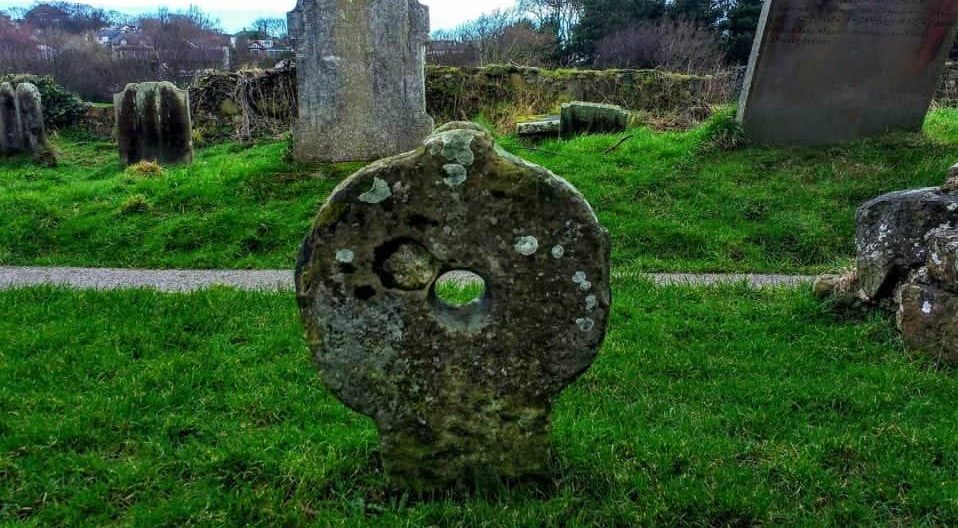
The Black Nun’s Grave in Ballycastle is a local landmark steeped in dark Irish folklore. It marks the alleged burial place of a nun who was deeply wronged during her lifetime. Her spirit is said to haunt the site, and visitors consistently report strange whispers, the sound of footsteps on still days, and a persistent sense of being watched.
| Location | Ballycastle, County Antrim. Local signage and knowledge will direct you; ask in the town centre. |
| Entry | Free |
| Parking | Ballycastle town centre has public car parks with disabled bays. The grave is a short walk from the centre. |
| Nearby | Ballycastle has a good range of cafes and restaurants on the main street. The Antrim Arms on Castle Street is a reliable local pub. |
16. Newcastle Harbour, County Down
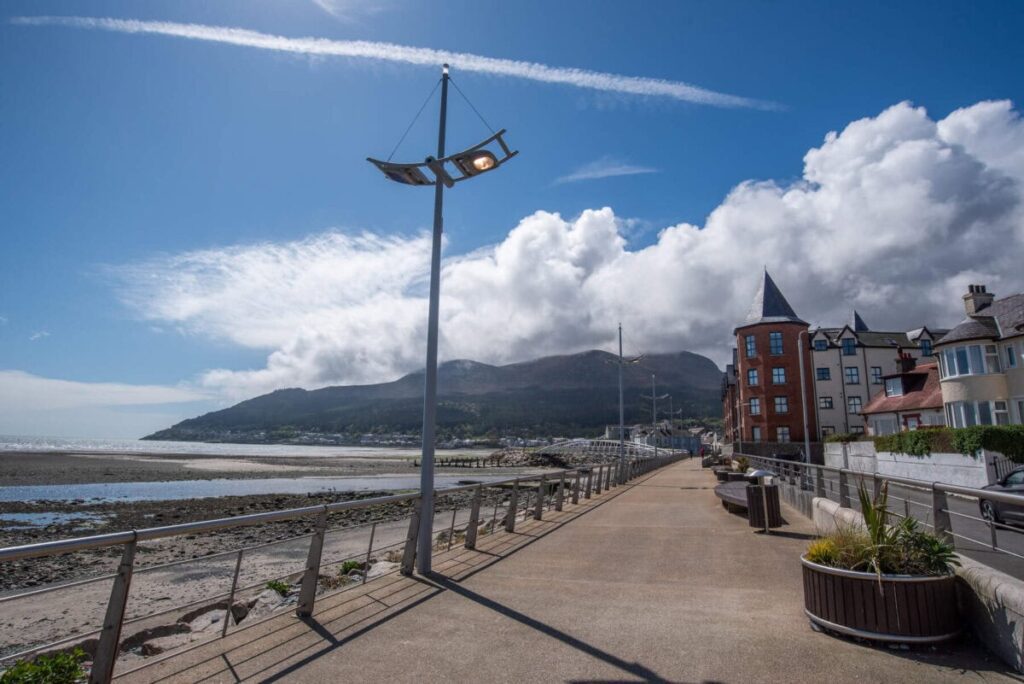
The seaside town of Newcastle at the foot of the Mourne Mountains has its own banshee: a small woman with a high-pitched wailing voice said to walk among the boats and lobster pots of the harbour. In Irish folklore the banshee is not a monster but a death messenger, her wail a sign that someone nearby is about to die. The appearance of the Newcastle banshee at the harbour is taken seriously by older residents.
The Mournes behind the town and the flat grey sea in front give Newcastle a dramatic backdrop that makes even its ghost story feel credible. The town itself is a pleasant base for exploring County Down, with good restaurants and the magnificent Slieve Donard Hotel.

| Address | Newcastle Harbour, Main Street, Newcastle, County Down, BT33 0HH |
| Entry | Free |
| Parking | Public car parks on Main Street and by the seafront with disabled bays. The promenade is flat and fully accessible for wheelchair users. |
| Nearby dining | The Slieve Donard Hotel serves afternoon tea and fine dining. The Anchor Bar and Restaurant on Main Street is excellent for casual dining. Newcastle also has a good range of cafes and takeaways along the seafront. |
17. The White Horse Hotel, Derry / Londonderry
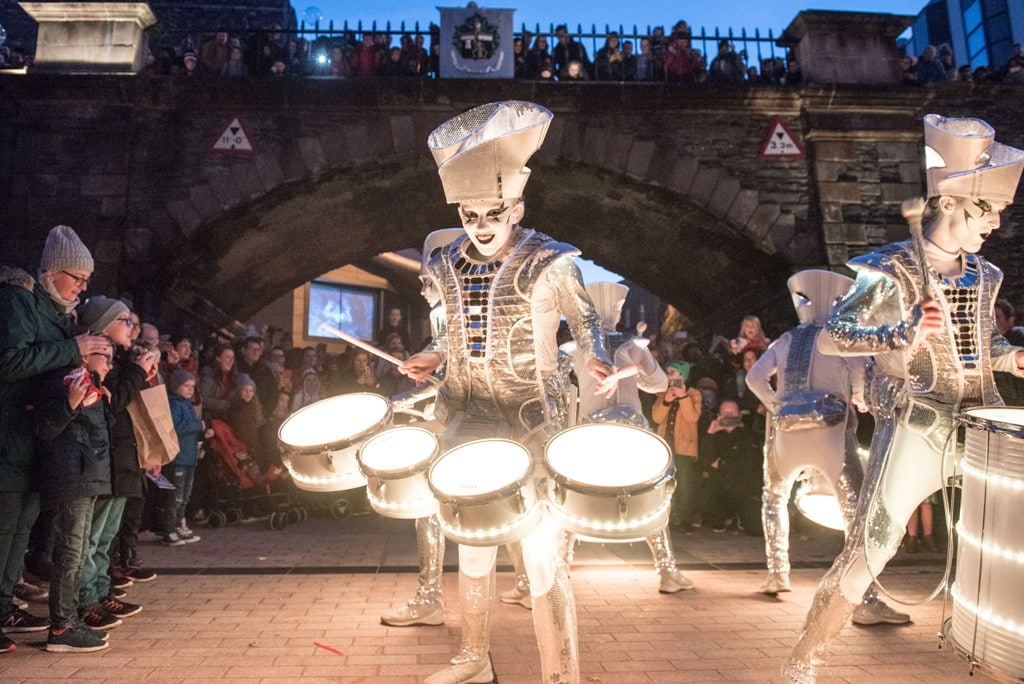
The White Horse Hotel in Derry is said to be haunted by the ghost of a mail stagecoach that drives into the hotel yard and then vanishes completely, horses and all. The city of Derry/Londonderry amplifies any supernatural visit considerably. It hosts one of Europe’s largest Samhain festivals each October, transforming the walled city into an extraordinary Halloween experience that draws visitors from around the world.
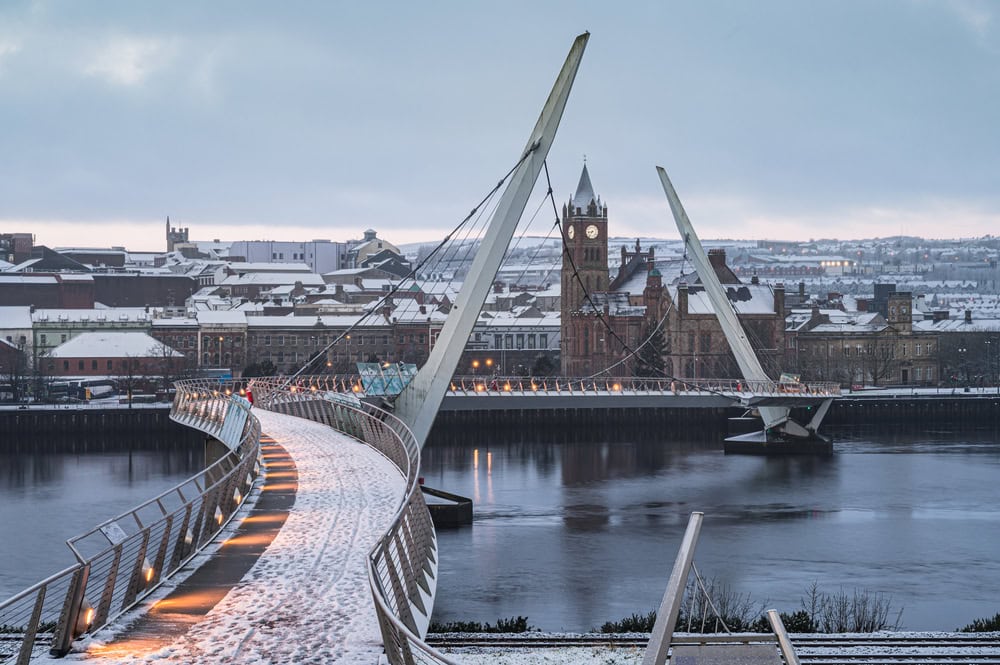
Derry itself deserves more than a single night. The medieval city walls, the Bogside murals, the Museum of Free Derry, and the Peace Bridge across the Foyle give it a depth of history and a rawness of recent experience that make it one of Ireland’s most compelling cities.


| Address | 68 Clooney Road, Derry, BT47 3PA |
| Parking | Hotel parking on site. City centre has several car parks including accessible spaces at Foyleside Shopping Centre. |
| Derry Halloween | Visit derryhalloween.com for dates, programme, and booking information for the annual Samhain festival. |
18. Antrim Castle and Gardens, County Antrim
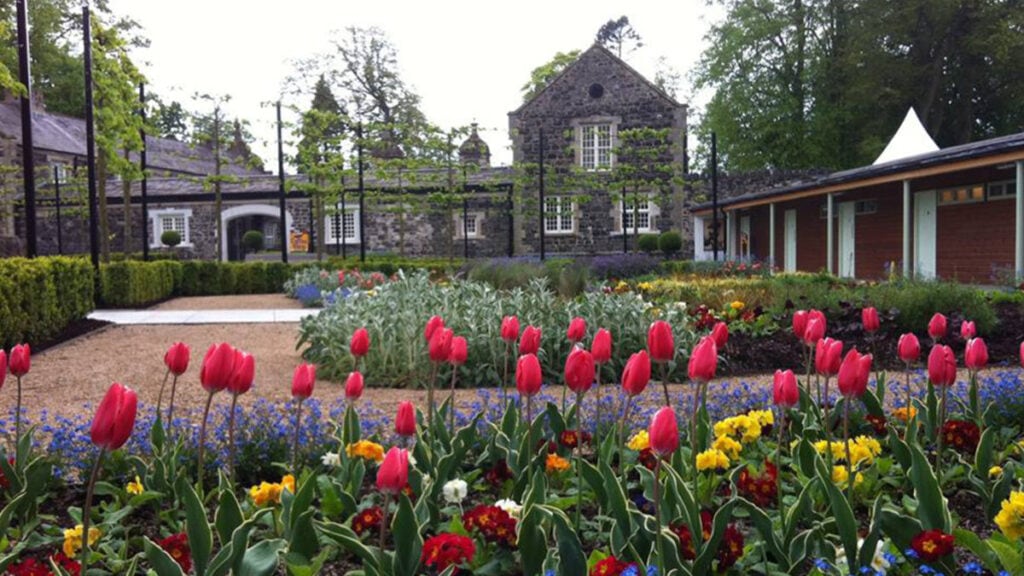
Antrim Castle was largely destroyed by fire in 1922 but its grounds survive as one of the finest examples of a 17th-century formal garden in Ireland, recently restored. The arts centre at Clotworthy House hosts exhibitions and events year round.
The stone wolfhound statue at the former castle gates carries its own legend: the dog is said to have once been real, warning the castle occupants of an attack before being turned to stone by a witch. Locals claim the statue occasionally shifts position overnight. Whether or not you find that credible, the gardens are among the most beautiful and least crowded in Northern Ireland.
| Address | Antrim Castle Gardens, Randalstown Road, Antrim, BT41 4LH |
| Entry | Gardens free to visit. Clotworthy House has varying admission for exhibitions. |
| Parking | Free car park adjacent to the gardens with disabled bays. Gardens are largely flat and accessible for wheelchair users. |
| On-site dining | The Courtyard Restaurant at Clotworthy House serves lunches and light bites. Antrim town centre is a short drive for wider dining options. |
19. Conway Mill, Belfast
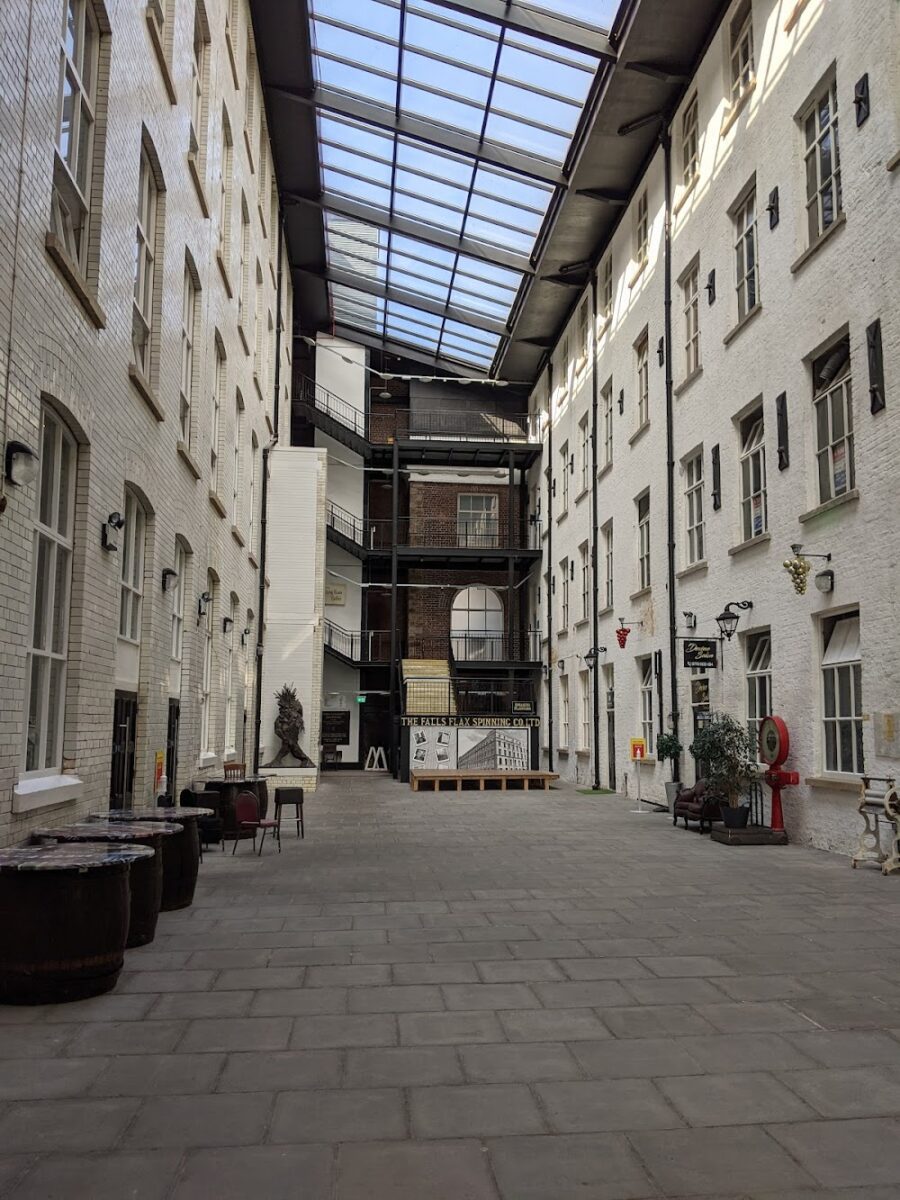
Conway Mill on the Falls Road in West Belfast is a former linen spinning mill dating from around 1842, now home to a community of small businesses, artists, and social enterprises. It is a significant site in the history of West Belfast and the Irish linen industry.
Staff and visitors report seeing shadowy figures on the stairs and hearing deep growling sounds in the corridors with no visible source. The building’s industrial past and its location in one of the most historically significant areas of Belfast give it a charged atmosphere that goes considerably beyond the purely supernatural.
| Address | Conway Mill, 5-7 Conway Street, Belfast, BT13 2DE |
| Entry | Free public access during business hours |
| Parking | Street parking in the Falls Road area. The Belfast Black Taxi Tours, which cover the political murals and history of the area, frequently include this neighbourhood and are highly recommended. |
Connecting Northern Ireland’s Haunted Sites to Wider Experiences
Free Things to Do in Northern Ireland
Many of Northern Ireland’s best experiences are free. The Giant’s Ring, the Dark Hedges, Antrim Castle Gardens, and the Ulster Museum in Belfast (one of Ireland’s finest free museums, covering art, history, and natural science) all cost nothing. The Causeway Coastal Route is one of the world’s great free scenic drives. The Titanic Quarter’s public spaces, the Belfast murals on the Falls Road and Shankill Road on a Black Taxi Tour, and the city’s Cathedral Quarter with its street art are all free to explore.

Where to Stay Near Northern Ireland’s Haunted Places
Belfast City Centre
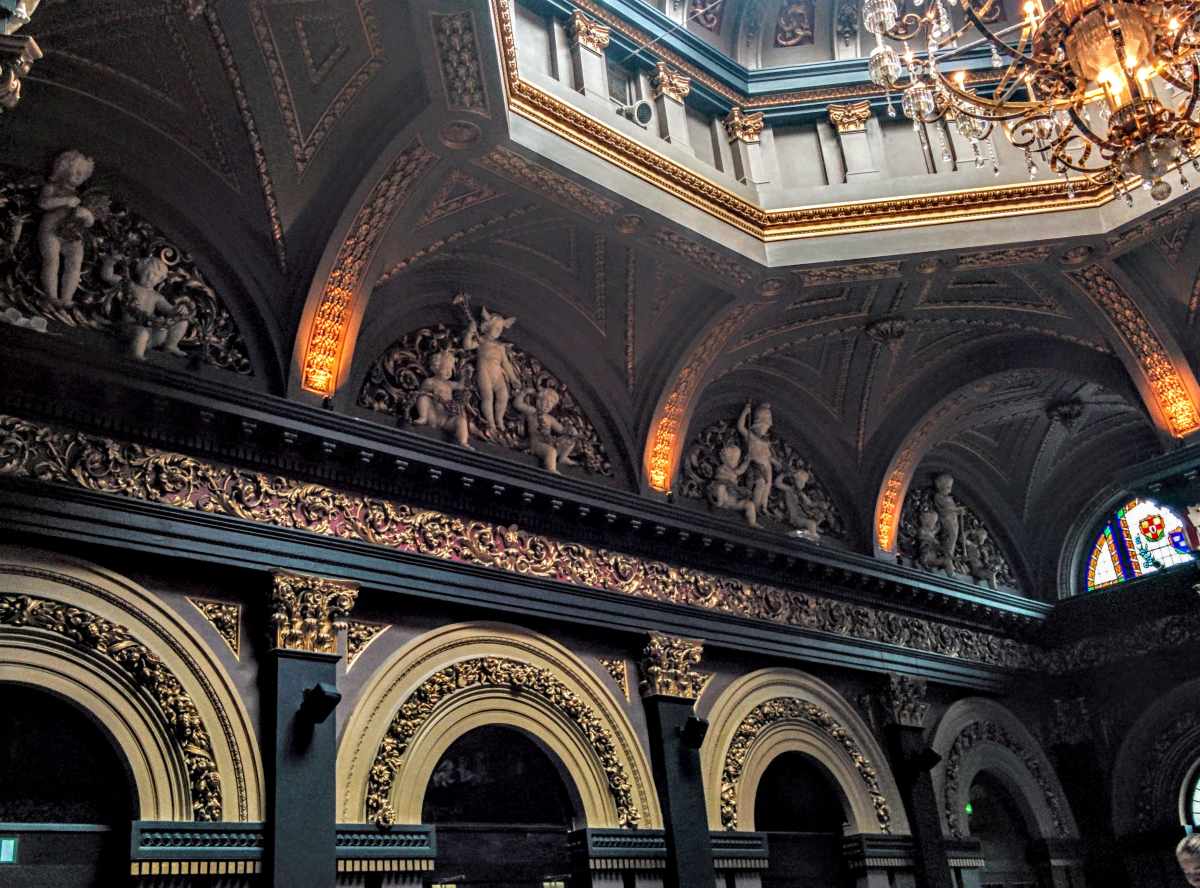
The Merchant Hotel in the Cathedral Quarter is among Belfast’s finest hotels, housed in a grand Victorian former bank with its own sense of character. The Grand Central Hotel on Bedford Street has panoramic views across the city from its rooftop. Both are within easy walking distance of the Cathedral Quarter’s restaurants and bars.
Causeway Coast
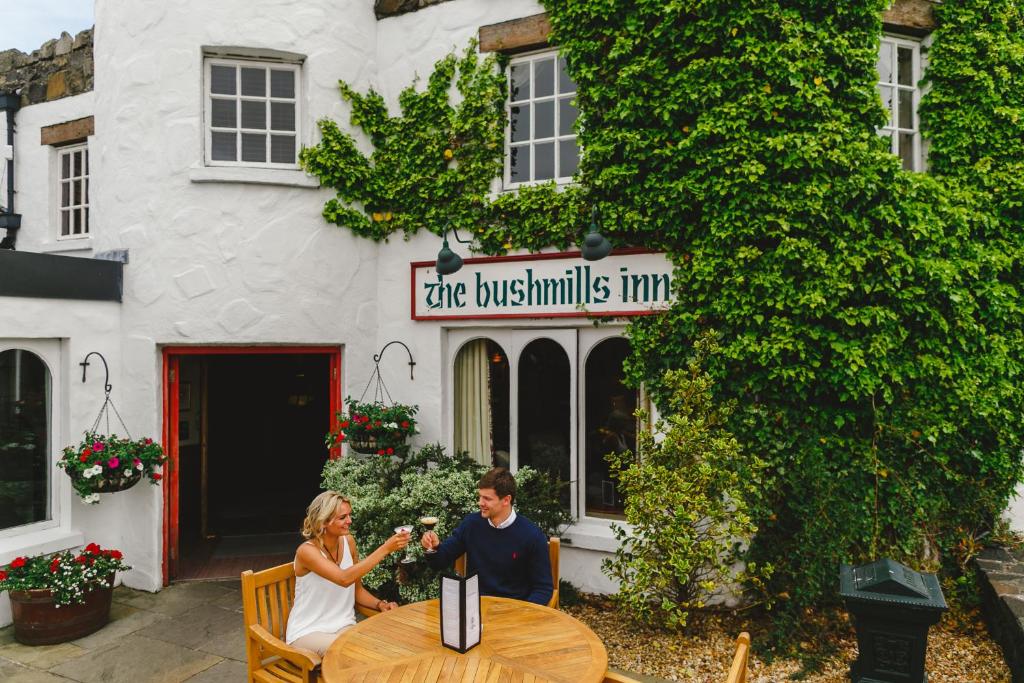
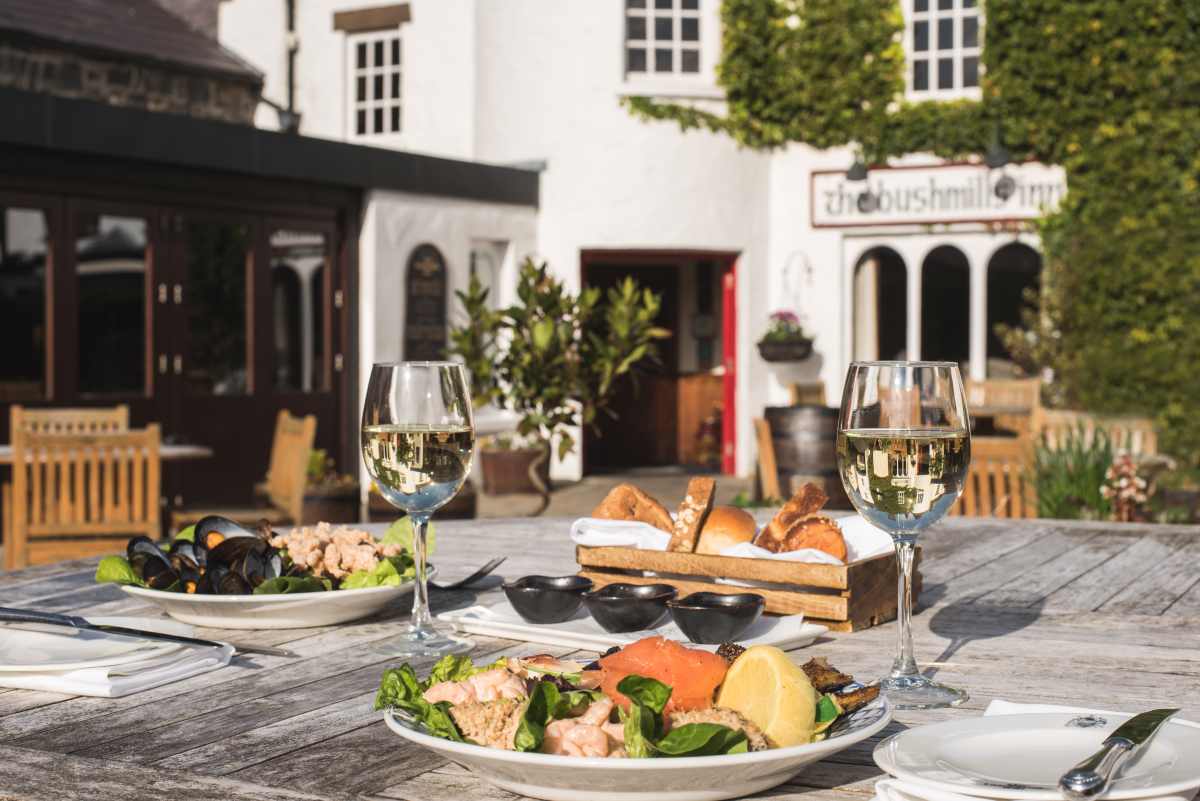
The Bushmills Inn near the Giant’s Causeway and Dunluce Castle is a beautifully restored old coaching inn with turf fires, a mill house bar, and a restaurant using entirely Northern Irish produce. It is one of the finest places to stay and eat anywhere in Ireland and should be booked well in advance for summer and October visits.

County Down
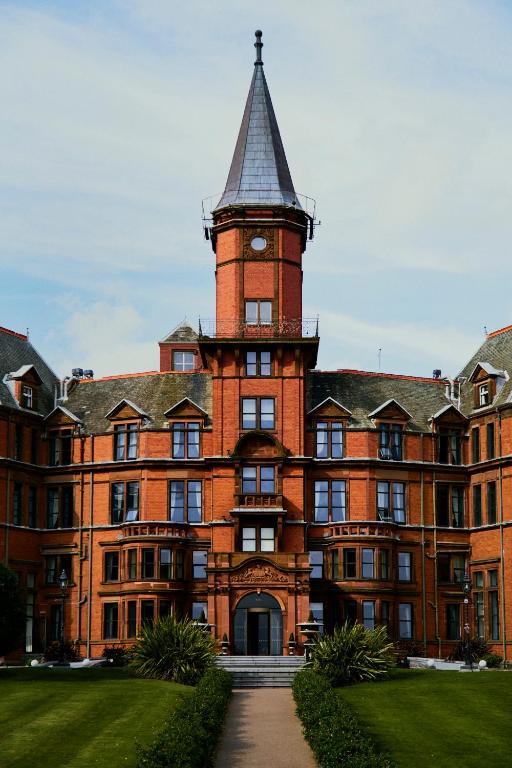
The Slieve Donard Hotel in Newcastle is an Edwardian grande dame at the foot of the Mournes with a spa, fine dining, and classic sea-facing rooms. For smaller stays, Donaghadee has excellent bed and breakfast options within easy walking distance of Grace Neill’s.
Irish Folklore and Why Northern Ireland’s Places Feel Haunted
| What is the banshee in Irish folklore? The banshee (from the Irish bean sidhe, meaning woman of the fairy mound) is a spirit from Irish mythology who wails or keens to warn a family that one of their members is about to die. She is not a monster or a malevolent force but a messenger. The banshee tradition is ancient, predating Christianity in Ireland, and appears in folk traditions across all of Ireland including at Newcastle Harbour and Dunluce Castle in Northern Ireland. |

Irish folklore offers a framework for understanding why so many places in Northern Ireland carry such a strong atmosphere of the uncanny. The concept of fairy forts and raths as protected ground where the otherworld presses close to this one, the tradition of the banshee as a death messenger, and the belief in cursed landscapes where wrongdoing leaves a permanent mark are all part of the same worldview.
Frequently Asked Questions About Haunted Places in Northern Ireland
What is the most haunted place in Northern Ireland?
Crumlin Road Gaol in Belfast is widely considered the most haunted location in Northern Ireland. With 17 executions carried out between 1854 and 1961, 150 years of use as a working prison, and a history spanning the Victorian era through to the Troubles, it carries an extraordinary weight of human experience. Regular paranormal investigation events are held here and consistently report high levels of unexplained activity.
Are haunted places in Northern Ireland suitable for children?
Several are excellent for families. Carrickfergus Castle has costumed interpreters in summer and is very child-friendly. Tollymore Forest Park and the Dark Hedges are free outdoor sites suitable for all ages. Castle Ward’s Game of Thrones experiences are popular with families. Crumlin Road Gaol notes that the execution chamber may disturb younger children, but the wider self-guided experience is handled sensitively. Paranormal-specific events are typically adult-only; always check age restrictions when booking.
Can I visit haunted places in Northern Ireland if I have mobility challenges?
Many can be visited with advance planning. Crumlin Road Gaol has ramps, lifts, disabled parking, and a video alternative to the inaccessible tunnel, and wheelchairs can be borrowed on site. Ballygally Castle Hotel has two fully accessible bedrooms with wet rooms. The Giant’s Ring is flat grassland and broadly accessible. Castle Ward has vehicle track access through the estate. The Dark Hedges road surface is uneven. Always contact specific sites before visiting to discuss your requirements.
When is the best time to visit haunted places in Northern Ireland?
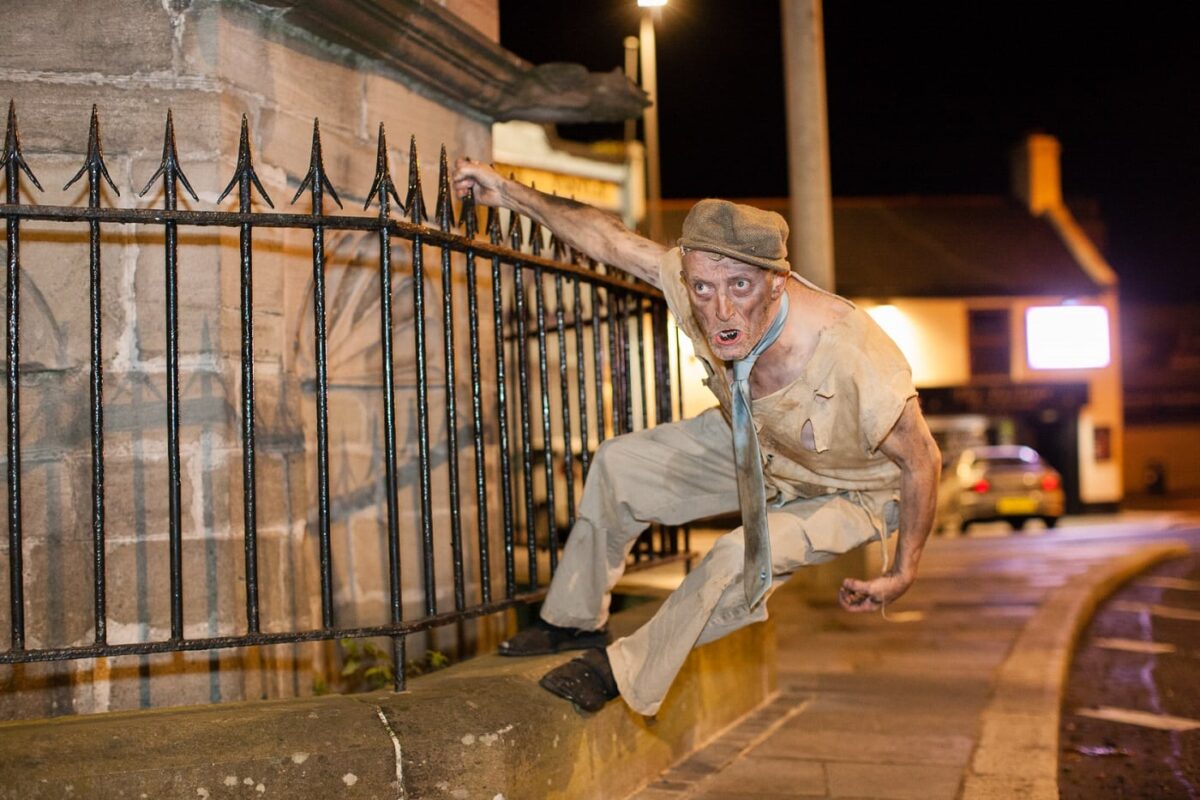
October is the obvious answer. Northern Ireland takes Halloween seriously. Derry/Londonderry’s Samhain festival is one of Europe’s largest Halloween events, transforming the walled city each year. The shorter days and longer evenings of autumn make atmospheric sites like Tollymore Forest and the Dark Hedges far more compelling. Ghost tours and paranormal investigation events run year round, but the October programme is substantially larger. Book well in advance if October is your target.
Which haunted places in Northern Ireland are connected to Game of Thrones filming?
Three sites in this guide served as filming locations for Game of Thrones. The Dark Hedges on Bregagh Road was the King’s Road. Castle Ward on Strangford Lough was Winterfell. Tollymore Forest Park was the Haunted Forest of the opening scenes. Ballygally Castle Hotel also houses one of the official Game of Thrones carved doors as part of the Doors of Thrones passport trail along the Causeway Coastal Route.
Do any haunted places in Northern Ireland offer overnight paranormal experiences?
Yes. Shadow Hunters NI runs overnight public paranormal investigation events at the Belfast Barge and Downpatrick Railway Museum. Crumlin Road Gaol runs evening paranormal tours separate from its daytime visitor experience. Ballygally Castle Hotel offers overnight stays in the Ghost Room or the tower rooms associated with Lady Isabella Shaw. All paranormal events around Halloween book out extremely quickly.
Is Northern Ireland a good base for combining with Scotland’s haunted places?
Very much so. Stena Line and P&O Ferries run daily services from Belfast and Larne to Cairnryan in southwest Scotland, putting Edinburgh within comfortable driving distance. Scotland’s haunted castles, Edinburgh’s underground vaults ghost tours, and the Royal Edinburgh Military Tattoo in August at Edinburgh Castle make a natural and memorable extension of any Northern Ireland haunted places itinerary.

Why does Ireland have so many haunted places?
Ireland’s concentration of haunted places reflects thousands of years of continuous human settlement, a Celtic mythology tradition that never fully separated the natural from the supernatural, and a history marked by repeated catastrophe, from Viking raids and Norman invasion through the Plantation of Ulster, famine, and political conflict. Irish folklore did not treat the boundary between the living and the dead as fixed. Places where violent or unjust things happened were understood to carry those events forward. That worldview produced a landscape in which almost every ruined castle, ancient monument, and old building has a story.
This sits alongside dozens of other folklore traditions covered in the Irish Culture and Folklore guide myths, haunted places, sacred sites, and more.
Planning a trip to Northern Ireland? Our complete Northern Ireland Travel Guide covers Belfast, the Causeway Coastal Route, county guides, hidden gems, itineraries, food, and local tips from a Donegal native.
Travelling with limited mobility? Our Accessible Northern Ireland Guide covers wheelchair-friendly attractions, accessible transport, and first-hand mobility tips across Belfast, the Causeway Coast, and Derry.
Explore more of the region with guides to England, Scotland, Wales, Northern Ireland, or the full United Kingdom Travel Guide.
Explore More Irish Culture, Folklore, and Travel
This guide is part of a wider collection at xyuandbeyond.com covering Irish folklore, women’s history, accessible-travel-guides-ireland-uk-europe, and food culture across Ireland and the UK.
More haunted Ireland:
- Haunted Castles in Ireland
- Most Haunted Places in Ireland
- Irish Fairies and Fairy Forts
- Halloween in Ireland and Samhain
Irish folklore and culture:
- Irish Legends and Folklore
- Celtic Symbols and Their Meanings
- Boa Island and the Mystery of the Janus Head
- Ancient Celtic Holidays
Planning your trip: