
Dunluce Castle Northern Ireland: A Romantic Ruin on the Edge of the World
| Dunluce Castle is a medieval ruin perched on a basalt cliff above the Sea of Moyle in County Antrim, Northern Ireland. Built in the 13th century, it sits on the Causeway Coastal Route near Bushmills and the Giant’s Causeway, and is open daily (except Christmas) for GBP 5.25 for adults. It is one of the most photographed and historically significant castle ruins in Ireland. |
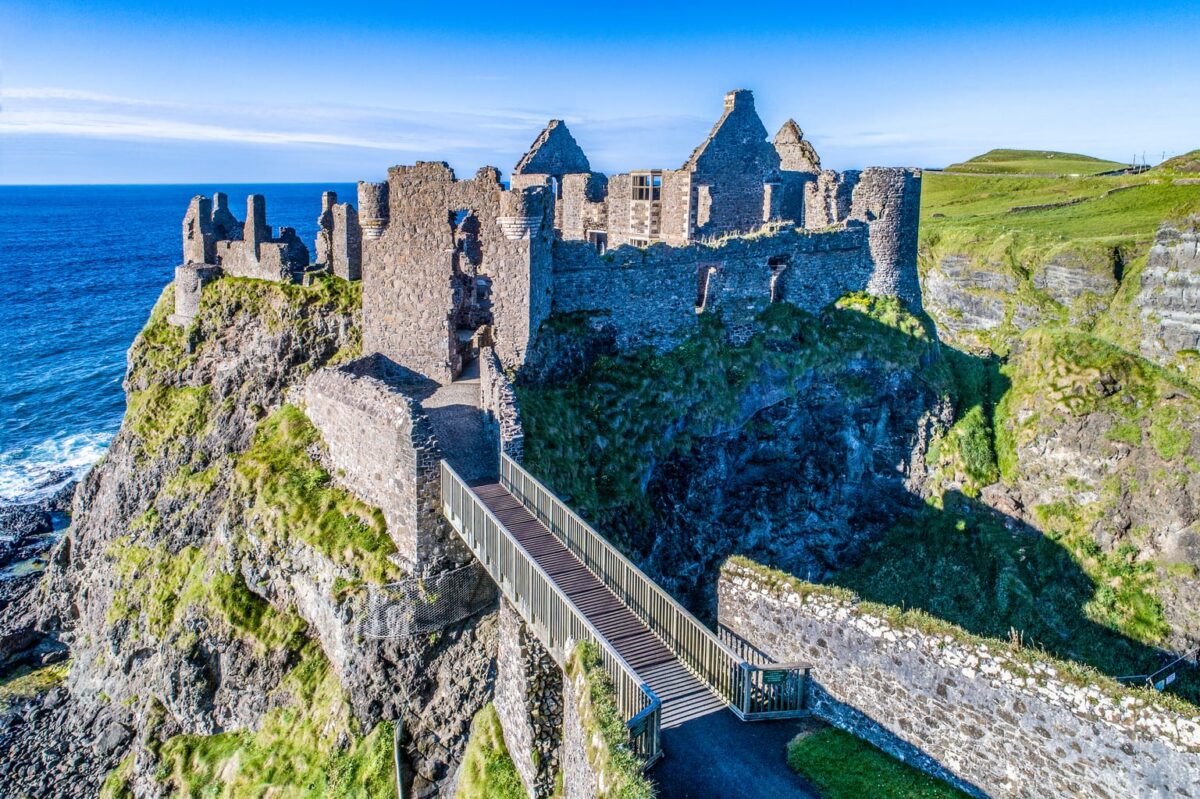
My father proposed to my mother at Dunluce Castle. That is not a piece of family mythology I throw around lightly. It is the reason I have returned to this place more times than I can count, bringing friends, visitors, and anyone I can convince to make the drive up the Causeway Coast with me. And every single time, without fail, the sight of those roofless towers clinging to the cliff edge stops me in my tracks.
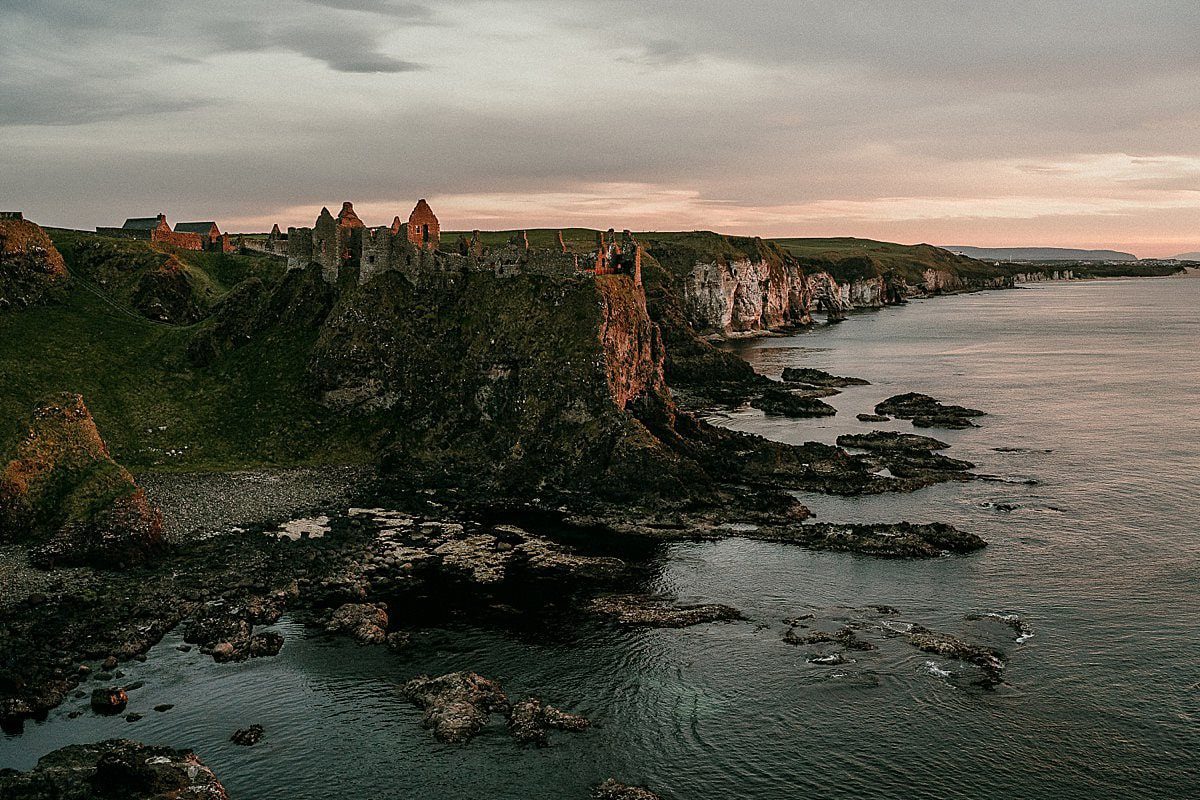
Dunluce Castle is one of the most atmospheric ruins in Ireland, and that is saying something in a country that takes its ruined castles seriously. It rises dramatically from a basalt promontory above the Sea of Moyle in County Antrim, lashed by wind and spray from the North Atlantic. If you are planning a trip to Northern Ireland, this is not a stop to squeeze in. It deserves your full attention.
In this guide you will find everything you need to visit Dunluce Castle: its layered history, its ghost stories and legends, practical information on getting there, what to see, where to stay nearby, and my personal recommendations drawn from many visits over the years.
- Dunluce Castle Northern Ireland: A Romantic Ruin on the Edge of the World
- What Is Dunluce Castle? A Quick Definition
- Dunluce Castle and the Causeway Coastal Route
- Dunluce Castle History: From Normans to MacDonnells
- A Personal Note: Why Dunluce Stays With You
- Dunluce Castle Legends: Ghosts, Mermaids, and Irish Folklore
- Surprising Facts About Dunluce Castle
- The Lost Town of Dunluce: What Archaeologists Have Found
- What to See at Dunluce Castle
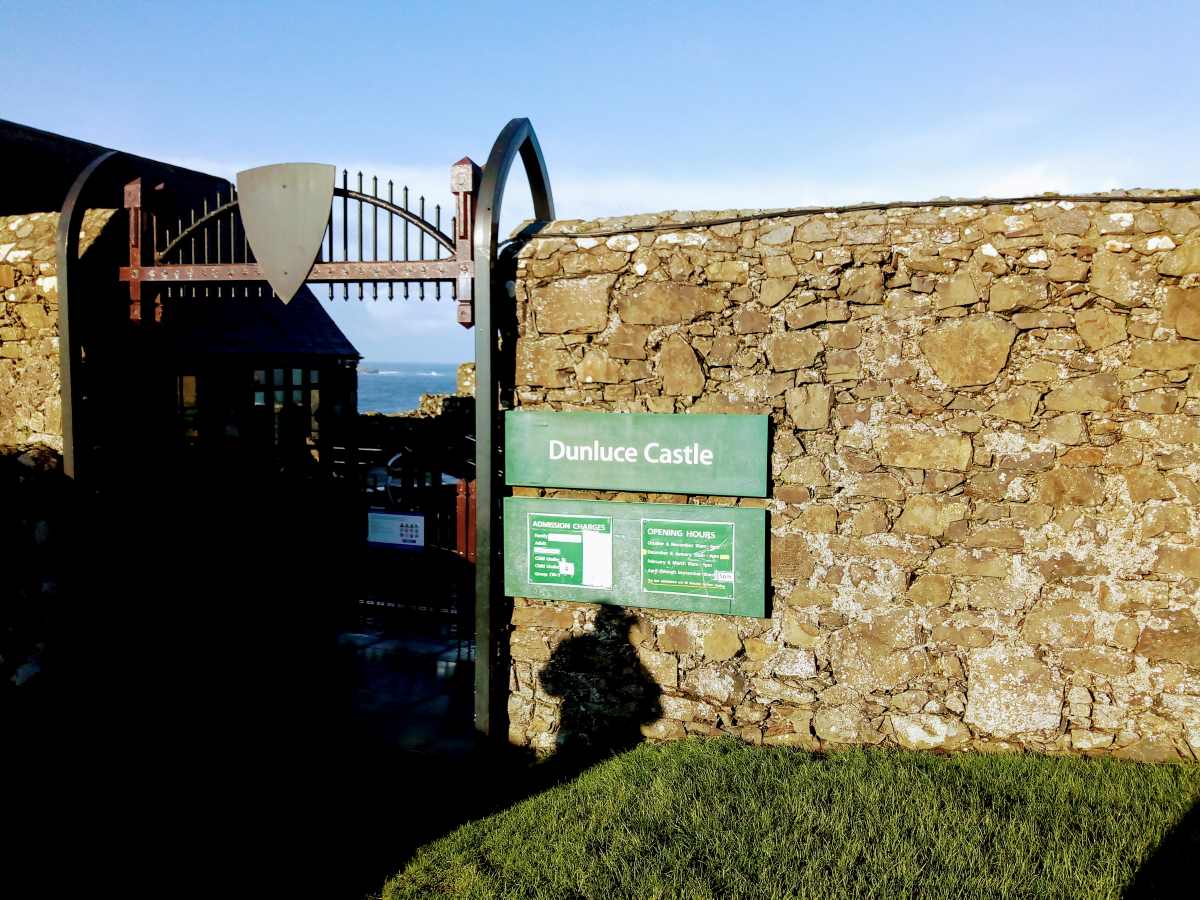
- Dunluce Castle Entry Prices and Opening Hours
- How to Get to Dunluce Castle
- Where to Stay Near Dunluce Castle
- What to See Near Dunluce Castle on the Causeway Coast
- Getting Married at Dunluce Castle
- Continue Planning Your Ireland Trip
- Frequently Asked Questions About Dunluce Castle
- Exploring the fascinating regions of Ireland
What Is Dunluce Castle? A Quick Definition
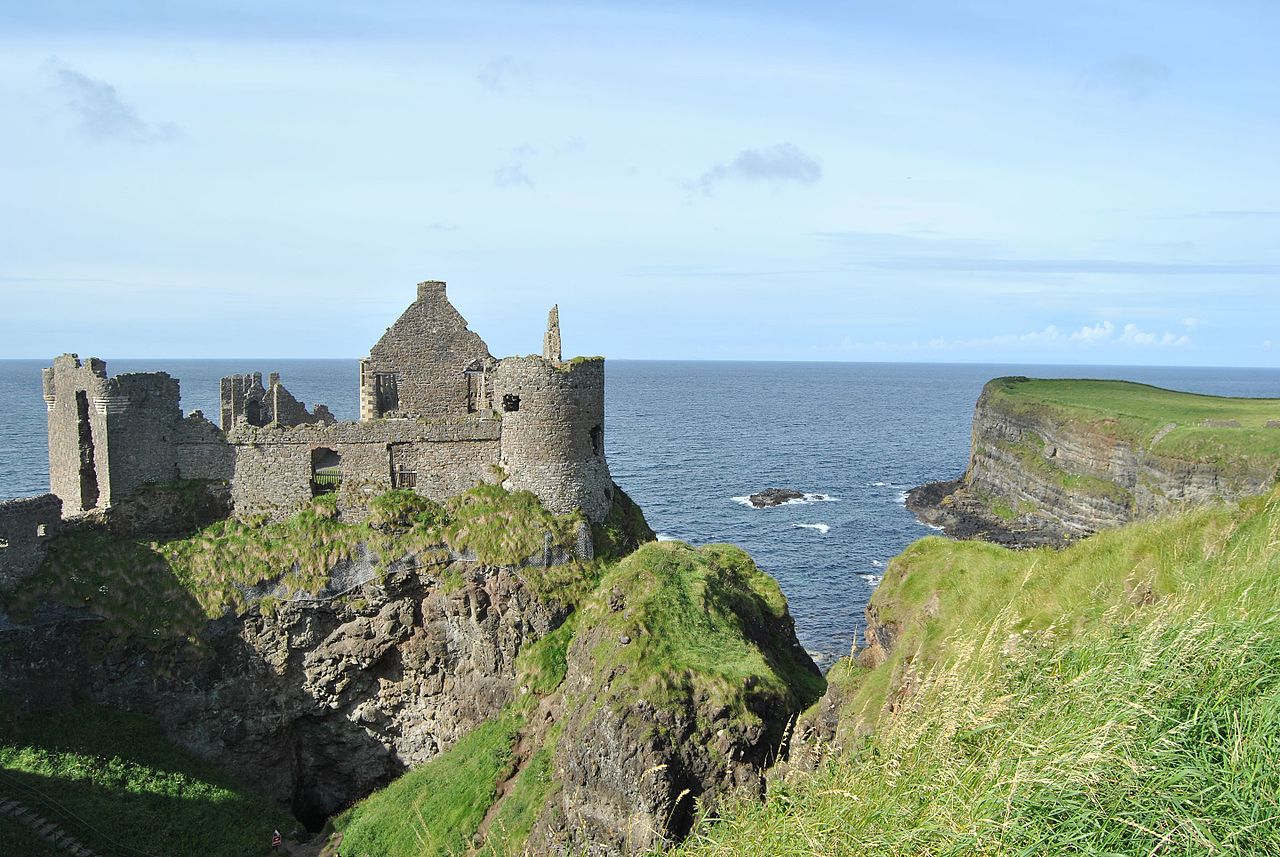
Dunluce Castle, known in Irish as Dun Libhse, is a ruined medieval castle built on a rocky outcrop on the north Antrim coast of Northern Ireland. It sits above a sea cave and is connected to the mainland by a narrow bridge. Historically the seat of the MacDonnell clan, it is now in the care of the Northern Ireland Environment Agency and open to the public year-round.

What does the name Dunluce mean? The castle name roughly translates as ‘fort of the fort,’ though the origin of the earlier Irish name Dunliphis remains a mystery that no historian has definitively solved.
Dunluce Castle and the Causeway Coastal Route
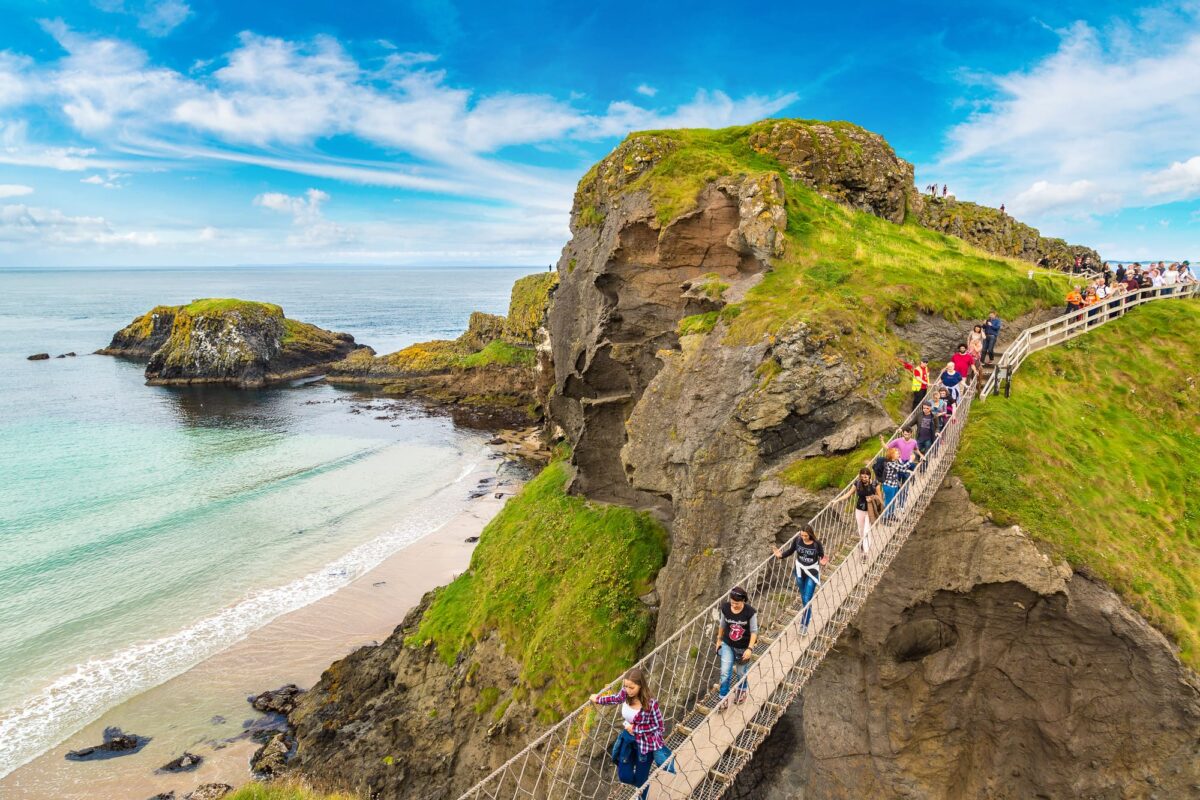
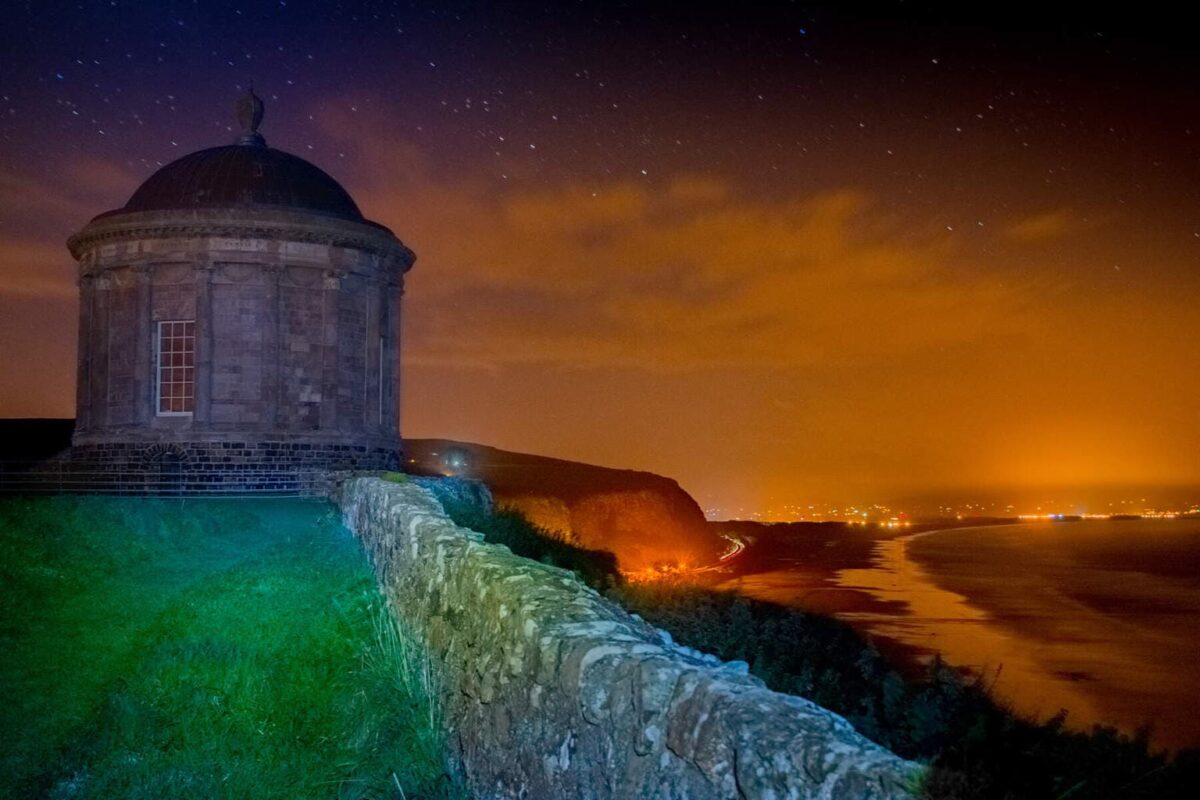
Dunluce Castle sits on the Causeway Coastal Route in County Antrim, one of the most celebrated coastal drives in the world. The route runs from Belfast westward to Derry, taking in the UNESCO World Heritage Site of the Giant’s Causeway, the vertiginous rope bridge at Carrick-a-Rede, the Mussenden Temple Demesne, the old Bushmills Distillery, and the atmospheric Dark Hedges, known globally as the King’s Road from Game of Thrones.
You will find Dunluce roughly midway along the route, just three miles east of Portrush. It makes a natural anchor point for a day or two of exploring. If you are planning the drive, I have a full guide to Northern Ireland tourist attractions that covers everything worth stopping for.
Dunluce Castle History: From Normans to MacDonnells
Who Built Dunluce Castle?
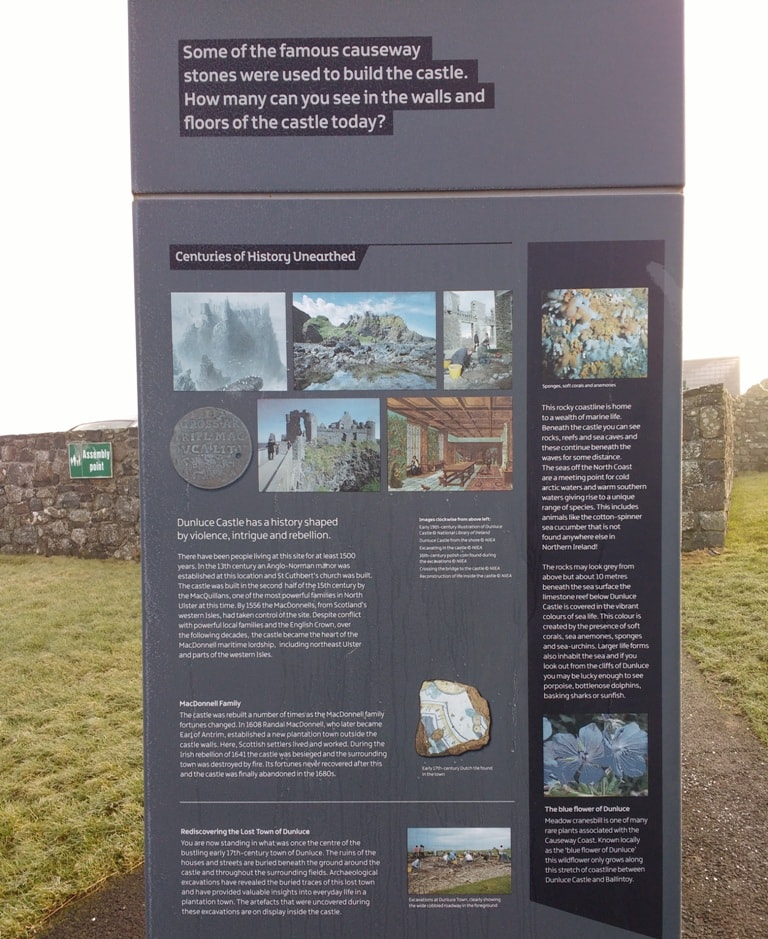
The first castle on this site was built in the 13th century by Richard Og de Burgh, the most powerful of the Earls of Ulster and a close ally of King Edward I of England. Richard was a significant figure in medieval Irish and Scottish history: his daughter Eleanor became the second wife of Robert the Bruce and the mother of the future David II of Scotland. He was also the man who built Northburgh Castle at Greencastle in Donegal.
Richard de Burgh’s alliance with the English crown ultimately worked against him. When Robert the Bruce’s brother Edward invaded Ireland, Richard was driven from Ulster. He eventually gathered his forces and won the province back for the Normans, dying in 1326 at Athassel Priory in County Tipperary.

The MacQuillan and MacDonnell Dynasties
The earliest documented records, from 1513, show Dunluce in the possession of the MacQuillan family. Their chief held the title Lord of the Route, a name that referred to the passage between Scotland and Ireland across which trade and people moved for centuries. By the mid-16th century, however, the MacQuillans were a declining power as Anglo-Scottish confiscation of native Ulster lands accelerated.
In 1550 James MacDonnell established himself in the Glens of Antrim. Sorley Boy MacDonnell defeated the MacQuillans in battle in 1580 and took Dunluce Castle along with the surrounding lands. The MacDonnells transformed the castle into a significant stronghold and filled it with looted cannons from the Spanish Armada shipwreck of the Girona, which foundered near the Giant’s Causeway in 1588.

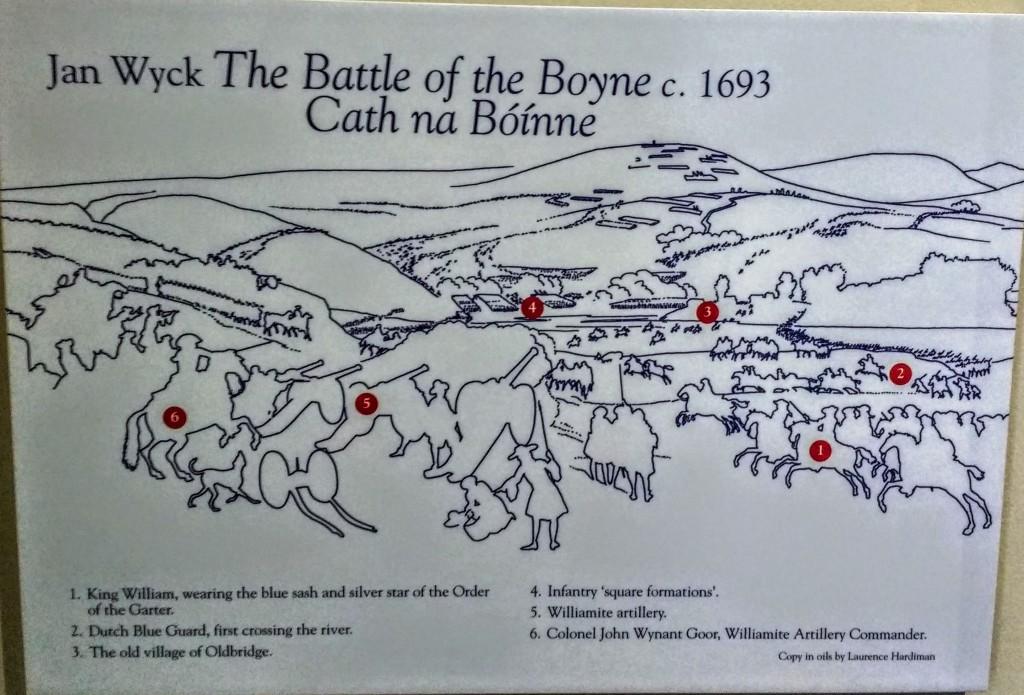
In 1603, with the Plantation of Ulster underway, Sorley Boy’s son Randal MacDonnell was created Earl of Antrim by King James I, cementing the family’s position within the new colonial order. The castle remained the family seat until 1690, when the MacDonnells abandoned it around the time of the Battle of the Boyne.
Who Owns Dunluce Castle Today?
Dunluce Castle still belongs to the MacDonnell family, now represented through the earldom of Antrim. Day-to-day management and conservation, however, sit with the Northern Ireland Environment Agency, which maintains the site and the visitor facilities.
If you want to go deeper on the colonial history of this part of Ireland, my piece on Ulster Scots Heritage in Northern Ireland is worth reading before your visit.
A Personal Note: Why Dunluce Stays With You
I am a mobility-challenged traveller, and Dunluce is one of those places I always check in advance. The grounds and visitor centre are accessible. The Mermaid’s Cave, reached by 115 steep and sometimes slippery steps, is not. That is a fair trade-off: the view from the cliff edge and the walk across the narrow bridge to the castle itself are extraordinary enough on their own.
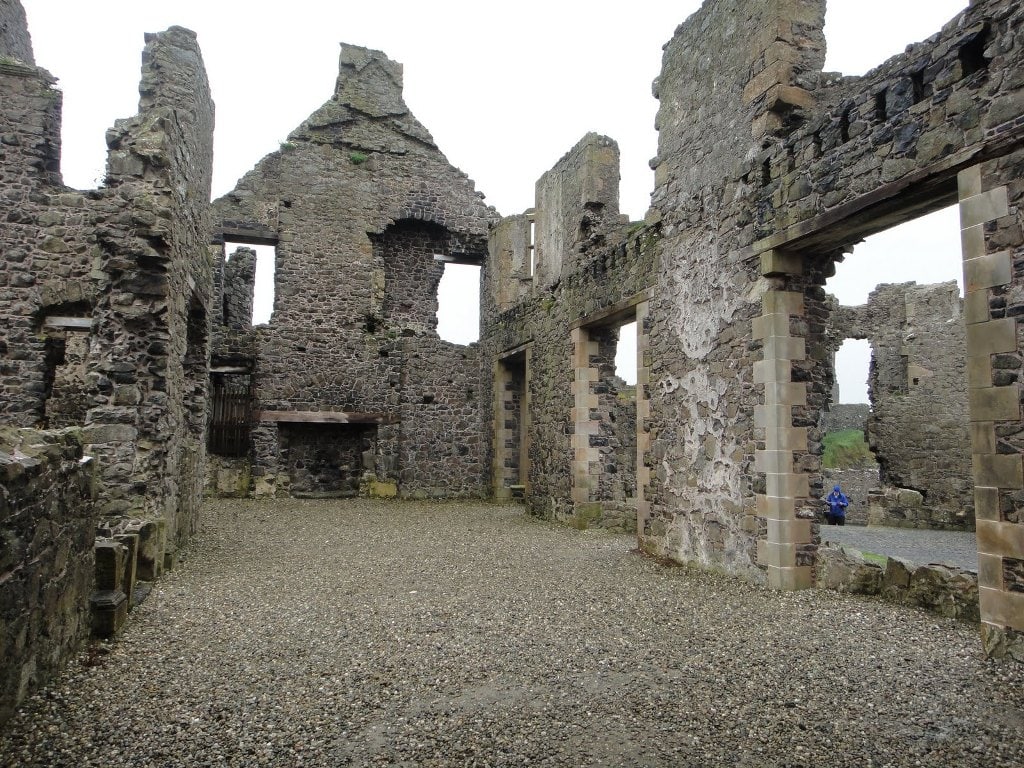
What strikes me every time is how human the place feels despite its drama. Inside the ruins, you can still trace the layout of the great hall, the kitchens, the private chambers. You are standing in someone’s home. A very grand, very precarious home above a roaring sea, but a home nonetheless.
Opinion: of all the castle ruins on the Causeway Coast, Dunluce is the one that rewards a slow visit most. Resist the urge to photograph and move on. Sit with it for a while.
Dunluce Castle Legends: Ghosts, Mermaids, and Irish Folklore
The Kitchen That Fell Into the Sea
The most famous legend attached to Dunluce claims that during a great storm, the castle kitchen collapsed into the sea, killing several servants. The story is repeated on every tour and in every guide. Historians and archaeologists, however, are sceptical. Paintings and records from the 18th and 19th centuries show the castle largely intact during the period when the collapse is said to have occurred. The screams of the kitchen staff are still said to be audible above the waves on stormy nights, which is exactly the kind of detail that keeps a good story alive regardless of the evidence.
Maeve Roe and the Banshee of Dunluce
The more haunting legend belongs to Maeve Roe, the only daughter of Lord MacQuillan. Maeve was imprisoned in the north-eastern tower of the castle because she refused to marry Rory Og, a match her father had arranged for political reasons. Her true love was a man named Reginald O’Cahan.
On a wild and stormy night, the pair escaped to the Mermaid’s Cave below the castle. They tried to flee by rowing boat, but the boat was smashed against the cliffs and both were drowned. Maeve’s ghost is said to be the Banshee of Dunluce, a troubled spirit searching the sea for her lost love. The cave where they sheltered still bears the name the Mermaid’s Cave to this day.

This story sits firmly in the tradition of Irish folklore, where love, loss, and the sea intertwine with the landscape in ways that leave marks that last for centuries. Whether you believe in banshees or not, standing at the cliff edge on a rough day and listening to the sea below, it is not difficult to understand why this story took hold.
Surprising Facts About Dunluce Castle
CS Lewis is widely credited with drawing inspiration from Dunluce Castle for Cair Paravel, the royal castle in the Chronicles of Narnia. Lewis grew up in Belfast and would have known the Antrim coast well.
Led Zeppelin used an image of Dunluce Castle on the cover of their 1973 album Houses of the Holy, introducing the ruin to a global rock audience long before social media made Irish castles a travel trend.
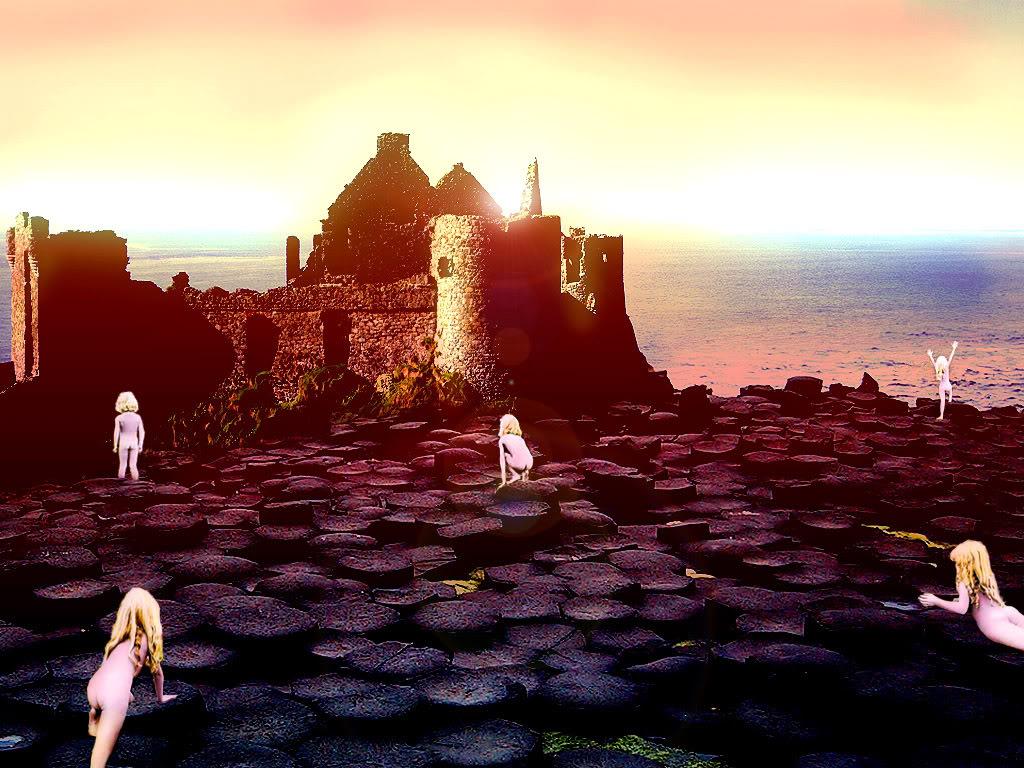
Was Dunluce Castle in Game of Thrones? Yes. The castle was used, with CGI enhancement, as Castle Greyjoy (Pyke) on the Iron Islands in the HBO series. If you plan to explore more Game of Thrones filming locations on the Causeway Coast, the area is packed with them.
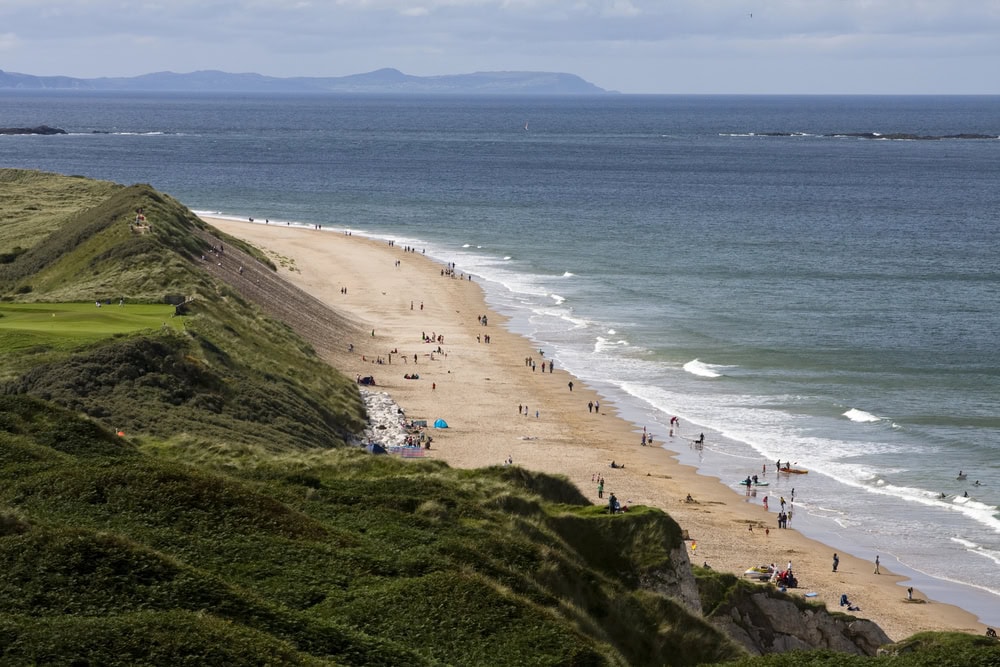
The Disney film Artemis Fowl, directed by Sir Kenneth Branagh who was born in Belfast, was filmed partly at Dunluce Castle and at Whiterock Beach in Portrush during the summer of 2018.
Victims from the Spanish Armada shipwreck of the Girona are believed to be buried in St Cuthbert’s graveyard near the castle. Sorley Boy MacDonnell retrieved cannons from the wreck and mounted them in the castle walls.
During World War II, the Dunluce site was used occasionally as a lookout post to monitor shipping in the North Atlantic.

The Lost Town of Dunluce: What Archaeologists Have Found
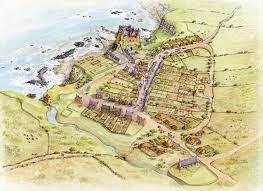
One of the most significant recent discoveries along the Causeway Coast is the buried town of Dunluce itself. Archaeologists have been excavating a settlement across from the castle for the past decade, and what they have found challenges the idea that this was ever just a remote fortress.
Dunluce town was designed to rival Coleraine as a commercial centre. Excavations have uncovered a cobbled street running toward the castle gate, a blacksmith’s forge, a Scottish merchant’s house from the early 17th century with plastered walls, an internal privy, and a fireplace whose walls survive to waist height. Coins from the reigns of Elizabeth I and Charles I have been found alongside bone combs, dress fastenings, gaming pieces, wine glass stems, and a bronze tuning pin for a harp.
There was also a courthouse and a dungeon. The town was burned to the ground in 1642 by Irish rebels who failed to take the castle but managed to destroy the settlement. Walking above the site today, you would have no idea that an entire commercial town lies just below your feet.
What to See at Dunluce Castle
The Castle Ruins
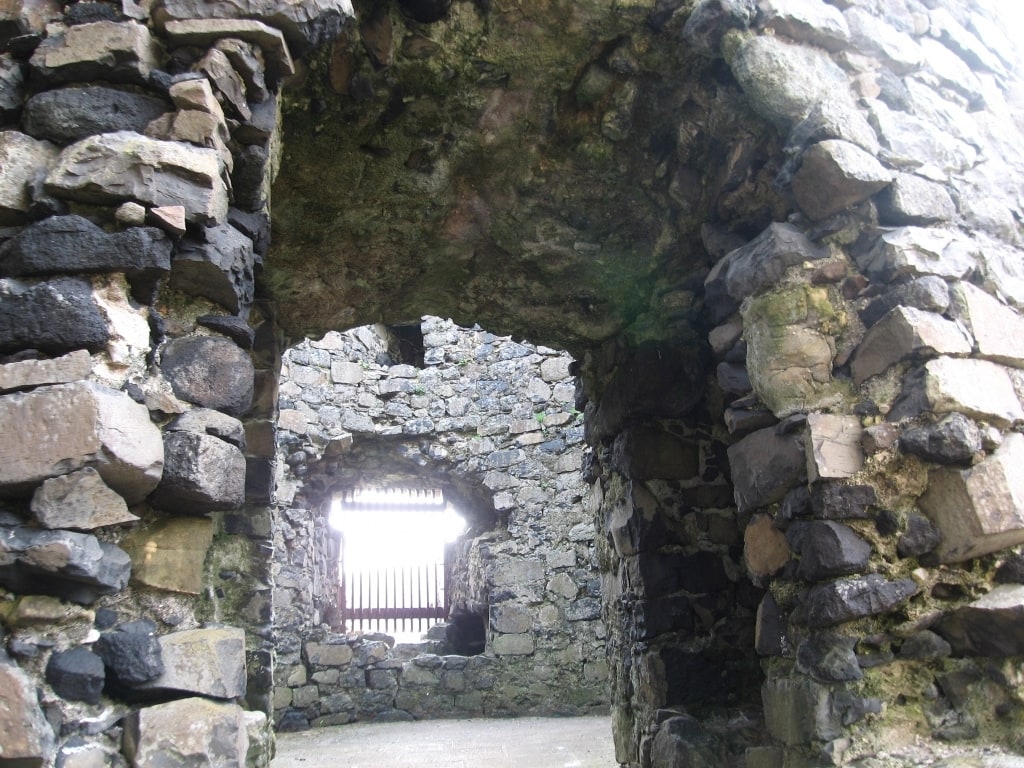
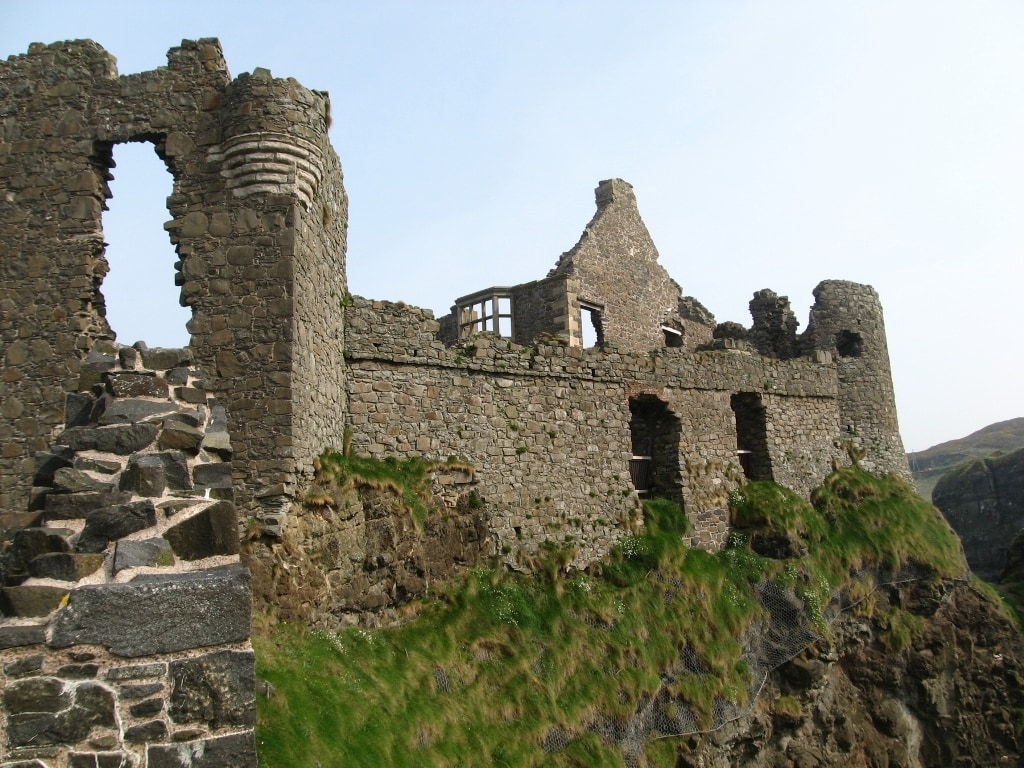
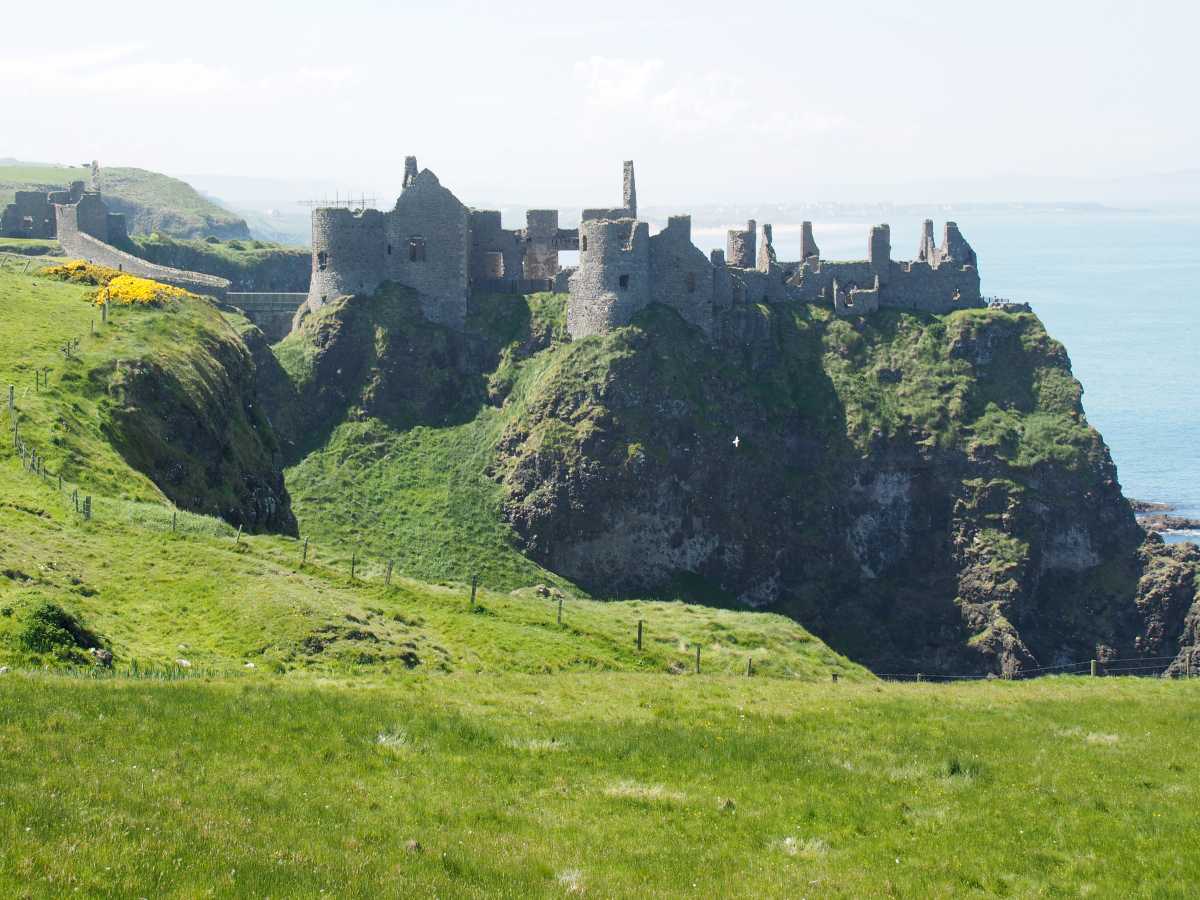
The ruins of Dunluce are reached by crossing a narrow stone bridge from the mainland. Once inside, plaques throughout the site explain the original functions of each room: great hall, kitchen court, gatehouse, and the private apartments of the MacDonnell family. The clifftop views in every direction are spectacular.
The Mermaid’s Cave
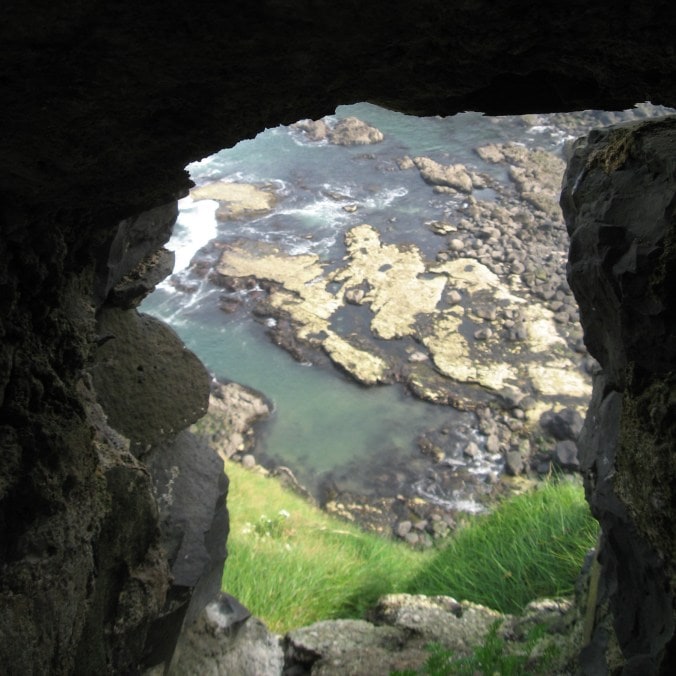
Below the castle, accessed by 115 steep steps beside the cliff face, is the Mermaid’s Cave. The cavern is more than 25 metres below the castle and opens directly to the sea. The views from inside are extraordinary. The steps are steep and can be slippery in wet weather. Cave access is included in your entry ticket.
The Visitor Centre and Wee Cottage
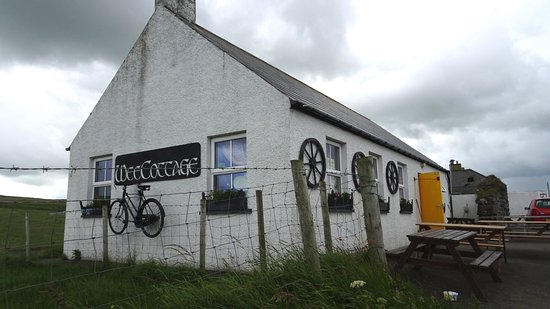
The visitor centre near the entrance provides historical information, guided handouts, and some artefacts from the site. Entry tickets are purchased here. To one side of the car park sits the Wee Cottage, a small cafe where you can get a decent cup of tea, a scone, or something more substantial before or after your visit. Free entry to the grounds and visitor centre allows you to browse without paying for castle access.

Dunluce Castle Entry Prices and Opening Hours
Dunluce Castle is open daily from 10 a.m. to 5 p.m., with last entry at 4:30 p.m. It is closed on Christmas Day and Boxing Day (25 and 26 December).
Current entry prices:
Adult (18 and over): GBP 5.25
Child (age 5 to 17): GBP 3.50
Child under 5: Free
Senior citizen (65 and over), Student, and Benefit Claimants (ID required): GBP 3.95
Family (up to 5 members, including up to 3 adults): GBP 15.75
Parking at Dunluce is free, though the car park directly in front of the castle is small. If it is full, Magheracross Parking and Viewpoint further down the road is an alternative, though it does involve walking back along a busy road, so take care.

How to Get to Dunluce Castle
By Car
Dunluce Castle is in County Antrim, approximately three miles east of Portrush and close to the village of Bushmills. If you are driving the Causeway Coastal Route, it sits naturally along the route between Portrush and the Giant’s Causeway. Renting a car is by far the most flexible way to explore this stretch of coast.
By Train and on Foot
The train from Belfast to Portrush takes around two hours. From Portrush, Dunluce is approximately 3.5 miles east, which is about an hour’s walk through genuinely beautiful scenery. A taxi from Portrush to the castle costs around GBP 15 one way.
By Bus: Causeway Coast Services
Several seasonal bus services connect Dunluce Castle to the wider Causeway Coast:
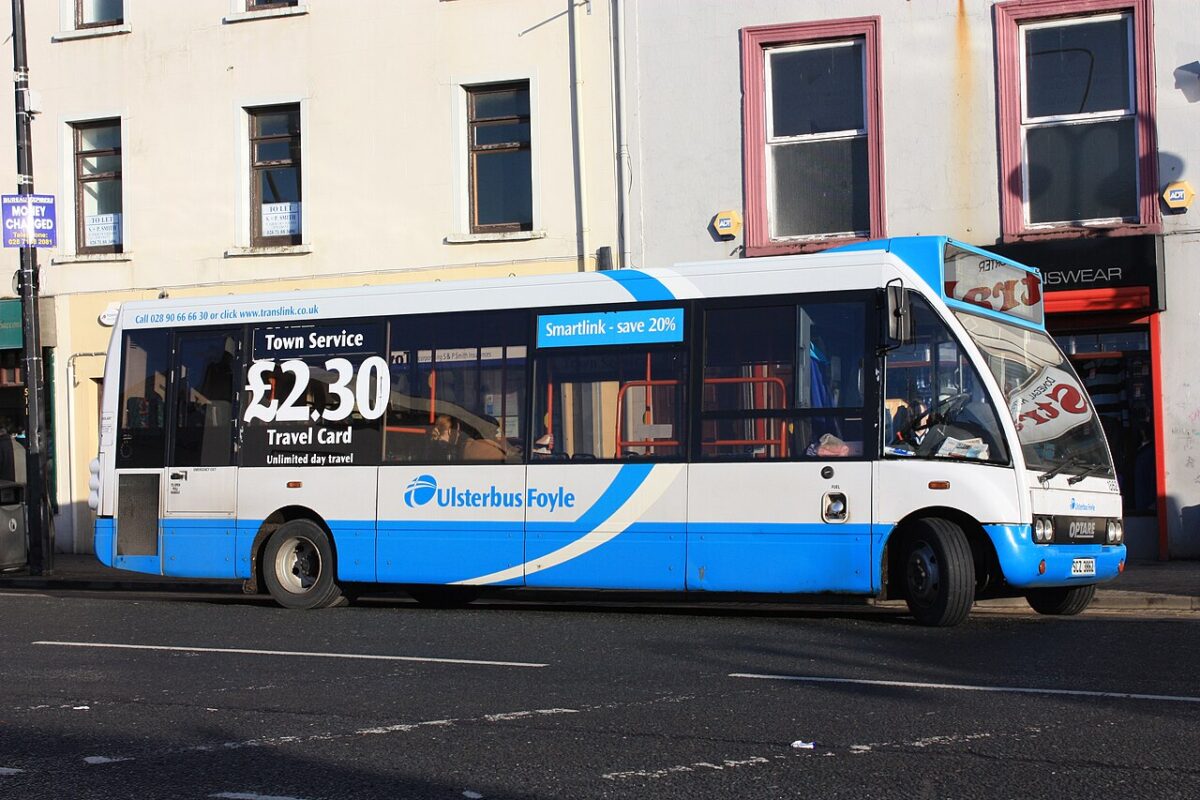
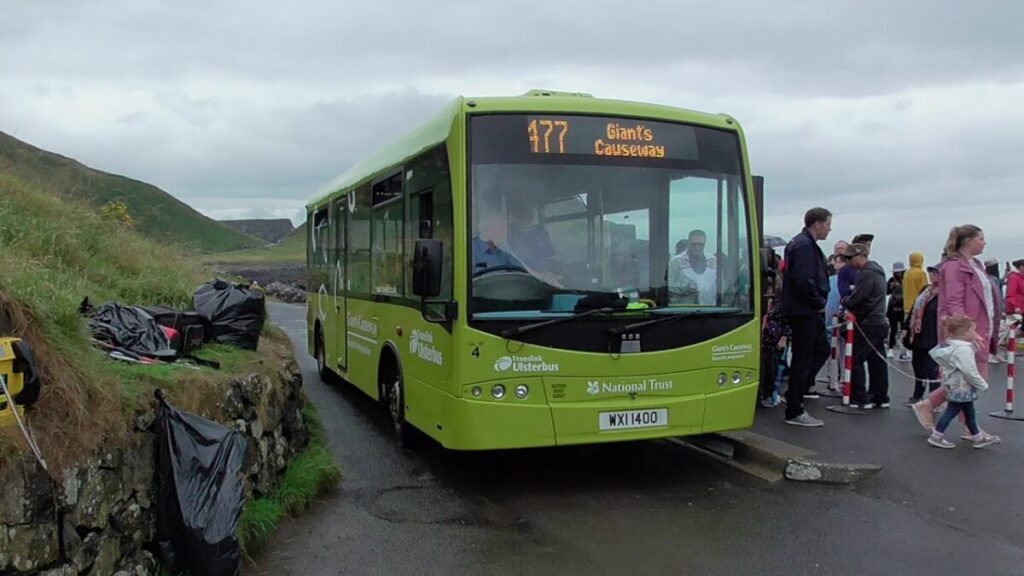
Ulsterbus 177 runs between the Giant’s Causeway and Coleraine, serving Bushmills, Portballintrae, Dunluce Castle, Portrush, and Portstewart. Four buses daily in July and August.
Ulsterbus 252 (Antrim Coaster) runs from Belfast to Coleraine via Larne, Ballycastle, the Giant’s Causeway, Dunluce Castle, and Portrush. Two buses daily from May to September.
Ulsterbus 402 (Causeway Rambler) runs from Carrick-a-Rede to Coleraine via Ballintoy, White Park Bay, Dunseverick Castle, the Giant’s Causeway, Bushmills, Dunluce Castle, and Portrush. Seven buses daily from June to September.
The Causeway Rambler also operates as a hop-on-hop-off service linking Coleraine with Ballycastle, with buses every 30 minutes Monday to Friday and hourly on weekends.
Step-by-Step: Planning Your Visit to Dunluce Castle
- Decide your base: Portrush, Bushmills, or Portballintrae are all within easy reach of Dunluce. Ballycastle is a slightly longer drive but is my personal favourite.
- Book accommodation in advance during summer. The Causeway Coast fills up quickly, particularly around the Giant’s Causeway.
- Arrive at Dunluce before midday if possible. The car park is small and it can become congested by mid-afternoon in peak season.
- Purchase entry tickets at the visitor centre. Last entry is 4:30 p.m.
- Start with the castle ruins. Walk the full perimeter of the site and take time with the interpretive plaques in each room.
- If conditions allow, descend the 115 steps to the Mermaid’s Cave. Check weather before you go: the steps are steep and can be slippery.
- Stop at the Wee Cottage for tea before heading onwards to the Giant’s Causeway or Bushmills Distillery.
Where to Stay Near Dunluce Castle
There are no bed and breakfasts immediately adjacent to Dunluce Castle, so your best options are the nearby towns and villages. Here are the ones I recommend from experience.
Portballintrae
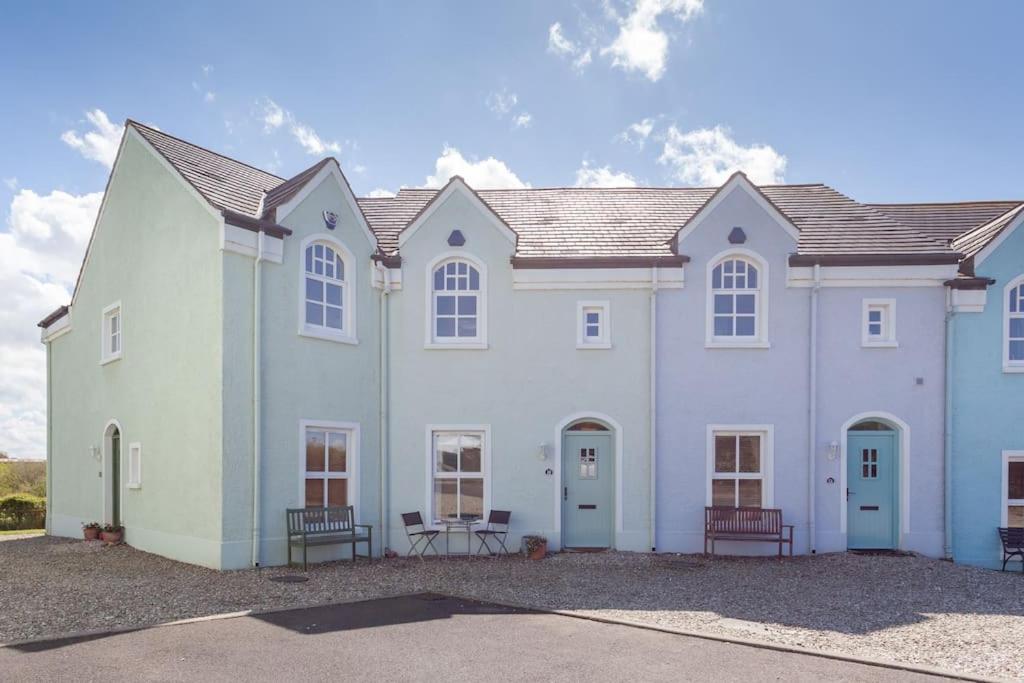
10 Ballaghmore Cottages in Ballintrae offers a spacious holiday home with three bedrooms and two bathrooms. The property features a private beach area, a beautiful garden, and free WiFi. The Giant’s Causeway and Carrick-a-Rede are approximately 15 to 20 minutes by car. There is a sunny garden and ample parking.
Bushmills
The Green House features two bedrooms and one bathroom. A fully equipped kitchen and TV provide comfort.
Ballycastle
I have a particular fondness for Ballycastle, which is slightly further along the coast but worth the extra few miles. It has excellent places to eat, a genuine local atmosphere, and easy access to the ferry to Rathlin Island. Visit at the right time of year and you will see puffins nesting on Rathlin Island. See my guide to Northern Ireland for more on what is nearby.


What to See Near Dunluce Castle on the Causeway Coast
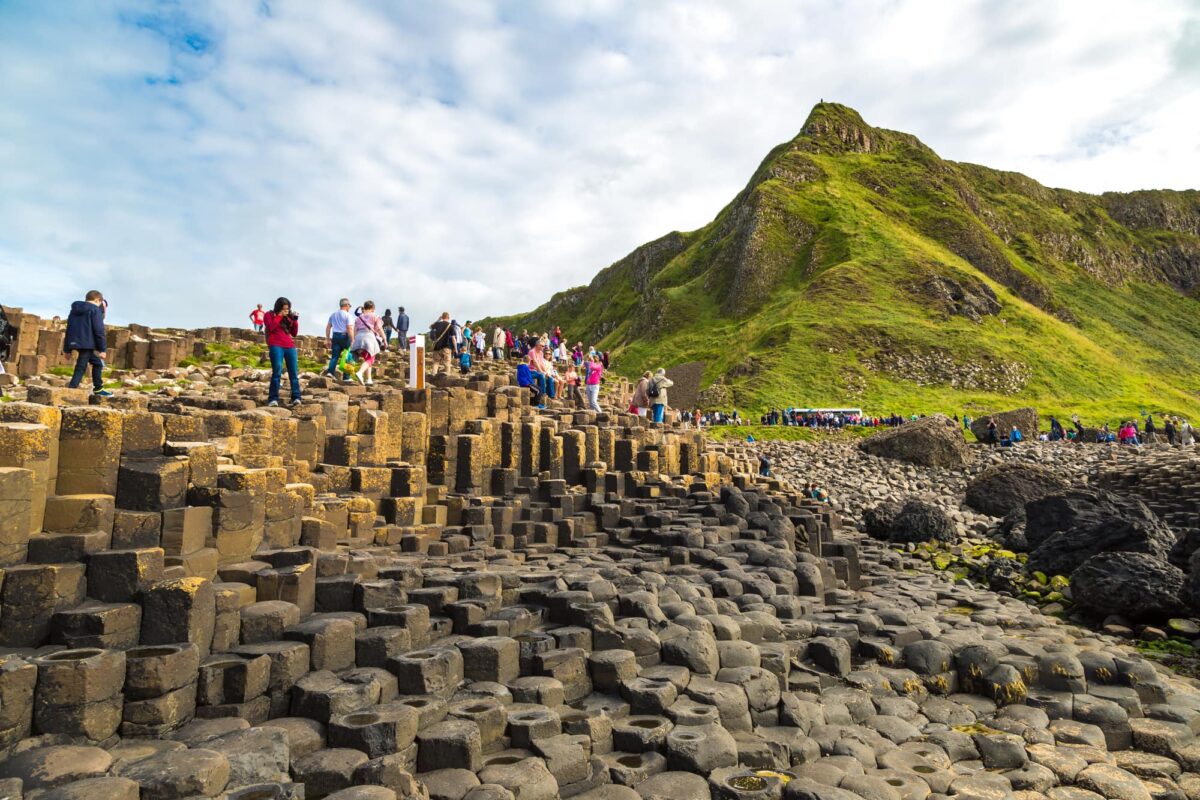
The Giant’s Causeway is a short drive east: 40,000 interlocking basalt columns formed by volcanic activity some 60 million years ago, now a UNESCO World Heritage Site. It is the natural wonder most visitors come to the Causeway Coast to see, and rightly so.
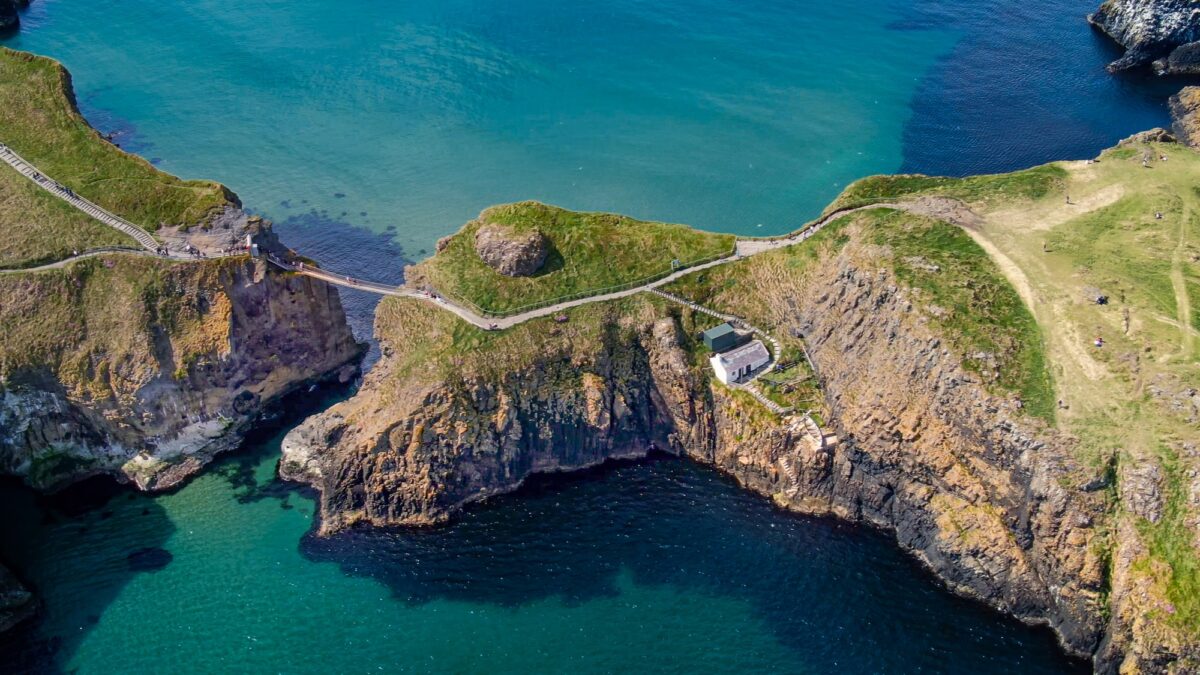
Carrick-a-Rede Rope Bridge is further along the coast toward Ballycastle. Crossing the swinging bridge to the small island beyond is not for the faint-hearted, but the views are worth every wobbly step.
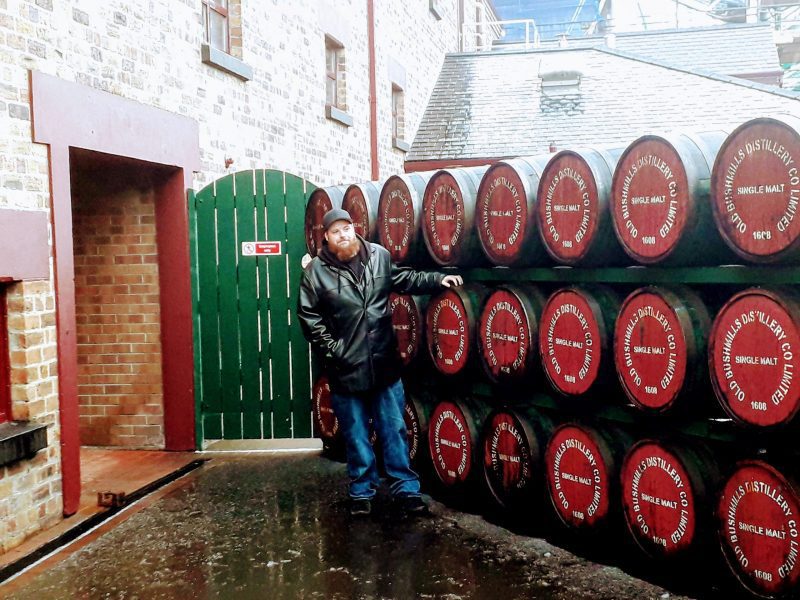
Bushmills Distillery, the oldest licensed whiskey distillery in the world, is minutes from Dunluce. Tours run daily and the tasting room is excellent. If you are driving, have a designated driver.
Other nearby highlights include the Downhill Demesne with Mussenden Temple perched on its own clifftop, the Dark Hedges (the beech-lined avenue used as the King’s Road in Game of Thrones), and the Royal Portrush Golf Course. I cover all of these in detail in my Causeway Coast guide.


Getting Married at Dunluce Castle
Given that my parents got engaged at Dunluce, I am perhaps not an impartial witness here. But the castle ruins offer some of the most dramatic and romantic backdrops in Ireland for wedding photography, and the surrounding landscape is extraordinary in every season. Epic Love Photography offers services specifically for Dunluce Castle shoots and can handle all the logistics.
Continue Planning Your Ireland Trip
Public Transportation in Ireland
Northern Ireland Public Transportation
Exploring the Troubles: Taking a Black Taxi Tour
53 Ultimate Ireland Travel Tips
Hidden Gems in Northern Ireland
Abandoned Castles in England and the UK
Frequently Asked Questions About Dunluce Castle
Is Dunluce Castle worth visiting?
Yes, without reservation. Dunluce Castle is one of the most dramatically situated ruins in Ireland, combining genuine historical depth, Irish folklore, extraordinary cliff-edge views, and proximity to the other major attractions of the Causeway Coast. It rewards a slow visit rather than a quick photo stop.
How much does it cost to get into Dunluce Castle?
Adult entry is GBP 5.25. Children aged 5 to 17 pay GBP 3.50, and children under 5 enter free. Seniors, students, and benefit claimants pay GBP 3.95 with ID. A family ticket (up to 5 members, including up to 3 adults) costs GBP 15.75. Parking and access to the grounds and visitor centre are free.
Is Dunluce Castle in Game of Thrones?
Yes. Dunluce Castle was used as Castle Greyjoy, the seat of House Greyjoy on the Iron Islands, in the HBO series Game of Thrones. CGI was used to modify and extend the castle’s appearance, but the real ruin is still clearly recognisable in the show.

How do I get to Dunluce Castle without a car?
Take the train from Belfast to Portrush, which takes approximately two hours. From Portrush, Dunluce is 3.5 miles east: around an hour’s walk through beautiful coastal scenery, or a GBP 15 taxi ride. Seasonal bus services including the Causeway Rambler (Ulsterbus 402) also stop at Dunluce from June to September.
Can you go inside Dunluce Castle?
Yes. With a paid entry ticket you can walk across the bridge onto the castle promontory, explore the ruins of the great hall, kitchens, and residential apartments, and descend the 115 steps to the Mermaid’s Cave below. Interpretive plaques throughout the site explain the history of each area.
What are the legends and ghost stories of Dunluce Castle?
The two best-known legends are the collapse of the castle kitchen into the sea during a storm (disputed by historians but still widely told) and the story of Maeve Roe, a MacQuillan daughter imprisoned in the castle tower who escaped with her lover to the Mermaid’s Cave below and drowned when their boat was smashed against the cliffs. Her ghost is said to be the Banshee of Dunluce, heard wailing above the waves on stormy nights.

Is Dunluce Castle accessible for disabled visitors?
The grounds, visitor centre, and the route across the bridge to the main castle ruins are accessible. The Mermaid’s Cave, reached by 115 steep and sometimes slippery steps, is not accessible for those with mobility challenges. As a mobility-challenged traveller myself, I would say the accessible areas of the site are substantial and well worth the visit on their own terms.
Have you visited Dunluce Castle, or is it on your list for your Ireland trip? I would love to hear about your experience in the comments.
Travelling with limited mobility? Our Accessible Northern Ireland Guide covers wheelchair-friendly attractions, accessible transport, and first-hand mobility tips across Belfast, the Causeway Coast, and Derry.
Planning a trip to Northern Ireland? Our complete Northern Ireland Travel Guide covers Belfast, the Causeway Coastal Route, county guides, hidden gems, itineraries, food, and local tips from a Donegal native. Explore more of the region with guides to England, Scotland, Wales, or the full United Kingdom Travel Guide.
Start Planning Your Trip
👉 Public Transportation in Ireland
👉 Hidden Gems in Ireland – 32 Secret places to visit
👉 Answering all your travel questions about Ireland
👉What to pack for your Ireland trip
👉 Northern Ireland Public Transportation