
22 Best Things to Do on Rathlin Island, Northern Ireland
| Rathlin Island is Northern Ireland’s only inhabited offshore island, 10 kilometres from Ballycastle across the Sea of Moyle. A 25-minute ferry ride brings you to Ireland’s largest seabird colony, puffins, Viking history, Robert the Bruce legends, and dramatic clifftop walking trails. Best visited between April and August for puffins. A day trip works; an overnight stay is better. |

- 22 Best Things to Do on Rathlin Island, Northern Ireland
- Why Rathlin Island Belongs on Your Northern Ireland Itinerary
- What Is Rathlin Island? Definition and Key Facts
- Rathlin Island History: From Viking Raids to Wireless Signals
- How to Get to Rathlin Island: Ferry from Ballycastle
- 22 Best Things to Do on Rathlin Island
- Rathlin Island Code of Conduct
- Rathlin Sound Maritime Festival
- Where to Stay on Rathlin Island
- Where to Stay in Ballycastle Before or After Your Ferry
- What to Do Near Rathlin Island on the Causeway Coastal Route
- Is Rathlin Island Worth the Trip?
- Frequently Asked Questions About Things to Do on Rathlin Island
Why Rathlin Island Belongs on Your Northern Ireland Itinerary
If you want to do things to do on Rathlin Island properly, the first thing you need to understand is that this is not a managed tourist attraction. It is a living island. Around 150 people make their lives here year-round, and the ferry from Ballycastle feels less like boarding a tour boat and more like stepping into someone else’s ordinary Tuesday.
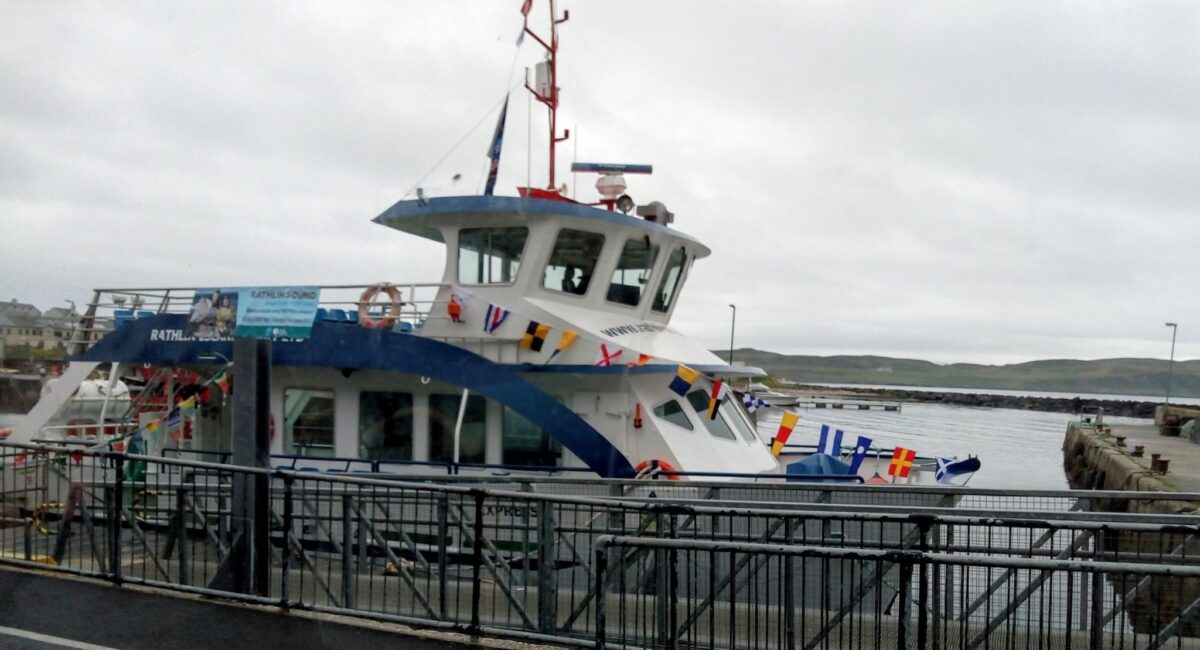
I am Irish-Canadian, I live in Donegal, and I have been making this crossing for years, taking friends, family, and visitors who come to stay with me on the north coast. Every single time, without exception, people step off the ferry and visibly change pace. The noise of the mainland drops away. And then a puffin pops its head over a cliff ledge and suddenly everyone is reaching for their cameras and forgetting entirely that they were tired.
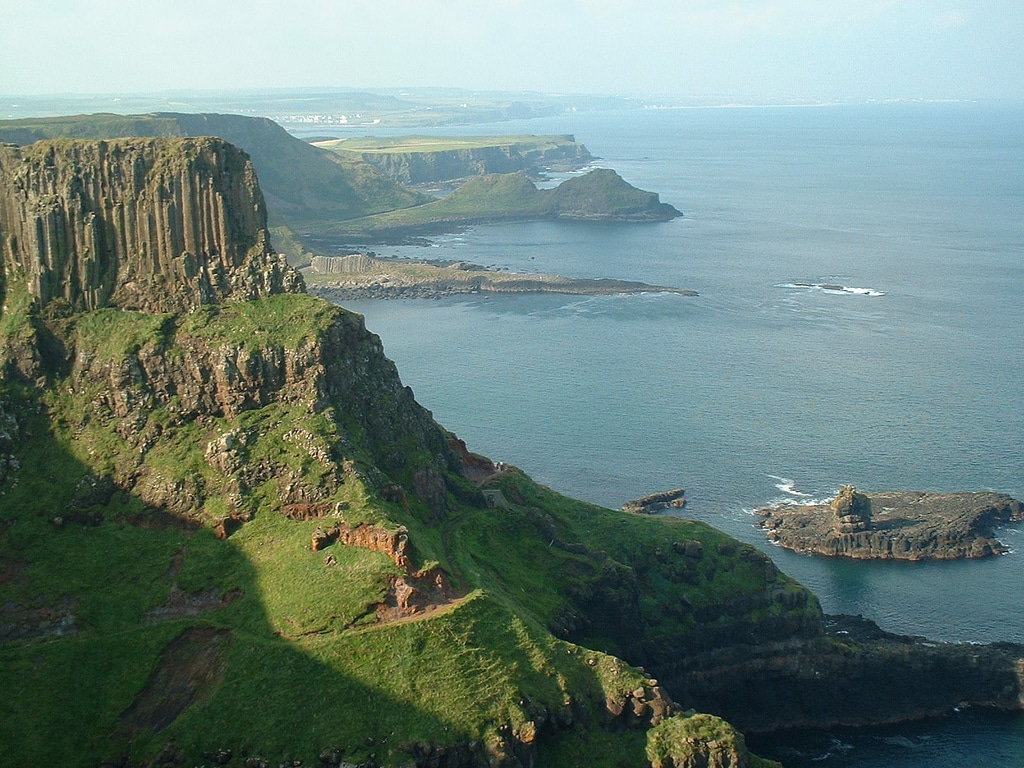
Rathlin Island sits on the Causeway Coastal Route but is almost always skipped by visitors in a hurry to reach the Giant’s Causeway or the Game of Thrones filming locations further along the Antrim coast. That is their loss and your opportunity. This guide covers the 22 best things to do on Rathlin Island, the full story of how to get there, where to stay, and the island’s extraordinary history including its place in Irish folklore, the Robert the Bruce legend, and one of the most notorious massacres of the Tudor period.
What Is Rathlin Island? Definition and Key Facts
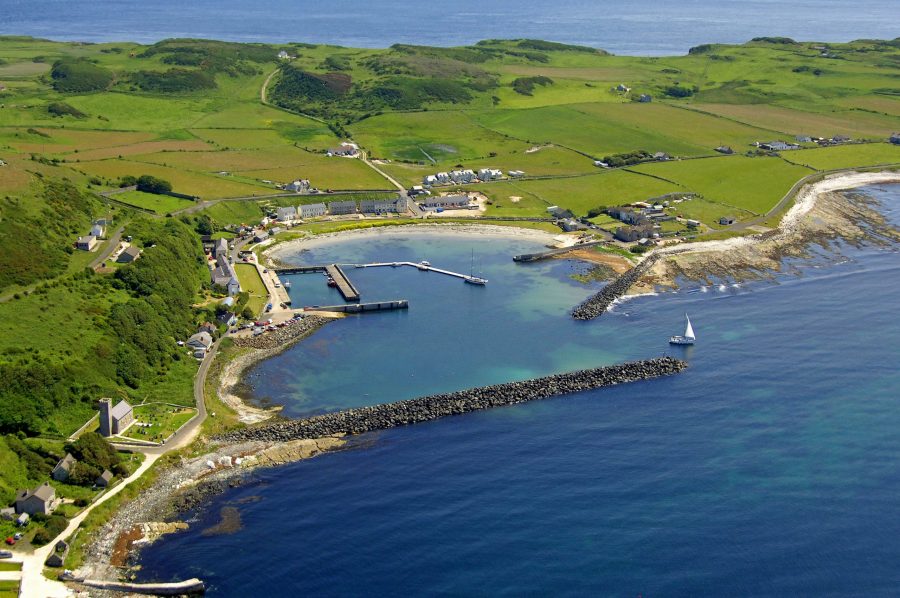
| Rathlin Island is Northern Ireland’s only permanently inhabited offshore island, part of County Antrim. It lies approximately 10 kilometres north of Ballycastle across the Sea of Moyle, the stretch of water between the northeast Irish coast and the Mull of Kintyre in Scotland. The island measures roughly 6.5 kilometres long, is home to around 150 permanent residents, and hosts Ireland’s largest seabird colony at its western cliffs. |
The name Rathlin derives from the Irish Reachlainn, most commonly translated as the place of many shipwrecks. The name was earned honestly. Where the Irish Sea and the North Sea meet off the island’s shores, currents form that have claimed more than 40 known wrecks over the centuries, from Viking longships to World War I armoured cruisers. Those same dangerous tides are also part of why the island remained distinct from the mainland, developing its own character, its own stories, and its own deep seam of Irish folklore.
On a clear day standing anywhere on the island’s north shore, you can see the Mull of Kintyre in Scotland and the Scottish islands of Islay and Jura. This geographical closeness to Scotland is not incidental; it shaped the island’s entire history, from its role in the ancient Kingdom of Dalriada to its connection with Robert the Bruce, to the long dispute over whether Rathlin legally belonged to Ireland or Scotland at all.
That dispute was finally settled in 1617 by a test that had also been applied to the Isle of Man: if a poisonous serpent could survive on the island it was taken as part of the British mainland. If it died, the island was Irish. The serpent died, and Ireland was declared the rightful owner.
Rathlin Island History: From Viking Raids to Wireless Signals
Archaeologists believe humans first arrived on Rathlin between 6000 and 5000 BC, crossing from nearby Scotland. This makes Rathlin likely the first Irish island to be inhabited. For most of its early history the island sat at the centre of the Kingdom of Dalriada, the Gaelic kingdom stretching from Antrim to the Scottish Isles between the 5th and 8th centuries. That dual identity, part Irish, part Scottish, shaped everything that followed.
The First Viking Raid on Irish Soil
Rathlin holds the grim distinction of being where the first recorded Viking raid in Ireland took place, in 795 AD. The monastery on the island was plundered and burned; monks were killed or taken. The church at Church Bay, originally dedicated to Saint Thomas and founded in 580 AD, was destroyed in a subsequent Viking attack in the 8th century. The current building dates from 1812.
What strikes me every time I visit is how physically small the island is and yet how enormous its historical footprint is. Standing at the harbour looking back toward the sea, it is not hard to imagine Viking ships appearing on the horizon. The island has no natural defences beyond the treacherous currents. The community here was always exposed.
The Rathlin Island Massacre, 1575
The most notorious event in the island’s history, and one of the darkest in Irish history generally, took place in 1575. Sorley Boy MacDonnell, the Ulster chieftain leading resistance against English crown forces during the sieges of Ulster, used Rathlin as a sanctuary for his family and the families of his fighters while they battled on the mainland.
Sir Francis Drake and the forces of the Earl of Essex besieged Rathlin Castle. When the garrison surrendered on agreed terms of safe passage, those terms were immediately broken. English forces hunted down every woman, child, elderly person, and sick person sheltering in the island’s caves and killed them all. The entire family of Sorley Boy MacDonnell was among the dead.
The Earl of Essex reported the massacre to Queen Elizabeth with evident satisfaction, noting that Sorley Boy MacDonnell watched from the mainland helplessly and was like to run mad from sorrow. The episode is central to Rathlin’s identity. The caves where the families were found are still there.
Robert the Bruce, Irish Folklore, and the Cave Beneath the Lighthouse
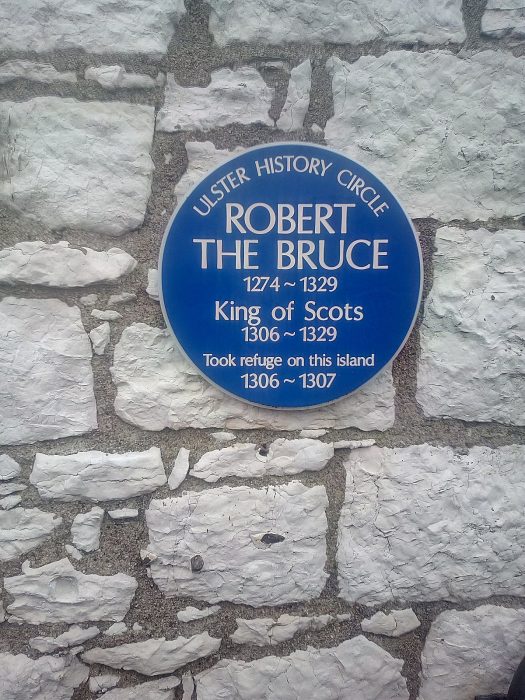
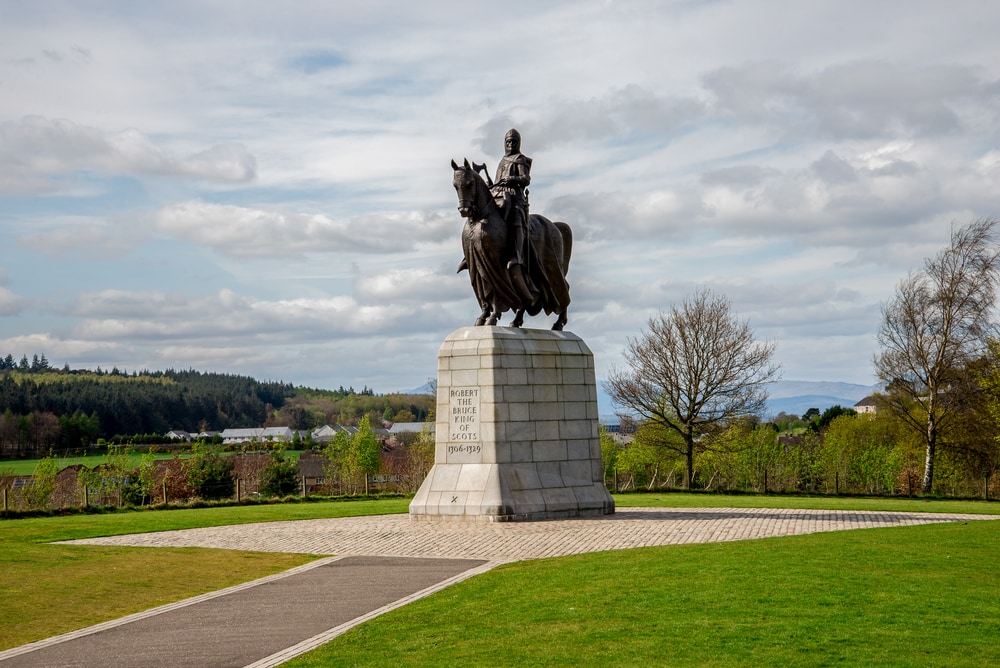
After his defeat by Edward I of England in 1306, Robert the Bruce, King of Scots, fled to Rathlin Island and sheltered in a sea cave beneath what is now the East Lighthouse, known today as Bruce’s Cave. It is only accessible by boat.
The legend everyone knows is the spider. While hiding in the cave, Bruce watched a spider attempt again and again to spin its web across an impossible gap. The spider eventually succeeded. Bruce took this as his inspiration to return to Scotland and fight again. He won the Battle of Bannockburn in 1314 and secured Scottish independence.
What is less often told is the layer of Irish folklore that surrounds this story on the island itself. The ancient ruin known as Bruce’s Castle, standing on a rock above the sea, sits at the centre of a legend that says Bruce and his warriors do not sleep in Scotland but here, in an enchanted sleep beneath the castle, waiting to awaken and unite the island with Scotland. Fishermen who sheltered in the ruins at night reportedly told of a mysterious hand reaching out from the dark, holding a cup.
Is Bruce’s Castle on Rathlin Island haunted? By any reasonable measure, yes. The castle is not haunted in the theatrical sense of rattling chains and dramatic apparitions like many haunted locations in Northern Ireland. It is haunted in the older Irish way, the way a place absorbs what has happened there and holds it. Fishermen who took shelter in the ruins during storms reported a hand emerging from the darkness holding a cup, an offering or a warning depending on who was telling the story.

Island tradition says that Bruce and his warriors lie in an enchanted sleep beneath the rock, not dead but waiting, and that the castle above them is a kind of threshold between the ordinary world and whatever lies beneath it. I have stood inside those ruins on a calm summer afternoon and felt the particular unease that very old, very storied places carry. It is not fear exactly. It is the sensation of standing somewhere that remembers things you do not. Whether you believe in hauntings or not, Bruce’s Castle earns its reputation. The stone, the sea below, the silence, and seven centuries of accumulated legend make it one of the most genuinely atmospheric places on the Irish coast.
This sits within the broader tradition of Irish folklore around Rathlin as an Enchanted Island, one of those places said to rise from the sea once every seven years. The legend holds that if you can throw a pebble or clod of soil onto the island before it sinks again, it will remain above the waves permanently. These are the kinds of stories that accumulate on islands that have been at the edge of the known world for thousands of years, and they are part of what Rathlin is.

Marconi and the First Commercial Wireless Transmission
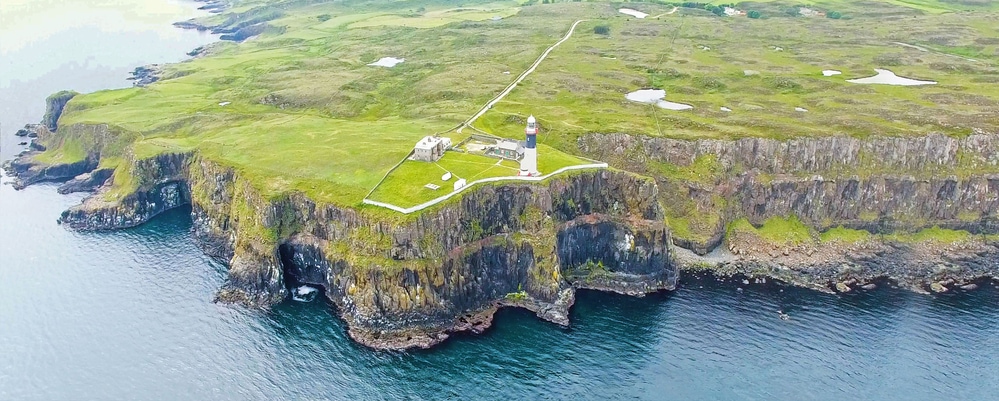
In 1898, Rathlin East Lighthouse became the site of something genuinely world-changing. Guglielmo Marconi used the lighthouse to demonstrate the first commercial application of wireless communication. His client was Lloyd’s of London, who needed rapid intelligence on shipping movements. Every vessel arriving from America and Canada on the route to Liverpool passed the lighthouse. Marconi’s wireless made it possible to relay that information to London in minutes. The lighthouse keeper’s logbooks and Marconi’s equipment changed the way information moved across the world.
How to Get to Rathlin Island: Ferry from Ballycastle
| Rathlin Island Ferry: Key Facts The Rathlin Island ferry departs from Ballycastle Harbour on the Antrim coast. The fast passenger ferry crosses in approximately 25 minutes. The slow vehicle ferry takes around 45 minutes. Private cars are not permitted on the island without a resident’s permit. Return fare: approximately £12 per adult. Summer sailings: around 9 per day on each service. Book in advance during peak season. |
Ballycastle itself sits squarely on the Causeway Coastal Route, making it easy to combine a Rathlin visit with the wider Antrim coast. The ferry crossing is part of the experience: on a calm day the crossing gives you time to get talking with islanders heading home, and on a rough day it gives you an immediate appreciation for why this stretch of water claimed so many ships.
We once shared the fast ferry with an older woman from the island who told us how, when she was young, the ferry ran so infrequently that island children were sent to boarding schools on the mainland rather than commuting. She described the ferry arriving to collect them for holidays and the entire island turning out to watch. These days children can attend school in Ballycastle or Belfast and come home on the evening sailing.

Step-by-Step: How to Plan Your Rathlin Island Visit
- Book your ferry crossing in advance, especially between April and August. Summer sailings fill quickly, particularly on weekends.
- Decide between a day trip and an overnight stay. A day trip is manageable if you take the first morning ferry. Two days lets you hike multiple trails and experience the island after the day visitors leave.
- Reserve a seat on Bert’s Puffin Bus as your first action after stepping off the ferry. It fills fast on busy days.
- Pack layers regardless of the time of year. The Sea of Moyle creates its own weather systems and conditions change without warning.
- Download the island trail map before you go. Mobile signal is unreliable across much of Rathlin.
- Bring cash. The only ATM on the island is at McCuaig’s Bar and it can run empty during busy periods.
- Leave your car in Ballycastle. The island is best explored on foot or by bicycle.
How Long Do You Need on Rathlin Island?
A single well-planned day is enough to cover the main highlights: the ferry crossing, Bert’s Puffin Bus to the West Light Seabird Centre, a walk on one of the shorter trails, lunch at the Watershed Cafe or Manor House, and a look around Church Bay and the Boathouse Visitor Centre. Take the last afternoon ferry back to Ballycastle.
For two days you can hike multiple trails, take a boat trip around the seabird colony and to Bruce’s Cave, visit all three lighthouses properly, and get a real feel for island life rather than island tourism. My honest recommendation is two days minimum. Rathlin at dawn, when the puffins are most active and the day visitors have not yet arrived, is a completely different experience from Rathlin at noon.

22 Best Things to Do on Rathlin Island
1. Visit the RSPB Rathlin West Light Seabird Centre
| What is the RSPB Rathlin West Light Seabird Centre? The RSPB Rathlin West Light Seabird Centre is a wildlife observation facility on the western tip of Rathlin Island, overlooking sea stacks and cliff faces that form part of Ireland’s largest seabird colony. The centre is open April to September. Entry to the main viewing platform costs £5 for adults, £3.50 for students, and £2.50 for children. |


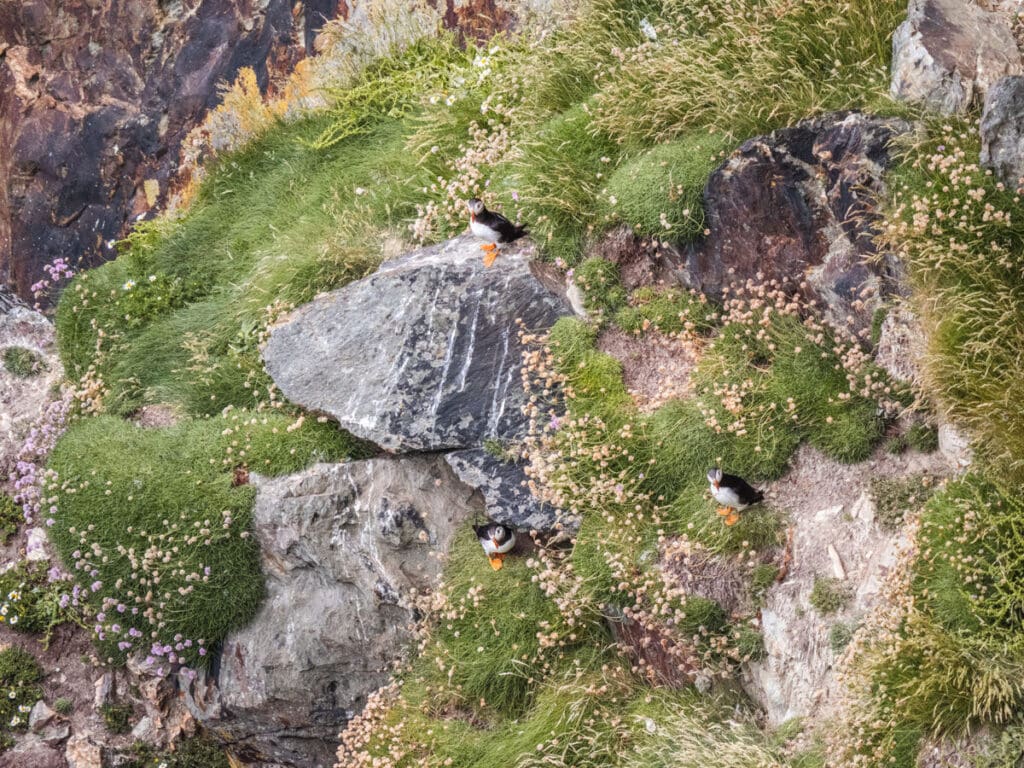
The seabird colony here is one of those genuinely jaw-dropping natural spectacles. Tens of thousands of birds pack every available ledge on the sea stacks below the lighthouse: puffins, razorbills, guillemots, and kittiwakes in numbers that take a moment to process. The noise alone, even from the viewing platform, is extraordinary. I have brought people here who have absolutely no interest in birdwatching who have stood at that railing for over an hour completely absorbed.

Reaching the best viewing point requires descending 98 steps down the cliffside, with a further 64 steps to the lighthouse floor. The centre building at the top is accessible. If the descent is not possible for you, the centre building still offers good views, though not the close-up perspective of nesting puffins.
When to see puffins on Rathlin Island: Puffins return to the island between April and mid-August. May and June are peak months when the greatest numbers are present. Outside this window, razorbills, guillemots, and kittiwakes remain, but the puffins will be at sea.


2. Take Bert’s Puffin Bus to the West Light
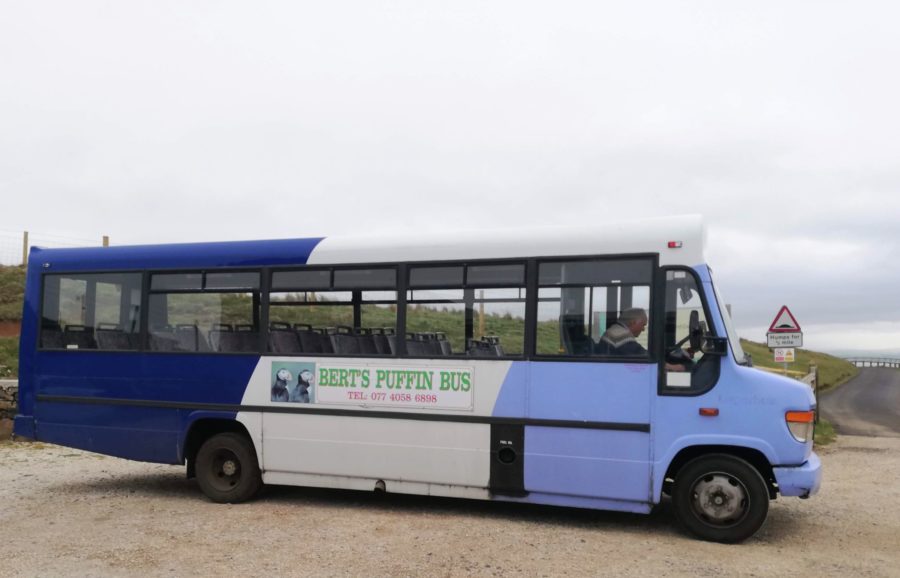
The moment you step off the ferry in Church Bay, Bert’s Puffin Bus will likely be waiting at the pier. This is the practical and beloved way to reach the RSPB West Light Seabird Centre without a four-mile walk. The round trip costs £5 per person.
Do not assume there will always be a seat. In peak puffin season, the bus fills quickly. Head straight to it before doing anything else. The drive across the island is also your first proper look at Rathlin’s interior: open moorland, stone walls, glimpses of the coast on both sides, and a running commentary from whoever is driving that day about the island’s history, its residents, and where to find things not listed in any guide.
3. Hike the Rathlin Island Walking Trails
Six marked walking trails cover the island, ranging from easy coastal loops to more demanding clifftop routes. All are well waymarked and all offer something distinct.
- Roonivoolin Walk: 4 miles, circular. Clifftop and lakeland walking, the most scenically dramatic trail on the island.
- Keeble Cliff Walk and Nature Reserve: 1.9 miles, circular. Open ground with coastal views and excellent birdwatching.
- Kinramer North Walk: 2.1 miles, circular. Open ground walking with views to Scotland on a clear day.
- Kinramer Permissive Path Trail: 1.9 miles, circular. Coastal views and good habitat for the island’s golden hare.
- Rathlin Trail: 4 miles, linear. The island’s signature walk, taking in the RSPB seabird viewpoint and coastal scenery.
- Ballyconaghan Trail: 4 miles, circular. Open hillside on the island’s north, with the best views to Scotland available on the island.
The Roonivoolin Walk is the one I suggest for first-time visitors on without exception. The combination of cliff edge, the lough below, and the absolute quiet of that clifftop, even in summer, reliably does something to people. You can see why this island collected so many legends. It feels like somewhere stories should happen.

4. Visit Rathlin West Lighthouse
The West Lighthouse holds a unique technical distinction: it is the only lighthouse in the world where the light is positioned at the bottom of the building rather than the top. This was the engineering solution to clearing the cliff edge above. The light also flashes red rather than white, another departure from lighthouse convention. Getting down to it involves descending the 98 cliffside steps to the viewing platform and then a further 64 steps inside the lighthouse itself. The view from the bottom, watching seabirds wheel past at eye level with the sea stacks below, is one of the most memorable things I have experienced on the island.

5. Explore the East Lighthouse and Bruce’s Cave
The East Lighthouse, built in 1856, stands at the opposite end of the island from the West Light and its white beam is the last thing you see as the ferry pulls away back toward Ballycastle. On a clear day the Scottish islands of Islay and Jura are visible from here.
Below the lighthouse lies Bruce’s Cave, accessible only by boat. This is the sea cave where Robert the Bruce sheltered during his exile from Scotland in 1306, and where, according to the most enduring legend in Rathlin’s Irish folklore tradition, he watched the spider and resolved to fight again. Arrange a boat trip from the harbour if visiting the cave is a priority.
Abhainn Cruises does a wonderful cruise from Ballycastle, which is perfectly situated along the stunning Causeway Coast with wonderful views of Rathlin Island that extend all the way to Scotland. The iconic cliffs of Fairhead sit proudly overseeing the busy town. You can get everything you want here, whether it’s Morton’s Fish & Chips, a tasty sit down meal in the Marine Hotel, bespoke Irish gifts and art, or the obligatory seaside ice-cream.

6. Visit the Ruins of Bruce’s Castle
The ruins sit on the island in suitably atmospheric condition, the stone worn by centuries of Atlantic weather. Given the layers of Irish folklore attached to this place, the sleeping warriors, the hand with the cup, the enchanted sleep waiting to be broken, these are ruins worth sitting with rather than glancing at. The castle was originally a stronghold of the MacDonnell clan and later became associated with the Bruce legend during his time on the island.

7. Dive the Wreck of HMS Drake
HMS Drake was an armoured cruiser torpedoed by the German submarine U-79 in October 1917, five miles north of Rathlin. Damaged and taking water, she headed for Church Bay, collided with the cargo vessel Mendip Range en route, and capsized in the bay. The wreck represents a rare intermediate armoured cruiser design that was quickly rendered obsolete, making it historically significant as well as a compelling dive site.
Scheduled under the Historic Monuments and Archaeological Objects legislation in May 2017, the wreck can be dived on a look but do not touch basis. For wreck divers, this is one of the most significant accessible sites on the entire coast of Ireland.
8. Spot Seals at Mill Bay
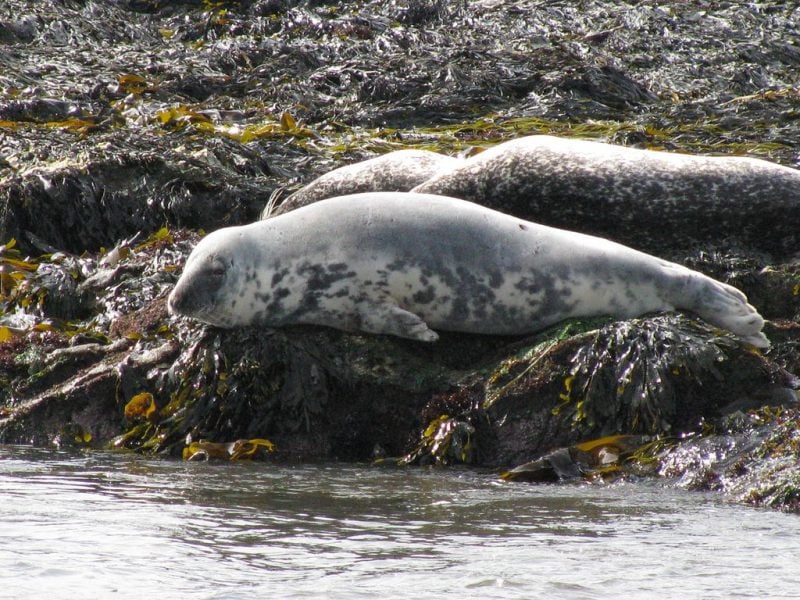
Just around the headland from Church Bay, Mill Bay is home to a resident seal colony that hauls out onto the beach and rocks to rest. Two species are present year-round. The common seal is smaller with a rounded, puppy-like face. The grey seal is considerably larger with a flatter, longer head.
Children love Mill Bay for the rock pools as much as the seals. If you photograph or observe the seals, follow these guidelines:
- Move slowly and make your approach visible.
- Never crowd, encircle, or make noise to attract the seals’ attention.
- Do not touch or attempt to feed the seals.
- If one or two seals raise their heads, stop moving immediately.
- If any seals enter the water, you are already too close and must retreat.

9. Watch for Golden Hares, Orchids, and Minke Whales
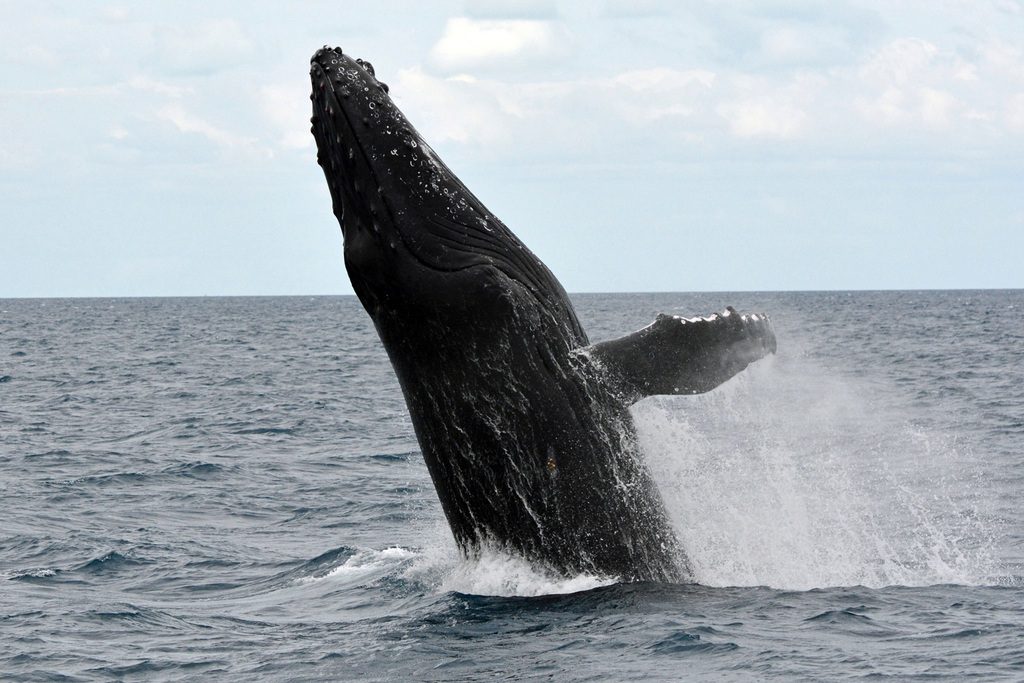
Rathlin’s wildlife extends well beyond its seabirds. The island is home to a subspecies of the Irish hare with distinctively golden colouring and blue eyes, and watching them race across open moorland is one of those things that makes you stop walking entirely. The meadows in spring are carpeted with wild orchids and pyramidal bugle. Keep your eyes on the water when crossing to or from the island as Minke whales are occasionally spotted offshore, particularly in calmer summer conditions.

10. Explore Church Bay and the Island’s Two Churches
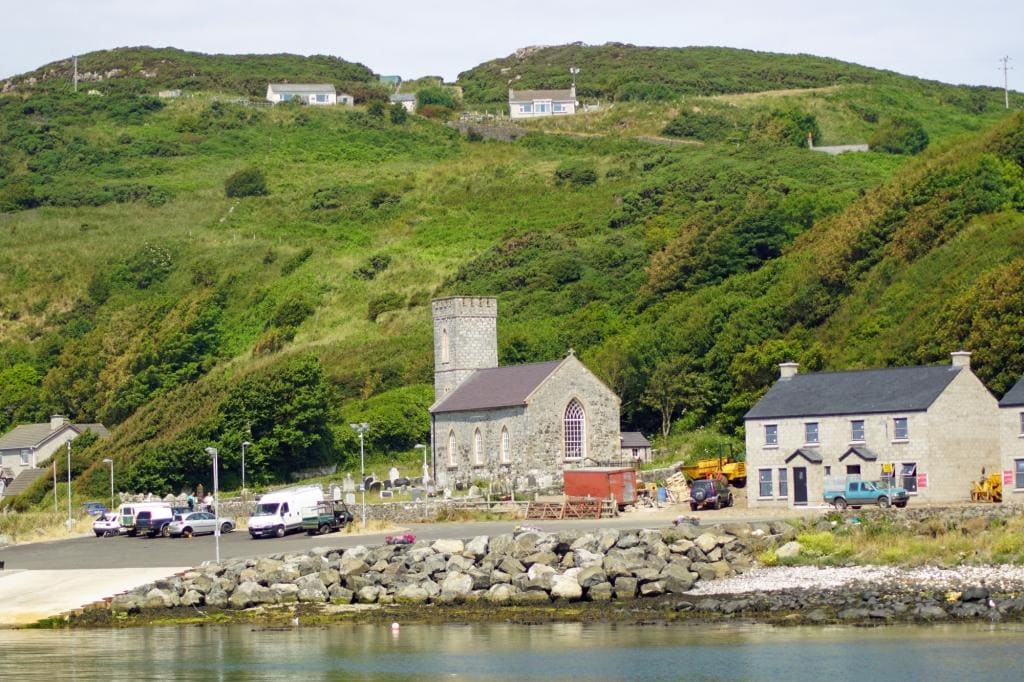
Church Bay is the island’s main harbour area and social hub. It takes its name from the first church established here in 580 AD. The current St Thomas’s Church of Ireland building dates from 1812, rebuilt after the 8th century Viking raid destroyed its predecessor.
The Church of the Immaculate Conception stands nearby. During the Penal Laws, when Catholic worship was illegal across Ireland, Rathlin’s Catholic community gathered at Ballynagard in the centre of the island, celebrating Mass beneath a rock formation. That history sits quietly behind the modern church walls and connects Rathlin to the wider story of Irish Catholic survival during the Penal period.
11. Visit the Boathouse Visitor Centre
A short walk from the ferry pier, the Boathouse Visitor Centre holds artefacts, photographs, and documents covering island life across the centuries. The staff are islanders, which makes this one of the genuinely best places on Rathlin to ask questions. No guide covers everything; the people who live here do. It also sells local books and souvenirs.


12. Eat at the Watershed Cafe
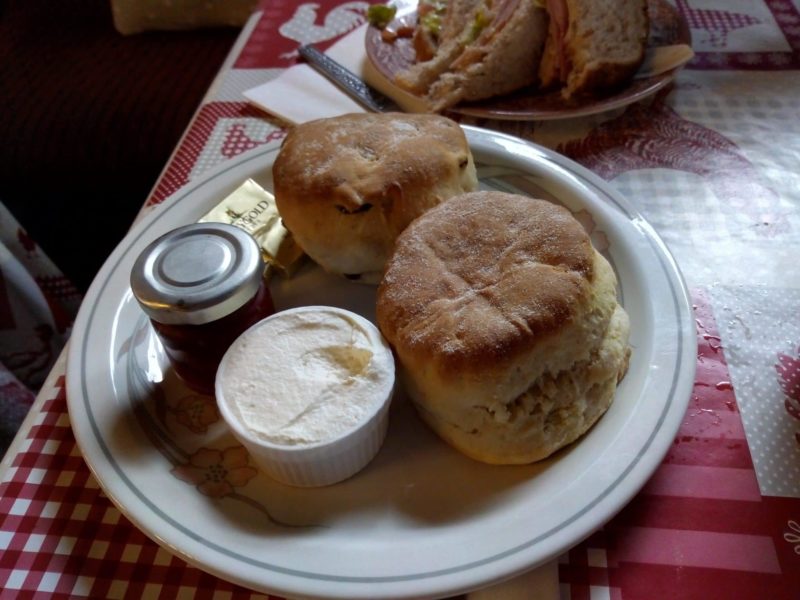
The Watershed Cafe, a small, welcoming cottage by the quay formerly known as the Harbour Cafe, serves coffee, teas, sweet and savoury crepes, fresh-baked scones, cakes, and tray bakes. After a morning of hiking or seabird watching it is exactly the right place to land. The scones are genuinely excellent and the coffee is strong enough to notice.
13. Stay or Take Coffee at the Manor House Hotel
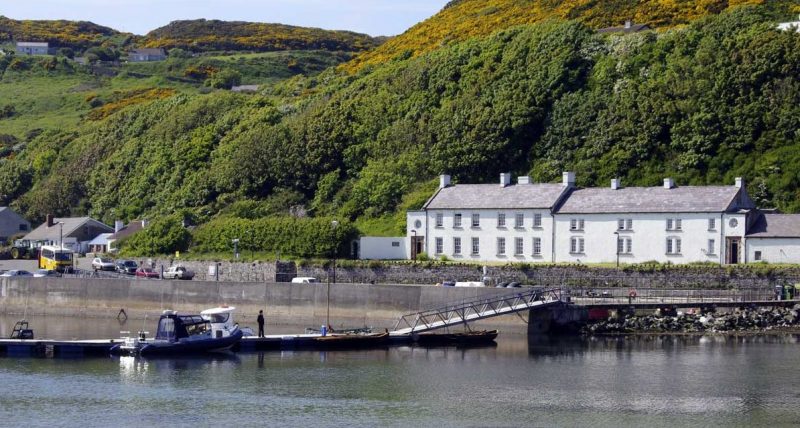
The large Georgian manor house above the harbour was built in the 1870s for the Gage family, who purchased Rathlin Island from Lord Antrim in 1746. It operates today as guest accommodation with a licensed cafe open to non-staying visitors, offering views across the harbour and out to the Atlantic. Even on a day trip, it is worth coming in for coffee and a look at the building’s history.

14. Hire a Bicycle
Since visitors cannot bring cars to the island, traffic is minimal, making cycling an ideal way to explore. Bikes must be booked in advance to ensure the right fit for each rider, and helmets are included. Every bike is “bench checked” after each hire, with day hire running from 10.00am to 5.00pm. The owners can recommend routes based on age and ability, and child seats are available for children up to 22kg (approx. 3 years old). Cycle hire is by booking only—contact 028 2076 3954 or john_jennifer@btinternet.com.

15. Walk Through Kebble Lough and Nature Reserve
On the route to the West Lighthouse, the path passes Kebble Lough, a scenic lake and wetland that attracts nesting ducks, coots, grebes, and snipe. In spring this is also where you are most likely to spot the golden hare in the surrounding moorland, and where wild orchids and pyramidal bugle are at their most abundant. The Keeble Nature Reserve is part of the same trail system.

16. See the Rue Lighthouse and the Causeway Coast View
The Rue Lighthouse on the island’s southern tip is the least dramatic of the three lighthouses architecturally, but the view from that point, with the Causeway Coast visible in one direction and the Scottish coast in the other, is one of the most satisfying on the island. On a good day you can see both countries simultaneously from a single spot.

17. Browse Breakwater Studio
Breakwater Studio is the gallery and workshop of artist Yvonne Braithwaite, whose acrylic work captures the island’s landscapes and wildlife. The studio also sells cards, wildlife paintings on stone under the name Rathlin Rock, handmade Rathlin Mugs, Field Day candles, soaps, diffusers, and locally made giftware. If you want to bring something genuinely from the island back with you rather than something that could have come from any gift shop anywhere, this is the place to find it.

18. Shop at the Rathlin Island Co-op
The island’s community-run shop operates with paid staff and volunteers, selling household goods and provisions. Pick up supplies for your hike here, and if the fishing boats have been out, take some locally caught crab back to the mainland. Spending in the co-op goes directly to supporting the island community that makes Rathlin what it is.
19. Mail a Postcard from the Rathlin Island Post Office
The post office is inside the Island Treasures gift shop. Letters and cards sent from here receive the unique Rathlin Island postmark. It is a small thing but one that people remember and, in practice, one that makes a postcard into a keepsake rather than just a postcard.
20. Have a Pint at McCuaig’s Bar
McCuaig’s is the island’s only pub, located in Church Bay. It is also where you will find the island’s only ATM. The pub carries the kind of atmosphere that comes from being the single social gathering point for a small, permanent community and its visitors. Spending an hour here, particularly in the evening after the day visitors have gone, gives you a sense of island life that no wildlife trail can.

21. Take a Boat Trip to the Seabird Colony and Bruce’s Cave
Commercial charter boat trips run year-round from Rathlin Island Harbour, specialising in wildlife expeditions and access to locations unreachable on foot. In summer, daily trips head to the West Lighthouse seabird colony. Seeing tens of thousands of birds from sea level rather than cliff height is a completely different experience, and gives you the closest views of the sea stacks and cliff faces where the colony nests. Tickets for the bird colony trip are approximately £10 per person for a one-hour trip. The boats also access Bruce’s Cave, the only practical way to see it. See #5 above for links.
22. Stay in the Rathlin Glamping Pods
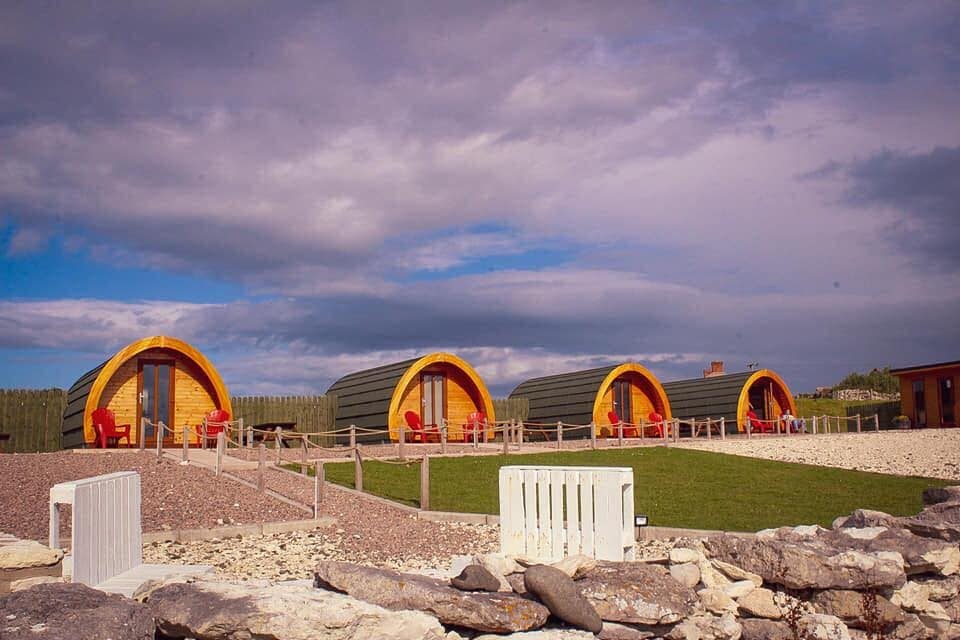
The Rathlin Glamping Pods offer self-contained accommodation with ensuite facilities, sleeping up to four people per pod, with views across the Sea of Moyle. Having the island after the last day ferry departs is the experience that changes your understanding of Rathlin entirely. The puffins are most active in early morning. The light on the water at dusk from the island’s western cliffs is something that does not need embellishment.
Rathlin Island Code of Conduct
Rathlin Island asks all visitors to follow a code of conduct to protect the island environment and the community that lives here year-round:
- Enjoy the island and respect its life and work.
- Take your litter home or use the bins provided.
- Take care on the roads: drive carefully, cycle on the left, walk on the right.
- Guard against all risk of fire.
- Avoid damage to walls and fences.
- Keep dogs on a lead at all times.
- Protect all domestic animals, wildlife, plants, and trees.
- Respect the residents’ privacy and property.
- Leave Rathlin as you found it, or better.
Rathlin Sound Maritime Festival
Held at the end of May or early June each year, the Rathlin Sound Maritime Festival celebrates the maritime heritage of the Antrim coast with tours, talks, tall ships, live music, an artisan market, and exhibitions. If your travel dates overlap with the festival, plan around it rather than away from it. It draws the island’s history and its community together in a way that is genuinely worth experiencing.

Where to Stay on Rathlin Island
Accommodation on the island is limited and books up quickly in summer. Everything available is well run. Book as early as you can.
Manor House Rathlin Island
The Georgian manor house above Church Bay harbour offers bed and breakfast accommodation with free wifi, a 24-hour front desk, a children’s playground, and a shared lounge. A full Irish breakfast is served each morning with vegan and continental options available. The views from the house across the harbour are exceptional.
Arkell House Bed and Breakfast
Located near Church Bay with three guest rooms, full breakfast, free wifi, and a garden. A practical base for hikers and cyclists who want to cover the island’s trails over more than one day.
Church Bay House
Church Bay House Rathlin in Rathlin Island offers a holiday home with three bedrooms and a living room. The property includes a fully equipped kitchen, washing machine, and a cosy fireplace.
Rathlin Glamping Pods
Self-contained pods sleeping up to four, each with ensuite facilities and views of the Sea of Moyle. The most atmospheric overnight option on the island, particularly if you want early access to the puffin colony before day visitors arrive.


Where to Stay in Ballycastle Before or After Your Ferry
The Old Manse
We stayed here on our first visit to Ballycastle and have returned regularly. Five minutes from the town centre, 7 beautifully appointed rooms, free wifi, a stunning garden, hot tub, sauna, free bicycles. For a romantic stay or a comfortable base for the wider Causeway Coastal Route, it is hard to improve on for a large group or family.

The Abbey Movie House
A townhouse sleeping up to nine people, fully equipped including a dishwasher, washing machine, and a spectacular movie room with a giant screen and Netflix. Tea, coffee, and breakfast basics left for guests. An excellent option for groups or families combining a Rathlin trip with wider Antrim Glens and coast exploration.
The Salthouse Hotel
A fully accessible hotel with elevators and wheelchair accessible rooms. The Salthouse offers direct beachfront access, a sun terrace, and a lush garden. The restaurant serves a great Full Irish breakfast as well as vegan and vegetarian options.

What to Do Near Rathlin Island on the Causeway Coastal Route
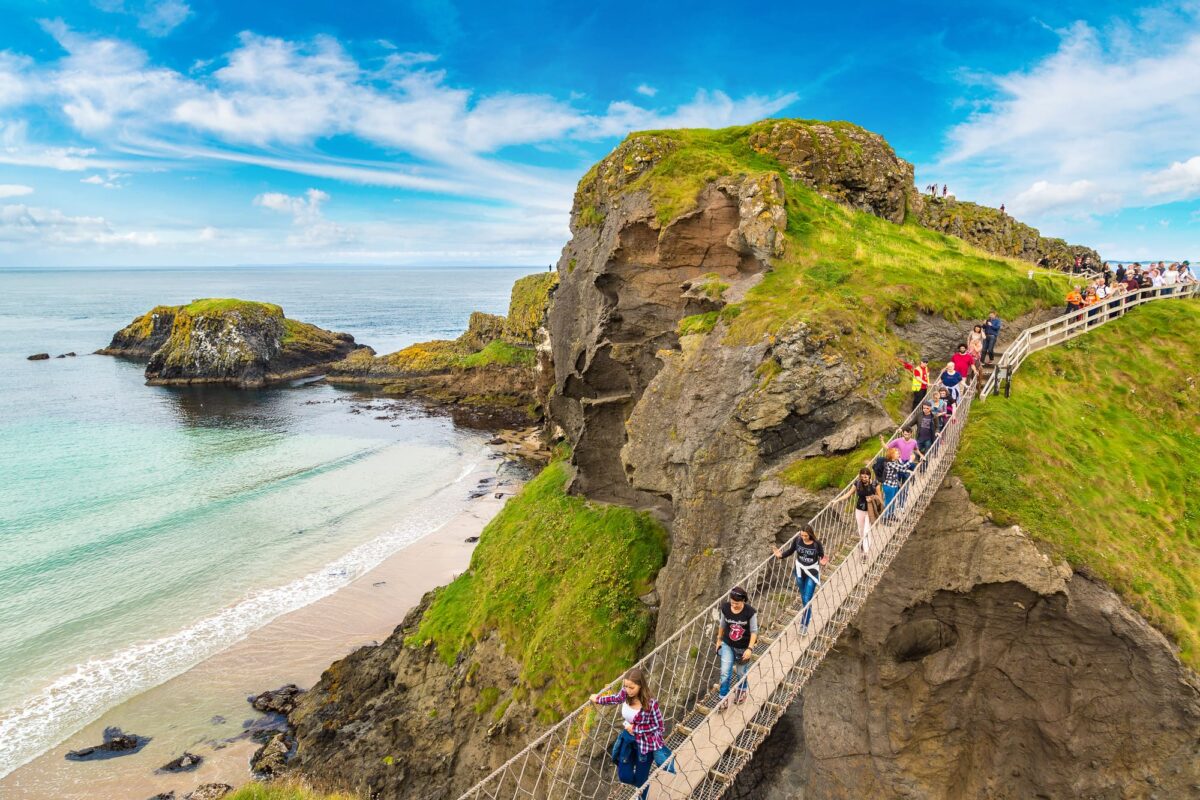
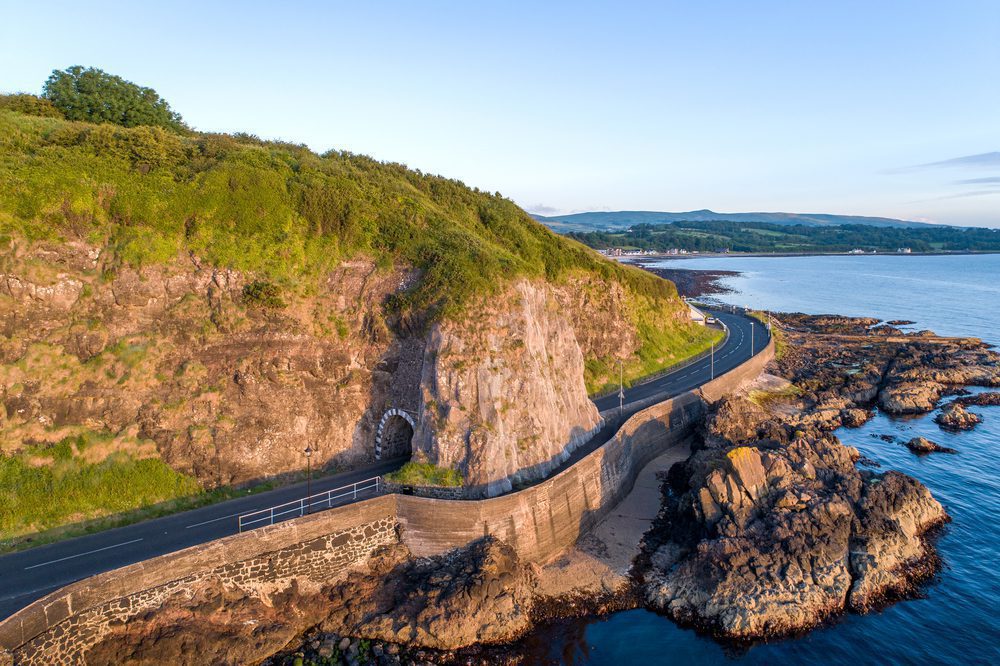
From Ballycastle you can walk the Carrick-a-Rede Rope Bridge, explore the ruins of Dunluce Castle, hike the Giant’s Causeway, and visit the Game of Thrones filming locations along the Antrim coast. See my Northern Ireland Travel Tips Guide and the 60 Best Northern Ireland Tourist Attractions for a full breakdown of what to include in a wider Antrim itinerary.

Is Rathlin Island Worth the Trip?
The best things to do on Rathlin Island are not any individual activity. The puffins are extraordinary, the history is remarkable, the walking trails are among the finest on the Irish coast. But what makes Rathlin genuinely different from every other attraction along the Causeway Coastal Route is that it is not a managed experience. It is a real place where real people live real lives, and you are a visitor to that, not a customer of it.
I have watched people who came for the puffins end up fascinated by the massacre caves. History enthusiasts who arrived for Robert the Bruce and left talking about the seals at Mill Bay. First-time visitors to Ireland who said afterwards that Rathlin was the moment Ireland made sense to them as a place, rather than just a series of scenery.
That is what the island does if you give it the chance. Go for the things to do on Rathlin Island. Stay for what the island itself teaches you.
Frequently Asked Questions About Things to Do on Rathlin Island
How do I get to Rathlin Island from Ballycastle?
Rathlin Island Ferry operates from Ballycastle Harbour on the Antrim coast. The fast passenger ferry takes approximately 25 minutes. The slow vehicle ferry takes around 45 minutes. Private cars are not permitted on the island without a resident’s permit, so most visitors travel as foot passengers on the fast ferry. Return fare is approximately £12 per adult. In summer there are around nine sailings per day in each direction. Book in advance during peak months, particularly May, June, and July.
When is the best time to visit Rathlin Island for puffins?
Puffins are present on Rathlin Island between April and mid-August, returning each year for breeding season. May and June are the peak months when the greatest numbers are present at the RSPB West Light Seabird Centre. Outside this window, razorbills, guillemots, and kittiwakes remain active at the colony, but the puffins will have departed for the open ocean until the following spring.

Can you stay overnight on Rathlin Island?
Yes, and an overnight stay is strongly recommended. Accommodation options include the Manor House bed and breakfast, Arkell House bed and breakfast and the Rathlin Glamping Pods. Numbers are very limited and summer availability goes quickly. Book well in advance. Staying overnight allows you to experience the island in the early morning and evening, when the day visitors have gone and the puffins are most active.
What is the Rathlin Island massacre?
The Rathlin Island massacre took place in 1575 during the Tudor conquest of Ulster. Sorley Boy MacDonnell had used the island as a sanctuary for his family and followers’ families while he fought English crown forces on the mainland. When the garrison at Rathlin Castle surrendered to Sir Francis Drake and the Earl of Essex on agreed terms of safe passage, those terms were broken immediately. English forces hunted down the women, children, elderly, and sick sheltering in the island’s caves and killed them all. The Earl of Essex reported the massacre to Queen Elizabeth with evident satisfaction.

What is the connection between Rathlin Island and Irish folklore?
Rathlin Island has a rich tradition in Irish folklore. The island features in the legend of the Enchanted Island, said to rise from the sea once every seven years, permanently saved if someone can throw soil or a pebble onto it before it sinks again. The ruins of Bruce’s Castle are surrounded by legends of enchanted sleep and mysterious presences. Rathlin is also where the Robert the Bruce and spider legend is rooted, and the island’s long history of Viking raids, massacres, and shipwrecks has given it a mythic quality in the Irish storytelling tradition.
What is the connection between Rathlin Island and Robert the Bruce?
After his defeat by Edward I of England in 1306, Robert the Bruce sought refuge on Rathlin Island and sheltered in a sea cave beneath the East Lighthouse, now known as Bruce’s Cave. The famous legend holds that while in hiding he watched a spider repeatedly attempt to spin its web across an impossible gap until it succeeded, inspiring him to return to Scotland and fight again. He won the Battle of Bannockburn in 1314. Bruce’s Cave is only accessible by boat from the island harbour.
Is Rathlin Island accessible for people with mobility challenges?
The harbour area and Church Bay are relatively flat and manageable. The RSPB centre building at the top of the West Light is accessible. However, reaching the best puffin viewing point requires descending 98 cliff steps, and most walking trails cross uneven terrain. Bert’s Puffin Bus significantly reduces the walking distance to the seabird centre. Contact the RSPB and ferry operators in advance to discuss specific accessibility requirements. I write about accessible-travel-guides-ireland-uk-europe and can confirm that Rathlin rewards careful advance planning for those with mobility challenges.
Is there an ATM on Rathlin Island?
Yes, there is one ATM on Rathlin Island, located at McCuaig’s Bar in Church Bay. It can run out of cash during busy periods. Bring cash from Ballycastle before crossing as card payment options on the island are limited across most businesses.
What wildlife can you see on Rathlin Island beyond puffins?
Rathlin supports an exceptional range of wildlife. The island hosts both common and grey seals, visible year-round at Mill Bay. Minke whales are occasionally spotted offshore in calmer summer conditions. On land the island is home to a distinctive subspecies of the Irish hare with golden colouring and blue eyes. In spring the meadows are carpeted with wild orchids and pyramidal bugle. The wetland at Kebble Lough attracts nesting ducks, coots, grebes, and snipe. The seabird colony at the West Light includes razorbills, guillemots, kittiwakes, and fulmars alongside the puffins.

Travelling with limited mobility? Our Accessible Northern Ireland Guide covers wheelchair-friendly attractions, accessible transport, and first-hand mobility tips across Belfast, the Causeway Coast, and Derry.
Planning a trip to Northern Ireland? Our complete Northern Ireland Travel Guide covers Belfast, the Causeway Coastal Route, county guides, hidden gems, itineraries, food, and local tips from a Donegal native.
Join 7,500 Ireland travellers in my Ireland Uncovered Facebook Group and 1,897 on my XYUandBEYOND PAGE
Those glamping pods are cute! Lots of interesting things to do on Rathlin island.
What a lovely sounding place to visit! Seeing puffins is on my wishlist and this sounds like such a peaceful place.
Such an idyllic and picturesque location to relax and enjoy the local environment, whilst soaking up the islands fascinating historic past.