
Full Irish Breakfast Recipe: What’s In It and How to Make It
A full Irish breakfast, also known as a traditional Irish breakfast, is a hearty cooked meal made up of sausages, rashers (Irish bacon), eggs, black and white pudding, beans, tomatoes, mushrooms, and bread such as soda bread or toast. It’s known for being filling, practical, and deeply rooted in Irish food culture.

Having lived in Ireland, I came to understand very quickly that this isn’t just a breakfast it’s one of the most consistent and recognisable food experiences across the country. Whether you’re in a small rural café or a busy city, the structure of the meal stays largely the same. That consistency is part of what gives it its identity.
- Full Irish Breakfast Recipe: What's In It and How to Make It
- The Full Irish Breakfast Experience
- What Is Included in a Full Irish Breakfast? (Ingredients Explained)
- Full Irish Breakfast
- Irish Breakfast Meats: Sausages and Rashers Explained
- The History of the Full Irish Breakfast
- Traditional Irish Breakfast in Irish Food Culture
- Full Irish Breakfast vs Full English Breakfast vs Ulster Fry
- The Role of the Full Irish Breakfast in Everyday Life
- Where to Eat a Full Irish Breakfast in Ireland (Best Cafés and Local Spots)
- Is a Full Irish Breakfast Healthy? Nutrition and Calories Explained
- Why the Full Irish Breakfast Still Matters
- Full Irish Breakfast FAQs
- Exploring the fascinating regions of Ireland
The Full Irish Breakfast Experience
The first proper full Irish breakfast I had in Ireland wasn’t somewhere well-known or recommended. It was in a small café that didn’t stand out at all from the outside. The plate arrived full sausages, rashers, eggs, pudding, beans and what struck me immediately wasn’t just how much food there was, but how everything tasted like it had come from somewhere local.
That’s something you only really notice once you’ve spent time in Ireland. The sausages have more flavour, the eggs are richer, and the bread especially when it’s soda bread or fresh pan bread completely changes the meal. It’s simple, but it doesn’t feel basic.

Even growing up, a “proper breakfast” carried a certain importance. I remember Christmas mornings starting early, with a full breakfast keeping us going for hours. That same idea exists in Ireland it’s food designed to sustain you.

What Is Included in a Full Irish Breakfast? (Ingredients Explained)
At its core, the full Irish breakfast is built around a few essential components that rarely change. What I noticed while living in Ireland is that although the plate looks simple, each ingredient has a very specific role, and some of them are unfamiliar if you haven’t had Irish food before.
Full Irish Breakfast
A hearty, traditional Irish fry-up with bacon, sausages, eggs, black and white pudding, and all the trimmings the meal that fuelled a day’s farm work and still starts a proper Irish morning.
INGREDIENTS
• 8 rashers (Irish back bacon)
• 8 pork sausages
• 8 ounces black pudding, sliced
• 8 ounces white pudding, sliced
• 4 large eggs
• 4 tomatoes, halved
• 8 ounces button mushrooms
• 1 cup baked beans
• 8 soda bread or potato farls, sliced
• 2 tablespoons butter
• 2 tablespoons vegetable oil
• 1 teaspoon salt and black pepper
STEPS
1. Heat the pan: Heat 2 tablespoons vegetable oil in a large, heavy frying pan over medium heat.
2. Start the puddings and sausages: Add the 8 pork sausages and sliced 8 ounces black pudding, sliced and 8 ounces white pudding, sliced to the pan. These take longest, so start them first and keep them moving so they cook evenly.
3. Add the bacon: Push the sausages and puddings to one side and add the 8 rashers (Irish back bacon), frying until crisp at the edges.
4. Cook the vegetables: Move everything cooked so far onto a warm plate in a low oven. In the same pan, fry the 4 tomatoes, halved and 8 ounces button mushrooms in the leftover fat until soft and golden.
5. Heat the beans: Warm the 1 cups baked beans in a small saucepan on the side while the vegetables finish cooking.
6. Fry the eggs: Wipe out the pan if needed, add 2 tablespoons butter, and fry the 4 large eggs to your liking a soft yolk is traditional.
7. Toast the bread: Toast or pan-fry the 8 soda bread or potato farls, sliced until golden.
8. Plate it up: Divide everything between warmed plates: bacon, sausages, black and white pudding, eggs, tomatoes, mushrooms, beans, and bread. Season with 1 teaspoons salt and black pepper and serve immediately with a strong pot of tea.
NOTES
Cook in the order given puddings and sausages take longest, eggs go last so they’re hot and fresh. Keep cooked items warm in a low oven (around 90°C/200°F) while you finish the rest. Swap baked beans or white pudding out if you can’t get them locally the bacon, sausage, and eggs are the non-negotiables.
Irish Breakfast Meats: Sausages and Rashers Explained
The foundation of the meal is pork. Irish sausages are usually softer and less heavily seasoned than what you might find elsewhere, which allows the flavour of the meat itself to come through. They don’t rely on strong spices, and that’s part of what makes them distinct.
Rashers are the Irish version of bacon, but they’re quite different from the streaky bacon you might be used to. They include both lean meat and fat, giving them a texture that’s slightly firmer but still tender when cooked properly.
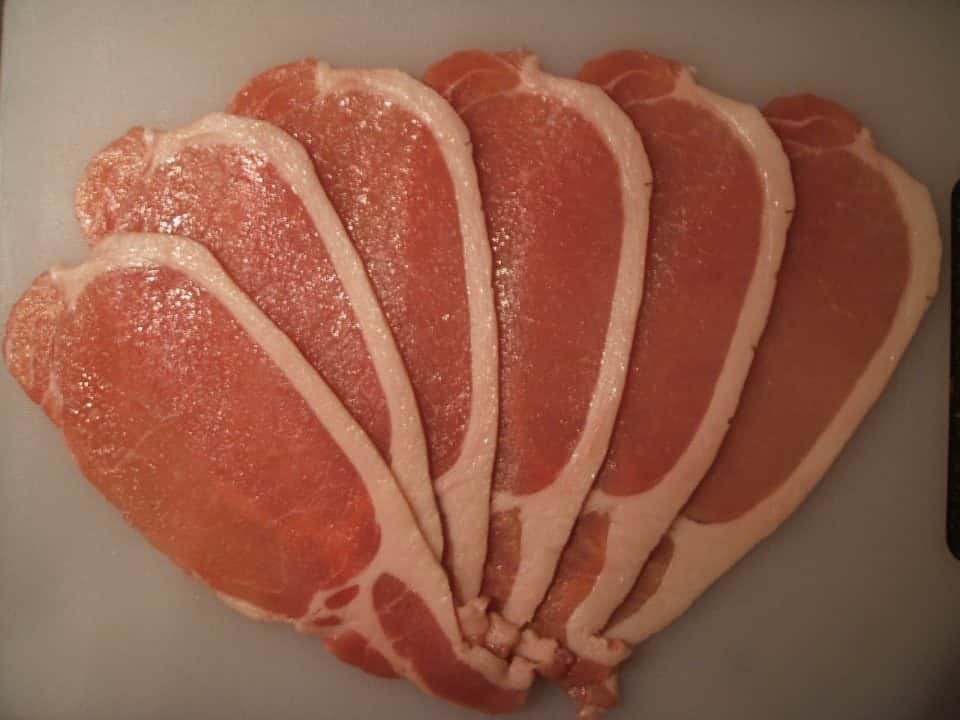
Black and White Pudding: Traditional Irish Breakfast Ingredients
This is where the full Irish breakfast becomes truly distinctive, especially for anyone trying it for the first time.
Black pudding is made using pork blood, oats, and seasoning, which gives it a rich, slightly earthy flavour. White pudding is similar but doesn’t contain blood, making it milder and a bit lighter in taste and isn’t usually on Irish breakfast plates.
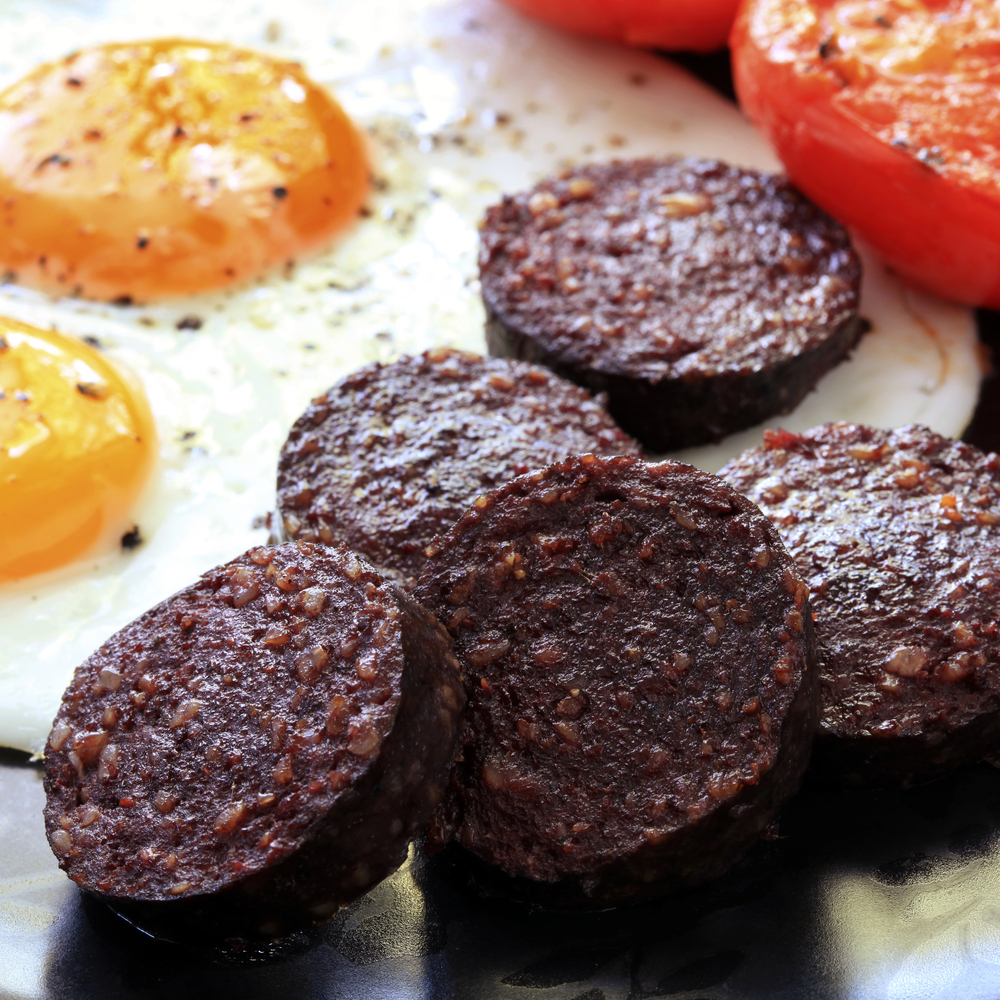
I remember being unsure about trying them at first, but they quickly became one of the most memorable parts of the meal. They add a texture and depth that you don’t get from the other ingredients. Once you’ve had them properly cooked, they make sense as part of the plate.

Eggs, Beans and Vegetables in a Full Irish Breakfast
Eggs are usually fried and served with a soft yolk, which mixes into the rest of the plate and adds richness without needing anything extra.
Beans and grilled tomatoes help balance the meal. The beans bring a slightly sweet, softer element, while the tomatoes add acidity that cuts through the heavier components. Mushrooms are often included as well, adding flavour without making the dish feel heavier.

One thing I noticed while living in Ireland is that baked beans are now a standard part of the meal, even though some people still consider them a later addition rather than a traditional one.

Irish Soda Bread, Farls and Boxty (Traditional Breakfast Sides)
Bread is one of the most important parts of the full Irish breakfast, even though it’s often overlooked.
You’ll usually get toast or soda bread, but in many places you’ll also find potato-based additions like farls or boxty. These are made using potatoes and flour, often from leftover mash, and then cooked on a pan until slightly crisp on the outside.

What stood out to me is how much these elements bring the meal together. They’re not just sides they’re what tie everything into one plate.
What stands out most is how consistent this structure is across Ireland. While small details might change depending on where you are, the foundation of the full Irish breakfast remains the same, and that consistency is what gives it its identity.
You’ll find my foolproof Soda Bread here, and my crispy, golden Boxty recipe in a separate posts both ready for your table.

The History of the Full Irish Breakfast
The full Irish breakfast developed as a practical meal in rural Ireland, shaped by farming life and the need for energy-dense food. Breakfast was often the most important meal of the day, particularly for those working outdoors in physically demanding conditions.
Ingredients were chosen based on what was available locally. Pork was common due to farming traditions, eggs came from household poultry, and bread was a staple. Black and white pudding developed as a way to use ingredients efficiently, reflecting a practical approach to food that avoided waste.
What stands out is how little the meal has changed. While small additions have appeared over time, the core structure remains the same. From my experience, even modern versions of the full Irish breakfast still feel connected to these origins.
That continuity is what gives it its authenticity. It hasn’t been redesigned or simplified it has simply continued.

Traditional Irish Breakfast in Irish Food Culture
Spending time in Ireland, one thing that becomes clear quite quickly is that the full Irish breakfast isn’t just a meal it’s part of a wider food culture that values simplicity, quality ingredients, and consistency over presentation or trends.
Irish cuisine has always been shaped by what is locally available. Potatoes, dairy, pork, and bread form the foundation of many traditional dishes, and the full Irish breakfast reflects that same approach. It’s built around ingredients that are familiar, reliable, and rooted in everyday life rather than something created for special occasions.
What I noticed while living in Ireland is how naturally the full Irish breakfast fits into this wider food culture. It doesn’t feel separate or overly celebrated it just exists as part of the routine. Whether it’s served in a small café, a guesthouse, or a local pub, the structure of the meal stays consistent, and that consistency is what gives it meaning.
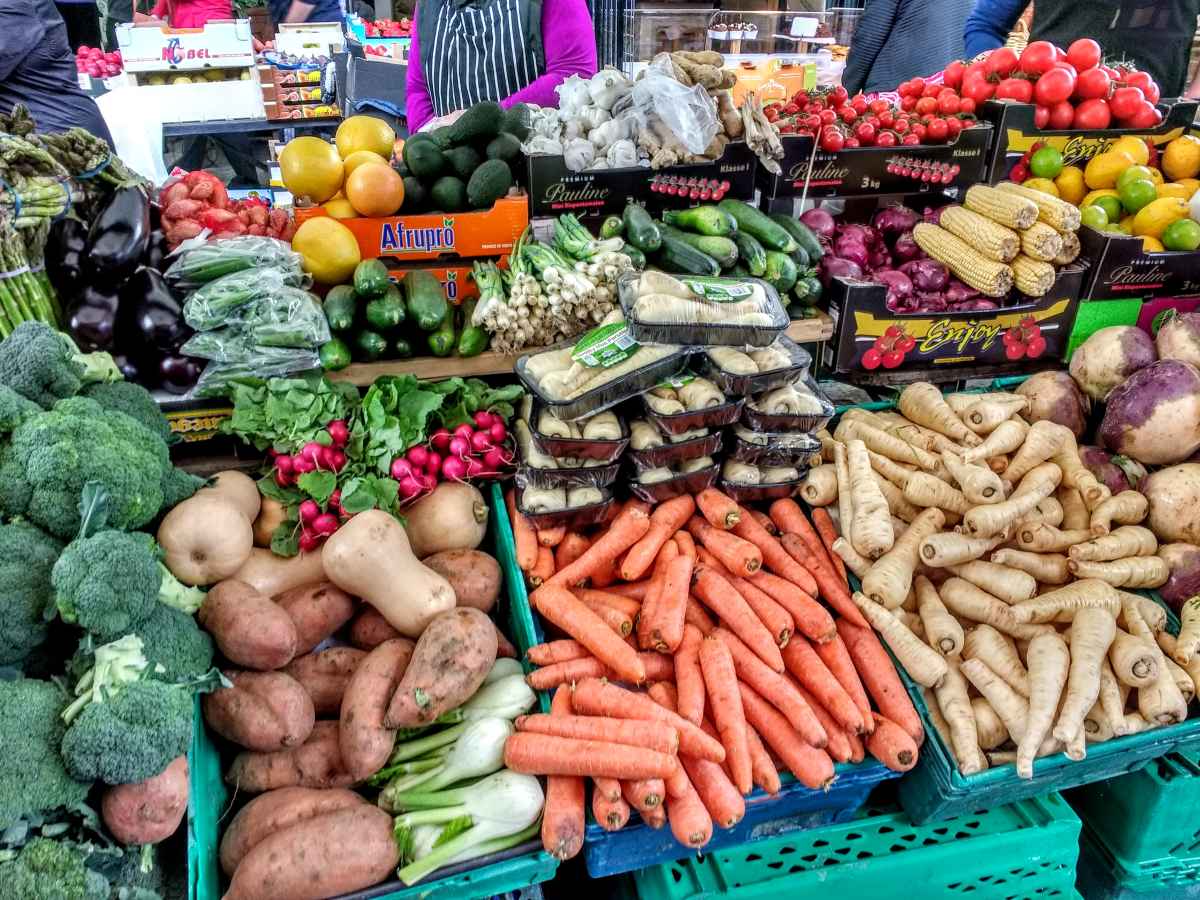
There’s also a strong sense that Irish food prioritises substance over presentation. The full Irish breakfast isn’t designed to look refined or modern it’s designed to work. It’s filling, balanced, and practical, which reflects the history of the country and the lifestyle it developed from.
At the same time, it has become one of the most recognisable parts of Irish cuisine, especially for visitors. It’s often one of the first traditional meals people try, but what makes it stand out is that it hasn’t been changed to suit that role. It still feels like something that belongs to everyday life rather than something created for tourism.
That balance between tradition and daily use is what places the full Irish breakfast firmly within Irish food culture. It’s not just a dish it’s a reflection of how food is approached across the country.
Full Irish Breakfast vs Full English Breakfast vs Ulster Fry
One of the most common questions is how the full Irish breakfast compares to similar meals, particularly the full English breakfast and the Ulster Fry.
The full Irish breakfast is defined by the inclusion of both black and white pudding, along with a strong emphasis on local ingredients such as soda bread or potato bread. In contrast, a full English breakfast typically does not include white pudding and often relies more on standard toast and different sausage styles.
The Ulster Fry, found in Northern Ireland, is the closest variation. However, it places a much stronger emphasis on bread, particularly soda farls and potato bread, which are cooked directly on the pan and form a central part of the meal.
These differences are subtle, but they reflect regional identity rather than completely different dishes.

The Role of the Full Irish Breakfast in Everyday Life
Living in Ireland, one thing that became clear is that the full Irish breakfast is not just a dish it’s part of everyday culture. While it may not be eaten every morning, when it is served, it’s treated as a proper meal rather than something quick.
Traditionally, it was most common in rural areas, where it provided the energy needed for long days of work. Today, it’s more often associated with weekends, cafés, and travel, but it hasn’t lost its original purpose.
There’s also a strong social element to it. It’s not something people rush. It’s a meal that encourages you to sit down, take your time, and enjoy it properly. I’ve had it in quiet cafés where locals seemed to know each other, and in busier places where the atmosphere still felt relaxed. That balance between tradition and modern use is what keeps it relevant.

Where to Eat a Full Irish Breakfast in Ireland (Best Cafés and Local Spots)
From my experience, finding a great full Irish breakfast is less about searching for the highest-rated restaurant and more about finding places that focus on quality ingredients and consistency.
In Dublin, smaller cafés often provide the best experience. Places like Lemon Jelly Café and Beanhive stand out because they focus on getting the basics right rather than over complicating the dish.
In Galway, there’s often a stronger connection to local produce, which comes through in the quality of the ingredients. Breakfasts here tend to feel slightly fresher, particularly when it comes to bread and sausages.
Towns like Westport and Sligo offer some of the most traditional experiences. These are places where the full Irish breakfast feels closest to its original purpose simple, filling, and consistent.
Along the Ring of Kerry and in Dingle, the setting adds something extra. Sitting down to a full Irish breakfast after exploring coastal or rural areas makes the meal feel even more connected to its roots.
In Kilkenny, there’s a balance between traditional and modern approaches, while Kinsale offers a slightly more refined version thanks to its strong food culture.

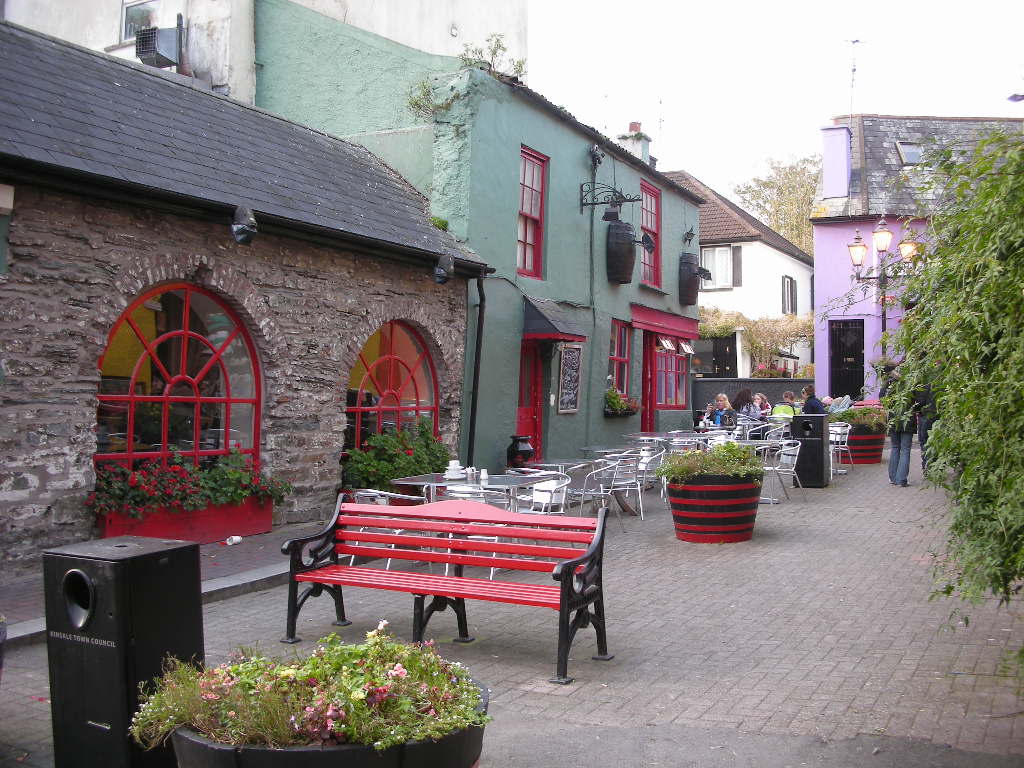
Where I Personally Recommend for a Full Irish Breakfast in Ireland
Having spent time living and travelling across Ireland, there are certain places that stood out not because they were the most famous, but because they consistently got the basics right. These are the places where the full Irish breakfast felt closest to what it’s supposed to be simple, filling, and made with quality ingredients.
- Dublin: Lemon Jelly Café, La Pausa Caffe, Brendan’s Cafe, Beanhive
- Cork: The SpitJack – also in Limerick, The Thomond Bar.
- Donegal: Ahoy Café – Killybegs, Nancy’s Barn – Ballyliffen, The Blueberry – Donegal Town
- Other Areas: Mountain View (Kilkenny), The Celtic Kitchen Cafe (Killarney), Cawley’s – Tubbercurry – Sligo, Kelly’s Kitchen – Newport, Balreask Bar & Restaurant – Navan, Christy’s Harvest – Westport
Is a Full Irish Breakfast Healthy? Nutrition and Calories Explained
A full Irish breakfast is high in protein and energy, which is exactly what it was designed for. It provides a combination of fats, carbohydrates, and protein that can sustain you for long periods.
However, it is also a heavy meal. From my experience, it’s not something that’s eaten every day, but rather something enjoyed occasionally, often at weekends or when eating out. That balance is part of what makes it work. It’s not intended to be light it’s intended to be complete.

Why the Full Irish Breakfast Still Matters
Having lived in Ireland, the full Irish breakfast is something that stays with you long after you’ve left. Not because it’s complicated or modern, but because it represents something that hasn’t changed.
In a time where food trends constantly shift, the full Irish breakfast has remained consistent. It’s still built around the same ingredients, prepared in the same way, and served with the same purpose.
Whether you’re in a small café or a city like Dublin, the experience feels familiar. That consistency is what gives it its identity. It’s simple, it’s reliable, and it works. And that’s exactly why it has lasted.

Full Irish Breakfast FAQs
What is included in a full Irish breakfast?
A full Irish breakfast includes sausages, rashers, eggs, black and white pudding, beans, tomatoes, mushrooms, and bread such as soda bread or toast.
What makes it different from a full English breakfast?
The clearest difference is white pudding it’s a staple of the Irish plate but rarely appears in an English fry-up. Bread is another giveaway: Irish breakfasts lean on soda bread or potato-based farls, while the English version typically uses fried bread or plain toast. Baked beans are a genuinely contested point you’ll find them served constantly across Irish cafés and B&Bs today, though some traditionalists argue they’re a later addition rather than a “true” part of the original meal. Black pudding, by contrast, shows up on both plates, so it’s not actually a reliable way to tell the two apart.
Is a full Irish breakfast eaten every day?
It is now more commonly eaten occasionally, rather than daily.
Where can I get a full Irish breakfast in Ireland?
You can find it in cafés, pubs, and hotels across Ireland, particularly in cities and smaller towns.
Explore more Gobal Food here in our Global Food Guide
Further reading if you are visiting Ireland
Start Planning Your Trip
👉 Public Transportation in Ireland
👉 Hidden Gems in Ireland – 32 Secret places to visit
👉 Answering all your travel questions about Ireland
👉What to pack for your Ireland trip
👉 Northern Ireland Public Transportation
Exploring the fascinating regions of Ireland
Ireland’s The Wild Atlantic Way