
23 Vikings Filming sites in Ireland: The Real Kattegat and Beyond
You would expect Scandinavia. It was actually Ireland. The Vikings TV drama was filmed almost entirely in County Wicklow, just south of Dublin. Lough Tay, known locally as Guinness Lake, doubled for Kattegat, while Powerscourt Waterfall, Blessington Lakes, Luggala Estate and Ashford Studios carried the rest of the Norse world. You can drive the whole circuit in a single day from Dublin, and this guide gives you the real ticket prices, parking details for able bodied and disabled visitors, and a handful of hidden spots that most articles never mention.
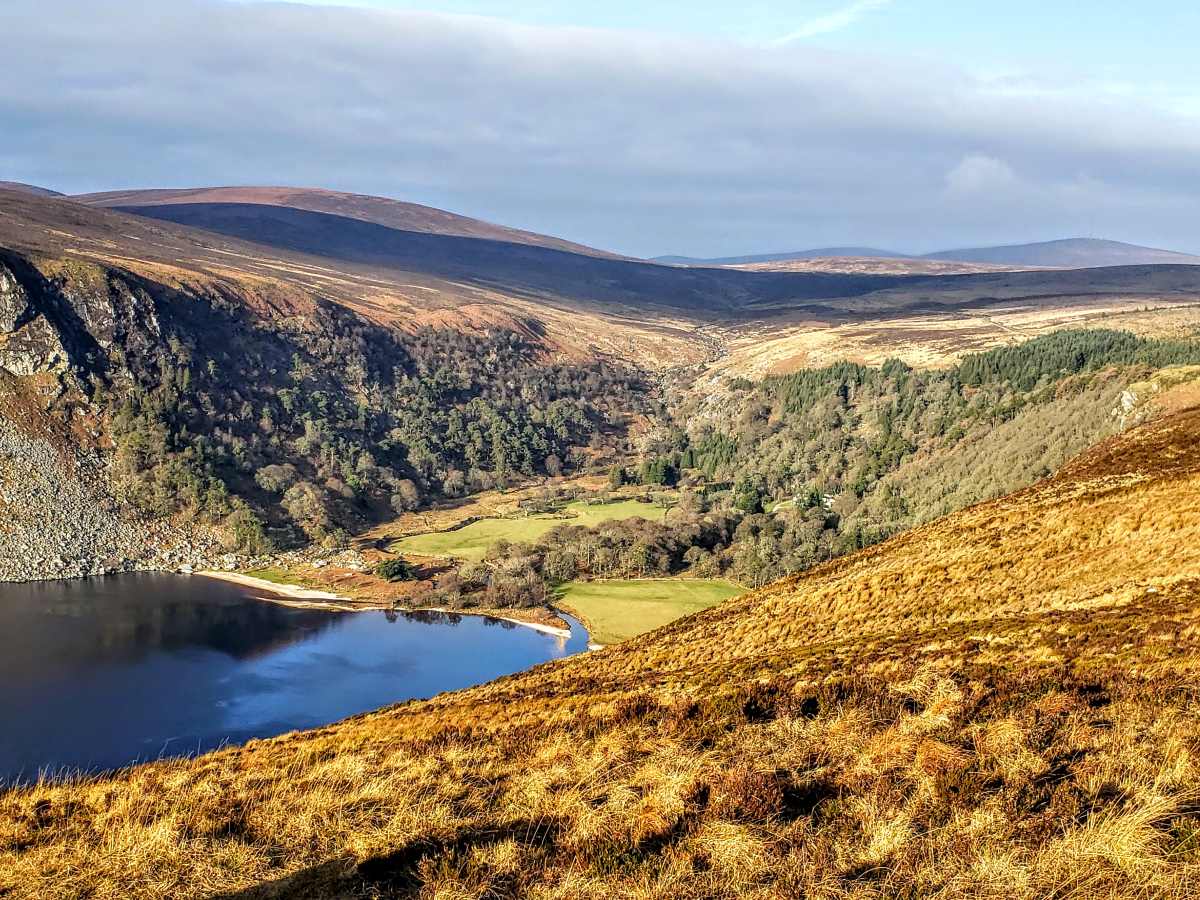
I have lost count of how many times I have driven friends and family down the Military Road into Wicklow, watched their faces when Lough Tay appears below the road, and heard the same line every single time: “that’s Kattegat.” The Vikings TV drama in Ireland turned a quiet corner of County Wicklow into one of the most recognisable fictional landscapes on television, and it did it without ever leaving home. Ragnar Lothbrok never set foot in Norway. He was standing in a valley an hour from Dublin’s Grafton Street.
This guide is built from repeat visits, not a single research trip. I live in Ireland, I have brought visitors to every location listed here more than once, and I have paid the parking fees, queued for the waterfall ticket, and got soaked at Sally Gap in November so you do not have to guess what to expect. Below you will find exactly where the show was filmed, what it costs to visit each site today, where to park if you or someone travelling with you has mobility needs, where new Viking archaeology has just been uncovered in 2026, and a few places locals go that rarely make it onto a filming location list.
By the end you will know how to plan your own day trip or two day road trip, what it will cost, and how the real history under your feet connects to the fiction on screen.

- 23 Vikings Filming sites in Ireland: The Real Kattegat and Beyond
- Vikings TV Drama – Set Jetting
- Vikings Filming sites in Ireland: What They are and Why It Was Filmed Here
- Why Ireland Became the Real Home of Kattegat
- Vikings Filming Locations in Ireland: The Complete Guide
- More Vikings Filming Spots in Wicklow
- New Viking Discoveries: The Digs Changing the Story in 2026
- Hidden Gems Only Locals Know About
- Where to Stay Near the Vikings Filming Locations
- Where to Eat: From Cafes to Fine Dining
- Things to Do for Kids
- How to Plan Your Vikings Road Trip
- Vikings Beyond Ireland: Iceland, Norway, France and Canada
- Personal Thoughts on the Vikings TV Drama in Ireland
- FAQs
Vikings TV Drama – Set Jetting
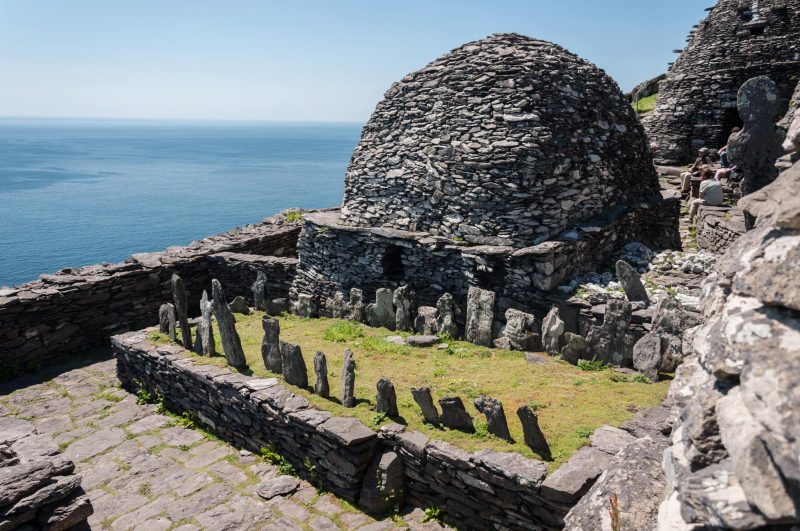
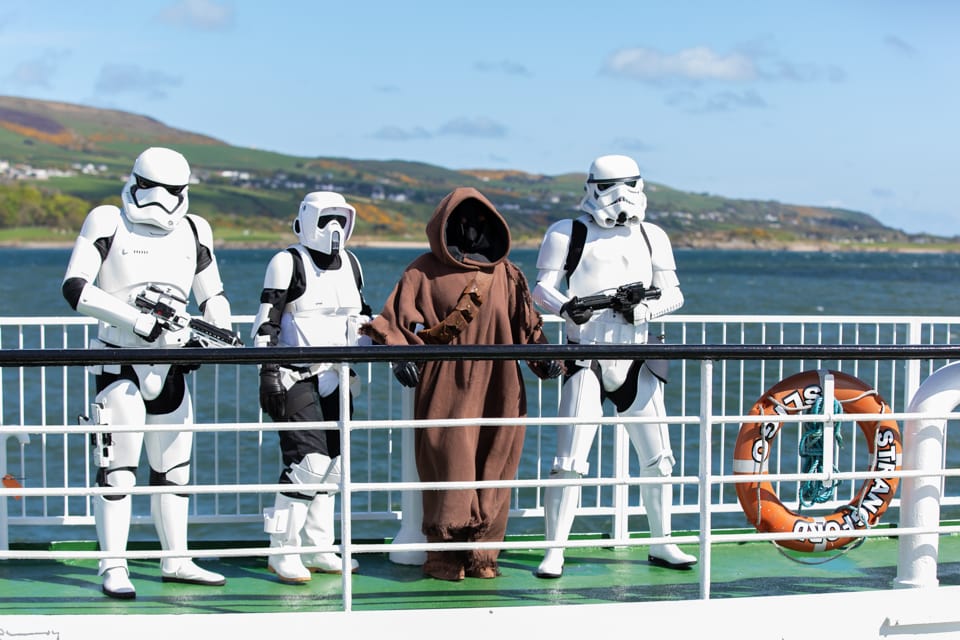
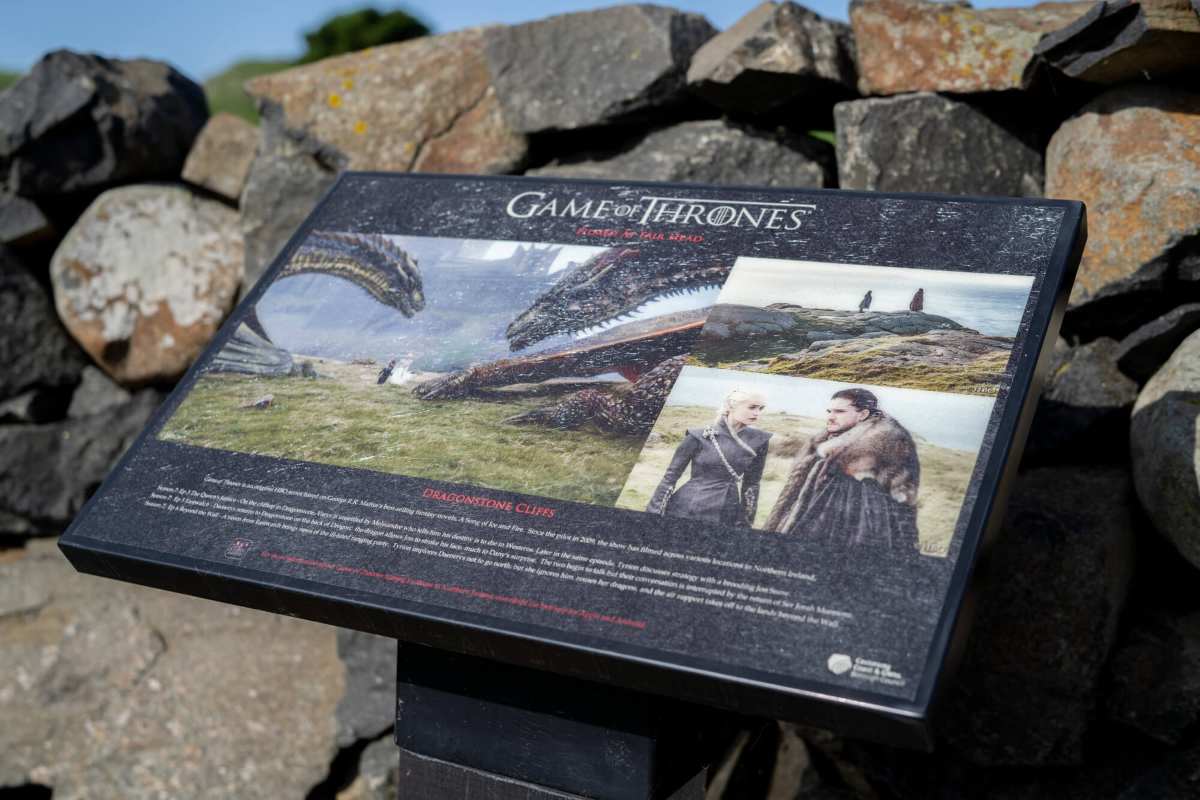
Set-jetting in Ireland is the art of turning your favorite film or TV show into a travel itinerary. It means swapping the couch for the coast, standing where Star Wars Jedi once stood on the wild Skellig Michael, or walking beneath the gnarled beech trees of the Dark Hedges, featured in Game of Thrones, knowing dragons once roamed there in spirit. It’s about chasing cinematic magic across misty mountains, crumbling castles, and windswept shores where every rugged valley and lonely pier feels like it’s waiting for its close-up. For fans, it’s not just sightseeing; it’s stepping into the frame of a story that already lives in your imagination.
Vikings Filming sites in Ireland: What They are and Why It Was Filmed Here
Vikings is a History Channel drama that ran from 2013 to 2020, following the rise of the legendary Norse figure Ragnar Lothbrok and his descendants. Its sequel, Vikings: Valhalla, moved the story forward a century to the era of Leif Erikson, Freydis Eiriksdottir and Harald Sigurdsson, and concluded its run on Netflix with a third and final season released in July 2024. Both shows share the same production base: Ashford Studios in County Wicklow, and the same core filming region across the Wicklow Mountains.
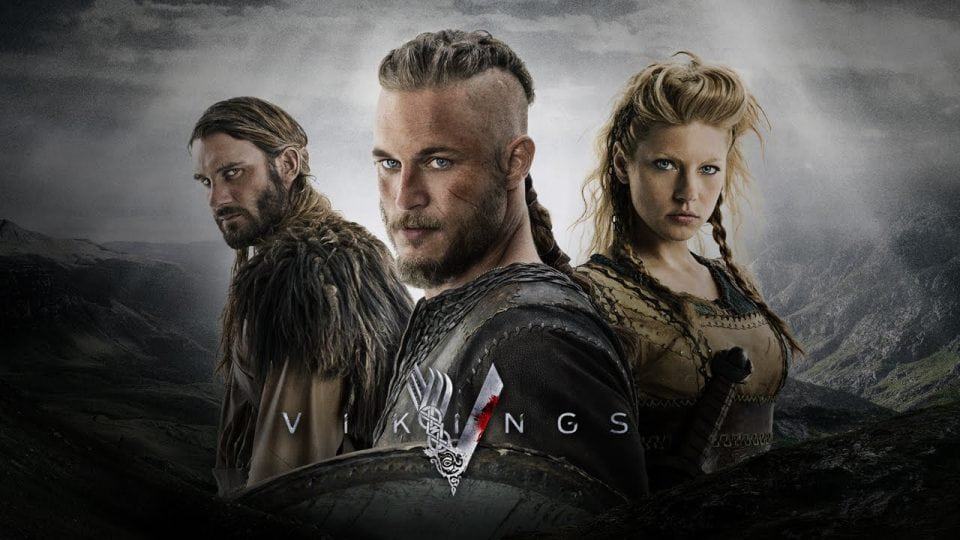
Ireland was chosen for practical and visual reasons. The Irish government’s film tax incentive made large scale production affordable, Ashford Studios provided a permanent home for interior sets and CGI work, and County Wicklow’s mix of lakes, forests, mountains and coastline let the crew recreate Scandinavia, England and even Francia within an hour’s drive of Dublin, without ever booking a flight.
It is worth being clear about how much of this is history and how much is legend. Dr Shannon Godlove, an assistant professor of English and coordinator of Columbus State University’s Medieval and Renaissance Studies Certificate Program, has noted that the Old Norse sagas behind Ragnar’s story were oral history and legend that paralleled real events rather than a historical record in the modern sense. The show leans on that saga tradition closely in places, but it is fiction built on folklore, not a documentary.

Why Ireland Became the Real Home of Kattegat
The first time you see Lough Tay from Military Road, you understand the choice immediately. Ireland’s light shifts constantly. Cloud shadows move across the valley in minutes, and that soft, brooding atmosphere is exactly the tone Vikings needed. Standing there at seven in the morning with mist still sitting on the water, it is not hard to imagine longships waiting at the shore.
There is also a genuine historical thread running under all of this. The Vikings did not just inspire a television show set near Dublin, they built Dublin. Norse raiders established a longphort on the Liffey in 841 AD, and the city that grew from it became the most important Viking trading hub in the western world. So when a production crew chose Wicklow to stand in for the Viking homeland, they were, without necessarily intending it, filming within a landscape that has real Norse roots beneath the surface.
Vikings Filming Locations in Ireland: The Complete Guide
Here is every major site, with what it costs today, where to park, and what you will actually find when you get there. All of these are within roughly ninety minutes of Dublin, and most can be combined into a single day.
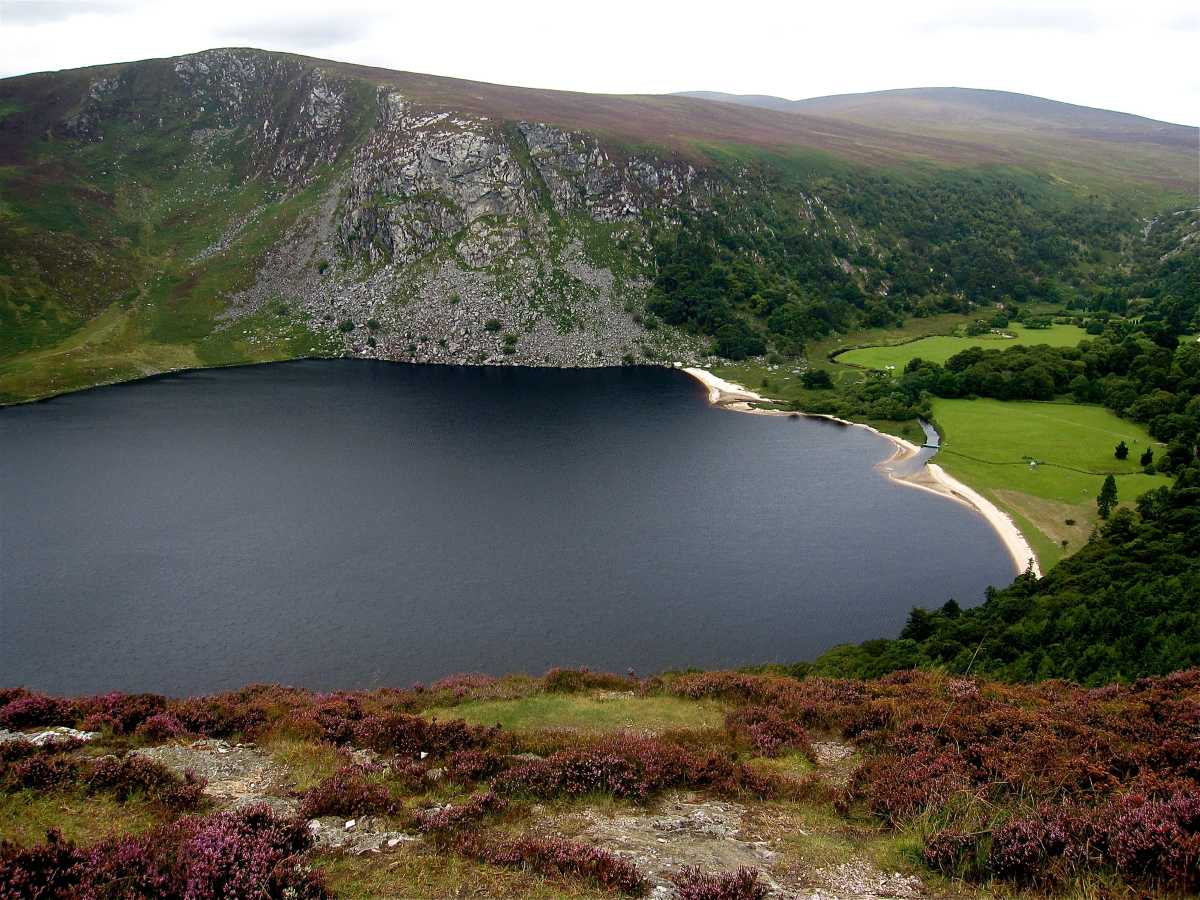
Lough Tay (Guinness Lake): The Real Kattegat
Lough Tay is the location every Vikings fan wants to see first. Its dark water and pale crescent of sand became Kattegat, the fictional Norse settlement at the centre of the entire series. The lake sits inside the privately owned Luggala Estate, so you cannot walk down to the shore, but the viewpoint on the Military Road (the R115) is one of the most photographed spots in Ireland and it is free.

Parking: a small lay-by on Military Road, free, with space for a limited number of cars. It is not surfaced or marked for disabled parking, and the viewing point involves a short walk over uneven grass verge, so wheelchair users and anyone with limited mobility should be aware the path is not paved.
Cost: free.
Best time: early morning or early evening for the light.
Map reference and background: Wicklow County Tourism Vikings guide
Luggala Estate
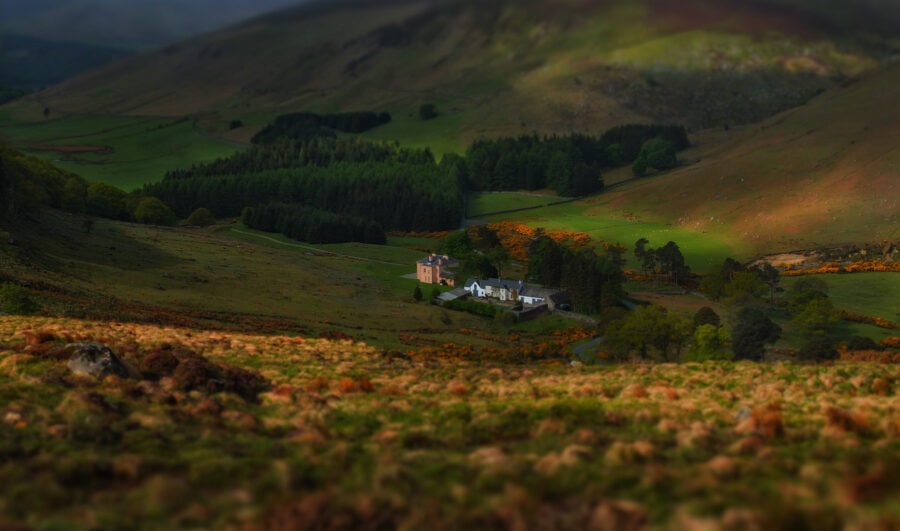
The wider Luggala Estate, surrounding Lough Tay, hosted many of the outdoor Kattegat battle and village scenes. It remains private land owned since 2022 by an overseas buyer after the Guinness family sold the estate. You cannot access the grounds without a permit, but the terrain visible from Military Road and from Lough Dan’s northern trails gives you a strong sense of the same rugged backdrop used on screen.
Blessington Lakes (Poulaphouca Reservoir)
This is where the longship scenes were filmed, the wide, still water Ragnar’s fleet sails across on their way to new lands. It is actually Ireland’s largest man made lake, created when the Poulaphouca Dam was completed in the 1940s, and it covers roughly 5,000 acres, not the 500 acres often quoted elsewhere.
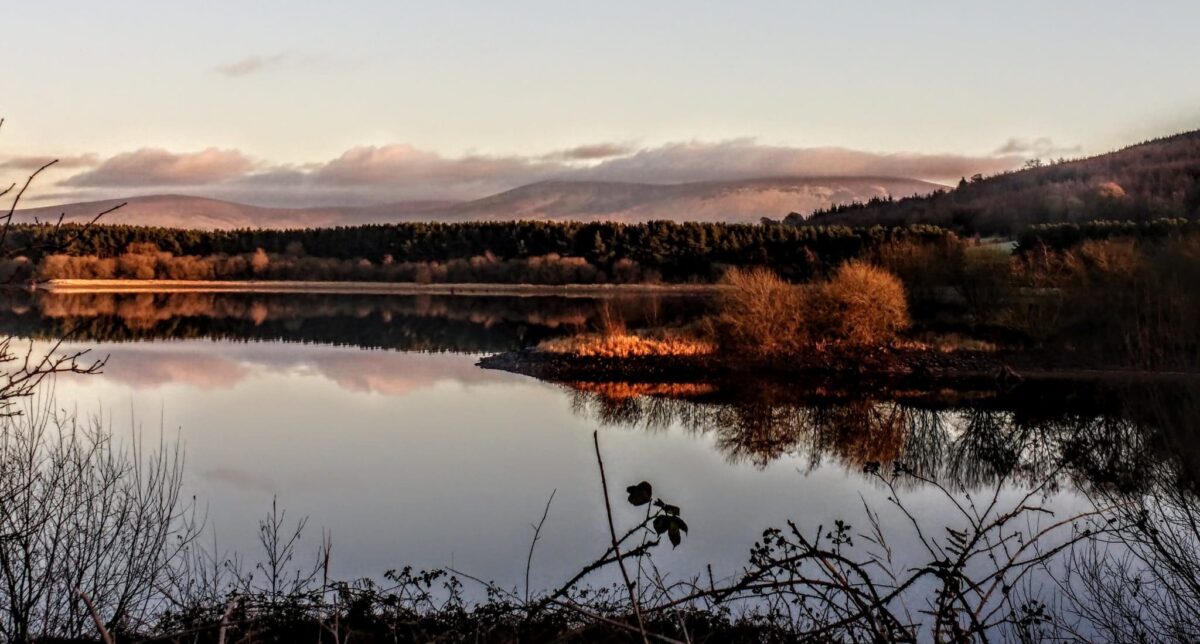
Parking: free car parks at several points along the Blessington Greenway, including at Blessington town and near the Avon Ri watersports centre. Some car parks have hard standing suitable for accessible parking, though not all are signposted.
Cost: free to view; watersports and boat hire at Avon Ri are separately priced.
Good for: cycling the Blessington Greenway, a flat, largely accessible looped trail.
Wicklow Mountains National Park
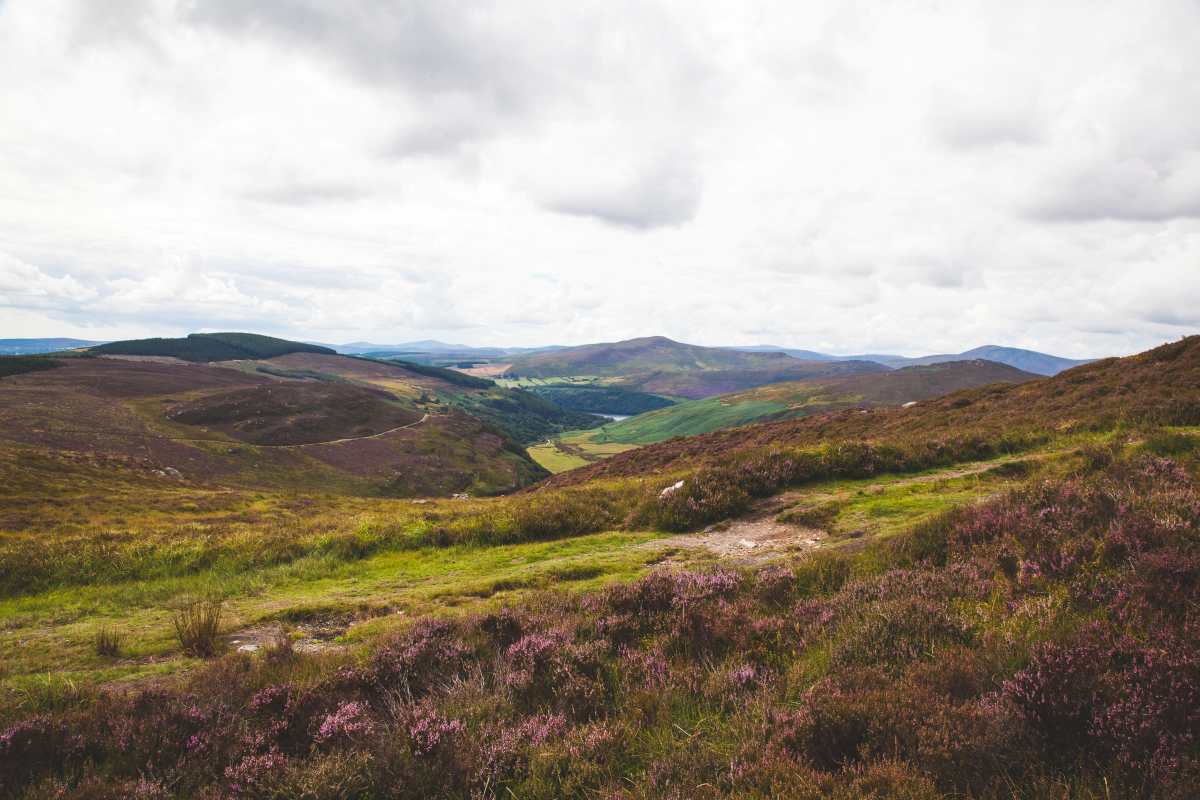
The connective tissue of the entire series. Wicklow Mountains National Park covers roughly 20,000 hectares and appears, in one guise or another, as Scandinavia, England and Francia throughout both shows.
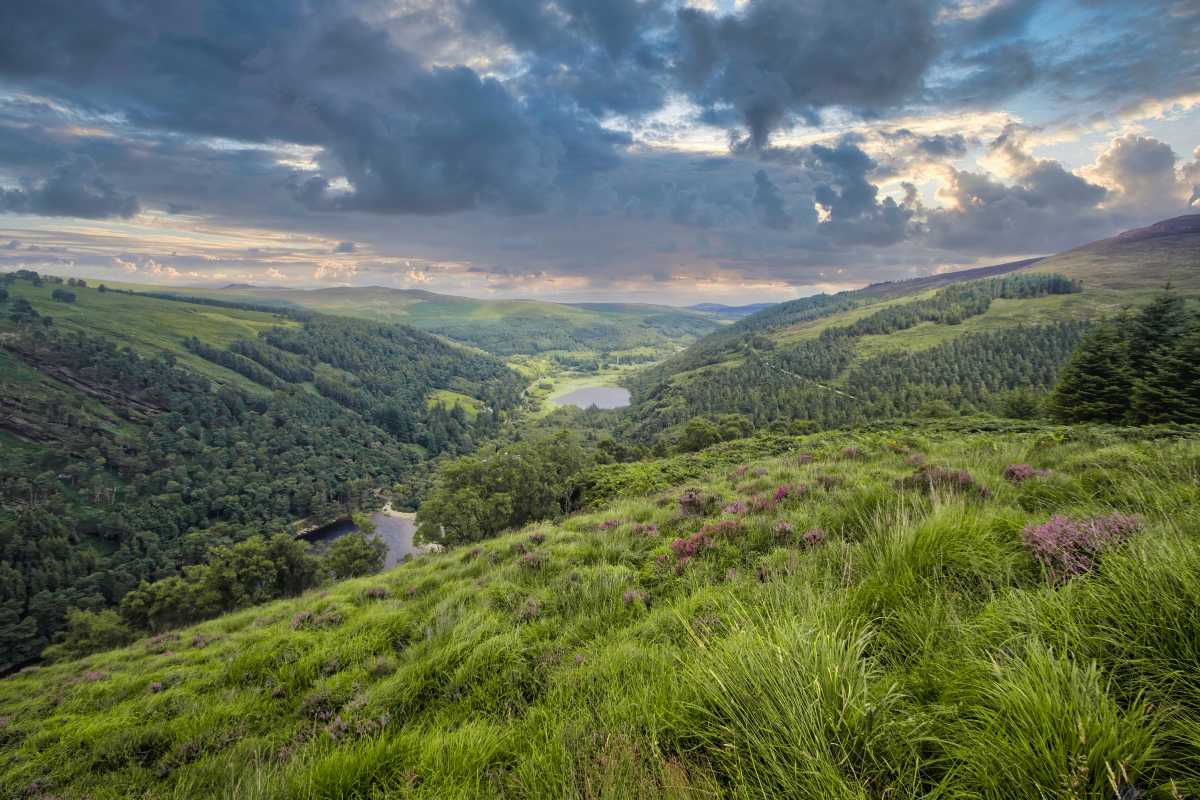
Parking: free at the main trailheads including Glenmalure and Glendalough.
Cost: entry to the park is free.
Accessibility: trail difficulty varies enormously, from flat boardwalks to steep hillwalks, so check individual trail descriptions before you go.
Powerscourt Waterfall
Powerscourt Waterfall is where Ragnar first meets Aslaug on screen, and it is Ireland’s highest waterfall at 121 metres. It sits within the wider Powerscourt Estate but is a separate, gated site six kilometres from Powerscourt House.

Cost: as of 2026, adult admission is €8, with reduced rates for children, students and seniors, and a family ticket available. Parking is included in the ticket price.
Parking: a large car park a short walk from the falls, with designated accessible spaces and accessible toilets on site.
Accessibility: the main viewing area is reachable via a short, largely level path from the car park; the longer riverside walk around it is less even underfoot.
Official site: powerscourt.com
Glendalough
Glendalough is not a direct filming double in the way Lough Tay is, but its atmosphere shaped the tone of the series’ reflective and religious scenes, and it is genuinely worth the detour. The 6th century monastic settlement founded by St Kevin was raided by Vikings at least four times between 775 and 1071, which makes it one of the few places on this list with a documented, real Viking connection rather than only a fictional one.

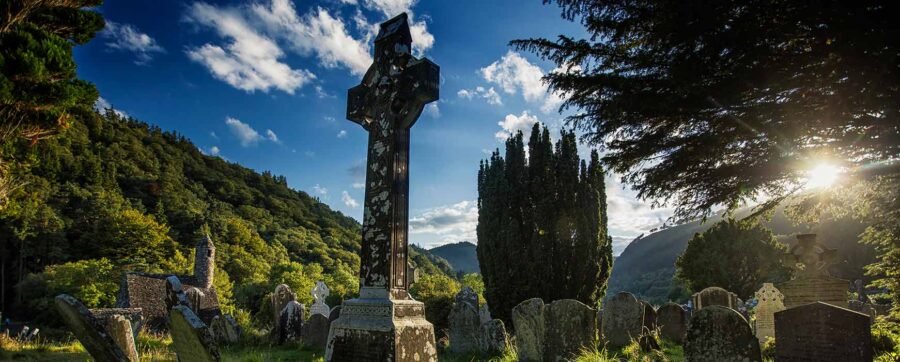
Cost: the monastic site and lakes are free to visit. The Visitor Centre costs around €5 for adults.
Parking: €4 to €5 per car at the Lower Lake car park near the Visitor Centre, or €4 at the Upper Lake car park. Both car parks have designated accessible spaces, and the Visitor Centre and lower lakeside boardwalk are wheelchair accessible; the upper valley trails are steep and uneven.
Official parking information: glendalough.ie
River Boyne and Slane Castle
One of the most surprising facts about the Vikings TV drama in Ireland is that the famous siege of Paris was never filmed in France. The Vikings’ journey up the Seine was filmed on the River Boyne in County Meath, near Slane Castle, with the Parisian skyline added digitally afterwards. Slane Castle itself, better known to most people as a concert venue that has hosted U2, Madonna and the Rolling Stones, provided staging areas along the river.
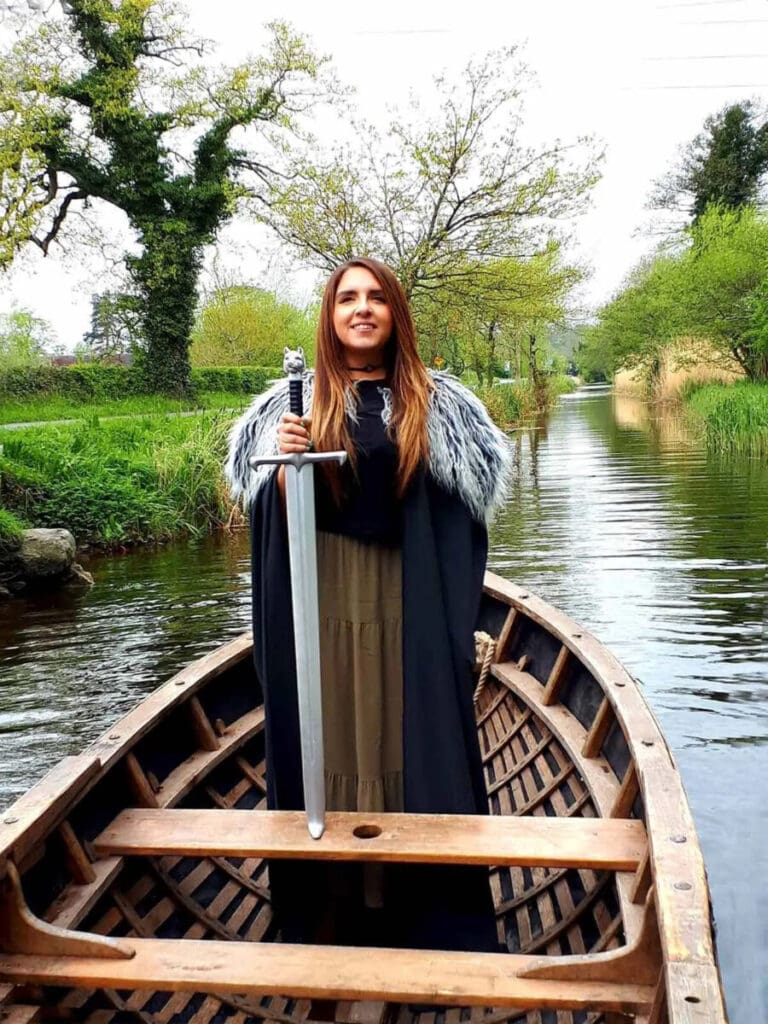
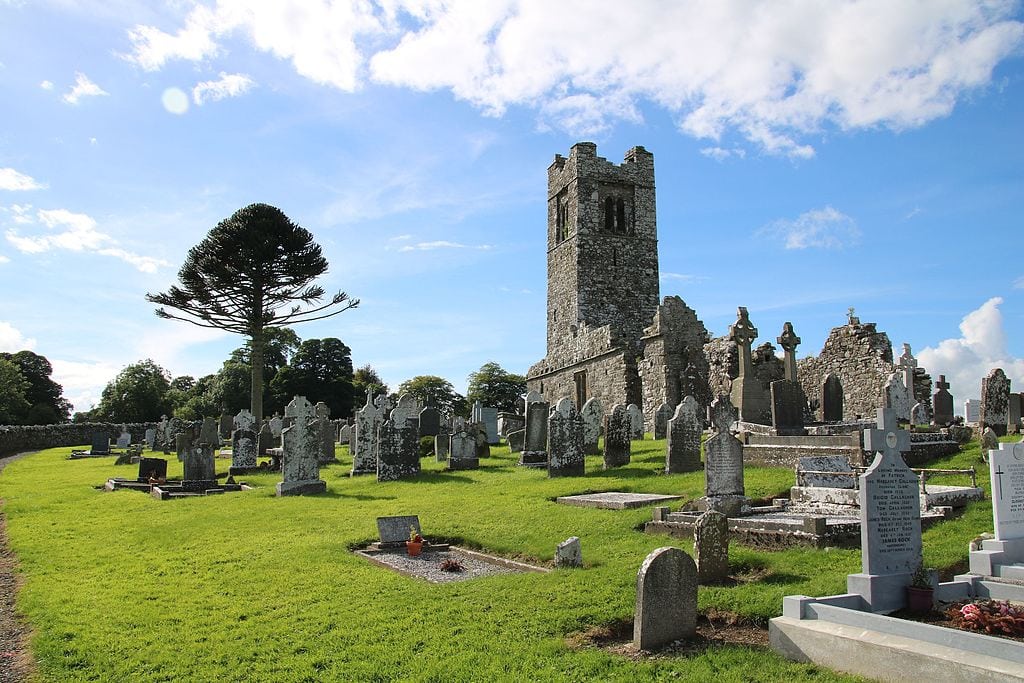
Cost: viewing the river and valley is free; Slane Castle tours and events are separately ticketed.
Parking: free roadside and designated parking near Slane village and the Brú na Bóinne Visitor Centre.
Ashford Studios
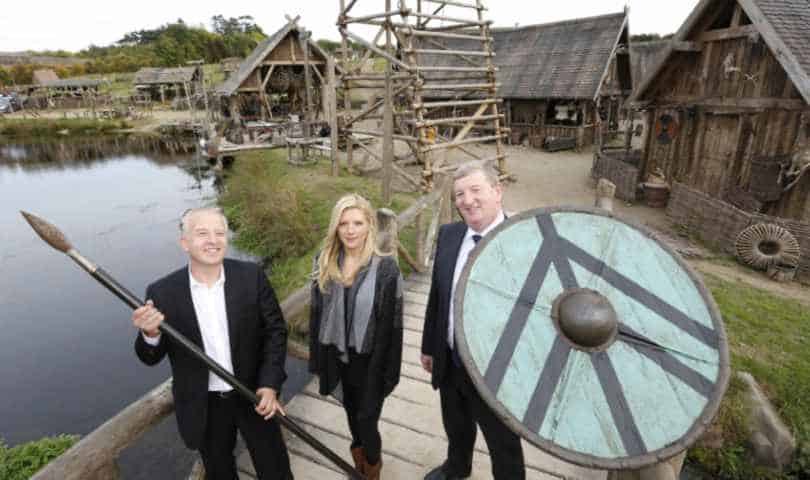
Not a tourist attraction in the conventional sense, but worth knowing about. Ashford Studios in County Wicklow has been the production base for Vikings since 2013 and for Vikings: Valhalla since 2020, housing the interior sets, green screen work and CGI integration that combine with the outdoor Wicklow locations to build the finished world you see on screen.
Lough Dan
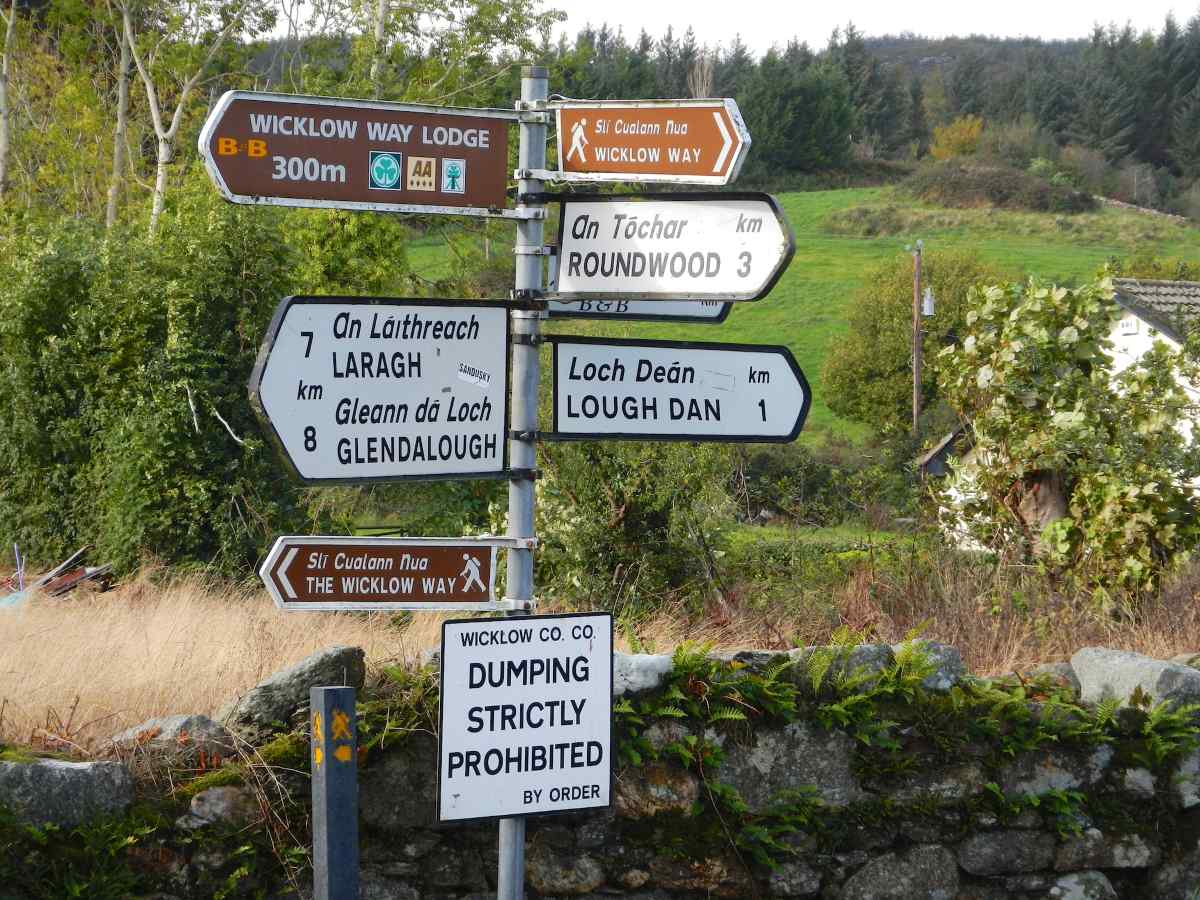
Quieter than Lough Tay and rarely crowded, Lough Dan is Leinster’s largest natural lake and appears in several longship and wide landscape shots. It sits close to the Wicklow Way.
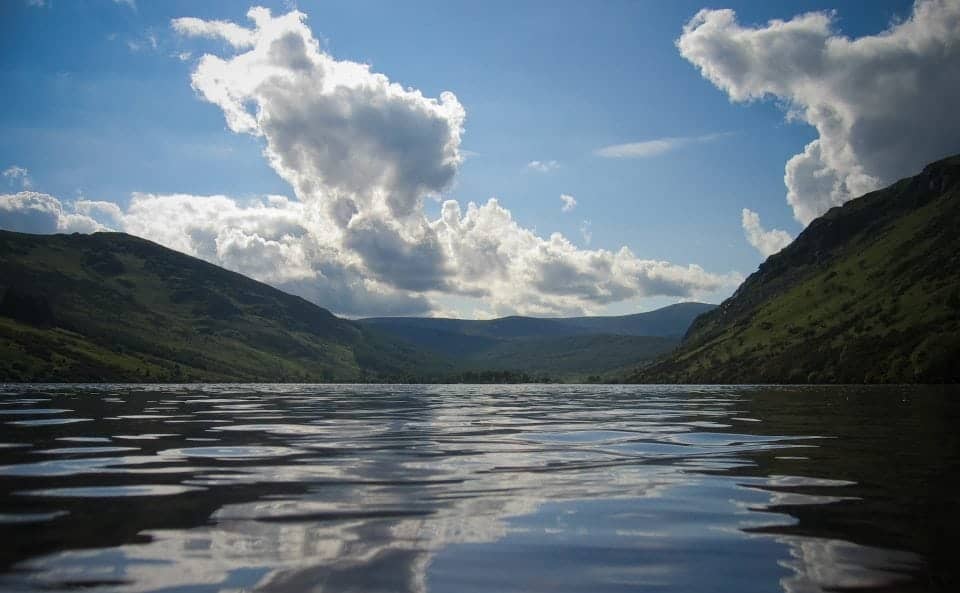
Parking: a small free car park at Sally Gap gives access to walking trails toward the lake.
Accessibility: the surrounding terrain is uneven and the lakeside trail is not suitable for wheelchairs.
Nuns Beach, County Kerry
For the Northumbrian coastal scenes, the production moved away from Wicklow entirely to Nuns Beach on the Ring of Kerry, a horseshoe shaped cove accessible only by boat or a steep cliff path with a fixed rope. This is not a location for anyone with mobility restrictions, but it remains one of the most dramatic coastal filming spots used in the series.
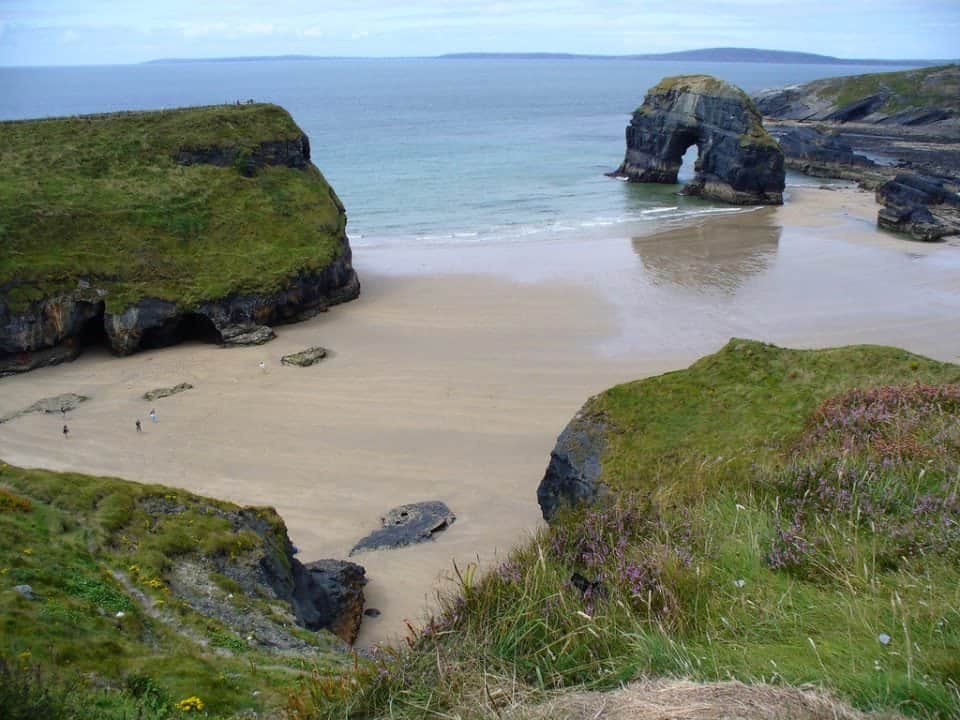
Locals tell an older story about the cove next door, known as the Nine Daughters. According to the legend, nine daughters of a local chief fell for a group of Viking raiders and planned to run away with them, only for their father to catch the group and throw them all into a nearby blowhole. It is folklore rather than record, but it is the kind of detail that makes this stretch of coast feel like it belongs to the Viking story rather than just borrowing its scenery.
More Vikings Filming Spots in Wicklow
Beyond the main sites above, the production used dozens of smaller corners of Wicklow for background and transition shots. None of these need a dedicated trip on their own, but if you’re already in the area, they’re worth folding into your route.
Sally Gap
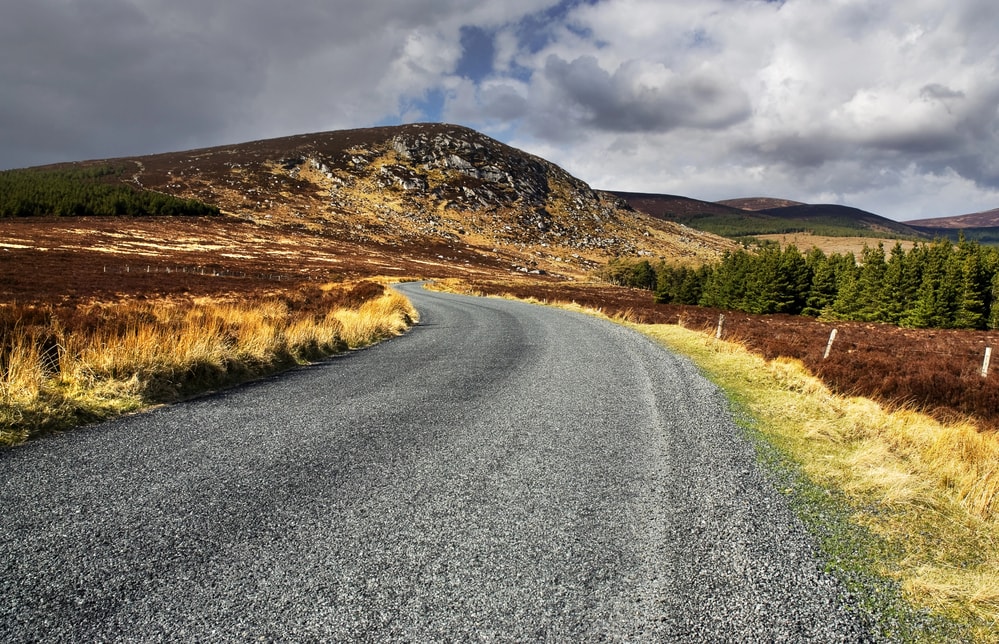
This high mountain crossroads between Glencree and Glenmacnass appears repeatedly in the show’s wide travel shots, standing in for the open, empty distances the Vikings cover on their journeys. It’s free to visit, with roadside parking only no facilities, so this is a quick stop rather than somewhere to linger.
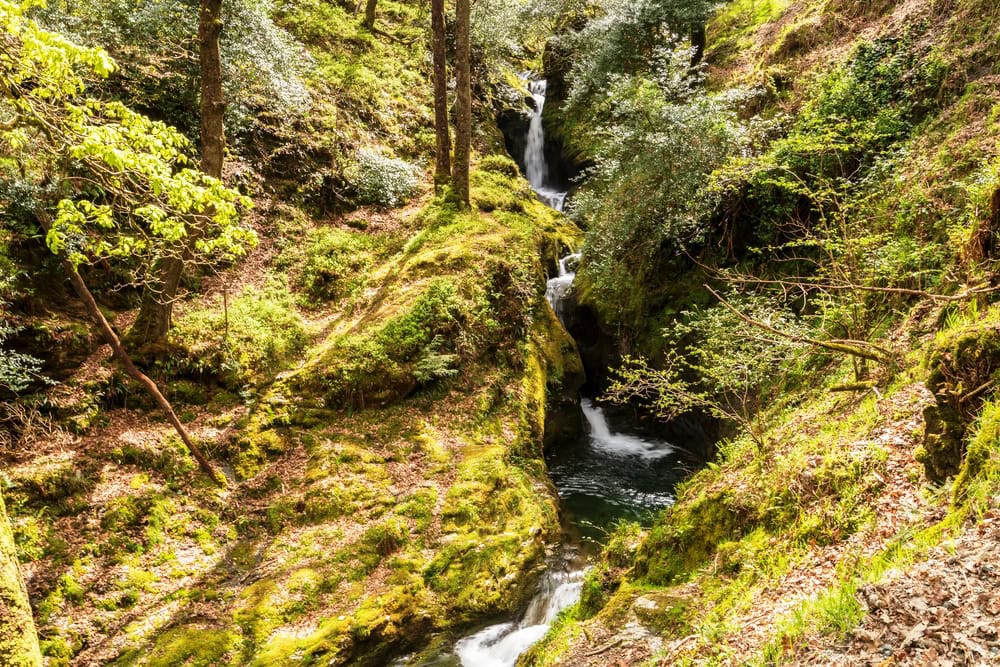
Glenmacnass Waterfall
Just off the Sally Gap road, this waterfall gave the production a striking natural backdrop for several scenes. It has free roadside parking and rarely sees a crowd, even in summer. I’ve covered it in more depth, along with the rest of the country’s best cascades, in my guide to Waterfalls in Ireland.

Devil’s Glen
A dense, forested gorge near Ashford, used for the show’s darker, more enclosed woodland scenes a deliberate contrast to Wicklow’s open mountain shots elsewhere in the series. There’s a small pay-and-display car park at the trailhead, and the walk in gives a real sense of why this spot fit the tone the production was after.
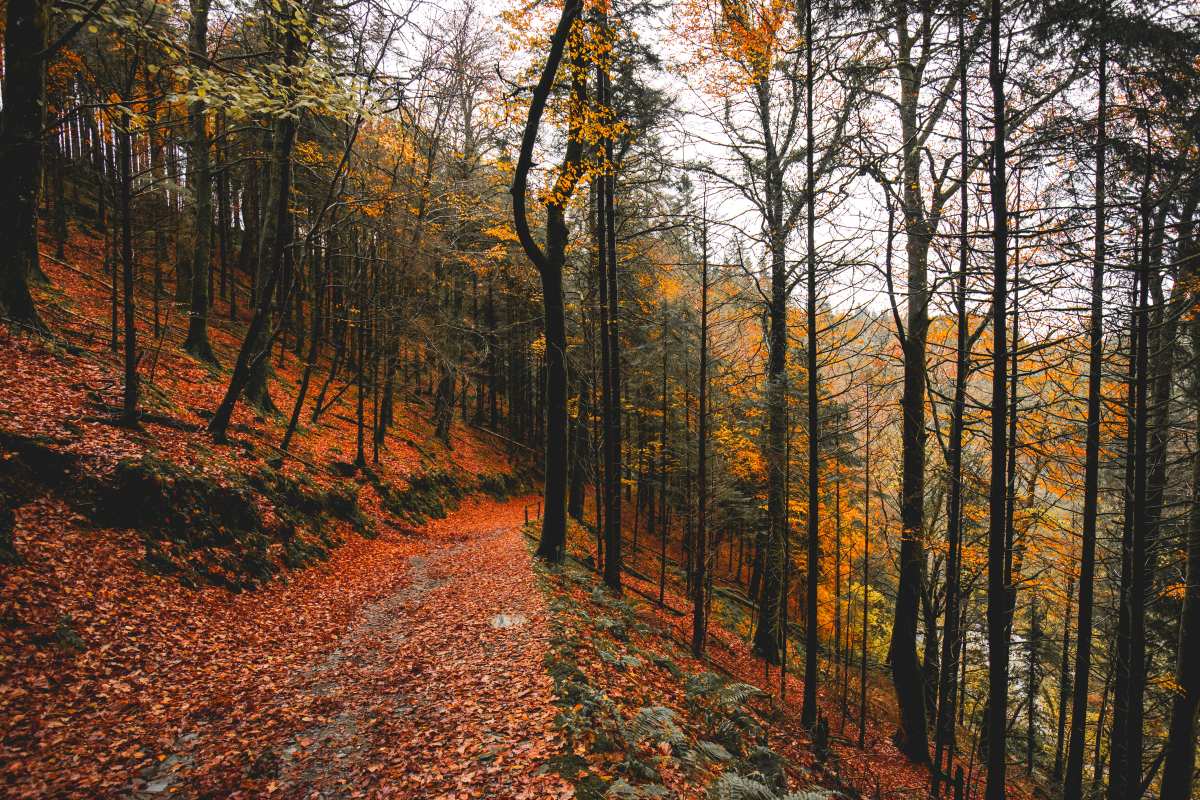
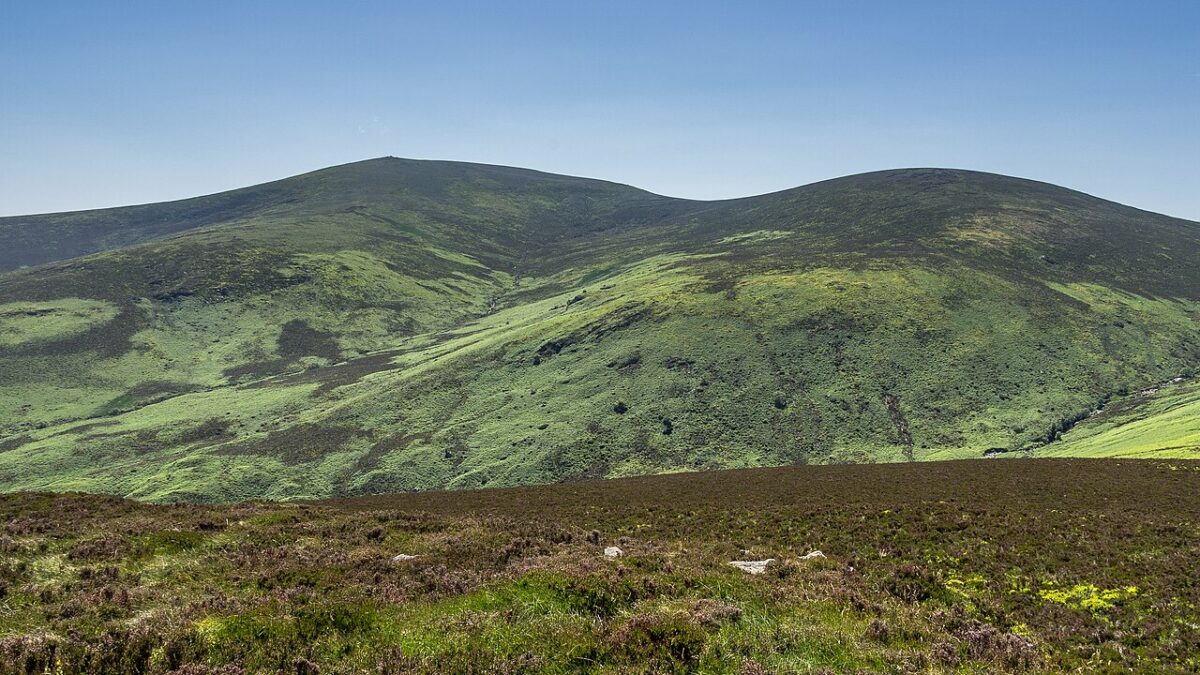
Djouce Mountain
Accessible from the Wicklow Way, Djouce provided elevated ridge shots used for sweeping travel scenes. It’s a genuine hike rather than a roadside stop, so budget proper time and footwear if you want the same view the cameras got.
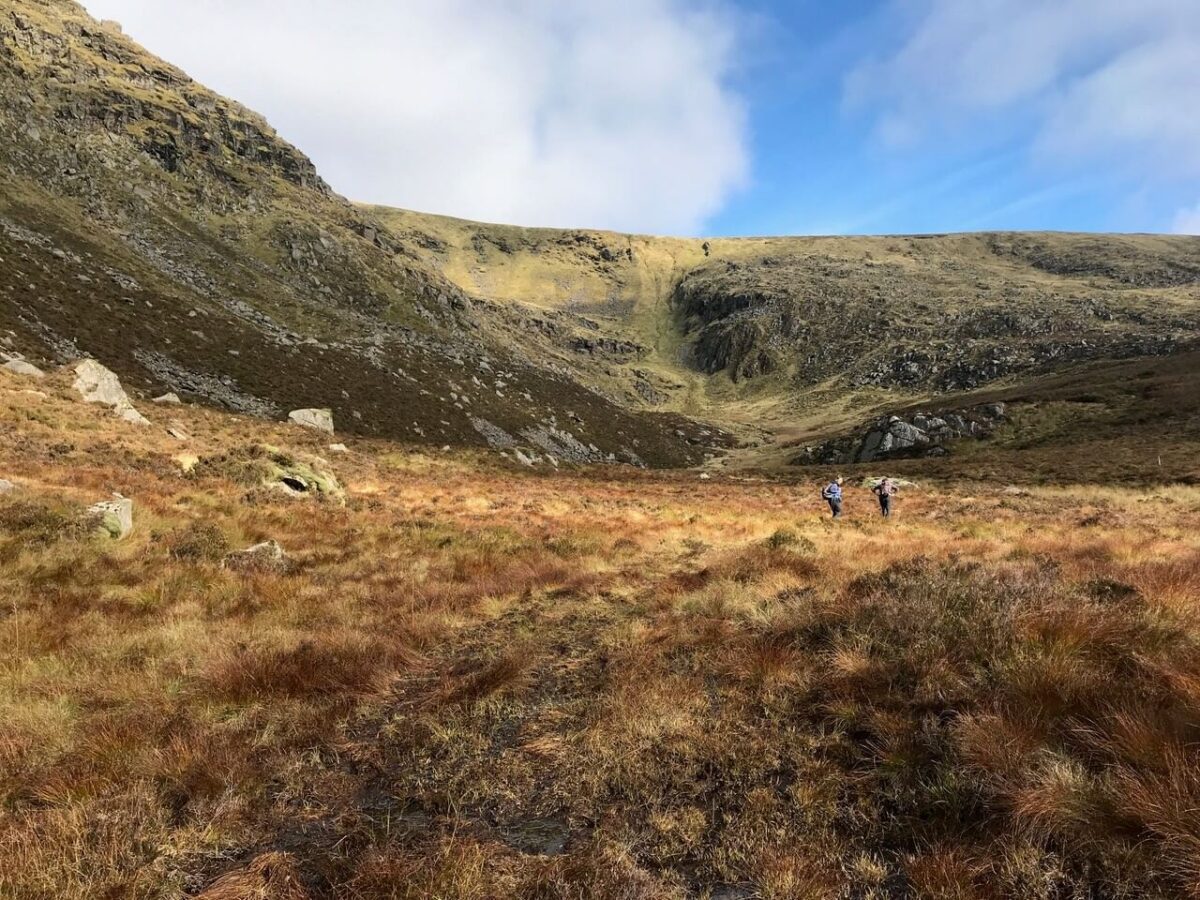
Liffey Head Bog
Also reached from the Wicklow Way, this stretch of untouched boglands gave the production a raw, elemental landscape used for realism in several travel scenes. It’s close to Djouce, so the two are easily combined into one longer walk.
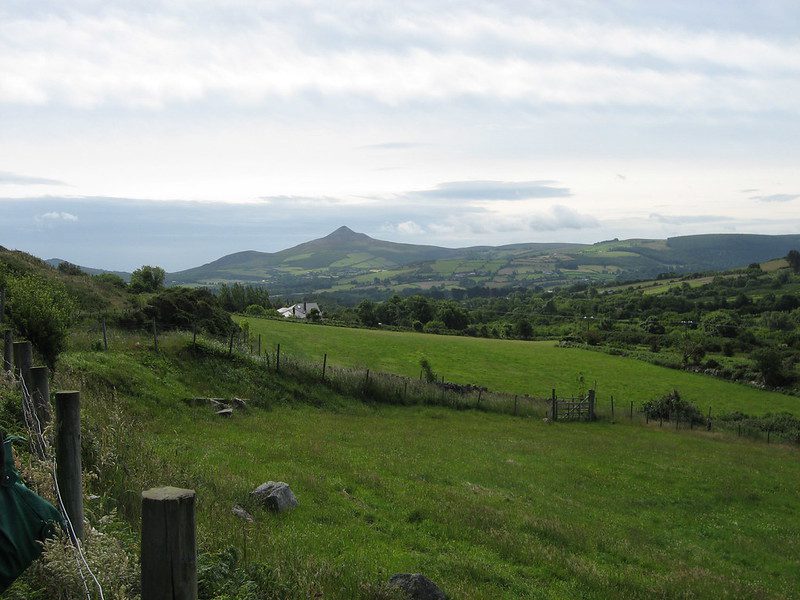
Glencree Valley
A quieter, more enclosed valley than Wicklow’s open mountain scenery, used for ambush and movement scenes where the production needed tighter, more claustrophobic terrain than the wide shots at Lough Tay or the Sally Gap could offer.
Ballinastoe Woods
Right next to Glencree, Ballinastoe gave the production the same kind of enclosed terrain for movement scenes. Unlike most of the smaller sites on this list, it has a dedicated forest car park and a network of mountain bike trails, making it an easy, well-signposted stop rather than a hunt down an unmarked road.
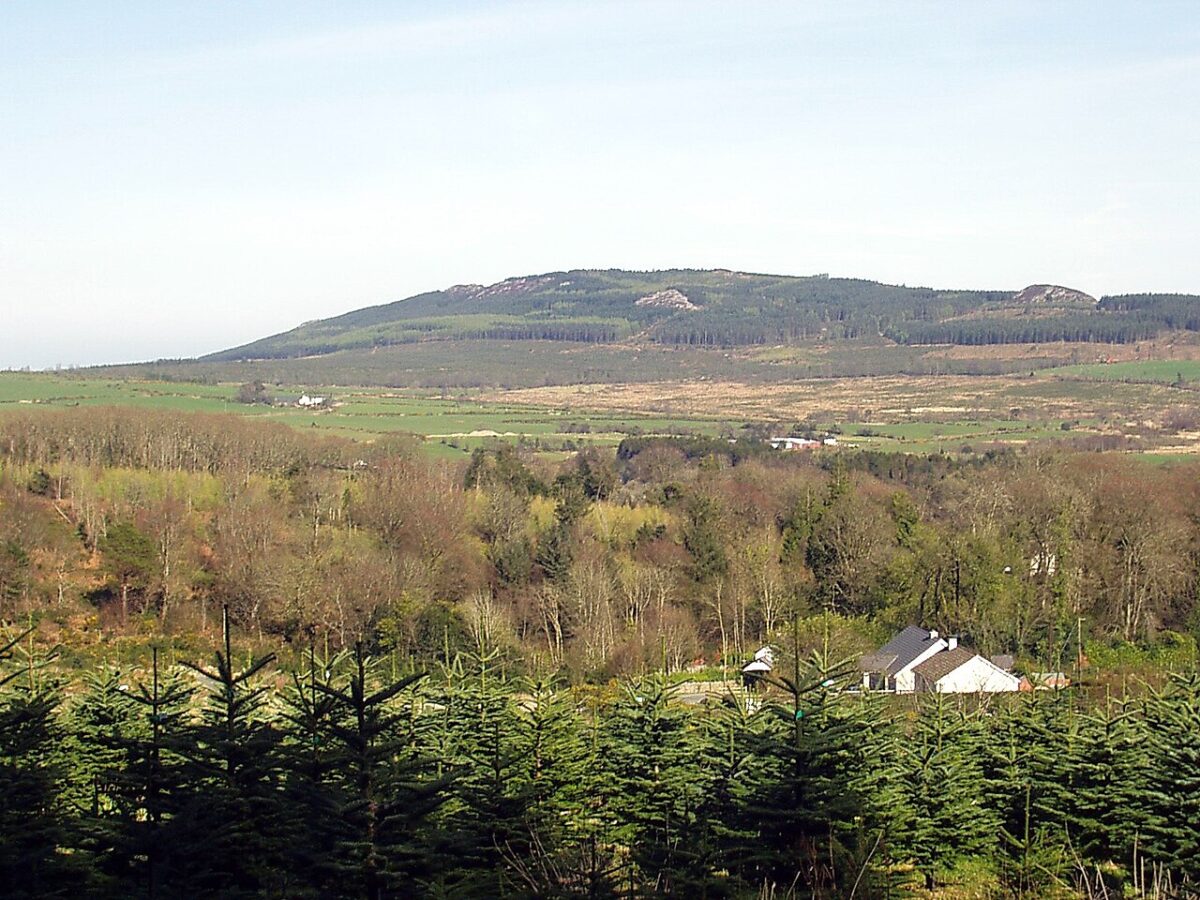
Carrick Mountain
A short drive from Roundwood, Carrick Mountain supplied rougher, more rugged terrain for background shots. It’s a working part of the landscape rather than a set-up viewpoint, so go in expecting a genuine hillside rather than a polished visitor stop.
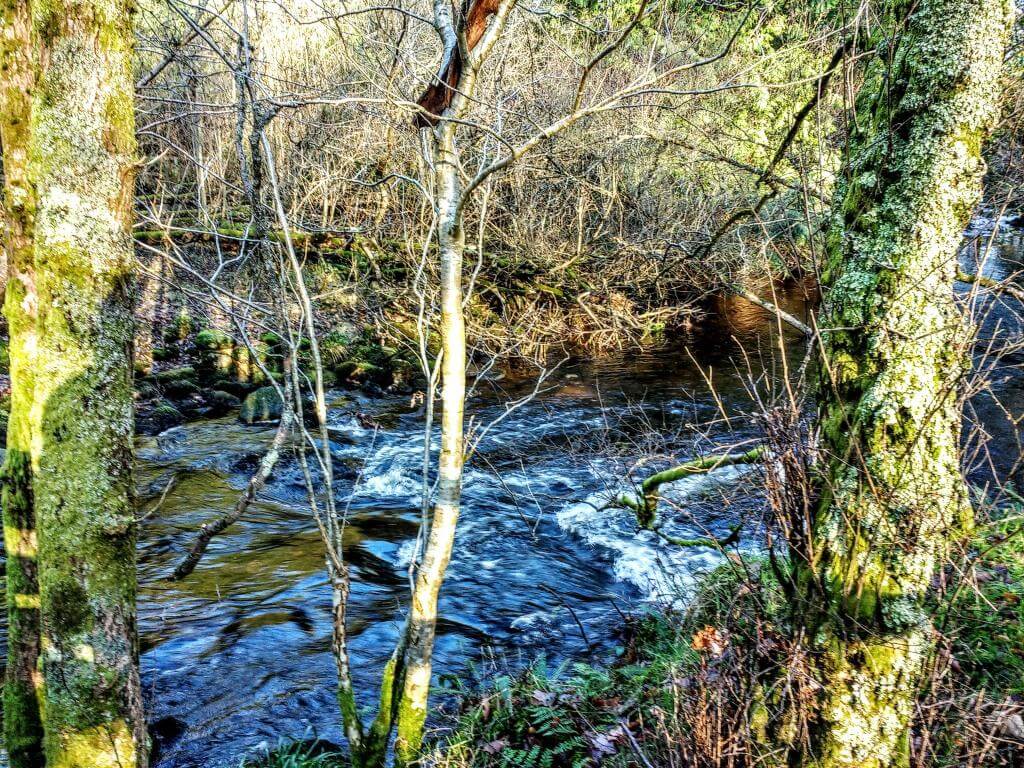
Annamoe River
Also near Roundwood, the Annamoe provided smaller-scale water scenes, a contrast to the larger lakes used elsewhere in the series. A good add-on if you’re already stopping at Carrick Mountain the same day.
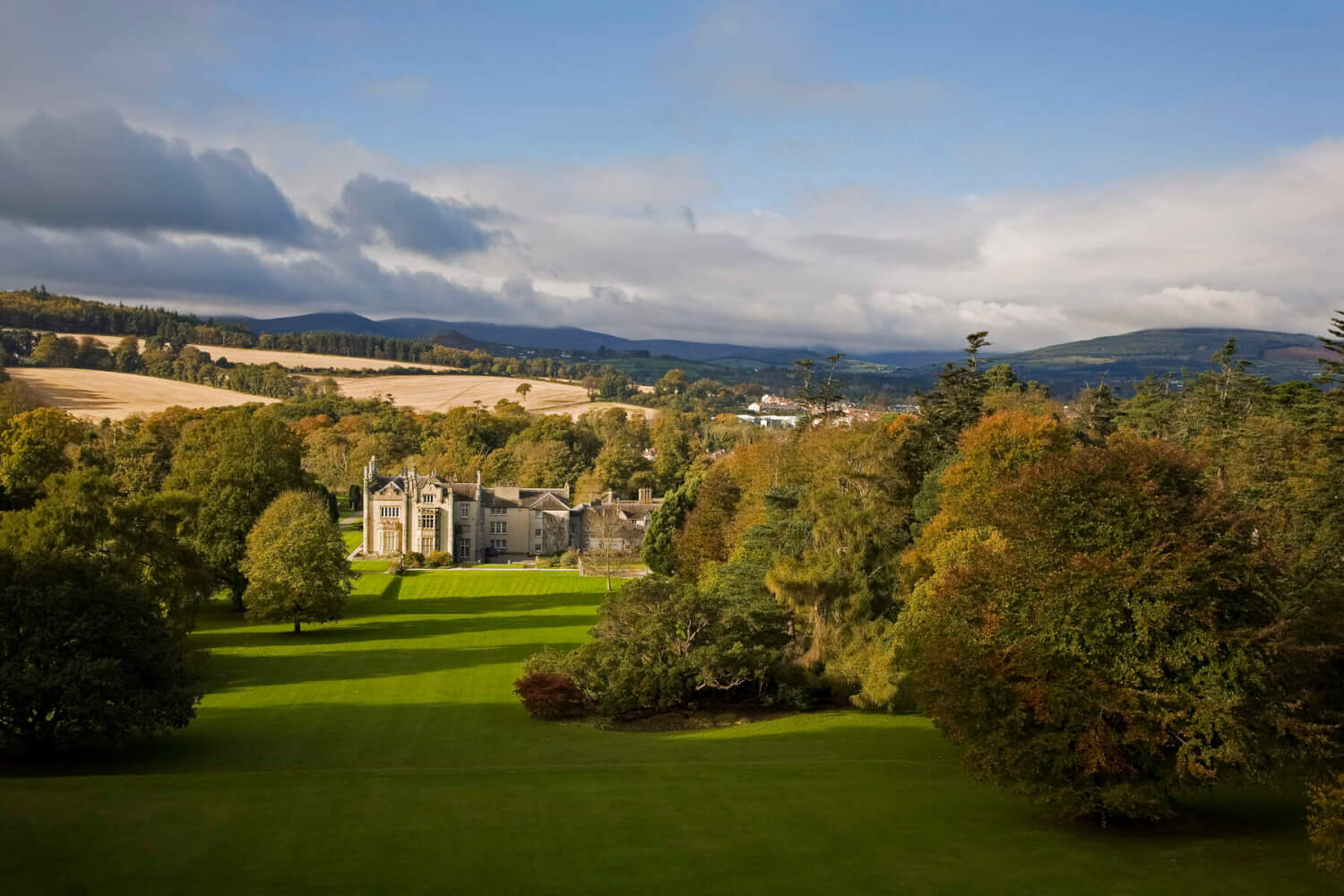
Kilruddery Estate
Near Bray, this historic estate added controlled, manicured grounds to the wider Wicklow footage useful to the production precisely because it looks nothing like the wild mountain scenery used everywhere else in the show.
Bray Head
The coastline at Bray Head gave the production additional coastal visuals to round out the Wicklow footage. It’s an easy, walkable headland if you’re basing yourself in or near Bray for a day.

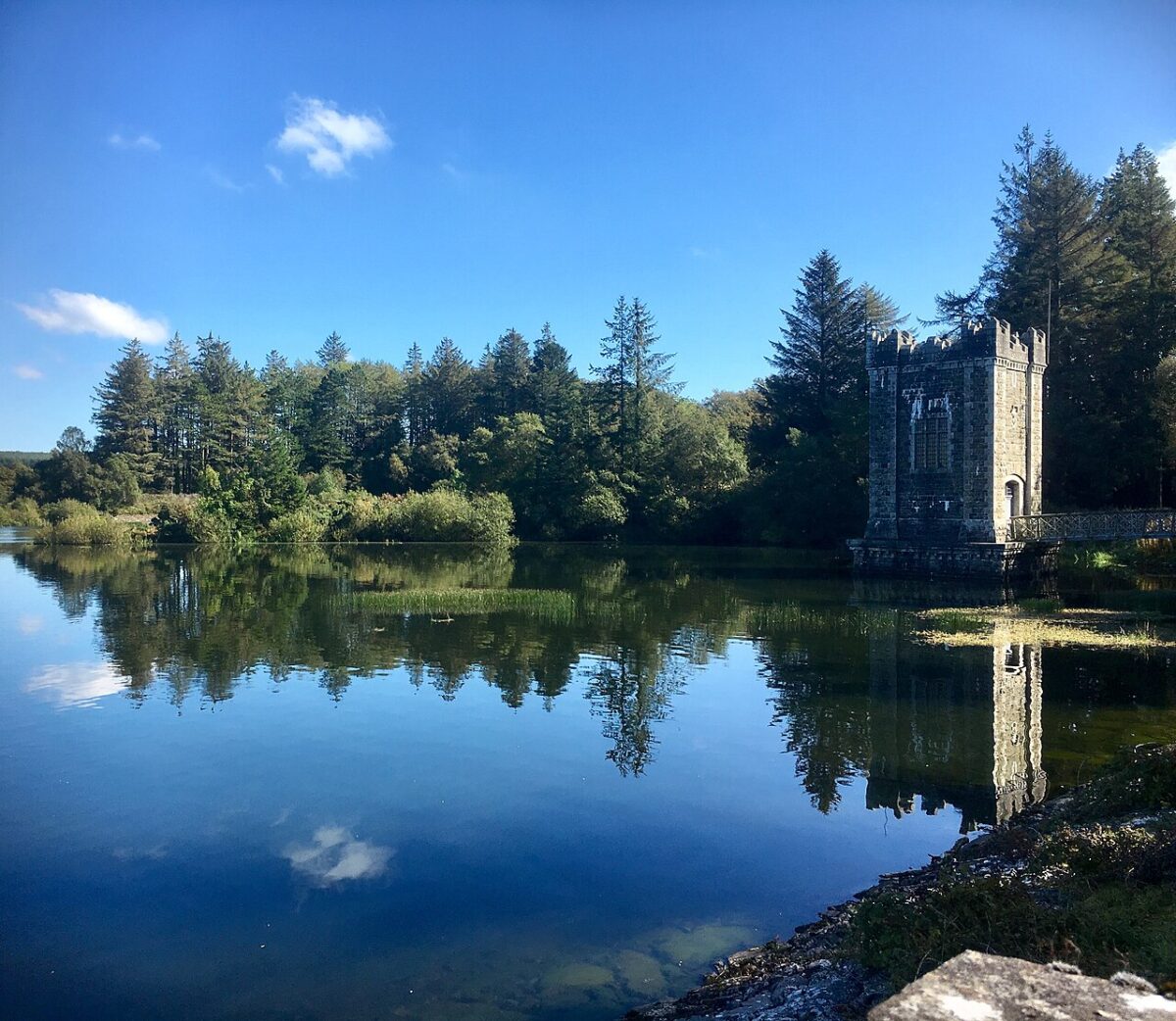
Vartry Reservoir
Close to Roundwood, Vartry offered calmer, more controlled water than the open expanse of Blessington Lakes used elsewhere in the series useful for the show’s quieter water scenes.
Wicklow Gap
On the R756 between Hollywood and Laragh, this mountain crossing doubled as a quieter alternative to the Military Road route, appearing in several of the show’s transitional driving shots.
Together with the core sites already covered elsewhere on this page, that brings the practical total of Wicklow locations connected to the Vikings TV drama in Ireland to 23 almost all of them free to view, and most reachable within the same single-day loop.
New Viking Discoveries: The Digs Changing the Story in 2026
Here is something most filming location guides miss entirely: the archaeology behind the fiction has moved on significantly, and 2026 has been a particularly active year for Viking discoveries in Ireland.
The most significant find is at Woodstown, on the banks of the River Suir about 3.5 miles west of Waterford city. Archaeologists from Ireland’s Discovery Programme, Waterford City and County Council, Abarta Heritage and the Archaeological Museum at the University of Stavanger in Norway confirmed in June 2026 that Woodstown may be the largest Viking Age trading settlement ever identified in Ireland.
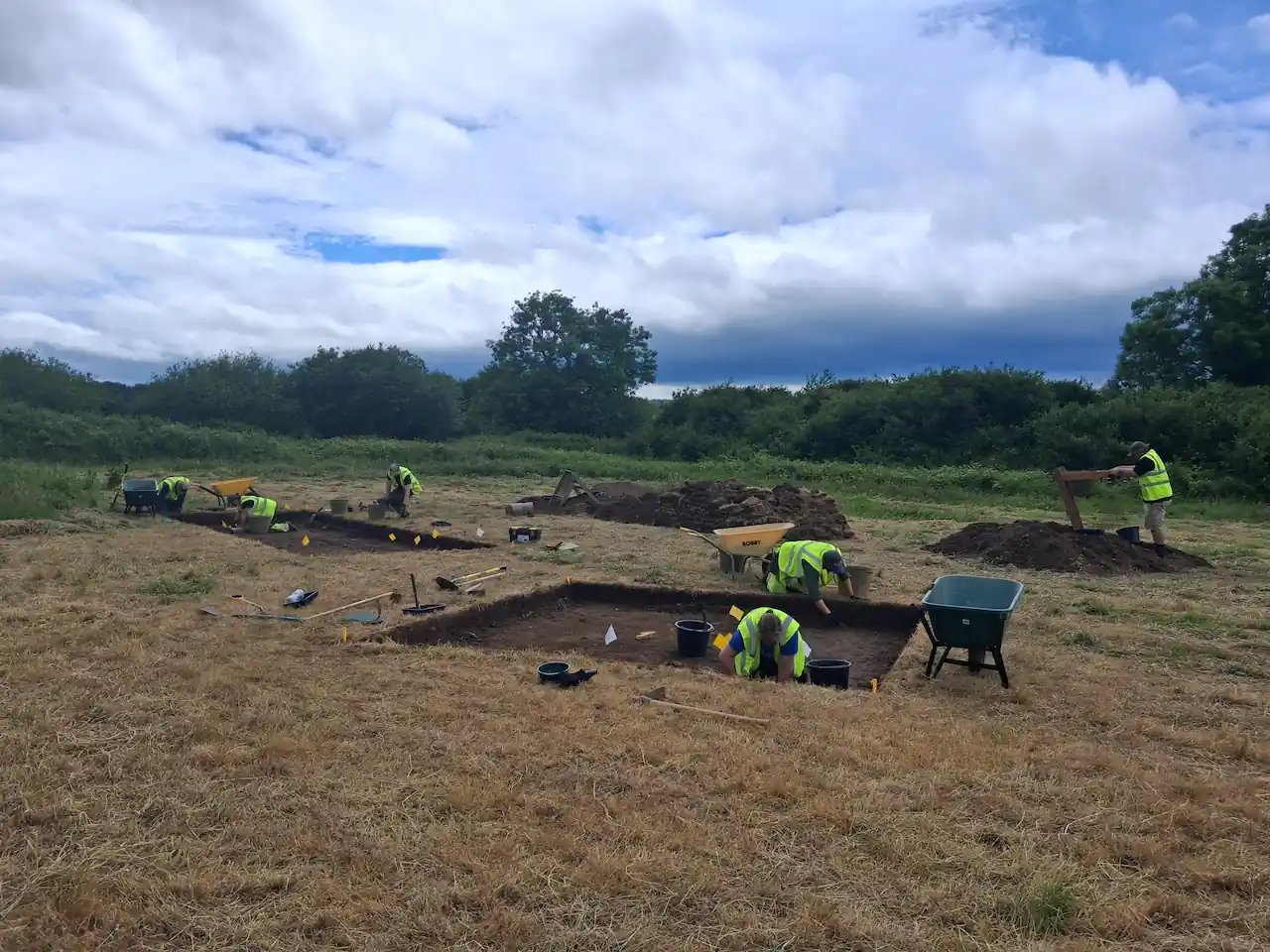
Excavations are currently focused on what researchers believe is a longhouse or great hall, founded by Norse settlers from Rogaland in southwestern Norway more than a thousand years ago. Surveys at the site have already recovered around 4,000 artefacts, including silver ingots, Byzantine coins, ship nails and a Norwegian soapstone vessel, a material that does not occur naturally in Ireland and had never previously been found by Irish archaeologists on an Irish dig. Unlike Dublin or Waterford, Woodstown was abandoned rather than built over, which means the Viking Age landscape has survived largely undisturbed beneath the fields.

Closer to the Vikings filming region, ongoing excavations behind Dublin Castle, on Ship Street, have continued to reshape what we know about the earliest Viking settlement in the city. Archaeologist Alan Hayden’s team confirmed that the Dubh Linn, the tidal pool that gave Dublin its name, extended roughly 400 metres further than previously mapped, reaching all the way to the site of St Michael le Pole church, one of Ireland’s oldest churches. The dig also explained historical reports that up to 200 Viking ships once anchored in the pool, a detail that had puzzled historians for years because the previously known extent of the pool seemed far too small to hold them.

For fans who want to see genuine Viking Dublin rather than the fictional Wicklow version, Dublinia in Christchurch and the National Museum of Ireland’s Viking exhibition on Kildare Street both display artefacts recovered from these ongoing city centre digs, and both are an easy add-on to a Dublin day before or after your Wicklow filming location tour.

Hidden Gems Only Locals Know About
A few places I keep coming back to that rarely make the standard filming location lists:
Sally Gap on a foggy morning is more atmospheric than almost anywhere in the official filming guides, even though it mostly appears in the background of transitional shots. Go at dawn if you can.

The Wicklow Gap, on the R756 between Hollywood and Laragh, offers a quieter alternative route through the mountains with views that rival Military Road but a fraction of the traffic.
Roundwood village, the highest village in Ireland, is a genuinely useful stop for food and fuel between locations and it is where many crew members based themselves during filming.
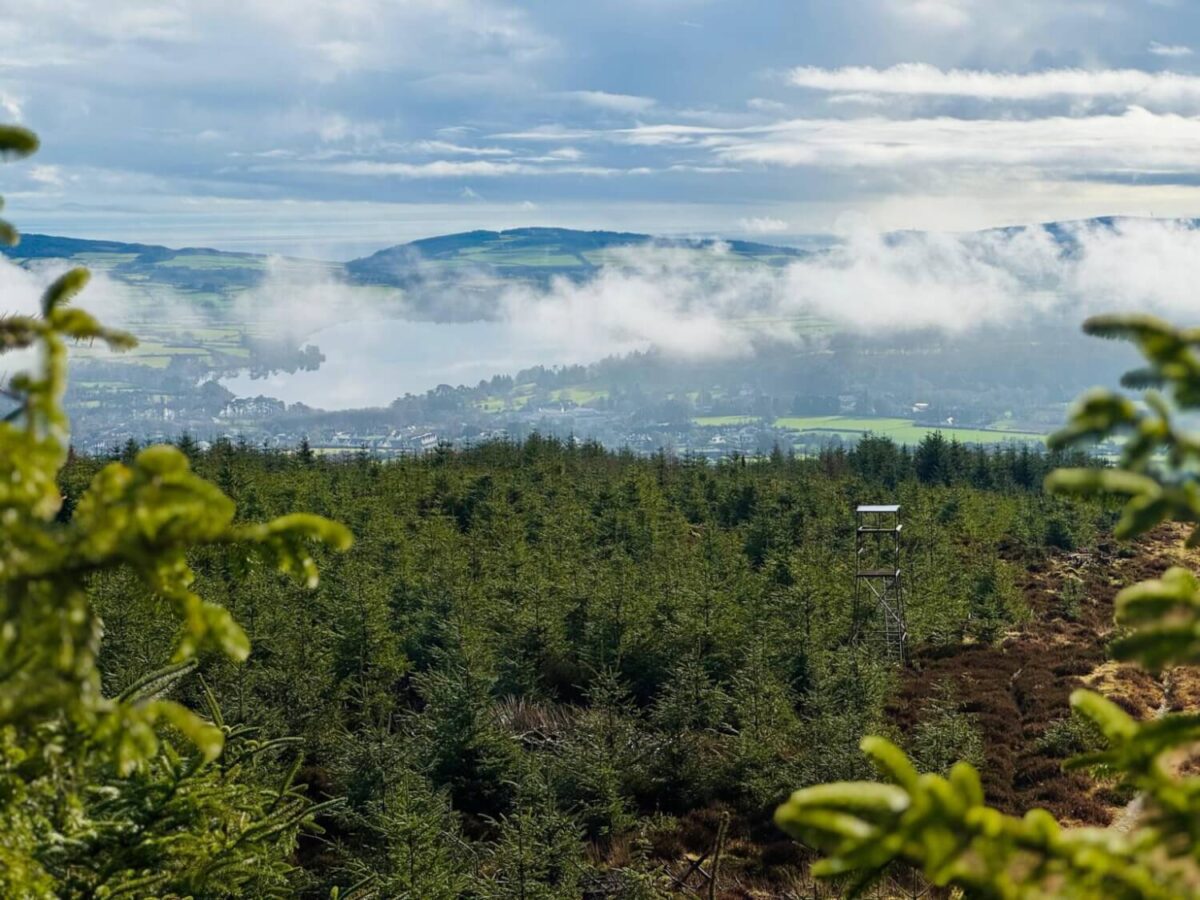
Glenmacnass Waterfall, just off the Sally Gap road, is free, has roadside parking, and is often completely empty even in peak season, unlike its more famous Powerscourt cousin.
Where to Stay Near the Vikings Filming Locations
Accommodation directly beside Lough Tay and Luggala does not exist, since the land is privately owned, but you have good options a short drive away.
Budget to mid-range: guesthouses and bed and breakfasts in Roundwood and Enniskerry offer countryside settings within fifteen minutes of most locations, typically with free parking and ground floor rooms available on request; always confirm accessibility directly with the property before booking.
Higher end: hotels around the Powerscourt Estate and in Enniskerry village offer full accessibility, spa facilities and views over the same valleys the Vikings crew filmed in.
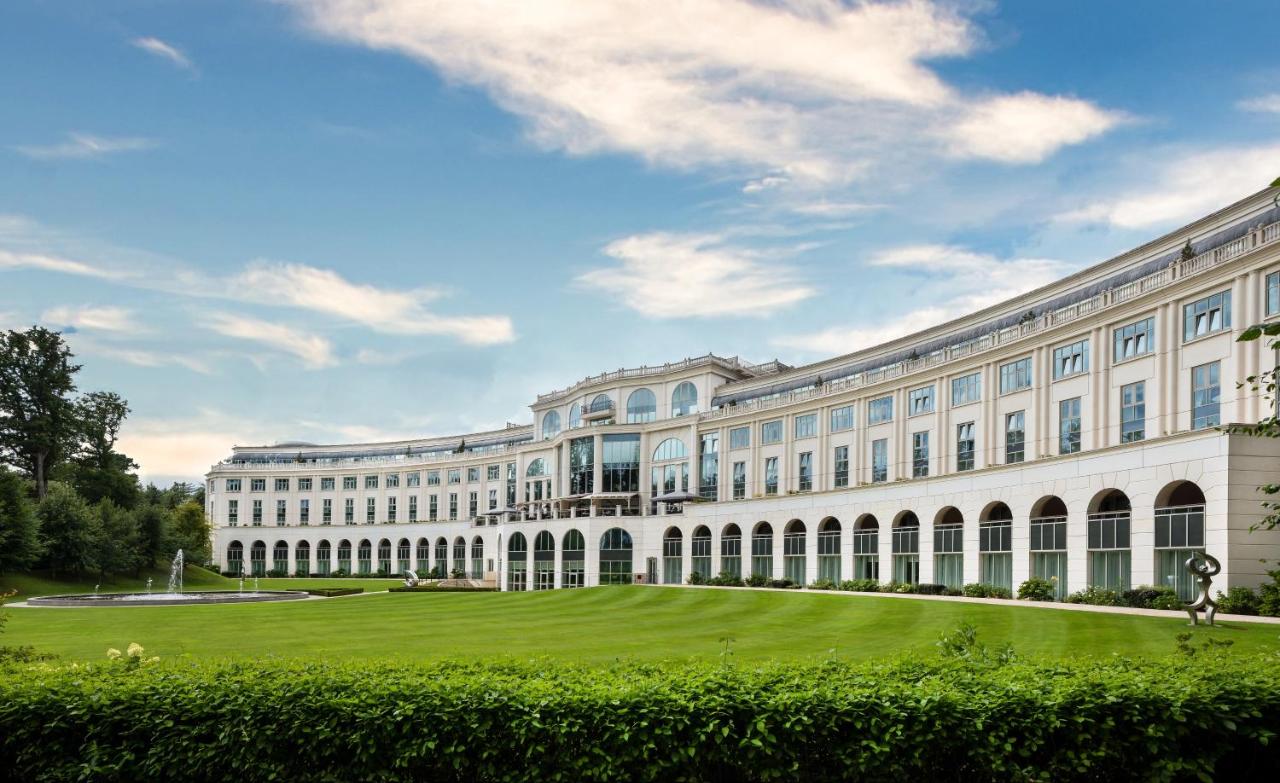
Dublin city centre: staying in Dublin and driving out for day trips is the simplest option for visitors without a car who want to combine city sightseeing, including the Viking-era sites at Dublinia and Wood Quay, with a Wicklow day tour.
Booking.com and similar platforms let you filter directly for accessible rooms and free parking, which is worth doing before you commit, since rural Wicklow accommodation varies a great deal in how up to date its accessibility information is.
Where to Eat: From Cafes to Fine Dining
Roundwood is your best casual stop between locations, with a couple of traditional pubs serving Irish food and coffee shops with step free access from the street.


Enniskerry village, close to Powerscourt, has a good spread of cafes and a well regarded bakery, plus several restaurants with accessible seating, useful if you are stopping after the waterfall.
Powerscourt Estate itself has the Avoca café and terrace, which is fully wheelchair accessible with level access from the main car park, making it one of the easiest fine dining adjacent stops on this whole route.
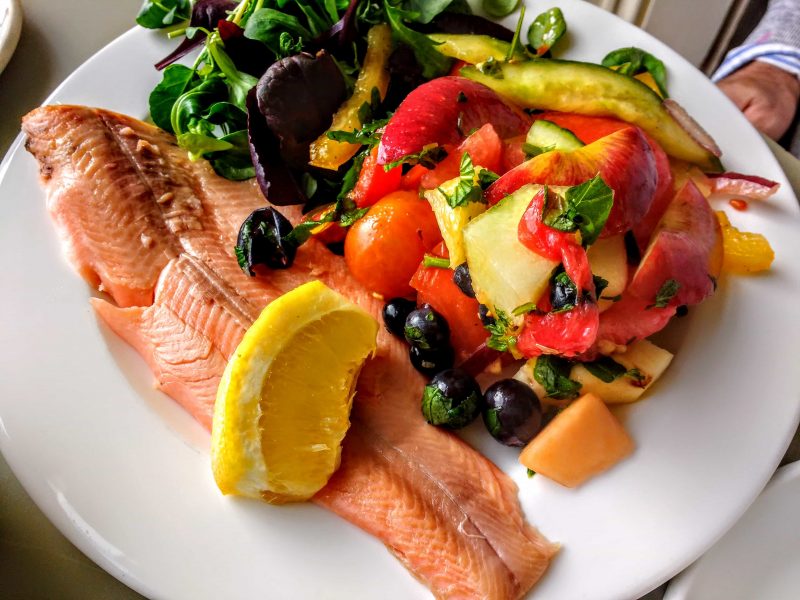

For something more special, the Wicklow area has a small number of destination restaurants worth booking ahead for, particularly around Delgany and Greystones on the coast road back toward Dublin, both a manageable twenty minute drive from Powerscourt.
Things to Do for Kids
Powerscourt Waterfall has a playground right beside the car park, so younger children who cannot manage a longer walk still get somewhere to burn off energy.
Glendalough’s Green Road, the flat, boardwalked loop around the Lower Lake, is the easiest introduction to the valley for families with buggies or younger walkers.

Dublinia in Dublin city, a hands-on Viking and medieval museum, is a strong add-on for kids who want to touch, dress up and explore rather than just look, and pairs naturally with a Wicklow filming location day.
Look out for the Vikings Extras Facebook page too. Local production companies occasionally recruit background extras for new Viking-era productions filming in the region, and it is a genuinely popular activity for older kids and teenagers who are fans of the show.
How to Plan Your Vikings Road Trip
- Base yourself in Dublin or in Wicklow town for two nights if you want to cover everything without rushing.
- Day one: drive to Military Road for the Lough Tay viewpoint, continue to Powerscourt Waterfall, then Blessington Lakes on your way back.
- Day two: head into Glendalough via the Wicklow Gap, stopping at Sally Gap and Glenmacnass Waterfall along the way.
- If time allows, extend to the River Boyne and Slane Castle for the Seine-doubling location, roughly an hour north of Wicklow.
- Book Powerscourt and Glendalough Visitor Centre tickets online in advance during July and August, when both sites are busiest.
- Check the Wicklow Mountains National Park website for any trail closures before you set out, particularly after heavy rain.
- Bring a printed or downloaded offline map. Mobile signal drops out completely in several of the mountain sections, including around Sally Gap.
Vikings Beyond Ireland: Iceland, Norway, France and Canada
Ireland carried the visual weight of both shows, but a handful of scenes travelled further afield. Floki’s exile scenes used Iceland’s Skógafoss waterfall and Reynisfjara black sand beach. Some early establishing shots used Maurangerfjord in Norway, the Vikings’ actual homeland, though far less than most viewers assume.
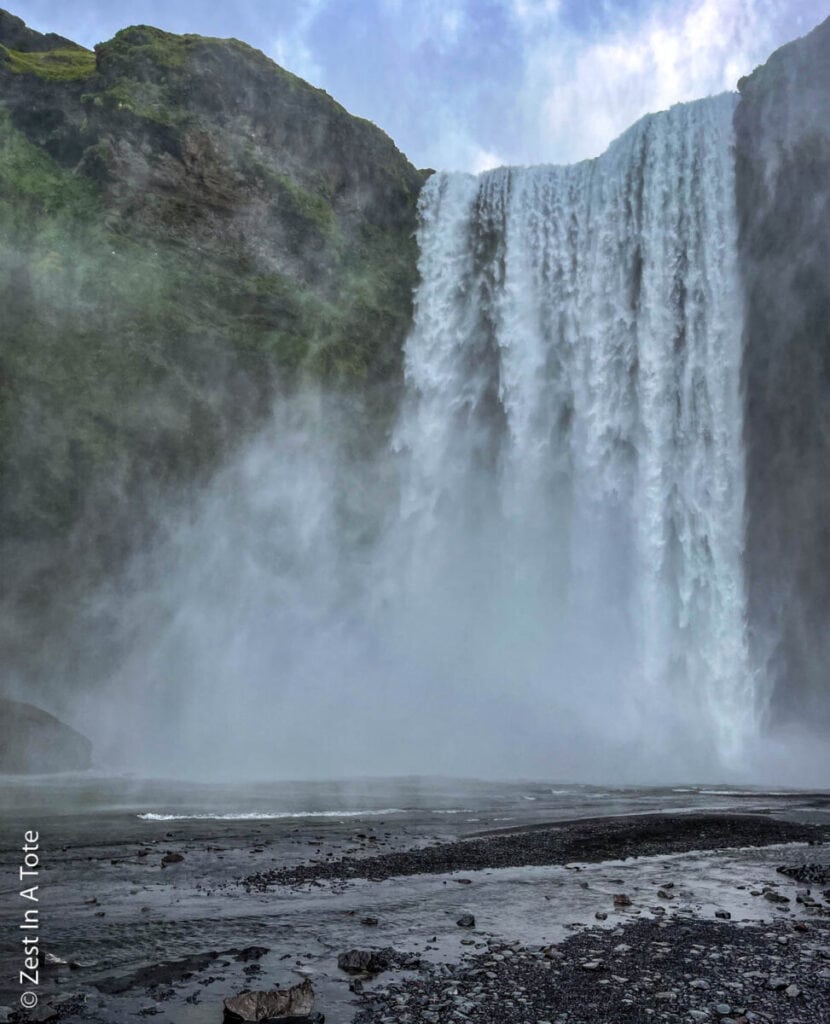
The Paris storyline combined the River Boyne with French castles in the Pays de la Loire region, including Château de Saumur, for interior and courtyard shots. Season four sent a small crew to a forest near Sault Ste. Marie in northeastern Ontario, Canada, for Bjorn and Floki’s scenes with Indigenous peoples in the New World. Vikings: Valhalla later used Dubrovnik, Croatia, to double for Rome and Constantinople. None of these locations replaced Wicklow as the production’s core; they supplemented it for the handful of storylines that needed a different landscape entirely.

Personal Thoughts on the Vikings TV Drama in Ireland
Every part of this story, fictional and archaeological, keeps circling back to the same small stretch of Irish coast and countryside. The Vikings TV drama in Ireland turned County Wicklow into Kattegat without a single flight to Scandinavia, and the real Viking history under Dublin, Waterford and Wicklow is still being dug up as I write this, with 2026 alone producing one of the most significant Viking finds Ireland has seen in years. If you plan your visit around the sites in this guide, budget your parking fees, and leave room for one of the quieter spots most guides skip, you will come away with a far better sense of the place than the show itself ever gave you.
FAQs
Where was the Vikings TV drama filmed in Ireland?
Almost entirely in County Wicklow, centred on Lough Tay, Luggala Estate, Blessington Lakes, Powerscourt Waterfall and Ashford Studios, all within about ninety minutes of Dublin.
Is Kattegat a real place you can visit?
Kattegat itself is fictional, but its on-screen setting, Lough Tay, is real. You cannot walk down to the lake because it sits on private land, but the free viewpoint on Military Road gives you the same view seen throughout the series.
Is Vikings: Valhalla still filming new episodes?
No. Vikings: Valhalla concluded with its third and final season, released on Netflix in July 2024. There is no confirmed new season in production as of 2026, though Ashford Studios continues to host other productions.

How much does it cost to visit the main filming locations?
Most viewpoints, including Lough Tay and the Wicklow Mountains trailheads, are free. Powerscourt Waterfall costs around €8 for an adult with parking included, and Glendalough parking runs €4 to €5 per car, with a small additional fee for the Visitor Centre.
Are the Vikings filming locations in Ireland accessible for visitors with disabilities?
It varies by site. Powerscourt Waterfall and the Glendalough Visitor Centre both have accessible parking and largely level access to the main viewpoints. The Military Road viewpoint over Lough Tay and the trails around Lough Dan are not paved and involve uneven ground, so they are more difficult for wheelchair users.

What is the new Viking discovery in Ireland in 2026?
In June 2026, archaeologists confirmed that Woodstown, near Waterford, may be the largest Viking Age trading settlement ever found in Ireland, with finds including Byzantine coins, silver ingots and a Norwegian soapstone vessel linking the site directly to Rogaland in Norway.
Can I visit the Vikings filming locations on a day trip from Dublin?
Yes. Most of the key sites in Wicklow are within ninety minutes of Dublin and can be combined into a single, if full, day. Splitting the route over two days gives you more time at each stop and avoids rushing Glendalough or Powerscourt.

Join 7,500 Ireland travellers in my Ireland Uncovered Facebook Group and 1,897 on my XYUandBEYOND PAGE
If you have mobility issues here is a selection of posts that may be of help to you:
Bookmark these hubs for updates and dive into the detailed guides to build an itinerary that fits your energy, comfort, and interests.
➡️Accessible Historical sites in the UK
If you are interested in the folklore, culture and women’s roles in Ireland you may enjoy these articles
Hi, please consider removing the spoiler about season 5 in this article, or add in a spoiler alert. I have just started watching and on season 2 and was curious to know about filming locations and stumbled on this article. The rest is brilliant – learning about Ireland locations and sets, but you have ruined what is likely to be a huge surprise for me in three seasons time. Don’t want others to get the same. Thanks, Emma
Great summary. There’s a particular scene at the end of season 2 that has Ragnar sitting on top of a giant rock as king. Any chance you know where that was filmed?
My understanding is that this particular scene was shot at Trolltunga in Iceland. However I have to admit it doesn’t look like Trolltunga in particular so my guess is that they created the actual scene in the studio and then used long shots of Iceland for the mountains.
This is the place Preikestolen in Lysefjorden, Norway, close to Stavanger. Also used in MI6, starring Tom Cruice. Great place which is recommended a visit.