
What to See in Northern Ireland: 101 Landmarks for Your First Visit, Organised by Region and Priority
First time visitor to Northern Ireland?: The top Northern Ireland landmarks for a first-time visitor are the Giant’s Causeway (Northern Ireland’s only UNESCO World Heritage Site, formed from interlocking basalt columns), Carrick-a-Rede rope bridge, Titanic Belfast, Dunluce Castle, the Dark Hedges, the Causeway Coastal Route, Derry’s city walls, and the Glens of Antrim. This guide covers all 101 across five regions, tells you exactly what to prioritise if you have three, five, or seven days, and is written by an Irish writer based in Donegal who has visited every single one, most of them more than once.
Planning Your First Visit to Northern Ireland: What You Actually Need to Know
If you are trying to figure out what to see in Northern Ireland for the first time, the honest answer is that there is almost too much. This is a compact country, roughly the size of Connecticut, and it contains Norman castles, a UNESCO World Heritage Site, nine glacial glens, one of the oldest working whiskey distilleries in the world, two extraordinary walled cities, prehistoric stone circles, and some of the finest coastal scenery anywhere in Europe.
I live in Donegal, which means Northern Ireland is essentially my back garden. I cross the border regularly, often with visitors in tow, and I have been to every place on this list more than once. I know which car parks fill by 9am in July, which famous landmarks earn their reputation, and which ones are genuinely worth driving a long narrow road to reach. That knowledge is what this guide is built on.
What I am not going to do is hand you a list of 101 things and leave you to it. Instead I have organised these Northern Ireland landmarks by region and, within each region, by priority. That way you can look at how many days you have, find your region, and immediately know what to focus on and what to leave for a return visit. Because there will be a return visit. There always is.

According to Discover Northern Ireland, the country welcomed over 2.7 million overseas visitors in the most recent pre-pandemic figures, with visitor spending exceeding 520 million pounds annually. Those numbers have grown consistently since Game of Thrones brought the country to global attention with over 31 filming locations here. But the landmarks that will stay with you longest are not always the ones that appear on television.
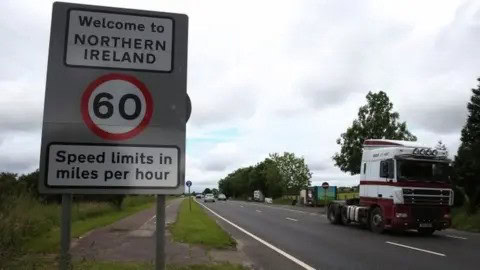
Before you arrive, read the Northern Ireland Travel Tips Guide on xyuandbeyond.com for practical advice on currency, the border crossing, car hire, and getting around. One key point upfront: Northern Ireland uses sterling (GBP), not euro. If you are coming from the Republic, carry both currencies. The border has no checkpoints and you will not know you have crossed it until the road signs switch from kilometres to miles.
- What to See in Northern Ireland: 101 Landmarks for Your First Visit, Organised by Region and Priority
- Planning Your First Visit to Northern Ireland: What You Actually Need to Know
- How to Plan What to See in Northern Ireland on a First Visit
- Region 1: Belfast — The Best Place to Start Your Northern Ireland Visit
- Belfast Priority Two: Worth Your Time if You Have It
- Region 2: The Causeway Coast and Glens of Antrim — The Heart of What to See in Northern Ireland
- Causeway Coast Priority One: The Unmissable Landmarks
- Causeway Coast Priority Two: More of the North Antrim Coast
- Region 3: Derry and the North West — A City That Demands Your Full Attention
- Derry Priority Two: More Worth Seeing
- Region 4: Fermanagh and the Lakelands — Northern Ireland's Quieter, Deeper Country
- Fermanagh Priority One: The Standout Landmarks
- Fermanagh Priority Two: Also Worth Your Time
- Region 5: Down, Armagh, and the South — Ancient Ireland at Its Most Vivid
- South Priority One: Essential Landmarks
- South Priority Two: More Worth Seeing
- Ancient Sites and Irish Folklore: Northern Ireland's Oldest Landmarks
- Folk Museums and Cultural Landmarks Worth Adding to Your Itinerary
- From Someone Who Actually Lives Here: An Honest Assessment
- Practical Information for First-Time Visitors to Northern Ireland
- What to See in Northern Ireland: The Bottom Line for First-Time Visitors
- Frequently Asked Questions: What to See in Northern Ireland on a First Visit
How to use this guide: Three days? Read Region 1 (Belfast) and Region 2 (Causeway Coast) Priority One sections only. Five days? Add Region 3 (Derry) and one of Region 4 (Fermanagh) or Region 5 (Down and Armagh). A full week? Work through all five regions at a comfortable pace. Two weeks? You get to do it properly, which is the best way.


How to Plan What to See in Northern Ireland on a First Visit
- Hire a car. Public transport serves Belfast and Derry well but will not get you to the Giant’s Causeway, the Glens of Antrim, or Fermanagh without serious logistical effort.
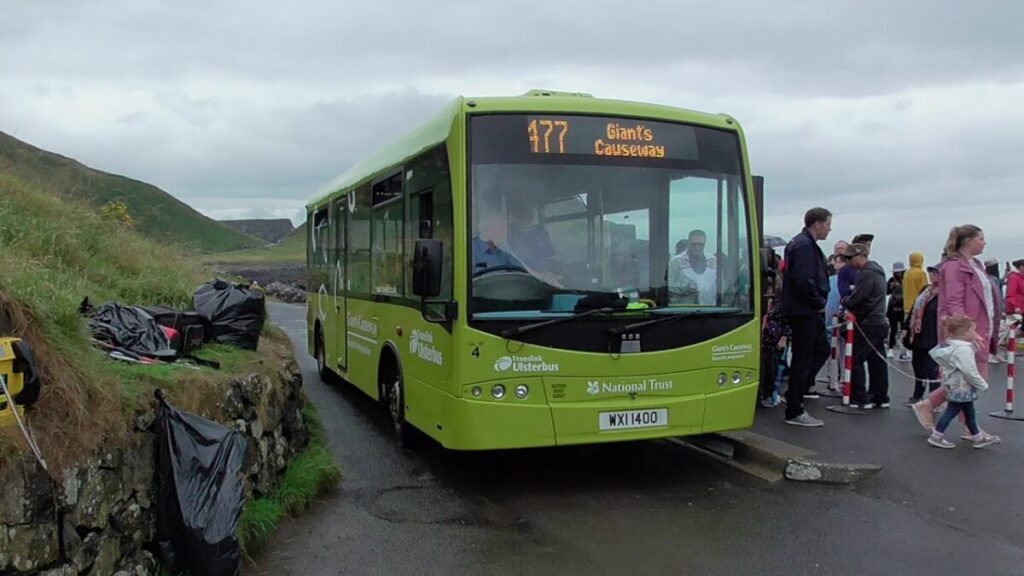
- Book the Giant’s Causeway car park online in advance. It fills before 9am on summer weekends. The causeway path itself is free to walk and you can access the Giant’s Causeway behind the Visitor Centre and not have to pay the high costs to use the centre. The shuttle bus down to the area costs only £1 and is accessible.
- Book Carrick-a-Rede rope bridge tickets in advance. The bridge reaches capacity quickly and is sometimes closed in high winds.
- Allow more time than you think. Roads are narrow, the scenery stops you constantly, and the best conversations happen in places you did not plan to linger.
- Do not try to do everything. Three places seen properly will give you more than ten ticked off a list. Choose your priorities from this guide and commit to them.
- Talk to locals. Ask at your accommodation, at the cafe, in the pub. The best recommendations I have ever given visitors were not in any guidebook.
For help choosing where to stay along the route, Discover Northern Ireland’s accommodation search has current availability, special offers, and latest news on events across the country.


Region 1: Belfast — The Best Place to Start Your Northern Ireland Visit
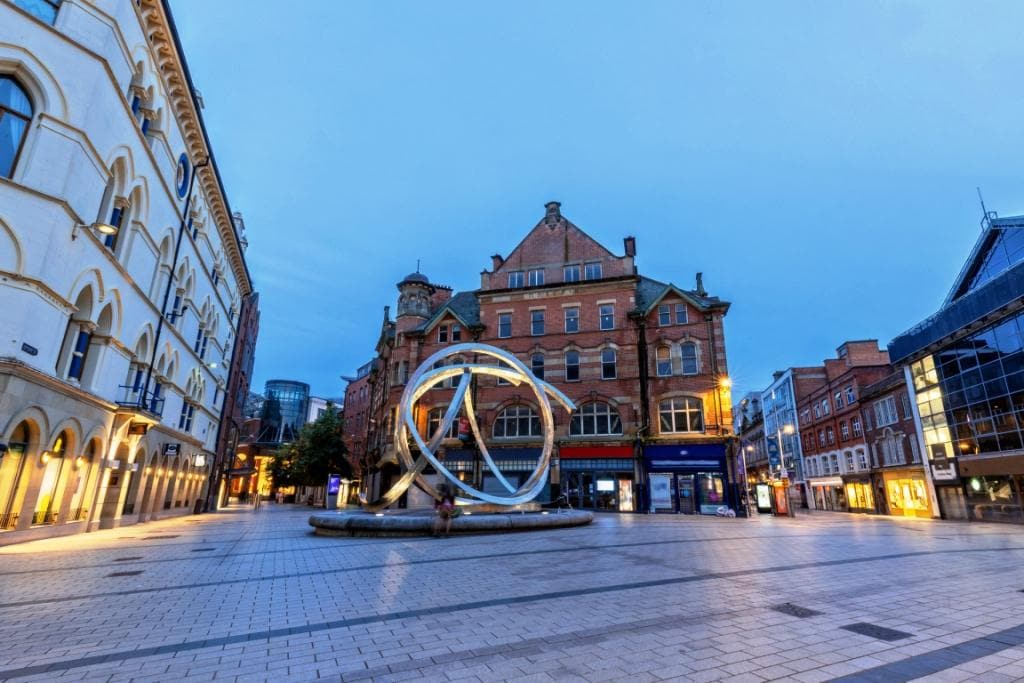
Almost every first-time visitor lands in or passes through Belfast and that is a genuinely good thing, because this is one of the most interesting cities in these islands right now. It has transformed itself in the past 30 years from a city people were warned away from into a place with world-class restaurants, a thriving arts scene, and some of the most striking Victorian architecture you will find anywhere in Europe.
The history is still here and it should be seen. The murals, the Peace Walls, the memorials. But alongside them Belfast is funny, creative, welcoming, and very much alive. Give it two full days. One is not enough and visitors who try it in one always say the same thing when they come back: they wished they had stayed longer.
Belfast Priority One: What Every First-Timer Must See
Titanic Belfast
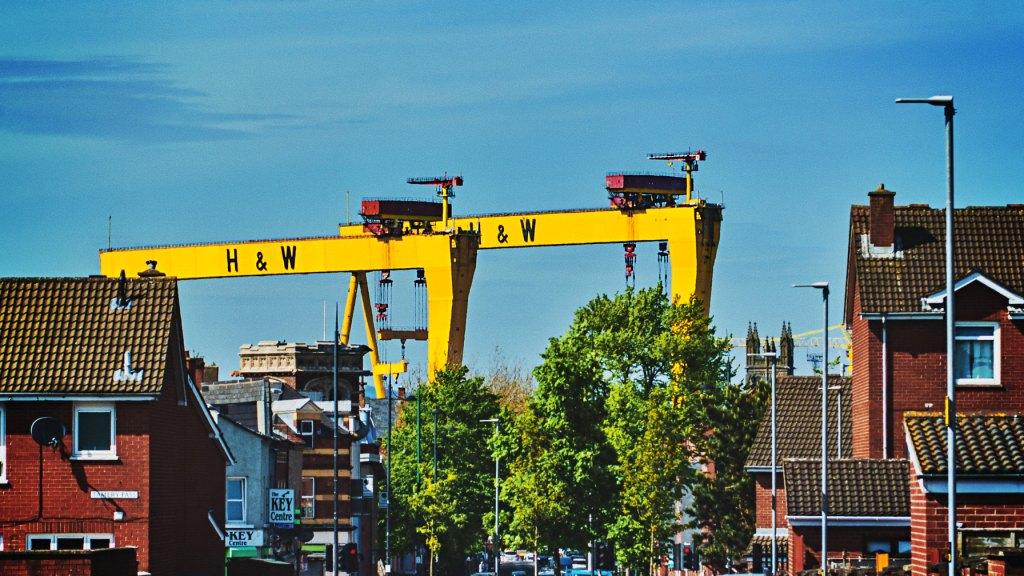
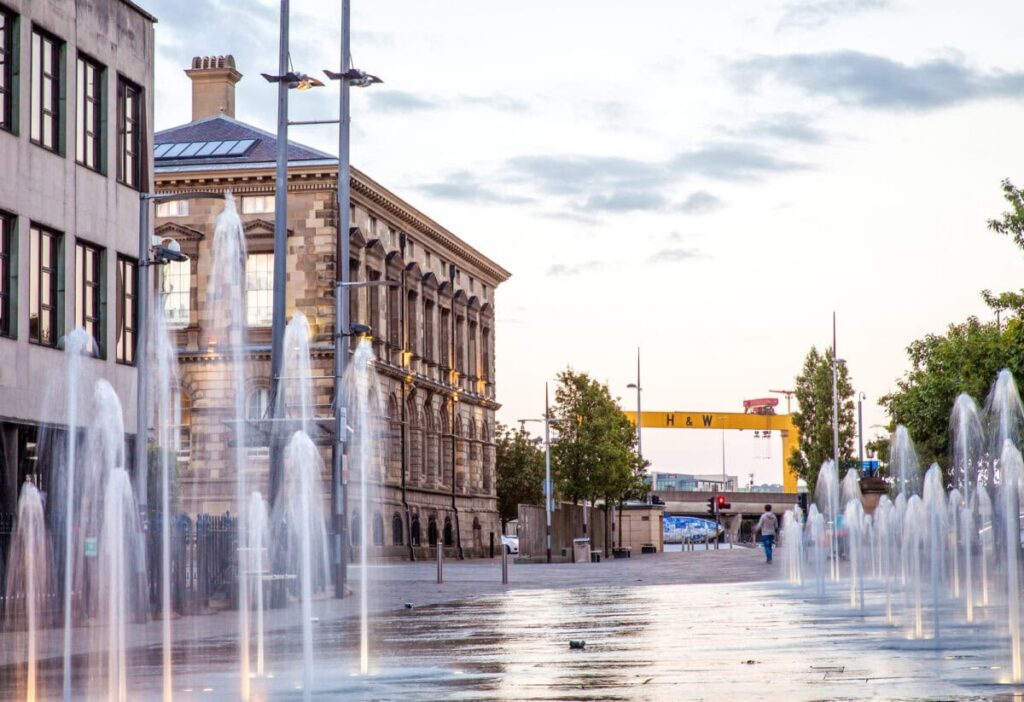
The most visited attraction in the whole of Ireland, North or South, and it earns that position. Built on the exact slipways where the ship was constructed, the building itself is an architectural statement before you even go inside. The interactive experience covers the history of Belfast’s shipbuilding industry, the construction of the ship, the voyage, and the aftermath with more nuance and emotional depth than the subject matter might suggest. Allow three hours minimum.
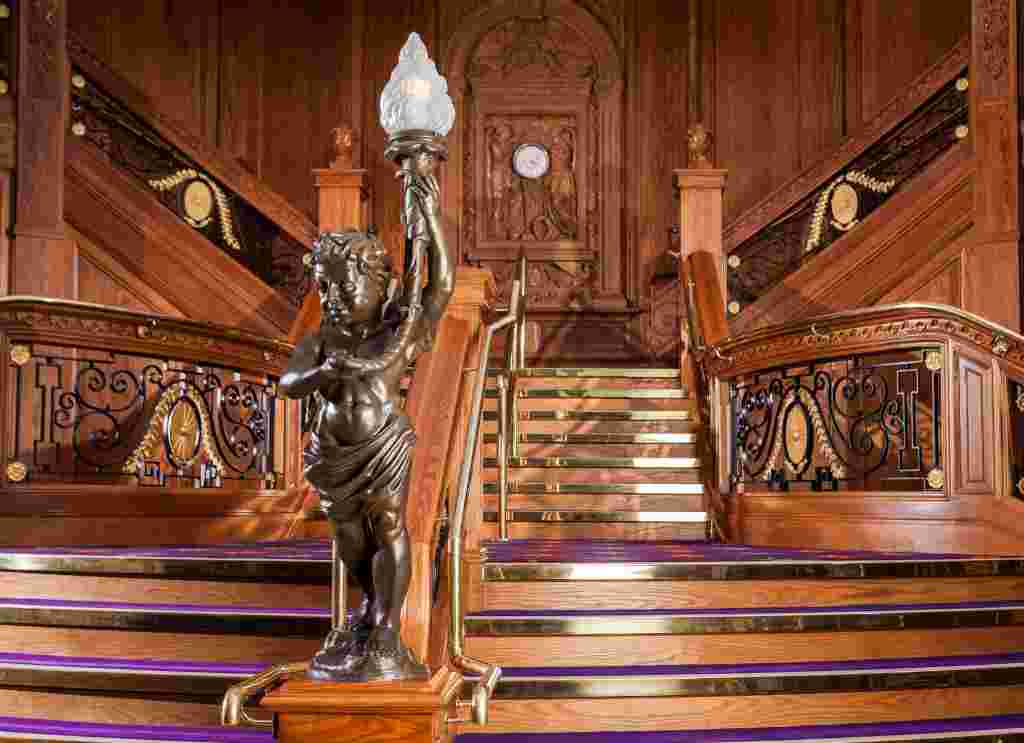
The Titanic Belfast website has booking information, current prices, and details of special events. If you visit on a Sunday, look for the afternoon tea in a replica of the Grand Saloon, complete with the famous staircase.

Belfast Murals and the Black Cab Tour
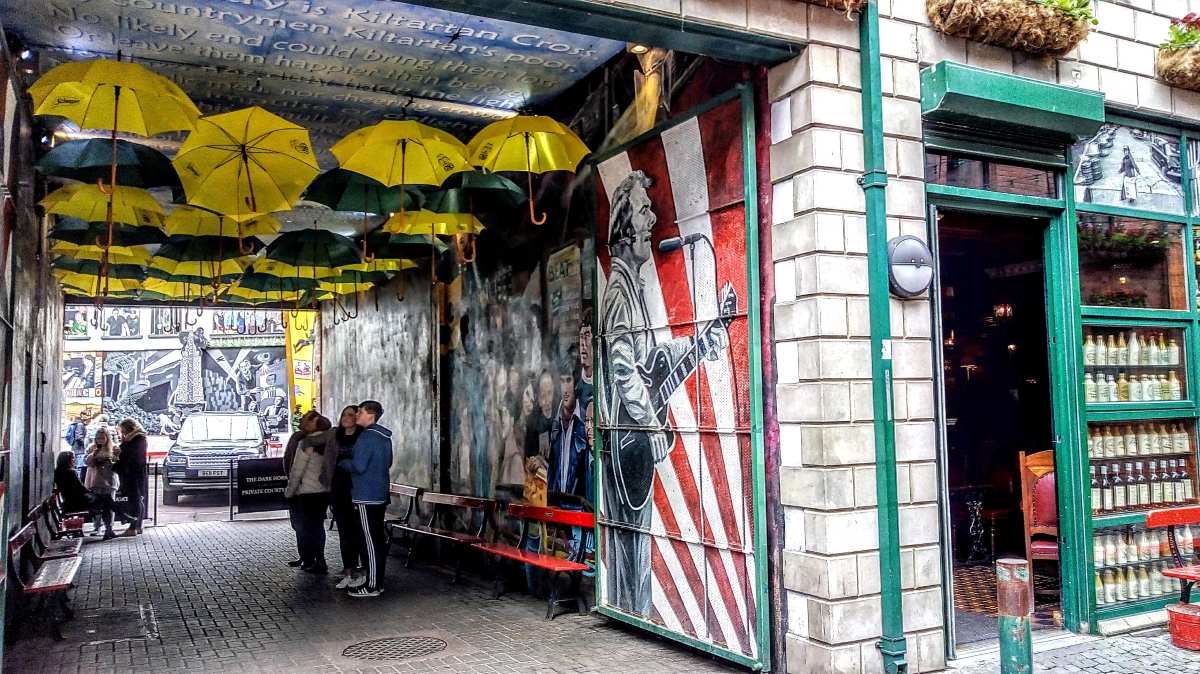
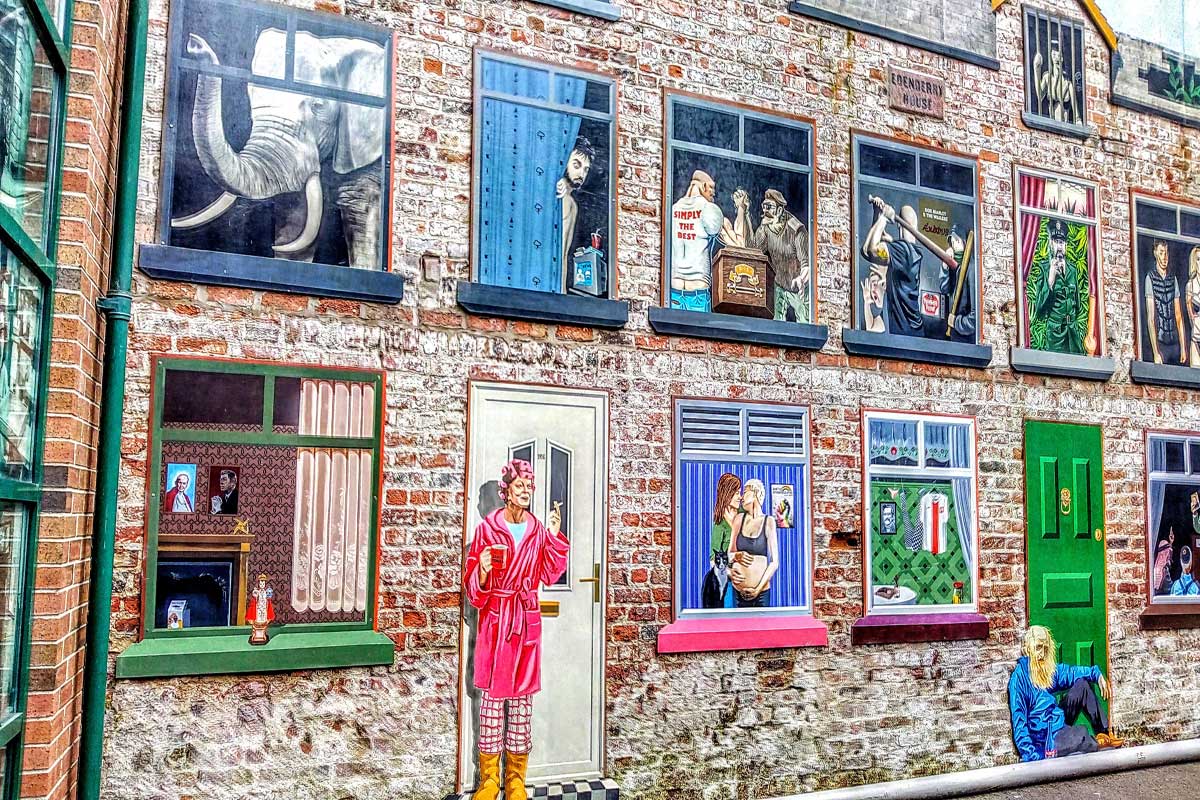
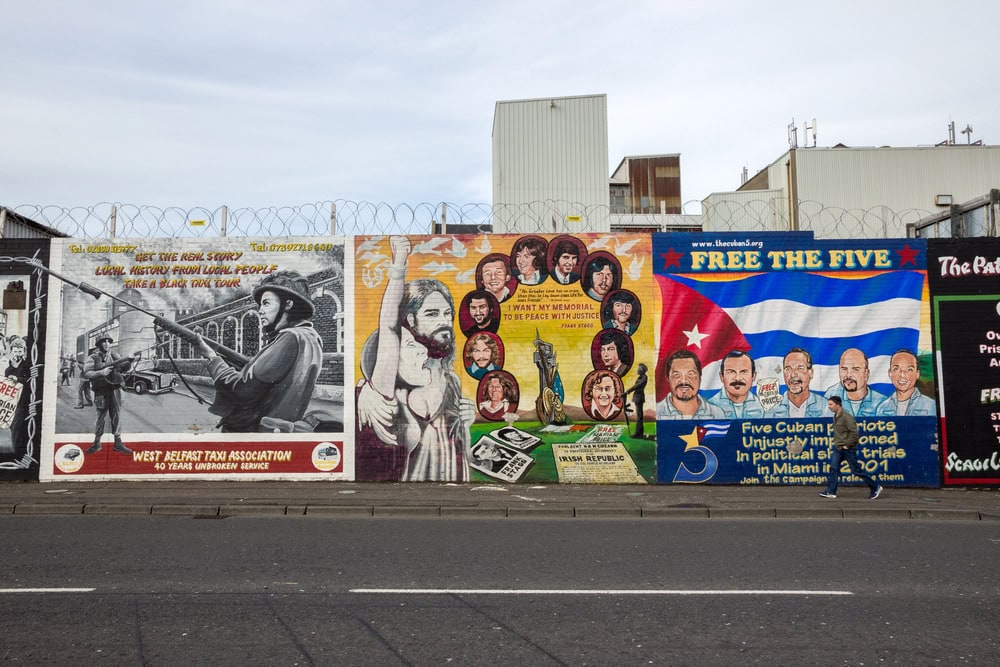
There are approximately 300 murals across Northern Ireland, most concentrated in Belfast’s Falls Road and Shankill Road areas. They document the Troubles, commemorate events, celebrate community identity, and mourn the dead. They are not tourist attractions in the conventional sense. They are living documents of a community’s experience. A Black Cab tour with a driver who lived through the Troubles is, in my view, one of the most valuable experiences available to any visitor anywhere in Ireland. It will change how you understand this country. Book it. Do not skip it.


The Crown Liquor Saloon
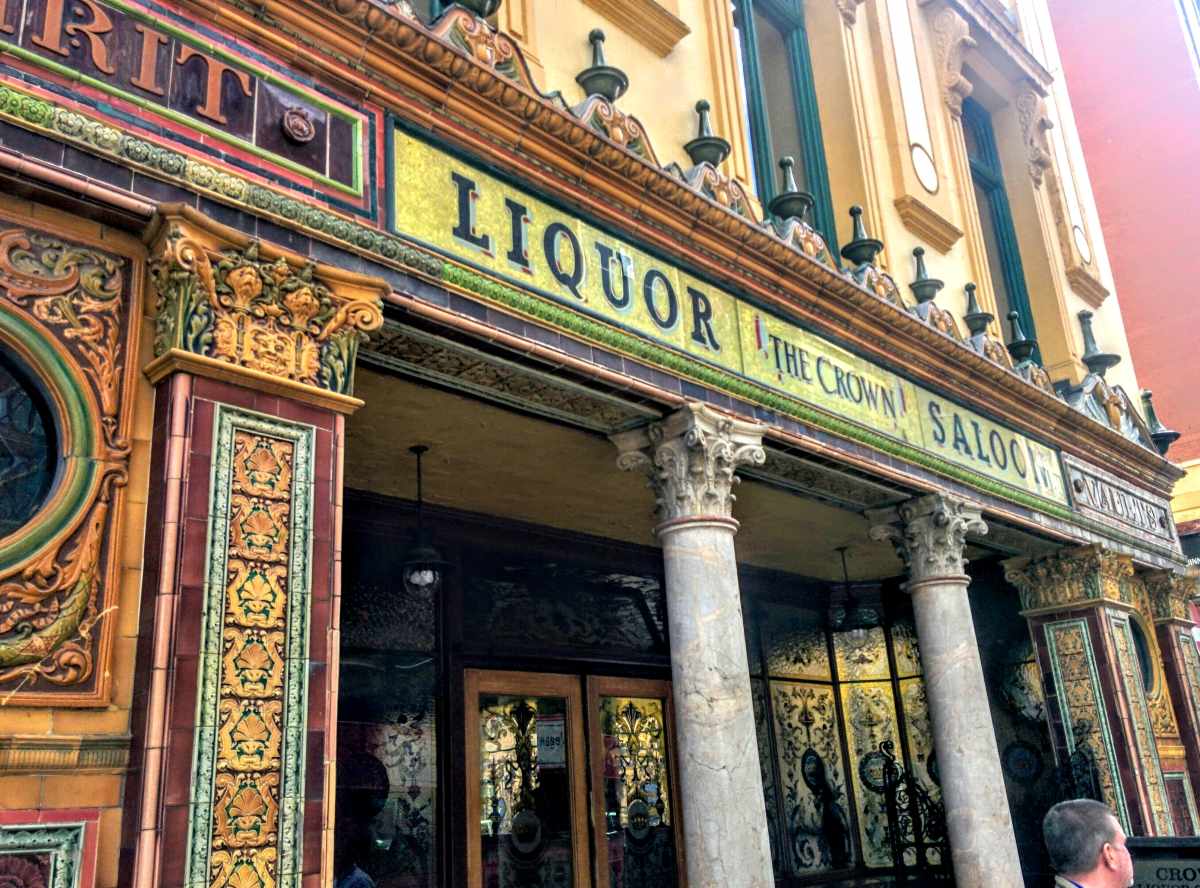
Directly across Great Victoria Street from the Europa Hotel, the Crown Liquor Saloon dates to the 1880s. It is a Victorian gin palace with original gas lights still burning, ornate carved wooden snugs, and a tiled interior so beautiful the National Trust owns it. Go in the early evening, order a Guinness, and take your time. This is one of the finest pubs in Ireland and it is free to walk into.
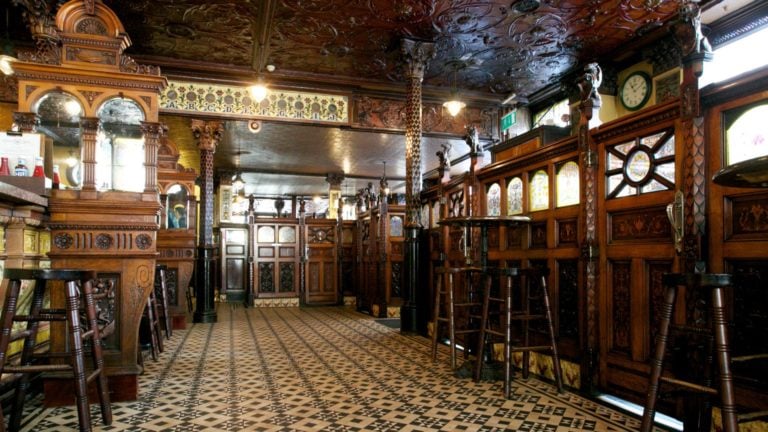

Titanic Quarter and HMS Caroline
The HMS Caroline, a First World War light cruiser, sits in the Titanic Quarter and is open as an interactive museum. It is one of only three surviving vessels from the Battle of Jutland in 1916. Combine it with the Lagan Boat Tour, which runs approximately 90 minutes and shows you the Titanic Quarter from the water, the dry docks where the ship was built, and Belfast Harbour. See the Visit Belfast website for current tour times and booking.

Cathedral Quarter
Named after St. Anne’s Cathedral, whose tall spire locals call ‘the rod to god’, the Cathedral Quarter is Belfast’s most vibrant neighbourhood. Excellent restaurants, bars, galleries, and the Merchant Hotel, worth visiting for the interior alone even if you are not staying. The district hosts festivals year-round.

Belfast Priority Two: Worth Your Time if You Have It
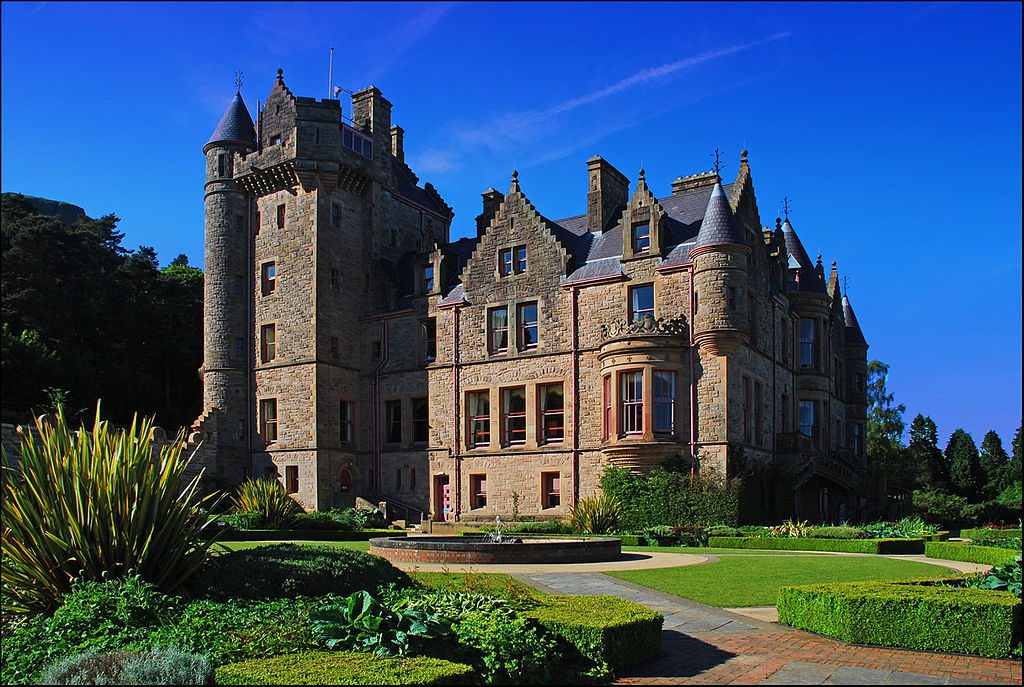
Cave Hill Country Park and Belfast Castle
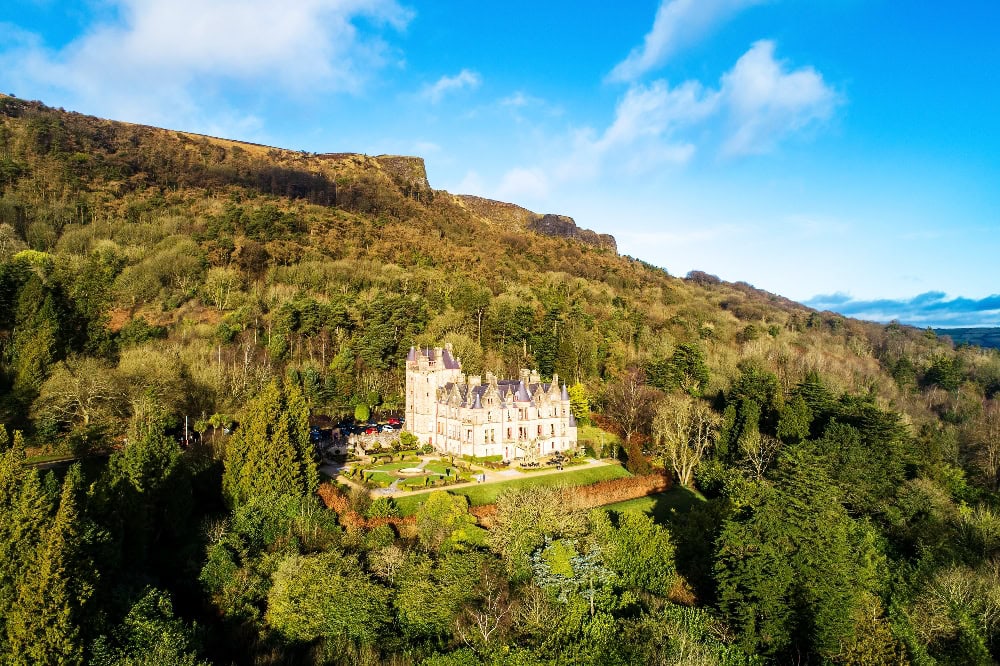
Cave Hill overlooks Belfast from the north and the views over the city and Belfast Lough from the top are exceptional. The distinctive Napoleon’s Nose cliff face is said to have inspired Jonathan Swift when he wrote Gulliver’s Travels. Belfast Castle sits on the lower slopes and is free to enter. The full walk to the summit takes about two hours. See the Belfast City Council page for trail information.
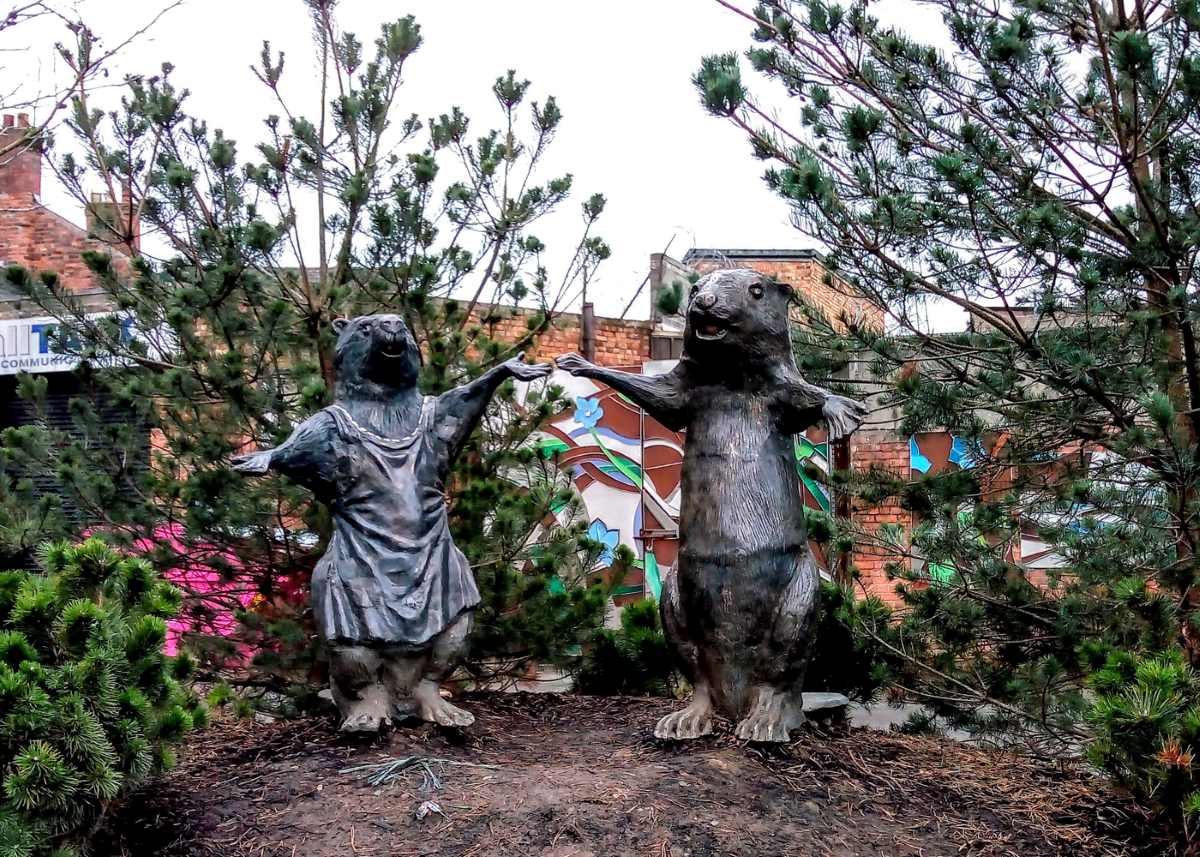
CS Lewis Square
In East Belfast, this pocket park celebrates Belfast’s most famous literary son with seven bronze Narnia-themed sculptures by Irish artist Maurice Harron: Aslan, the White Witch, Tumnus, the Beavers, the Robin, and the Stone Table. A twenty-minute detour and genuinely lovely.


St. George’s Market
The last surviving Victorian covered market in Belfast, on May Street near the River Lagan. The Saturday food and craft market is the one to go to. Belfast people come here every week. Grab coffee, wander, watch the city at its most relaxed. Just outside the entrance stands a small sculpture of Alec, a goose who became a local celebrity in the 1920s by accompanying children to school each morning.



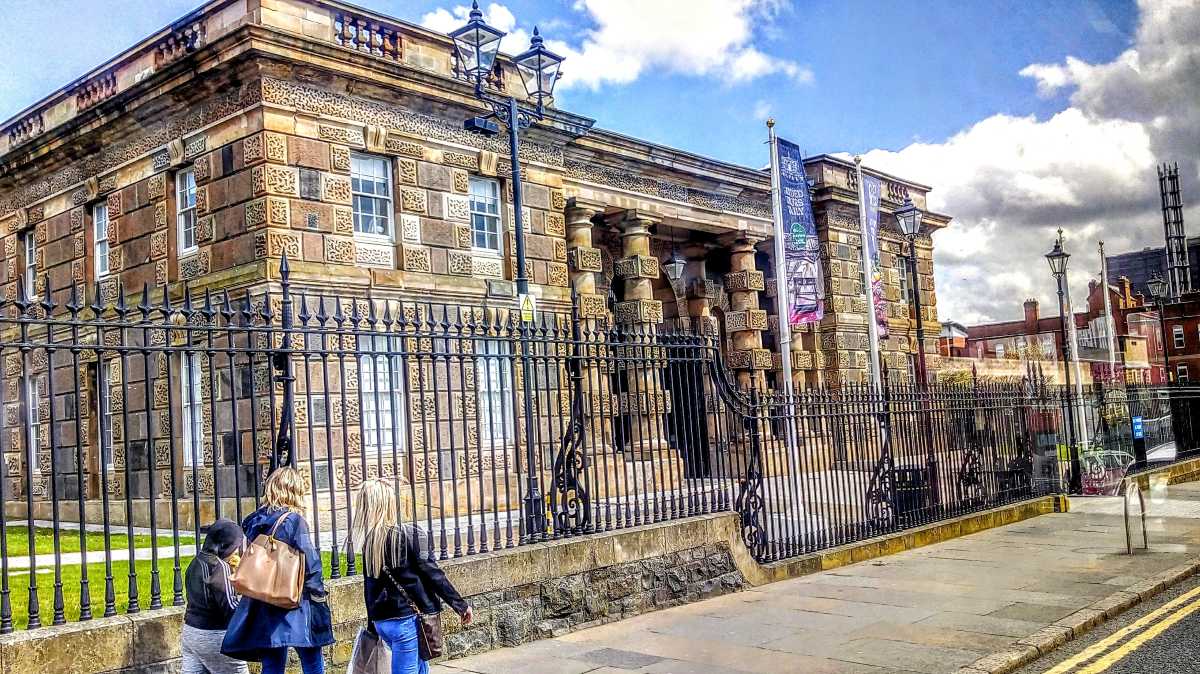
Crumlin Road Gaol
Closed in 1996 after more than 150 years in operation, during which it held Victorian criminals, suffragettes, and during the Troubles, Republican and Loyalist prisoners in adjacent wings. Guided tours run daily. The tunnel connecting the gaol to the courthouse across the road is one of the more unsettling things you will walk through in Ireland. Book online.
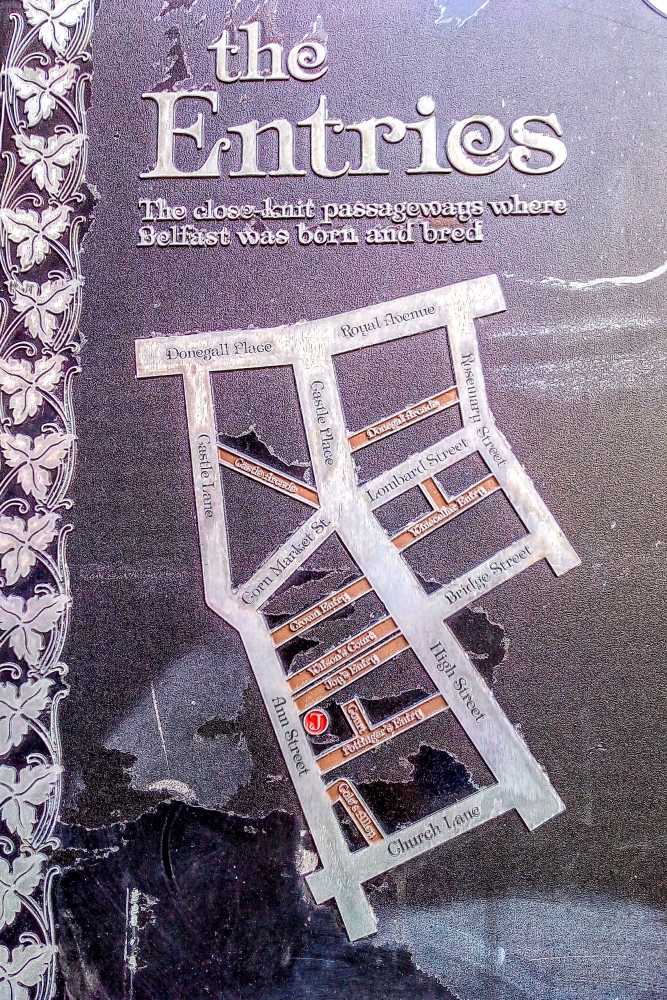
The Belfast Entries
The narrow alleyways off High Street and Ann Street in central Belfast date from the city’s earliest layout. Several contain Victorian and pre-Victorian pubs still operating today. Worth a slow wander on your way between other sites.
The Peace Walls
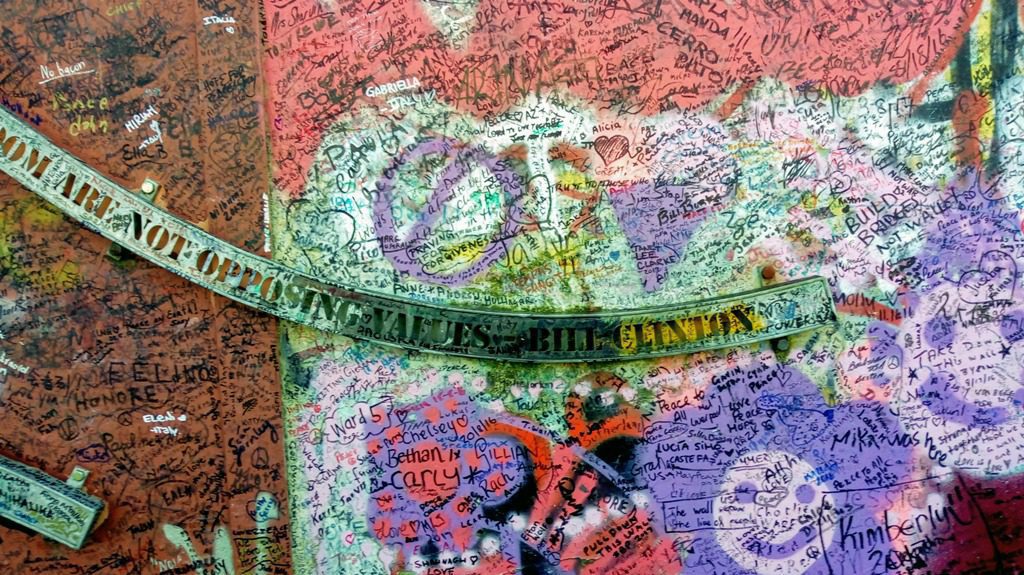
A series of walls between Catholic and Protestant areas of Belfast, ranging from a few hundred yards to over three miles long and up to 25 feet high. President Bill Clinton is among those who have signed them. Best understood with the context a Black Cab tour provides.

Region 2: The Causeway Coast and Glens of Antrim — The Heart of What to See in Northern Ireland
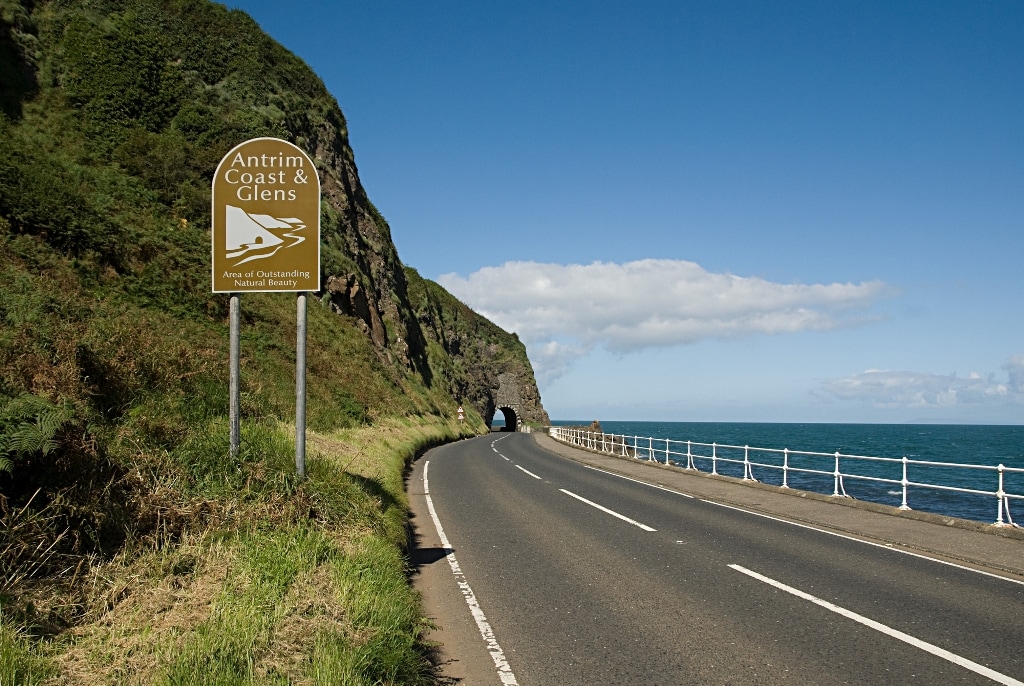
If Belfast is where you start, the Causeway Coast is where Northern Ireland takes your breath away. The Causeway Coastal Route runs over 120 miles from Belfast to Derry, passing more than 50 points of interest. It is one of the great coastal drives in the world, not just in Ireland, and the road itself is a significant Northern Ireland landmark by any measure.
The National Trust manages many of the key sites along this route, including the Giant’s Causeway, Carrick-a-Rede rope bridge, and Mussenden Temple. Booking in advance through the National Trust website is strongly recommended between May and September.
Drive it east to west, starting from Larne and ending in Portstewart or pushing through to Derry. Give it two full days minimum. Three is better. The temptation to race through it in a single day is completely understandable and completely wrong.
Causeway Coast Priority One: The Unmissable Landmarks
The Giant’s Causeway
Northern Ireland’s only UNESCO World Heritage Site, the Giant’s Causeway consists of approximately 40,000 interlocking basalt columns formed by volcanic activity around 60 million years ago. Most columns are hexagonal, though some have up to eight sides. Named formations include the Chimney Stacks, The Harp, The Organ, and the Camel’s Hump.
Irish folklore tells a better story than geology. The giant Finn McCool built the causeway as a bridge to Scotland to challenge his rival Benandonner. When Finn saw how enormous Benandonner was, his wife disguised him as a baby. Benandonner fled in terror at what size the father must be, destroying the bridge behind him. The Scottish end survives as Fingal’s Cave on the island of Staffa.
The causeway path is free to walk. The National Trust visitor centre and car park charge fees. Book the car park online at nationaltrust.org.uk in advance if visiting between May and September. I have seen the car park full before 8.30am on a summer Saturday.


Carrick-a-Rede Rope Bridge
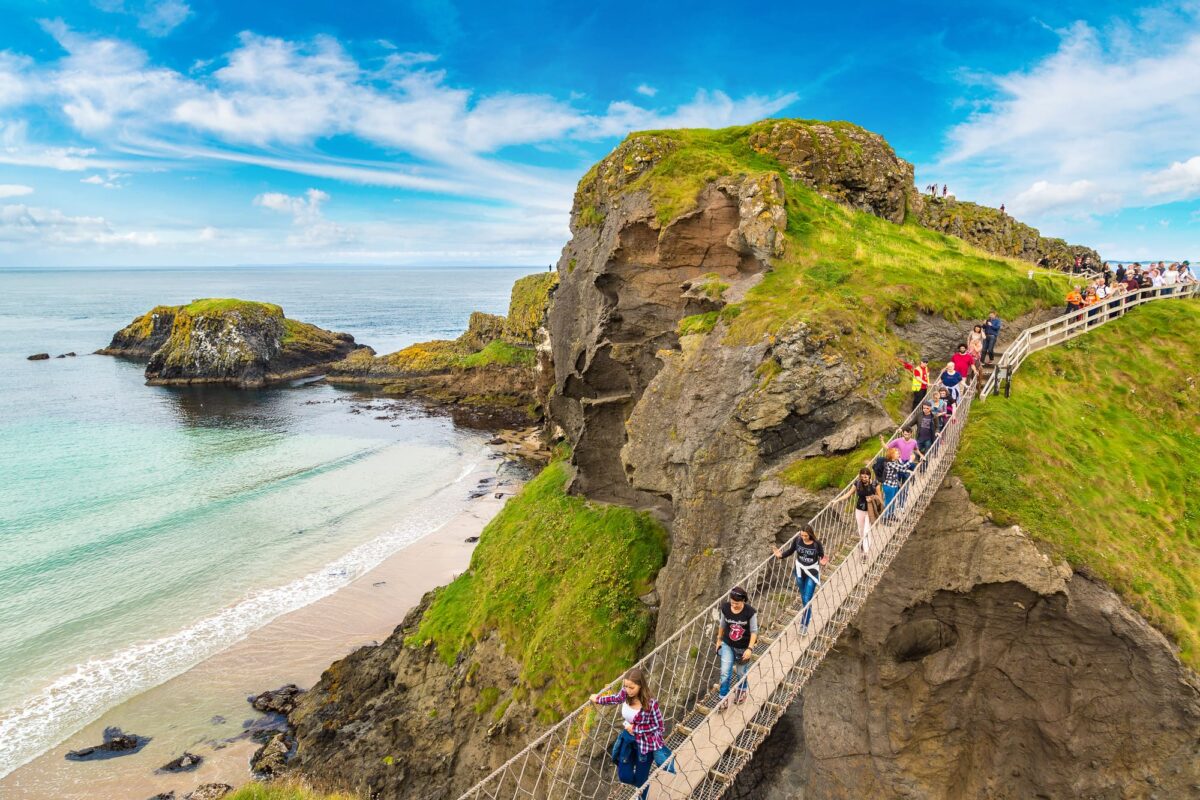
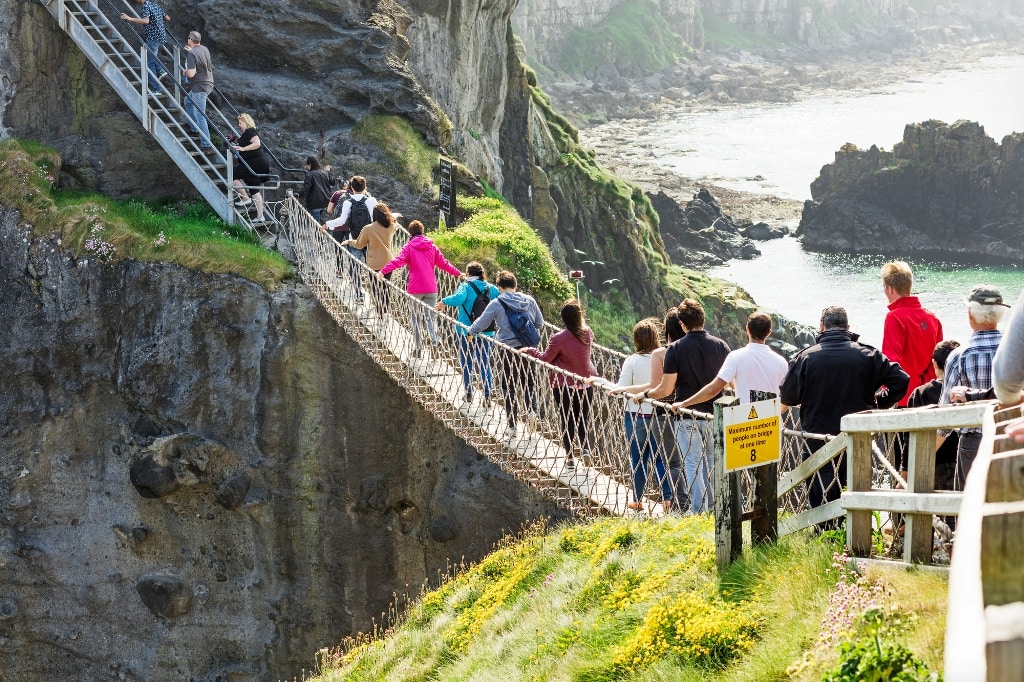
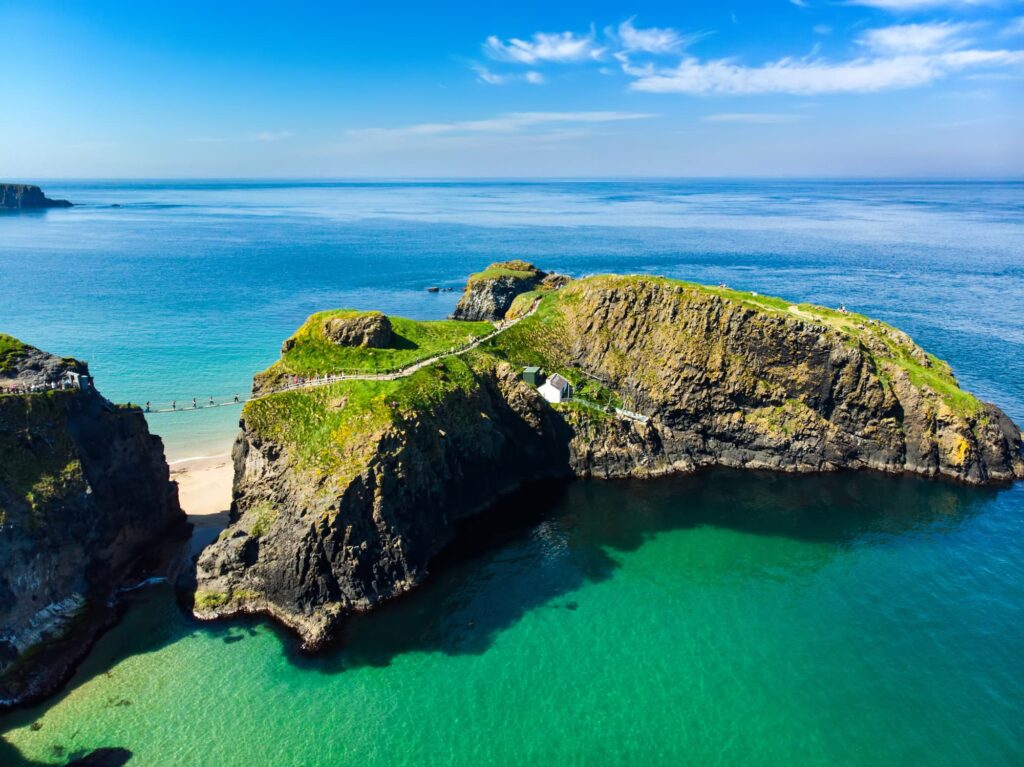
The rope bridge stretches 20 metres across a 30-metre drop above the sea, connecting the mainland to a small island where fishermen once checked salmon nets. The current bridge is maintained by the National Trust and is safe, though crossing it is exhilarating regardless. The views from the island back toward the mainland and out to Rathlin Island and Scotland are exceptional. Book tickets in advance through the National Trust.
Dunluce Castle
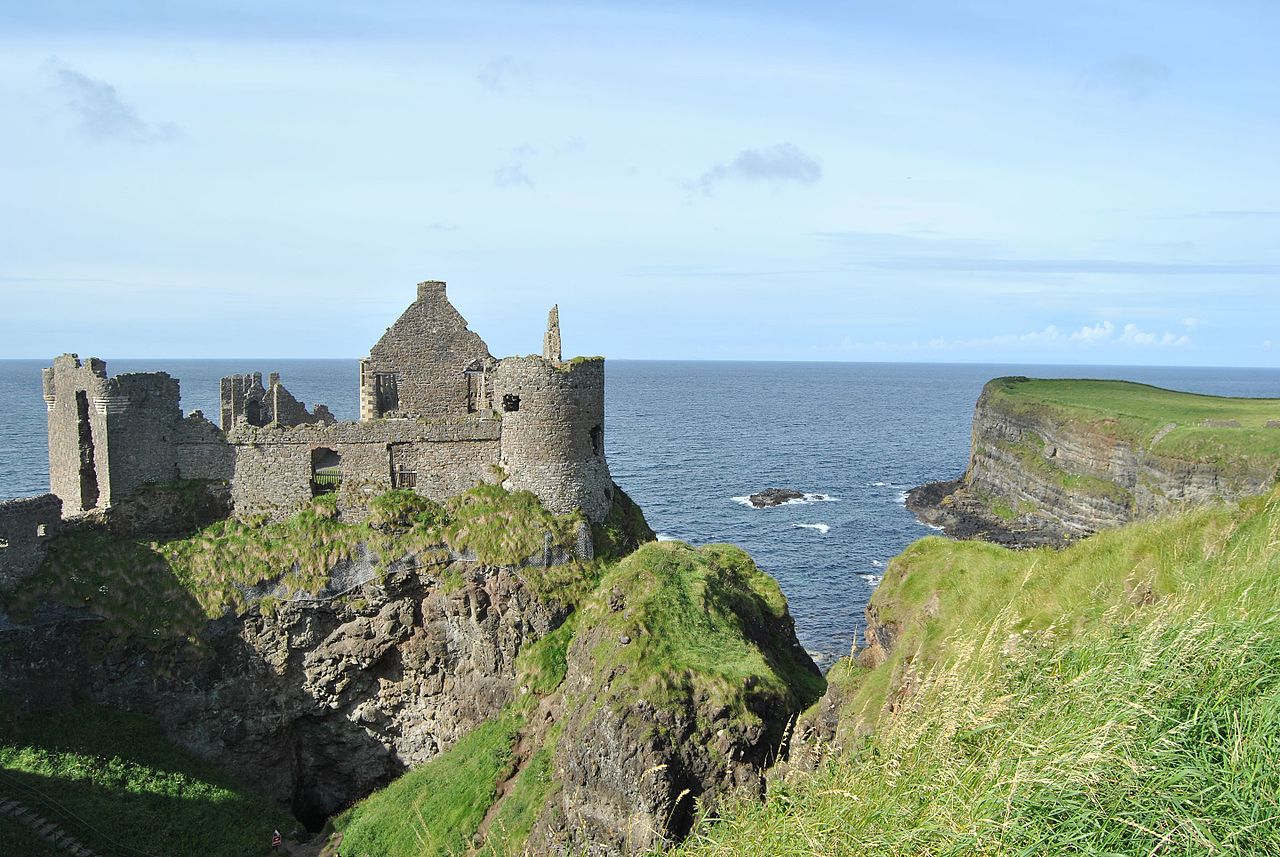
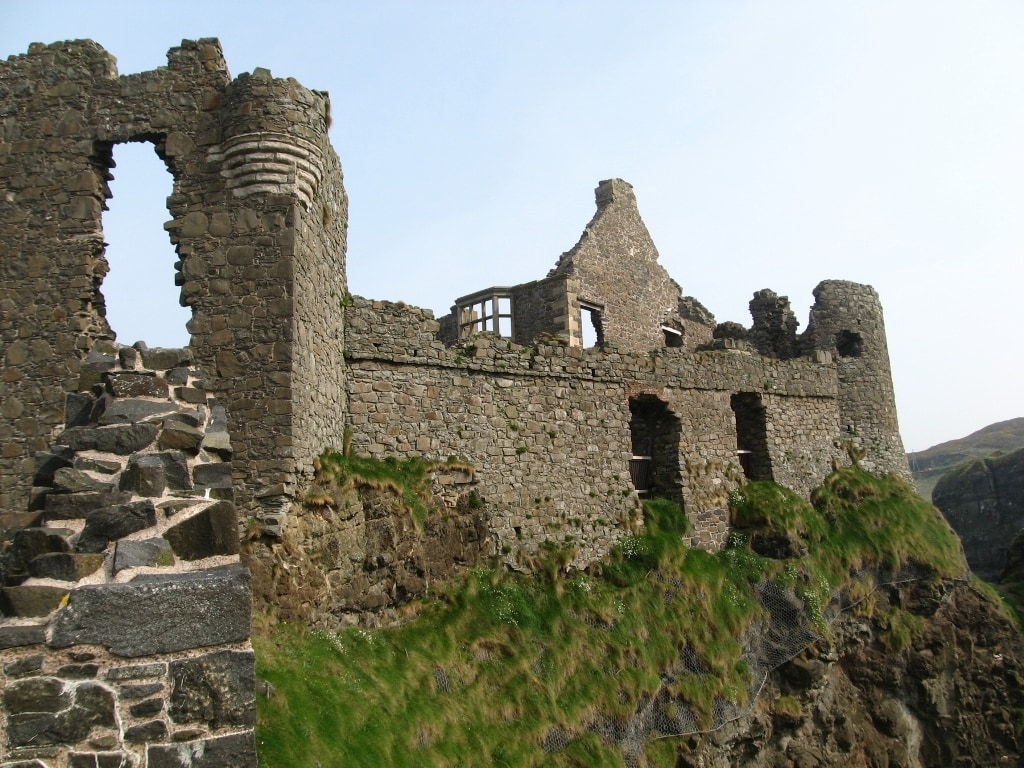
Dunluce Castle clings to a basalt cliff between Bushmills and Portrush and appears suddenly as you come around a bend in the coast road. It is one of the most dramatic Northern Ireland landmarks in existence. Local legend holds that one stormy night the kitchen collapsed into the sea, taking the entire kitchen staff with it; their screams are said to be audible when fog rolls in. Game of Thrones used it as the Greyjoy stronghold, Pyke. Even without the television association, this place stops you cold.

The Dark Hedges
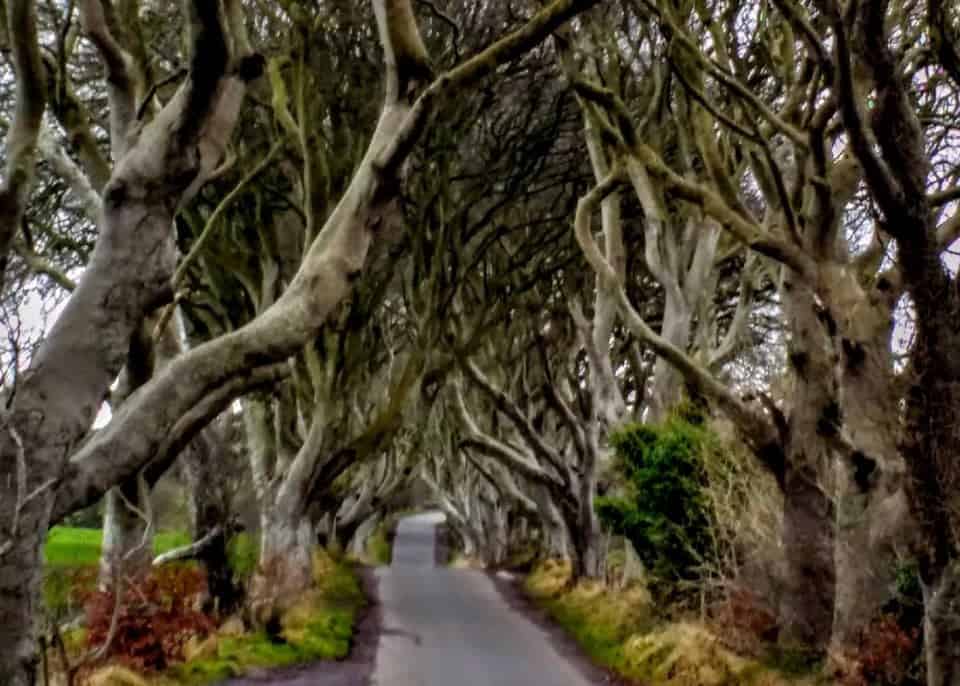
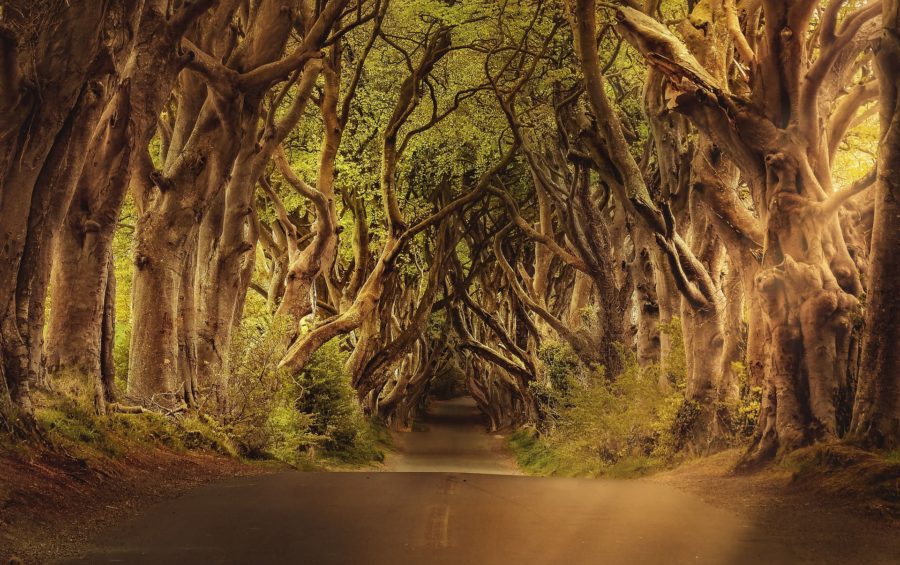
An avenue of beech trees planted over 200 years ago to impress visitors approaching Gracehill House. Game of Thrones used it as the King’s Road and it became one of the most photographed roads in Ireland almost overnight. Go before 8am and you will likely have it to yourself. The atmosphere in early morning, particularly in autumn, is extraordinary.
Storm Gertrude in 2016 destroyed several trees. Ten were preserved by being carved into doors depicting scenes from Game of Thrones Season 6. The Tour of Doors is now spread across ten pubs and inns across Northern Ireland.
Read the full Game of Thrones Doors guide at this link.
Bushmills Distillery
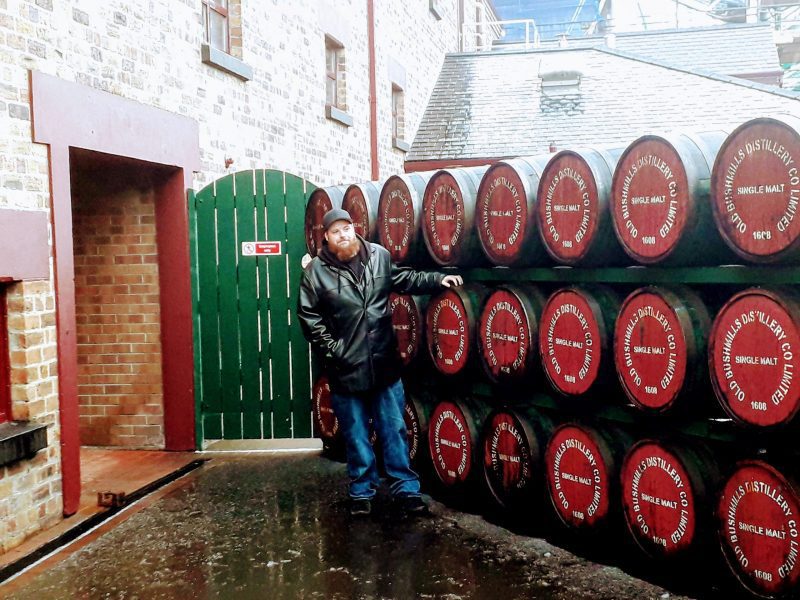
The world’s oldest licensed working whiskey distillery has been in operation since 1608, when King James I signed the original distilling grant. Tours run daily and cover the full production process from mashing to maturation, ending with a tasting. The shop is excellent and the village of Bushmills is a short drive from the Giant’s Causeway, making this an easy combination. Book through the Bushmills website.

Causeway Coast Priority Two: More of the North Antrim Coast
The Glens of Antrim
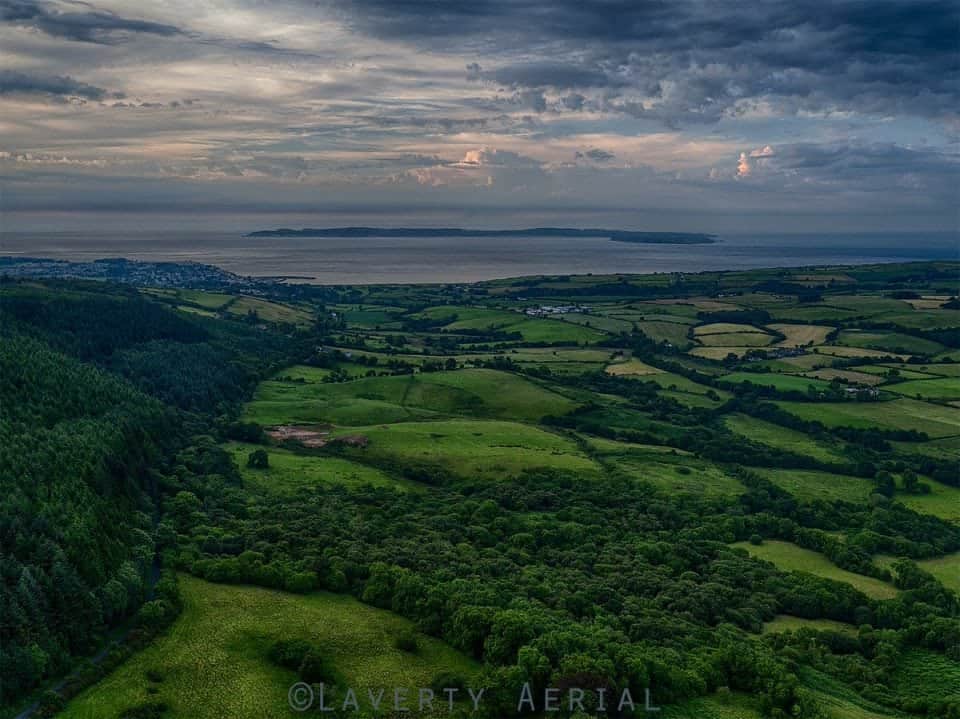
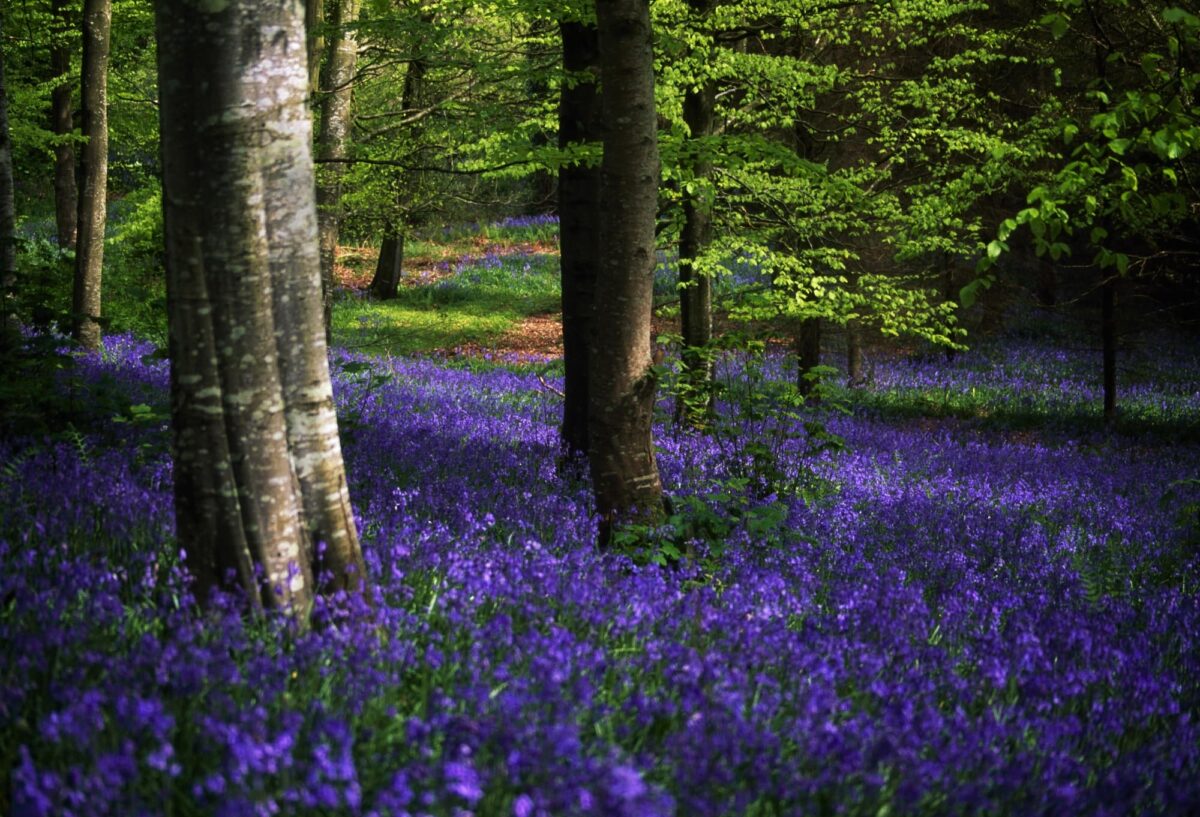
Nine glacial glens cut through the Antrim plateau to the sea, each with its own Irish name and its own character. Glenariff, known as the Queen of the Glens, has the most developed visitor facilities. Glenariff Forest Park covers over 1,000 hectares with a boardwalk trail along the river gorge through ferns, mosses, and waterfalls. The drive through the glens from Larne to Ballycastle along the coast road is one of the great scenic drives in these islands.
Ballintoy Harbour
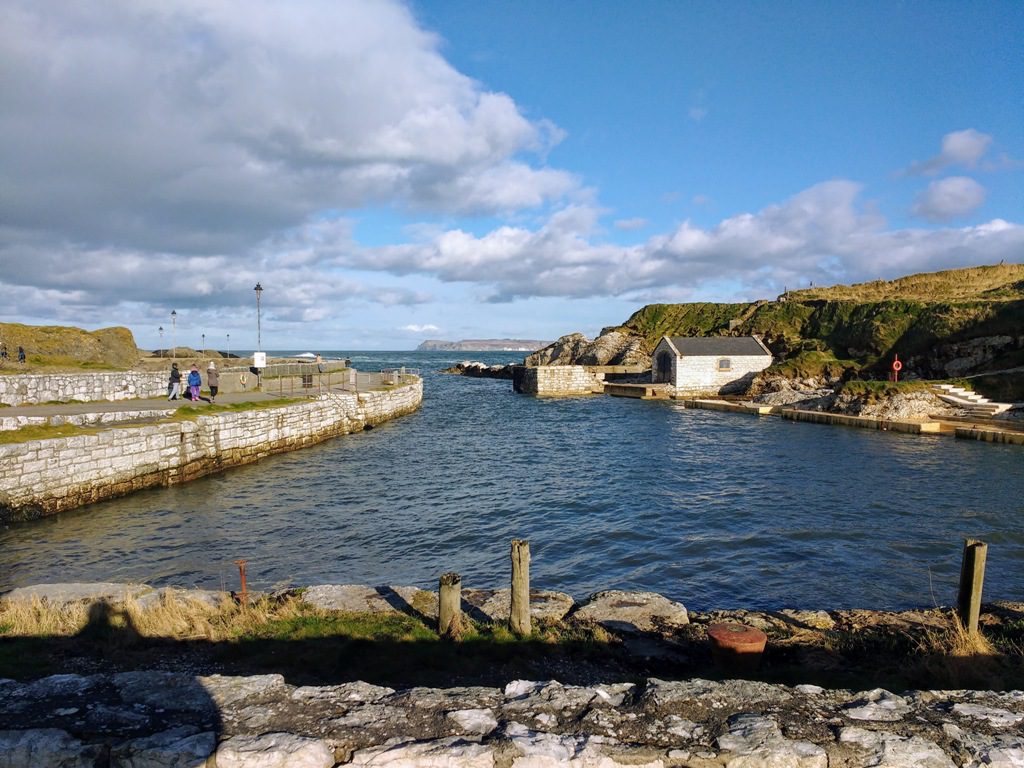
A small fishing harbour at the end of a steep narrow road, picturesque in a way that feels genuinely old rather than preserved. Game of Thrones used it as the Iron Islands harbour. The village a kilometre up the hill has good coffee, a charming white church on the hill, and the start of the walk to Carrick-a-Rede.

Whitepark Bay
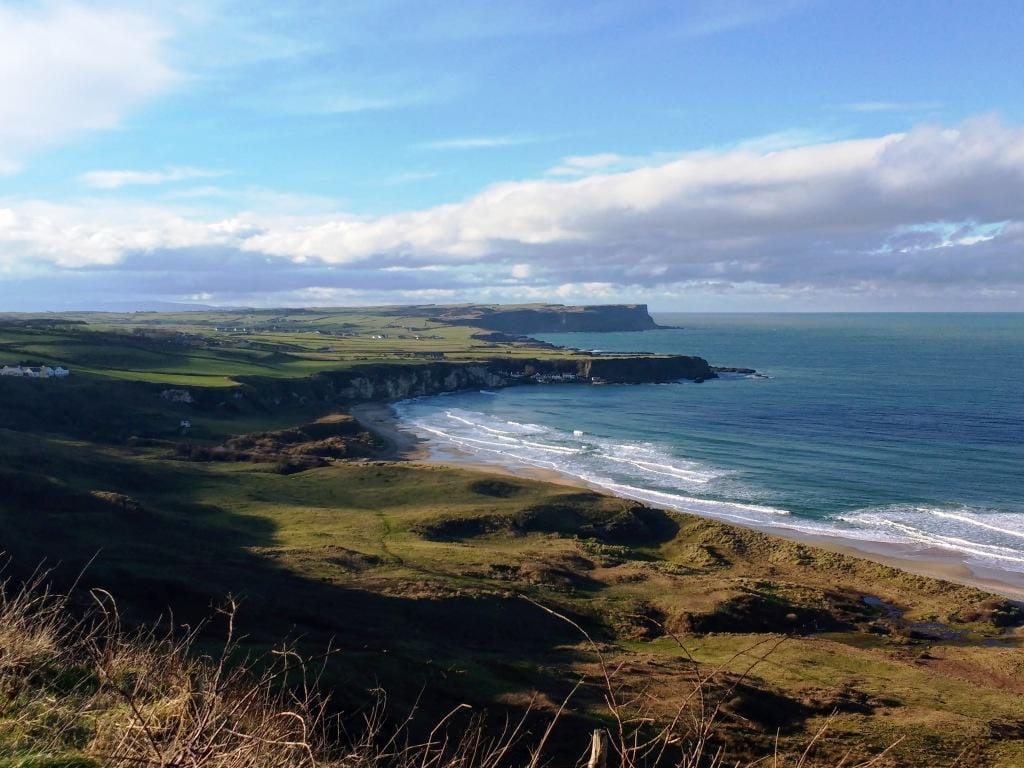
A spectacular arc of white sand between two headlands on the North Antrim coast, backed by ancient dunes and chalk grasslands rich in rare plants and orchids. One of the most naturally beautiful beaches in Northern Ireland and rarely as crowded as it deserves to be.
Cushendun Caves
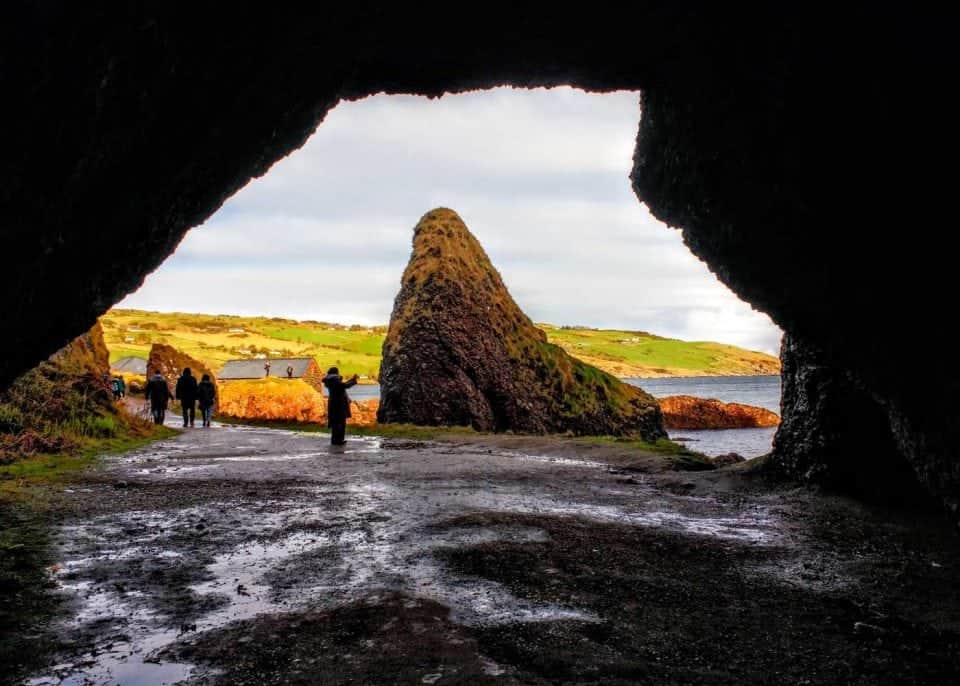
Formed over 400 million years of extreme weather conditions, the Cushendun Caves sit beyond the coastal village of Cushendun. Game of Thrones filmed Melisandre giving birth to the Shadow here. Dramatic formations worth the short detour even without the television connection.

Fair Head
A five-kilometre cliff of vertical dolerite columns rising to 100 metres at the north-eastern tip of County Antrim. The views to Rathlin Island and to the Mull of Kintyre in Scotland on a clear day are extraordinary. Fair Head is not on the standard tourist circuit, which is entirely in its favour. Go early, bring coffee.

Mussenden Temple
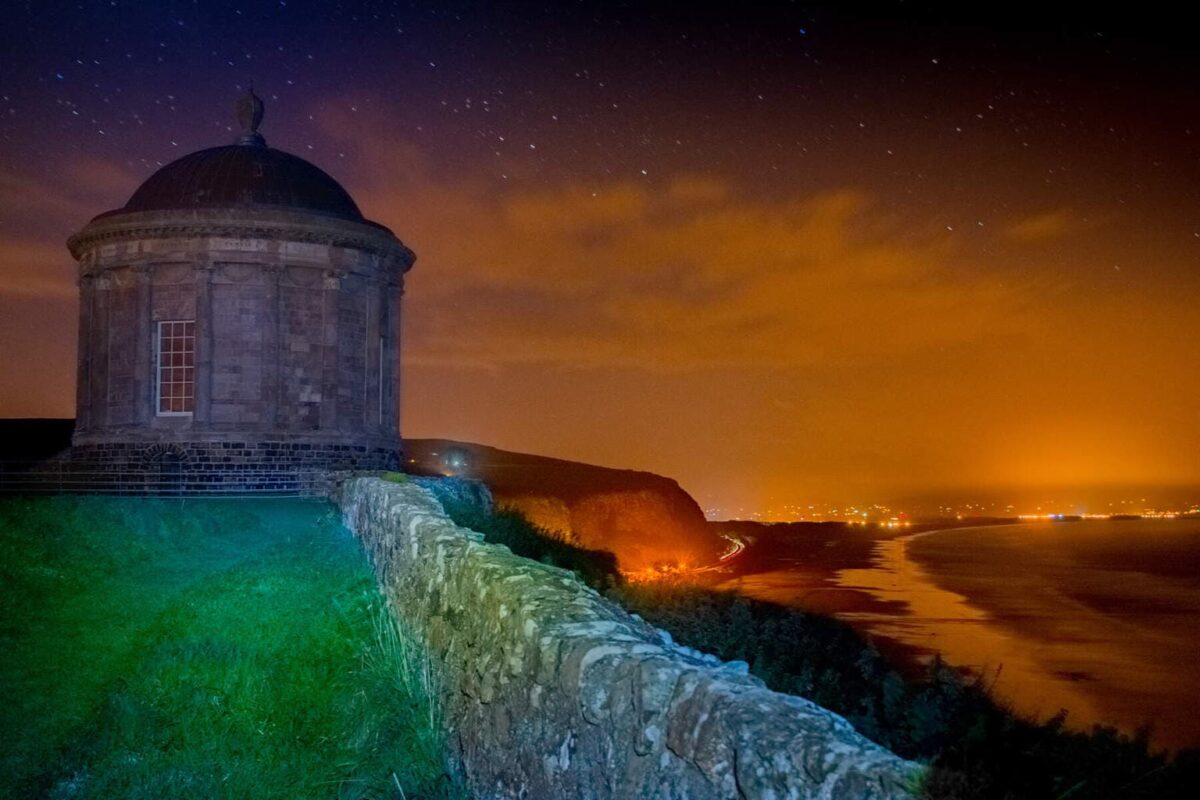
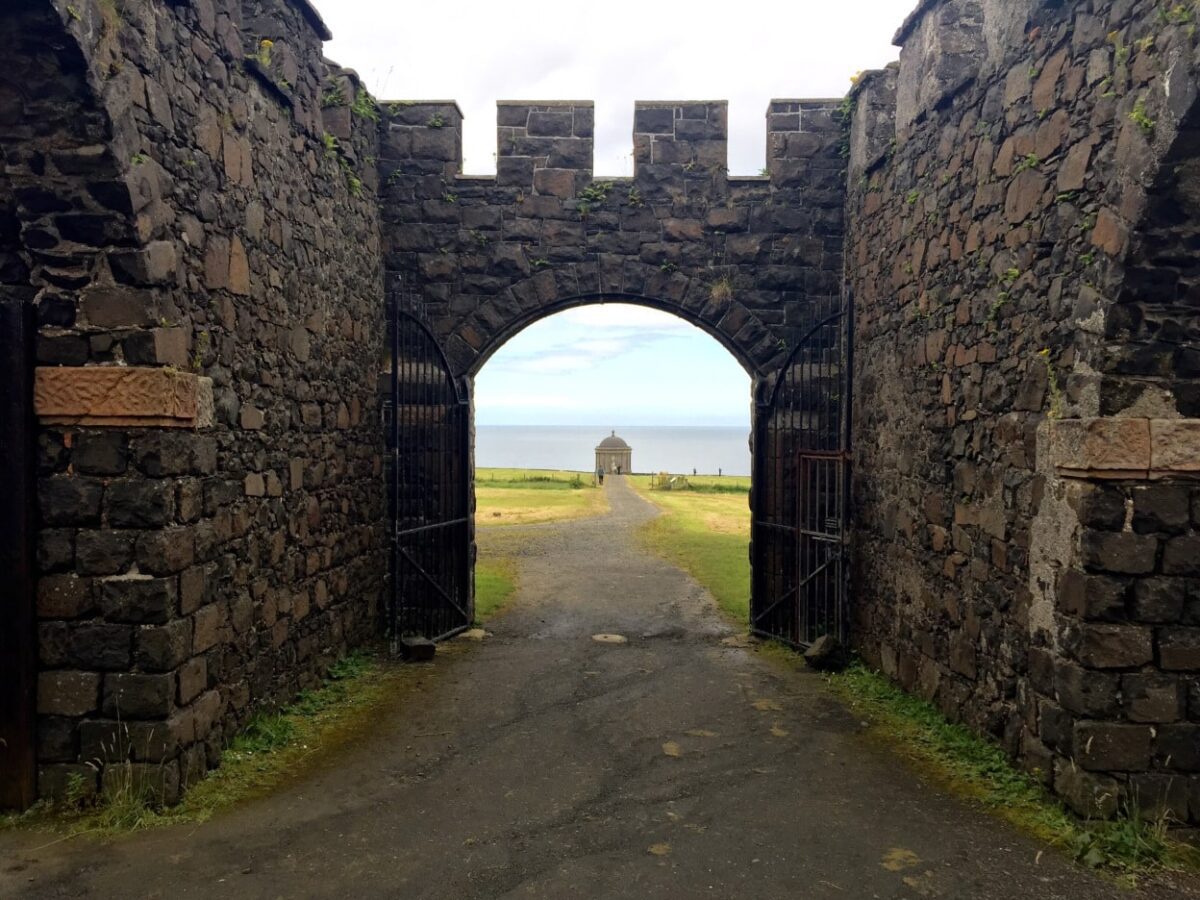
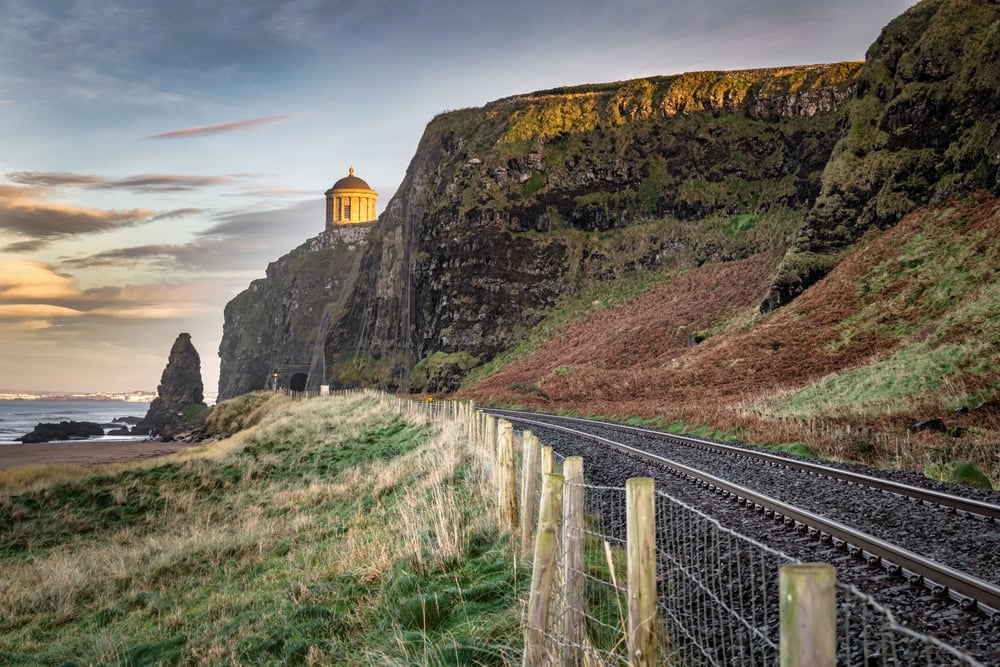
Mussenden is a circular temple built in 1785 as a library, now perched on a 120-foot clifftop at Downhill Demesne near Castlerock with views west to Donegal and east to Portrush. Managed by the National Trust. One of the most photographed Northern Ireland landmarks and it earns every photograph.

Rathlin Island
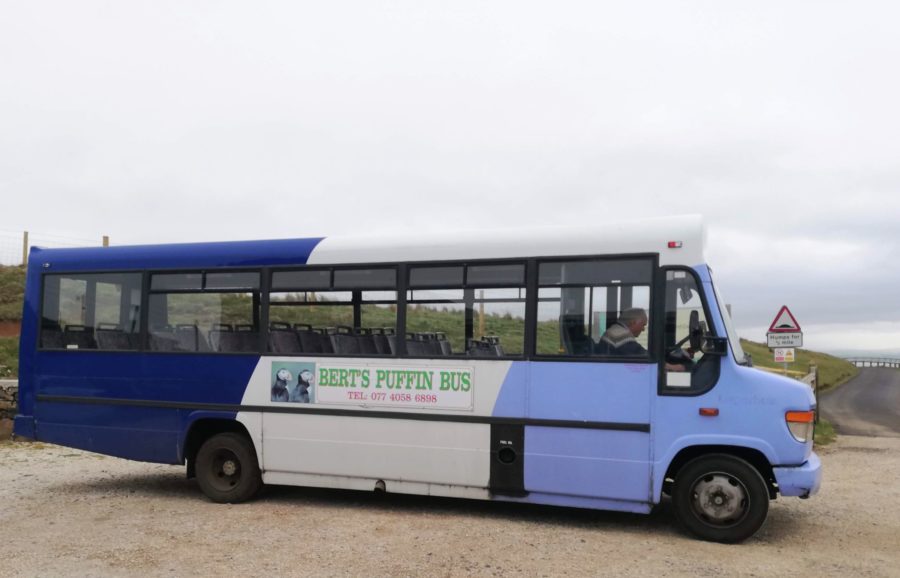
Northern Ireland’s only inhabited offshore island, reached by ferry from Ballycastle. Rathlin Island is where you go to see puffins, and between April and July the bird colony at the West Light is extraordinary. The island is also rich in history: Robert the Bruce’s legendary hiding place, Viking raids, the massacre of the MacDonnell family, and over 40 shipwrecks in the surrounding waters. See Rathlin Island Ferry for timetables.


Portrush and Portstewart
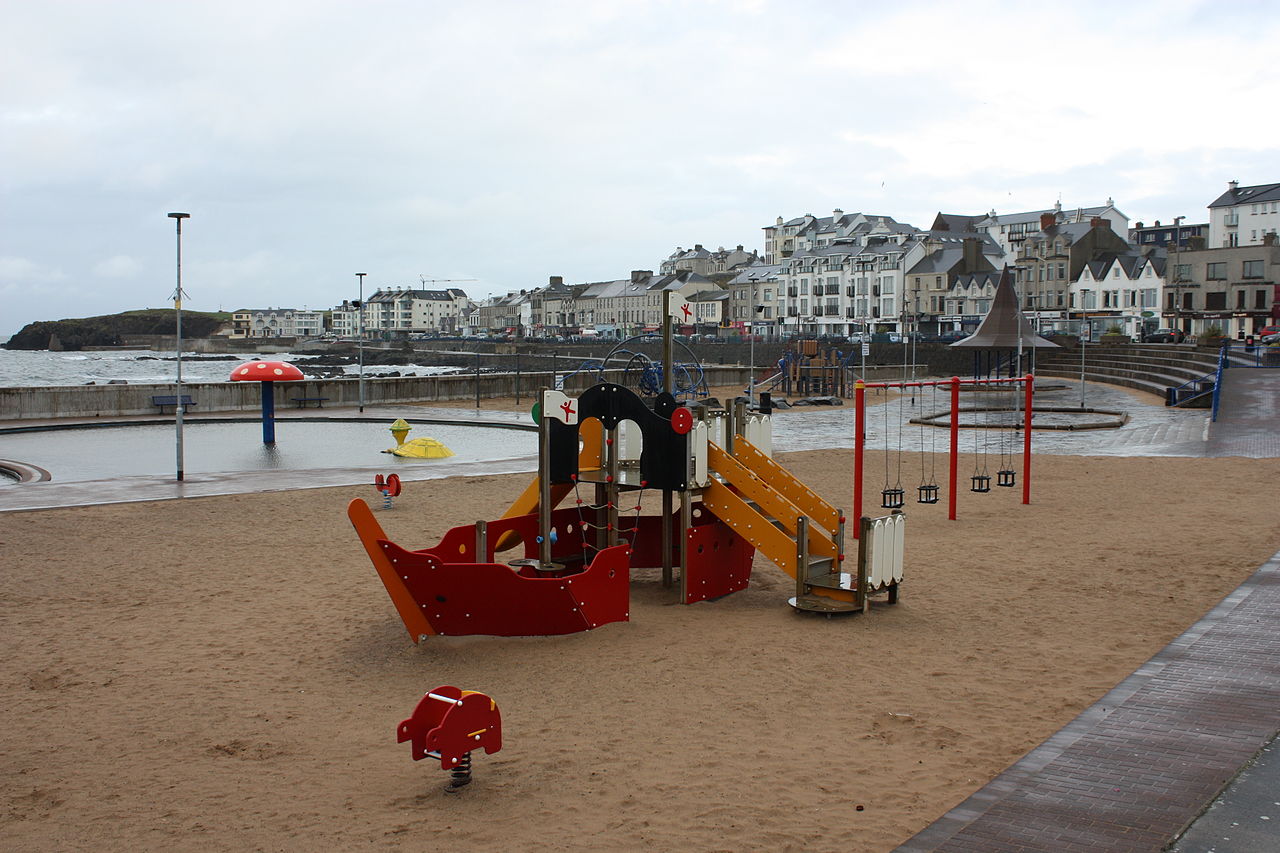
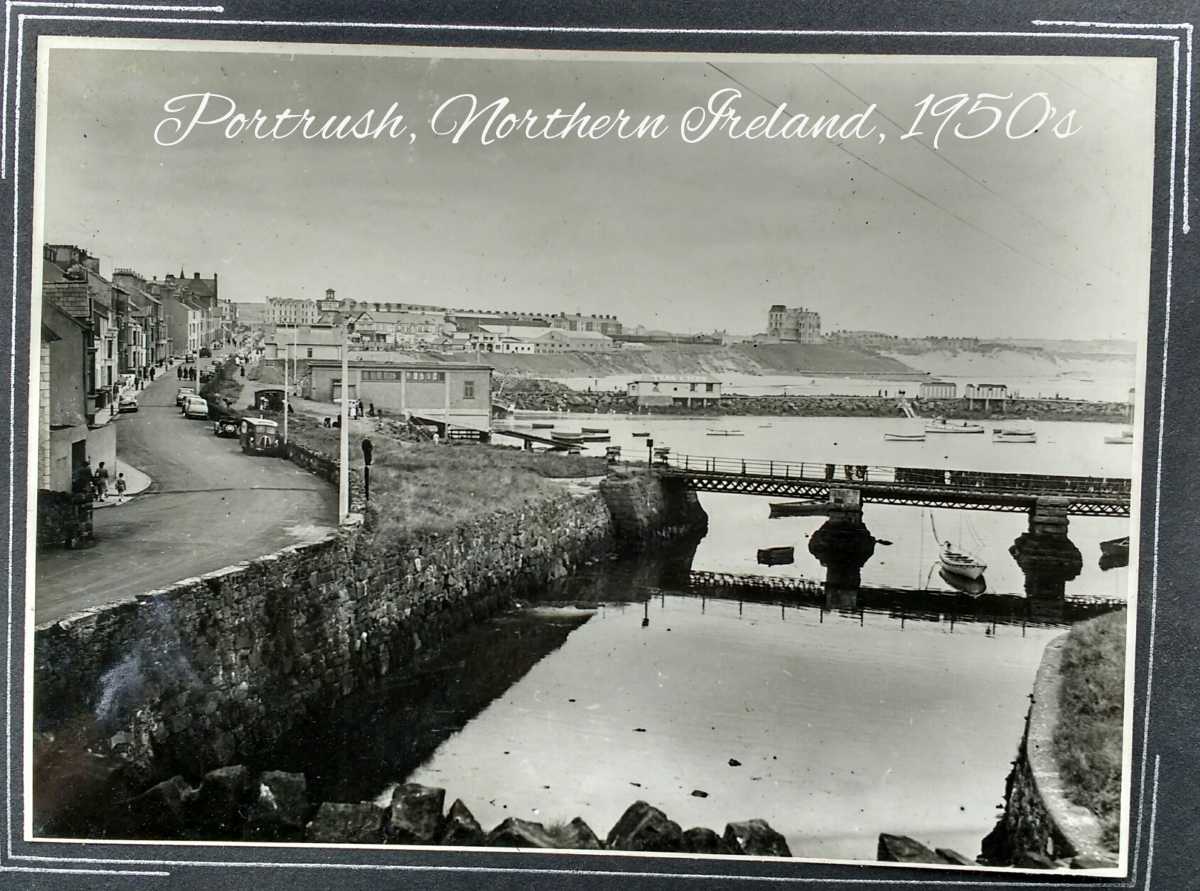
Two classic Northern Irish seaside towns at the western end of the Causeway Coast. Portrush’s Whiterocks Beach, with limestone cliffs stretching toward Dunluce Castle, is particularly fine. Portstewart Strand is a two-mile sweep of National Trust beach with views to Donegal and Mussenden Temple. Royal Portrush Golf Club has hosted The Open Championship.

Torr Head
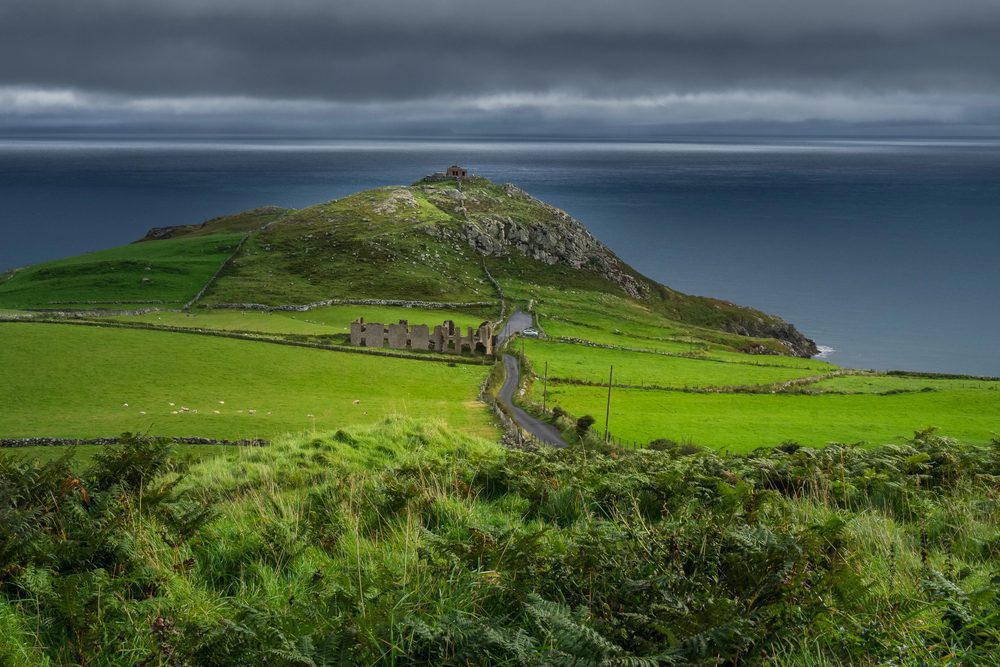
A coastal headland above Ballycastle with direct views across to the Mull of Kintyre, Scotland. One of the finest viewpoints on the entire Irish coast. Follow the Torr road back to Ballycastle when you are done.
Region 3: Derry and the North West — A City That Demands Your Full Attention
Derry is Northern Ireland’s second city and one that first-time visitors sometimes treat as an afterthought at the end of the Causeway Coast drive. That is a mistake. Derry has one of the most intact medieval walled circuits in Europe, a murals tradition that rivals anything in the world, and a history it wears openly rather than hiding away. Give it a full day at minimum. Two days is better.
Derry Priority One: The City’s Essential Landmarks
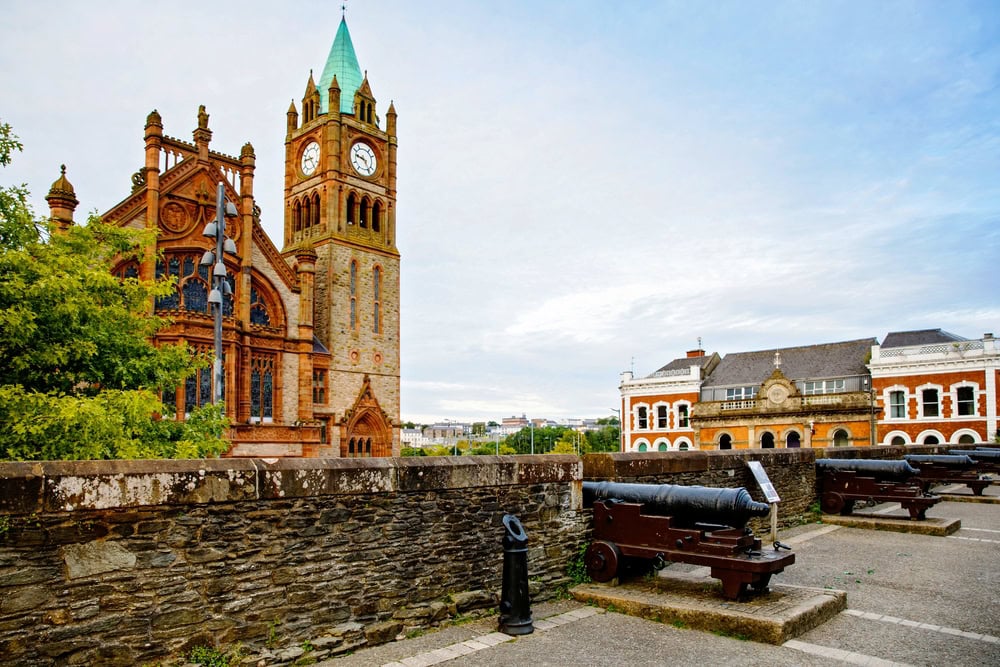
The City Walls
Built between 1613 and 1619, Derry’s city walls are intact for their full circuit of approximately one mile. You can walk the entire perimeter on top of the walls. According to the Historic Environment Division of the Northern Ireland Executive, Derry is one of the last walled cities to be built in Europe and the only remaining example of a fully intact walled city in Ireland. The walk takes about 40 minutes at a leisurely pace, longer if you stop to read the interpretation panels, which you should.


The Bogside Murals and Free Derry Corner
The People’s Gallery murals are painted on the gable ends of houses along Rossville Street in the Bogside neighbourhood below the city walls. Twelve murals created by artists Kevin Hasson, Tom Kelly, and William Kelly document the civil rights movement, the Battle of the Bogside, Bloody Sunday, and daily life during the Troubles. Free Derry Corner, the iconic white gable painted with the words ‘You Are Now Entering Free Derry’, is here. This is sacred ground and should be approached as such.


Bloody Sunday Memorial
A simple granite obelisk within the Bogside commemorates the 14 civilians shot dead by the British Army on 30 January 1972 during a civil rights march. Understated and all the more powerful for it.

The Peace Bridge
Opened in 2011, the 235-metre curved footbridge across the River Foyle connects the Nationalist Bogside with the Protestant Waterside. Walk it at dusk when the city lights come on. The symbolism of what it represents is impossible to miss.

Derry Priority Two: More Worth Seeing
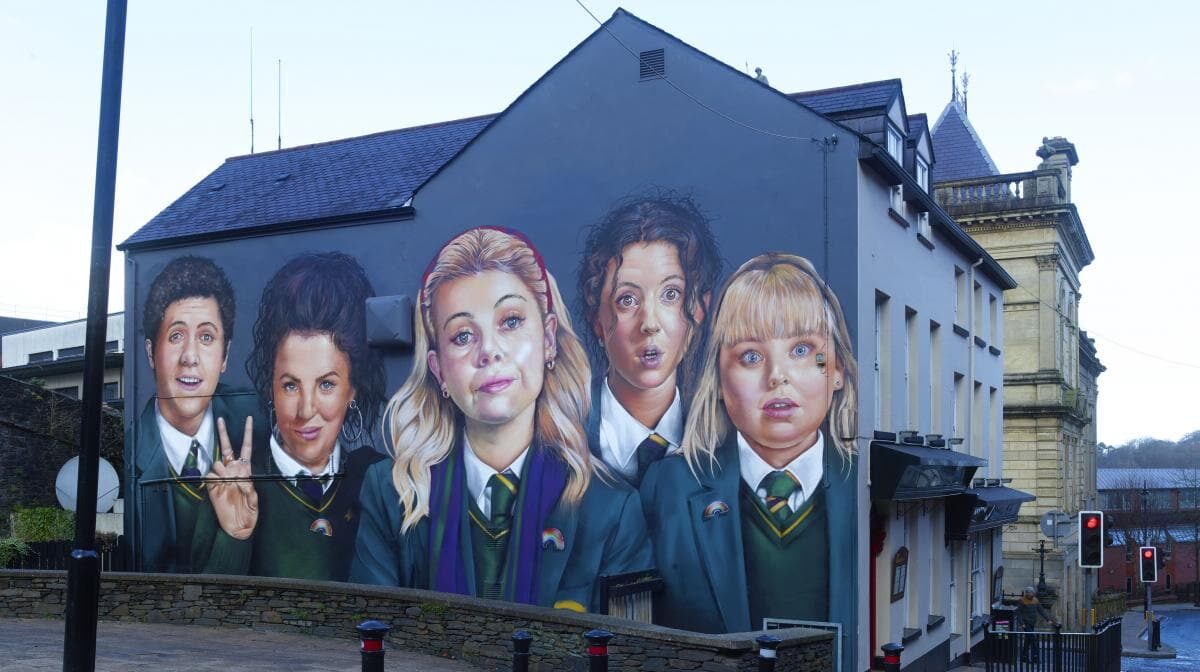
Derry Girls Mural
The large mural on Badgers Bar was commissioned by Channel 4 in 2019 to mark the acclaimed sitcom set in the city. Every visitor photographs it. It captures something genuine about Derry’s ability to find humour inside its own history.
Binevenagh Mountain
The dramatic basalt escarpment of Binevenagh in County Derry overlooks the Magilligan peninsula and the sea. Game of Thrones filmed the Dothraki Sea landscape here. Without the television connection it is still a spectacular viewpoint with views to Scotland on a clear day.

Region 4: Fermanagh and the Lakelands — Northern Ireland’s Quieter, Deeper Country
Fermanagh is the county most first-time visitors skip and most returning visitors wish they had not. Quieter than the Causeway Coast, less immediately dramatic than Belfast, it is a landscape of water, islands, and ancient history that rewards visitors who take the time to slow down.
Fermanagh Priority One: The Standout Landmarks
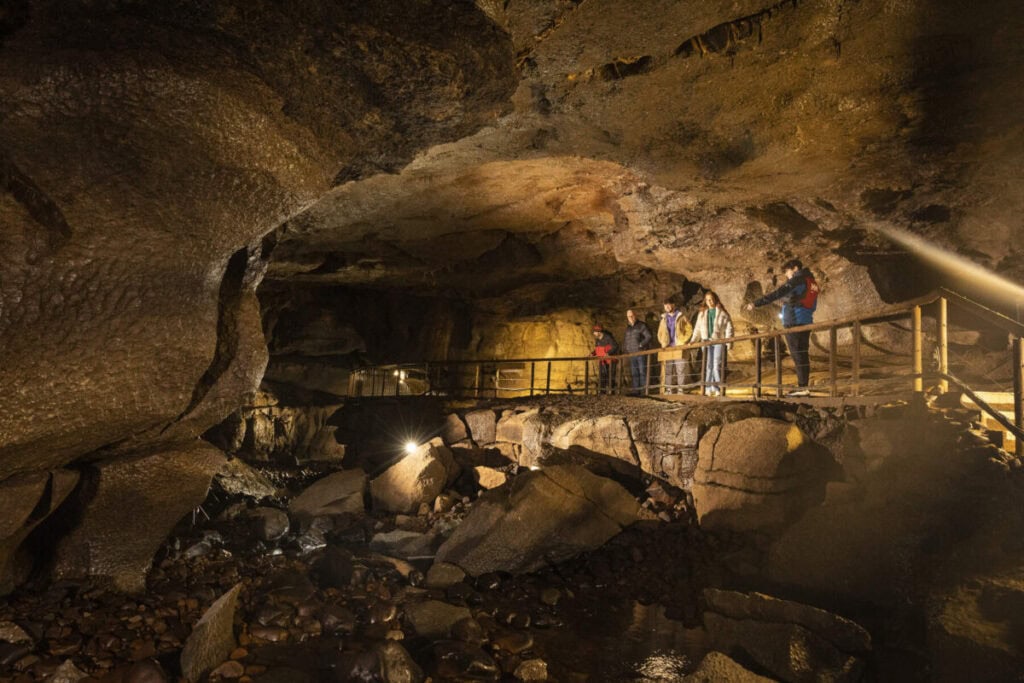
Marble Arch Caves Global Geopark
A UNESCO Global Geopark, the Marble Arch Caves offer guided underground tours through passages carved by water over millions of years, past formations including the Marble Arch itself, a natural limestone bridge. The adjacent Claddagh Glen has a waterfall walk that is one of the prettiest short trails in Northern Ireland. Book cave tours in advance; they sell out.

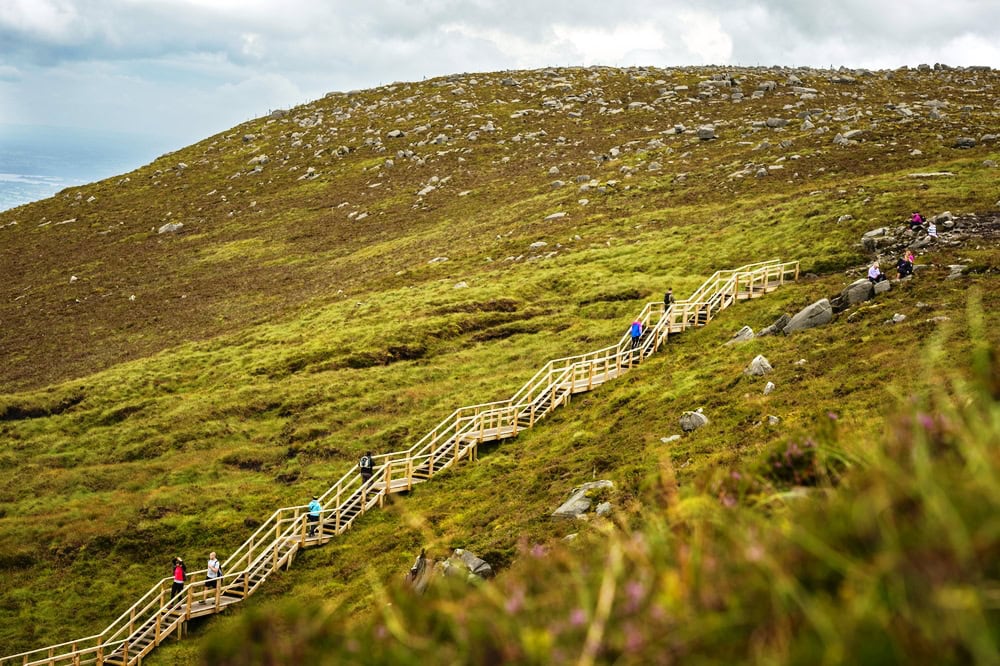
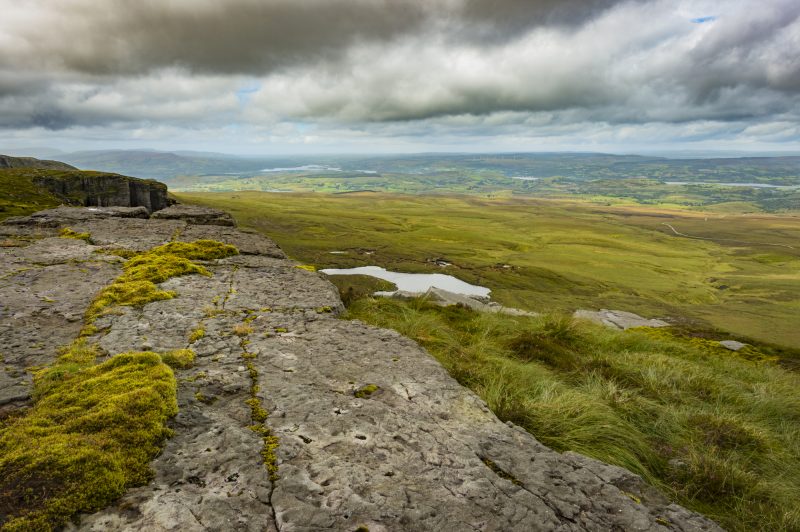
The Stairway to Heaven Hike on Cuilcagh Mountain
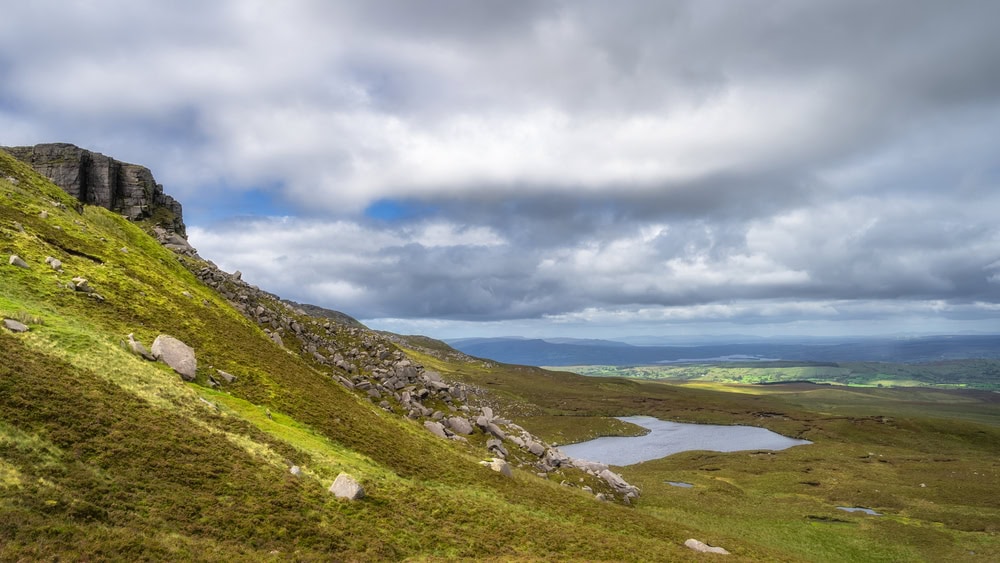
The Cuilcagh Mountain boardwalk earned its name because from the bottom, looking up, the walkway appears to rise into the sky. The full route takes three to four hours return. The views from the summit plateau over Fermanagh and into Cavan are extraordinary. Proper footwear is essential.
Enniskillen Castle
Built almost 600 years ago by the Gaelic Maguire family beside the River Erne, Enniskillen Castle today holds two museums: Fermanagh County Museum and the Inniskillings Museum. See the Fermanagh and Omagh District Council site for opening hours and current admission prices.

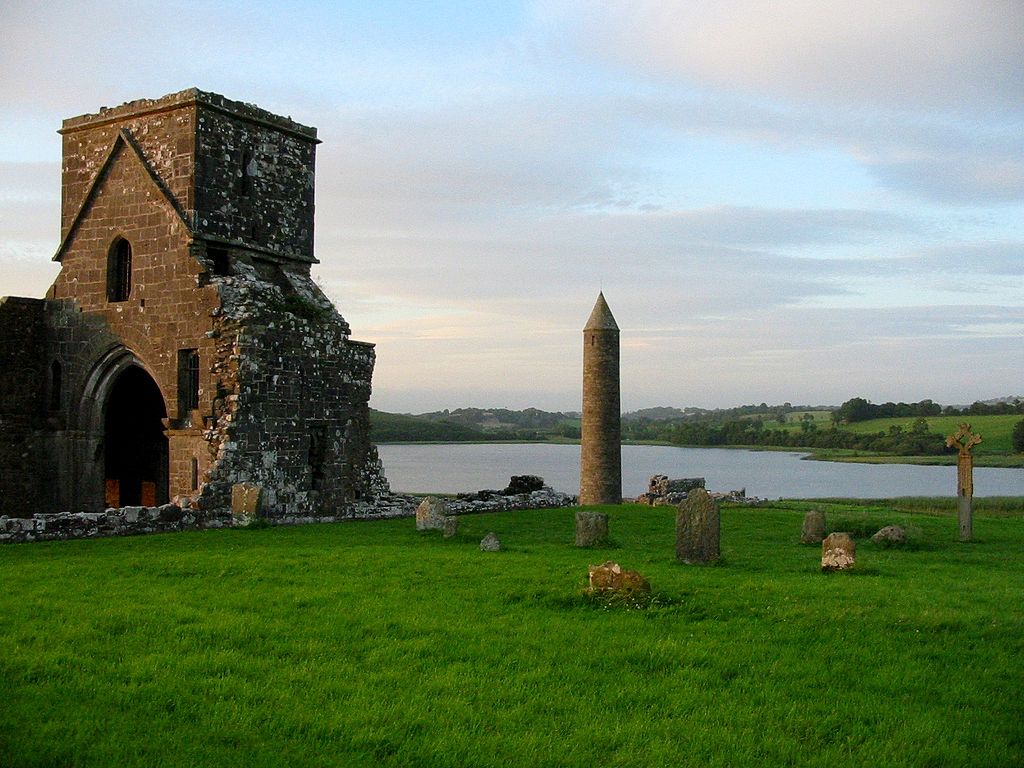
Devenish Island Monastery
Take the ferry from near Enniskillen to Devenish Island in Lower Lough Erne. The island holds a 6th-century monastic site founded by Saint Molaise, including one of the finest surviving round towers in Ireland at 25 metres tall. The monastery was raided by Vikings in 837 and burned in 1157 and again in 1360. The ferry crossing takes about ten minutes and the island is usually quiet.
White Island Stone Carvings
Also in Lower Lough Erne, White Island holds the remains of a 12th-century church and eight carved stone figures believed to date to the 9th century. Access is by ferry from Castle Archdale. Historians remain uncertain whether the figures represent saints or pilgrims. They are strange, powerful, and unlike anything else in Ireland.

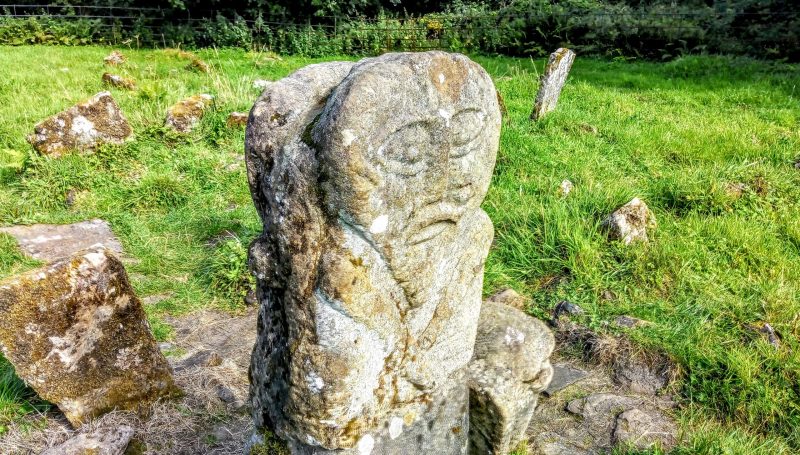
Boa Island and the Janus Stone
Boa Island sits in Lower Lough Erne connected to the mainland by bridges at each end. The Janus Stone in the Caldragh cemetery predates Christianity by over 2,000 years. The double-faced carved figure is one of the most ancient carved stones in Ireland and is rooted deep in pagan Irish tradition and folklore. Most people drive past Boa Island without stopping. Do not be most people.


Fermanagh Priority Two: Also Worth Your Time
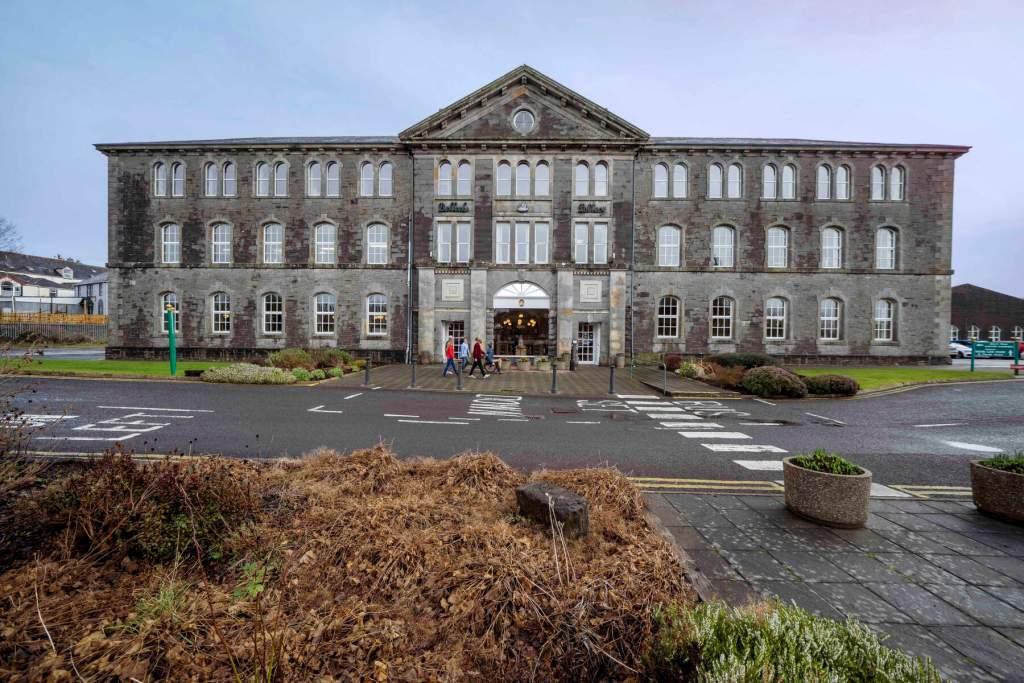
Belleek Pottery
Established in 1857 on the banks of the River Erne, Belleek Pottery produces the world-famous Fine Parian china and is one of Ireland’s top five visitor attractions. The factory tour shows you the craftsmanship behind every piece. The village of Belleek sits right on the Donegal border.
Lusty Beg Island
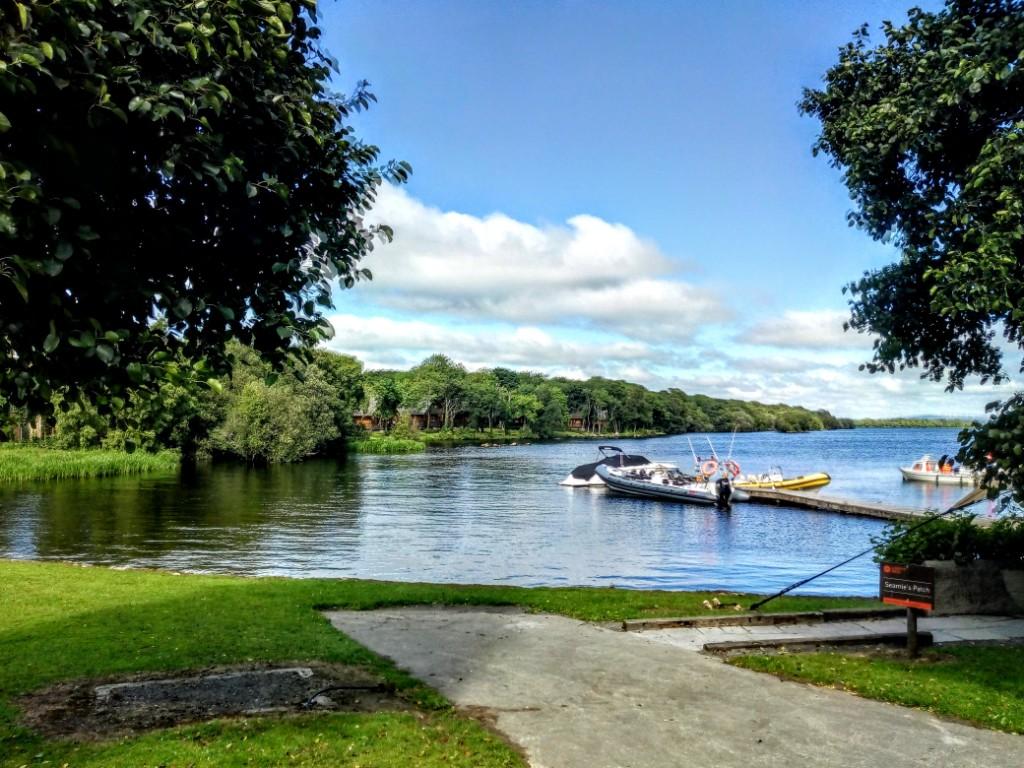
A privately owned island in Lower Lough Erne accessible by a five-minute ferry from the shore, with its own accommodation, restaurant, spa, activity centre, and walking trails. A day visit for lunch and a walk is one of the more unusual things you can do in Fermanagh.
Region 5: Down, Armagh, and the South — Ancient Ireland at Its Most Vivid
The south of Northern Ireland is often the last region first-time visitors reach and sometimes the one they run out of time for. County Down in particular contains some of the finest landscapes and most significant ancient sites in Ireland. If you can extend your trip to reach the Mourne Mountains, do it.
South Priority One: Essential Landmarks
The Mourne Mountains
The Mournes are the highest and most dramatic mountain range in Northern Ireland, with Slieve Donard reaching 849 metres. C.S. Lewis, who grew up watching them from Belfast, described the Mournes as a profound influence on his imagination and the landscape that inspired Narnia. The Mourne Wall, completed in 1922 after 18 years of construction, runs for 35 kilometres across the summits. See the Mourne Heritage Trust for walking routes and trail conditions.

Navan Fort
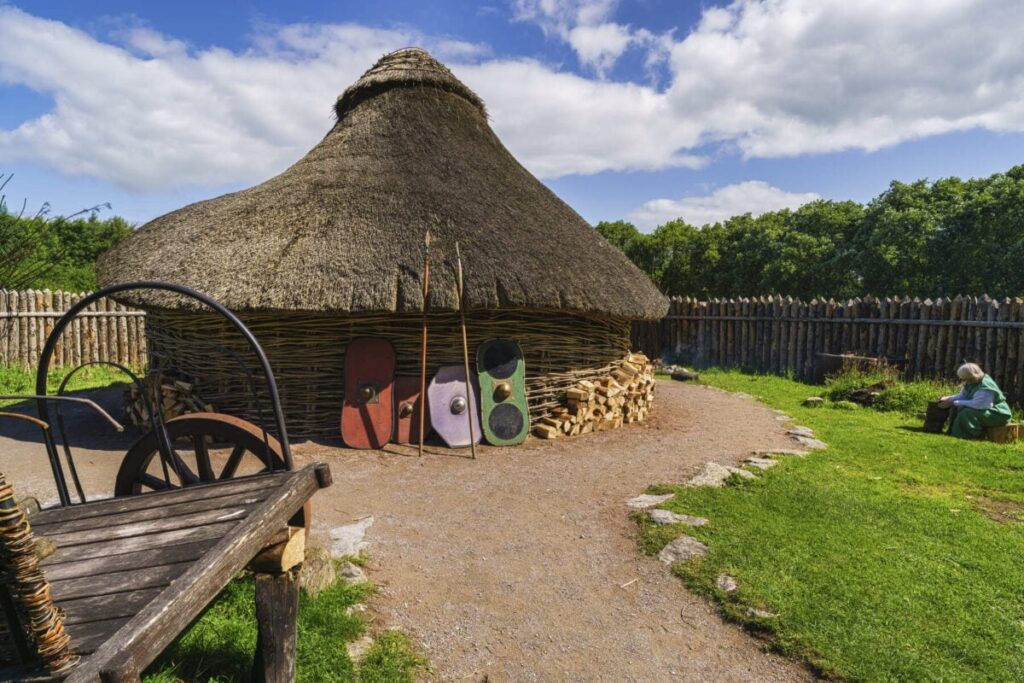
A few miles west of Armagh city, Navan Fort is identified in Irish mythology with Eamhain Mhacha, the legendary capital of ancient Ulster. In the Ulster Cycle of Irish mythology this is the court of King Conchobar mac Nessa and the home of the hero Cuchulainn. The Navan Centre and Fort provides essential context for what you are looking at. This is one of the most significant ancient monuments in Ireland.
St. Patrick’s Grave, Downpatrick
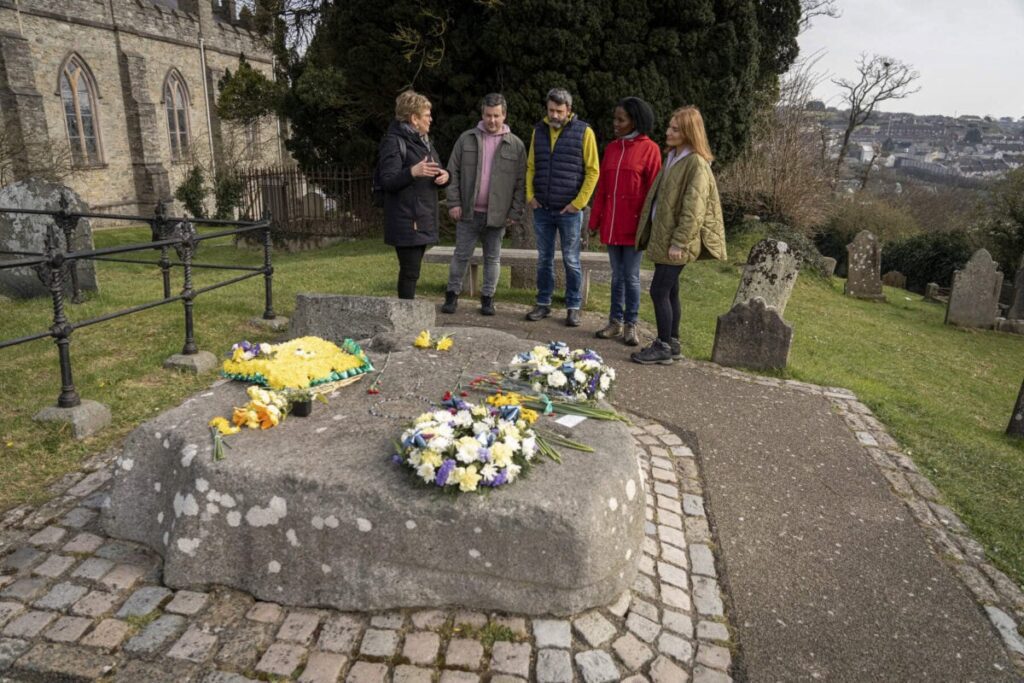
Outside Down Cathedral in Downpatrick lies the grave of Saint Patrick, alongside the graves of Saint Brigid and Saint Columcille. A large granite stone marks the site because historically, emigrants leaving Ireland took a handful of grave soil with them and the grave was being depleted. One of the most significant Christian sites in Ireland and quieter than you would expect given whose grave it is.
Castleward
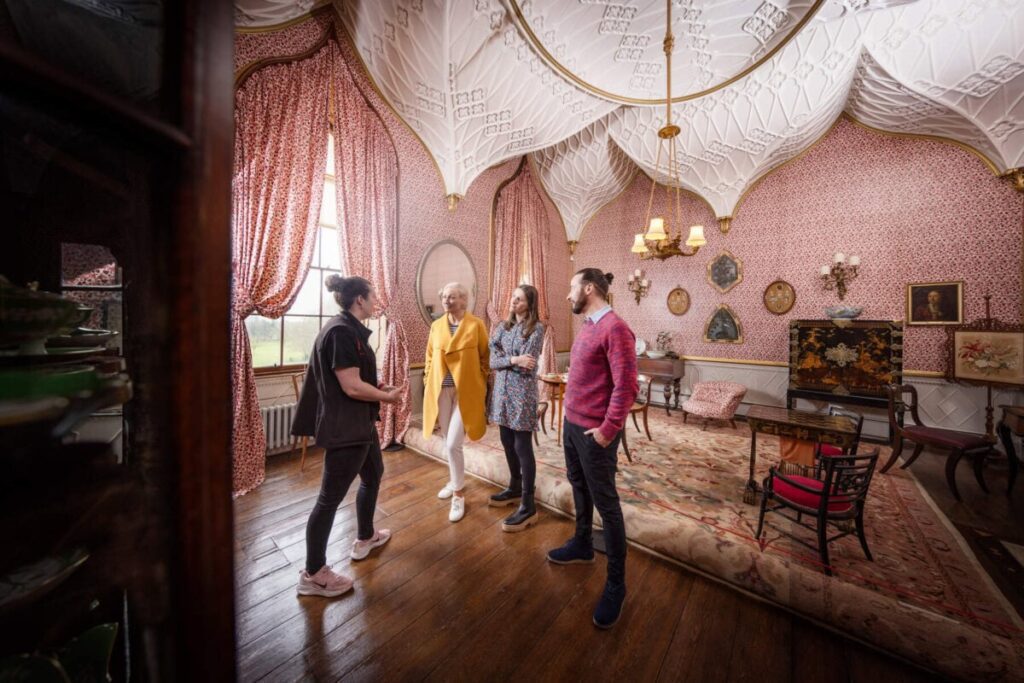
A unique 18th-century manor house in Downpatrick built by a couple who disagreed so profoundly on architectural style they built one facade in Palladian and the other in Gothic. Game of Thrones used the estate as the exterior of Winterfell. Managed by the National Trust. The grounds and walking trails along Strangford Lough are lovely.


South Priority Two: More Worth Seeing
The Mourne Wall and Silent Valley
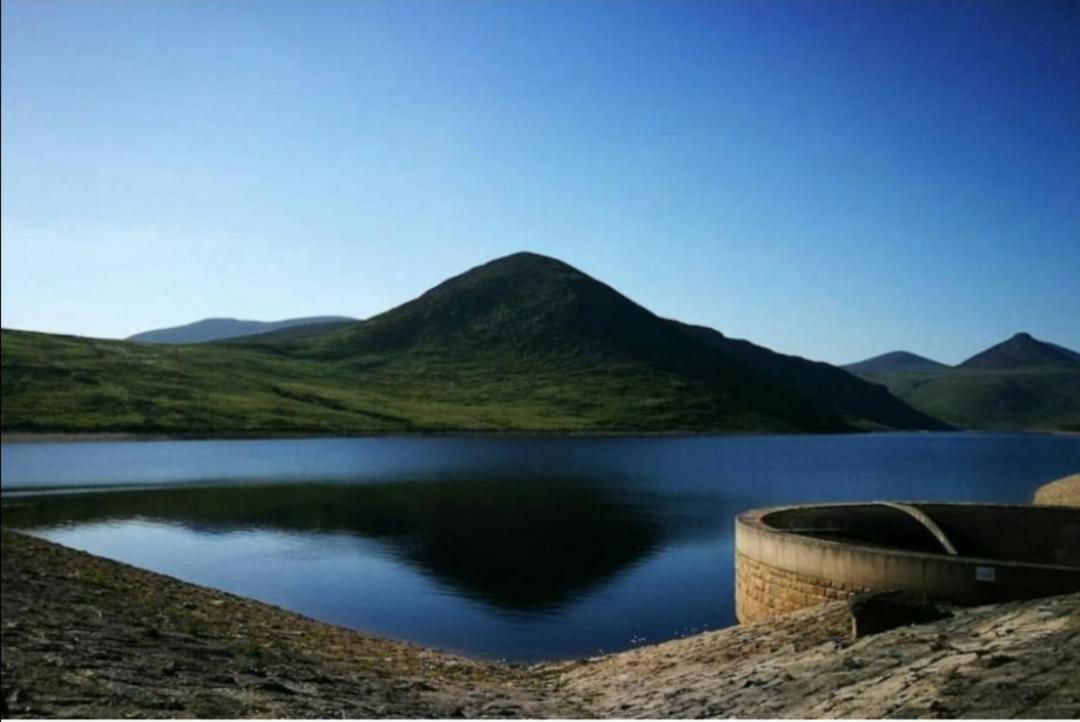
The Silent Valley reservoir in the heart of the Mournes supplies water to much of County Down and Belfast. The surrounding park is a fine base for walking in the mountains. The Mourne Wall that encircles the catchment area is itself a remarkable feat of craftsmanship, built entirely of dry stone between 1904 and 1922.

Mountstewart
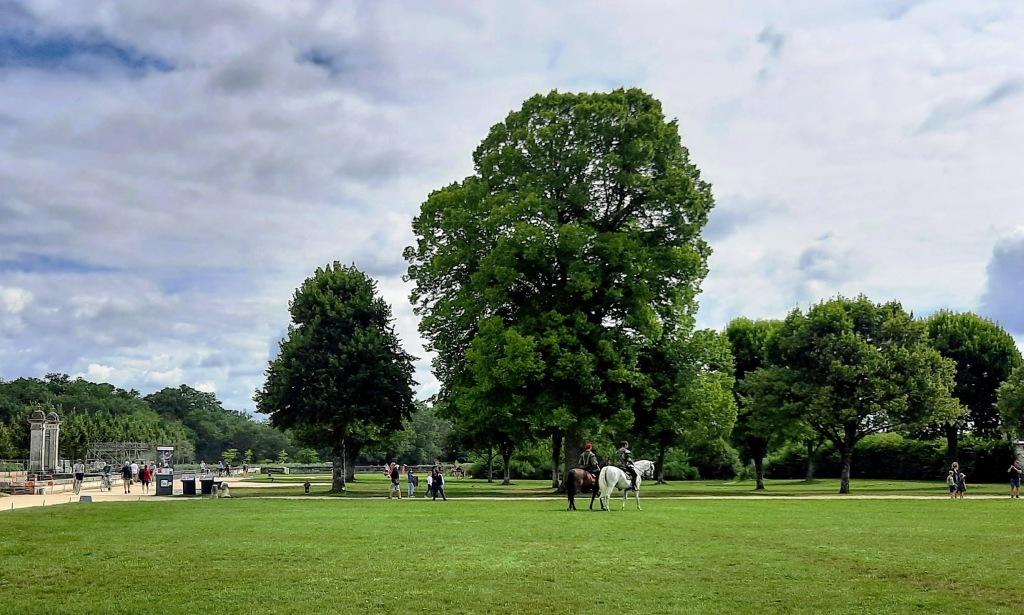
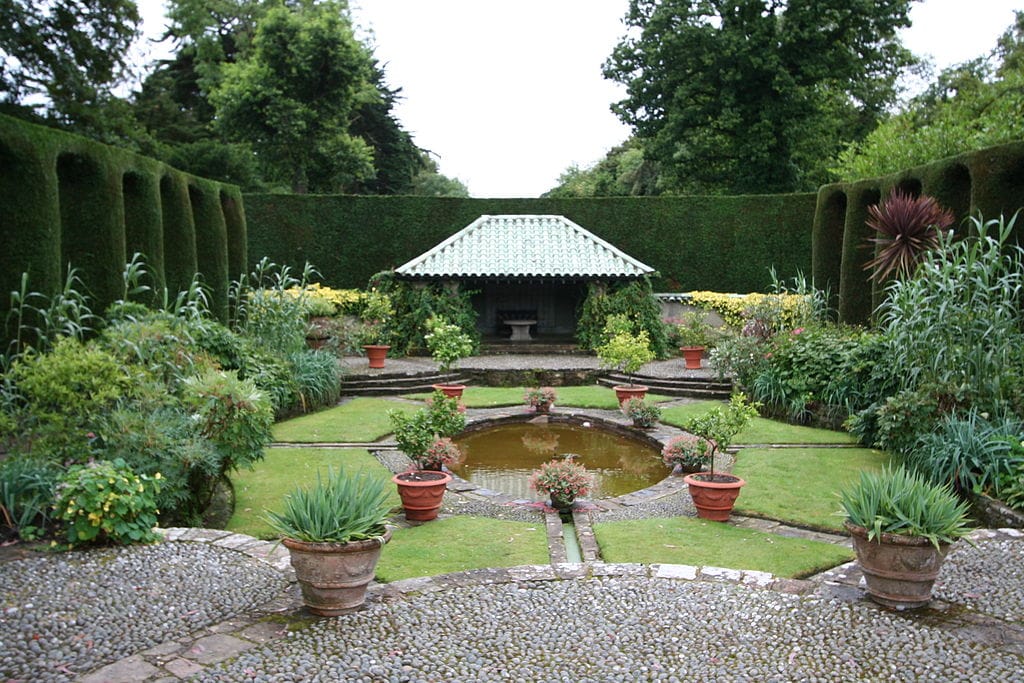
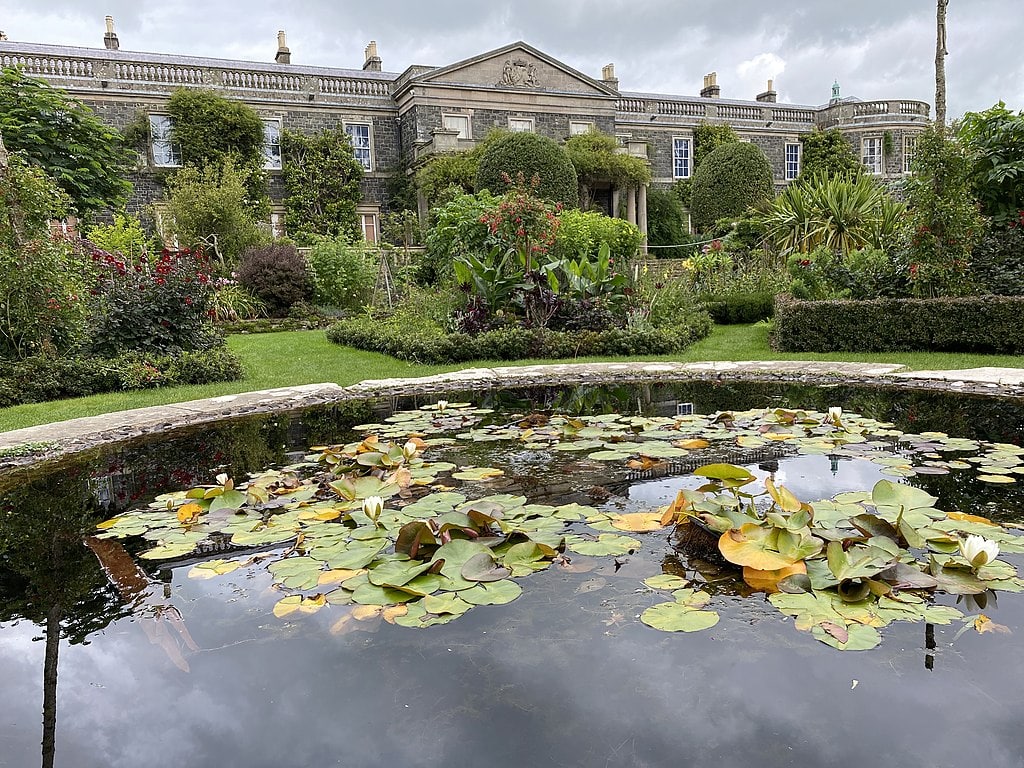
The Mountstewart Estate on the Ards Peninsula has been voted one of the top ten gardens in the world. Managed by the National Trust, the gardens were created by Lady Edith Londonderry in the 1920s and 30s. The mild microclimate of Strangford Lough allows plants from across the globe to thrive here that would not survive elsewhere in Ireland. See the National Trust Mountstewart page for visiting information.
Tollymore Forest Park
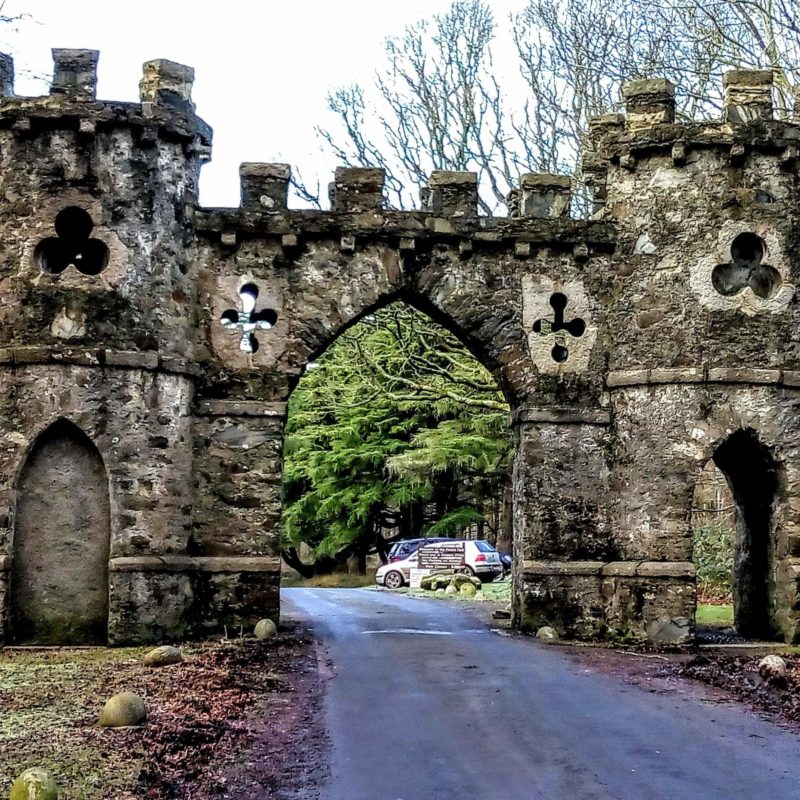
One of Northern Ireland’s finest forest parks, with walks along the Shimna River through rocky gorges, grottos, caves, and bridges alongside giant redwoods and Monterey pines. Game of Thrones filmed the opening scenes of the pilot episode here.


Ring of Gullion
An officially designated Area of Outstanding Natural Beauty in County Armagh, centred on Slieve Gullion, the highest peak in the county. The circular formation is the remains of an ancient volcanic caldera. Rich in mythology associated with the legend of Cuchulainn.
Giant’s Ring
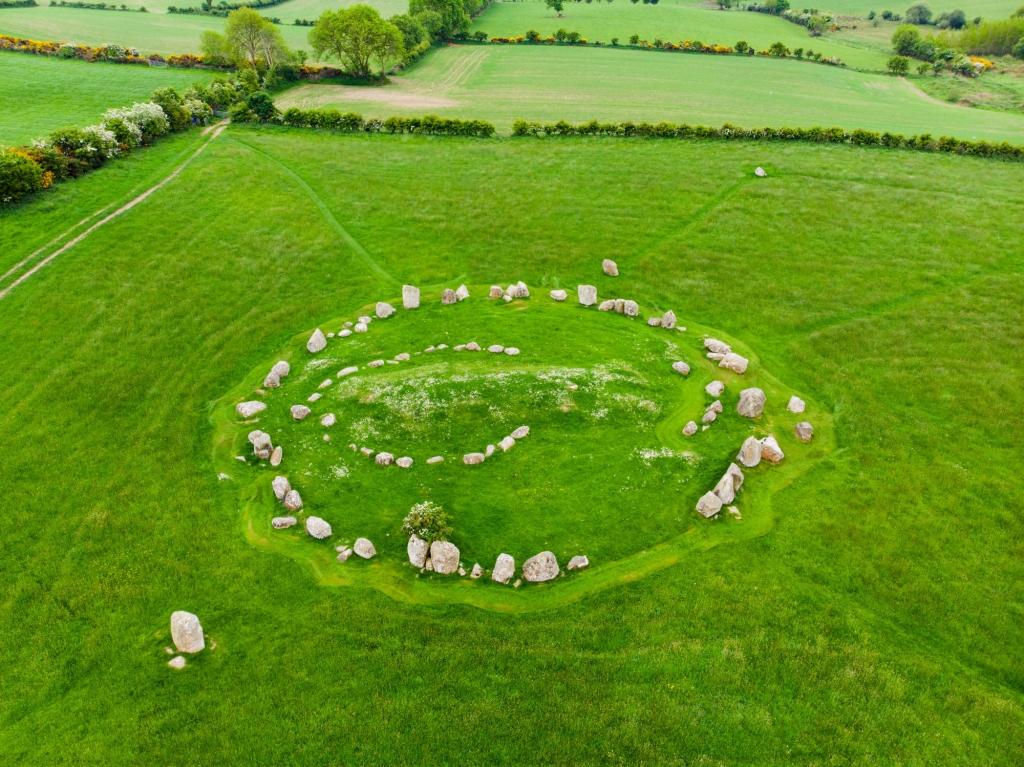
On the southern outskirts of Belfast, the Giant’s Ring is a vast circular henge monument dating from approximately 2000 BC, enclosing the remains of a passage tomb. Significant and oddly undervisited given how close it sits to the city.


Ancient Sites and Irish Folklore: Northern Ireland’s Oldest Landmarks
Northern Ireland has an extraordinary density of prehistoric and early medieval sites, many of which appear in Irish folklore and mythology and have been fixed points in the landscape for thousands of years. According to the Historic Environment Division of the Northern Ireland Executive, the country has over 16,000 recorded historic monuments, a remarkable number for a region of its size.
Beaghmore Stone Circles, County Tyrone
Near Cookstown, County Tyrone this complex of stone circles, cairns, and rows of standing stones was excavated from a blanket bog in 1965. The arrangement appears oriented to the midsummer sunrise. One of the finest prehistoric ritual landscapes in Ireland and visited by a fraction of the people who go to the Giant’s Causeway.

Creggandevesky Court Tomb, County Tyrone
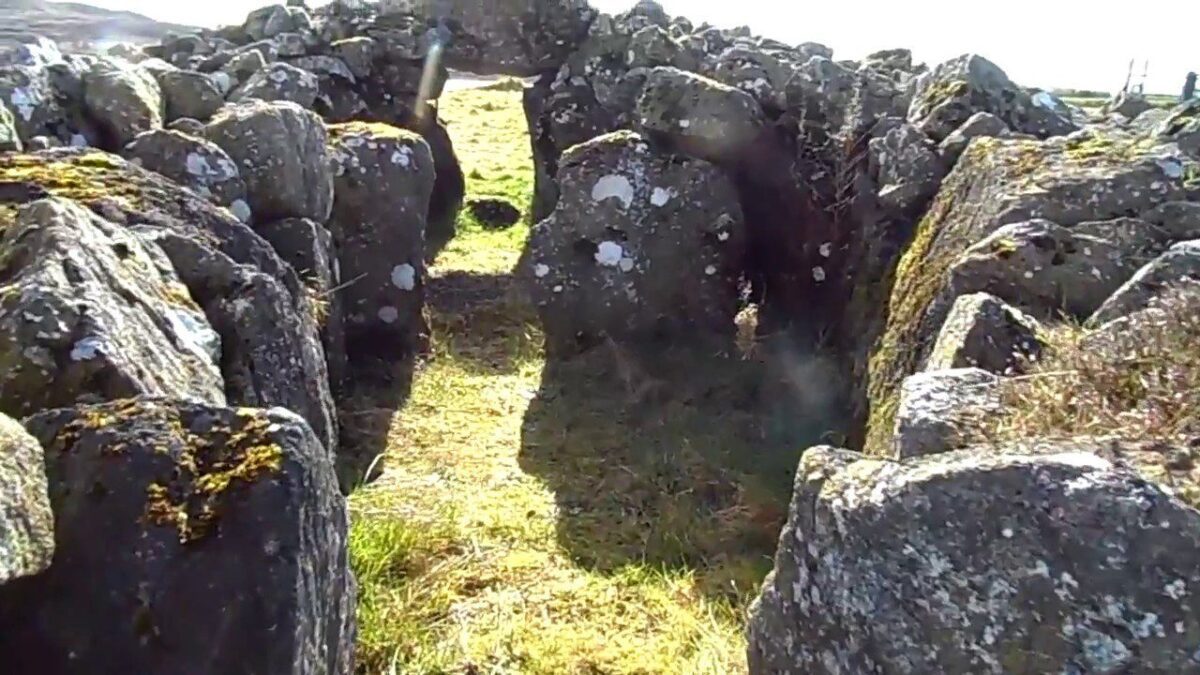
Near Carrickmore, this Neolithic court tomb probably dates from around 3500 BC. Excavated from the bog in the 1980s, cremated bones and grave goods were found in the interior chambers. Eleven other court tombs have been identified within a ten-mile radius. These horned cairns are the most common Neolithic structures in the north of Ireland.
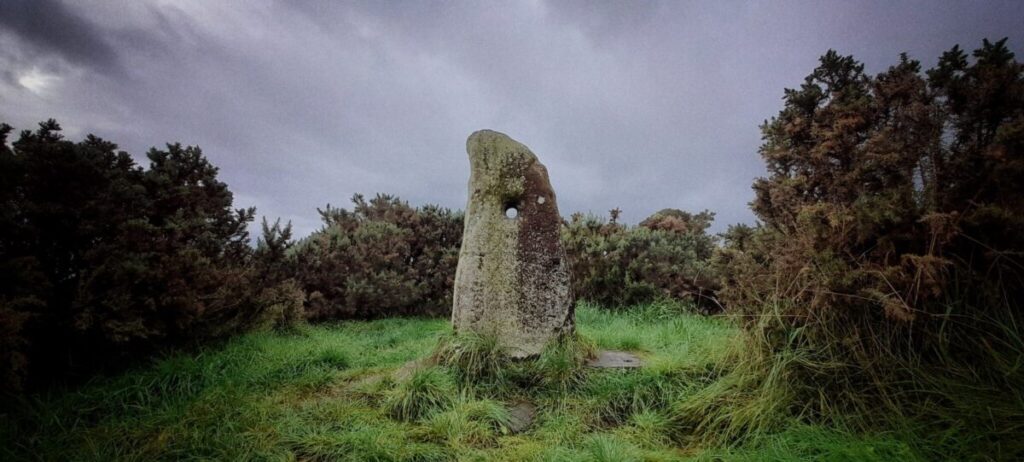
The Holestone, County Antrim
The Doagh Holestone near the village of Doagh in Donegal (the holestone is just across the border in County Antrim) is one of the best-preserved Bronze Age standing stones in Ireland. In Irish folklore it became a lovestone: betrothed couples would join hands through the hole in the stone to bind their love. The hole is said to be only large enough for a woman’s hand to pass through. It sits on private land about a mile from the village; the farmer charges three pounds a car to park.
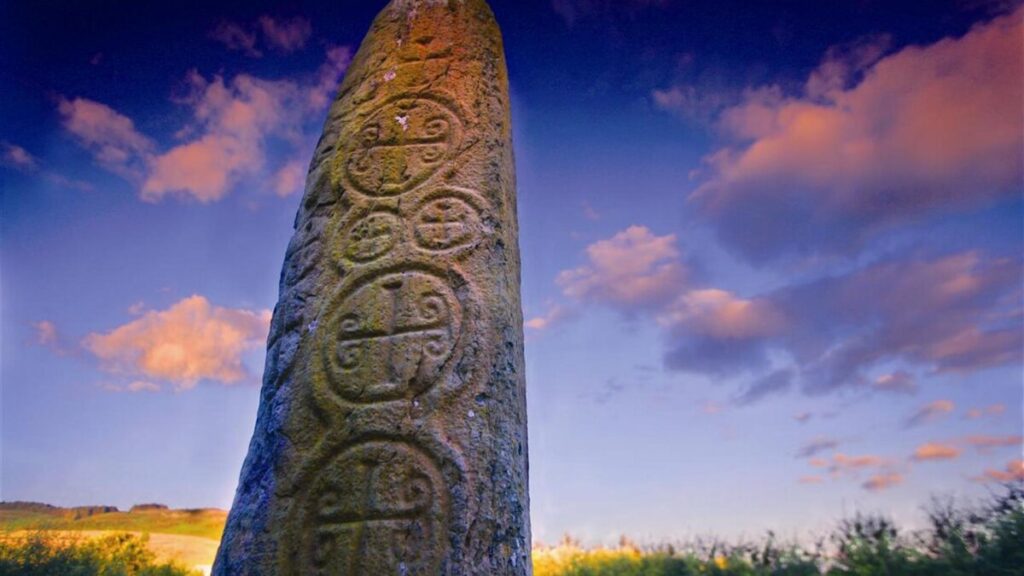
Kilnasaggart Pillar Stone, Ring of Gullion
On the Ring of Gullion near Newry, this pillar stone is inscribed with ogham and Gaelic texts, crosses, and symbols from the Early Christian period. Excavation in the 1960s revealed stone-built graves in the surrounding area. Quiet, significant, and almost always uncrowded.
Ballynoe Stone Circle, County Down
About a kilometre from Downpatrick, Ballynoe Stone Circle has over 50 closely spaced stones enclosing a small internal mound. A large and atmospheric site reached by a footpath from the old train station.
Folk Museums and Cultural Landmarks Worth Adding to Your Itinerary
Ulster American Folk Park, Omagh
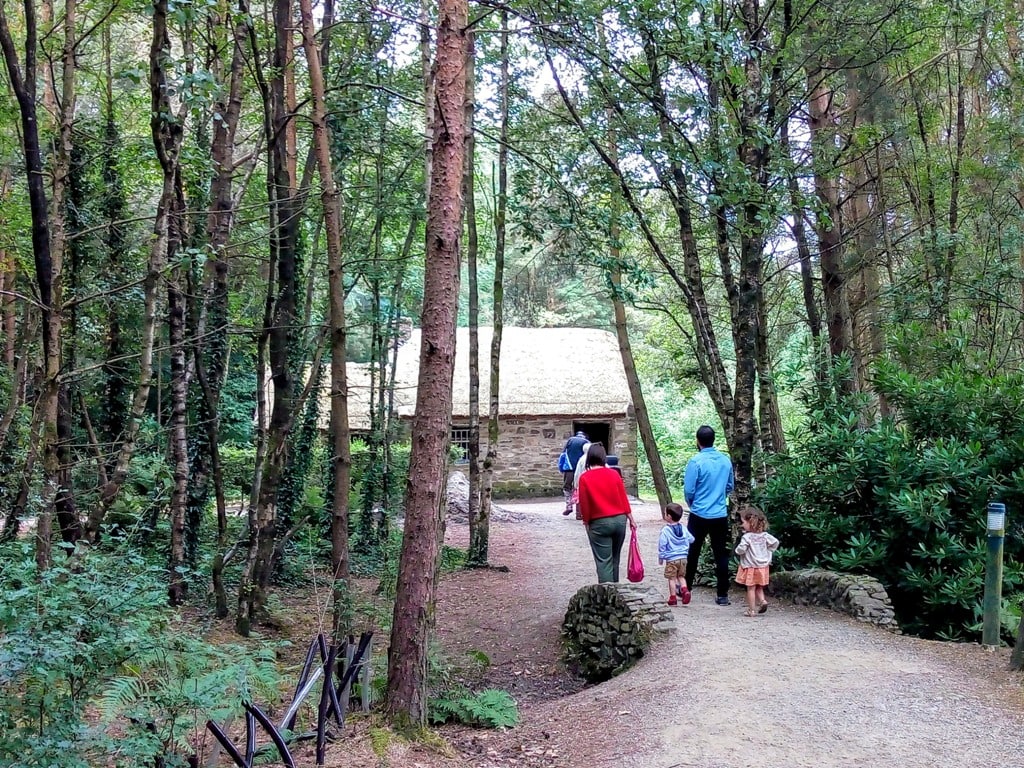
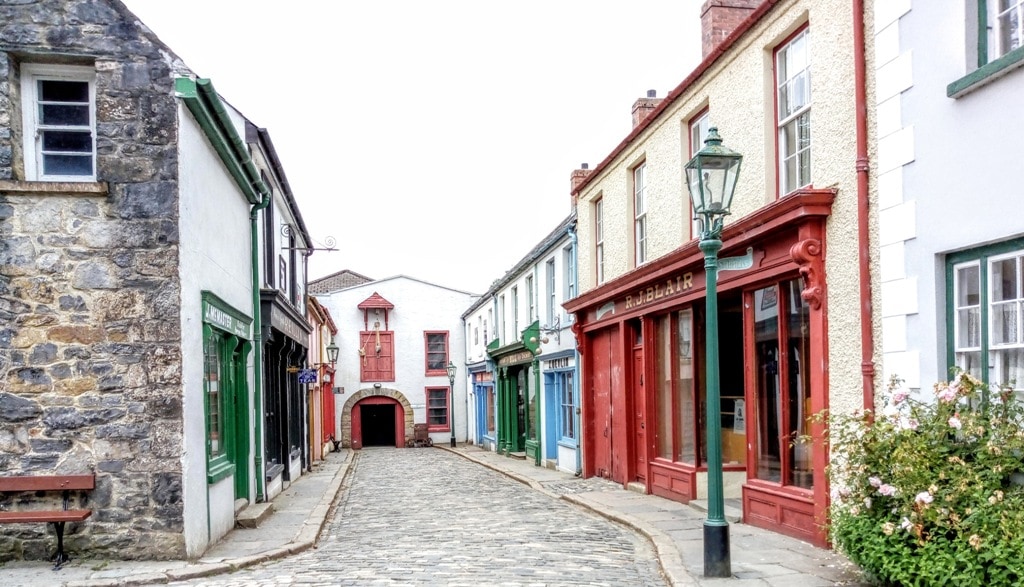
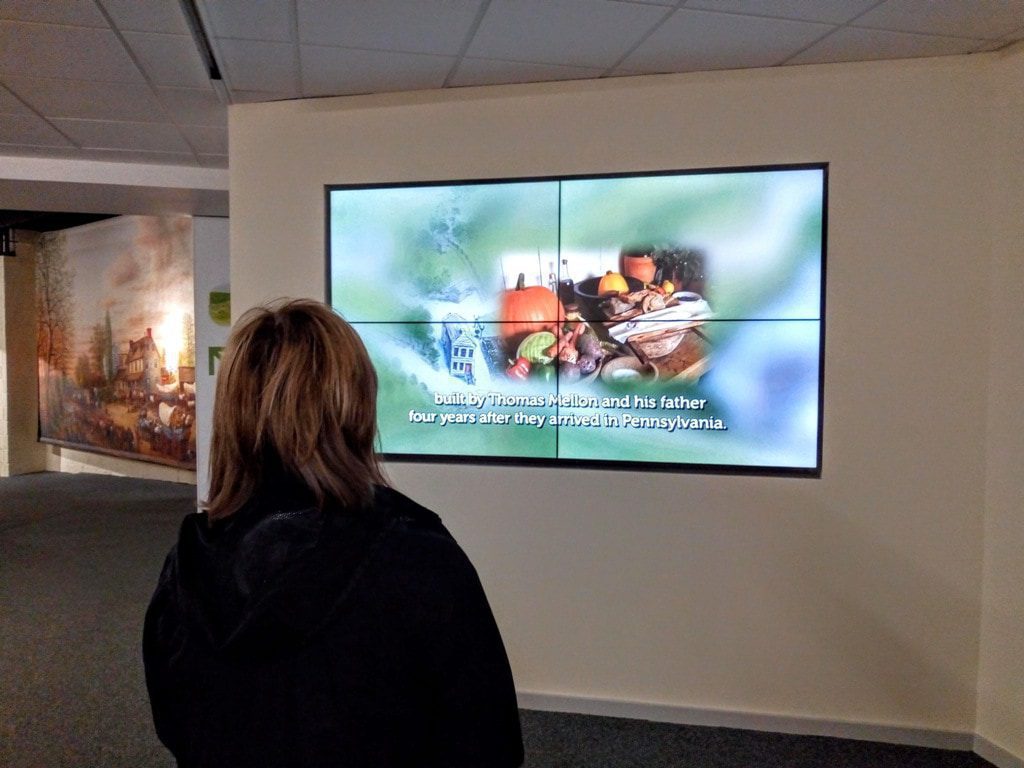
On the outskirts of Omagh near the Donegal border, this is one of the finest open-air folk museums in Ireland or Britain. It tells the story of the Ulster emigrants who crossed the Atlantic to build new lives in America, through reconstructed cottages, log cabins, a full-scale replica emigrant ship, and costumed interpreters. See the Ulster American Folk Park website for opening hours and events.
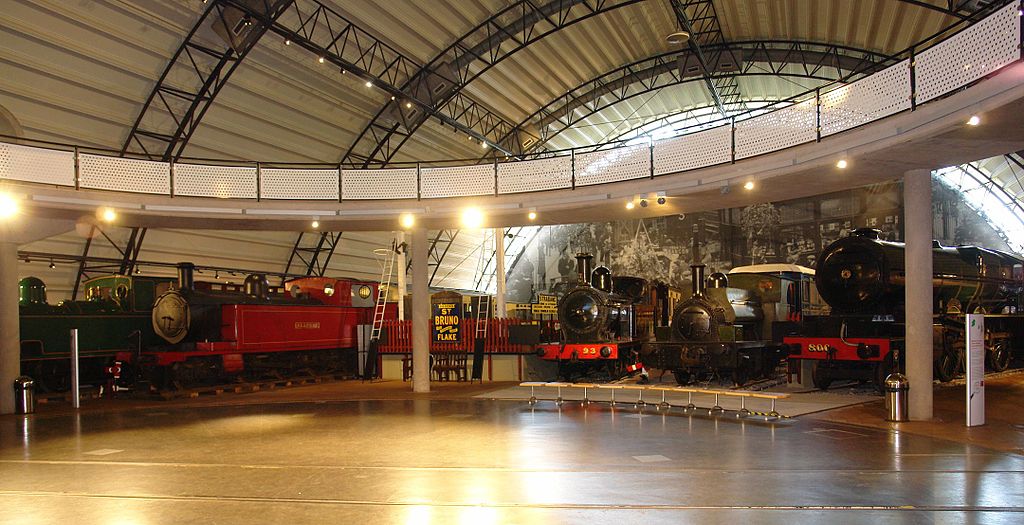
Ulster Folk and Transport Museum, Cultra
About 25 minutes from Belfast, this museum combines a living folk village with a transport collection containing one of the most comprehensive arrays in Europe. See the National Museums Northern Ireland site for current exhibition details.
Ulster Museum, Belfast
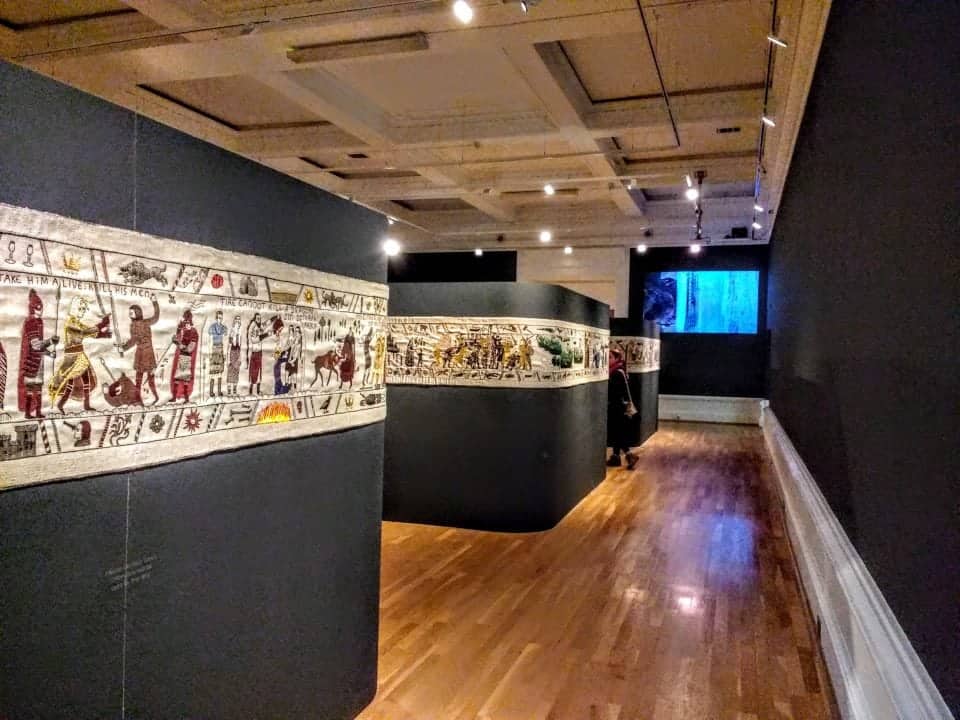
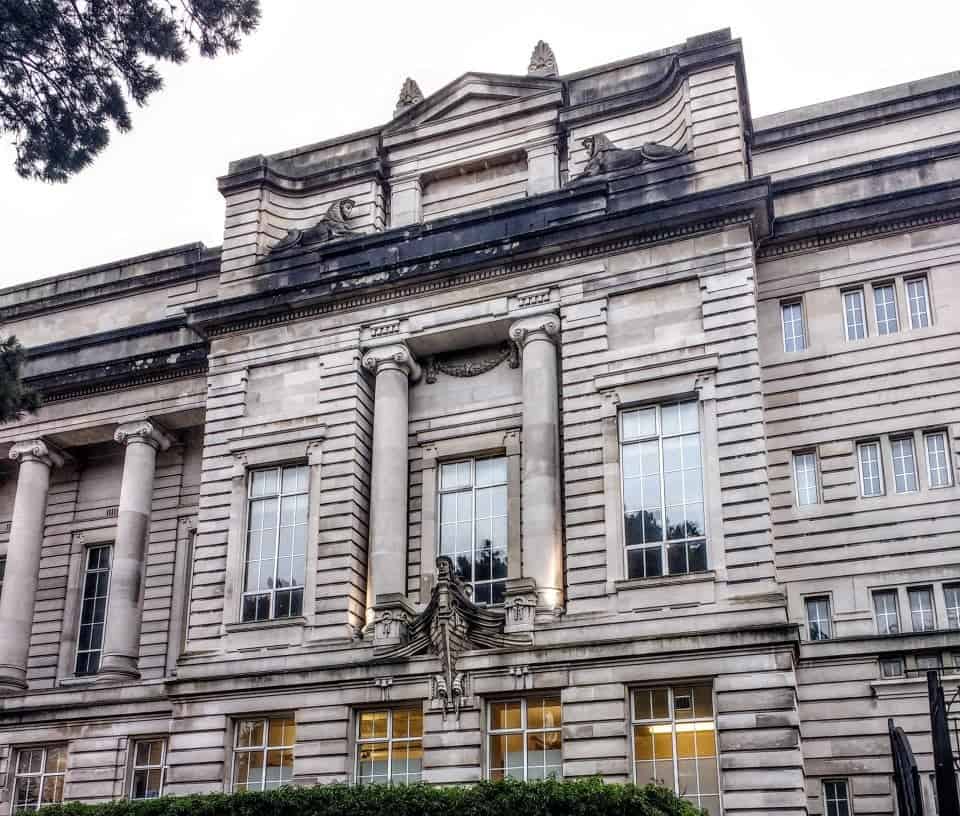
In the university quarter of Belfast, the Ulster Museum is free to visit and contains three distinct collection routes: cultural history, natural history, and art. The Egyptian mummy, the Game of Thrones Tapestry and the Spanish Armada collections are highlights. See nmni.com/um for current exhibitions.

Belleek Pottery, Fermanagh
Established in 1857, Belleek Pottery produces the world-famous Fine Parian china and is listed among Ireland’s top five visitor attractions. The factory tour shows you the craftsmanship behind each piece from hand-casting to hand-painting.
From Someone Who Actually Lives Here: An Honest Assessment
Personal perspective: The Giant’s Causeway is spectacular and you must go. But the Northern Ireland landmark that has stayed with me most consistently, the one I return to in memory and in person, is Fair Head at dawn. Standing on that cliff above the basalt columns with the sea below and Scotland visible across the water, in complete silence before the day begins, is one of the most powerful experiences I have had anywhere in these islands. It costs nothing, requires no booking, and almost no one is there that early. That is what I mean when I say the most famous places are not always the most memorable ones.
I also want to address something directly. Some visitors feel uncertain about whether it is appropriate to tour murals, peace walls, and memorials as a tourist. My view, having lived in this part of the world for a long time, is that visiting these places thoughtfully and with genuine curiosity is exactly what should happen. The communities that created these murals and memorials made them to be seen, to be understood, and to ensure that what happened here is not forgotten. Go. Look. Listen to a local guide. Leave knowing more than you did when you arrived.

If you want to go deeper into the lesser-known landmarks after your first visit, read the Hidden Gems Northern Ireland guide on xyuandbeyond.com. If you want a curated shortlist of the absolute best attractions for a short trip, see the Best Northern Ireland Tourist Attractions guide.
Practical Information for First-Time Visitors to Northern Ireland
Getting Around
Hire a car. This is not optional if you want to see more than Belfast and Derry. Roads are narrow and well-signed. Drive on the left. The AA and RAC both operate in Northern Ireland and roadside assistance is available.
Currency and the Border
Northern Ireland uses sterling (GBP). The Republic of Ireland uses euro. The border has no checkpoints or visible infrastructure. The only signals you have crossed are the change in road signs from kilometres to miles and the change in number plates. Carry both currencies if crossing between North and South.


When to Visit
May to September gives the best weather and the longest days. July and August are peak season. Book car parks and attraction tickets online in advance. October is excellent for the Glens of Antrim when the autumn colours are at their best. Check the Discover Northern Ireland website for special offers, seasonal events, and latest news throughout the year.
Accessibility
Accessibility varies significantly across sites. Benone Strand is Northern Ireland’s first fully inclusive beach with specialist access equipment. The Giant’s Causeway visitor centre is accessible but the rocks themselves are uneven. The Gobbins cliff path is unsuitable for anyone who cannot climb 50 consecutive stairs. Many Belfast and Derry attractions are fully accessible. The Disability Action Northern Ireland site has useful guidance for visitors with additional needs. Xyuandbeyond.com covers accessible-travel-guides-ireland-uk-europe in detail with specific notes on individual sites.
Suggested bases for a first visit: Belfast for days one and two. A hotel along the Causeway Coast (Portrush, Bushmills, or Ballycastle) for the middle nights. Derry for the final night if you are continuing west. Enniskillen for Fermanagh. Newcastle or Downpatrick for the Mournes.


What to See in Northern Ireland: The Bottom Line for First-Time Visitors
Northern Ireland landmarks range from the ancient to the industrial, from the naturally breathtaking to the humanly devastating. What ties them together is a landscape and a people of unusual depth. The Giant’s Causeway is extraordinary. So is standing on the Derry city walls at dusk with the city laid out below you. So is a slow morning in St. George’s Market with Belfast coming to life around you.
The best advice I can give: do not try to see everything. See fewer places and see them properly. Eat somewhere local. Ask the person behind the counter in the bakery what they love most about where they live. The answer will be better than anything on this list.
And come back. Northern Ireland rewards returning visitors even more than first-timers. I have been coming here my whole life and it still surprises me.
Check Discover Northern Ireland for the latest special offers, upcoming events, and accommodation options before you travel.

Frequently Asked Questions: What to See in Northern Ireland on a First Visit
What are the most important Northern Ireland landmarks for a first-time visitor?
The most important Northern Ireland landmarks for a first visit are the Giant’s Causeway (the only UNESCO World Heritage Site in Northern Ireland), Titanic Belfast, the Causeway Coastal Route, Carrick-a-Rede rope bridge, Dunluce Castle, the Dark Hedges, Derry’s city walls and Bogside murals, and the Glens of Antrim. If you have time for one additional region beyond Belfast and the coast, Fermanagh’s Marble Arch Caves and Lough Erne island monasteries are the most rewarding.
How many days do I need to see the main landmarks in Northern Ireland?
Three days covers Belfast and the Causeway Coast at a reasonable pace. Five days allows you to add Derry and one additional region such as Fermanagh or the Mourne Mountains. A full week lets you work through all five regions without rushing. Most visitors who come for a weekend leave wishing they had booked a week.
Is the Giant’s Causeway free to visit?
The Giant’s Causeway path itself is free to walk. The National Trust visitor centre and car park charge separate fees. Booking the car park online in advance through nationaltrust.org.uk is strongly recommended between May and September. The car park is regularly full before 9am on summer weekends.
What is the best way to drive the Causeway Coastal Route?
Drive the Causeway Coastal Route east to west over two days, starting from Larne and heading toward Portrush and Derry. The most important stops are the Glens of Antrim, Ballintoy Harbour, Carrick-a-Rede rope bridge, the Giant’s Causeway, Bushmills Distillery, Dunluce Castle, and Mussenden Temple. Do not attempt the full route in a single day. The roads are narrow, the scenery stops you constantly, and rushing it misses the point entirely.
Are the Belfast murals and Troubles landmarks safe to visit?
Yes, entirely. The Falls Road and Shankill Road areas are normal functioning neighbourhoods. A Black Cab tour with a local driver who lived through the Troubles is the most informative way to visit and provides essential context for what you are seeing. The communities that created these murals made them to be seen and understood. Visiting thoughtfully is appropriate and, in many ways, necessary.
What Northern Ireland landmarks were used in Game of Thrones?
Over 31 locations in Northern Ireland served as Game of Thrones filming sites. The most visited are the Dark Hedges (the King’s Road), Ballintoy Harbour (Iron Islands), Cushendun Caves (the Stormlands), Dunluce Castle (Pyke), Binevenagh Mountain (the Dothraki Sea), Tollymore Forest Park (the pilot episode), and Castleward (Winterfell). Ten carved doors from trees lost in Storm Gertrude are also displayed across ten pubs in Northern Ireland as the Game of Thrones Tour of Doors.

What should I know about crossing the border between Ireland and Northern Ireland?
The border between the Republic of Ireland and Northern Ireland has no checkpoints and no visible infrastructure. You will know you have crossed when the road signs change from kilometres to miles. Carry both euro and sterling. Your standard driving licence is valid in both jurisdictions. Mobile roaming charges may apply depending on your network and country of origin.
You should however obtain an ETA which all folks visiting any part of the UK should have. The UK is also insisting these days if you were born there but live in another country you MUST obtain a UK passport (unless you have an Irish one).

Is Northern Ireland suitable for visitors with limited mobility?
Many Northern Ireland landmarks are accessible to visitors with limited mobility. Benone Strand is Northern Ireland’s first fully inclusive beach with specialist access equipment. The Giant’s Causeway visitor centre is accessible but the rocks themselves are uneven and challenging. The Gobbins cliff path is not suitable for anyone who cannot climb 50 consecutive stairs. Many Belfast and Derry city attractions are fully accessible. Xyuandbeyond.com carries detailed accessibility notes for individual sites and covers accessible-travel-guides-ireland-uk-europe throughout Ireland and the UK.
Travelling with limited mobility? Our Accessible Northern Ireland Guide covers wheelchair-friendly attractions, accessible transport, and first-hand mobility tips across Belfast, the Causeway Coast, and Derry.
Planning a trip to Northern Ireland? Our complete Northern Ireland Travel Guide covers Belfast, the Causeway Coastal Route, county guides, hidden gems, itineraries, food, and local tips from a Donegal native.
Explore more of the region with guides to England, Scotland, Wales or the full United Kingdom Travel Guide.
Join 7,500 Ireland travellers in my Ireland Uncovered Facebook Group and 1,897 on my XYUandBEYOND PAGE
Start Planning Your Trip
👉 Public Transportation in Ireland
👉 Hidden Gems in Ireland – 32 Secret places to visit
👉 Answering all your travel questions about Ireland
This is an incredibly comprehensive list of landmarks. The one that stands out to me is the goat statue, with Miriam the goat now standing in.
Everyone loves Miriam and you have to have apples or carrots to feed her she loves the attention
Wow, I had no idea there was so much to see and do in Northern Ireland! I just visited as a day trip from Dublin so I could see the Titanic Museum and see the Giant’s Causeway (far too much for one day!), so I’d love to go back and visit more slowly. The Gobbins looks like a bit of an adventure, and I’d love to see as many murals as I can. Great list!
Tons of stuff and so many more that didn’t get mentioned – you can explore N. Ireland for weeks and never get bored.
We went to Ireland in 1998, based in Berlin where my then-boyfriend is from and spent an amazing 2 weeks driving around Northern Ireland and Ireland. At the time we were more into pubs than anything else, and I can’t wait to get back to Ireland and see all the things we missed. This is such a great list! There’s so much to see and do in Northern Ireland, and there’s such a variety of landscapes and natural beauty.
N.I makes for a glorious road trip there is just so much to see and so many small villages and towns where you can hit up the pubs and meet the locals.
Not Berlin…Belfast lol.
There are so many beautiful places to explore in Northern Ireland! I’d love to visit someday. I’ll definitely be referring back to this post when the time comes!!
Hopefully you will get to make the trip soon you will never regret it.
I’ve been to a handful of these but now I see there is so much more. Looks like another trip is in order.
LOL you cold spend weeks there and not see it all
Wow, such an incredible list!
Thanks Lisa
Who knew Northern Ireland had so many things to see and do! I’ll have to plan to stay longer next trip.
It does come as a surprise to many as they only know a few areas such as the Dark Hedges but the North has many hidden gems.
Hello! Castles look mysterious and they are definitely worth seeing! Thanks for sharing!
There’s a ruin around every corner lol
This is such a great guide! Definitely saving for the future 🙂