
Best Beaches in Ireland: 33 of the Most Beautiful Strands to Visit
Ireland has more than 2,500 kilometres of coastline and some of the finest beaches in Europe. The best beaches in Ireland include Keem Bay in Mayo, Inchydoney in Cork, Dog’s Bay in Galway, Portsalon in Donegal, and Lahinch in County Clare. Whether you want to surf, swim, or walk a wild Atlantic shore in near-solitude, there is an Irish beach that will exceed every expectation.

The best beaches in Ireland are the kind that stop you in your tracks. You round a bend on a narrow coastal road, the sea appears below you in three shades of impossible blue, and the only sound is the Atlantic wind and the distant crash of surf. I have been bringing visitors and friends to these beaches for years, across every county on this coastline, and they never fail to produce that moment of pure astonishment.
Ireland is home to dozens of Blue Flag beaches. The Blue Flag is an international environmental award given to beaches and marinas that demonstrate excellent environmental standards alongside strong sanitary and safety facilities. Ireland’s programme began in 1988 with 19 beaches and 2 marinas. By 2023 that had grown to 84 Blue Flag beaches and 10 marinas.
Beyond the Blue Flags, Ireland is famous for world-class surf breaks, dramatic rock formations, waterfalls that plunge directly into the ocean, and wild camping near some of the most remote strands on the European Atlantic edge. Many of Ireland’s best beaches are well off the beaten path, with no nearby village or amenities, which means pristine, uncrowded beauty that you genuinely get to yourself.
Many of Ireland’s best beaches are well off the beaten path, with no nearby village or amenities, which means pristine, uncrowded beauty that you genuinely get to yourself. Others are lively resort beaches with full facilities, surf schools, and excellent food. In this guide you will find 33 of the most beautiful beaches in Ireland, organised by county, with everything you need to plan your visit: parking for cars and for visitors with disabilities, nearby places to eat from beach cafes to fine dining, accommodation from B and Bs to spa hotels, and the practical details that make the difference between a frustrating day out and a perfect one.
What Makes Ireland’s Beaches So Special
Ireland sits on the eastern edge of the North Atlantic, exposed to the full fetch of the ocean that builds the long, powerful swells that surfers travel from across the world to ride. The Gulf Stream runs along the western coast, keeping water temperatures warmer than you might expect at this latitude and allowing subtropical plants to thrive in sheltered spots like Valentia Island.
The geology is extraordinary: white shell-sand strands in Connemara and the Aran Islands, dark basalt and white chalk on the Causeway Coast, limestone pavement meeting the sea along the Burren edge in Clare, sheer cliff faces dropping hundreds of metres to the Atlantic. Almost every stretch of this coastline carries a story from Irish mythology too: Selkies shedding their skins to walk as humans, Merrows inhabiting the western waters, and the countless Armada wrecks from the catastrophic storm of 1588 that litter beaches from Donegal to Clare to Kerry.
How to Plan Your Irish Beach Visit: A Step-by-Step Guide
- Choose your county and season. Summer (June to August) brings the best weather odds and lifeguard cover. Shoulder season (May and September) offers smaller crowds and often equally good conditions.
- Check tide tables before you travel. Several beaches are only fully accessible at low tide and some coastal routes are impassable at high water. The
Irish National Meteorological Service publishes daily forecasts and tidal information.
- Confirm accessibility in advance. Most Blue Flag beaches have wheelchair-accessible parking, accessible toilets, and beach wheelchairs on free loan from lifeguards in season. Always ring ahead to confirm provision.
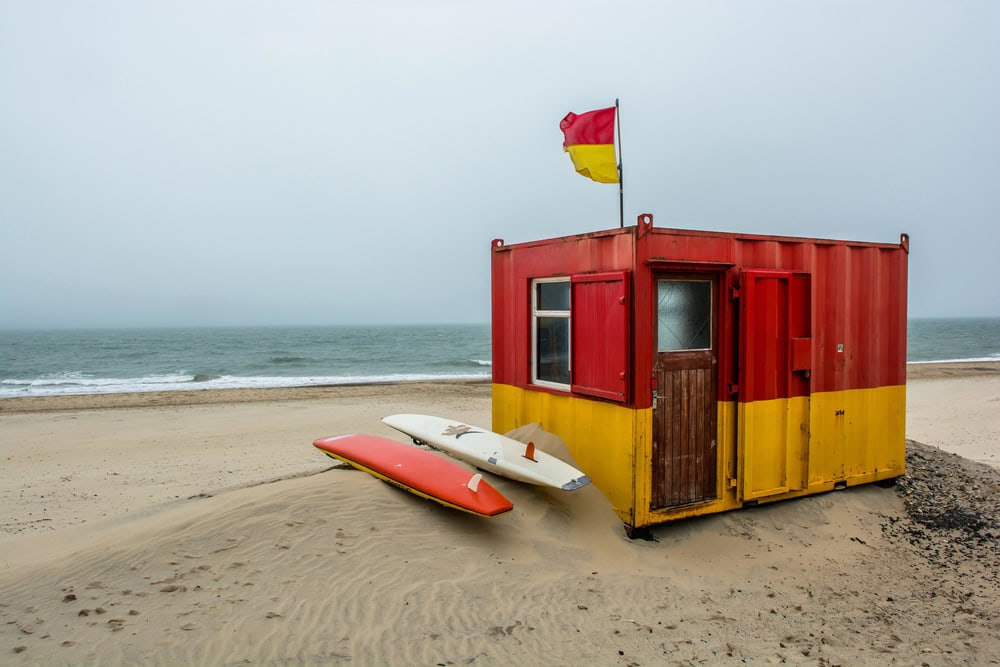
- Understand the water safety flags. Green: safe, lifeguards patrolling. Yellow: caution. Red: no swimming. Chequered: board and watercraft zone.
- Pack for the Irish Atlantic. A windproof layer, reef shoes for rocky beaches, and sun protection (UV can be surprisingly high on overcast days) are all essential even in summer.
- Book accommodation well in advance for July and August. Coastal towns fill up fast. Check
Booking.com or VRBO at least six weeks ahead for popular locations such as Bundoran, Lahinch, Dingle, and Achill Island.
Best Beaches in County Dublin
Dublin’s beaches are accessible by the DART coastal rail line within 30 to 40 minutes of the city centre, making them enormously popular on any warm summer day. Several are sheltered and ideal for families; others are long open strands with serious surf culture.
Portmarnock Beach (The Velvet Strand)
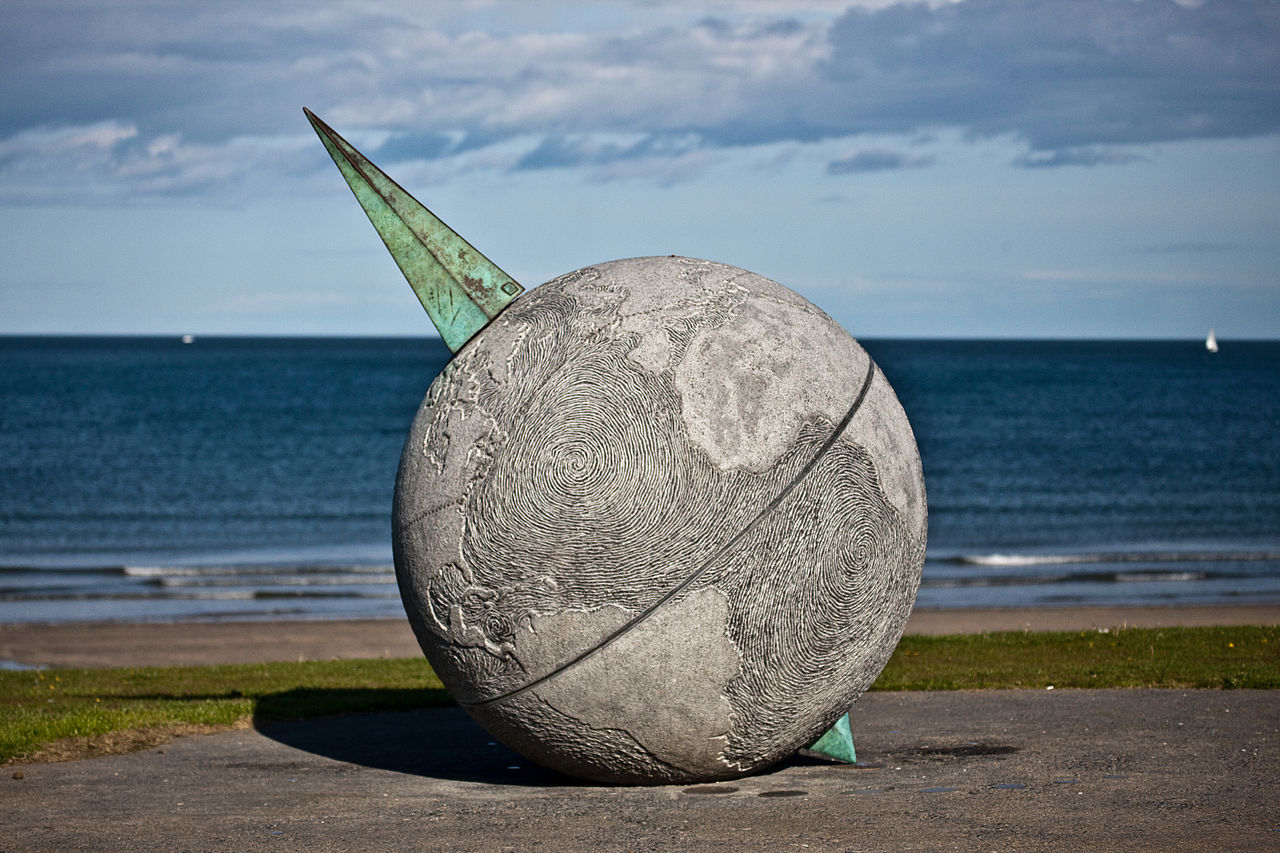
Portmarnock is the only Dublin beach to make TripAdvisor’s national Top 10 list. The five-kilometre stretch of soft sand north of Dublin earned its nickname, the Velvet Strand, from the extraordinary quality of the sand underfoot. It becomes seriously busy on warm summer weekends, so arrive early or go midweek. The beach celebrates its history as an aeronautical hub with Eccentric Orbit, a large sculpture of the globe with a copper needle pointing at the North Star.
Parking: Large public car park at the beach with disabled spaces close to the access point. Parking fees apply in peak season. Accessible from the DART at Portmarnock station (15-minute walk).
Accessibility: Disabled parking close to the beach entrance. Accessible toilets in the car park. Beach wheelchair available on request from the lifeguard service in season.
Eat nearby: Brezzi Woodfired Pizza near the strand is rated among the best pizza in Dublin by locals. Several cafes and casual restaurants serve the beach promenade area.
Stay nearby: The Portmarnock Hotel and Golf Links is directly adjacent to the strand, a four-star hotel with a renowned links course. Malahide village, a short drive away, has a wide choice of hotels, guesthouses, and restaurants in a beautiful coastal setting.
Sandycove Beach
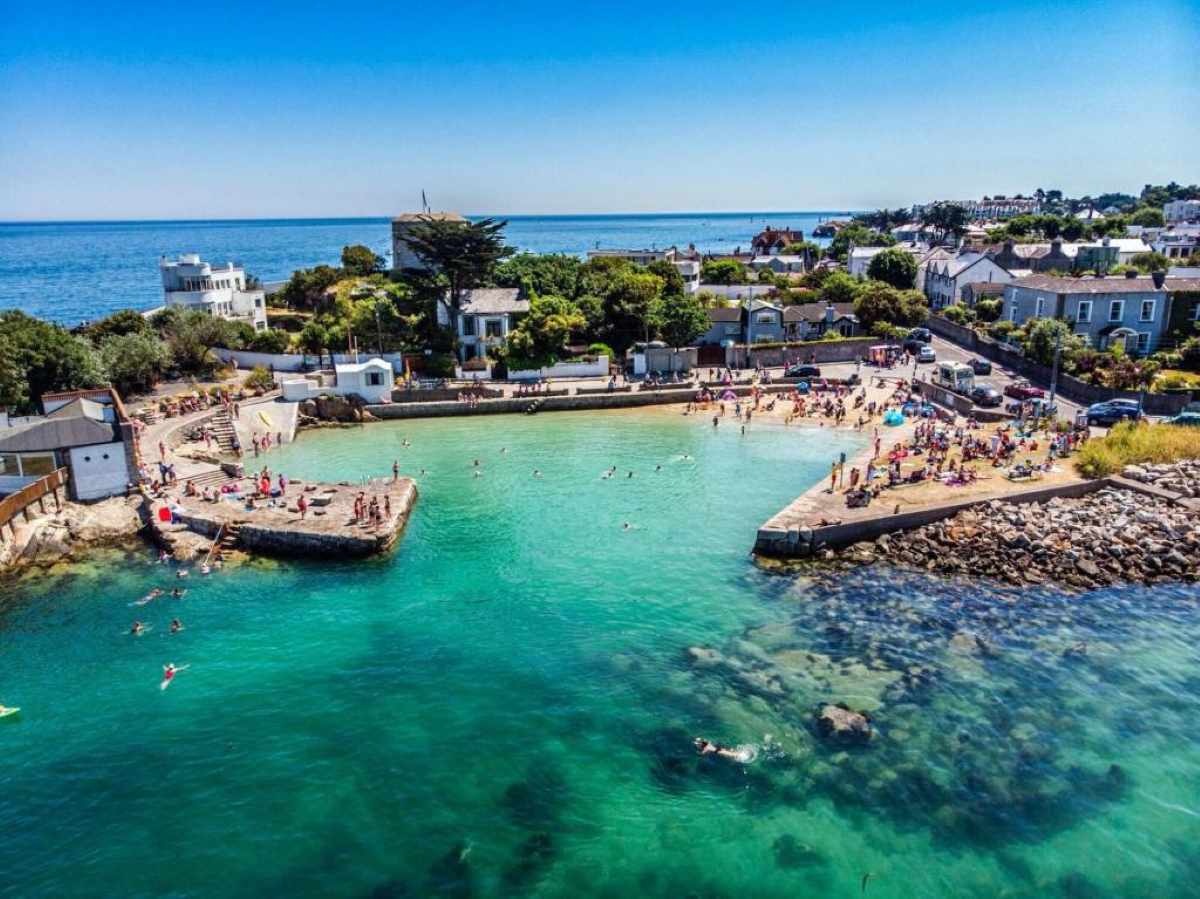
Sandycove is a sheltered seaside village south of Dublin famous for its Martello Tower, now the James Joyce Tower and Museum, where Joyce stayed and set the opening scene of Ulysses. The shallow beach is excellent for children and the adjacent Forty Foot bathing place has been drawing year-round swimmers for over a century. The village is a well-established foodie destination with a concentration of excellent restaurants and coffee shops that punches well above its size.
Parking: Street parking in Sandycove village and along the seafront, with disabled spaces near the Forty Foot. Five-minute walk from Sandycove and Glasthule DART station. No dedicated beach car park.
Accessibility: The seafront path is mostly level and accessible on foot from the DART. Limited disabled parking on the road.
Eat in Sandycove: Rasam is a celebrated modern Indian restaurant widely considered one of the finest in Dublin. The village also has excellent coffee shops, wine bars, and casual cafes clustered around the main street.
Stay nearby: The Royal Marine Hotel in adjacent Dun Laoghaire is a grand Victorian property with sea views, an indoor pool, and a spa. Haddington House is a well-regarded guesthouse option. The DART makes Dublin city centre hotels a practical base too.
Dollymount Strand
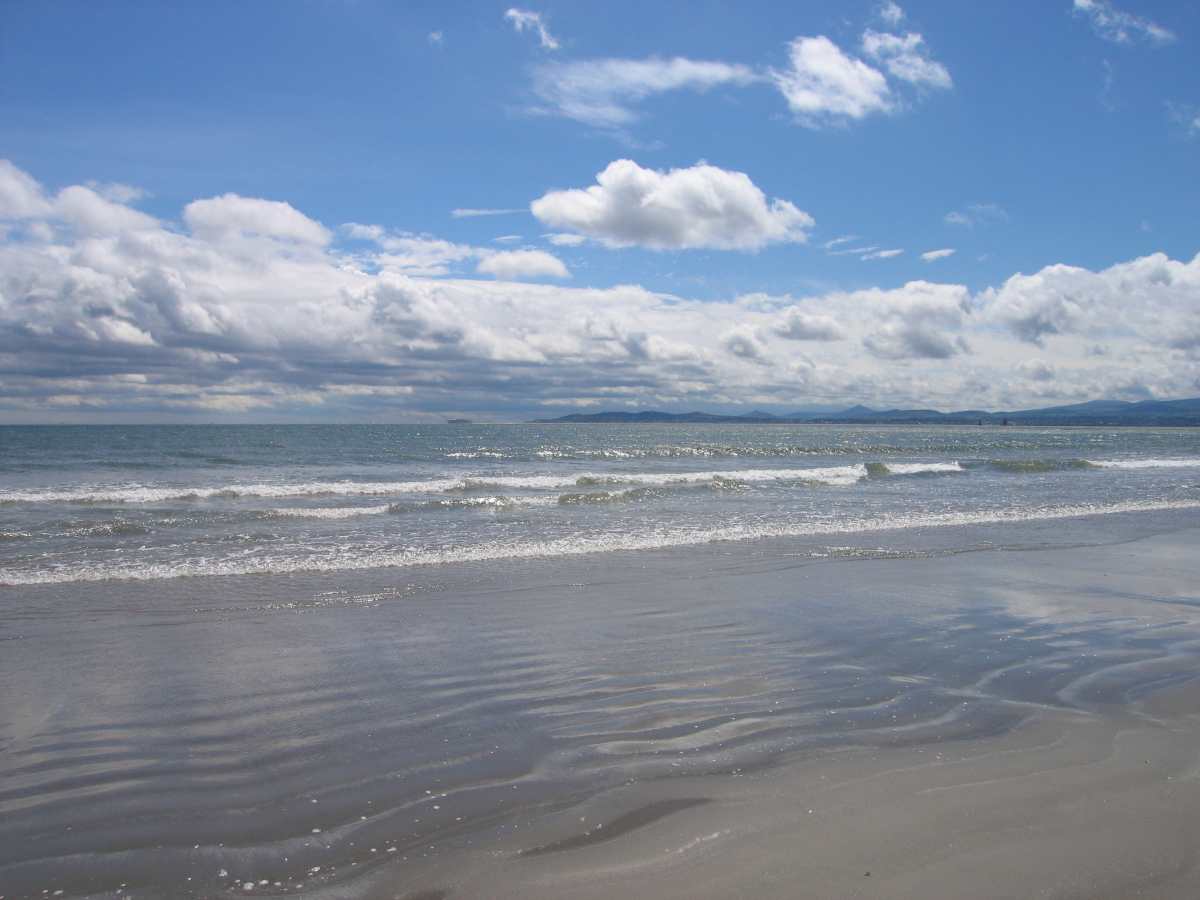
Dollymount Strand stretches five kilometres across Bull Island, a UNESCO Biosphere Reserve in Dublin Bay. It is enormously popular with surfers, stand-up paddleboarders, and walkers, with views north to Howth and south to the Wicklow Hills. The island’s dunes and salt marshes support outstanding birdlife and the reserve is internationally protected.
Parking: Free parking along the Bull Wall causeway and at the beach end. Can become extremely congested in summer; arriving by bike or bus (routes 130 and 130a from the city centre) is strongly recommended.
Accessibility: The Bull Wall causeway is flat and accessible. Some areas of the beach are firm enough for wheelchair use. No designated beach wheelchair service.
Eat nearby: The Bull and Castle pub in nearby Clontarf village is a well-regarded option. Clontarf Road has a good range of cafes and restaurants within a short drive or cycle of the beach.
Stay nearby: The Clontarf Castle Hotel is a striking four-star castle hotel minutes from the Bull Wall, with a spa and excellent restaurant. Several guesthouses line the Clontarf seafront road.
Killiney Beach
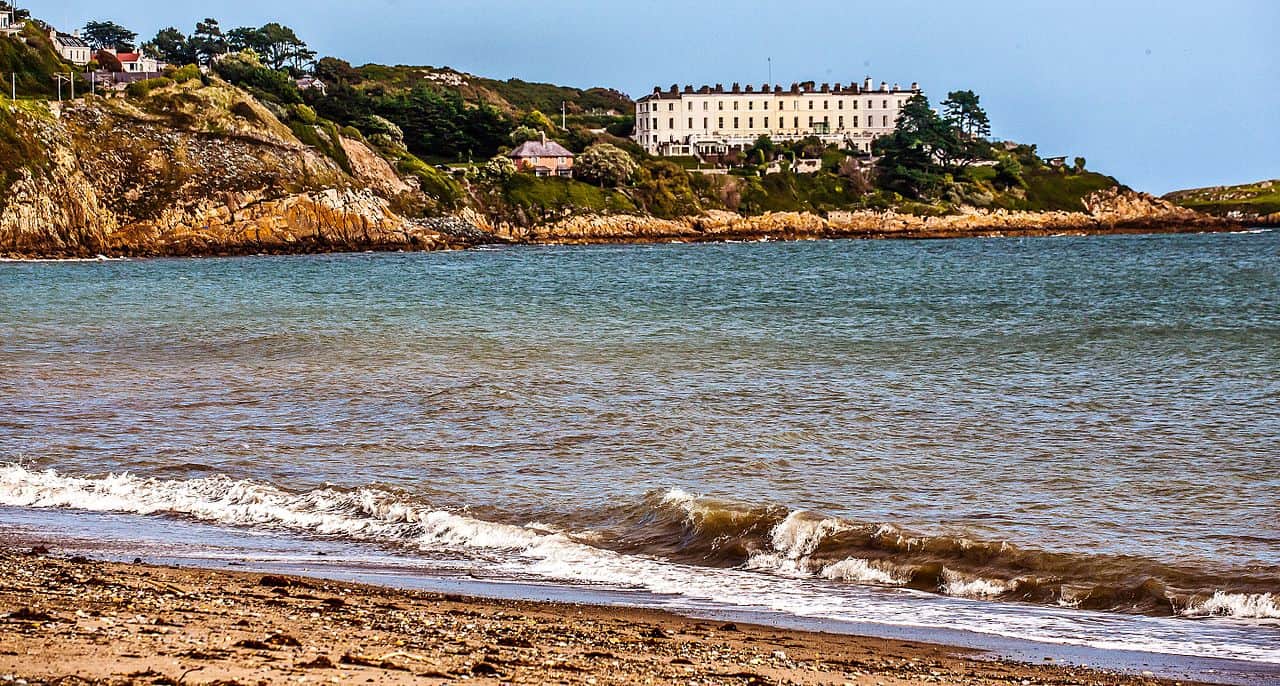
Killiney Bay is sometimes compared to the Bay of Naples. It is a long shingle and sand beach backed by Victorian villas and the wooded slopes of Killiney Hill, with spectacular views of Bray Head, the Sugar Loaf, and Dalkey Island. The beach holds Blue Flag status and the far end at White Rock provides a quieter escape from the main bay.
Parking: Pay and display parking at Killiney beach car park with accessible spaces. Directly accessible from Killiney DART station (3-minute walk).
Accessibility: Accessible parking available. The path to the beach from the car park is manageable. No dedicated beach wheelchair service.
Eat nearby: Dalkey village, a short walk or drive from the beach, has some of the best restaurants on Dublin’s south coast including Jaipur (upscale Indian) and a cluster of excellent gastro pubs and seafood restaurants.
Stay nearby: Fitzpatrick Castle Hotel in Killiney is a four-star castle hotel with extensive grounds and views of Dublin Bay. The Gresham Royal Marine Hotel in Dun Laoghaire is a grand seafront alternative.
Best Beaches in County Galway
Galway’s beaches range from the sheltered coves of the Aran Islands to the wild strands of Connemara. The shell-sand beaches here appear almost Caribbean in colour until you put your hand in the water and remember you are on the Atlantic.
Kilmurvey Beach, Inis Mor (Aran Islands)
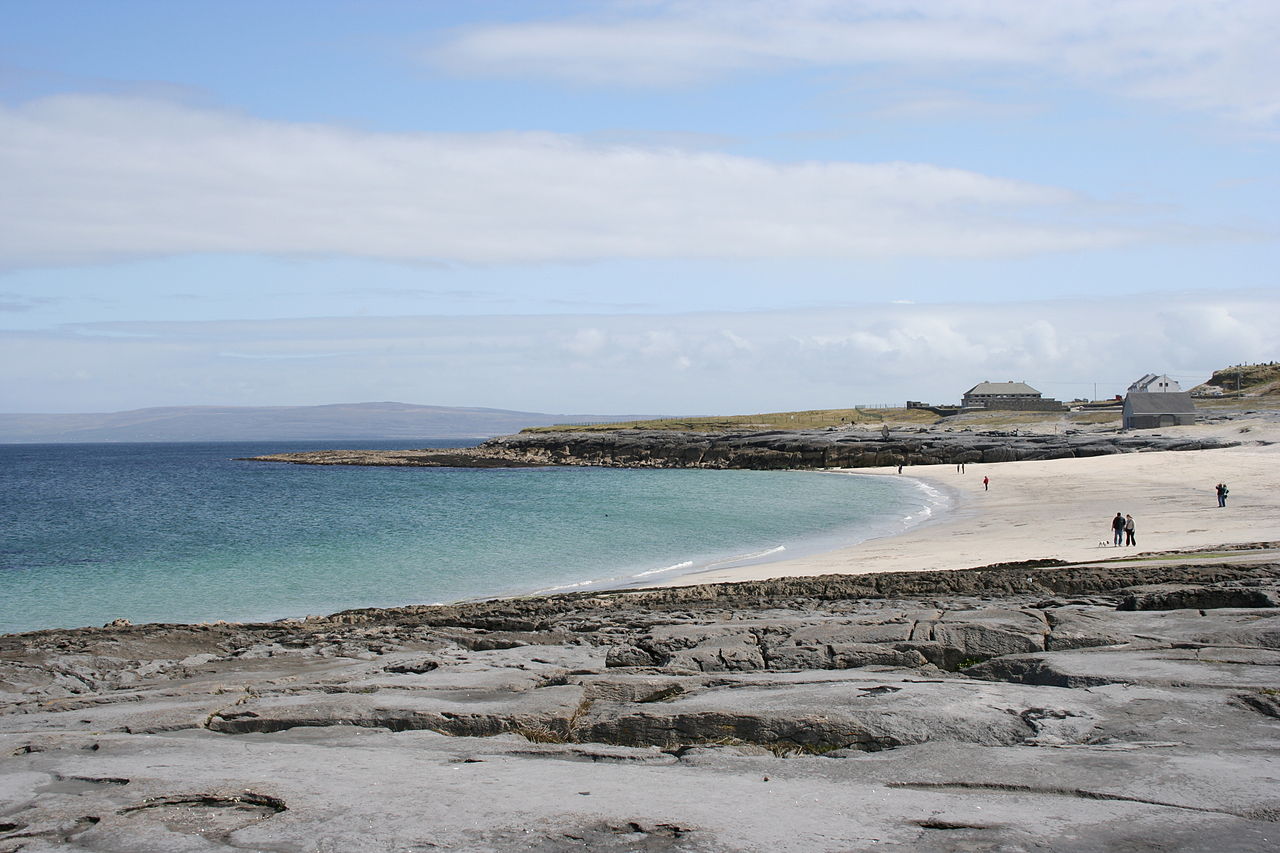
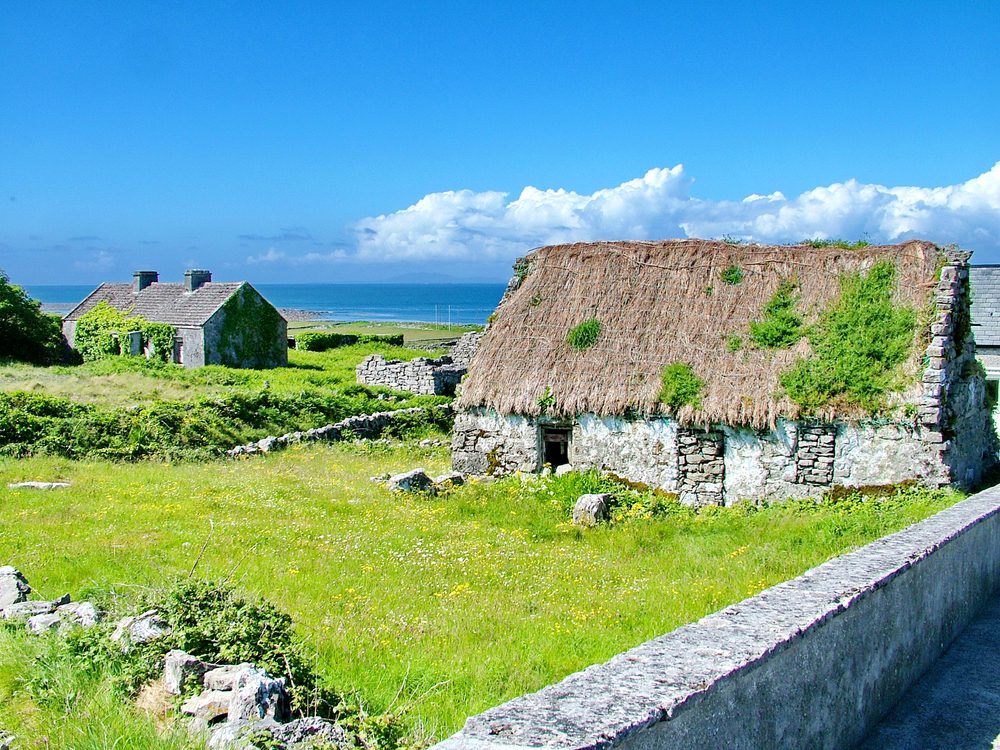
Inis Mor is the largest of the Aran Islands, reachable by ferry from Rossaveal in Galway or by air from Connemara Airport. Kilmurvey Beach is a beautiful white-sand cove just off the road between Kilronan and the prehistoric cliff fort of Dun Aengus. The gentle, crystal-clear water and lack of strong currents make it ideal for families. The islands were believed by ancient Irish tradition to be home to the Tuatha De Danann before they retreated beneath the earth, and the stone walls and Irish-speaking community give the place a depth that is genuinely apart from the modern world.
Parking: Parking at Kilronan pier. Bicycles available for hire at the pier. The beach is a 7km cycle or hire a pony trap from the pier; there is no road parking at the beach itself.
Accessibility: The approach to the beach is along a flat road, manageable for most mobility aids. No beach wheelchair service on the island. The ferry crossing is accessible; contact Aran Island Ferries for assistance.
Eat on Inis Mor: Joe Watty’s Bar in Kilronan serves excellent food using local produce and fresh Aran seafood. Man of Aran Cottage near the beach has a tearoom serving homemade food. Several cafes operate in Kilronan village near the pier.
Stay on Inis Mor: The Irish Isle is a 5 bedroom house within walking distance of the beach, open April to October. Man of Aran Cottage is a guesthouse option near the beach. The Aran Islands Hotel is the main hotel option in Kilronan. Most accommodation closes November to March.

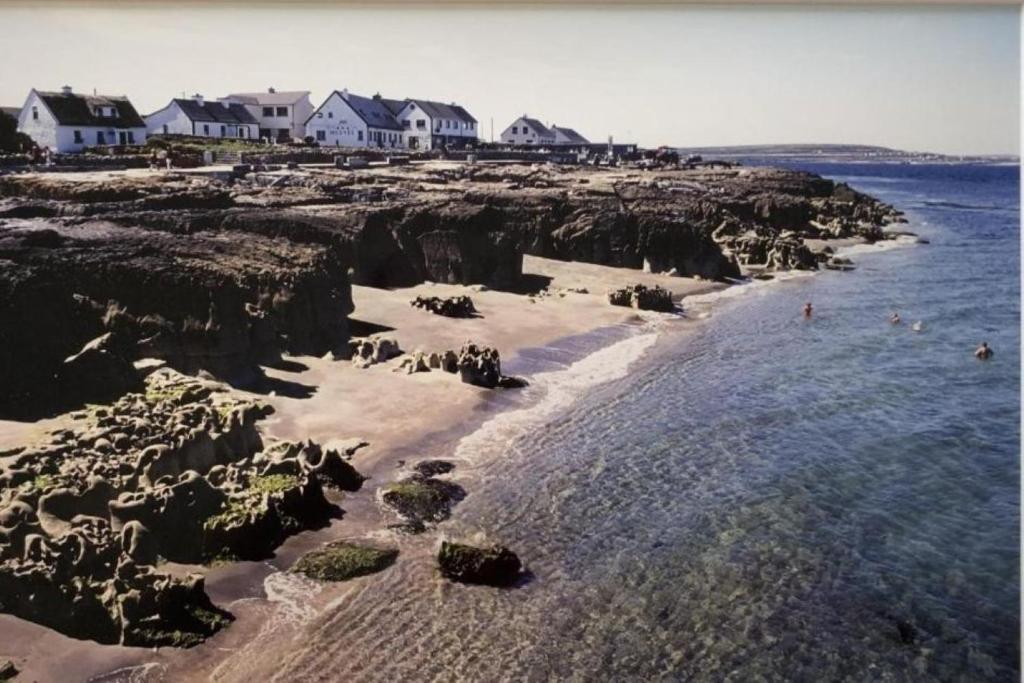
Inis Oirr and Inisheer Beaches
The smallest of the three Aran Islands has two Green Coast award beaches: An Tra and Tra Poll na gCaorach, both bleached white-sand strands popular for swimming and kayaking. Inis Oirr has a working fishing community, the famous Plassey shipwreck (known from the Father Ted opening credits), and excellent fresh local seafood.
Getting there: Ferry from Doolin in County Clare (25 minutes) or from Rossaveal in Galway. Day trips possible; overnight stays highly recommended for a more authentic experience.
Parking: No car parking needed; the island is small enough to explore on foot. Bicycles can be hired at the pier.
Accessibility: The island terrain is largely flat gravel paths and road surfaces. No beach wheelchair service. Contact the ferry operator in advance if you have specific mobility requirements.
Eat on Inis Oirr: Tigh Ruairi pub and restaurant serves food all day and is the social hub of the island. The Fisherman’s Cottage also serves meals. Fresh local crab and lobster are a highlight.
Stay on Inis Oirr: Brú Radharc na Mara is a comfortable guesthouse option. Self-catering cottages are available through local rental agencies. Book well ahead for summer.

Dog’s Bay and Gurteen Beach, Connemara
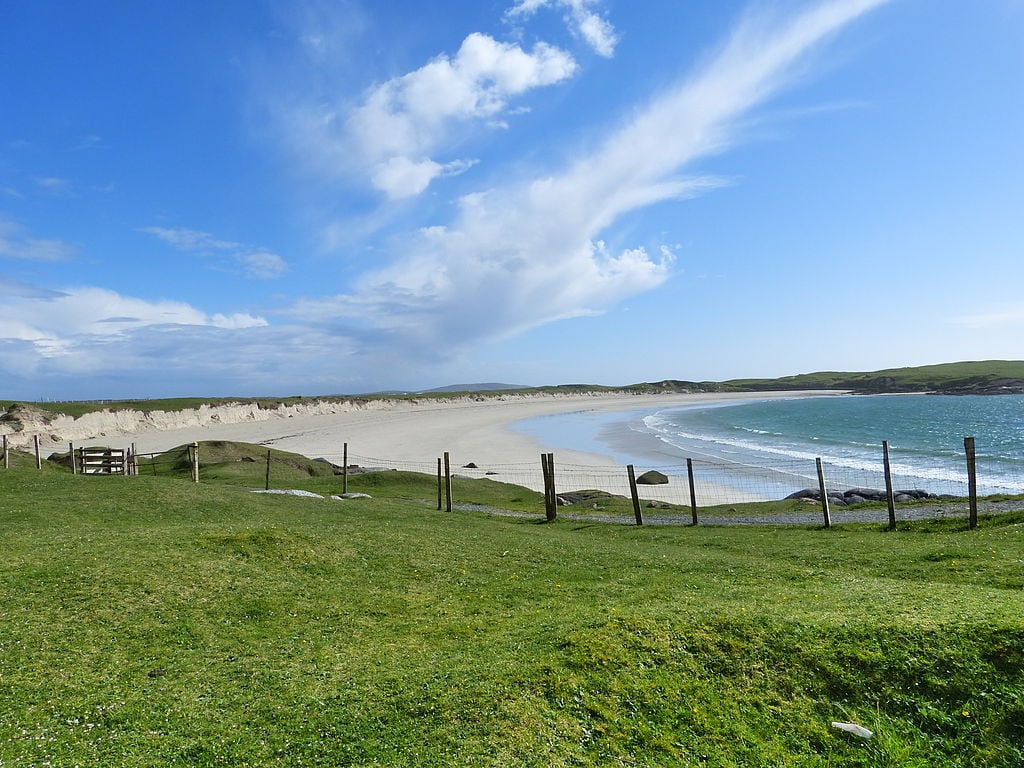
If you are searching for one beach that encapsulates everything extraordinary about the west of Ireland, Dog’s Bay and Gurteen Bay are a strong candidate. Located a few kilometres outside the fishing village of Roundstone in County Galway, the two beaches are separated by a dog-bone shaped sand spit of dazzling white shell-sand. The Lonely Planet Guide named them among the top ten beaches in Ireland.
Written by Maggie of TheWorldWasHereFirst: ‘Despite being one of the most beautiful beaches in the entirety of the Emerald Isle, it is more frequented by locals and it is entirely possible that you have the entire stretch of sand all to yourself, especially if you are travelling outside of peak season.’ Dog’s Bay also sits on the route to Clifden, making it an excellent stop on a drive of the famous Sky Road.
Parking: Free car park at Dog’s Bay with accessible spaces. Short walk to the beach. No facilities at the beach itself.
Accessibility: Level car park with a short walk across firm sand to the water. No beach wheelchair service.
Eat in Roundstone: O’Dowd’s Seafood Bar and Restaurant in Roundstone village (3km) is a long-established local institution for fresh fish and traditional Irish fare. Vaughan’s Anchor Inn in Liscannor is a popular choice for seafood further along the Connemara coast.
Stay near Dog’s Bay: The Roundstone House Hotel is a comfortable base in the village. Ballynahinch Castle Hotel, about 20km north, is one of Connemara’s most celebrated luxury hotels with a river, walled garden, and outstanding restaurant. Self-catering cottages are plentiful in the area.
Mweenish Island Beach, Galway
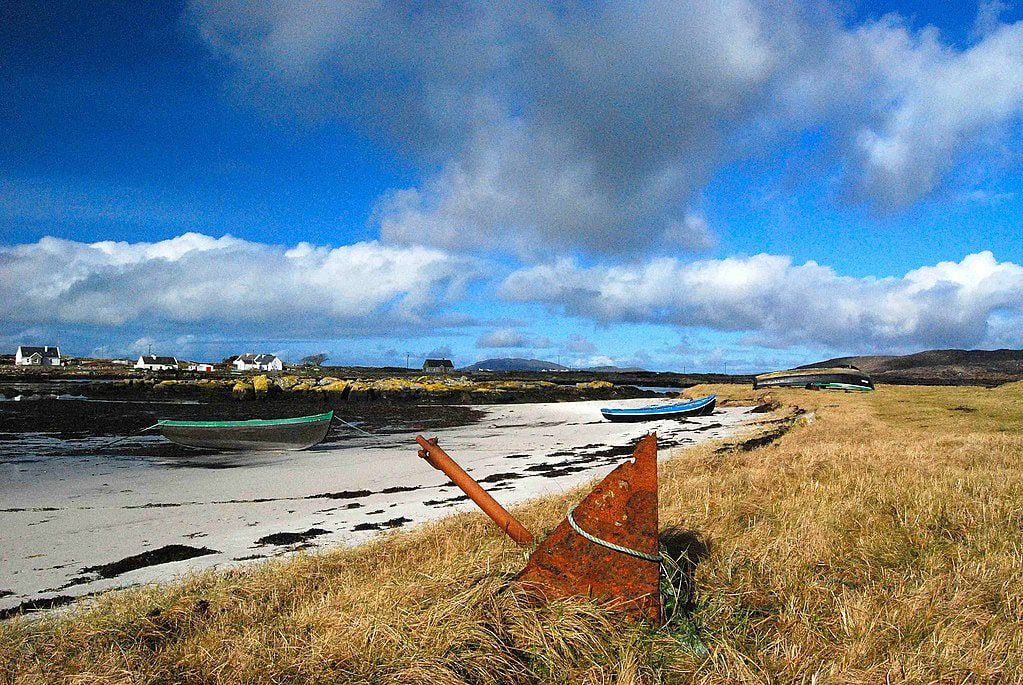
Connected to the Connemara mainland by a short bridge, Mweenish Island has a population of only around 140 people and an unspoiled coastline. Most day visitors leave on the late afternoon and the island empties. It is a superb spot for fishing and watching Atlantic sunsets.
Parking: Parking available at the bridge approach. No facilities on the island itself: bring everything you need.
Accessibility: Limited road access on the island. Not suitable for those with significant mobility requirements due to terrain.
Eat nearby: Clifden, about 20km north, is the main service town for this part of Connemara with a wide range of restaurants, pubs, and cafes. Erriseask House Hotel restaurant at Ballyconneely is a well-regarded fine dining option closer to the Mweenish area.
Stay nearby: Erriseask House Hotel at Ballyconneely is a beautiful boutique hotel overlooking the wild Atlantic. Clifden has the widest range of accommodation in Connemara including the Abbeyglen Castle Hotel and several well-rated guesthouses.
Best Beaches in County Clare
County Clare tends to be overlooked in favour of its more famous neighbours, but this is a serious mistake. Clare’s coast combines some of the finest surfing beaches in Ireland with the alien limestone landscape of the Burren, the internationally famous Cliffs of Moher, and a coastal culture that is warm, uncommercialised, and genuinely worth your time.
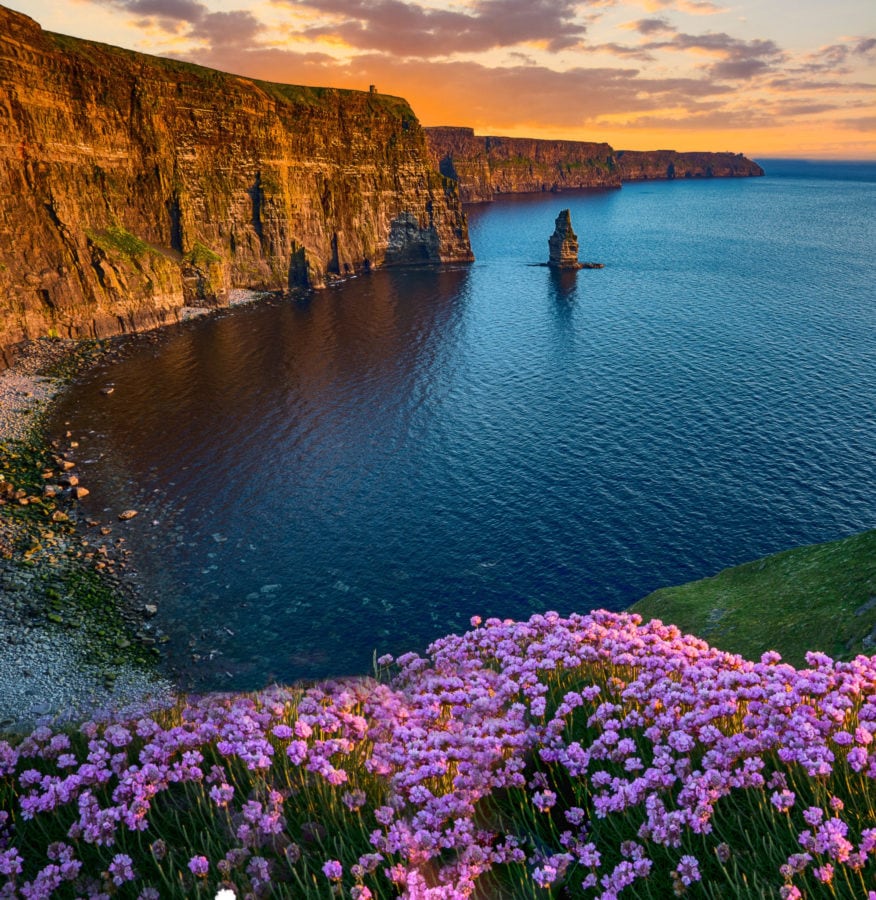
Lahinch Beach
Lahinch is one of the great surf towns of the Irish Atlantic coast. The crescent-shaped Blue Flag beach has been drawing surfers since the 1960s, and the Lahinch Surf Club, founded in 1967, is one of the oldest in Ireland. The swell here is powerful and consistent. Several surf schools operate on the beach with lessons and full equipment hire for beginners through to advanced surfers. The promenade running along part of the beach is popular with families and a traditional seaside atmosphere prevails.
Parking: Public car park at the beach with accessible spaces. Fee applies in season. Toilets and shower facilities on site.
Accessibility: Paved promenade gives accessible coastal access along the beach. Beach wheelchair available on request from lifeguards in season.
Eat in Lahinch: Barrtra Seafood Restaurant is a local favourite for fresh fish with Atlantic views. The Cliffs Bar in the village is a popular after-surf option with good pub food and live music. Moy House restaurant is regarded as the finest dining in the area.
Stay in Lahinch: Moy House is a luxury country house hotel on the cliff above the bay, one of the finest small hotels in Clare. The Cliffs Hotel is a comfortable mid-range option close to the beach. The Atlantic Hotel is a traditional seaside hotel on the seafront. Self-catering apartments are plentiful in the town.
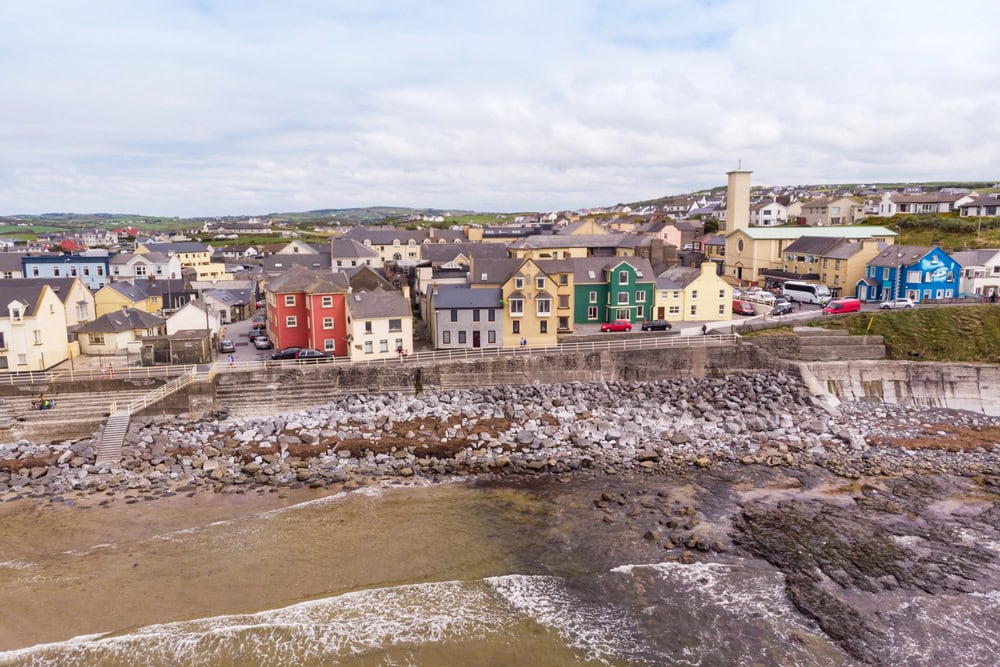
Fanore Beach
Fanore Beach sits in the heart of the UNESCO Burren and Cliffs of Moher Geopark in North Clare. The extensive sandy beach is backed by 5,000-year-old dunes protected under the European Habitats Directive and lies below the limestone pavements and wildflower meadows of the Burren. The Caher River empties into the sea at Fanore, creating reliable Atlantic swell. Aloha Surf School runs lessons for all ages. Fanore is a Blue Flag beach with lifeguard cover in summer and an on-site campsite.
Parking: Free car park at the beach with accessible spaces, public toilets, and an outdoor shower.
Accessibility: Level car park with accessible spaces. Firm sand near the waterline is manageable for some mobility aids. Beach wheelchair available on request from lifeguards in season.
Eat near Fanore: Monks Bar and Restaurant in Ballyvaughan (12km north) is a beloved local seafood pub with views over the Burren coast. The village of Doolin (8km south) has several lively pubs with traditional music and food including McDermott’s and McGann’s.
Stay near Fanore: The Fanore Beach Holiday Park campsite is on-site. In Doolin, the Aran View Country House Hotel and several guesthouses offer comfortable accommodation close to the ferry for the Aran Islands. Ballyvaughan has charming B and Bs and the Drumcreehy House guesthouse.
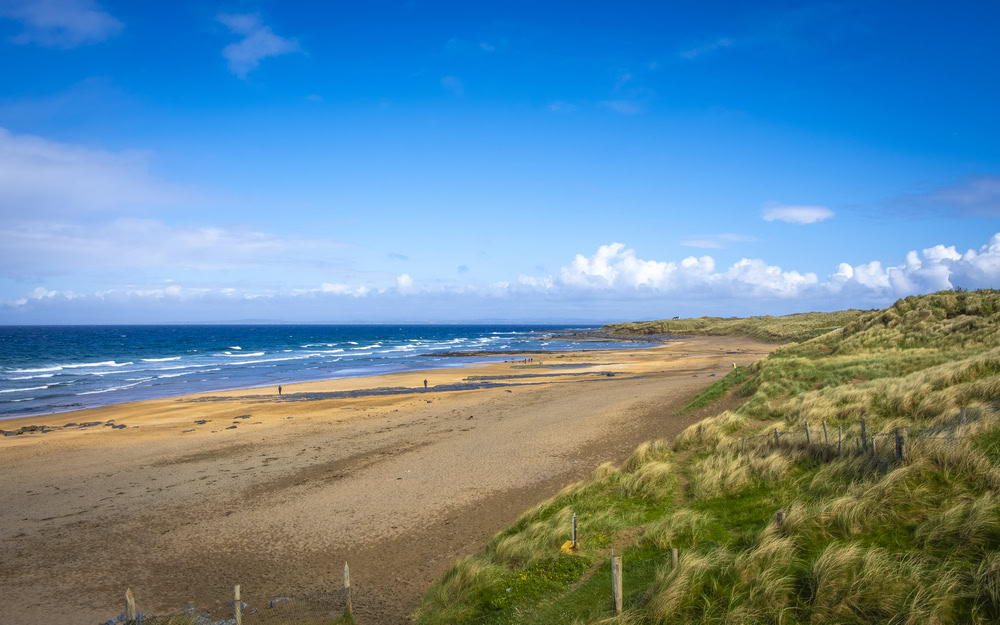
Spanish Point Beach
Spanish Point takes its name from the 1588 Armada disaster. The beach, tucked into the horseshoe of Mal Bay, is a Wild Atlantic Way Discovery Point with a long sandy strand popular for swimming and surfing year-round. The beach has a surf school, surfboard rental, free parking, public toilets, showers, an observation deck, and picnic tables. A local community initiative called Snamhai Sasta organises a 9am morning swim daily followed by tea and conversation on the beach.
Parking: Free parking at the beach with accessible spaces, toilets, and showers.
Accessibility: Accessible parking available. Level beach approach. The Armada Hotel has fully accessible facilities.
Eat at Spanish Point: The Armada Hotel has a bar and restaurant directly overlooking the beach with good food and sea views. Miltown Malbay town, 4km south, has a selection of pubs and cafes including the White House Bar, a traditional music venue of note.
Stay at Spanish Point: The Armada Hotel is the natural choice for staying at the beach with comfortable rooms and direct sea views. Self-catering holiday homes are widely available in the area around Miltown Malbay.
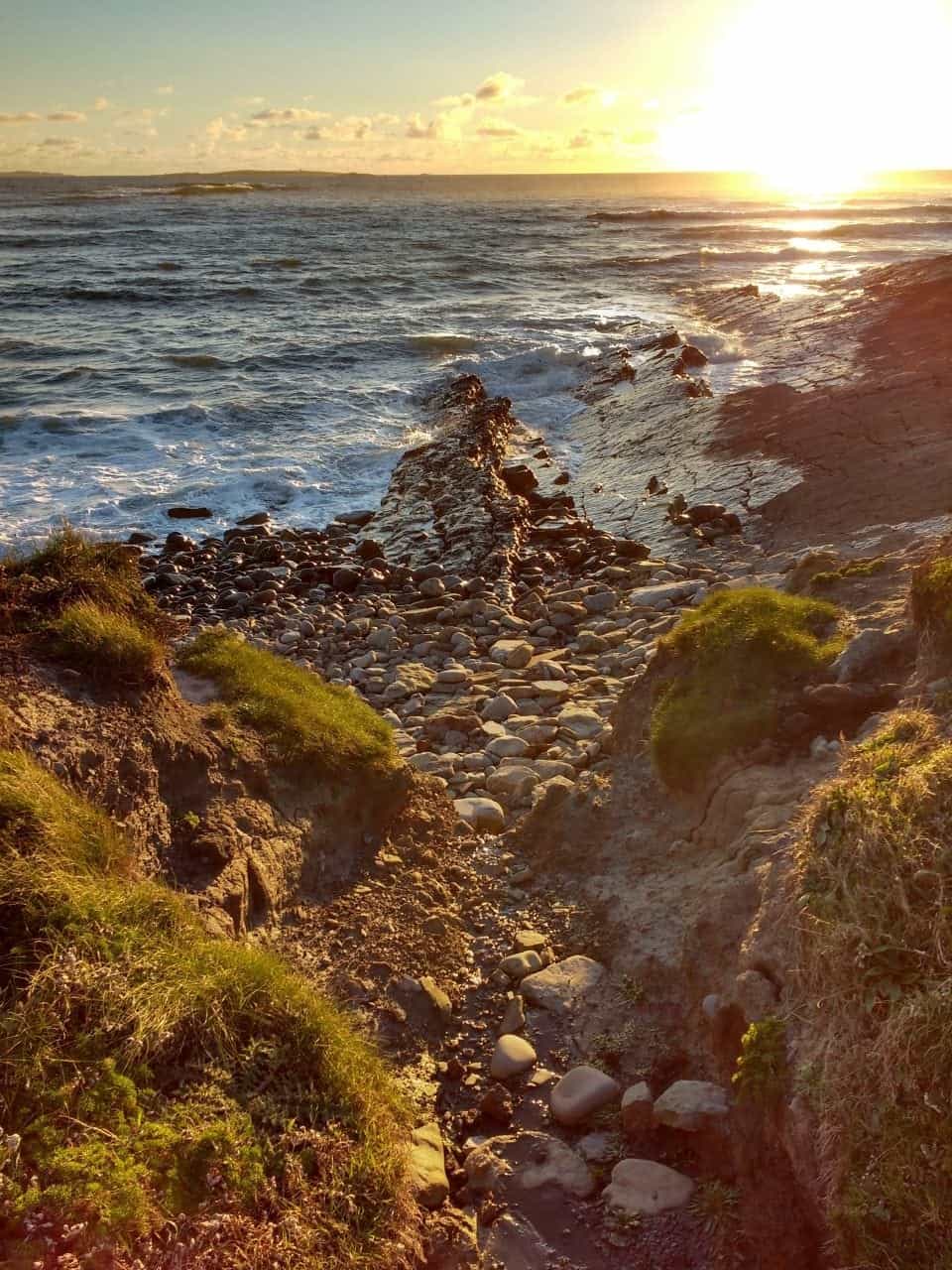

Kilkee Beach
Kilkee is a classic Victorian seaside resort town and its sheltered horseshoe bay is one of the safest family swimming beaches in the west of Ireland. The curved strand is protected on both sides by headlands that calm the Atlantic swell. The diving platforms on the rocks and the sea-carved Pollock Holes (natural rock pools) attract swimmers of all ages. The dramatic reefs around Kilkee are also considered some of the finest diving sites in Ireland.
Parking: Car park in the town with a short walk to the beach. Accessible spaces available. Toilets and facilities in the town centre.
Accessibility: Town centre accessible with dropped kerbs and level pavements. The beach promenade is accessible. Beach wheelchair available on request from the lifeguard service in summer.
Eat in Kilkee: The Diamond Rocks Cafe on the seafront is a local institution for daytime food. Murphy Blacks is a well-regarded restaurant with a strong reputation for fresh Clare seafood. The Strand Bar is a lively pub option with food and music.
Stay in Kilkee: The Kilkee Bay Hotel is the main hotel in town overlooking the beach. Halpin’s Townhouse Hotel is a charming boutique option in the town centre. Self-catering holiday homes and apartments fill up fast in the town in summer; book well ahead.

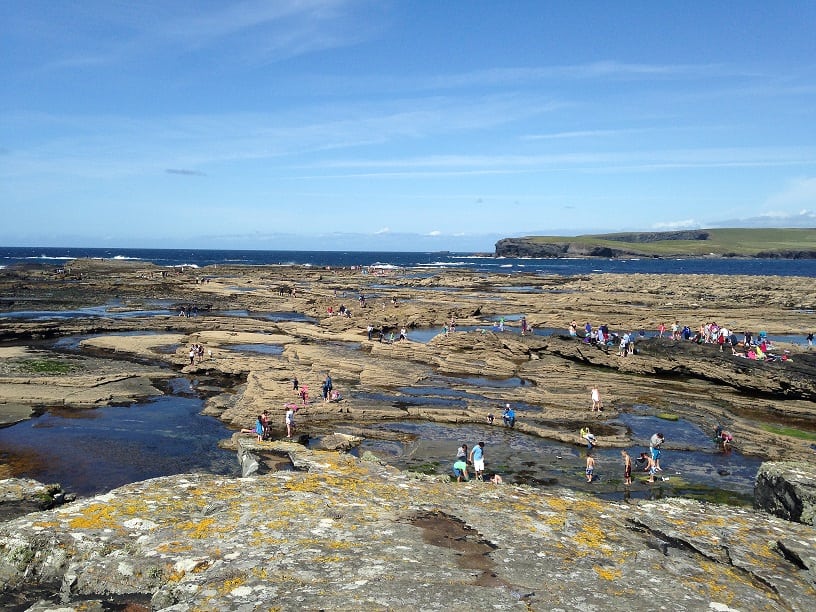

The Cliffs of Moher and the Coastal Walk
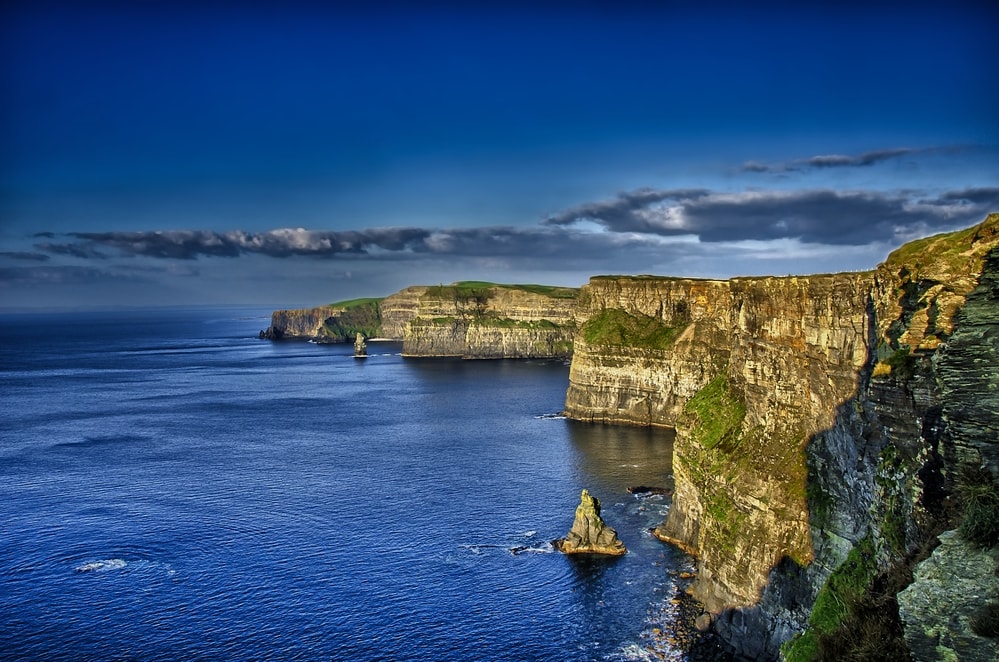
The Cliffs of Moher are not a beach but no guide to County Clare’s coast is complete without them. Stretching for eight kilometres and rising to 214 metres, they draw close to a million visitors a year. The Cliffs of Moher Visitor Experience includes an underground exhibition, cafe, and shop. The Cliffs of Moher Coastal Walk connects the cliffs to Doolin along a seven-kilometre cliff-top path.
Parking: Large paid car park at the Visitor Centre with accessible spaces and drop-off point. Car parking fee included in visitor centre entry. Free roadside parking at O’Brien’s Tower for those arriving on foot or by bike.
Accessibility: The visitor centre and immediate cliff viewing platforms are fully wheelchair accessible. The coastal walk is not accessible for wheelchairs.
Eat at the Cliffs: The Cliffs of Moher Visitor Centre has a cafe and restaurant on site with good views. Doolin village (7km by the coastal walk or 5km by road) has several pubs with food and excellent traditional music.
Stay near the Cliffs: Doolin is the natural base, with the Aran View Country House Hotel, several guesthouses, and the popular Doolin Inn. Liscannor village, 5km south of the cliffs, has B and Bs and the Moher Lodge Hotel.
The Burren
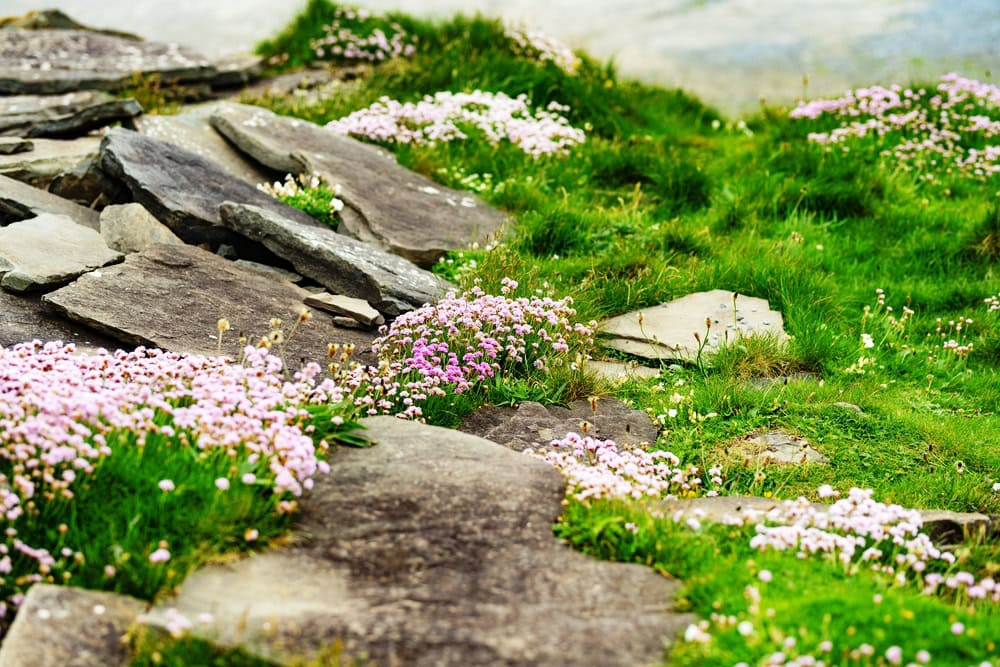
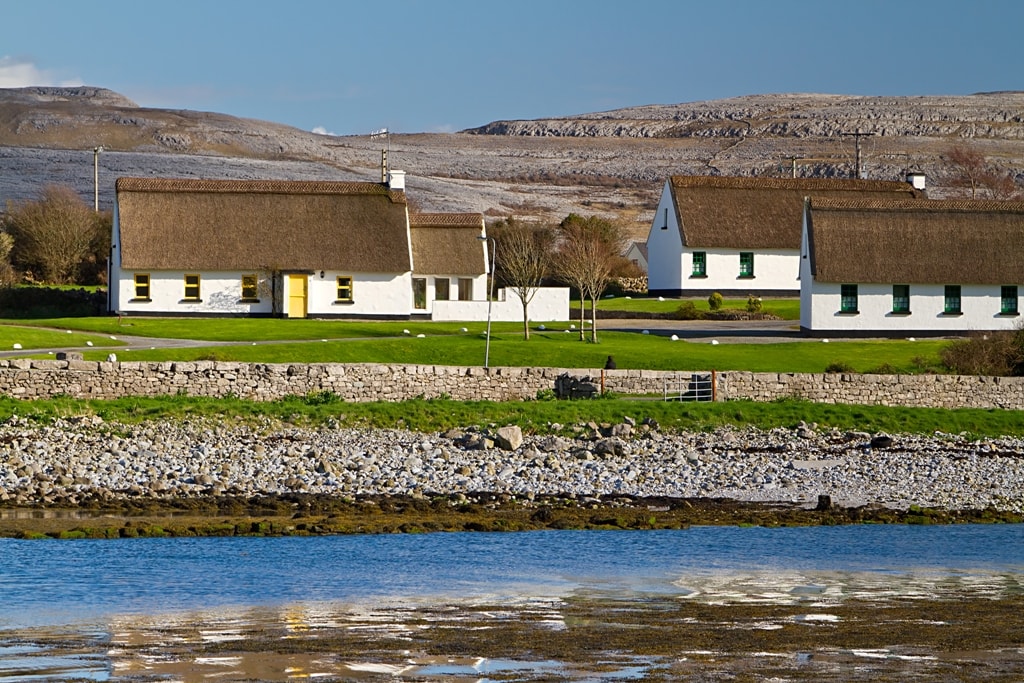
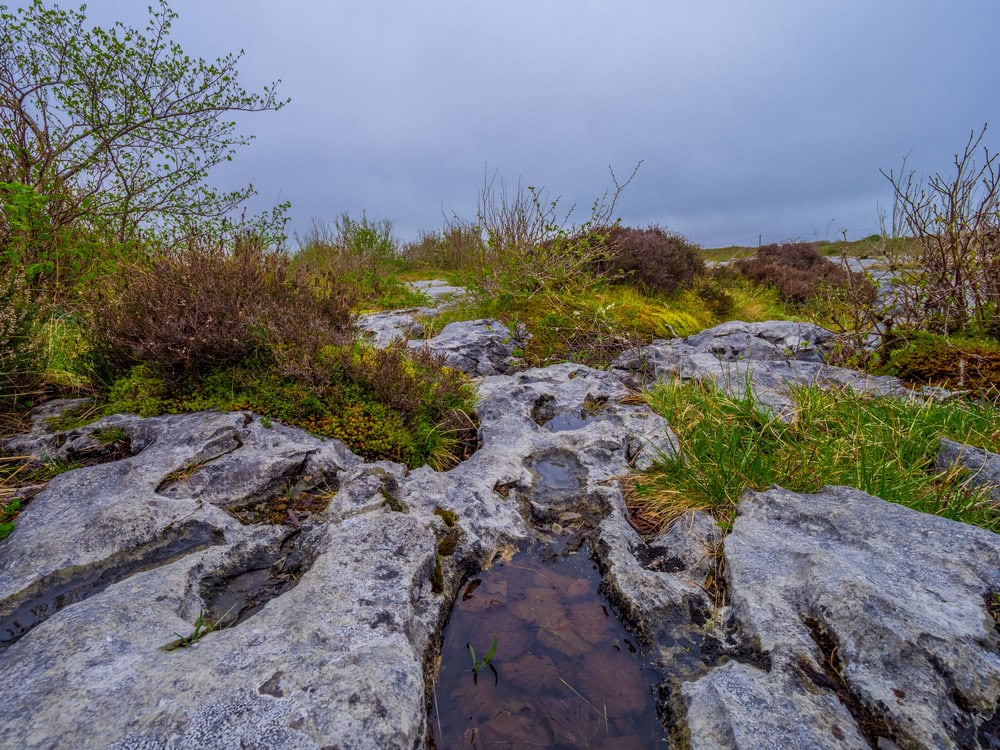
The Burren is a 250-square-kilometre landscape of exposed limestone pavement in north Clare, one of the most unusual in Europe. A grey moonscape of cracked rock in winter, it erupts in spring with wildflowers from Arctic, Alpine, and Mediterranean habitats growing within metres of each other. The coastal edge around Fanore and Black Head lighthouse is particularly dramatic.
The Burren National Park offers walking trails and visitor information. The Burren Food Trail is a well-regarded initiative celebrating local produce, cheese, and seafood.
Getting there and parking: Best explored by car. Visitor car parks at the Burren National Park at Mullaghmore (paid, accessible) and at various pull-ins along the coast road. Guided walking and cycling tours available from Doolin, Ballyvaughan, and Kinvara.
Eat in the Burren: The Burren Perfumery Tearoom near Carron is a wonderful stop for homemade food in a wildflower garden. Monks Bar and Restaurant in Ballyvaughan is a beloved seafood pub with views over the Burren coast. Doolin village has several pubs with food and traditional music.
Stay in the Burren: Gregans Castle Hotel near Ballyvaughan is one of the most celebrated small hotels in Ireland with outstanding food and views over the Burren and Galway Bay. Rusheen Lodge B and B in Ballyvaughan is a highly rated guesthouse option. Doolin village has the Aran View Country House Hotel and several guesthouses within walking distance of the Cliffs of Moher ferry.
Best Beaches in County Sligo [anchor: sligo-beaches]
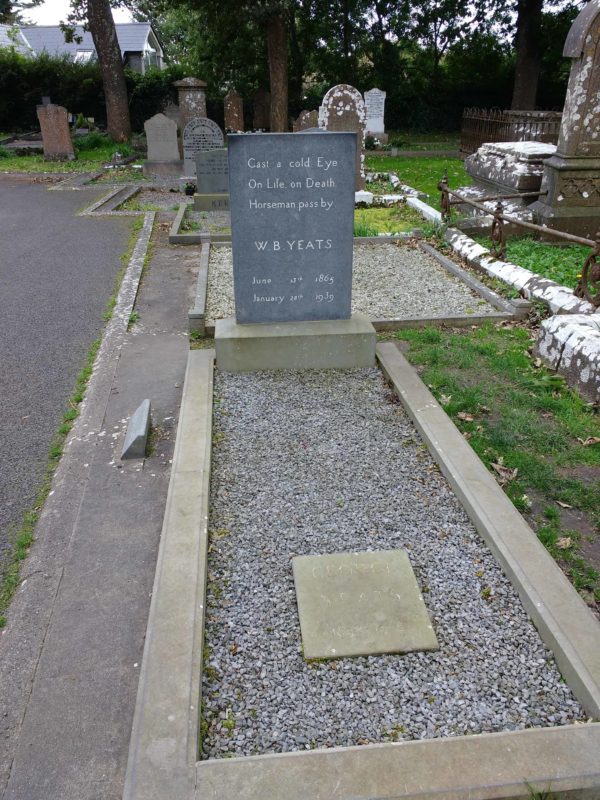
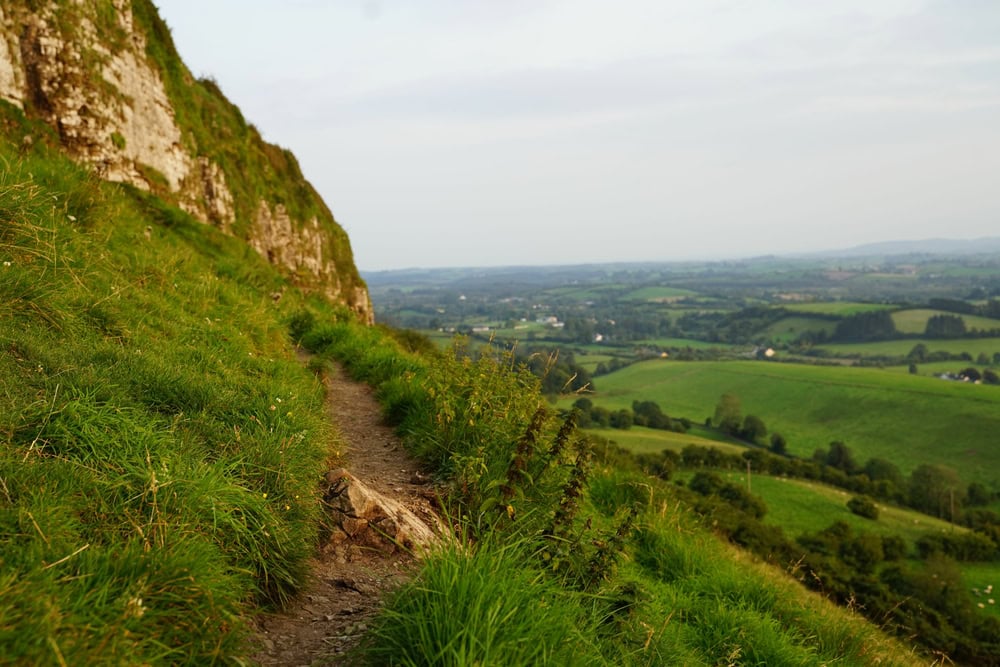
County Sligo is one of Ireland’s great undiscovered coastal treasures. This is Yeats Country, a landscape of mountains, drumlins, and extraordinary light that inspired one of the finest poets of the twentieth century.
Strandhill
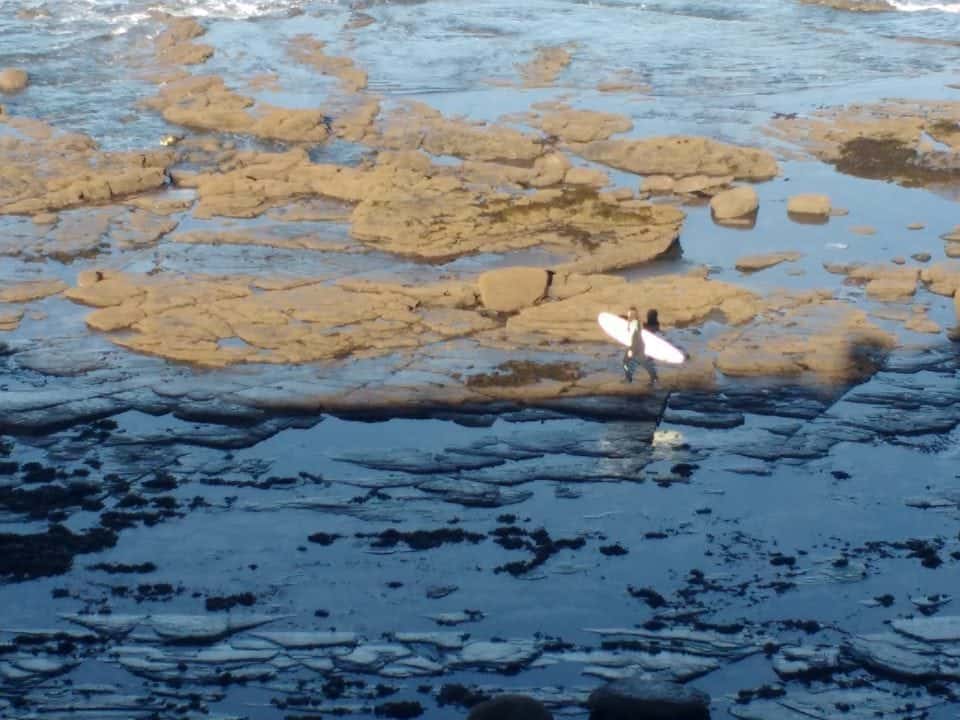
Strandhill, a short drive from Sligo town, has an international reputation as one of the best surfing beaches in the world. The powerful Atlantic swell and reliable beach breaks attract surfers year-round. Swimming in the main bay is not safe due to strong currents, but the surf culture, the seaweed spa baths at Voya Seaweed Baths, and the exceptional local food scene make Strandhill one of the most compelling beach villages in Ireland. Book the seaweed baths ahead in summer.
Parking: Large free car park at the beach with accessible spaces. The beach promenade has level access.
Accessibility: Accessible parking and level promenade. Beach wheelchair available from lifeguards in season.
Eat in Strandhill: Shells Cafe is beloved for its breakfasts and fresh local produce and is one of the most praised cafes in the west of Ireland. The Strand Bar serves food all day and has live traditional music in the evenings.
Stay in Strandhill: The Strandhill Lodge and Suites is a comfortable hotel a short walk from the beach with sea views from many rooms. Several guesthouses and self-catering options line the village. The surf schools can arrange package stays combining accommodation and lessons.

Rosses Point Beach
Beneath Benbulben Mountain, Rosses Point is a prominent Wild Atlantic Way stop with Blue Flag status, beautiful coastal walks, and a calm bay safe for swimming. The Waiting on Shore Monument, a bronze statue of a woman with outstretched arms commemorating those lost at sea, is one of the most moving pieces of public sculpture in Ireland.
Written by Allan of It’s Sunny Bangor: ‘This is Yeats Country. W.B. Yeats would spend summer holidays by Rosses Point Beach at Elsinore House, where the local scenery is said to have inspired many of his works.’
Parking: Free car park at the beach with accessible spaces. Toilets at the beach.
Accessibility: Level car park and beach approach. Accessible toilets. Beach wheelchair available from lifeguards in season.
Eat at Rosses Point: The Waterfront Bar and Restaurant at Rosses Point has good food with views over the bay. The Moorings Restaurant is a well-regarded local option for fresh fish and seafood.
Stay at Rosses Point: The Yeats Country Hotel and Spa overlooks the bay and is the most comfortable hotel base in the area, with an indoor pool and spa. Several B and Bs are located on the approach road to the village.


Enniscrone Beach
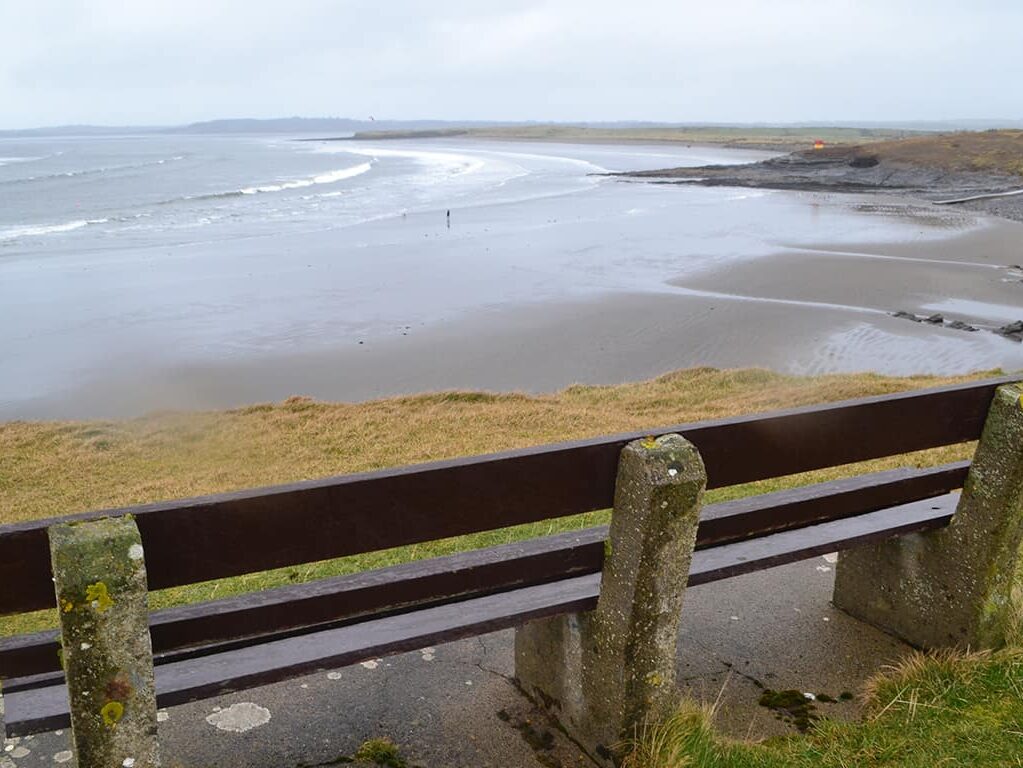
Written by Megan Starr: ‘The beach is massive and the tides are extreme and it leaves for a picturesque view any time of the day, especially if you manage to catch one of its colourful sunsets. Visitors to Enniscrone can go surfing, golfing, relax, or even take a seaweed bath right at the beach.’
Enniscrone (sometimes spelled Inishcrone) is one of Ireland’s most popular traditional seaside resorts. The Blue Flag beach stretches for five kilometres of fine golden sand backed by dunes, with Killala Bay on one side and the lively resort town on the other. Activities include surfing, sea kayaking, kitesurfing, horseback riding, open water swimming, golf at the long-established Enniscrone Golf Club, a children’s play area, go-karts, aqua park, and crazy golf in the town.
The Victorian-era Kilcullen’s Seaweed Baths at the northern end of the beach are one of the oldest and finest seaweed bath houses in Ireland and an absolute must. The mineral-rich Atlantic seaweed has been used therapeutically here for over a century. Book well ahead in summer.
Parking: Paid car park at the beach entrance with accessible spaces. Street parking also available in the town. Toilets and children’s play area on site.
Accessibility: Accessible parking at the beach car park entrance. Beach wheelchair available on request from lifeguards in season.
Eat in Enniscrone: The Waterfront House Restaurant is the most acclaimed dining option in the area for fresh local seafood and Irish cooking. The town has a good range of pubs, cafes, and casual restaurants within a short walk of the beach.
Stay in Enniscrone: Ocean Sands Hotel and Spa is a modern beachfront hotel with sea-view rooms, a spa, and an on-site bar. The Diamond Coast Hotel is popular with families for its stylish interiors. Waterfront House and Restaurant is a boutique option with luxury rooms and spectacular views over Killala Bay. Self-catering holiday homes and apartments are plentiful in the town.

Coney Island, Sligo
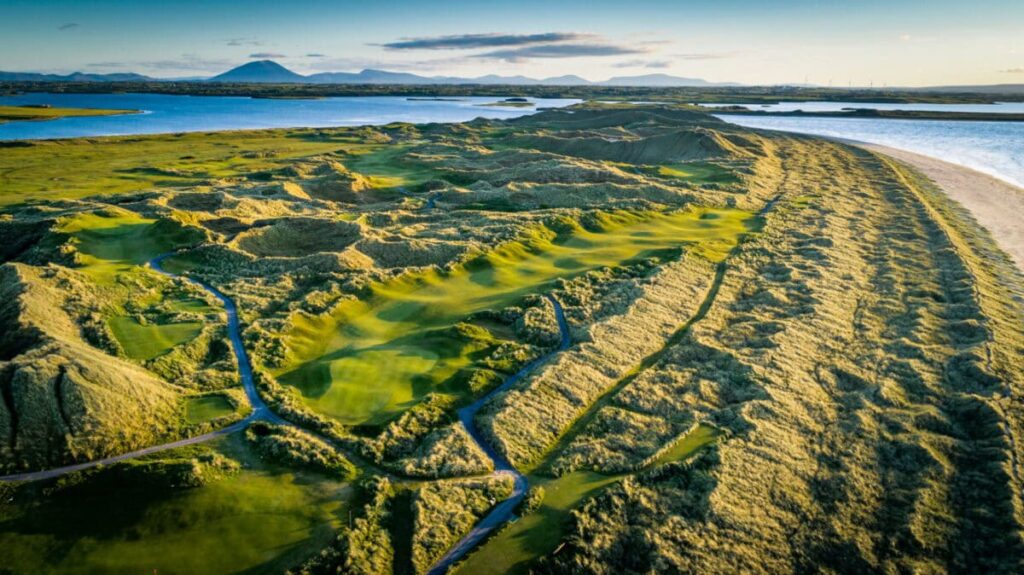
Fourteen stone pillars, erected in 1845 and aligned with the Black Rock lighthouse, mark the 2.4-kilometre route out to Coney Island across Cummeen Strand at low tide. The island, whose name means island of the rabbits, can be reached on foot, by car, or on horseback. It has deep associations with St Patrick: St Patrick’s Chair, a wishing chair said to grant one wish per year, is one of the relics here. Irish folklore has it that a Sligo ship captain named the American Coney Island after this one, having observed the same abundance of rabbits. Ward’s Pub on the island is the social hub with traditional music sessions.
Tide awareness is essential. The bay fills and empties twice daily. Text CONEY to 51155 from any Irish mobile for a real-time tide update before every crossing.
Parking: Park on the Strandhill side of the causeway before the crossing. No car park on the island itself. No disability-accessible facilities on the island.
Eat at Coney Island: Ward’s Pub on the island serves food and is the heart of island social life. Strandhill village, a few kilometres away, has Shells Cafe and The Strand Bar for a wider choice.
Stay nearby: Inishmulclohy Lodge is a renovated barn on Coney Island sleeping up to six, with panoramic views over Sligo Bay. The Yeats Country Hotel and Spa at Rosses Point is the most comfortable hotel base for this part of the coast.

Dernish Island
Dernish Island is a private tidal island off the north Sligo coast accessible only on horseback as part of a guided riding trek. The experience is organised through Island View Riding Stables, situated on the N15 between Grange and Cliffoney, 15km north of Sligo town and 10km south of Bundoran. The island is an area of special conservation with sand dune systems, wildflower meadows, roaming cattle and horses, and the ruins of the O’Connor family homestead. Departure depends on the tide. The stables offer a mounting ramp, making them more accessible than most equestrian centres.
This is an experience rather than a conventional beach visit: there are no facilities on the island and access is entirely dependent on tide and weather. Rides run four to five hours and suit intermediate and confident riders. Beginners can opt for shorter beach and bog rides from the stables first.
Parking: Free parking at Island View Riding Stables on the N15, clearly signed on the Wild Atlantic Way route.
Book rides: Contact Island View Riding Stables directly. Week-long riding holidays with full board are available from approximately 130 euros per person per night. Day and half-day rides can also be arranged.
Eat nearby: Mullaghmore village (10km north) has cafes and pubs. Grange village (2km south of the stables) has a pub and basic provisions.
Stay nearby: The Pier Head Hotel in Mullaghmore overlooks the harbour and is an excellent base for this part of the north Sligo coast, with a bar and restaurant. Self-catering options are available in both Mullaghmore and Grange.
Streedagh Beach
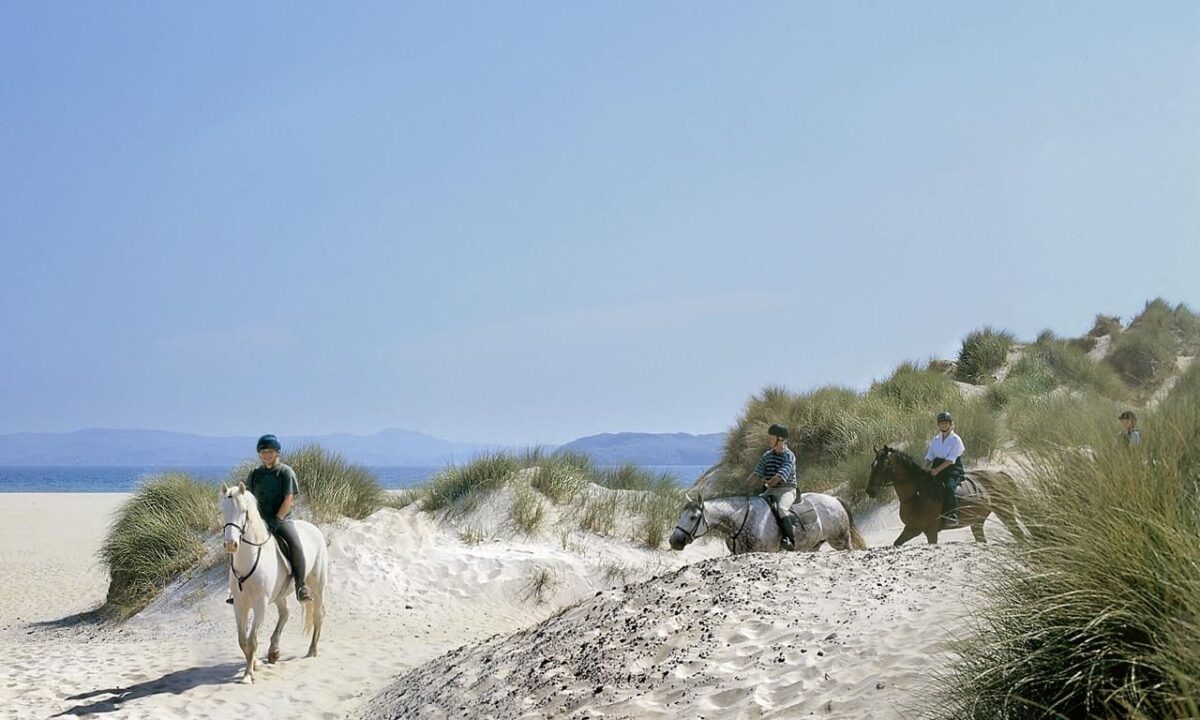
Streedagh is a three-kilometre sandy strand with remarkable historical depth. Three ships from the Spanish Armada, the Santa Maria de, La Lavia, and the Juliana, came to grief here in the catastrophic storm of 1588. A monument before the beach commemorates the wreck. Fossil coral can be found embedded in the rock beds at the water’s edge. The exposed reef breaks make it excellent for surfing throughout the year and the beach is safe for swimming in calm conditions.
Streedagh is about 20 minutes from Sligo town and 15 minutes from Mullaghmore, making it easy to combine with other stops on this stretch of the Wild Atlantic Way.
Parking: Free car park at the beach, limited spaces. Toilets available. No other facilities on site.
Accessibility: The car park and beach approach are flat and the high tide line is reasonably firm. No accessible toilets or showers at the beach.
Eat nearby: Mullaghmore village, 15 minutes by car, has cafes and pubs. Grange village, 2km away, has a pub and basic provisions.
Stay nearby: The Pier Head Hotel in Mullaghmore is the closest comfortable base with accommodation, a bar, and restaurant. Self-catering houses with views of Streedagh Beach and Benbulben are available to rent in the area.
Best Beaches in County Mayo
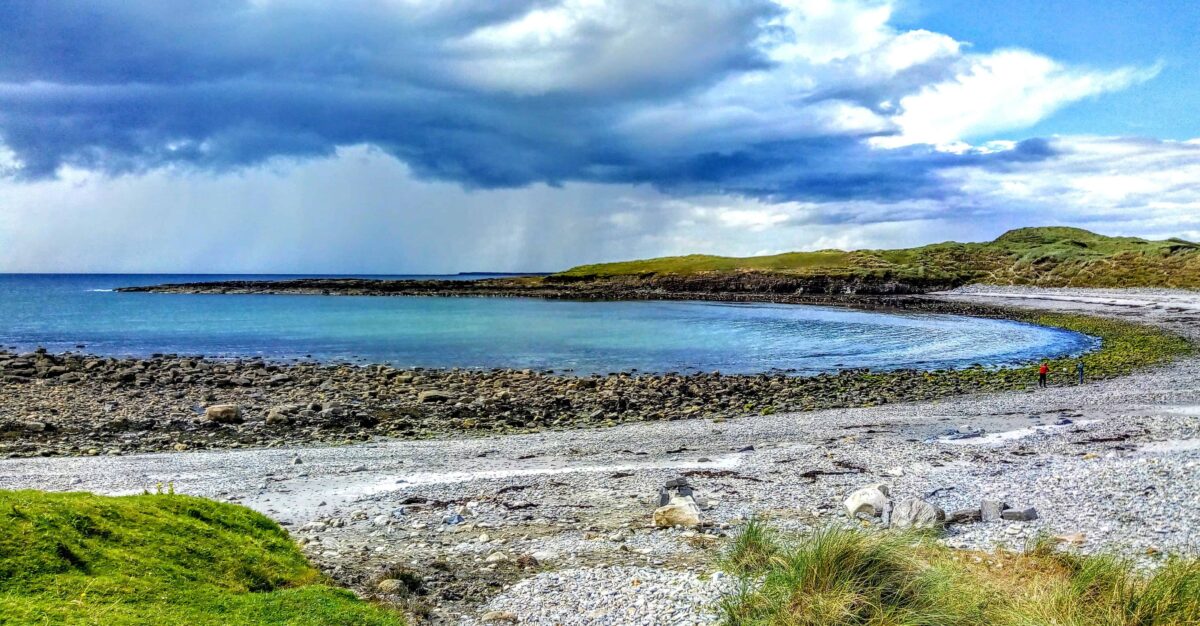
County Mayo is home to arguably the single most beautiful beach in Ireland. The county’s wild, boggy interior makes the sudden appearance of its coast all the more dramatic.
Keem Beach (Keem Bay), Achill Island
Keem Bay is lauded as the most beautiful beach in Ireland. Having a little picnic while watching the constant flow of waves wash over the sand was enough. The background sound of the crashing waves made it difficult for me to pack up and head off to reality.
Keem Bay sits at the end of a spectacular mountain road on Achill Island, the largest island off the Irish coast, reached by road bridge from the Mayo mainland. The drive alone is worth the journey: the road clings to the cliff face above the bay and the view of the horseshoe of turquoise water below is one of the great panoramas of the island.
Parking: Car park above the bay with a walk down to the beach. No facilities at the beach itself. Nearest services in Keel village, approximately 8km away.
Accessibility: The car park is accessible but the path down to the beach is steep and uneven. Not suitable for wheelchairs without significant assistance.
Eat on Achill: The Beehive Craft and Coffee Shop in Keel is a well-loved stop. The Calvey Restaurant in Keel is the most established local dining option. Lavelle’s Pub in Keel is a good option for traditional food and a pint.
Stay on Achill: Achill Cliff House Hotel in Keel has sea views and a restaurant and is the most comfortable hotel option on the island. Achill Glamping offers a more adventurous stay close to the western beaches. Wild camping is possible in designated areas near the island’s western headlands.
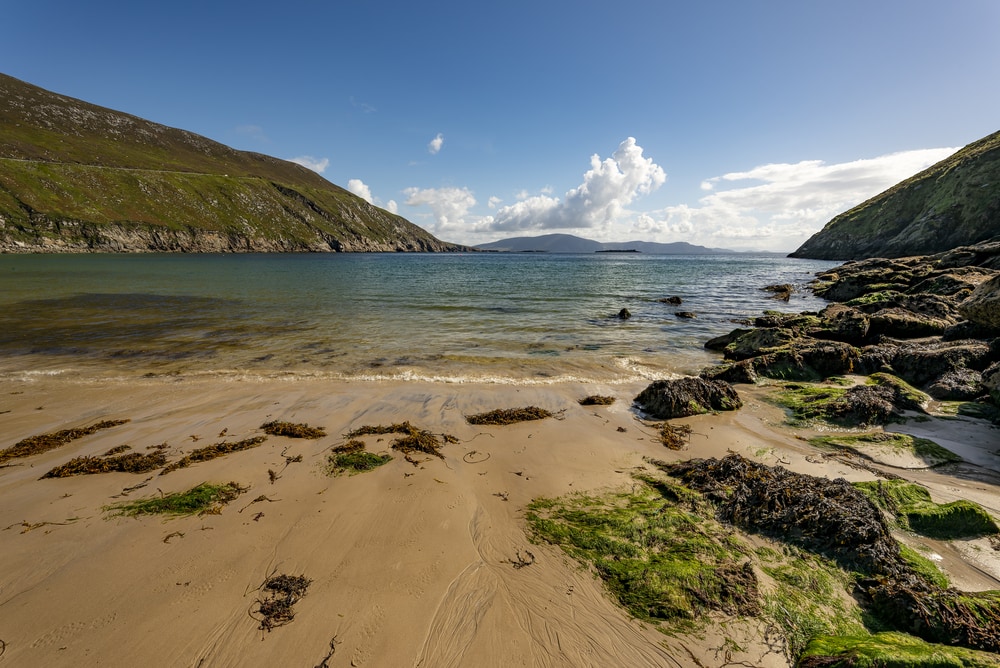

Silver Strand Beach, Louisburgh
Silver Strand in County Mayo is a remote, unspoiled Green Coast award beach located approximately 17 to 23km south of Louisburgh on the R378, at the mouth of Killary Fjord. The fine sandy beach is sheltered by rocky headlands and high sand dunes and has clean, safe water popular with families. It holds a Wild Atlantic Way Discovery Point designation and looks out towards Inishturk and Inishbofin islands. It is significantly quieter than other Mayo beaches; arrive early at weekends in summer.
Parking: Small car park adjacent to the beach. No facilities on site. Bring everything you need.
Accessibility: The car park and beach approach are relatively flat. No accessible facilities at the beach.
Eat nearby: Louisburgh town, 17 to 23km north, has a small selection of cafes and pubs including The Moorings Bar. Westport, about 30km away, is the main service town for the area with an excellent range of restaurants.
Stay nearby: Silver Strand House is a well-reviewed self-catering property within walking distance of the beach. Westport, 30km away, has the best hotel choice in the area including the Knockranny House Hotel and Spa.


Best Beaches in County Donegal
I live in Donegal, and I will tell you plainly: this is the finest beach county in Ireland. The coast is vast, wild, and extraordinarily varied, and most of it remains genuinely undiscovered by international tourism. The light here does things to the ocean that I have never seen anywhere else on the planet.
Murder Hole Beach (Boyeeghter Bay)
Murder Hole Beach in Co. Donegal is an absolute hidden gem along the Wild Atlantic Way. It is one of the most rugged and remote beaches in Ireland but its beauty more than rewards the effort of getting to the secluded beach.’
Officially known as Boyeeghter Bay, Murder Hole Beach is accessed from the town of Melmore. Visitors must hike across local farmland and descend through dunes to reach it. You must obtain the farmer’s permission to cross the fields and sometimes there is a bull grazing there, so care is required. At low tide the bay splits into two separate beaches, and the smooth sands and deep green Atlantic waves are genuinely mesmerising. There are no facilities at this beach.
Parking: Small roadside parking area near the farmland approach. No facilities. The crossing involves uneven and sometimes wet terrain; sturdy footwear is essential.
Accessibility: This beach is not accessible for visitors with significant mobility requirements due to the uneven farmland approach and dune descent.
Eat nearby: Carrigart village, about 7km away, has a pub and small cafe. Milford, 15km away, has a wider choice of restaurants and the excellent Milford Inn.
Stay nearby: Carrigart has guesthouses and self-catering cottages. The Rosapenna Hotel and Golf Resort on Sheephaven Bay, about 10km away, is the most comfortable hotel in the area with two championship links courses and a spa.

Maghera Beach and Caves
Just outside Ardara, the Maghera Caves sit beneath Slievefooey Mountain and are accessible from the beach at low tide only. Nearby is the spectacular waterfall Eas a’ Rance (locally called Assaranca), which you pass on the narrow approach road. The caves carry Viking-era folklore of people sheltering and perishing here in ancient times. Keep driving past the waterfall and you arrive at a small car park with a 400-metre walk to the caves and beach.
Parking: Small car park approximately 400 metres from the caves. The approach road is narrow and single-track; take care when passing oncoming vehicles.
Accessibility: No accessible facilities. The approach involves uneven ground. Not suitable for wheelchairs.
Eat in Ardara: Nancy’s Bar in Ardara is one of the most beloved traditional pubs in Donegal, serving food in a bar that has been in the same family for generations. The Corner House in Ardara is a good option for fresh local seafood.
Stay near Maghera: The Nesbitt Arms Hotel in Ardara is a comfortable, unpretentious traditional hotel in the town. The Bay View Country House near Killybegs offers comfortable B and B accommodation with sea views. Several self-catering cottages are available in the Ardara area.


Fintra Beach
Fintra is a sheltered, sandy beach a couple of kilometres outside Killybegs, Ireland’s largest fishing port and well worth a visit in its own right. A short drive from Donegal Town, the steep road down to the beach offers views that stretch as far as Benbulben Mountain on a clear day. It gets busy in summer and the views from the hill above are among the best coastal panoramas in the county.
Parking: Parking area at the top of the steep road down to the beach. The road is narrow; large vehicles should take care. No facilities at the beach.
Accessibility: The steep and narrow road to the beach makes access difficult for those with limited mobility. The parking area is not formally designated for accessible spaces.
Eat in Killybegs: Stop by the Seafood Shack on the harbourfront for award winning seafood chowder and if you want a bit more luxury check out Andersons Boat House both are pretty special places for excellent Irish seafood.
Stay near Fintra: The Bay View Hotel in Killybegs is a comfortable waterfront hotel with a restaurant and bar. Several B and Bs are available in the town and on the Fintra road.


Portsalon Beach (Ballymastocker Bay)
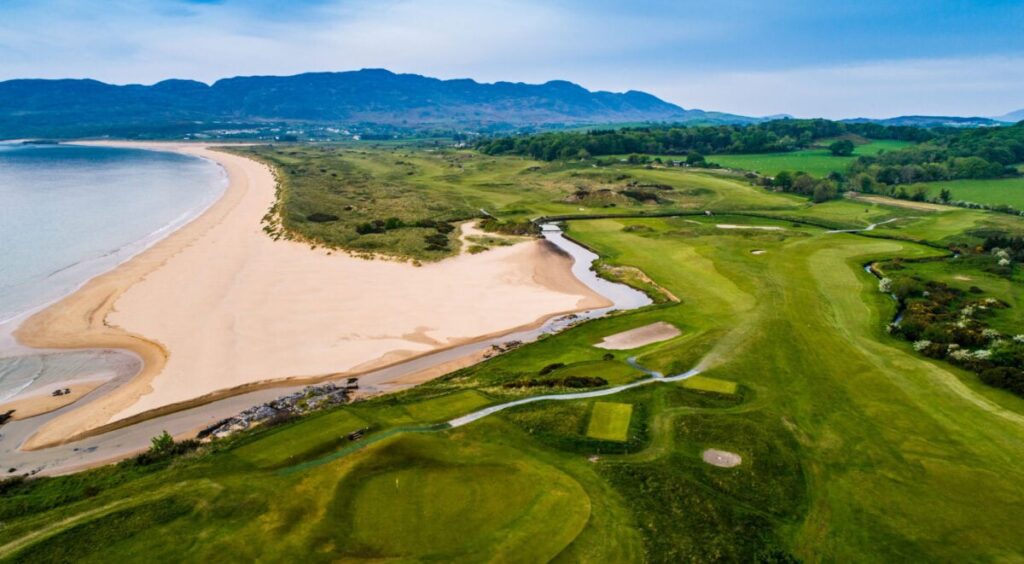
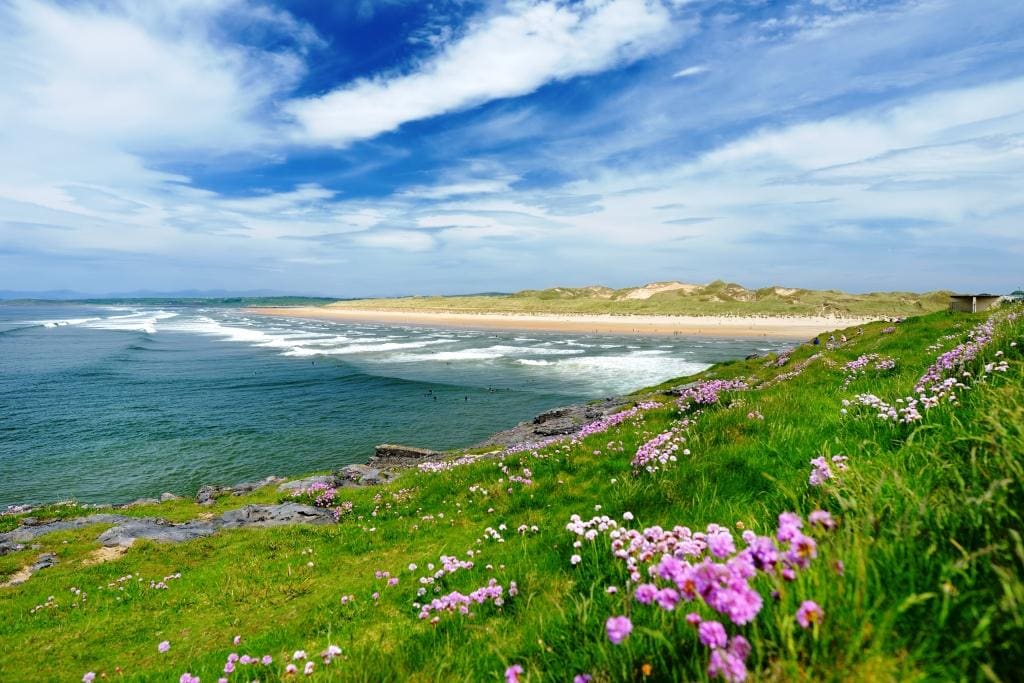
Portsalon Blue Flag Beach, also known as Ballymastocker Bay, was once voted the second most beautiful beach in the world by readers of the Observer Magazine. Situated on the western shore of Lough Swilly between Rathmullan and Fanad Head, the long arc of white sand is most dramatically seen from the viewpoint on the Knockalla coast drive.
Parking: Car park at the beach with accessible spaces. Lifeguard cover in summer. Toilets at the beach.
Accessibility: Accessible parking spaces. Beach wheelchair available on request from lifeguards in season.
Eat near Portsalon: The Pier Bar and Restaurant in Rathmullan (10km south) is a reliable option for food with views over Lough Swilly. Rathmullan House Hotel has a well-regarded restaurant open to non-residents.
Stay near Portsalon: Portsalon Luxury Holiday Homes and Portsalon Golf Resort both overlook the bay and are excellent self-catering and hotel options respectively. Rathmullan House Hotel, a short drive south along the lough shore, is one of the finest country house hotels in Donegal with a cookery school and spa. If you fancy a castle hotel check out Lough Eske Castle near Donegal Town.
Tullan Strand and Bundoran
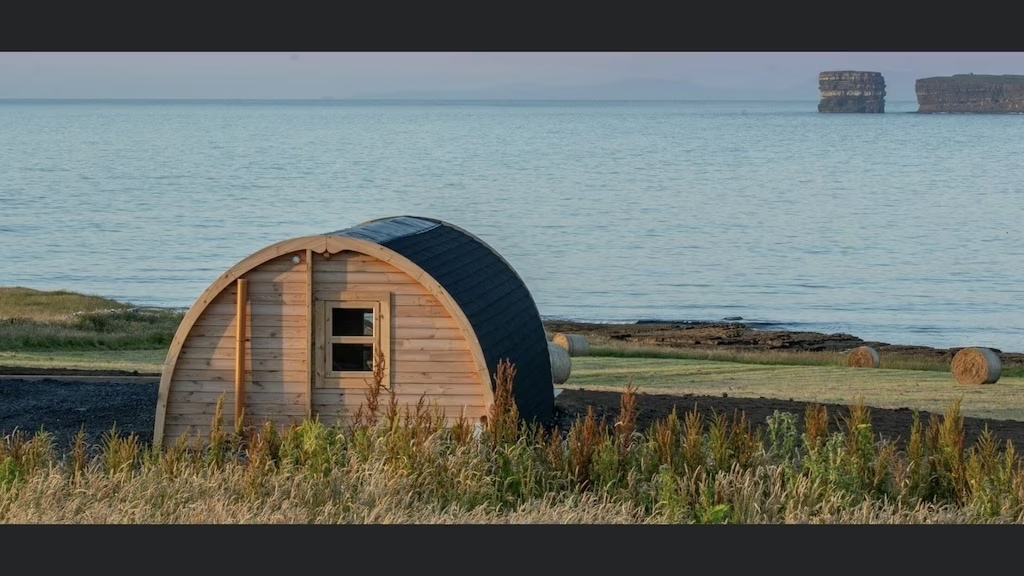
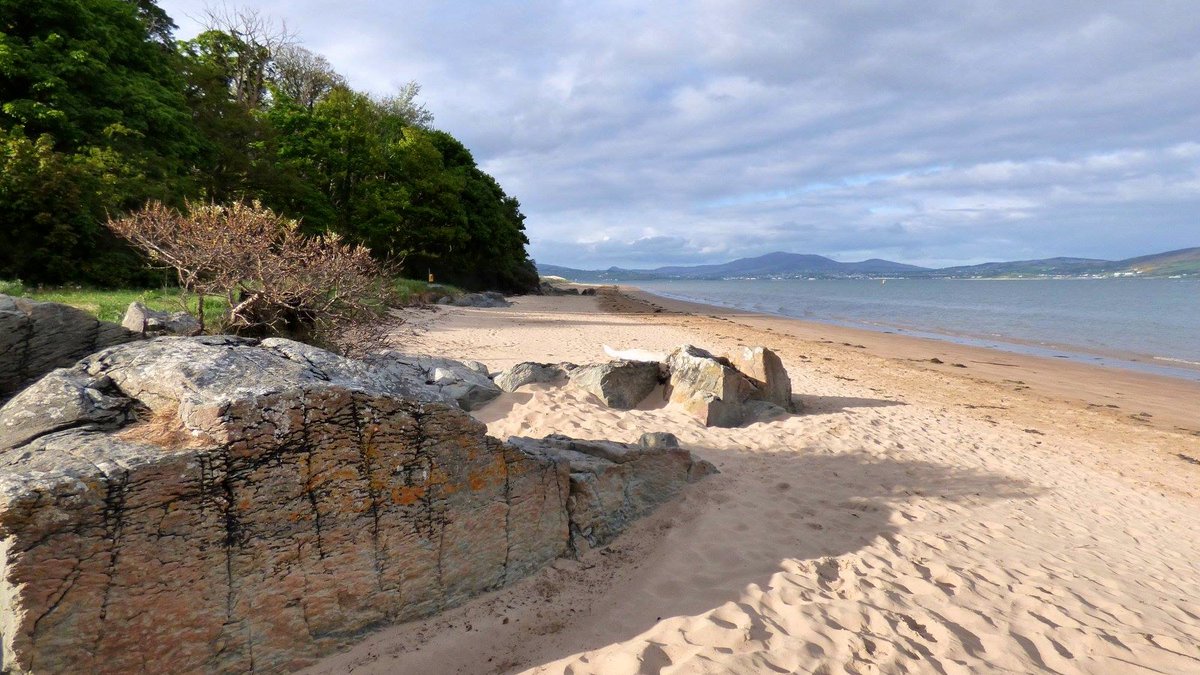
Bundoran is a compact and lively Irish seaside town on the Donegal coast. Tullan Strand is a glorious golden beach that surfers flock to when the swell is running, and the surf break known as the Peak has hosted World Surf League events and is considered one of the finest in Europe. At the northern end of the beach are the Wishing Chair and Fairy Bridges, natural rock formations significant in Irish folklore as liminal places, thresholds between the everyday world and the supernatural realm of the Sidhe.
From Tullan Strand on a clear day you can see the Slieve League Cliffs to the north, at over 600 metres among the highest sea cliffs in Europe, dwarfing the far more visited Cliffs of Moher for sheer drama and solitude.
Parking: Free public car park at Tullan Strand with accessible spaces. The town centre has additional parking a short walk from the beach.
Accessibility: Accessible parking at the beach. Level beach approach. Beach wheelchair available from the main town beach lifeguard service in season.
Eat in Bundoran: The Madden’s Bridge Bar is a popular local pub with food. Arnolds Hotel restaurant is a reliable choice for traditional Irish food. The town has a wide range of cafes, chippers, and casual restaurants along the seafront.
Stay in Bundoran: Great Northern Hotel is a landmark seafront property with an indoor pool and spa directly overlooking the beach. The Holyrood Hotel is a comfortable mid-range option in the town centre. Self-catering holiday homes are widely available and the area has several surf camp packages combining accommodation and lessons.
Best Beaches on the Copper Coast: County Waterford
Tra na mBo and Bunmahon Beach
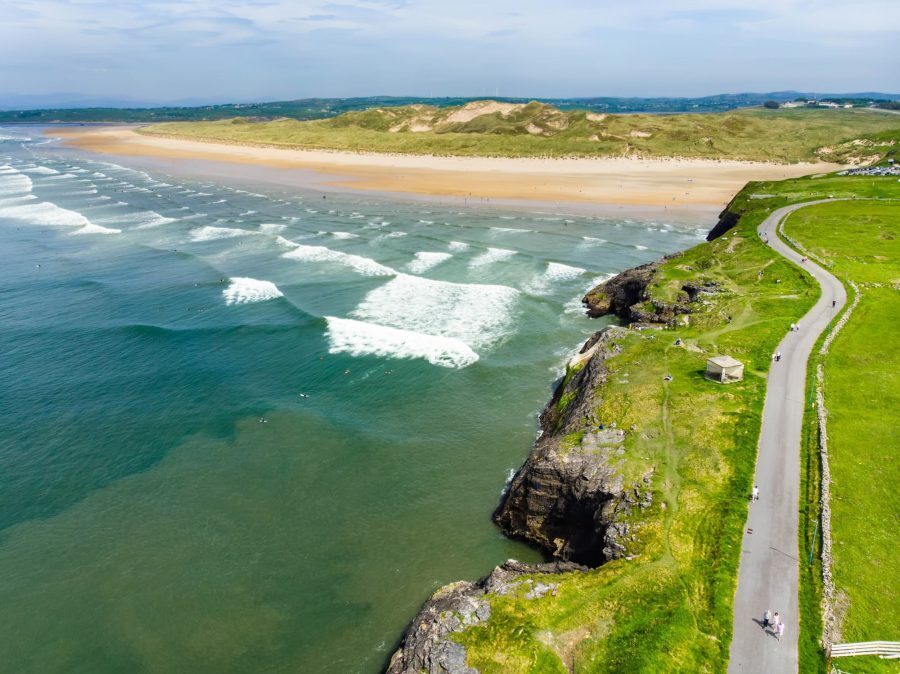
Bunmahon on Waterford’s Copper Coast offers a spacious beach curving gracefully between cliffs on both sides, sheltered enough for comfortable family swimming. A short walk from Bunmahon leads to the more secluded Tra na mBo. The Copper Coast Geopark here is a UNESCO-designated area shaped by nineteenth-century copper mining and is one of the most unusual coastal landscapes in Ireland.
Parking: Car park at Bunmahon beach with accessible spaces and toilets.
Accessibility: Accessible parking. The beach access ramp at Bunmahon is manageable for most mobility aids. Tra na mBo requires a walk on uneven ground.
Eat nearby: The Copper Coast Visitor Centre in Bunmahon has a small cafe. Dungarvan town, about 20km east, has an excellent food scene including the Tannery Restaurant, one of the most acclaimed in Waterford.
Stay nearby: Dungarvan has the best hotel choice in the area including the Tannery Townhouse and the Park Hotel. Self-catering cottages are available in Bunmahon and along the Copper Coast.

Best Beaches in County Kerry
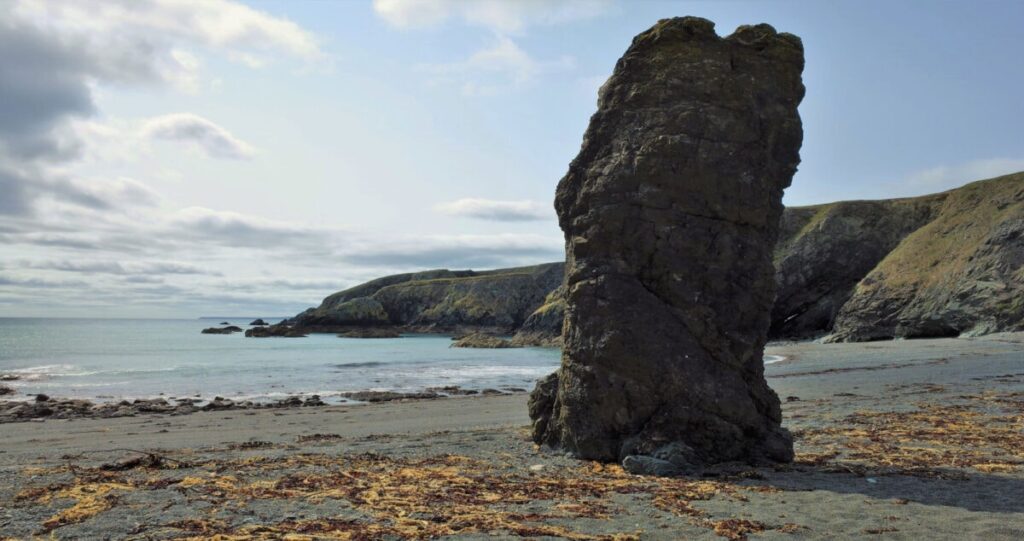
Kerry’s coastline is among the most celebrated in Ireland. The beaches here range from the vast sweep of Inch Beach on the Dingle Peninsula to the subtropical warmth of Valentia Island to the dramatic sea-cliffs of Coumeenole.
Inch Beach, Dingle Peninsula
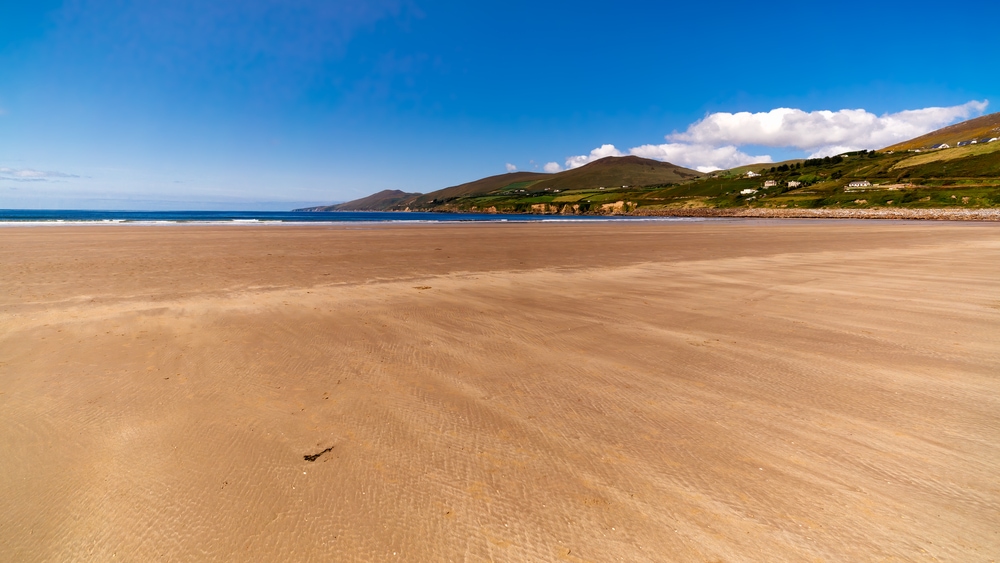
Inch Beach is a vast Blue Flag sandbar extending five kilometres into Dingle Bay. The dune system is one of the finest in Ireland and the beach has a wild, windswept magnificence. Surf hire is available at the car park and the beach is accessible year-round.
Parking: Large car park at the beach head with accessible spaces, toilets, and a cafe. Nominal parking fee in summer.
Accessibility: Accessible parking and toilet facilities. Firm sand near the car park is manageable for some mobility aids. Beach wheelchair available on request in season.
Eat at Inch: The Sammy’s Restaurant and Bar at the car park is a well-regarded stop for food, a pint, and views over Dingle Bay. It has been feeding and drying out beach visitors for decades.
Stay near Inch: Dingle town, about 15km west, is the natural base with a wide range of accommodation from the luxury Dingle Skellig Hotel and Spa to family guesthouses and B and Bs. Milltown House in Dingle is a highly rated guesthouse option.
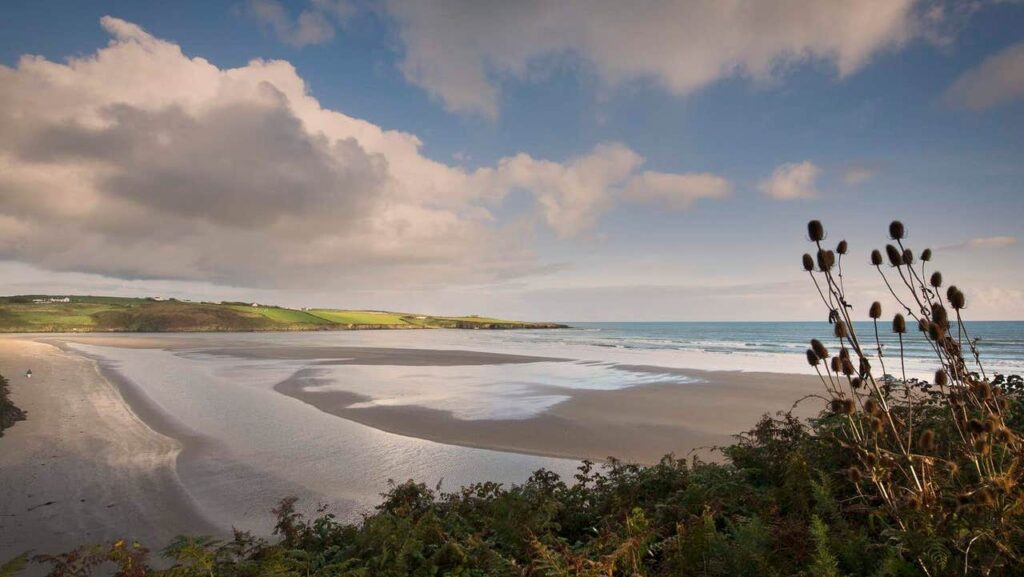
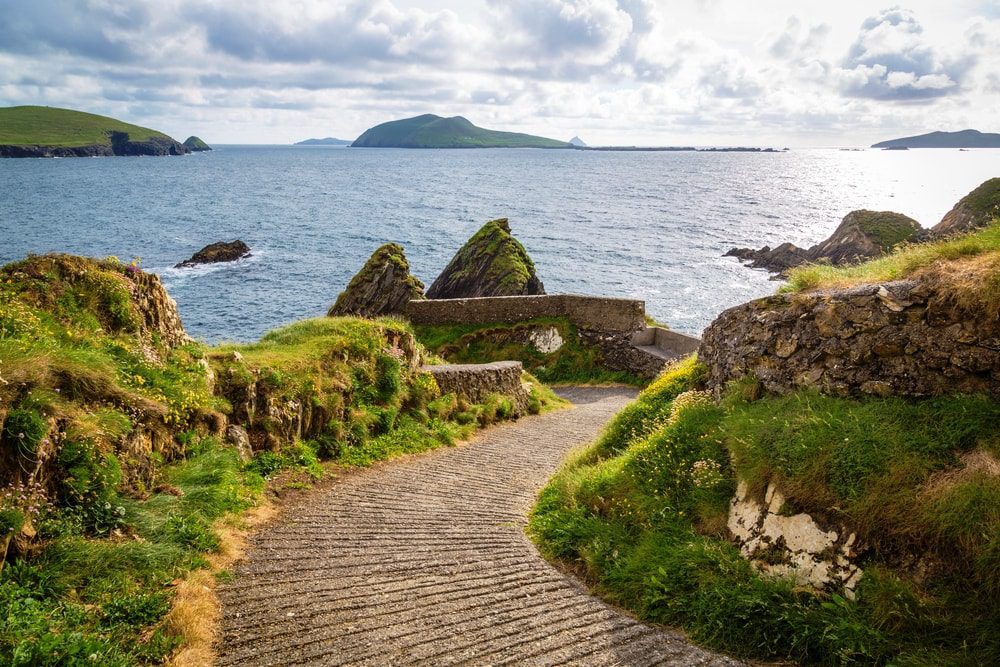
Coumeenole Beach, Slea Head
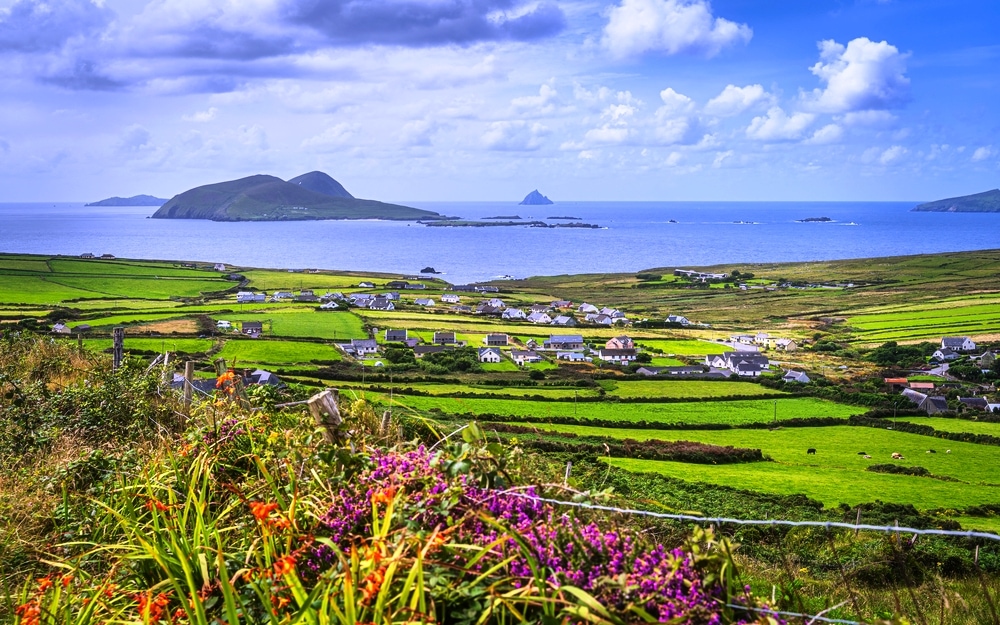
Written by Whitney of GoFam Travel: ‘Beautiful and dramatic, this small cove catches the full force of the Atlantic. With crashing waves, majestic cliffs, refreshing sea mist, and immaculate sandy shores, this location serves as an idyllic retreat. Every direction that you look, there is a beautiful view either out to sea and the Blasket Islands or to the green countryside dotted with grazing white sheep.’
Coumeenole is famous as the filming location for David Lean’s Ryan’s Daughter and is a key stop on the Slea Head Drive. Swimming is not safe here due to powerful currents, but as a place to stand at the edge of the world it is matchless.
Parking: Car park above the cliffs with a steep road down to the beach. No facilities at the beach. The approach road is narrow; touring coaches should not attempt it.
Accessibility: The car park is accessible but the descent to the beach is steep and uneven, and is not suitable for wheelchairs.
Eat nearby: The cafe at Slea Head Drive viewpoints serves light refreshments in season. Dingle town (about 20km) has the widest range of restaurants on the peninsula including Out of the Blue, one of Ireland’s top seafood restaurants.
Stay nearby: Dingle Skellig Hotel and Spa overlooks Dingle Bay. Emlagh House is a luxury guesthouse on the outskirts of Dingle. Several self-catering cottages are available in the Ventry and Slea Head area.

Glanleam Beach, Valentia Island
Glanleam Beach on Valentia Island offers something unexpected on the Irish Atlantic coast: a warm, subtropical atmosphere. Positioned on the Gulf Stream and sheltered in a wooded valley, Glanleam is known for unusually warm waters and balmy summer swimming. The island is connected to the Kerry mainland by a short ferry crossing from Renard Point or by road bridge from Portmagee.
Parking: Parking at Glanleam House grounds. The island is small and easily explored by car.
Accessibility: The approach road to Glanleam is narrow but level. Beach access is across a short grassy bank. Not formally accessible for wheelchairs.
Eat on Valentia: The Royal Pier Restaurant and Bar in Knightstown is the main eating option on the island with good food and harbour views. Ring’s Seafood Restaurant is a reliable option on the Kerry mainland near the bridge.
Stay on Valentia: The Horizon View is a comfortable island hotel. The Bosses Farmhouse has well-reviewed holiday home with 3 bedrooms. Portmagee village on the mainland is a charming and well-serviced base for exploring both Valentia and the Skellig Islands.
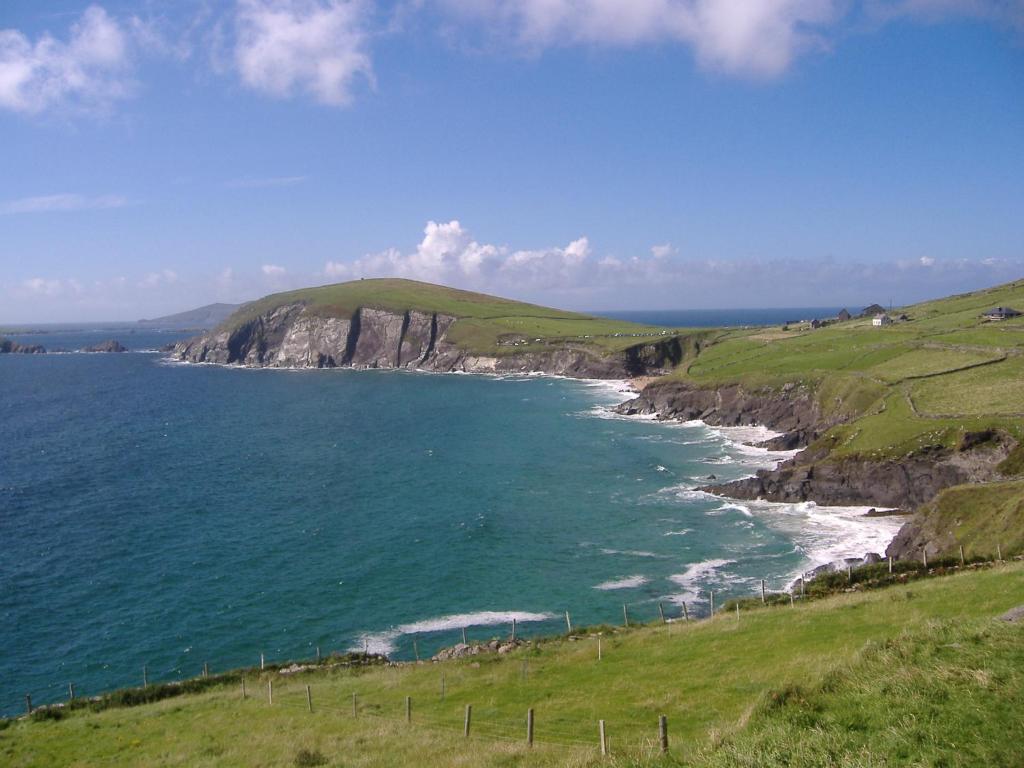
Derrynane Beach, Ring of Kerry
Written by Maegan of The Wanderlust Dietician: ‘Head through the tunnelled forest to see the sand dunes and turquoise water open up before us. The water was chilly but many kids were screaming with delight as they splashed around. Campers were enjoying beach bonfires and beer while the small beach pub played tunes worthy of pirates everywhere.’
Derrynane Beach is part of Derrynane National Historic Park, the former estate of Daniel O’Connell who led the campaign for Catholic emancipation in the nineteenth century. Motorhome and van camping is possible nearby and the park has a car park, toilets, and a small cafe.
Parking: Car park within Derrynane National Historic Park. Accessible spaces available. Fee applies.
Accessibility: Accessible parking and toilet facilities in the park. Beach wheelchair available on request from park staff in season. The forested path to the beach is manageable for most mobility aids.
Eat near Derrynane: The Blind Piper pub in Caherdaniel village (2km) serves good food in a traditional atmosphere. Sneem village, about 15km east, has several cafes and restaurants.
Stay near Derrynane: The Derrynane Hotel in Caherdaniel overlooks the bay and is a friendly, family-run hotel with a pool and direct access to the coast. Staying in the area means you are on the Ring of Kerry, so the accommodation choice widens considerably in every direction.
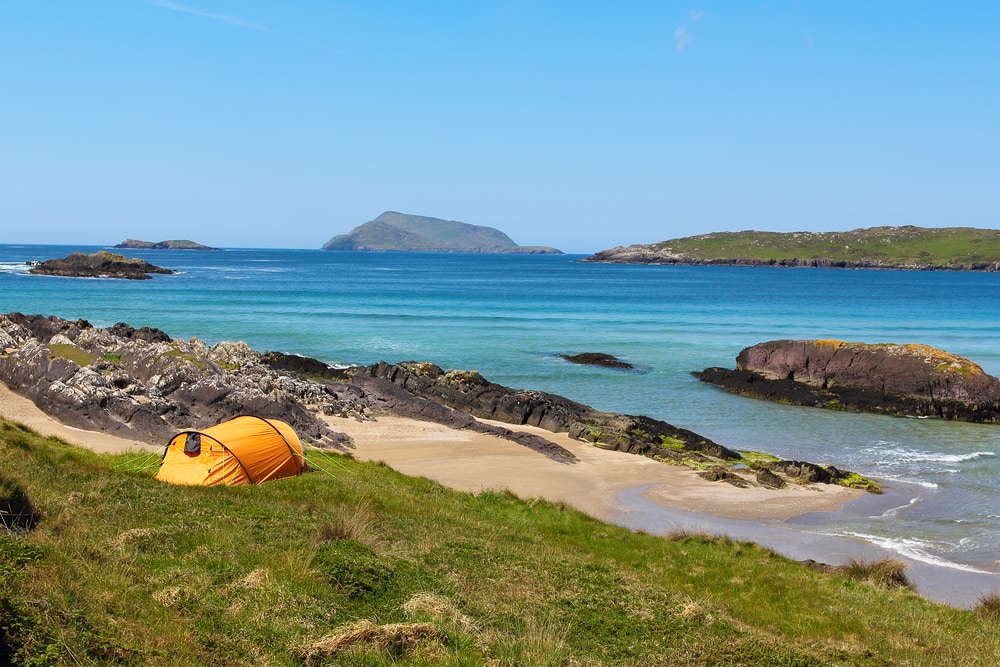
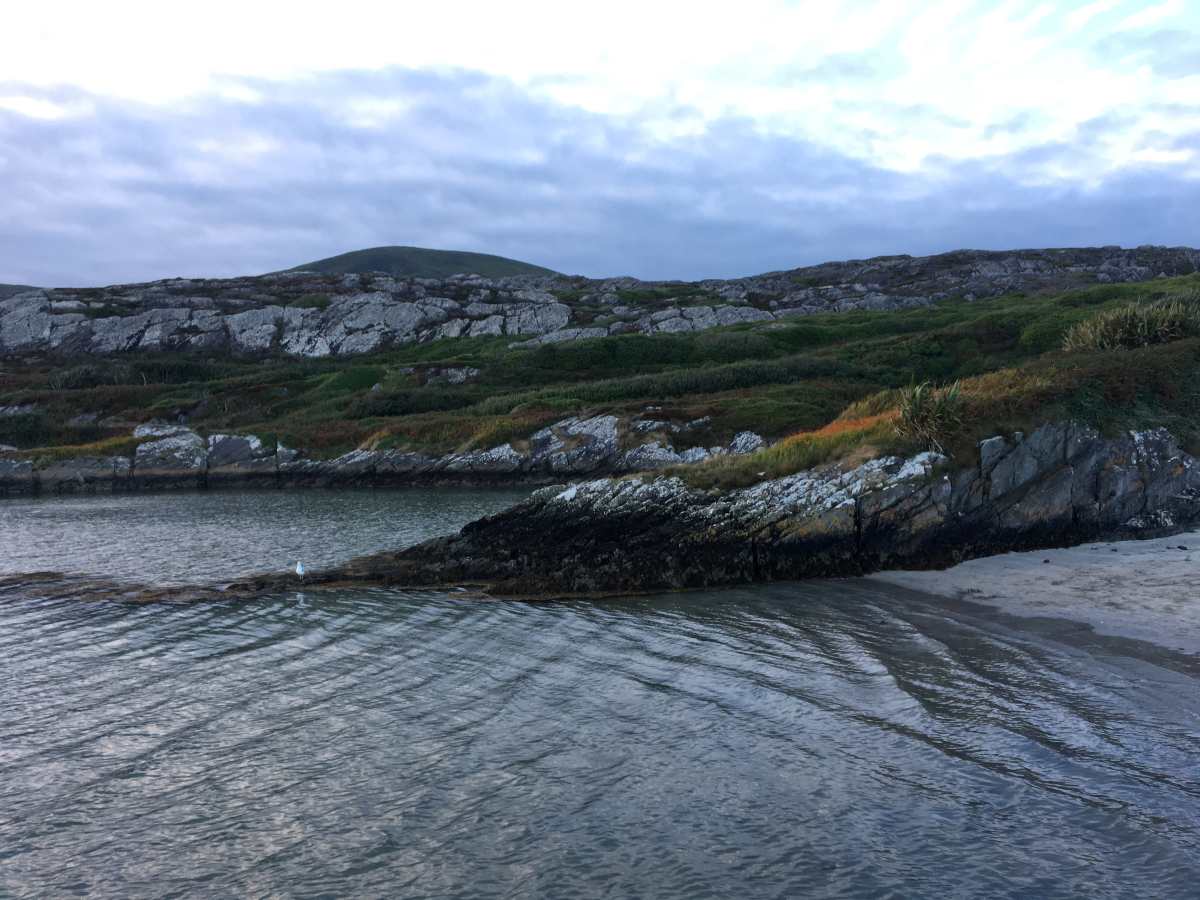
Tra Ban, Great Blasket Island
The Blasket Islands off the Dingle Peninsula were inhabited until 1953. Tra Ban (the white beach) is one of the most extraordinarily remote beaches in Ireland, accessible only by seasonal ferry from Dunquin pier. The island has no permanent population, no road, and no infrastructure beyond a seasonal visitor centre and cafe. The seals use Tra Ban as a sunbathing spot and are entirely unbothered by visitors.
The Blaskets produced a remarkable body of literature in the Irish language in the early twentieth century, including Tomas O Criomhthain’s The Islandman and Peig Sayers’s autobiography. Walking on Great Blasket you walk through one of the most poignant landscapes in Ireland.
Getting there and parking: Park at Dunquin pier (limited free parking, arrive early). The seasonal ferry runs from approximately April to October, conditions permitting. Check
Great Blasket Island for current ferry times and booking.
Accessibility: The ferry crossing and island terrain are not accessible for wheelchair users. The island has no paved paths.
Eat on the island: The Great Blasket Island Visitor Centre has a cafe serving light refreshments in season.
Stay near Dunquin: The An Oige Hostel at Dunquin is a simple and atmospheric option with spectacular Atlantic views. Ventry Farm Cottage about 10km away, offers comfortable B and B accommodation.
Banna Strand, Tralee
Banna Strand stretches for several kilometres northwest of Tralee. The sand dunes behind the beach are a designated conservation area supporting rare plants and wildlife. The beach is a popular surfing spot with summer camps and lessons available. The nearby picturesque village of Ardfert has a medieval cathedral and friary for those who want to combine beach and heritage.
Parking: Free car park at the beach with accessible spaces and toilets.
Accessibility: Accessible parking and toilet facilities. Level beach approach. Firm sand manageable for most mobility aids.
Eat near Banna: Ardfert village (about 5km) has a cafe and pub. Tralee town, about 11km away, has the widest range of restaurants in the area including the Ashe Hotel restaurant and the Oyster Tavern seafood restaurant.
Stay near Banna: The Ballyroe Lodge is a comfortable option with good views and a pool. Tralee town has a full range of accommodation from budget to four-star. The Fenit area, about 8km north of Banna, has B and Bs in a beautiful coastal setting.
Best Beaches in County Cork
Inchydoney Beach, Clonakilty
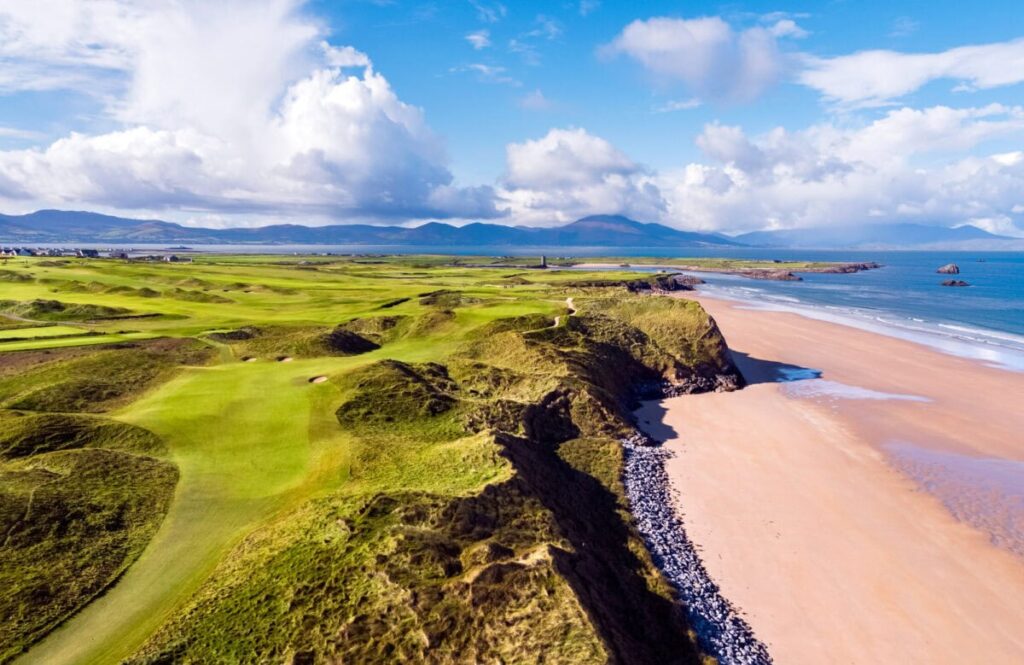
Inchydoney is the undisputed champion of Cork beaches and has been recognised as Ireland’s top beach on TripAdvisor multiple times, most recently in 2019. Located near Clonakilty in West Cork on the Wild Atlantic Way, the Blue Flag beach is a double strand separated by a headland, with a surf school, lifeguard cover in summer, public parking, accessible toilets, and ramp access to the beach.
Parking: Free public car park at the beach with accessible spaces and accessible toilet facilities.
Accessibility: Accessible parking, accessible toilets, and ramp access to the beach. Beach wheelchair available from lifeguards in season. One of the better-equipped accessible beaches in Ireland.
Eat near Inchydoney: The Inchydoney Island Lodge and Spa has a restaurant open to non-residents with excellent sea views. Clonakilty town (5km) has one of the finest food scenes of any small town in West Cork including the award-winning An Sugan restaurant and the Clonakilty Food Company.
Stay near Inchydoney: The Inchydoney Island Lodge and Spa sits directly above the beach and is one of the finest spa hotels in Ireland with a thalassotherapy pool using seawater. The Fernhill House Hotel in Clonakilty is a comfortable four-star option. A range of self-catering holiday homes is available near the beach.
Barleycove Beach, Schull
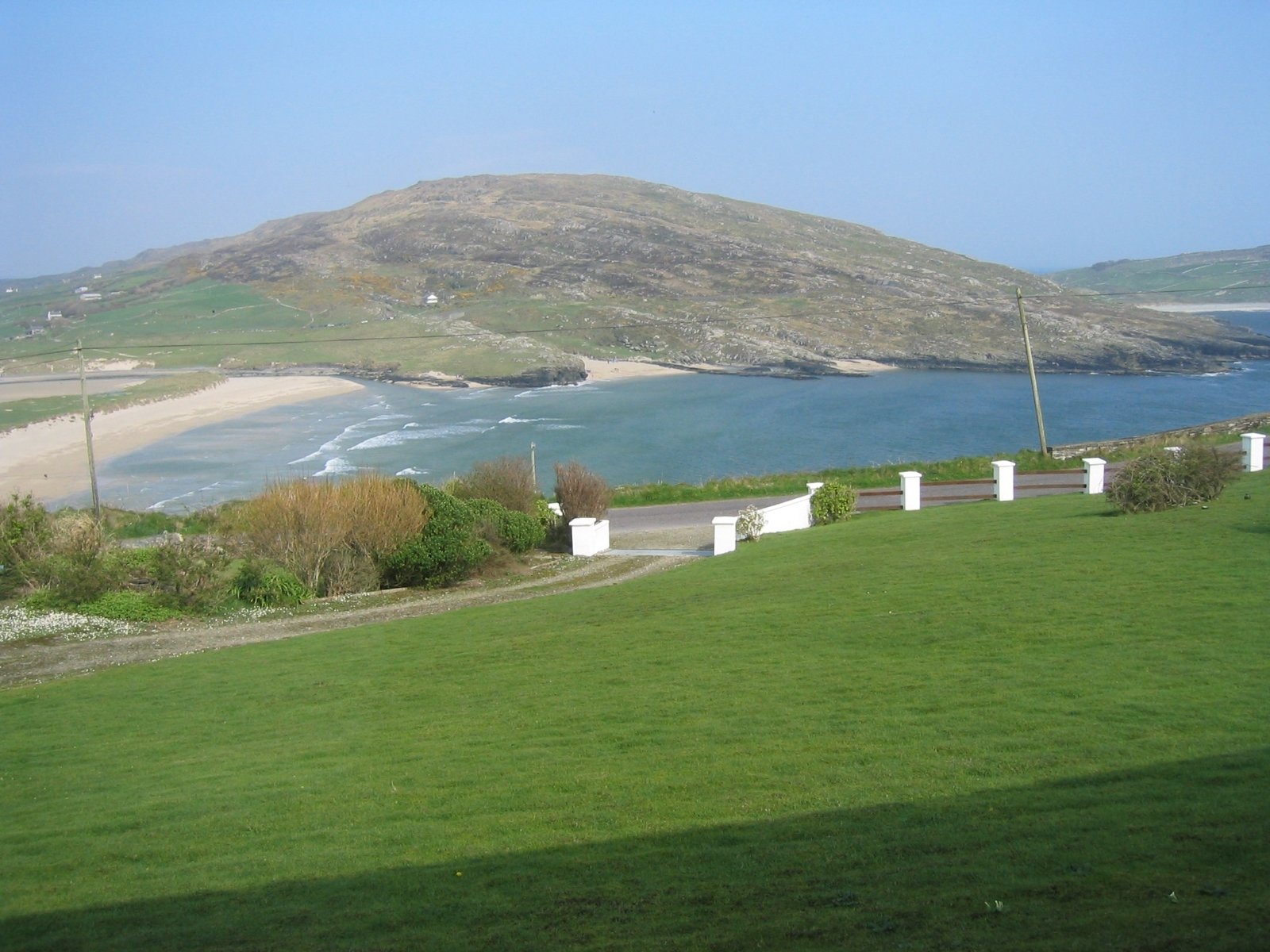
Barleycove is a large remote beach backed by partially eroded sand dunes protected as a European Designated Special Area of Conservation. Accessed by a floating bridge to the car park, it has an end-of-the-world character that fits the location perfectly, near the Mizen Head headland at the most southwesterly point of Ireland. Safe for swimming with a lifeguard in summer months.
Parking: Car park across the floating bridge at the beach. Fee applies in season. Accessible spaces in the car park.
Accessibility: Accessible parking available. The floating bridge and beach approach are manageable but the surface is sandy and uneven beyond the car park.
Eat nearby: Schull village, about 8km away, is a charming and well-served West Cork village with excellent cafes, a good bakery, and the Altar Restaurant, one of the best places to eat in the area. Goleen village, about 5km from Barleycove, has a pub and basic provisions.
Stay nearby: Barleycove Beach Holiday Homes are directly at the beach and ideal for a stay here. Schull has the best hotel choice in the immediate area including the Schull Harbour Hotel and several guesthouses. Skibbereen, about 25km away, is a lively market town with wider accommodation options.

Best Beaches in County Wicklow
Brittas Bay
Brittas Bay is split into north and south sections and is one of the most popular beaches on the eastern seaboard. The five kilometres of white sandy beach sit within a proposed Special Area of Conservation and the dune system extends over 100 hectares. It makes an excellent combination with a visit to the monastic ruins at Glendalough or the dramatic Wicklow Mountains.
Parking: Car parks at both north and south beach sections. Busy on summer weekends and can fill early; arrive before 10am. Fee applies in peak season. Accessible spaces at both car parks.
Accessibility: Accessible parking available. Beach wheelchair available on request from lifeguards in season. Firm sand near the car parks is manageable for most mobility aids.
Eat near Brittas Bay: The Anchor Bar in Mizen Head near the beach serves food in season. Arklow town, about 10km south, has a good range of cafes and restaurants.
Stay near Brittas Bay: Woodenbridge Hotel in the Vale of Avoca is a highly rated four-star hotel about 15km from the beach in beautiful countryside. Several B and Bs and self-catering holiday homes are available around Brittas Bay and in Jack White’s village nearby.

Best Beach in County Wexford
Curracloe Beach
If you have watched Brooklyn or Saving Private Ryan, you have seen Curracloe Beach. Located just two kilometres from Curracloe Village in County Wexford, this broad and beautiful sandy beach was used as the Normandy landing sequence in Steven Spielberg’s film and has an appropriately epic scale. In summer the area fills with visitors to holiday homes, campsites, hotels, and B and Bs. In autumn and winter it is beloved by dog walkers and runners seeking a long, quiet coastal walk.
Parking: Car park at the beach with accessible spaces and toilets. Free parking outside of peak season, fee in summer.
Accessibility: Accessible parking and toilet facilities. Firm sand at the beach edge accessible for most mobility aids. Beach wheelchair available from lifeguards in season.
Eat near Curracloe: Curracloe village has a pub serving food. Wexford town, about 11km away, has an excellent food scene including Cistin Eile, one of the most praised restaurants in the southeast.
Stay near Curracloe: Ferrycarrig Hotel in Wexford town is a well-regarded four-star hotel on the River Slaney about 11km away. Several self-catering holiday homes are available in and around Curracloe village, particularly popular with families in summer.

Best Beaches in Northern Ireland
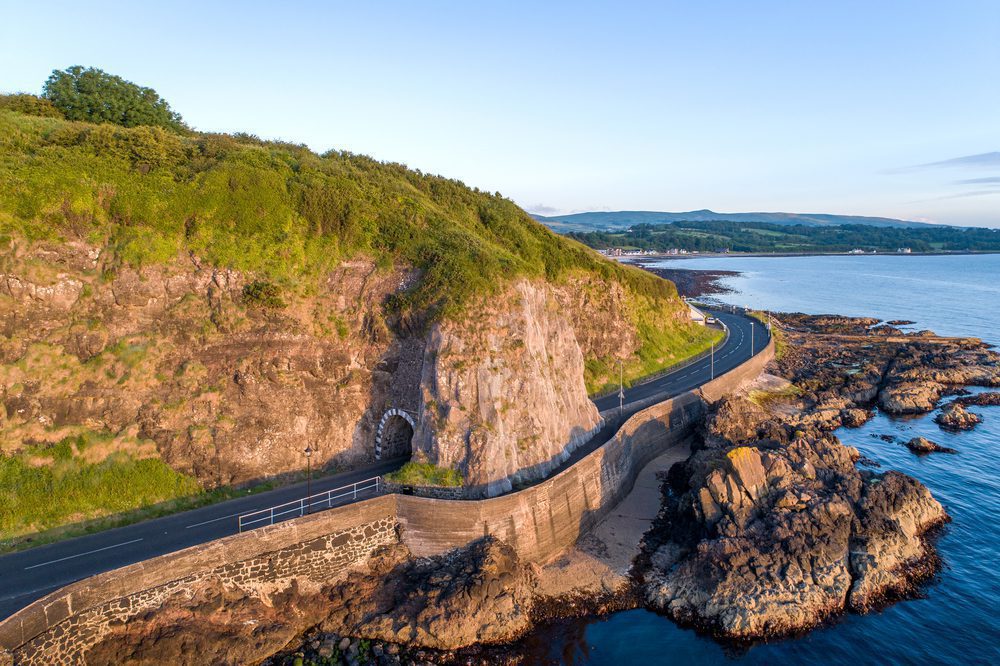
Northern Ireland’s Causeway Coastal Route is one of the great coastal drives of Europe. The dark basalt of the Giant’s Causeway and the white chalk cliffs of Antrim create a dramatic backdrop that has no equivalent elsewhere in Ireland.
Whiterocks Beach, County Antrim
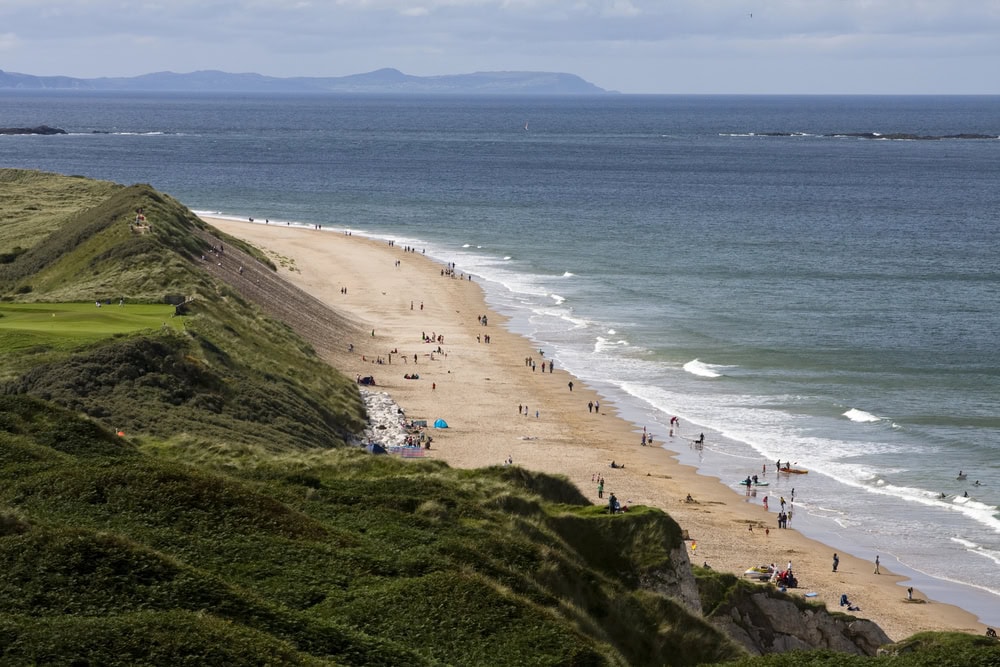
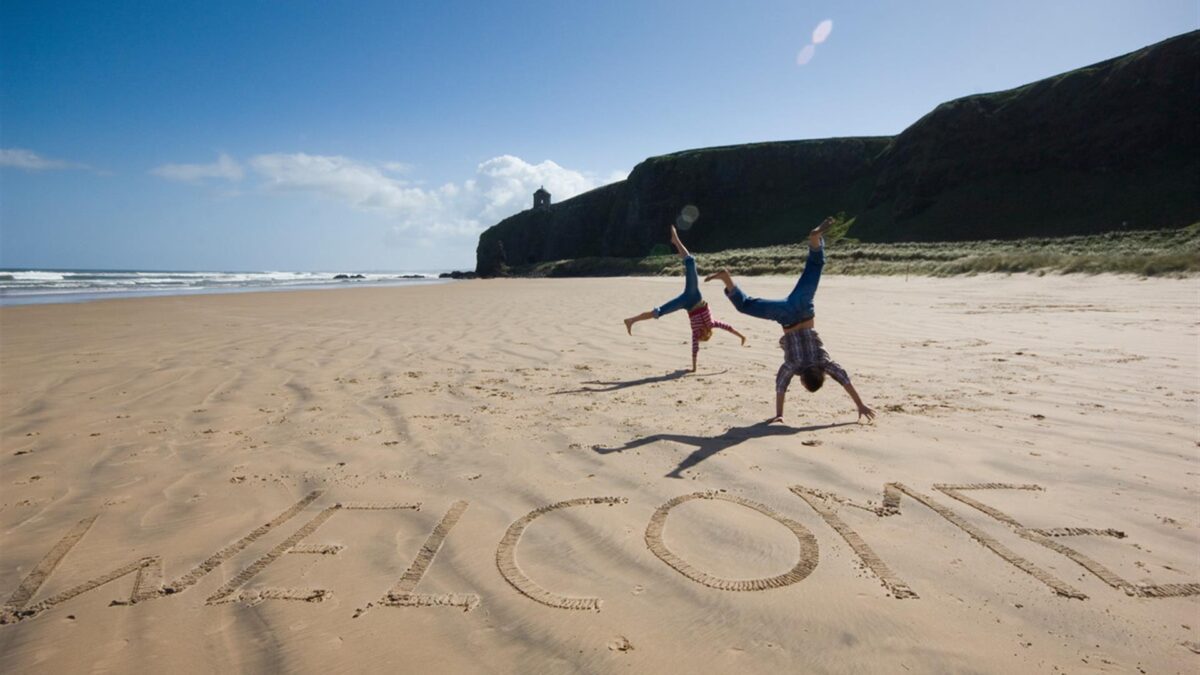
Whiterocks is a stunning stretch of white chalk cliffs and golden sand along the Causeway Coast, with sea caves and arches carved into the chalk by the waves. The beach sits within easy reach of the Giant’s Causeway UNESCO World Heritage Site and the Carrick-a-Rede Rope Bridge. It holds Blue Flag status with lifeguard cover in summer.
Parking: Large free car park at Whiterocks with accessible spaces and toilets. The beach is signposted from the main coastal road between Portrush and Bushmills.
Accessibility: Accessible parking and toilets. Level path from the car park to the beach. Beach wheelchair available on request from the lifeguard service in season.
Eat nearby: Harry’s Shack at Portstewart Strand, about 5km west, is one of the most praised seafood restaurants on the north Antrim coast with a wonderful informal atmosphere. The town of Portrush, about 3km west, has a wide range of cafes and restaurants.
Stay nearby: The Causeway Hotel sits directly beside the Giant’s Causeway visitor centre and is the most atmospheric place to stay in the area. Portrush and Bushmills both have good hotel and guesthouse options. The Bushmills Inn Hotel in the village of Bushmills (5km from Whiterocks) is a highly regarded boutique hotel with a celebrated restaurant.
Other Northern Ireland Beaches Worth Knowing
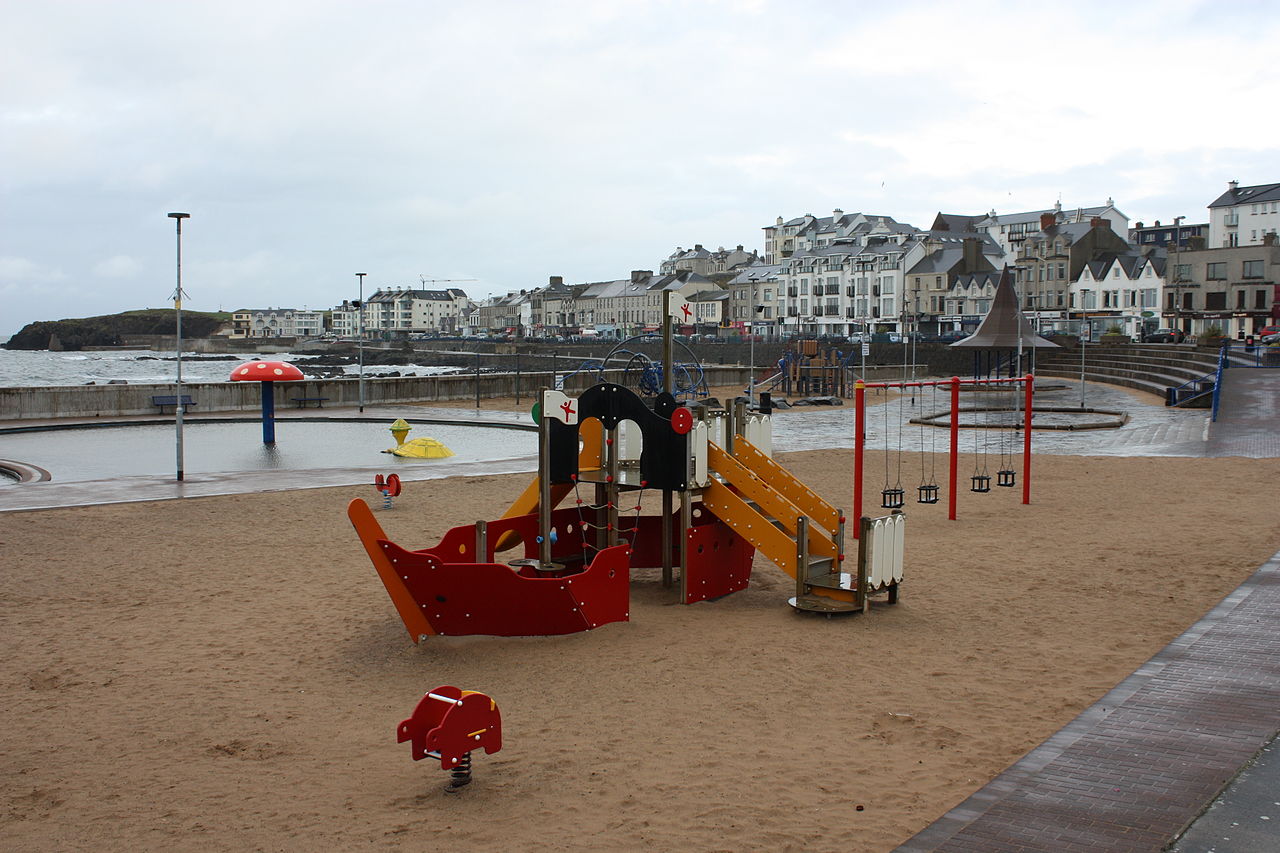
When visiting Northern Ireland, look also to Benone Strand near Derry, an eight-kilometre Blue Flag beach that is one of the longest in Ireland, with a car park, accessible facilities, and lifeguard cover; Ballycastle Beach in County Antrim, a sheltered and family-friendly town beach with a car park, cafes, and the charming town of Ballycastle on its doorstep; Portstewart Strand, a National Trust beach with dramatic dunes and the option to drive your car directly onto the sand in season (booking required); and Portrush, a lively seaside resort town with several beaches, excellent restaurants, and the world-famous Royal Portrush Golf Club.

From Someone Who Has Walked Every One of These Beaches
I am a mobility-challenged traveller who has been visiting these beaches for many years, taking friends and visitors with me. The question I get asked most often is: which beach would you go back to tomorrow?
For swimming: Kilmurvey on Inis Mor. The water is cold but it is the clearest I have encountered anywhere in Ireland and the total absence of current makes it genuinely relaxing once you are in.
For walking: Portsalon in Donegal. Long, white, wide enough that even on a busy summer day it never feels crowded, and the views down Lough Swilly towards Fanad Head are endlessly changing with the light.
For the experience of being properly alone: Murder Hole Beach. The effort of getting there, the drama of the landscape, and the knowledge that very few people make it this far combine into something that feels like a genuine privilege.
For surfing: Strandhill, without question. The surf culture is warm and welcoming, the breaks are world-class, and the seaweed baths afterwards are one of the great pleasures of the Irish Atlantic coast.
For a complete day in a county with more to offer than beaches: Lahinch in Clare. Start with a morning surf lesson, walk the Cliffs of Moher coastal path after lunch, and end the day in Doolin for traditional music in a pub that hasn’t changed in decades.
Frequently Asked Questions About the Best Beaches in Ireland
What is the most beautiful beach in Ireland?
Keem Bay on Achill Island in County Mayo is widely cited as the most beautiful beach in Ireland. Portsalon in Donegal and Dog’s Bay in Connemara are frequently mentioned alongside it. The honest answer is that Ireland has so many extraordinary beaches that the most beautiful depends on what you are looking for.
Which Irish beaches are best for swimming?
For safe, calm swimming, choose Blue Flag beaches with lifeguard cover in summer. The best include Kilmurvey on Inis Mor, Inchydoney in Cork, Rosses Point in Sligo, Fanore in Clare, Kilkee in Clare, and Portmarnock in Dublin. Always check the flag on the day: green means safe, yellow means caution, red means no swimming.
Where are the best surfing beaches in Ireland?
Ireland has world-class surf breaks, particularly on the west coast. Strandhill in Sligo and Bundoran in Donegal are among the most celebrated. Lahinch in Clare is one of Ireland’s oldest and most respected surf towns. Fanore and Spanish Point in Clare are also well regarded. Inch Beach in Kerry and Banna Strand in Kerry are popular surf beaches. Tullan Strand in Bundoran has hosted World Surf League events.
Are Irish beaches accessible for wheelchair users?
Most Blue Flag beaches in Ireland have accessible parking, accessible toilets, and beach wheelchairs on free loan from lifeguards in season. Inchydoney in Cork, Rosses Point in Sligo, Fanore in Clare, Portsalon in Donegal, and Portmarnock in Dublin are among those with the best overall provision. Always ring ahead to confirm, as provision varies and equipment availability can be limited.

What is a Blue Flag beach in Ireland?
A Blue Flag beach meets the international environmental and safety standards of the Blue Flag programme, assessing water quality, environmental management, safety, and accessible facilities. In 2023, 84 Irish beaches held Blue Flag status. The full current list is maintained by An Taisce, the Irish environmental NGO that administers the programme.
When is the best time to visit Irish beaches?
June to August offers the best weather and lifeguard cover. July is statistically Ireland’s warmest month. May and September offer smaller crowds and often good conditions. Irish beaches are beautiful in winter too, but facilities are largely closed and swimming is for the very committed.
Is wild camping allowed near Irish beaches?
Ireland does not have a legal right to roam, but wild camping is widely tolerated near remote coastal beaches in Donegal, Connemara, and on the Dingle Peninsula, provided you leave no trace. Fanore in Clare has a designated on-site campsite. Derrynane in Kerry, Streedagh in Sligo, and several beaches near Bundoran are popular with van and tent campers. Always check local guidance before pitching.
What is the Irish folklore connection to the coast?
Ireland’s coastline is deeply woven into mythology. Selkies (seal people), Merrows (Irish mermaids), and the Tuatha De Danann all feature in coastal folklore. Streedagh and Spanish Point have Armada ghost legends. Maghera Caves has Viking-era stories. The Fairy Bridges at Bundoran were liminal places in Irish tradition. Coney Island in Sligo has its faerie lore. Almost every stretch of this coastline carries a story.
Planning Your Visit to the Best Beaches in Ireland
The best beaches in Ireland are not just beautiful places to sit in the sun. They are the edges of an ancient island, shaped by ten thousand years of sea and storm, carrying the folklore of a culture that has always lived in dialogue with the Atlantic. Whether you are here for a week-long surf camp, a gentle family holiday on a sheltered Blue Flag strand, a walk along the Cliffs of Moher coastal path in County Clare, or a solo walk on a remote Donegal beach where you will not see another person all day, Ireland’s coastline will give you something that stays with you long after you have dried off and driven home.
For more on exploring Ireland, visit the xyuandbeyond.com Ireland Travel Guide. You can also explore the Wild Atlantic Way and the Causeway Coastal Route on the official Tourism Ireland site.
For more on exploring Ireland, visit the xyuandbeyond.com Ireland Travel Guide. You can also explore the Wild Atlantic Way and the Causeway Coastal Route on the official Tourism Ireland site.
Join 7,500 Ireland travellers in my Ireland Uncovered Facebook Group and 1,897 on my XYUandBEYOND PAGE
This guide is part of a wider Accessible Ireland travel series, offering realistic, first-hand advice for limited-mobility travel across Ireland.
➡️Accessible Causeway Coast Route
➡️Accessible Wild Atlantic Way
If you encounter changes (e.g., temporary lift closures or construction), please let me know so I can update this page promptly.