
Tullan Strand and Bundoran Beaches: Surfing, Swimming, the Fairy Bridges and a WWII Memorial
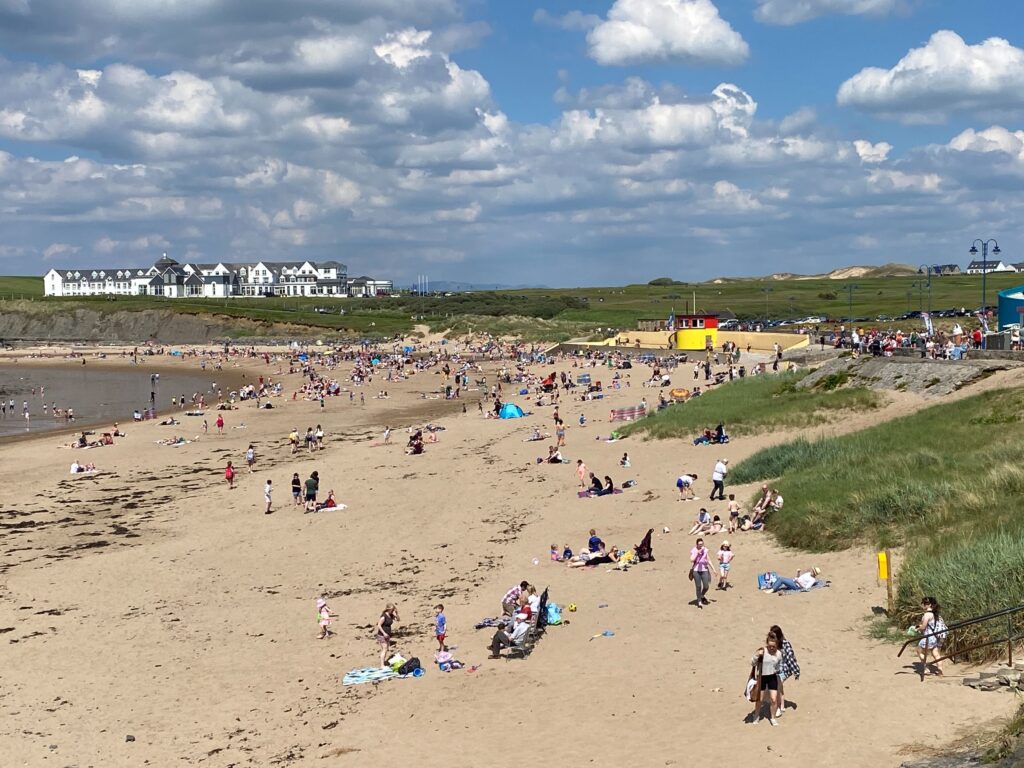
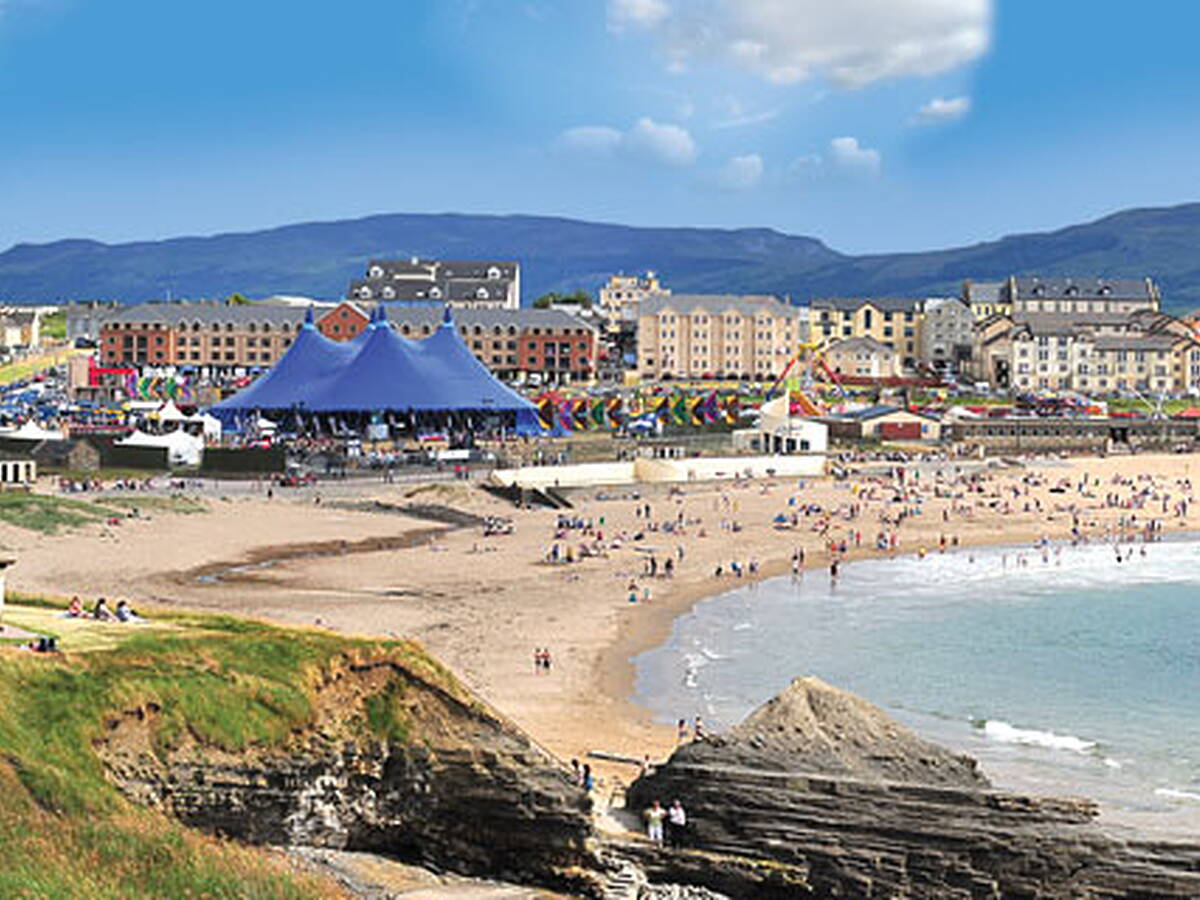
Quick answer: Bundoran has two beaches. Tullan Strand is a 2 km surf beach on the northern edge of Bundoran, Co. Donegal, about 29 km (25–30 minutes) south of Donegal Town on the N15. The Fairy Bridges sea arches, the Wishing Chair and the 1944 Halifax LK704 memorial are all beside the car park at the south end of the beach. It is free and open all day. It is excellent for surfing but not safe for swimming because of strong rip currents and no lifeguard; Bundoran Main Beach, in front of the promenade, is the lifeguarded Blue Flag beach for swimming and beginner surf lessons.

Tullan Strand was the very first beach I visited in Donegal after I moved here, and I have lost count of how many times I have been back since. Whenever friends or family come to stay, this is where I bring them. My Canadian family always want to stand at the Halifax memorial on the cliff and read the names of the young airmen from Toronto, Edmonton and Calgary. My witchier relatives head straight for the Fairy Bridges and the Wishing Chair, and they are never in any hurry to leave.
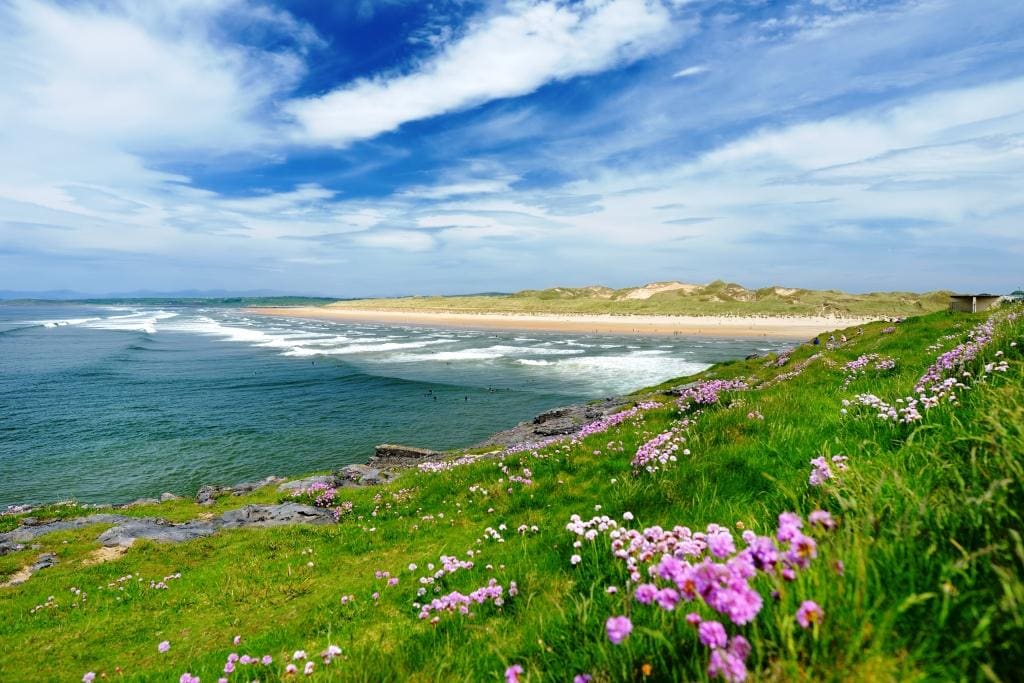
That is the magic of this little stretch of the Wild Atlantic Way. In one short walk you get two miles of golden surf beach, sea arches that locals have believed were haunted by fairies since the 1700s, a stone chair that is said to grant wishes, and a moving piece of wartime history that ties this corner of Ireland to Canada. This guide covers all of it, plus the practical things I wish I had known on that first visit: how to get here from Donegal Town, where you can and cannot swim, and where to surf.
- Tullan Strand and Bundoran Beaches: Surfing, Swimming, the Fairy Bridges and a WWII Memorial
- Tullan Strand Fast Facts
- Bundoran Beaches: Tullan Strand vs Main Beach
- Beaches near Bundoran
- How to Get to Tullan Strand from Donegal Town
- The Fairy Bridges: Sea Arches with a Story
- The Wishing Chair: How to Make Your Wish
- The Halifax LK704 Memorial: A Canadian Story on an Irish Cliff
- The Donegal Corridor: Tullan Strand's Secret War
- Secrets of Tullan Strand Most Visitors Miss
- Can You Swim at Tullan Strand?
- Surfing at Tullan Strand
- Tullan Strand & Bundoran Webcams, Surf Reports and Forecasts
- Bundoran with Kids
- The Rougey Walk: Linking Bundoran to Tullan Strand
- Accessibility at Tullan Strand
- Tips for Visiting Tullan Strand
- More to Explore Near Bundoran
- Tullan Strand FAQs
- Exploring the fascinating regions of Ireland
Tullan Strand Fast Facts
| Location | Tullan Strand Road, northern edge of Bundoran, Co. Donegal (Wild Atlantic Way) |
| From Donegal Town | About 29 km / 25–30 minutes by car on the N15; roughly 30 minutes by bus |
| Cost & opening | Free, open all day, every day |
| Time needed | 30–60 minutes for the Fairy Bridges, Wishing Chair and memorial; longer for the Rougey Walk or a surf |
| Swimming | No. Strong rip currents and no lifeguard. Swim at Bundoran Main Beach (Blue Flag 2026, lifeguards 1 June–15 September) |
| Surfing | Yes, all levels. Beginners should go with a surf school |
| Wild Atlantic Way | Tullan Strand is Bundoran’s Discovery Point, the first in Donegal heading north |
| Bundoran | Bun Dobhráin in Irish; the most southerly town in Co. Donegal, in the Republic of Ireland (not Northern Ireland); population 2,599 (2022 census) |
| Accessibility | Fairy Bridges viewpoint is a short walk from the car park; the path down to the sand is rough and not suitable for wheelchairs or buggies |
Bundoran Beaches: Tullan Strand vs Main Beach
Most people searching for “Bundoran beach” are really asking one question: which beach should I go to? Bundoran has two, a few minutes apart, and they could hardly be more different.
| Tullan Strand | Bundoran Main Beach | |
| Where | Northern edge of town, off Tullan Strand Road | Town centre, in front of the promenade, about 250 m from Main Street |
| Size | About 2 km of open sand backed by dunes and cliffs | Small, sheltered sandy cove; around 10 acres of sand at low tide |
| Swimming | No: strong rips, no lifeguard | Yes: Blue Flag 2026, lifeguards 1 June–15 September |
| Surfing | All levels; consistent beach break | Beginners and lessons at high tide; The Peak reef break for experts |
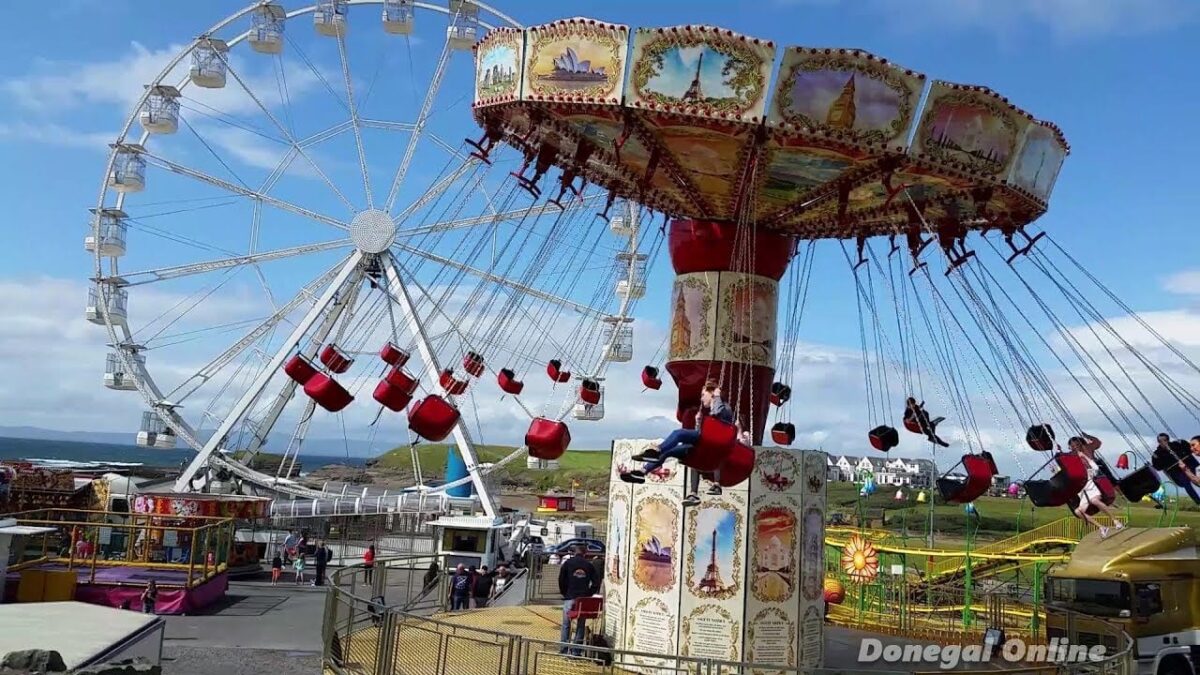
| Best for | Surfers, long walks, the Fairy Bridges and memorial | Families, swimmers, surf lessons, cafés and Waterworld nearby |
| Accessibility | Rough path to the sand; viewpoints near car park | Wheelchair accessible; beach wheelchair available |
My rule of thumb for visitors: walk and surf at Tullan, swim at Main Beach. If you have children with you, base yourselves at Main Beach and walk out to the Fairy Bridges along the Rougey cliff path.
Beaches near Bundoran
| Beach | What it’s like | Drive from Bundoran |
| Rossnowlagh | Blue Flag 2026; 3 km of gently shelving sand, lifeguarded in season, gentle surf for beginners; my pick for families | ~20 min north |
| Murvagh | Blue Flag 2026; long, quiet beach backed by forest and dunes, lifeguarded in season | ~30 min north |
| Mullaghmore (Co. Sligo) | Sheltered harbour beach below Classiebawn Castle, with Benbulben views | ~15 min south |
| Tullaghan (Co. Leitrim) | Not a swimming beach: a rocky stretch that is Leitrim’s only coastline, known for its reef surf breaks | ~5 min south |
Tullaghan and Tullan are easy to confuse: if you want the sandy surf beach, it is Tullan Strand, on the Donegal side of Bundoran. For more ideas up the coast, see my guide to the best beaches in Donegal.

How to Get to Tullan Strand from Donegal Town
By car (the easiest way)
From Donegal Town, take the N15 south through Laghey, Ballintra and Ballyshannon and carry on to Bundoran. It is about 29 km and takes 25–30 minutes. As you come into Bundoran from the Ballyshannon side, follow the brown signs for the Fairy Bridges and Tullan Strand onto Tullan Strand Road. There is a car park right beside the Fairy Bridges, and from there it is only a couple of minutes on foot to the arches, the Wishing Chair and the memorial.
If you have time, make a morning of it: detour to Rossnowlagh on the way down for coffee by the sea, then continue to Bundoran. If you are hiring a car, my guide to renting a car in Ireland, North and South covers insurance and border crossing.
By bus
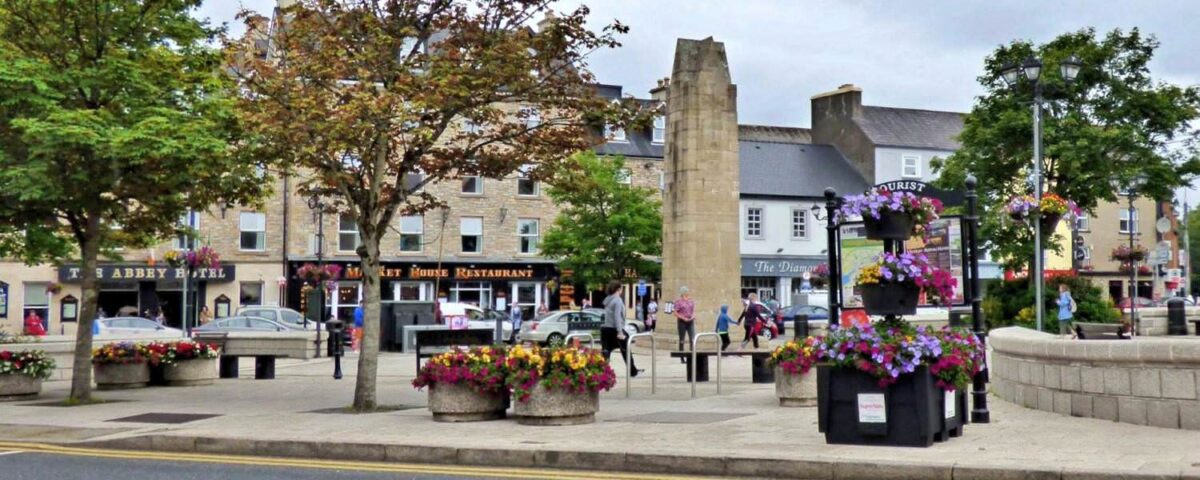
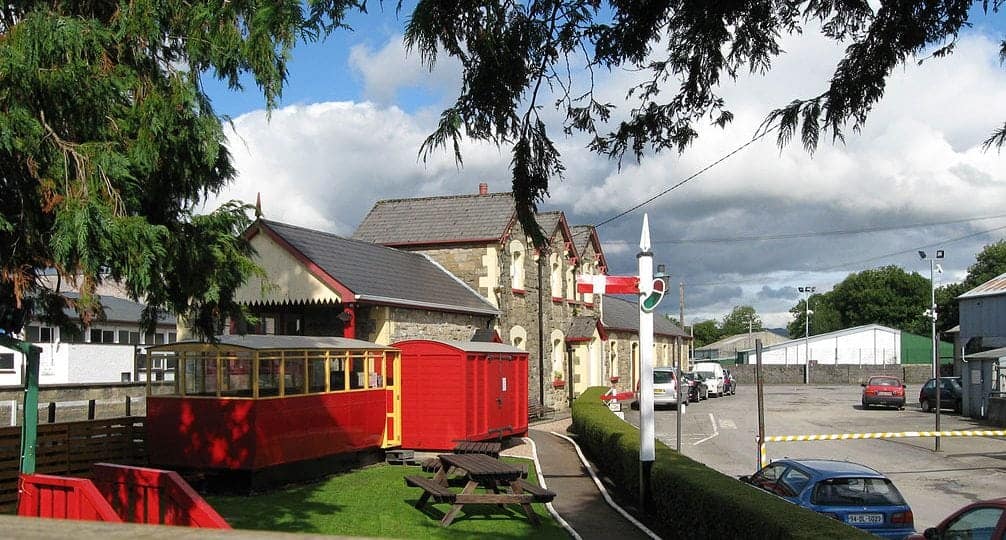
There is a direct bus from Donegal Town to Bundoran that takes roughly 30 minutes. Bus Éireann’s Expressway route 64 (Derry–Letterkenny–Donegal–Sligo–Galway) and the Bus Éireann route 480 (Derry–Donegal–Sligo) both stop in Donegal Town and in Bundoran, and Bus Feda also runs a service. From the Bundoran stops it is a short walk north to Tullan Strand, or take the Rougey Walk along the cliffs for the scenic route. Timetables change seasonally, so check the TFI Journey Planner before you set out. My guide to public transport in Ireland explains how the different operators fit together.
New in 2026, TFI Local Link route 983 links Kinlough, Bundoran and Ballyshannon, which is handy if you are staying nearby rather than in town.

From further afield
| Starting point | Driving time | Public transport |
| Donegal Town | 25–30 min (N15) | Direct bus, ~30 min (routes 64/480) |
| Sligo | ~30 min (N15) | Direct bus (routes 64/480) |
| Letterkenny | ~1 hr | Direct bus (route 64) |
| Derry | ~1 hr 30 min | Direct bus (route 64) |
| Dublin | ~3 hr 45 min | Expressway route 30 to Ballyshannon, then Local Link 983 to Bundoran |
The Fairy Bridges: Sea Arches with a Story
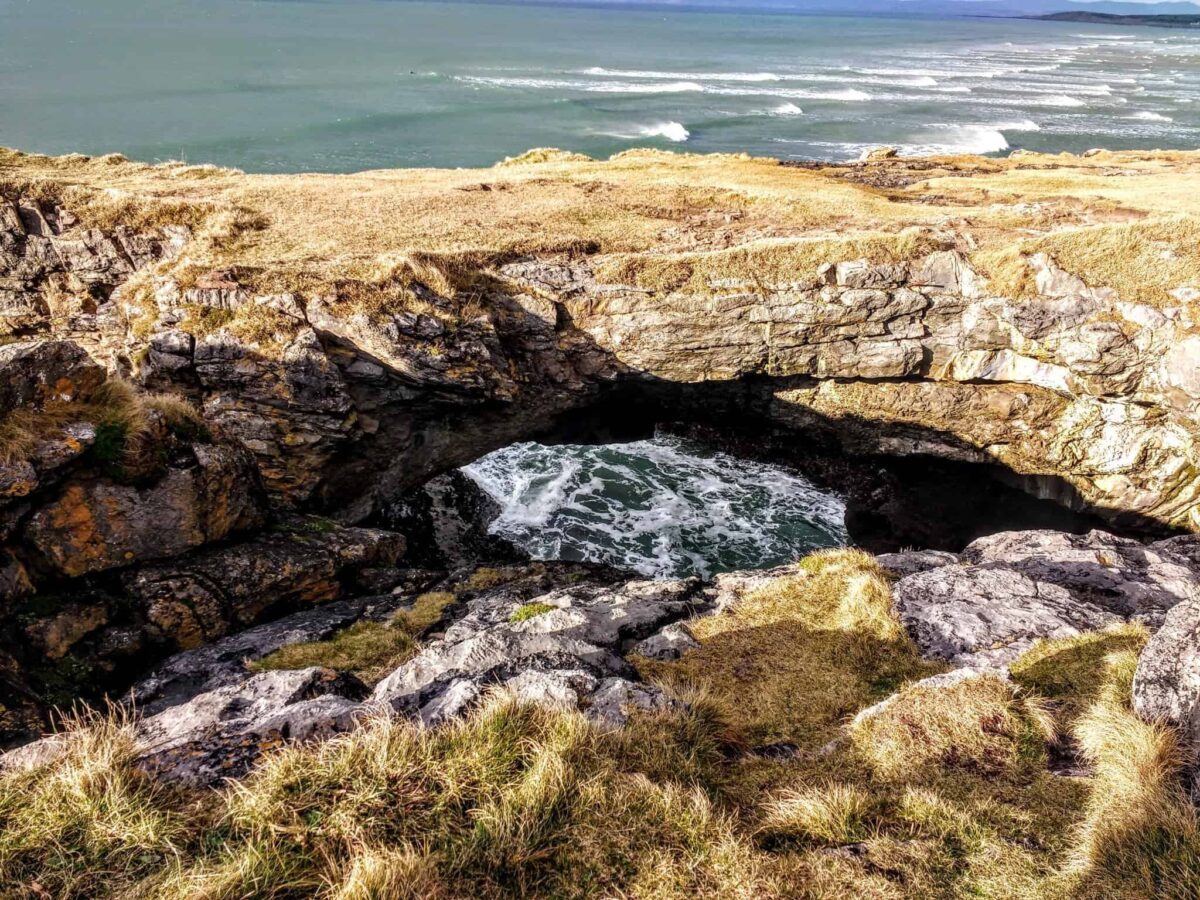
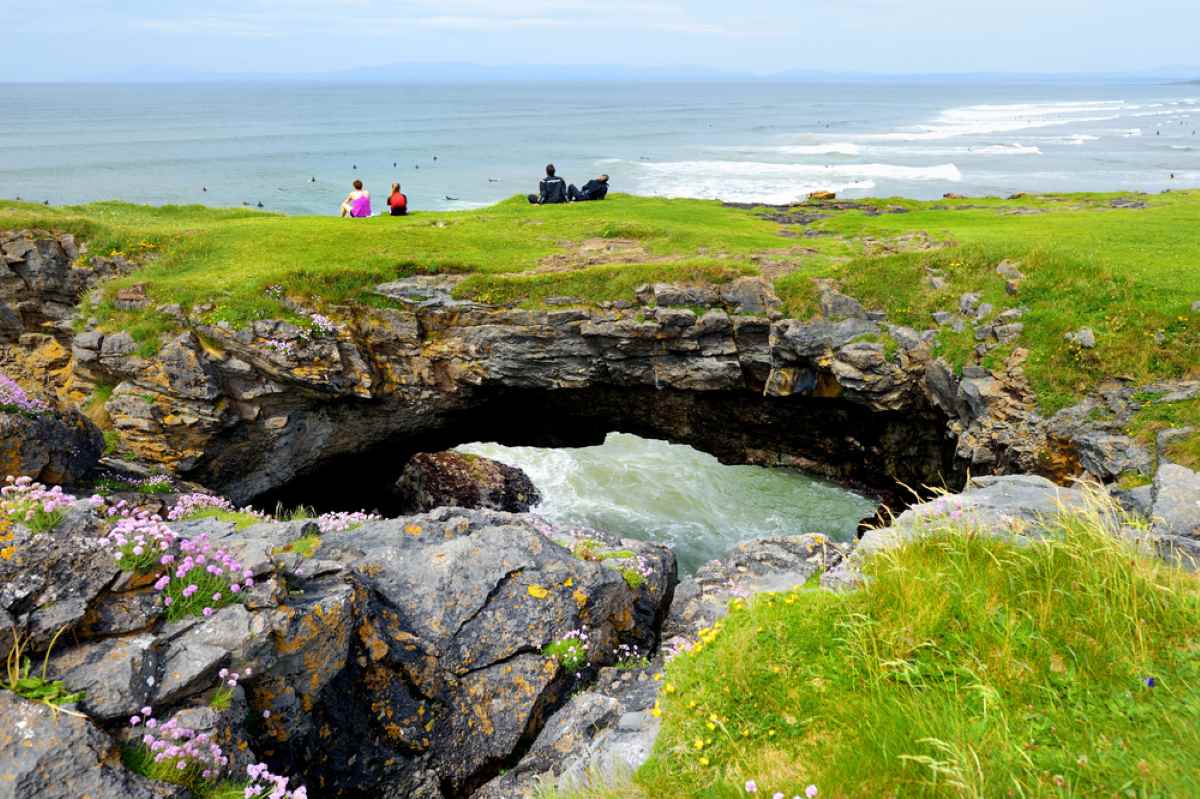
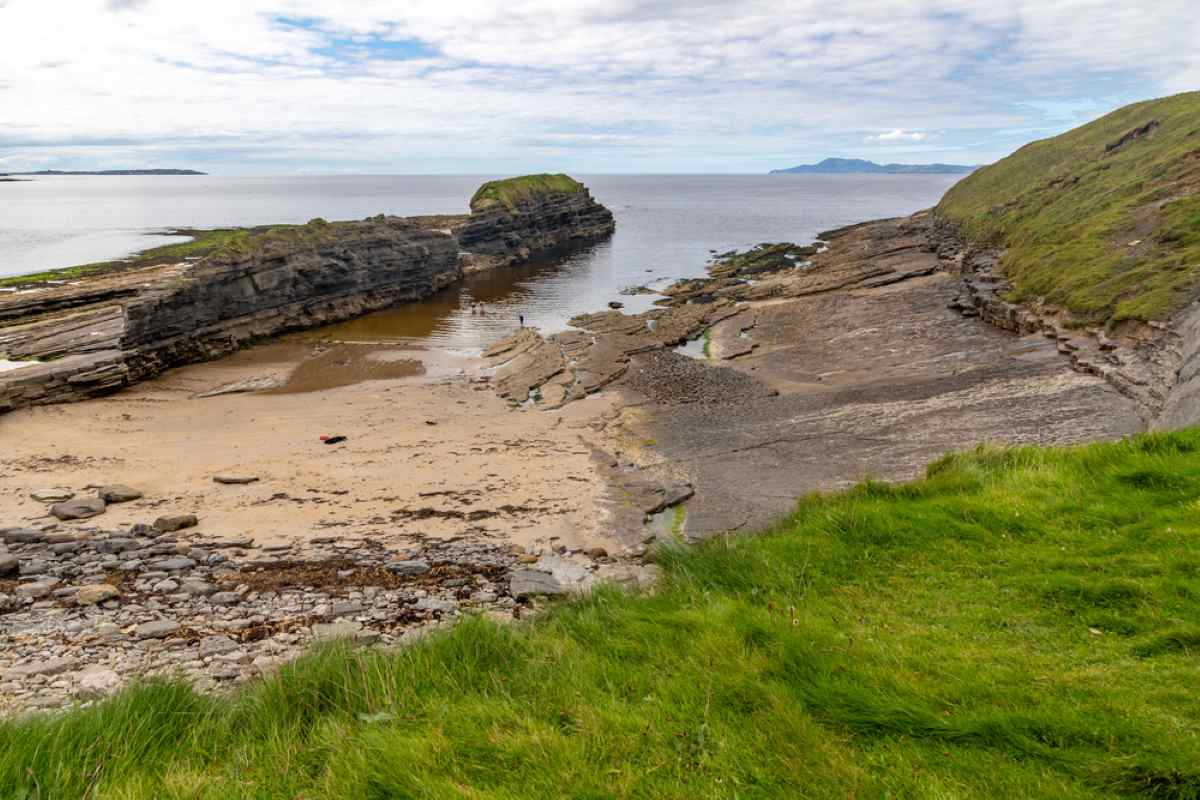
A few steps from the car park, the land simply stops. Below you, the Atlantic has carved the cliff into a series of natural sea arches and blowholes: the Fairy Bridges. On a calm day they look like stone bridges spanning dark channels of water. On a wild day, the waves are driven under the rock and forced up through the blowholes in great bursts of spray. You can see why people once thought something otherworldly lived here.
Why are they called the Fairy Bridges?
As far back as the 1700s, locals believed the arches were haunted by the fairies, and the name has stuck ever since. The booming of the sea in the caves, the spray appearing out of solid rock, the moonlight on the arches: it all fed into the idea that the Good Folk came here to play. Walk out on a stormy evening and you may find yourself believing it too.
This is the part my witchy family love most. Ballyshannon, just up the road, was the birthplace of the poet William Allingham, and his poem The Fairies (1850) is probably the most famous fairy poem in Ireland. It opens:
Up the airy mountain,
Down the rushy glen,
We daren’t go a-hunting
For fear of little men;
Read it standing at the Fairy Bridges and it hits differently. If fairy lore is your thing, don’t miss my guide to fairy forts in Ireland and the rest of my Irish culture and folklore posts.

Bundoran’s first tourist attraction
When Bundoran started to make a name for itself as a seaside resort in the early 1800s, visitors came as much for the Fairy Bridges as for the sea air. In 1891 the Victorian artist Helen Allingham, William’s wife, painted them. More recently the site has picked up a string of TripAdvisor awards, including a 2020 Travellers’ Choice award.
What the Fairy Bridges actually are
You will read online that the Fairy Bridges are “hundreds of years old”. The arches themselves have been sculpted over thousands of years, but the rock is far older than that. The cliffs here are fossil-rich Carboniferous limestone of the Ballyshannon Limestone Formation, laid down in a warm tropical sea roughly 345 million years ago. The arches began as sea caves, the Atlantic punched through their roofs to form blowholes, and those blowholes widened into the bridges you see today. Look closely at the rock around the arches and you will spot fossilised crinoids (sea lilies) and shells. Like all sea arches, they are temporary: one day the roofs will collapse and leave sea stacks.
The Wishing Chair: How to Make Your Wish
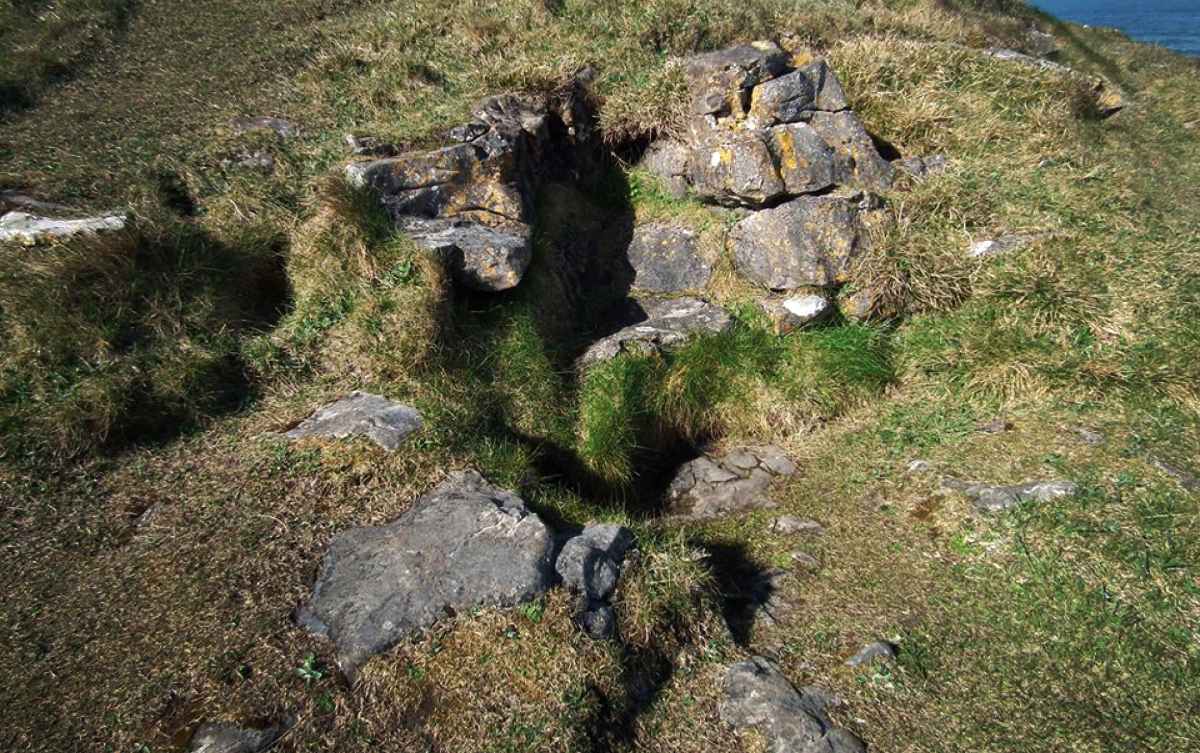
Right beside the Fairy Bridges sits a stone seat facing the Atlantic: Bundoran’s famous Wishing Chair. There is a ritual to it, and locals will tell you it matters.
- Approach slowly. Sit down gently, holding both arms of the chair. Rushing in is said to spoil the magic.
- Pause for at least 15 seconds and take in the view: Donegal Bay to your left, Tullan Strand ahead of you and the Dartry Mountains to your right.
- Make your wish in silence and keep it to yourself, while thinking of everyone who has sat in the chair before you.
- Tap the seat twice as you stand up. This confirms your wish is a genuine one.
Famous bums are said to have warmed the chair over the years, from William Allingham and golfer Christy O’Connor to Viscount Enniskillen and eleven-time world surfing champion Kelly Slater.
The Wishing Chair’s secret
Most visitors assume the chair is a natural rock formation. According to local historians, it is actually a man-made seat, cut from O’Flaherty’s Stone, a once-standing stone from Finner Rath on the hill above Bundoran. That stone was believed to mark the grave of a local chieftain, Ó Flaithbheartaigh (O’Flaherty), and it is said he sat on this very spot to survey his territory because of its commanding view over the bay. So when you sit in the Wishing Chair, you may be sitting on a chieftain’s gravestone. My witchy family think that explains a great deal.
The chair also turns up in a poem called Bundoran by former Town Clerk Edward Daly, printed in the town’s 1944 visitor guide, which pictures the fairies playing on the bridges by moonlight and lovesick young women bringing their wishes to the chair.
This extract is taken from a poem simply titled “Bundoran” which appears in the 1944 Bundoran Visitor’s Guide, written by former Town Clerk Edward Daly
The Fairy Bridges where the spirits,
In moon-lit splendour sport and play,
Span chasms dark and lowering where
The lashing waters dash and spray.
And then the dear old Wishing Chair,
Where heart sick maids petitions lay,
Where thousands found each wish come true,
And ever bless the “happy day”.
The Halifax LK704 Memorial: A Canadian Story on an Irish Cliff
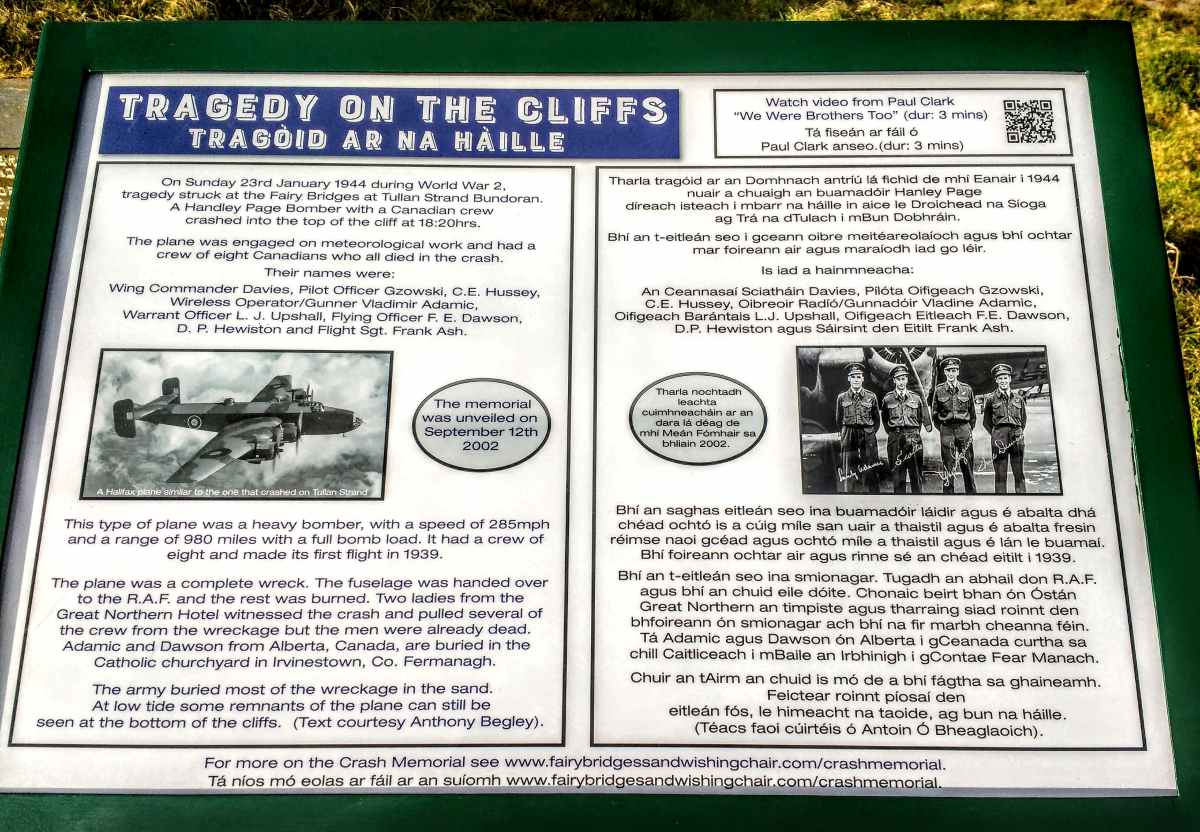
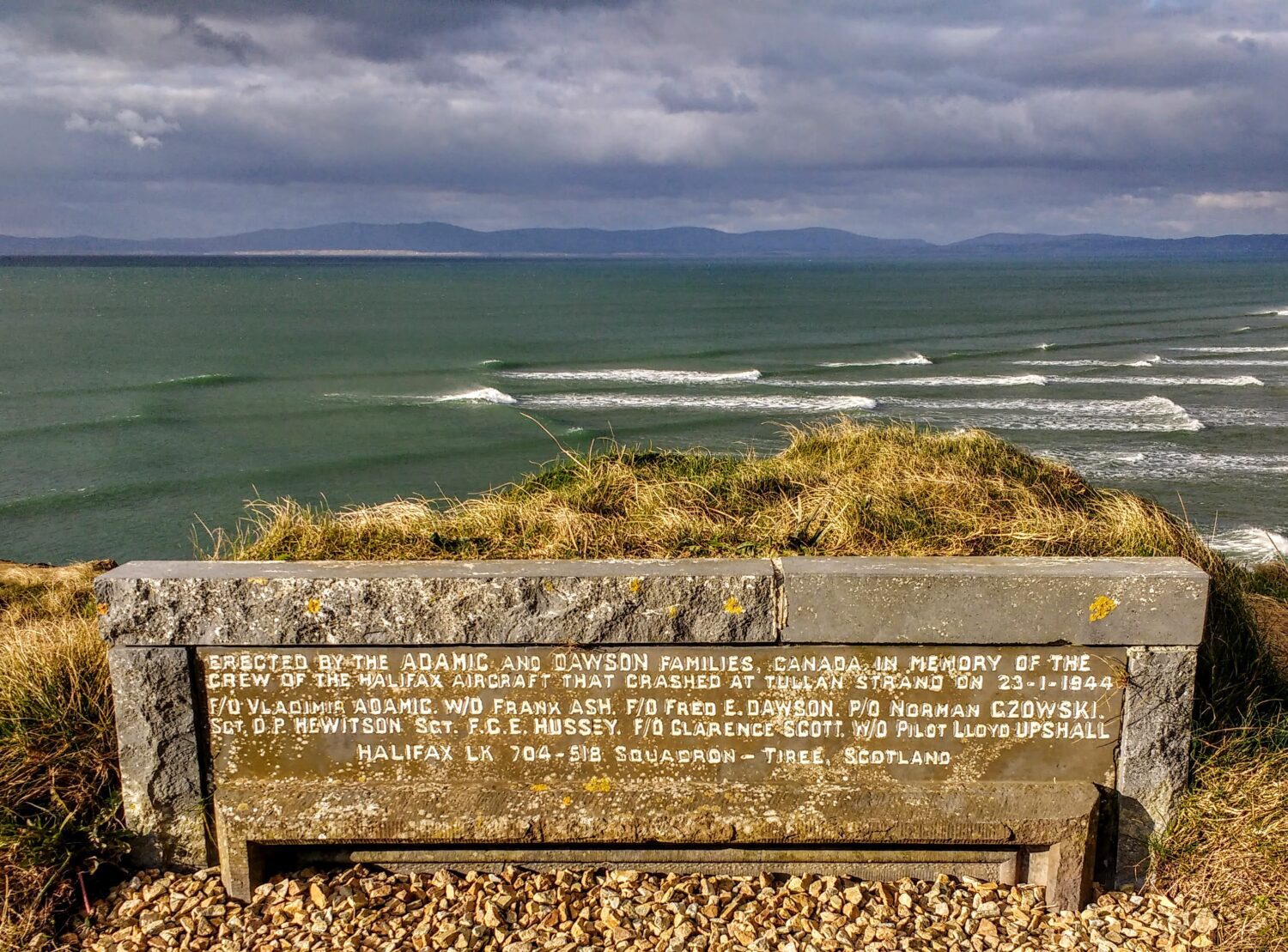
At the top of the path above the Fairy Bridges is a simple stone memorial. For my Canadian family, this is the reason they come. It commemorates the eight young airmen of RAF Halifax LK704 who died when their aircraft hit the cliff here on the evening of 23 January 1944. Five of them were serving with the Royal Canadian Air Force.
What happened on 23 January 1944
LK704 belonged to 518 Squadron, a meteorological reconnaissance unit flying out of RAF Tiree in Scotland. Accurate weather reports were vital to protect the Allied convoys carrying supplies from Canada and America to Britain, so these crews flew long patrols over the Atlantic in almost any conditions. That Sunday the crew took off early on a routine weather mission code-named MERCER. Radio contact with base was lost not long after take-off, and the weather that day was dreadful, with thunderstorms and snow and sleet showers along the Irish and Scottish coasts.
More than twelve hours later, well off course and almost certainly short of fuel, the Halifax was heard flying south over Donegal. Two women from the Great Northern Hotel, the manageress Miss Murtagh and her assistant Miss Geoghegan, were walking on the cliffs by the golf links at about a quarter past six when the bomber roared over them, very low, and headed out to sea. It turned and came straight back towards them. With a full tide and huge seas there was no chance of putting down on the beach, and the aircraft hit the top of Roguey Cliff at around 6:20pm. Experts later concluded that a few more feet of height might have carried it onto the flat field beyond, possibly without loss of life.
The two women ran to the wreckage and pulled four men clear, one of them still alive, though he died within minutes. The tail section fell into the sea and caught fire. Soldiers from the nearby Irish Army camp at Finner were on the scene quickly, and Fr Frank Little, the camp chaplain, gave the last rites. Six bodies were recovered and handed over to the RAF at the border near Belleek. The co-pilot and navigator were lost to the sea and are commemorated on the Runnymede Memorial in Surrey.
The crew of Halifax LK704
| Name | Role & service | From | Age |
| W/O Lloyd Joyce Upshall | Pilot, RCAF | Toronto, Ontario | 24 |
| F/O Clarence Loree Scott | Second pilot, RCAF | Nanton, Alberta | 21 |
| F/O Norman Glyn Gzowski | Navigator, RCAF | Cleveland, Ohio (US-born) | 24 |
| F/O Vladimir Adamic | Wireless operator/air gunner, RCAF | Edmonton, Alberta | 27 |
| F/O Frederick Edward Dawson | Wireless operator/air gunner, RCAF | Calgary, Alberta | 19 |
| W/O Frank Ash | Wireless operator/air gunner, RAF | Streatham, London | 28 |
| Sgt Frederick Lewarne Eric Hussey | Flight engineer, RAF | St Albans, Hertfordshire | 20 |
| Sgt Donald Parr Hewitson | Meteorological observer, RAF | Sutton Coldfield | 19 |
Upshall, Dawson and Adamic are buried at Irvinestown in Co. Fermanagh, just across the border. Ash and Hussey lie in Brookwood Military Cemetery, and Hewitson was brought home to Sutton Coldfield. Fred Dawson was only 19, and his wife gave birth to a son he never met.
How the memorial came to be
Decades later, Fred Dawson’s widow and Vladimir Adamic’s sister travelled from Canada to find the graves in Irvinestown and then came to see the cliff where the men died. That visit led to the memorial, funded by the families with the support of the local council. It was unveiled on 12 September 2002 in front of almost 200 people, with a guard of honour from Finner Camp, the Last Post, and a helicopter fly-past carrying the Canadian Maple Leaf.
As an Irish Canadian, I find it hard to stand here without a lump in my throat. These were boys from the Prairies and from Toronto, flying weather patrols so that ships carrying food from Canada could reach Britain safely. Take a few minutes here. Read the names.
The Donegal Corridor: Tullan Strand’s Secret War
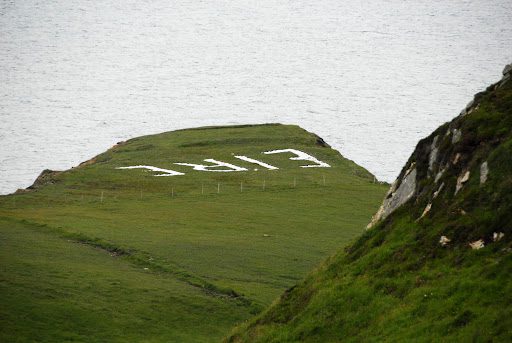
Ireland was officially neutral in the Second World War, but a quiet agreement between Dublin and London allowed Allied flying boats based on Lough Erne in Co. Fermanagh to cross a narrow strip of Irish airspace between Belleek and Ballyshannon to reach the Atlantic. That route became known as the Donegal Corridor, and it put Bundoran directly under the flight path.
Tullan Strand saw more wartime drama than most visitors realise:
- 10 April 1941: a Saro Lerwick flying boat piloted by Pilot Officer Denis Briggs ran out of fuel returning from a U-boat patrol and came down in Bundoran Bay. The crew sank their code books in a weighted bag, a local boat brought them ashore, fuel was sent over from the RAF on Lough Erne, and by evening they were flying home. Briggs went on to play a part in tracking down the German battleship Bismarck weeks later.
- 10 May 1943: an American B-17 Flying Fortress on a transatlantic ferry flight from Newfoundland ran out of fuel and crash-landed on Tullan Strand itself. All ten crew walked away, and the aircraft was dismantled and taken to Northern Ireland on a low-loader.
- 23 January 1944: the Halifax LK704 tragedy described above.
In May 1995, shifting sands briefly uncovered part of the Halifax wreckage on the beach, a reminder of how close to the surface this history still is.
Secrets of Tullan Strand Most Visitors Miss
The Wishing Chair is a chieftain’s stone. See above: it is thought to be cut from O’Flaherty’s grave-marker stone on Finner Hill.
The blowholes perform best in rough weather. Come on a stormy day with a big swell and a rising tide to see the sea shooting up through the rock. On a flat, low-tide day there is much less to see.
Aughrus Point. At the tip of the Rougey headland is Aughrus, whose name is said to mean “the peninsula of the steeds”. Legend has it the war horses of Conall Gulban and the O’Donnells grazed here.
Fossils underfoot. The limestone around the Fairy Bridges is packed with 345-million-year-old fossils. Look, photograph, but leave them where they are.
Two old sea pools. On the Rougey Walk between town and Tullan you pass the Thrupenny Pool, named after its old admission price, and the West End or Nun’s Pool, both filled by the tide.
Get your Wild Atlantic Way passport stamped. Tullan Strand is an official Discovery Point, and Bundoran Post Office will stamp your passport for it.
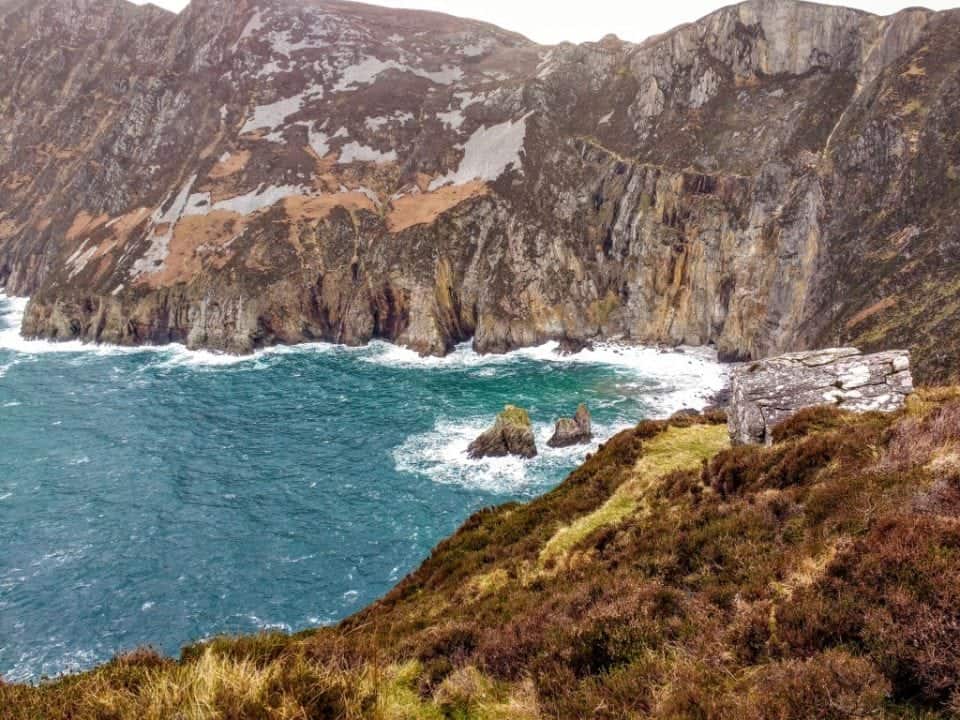
The view is further than you think. On a clear day you can see Mullaghmore Head and Benbulben in Sligo to the south, and across Donegal Bay to the Slieve League cliffs, more than 80 km away. In my opinion Slieve League easily outstrips the Cliffs of Moher, not least for the lack of crowds. You can read my Slieve League vs the Cliffs of Moher vs Kerry Cliffs here.
Can You Swim at Tullan Strand?
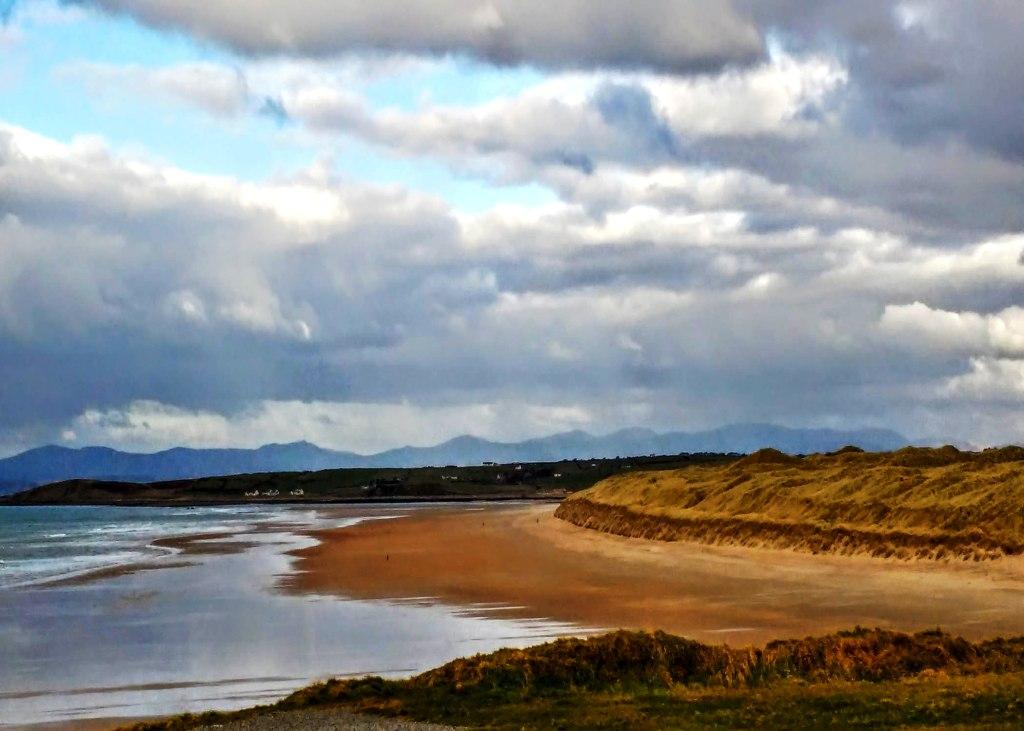
No. I say this every time I bring visitors here, because the beach looks so inviting. Tullan Strand is notorious for rip currents and undertow, especially along the cliffs at the southern end near the Fairy Bridges, and there is no lifeguard. In 2017, a group of footballers who went in to cool off after training were dragged out towards the rocks and had to be rescued by surfers, the Bundoran RNLI lifeboat and the Rescue 118 helicopter. Even paddling is not a good idea when the sea is running.
Best places to swim near Tullan Strand
| Beach | Why swim here | Distance from Tullan |
| Bundoran Main Beach | Blue Flag 2026, lifeguarded 1 June–15 September, marked bathing area, shallow sand at low tide; beach wheelchair available | 5 min drive / 15–20 min walk |
| Rossnowlagh | Blue Flag 2026, lifeguarded, 3 km of gently shelving sand, family favourite | ~20 min drive north |
| Murvagh | Blue Flag 2026, lifeguarded in season, dunes and forest behind the beach | ~30 min drive north |
| Thrupenny & Nun’s Pools | Tidal sea pools on the Rougey Walk; unsupervised, so only for confident swimmers in calm conditions | On the walk into town |
Main Beach sits in front of the promenade, only about 250 m from Bundoran’s Main Street, so cafés, chip shops, the funfair and the Waterworld indoor water park are all within an easy walk. It is the best choice for families with children.
TIP: If you get caught in a rip: don’t swim against it. Float, raise your hand and shout for help, then swim parallel to the shore until you are out of the current before heading in. If you see someone in trouble, call 112 or 999 and ask for the Coast Guard. There are ring buoys all along the Rougey Walk.
Surfing at Tullan Strand
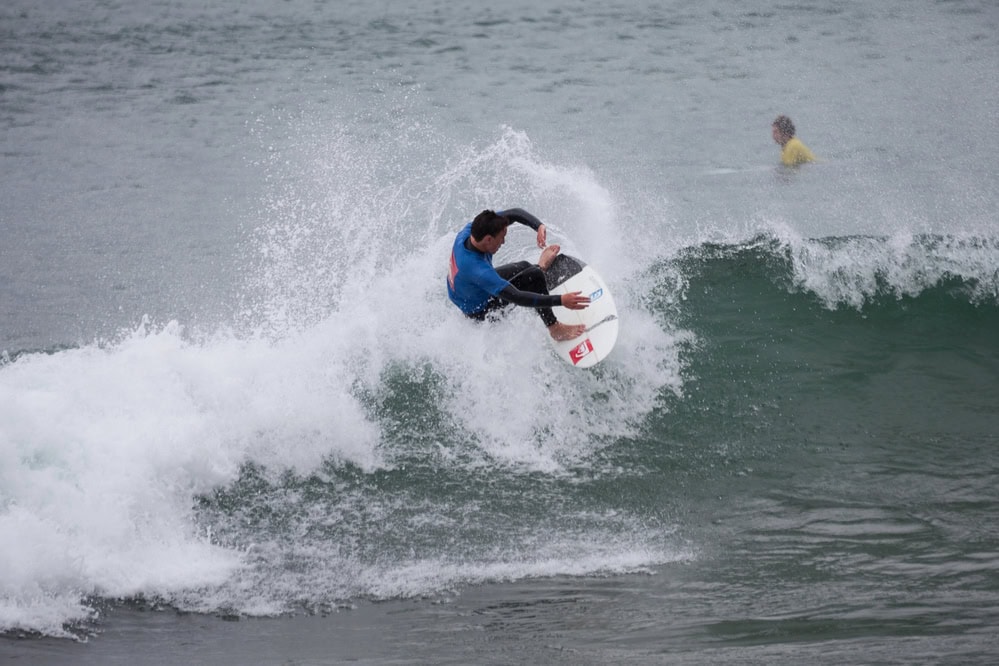
Bundoran calls itself the surf capital of Ireland. National Geographic named it one of the world’s top 20 surf towns in 2012, and in September 2025 it hosted Ireland’s first World Surf League Pro Junior event at The Peak, with Tullan Strand as the backup venue. It is an exposed beach break with lefts and rights that pick up almost any Atlantic swell, so there is usually something to ride even when the rest of the coast is flat. The southern end nearest the cliffs is the most popular spot.
Is Tullan Strand good for beginners?
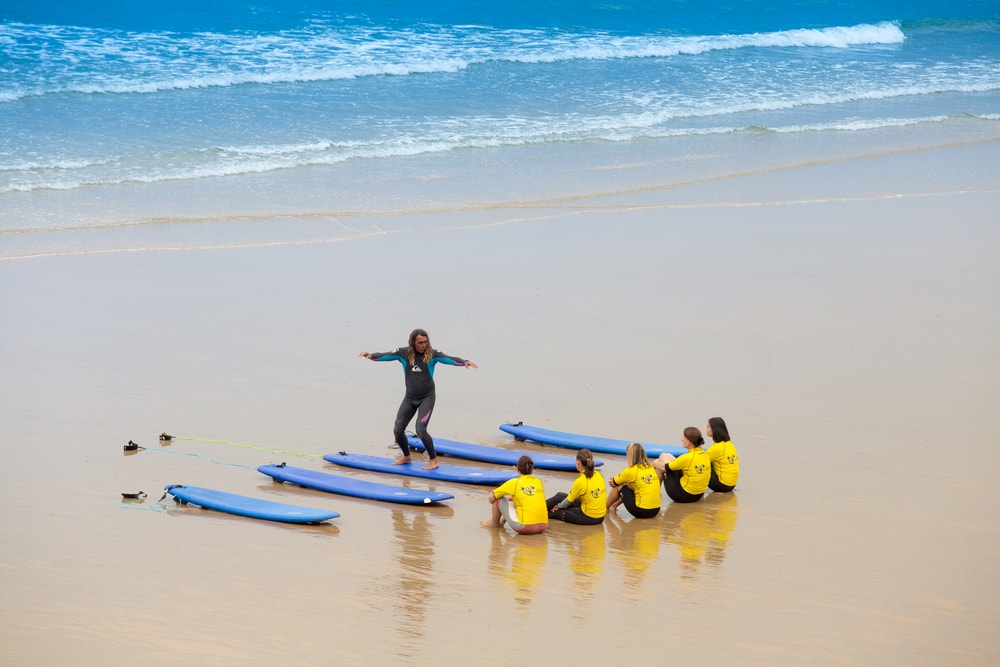
Yes, with an instructor. Tullan works for every level, and small days at high tide suit beginners best. But it is deceptively powerful: a lot of water moves around even when the waves look small, there is a fast rip running along the cliffs at the south end, and there are no lifeguards. If you are new to surfing, book a lesson with one of Bundoran’s surf schools rather than paddling out alone.
Tullan Strand surf tips
- Best tide: high tide for beginners; experienced surfers can surf through the tide.
- Entry: the rocks at the Fairy Bridges entry point are sharp. Use the path from the car park down to the sand if you are unsure.
- Hazards: rip currents, sharp rock, weever fish in the shallows and jellyfish in summer. Wetsuit boots help with all of the above.
- Water temperature: around 9–15°C through the year, so a full wetsuit is essential in every season.
- Crowds: it can get busy on small, clean summer weekends. Respect the locals and the usual surf etiquette.
Other Bundoran surf spots
| Spot | Type | Level |
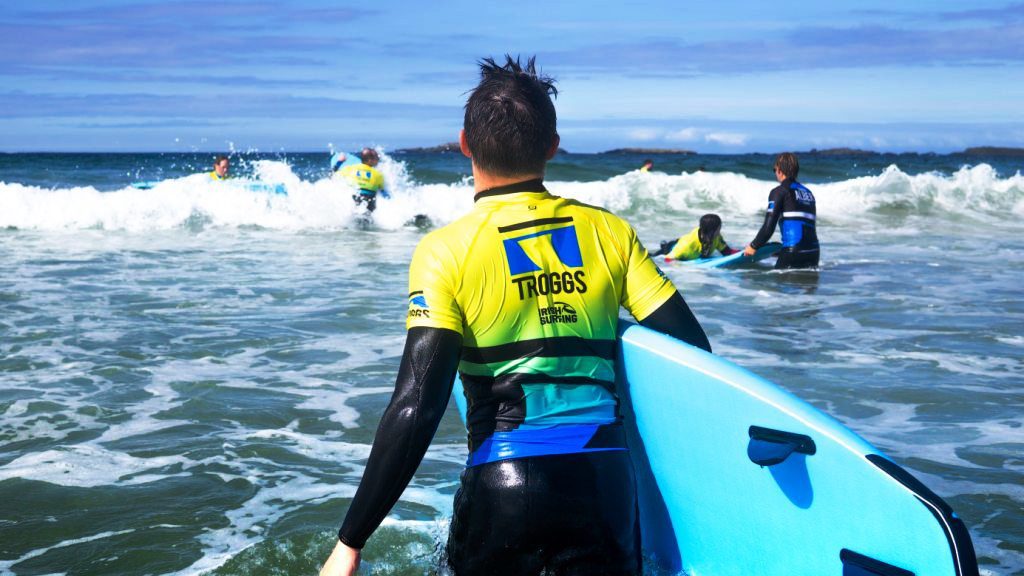
| Tullan Strand | Beach break | All levels (beginners with a school) |
| Bundoran Main Beach | Beach break, lifeguarded in summer | Beginners and children; where local grommets learn |
| The Peak | Reef break off the promenade | Experienced only |
| Inside Left / PMPA / Black Spot | Reef breaks | Intermediate to advanced |
| Rossnowlagh | Long, gentle beach break | Beginners and families |
Tullan Strand & Bundoran Webcams, Surf Reports and Forecasts
Before I drive down with visitors, I always check the cameras. Here are the ones worth bookmarking:
- Discover Bundoran live webcams: the town’s own live cameras, looking over The Peak and Main Beach across Donegal Bay. The best free live view of conditions in Bundoran, and lovely at sunset.
- Tullan Strand webcam on Surf-Forecast: the latest camera images for Tullan Strand, alongside wave, wind and tide data.
- Bundoran webcam on Surf-Forecast: camera images and forecast for the town breaks.
- Surfline Bundoran surf report: swell, wind and wetsuit advice for Bundoran and Tullan Strand.
There is no dedicated live stream pointed at Tullan Strand itself, so the practical trick is to watch the Main Beach and Peak cameras: if clean lines are rolling in there, Tullan will be working too, and usually bigger. Met Éireann’s coastal forecast and marine warnings are also worth a glance before any cliff walk in a big swell.
Bundoran with Kids
Bundoran has been a family seaside town since the 1800s and it still is. The lifeguarded Main Beach, the funfair on the seafront, ice cream on the promenade and a walk out to the Wishing Chair make an easy day. On a wet day, Waterworld is the town’s big indoor draw, with a wave pool, rapids, slides and a toddler pool. It reopened in July 2025 after a €2 million refurbishment that added bigger changing areas and a Changing Places accessible facility. It is seasonal (usually Easter to September) and entry is by timed slot, so book online before you go. For more ideas, see my Donegal travel guide.
The Rougey Walk: Linking Bundoran to Tullan Strand
The best way to arrive is on foot along the Rougey (Roguey) Cliff Walk, a loop of roughly 3–4 km that takes about an hour at an easy pace. It starts near the tourist office in the centre of Bundoran and follows the cliffs past the Thrupenny Pool, round Aughrus Point and on to the Fairy Bridges, the Wishing Chair and the Halifax memorial, with Tullan Strand stretching away beneath you. The path is suitable for all ages, and you will see the name spelled both Rougey and Roguey on signs and maps.
Accessibility at Tullan Strand
The Fairy Bridges viewpoint and the memorial are a short walk from the car park and give you the best of the views without going down to the beach. The path from the car park to the sand, however, is rough and uneven and is not suitable for wheelchairs or buggies. If you need step-free beach access, Bundoran Main Beach is the better option: all of Donegal’s Blue Flag beaches are wheelchair accessible and have beach wheelchairs available. Waterworld also has a Changing Places facility. For more, see my Accessible Ireland guide.

Tips for Visiting Tullan Strand
- Time it with the weather: calm days for sunsets and beach walks, stormy days for the blowholes at the Fairy Bridges. My When to visit Ireland will give you ideas on when to see Donegal.
- Stay back from the cliff edge. It is unfenced in places, sharp and slippery, especially in wind and spray.
- Bring layers. Even in summer the wind off Donegal Bay can be bracing. My Ireland packing list will help.
- Summer sunsets are late, around 9–10pm in June and July, and well worth waiting for.
- Leave no trace. Bundoran Tidy Towns keep the Rougey Walk beautiful; take your litter home.
More to Explore Near Bundoran
Bundoran makes a great base for south Donegal and north Sligo. Pair Tullan Strand with the sea cliffs at Slieve League, head south for my things to do in Sligo, or plan a longer trip with my Donegal travel guide and best things to do in Donegal. Driving the whole coast? Start with my Wild Atlantic Way guide. And before you arrive, get in the mood with my list of 40 Irish movies to watch before you visit Ireland.

Tullan Strand FAQs
Can you swim at Tullan Strand?
No. Tullan Strand has strong rip currents and undertow, particularly along the cliffs at the southern end, and there is no lifeguard. Swim instead at Bundoran Main Beach, a Blue Flag beach with lifeguards from 1 June to 15 September, or at Rossnowlagh about 20 minutes north.
Is Tullan Strand good for beginner surfers?
Tullan Strand suits all levels and small days at high tide are best for beginners, but it has strong rips and no lifeguards, so beginners should surf with a Bundoran surf school rather than alone. Bundoran Main Beach, which is lifeguarded in summer, is where most local children learn.
Where are the Fairy Bridges in Bundoran?
The Fairy Bridges are on Tullan Strand Road at the northern edge of Bundoran, Co. Donegal, beside the car park at the southern end of Tullan Strand. You can also walk there from the town centre along the Rougey Cliff Walk.
Why are they called the Fairy Bridges?
The Fairy Bridges are natural sea arches and blowholes in the cliffs. Since at least the 1700s locals believed they were haunted by fairies, partly because of the way waves burst up through the rock in stormy weather, and the name has been used ever since. They became Bundoran’s first tourist attraction in the 1800s.
How do you make a wish at the Wishing Chair in Bundoran?
Sit down slowly holding both arms of the chair, pause for at least 15 seconds to take in the view of Donegal Bay, Tullan Strand and the Dartry Mountains, make your wish silently and keep it secret, then tap the seat twice as you stand up to confirm the wish is genuine.
What happened at Tullan Strand in 1944?
On 23 January 1944, RAF Halifax LK704 of 518 Squadron, returning off course from an Atlantic weather patrol, crashed into the cliff above Tullan Strand at about 6:20pm, killing all eight crew. Five were serving with the Royal Canadian Air Force and three with the RAF. A memorial raised by the Canadian families was unveiled beside the Fairy Bridges in 2002.
How far is Tullan Strand from Donegal Town?
Tullan Strand is about 29 km from Donegal Town, a 25 to 30 minute drive south on the N15 through Ballyshannon to Bundoran.

Can you get to Tullan Strand by bus?
Yes. Bus Éireann Expressway route 64 and Bus Éireann route 480 run from Donegal Town to Bundoran in about 30 minutes, and Tullan Strand is a short walk from the Bundoran stops. Check the TFI Journey Planner for current times.
Is Tullan Strand wheelchair accessible?
The Fairy Bridges viewpoint and the Halifax memorial are a short walk from the car park, but the path down to the beach is rough and not suitable for wheelchairs or buggies. Bundoran Main Beach is wheelchair accessible and has a beach wheelchair available.
How long is the Rougey Walk in Bundoran?
The Rougey (Roguey) Cliff Walk is a loop of roughly 3 to 4 km that takes about an hour. It runs from the centre of Bundoran along the cliffs past Aughrus Point to the Fairy Bridges, the Wishing Chair and Tullan Strand.
What are the best beaches in Bundoran?
Bundoran has two beaches. Bundoran Main Beach, in front of the promenade, is the Blue Flag swimming beach with lifeguards from 1 June to 15 September and is best for families and surf lessons. Tullan Strand, on the northern edge of town, is a 2 km surf beach with the Fairy Bridges at its southern end, but it is not safe for swimming.
Is Tullan Strand a Blue Flag beach?
No. Tullan Strand is a surfing beach without lifeguards. Bundoran’s Blue Flag beach is the Main Beach in front of the promenade, which held Blue Flag status for 2026.
Is there a webcam at Tullan Strand?
There is no dedicated live stream of Tullan Strand, but Surf-Forecast publishes recent Tullan Strand webcam images with its forecast, and Discover Bundoran runs free live webcams of The Peak and Main Beach, which give a good idea of conditions at Tullan.
Is Bundoran in Northern Ireland?
No. Bundoran (Bun Dobhráin in Irish) is in County Donegal in the Republic of Ireland. It is the most southerly town in Donegal, close to the borders with counties Leitrim and Fermanagh, and had a population of 2,599 at the 2022 census.

Are the Fairy Bridges in Sligo?
No. The Fairy Bridges and Wishing Chair are in Bundoran, County Donegal, at Tullan Strand. On a clear day you can see across to Mullaghmore and Benbulben in County Sligo from them.
Is Tullaghan beach the same as Tullan Strand?
No. Tullan Strand is the sandy surf beach in Bundoran, County Donegal. Tullaghan is a village about 5 minutes south in County Leitrim, whose short rocky coastline is known for reef surf breaks rather than a swimming beach.
Start Planning Your Trip
👉 Public Transportation in Ireland
👉 Hidden Gems in Ireland – 32 Secret places to visit
👉 Answering all your travel questions about Ireland
👉What to pack for your Ireland trip
👉 Northern Ireland Public Transportation