
Mussenden Temple and Downhill Demesne: The Complete Visitor Guide to One of Northern Ireland’s Most Dramatic Landmarks
| Mussenden Temple is an 18th-century clifftop library perched 120 feet above the Atlantic on the Causeway Coastal Route in County Londonderry, Northern Ireland. Part of the Downhill Demesne estate owned by the National Trust, it is open Monday to Sunday 10am to 5pm. Adult entry costs £7.20, children £3.60, and families £18.00. Car parking at Lion’s Gate costs £5 per vehicle (card payment or JustPark app, code 80563); National Trust members and Blue Badge holders park free. |
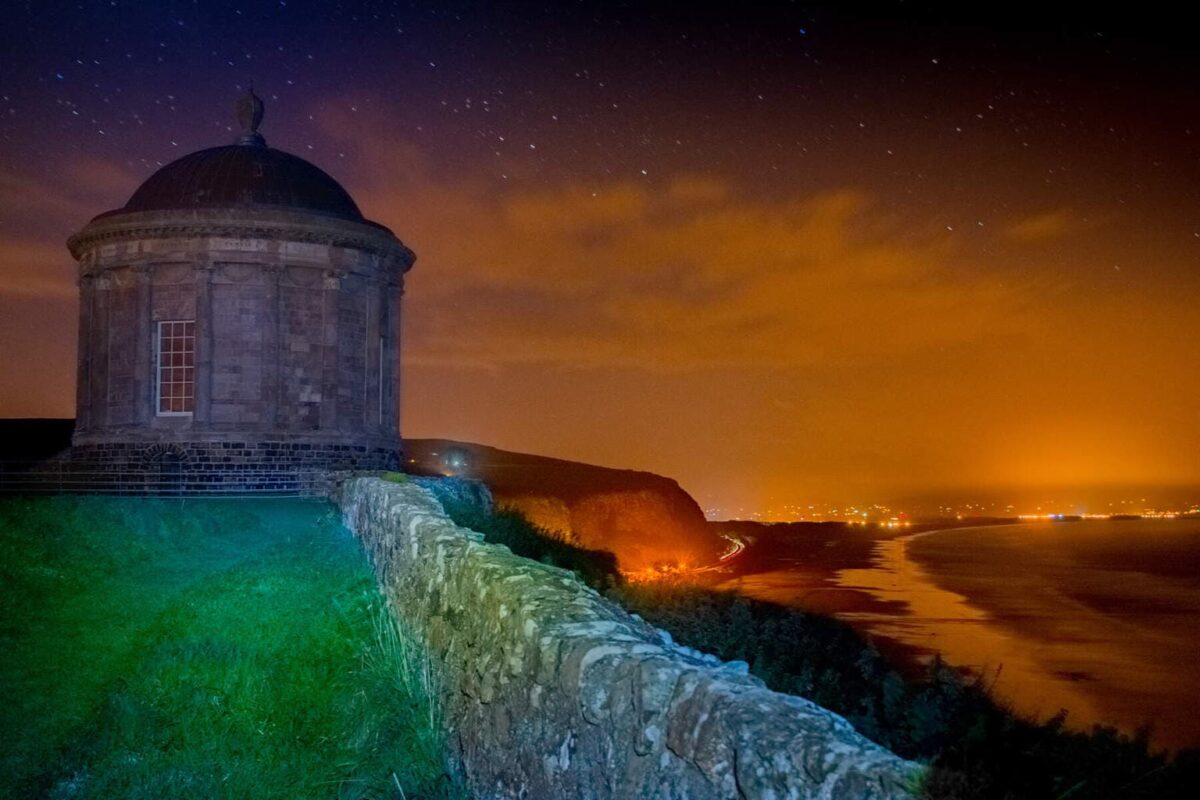
The first time I stood at the edge of the cliff beside Mussenden Temple, the wind was so fierce off the Atlantic that I had to lean into it just to stay upright. Below me, Downhill Strand curved away in a long pale arc; the little circular temple clung to its eroding headland as if daring the sea to take it. That image has never left me. I have brought visitors and friends here more times than I can count, and the reaction is always the same: a long silence, then, quietly, ‘I had no idea this existed.’
If you are planning a trip along the Causeway Coastal Route, Mussenden Temple in Northern Ireland belongs near the very top of your list. This guide covers everything you need to know to plan a visit: history, tickets, how to get there, parking, accessibility, places to eat and stay nearby, and the Irish folklore woven into the landscape around it.
See also: 60 Best Northern Ireland Tourist Attractions
- Mussenden Temple and Downhill Demesne: The Complete Visitor Guide to One of Northern Ireland's Most Dramatic Landmarks
- What Is Mussenden Temple? A Clifftop Icon of Northern Ireland
- The History of Downhill Demesne and Mussenden Temple
- How to Save the Clifftop: The World Monuments Watch
- How to Visit Mussenden Temple: Planning Your Trip Step by Step
- Mussenden Temple Tickets, Opening Hours, and What Is Included
- Mussenden Temple Parking: Everything You Need to Know
- How to Get to Mussenden Temple
- What to See Within the Downhill Demesne Estate
- Where to Stay Near Mussenden Temple
- Where to Eat Near Mussenden Temple
- Free Things to Do Near Mussenden Temple in Northern Ireland
- Mussenden Temple and the Causeway Coastal Route: What Else Is Nearby
- Why Mussenden Temple Belongs on Your Northern Ireland Itinerary
- Frequently Asked Questions About Mussenden Temple
What Is Mussenden Temple? A Clifftop Icon of Northern Ireland
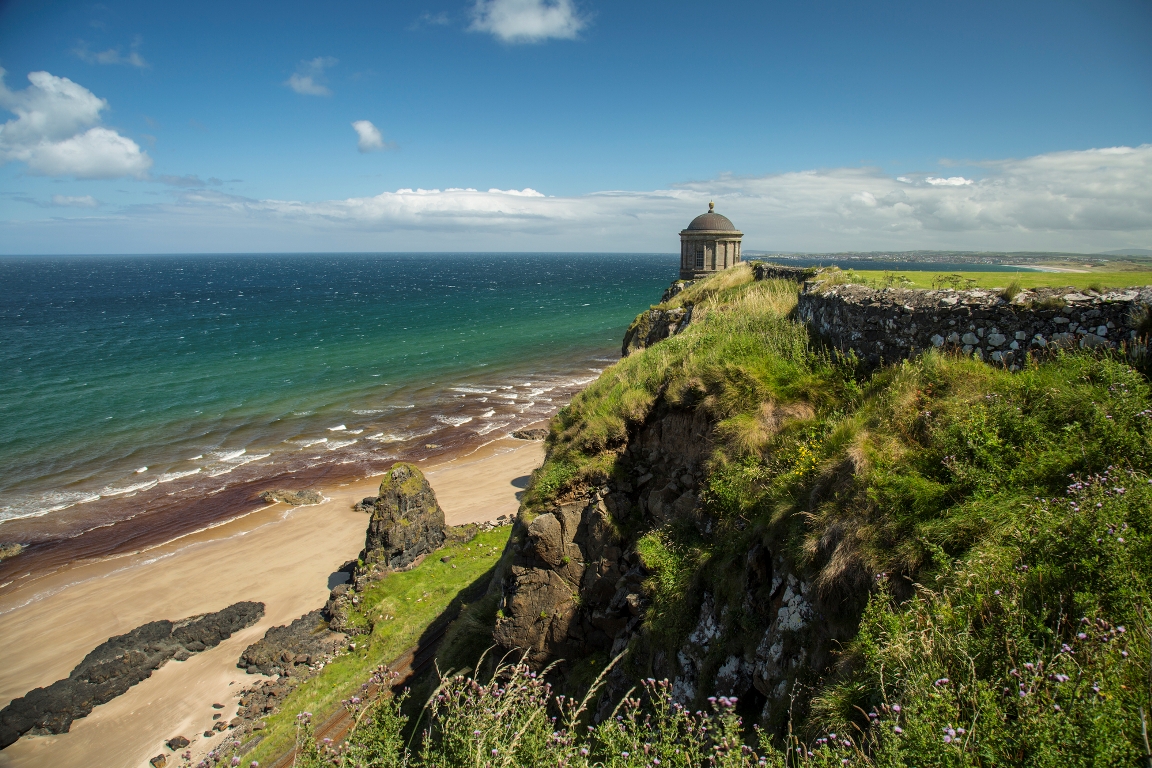
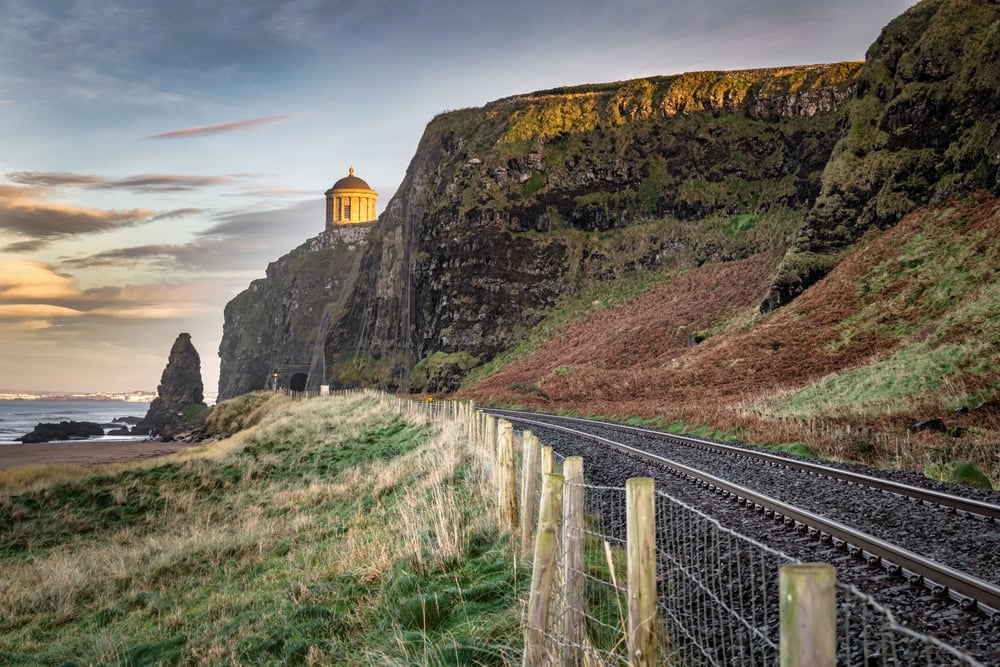
Mussenden Temple is a small, circular neoclassical building perched on a 120-foot basalt cliff on the north-western edge of Northern Ireland, roughly one mile west of Castlerock in County Londonderry. It sits within the ruined Downhill Demesne estate on the Causeway Coastal Route, and it is managed today by the National Trust alongside the Hezlett House.
Built in 1785 by the eccentric Frederick Hervey, the 4th Earl of Bristol and Bishop of Derry, the temple was designed as a summer library and modelled on the Temple of Vesta in Tivoli, near Rome. It is one of the most photographed buildings in Ireland and has been used as a filming location for Game of Thrones, where it doubled as the exterior of Dragonstone.

The views from the clifftop are extraordinary. To the west you can see across Downhill Strand to Magilligan Point and across the water to Donegal’s Inishowen Peninsula. To the east, Castlerock beach stretches towards Portstewart, Portrush, and eventually Fair Head. On a clear day the Paps of Jura in Scotland are visible to the northeast, and the Giants Causeway headlands to the east.
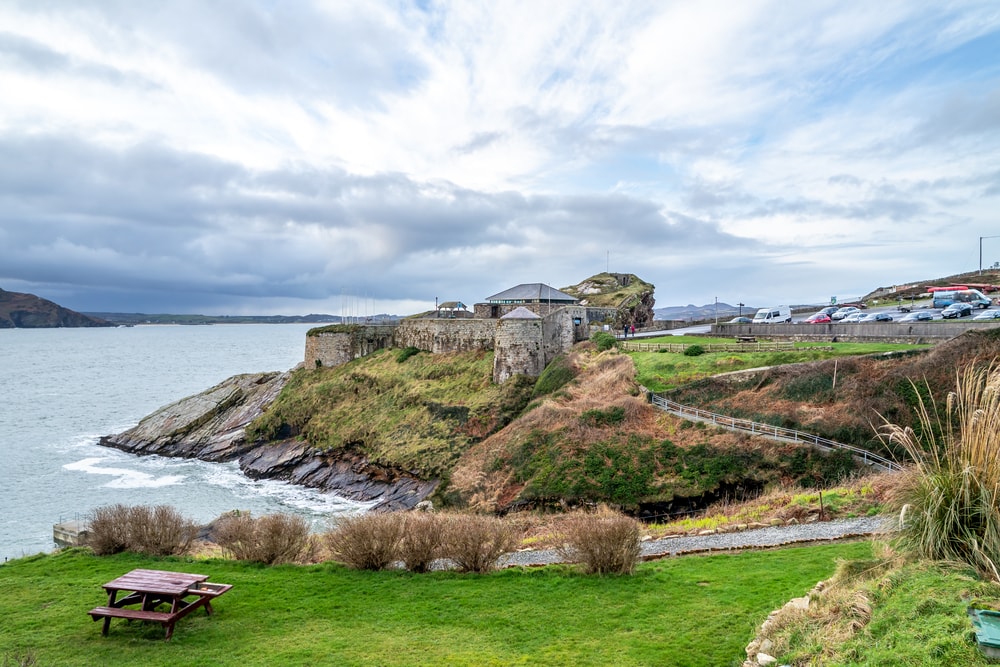
What Does Demesne Mean?
You will come across the word ‘demesne’ throughout both Northern Ireland and the Republic. It simply refers to the walled private grounds of an estate that were reserved exclusively for the use of the landowner and not accessible to the public. Downhill Demesne, sometimes called the Downhill Estate, was the private enclosed landscape surrounding what was not a castle but a large English-style manor house. You can read more about it on the National Trust website.

The History of Downhill Demesne and Mussenden Temple
The Earl Bishop: Frederick Hervey
Frederick Hervey was one of the most colourful characters in 18th-century Irish life. Known as the Earl Bishop because he held both the title of 4th Earl of Bristol and the position of Bishop of Derry simultaneously, he was a man of genuine contradictions: a Church of Ireland bishop who championed Catholic emancipation, allowed Catholics to celebrate Mass in the crypt of his own temple, and pushed hard for political and social reform at a time when such positions were deeply unpopular among his peers.
He also had an eye for beauty in all its forms. He travelled extensively across Europe, collecting paintings and sculpture along the way, and brought that grandeur home to the north coast of Ireland. Downhill House, the manor at the heart of the demesne, featured domed ceilings, fluted Corinthian pilasters, and a lobby supported by columns of Derbyshire marble. It must have been spectacular.

The Story of Frideswide Mussenden
The temple itself was built as a gift and is at the heart of one of Irish history’s more poignant and scandalous love stories. The Earl Bishop built Mussenden Temple for Frideswide Bruce, who he described publicly as his cousin but who was in fact his niece. The nature of the relationship caused considerable scandal in polite society.

Frideswide eventually married a wealthy London banker named Daniel Mussenden, and the Bishop built the clifftop temple as a wedding gift and retreat for her. She was already in poor health when it was completed, and she died in 1785, the same year the temple was finished. What began as a library became her memorial, and her name has been attached to it ever since.
There is something profoundly Irish about this story: the grand gesture, the social transgression, the tragedy that arrives just as the beauty is completed. The inscription carved around the base of the building, drawn from Lucretius, captures it well: ‘Tis pleasant, safely to behold from shore the troubled sailor, and hear the tempests roar.
The Ruin of Downhill House
The Earl Bishop died in Italy in 1803 and the estate was inherited by his relation Henry Bruce. A catastrophic fire in 1851 severely damaged Downhill House, and by 1950 its roof was gone entirely. What stands today is a hauntingly beautiful ruin: roofless walls of dressed stone open to the sky, the bones of something that was once genuinely magnificent.
You can explore the ruins freely without a guide, which I think is actually the right way to do it. There is something more honest about ruins when you approach them on your own terms.

Irish Folklore and the Landscape
The landscape around Downhill Demesne carries the weight of older stories too. The north Antrim coast is deep in Irish folklore: the Giants Causeway nearby is explained in legend as the work of the giant Finn McCool, who built a causeway to Scotland to fight his rival Benandonner. The coastal headlands were believed to be thresholds between worlds, places where the veil between the living and the dead grew thin, particularly around Samhain.
The Black Glen within the demesne has the quiet, mossy atmosphere of the kind of place where, in Irish folklore, you might encounter a fairy mound or a spirit. Whether or not you believe in any of that, it has a particular quality of stillness that is worth seeking out.

How to Save the Clifftop: The World Monuments Watch
By 1997, coastal erosion had eaten more than 30 feet from the cliff beneath the temple, and the building was perilously close to collapse. The World Monuments Fund placed Mussenden Temple on its World Monuments Watch list, which brought both attention and funding.
Engineers stabilised the cliff using rock anchors, bolts, and dowels driven into the escarpment. Large fissures and cavities in the cliff face were filled with pigmented mortar and local basalt to blend with the natural rock. In 1998 the temple was declared secure, and markers were placed on the cliff face to allow for ongoing monitoring of erosion. It was a significant piece of conservation engineering, and it is why the temple is still standing today.
How to Visit Mussenden Temple: Planning Your Trip Step by Step
- Check the National Trust website for opening times and book tickets online in advance, especially in peak summer season.
- Decide how you are arriving: by car, by train from Belfast to Castlerock, or by bus from Coleraine. Each route is described below.
- Allow at least two hours on site to walk the grounds, visit the temple, explore the ruins of Downhill House, and take in the gardens.
- Wear appropriate footwear. The cliff paths can be muddy and the wind on the headland is frequently very strong.
- Stop at Al’s Coffee by the Lion’s Gate before or after your visit. This is not optional. More on that below.
- If you have mobility requirements, read the accessibility notes in this guide before you go.
- Check whether a visit to nearby Hezlett House is included in your ticket. It usually is.

Mussenden Temple Tickets, Opening Hours, and What Is Included
The National Trust manages the entire Downhill Demesne estate. Tickets cover the temple, the grounds, the ruins of Downhill House, the gardens, the Mausoleum, the Belvedere, and Hezlett House.
| Visitor Type | Standard Price | Gift Aid Price |
| Adult | £6.50 | £7.20 |
| Child | £3.25 | £3.60 |
| Family | £16.25 | £18.00 |
| National Trust Members | Free | Free |
Opening hours: Monday to Sunday, 10am to 5pm. Always check the National Trust Downhill Demesne page for current seasonal hours before you travel.

Mussenden Temple Parking: Everything You Need to Know
Car parking is available at Lion’s Gate, the main entrance to the estate. The National Trust operates Pay by Phone parking here.
Standard parking: £5 per vehicle. The machine at Lion’s Gate accepts card payments only. You can also pay via the JustPark app using location code 80563. National Trust members park free by scanning their membership card at the machine. Blue Badge holders park free. This includes disabled parking badges from the USA and Canada, which are accepted. If you are a Blue Badge holder, it is worth knowing this in advance as it removes one friction point from the visit.
There is also a small free car park at the western end of Tunnel Brae in Castlerock, near the black stone gate lodge, which is the starting point for the coastal walk to the temple. This is useful if you are planning to walk in rather than drive directly to Lion’s Gate.
Accessibility at Mussenden Temple
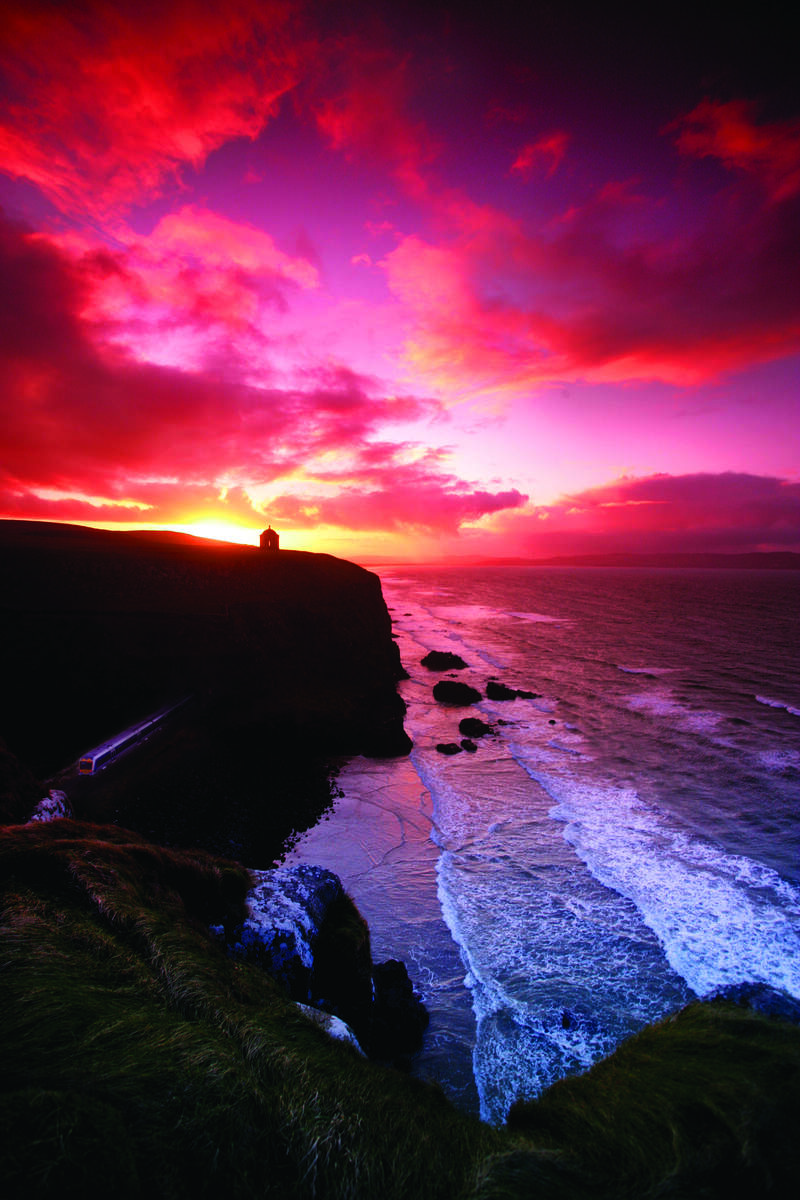
I travel as a mobility-challenged visitor and I will be honest with you: Mussenden Temple is not an easy site for people with limited mobility. The clifftop paths are exposed and can be uneven, and the wind is a significant factor. However, the car park at Lion’s Gate is close to the ruins of Downhill House and the gardens, which are more accessible than the cliff edge itself.
The National Trust does work to maintain accessible routes where possible. I would recommend contacting them directly before your visit if you have specific mobility requirements, as conditions and available support can vary by season. The National Trust accessibility page has general guidance.
How to Get to Mussenden Temple
By Car
Mussenden Temple and Downhill Demesne are located one mile west of Castlerock and five miles west of Coleraine on the coast road between Coleraine and Downhill. If you are driving from Belfast, the journey takes approximately one hour and twenty minutes via the A2 Causeway Coastal Route. This is one of the great scenic drives in Ireland and should not be rushed. Rental cars are available from Belfast and from Derry/Londonderry.
By Train
Translink operates a rail service from Belfast to Castlerock. The station is about half a mile from the entrance to the demesne, making this a very manageable option. The train journey is scenic in its own right as it hugs the coast.
By Bus
Ulsterbus Route 234 runs from Coleraine towards Londonderry and stops near the Downhill Demesne. Ask the driver to let you know when you reach the stop for the temple. The walk from the road to the temple takes about ten minutes.
The Castlerock to Mussenden Temple Walk: Free Entry Route
This is my favourite way to approach the site when time and weather allow. The walk starts and finishes at the small free car park at the western end of Tunnel Brae in Castlerock, adjacent to the black stone gate lodge.
Cross the stone step-over stile and follow the stone path along the boundary of the caravan park. The grass path then leads around the cliff-top headland, known locally as The Moor. This route is two to three miles in total and gives you the approach the Earl Bishop intended: arriving at the temple from the land side, with the sea revealing itself gradually on either side of the headland.
If you walk in from Castlerock, your entry to the grounds via the coastal path is free, though the interior of the temple itself is only accessible with a ticket. Walk NI provides a full guide to this route.
A word of caution from personal experience: exercise great care near the cliff edges. The drops are severe and there are no safety railings in many places. Keep children and dogs under close control.
What to See Within the Downhill Demesne Estate
The Temple Itself
The circular domed temple is based on the Temple of Vesta in Tivoli and was designed to function as a summer library. It was heated by a fire beneath the floor to prevent books from becoming damp in the sea air, a remarkably practical solution for such an apparently romantic building. The inscription from Lucretius runs around the exterior frieze and rewards the walk up close.
One important thing to know before you visit: the interior of Mussenden Temple is not open to the general public. The National Trust keeps it closed to preserve the structure. You can view it from the outside and walk right up to it, but interior access is only available during guided tours or special events such as bat walks, concerts, and the occasional open day. Check the National Trust events page before you visit if seeing inside is important to you.

The Lion’s Gate
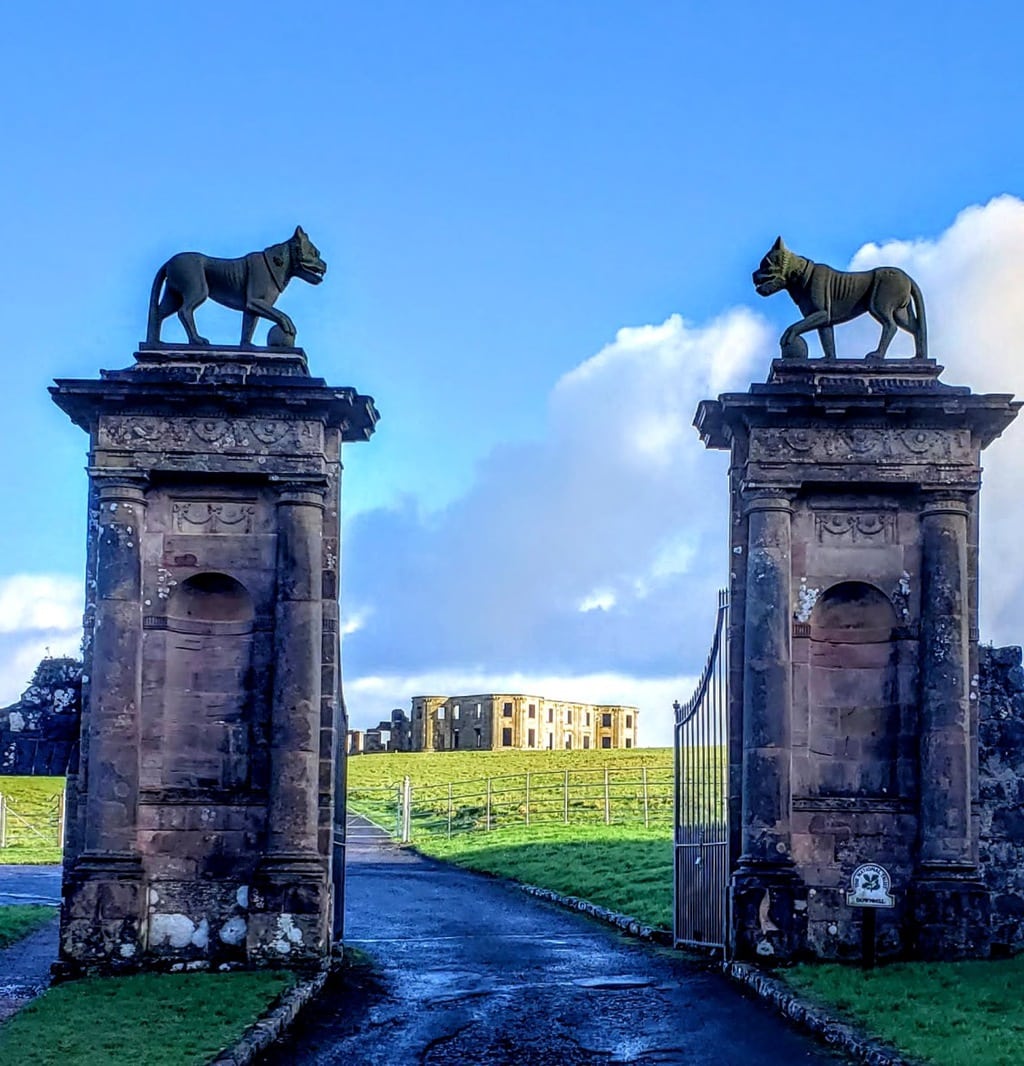
One of the two entrances to the property, recently restored, with pillars topped by ounces – these are ancient heraldic beasts similar to lynxes or leopards. This is also where you will find Al’s Coffee.
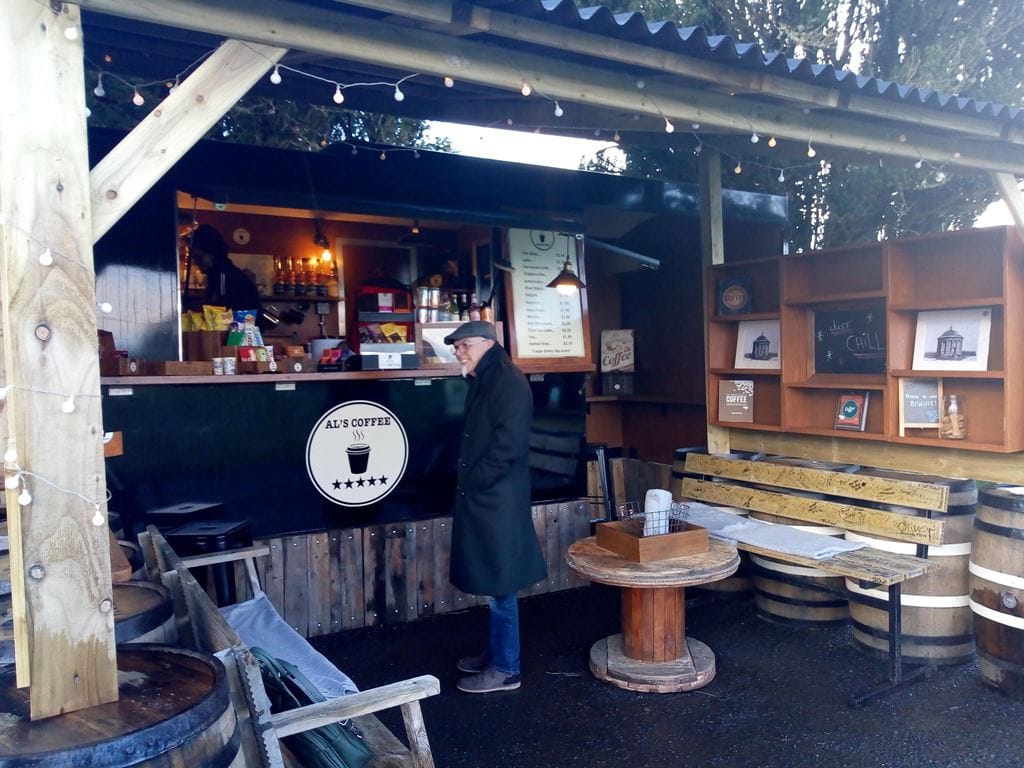
I am going to put this plainly: Al’s Coffee, visible from the Lion’s Gate entrance, is run by a Scottish man on an Irish estate and it serves what I would describe, without hesitation, as the best coffee I have had in Ireland. I did not need sugar, which for me is extraordinary. If you are visiting Mussenden Temple and you do not stop at Al’s Coffee, you are doing the visit wrong.
The Bishop’s Gate and the Black Glen
The Bishop’s Gate features a Gothic gate lodge with carved symbolic decorations including a bishop’s mitre and a series of cow skulls. Beyond it, the Black Glen is a small garden of trees that offers genuine shelter from the winds that can be ferocious on the clifftop. It is a quiet, mossy space that has a particularly distinctive atmosphere.
The Bishop’s Gate Gardens also contain a relict arboretum with a number of rare and non-native tree species. It is worth slowing down here rather than heading straight for the clifftop. The rare trees are a genuine point of distinction for the estate and not something most visitors take the time to notice.
Binevenagh Area of Outstanding Natural Beauty
The entire Downhill Demesne estate sits within the Binevenagh Area of Outstanding Natural Beauty, a designation that covers the dramatic basalt cliffs, coastal headlands, and upland moorland of this part of County Londonderry. It is one of the reasons the landscape feels so intact and unhurried compared to more heavily developed tourist areas. The AONB status protects the wider setting that makes the temple so striking.

Lady Erne’s Seat and the Belvedere
Also known as Lady Erne’s Seat, the Belvedere was the summer house of the Bishop’s daughter Mary. It sits above the Black Glen and rewards the climb with sea views. A fitting place to sit for a few minutes.

The Bog Garden
Located by the Bishop’s Gate, this garden was first created by Lady Bruce in 1910 and features a striking variety of flowering plants, including some impressive irises in season.
The Mausoleum
Technically a cenotaph rather than a tomb, this empty memorial was built by the Earl Bishop to honour his brother George Hervey. Somewhere on the grounds, is a statue of George that was blown from its plinth in a storm has never been fully recovered. Keep an eye out.

The Dovecote and Icehouse
A curious round building that served dual purposes: an icehouse on the lower level, where ice cut from a nearby pond was stored, and a dovecote above. It is a good example of the practical ingenuity that underpins a lot of 18th-century estate design.

The Walled Garden
Once the productive heart of the estate, supplying vegetables, fruit, and flowers to Downhill House, the walled garden now contains a small herd of sheep and a few apple trees. Very little of the original planting remains, but the walls themselves are beautiful and the sense of enclosure after the open clifftop is welcome.

The Ruins of Downhill House
The roofless ruin of Downhill House stands at the centre of the estate. What remains gives a strong sense of what was lost: the scale of the building, the quality of the stonework, the ambition of it. The fire of 1851 and decades of neglect did their work. You can walk through and around the ruins freely.

Guided Tours
The National Trust offers guided historical tours of Downhill Demesne and Mussenden Temple that last approximately two hours. These are the only reliable way to get inside the temple itself. Booking is essential and should be done through the National Trust website before you arrive. Special events including bat walks at dusk, walk and sketch sessions with local artists, and evening concerts on the clifftop are also offered seasonally. If any of these appeal, check the events calendar well ahead of your visit as they sell out.
Visiting with Dogs and Getting Married at Mussenden Temple
Downhill Demesne carries a one-pawprint dog-friendly rating from the National Trust, meaning dogs are welcome on leads in much of the estate. The clifftop paths and grounds are accessible with dogs, though the wind and exposed terrain mean you should keep them close to the edge. If you are travelling with a dog, this is one of the better National Trust properties in Northern Ireland for canine company.
Few places in Ireland offer a more dramatic setting for a wedding ceremony or wedding photographs. Mussenden Temple and the Downhill Demesne are available as a wedding venue through the National Trust. The cost depends on the package selected and what it includes, from the hire of the space to additional services such as a wedding planner, decor, and photography. Contact the National Trust directly to discuss availability and current pricing.
If a full ceremony is beyond your budget, coming here for wedding photographs alone is worthwhile. Photographer Del Smith has captured some exceptional images at this location.

Where to Stay Near Mussenden Temple
Castlerock is the nearest village to Mussenden Temple and offers a range of accommodation options. Coleraine, five miles east, has a broader selection of hotels. Portrush and Portstewart, slightly further along the coast, are lively seaside towns with good choices across all price points.
Find accommodation close to Mussenden Temple on Booking.com, which lists everything from self-catering cottages to seafront hotels in Castlerock, Coleraine, and Portrush. Most properties on the coast are within easy driving distance of the demesne.
For those who prefer a guided experience, Viator offers day tours along the Causeway Coastal Route that include Mussenden Temple as a stop.
Accessible Accommodation
If you have mobility requirements, filter specifically for accessible rooms when searching on Booking.com. Properties in Coleraine and Portrush tend to have more accessible options than smaller coastal villages. As always, call ahead to confirm exactly what ‘accessible’ means at any given property before booking.
Where to Eat Near Mussenden Temple
Al’s Coffee at Lion’s Gate
Already mentioned, but worth repeating: start or finish here. Al’s serves excellent coffee from a setup by the main gate. It is simple, it is honest, and the coffee is genuinely outstanding.
Castlerock Village
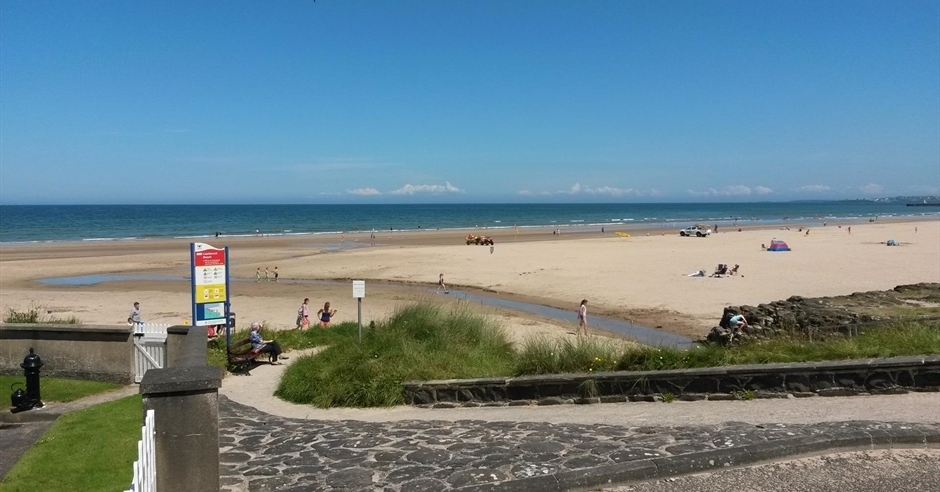
Castlerock has a small number of cafes and takeaways suitable for a quick lunch or some traditional Irish pub food or snack before or after a visit. The beach is an excellent spot for a picnic if the weather is cooperating, and the local shops can supply what you need.



Coleraine Town Centre
Five miles east, Coleraine offers a proper range of options from casual cafes to full restaurant dining. The town has several well-regarded restaurants and is worth a look, particularly if you are making a day of the Causeway Coast.
Portrush and Portstewart
Both seaside towns have strong food scenes. Portrush in particular has developed significantly as a food destination in recent years, with options ranging from excellent fish and chips on the harbour front to more ambitious restaurant dining. Harry’s Shack at Portstewart Strand is one of the most celebrated casual dining spots on the north coast, though it is seasonal and busy. Book ahead.
Parking is available in both towns, with some accessible bays in the main car parks. Both town centres are reasonably flat and navigable for those with limited mobility, though the seafront areas can be uneven in places.

Free Things to Do Near Mussenden Temple in Northern Ireland
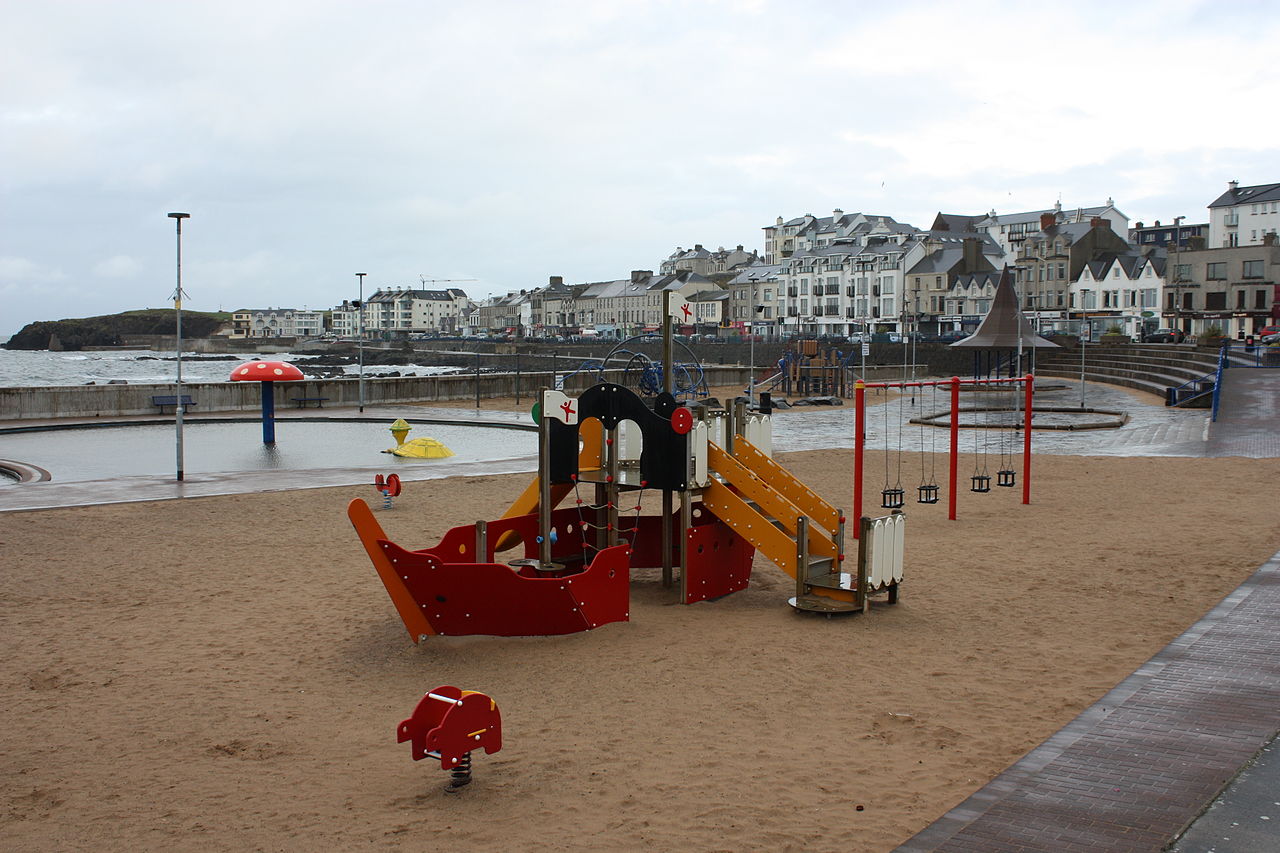
If you are visiting Mussenden Temple, you are on one of the richest stretches of coastline in Europe for free things to do. The clifftop walk from Castlerock to the temple costs nothing. Downhill Strand is a public beach and one of the finest in Northern Ireland, completely free to access. The Causeway Coastal Route itself is free to drive and one of the world’s great road trips.
The Giants Causeway is nearby. The causeway itself, the geological formation, is always free to visit. The National Trust visitor centre charges for entry but the rocks themselves are public. See our guide to Northern Ireland tourist attractions for a full list of landmarks, many of which cost nothing to see.
Nearby in the Republic of Ireland, there is a wide range of free things to do as well, from coastal walks on the Inishowen Peninsula in Donegal, visible from the clifftop at Mussenden, to historic sites across County Donegal and beyond.
Mussenden Temple and the Causeway Coastal Route: What Else Is Nearby
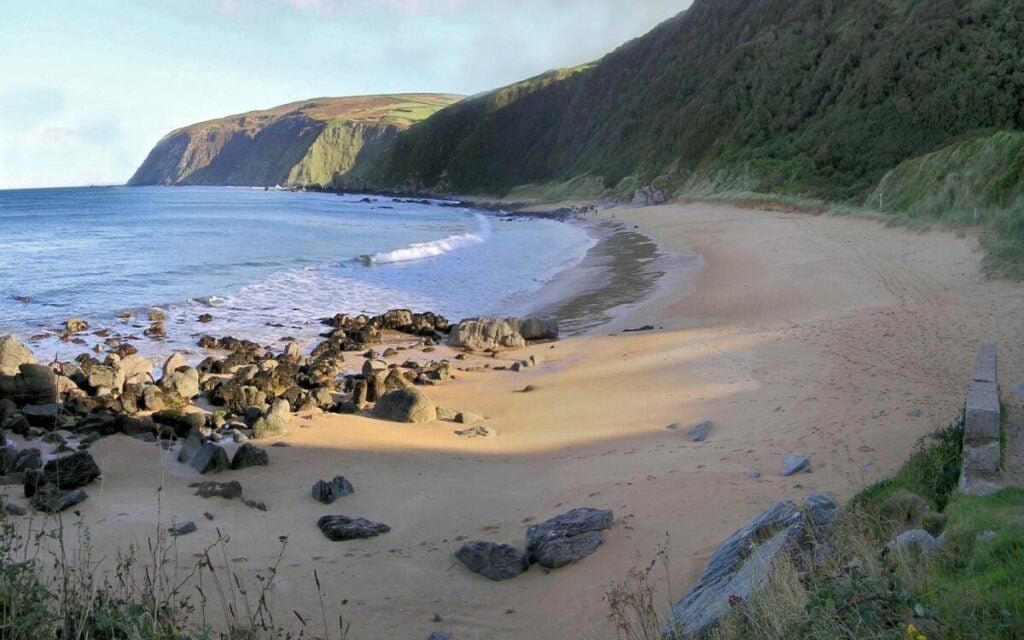
Mussenden Temple sits at the western end of the Causeway Coastal Route, one of the world’s great coastal drives. From here you can follow the coast east to the Giants Causeway, Carrick-a-Rede Rope Bridge, Ballintoy Harbour (another Game of Thrones location), Cushendall, and eventually down into Belfast.
If you are combining Northern Ireland with a visit to Scotland, the ferry from Cairnryan to Belfast or from Ballycastle to Campbeltown makes the crossing manageable. Edinburgh’s Royal Edinburgh Military Tattoo is one of Scotland’s great annual spectacles and pairs well with a wider trip taking in Northern Ireland and Scotland together.

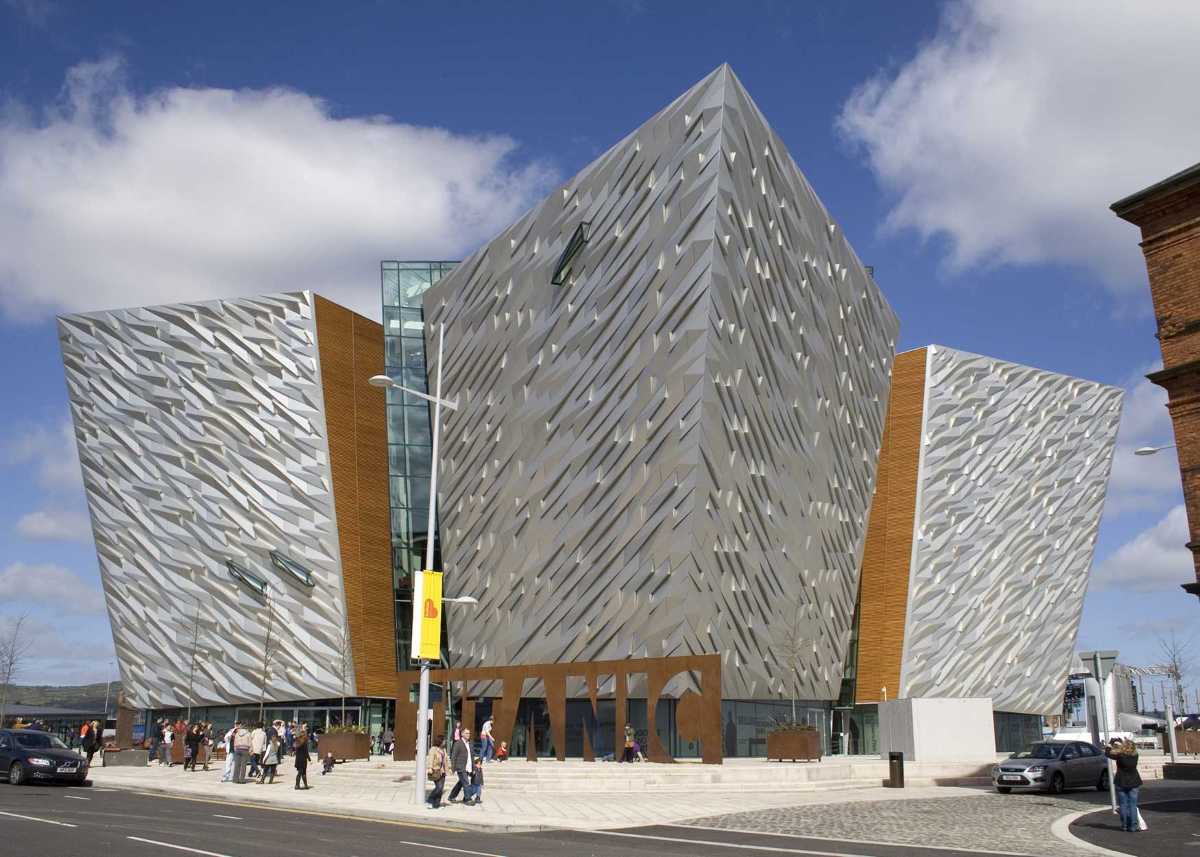
Belfast itself deserves significant time. The Titanic Belfast museum, built on the slipways where RMS Titanic was constructed, is one of the finest maritime museums in the world and a must-visit on any trip to Northern Ireland. It tells the story of the ship from design and construction through to the disaster and its aftermath, with extraordinary depth and honesty. Entry is charged but the surrounding Titanic Quarter, including the exterior of the slipways, is free to walk around.
See also: 101 Landmarks in Northern Ireland to visit

Why Mussenden Temple Belongs on Your Northern Ireland Itinerary
Mussenden Temple in Northern Ireland is one of those places that photographs do not quite prepare you for. The scale of the cliff, the force of the wind, the quality of light on the Atlantic, the incongruity of this neat classical building balanced on the edge of a dissolving escarpment: you have to stand there to understand it fully.
It is a place with genuine layers. There is the architectural history, the story of the Earl Bishop and Frideswide Mussenden, the engineering achievement that saved the building from the sea, the Game of Thrones connection, and underneath all of it, the older landscape of Irish folklore and coastal mythology that this part of the north coast carries. Any one of those layers would be worth a visit. Together, they make Mussenden Temple essential.
Plan carefully, dress for wind and weather, stop at Al’s Coffee, and give yourself more time than you think you will need. You will not be disappointed.
Frequently Asked Questions About Mussenden Temple
How much does it cost to visit Mussenden Temple?
Adults pay £7.20 (or £6.50 without Gift Aid). Children pay £3.60 (£3.25). Families pay £18.00 (£16.25). National Trust members enter free. Tickets cover the grounds, Downhill House ruins, gardens, Mausoleum, Belvedere, and Hezlett House.
Can you visit Mussenden Temple for free?
Yes. If you walk to the temple from Castlerock via the coastal path, entry to the grounds is free. The interior of the temple is only accessible with a paid ticket. National Trust members also enter free.
Is Mussenden Temple accessible for wheelchair users or those with limited mobility?
The site has significant accessibility limitations. Clifftop paths are exposed and uneven, and wind can make them challenging. The car park at Lion’s Gate is close to the ruins and gardens, which are more manageable. Blue Badge holders park free, including those with badges from the USA and Canada. Contact the National Trust directly before visiting to discuss your specific needs.
What was Mussenden Temple built for?
It was built as a summer library by Frederick Hervey, the Earl Bishop of Derry, in 1785. It was modelled on the Temple of Vesta in Tivoli, near Rome, and was heated by a fire beneath the floor to keep the books dry in the sea air. It became a memorial to Frideswide Mussenden, who died the same year it was completed.
Is Mussenden Temple a Game of Thrones filming location?
Yes. Both Mussenden Temple and Downhill Beach were used as filming locations for Game of Thrones, serving as the exterior of Dragonstone, the castle of House Targaryen. Castlerock beach is also recognisable from several scenes in the series.
Can you go inside Mussenden Temple?
Not during a standard visit. The interior is closed to the general public to protect the structure. Interior access is only available during National Trust guided tours (approximately two hours, booking essential) or special events such as bat walks, concerts, and open days. Check the National Trust events calendar before your visit if seeing inside the temple is a priority.
How do I get to Mussenden Temple without a car?
Take a Translink train from Belfast to Castlerock, then walk approximately half a mile to the estate entrance. Alternatively, take Ulsterbus Route 234 from Coleraine towards Londonderry and ask the driver to stop at Downhill Demesne. The walk from the bus stop to the temple takes about ten minutes.
What time does Mussenden Temple open and close?
Mussenden Temple and Downhill Demesne are open Monday to Sunday from 10am to 5pm. Check the National Trust website for any seasonal variations before your visit.
Is there parking at Mussenden Temple?
Parking is available at Lion’s Gate. The cost is £5 per vehicle. Payment is by card at the machine or via the JustPark app using location code 80563. Parking is free for National Trust members (scan your membership card at the machine) and for Blue Badge holders, including holders of disabled parking badges from the USA and Canada.

Travelling with limited mobility? Our Accessible Northern Ireland Guide covers wheelchair-friendly attractions, accessible transport, and first-hand mobility tips across Belfast, the Causeway Coast, and Derry.
Planning a trip to Northern Ireland? Our complete Northern Ireland Travel Guide covers Belfast, the Causeway Coastal Route, county guides, hidden gems, itineraries, food, and local tips from a Donegal native.
This guide is part of a wider Accessible Ireland travel series, offering realistic, first-hand advice for limited-mobility travel across Ireland.
➡️Accessible Causeway Coast Route
➡️Accessible Wild Atlantic Way
If you encounter changes (e.g., temporary lift closures or construction), please let me know so I can update this page promptly.