
Rock of Cashel Tipperary: The Complete Visitor Guide
What is the Rock of Cashel?
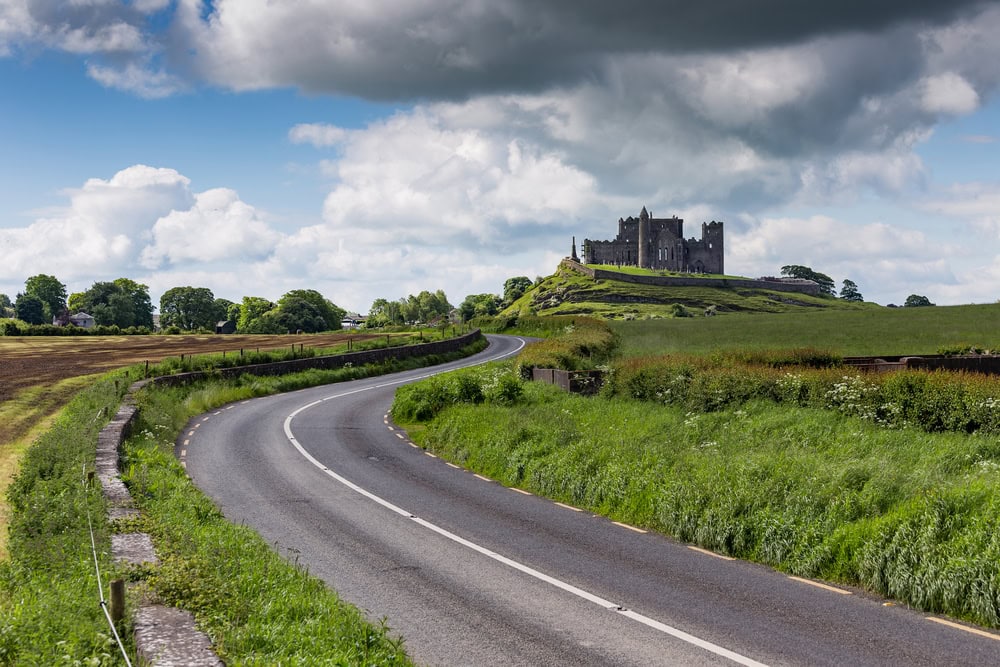
The Rock of Cashel is a complex of medieval buildings set on a limestone outcrop in Cashel, County Tipperary, Ireland. Dating from the 5th century, it served for over a thousand years as the seat of the Kings of Munster and a major Christian centre. The site includes a 12th-century Romanesque chapel (Cormac’s Chapel), a 13th-century Gothic cathedral, a round tower dating to around 1100, a Hall of the Vicars Choral, and an extensive graveyard. It is one of the most significant archaeological and architectural sites in Ireland and part of the Ireland’s Ancient East heritage trail.

The Rock of Cashel in County Tipperary is one of the most extraordinary heritage sites in Ireland. Rising dramatically from the flat green plains of the Golden Vale, this ancient complex of medieval buildings has dominated the Tipperary landscape for well over a thousand years. Whether you are planning your first trip to Ireland or returning for another visit, the Rock of Cashel belongs on your itinerary.
I’ve visited and stayed in Tipperary many times and have taken friends and family around this iconic site on many occasions. This guide covers everything you need to know: the full history of the site, a building-by-building tour of the Rock, practical information on tickets, parking and accessibility, and a quick tour of nearby Hore Abbey, local knowledge about County Tipperary, and a FAQ section built around real search queries.
- Rock of Cashel Tipperary: The Complete Visitor Guide
- What Is the Rock of Cashel? A Clear Definition
- The History of the Rock of Cashel: From Royal Fortress to Christian Centre
- Irish Folklore and the Rock of Cashel
- Cormac's Chapel: The Jewel of the Rock of Cashel
- The Round Tower, Cathedral, and High Cross
- Hore Abbey: The Hidden Ruin Below the Rock
- Practical Travel Tips for Visiting the Rock of Cashel
- County Tipperary: What Else to See Near the Rock of Cashel
- How the Rock of Cashel Fits an Ireland Itinerary
- Why the Rock of Cashel Belongs on Every Ireland Itinerary
- Frequently Asked Questions: Rock of Cashel Tipperary
- Exploring the fascinating regions of Ireland
What Is the Rock of Cashel? A Clear Definition
The Rock of Cashel is a historic complex of medieval buildings located in Cashel town, County Tipperary, in the province of Munster, Ireland. The name derives from the Irish word Caiseal, meaning stone fort or fortress. Known also as St. Patrick’s Rock and Cashel of the Kings, the site rises approximately 200 feet above the surrounding countryside on a limestone outcrop banded with natural rock formations.
The complex contains five principal structures: Cormac’s Chapel (1127 to 1134), a Gothic cathedral (1235 to 1270), a round tower (circa 1100), the Hall of the Vicars Choral (15th century), and the High Cross of St. Patrick. The site is managed by the Office of Public Works (OPW) under Heritage Ireland and sits on the UNESCO Tentative World Heritage List. It is the defining landmark of Ireland’s Ancient East.
The History of the Rock of Cashel: From Royal Fortress to Christian Centre
The history of the Rock of Cashel spans more than sixteen centuries and touches on almost every significant chapter in Irish medieval history.
The Royal Origins: 4th to 10th Century
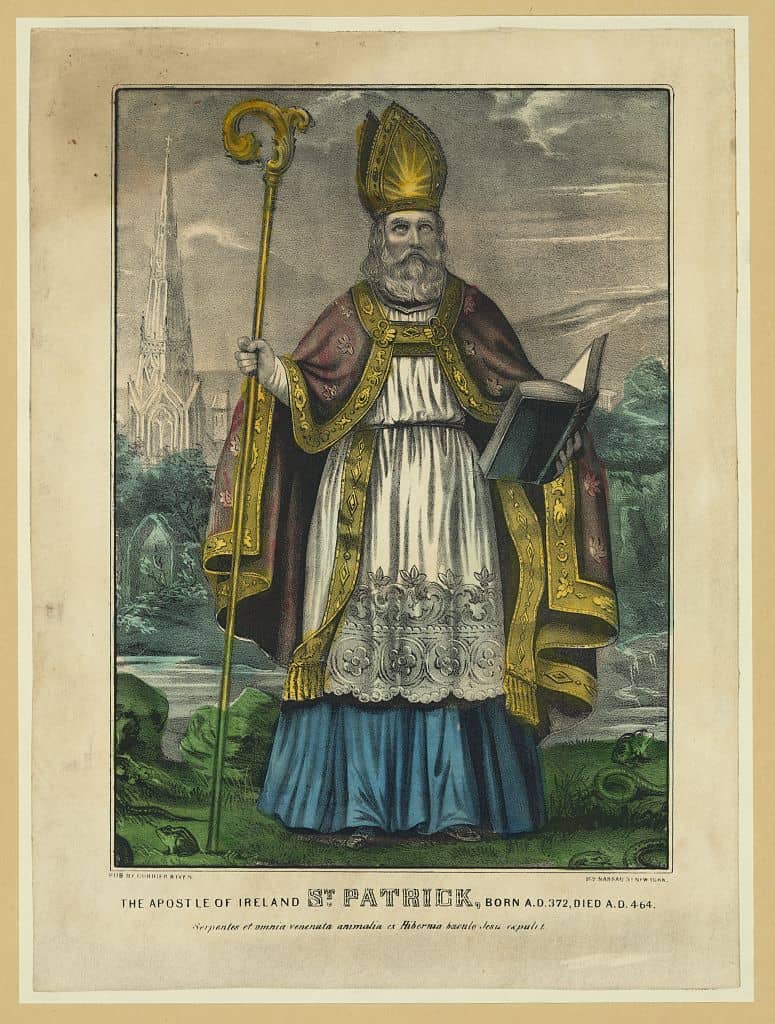
Around 370 AD, King Corc of Munster established a royal fortress on the limestone hill then known as the Fairy Ridge, making it the seat of the Eóganacht kings of Munster. In the 5th century, the site gained its most enduring association when St. Patrick came to Cashel to baptize King Aengus, the first Christian ruler of Munster. According to tradition, Patrick accidentally drove his episcopal staff through the king’s foot during the ceremony. Aengus, believing this to be part of the ritual, remained completely silent.
For more than a thousand years the Rock functioned as a symbol of royal and religious power. Brian Boru, the High King of Ireland who unified the country and defeated the Vikings at the Battle of Clontarf in 1014, was crowned at the Rock in the 10th century. His name is still spoken with a particular reverence in Tipperary.
The Christian Era: 12th to 15th Century
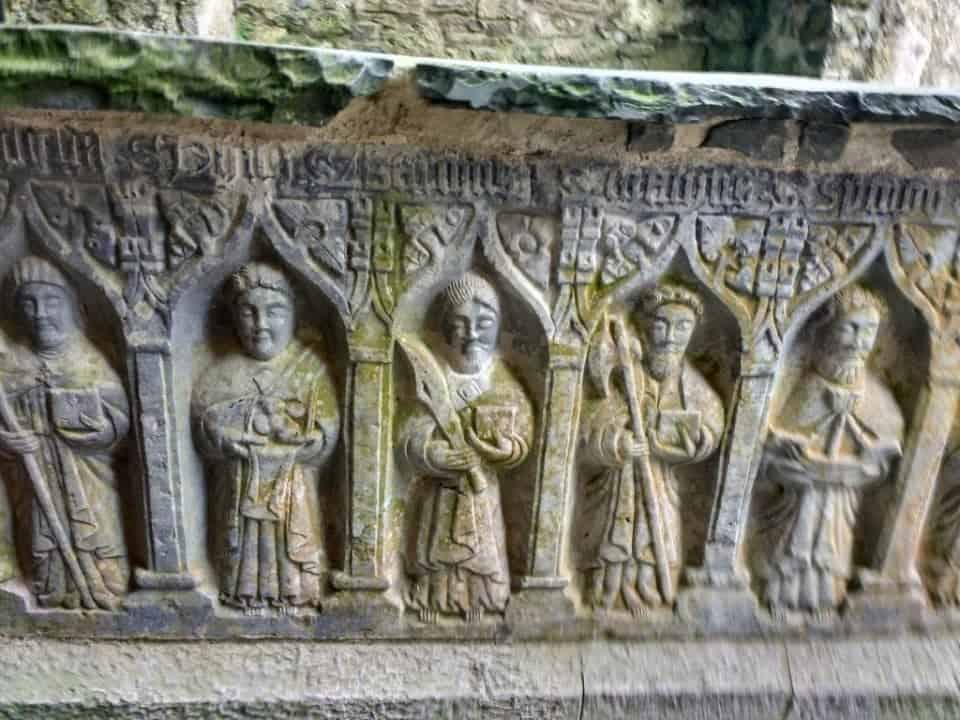
In 1101, King Muircheartach O’Brian gifted the Rock to the Church of Ireland. This transfer, widely interpreted as a political manoeuvre to prevent it from falling back to his rivals the McCarthys, began the Rock’s transformation into one of the most important Christian sites in medieval Ireland. Cormac’s Chapel was consecrated in 1134. The Gothic cathedral followed between 1235 and 1270. The Hall of the Vicars Choral was added in the 15th century to house the laymen appointed by the Church to assist in the chanting of cathedral services.

Destruction and Decline: 17th Century Onward
English Parliamentarian troops under the command of Murrough O’Brien caused significant destruction to the site in 1647. In 1749, Archbishop Price had the main cathedral roof removed, leaving it open to the elements. The reasons given at the time concerned the inconvenience of the walk from his palace, a decision that still produces visible disbelief in visitors when their guide mentions it.
Irish Folklore and the Rock of Cashel
Irish folklore offers an origin story considerably more dramatic than the historical record. According to legend, St. Patrick banished Satan from a cave in the Devil’s Bit, a mountain in nearby Tipperary. Satan, furious at the expulsion, bit a chunk from the mountain and spat it out across the landscape. That chunk of limestone landed in the plain of Tipperary, and it is the very rock on which Cashel stands today.
Whether or not you find the legend credible, it reflects something genuine about the atmosphere of the place. The Rock has a quality that is difficult to name precisely. On a clear morning the views across the Golden Vale are extraordinary. On a grey day, when Tipperary mist rolls in from the Galtee Mountains, the Rock feels genuinely ancient in a way that very few sites in Europe can replicate.
Cormac’s Chapel: The Jewel of the Rock of Cashel
Cormac’s Chapel is the architectural highlight of the entire complex and one of the finest examples of Romanesque architecture anywhere in Ireland. Construction began in 1127 under King Cormac Mac Carthaigh and the chapel was consecrated in 1134. It is small in scale but extraordinary in detail: carved sandstone arcading, blind arcades running the full length of the exterior, and twin towers that are unique in the context of Irish Romanesque architecture.

Inside, you will find the only surviving Romanesque frescoes in Ireland. Wall paintings in the chancel depict scenes from the early life of Christ and date from the mid-12th century. Gold-headed saints, deep sapphire blues, and robes of blood-red are faint now after centuries of exposure, but still clearly visible. These paintings are the earliest known decorative scheme of their kind in Ireland. Conservation work continues, and access to the interior may be limited at certain times; it is worth checking with the visitors’ centre on arrival.
In my opinion: Cormac’s Chapel alone justifies the drive from Dublin. The scale is intimate, the craftsmanship is extraordinary by any European standard, and the experience of encountering something this rare and this well-preserved is difficult to replicate elsewhere in Ireland. If your time is limited, spend the majority of it here.
The Round Tower, Cathedral, and High Cross
The Round Tower
The round tower is the oldest building on the Rock, dating to around 1100. Built using a dry-stone technique with some mortar added subsequently for structural safety, it stands to its original full height and is among the best-preserved examples of an Irish round tower in the country. Round towers served as bell towers and as places of refuge; the entrance door is set well above ground level, originally accessible only by a removable ladder.

The Cathedral
The cathedral was built between 1235 and 1270 in the shape of a cross, with a central tower that incorporated a residential castle at its western end. Despite the loss of the main cathedral roof in 1749, the structure retains considerable architectural drama. Soaring Gothic lancet windows frame open sky, and the scale of the nave conveys what the building must have felt like in its complete state. The graveyard surrounding the cathedral is extensive and contains medieval grave markers and several high crosses displaying Celtic art motifs.

The Hall of the Vicars Choral
Built in the 15th century, the Hall of the Vicars Choral served the men appointed by the Church to assist in the chanting of services at the cathedral. Today it functions as the main visitor reception area. The original 12th-century High Cross of St. Patrick is housed here; the cross you see outdoors on the Rock is a replica. The original has two carved faces: one showing Christ in a long floor-length robe, the other a bishop carrying a crozier, believed to represent St. Patrick.The undercroft houses a museum with the original St. Patrick’s Cross and priceless artifacts.

St Patrick’s Cross
At the summit of the Rock of Cashel in County Tipperary stands the replica of the distinctive granite cross known as Patrick’s Cross. According to local tradition, this cross marks the spot where Saint Patrick baptized King Aengus in the 5th century. Although the cross seen today is a 19th-century reproduction replacing a weathered medieval original, it remains a powerful symbol of Ireland’s patron saint and the site’s deep religious heritage, overlooking the surrounding plain once ruled by the Eóganachta dynasty.


Hore Abbey: The Hidden Ruin Below the Rock
From the top of the Rock, you can look down across the meadow fields to Hore Abbey sitting alone in the landscape. It is one of those views that stays with you. The abbey, also known as St. Mary’s Abbey or the Grey Abbey, was founded as a Cistercian house in the 1270s and was the last Cistercian abbey to be founded in Ireland.

Its name comes from the Irish An Mainistir Liath, meaning grey monastery, a reference to both the local stone and the grey-white colour of the Cistercian habit, which resembled the shade of hoar frost. The ruins date primarily from the 13th century with some 15th-century additions, most visibly the tower inserted in the middle of the transept. The cloister arcade, positioned to the north of the main building, is an unusual arrangement that architectural historians continue to find interesting.

The backstory of the founding is worth knowing. In 1269, Archbishop of Cashel David McCarvill had a dream in which the Benedictine monks then occupying the site attempted to decapitate him. Taking this as an unambiguous sign, he expelled the Benedictines and imported Cistercian monks from Mellifont Abbey to repopulate the house. The abbey was subsequently dissolved in the 16th century as part of the wider Dissolution of the Monasteries; in 1561 Queen Elizabeth I granted the site to Sir Henry Radcliffe.

There is no entry fee to Hore Abbey. Crowds are reliably thin compared to the Rock. The meadow is used for grazing cattle, so watch your footing. There is no parking at the abbey; walk from the Rock of Cashel car park through Cashel town or directly across the fields. The walk takes approximately 15 minutes and is straightforward in dry conditions.


Practical Travel Tips for Visiting the Rock of Cashel
Getting to the Rock of Cashel
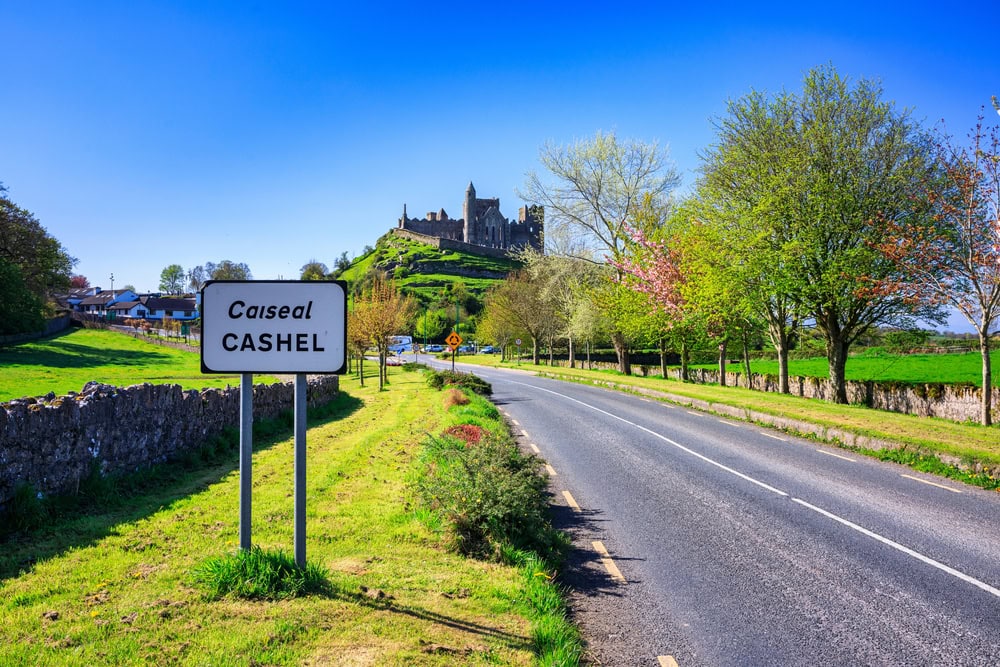
The Rock of Cashel is located in Cashel town, County Tipperary, approximately two hours from Dublin by car via the M8 motorway and one hour from Cork. From Kilkenny, one of the most rewarding stops on any Ireland itinerary, the drive takes approximately one hour.
Bus Eireann service X8 connects Dublin Busaras and Cork Bus Station to Cashel town centre, stopping on Main Street. From there the Rock is a short uphill walk.
Opening Hours
The Rock of Cashel is open all year except 24 to 26 December. Hours vary by season:
- Mid-September to mid-October: 09:00 to 17:30, last admission 16:45
- Mid-October to mid-March: 09:00 to 16:30, last admission 15:45
- Mid-March to early June: 09:00 to 17:30, last admission 16:45
- Early June to mid-September: 09:00 to 19:00, last admission 18:15
Always verify current hours at heritageireland.ie before travelling.
Admission Prices
- Adult: 8 euros
- Group or Senior: 6 euros
- Child or Student: 4 euros
- Family: 20 euros
Practical tip: If you stay in Cashel town, ask your accommodation or a local cafe about the visitor voucher scheme if you spend more than €15 euros. This can provide a two-for-one entry, a great saving for families.

Parking
A car park sits at the base of the Rock, a short uphill walk from the main entrance. The cost is approximately 6 euros per day. Coach groups must pre-book.
Guided Tours and Audio Guides
Guided tours can be arranged at the visitors’ information office in Cashel town or at the Rock itself. Audio guides are available in multiple languages. Audiovisual tours for visitors with sight impairment are also available. The average visit lasts 90 minutes to two hours, though Cormac’s Chapel alone can absorb an hour for those who look carefully.

Accessibility
The path to the Rock is gravelled and uneven in sections, presenting challenges for wheelchair users and visitors with significant mobility limitations. A drop-off point closer to the main entrance is available for those who need it. Not all areas of the site are fully wheelchair-accessible, but much of it can be navigated carefully given extra time. If you telephone the visitors’ centre ahead of your visit, staff can arrange appropriate assistance.
Hore Abbey, is accessed across an open field and presents additional challenges for visitors with mobility difficulties. As a mobility-challenged traveller who has visited the Rock myself, my honest advice is to call ahead, take the drop-off point, and do not rush the visit.
Best Time to Visit
The Rock is open year-round and each season offers something different. Summer brings the longest opening hours and the most lively atmosphere in Cashel town but also the largest crowds. Arriving at opening time, around 9am, gives you the site largely to yourself. Autumn is often underrated: visitor numbers drop, the weather in Tipperary is frequently mild into October, and the surrounding countryside turns a rich ochre and gold that matches the name of the Golden Vale perfectly.
County Tipperary: What Else to See Near the Rock of Cashel
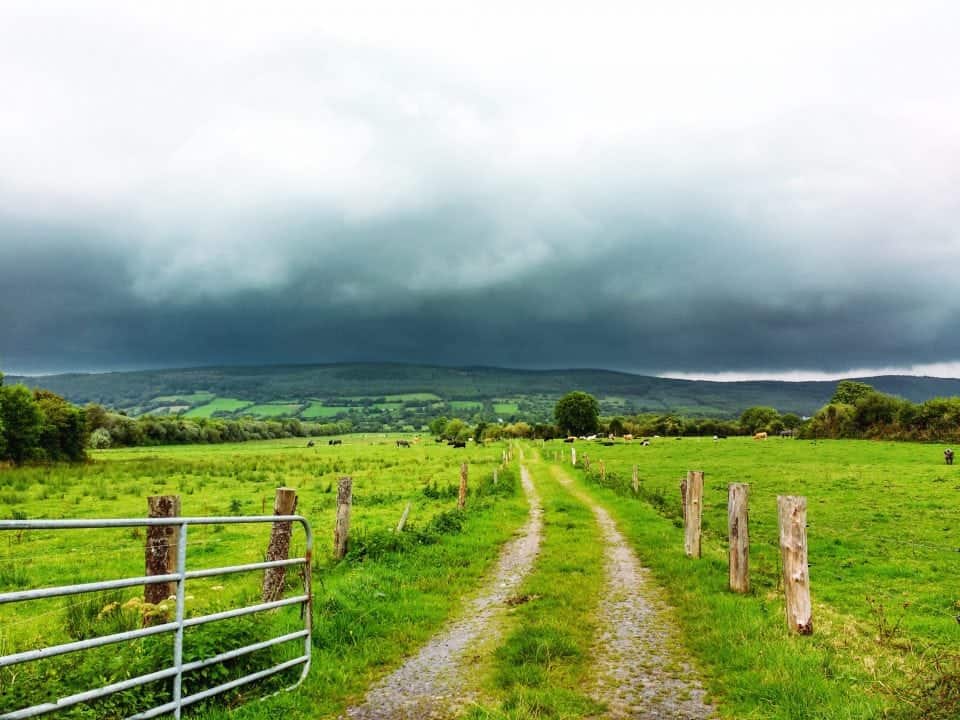
County Tipperary is consistently underestimated by visitors following the Wild Atlantic Way coastal route or rushing between Dublin and Cork. The interior of Ireland is quieter, more intimate, and in many ways more revealing about how the country actually lives.
Tipperary’s landscape centres on the Golden Vale, the fertile dairy farming belt extending across east Limerick, south Tipperary and north Cork. It is some of the richest agricultural land in Ireland, which is why the county produces exceptional dairy, dry-cured pork, and farmhouse charcuterie alongside world-class racehorses.
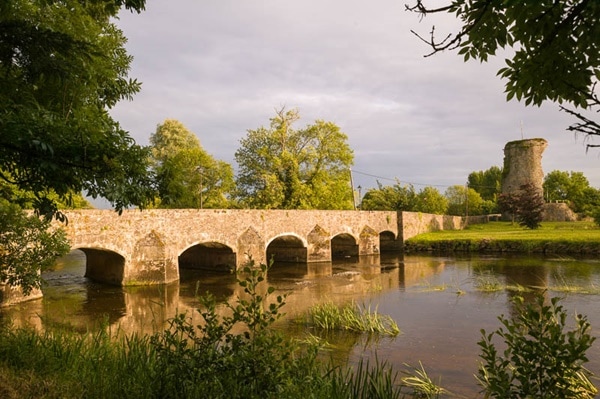
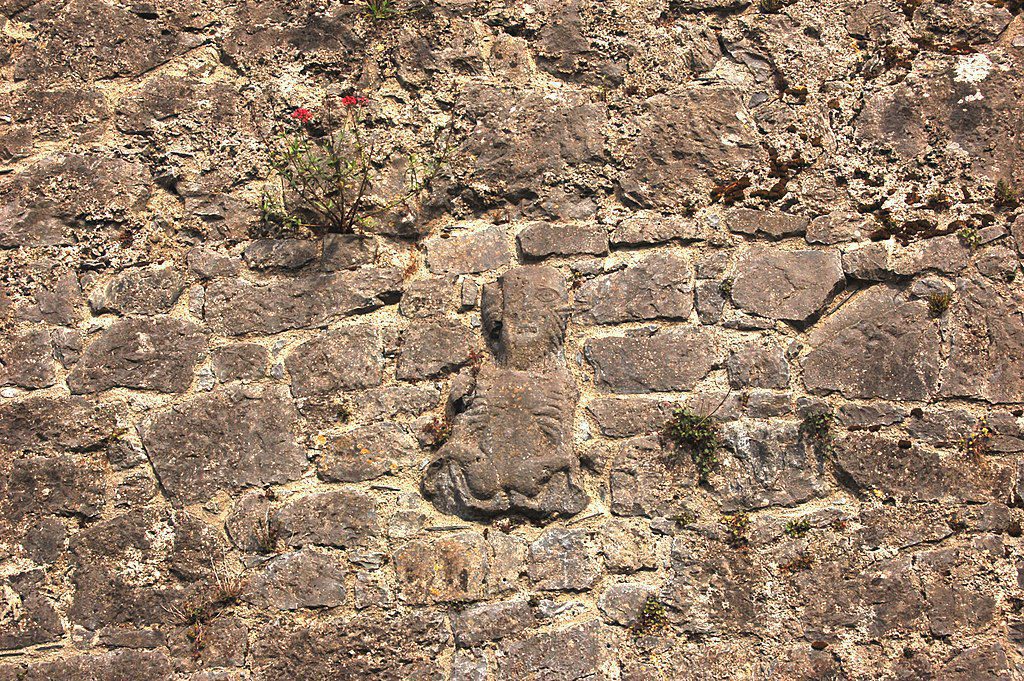
The medieval town of Fethard, approximately 20 minutes from Cashel, retains much of its 14th-century town wall and is one of the least-visited genuinely medieval towns in Ireland. A Sheela-na-gig carved figure can still be found on the ancient walls. Stop at McCarthy’s pub in Fethard: shop at the front, pub at the back, undertakers on the side. The food is authentically Irish and trad music sessions appear without warning. These are the kinds of places that do not appear on most travel itineraries and are better for it.
Roads in Tipperary are often small and signed only by route number rather than name. Download offline maps before leaving the main roads as mobile signal can be unreliable in rural areas.
How the Rock of Cashel Fits an Ireland Itinerary
The Rock of Cashel sits at the natural midpoint of Ireland’s Ancient East heritage trail, making it an efficient stop between Dublin and Cork. Kilkenny, one of Ireland’s finest medieval cities, lies an hour to the north-east and pairs logically with a Cashel visit as a two-night stop. The drive from Kilkenny to Cashel to Cork covers some of the most historically layered countryside in Ireland.
Visitors following the Wild Atlantic Way along the western coast sometimes extend their journey inland to include the Rock, and the detour is worth making. The contrast between the oceanic drama of the Atlantic coast and the quieter, deeper-green interior of Tipperary makes both feel more vivid.

Why the Rock of Cashel Belongs on Every Ireland Itinerary
The Rock of Cashel Tipperary is not simply another castle on a hill. It is a place where royal power, religious history, Celtic art, Norman architecture, and Irish folklore converge in a single spectacular location. Cormac’s Chapel alone, with its Romanesque frescoes and twin towers, justifies a two-hour drive. Add the round tower, the roofless Gothic cathedral, the graveyard, and the view down to Hore Abbey sitting alone in the meadow below, and you have a site of genuine depth that reveals itself slowly.
If you are visiting Ireland and you have not yet put the Rock of Cashel on your itinerary, rearrange your plans. Arrive early, join a guided tour if you can, walk down to Hore Abbey afterwards, and have lunch in Cashel town. County Tipperary rewards travellers who take their time.

Frequently Asked Questions: Rock of Cashel Tipperary
What is the Rock of Cashel and why is it famous?
The Rock of Cashel is a medieval complex of buildings on a limestone outcrop in Cashel, County Tipperary, Ireland. It is famous for Cormac’s Chapel, which contains the only surviving Romanesque frescoes in Ireland; for its associations with St. Patrick, Brian Boru, and the Kings of Munster; and for being one of the finest collections of medieval architecture in Ireland. It is part of the Ireland’s Ancient East heritage trail and sits on the UNESCO Tentative World Heritage List.
How old is the Rock of Cashel?
The Rock of Cashel has been occupied since at least the 4th century, with a royal fortress recorded around 370 AD. St. Patrick is recorded as baptizing King Aengus there in the 5th century. The buildings visible today date from the 12th and 13th centuries: the round tower from around 1100, Cormac’s Chapel from 1127 to 1134, and the Gothic cathedral from 1235 to 1270.
How long does a visit to the Rock of Cashel take?
The average visit lasts 90 minutes to two hours. A guided tour may take slightly longer. If you plan to walk down to Hore Abbey after your visit, allow an additional 45 minutes to an hour. A half-day is a comfortable allocation that covers the Rock thoroughly and allows time for lunch in Cashel town.

Is Hore Abbey worth visiting on the same day as the Rock of Cashel?
Yes, and the effort is minimal. Hore Abbey is a Cistercian ruin founded in the 1270s, clearly visible from the top of the Rock and about a 15-minute walk from the main car park. There is no entry fee and visitor numbers are a fraction of those at the Rock itself. The abbey sits in an open meadow and has a quiet, melancholy beauty that contrasts well with the drama of the Rock. The walk between the two sites is pleasant in good weather.
Can I visit the Rock of Cashel on a day trip from Dublin?
Yes. The drive from Dublin to Cashel takes approximately two hours via the M8 motorway. Bus Eireann service X8 also connects Dublin Busaras to Cashel town centre. A day trip is entirely feasible. Spending a night in Cashel or nearby Kilkenny gives you more time to explore at a relaxed pace and allows you to take advantage of the local visitor voucher discount.

Is the Rock of Cashel accessible for visitors with mobility challenges?
Partially. The path to the Rock is gravelled and uneven in sections. A drop-off point is available closer to the main entrance, and the visitors’ centre staff can arrange assistance if you call ahead. Not all areas are fully wheelchair-accessible, but much of the site can be navigated with extra time. Hore Abbey, reached across a grazing field, presents additional challenges. Calling ahead is strongly recommended for visitors with specific access requirements.
What is the connection between Brian Boru and the Rock of Cashel?
Brian Boru, the High King of Ireland who unified the country and defeated the Vikings at the Battle of Clontarf in 1014, was crowned at the Rock of Cashel in the 10th century. The Rock was at that time the seat of the kings of Munster, and Brian Boru captured it as part of his rise to the High Kingship. His association with the site is a central part of its historical significance.

What is Cormac’s Chapel and why is it significant?
Cormac’s Chapel is a 12th-century Romanesque chapel built by King Cormac Mac Carthaigh, begun in 1127 and consecrated in 1134. It is the finest example of Romanesque architecture in Ireland and contains the only surviving Romanesque frescoes in the country, depicting scenes from the early life of Christ. The chapel’s twin towers and elaborate carved arcading are unique in the Irish architectural tradition.
What Irish folklore is associated with the Rock of Cashel?
The most famous legend holds that St. Patrick banished Satan from a cave in the Devil’s Bit mountain in Tipperary. In his fury, Satan bit a chunk from the mountain and spat it across the landscape. That piece of limestone landed in the Tipperary plain and became the Rock of Cashel. A separate tradition holds that Patrick accidentally drove his staff through the foot of King Aengus during the baptism ceremony, and the king bore it silently, believing it to be part of the ritual.

Start Planning Your Trip
👉 Public Transportation in Ireland
👉 Hidden Gems in Ireland – 32 Secret places to visit
👉 Answering all your travel questions about Ireland
👉What to pack for your Ireland trip
👉 Northern Ireland Public Transportation