
A Literary Tour of Ireland: 27 Places Where Ireland’s Writers Lived, Wrote and Rest
Quick answer: The best literary tour of Ireland starts in Dublin (Trinity’s Book of Kells, the James Joyce Centre, Sweny’s Pharmacy and the Joyce Tower at Sandycove), heads north-west to Yeats Country in Sligo, then south to Coole Park and Thoor Ballylee in Galway, the Aran Islands, Kilkee and Listowel in Kerry. Allow 7 days for the Republic, plus a day for Northern Ireland’s C.S. Lewis and Seamus Heaney sites.

Ireland is a place of rich history, vibrant culture, and unparalleled natural beauty. Beyond its dramatic landscapes, bustling cities, and beautiful villages, Ireland is steeped in literary tradition, from ancient myth to modern Nobel laureates. Personally I am a voracious reader and must have at least 2 books going at any time, so living in a country with incredible writers I wanted to share my favourite literary spots, with official links so you can check hours and tickets before you go.
- A Literary Tour of Ireland: 27 Places Where Ireland’s Writers Lived, Wrote and Rest
- Fast Facts: Literary Ireland
- Ireland’s Famous Writers at a Glance
- Ireland’s Literary History: From Bards to Nobel Prizes
- Dublin: The Literary Heart of Ireland
- Ireland’s Ancient East: Kavanagh Country
- Galway and Connemara: The Literary Revival
- County Clare: Brontë and Merriman
- Sligo: Yeats Country
- County Kerry and Limerick
- Donegal: Friel and MacGill
- Northern Ireland’s Literary Sites
- A 7-Day Literary Tour of Ireland
- Irish Literary Festivals Calendar
- Accessibility on a Literary Tour of Ireland
- Literary Tour of Ireland: FAQ
- Ireland: A Land of Stories
- Explore More Irish Culture and Folklore
- Exploring the Fascinating Regions of Ireland
Fast Facts: Literary Ireland
| Literary Nobel laureates | Four: W.B. Yeats (1923), George Bernard Shaw (1925), Samuel Beckett (1969), Seamus Heaney (1995) |
| UNESCO City of Literature | Dublin, since 2010 |
| Must-see in Dublin | Book of Kells (from €25), MoLI, James Joyce Centre, Joyce Tower (free) |
| Must-see in the west | Drumcliffe (Yeats’s grave), Coole Park, Thoor Ballylee, Aran Islands |
| Must-see in Northern Ireland | C.S. Lewis Square, Belfast; Seamus Heaney HomePlace, Bellaghy |
| Time needed | 7 days for the Republic; add 1–2 days for Northern Ireland |
| Big festivals | Listowel Writers’ Week (late May), Bloomsday (16 June), Bram Stoker Festival (23–26 Oct 2026) |
| Best for accessibility | Seamus Heaney HomePlace (fully accessible); Joyce Tower is not wheelchair accessible |
Whether you’re a fan of James Joyce, W.B. Yeats, Samuel Beckett, Oscar Wilde, or Maeve Binchy, Ireland offers countless destinations where you can connect with their lives and works. If you love travel shaped by stories, my Film and Literary Travel hub collects all my book and screen guides in one place.
Ireland’s Famous Writers at a Glance
Ireland’s storytelling tradition has produced some of the world’s most celebrated writers. W.B. Yeats captured the mystical and political essence of Ireland in his poetry, while James Joyce revolutionized modernist literature with “Ulysses.”
Oscar Wilde’s wit shines in “The Importance of Being Earnest”; Samuel Beckett explored existence in “Waiting for Godot”; Seamus Heaney brought Irish rural life to global attention through evocative poetry; George Bernard Shaw’s “Pygmalion” remains a classic; and J.M. Synge immortalized rural life in “The Playboy of the Western World.”

Contemporary writers like Roddy Doyle (“The Commitments”), Edna O’Brien (“The Country Girls”), Anne Enright (“The Gathering”), Maeve Binchy (“Circle of Friends”), and Frank McCourt (“Angela’s Ashes”) continue this legacy. Many of these books have since been made into films that have enchanted audiences for years.
Ireland’s Literary History: From Bards to Nobel Prizes

Ireland’s storytellers were originally the Bards, filí, and seancháí who memorized vast bodies of poetry and story. Tales were preserved through performance, recited with rhythm, repetition, and musicality. Core myth cycles include:
- The Ulster Cycle (heroes like Cú Chulainn)
- The Mythological Cycle (the Tuatha Dé Danann)
- The Fenian Cycle (Fionn mac Cumhaill)
Key traits that still echo today:
- Lyrical language
- Dark humor mixed with tragedy
- Heroes who are flawed, doomed, or defiant
These stories come from Celtic belief systems shaped by ritual, landscape, and kinship. Standing inside the chamber at Newgrange, I felt the weight of time and a real connection to the ancients the same world the Mythological Cycle remembers through the Tuatha Dé Danann.
The stories here are old. They pass from tongue to tongue, from the monk’s pen to the rebel’s prayer. They are carried in the silence between two languages, in the ghost of a tune. It is not an inheritance of light, but of soil and stone and long memory.
Dublin: The Literary Heart of Ireland
Begin in Dublin, a UNESCO City of Literature since 2010. Dublin is associated with James Joyce, Samuel Beckett, W.B. Yeats, Oscar Wilde, George Bernard Shaw, Jonathan Swift, Bram Stoker and many more. For everything else in the city, see my Dublin Travel Guide.

1. Trinity College and the Book of Kells
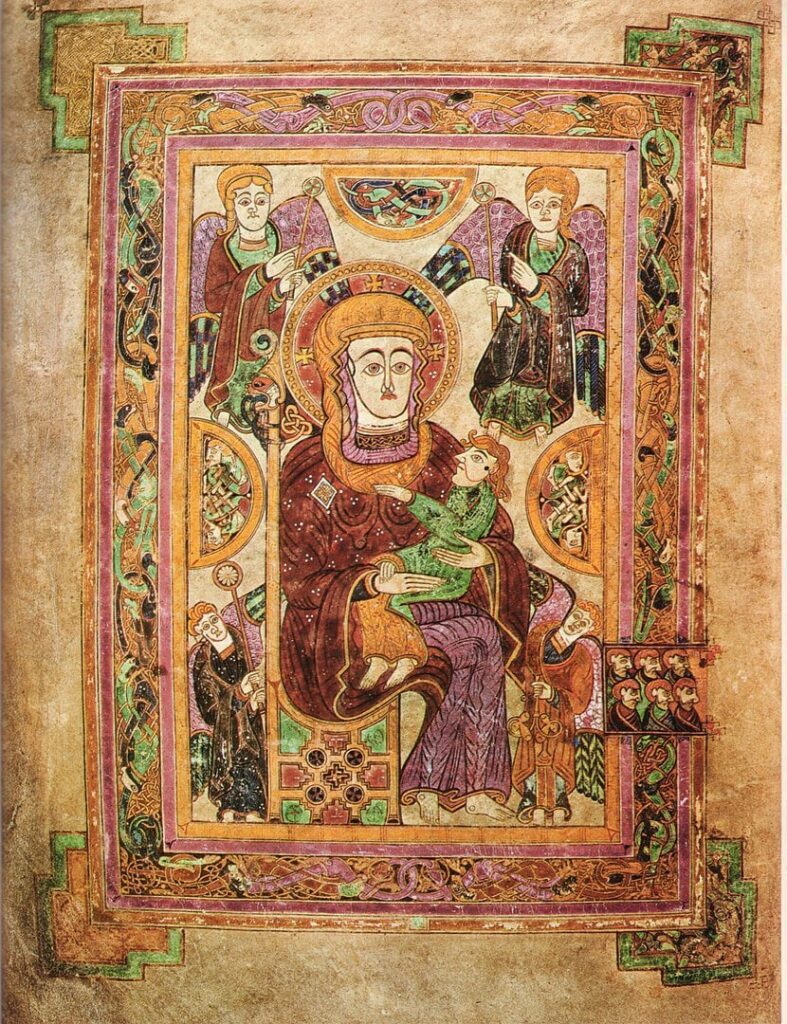
Start at Trinity College Dublin, home to the Book of Kells, the 9th-century illuminated Gospel book. The Old Library and Long Room are detailed at Trinity Old Library. The manuscript was kept for centuries at the monastery of Kells in County Meath before coming to Trinity in the 1660s, and you can still see replicas and the high crosses in the town of Kells. The manuscript is also recognized in UNESCO’s Memory of the World Register.

2026 visit: Official tickets start from €25 for the full Book of Kells Experience (about 90 minutes, including a new immersive digital exhibition) or from €19 for the Book of Kells and Old Library only (about 45 minutes). The Long Room is in the middle of a multi-year conservation project, so many shelves are empty, and Luke Jerram’s Gaia sculpture hangs there until late 2026. Book a timed slot in advance.

2. Museum of Literature Ireland (MoLI)
The Museum of Literature Ireland MoLI opened in 2019 in UCD’s historic Newman House on St Stephen’s Green. It offers immersive exhibitions and literary treasures, including materials related to Joyce’s “Ulysses,” and its garden café is one of the nicest in the city.
3. The James Joyce Centre
A short walk north of the Liffey brings you to the James Joyce Centre at 35 North Great George’s Street, a restored Georgian townhouse dedicated to Joyce’s life and work. Here you can learn about Nora Barnacle, who was James Joyce’s lifelong partner and later wife, and a major muse for his fiction. The Centre runs Joyce walking tours from the house and is the hub of Bloomsday celebrations every 16 June.

4. Sweny’s Pharmacy
Another Joyce stop is Sweny’s Pharmacy on Lincoln Place, immortalized in “Ulysses” (Leopold Bloom buys his lemon soap here), and known for readings and Joyce memorabilia. It’s run by volunteers, so opening times can vary.

5. James Joyce Tower and Museum, Sandycove
Joyce spent six nights in this Martello tower in 1904, and it became the setting for the famous opening scene of “Ulysses.” Today the James Joyce Tower is a free, volunteer-run museum with letters, first editions and Joyce memorabilia, plus views across Dublin Bay from the roof. Take the DART to Sandycove & Glasthule. Note that the tower is not wheelchair accessible and the roof access is narrow.

6. Oscar Wilde House and Merrion Square
Wilde was born at 21 Westland Row in 1854, where Trinity College’s Oscar Wilde Centre now commemorates his life and work with events and academic programming. The family moved to 1 Merrion Square when he was a baby, and Oscar Wilde House offers guided tours of the rooms where his mother, the poet “Speranza,” held her famous Saturday salons. Across the road, Danny Osborne’s colourful statue of Wilde lounges on a quartz boulder in Merrion Square Park.

7. St Patrick’s Cathedral and Jonathan Swift
Jonathan Swift, author of “Gulliver’s Travels,” served as Dean of St Patrick’s Cathedral from 1713 until his death in 1745. He is buried inside, beside Esther Johnson, the “Stella” of his letters, and you can see his pulpit and death mask.

8. The Abbey Theatre
Ireland’s national theatre opened in December 1904, founded by W.B. Yeats and Lady Gregory. It grew out of the Irish Literary Theatre they had started in 1899 with Edward Martyn, and it premiered Synge’s “The Playboy of the Western World” (which caused riots in 1907) and Seán O’Casey’s Dublin plays. The best way to experience it is simply to see a show, check what’s on at the Abbey Theatre.
9. Bram Stoker’s Dublin and the Bram Stoker Festival
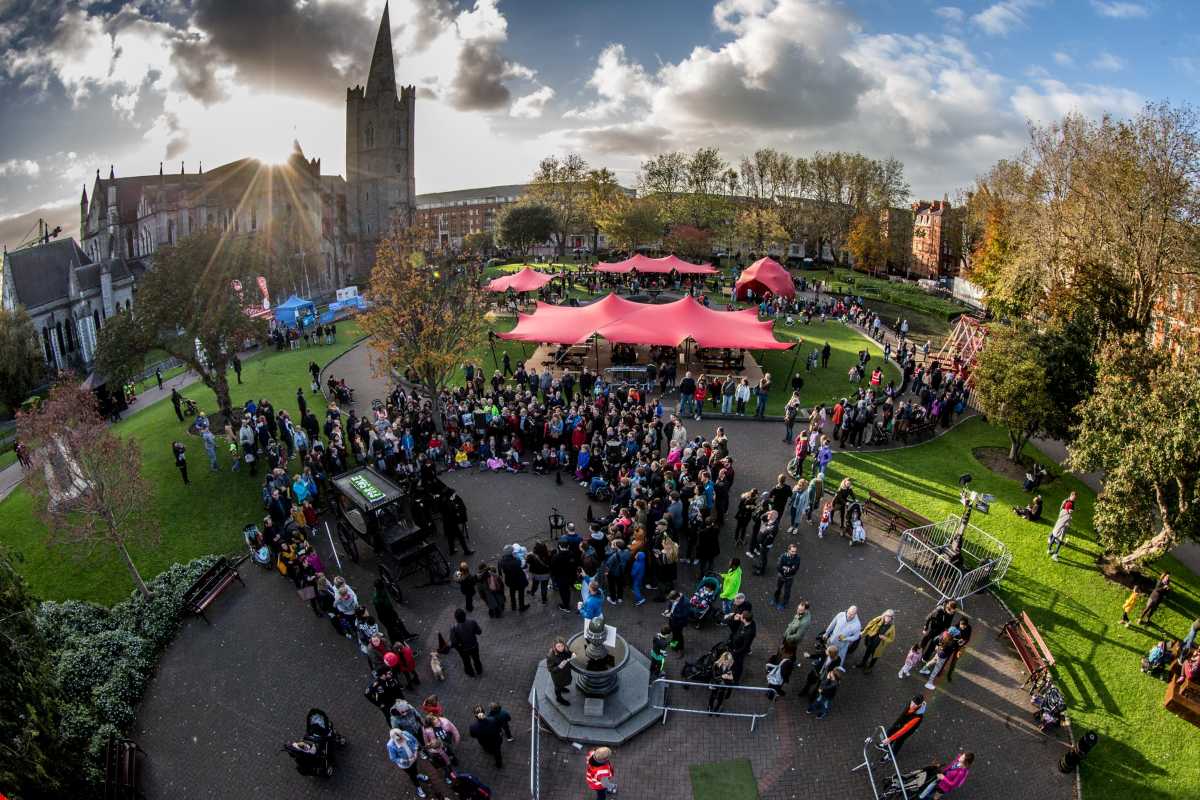
When Bram Stoker wrote “Dracula,” he likely never imagined his vampire would become a global icon. Stoker was born in 1847 at 15 Marino Crescent in Clontarf, studied at Trinity and worked as a civil servant at Dublin Castle before moving to London. His inspirations included Dublin and sites across Ireland and Britain; Whitby Abbey in England is a well-documented influence.
Dublin honours Stoker each October with the official Bram Stoker Festival, which features performances, readings, and guided tours that bring his gothic imagination to life. The 2026 festival runs from Friday 23 to Monday 26 October over the bank holiday weekend, with events across the city.

10. Dalkey and Maeve Binchy’s Ireland
Maeve Binchy is one of Ireland’s most beloved writers, celebrated for warm, humane novels that capture Irish life and relationships. Her works, such as “Circle of Friends” and “Tara Road,” offer intimate glimpses into Irish communities. Binchy lived in Dalkey, whose community spirit often echoes her novels; her books were translated into dozens of languages and sold tens of millions of copies before her death in July 2012.
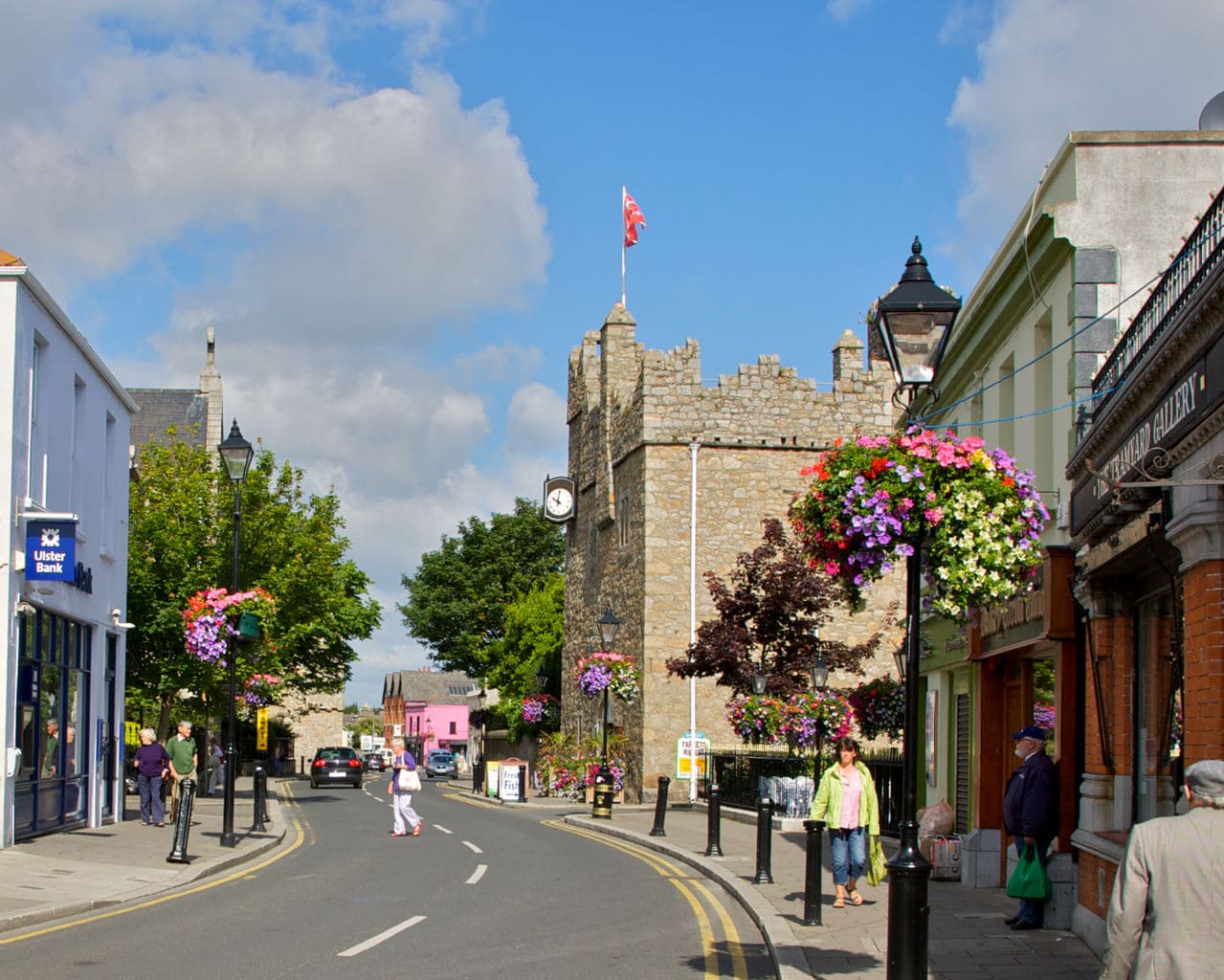
Enniskerry, County Wicklow, is the kind of picturesque village that fills her small-town settings. Visitors can stroll through the area, exploring Powerscourt Gardens and the surrounding countryside. You can find Maeve’s books on Amazon where many are free on Audible or you can purchase the DVD of the film Circle of Friends.

Dublin Literary Tours
Discover Dublin’s literary heritage on the Dublin Literary Pub Crawl, led by actors with readings and a literary quiz.
Or take the Dublin’s Literary History: Private Off the Beaten Path Walking Tour, with sites linked to Jonathan Swift, Oscar Wilde, W.B. Yeats, Samuel Beckett, Bram Stoker, and James Joyce. Highlights often include statues of Wilde and Yeats, St Patrick’s Cathedral, Sweny’s Pharmacy, Bewley’s Grafton Street and bookish stops like The Winding Stair.

Worth knowing: the old Dublin Writers Museum on Parnell Square has closed, although some older guides still list it. MoLI and the James Joyce Centre are the places to go instead.
Ireland’s Ancient East: Kavanagh Country
11. Patrick Kavanagh Centre, Inniskeen, County Monaghan
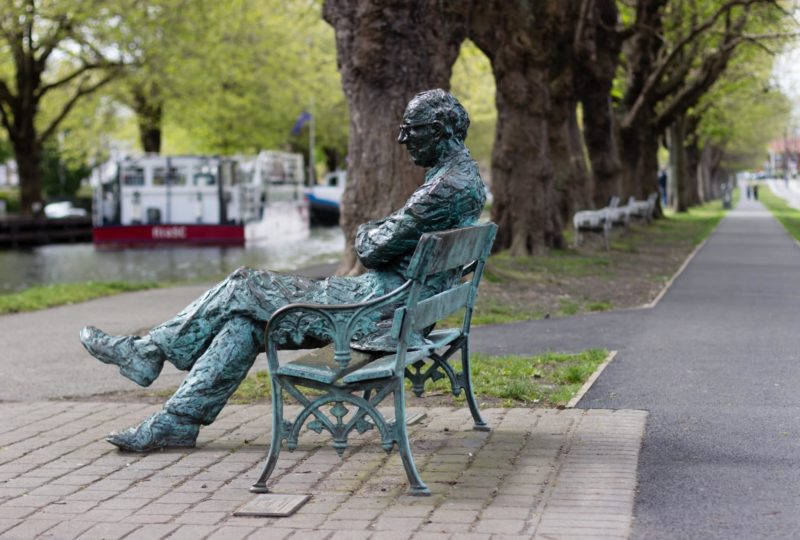
Patrick Kavanagh (1904–1967), the poet of “On Raglan Road” and “The Great Hunger,” was a small farmer from Inniskeen in Ireland’s Ancient East before he became a Dublin literary legend. The Patrick Kavanagh Centre is set in the old St Mary’s Church where he was baptised, with an award-winning film, interactive displays and personal items. Kavanagh is buried in the churchyard beside it, and you can walk the Kavanagh Trail through the drumlin landscape he wrote about. It usually opens from late March to the end of October. In Dublin, look for his bronze statue on a bench beside the Grand Canal.
Galway and Connemara: The Literary Revival
Head west to Galway long a hub for writers and poets, rooted in storytelling, poetry, and folklore. My Galway Travel Guide covers the rest of the county.
12. Coole Park and Lady Gregory
Lady Augusta Gregory—dramatist, folklorist, and co-founder of the Abbey Theatre with W.B. Yeats—made her home at Coole Park, just outside Gort, the centre of the Irish Literary Revival. It became a gathering place for Yeats, George Bernard Shaw, J.M. Synge and Seán O’Casey. The house is gone, but the woods and lake are now Coole Park Nature Reserve, one of the National Parks & Wildlife Service sites. Don’t miss the “Autograph Tree,” a copper beech carved with the initials of Yeats, Shaw, Synge and others.

13. Thoor Ballylee, Yeats’s Tower
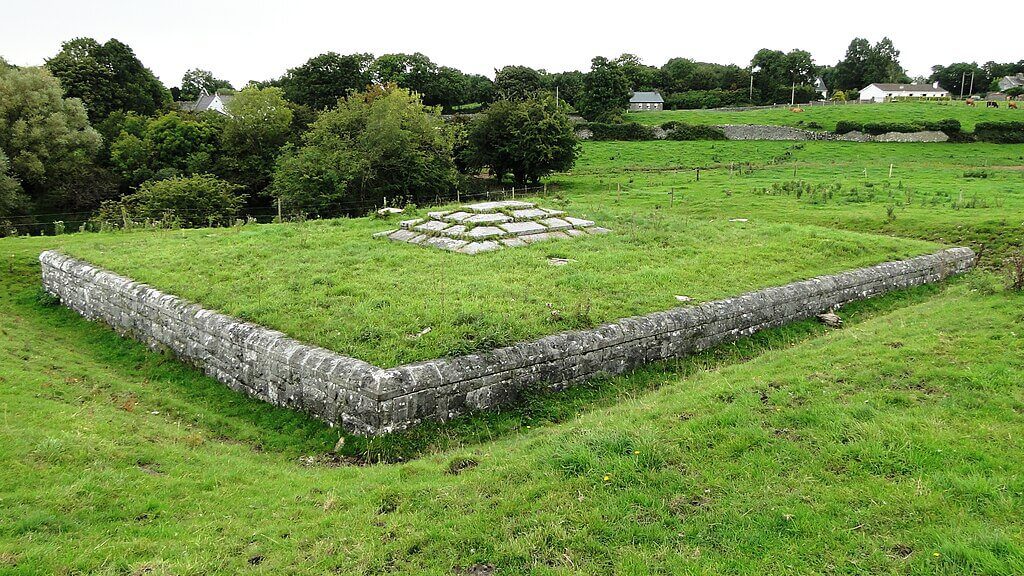
Just a few kilometres from Coole Park, Yeats bought this Hiberno-Norman tower in 1917 and spent summers there with his family, writing some of his finest poems; “The Tower” took its name from it. Seamus Heaney called it the most important building in Ireland. After years of flood damage it is now cared for by the volunteer Yeats Thoor Ballylee Society, which opens it seasonally in summer and runs events and residencies. Check their site for dates before you go.

14. Galway City: Wilde, the Claddagh and the Poetry Trail
On Shop Street, the twin statue of Oscar Wilde and Estonian writer Eduard Vilde celebrates two writers with almost the same name. The Galway City Museum offers context on Galway’s cultural heritage; check current exhibitions and events.
The Claddagh, a historic district where the Claddagh ring originated, is associated with oral traditions, storytelling, and folk songs. J.M. Synge was deeply influenced by the landscape and people of the west.

Galway hosts major literary events, including the Galway International Arts Festival and the Cúirt International Festival of Literature. Explore the Galway Poetry Trail, poems set into plaques around the city.

15. Renvyle House, Connemara
Renvyle House in Connemara, once the home of the surgeon, poet and wit Oliver St. John Gogarty, who appears as Buck Mulligan in “Ulysses”, was a hub for literary gatherings. Yeats stayed there, and guests included figures from Irish cultural life. It is now a hotel, so you can stay where they talked.

16. The Aran Islands
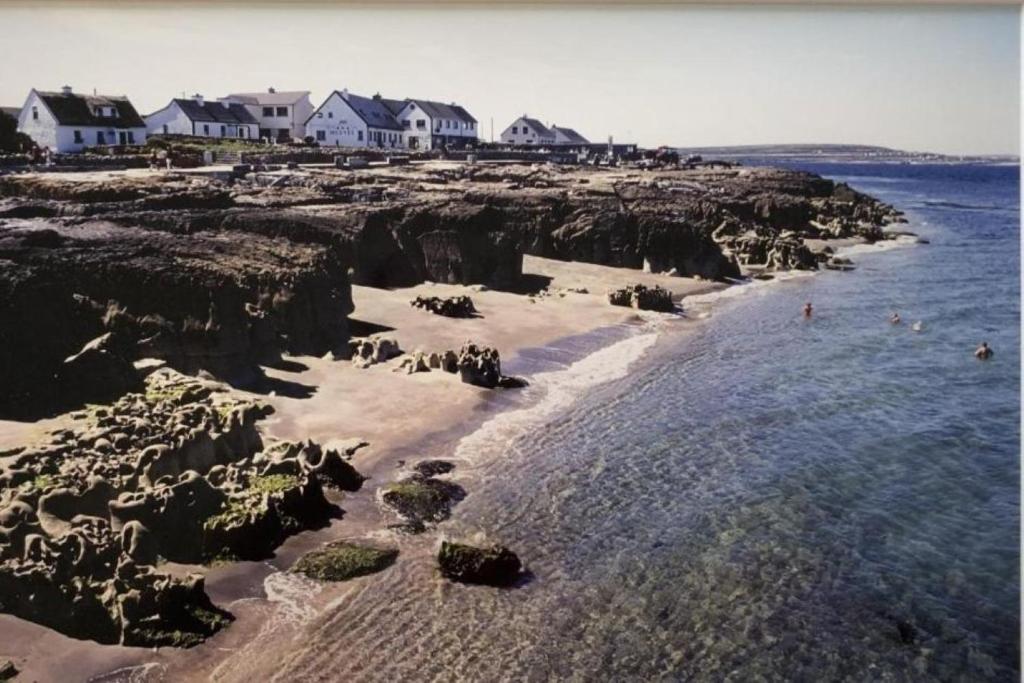
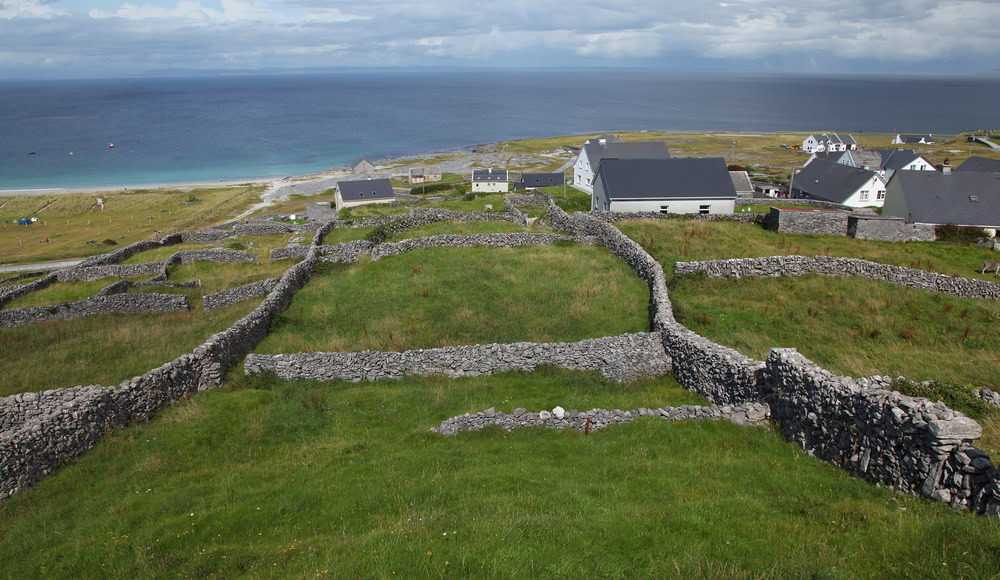
The Aran islands are renowned for their writers. One of Ireland’s foremost Irish-language poets of the 20th century, Máirtín Ó Direáin, was born and raised in the village of Sruthán on Inis Mór. Liam O’Flaherty, the world-renowned bilingual novelist and short-story writer, was from the village of Gort na gCapall on Inis Mór. The modern Irish-language writer Dara Ó Conaola was born on Inis Meáin and now lives on Inis Oírr.
From the late 19th century, many Irish writers travelled to the Aran Islands; Lady Gregory visited to learn Irish, and J.M. Synge’s summers on Inis Meáin informed “The Aran Islands” and “Riders to the Sea.” On Inis Meáin you can still see Synge’s cottage and the stone seat on the cliffs known as Synge’s Chair.
W.B. Yeats’ advice to Synge: “Go to the Aran Islands, and find a life that has never been expressed in literature.”
County Clare: Brontë and Merriman
17. Kilkee and Charlotte Brontë’s Honeymoon
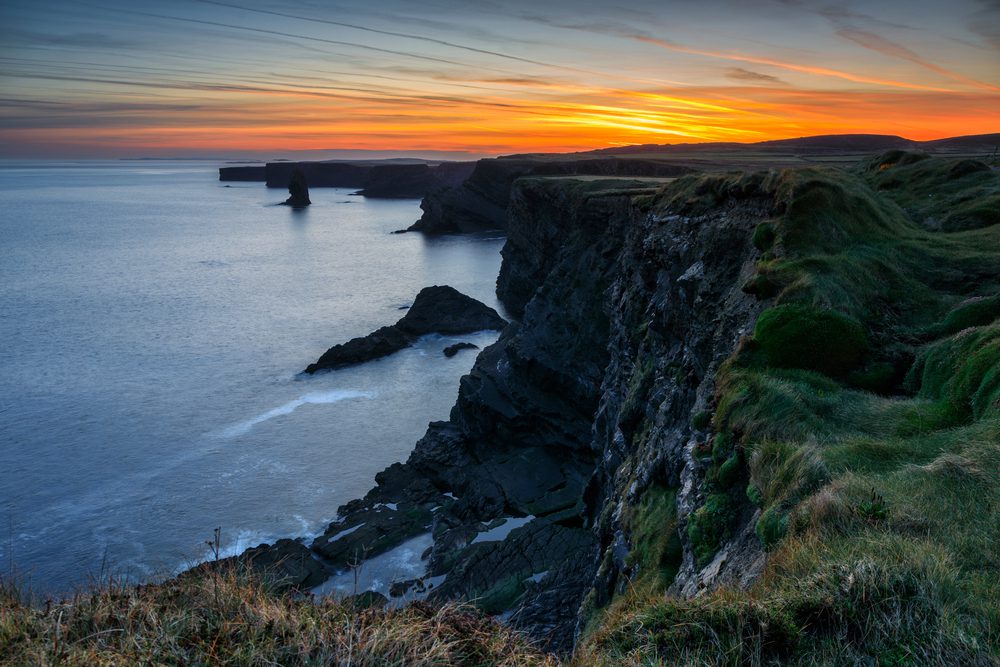
Charlotte Brontë, whose father Patrick was born in County Down, honeymooned in Ireland in the summer of 1854 with her Irish husband Arthur Bell Nicholls, spending much of it at the seaside resort of Kilkee in County Clare, just south of the Burren. She described it as:
“such a wild, iron-bound coast – with such an ocean-view as I had not yet seen – and such battling of waves with rocks as I had never imagined.”

A plaque marks the hotel where they stayed, and Kilkee now holds its own Brontë festival each summer. I’ve taken in these cliffs from four viewpoints, from Diamond Rocks round to Loop Head — my Kilkee Cliffs guide has the details. You can follow the Brontë sisters in England in my Brontë Country guide.
18. Merriman Summer School
In County Clare, Brian Merriman (1749–1805) is commemorated annually at the Merriman Summer School. His satirical Irish-language poem is correctly titled “Cúirt an Mheán Oíche” (“The Midnight Court”), addressing themes of gender, marriage, and social critique.
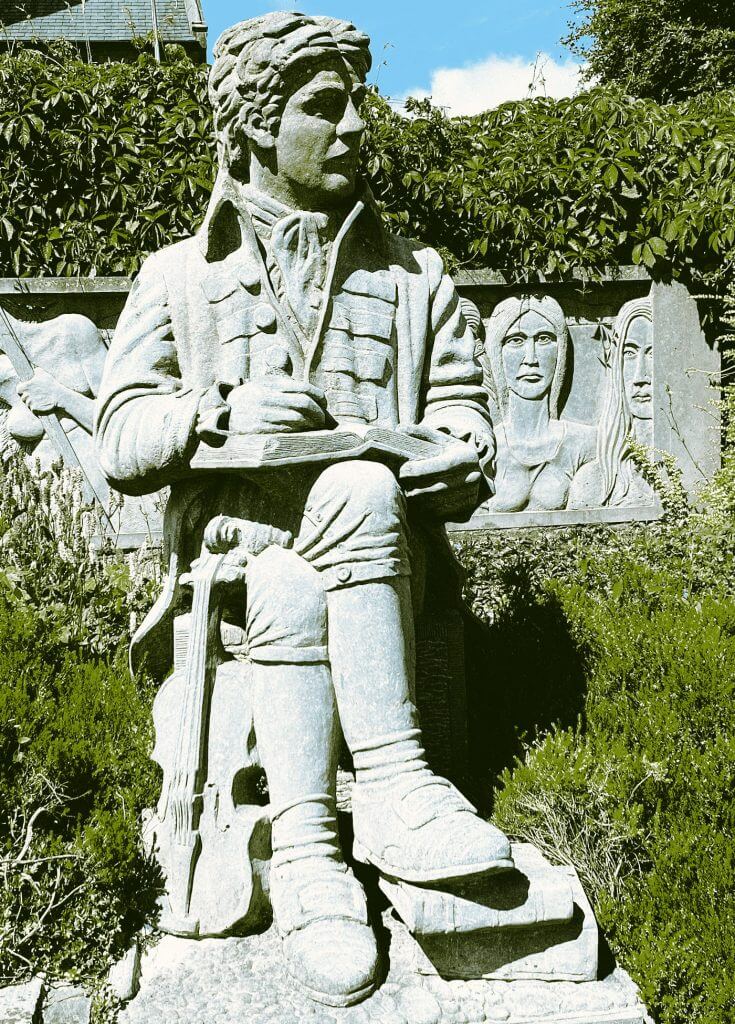
Merriman was a “hedge schoolmaster,” one of the teachers who taught informally, often outdoors, in rural Ireland during periods of restricted formal education, preserving Irish learning and language.
Sligo: Yeats Country
A journey along the Wild Atlantic Way offers a deeper connection to W.B. Yeats, inspired by the landscapes and myths of County Sligo, where he spent much of his youth.
19. Drumcliffe Church and Yeats’s Grave
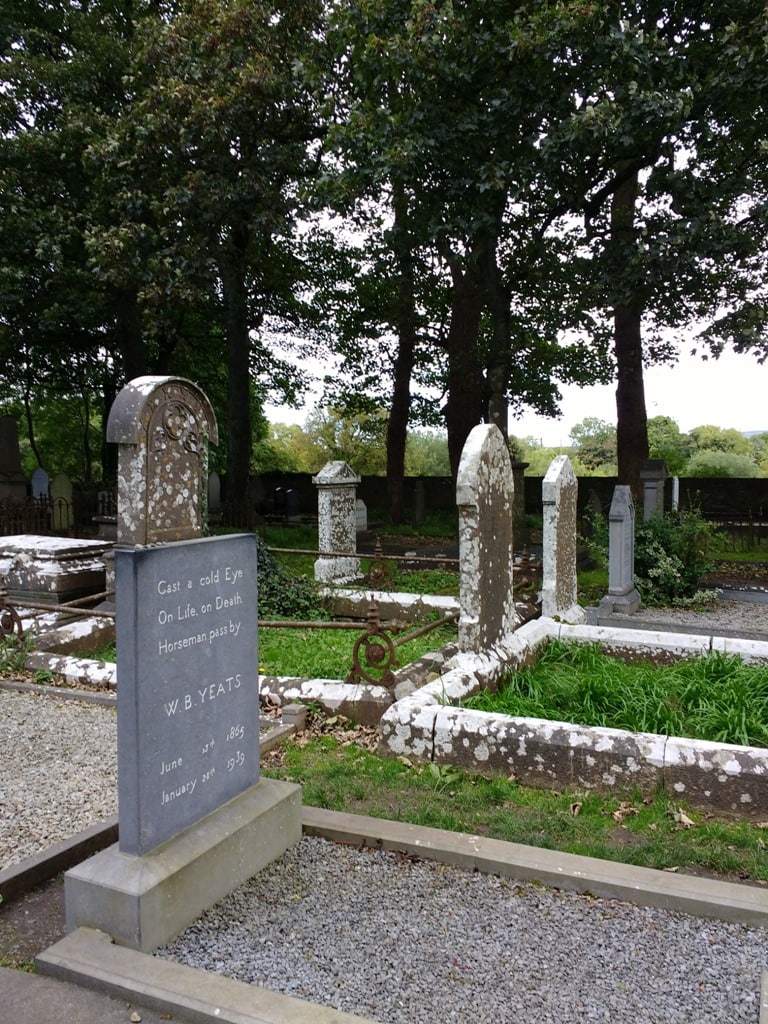
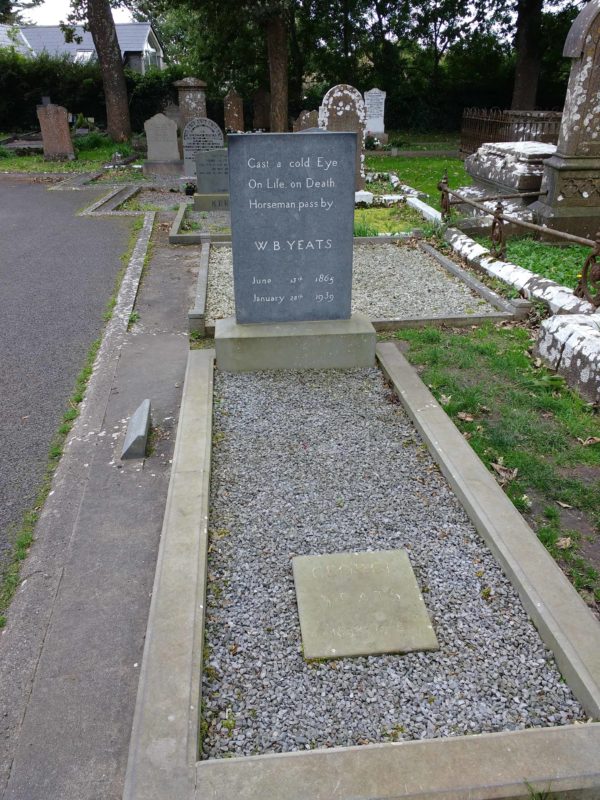
Yeats’s legacy is closely connected to the Sligo landscape. The Yeats Trail includes Drumcliffe Church and grave, beneath Benbulben, marked by “Cast a cold eye / On life, on death / Horseman, pass by.” Yeats died in France in 1939 and was reburied here in 1948.


20. Lough Gill, Innisfree and Glencar Waterfall
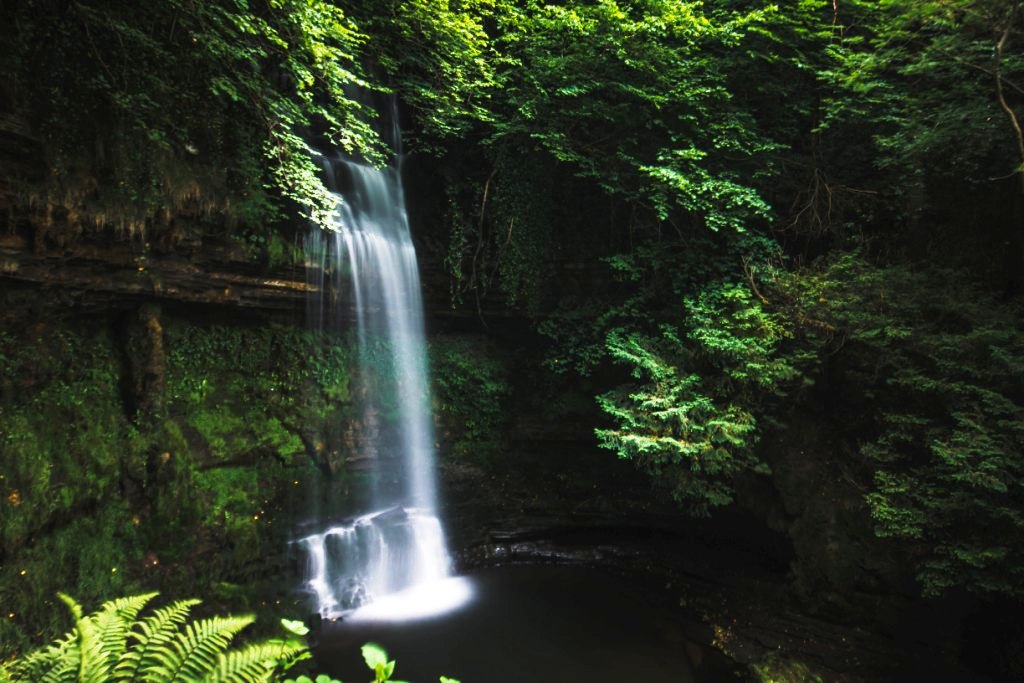
Lough Gill played a significant role in Yeats’s poetry the tiny island of Innisfree in the lake is the setting of “The Lake Isle of Innisfree.” In summer, boat trips run on the lough from Sligo. Nearby, the Glencar Waterfall, which Yeats wrote into “The Stolen Child,” is another essential stop.
County Kerry and Limerick
Further south, Kerry is a land of myth and storytellers. Beyond the Ring of Kerry, the literary heart of the county is north Kerry and the far end of the Dingle Peninsula. When I based myself in Tralee for three days, Dingle was an easy trip and Listowel is only about 25 minutes north. See all my Kerry recommendations.

21. Listowel: John B. Keane and the Kerry Writers’ Museum
Listowel calls itself Ireland’s literary capital. Visit the John B. Keane Bar & Literary Centre, the pub the playwright ran on William Street; Keane’s works (“The Field,” “Big Maggie”) continue to be performed and celebrated. Across town, the Kerry Writers’ Museum tells the story of Keane, Bryan MacMahon, Brendan Kennelly and other Kerry writers.
Time a visit for Listowel Writers’ Week, Ireland’s longest-running literary festival, held at the end of May (27–31 May in 2026, its 55th year).

22. The Blasket Centre, Dún Chaoin
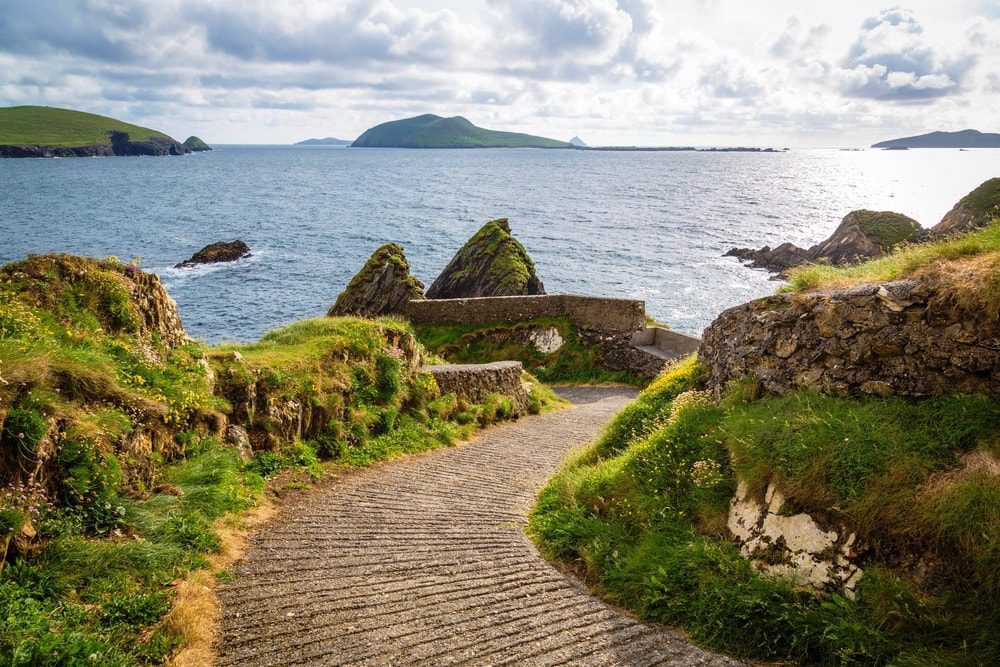
At the tip of the Dingle Peninsula, the Great Blasket Island produced an astonishing shelf of Irish-language (Gaelic) memoirs before it was abandoned in 1953 Tomás Ó Criomhthain’s “An tOileánach” (The Islandman), Peig Sayers’ “Peig” and Muiris Ó Súileabháin’s “Fiche Blíain ag Fás” (Twenty Years A-Growing). The Blasket Centre in Dún Chaoin, run by the OPW, looks straight out at the island. It is seasonal; check Heritage Ireland for opening dates.
23. Limerick: Frank McCourt and Angela’s Ashes
Frank McCourt’s Pulitzer Prize-winning memoir “Angela’s Ashes” brought the struggles of his Limerick childhood to life. Limerick City offers literary tours dedicated to McCourt, including visits to landmarks featured in his memoir.
The Angela’s Ashes Walking Tour, Limerick City traces places from the book, including the former Leamy’s School he attended, which now houses the Frank McCourt Museum, and the lanes tied to his childhood.
Donegal: Friel and MacGill
24. Glenties: Brian Friel and Patrick MacGill
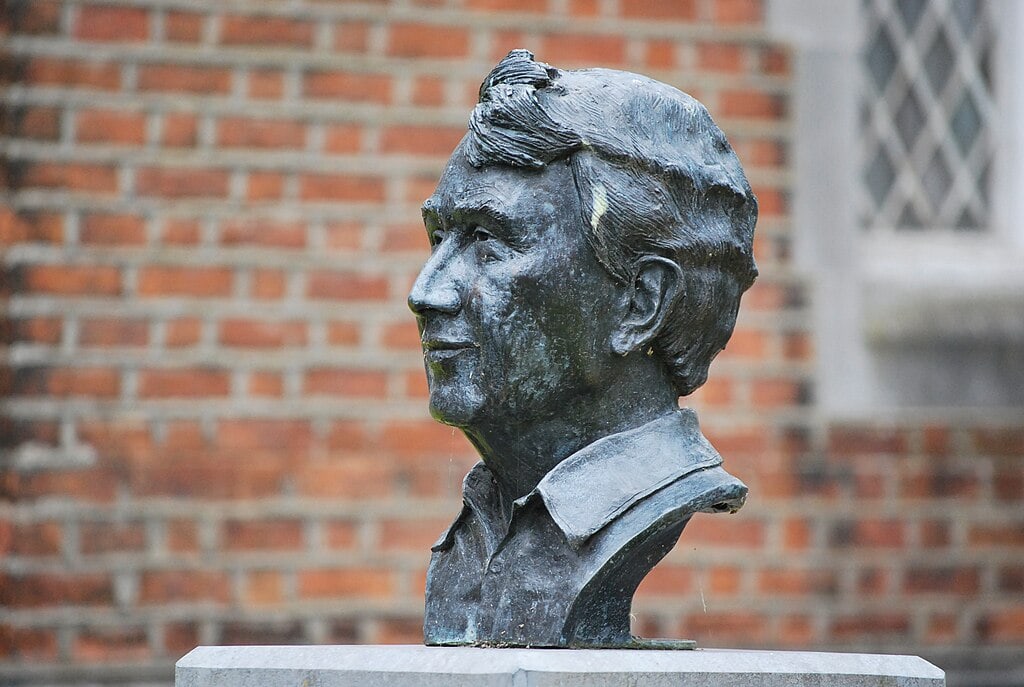
Donegal, where I lived for three years, has its own literary landscape. Playwright Brian Friel drew on his mother’s family in Glenties for “Dancing at Lughnasa” and its fictional village of Ballybeg, and he is buried in Glenties. The town is also home to Patrick MacGill, the “navvy poet,” and every July the MacGill Summer School brings talks and debates to his hometown. See my Donegal Travel Guide to plan the rest of the county.

Northern Ireland’s Literary Sites
Northern Ireland deserves its own stop on any literary tour. Now that I’m based on the north coast, these are an easy day out start with my Northern Ireland Travel Guide.
25. C.S. Lewis Square, Belfast
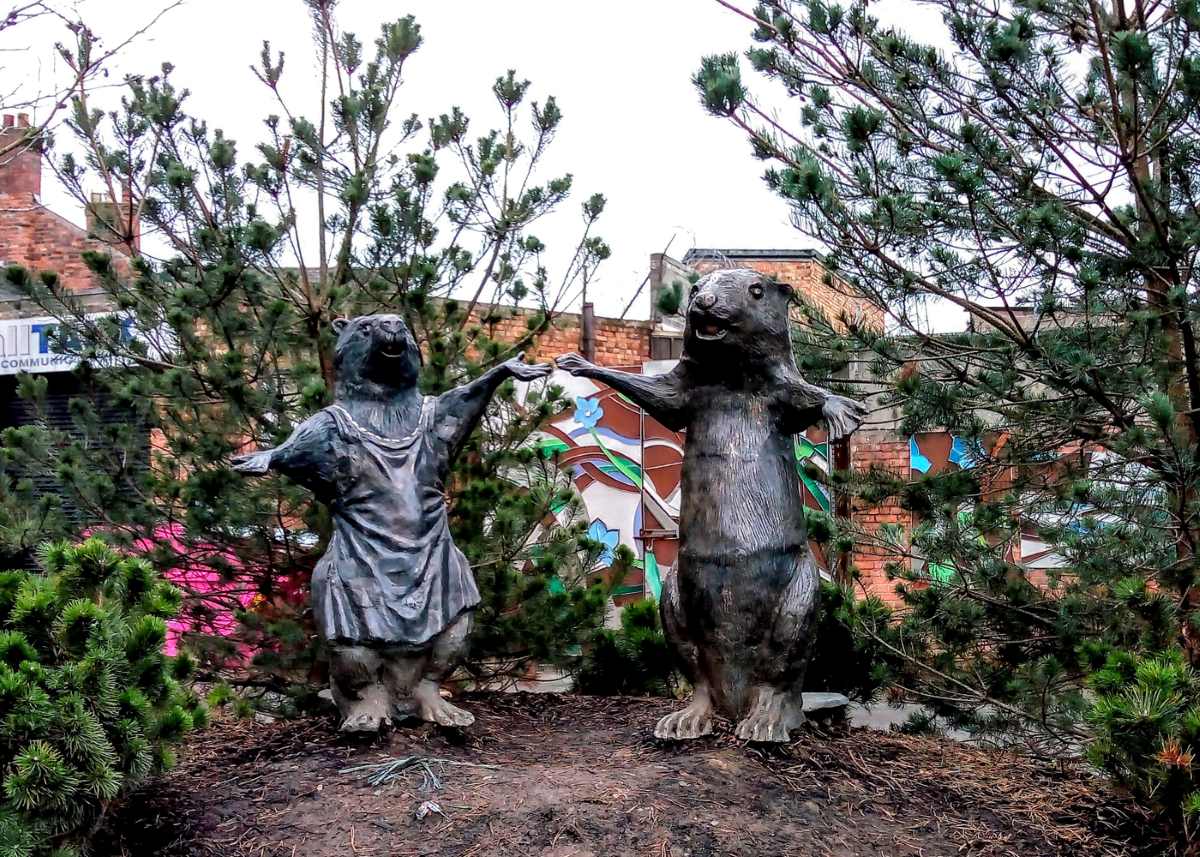
C.S. Lewis, creator of “The Chronicles of Narnia,” was born in Belfast in 1898. C.S. Lewis Square, Belfast in east Belfast features bronze sculptures from “The Lion, the Witch and the Wardrobe,” including Aslan and the White Witch. Little Lea, Lewis’s childhood home, is private; fans typically view it from the outside only. Nearby attractions include Queen’s University Belfast and the city’s literary heritage sites read more in my Belfast Travel Guide.

26. The Mourne Mountains, County Down
Lewis drew inspiration from Northern Irish landscapes, and the Mourne Mountains in County Down are widely cited as an influence on Narnia’s settings he once wrote that parts of the Mournes made him feel a giant might lift its head over the next ridge. Rostrevor, at the foot of the Mournes, is the spot most often linked to Narnia.

27. Seamus Heaney HomePlace, Bellaghy
Heaney grew up on a farm near Bellaghy in County Derry, and the landscapes of Mossbawn, the Moyola River and Lough Beg run all through his poetry. Seamus Heaney HomePlace, opened in 2016, tells his story in his own recorded voice, with a recreation of his Dublin study and objects donated by the Heaney family. It is fully accessible and open Monday to Saturday 10am–5pm and Sunday 1–5pm. Heaney is buried a few hundred yards away at St Mary’s Church, Bellaghy, and the self-guided “Open Ground” trail takes you to five places that shaped his work.

A 7-Day Literary Tour of Ireland
This route covers the Republic in a week by car. Driving times are approximate. For more ways to plan your days, see my Ireland itineraries.
| Day | Route | Literary stops |
| 1 | Dublin (south) | Trinity & Book of Kells, Merrion Square & Oscar Wilde House, Sweny’s, MoLI, St Patrick’s; literary pub crawl in the evening |
| 2 | Dublin (north & coast) | James Joyce Centre, an Abbey Theatre show; DART to the Joyce Tower at Sandycove and Dalkey |
| 3 | Dublin → Kells → Inniskeen → Sligo (about 4.5 hrs driving) | Kells high crosses, Patrick Kavanagh Centre |
| 4 | Sligo → Galway (about 2.5 hrs) | Drumcliffe, Lough Gill & Innisfree, Glencar Waterfall |
| 5 | Galway & Gort (40 mins each way) | Coole Park, Thoor Ballylee, Galway Poetry Trail, Wilde & Vilde statue |
| 6 | Aran Islands day trip | Inis Mór for Ó Direáin and O’Flaherty, or Inis Meáin for Synge’s cottage |
| 7 | Galway → Kilkee → Killimer–Tarbert ferry → Listowel | Brontë’s Kilkee, John B. Keane’s pub, Kerry Writers’ Museum |
Northern Ireland add-on (1–2 days): C.S. Lewis Square in Belfast, then the Mournes, then Seamus Heaney HomePlace in Bellaghy (under an hour from Belfast).

Irish Literary Festivals Calendar
| When | Festival | Where |
| Spring | Cúirt International Festival of Literature | Galway |
| Late May (27–31 May 2026) | Listowel Writers’ Week | Listowel, Kerry |
| 16 June | Bloomsday | Dublin (James Joyce Centre, Joyce Tower, Sweny’s) |
| Summer | Kilkee Brontë Festival | Kilkee, Clare |
| July | MacGill Summer School | Glenties, Donegal |
| Summer | Merriman Summer School | County Clare |
| Late October (23–26 Oct 2026) | Bram Stoker Festival | Dublin |
Accessibility on a Literary Tour of Ireland
- Seamus Heaney HomePlace is fully accessible.
- Book of Kells: the ground floor and digital exhibition are accessible; the upper level of the Long Room is not reachable by wheelchair.
- James Joyce Tower is not wheelchair accessible, with a narrow spiral stair to the roof.
- Coole Park has flat woodland paths to the lake and Autograph Tree; ask the visitor centre about current conditions.
- Aran Islands: the ferries and island minibuses can be challenging — Inis Mór has the most transport options.
For more help planning, see Accessible Ireland and Accessible Northern Ireland.
Literary Tour of Ireland: FAQ
What is the best literary tour of Ireland?
Start in Dublin for Trinity College and the Book of Kells, the James Joyce Centre, Sweny’s Pharmacy and the Joyce Tower at Sandycove. Then head to Sligo for Yeats’s grave at Drumcliffe, Galway for Coole Park and Thoor Ballylee, the Aran Islands for Synge, Kilkee for Charlotte Brontë and Listowel in Kerry. Seven days covers the Republic; add a day or two for C.S. Lewis’s Belfast and Seamus Heaney HomePlace in Northern Ireland.
Which Irish writers have won the Nobel Prize in Literature?
Four Irish writers have won the Nobel Prize in Literature: W.B. Yeats in 1923, George Bernard Shaw in 1925, Samuel Beckett in 1969 and Seamus Heaney in 1995.
Can you still see the Book of Kells in 2026?
Yes. The Book of Kells is on display at Trinity College Dublin. Official tickets start from €25 for the full Book of Kells Experience or €19 for the Book of Kells and Old Library only. The Long Room is in the middle of a conservation project, so many of its shelves are empty, and booking a timed slot in advance is recommended.
Is the James Joyce Tower in Sandycove free to visit?
Yes. The James Joyce Tower and Museum at Sandycove is free and run by volunteers. It is the setting for the opening of Ulysses. Take the DART to Sandycove & Glasthule. The tower is not wheelchair accessible.
When is the Bram Stoker Festival 2026?
The Bram Stoker Festival 2026 runs from Friday 23 to Monday 26 October 2026 across Dublin, over the October bank holiday weekend. Stoker, the author of Dracula, was born in Clontarf in 1847.
Where is W.B. Yeats buried?
W.B. Yeats is buried at Drumcliffe Church in County Sligo, beneath Benbulben. He died in France in 1939 and was reburied at Drumcliffe in 1948. His headstone carries the epitaph “Cast a cold eye / On life, on death / Horseman, pass by.”
Can you visit Seamus Heaney’s home?
Seamus Heaney HomePlace in Bellaghy, County Derry, is a museum and arts centre about his life and work, open Monday to Saturday 10am–5pm and Sunday 1–5pm, and fully accessible. His childhood homes are private, but his grave at St Mary’s Church, Bellaghy, is a few hundred yards away.
Is Thoor Ballylee open to visitors?
Thoor Ballylee, the tower near Gort in County Galway where W.B. Yeats spent summers with his family, is opened seasonally in summer by the volunteer Yeats Thoor Ballylee Society. Check their website for current opening dates before travelling.
Why is Dublin a UNESCO City of Literature?
Dublin was designated a UNESCO City of Literature in 2010 in recognition of its literary history, from Swift, Wilde, Joyce, Yeats, Shaw and Beckett to contemporary writers, and its living literary culture of festivals, bookshops and the Museum of Literature Ireland.

Ireland: A Land of Stories
Literature and landscape are intertwined across Ireland—from Dublin’s streets to the west’s rugged coastlines. Whether you’re at the James Joyce Centre in Dublin, gazing at Lough Gill, or strolling Galway’s streets, Ireland’s literary treasures are as rich as its landscapes. Use the official links above to confirm hours and tickets before visiting.
For lovers of literature, a journey through Ireland is a pilgrimage through the heart of storytelling.

Explore More Irish Culture and Folklore
Explore deeper guides throughout Ireland covering mythology, sacred landscapes, haunted places, storytelling traditions, Celtic festivals, folklore creatures, saints, music, literature, and regional culture.
Featured guides include:
- Irish Legends and Folklore
- Irish Fairies and Fairy Forts
- Irish Witches and Butter Witches
- Ancient Irish Ring Forts
- Ley Lines in Ireland
- Halloween in Ireland and Samhain
- Ancient Celtic Holidays
- Boa Island and the mystery of the Janus Head
- A guide to Irish Traditions and Culture
- Christmas in Ireland and Irish Christmas Traditions
Start Planning Your Trip
- 👉 Ireland Travel Guide
- 👉 Dublin Travel Guide
- 👉 Public Transportation in Ireland
- 👉 Is Ireland worth Visiting?
- 👉 When to Visit Ireland
- 👉 Ireland Off the Beaten Path
- 👉 32 Secret places to visit: Hidden Gems in Ireland
- 👉 Answering all your travel questions about Ireland
- 👉 What to pack for your Ireland trip
- 👉 How to get around Ireland
- 👉 Ireland Travel Tips
- 👉 Moving and living abroad
- 👉 Where to stay in Ireland
- 👉 Northern Ireland Travel
- 👉 Northern Ireland Travel Resources
