
31 Best Things to Do in County Clare, Ireland: A Region-by-Region Guide
| Quick answer The best things to do in County Clare are the Cliffs of Moher, a drive through the Burren (Poulnabrone Dolmen, Aillwee Cave, Fanore), traditional music in Doolin, Bunratty Castle and Folk Park, the Kilkee cliffs and Loop Head Lighthouse, and Killaloe and Holy Island on Lough Derg. Allow 3–5 days and hire a car. |
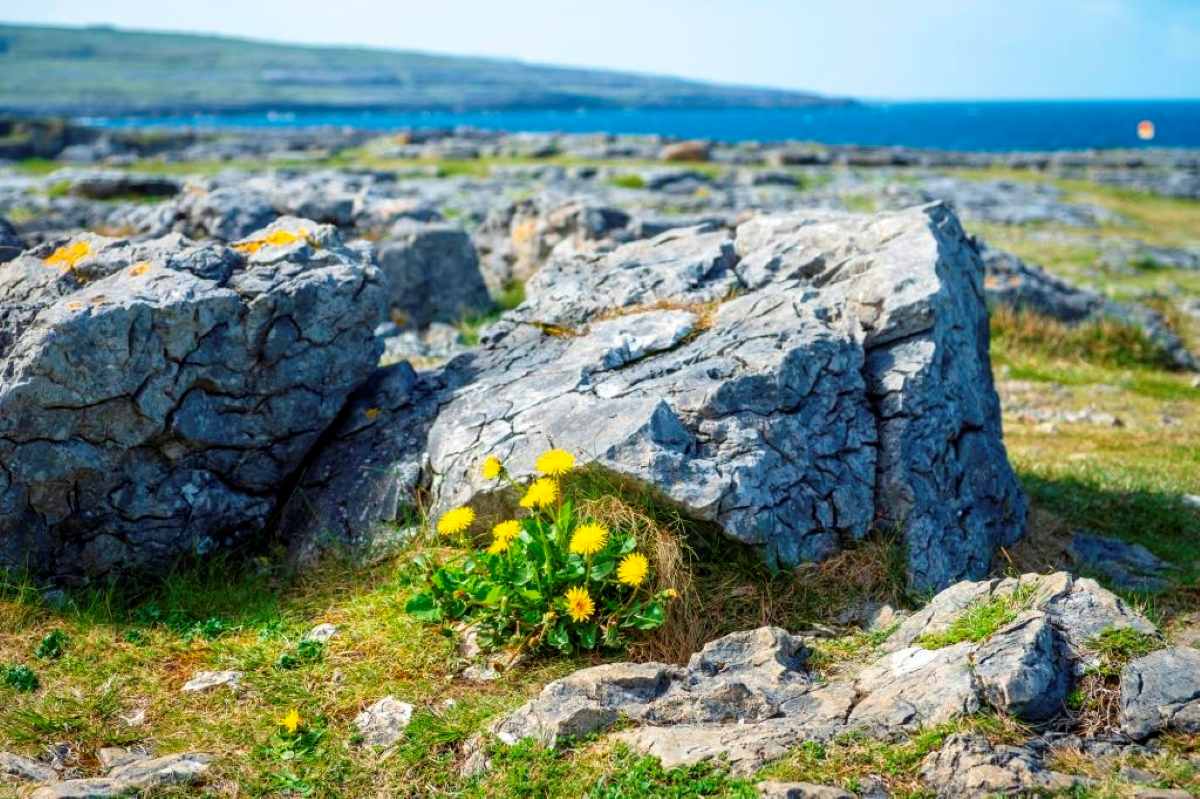
County Clare is one of my favourite counties in Ireland, and I keep going back. I have driven through the Burren more times than I can count over the years, bringing friends and family with me and stopping to explore a little more on every trip. We spent several days based at the Armada Hotel in Spanish Point, watching the sun drop into the Atlantic each evening, and used it to tour the whole county. I have walked the Cliffs of Moher, bought smoked salmon at the Burren Smokehouse, stopped for the high crosses and cairns, and seen the Kilkee cliffs from four different viewpoints.
This guide is organised by region, so you can plan a route rather than zig-zag across the county. Every entry has practical details, including what has changed in 2026, such as the Cliffs of Moher trail closures and the new Inis Cealtra visitor centre on Lough Derg.
- 31 Best Things to Do in County Clare, Ireland: A Region-by-Region Guide
- County Clare Fast Facts
- County Clare at a Glance: the Regions
- Quick-Reference Table: All 31 Things to Do
- North Clare and the Burren
- West Clare and the Loop Head Peninsula
- Ennis and Mid-Clare
- Shannon and Bunratty
- East Clare and Lough Derg
- Bonus Day Trip: The Aran Islands from Doolin
- Sample 3-Day County Clare Itinerary
- How to Get to County Clare
- Getting Around County Clare
- Accessibility in County Clare
- What to Eat and Drink in County Clare
- Festivals and Events in County Clare
- Best Time to Visit County Clare
- Where to Stay in County Clare
- County Clare FAQs
- Nearby Counties to Explore
- Start Planning Your Ireland Trip
County Clare Fast Facts
| Fact | Detail |
| Where | West of Ireland, province of Munster, on the Wild Atlantic Way between Galway and Limerick |
| County town | Ennis |
| Nickname | The Banner County |
| Nearest airport | Shannon Airport (inside Clare, about 20 minutes from Ennis) |
| From Dublin | About 2.5–3 hours by car to Ennis |
| Days needed | 3–5 days |
| Getting around | A car is strongly recommended; buses are limited |
| Best time to visit | May–September (May–June for Burren wildflowers) |
| Top free sights | Burren National Park, Poulnabrone Dolmen, Kilkee cliffs, Bridges of Ross, Clare Museum |
| 2026 heads-up | Large parts of the Cliffs of Moher Coastal Walk remain closed |
| Highest point | Moylussa, 532 m, in the Slieve Bernagh hills of East Clare |
County Clare at a Glance: the Regions
- North Clare and the Burren: the Cliffs of Moher, Doolin, Lahinch and the limestone Burren. This is where most visitors spend their time.
- West Clare and Loop Head: Spanish Point, Kilkee, Kilrush and the quiet Loop Head Peninsula, where the Shannon meets the Atlantic.
- Ennis and Mid-Clare: the county town plus castles and monastic sites around Corofin and Quin.
- South-East Clare: Shannon Airport and Bunratty Castle.
- East Clare and Lough Derg: Killaloe, Mountshannon and Holy Island, on the edge of Ireland’s Hidden Heartlands.
Quick-Reference Table: All 31 Things to Do
| # | Attraction | Area | Cost | Time | Accessibility |
| 1 | Cliffs of Moher | North Clare | €15 gate / from ~€8 online | 1.5–3 hrs | Visitor centre fully accessible; guided mobility buggy |
| 2 | See the Cliffs of Moher from the sea | North Clare (Doolin Pier) | Paid boat trip | ~1 hr | Boarding by gangway; ask operator |
| 3 | Doolin village and its trad pubs | North Clare | Free (pints extra) | An evening | Level village street; busy pubs |
| 4 | Doolin Cliff Walk (open section) | North Clare | Free | 2–3 hrs return | Rough clifftop path; not step-free |
| 5 | Doonagore Castle | North Clare | Free (exterior only) | 15 mins | View from roadside |
| 6 | Doolin Cave | North Clare | Paid guided tour | ~1 hr | 125 steps down and up |
| 7 | Burren National Park walks | The Burren | Free | 1–4 hrs | Uneven limestone; few step-free routes |
| 8 | The Burren coast road and Fanore | The Burren | Free | Half a day | Excellent from the car |
| 9 | Poulnabrone Dolmen | The Burren | Free | 20–30 mins | Short path; uneven at the tomb |
| 10 | Caherconnell Stone Fort and sheepdog demos | The Burren | Paid | 1–1.5 hrs | Gravel and grass |
| 11 | Aillwee Cave and Birds of Prey | The Burren | Paid | 2 hrs | Cave tour has steps |
| 12 | Burren Smokehouse and the Burren Food Trail | The Burren (Lisdoonvarna) | Free to visit; tastings vary | 30 mins+ | Shop is step-free |
| 13 | Burren Perfumery | The Burren (Carran) | Free | 45 mins | Rural lane; small site |
| 14 | Kilfenora: high crosses and the Burren Centre | The Burren | Crosses free; centre paid | 1 hr | Village level; churchyard uneven |
| 15 | Father Ted’s House (from the road only) | The Burren (Lackareagh) | Free (private home) | 10 mins | Narrow road, no parking |
| 16 | Lisdoonvarna and the Matchmaking Festival | North Clare | Varies | An evening | Town venues vary |
| 17 | Ennistymon and its cascades | North Clare | Free | 1 hr | Town centre step-free in parts |
| 18 | Lahinch: surfing and links golf | North Clare | Lessons and green fees paid | Half a day | Promenade is step-free |
| 19 | Spanish Point | West Clare | Free | 1–2 hrs | Beach access via slipway |
| 20 | Kilkee and its cliff viewpoints | West Clare | Free | 1–3 hrs | Several viewpoints reachable by car |
| 21 | Loop Head Lighthouse and the Bridges of Ross | Loop Head Peninsula | Lighthouse paid; Bridges free | Half a day | Lighthouse tower has stairs |
| 22 | Dolphin watching from Carrigaholt | Loop Head Peninsula | Paid boat trip | 2–3 hrs | Ask operator about boarding |
| 23 | Scattery Island | West Clare (Kilrush) | Paid ferry | Half a day | Grassy, uneven island paths |
| 24 | Vandeleur Walled Garden | West Clare (Kilrush) | Check website | 1–2 hrs | Mostly level paths |
| 25 | Ennis: friary, museum and music | Mid-Clare | Museum free; friary paid | Half a day | Museum accessible; medieval streets |
| 26 | Dysert O’Dea Castle and archaeology trail | Mid-Clare (Corofin) | Paid (castle) | 1.5–2 hrs | Tower stairs; toilets not accessible |
| 27 | Craggaunowen | Mid-Clare (Quin) | Paid | 2–3 hrs | Woodland paths |
| 28 | Knappogue Castle and Quin Abbey | Mid-Clare (Quin) | Abbey free; banquet paid | 1 hr / an evening | Abbey grounds uneven |
| 29 | Bunratty Castle and Folk Park | South-East Clare | Paid | 3 hrs+ | Folk Park largely accessible; castle is not |
| 30 | Killaloe and Brian Boru country | East Clare | Free (cruises paid) | Half a day | Riverside paths level |
| 31 | Inis Cealtra (Holy Island) and Mountshannon | East Clare | Visitor centre; island boat paid | Half a day | Visitor centre accessible; island uneven |
Prices checked October 2026; always confirm on the attraction’s own website before you travel.
North Clare and the Burren
1. Cliffs of Moher
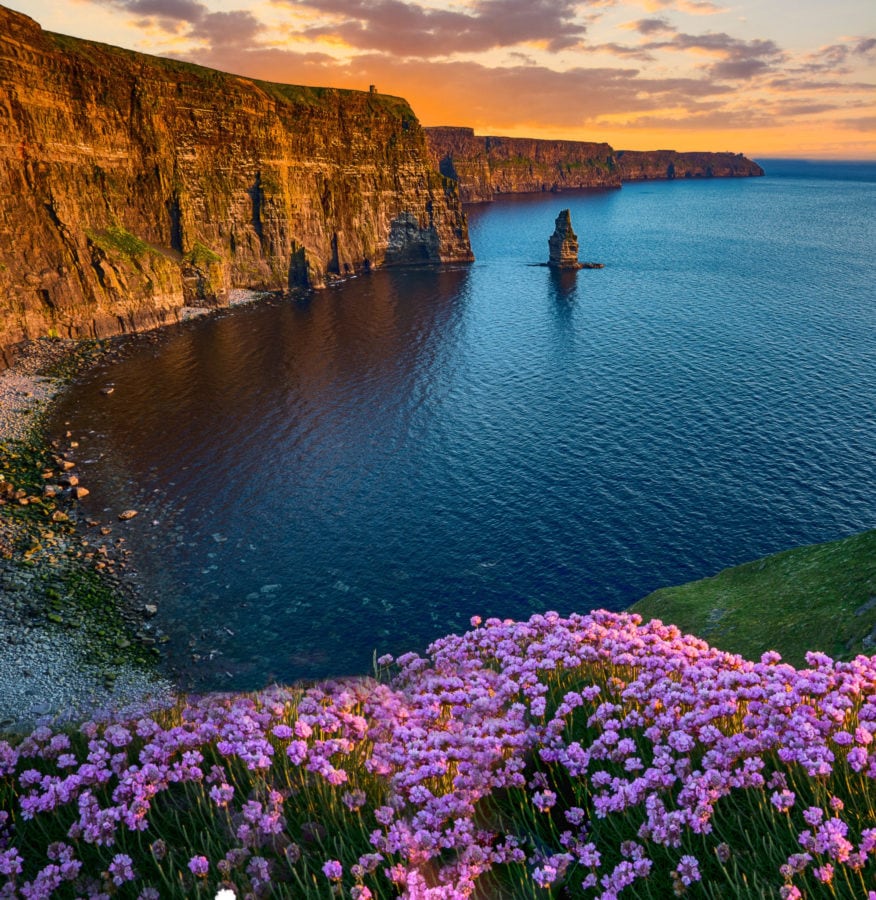
No visit to County Clare is complete without the Cliffs of Moher. The cliffs run for about 14 km from Hag’s Head towards Doolin and reach 214 metres near O’Brien’s Tower. On a clear day you can see the Aran Islands, Galway Bay and the mountains of Connemara. They were laid down more than 300 million years ago and are part of the Burren and Cliffs of Moher UNESCO Global Geopark. Almost 1.5 million people visited in 2024, so timing matters.

Moher is famous, but it is not Ireland’s highest cliff. Slieve League in Donegal rises to about 601 metres, and Croaghaun on Achill Island in County Mayo is higher still at around 688 metres, the tallest sea cliffs in Ireland. I’ve walked Slieve League, the Kerry Cliffs and the Cliffs of Moher, and each is special in its own way: Slieve League in Donegal is the giant at about 601 metres and feels wild and empty, the Kerry Cliffs near Portmagee rise over 300 metres with views out to the Skelligs, and Moher, at 214 metres, is the smallest of the three but the most dramatic wall of cliff you can stand beside
- Tickets 2026: €15 per adult at the gate; online from about €8 off-peak (before 11am or after 4pm) and €12 at peak times. Parking is included.
- What you get: the visitor centre built into the hillside, the exhibition, around 800 m of paved clifftop paths, O’Brien’s Tower and the viewing platforms.
- Trail status (August 2026): the 6 km Liscannor/Hag’s Head section of the Coastal Walk is fully closed for safety reasons. See #4 for the section from Doolin.
- Accessibility: the visitor centre is fully accessible, and the “Lifts of Moher” electric vehicle takes less mobile visitors along the paths with a guide.
My tip: go early or late. Sunset is beautiful, and the coach tours have gone.
2. See the Cliffs of Moher from the sea
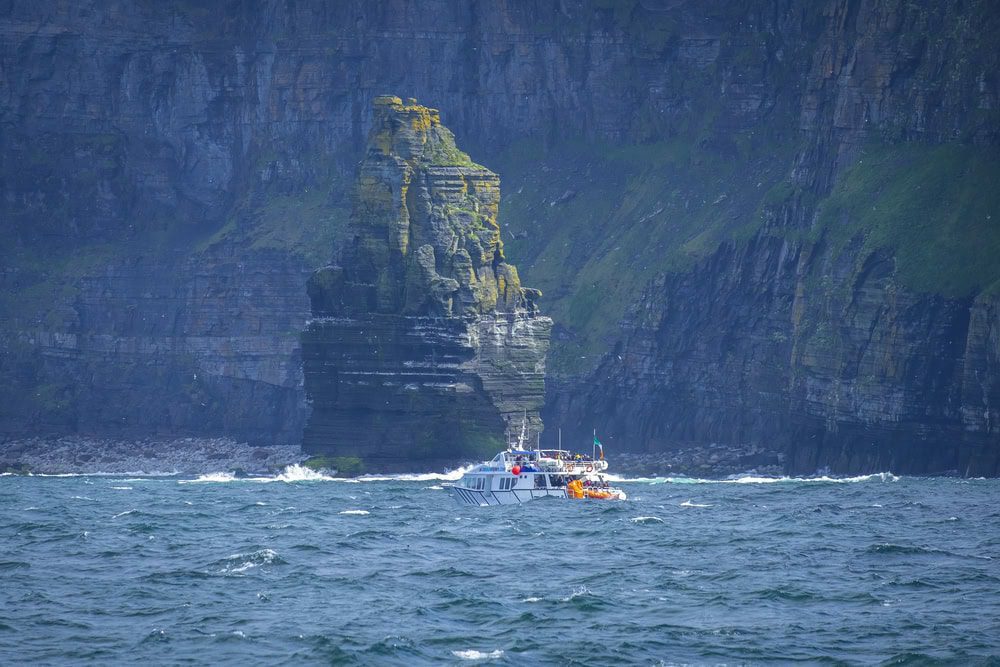
To grasp the true scale of the cliffs, see them from below. Boats leave Doolin Pier and sail along the base of the cliffs in about an hour, passing sea stacks and nesting seabirds. Puffins are often seen in late spring and early summer. Some ferries combine the cruise with a trip to the Aran Islands. Sailings depend on the weather, so keep a backup day free.
3. Doolin village and its trad pubs
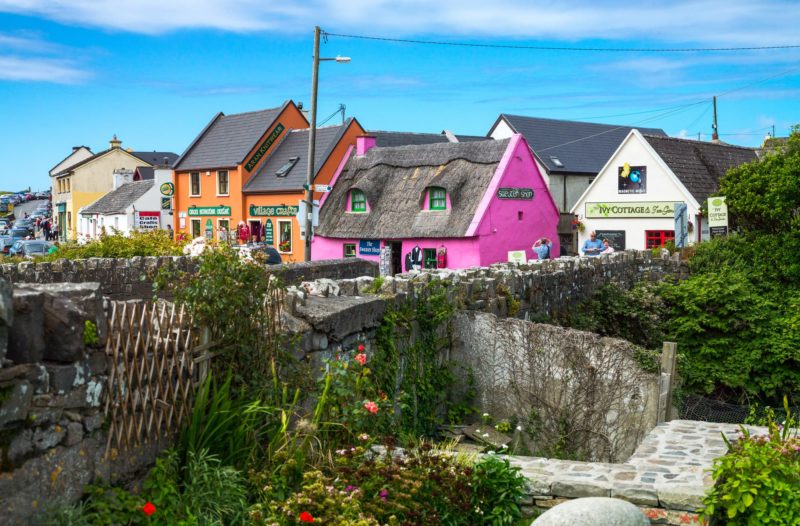
Doolin is often called the capital of Irish traditional music. Sessions start most evenings in Gus O’Connor’s, McGann’s, McDermott’s and Fitzpatrick’s, with fiddles, flutes and bodhráns. Arrive early in summer if you want a seat. Doolin is also a foodie stop now: Homestead Cottage, a tiny restaurant in a 200-year-old stonemason’s cottage outside the village, has held a Michelin star since 2024 and kept it in the 2026 guide. Book well ahead.
4. Doolin Cliff Walk (open section)
The cliff path from Doolin is the quiet way to experience the Moher coastline. In 2026 it is open only from Doolin as far as Surfers Path, where walkers must turn back; there is currently no route through to the visitor centre. It is still a rewarding out-and-back walk with big Atlantic views. Wear proper boots, stay well back from the edge, and check the status on the official Cliffs of Moher website on the morning you go, because closures change at short notice. For more ideas, see my guide to the best hiking trails in Ireland.
5. Doonagore Castle
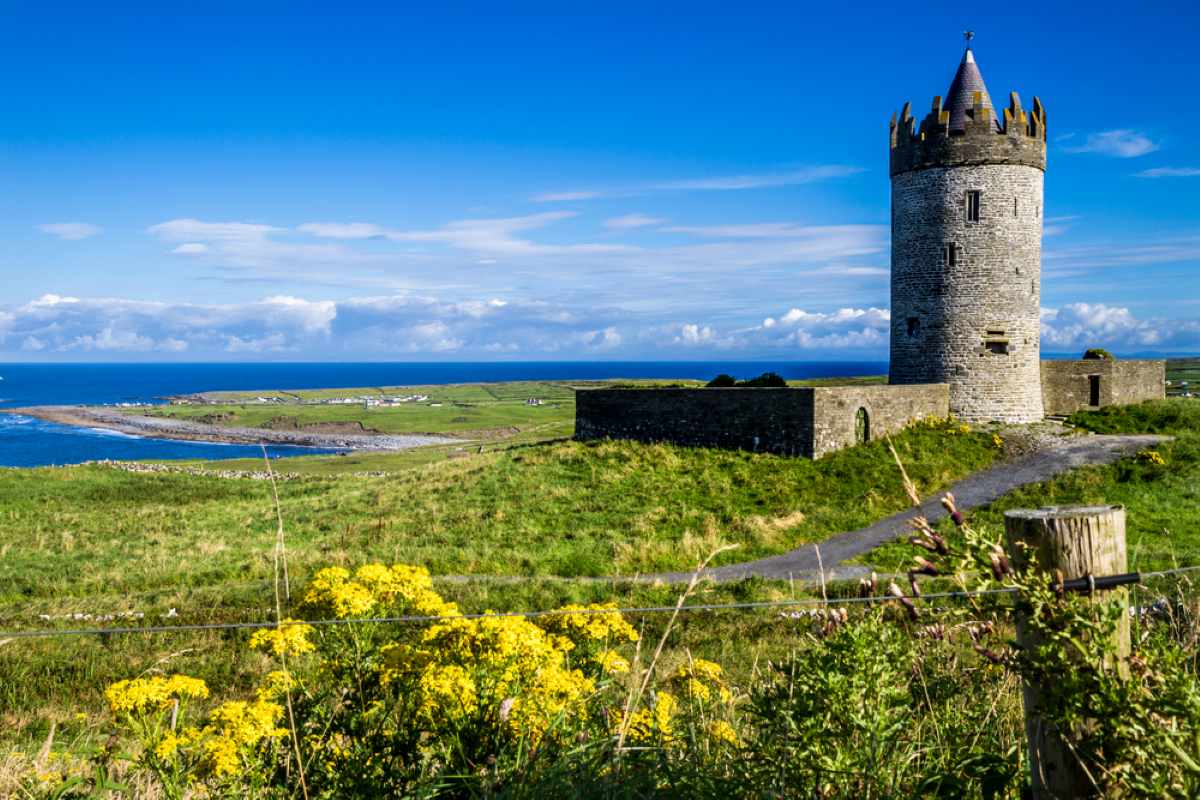
Doonagore Castle is the round 16th-century tower house you see on the hill above Doolin, with the Atlantic behind it. It was restored in the 1970s and is a private home, so you can only admire it from the road. Local tradition says that survivors of a wrecked Spanish Armada ship came ashore nearby in 1588 and were hanged here.
6. Doolin Cave
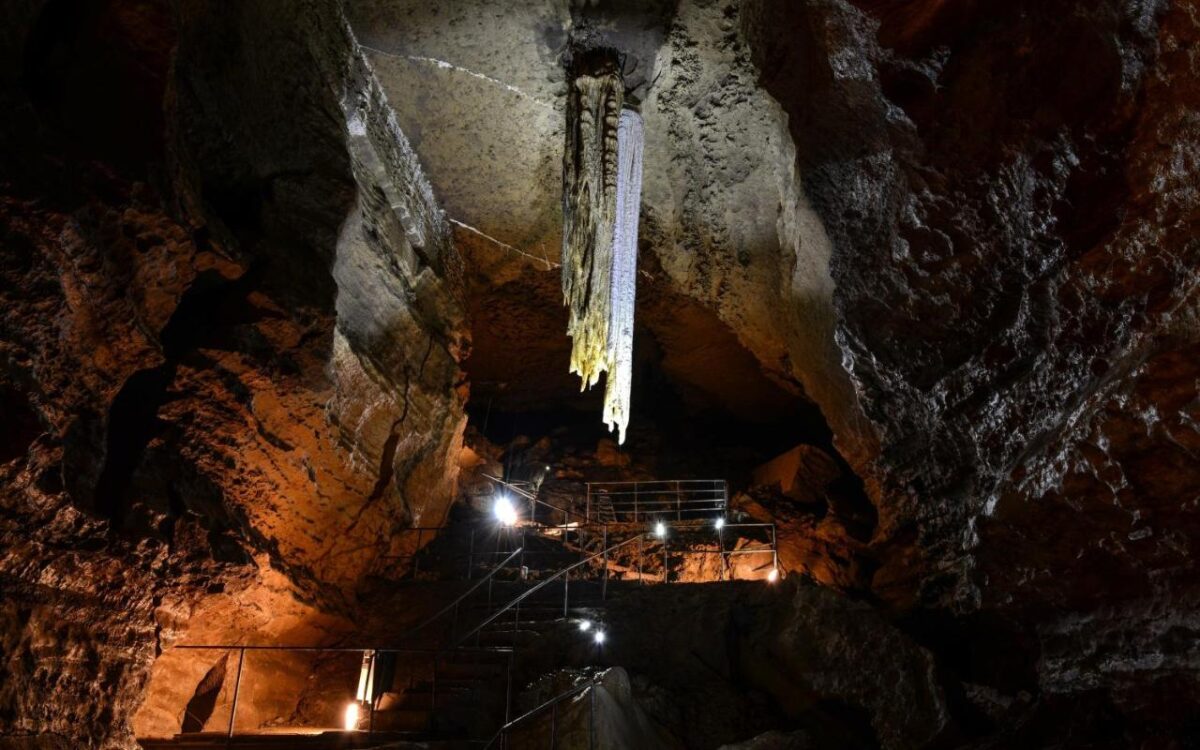
Doolin Cave is home to the Great Stalactite, which hangs 7.3 metres from the roof and is the longest free-hanging stalactite in Europe. Guided tours last about 50 minutes and involve 125 steps each way, so they are not suitable for everyone. Above ground there is a farmland nature trail, a café and pottery made from the cave’s own clay. It is one of the best things to do in Clare on a wet day. Book a guided Doolin Cave tour.
7. Burren National Park walks
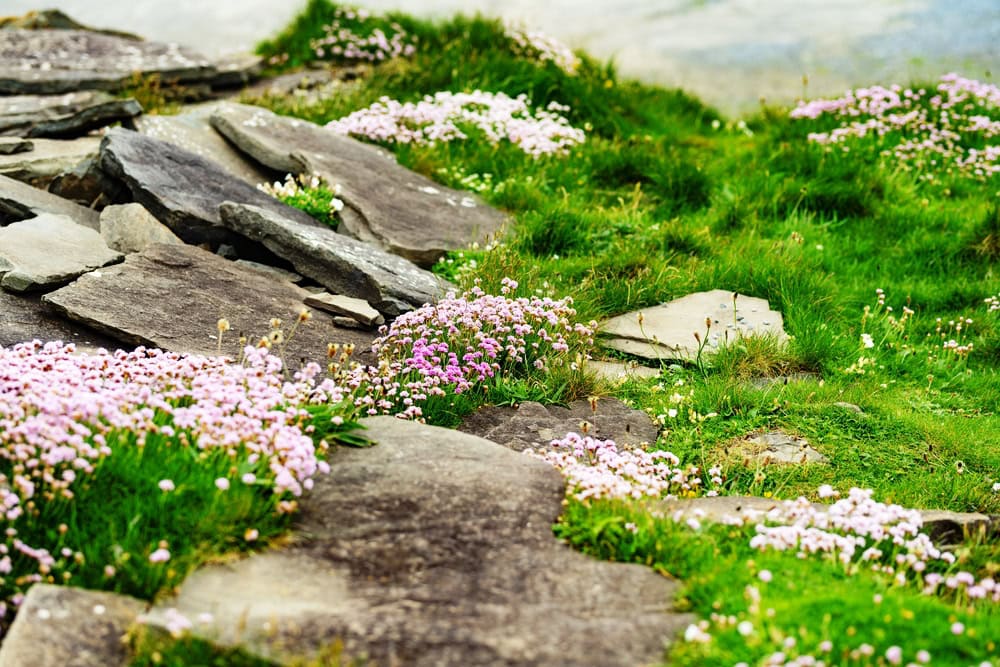
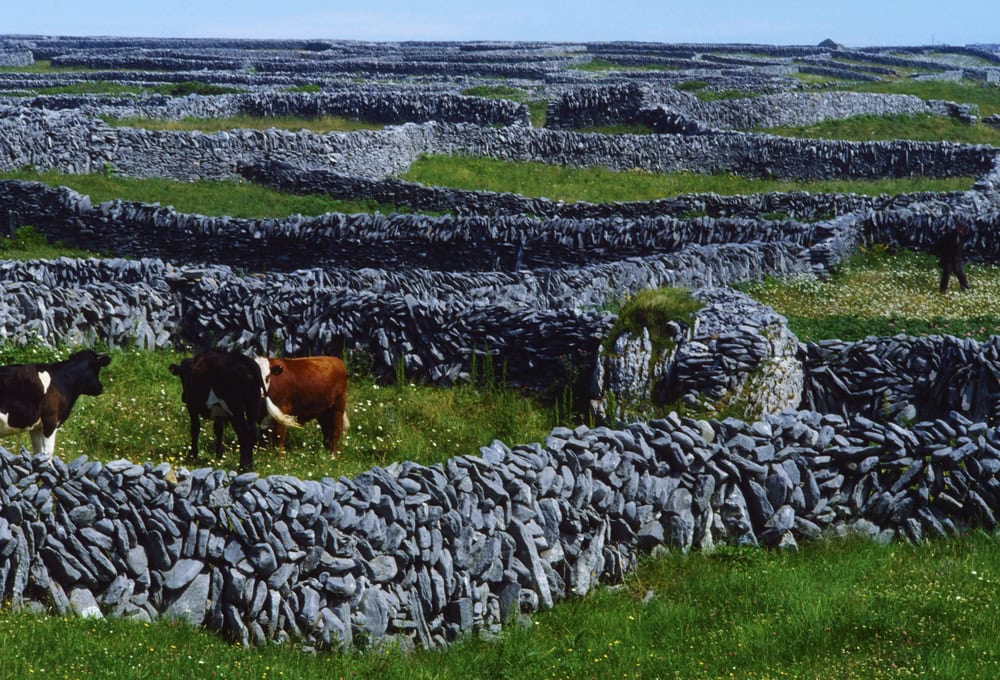
The Burren takes its name from the Irish Boireann, meaning “rocky place”. It is a vast karst limestone landscape where Arctic, Alpine and Mediterranean plants grow side by side. Burren National Park is free to enter and has colour-coded walking trails, including the Mullaghmore loop (about 7.5 km). The separate Burren Centre in Kilfenora (#14) charges admission. The national park is managed by the National Parks and Wildlife Service; see my guide to the national parks of Ireland.
8. The Burren coast road and Fanore
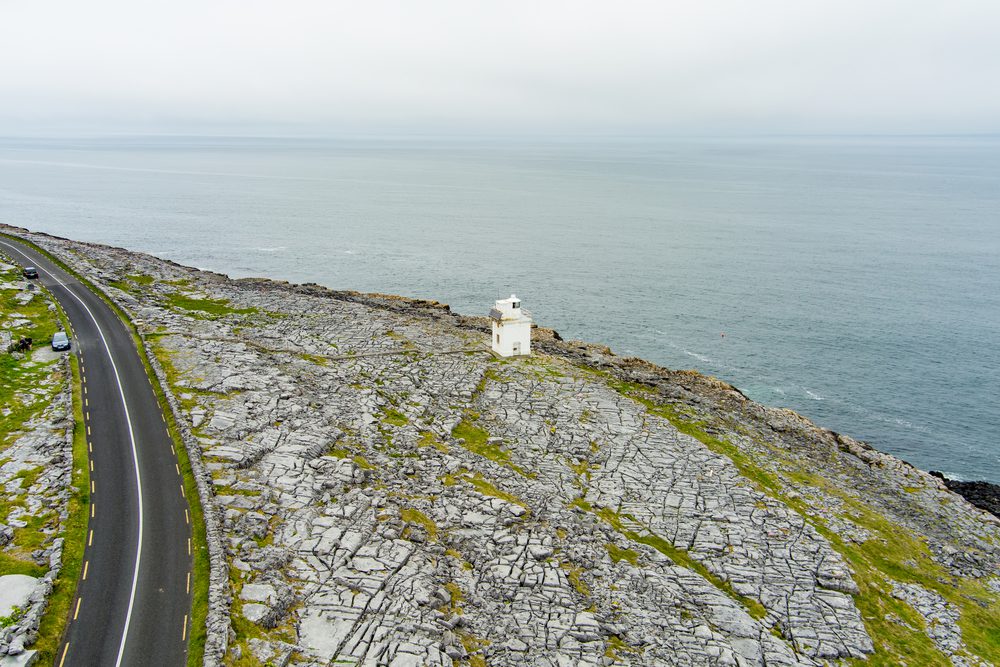
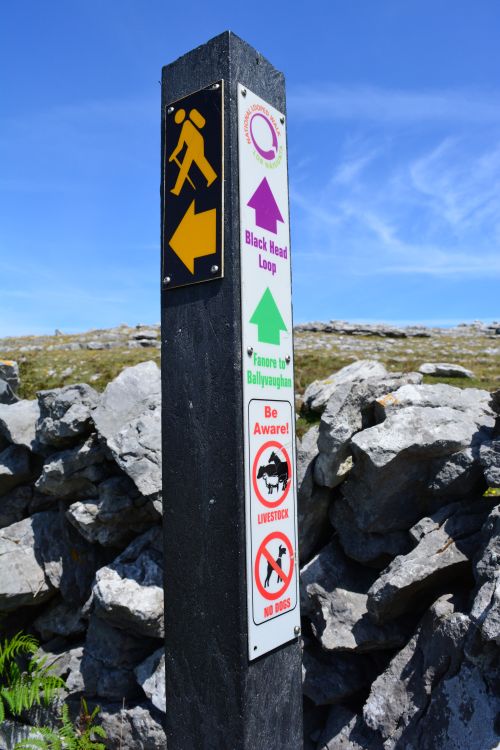
I have driven through the Burren many times over the years, often with visiting family and friends, and every time I stop somewhere new. The full loop from Doolin through Lisdoonvarna, Ballyvaughan and back along the coast is roughly 60–65 km and takes about 1.5 hours without stops, but give it at least half a day. The coast road around Black Head is unforgettable, with limestone pavement on one side and Galway Bay on the other. Fanore Beach sits right where the Burren meets the sea and is popular with swimmers and surfers.
9. Poulnabrone Dolmen
Poulnabrone is a portal tomb whose huge capstone balances on upright stones in the middle of the limestone. It dates to about 3800 BC, making it one of Ireland’s oldest dated megalithic monuments, and excavations found the remains of at least 33 people. It is free and signposted off the R480. Please do not climb on it or build stone cairns nearby; the limestone pavement is fragile.

10. Caherconnell Stone Fort and sheepdog demos
About 1 km from Poulnabrone, Caherconnell is a well-preserved stone ringfort about 40 metres across, with walls up to four metres thick. It was lived in for centuries and rebuilt in the late medieval period. The visitor centre explains the archaeology, and the sheepdog demonstrations, where Border Collies work the sheep across the Burren hills, are a big hit with children.

11. Aillwee Cave and Birds of Prey
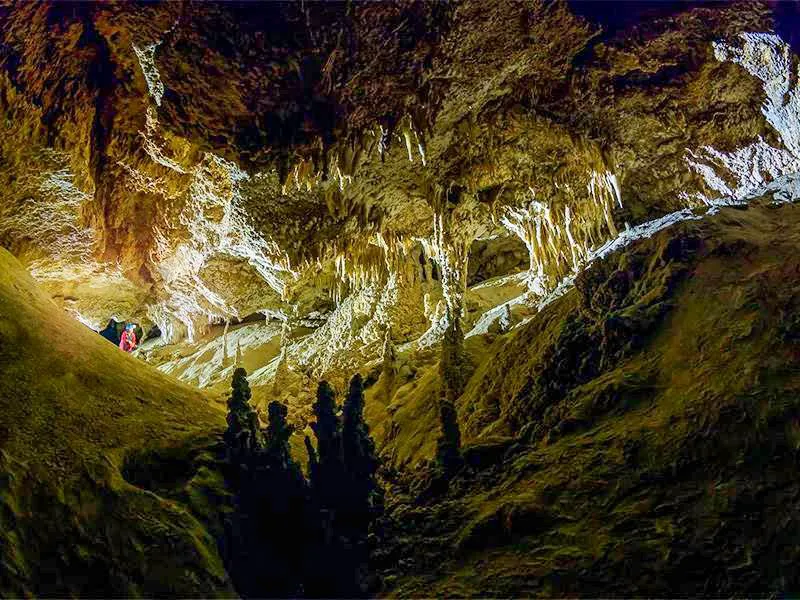
Aillwee Cave was found by a local farmer in 1940 and opened to visitors in 1976, so it marks 50 years in 2026. Guided tours lead through caverns with stalactites, an underground waterfall and the hollows where brown bears once hibernated. Next door, the Birds of Prey Centre runs flying displays with hawks, owls and eagles. Don’t leave without visiting the farm shop, which sells Burren Gold, a Gouda-style cheese made on site.
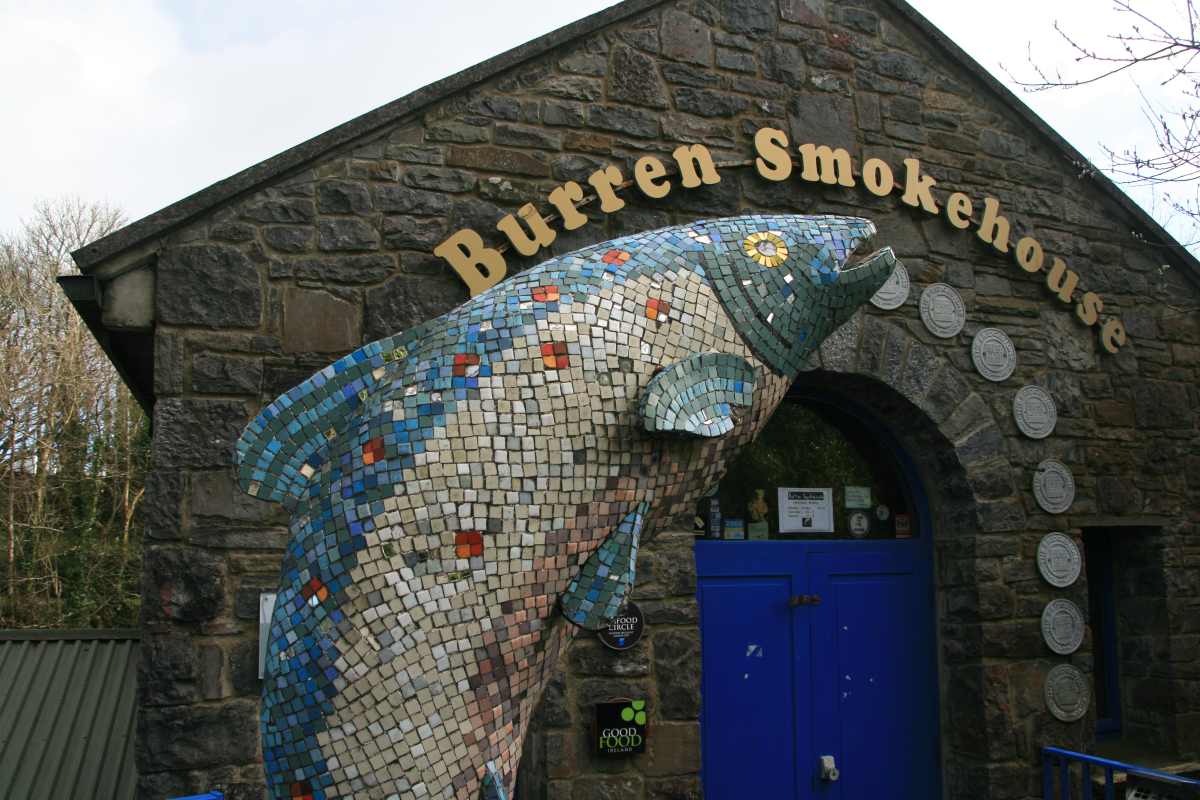
12. Burren Smokehouse and the Burren Food Trail
I spent more than 20 years as a food product developer, scouting markets and producers for new ideas, so the Burren’s food scene is a highlight for me. The Burren Smokehouse in Lisdoonvarna has been smoking Irish salmon for decades; I have bought it there and it is delicious. It is one stop on the Burren Food Trail, which links farms, cafés and producers across the region. Nearby St Tola, near Inagh, has been making goat’s cheese since 1978; its St Tola Karst won a Super Gold at the 2025 World Cheese Awards and was named best cheese in Ireland. You can book a farm visit to meet the goats.
13. Burren Perfumery
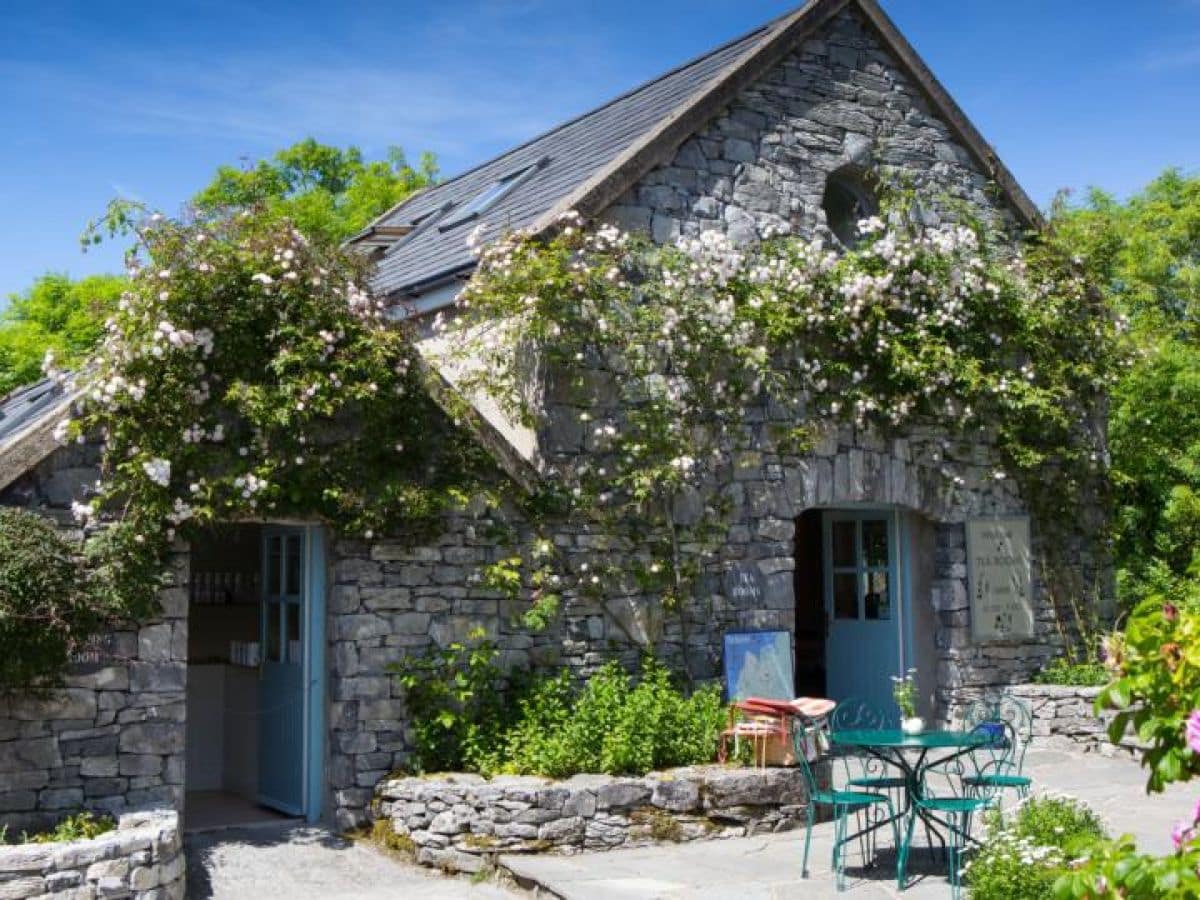
The Burren Perfumery, in a quiet valley near Carran, makes perfumes, soaps and skincare by hand on site, inspired by the landscape. It is a lovely place to pick up a gift, and the small tea room serves home-baked cakes and simple lunches.
14. Kilfenora: high crosses and the Burren Centre
Kilfenora is known as the “City of the Crosses” for the carved high crosses around its small 12th-century cathedral, including the Doorty Cross. I have stopped for the crosses on my drives through the Burren. The Burren Centre in the village gives a good introduction to the region’s geology, plants and history before you head into the landscape. Kilfenora is also home to the famous Kilfenora Céilí Band.


15. Father Ted’s House (from the road only)
Fans of the comedy Father Ted will recognise the parochial house: Glanquin farmhouse in Lackareagh, near Kilnaboy. It is a private family home on a narrow road with no parking and no public access. Look from the road, take a quick photo and move on without blocking the lane. I would definately call this a tourist trap as you can’t actually see in the house just a view of the outside.

16. Lisdoonvarna and the Matchmaking Festival
Lisdoonvarna is a Victorian spa town best known for its Matchmaking Festival every September, which has been running for more than 160 years. Expect dancing, music, a lot of craic and a famous local matchmaker. Even outside festival time, it is a handy base for the Burren and Doolin.

17. Ennistymon and its cascades
Ennistymon is a colourful market town where the River Inagh tumbles over a series of cascades right beside the main street. It is a great coffee stop between the Burren and the coast, with independent shops, the Market Hall butcher and deli, and a moving famine memorial at the old workhouse.

18. Lahinch: surfing and links golf
Lahinch is one of Ireland’s best surf beaches, with a long sandy bay and consistent Atlantic swell. Surf schools such as Lahinch Surf School and Ben’s Surf Clinic offer lessons for beginners. The promenade is perfect for a walk, and Lahinch Golf Club has two links courses, the Old Course and the Castle Course; see my guide to the best golf courses in Ireland.
West Clare and the Loop Head Peninsula
19. Spanish Point
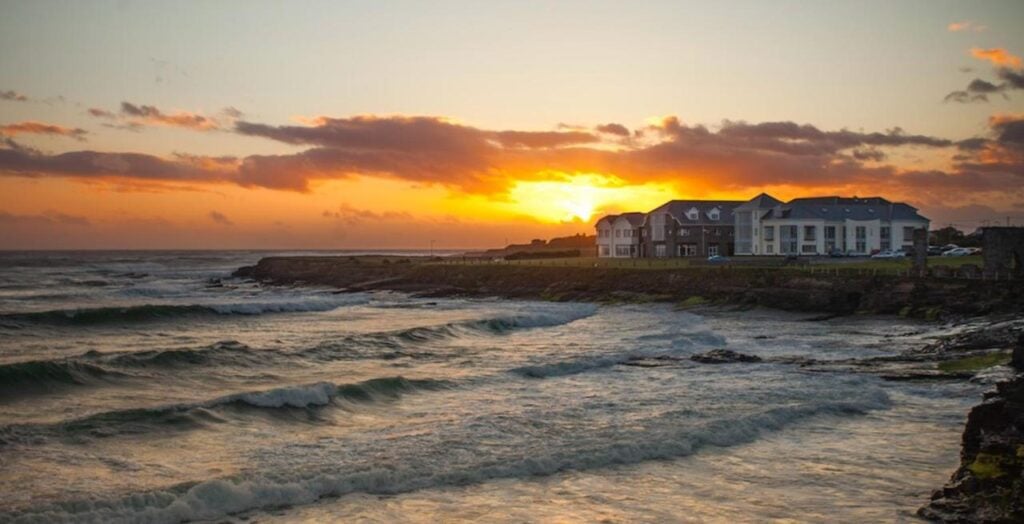
Spanish Point gets its name from the Spanish Armada ships wrecked off this coast in 1588. Today it is a long sandy beach with great sunsets. We stayed at the Armada Hotel for several days and used it as our base for touring the county; the sea views from the rooms are wonderful. Every morning at 9am, the Snámhaí Sásta (“happy swimmers”) community meets for a sea swim, and visitors are welcome. Neighbouring Miltown Malbay hosts the Willie Clancy Summer School, one of Ireland’s best-loved traditional music gatherings, each July.
20. Kilkee and its cliff viewpoints
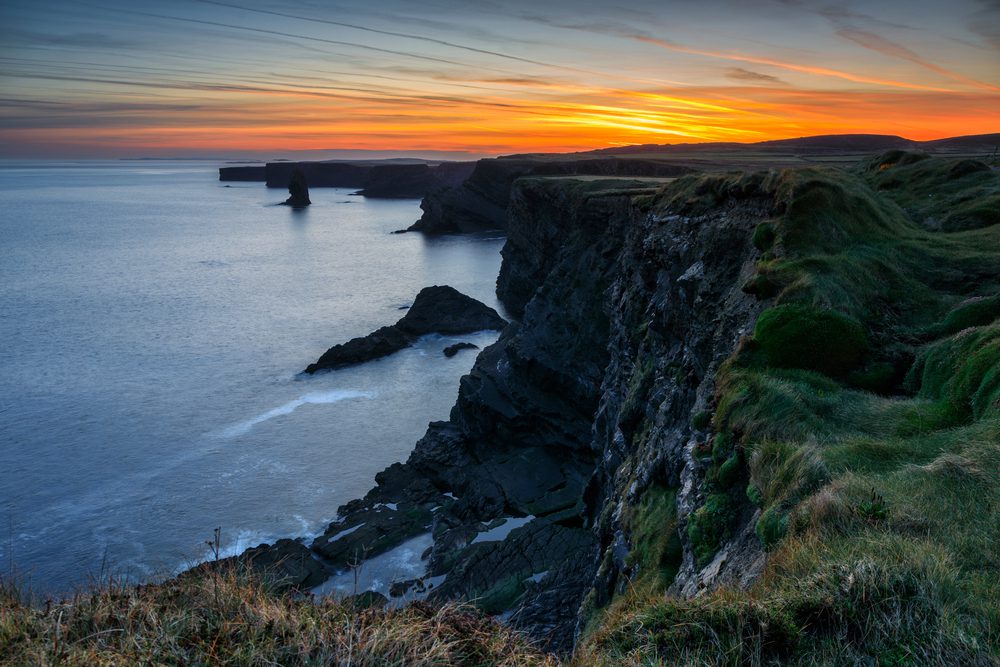
Kilkee is a classic Irish seaside town built around a horseshoe-shaped bay, with a sheltered beach that regularly earns a Blue Flag and natural rock pools called the Pollock Holes. The real draw is the cliffs to the west. I have seen them from four viewpoints: the Diamond Rocks car park, the coast road, the Bishop’s Island pull-in and out at Loop Head. That makes Kilkee one of the best cliff experiences in Ireland if walking long distances is not for you. For full details, read my Kilkee Cliffs guide. In September, horse races are held on the strand when the tide goes out.
21. Loop Head Lighthouse and the Bridges of Ross
Loop Head is the far western tip of Clare, where the Shannon Estuary meets the Atlantic. The roads are quiet and the views stretch to the mountains of Kerry. At the lighthouse, guides take you up the tower and out onto the balcony, and tell the stories of the keepers and their families. Book a Loop Head Lighthouse tower tour. On the way, stop at the Bridges of Ross, a sea arch on the northern side of the peninsula. There were once three arches; only one survives. The peninsula is gently rolling, so it is good for cycling: the Loop Head Cycleway is a 65 km circuit from Kilkee.

22. Dolphin watching from Carrigaholt
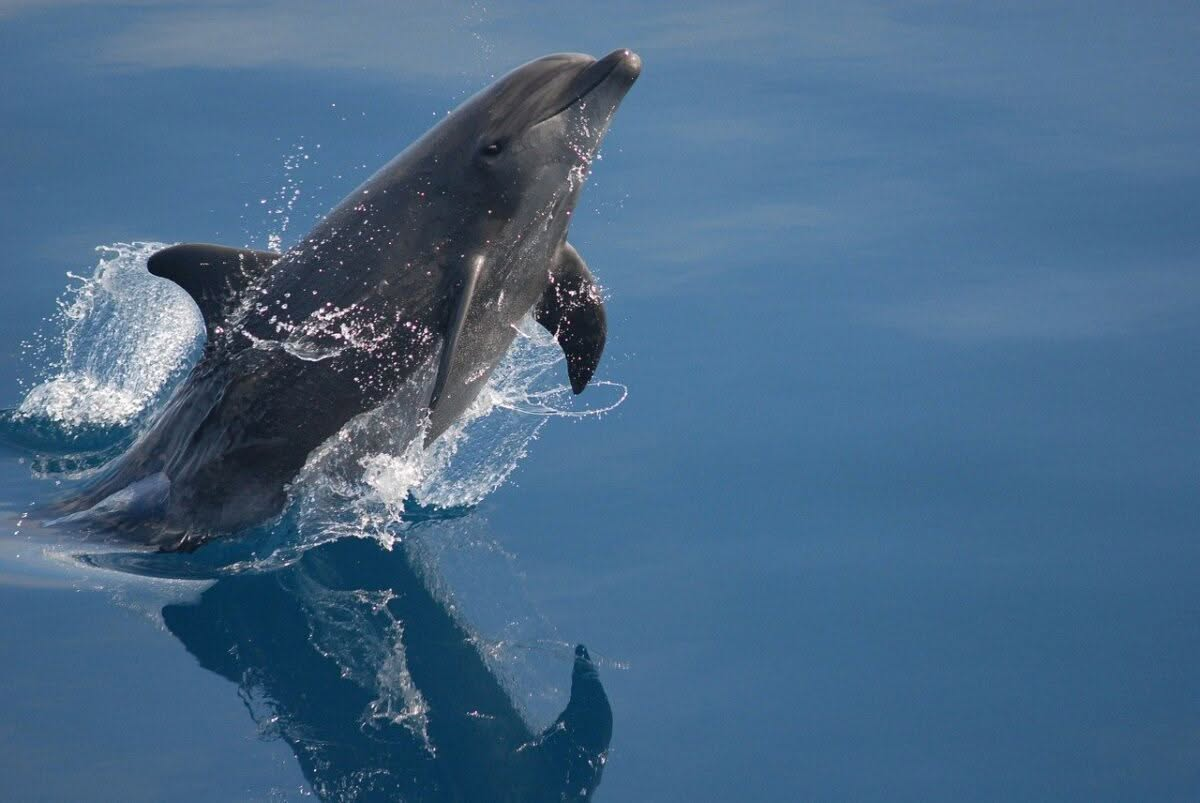
The Shannon Estuary is home to a resident population of bottlenose dolphins, and Dolphinwatch Carrigaholt, a family-run eco-tour operator, has been taking visitors out to see them for over 25 years. Trips last two to three hours and often spot seals, seabirds and, in autumn, minke or humpback whales. Book ahead in summer.
23. Scattery Island
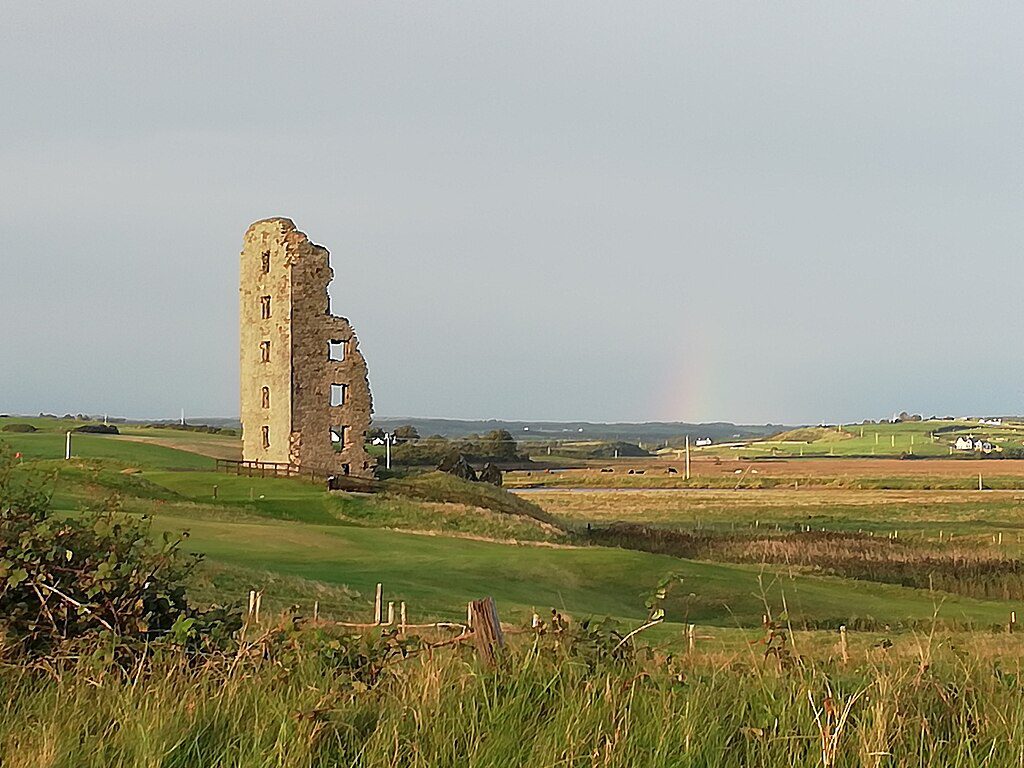
Scattery Island, at the mouth of the Shannon, was the site of a monastery founded by St Senan in the 6th century. It has one of Ireland’s tallest round towers, the ruins of several churches and an abandoned village. Seasonal ferries leave from Kilrush marina (generally May to September) and take about 20 minutes. Paths on the island are grassy and uneven.

24. Vandeleur Walled Garden
Just outside Kilrush, the Vandeleur Walled Garden is a restored 19th-century garden set in woodland, with a maze, unusual plants that thrive in the mild microclimate and a café. It is an easy stop between Kilkee and Scattery Island; check current admission on the Clare Collection website.

Ennis and Mid-Clare
25. Ennis: friary, museum and music
Ennis, the county town, is a busy market town of narrow lanes, pubs and shops. Ennis Friary, a Franciscan foundation from the 13th century, has some of the finest medieval stone carvings in Ireland, including the MacMahon tomb. Clare Museum on Arthur’s Row is free to visit and displays more than 400 artefacts on loan from the National Museum of Ireland; it is closed on Sundays. Ennis is also a centre for traditional music: Fleadh Nua fills the streets each late May, and the Ennis Trad Festival runs in November. For the history behind it all, join the Ennis walking tour with local expert Dr Jane O’Brien.

26. Dysert O’Dea Castle and archaeology trail
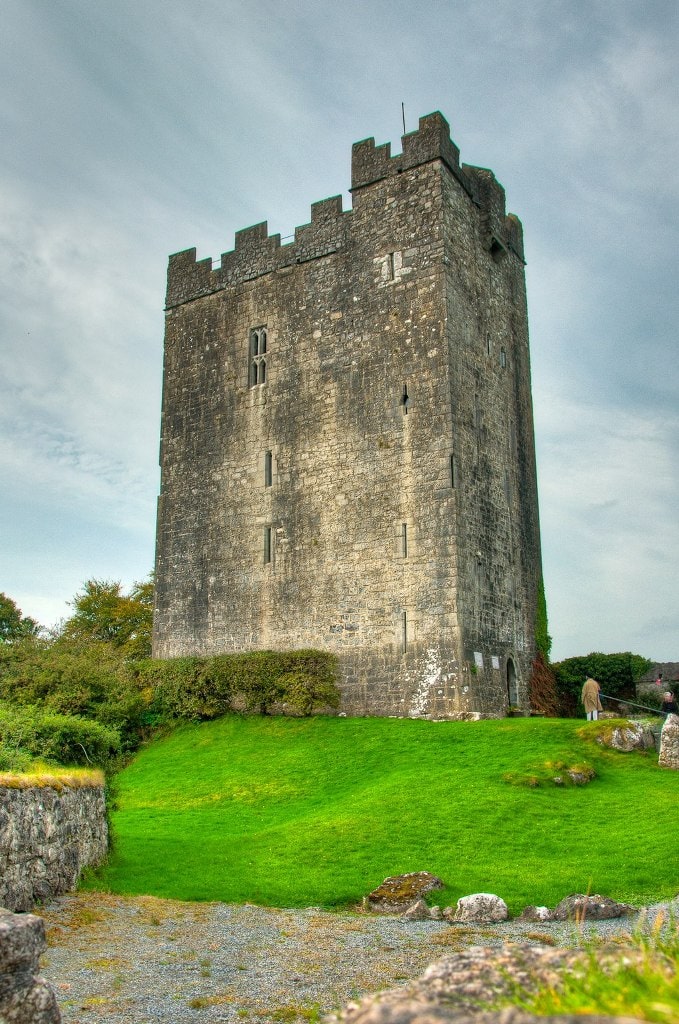
Dysert O’Dea is a tower house built around 1480 by the O’Dea chieftains and restored in the 1970s. It now houses the Clare Archaeology Centre, with a museum, exhibitions and a walk along the roof walls. Around it, a 4 km trail passes 25 monuments, including stone forts, a high cross, a 12th-century Romanesque church doorway and the site of the 1318 Battle of Dysert O’Dea. The castle opens May to September; the trail is open all year. Note that the toilets are not wheelchair accessible.
27. Craggaunowen
Craggaunowen is an open-air “living past” park near Quin, with a reconstructed crannóg (lake dwelling), ringfort and Iron Age timber trackway, plus a 16th-century tower house. It also houses the leather boat in which explorer Tim Severin sailed from Ireland to North America in the 1970s to test the legend of St Brendan. Allow two to three hours.

28. Knappogue Castle and Quin Abbey
Knappogue Castle, a 15th-century MacNamara tower house, is known for its evening medieval banquet with music and storytelling. Nearby Quin Abbey is one of the best-preserved Franciscan friaries in Ireland, with an intact cloister. It is managed by the OPW and free to wander.

Shannon and Bunratty
29. Bunratty Castle and Folk Park
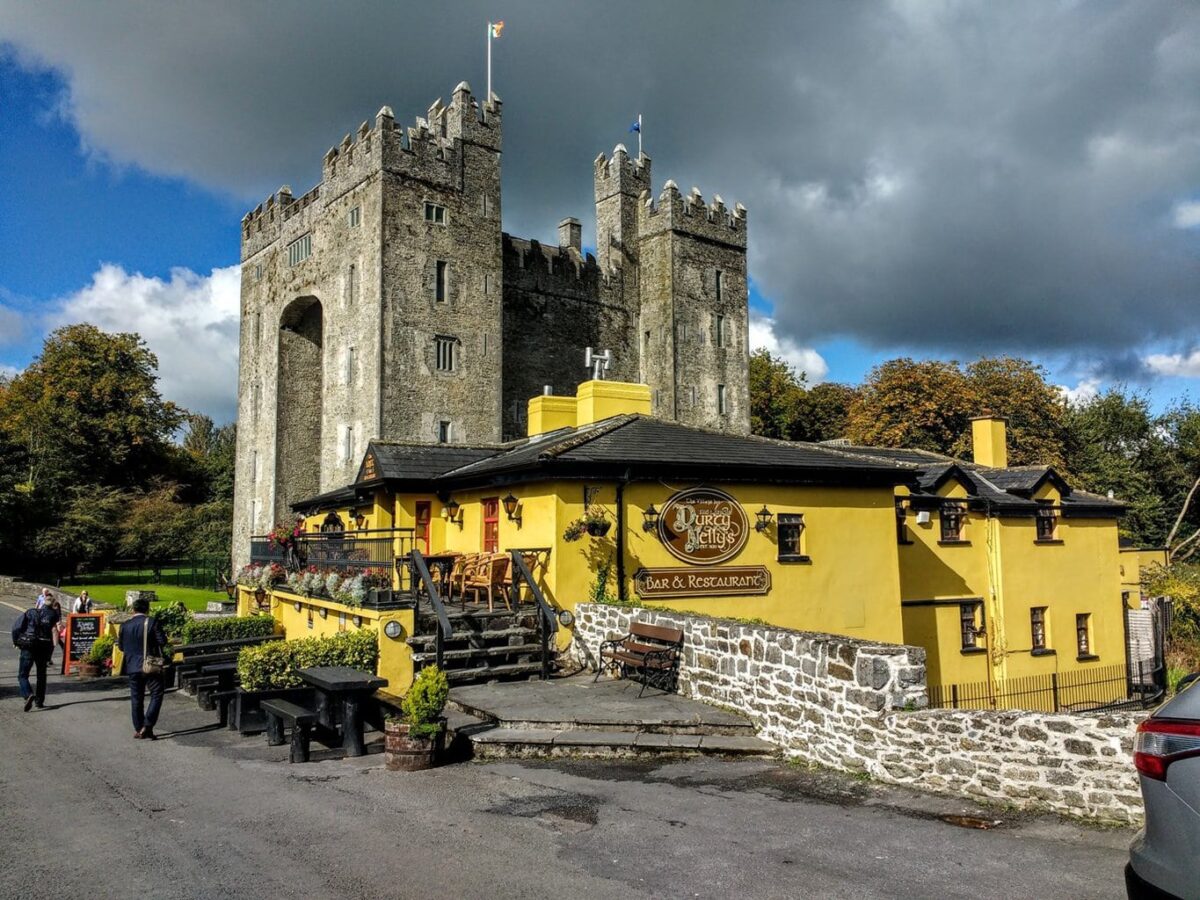
Bunratty Castle and Folk Park is ten minutes from Shannon Airport and makes a perfect first or last stop in Ireland. The 15th-century castle was restored in the 1950s and is filled with medieval furniture and tapestries. Around it, the 26-acre Folk Park recreates 19th-century Irish life, with cottages, a village street, shops and a school. The medieval banquets in the great hall are a classic evening out. Afterwards, drop into Durty Nelly’s, the pub next to the castle, for a pint and a legend.
- Opening hours (autumn 2026): daily 9am–5:30pm; last castle entry 4pm.
- Accessibility: the Folk Park is largely wheelchair accessible; the castle, with its steep spiral stairs, is not.
Bunratty is one of the Clare Collection of council-run attractions, along with the Cliffs of Moher, Craggaunowen, Knappogue, Loop Head Lighthouse, Vandeleur Walled Garden and Inis Cealtra. If you love castles, see my guide to castle hotels in Ireland.
East Clare and Lough Derg
30. Killaloe and Brian Boru country
Killaloe sits on the River Shannon where it flows out of Lough Derg, linked by an old stone bridge to Ballina on the Tipperary side. Brian Boru, High King of Ireland from 1002 to 1014, was born around 941 at Kincora in Killaloe, and the earthworks of his fort, Béal Bóraimhe, lie just north of the town. Today it is a lovely spot for a riverside walk, a meal with a view or a cruise on Lough Derg.

31. Inis Cealtra (Holy Island) and Mountshannon
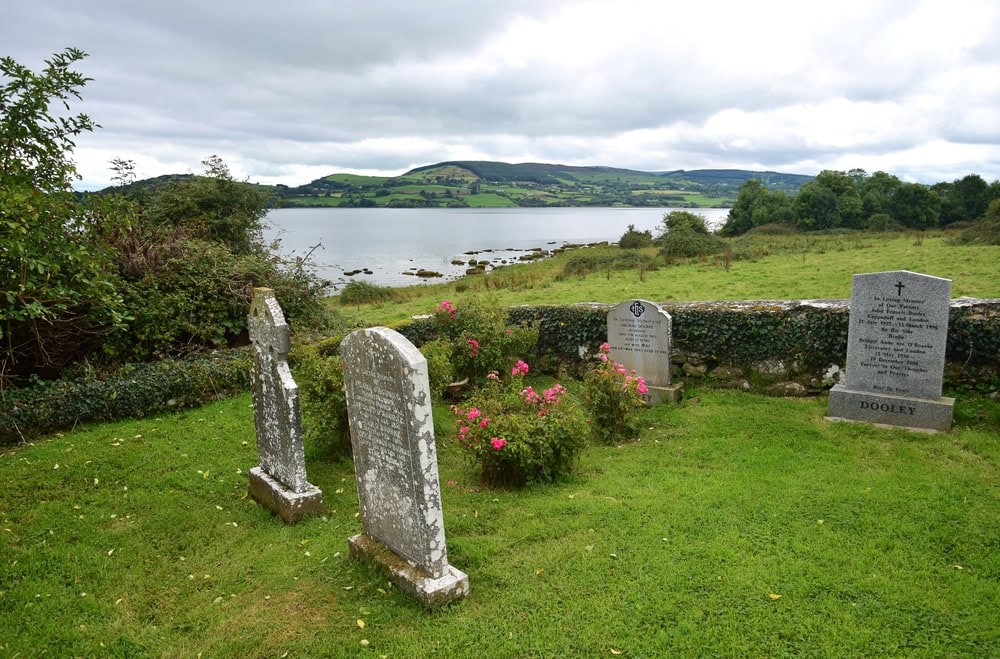
Inis Cealtra, or Holy Island, on Lough Derg is one of Ireland’s most important early Christian sites. The monastery was founded by St Caimin in the 7th century and later linked to Brian Boru. The island has a round tower, the ruins of several churches and early cross slabs, and it is still used as a burial ground, so please visit respectfully.
New since 2025: the Inis Cealtra Visitor Experience opened in the restored Old Rectory in Mountshannon, a €5.3 million project. It has interactive displays, a 3D scale model of the island, local folklore and music in listening nooks, and a first-floor café overlooking the lough. In 2026 it won the “adaptation and re-use” award at the RIAI Architecture Awards. Seasonal boat trips to the island can be booked through the centre.
Bonus Day Trip: The Aran Islands from Doolin
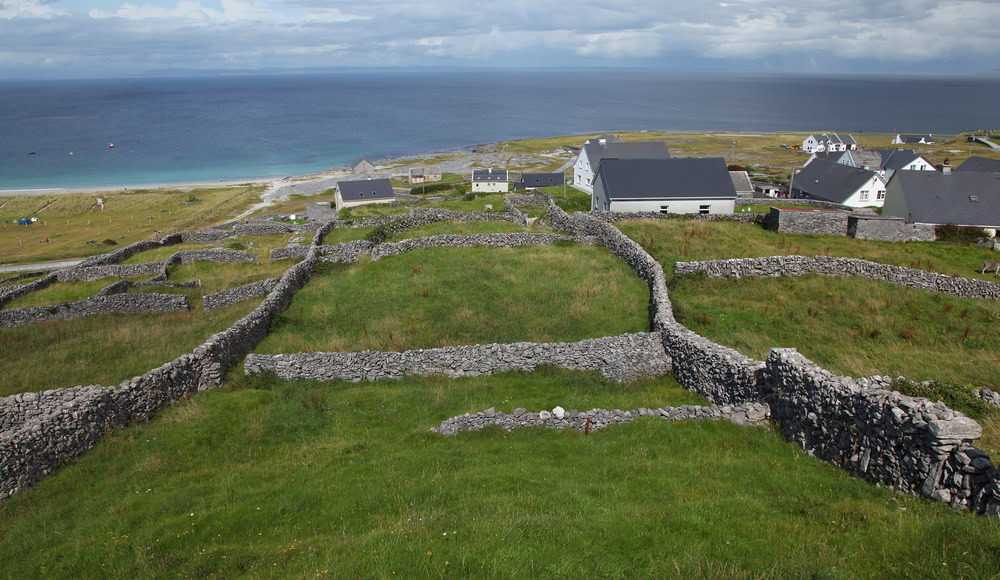
The Aran Islands (Inis Mór, Inis Meáin and Inis Oírr) are part of County Galway, not Clare, but seasonal ferries from Doolin Pier make them an easy day trip. Inis Oírr is the closest, while Inis Mór has the clifftop fort of Dún Aonghasa. Rent a bike and explore stone walls, thatched cottages and an Irish-speaking way of life. Read my guide to things to do in the Aran Islands, or book the Aran Islands bike tour with tea and scones from Doolin, which includes ferry tickets, bike rental and a guide.
Sample 3-Day County Clare Itinerary
| Day | Route | Overnight |
| Day 1 | Arrive at Shannon → Bunratty Castle and Folk Park → Ennis (friary, Clare Museum) → trad music in Ennis | Ennis |
| Day 2 | Dysert O’Dea → Kilfenora crosses → Poulnabrone → Caherconnell → Aillwee Cave → Ballyvaughan → Black Head coast road → Fanore → music in Doolin | Doolin |
| Day 3 | Cliffs of Moher early → Lahinch → Spanish Point → Kilkee cliffs → Loop Head Lighthouse and Bridges of Ross | Kilkee or Spanish Point |
| Extra day | East Clare: Killaloe → Mountshannon and Inis Cealtra. Or: Aran Islands ferry from Doolin | Killaloe or Doolin |
Arriving at Shannon? My Ireland itineraries include a full 7-day route starting from Shannon Airport.
How to Get to County Clare
- By car from Dublin: about 2.5–3 hours to Ennis. Take the M7 to Limerick, then the M18 north to Ennis. From Galway, the M18 south takes about an hour. Read my guide to renting a car in Ireland.
- By train: from Dublin Heuston, change at Limerick Junction and Limerick for the Ennis line. Ennis also has direct trains from Galway.
- By bus: coach services run from Dublin to Ennis and Shannon, and Bus Éireann links Ennis with Lahinch, the Cliffs of Moher and Doolin. Services are limited outside summer, so check TFI timetables.
- By air: Shannon Airport is in County Clare and has flights from North America, Britain and Europe. There are currently no scheduled flights between Dublin and Shannon.
See also: public transport in Ireland and how to get around Ireland.
Getting Around County Clare
A car is by far the easiest way to see Clare. The Burren, Loop Head and East Clare have very little public transport, and many of the best viewpoints are simply pull-ins on the coast road. Roads in the Burren are narrow and stone-walled, so take your time. If you would rather not drive, consider hiring a private driver for a day or two.

Accessibility in County Clare
Clare has more step-free options than its rugged reputation suggests:
- Cliffs of Moher: fully accessible visitor centre, accessible parking and the guided “Lifts of Moher” vehicle.
- Kilkee and Loop Head: many cliff viewpoints can be enjoyed from the car or a short level stroll from parking. This is how I saw them.
- Bunratty: the Folk Park is largely accessible; the castle is not.
- Inis Cealtra Visitor Experience: designed to be accessible; the island itself is uneven.
- Harder for wheelchair users: Doolin Cave (125 steps), most Burren trails, the Doolin Cliff Walk and the toilets at Dysert O’Dea.
For more, see my Accessible Ireland guide.
What to Eat and Drink in County Clare
Clare’s food is all about the sea and the Burren’s small farms. Try seafood chowder and local oysters from the Flaggy Shore on the Burren coast, smoked salmon from the Burren Smokehouse, and farmhouse cheeses such as St Tola goat’s cheese, Burren Gold from Aillwee and Cratloe Hills sheep’s cheese. For a special night out, Homestead Cottage near Doolin holds a Michelin star; for everyday comfort food, you will find traditional Irish dishes on every pub menu.

Festivals and Events in County Clare
| Event | Where | When |
| Fleadh Nua (traditional music, song and dance) | Ennis | Late May to early June |
| Willie Clancy Summer School | Miltown Malbay | July |
| Hell of the West Triathlon and Run Kilkee | Kilkee | Summer |
| Lisdoonvarna Matchmaking Festival | Lisdoonvarna | September |
| Kilkee Strand Races (horse racing on the beach) | Kilkee | September |
| Ennis Trad Festival | Ennis | November |
| County Clare Hunt point-to-point | Bellharbour, North Clare | Spring |
Clare has no licensed racecourse; for flat or National Hunt racing, the nearest course is Limerick Racecourse at Patrickswell, about 45 minutes from Ennis. See my roundup of the best festivals in Ireland.

Best Time to Visit County Clare
- Spring (April–May): Burren wildflowers begin, puffins return to Moher, fewer crowds.
- Summer (June–August): long evenings, all ferries and boat trips running, the busiest time at Moher and Doolin.
- Autumn (September–October): the Matchmaking Festival, strand racing in Kilkee and dramatic Atlantic swells.
- Winter (November–March): cosy pubs, the Ennis Trad Festival and empty cliffs, but short days and some seasonal closures.
See my full guide to the best time to visit Ireland.
Where to Stay in County Clare
- Doolin: best for music and the Cliffs of Moher.
- Ennis: best for transport links, restaurants and a central base.
- Lahinch or Spanish Point: best for beaches and sunsets. We loved the Armada Hotel at Spanish Point.
- Kilkee: best for Loop Head and the West Clare cliffs.
- Killaloe: best for Lough Derg and East Clare.
For more options, read where to stay in Ireland and where to stay on the Wild Atlantic Way.
County Clare FAQs
What is County Clare best known for?
County Clare is best known for the Cliffs of Moher, the limestone landscape of the Burren, Bunratty Castle and live traditional music in Doolin and Ennis. The county also has the Loop Head Peninsula, Lough Derg and the birthplace of Brian Boru at Killaloe.
How many days do you need in County Clare?
Plan three to five days. Three days covers the Cliffs of Moher, the Burren and Bunratty; five days adds Loop Head, Kilkee and East Clare around Lough Derg at a relaxed pace.
Is the Cliffs of Moher Coastal Walk open in 2026?
Only partly. As of August 2026 the southern 6 km section from Liscannor and Hag’s Head is fully closed for safety reasons, and the northern path from Doolin is open only as far as Surfers Path, with no access to the visitor centre. The paved paths at the Cliffs of Moher Experience remain open. Check cliffsofmoher.ie on the morning you go.
How much does it cost to visit the Cliffs of Moher?
The Cliffs of Moher Experience costs €15 per adult at the gate in 2026. Booking online is cheaper, from about €8 for off-peak slots before 11am or after 4pm. The ticket includes parking, the visitor centre and the exhibition.
Why is County Clare called the Banner County?
Clare earned the nickname from its tradition of greeting politicians with banners, most famously when crowds marched behind banners to vote for Daniel O’Connell in the 1828 Clare by-election. Another explanation links it to banners captured by Clare’s Dragoons at the Battle of Ramillies in 1706. The name did not come from the GAA.
Are the Aran Islands in County Clare?
No. The Aran Islands (Inis Mór, Inis Meáin and Inis Oírr) are part of County Galway, but seasonal ferries from Doolin Pier in County Clare make them an easy day trip. Inis Oírr is the closest island to Doolin.
Can you visit County Clare without a car?
Yes, but it is harder. Trains run to Ennis from Limerick and Galway, and Bus Éireann connects Ennis, Lahinch, the Cliffs of Moher and Doolin, but services are infrequent. A car is the easiest way to reach the Burren, Loop Head and East Clare.
Where is the best place to stay in County Clare?
Doolin is best for music and the Cliffs of Moher, Ennis is best for transport links, Lahinch or Spanish Point suit a coastal stay, Kilkee is the base for Loop Head, and Killaloe is the base for Lough Derg.
What can you do in County Clare when it rains?
Good rainy-day options include Doolin Cave, Aillwee Cave, Bunratty Castle and Folk Park, Clare Museum in Ennis (free entry), the Inis Cealtra Visitor Experience in Mountshannon and a long lunch at a Burren Food Trail stop.

Is County Clare good for travellers with limited mobility?
Parts of it are. The Cliffs of Moher visitor centre is fully accessible and offers a guided mobility vehicle, the Bunratty Folk Park is largely accessible, and many Kilkee and Loop Head viewpoints can be enjoyed from the car. Bunratty Castle, Doolin Cave and most Burren trails are not step-free.

Where was Brian Boru born?
Brian Boru was born around 941 at Kincora in Killaloe, County Clare. He was High King of Ireland from 1002 until his death at the Battle of Clontarf in 1014.
What is the best time of year to visit County Clare?
May to September offers the longest days and the most reliable ferry and boat schedules. May and June are best for Burren wildflowers, September brings the Lisdoonvarna Matchmaking Festival, and November has the Ennis Trad Festival.
Nearby Counties to Explore
Clare sits between three great counties: Galway to the north, Limerick across the Shannon, and Kerry, which you can reach by the car ferry from Killimer to Tarbert. The whole coast is part of the Wild Atlantic Way.
Start Planning Your Ireland Trip
- Ireland Travel Guide
- Plan Your Ireland Trip
- Ireland Trip Architect™ planning tool
- Ireland Itineraries
- How Much Does a Trip to Ireland Cost?
- When to Visit Ireland
- Hidden Gems in Ireland
- What to Pack for Ireland
- Ireland Travel Tips
- Ireland Travel Resources