
40 Best Things to Do in Kerry, Ireland: Where to Go and What to See in 2026/27
Quick answer: The best things to do in Kerry are exploring Killarney National Park (free, with Muckross House, Ross Castle and Torc Waterfall), driving the 179 km Ring of Kerry, landing on Skellig Michael (May–September only, book months ahead), driving the Slea Head loop on the Dingle Peninsula, and walking or taking a jaunting car through the Gap of Dunloe. Allow at least three to four days to see the highlights.

I have been to Kerry several times now, and it still stops me in my tracks every visit. On my longest trip I spent three days exploring the county from a base in Tralee, where Quinlan’s does some of the best fish and chips in the country. I worked my way round the sights in this guide, took a horse and cart (a jaunting car) through Killarney National Park, then headed out to Dingle and the Slea Head Drive.
The one place the Atlantic wouldn’t let me reach was Skellig Michael: the weather turned and the boats were cancelled, which is exactly why I tell everyone to build a spare day into their plans. On another trip I stayed in Kinsale in Co. Cork and drove over the county line to spend a day in Killarney National Park. Kerry, “the Kingdom”, has Ireland’s highest mountains, its first national park, its most famous scenic drive and a UNESCO World Heritage island monastery, all in one county on the Wild Atlantic Way.
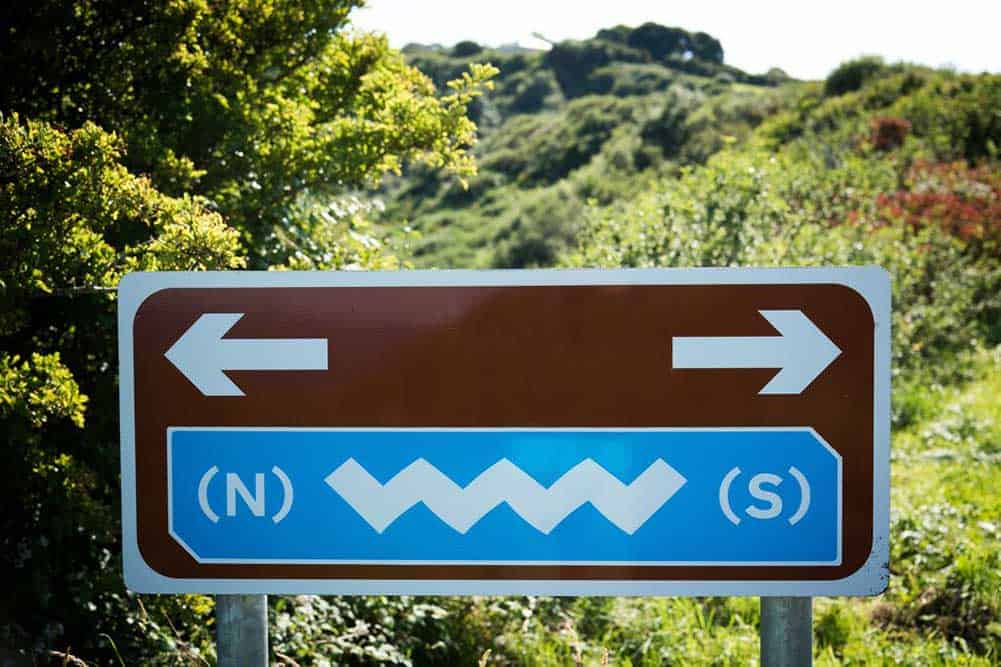
This guide covers the 40 best things to do in Kerry, organised by region so you can plan a route rather than zig-zag across the county. It includes the famous sights, the hidden gems competitors skip, 2026/27 opening seasons and prices, and honest tips on what is worth your time.
- 40 Best Things to Do in Kerry, Ireland: Where to Go and What to See in 2026/27
- Kerry Fast Facts
- Top 10 Things to Do in Kerry at a Glance
- Killarney and Killarney National Park
- The Ring of Kerry and the Iveragh Peninsula
- The Skellig Ring, Portmagee and Valentia Island
- The Dingle Peninsula
- Kenmare and South Kerry
- North Kerry
- Hiking in Kerry
- Kerry Festivals Worth Planning Around
- Where to Stay in Kerry
- Things to Do in Kerry Without a Car
- Kerry for Couples, Families and Something Unusual
- Accessible Kerry
- Ring of Kerry vs Dingle Peninsula: Which Should You Do?
- Planning Your Trip to Kerry
- County Kerry FAQs
- Exploring the fascinating regions of Ireland
Kerry Fast Facts
| Where | South-west Ireland, on the Wild Atlantic Way; county town is Tralee, main tourist base is Killarney |
| Nickname | “The Kingdom” |
| Highlights | Killarney National Park, Ring of Kerry, Skellig Michael, Dingle Peninsula, Gap of Dunloe |
| How long to stay | 3–4 days for the highlights (I spent three, based in Tralee); a week to add the Skellig Ring, north Kerry and hikes |
| Best time to visit | May, June and September (longer days, fewer crowds than July–August); Skellig landings only 9 May–30 September 2026 |
| Getting there | Kerry Airport (Farranfore), trains to Killarney and Tralee, or about 2 hours by road from Shannon |
| Car needed? | Ideal, but Killarney and the national park work well without one (see below) |
| Free highlights | Killarney National Park, Torc Waterfall, Ladies View, most beaches, the Ring of Kerry and Slea Head drives |

Top 10 Things to Do in Kerry at a Glance
If you only have a couple of days, these are the ten I would prioritise:
| # | Attraction | Why go |
| 1 | Killarney National Park | Ireland’s first national park: lakes, oak woods, red deer and castles, free to enter |
| 2 | The Ring of Kerry | Ireland’s most famous 179 km scenic loop around the Iveragh Peninsula |
| 3 | Skellig Michael | 6th-century monastery on an Atlantic rock, UNESCO-listed and a Star Wars location |
| 4 | Slea Head Drive, Dingle | Cliff-top loop past beehive huts, Blasket views and the Blasket Centre |
| 5 | Gap of Dunloe | Glacial mountain pass best done on foot, by bike or by jaunting car |
| 6 | Muckross House & Abbey | Victorian mansion, gardens, traditional farms and a 15th-century friary |
| 7 | Skellig Ring & Kerry Cliffs | Quieter coast road with the most dramatic cliff views in Kerry |
| 8 | Valentia Island | 385-million-year-old tetrapod footprints and transatlantic cable history |
| 9 | Derrynane | Daniel O’Connell’s home and one of Kerry’s most beautiful beaches |
| 10 | Kenmare | Pretty food town, a Bronze Age stone circle and a gateway to Beara |
Killarney and Killarney National Park
1. Explore Killarney National Park
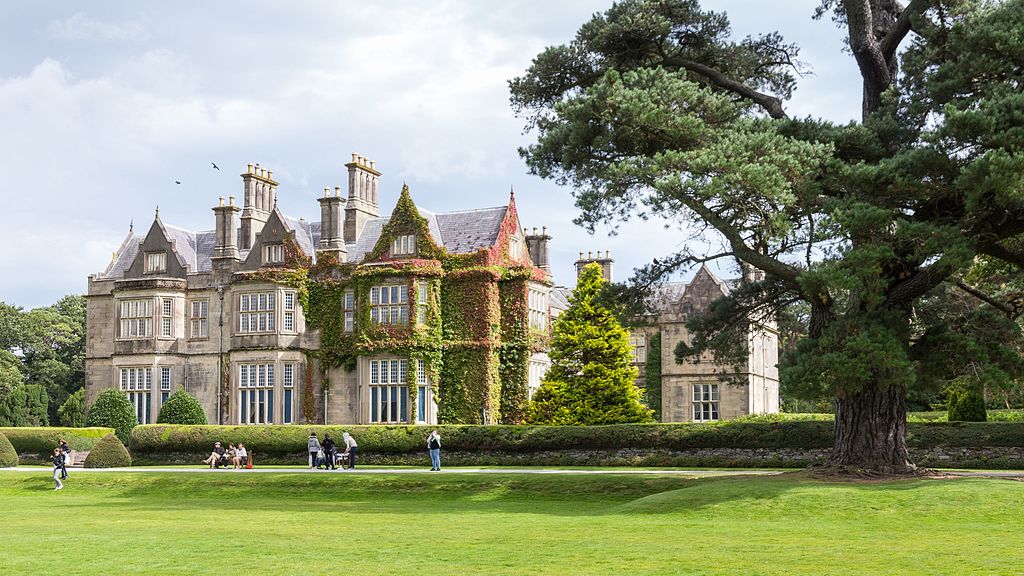
Killarney National Park became Ireland’s first national park in 1932, when the Muckross Estate was gifted to the nation. Today it covers more than 10,000 hectares (roughly 25,000 acres) of lakes, mountains and ancient oak and yew woodland, and it is home to the only native red deer herd on the Irish mainland. It is also a UNESCO Biosphere Reserve. Best of all, the park is free to enter, open all year and has no gate; you only pay for individual attractions inside it.

Hire a bike in Killarney town and cycle the lakeside paths, take a traditional jaunting car (horse and trap) from the town entrance, or simply walk. I went by jaunting car, and I’d recommend it for a first visit: the jarveys (drivers) know every story in the park, and you see far more than you would hunting for parking spaces. In July and August the Muckross and Torc car parks fill by mid-morning, so arrive before 10am or after 4pm.
2. Muckross House, Gardens and Traditional Farms
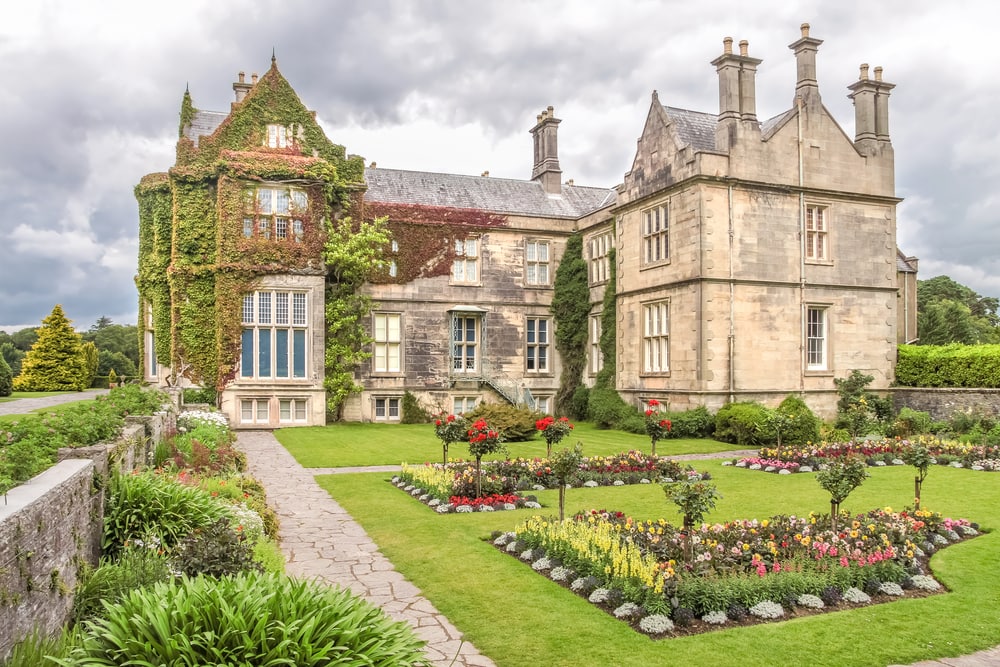
Muckross House is a 65-room Tudor-style mansion completed in 1843 and lavishly upgraded for Queen Victoria’s visit in 1861, a cost that helped bankrupt the Herbert family who owned it. The gardens and lakeshore grounds are free to wander; guided tours of the house cost around €9 for adults in 2026. Next door, Muckross Traditional Farms recreate rural Kerry life in the 1930s and 1940s with working farmhouses, animals and craft demonstrations, a great stop with children.
3. Muckross Abbey
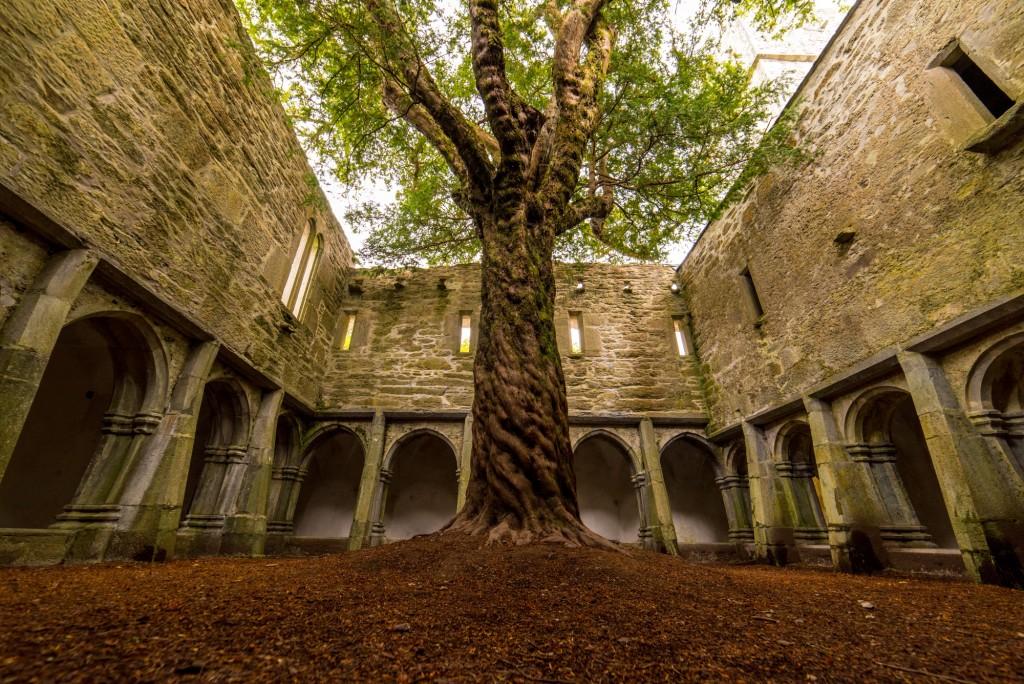
A short walk from the house, Muckross Abbey is a Franciscan friary founded in 1448, with a remarkably complete cloister built around an ancient yew tree. It is free, atmospheric and often quieter than the house. Kerry’s great 17th- and 18th-century Gaelic poets are buried here.
4. Torc Waterfall
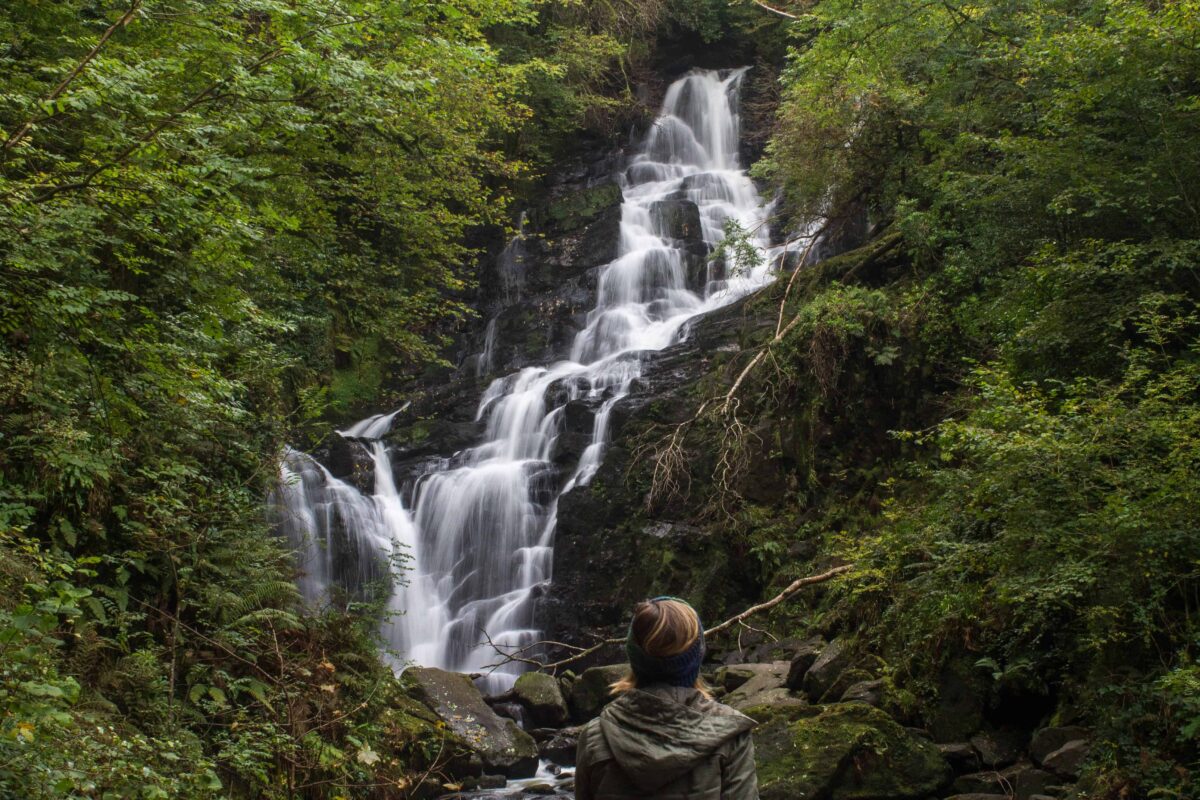
Torc Waterfall tumbles around 20 m through mossy woodland just off the N71, a few minutes’ walk from its car park. It is free and at its most dramatic after rain. For a bigger challenge, continue up the steps (locals call them Cardiac Hill for good reason) or follow the trail up Torc Mountain for views across all three lakes.
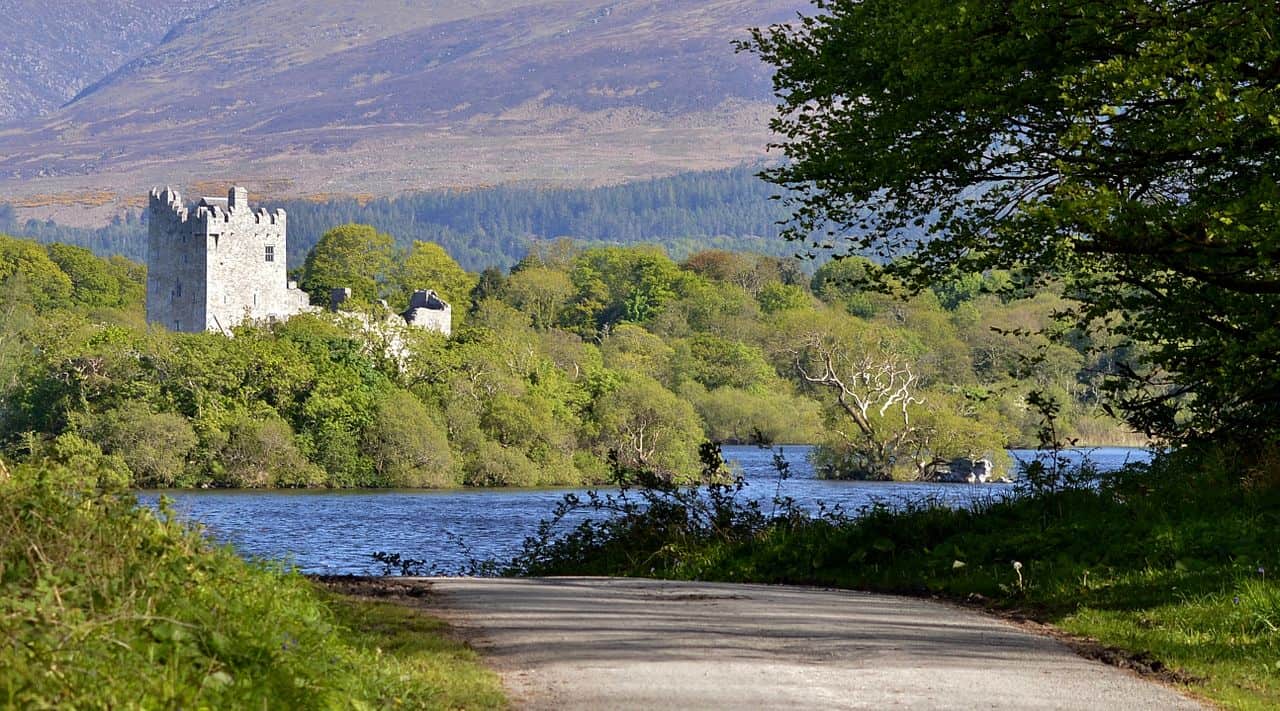
5. Ross Castle
Ross Castle is a 15th-century tower house built by the O’Donoghue chieftains on the shore of Lough Leane, and reputedly one of the last strongholds in Munster to fall to Cromwell’s forces. The interior is by guided tour only (about €5 adults in 2026, first come, first served), and the castle is open from early March to early November. The grounds and lakeshore are free. You can walk here from Killarney town in about 30–40 minutes through the park. Ross Castle also features in my guide to the most haunted places in Ireland.
6. Take a Boat on the Lakes of Killarney and Visit Innisfallen Island
Boats leave from beside Ross Castle for an hour on Lough Leane, the largest of the three lakes. Some trips land on Innisfallen Island, where the ruins of a monastery founded around the 7th century stand among the trees. The monks here compiled the Annals of Inisfallen, one of the key medieval records of early Irish history.

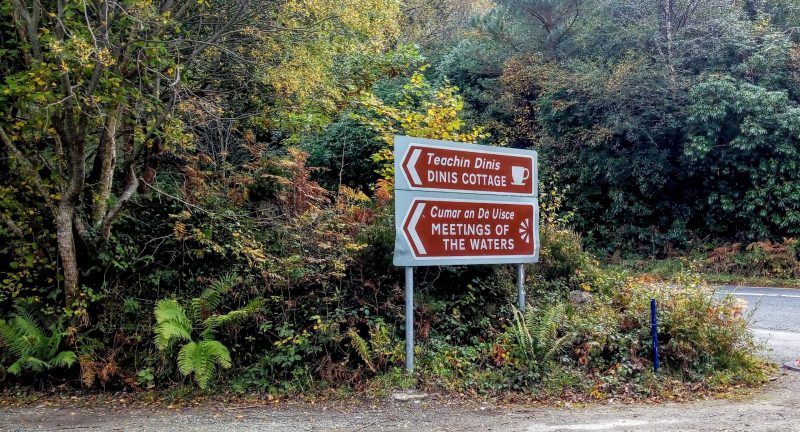
7. The Meeting of the Waters and Dinis Cottage
This is where the three Lakes of Killarney meet: the Upper Lake flows into Muckross Lake and Lough Leane beside the Old Weir Bridge, near Dinis Cottage, an old hunting lodge that is now a café. It is one of the loveliest, quietest corners of the park, reached on foot or by bike along a road closed to general traffic. Combine it with the Blue Pool nature trail for an easy half-day loop.
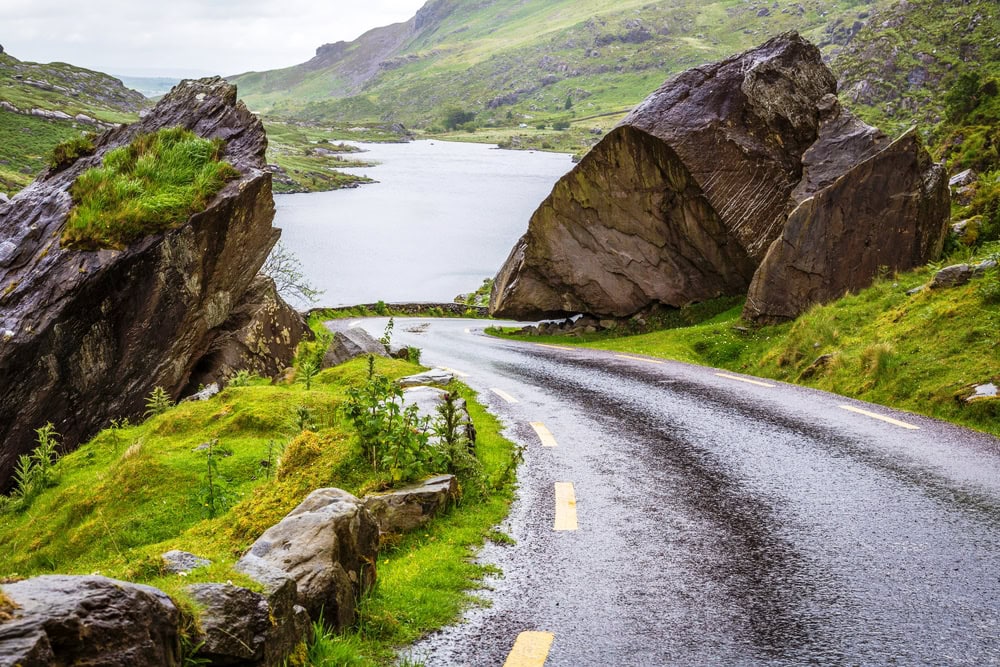
8. The Gap of Dunloe and Kate Kearney’s Cottage
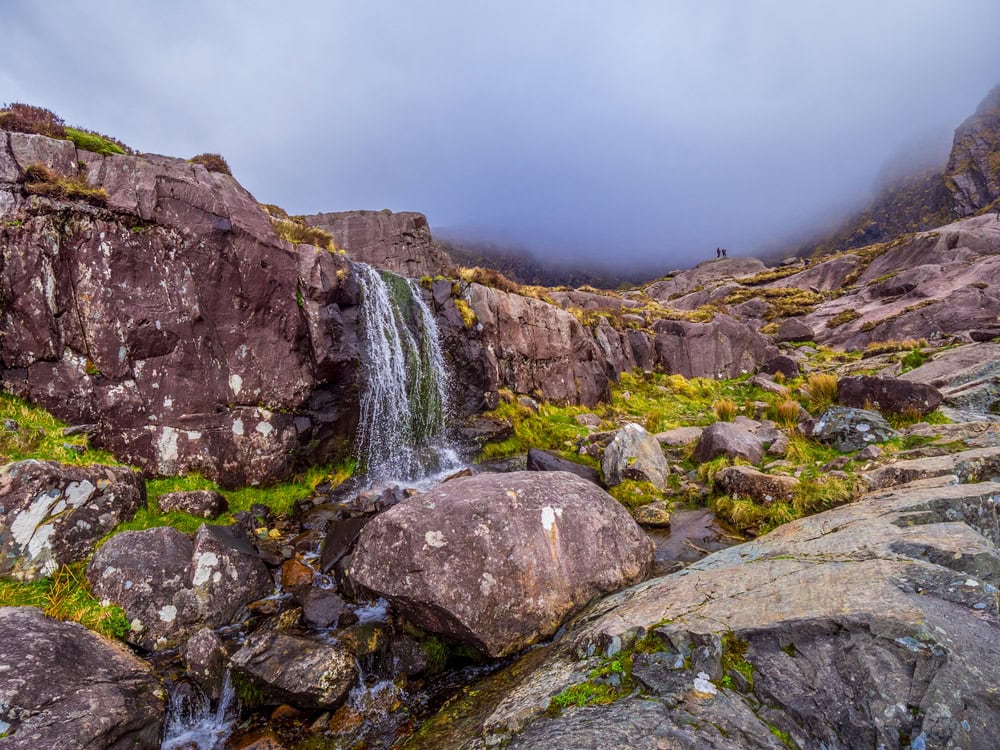
The Gap of Dunloe is an 11 km glacial pass between MacGillycuddy’s Reeks and Purple Mountain, threaded with small lakes and stone bridges. Start at Kate Kearney’s Cottage, a 19th-century coaching inn named after a local beauty who is said to have sold illegal poteen to travellers. The road through the Gap is narrow and shared with walkers, cyclists and jaunting cars, so the best way through is on foot, by bike or by jaunting car rather than by car. The classic day out combines a jaunting car or walk through the Gap, lunch at Lord Brandon’s Cottage, and a boat back to Ross Castle through the lakes. The Gap is close to, but not on, the Ring of Kerry route.
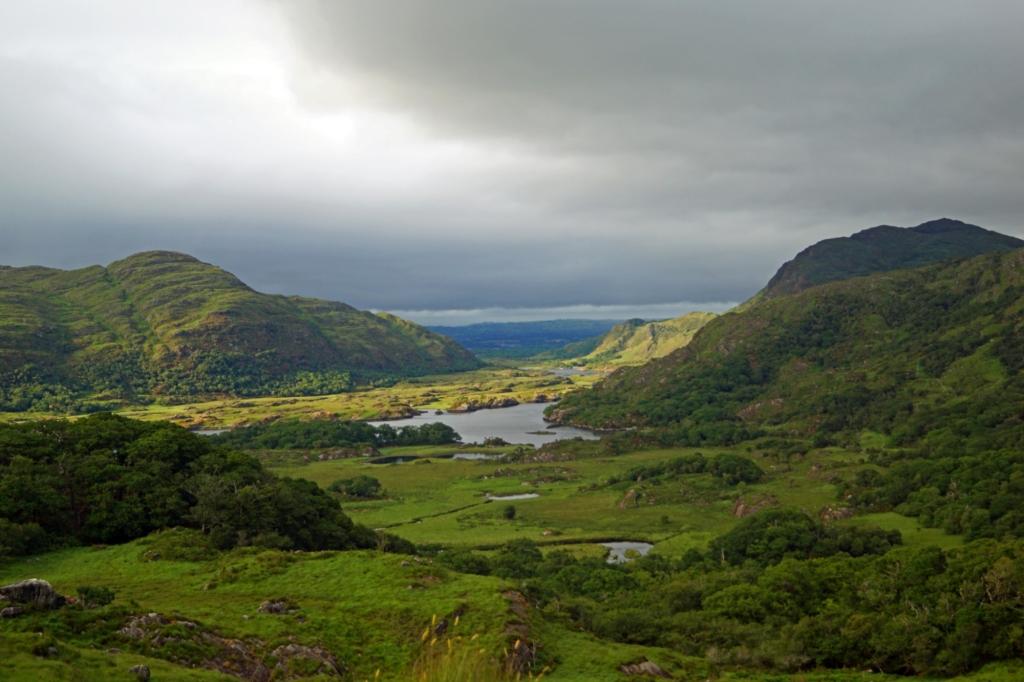
9. Ladies View and Moll’s Gap
Ladies View on the N71 between Killarney and Kenmare is the classic panorama over the Upper Lake and the valley. It takes its name from Queen Victoria’s ladies-in-waiting, who admired it during the royal visit of 1861. A few minutes further on, Moll’s Gap is a mountain pass with sweeping views over the Black Valley and the Reeks; the Avoca café there makes a good coffee stop.
10. Killarney Town
Killarney is Kerry’s busiest tourist town and the easiest base without a car. Stroll through Killarney House and Gardens, see St Mary’s Cathedral, and catch traditional music in the pubs in the evening. It is lively and very geared to visitors, which some people love and others do not, but it puts the national park on your doorstep.


The Ring of Kerry and the Iveragh Peninsula
11. Drive the Ring of Kerry
The Ring of Kerry is a 179 km (111 mile) loop around the Iveragh Peninsula, usually started and finished in Killarney via Killorglin, Glenbeigh, Cahersiveen, Waterville, Caherdaniel, Sneem and Kenmare. You can drive it in a day (about 3.5–4 hours without stops), but two days lets you enjoy it. Tour coaches must travel anti-clockwise, so most drivers follow the same direction to avoid meeting them head-on on narrow bends; start early or late to stay ahead of them. Muckross House, Torc Waterfall, Ladies View and Moll’s Gap are all on the Killarney to Kenmare stretch of the route.

12. Kerry Bog Village and Rossbeigh Beach, Glenbeigh
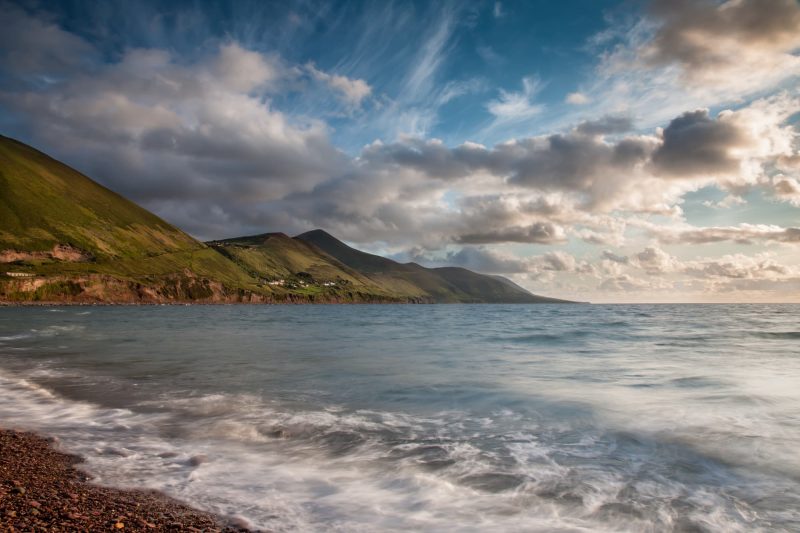
Near Glenbeigh, the Kerry Bog Village recreates an 18th- and 19th-century bog community with thatched cottages, turf-cutting and Kerry Bog Ponies, a rare native breed. Just down the road, Rossbeigh is a long sand spit popular with walkers, surfers and horse riders, with views across Dingle Bay.
13. Cahersiveen: Ballycarbery Castle and the Stone Forts
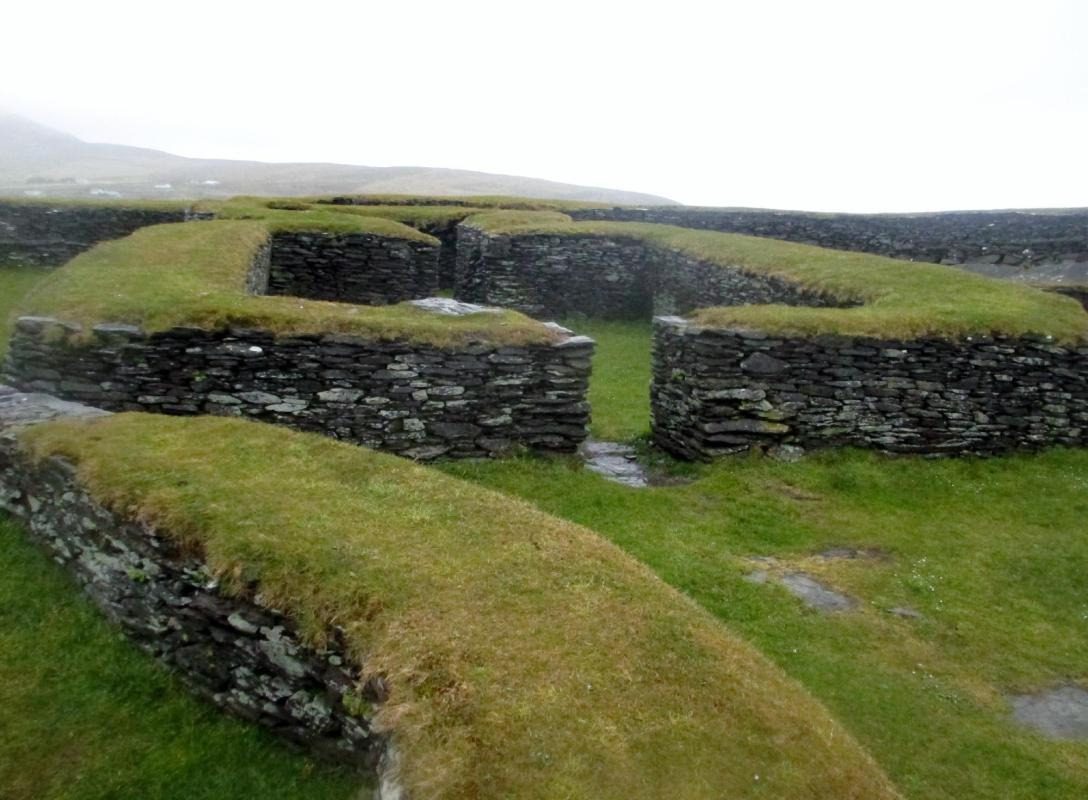
Outside Cahersiveen, the ivy-clad ruins of Ballycarbery Castle make a haunting photo stop, and a short drive away the Iron Age stone ring forts of Cahergal and Leacanabuaile are free to explore. Cahersiveen is also the birthplace of Daniel O’Connell.
14. Waterville
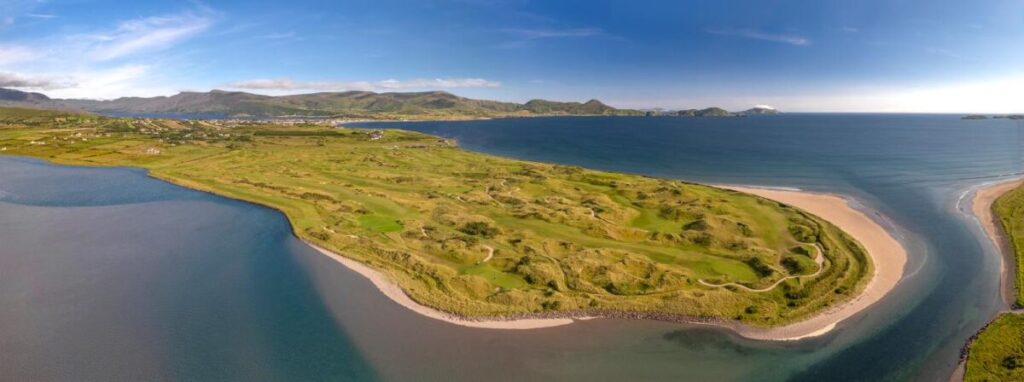
Waterville sits on a strip of land between Lough Currane and Ballinskelligs Bay. Charlie Chaplin holidayed here with his family from 1959, and a bronze statue of him stands on the seafront. Waterville Golf Links is one of Ireland’s top links courses.
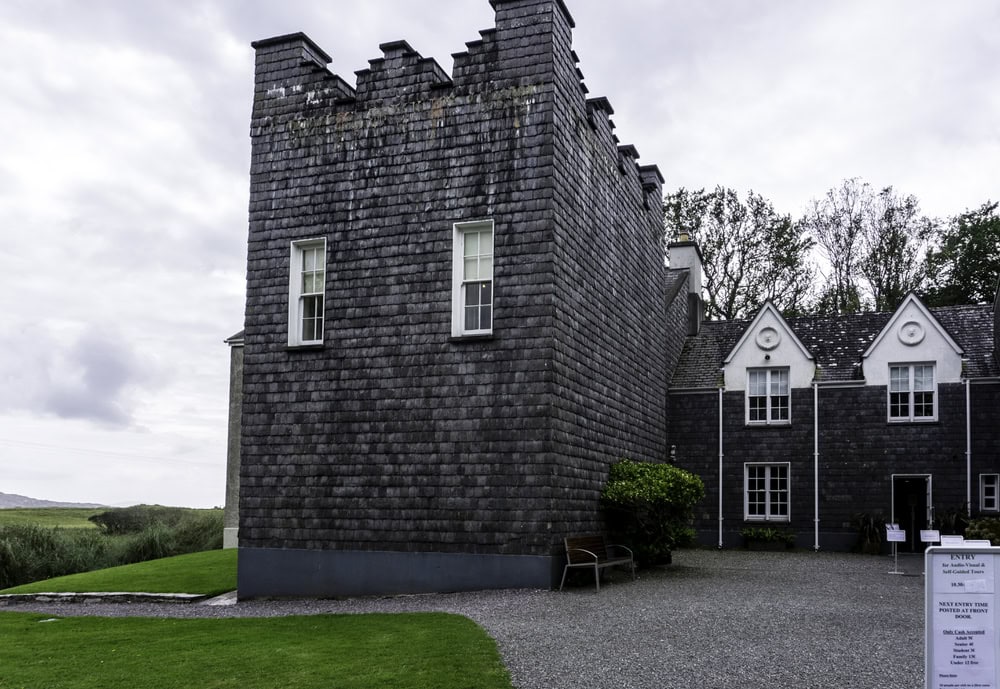
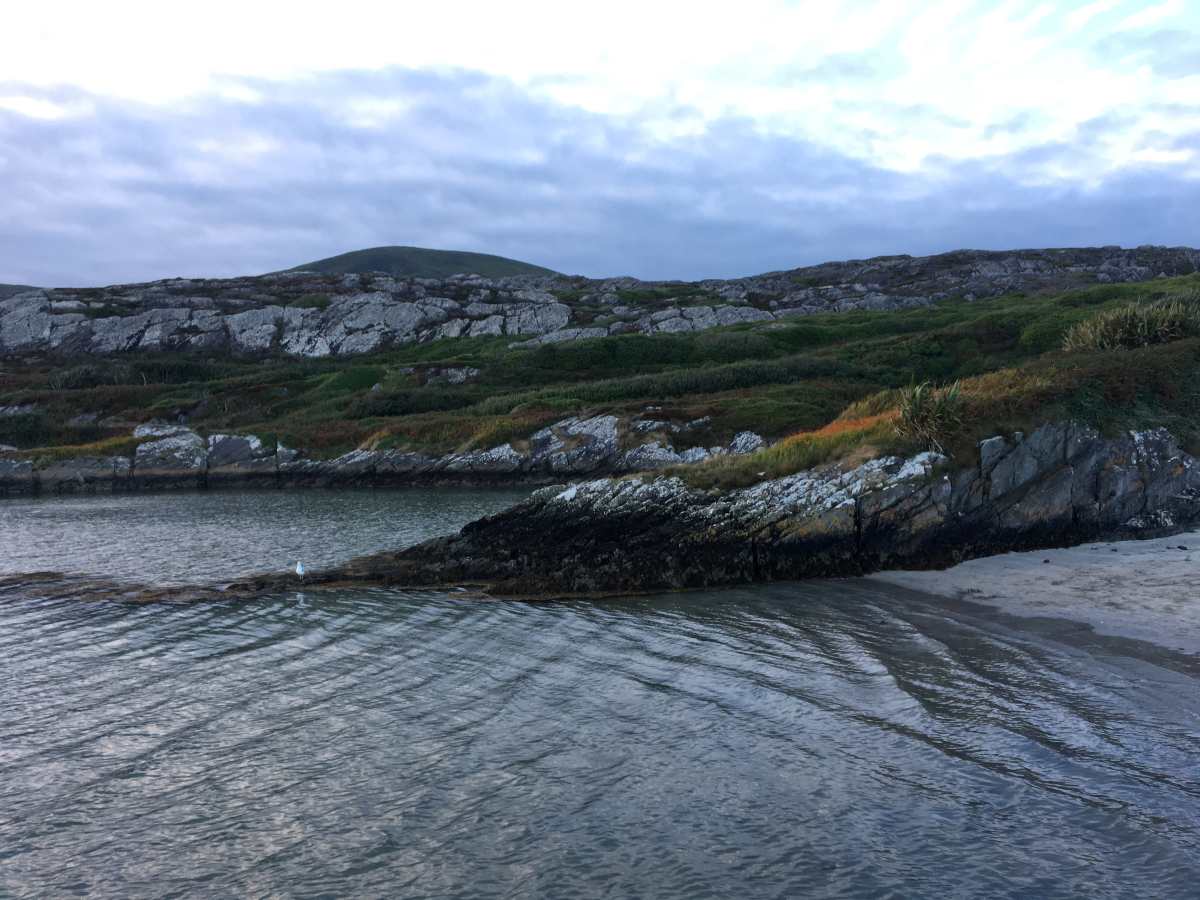
15. Derrynane House and Derrynane Beach
Derrynane House near Caherdaniel was the ancestral home of Daniel O’Connell, “The Liberator”, who won Catholic Emancipation in 1829; it is now a museum run by the OPW. The surrounding Derrynane National Historic Park has woodland walks down to Derrynane Beach, one of the most beautiful beaches in Kerry, with dunes, clear water and, at low tide, a walk out to Abbey Island.
16. Staigue Fort
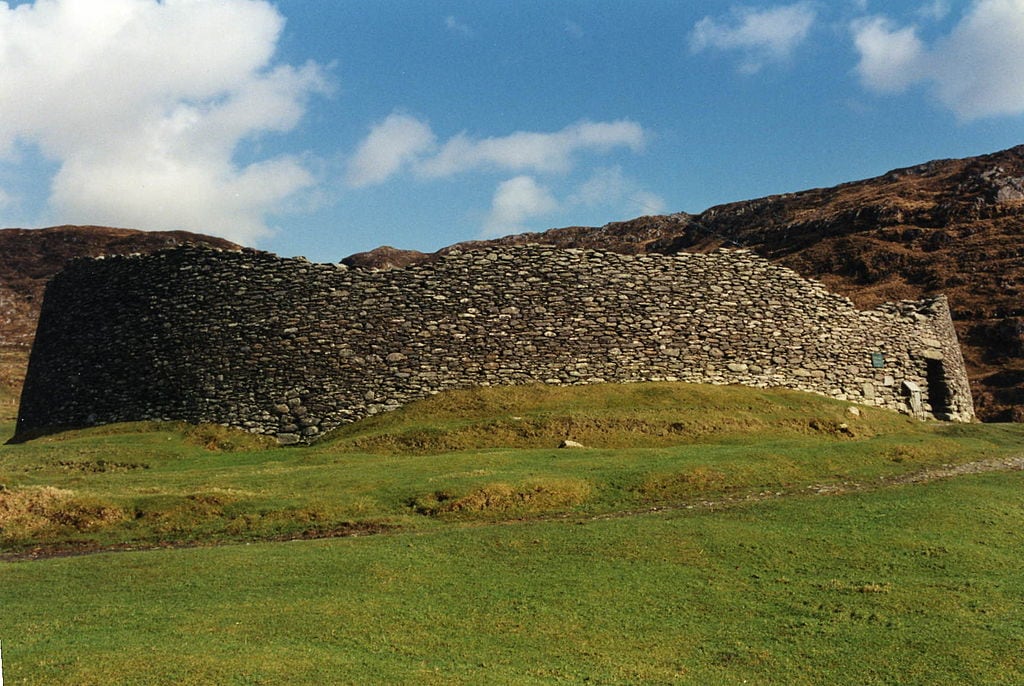
Tucked up a narrow valley between Castlecove and Sneem, Staigue Fort is one of the finest Iron Age stone forts in Ireland: a circular drystone wall up to 5.5 m high and 4 m thick, with internal stairways, built without mortar. It sits on private land, so expect a small landowner fee. Most Ring of Kerry coaches skip it, which is exactly why you shouldn’t.
17. Sneem
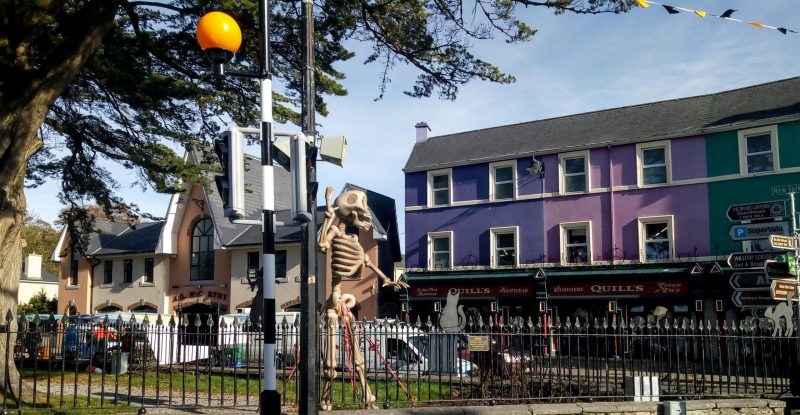
Sneem is a colourful little village built around two greens either side of a river, and a pleasant lunch or ice cream stop between Caherdaniel and Kenmare.
The Skellig Ring, Portmagee and Valentia Island
18. Skellig Michael
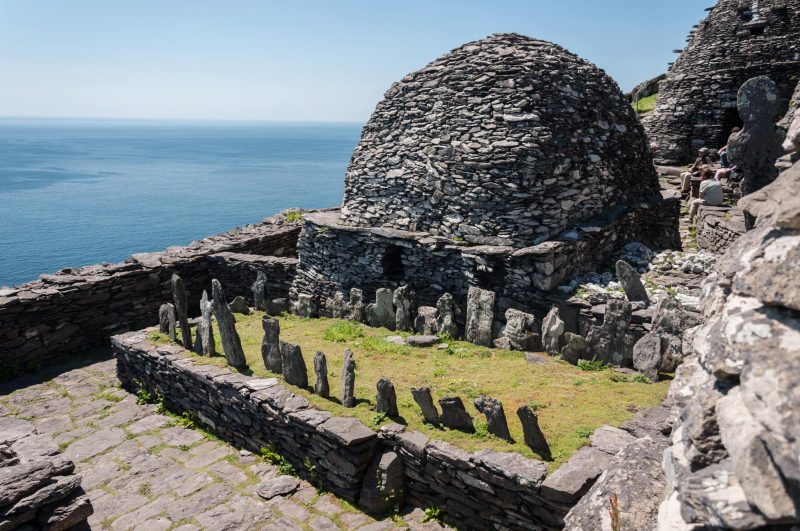
Skellig Michael is the most extraordinary place in Kerry. Monks built a monastery of drystone beehive huts on this Atlantic pinnacle, 12 km offshore, around the 6th century, and lived there for some 600 years. It is a UNESCO World Heritage Site and famously appears in Star Wars as Luke Skywalker’s island.


What you need to know for 2026/27:
- Season: landing tours run from 9 May to 30 September only, weather permitting. Bad seas cancel a significant share of sailings.
- Numbers: only 180 people can land per day, on a handful of licensed boats, so peak dates sell out months ahead.
- Cost: landing tours cost roughly €100–145 per adult; eco tours that circle the islands without landing are about €60–70.
- The climb: 618 uneven, ancient stone steps with sheer drops and no handrails. The OPW does not allow children under 12, and several operators set 14 or 18 as their minimum.
- Facilities: very basic. There is no café or shop on the island, so bring water, snacks, waterproofs and sturdy boots. Some boats have a toilet; check with your operator.
My experience: I had Skellig Michael on my list, but on the day the sea was too rough and the boats didn’t sail, which happens to a lot of visitors. If Skellig matters to you, book it for early in your trip so you have a day or two to rebook if it’s cancelled, and have a plan B for the day (the Skellig Ring, Kerry Cliffs and Valentia are all close by).
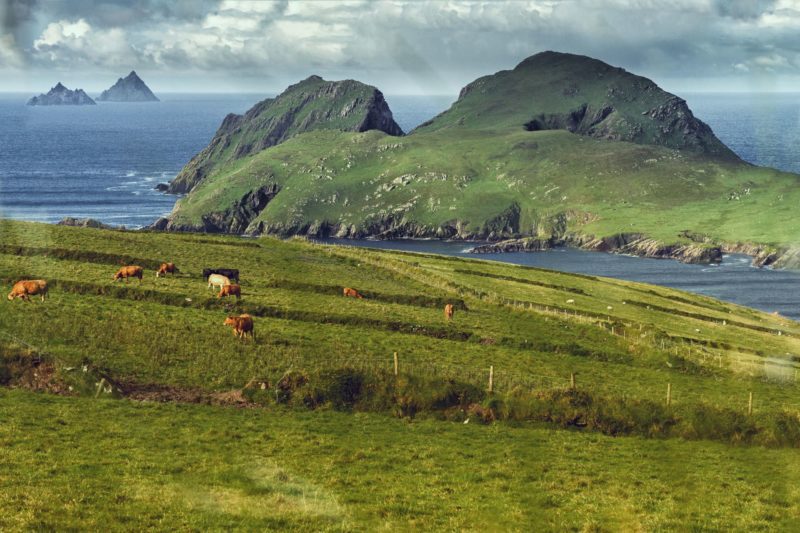
If you cannot land or would rather not, the eco boat tours are superb, passing Little Skellig and its huge gannet colony, and the Skellig Experience centre on Valentia tells the story on dry land.

19. The Skellig Ring and Portmagee
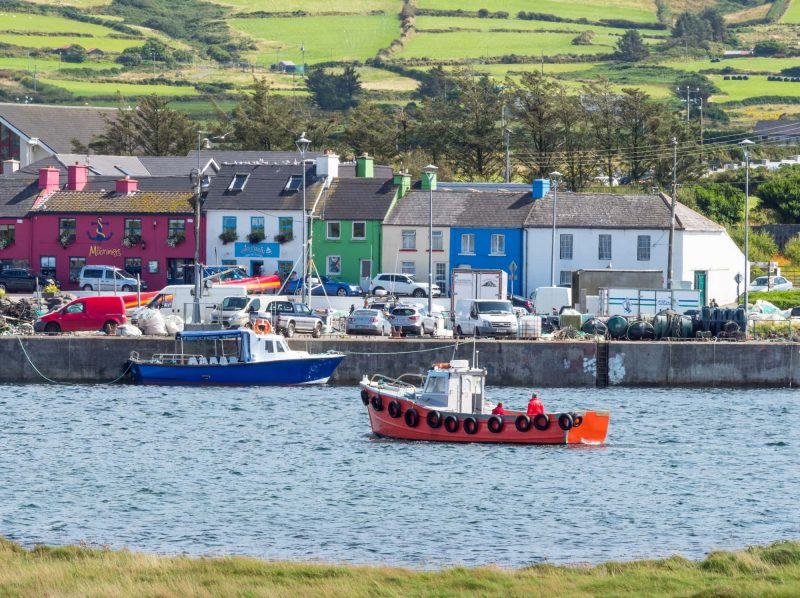
The Skellig Ring is a roughly 18 km loop off the main Ring of Kerry through Portmagee, Ballinskelligs and St Finian’s Bay, climbing over the Coomanaspig Pass for views over the Skelligs. It is quieter, wilder and more beautiful than much of the main route. Portmagee, with its row of painted houses, is the main departure point for Skellig boats and a lovely place for seafood.
20. The Kerry Cliffs
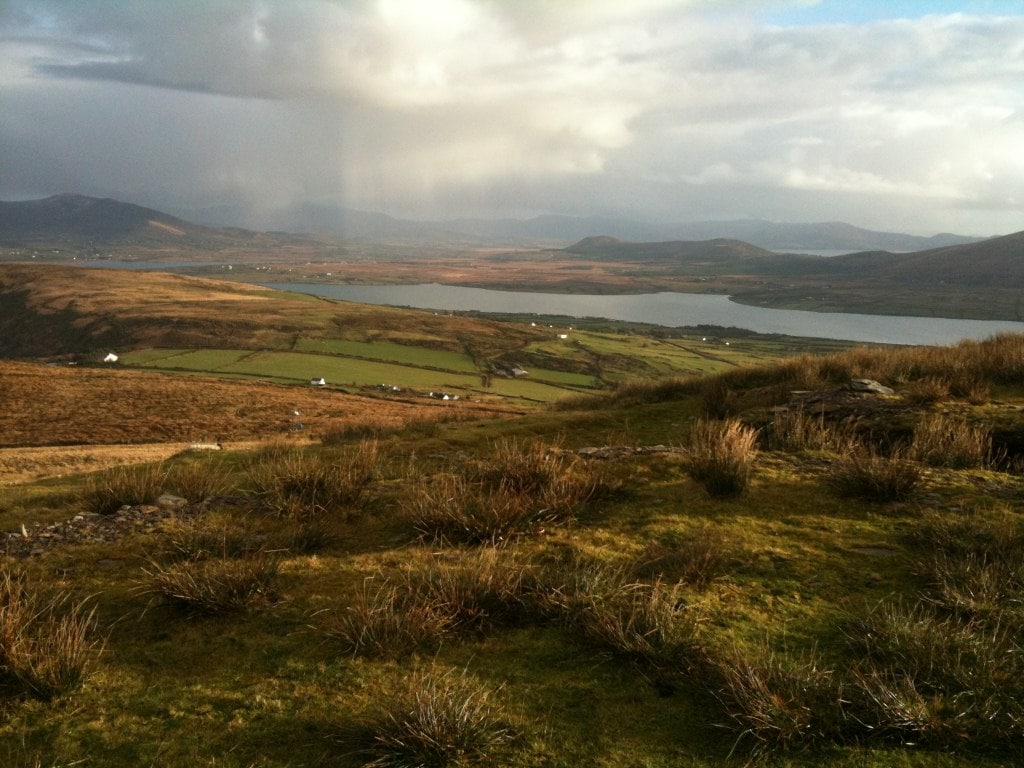
Just outside Portmagee, the Kerry Cliffs rise around 300 m straight out of the Atlantic, with views out to the Skelligs. They are on private land with a small entry fee and a short walk to the viewing points, and for my money they rival the Cliffs of Moher for drama without the crowds. Read the article on Cliffs of Moher vs Kerry Cliff vs Slieve League to see how they compare.

21. Valentia Island
Cross the bridge from Portmagee (or take the little car ferry from Reenard Point in summer) to Valentia Island. Here you can see the Tetrapod Trackway, footprints left around 385 million years ago by one of the earliest creatures to walk on land. In 1858, and permanently from 1866, Valentia was the European end of the first transatlantic telegraph cable, linking Europe and North America. Drive up Geokaun Mountain for views over the Fogher Cliffs (small fee per car), visit the slate quarry and grotto, and walk to Valentia lighthouse at Cromwell Point.
22. Stargaze in the Kerry International Dark Sky Reserve
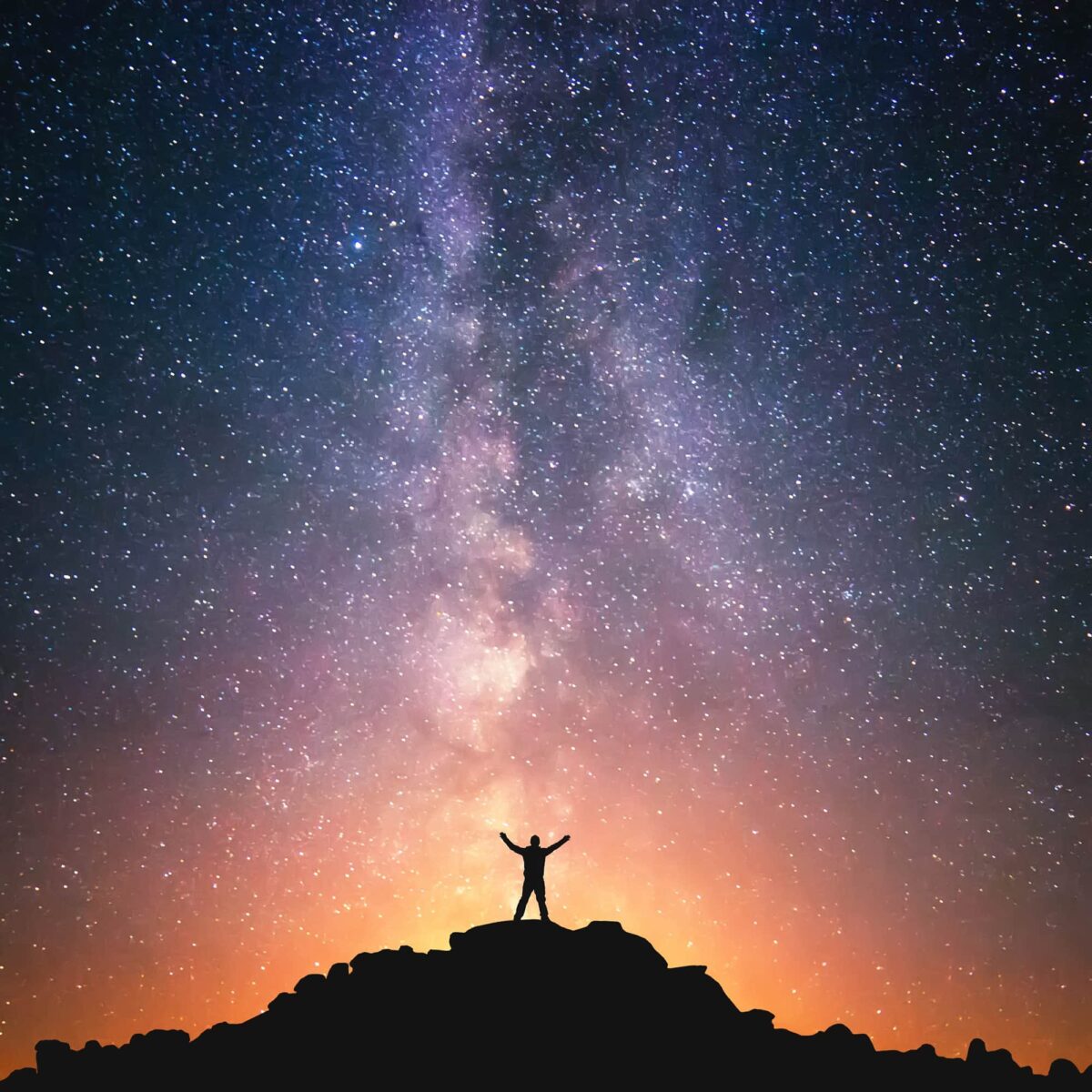
In 2014 the western Iveragh Peninsula, around Ballinskelligs, Waterville and Cahersiveen, became Ireland’s first Gold Tier International Dark Sky Reserve. On a clear, moonless night you can see the Milky Way with the naked eye. Autumn and winter give the longest dark nights; local operators run guided stargazing evenings.
The Dingle Peninsula
23. Dingle Town
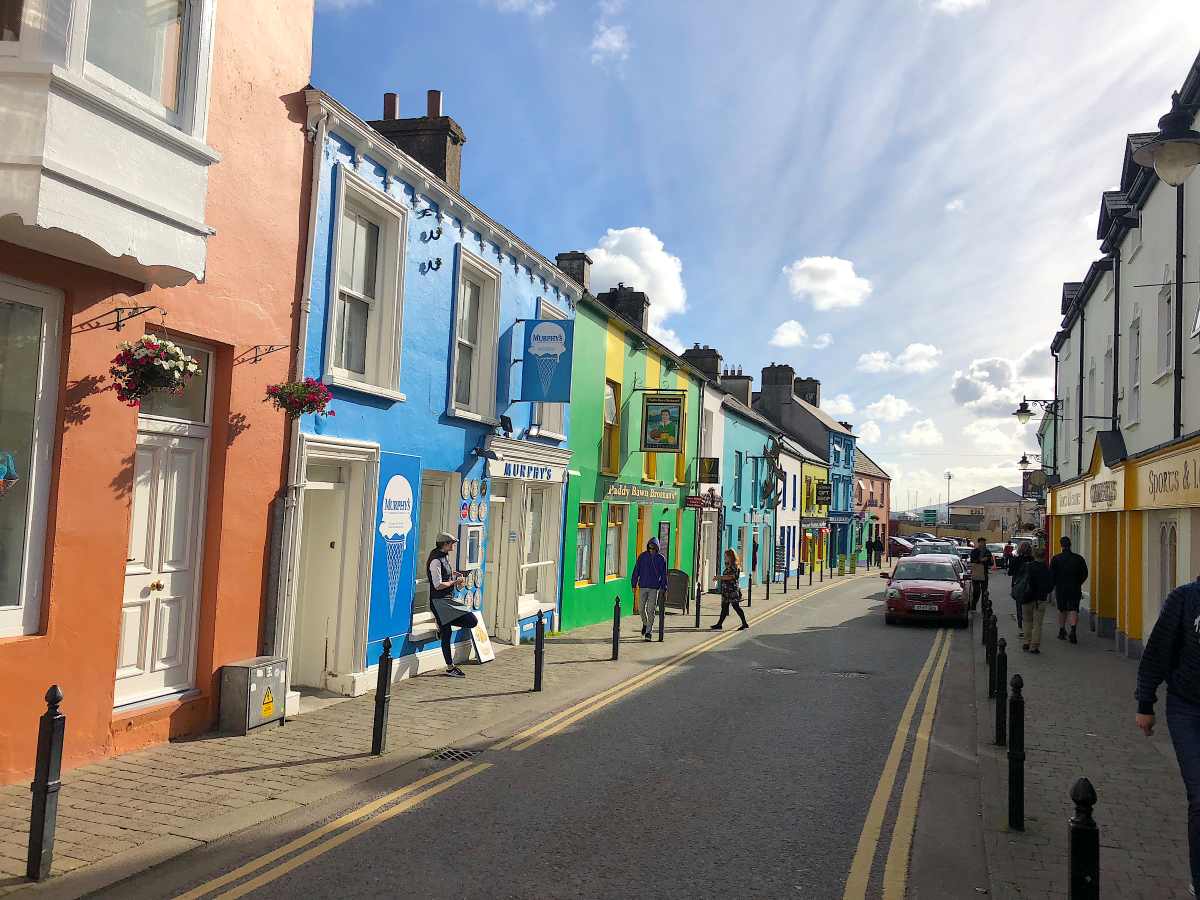
Dingle is a colourful harbour town and one of the liveliest in Ireland, full of trad music pubs, seafood restaurants and craft shops. Don’t miss Murphy’s Ice Cream (try the sea salt), a tour and tasting at the Dingle Distillery, and Dingle Oceanworld aquarium on a wet day. Fungie, the famous resident dolphin, disappeared in 2020, but eco boat trips still regularly spot wild dolphins in Dingle Bay.

24. The Slea Head Drive
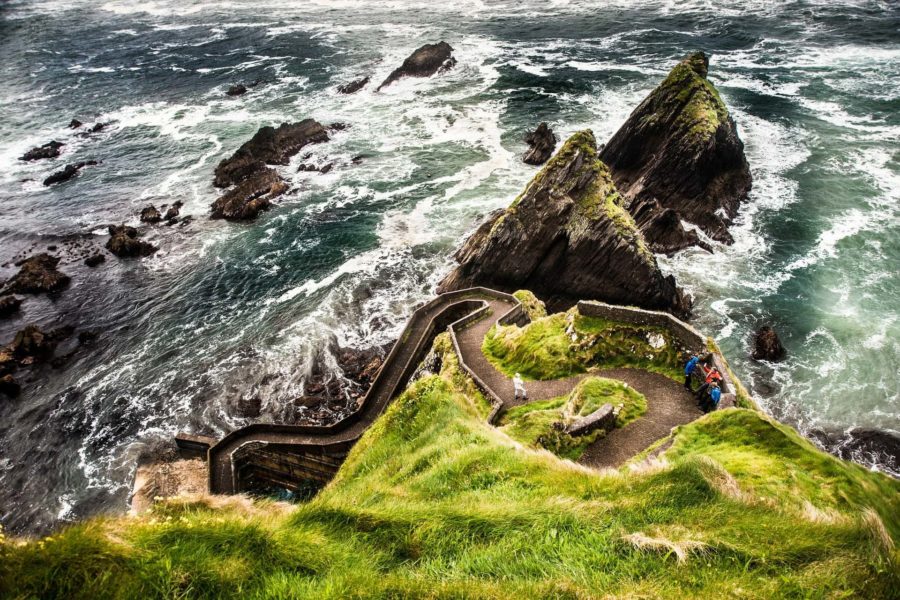
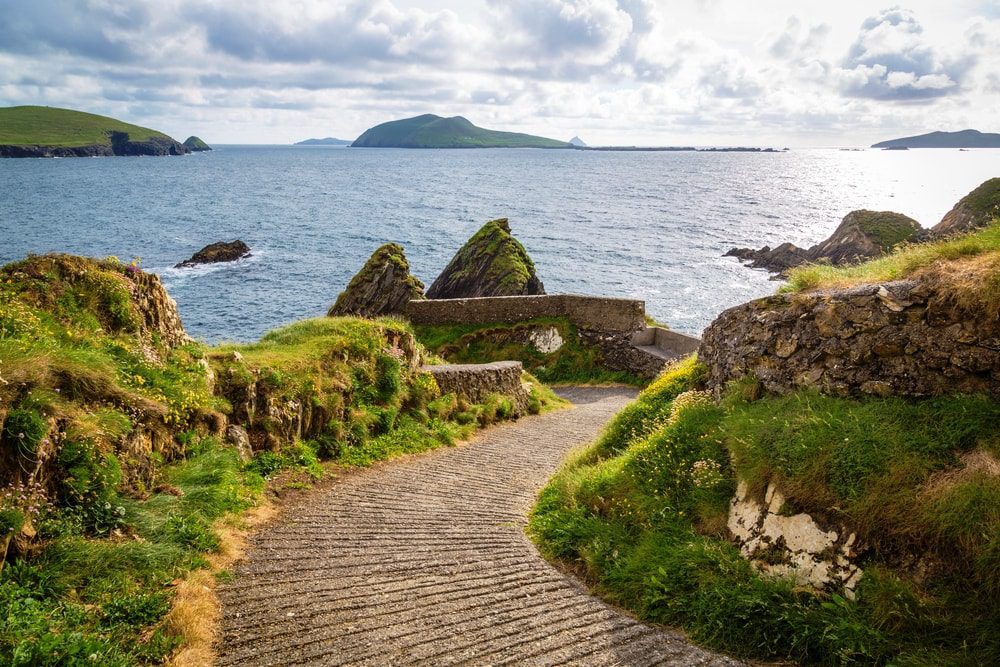
The Slea Head Drive is a roughly 47 km loop west of Dingle, and one of Ireland’s most scenic coastal drives. It hugs the cliffs past Ventry, prehistoric beehive huts, Dunmore Head (the most westerly point of mainland Ireland) and the Blasket views at Coumeenoole. Drive it clockwise, as local signs advise, and allow half a day with stops.

25. The Blasket Islands and the Blasket Centre
The Great Blasket was home to a tiny Irish-speaking community who produced classics of Irish literature such as The Islandman and Peig, before the island was finally evacuated in 1953. The OPW’s Blasket Centre in Dún Chaoin reopened in 2022 after a €2.9 million renovation, with new exhibitions and a fully accessible clifftop viewing platform. In summer, ferries run from Dún Chaoin pier (and trips from Dingle and Ventry) to the Great Blasket, where you can walk among the abandoned village. See more in my guide to the best of Ireland’s islands.
26. Gallarus Oratory and the Ancient Sites of Corca Dhuibhne
The Dingle Peninsula has one of the densest concentrations of early Christian and prehistoric sites in Ireland. Gallarus Oratory, shaped like an upturned boat, is a drystone church that has stayed watertight for centuries. Nearby are the ruins of Kilmalkedar Church with its ogham stone and alphabet stone, and the beehive huts along Slea Head. This is also a Gaeltacht, where Irish is spoken every day.

27. Drive the Conor Pass
The Conor Pass between Dingle and Castlegregory is one of Ireland’s highest paved mountain passes, with views down to lakes and both sides of the peninsula. The road narrows to a single lane cut into the cliff in places, and buses and large vehicles are banned. It is a nerve-wracking drive in fog, so save it for a clear day.

28. Inch Beach
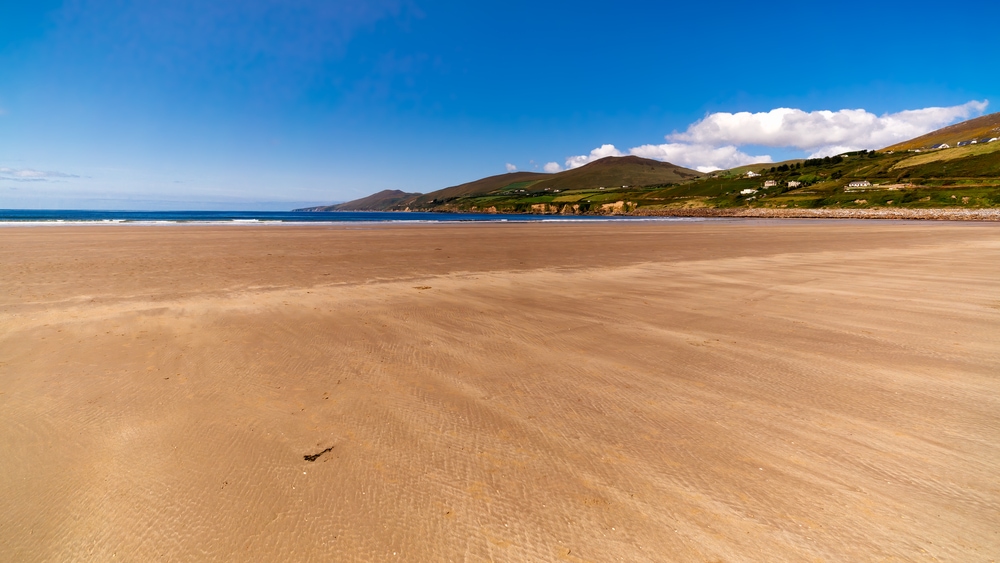
Inch Beach is a 5 km sand spit reaching into Dingle Bay, perfect for walking, surfing lessons and sunsets. It starred in the 1970 film Ryan’s Daughter. Sammy’s café right on the beach is the place to warm up. It is one of Ireland’s best beaches.
29. Annascaul and Tom Crean’s South Pole Inn
A small stop with a big story. Annascaul was home to Tom Crean, the Antarctic explorer who served on three expeditions with Scott and Shackleton and later opened the South Pole Inn in the village. Have a pint there among the expedition photographs, and look out for Annascaul black pudding, a local speciality.

30. Brandon Bay, Castlegregory and the Maharees
On the north side of the peninsula, the Maharees is a sandy tombolo stretching into Tralee Bay, lined with some of the best surfing, kitesurfing and windsurfing beaches in Ireland. Above it rises Mount Brandon (952 m), the highest Irish peak outside MacGillycuddy’s Reeks, linked in legend to St Brendan the Navigator.

Kenmare and South Kerry
31. Kenmare
Kenmare is a pretty, colourful town and a real foodie base, with excellent restaurants and good pubs (and a great pint of the black stuff). On its edge is the Kenmare Stone Circle, a Bronze Age ring of 15 stones around a central boulder dolmen, the largest stone circle in south-west Ireland. Kenmare is also the gateway to the Beara Peninsula, most of which lies across the border in Co. Cork.


32. Gleninchaquin Park
A family-run park in a glacial valley south of Kenmare, Gleninchaquin covers over 1,000 acres of mountain, lake and woodland, with waymarked trails of different lengths leading to a spectacular waterfall. There is a small entry fee.

33. The Ballaghbeama Gap and the Black Valley
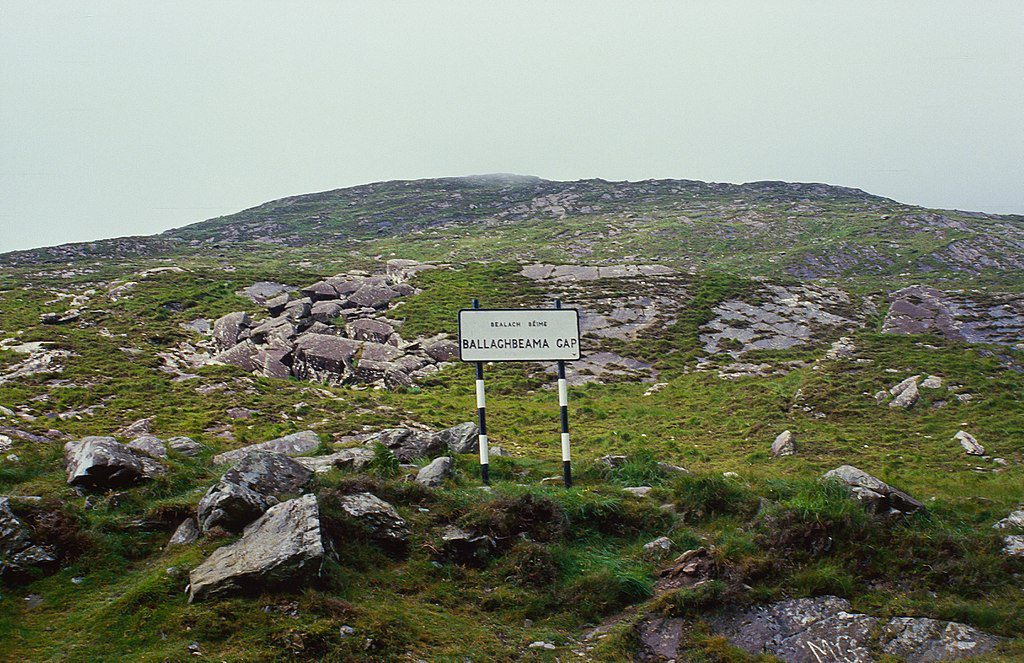
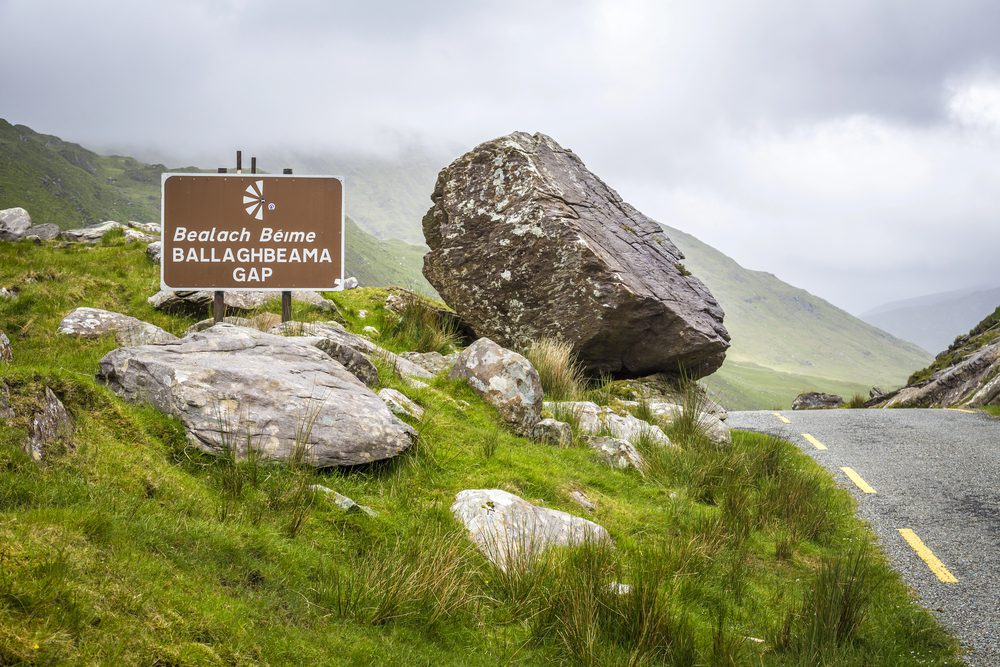
For a true hidden gem, drive the Ballaghbeama Gap, a narrow, lonely mountain road through the heart of the Iveragh Peninsula between Glencar and Sneem, with barely a house in sight. The nearby Black Valley, below the Gap of Dunloe, was one of the last places in Ireland to get electricity and telephones. Both are spectacular, remote and not for nervous drivers.
34. Molly Gallivan’s Cottage and Traditional Farm
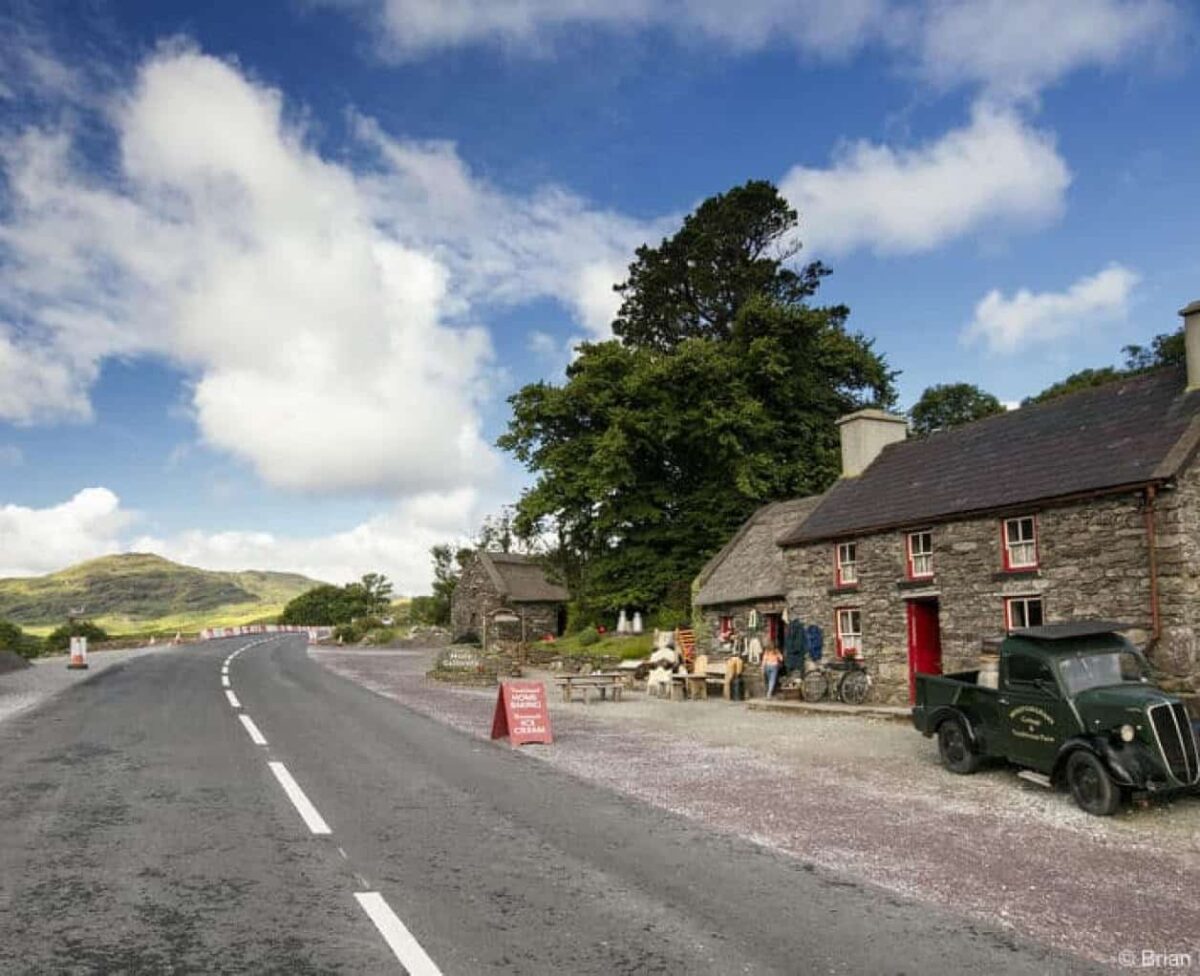
On the N71 between Kenmare and Glengarriff, Molly Gallivan’s is a 200-year-old cottage and farm that shows rural life before electricity, with a tearoom serving homemade scones. It is a gentle, charming stop.
North Kerry
35. Tralee
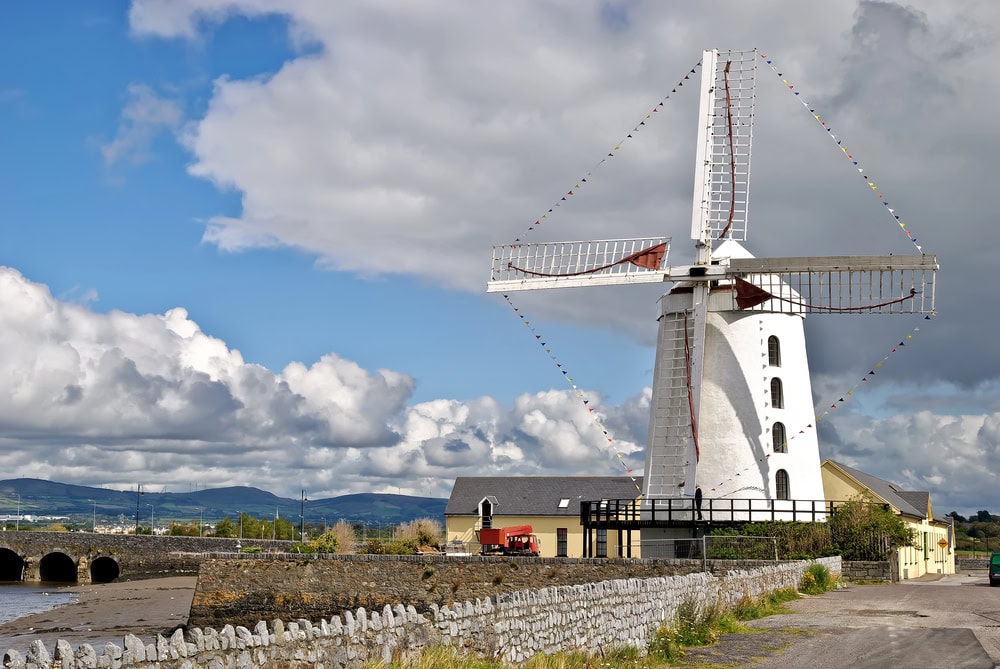
Tralee is Kerry’s county town and home to the Rose of Tralee festival every August. Visit the Kerry County Museum for the county’s history, the restored Blennerville Windmill on the edge of town, and the Tralee Bay Wetlands centre for birdwatching and boat trips. And get your fish and chips at Quinlan’s.
36. Banna Strand
Banna Strand is a 10 km beach backed by high dunes north of Tralee. In April 1916, days before the Easter Rising, Roger Casement landed here from a German submarine and was arrested; a memorial now marks the spot.

37. Ballybunion
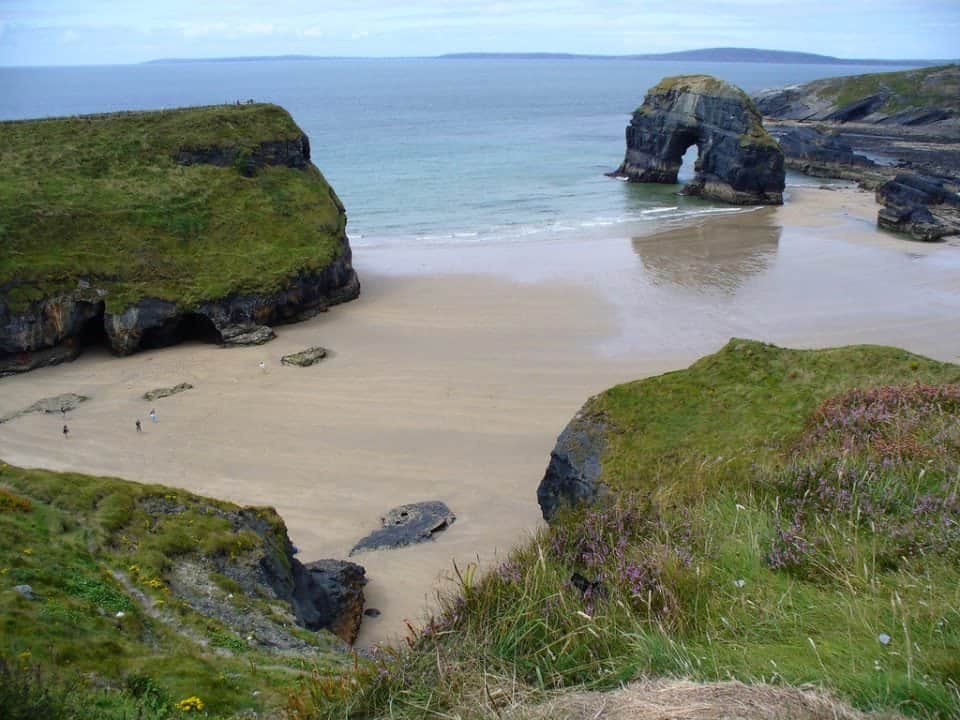
Ballybunion is a classic Irish seaside town with two beaches divided by the ruins of Ballybunion Castle, sea caves, cliff walks and the world-famous Old Course links. It is a favourite with golfers. A great beach to visit is the Nun’s Beach which was used as a location for the Vikings TV show.
38. Listowel
Listowel is a literary town, home to Writers’ Week each summer and the Kerry Writers’ Museum. It also has one of the most unusual attractions in Ireland: the Lartigue Monorail, a restored section of the single-rail steam line that ran between Listowel and Ballybunion from 1888 to 1924.

39. Crag Cave
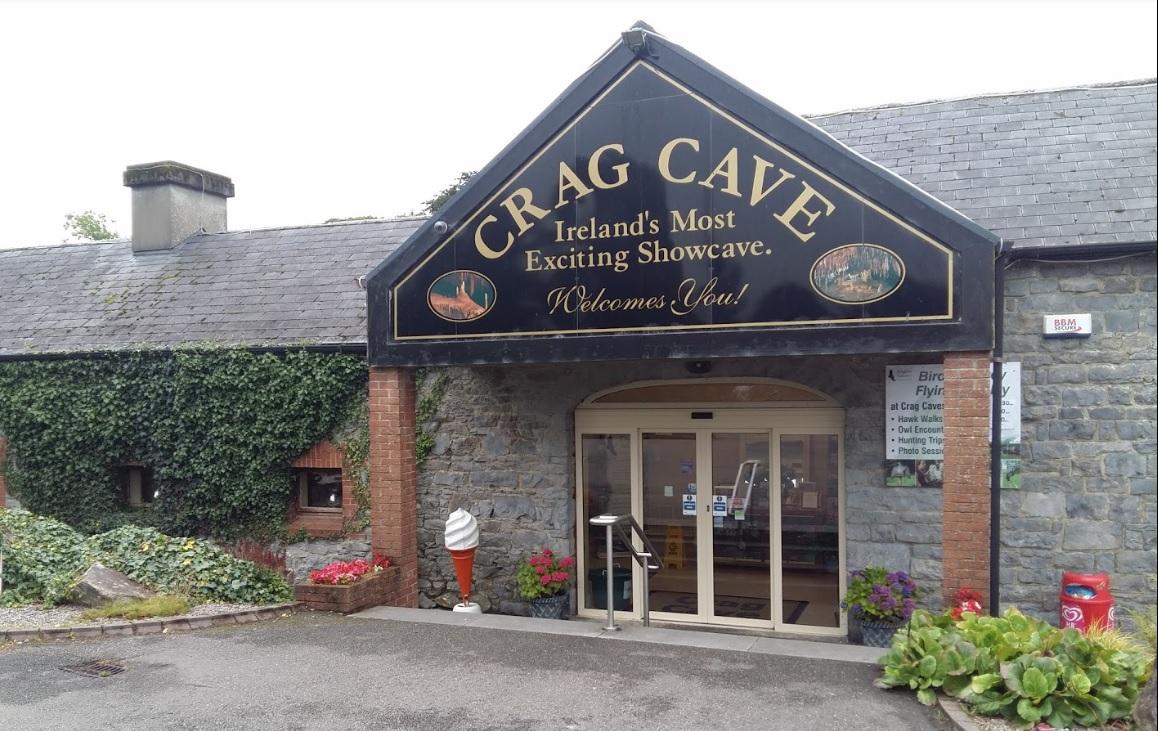
Near Castleisland, Crag Cave was only discovered in 1983 and has guided tours through limestone passages full of stalactites. It is a great rainy-day option, especially with children.
Hiking in Kerry
40. Climb Carrauntoohil or Walk the Kerry Way
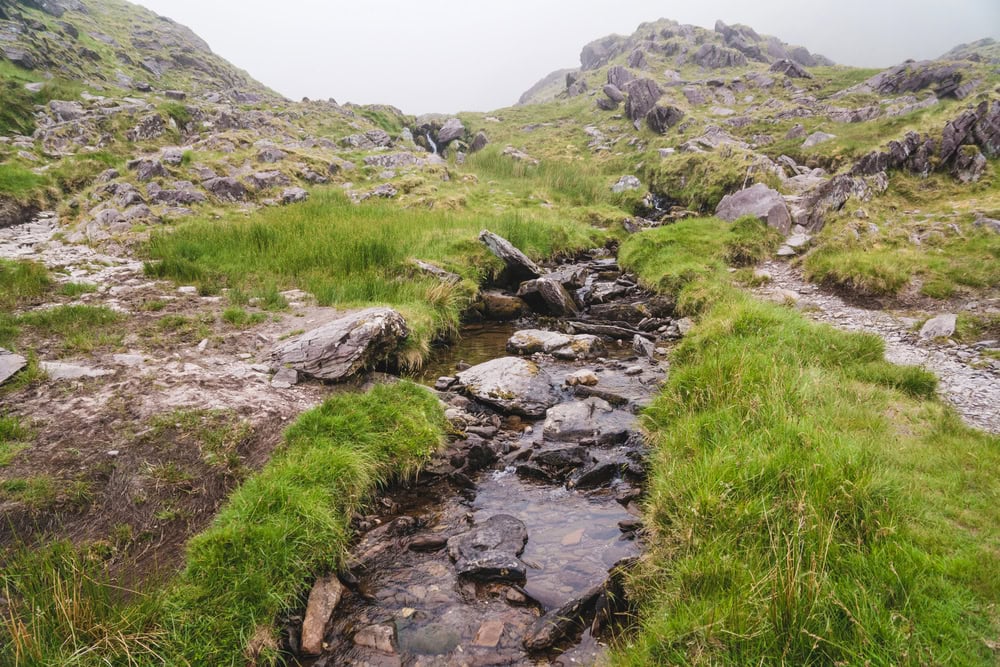
Carrauntoohil (1,038 m) in MacGillycuddy’s Reeks is Ireland’s highest mountain. It is a serious hill day of around six hours, and Kerry Mountain Rescue warns that the traditional Devil’s Ladder route is badly eroded and loose; many walkers now use the Zig Zags route instead. Only go in good weather with proper boots, map and compass, or with a local guide, and note that dogs are not permitted.
For something less extreme, walk sections of two long-distance trails: the Kerry Way (around 200 km around the Iveragh Peninsula, following old roads and paths rather than the busy Ring of Kerry road) and the Dingle Way (around 180 km around the Dingle Peninsula). See my guide to the best hiking trails in Ireland.
Kerry Festivals Worth Planning Around
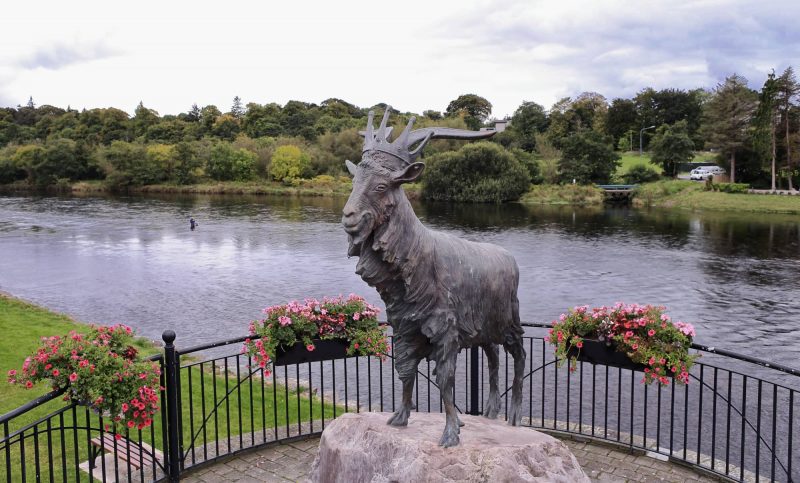
Puck Fair, Killorglin (10–12 August): one of Ireland’s oldest fairs, where a wild goat is crowned King Puck and presides over three days of music and horse fairs.
Rose of Tralee (August): the famous international festival celebrating women of Irish descent.
Listowel Writers’ Week (early summer): readings, workshops and literary events.
Dingle Food Festival (early October): a taste trail through the town’s shops, pubs and restaurants.

Where to Stay in Kerry
| Base | Best for | Consider |
| Tralee | Where I stayed: well placed for Dingle, north Kerry and Killarney; good value, trains from Dublin, lively town with good food | Further from the Ring of Kerry and Skelligs |
| Killarney | The national park on your doorstep; the best base without a car; lots of hotels and tours | Busy and tourist-focused in summer |
| Dingle | Pubs, seafood and the Slea Head Drive; the most atmospheric town | Out on a limb for the rest of the county; books up early |
| Kenmare | Food lovers, a quieter base for the Ring of Kerry and Beara | Smaller choice of accommodation |
| Portmagee / Cahersiveen | Skellig trips and the Skellig Ring | Remote, with fewer places to eat |
My honest advice: Tralee worked brilliantly for me for three days because Dingle, Killarney and north Kerry are all an easy drive away. If the Ring of Kerry and Skellig Michael are your priorities, split your stay and add a night or two in Portmagee, Cahersiveen or Kenmare.
Things to Do in Kerry Without a Car
Killarney is the best base without a car. From town you can walk or cycle to Ross Castle, Muckross House, Muckross Abbey and Torc Waterfall, take a jaunting car into the park, and book the classic Gap of Dunloe day with jaunting car and boat included. Day tours run from Killarney around the Ring of Kerry, the Dingle Peninsula and the Skellig Ring. Trains from Dublin reach Killarney and Tralee, and Kerry Airport at Farranfore is about 20 minutes from Killarney. My guide to public transport in Ireland has the details.
Kerry for Couples, Families and Something Unusual
For families: Muckross Traditional Farms, Kerry Bog Village and its ponies, Dingle Oceanworld, Crag Cave, Tralee Bay Wetlands and the beaches at Derrynane and Inch.
Unusual things to do in Kerry: the Lartigue Monorail in Listowel, 385-million-year-old footprints on Valentia, a pint in Tom Crean’s South Pole Inn, the Puck Fair goat king and Staigue Fort.
For couples: a jaunting car through the Gap of Dunloe, sunset on Inch Beach, dinner in Kenmare, and a night of stargazing in the Dark Sky Reserve.

Accessible Kerry
Kerry’s big scenic drives, Ladies View, and the Slea Head and Ring of Kerry routes can all be enjoyed from the car, and the Blasket Centre has a fully accessible clifftop viewing platform. Much of the Muckross lakeshore and the paths through Killarney House gardens are flat and surfaced. Skellig Michael is not accessible, but the eco boat tours are an excellent alternative, and many sites sit on uneven ground, so check with each venue before you go. For more, see my Accessible Ireland guide.
Ring of Kerry vs Dingle Peninsula: Which Should You Do?
If you only have time for one, the Ring of Kerry gives you more variety (Killarney National Park, lakes, mountains and the Skelligs), while the Dingle Peninsula is more compact, wilder and more intensely Irish, with the Gaeltacht, Dingle Town and the Slea Head Drive packed into a much shorter loop. With a car and two days, do both. Kerry is also often compared with Donegal; I cover the differences in my Donegal vs Kerry comparison.

Planning Your Trip to Kerry
Kerry fits naturally into a southwest road trip. See my 7-day Shannon Airport itinerary for a full loop from Shannon, or Only 5 Days in Ireland? Here’s the Smart Route if you are short on time. For a longer trip, start with my Ireland itinerary hub, and if you are hiring a car, read my guide to renting a car in Ireland, North and South first.
County Kerry FAQs
What are the best things to do in Kerry?
The best things to do in Kerry are exploring Killarney National Park, driving the 179 km Ring of Kerry, landing on Skellig Michael, driving the Slea Head loop on the Dingle Peninsula, walking or taking a jaunting car through the Gap of Dunloe, visiting Muckross House and Abbey, and seeing the Kerry Cliffs and Valentia Island on the Skellig Ring.
What is County Kerry famous for?
County Kerry, nicknamed the Kingdom, is famous for Killarney National Park (Ireland’s first national park), the Ring of Kerry, Skellig Michael, the Dingle Peninsula, Ireland’s highest mountain Carrauntoohil, its Irish-speaking Gaeltacht areas, and its record-breaking Gaelic football team.
How many days do you need in Kerry?
Allow three to four days to see Kerry’s highlights: one for Killarney National Park, one for the Ring of Kerry, and one or two for the Dingle Peninsula. A week lets you add the Skellig Ring, Skellig Michael, north Kerry and a hike.
How long is the Ring of Kerry in miles?
The Ring of Kerry is about 179 km (111 miles) long. It takes around 3.5 to 4 hours to drive without stops, but most people spend a full day or two days on it.
Can you do the Ring of Kerry in one day?
Yes. Start early from Killarney and drive anti-clockwise, the same direction as the tour coaches, via Killorglin, Cahersiveen, Waterville, Sneem and Kenmare. You will have time for several stops, though two days is more relaxed and lets you add the Skellig Ring.
Is the Ring of Kerry or the Dingle Peninsula better?
The Ring of Kerry offers more variety, including Killarney National Park, lakes, mountains and the Skelligs. The Dingle Peninsula is shorter, wilder and more strongly Irish-speaking, with Dingle Town and the Slea Head Drive. If you have two days and a car, do both.
Can you visit Skellig Michael in 2026?
Yes, landing tours run from 9 May to 30 September 2026, weather permitting, from Portmagee and a few other piers. Only 180 visitors can land each day, so book months ahead. Children under 12 are not allowed to land, and some operators set a higher minimum age.

Is Killarney National Park free?
Yes. Killarney National Park is free to enter and open all year. You only pay for attractions inside it, such as the Muckross House tour (around €9 for adults in 2026) and the Ross Castle guided tour (around €5 for adults).
What can you do in Killarney without a car?
From Killarney town you can walk or cycle to Ross Castle, Muckross House, Muckross Abbey and Torc Waterfall, take a jaunting car into Killarney National Park, and book day tours to the Gap of Dunloe, the Ring of Kerry and the Dingle Peninsula. Trains from Dublin serve Killarney directly.
When is the best time to visit Kerry?
May, June and September are the best months to visit Kerry, with long days and fewer crowds than July and August. Skellig Michael landings only run from May to September, while autumn and winter are best for stargazing in the Kerry Dark Sky Reserve.
What are some unusual things to do in Kerry?
Unusual things to do in Kerry include riding the Lartigue Monorail in Listowel, seeing 385-million-year-old tetrapod footprints on Valentia Island, having a pint in explorer Tom Crean’s South Pole Inn in Annascaul, visiting Staigue Fort, and watching a goat crowned king at Puck Fair in Killorglin each August.
Is Carrauntoohil safe to climb?
Carrauntoohil (1,038 m) is Ireland’s highest mountain and a serious day’s hike of around six hours. Kerry Mountain Rescue warns the Devil’s Ladder route is badly eroded, so many walkers use the Zig Zags route. Only climb in good weather with proper boots, a map and compass, or with a local guide.