
Star Wars Ireland Itinerary: Ahch-To Filming Locations Along the Wild Atlantic Way
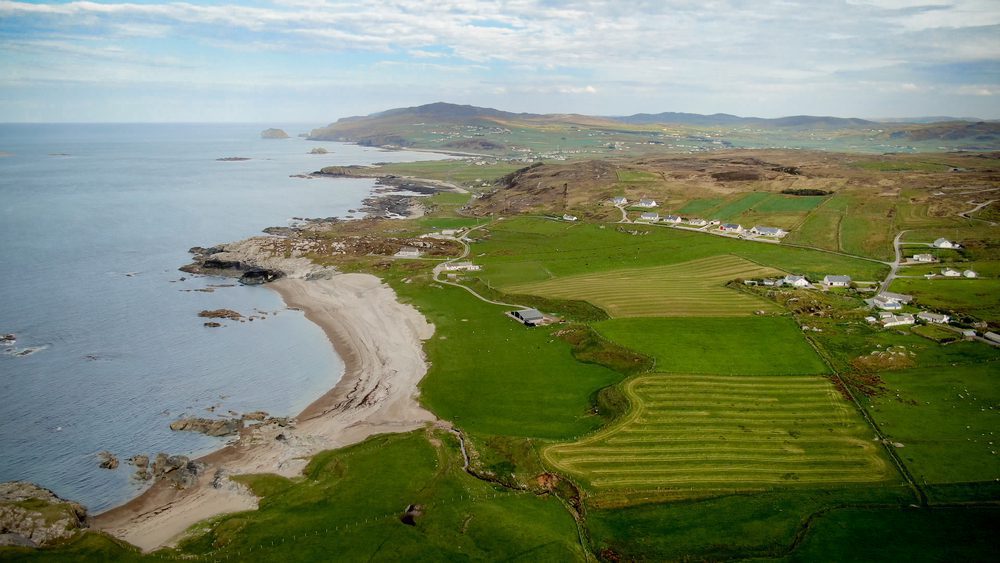
Star Wars’ Ahch-To was filmed in two real Irish locations: Skellig Michael in County Kerry (establishing and closing shots only) and a built village set at nearby Sybil Head, with Malin Head in County Donegal used for a separate section of the planet, including the Millennium Falcon landing scene.
There are very few places in the world where a filming location feels as though it existed long before cinema and will continue unchanged long after it. Ireland’s Atlantic coastline is one of those places. Standing at the edge of the cliffs with wind moving constantly off the ocean and waves breaking far below, the landscape does not feel staged or adapted. It feels complete in itself.
That quality is exactly why these locations were chosen to represent Ahch-To in the Star Wars sequel trilogy. When Rey, portrayed by Daisy Ridley, arrives on the island to find Luke Skywalker, nothing about the setting feels artificial. The environment carries the scene.
What becomes clear after visiting these locations repeatedly, in both calm and difficult conditions, is that the films did not transform Ireland. They revealed it. This itinerary is built from that perspective. It is not a checklist of stops but a structured route designed to match the way these places actually function, including the time, conditions, and physical effort required to experience them properly.
- Star Wars Ireland Itinerary: Ahch-To Filming Locations Along the Wild Atlantic Way
- Understanding the Star Wars Locations in Ireland as a Connected Landscape
- Planning a Realistic Star Wars Ireland Itinerary
- Day 1: Arrival in County Kerry and Resetting Expectations
- Day 2: Skellig Michael and the Reality of Ahch-To
- Choosing Between Landing and Boat Tour
- Day 3: Skellig Ring
- Day 4: Dingle Peninsula and the Expansion of Space
- Day 5: Dunmore Head and Exposure to the Atlantic
- Day 6: Sybil Head
- Day 7: Loop Head Peninsula
- Days 8 to 10: Malin Head
- When to Visit and How Conditions Affect the Experience
- Costs, Logistics, and What Most Guides Leave Out
- FAQs Star Wars Filming Sites
Understanding the Star Wars Locations in Ireland as a Connected Landscape
One of the biggest misconceptions is that the Star Wars filming locations in Ireland are isolated points that can be visited quickly. In reality, they form a continuous geographic corridor along the Wild Atlantic Way.
Skellig Michael is the central anchor. Located off the coast of County Kerry, it represents Ahch-To and remains the most significant location both visually and historically. It is also protected as a UNESCO World Heritage Site, which directly affects how it can be accessed. This is not a standard tourist site. Access is limited, regulated, and dependent on weather.

Moving outward from Skellig Michael, the surrounding coastline begins to make more sense. Dunmore Head and Sybil Head on the Dingle Peninsula extend the same visual environment used in the films. Loop Head Peninsula continues that Atlantic exposure further north. Malin Head in Donegal shifts the tone entirely, presenting a harsher and more open landscape that was used for later scenes involving the Millennium Falcon and Rey’s training.
Seeing these places in sequence changes how they are understood. Instead of separate filming spots, they become part of a single environment that was used strategically during production.

Planning a Realistic Star Wars Ireland Itinerary
A Star Wars Ireland itinerary that includes all major filming locations requires between seven and ten days if approached properly. Shorter timeframes are technically possible but tend to result in excessive driving and minimal time spent at each location, which undermines the purpose of the trip.
Driving in western Ireland is slower than most visitors expect. Roads are narrow, visibility can change quickly, and stopping frequently is unavoidable. Distances that appear manageable on a map often take significantly longer in practice.
The most important decision in planning is not where to start but how to structure the trip around Skellig Michael. Everything else adjusts around that single point.
According to Tourism Ireland, the most reliable travel conditions occur between late spring and early autumn. The summer months offer the highest likelihood of calm seas, which directly affects access to Skellig Michael. However, this also creates the highest demand, meaning availability becomes limited well in advance.
Day 1: Arrival in County Kerry and Resetting Expectations
Arriving in County Kerry introduces the first adjustment that most itineraries fail to account for. The west coast does not operate efficiently in the way many travel plans assume. Movement is slower, conditions are less predictable, and the landscape requires attention.
Driving toward Portmagee, the Atlantic appears intermittently. It is not a constant presence at first. It emerges between hills, disappears, and returns again in a different form depending on light and cloud movement. This shifting visibility is part of what defines the experience.
Portmagee functions as the operational base for Skellig Michael. The first day should not be overloaded. It should be used to observe conditions, confirm boat departure details, and adjust expectations around timing.

The May the 4th Sci-Fi Film Festival
If you can time your trip for early May, Portmagee hosts Ireland’s main Star Wars and sci-fi celebration: the May the 4th Sci-Fi Film Festival, held annually right on the Skellig Coast, a fitting setting given Skellig Michael’s role as Luke Skywalker’s real-world island retreat in the sequel trilogy.

The festival includes independent sci-fi film screenings, Comic-Con-style vendor stalls, and cosplay gatherings, alongside more local, offbeat traditions a village Star Wars parade led by the 501st Ireland Garrison, free lightsaber street battles, and Yoda Yoga at the Valentia Island Lighthouse. It’s a genuinely fun, low-key counterpoint to the quiet, weather-dependent seriousness of visiting Skellig Michael itself, and worth building a trip around if the dates line up.

Check current dates and schedules directly through the festival’s official site or Discover Ireland before planning around it, since timing shifts slightly year to year.
Day 2: Skellig Michael and the Reality of Ahch-To
Skellig Michael is often described as the highlight of this itinerary, but that description does not fully capture its role. It is the point around which everything else is organised.
The approach by boat is the first stage of the experience. As the mainland fades, the sense of distance becomes more apparent. When the island comes into view, it rises sharply from the water with no gradual shoreline. From certain angles, it appears almost vertical.
This is the location used for Ahch-To in The Force Awakens and The Last Jedi. The scenes involving Rey’s arrival, Luke Skywalker’s isolation, and the early stages of Jedi training were filmed here without significant alteration to the environment.

Choosing Between Landing and Boat Tour
The decision between landing on Skellig Michael and taking a boat tour around it is not simply logistical. It changes how the location is experienced.
Landing on the island involves climbing more than six hundred stone steps. These steps are uneven and in many sections there are no railings. In dry conditions, the climb requires concentration. In wet or windy conditions, it becomes significantly more demanding.
A boat tour does not provide access to the monastery, but it reveals something equally important. From sea level, the vertical scale of the island is clearer. The cliffs rise directly from the water, and the position of the monastery near the summit appears far more exposed than it does from above. Both experiences reveal different aspects of the same location. The key is understanding that access is never guaranteed.

Booking Access and Managing Expectations
Landing tours are limited and must be booked well in advance. Even during the summer months, cancellations are common. Weather conditions along this section of the Atlantic change quickly, and safety determines whether landings proceed.
This uncertainty is often seen as a problem, but it is also what preserves the location. If access were consistent and unrestricted, the character of the island would change.

The Monastery and the Physical Reality of the Location
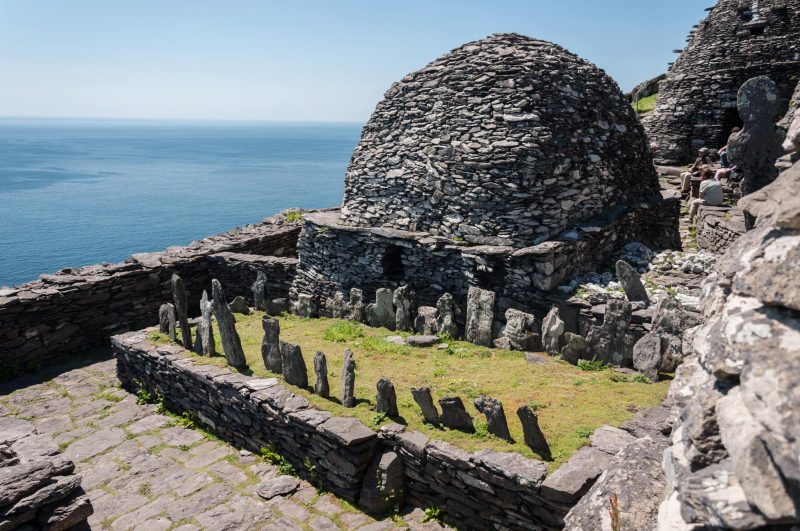
Reaching the monastery changes the perception of the island again. The beehive huts, built over a thousand years ago, have survived constant exposure to Atlantic conditions. The absence of modern structures is complete.
This is what gives the filming location its credibility. Nothing has been added to make it believable. It already was.


Day 3: Skellig Ring
After Skellig Michael, the scale of the coastline begins to make more sense. The Skellig Ring provides a route that maintains continuous proximity to the Atlantic without the traffic of the main Ring of Kerry.
Valentia Island offers a different perspective. Viewing Skellig Michael from a distance shows how far removed it is from the mainland. It also clarifies how exposed the crossing actually is, which is not always obvious during the boat journey itself.
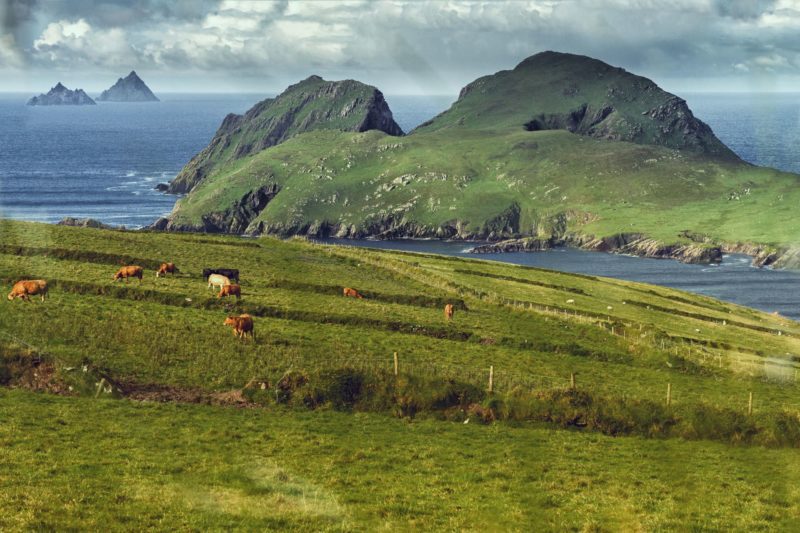
Day 4: Dingle Peninsula and the Expansion of Space
The transition to the Dingle Peninsula introduces a wider landscape. The cliffs remain, but they are integrated into a broader terrain that allows for longer sightlines.
Driving the Slea Head route reveals how quickly light conditions alter the appearance of the coastline. What appears flat and open under overcast skies becomes sharply defined under direct light.
This variation is one of the reasons these locations were effective on film. The environment changes without needing intervention.

Day 5: Dunmore Head and Exposure to the Atlantic
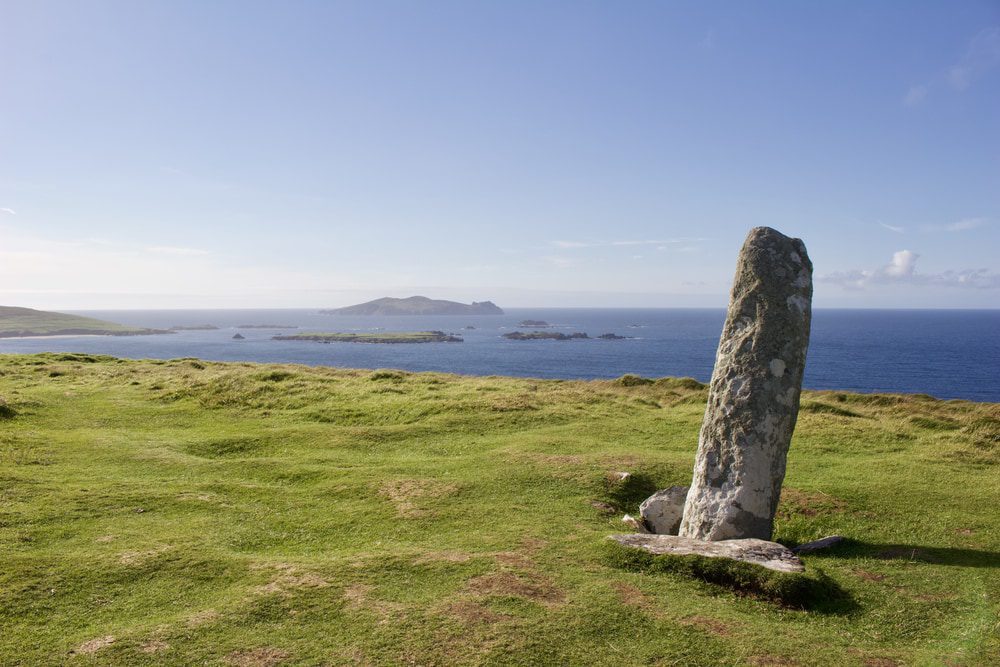
Dunmore Head is one of the most exposed points along this route. The cliffs drop directly into the ocean and the wind can be constant. In this area you will find more ogham stones and neolithic sites than anywhere else in Ireland.
Scenes from The Last Jedi were filmed here, including sequences that show Luke Skywalker moving through his daily routine. The absence of barriers creates a direct connection to the landscape, but it also requires awareness. Conditions can shift quickly.
Day 6: Sybil Head
Sybil Head demonstrates how the production adapted to environmental restrictions. When extended filming on Skellig Michael was not possible, elements of the Ahch-To village were recreated here.
The terrain itself required very little modification. The combination of grassland, rock, and open ocean allowed continuity with the original location.
Even without the constructed elements, the similarity remains clear when visiting in person.
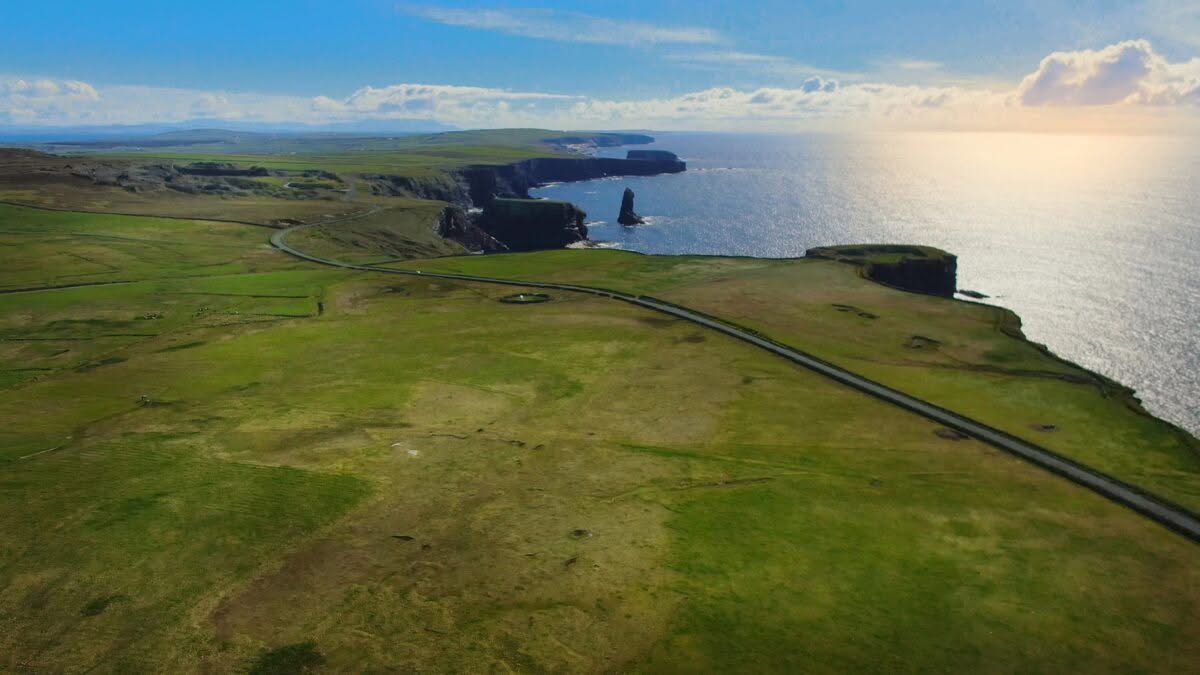
Day 7: Loop Head Peninsula
Loop Head Peninsula in County Clare continues the coastal environment but at a lower intensity. The cliffs are less vertical, and the landscape opens out across a wider area.
This shift allows for a slower pace. It also highlights how varied the Wild Atlantic coastline is, even within a relatively short distance.

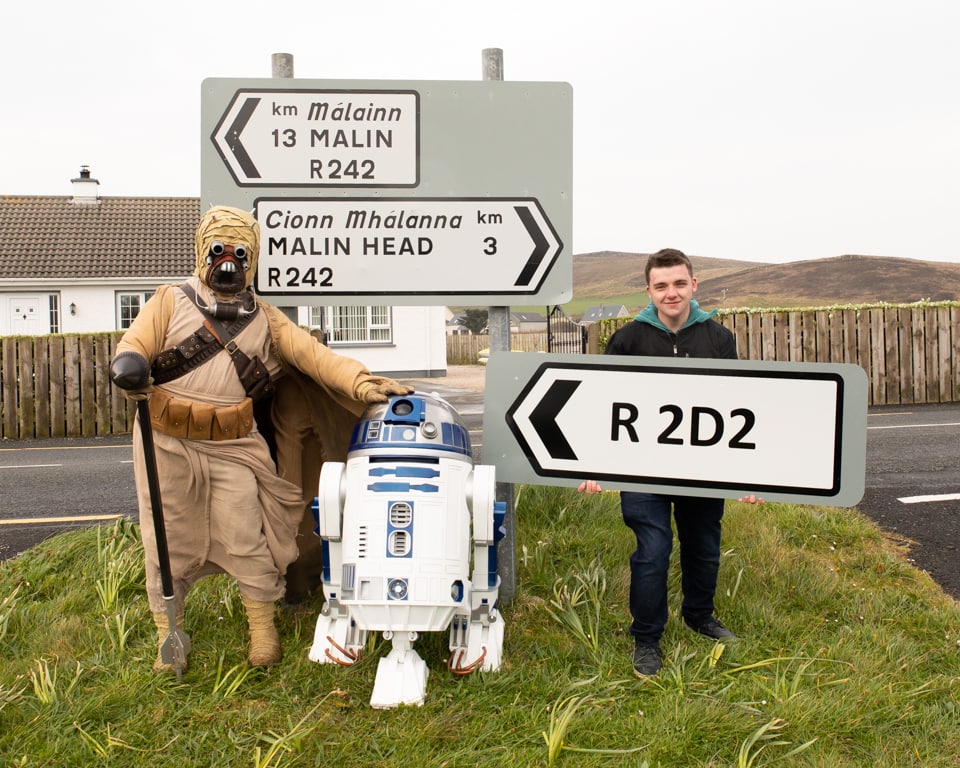
Days 8 to 10: Malin Head
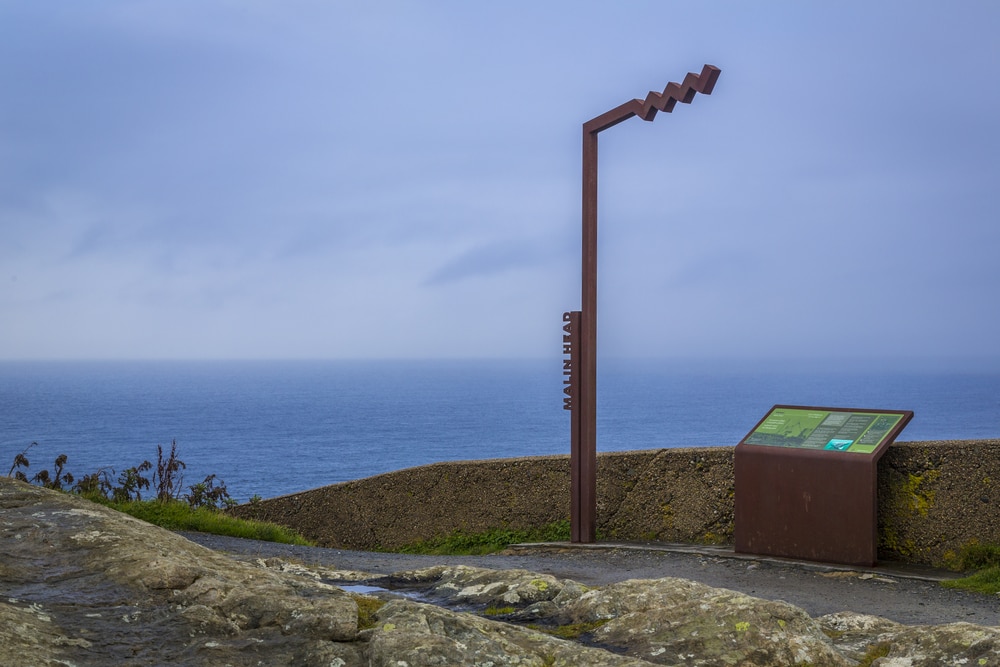
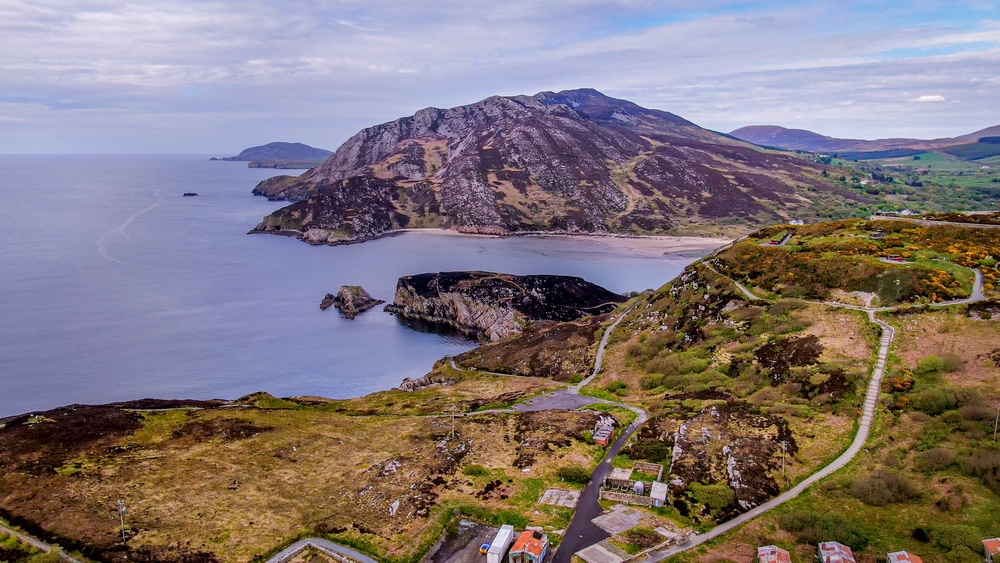
Malin Head on the Inishowen Peninsula changes the character of the itinerary. The landscape becomes more exposed and less structured, with fewer visual barriers between land and ocean.
This is where scenes involving the Millennium Falcon landing and Rey’s training were filmed. The terrain supports a different visual tone, one that feels harsher and less contained.
Locations such as Hell’s Hole and Banba’s Crown demonstrate the force of the Atlantic in a way that is more immediate than in the south.
When to Visit and How Conditions Affect the Experience
The most practical time to complete this itinerary is between May and September. The summer months provide the best balance between accessibility and weather stability, particularly for sea crossings.
However, conditions are never fully predictable. Fog, rain, and rapid changes in light are consistent features of the west coast. These conditions often enhance the atmosphere rather than detract from it.
Costs, Logistics, and What Most Guides Leave Out
One of the most overlooked aspects of planning is cost variability. Boat tours to Skellig Michael vary depending on whether you land or circle the island. Accommodation prices shift significantly during peak season, particularly in smaller coastal towns.
Driving also requires more fuel than expected due to slower speeds and longer routes.
More importantly, time must be treated as a resource. Attempting to compress multiple locations into a single day leads to reduced visibility, limited time on site, and a weaker overall experience.
Ireland’s Star Wars filming locations are often described as cinematic, but that description only captures part of their value. What makes them distinctive is that they function independently of the films.

They are not preserved sets. They are not controlled environments. They remain exposed to the same conditions that shaped them long before they appeared on screen.
Approaching this itinerary with that understanding changes how it is experienced. It becomes less about visiting locations and more about moving through a landscape that does not adapt to the visitor.
Where to stay in Kerry
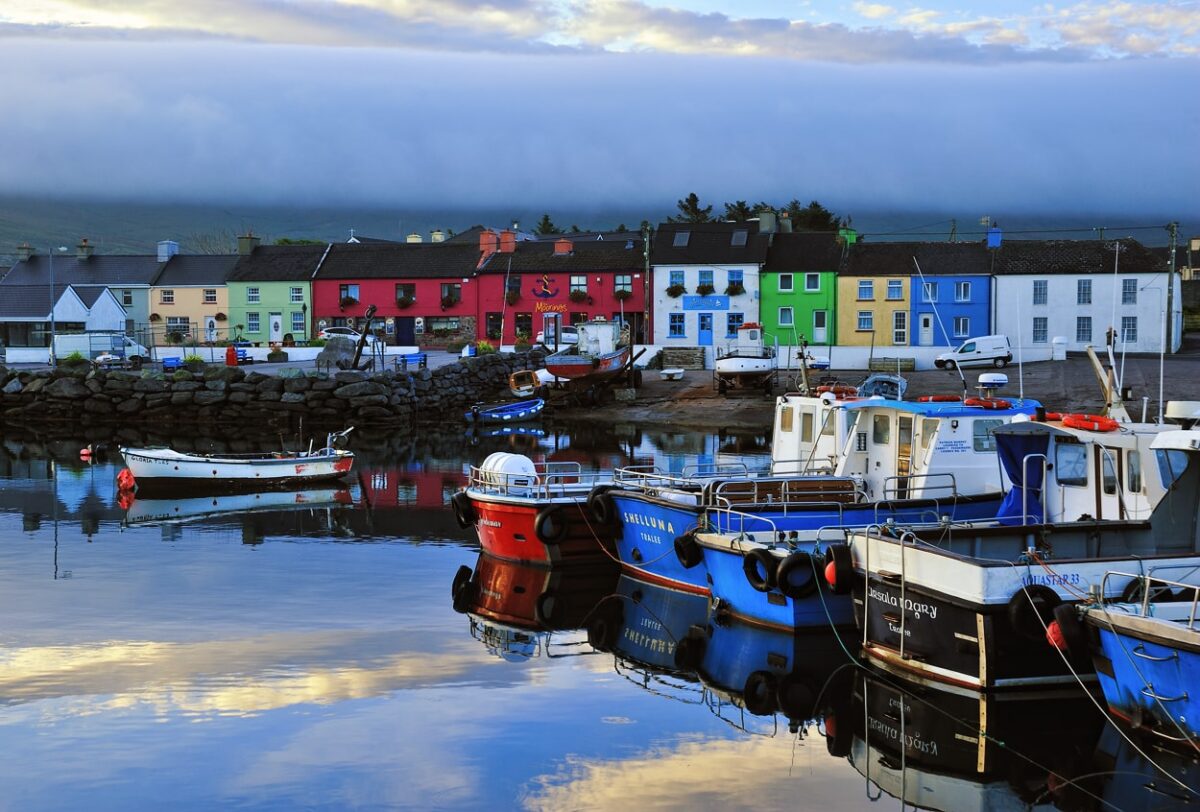
There is a lot taking place in Kerry around Portmagee and I would recommend if you are looking for a great place to eat and to stay check out The Moorings. They’ve been voted Munster’s best gastro pub with fantastic local seafood offerings. The rooms are newly refurbished and in the pub, there is live music.
On Valentia Island, the best recommendation is the 200-year-old family-run Royal Hotel Valentia which has the Royal Bar and Restaurant for some lovely local cuisine. The hotel has amazing views of the Iveragh Peninsula, Valentia Harbour and the Portmagee Channel and its rooms are also newly refurbished.
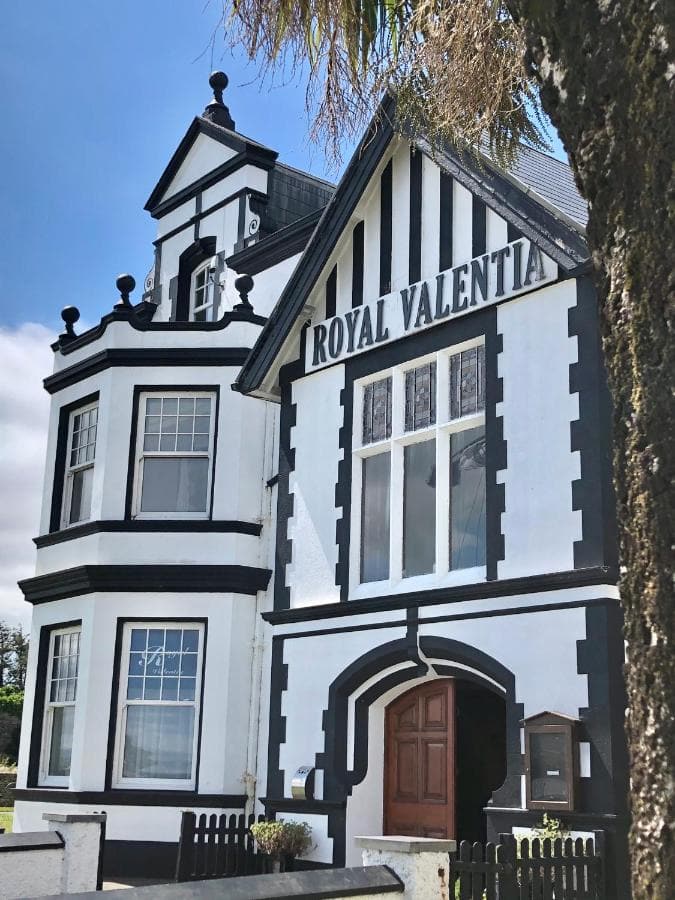
Apparently, they take food and drink very seriously on Valentia and while you have the Royal Hotel restaurant, which comes, highly recommended you can also check out the Valentia Island website, which has several places to choose from.
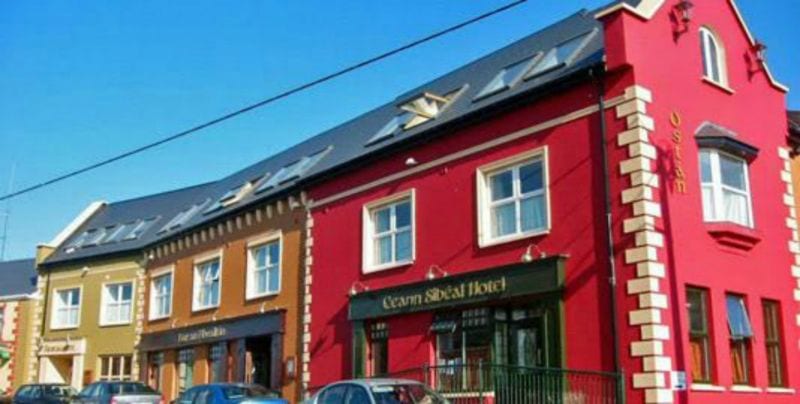
The Ceann Sibéal Hotel is a small family-run hotel that comes highly recommended in Ballyferriter. It’s full of local artwork and has some of the most stunning views in the area. They have a terrific pub and restaurant where you can enjoy traditional music and every February they host a traditional Irish music festival called “Scoil Cheoil an Earraigh”
Skellig Island Eco Tours
For the princely sum of €40, you can take a tour of the Islands from the waters. These eco-tours will sail from Portmagee Marina, depending on the weather. This boat tour circles both Islands and you get up close to Skellig Michael and the small Skelligs to see both the wildlife and the historical sites.
The landing tour departs Portmagee marina in the morning at approximately 8:30 am arriving back at the marina in the afternoon around 2 pm.
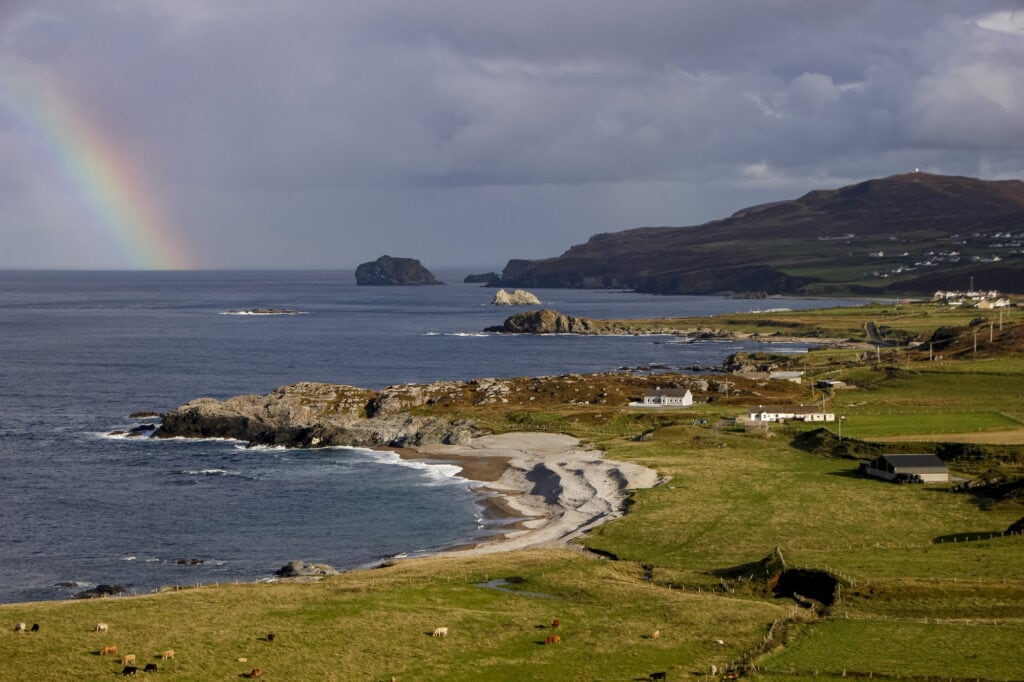
In County Donegal, Malin Head is the place to be. It’s a bit of a drive from Kerry but well worth the trip.

Where to stay in Malin Head
You will really be able to see Donegal’s motto “it’s different up here”. In Malin Head, you will want to stay at the Ballyliffen Lodge and Spa Hotel which is superb. Spectacular views over Malin Head and located a short drive away from Ireland’s most famous golf course Ballyliffen Golf Club, the Lodge is ideally suited for a little luxury during your stay for the Festival.
In Ballyliffen, you need to grab a bite at Nancy’s Barn it’s located in a converted barn and has won many awards not the least of which is one for its brilliant seafood chowder.
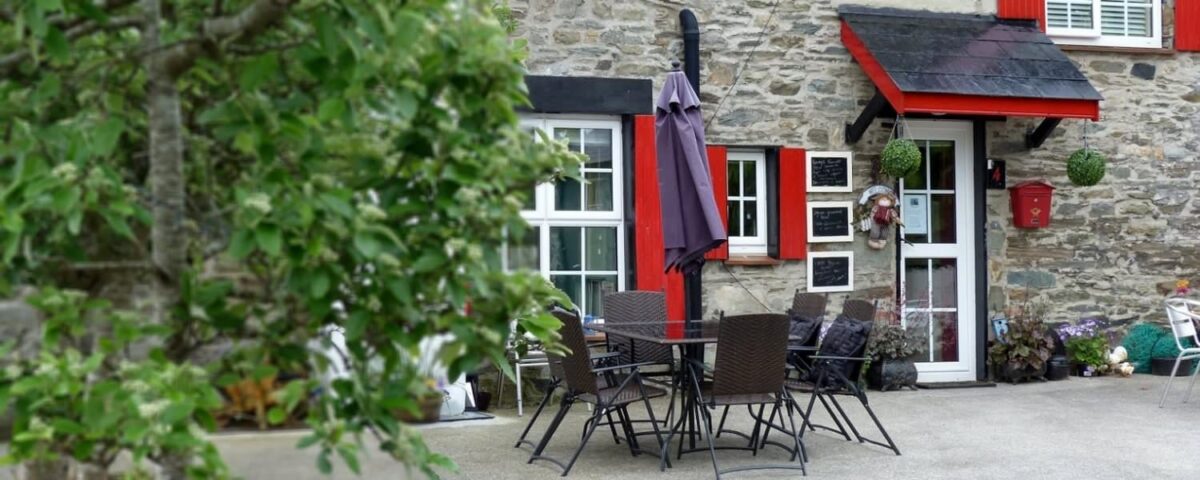
You must check out Cafe Banba, which is Ireland’s most northerly bakery and coffee shop. A family-run business they have two coffee vans, which can be found at Banba’s Crown and Ballyhillion.
FAQs Star Wars Filming Sites
Was Skellig Michael really used to film Star Wars?
Yes, but only for establishing and closing shots of Ahch-To in The Force Awakens and The Last Jedi. Strict UNESCO World Heritage limits on the island meant the detailed “village” scenes were actually filmed on a built set at Sybil Head on the Dingle Peninsula, not on Skellig Michael itself.
Where else in Ireland was Star Wars filmed besides Skellig Michael?
Malin Head in County Donegal is the other major Irish location, standing in for a separate section of the planet Ahch-To in The Last Jedi, including the scene where Rey and Chewbacca land the Millennium Falcon. Additional filming also took place at Loop Head in County Clare, Brow Head in County Cork, and Dunmore Head on the Dingle Peninsula.

Can you visit the Star Wars filming locations at Skellig Michael?
Yes, by licensed boat tour from Portmagee or Ballinskelligs in County Kerry, weather and sea conditions permitting. Landings are seasonal, capped in number each day, and often book out weeks in advance, so it’s worth reserving a spot well before your trip.
Where is the May the 4th Sci-Fi Film Festival held?
Ireland’s main Star Wars and sci-fi celebration, the May the 4th Sci-Fi Film Festival, is held annually in Portmagee, County Kerry, right on the Skellig Coast near Skellig Michael. It features independent sci-fi film screenings, cosplay, a village Star Wars parade, and other fan events.

How many days do you need for a Star Wars Ireland itinerary?
Covering both Skellig Michael in Kerry and Malin Head in Donegal properly takes at least a week, since they sit at opposite ends of the Wild Atlantic Way. If you only have a few days, focus on the Kerry locations around Skellig Michael and Sybil Head.
Do you need a car to visit the Irish Star Wars filming locations?
Yes. Both Skellig Michael’s departure points and Malin Head are in rural, remote parts of Ireland with limited public transport, so a rental car (or an organised tour with transfers) is the practical way to reach them and to cover the driving distance between Kerry and Donegal.
The Star Wars phenomenon in Ireland is a testament to the power of fandom and how one series can bring people together. It has also inspired an industry of merchandise, events, and fan clubs that have become a part of Irish culture. While the original trilogy may no longer be as popular today, its impact on Irish society remains strong. With each new movie release, there is sure to be another wave of excitement from those who call themselves Star Wars fans in Ireland.
Ireland’s Star Wars locations offer an unparalleled opportunity to experience both cinematic history and natural beauty. With proper planning, respect for the environment, and attention to safety, visitors can fully immerse themselves in these iconic filming locations while creating their own memorable experiences along the Wild Atlantic Way.
How are you celebrating May the 4th be with you?
You may also like:
For travelers seeking authentic Irish landscapes, it’s Dingle vs the Ring of Kerry each offering stunning views, but Dingle wins for those who want fewer tour buses and a bit more craic. If you’re curious about the Irish language, my guide to the Donegal Gaeltacht explains what it is, where it is, and where to learn Irish if you’re coming from abroad.
Start Planning Your Trip
👉 Public Transportation in Ireland
👉 Hidden Gems in Ireland – 32 Secret places to visit
👉 Answering all your travel questions about Ireland
Your photos are incredible! May 4th in Kentucky is a big day too – the running of The Kentucky Derby! I’m not a Star Wars fan, but I can see that this would be an amazing event for those that are!
Love this & love Star Wars. Must plan my next visit to Ireland in May! Thanks for sharing.
I had no idea that Star Wars was so popular and celebrated in Ireland! Fun post, thanks for doing it!
Oh my gosh, so many interesting facts here. wow, such a stunning place & you photograph it so well. Thanks for the creative post!
This looks like so much fun! My partner would love this!
Some of the greatest sites in Ireland can be found when searching out all the Star Wars and Vikings filming locations.