
Visiting Skellig Michael: Complete Guide to Tours, Steps and Travel Tips
The Skellig Islands, located off the coast of County Kerry, are two rocky Atlantic outposts, with Skellig Michael being the larger island famed for its remarkably preserved 6th century monastic beehive huts perched on its steep cliffs, a UNESCO World Heritage Site.
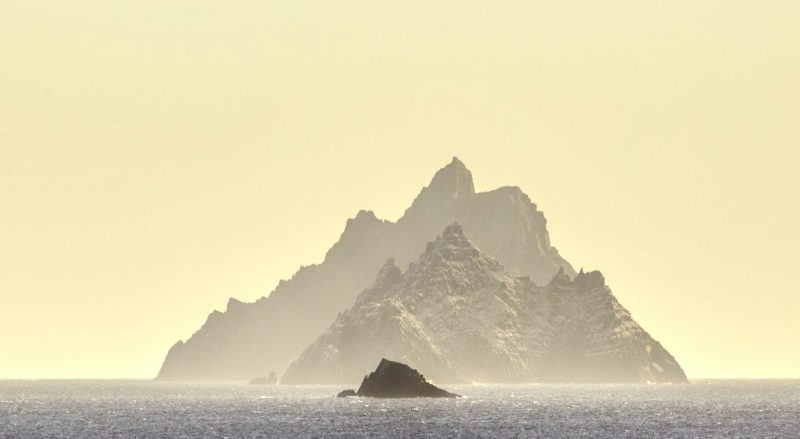
If you’ve been searching for where is Luke Skywalker Island or Star wars island Ireland, the answer is Skellig Michael. Located approximately 12 kilometers (8 miles) off the coast of County Kerry in southwestern Ireland, this dramatic rock rises sharply from the Atlantic Ocean.
It is the larger of the two Skellig Islands (the other being Little Skellig, a bird sanctuary closed to the public).Visiting Skellig Michael is one of the most extraordinary travel experiences in Ireland. Rising dramatically from the Atlantic Ocean about 12 kilometers off the coast of Kerry, this remote island is home to one of Europe’s most remarkable early medieval monastic settlements.
Recognized as a UNESCO World Heritage Site, Skellig Michael is famous for its stone beehive huts, steep stone steps, and dramatic cliffs overlooking the Atlantic. The monastery was built more than a thousand years ago by monks who deliberately chose isolation at the edge of the known world.
Today the island remains carefully protected. Visitor numbers are limited, only licensed operators can land, and the season for Skellig Michael tours is short. These restrictions exist to preserve both the fragile archaeological site and the safety of visitors.

When I began planning my own trip, I quickly realized that visiting Skellig Michael is less about scheduling a simple excursion and more about preparing for an experience shaped by weather, sea conditions, and careful conservation rules. The Atlantic ultimately has a vote in whether your visit happens.
- Visiting Skellig Michael: Complete Guide to Tours, Steps and Travel Tips
- How to Visit Skellig Michael from Portmagee
- Why Visiting Skellig Michael Can Be Challenging
- Landing at Blind Man’s Cove
- Skellig Michael Tour Prices and Costs
- Facilities on Boats and on the Island
- The Skellig Michael Climb: 618 Stone Steps
- Age Restrictions and Mobility Considerations
- Skellig Michael Eco Cruises and the Visitor Centre
- Best Time to Visit Skellig Michael
- What You’ll See on Skellig Michael
- Conservation and Responsible Travel
- When the Landing Doesn’t Happen
- FAQ: Visiting Skellig Michael
- Final Thoughts on Visiting Skellig Michael
How to Visit Skellig Michael from Portmagee
The gateway for visiting Skellig Michael is the small fishing village of Portmagee in County Kerry. All Skellig Michael tours depart from the marina here, and licensed boat operators provide two main types of trips: landing tours and eco cruises.
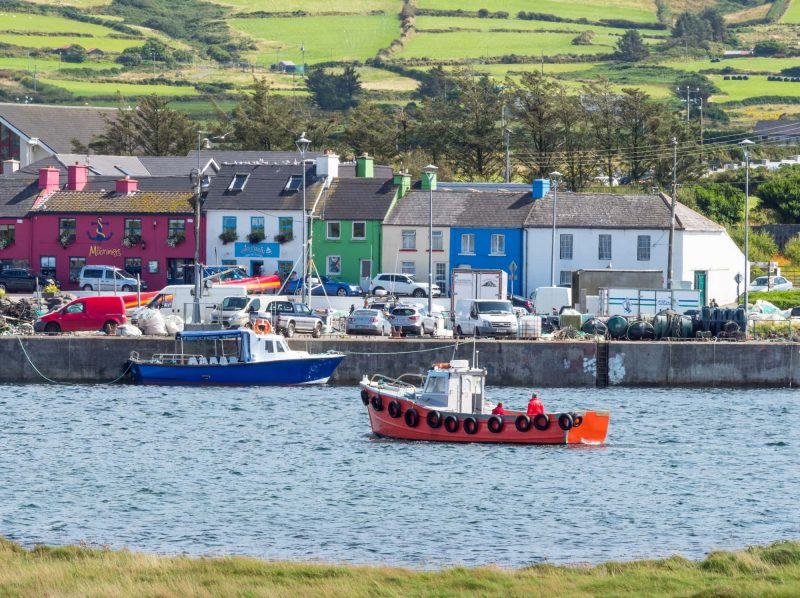
A Skellig Michael landing tour allows visitors to step onto the island and climb to the monastic settlement. These tours typically run from mid-May through late September, depending on weather conditions. Most departures take place in the morning, usually between about 8:00 and 11:00 AM.
The full experience normally lasts around five hours, including roughly two to two and a half hours on the island if landing conditions allow.
Eco cruises follow a different route. Instead of landing, the boats circle both Skellig Michael and nearby Little Skellig. These tours often run from April through October and may have multiple departures throughout the day.
Travelers reach Portmagee by car or arranged transport, check in with their operator, and receive a safety briefing before boarding.
Even with careful planning, flexibility is essential. Sea conditions can change quickly, and the final decision to sail or land always rests with the licensed crew. When planning my visit, I intentionally left the rest of the day unscheduled because strict travel timetables rarely match the rhythm of the Atlantic.

Why Visiting Skellig Michael Can Be Challenging
The difficulty of visiting Skellig Michael begins with the journey itself.
The boat crossing from Portmagee takes around 45 minutes but travels across open Atlantic water. Even on relatively calm days, the motion of the boat combined with wind and sea spray can surprise travelers who rarely experience seasickness.
Licensed operators will cancel departures if sea conditions make the crossing unsafe. Sometimes boats sail but do not land because swells increase during the trip.
These decisions may feel inconvenient, but they reflect responsible seamanship in an exposed environment.
When I planned my trip, I assumed that cancellation was entirely possible. I identified alternative activities around County Kerry so that the day would still be worthwhile if the sea prevented landing.
Approaching the trip with that mindset reduces disappointment and helps you appreciate the experience regardless of the outcome.

Landing at Blind Man’s Cove
If sea conditions are favourable, boats land at Blind Man’s Cove, the small rocky inlet that serves as the island’s landing point.
This is not a typical harbor or dock. There are no railings, no smooth ramps, and no marina infrastructure. Visitors step from the boat directly onto uneven rocks that are often wet and slippery.
The maneuver requires precise timing by the crew. Even a modest swell can make landing dangerous, which is why operators cancel landings quickly when conditions change.
Stepping from the boat onto the rocks is often the moment visitors realize how rugged the island environment truly is.
Good footwear with strong grip is essential. If balancing on damp rocks in wind feels uncomfortable, the climb ahead may feel even more challenging.
Skellig Michael Tour Prices and Costs
The cost of Skellig Michael tours varies between operators and seasons, and prices are not always published far in advance.
In general, a Skellig Michael landing tour costs significantly more than an eco cruise. Eco cruises often cost roughly half as much because they involve shorter journeys and fewer logistical restrictions.
Demand for Skellig Michael tours is extremely high. Interest has grown dramatically in recent years due to film exposure and social media, while the number of visitors allowed to land each day remains strictly limited.
Two well-known licensed operators in Portmagee are Casey’s Skellig Tours and Skellig Michael Cruises. Both offer landing tours and eco cruises during the season.
When budgeting for the trip, I included transportation to Portmagee, parking, meals, and a flexible overnight stay nearby in case weather forced a change in schedule. I also planned time to visit the Skellig Experience Visitor Centre, which provides valuable context for the island’s history and wildlife.

©Skellig Visitor Centre
Facilities on Boats and on the Island
One of the most important things to understand before visiting Skellig Michael is that there are almost no facilities.
There are no restrooms, shelters, cafés, or shops on the island. The site is preserved as an archaeological landscape rather than developed as a tourist destination.
Boat facilities vary between operators, and some vessels have limited onboard amenities. Visitors should not assume enclosed cabins or restrooms will be available.
Preparation therefore becomes essential. During my visit I wore layered clothing suitable for wind and rain and carried water, a small snack, and any medication I might need.
From the moment the boat leaves Portmagee until the return journey, you are exposed to the Atlantic environment.
Sadly my attempts at two trips resulted in no landings as the weather was just too rough. However, I really enjoyed just seeing the islands close up from the water.

The Skellig Michael Climb: 618 Stone Steps
Reaching the monastery requires climbing 618 steep stone steps carved into the rock centuries ago. These days my mobility issues will keep me from stepping foot on the Island but I highly recommend a boat tour around the Skelligs.
These steps rise more than 600 feet above sea level and remain preserved in their original form. They are uneven, often damp, and there are no handrails.
The climb demands careful footing and attention. Wind can be strong on exposed sections, and the dramatic views can easily distract visitors from where they place their feet.
Visitors should never rush. The goal is safe movement rather than speed.

Age Restrictions and Mobility Considerations
Safety rules for Skellig Michael landing tours are strict.
Children under 14 are not permitted to land on the island because of the steep steps and exposed terrain. The climb is physically demanding and unsuitable for younger visitors.
Travelers with limited mobility may also find the environment extremely challenging. There are no alternative routes or adapted paths to the monastery.
Wheelchair access is not possible on the island itself. However, some operators can accommodate wheelchair users on eco cruises via rear boarding access.
For visitors who cannot land, an eco cruise combined with the Skellig Experience Visitor Centre still offers a rich and meaningful way to experience the islands.
Skellig Michael Eco Cruises and the Visitor Centre
Eco cruises provide a different perspective on the Skelligs.
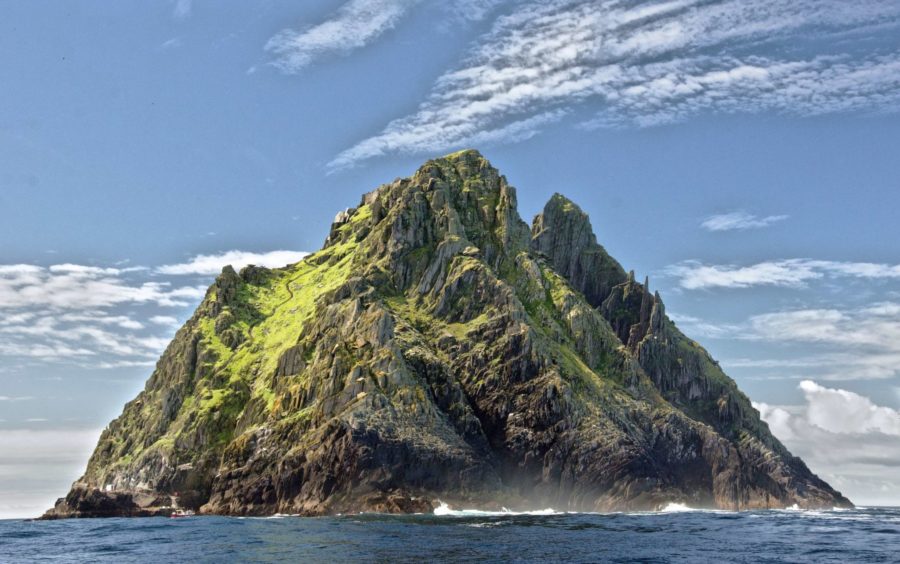
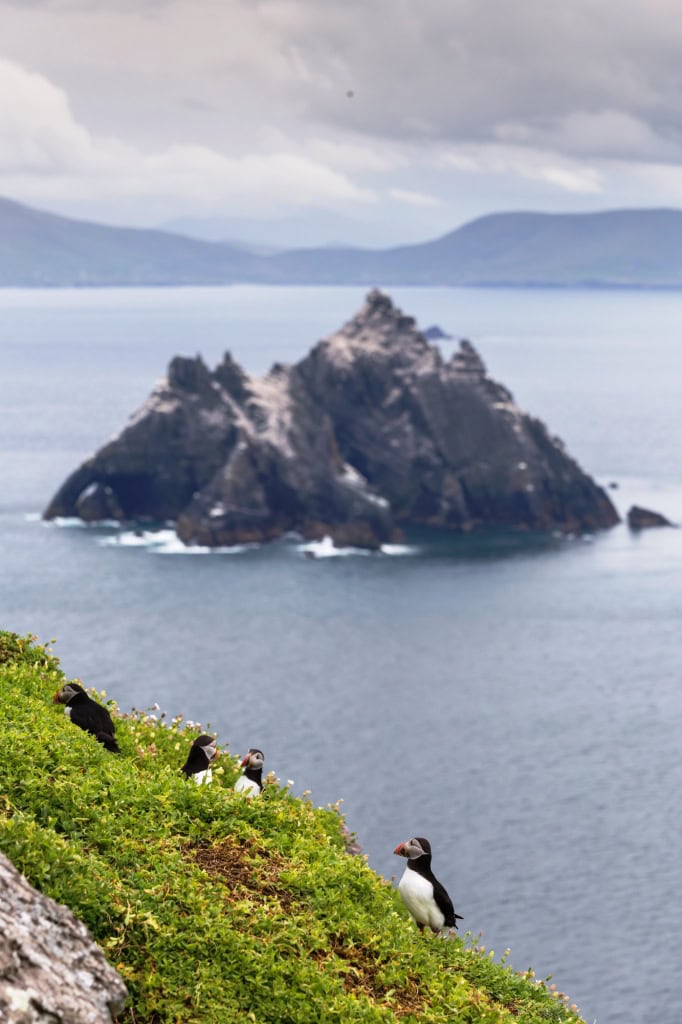
Boats circle both Skellig Michael and nearby Little Skellig, which hosts one of the largest gannet colonies in the world. During nesting season the cliffs appear almost white with birds, and watching thousands of gannets rise into the air at once is unforgettable.

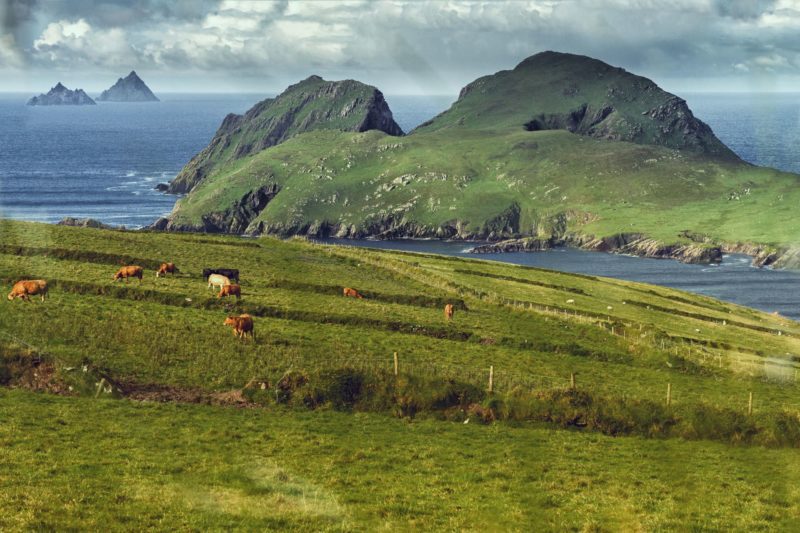
From the water you can see the island’s dramatic cliffs, the lighthouse, Christ’s Saddle, and the terraces that hold the monastic settlement.
Crew members usually provide narration explaining the island’s history, wildlife, and geology.
The Skellig Experience Visitor Centre on the mainland complements any boat tour. Exhibits describe the lives of the monks, the seabird colonies, and the geological forces that shaped the islands.
The center is managed in cooperation with Heritage Ireland and provides important context for understanding the UNESCO site.

Best Time to Visit Skellig Michael
The Skellig Michael landing season normally runs from mid-May through late September.
June through August offers the highest chance of successful landings and coincides with puffin nesting season. During these months visitors may see puffins flying between burrows and the sea.
Even during peak summer, however, weather conditions can prevent landings.
Eco cruises extend the viewing season slightly, often running from April through October.
Because of the unpredictable Atlantic weather, flexibility in travel plans remains the most important factor when planning a visit.
What You’ll See on Skellig Michael
Visitors who reach the summit encounter one of Europe’s most extraordinary historical landscapes.
The monastic settlement includes stone beehive huts constructed entirely without mortar. These structures have survived more than a millennium of Atlantic storms.
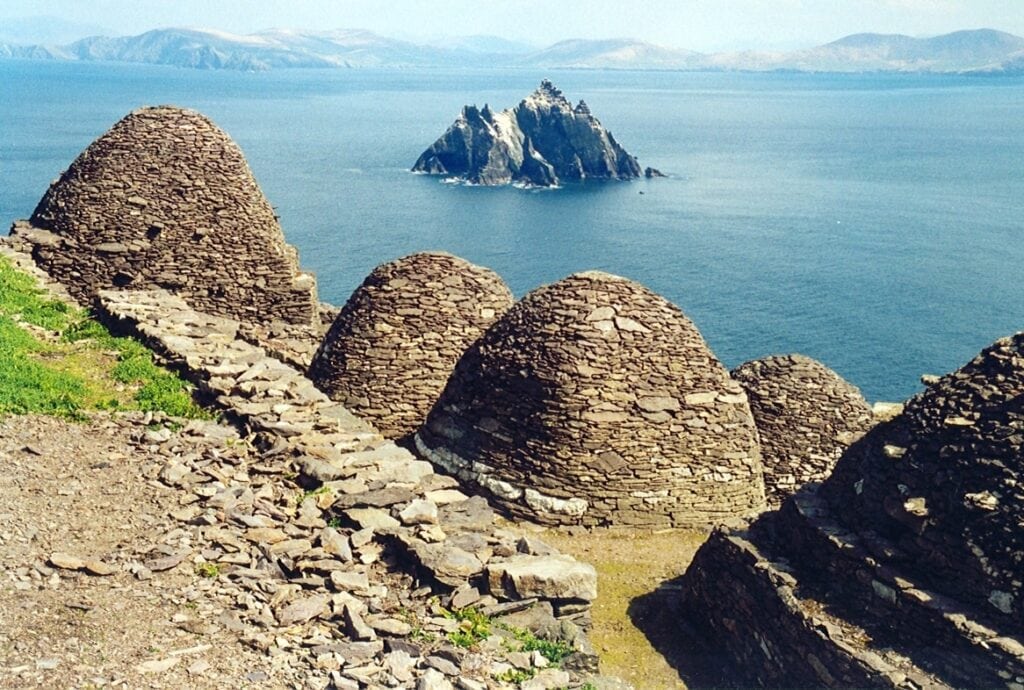
Small oratories and terraces form a compact community that once housed monks devoted to prayer, study, and manual labour in near isolation.
Standing among these buildings with the ocean stretching in every direction makes the monks’ choice of location feel both astonishing and deliberate.
During summer months puffins nest along the island’s slopes and seals are often visible near the landing area.
Rangers stationed on the island explain the history of the settlement and the preservation efforts that keep the site intact.
Conservation and Responsible Travel
Skellig Michael is both a fragile archaeological site and an active wildlife habitat.
The island is managed by Ireland’s Office of Public Works, which enforces conservation rules designed to protect the UNESCO World Heritage Site.
Visitors are expected to stay on marked paths, avoid touching ancient structures, and carry out all waste.
Respecting these rules ensures the site remains accessible for future generations.
When the Landing Doesn’t Happen
Even with careful planning, landing on Skellig Michael is never guaranteed. On one trip I experienced, swells increased during the crossing and the crew decided it was unsafe to land. Instead, the boat circled both islands and extended the eco cruise.
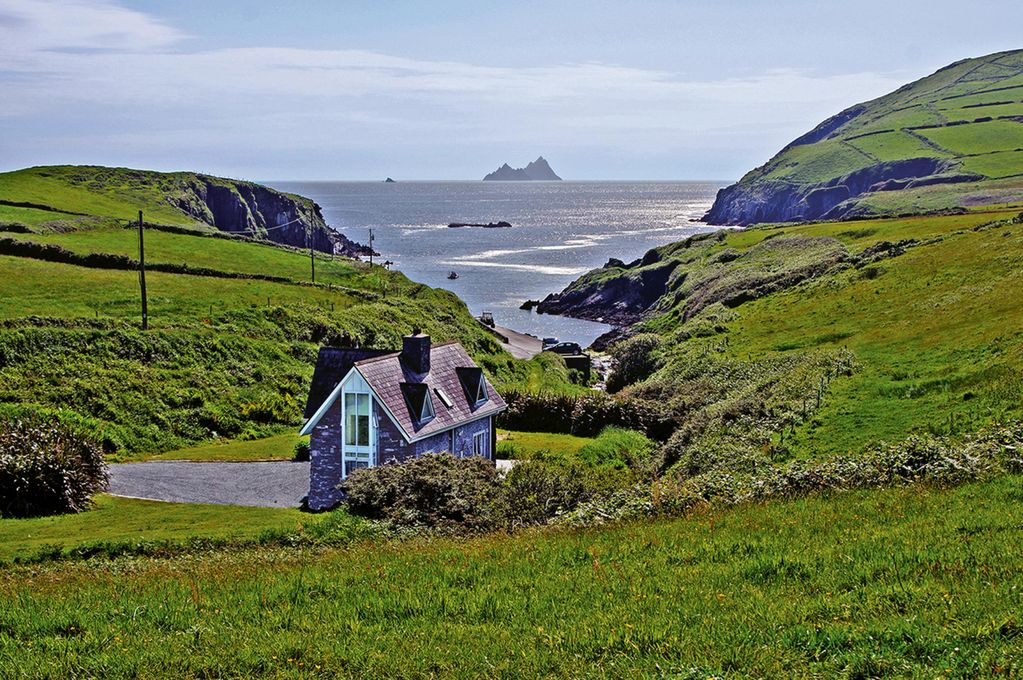
While initially disappointing, the experience revealed the full scale of the cliffs and seabird colonies in a way that landing might not have. Afterward, visiting the Skellig Experience Visitor Centre helped complete the historical picture. For centuries most travelers have seen the Skelligs only from the sea. That perspective is still powerful.
FAQ: Visiting Skellig Michael
Is Skellig Michael worth visiting?
Yes. Skellig Michael is one of the most unique historical sites in Ireland. The combination of medieval monastic ruins, dramatic cliffs, and Atlantic wildlife creates a travel experience unlike anywhere else in Europe.
How difficult is the Skellig Michael climb?
The climb involves 618 steep stone steps with no handrails. Visitors need good balance and moderate fitness. Anyone uncomfortable with heights or uneven terrain should consider an eco cruise instead.

Can you visit Skellig Michael without landing?
Yes. Eco cruises circle the islands and allow visitors to see the cliffs, wildlife, and monastic terraces from the sea.
Final Thoughts on Visiting Skellig Michael
Few places combine history, wilderness, and spiritual isolation the way Skellig Michael does.
The journey begins in Portmagee, crosses open Atlantic waters, and may end with a climb to one of the most remarkable monastic sites in Europe.
Whether you reach the summit monastery or experience the islands from the sea, the Skelligs leave a lasting impression.
With thoughtful planning, realistic expectations, and respect for the environment, visiting Skellig Michael becomes far more than a sightseeing trip. It becomes one of the most memorable travel experiences in Ireland.
Join 7,500 Ireland travellers in my Ireland Uncovered Facebook Group and 1,897 on my XYUandBEYOND PAGE
If you’re planning more trips like this, explore my full Story Travel guide to film locations, literary sites and historic places across Ireland and the UK.
Start Planning Your Trip
👉 Public Transportation in Ireland
👉 Hidden Gems in Ireland – 32 Secret places to visit
👉 Answering all your travel questions about Ireland