
Aran Islands Tours from Galway: Ferries, Flights and Dún Aonghasa
The Aran Islands sit at the western edge of Ireland, where Galway Bay opens into the Atlantic Ocean. They are often described as timeless or traditional, but visiting them in practice is less about romance and more about geography, weather, and realistic planning. Reaching the islands from Galway is straightforward in theory, but conditions, transport schedules, and physical effort shape the experience far more than most first-time visitors expect.
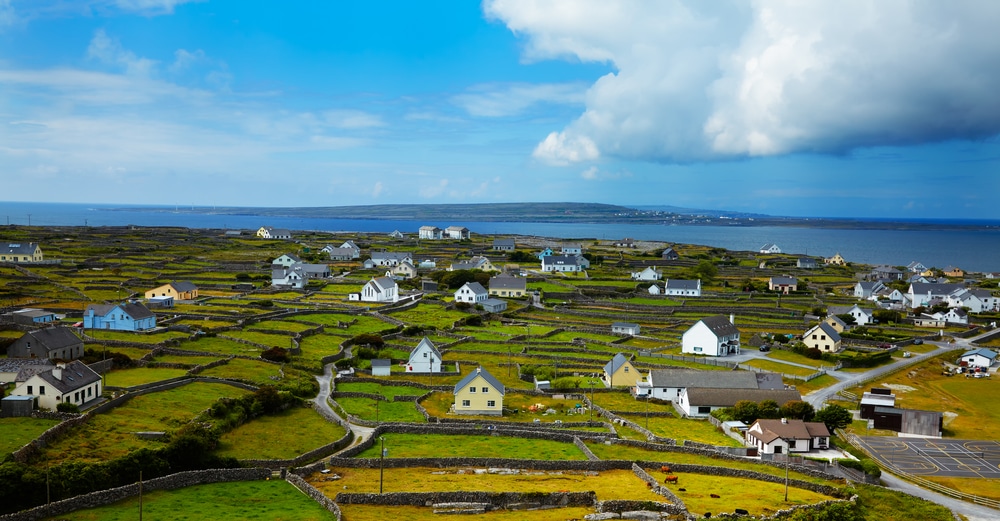
I’ve been to the Islands a few times, once when I was younger and could hike and explore forever and later when my mobility issues became challenging. This guide explains where the Aran Islands are, how to get there from Galway, what makes them historically significant, how to get around once there, whether staying overnight is worthwhile, and what travellers, particularly those travelling at a measured pace or with mobility considerations, should know before they go.

- Aran Islands Tours from Galway: Ferries, Flights and Dún Aonghasa
- Where the Aran Islands Are — and Why Location Matters
- A Brief History of the Aran Islands
- Stone Forts, Survival, and Early Settlement
- The Aran Islands as a Gaeltacht
- Dún Aonghasa on Inis Mór
- How to Get to the Aran Islands from Galway
- Gentle Pace vs Active Pace: Choosing How to Experience the Islands
- Key Sights by Island (What to See — and What to Skip)
- Staying on the Aran Islands
- Which Island to Stay On
- Accessibility and Mobility Considerations
- Seasonal Differences on the Aran Islands
- Where to Eat on the Aran Islands
- Common Mistakes Visitors Make
- Sample Itineraries
- Who the Aran Islands Are Best Suited For
- Sources and Official Planning Links
- Exploring the fascinating regions of Ireland
Where the Aran Islands Are — and Why Location Matters
The Aran Islands lie at the mouth of Galway Bay, off Ireland’s Wild Atlantic Way, forming a natural barrier between the Atlantic Ocean and the mainland counties of County Galway and County Clare. They are fully exposed to Atlantic weather systems, with little shelter from wind or swell.
This exposure defines daily life. Wind is constant. Weather changes quickly. Sea conditions affect ferries and flights even in summer. The islands are not difficult to reach, but they do not tolerate rigid schedules.
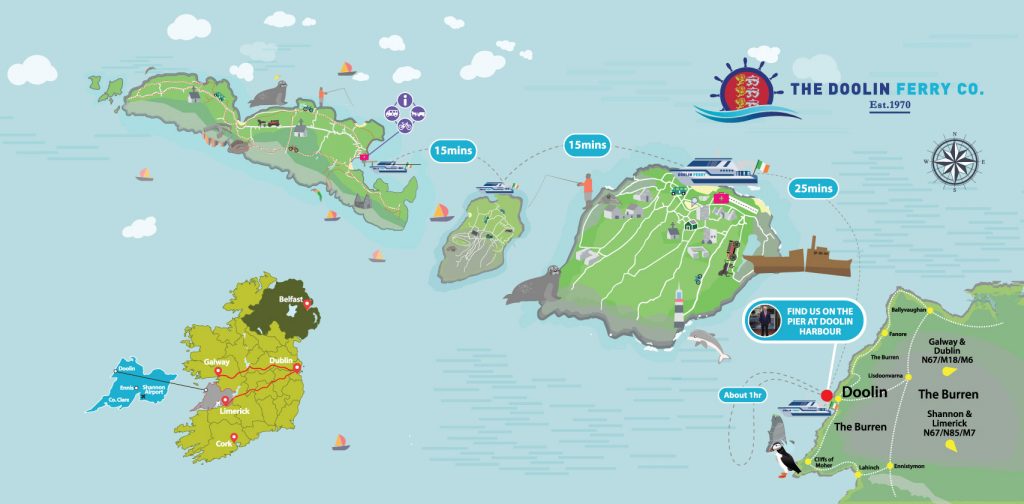
The three islands run roughly east to west:
What often surprises visitors is not how remote the islands are, but how quickly that remoteness asserts itself. Mobile coverage can weaken (or be non-existant), weather forecasts become advisory rather than predictive, and small delays compound. A missed ferry or cancelled flight does not trigger a cascade of alternatives it simply resets the day.
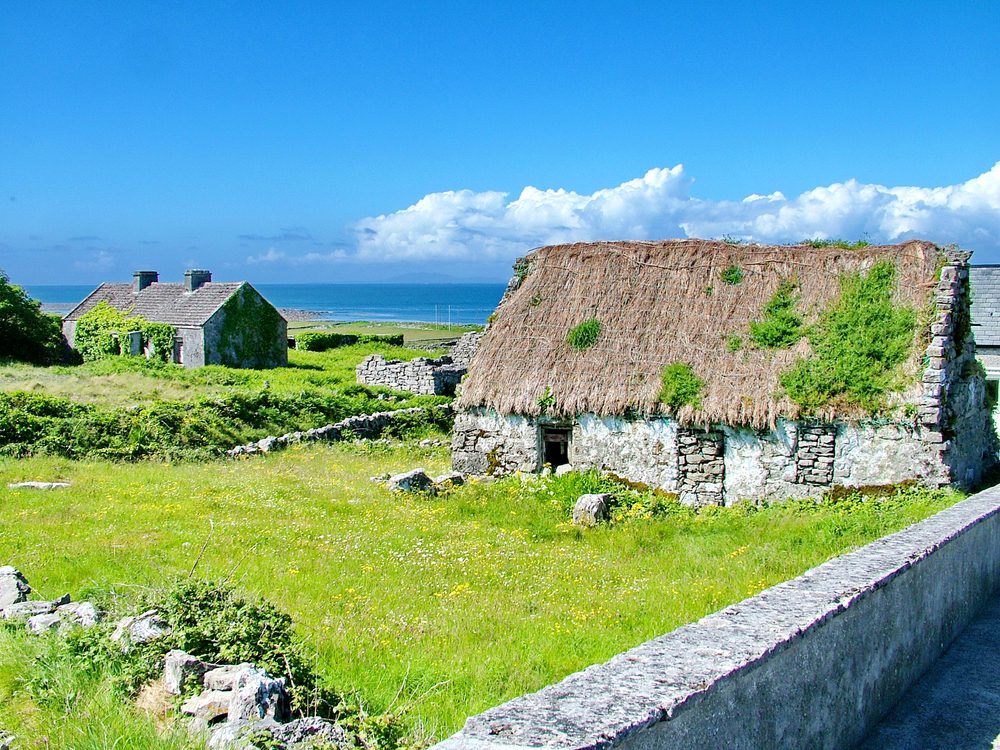
Inis Mór (Inishmore) – the largest island and the most developed for visitors
Inis Meáin (Inishmaan) – quieter, less visited, and more traditionally Irish-speaking
Inis Oírr (Inisheer) – the smallest and flattest, with the shortest ferry crossings
Despite their proximity to the mainland, the islands feel remote. Once you arrive, options narrow and pace slows. The day is shaped more by conditions than by plans.
Understanding this early helps visitors recalibrate expectations. The Aran Islands are not places to optimise time; they are places where time reorganises itself around limits.
A Brief History of the Aran Islands
Human settlement on the Aran Islands dates back more than 3,000 years. Archaeological evidence shows continuous occupation from the Bronze Age through the early medieval period.
Life here was always marginal. The islands offered little arable land and few natural resources. Survival depended on labour, cooperation, and adaptation to an exposed environment.
Stone Forts, Survival, and Early Settlement
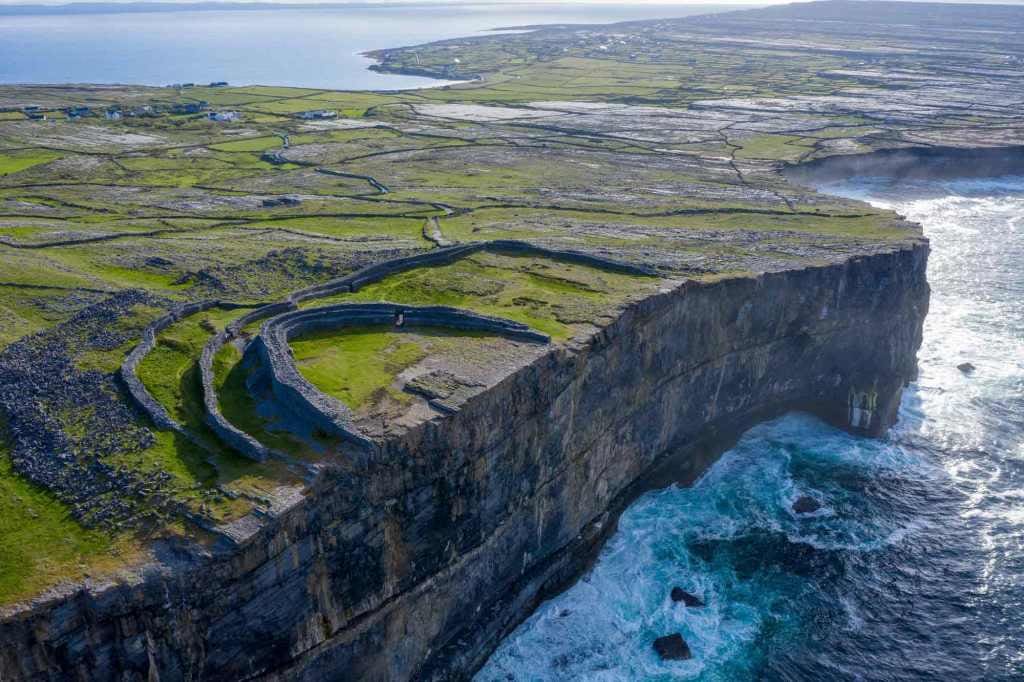
The most visible remains of early settlement are the stone forts, built for defence rather than display. The best known is Dún Aonghasa, constructed in stages between approximately 1100 BCE and 800 CE.
Excavations have uncovered Bronze Age houses, animal bone deposits, and evidence of metalworking, alongside later early medieval occupation. The fort’s triple drystone walls and chevaux-de-frise were designed to slow attackers in a landscape with few natural defences. (Chevaux-de-frise were lines of sharp, upright stones designed to force anyone approaching the fort to slow down and watch their footing.)
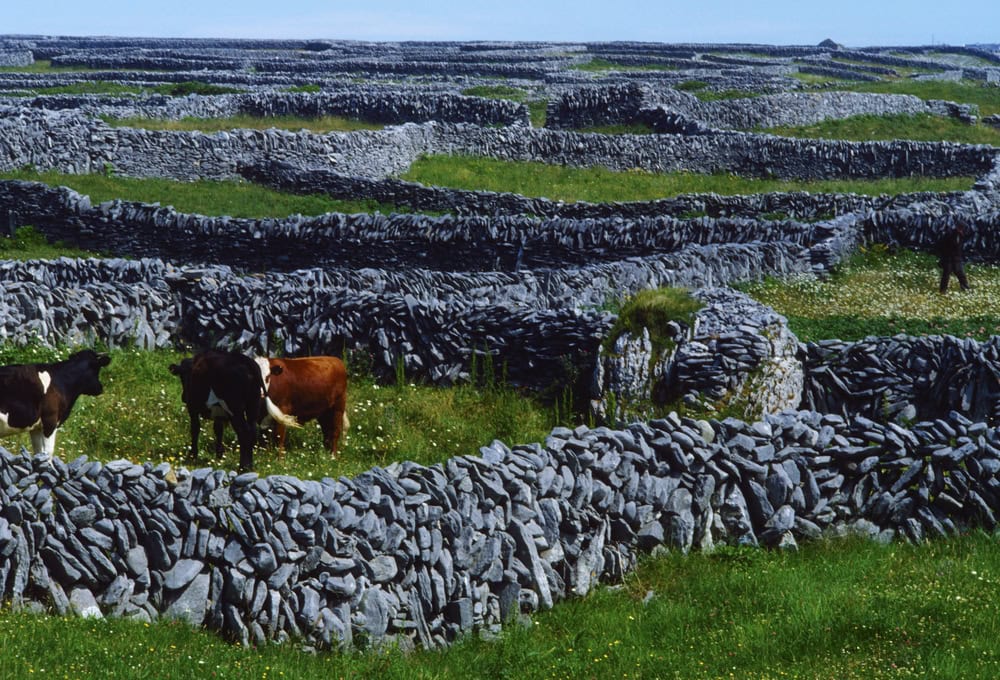
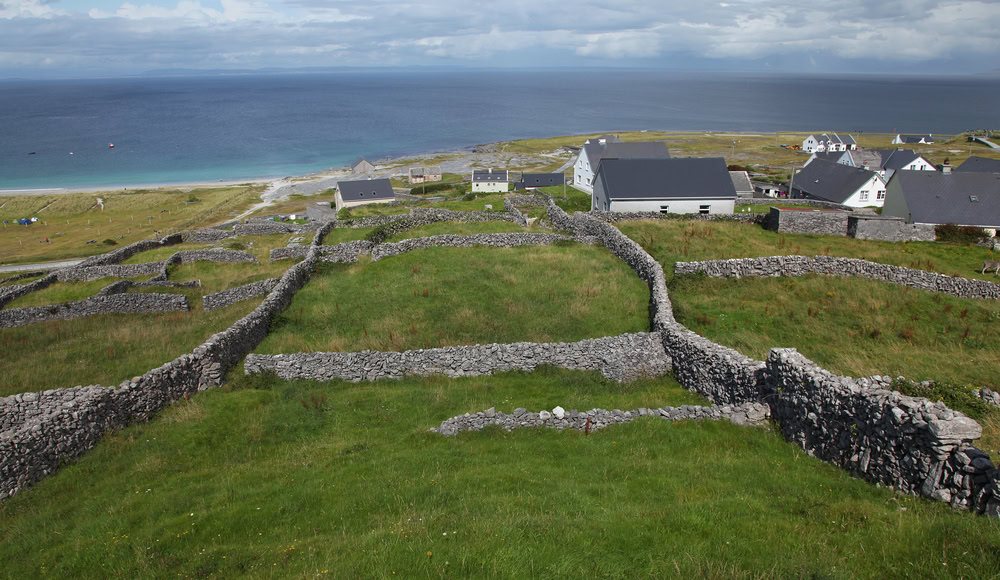
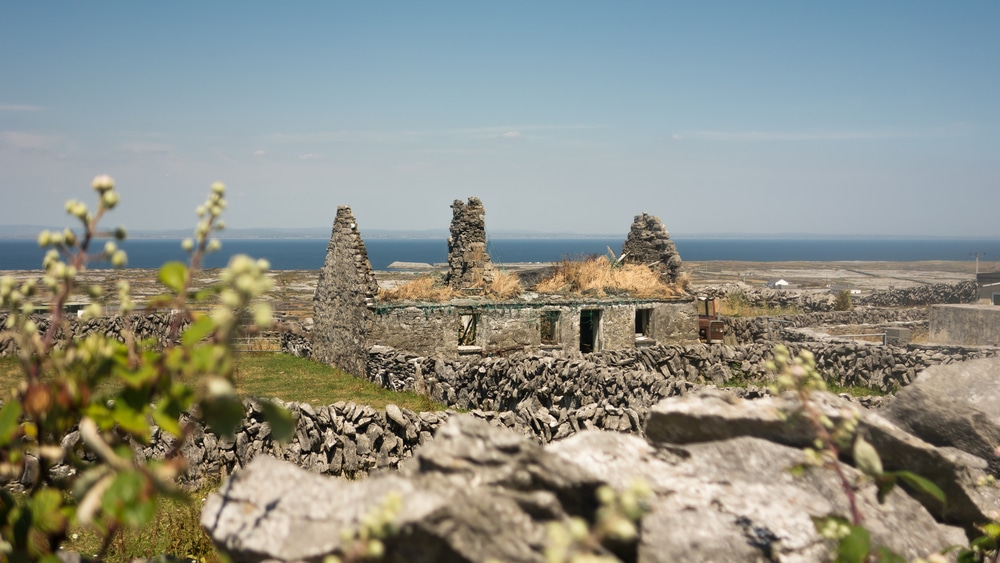
The dry-stone walls that divide the islands today are part of the same survival story. Soil was carried inland basket by basket, mixed with sand and seaweed, and laid between stone to create workable plots. Every field represents generations of manual labour.
During the Great Famine of the 1840s, the islands were devastated. Overpopulation, poor soil, and dependence on small plots made survival precarious. Emigration was widespread, and the population never recovered. The emptiness visitors notice today is not accidental; it is historical.
The Aran Islands as a Gaeltacht
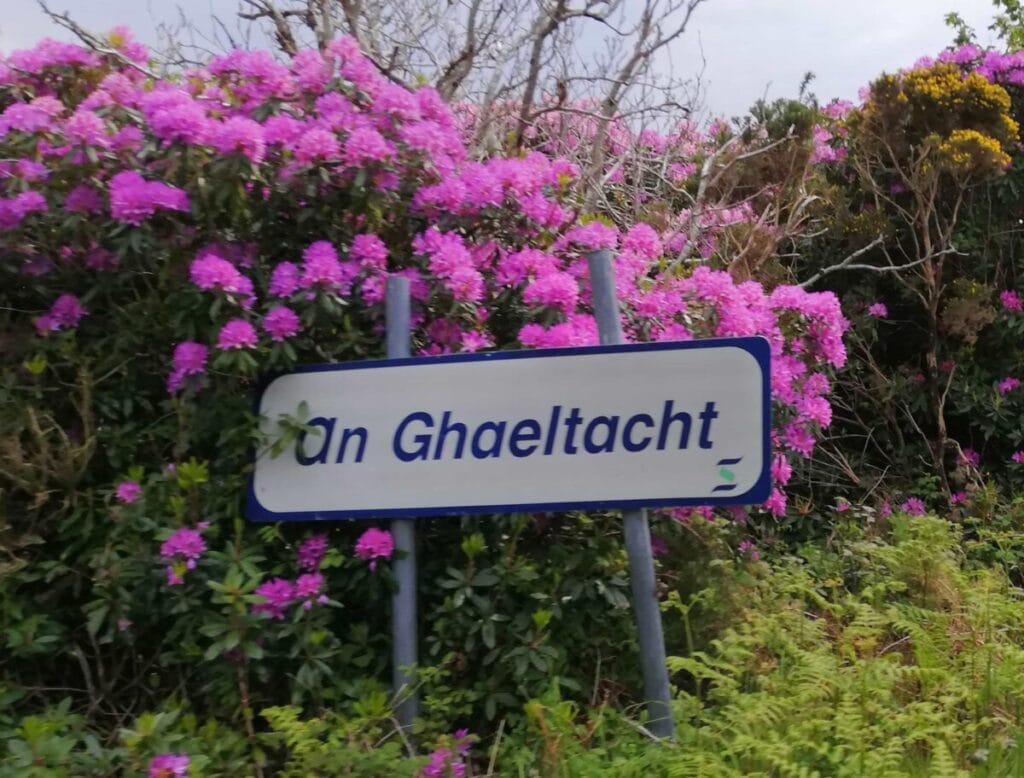
The Aran Islands are part of Ireland’s Gaeltacht, where Irish remains the everyday spoken language. This is most evident on Inis Meáin, where Irish is often used first in shops, homes, and community life.
Irish here is not preserved for visitors. It is functional and habitual. Signage, announcements, and casual conversation may default to Irish, with English used when required.
This continuity shapes behaviour. Conversation is unhurried. Services are informal. Time is measured by conditions rather than clocks. Visitors who expect efficiency or performance often misread this as indifference, when it is simply normal life continuing.
Dún Aonghasa on Inis Mór
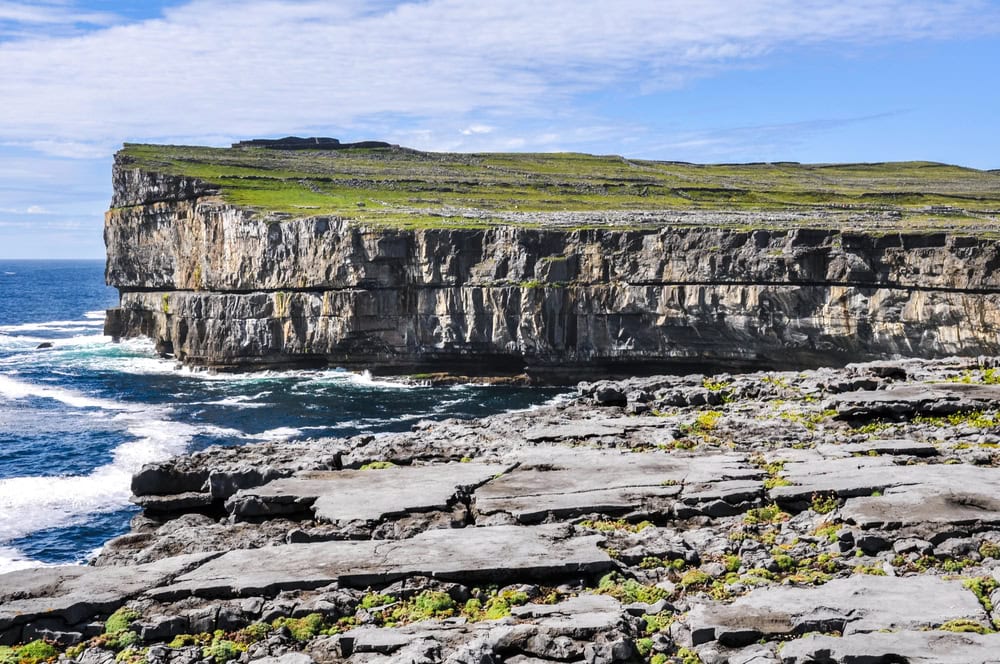
Dún Aonghasa sits on the edge of an 87-metre Atlantic cliff on Inis Mór. It is the most visited site on the islands and one of Ireland’s most important prehistoric monuments.
What the Climb Actually Involves:
The approach is steeper and more exposed than photographs suggest. The final section involves uneven stone underfoot and no barriers at the cliff edge. Wind conditions can change quickly, and gusts can be severe.
Footwear matters. Weather matters. Turning back is a sensible decision if conditions deteriorate.

What Dún Aonghasa Is, Historically
The fort’s importance lies in endurance rather than spectacle. Its construction required sustained labour in an exposed environment with limited resources. It is impressive because it was maintained over centuries, not because it is dramatic.
How to Get to the Aran Islands from Galway
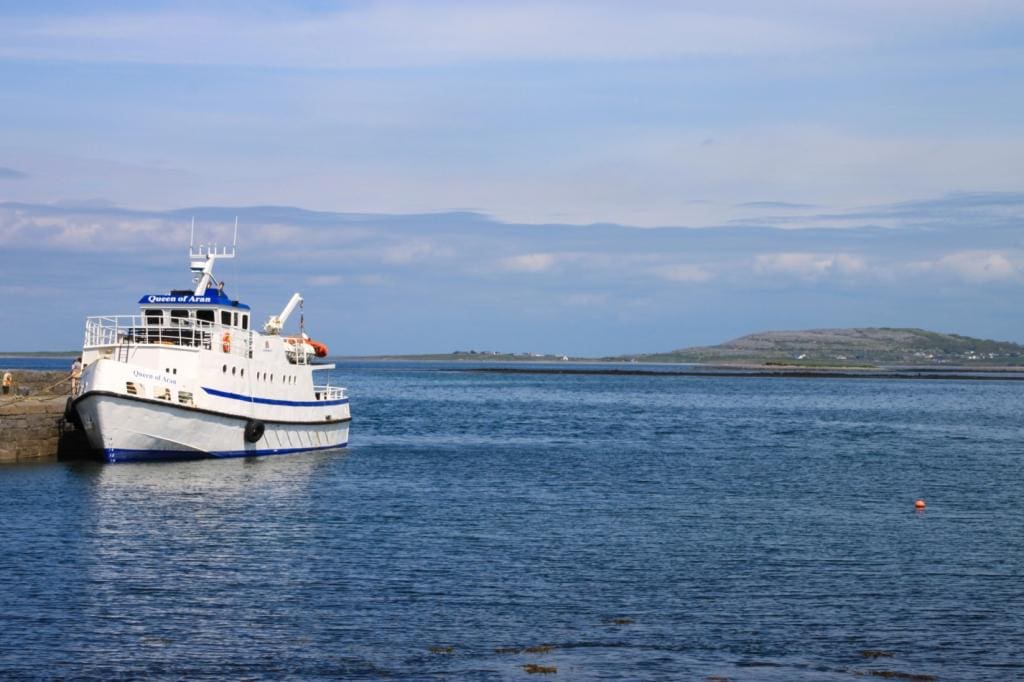
Reaching the Aran Islands requires planning and flexibility. Weather affects all transport, sometimes at short notice.
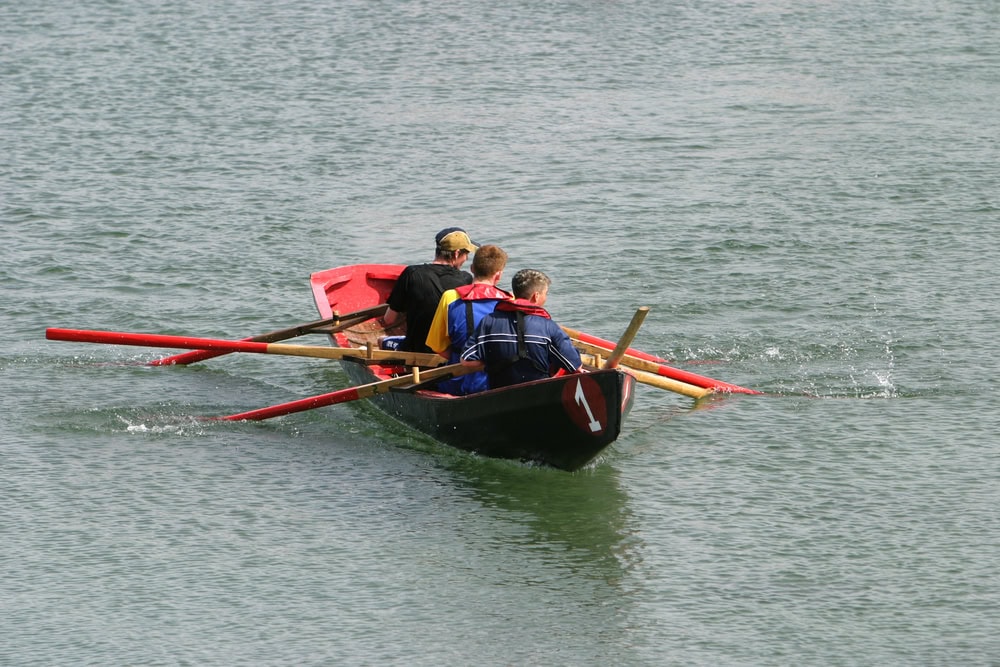
By Ferry via Rossaveal (Most Reliable Route)
Rossaveal (Ros an Mhíl), west of Galway City, is the main ferry port.
- Combined bus and ferry services operate from Galway City
- Ferry crossings take approximately 40 minutes
- Services run year-round, with increased frequency from April to September
This is the most reliable route from Galway.
By Ferry from Doolin (Seasonal, Weather-Dependent)
Seasonal ferries operate from Doolin in County Clare.
- Shorter crossings, particularly to Inis Oírr
- More exposed to Atlantic swell
- Reduced schedules outside peak season
Best suited to those already touring the Clare coast.
By Plane from Connemara Airport
Small aircraft operate from Connemara Regional Airport.
- Flight time is about 10 minutes
- Luggage limits apply
- Flights cancel easily due to wind or visibility
Flying reduces travel time but increases weather dependency.
Getting Around on the Islands
Distances are deceptive. Terrain is mostly flat, but surfaces are uneven and wind increases effort.
Walking is realistic only for short distances
Bicycles are common but not suitable for everyone
Minibus tours on Inis Mór reduce physical strain
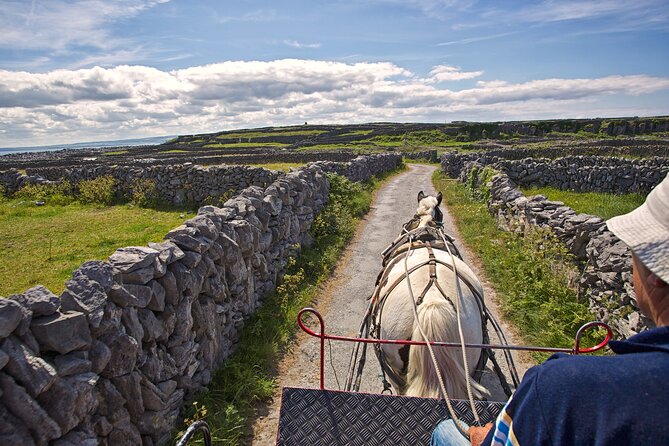
Pony traps offer a slower, sheltered alternative
Choosing transport based on energy rather than ambition leads to a better visit.
Wind deserves separate consideration when planning movement. Even on days that appear calm from the mainland, sustained headwinds can make cycling or walking far more demanding than anticipated. What looks manageable on a map can become tiring within minutes.
This is particularly relevant for visitors who are accustomed to European cycling routes or coastal walking paths elsewhere. The Aran Islands offer little shelter, and effort is cumulative. A short outward journey can feel significantly longer on the return.
Choosing transport conservatively does not diminish the experience. In practice, it often preserves energy for observation, conversation, and rest — the elements that tend to linger longest in memory.
Gentle Pace vs Active Pace: Choosing How to Experience the Islands
A gentle-pace visit focuses on context rather than coverage. It assumes wind, uneven ground, and fatigue will shape the day. Visitors travelling this way usually choose one main site and allow time for rest, observation, and meals without rushing.
An active visit prioritises distance and physical effort. Cycling routes, longer walks, and remote coastal sites are possible, but only in suitable weather and with realistic expectations.
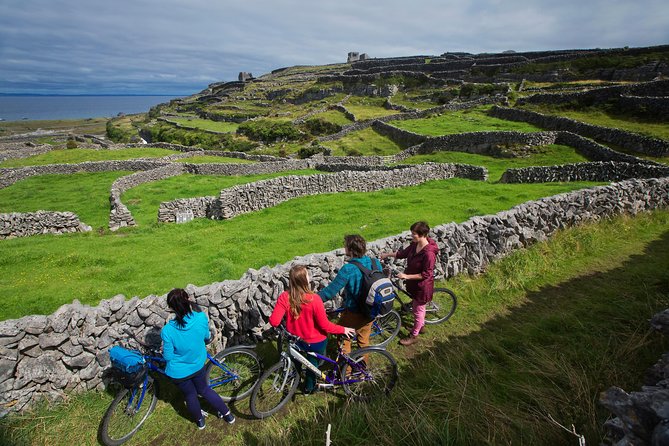
Neither approach is better. What matters is choosing deliberately, rather than defaulting to an active itinerary that drains energy early.
Many visitors unintentionally adopt an active itinerary because it is the default option presented by tour operators and guidebooks. Cycling loops, cliff walks, and multi-site checklists are often framed as the “proper” way to see the islands.
A gentle-pace approach challenges that assumption. It accepts that stopping early, returning to the village, or spending an hour watching weather move across the sea is not wasted time. It is engagement at a different scale.
For older travellers, or anyone managing energy carefully, this approach often results in deeper recall. The islands are remembered not as a sequence of locations, but as a coherent environment shaped by wind, stone, language, and rhythm.
Key Sights by Island (What to See — and What to Skip)
Inis Mór (Inishmore)
Dún Aonghasa – Major prehistoric cliff-top fort (paid). Gentle pace: minibus. Active pace: walk/cycle. Skip if wind or balance is an issue.
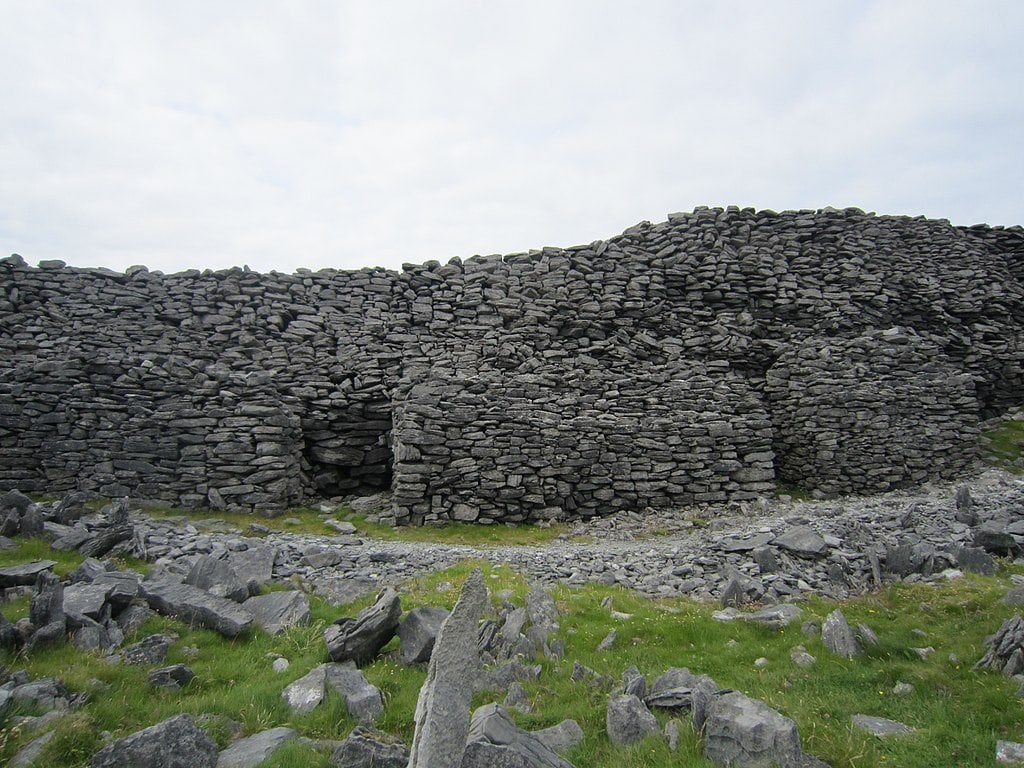
The Black Fort (Dún Dúchathair) – Remote coastal fort (free). Active only. Skip if you’ve already seen Dún Aonghasa.
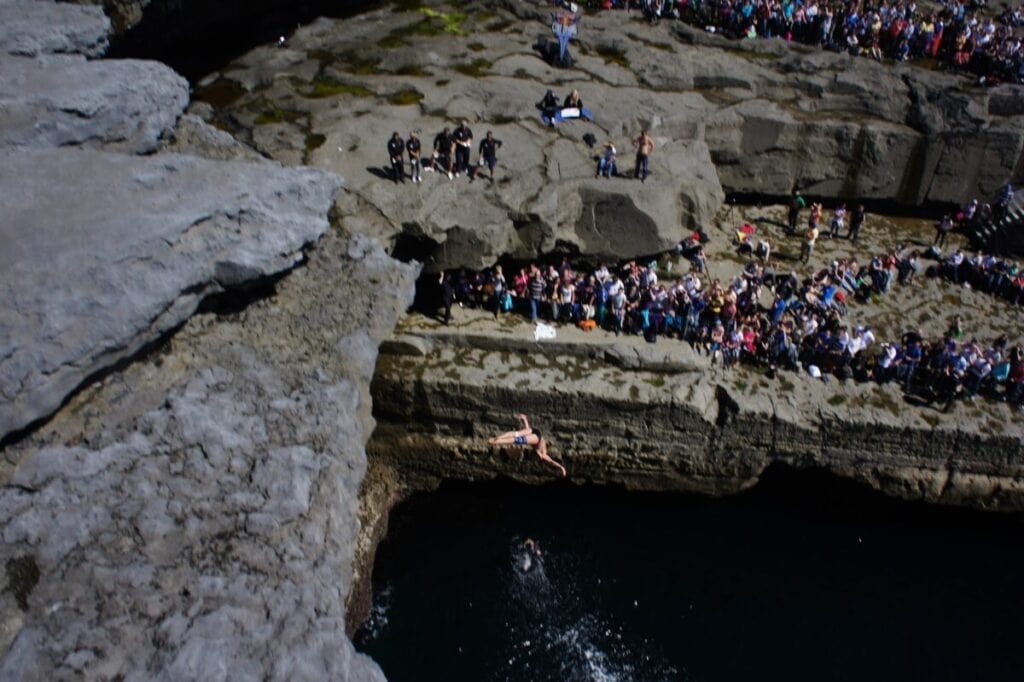
The Wormhole (Poll na bPéist) – Natural rectangular sea pool (free). Active only. Skip in poor conditions without regret.
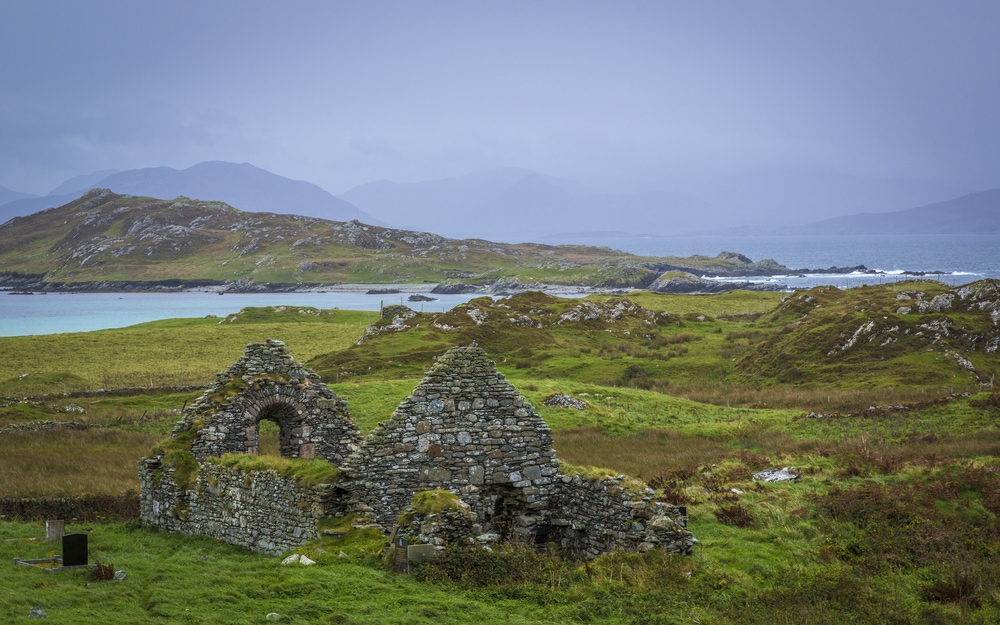
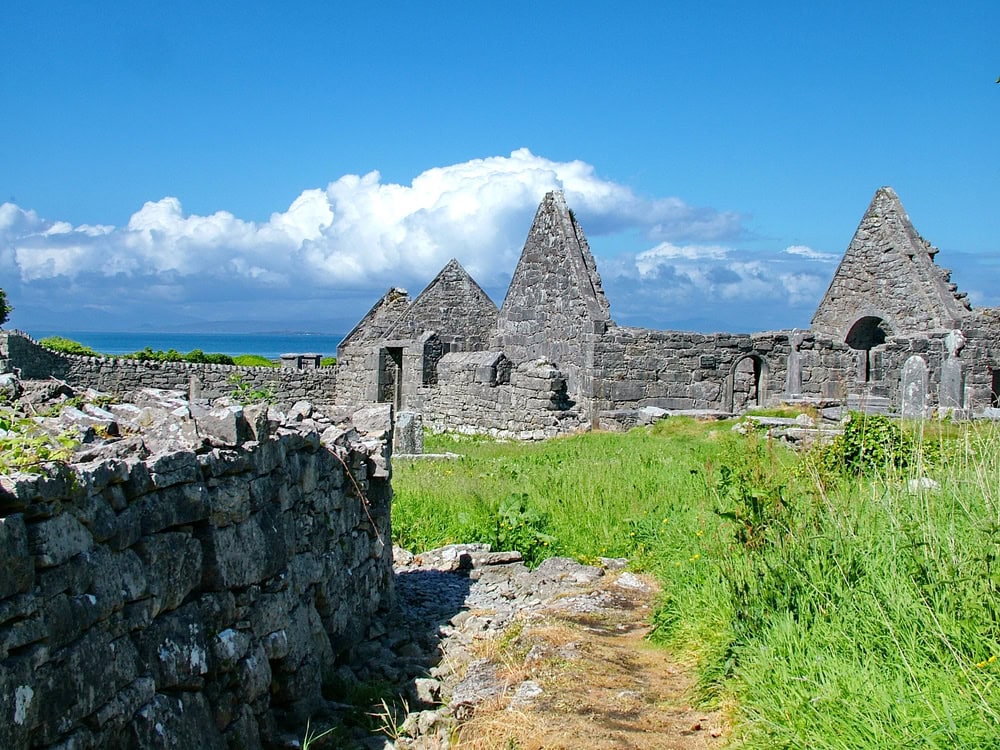
Na Seacht dTeampaill (Seven Churches) – Early medieval ruins on level ground (free). Gentle-friendly.
Teampall Bheanain – Small ridge-top church (free). Optional; skip if climbing feels tiring.
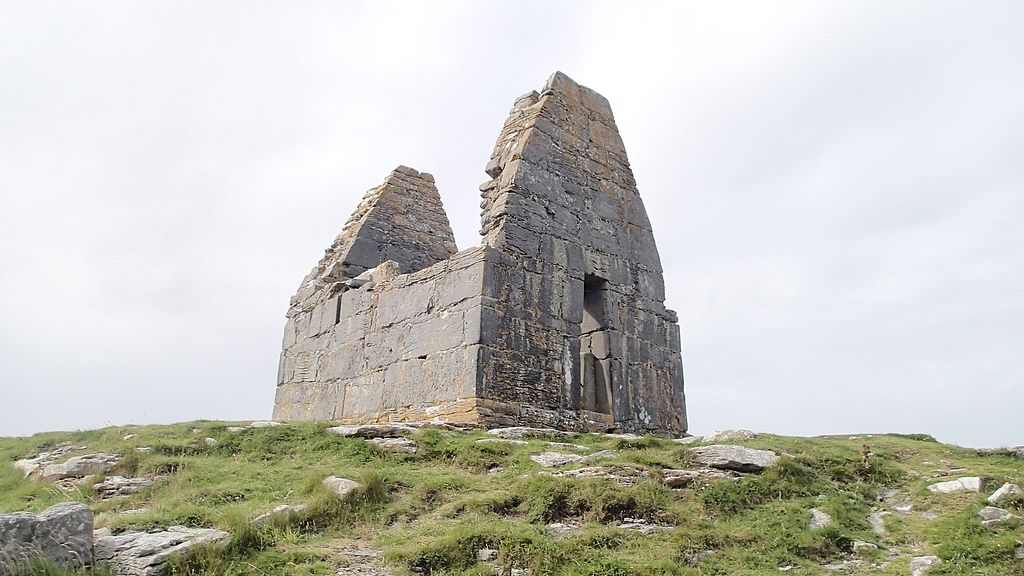
Aran Heritage Centre – Indoor museum in Kilronan, Inishmore (paid). Best gentle-pace option.
Traditional music is most reliably found in Joe Watty’s, The Bar, and occasionally Tí Joe Mac’s, depending on season and who is present.
Inis Meáin (Inishmaan)
Dún Chonchúir (Conor’s Fort) – Large inland stone fort (free). Gentle to moderate access.
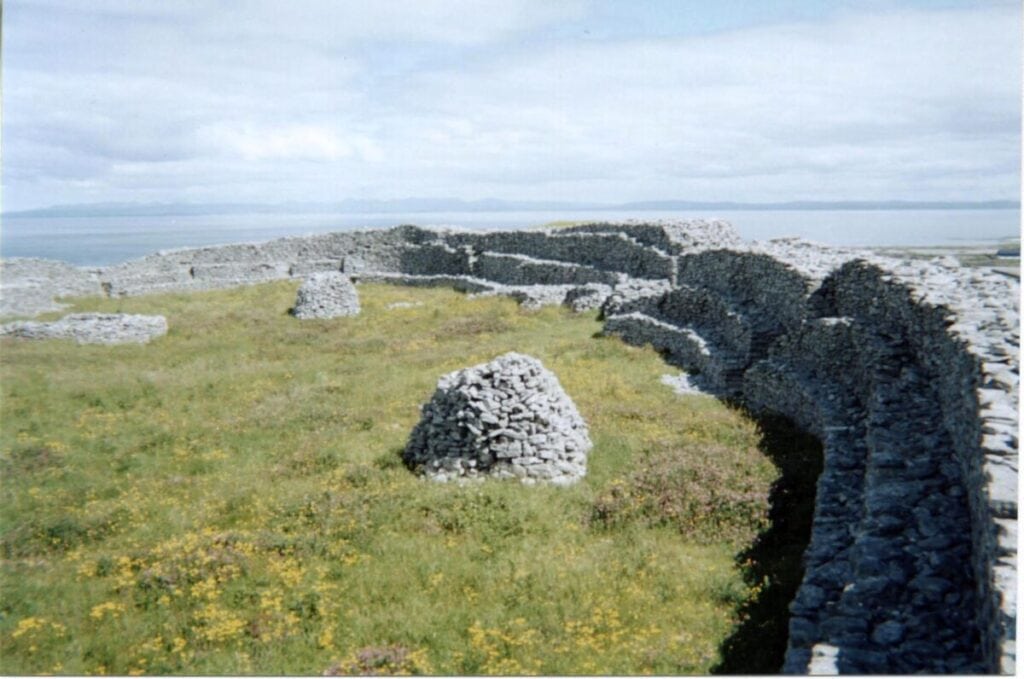
Village walks and shoreline observation reveal daily life more than formal sites.
Music appears informally at Tigh Ruairí or the hotel bar rather than on a fixed schedule.
Inis Oírr (Inisheer)
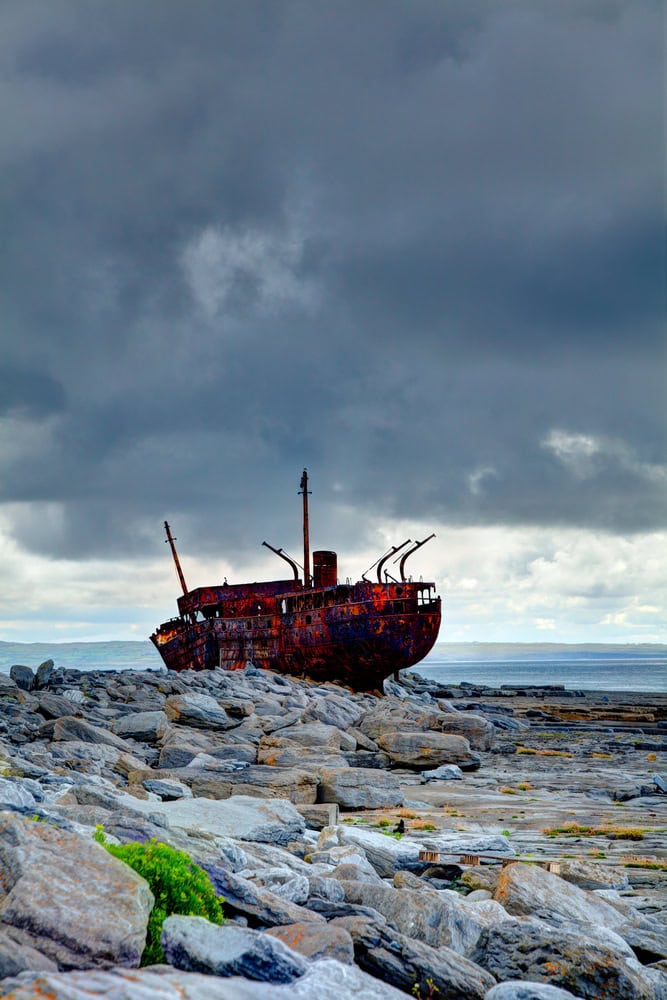
Plassey Shipwreck – Rusted cargo ship embedded in the shoreline (free). Gentle-friendly.
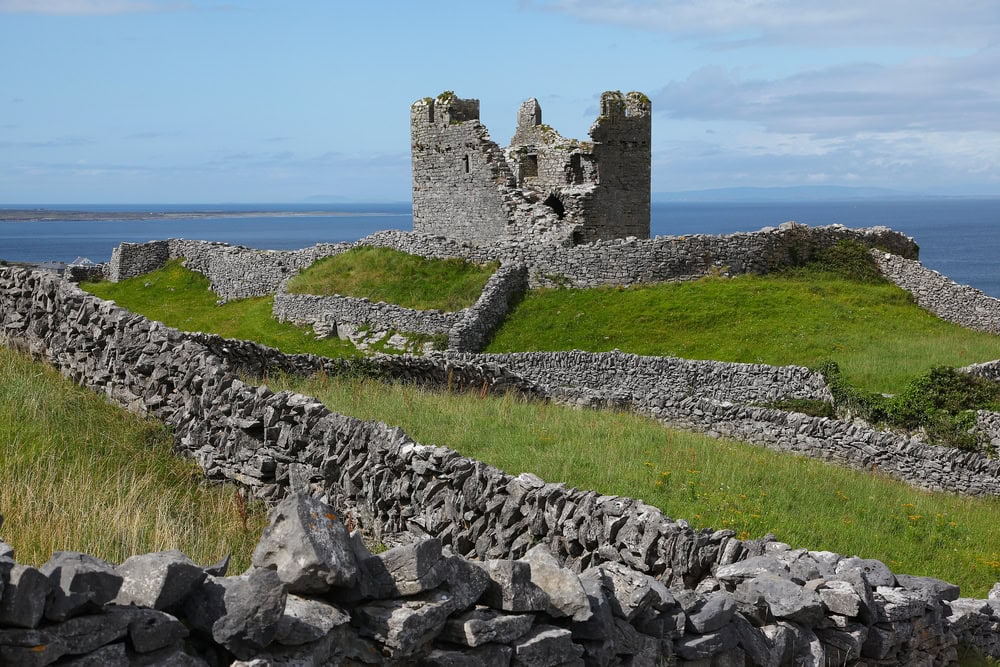
O’Brien’s Castle – Tower ruin with views (free). Short but steep; optional.
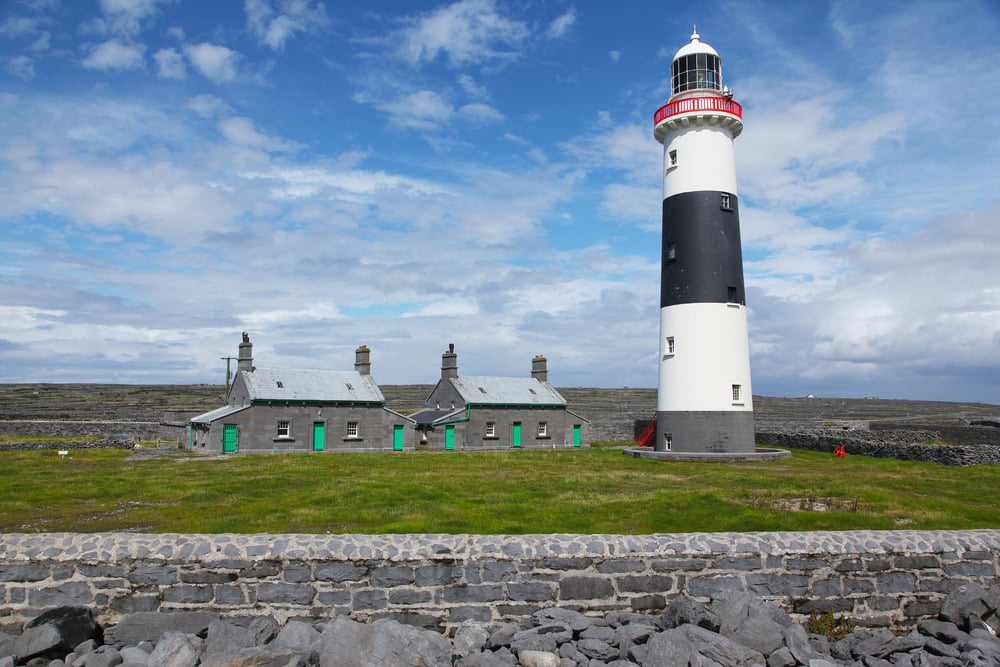
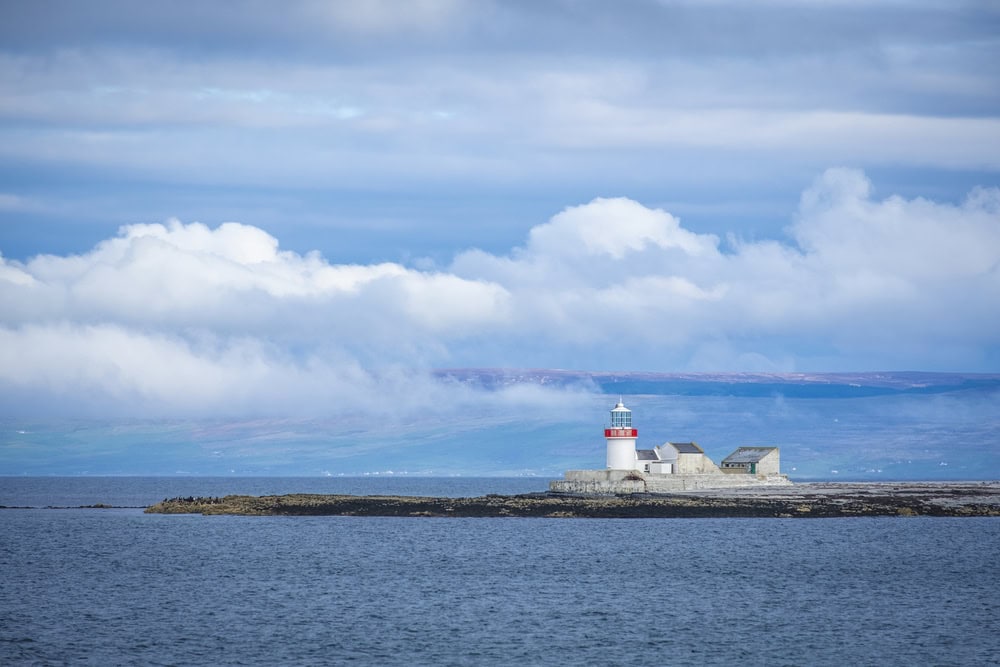
Lighthouse and beaches – Coastal walking with fewer elevation changes.
Evening music is most likely at Tigh Ned or Flaherty’s, especially in summer.
Staying on the Aran Islands
Yes, you can stay on the islands — and doing so changes the experience significantly.
Accommodation Types
Accommodation is small-scale and locally run:
Family-run B&Bs
Guesthouses
A limited number of self-catering cottages
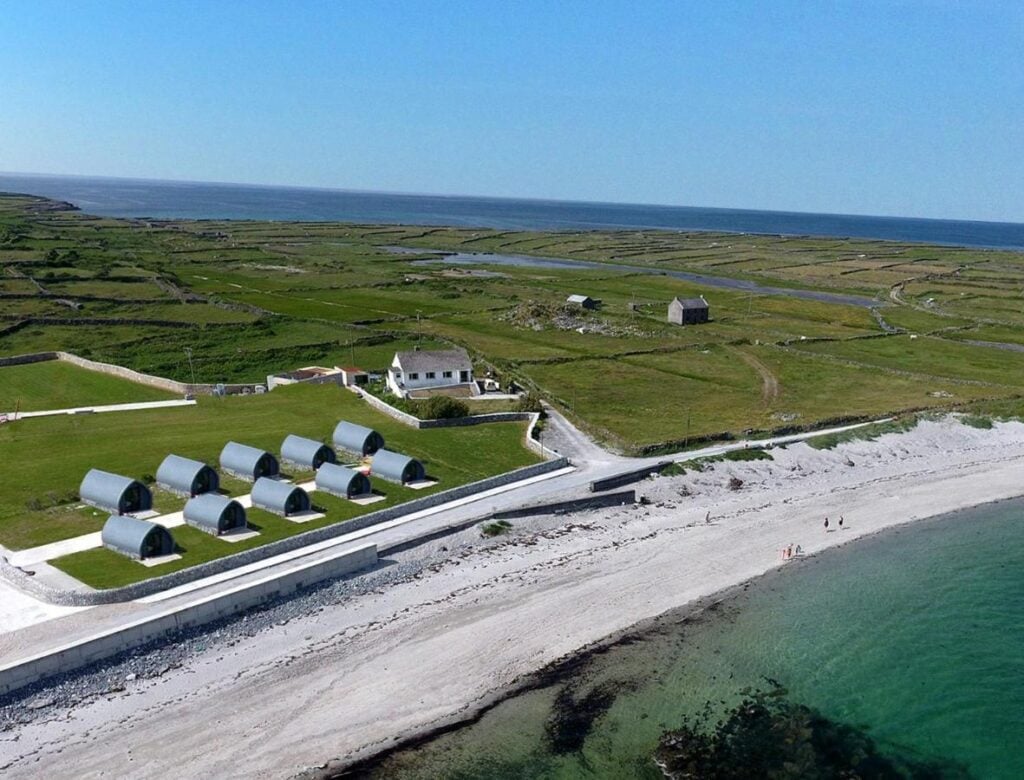
Aran Islands Hotel, Kilronan: The hotel is in the heart of the Gaeltacht where the Irish language is still spoken. In the local area there are good walks, boat rides and Dun Aongusa Fort.
Seacrest B&B in Kilronan offers direct beachfront access and a sun terrace. Guests enjoy free WiFi in public areas, ensuring connectivity during their stay.

Tigh Fitz Apartments – Inis Mór: Tigh Fitz is a charming, family-owned property that has been in the Fitzpatrick family for generations. Once a beloved pub and B&B, it has been thoughtfully restored into stylish, private guest apartments with stunning sea and hills views the perfect retreat for a relaxing stay on Inis Mór.
Which Island to Stay On
Inis Mór offers the widest range of accommodation, food, and transport
Inis Meáin suits those seeking quiet evenings and deeper cultural continuity
Inis Oírr works best for short stays with minimal movement
Staying overnight removes ferry pressure and allows the islands to settle into their natural rhythm.


Accessibility and Mobility Considerations
The Aran Islands present challenges for travellers with mobility or stamina limitations.
Uneven stone paths and limestone surfaces
Limited seating and shelter
Wind significantly increases fatigue
Many sites are unmanaged and unfenced
Minibus tours and pony trap tours reduce strain. Staying overnight reduces urgency. Planning conservatively leads to a far more sustainable visit.
It is also worth acknowledging that accessibility on the Aran Islands is uneven not just physically, but informationally. Clear guidance about difficulty, exposure, and distance is often assumed rather than stated. Visitors are expected to assess conditions themselves.
Asking direct questions — about walking distances, seating availability, or shelter — is normal and accepted. Locals are accustomed to adjusting advice based on weather and individual capacity.
Travellers who frame their questions around comfort rather than capability tend to receive the most useful guidance.
Seasonal Differences on the Aran Islands
Spring brings fewer visitors but unpredictable conditions. Summer offers the most services but higher fatigue and crowds. Autumn balances access and quiet. Winter travel is possible but limited and physically demanding.
Late spring and early autumn often provide the best balance.

Where to Eat on the Aran Islands
Eating on the Aran Islands is less about choice and more about timing. Menus are short and kitchens close early.
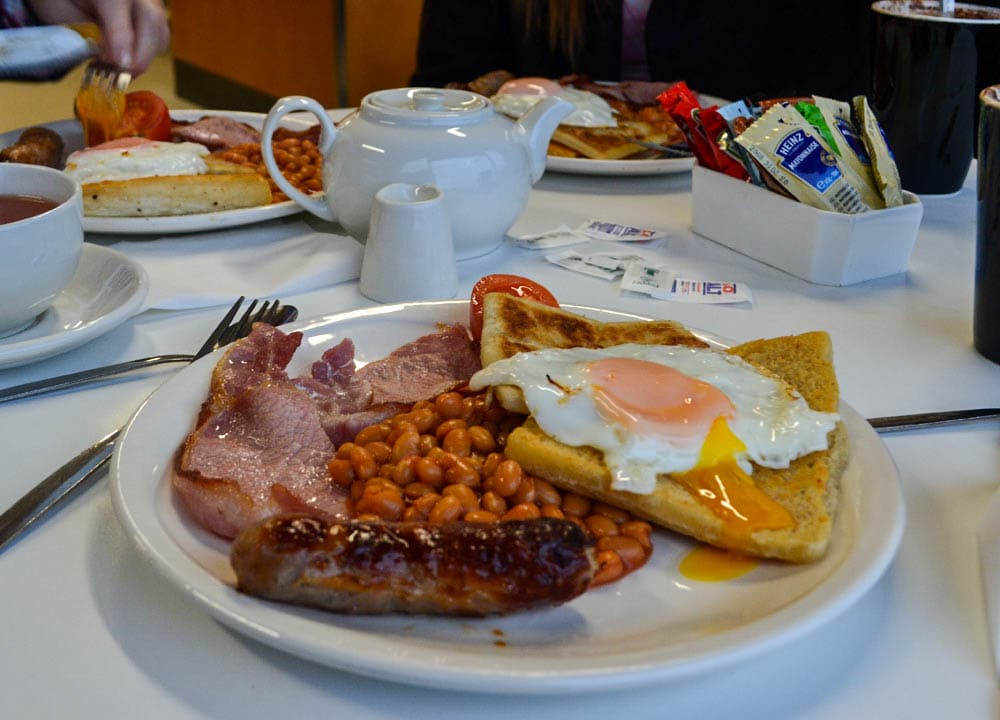
Inis Mór offers the most options, including traditional foods at Teach Nan Phaidi, Joe Watty’s, The Bar, Madigan’s, Minnie’s Café, and Aran Islands Café.
Inis Meáin has limited options centred around the hotel and Tigh Ruairí.
Inis Oírr’s most reliable spots are Tigh Ned and Flaherty’s.
Eat when food is available. Do not assume late service.


Common Mistakes Visitors Make
- Underestimating wind and exposure
- Trying to see everything in one day
- Failing to confirm return transport
- Assuming food will be available late
- Treating the islands as an attraction rather than a community
Most disappointment comes from expectation rather than reality.
Sample Itineraries
Gentle Pace: Morning arrival → one main site → early lunch → café or harbour time → mid-afternoon departure
Active Pace: Early ferry → cycling → Dún Aonghasa → secondary site if conditions allow → buffer time
Overnight: Afternoon arrival → quiet evening → unhurried morning → flexible departure
Who the Aran Islands Are Best Suited For
The islands suit travellers who value history embedded in landscape, accept physical limits, and are comfortable with uncertainty. They are less suited to rushed itineraries or constant activity.
If you are deciding where to base yourself in western Ireland, this comparison of Galway vs Cork breaks down nightlife, food, scenery, atmosphere, and day trips to help you choose the right city for your trip
Sources and Official Planning Links
Heritage Ireland — Dún Aonghasa
Government of Ireland — Gaeltacht Overview
Always verify schedules on official sites before travel.
Start Planning Your Trip
👉 Public Transportation in Ireland
👉 Hidden Gems in Ireland – 32 Secret places to visit
👉 Answering all your travel questions about Ireland
👉What to pack for your Ireland trip
👉 Northern Ireland Public Transportation