
Avoca Village, County Wicklow: A Complete Visitor’s Guide
Avoca is one of those rare small town Irish villages that quietly exceed expectations. Tucked into a green valley in County Wicklow, it blends living craft traditions, film history, and dramatic scenery. For travellers seeking an authentic day trip from Dublin without crowds or gimmicks Avoca delivers substance, history, and a strong sense of place.

I visited Avoca specifically to experience the Avoca Handweavers Mill, and what stood out most was that this is not a staged heritage attraction. It is a functioning working mill. The sound of looms, the texture of wool, and the rhythm of production make it feel authentic rather than curated for tourists.
Where Is Avoca Village?
Avoca is located in County Wicklow, about 66 kilometres south of Dublin. It sits in a narrow, wooded valley along the River Avoca and is best known for its long association with traditional Irish weaving, its role as the main filming location for the BBC television series Ballykissangel, and its scenic natural setting.

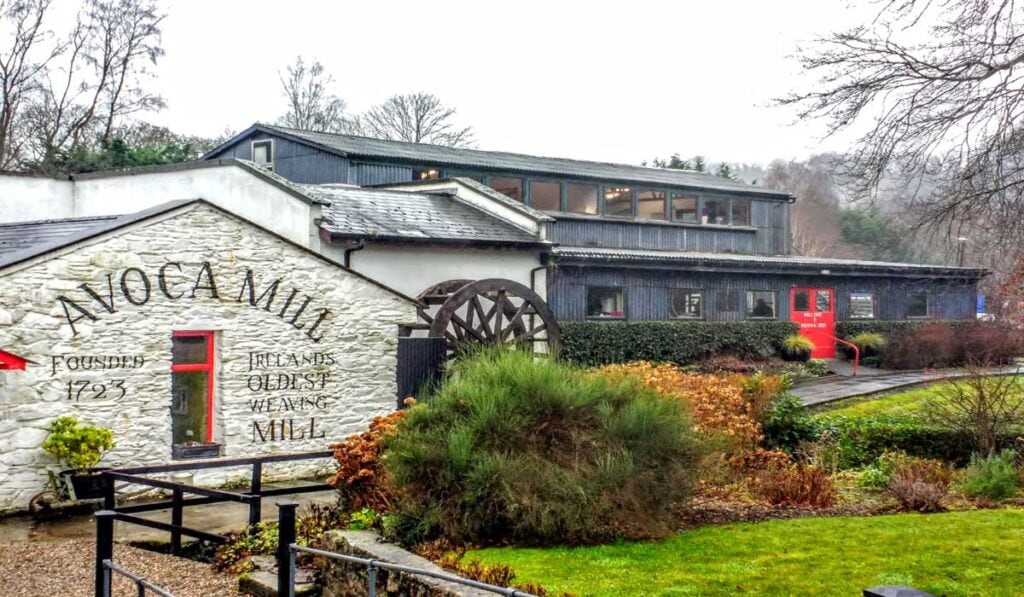
Historically, Avoca developed around mining and textile production and is home to Avoca Handweavers, Ireland’s oldest working weaving mill, founded in 1723. Today, the village is a popular cultural and heritage destination rather than a resort town, attracting visitors interested in Irish craft, film history, folklore, and countryside walks. Avoca is small, working, and largely unchanged by mass tourism, which is a key part of its appeal.
Avoca is located near Arklow, along the River Avoca in east Wicklow County. It lies approximately 66 kilometres south of Dublin, making it suitable for a full-day trip or an overnight stop while exploring Wicklow.
What Does “Avoca” Mean?
The name Avoca comes from the Irish Abhóca, commonly associated with The Meeting of the Waters. The phrase was popularised by Thomas Moore’s 19th-century song inspired by the river confluence in the valley.
The region was historically associated with copper mining, which shaped its early economy.
Film and Television History
Avoca is internationally recognised as the primary filming location for the BBC television series Ballykissangel. Much of the village appears in the series, including the pub, church, shops, and Garda station.
The village also appeared in the 1966 film Jules Verne’s Rocket to the Moon.
Other filming locations in Wicklow include Enniskerry, Brittas Bay, and Luggala Estate.

How to Get to Avoca from Dublin
By car:
Driving takes approximately 90 minutes and is the most practical option, particularly if you want to explore Wicklow more broadly.
By public transport:
Bus travel involves a connection in Wicklow Town or Arklow and can take 2.5–2.75 hours total. Public transport is possible but not especially convenient.
Visiting the Avoca Handweavers Mill
Avoca is an Irish lifestyle and retail business that grew out of a small rural weaving mill in Avoca Village and developed into one of Ireland’s best-known homegrown brands. While weaving remains central to its identity, Avoca has expanded over time into a vertically integrated company that combines traditional Irish craft with contemporary retail, food, and hospitality. Today, it operates the original mill and flagship store in Avoca village alongside several large retail locations around Ireland, as well as online and wholesale operations, employing several hundred people nationwide.

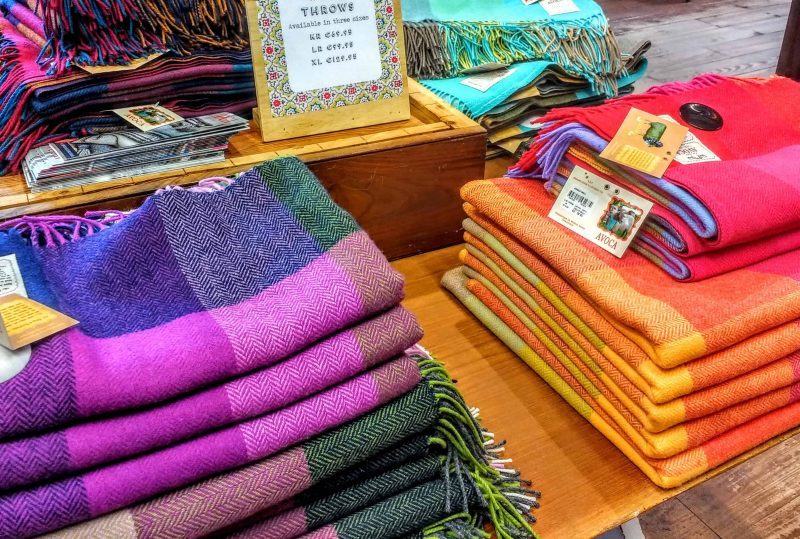
Avoca is best known for its distinctive, brightly coloured woolen throws, scarves, and tweeds, many of which are still woven at the original mill, as well as for its design-led approach to Irish homeware, clothing, and gifts.
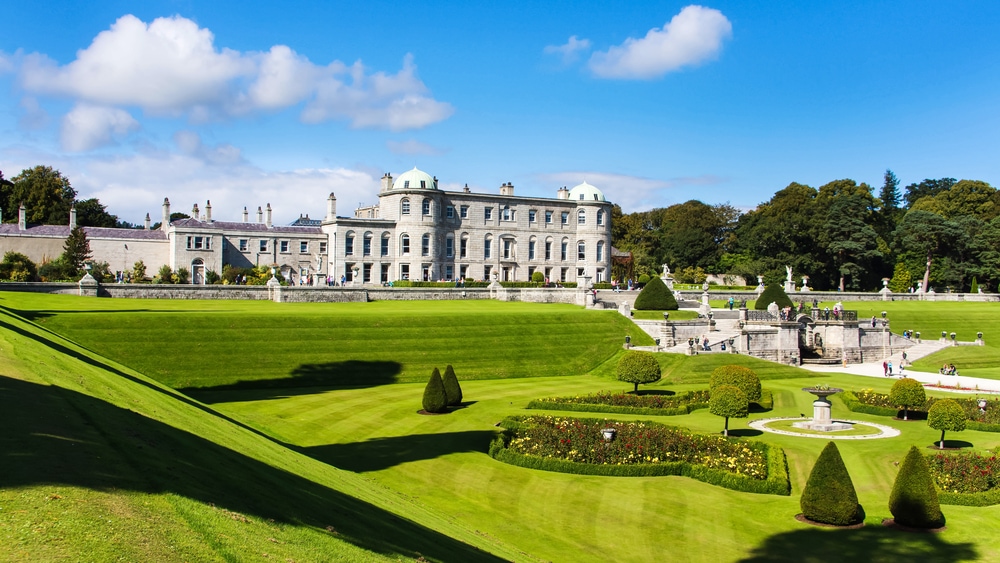
In addition to textiles and retail, the brand has become widely recognized for its cafés and food halls, particularly in heritage settings such as Powerscourt Estate and Malahide Castle, where seasonal Irish food and in-house baking are central to the experience.


Avoca’s cookbooks have also been consistent bestsellers, reinforcing the brand’s reputation for quality and authenticity.
The Avoca Handweavers Mill was founded in 1723 and is Ireland’s oldest working weaving mill. It remains operational today.
Originally, the mill supported the local economy through grain milling, spinning, and weaving. Due to Avoca’s relative isolation in earlier centuries, a barter system developed around the mill.
The Wynne Sisters
In the 1920s, the Wynne Sisters introduced bold colour into traditional Irish weaving. Their aesthetic shift became a defining characteristic of Avoca textiles.

Avoca fabrics have been used by Elsa Schiaparelli, made into garments for King George VI, and woven into baby blankets for the children of Queen Elizabeth II.


The Pratt Family
In 1974, Donald Pratt purchased the mill when it faced closure and expanded its product range. The company remains family-run today.
The Avoca Mill Self-Guided Tour
Entry to the mill is free, and visitors can walk through at their own pace.
The tour includes:
- Historical displays and audiovisual presentations
- Yarn storage and sourcing information
- Working looms and warping machinery
- Cutting and fringing processes
- Packing and finishing areas
During my visit, I appreciated that staff continued working as normal. It felt like observing a living craft rather than a performance.


Accessibility Note
As a mobility-conscious traveller, I found the mill mostly manageable but not entirely step-free. The floors are industrial and can be uneven in places, and there are areas where space is tighter around machinery. Comfortable shoes are essential.
The village itself is small and walkable, but pavements can be narrow. Visitors with significant mobility concerns may prefer arriving by car and planning short walking segments rather than extended wandering.
Is Avoca Suitable for Mobility-Limited Visitors?
Avoca can be suitable with planning.
- The mill offers relatively level access in main areas.
- Seating is limited inside the working production space.
- The village has mild inclines but no extreme hills in the centre.
- Outdoor attractions like the Mottee Stone and Red Kite Walk are not wheelchair accessible.
Visitors using mobility aids should check directly with Avoca before arrival for the most current accessibility details.
If you have mobility issues check out my Accessible Wicklow article for how to visit the area.
Outdoor Attractions near Avoca
The Mottee Stone
The Mottee Stone is a massive granite boulder associated in folklore with Fionn Mac Cumhaill. On clear days, extensive views are possible, though access involves uneven ground.
Local legend attributes the stone to Fionn Mac Cumhaill, who is said to have hurled it during a giant hurling match. This is a common way glacial erratic (a large rock or boulder carried along by the formation of glaciers) were explained in Irish mythology long before modern geology.

Red Kite Walk
The Red Kite Walk is a 2.5 km forest trail overlooking Avoca village. Red kites were reintroduced to the area by the Golden Eagle Trust in 2009. The walk is scenic but not suitable for those with limited mobility due to forest terrain.
Red kites disappeared from Ireland by the mid-19th century as a result of sustained human pressures, including systematic persecution through shooting and poisoning, widespread loss of woodland habitat, and changes in agricultural practices. By the late 1800s, there were no breeding red kites left anywhere in the country, rendering the species extinct in Ireland, though not globally.

The Avoca–Kilmagig forest area quickly became one of the species’ core habitats, and by the mid-2010s Ireland supported dozens of breeding pairs, forming the only self-sustaining red kite population on the island. Today, red kites are no longer extinct in Ireland but remain a protected and closely monitored species, and Wicklow is widely regarded as one of the best places in the country to see them in the wild.
Suggested Wicklow Itinerary
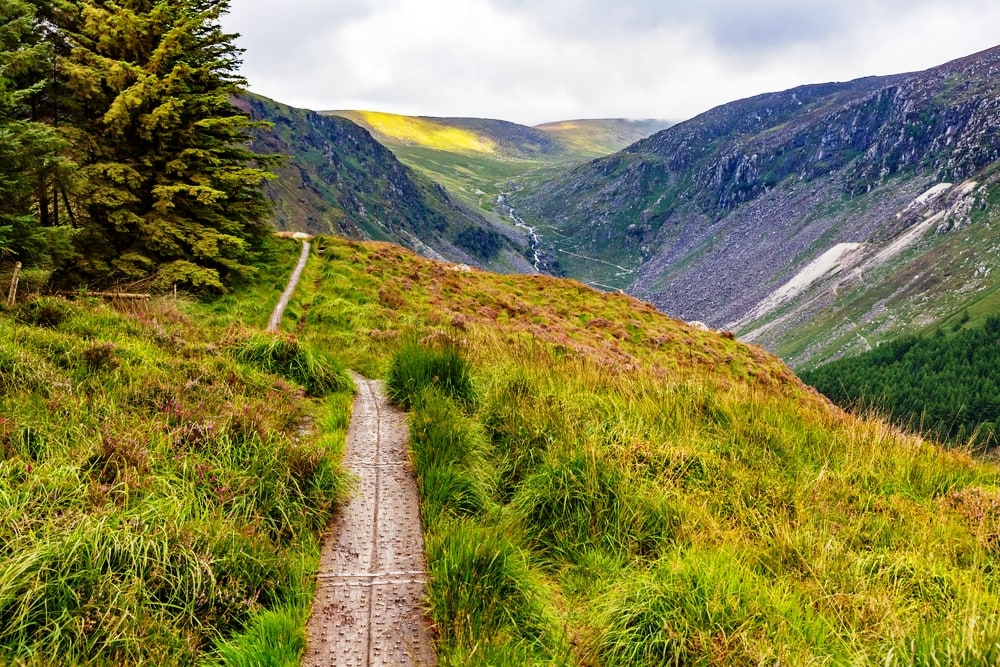
If you are planning a broader visit to the county, see my detailed 2–3 Day Wicklow Itinerary covering Glendalough, Powerscourt, coastal stops, and scenic drives. Avoca pairs well with a southern Wicklow route.

Frequently Asked Questions
Is Avoca worth visiting?
Yes. Avoca is worth visiting for travellers interested in Irish craft heritage, small villages, and filming locations. It offers a working mill experience rather than a staged attraction.
How long do you need in Avoca?
Most visitors spend 1.5 to 2 hours at the mill and village centre. If combining with walking trails or nearby attractions, allow half a day.
Can you visit the Avoca Mill for free?
Yes. The self-guided mill tour is free to enter, though purchases in the shop and café are optional, but well worth stopping for lunch.


Avoca’s landscape tells two powerful stories at once: one written in deep geological time, visible in landmarks like the Mottee Stone, and another shaped by human impact and recovery, reflected in the return of the red kite. What was once a species lost to Ireland has become a conservation success centred in County Wicklow, particularly around Avoca’s forests. For visitors, this means that a walk here is more than scenic it is an opportunity to stand in a place where ancient natural forces and modern environmental stewardship intersect. Avoca is not simply picturesque; it is a living landscape, still evolving, still working, and still reclaiming what was once lost.
Start Planning Your Trip
👉 Public Transportation in Ireland
👉 Hidden Gems in Ireland – 32 Secret places to visit
👉 Answering all your travel questions about Ireland
👉What to pack for your Ireland trip
👉 Northern Ireland Public Transportation