
Howth Cliff Path Walk: Route, Tips and What to Expect
Just 30 minutes from Dublin’s city center, the coastal village of Howth in Ireland’s Ancient East offers one of Ireland’s most rewarding seaside escapes. Perched on a narrow peninsula extending into the Irish Sea, this historic harbor town blends dramatic cliff scenery, maritime culture, and some of the best seafood on the east coast.
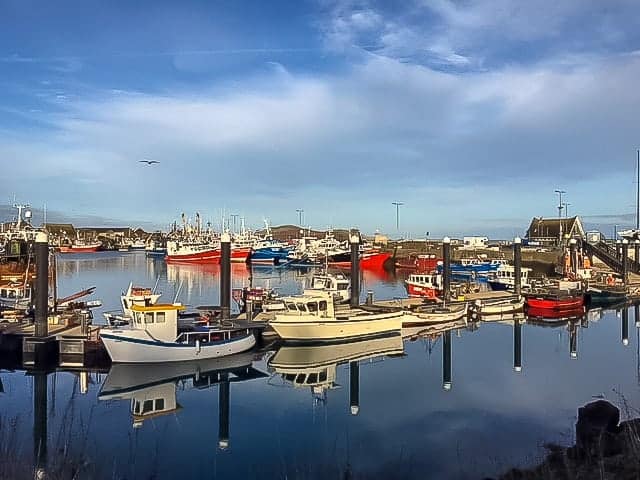
Many travelers first hear about Howth because of the Howth Cliff Walk, one of the most scenic coastal hikes near Dublin. Yet the peninsula offers much more than a single trail. A network of loop routes circles the headland, including the Cliff Path Loop, Black Linn Loop, and Tramline Loop, each revealing different perspectives of the coastline and countryside.
Beyond hiking, visitors can wander through Howth Village, stroll along historic piers, watch seals near the harbor, and relax on a small sheltered bay beach tucked below the cliffs. With easy access via the DART train, Howth is one of Ireland’s most popular day trips from Dublin, but staying overnight reveals a quieter and more atmospheric side of the peninsula.
This comprehensive travel guide covers everything you need to plan a visit, including the best things to do in Howth, historic sites, walking routes, where to park, travel costs, and a complete 3-day itinerary.
If you love the outdoors, check out my guide to the best hiking in Europe.

- Howth Cliff Path Walk: Route, Tips and What to Expect
- Quick Answer: What Is Howth Known For?
- Things to Do in Howth
- Exploring Howth Village
- The Howth Cliff Walk Map
- The Howth Cliff Walk Routes
- Historic Sites in Howth
- Irish Pub Culture in Howth
- Food in Howth
- Where to Park in Howth (Car Park Guide)
- Getting to Howth
- Getting Around Howth
- Travel Costs in Howth
- Best Time to Visit Howth
- 3 Day Howth Itinerary
- FAQ
- Explore our other travel guides
Quick Answer: What Is Howth Known For?
Howth is a seaside village near Dublin known for its cliff walks, seafood restaurants, harbor views, and coastal hiking routes. The most popular attraction is the Howth Cliff Walk, which includes several loop routes such as the Cliff Path Loop, Black Linn Loop, and Tramline Loop.
Visitors usually arrive via the DART train from Dublin, explore Howth Village and East Pier, hike along the cliffs of Howth Head, and finish the day with fresh seafood or a traditional Irish pub meal.
Key highlights include:
The Cliff Path Loop overlooking Dublin Bay
Scenic inland trails like the Black Linn Loop
The historic Tramline Loop route
The harbor area of Howth Village
Balscadden Bay Beach, a small sheltered bay beach
Fresh seafood restaurants and harbor cafés
Because it sits so close to Dublin, Howth is one of the best coastal day trips in Ireland, though visitors who stay overnight often discover a quieter and more rewarding experience.

Things to Do in Howth
Despite its small size, Howth offers an impressive range of activities that combine coastal scenery with local culture. Most visitors begin exploring in the harbor area where fishing boats line the marina and seafood restaurants overlook the water.
Walking along East Pier is one of the simplest and most enjoyable things to do in Howth. The long stone walkway stretches into the bay and ends at a small lighthouse that has become one of the peninsula’s most recognizable landmarks. From the pier you can look back toward the village or out across Dublin Bay toward the distant Wicklow Mountains.
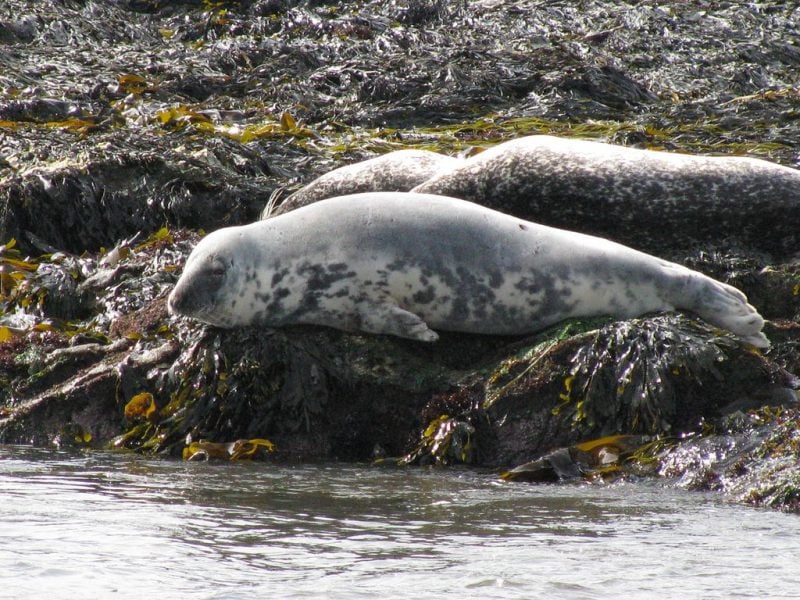
Another highlight is watching wildlife around the harbor. Seals frequently gather near fishing boats hoping for scraps of fish. Seabirds glide overhead while trawlers move slowly through the harbor entrance.
Hiking is the activity that draws most visitors. The peninsula contains several loop trails circling Howth Head, offering different levels of difficulty and scenery. The Cliff Path Loop provides dramatic views along the coastline, while the Black Linn Loop explores quieter inland landscapes.
Visitors interested in local culture can also explore Howth Market, which often appears near the harbor on weekends. The market features craft stalls, street food, baked goods, and handmade souvenirs.
For those seeking a slower pace, wandering the streets near the harbor reveals small bakeries, art galleries, and cafés with sea views. This relaxed atmosphere makes it easy to spend hours exploring the village without a strict itinerary.
Whether you come for hiking, photography, seafood, or coastal views, Howth offers enough variety to fill a full day or more.

Exploring Howth Village
Howth Village forms the heart of the peninsula and the starting point for most visitors. Located beside the train station and harbor, the village combines maritime tradition with a relaxed seaside charm.
The marina is filled with colourful fishing boats and yachts, creating a lively scene throughout the day. Along the waterfront you’ll find cafés, bakeries, seafood restaurants, and traditional Irish pubs where locals gather after work.
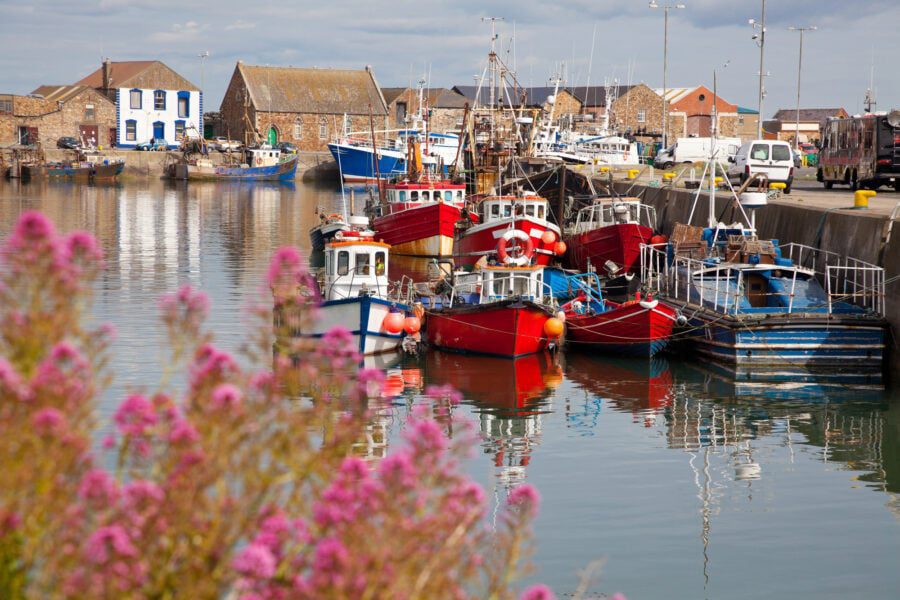
Walking along the harbor reveals the daily rhythm of village life. Fishermen unload fresh catches while visitors stroll along the pier with coffee or ice cream in hand. Gulls circle above the boats hoping for scraps, and the scent of salt and sea air drifts through the streets.
The most popular walk in Howth Village is along East Pier, which extends far into the bay. At the end sits a small lighthouse painted bright red that offers sweeping views of the coastline and harbor. The pier is especially beautiful in the evening when the setting sun reflects off the water.
Another highlight is Howth Market, which often appears on weekends. Visitors can browse handmade crafts, jewelry, baked goods, and street food from local vendors.

Although many travelers head straight for the cliffs, spending time in Howth Village reveals much of the peninsula’s character. The combination of fishing culture, scenic views, and relaxed cafés creates an atmosphere that encourages visitors to slow down and explore.
The Howth Cliff Walk Map
- 🔵 Blue Route – Tramline Cliff Walk
- 🟢 Green Route – Cliff Loop
- 🔴 Red Route – Short Cliff Walk
- 🟣 Purple Route – Bog of Frogs Loop
- 📍 Howth Village
- 🅿️ Parking
The Howth Cliff Walk Routes
The Howth Cliff Walk is the defining experience of the peninsula and one of the best coastal hikes near Dublin. A network of trails circles the headland of Howth Head, offering sweeping views across Dublin Bay and the Irish Sea.

The trails are well marked and vary in length, making them suitable for both casual walkers and more experienced hikers. Along the way, the path passes grassy headlands, rocky cliffs, and fields of wildflowers shaped by strong coastal winds.
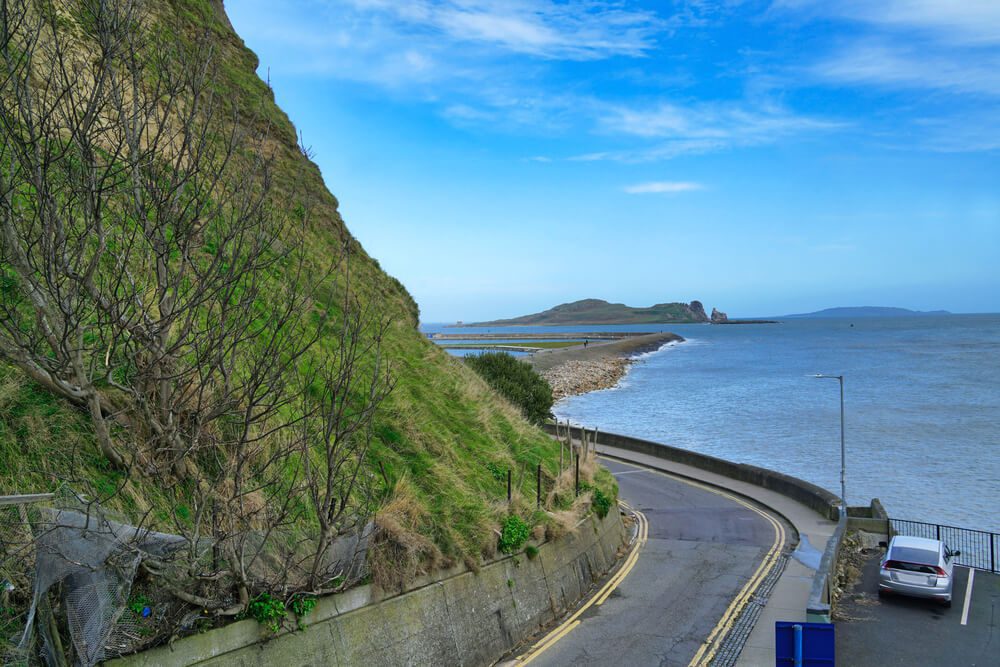
One of the most dramatic viewpoints overlooks Baily Lighthouse, which sits on a rocky outcrop below the cliffs. Built in 1814, the lighthouse continues to guide ships safely into Dublin Bay.
Several loop routes make up the cliff walk network. The most popular is the Cliff Path Loop, while longer or quieter routes include the Black Linn Loop and the Tramline Loop.
Weather conditions can change quickly along the exposed coastline, so visitors should bring a waterproof jacket and sturdy shoes. Despite these conditions, the cliff walks remain the highlight of most trips to Howth.
Cliff Path Loop – Green Route
The Cliff Path Loop is the best known walking route on the peninsula and the most popular option for first-time visitors. Beginning near Howth Village, the trail climbs above Balscadden Bay before following the cliff edge around the headland.
The route typically takes around two hours to complete at a relaxed pace. The terrain includes gravel paths and narrow dirt trails that wind along the cliffside.
The highlight of the walk is the viewpoint overlooking Baily Lighthouse, where the white tower stands dramatically against the dark rocks below.
Throughout the route hikers enjoy wide views across Dublin Bay, with the Wicklow Mountains sometimes visible on clear days.
Because the trail follows the cliff edge, visitors should remain aware of their surroundings and keep a safe distance from steep drops. With sensible precautions, the Cliff Path Loop provides one of the most rewarding coastal walks in Ireland.

Black Linn Loop – Red Route
For those seeking a quieter route, the Black Linn Loop offers a peaceful alternative to the busy coastal paths.
This trail explores the inland side of Howth Head, crossing open heathland and grassy hills. The landscape feels wild and remote even though Dublin lies only a short distance away.
The Black Linn Loop usually takes two to three hours to complete and is slightly longer than the Cliff Path Loop. Instead of dramatic cliffs, the route offers wide open views across the peninsula and toward the sea.
Birdlife is common along the trail, and the quieter environment often allows visitors to hear the wind moving through the grass. Many hikers combine sections of the Black Linn Loop with other trails to create longer walks across the headland.

Tramline Loop – Blue Route
The Tramline Loop follows the route once used by the historic Hill of Howth Tramway. In the early twentieth century, this tram carried tourists around the peninsula so they could enjoy coastal views without walking.
Although the tram stopped operating decades ago, its route remains as a broad walking path.
Because the gradient is gentle and the trail is wide, the Tramline Loop is one of the easiest walking routes in Howth. It is a popular choice for families or visitors who want scenic views without steep climbs.
The path eventually reconnects with other hiking routes, making it easy to combine the Tramline Loop with parts of the Cliff Path Loop.
Bog of Frogs Loop – Purple Route
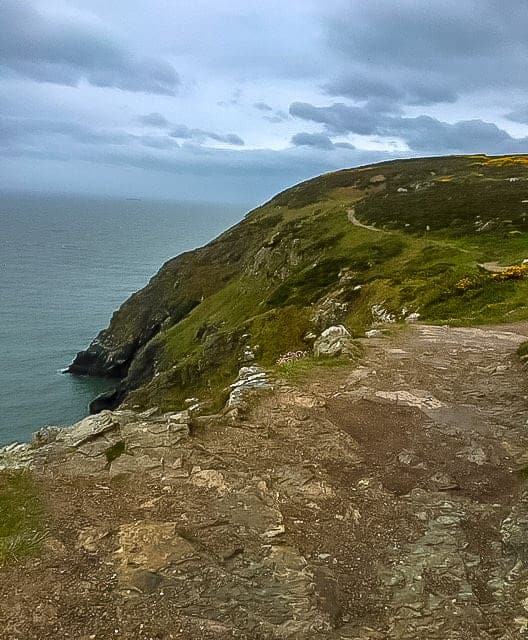
Reserved for the adventurous and the experienced, this is the peninsula’s longest and most demanding loop. It’s a full-body experience that packs in everything Howth has to offer. You’ll traverse dramatic coastal sections, passing landmarks like Red Rock Beach and the Baily Lighthouse, before undertaking a serious ascent over the rugged peaks of Shielmartin Hill and the Ben of Howth. The effort is considerable, but the isolation and the unparalleled 360-degree views from the summit—stretching from Dublin City to the Wicklow Mountains—are a just reward.
Bay Beach Near Howth
While Howth is known for cliffs, it also offers a small sheltered bay beach known as Balscadden Bay Beach.
Located just south of Howth Village, this beach sits in a quiet cove surrounded by rocky headlands. Steps lead down from the road above, revealing a small stretch of sand and calm water.
Although the beach is modest in size, it provides a peaceful spot to relax beside the sea. Some locals even swim here during warmer weather.
Because the Cliff Path Loop passes nearby, many hikers stop at the bay beach before or after their walk. The calm atmosphere provides a pleasant contrast to the dramatic cliffs above.

Historic Sites in Howth
Howth’s history stretches back thousands of years, and several historic landmarks can still be found across the peninsula.
Howth Castle
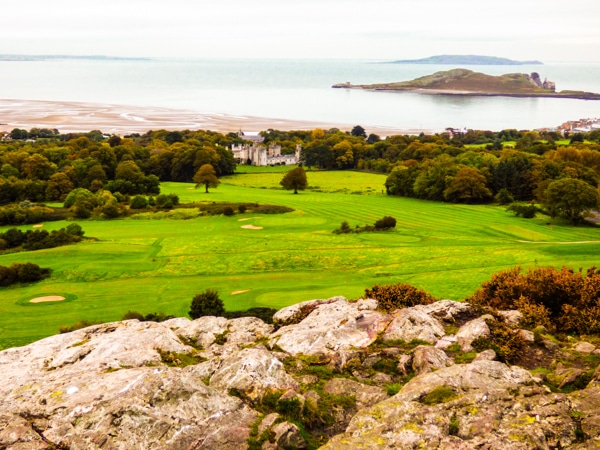
Howth Castle dates to the fourteenth century and served as the ancestral home of the St Lawrence family for centuries. The castle grounds contain woodland trails and historic structures.
Howth Castle has been home to the St. Lawrence family since 1177, with the present building dating mainly from the 16th century and later additions by architect Edwin Lutyens in 1910. Tucked inside the castle is the Howth Castle Cookery School, set within a striking 18th-century Georgian kitchen. The 30-foot-high domed space has been used for food preparation for over 260 years and now hosts hands-on classes for all skill levels, from bread baking to seafood cookery.


Aideen’s Grave
Within the estate stands Aideen’s Grave, a prehistoric portal tomb believed to date from around 3000 BC. This ancient structure, consisting of massive standing stones capped by a huge granite boulder, offers a tangible and evocative link to Ireland’s Neolithic past.

Martello towers
The coastline also contains several Martello towers, defensive structures built during the Napoleonic Wars to protect Ireland from invasion.Two Martello towers stand in Howth, both built in the early 1800s to guard against a Napoleonic invasion. One on the East Pier now holds a vintage radio museum. The other sits on Ireland’s Eye, a small island just offshore.

Ireland’s Eye
Ireland’s Eye is reachable by seasonal ferry from Howth, taking about 15 minutes. The island is a protected bird sanctuary, home to seabirds like guillemots and puffins, plus grey seals. Visitors can also see an 8th-century church ruin and the island’s Martello tower.

St. Mary’s Abbey
Perched on the Hill of Howth with stunning views over the harbour, the ruins of St. Mary’s Abbey (also known as Howth Abbey) are a site of ancient history. A church was first founded here by Sitric, the Viking King of Dublin, in 1042, though the majority of the current ruins date from the 15th and 16th centuries. Within the walls of this once-important religious site lies the notable 15th-century tomb of Christopher St. Lawrence, an ancestor of the Earls of Howth, linking the abbey closely to the castle’s own history.


Baily Lighthouse
Another important landmark is Baily Lighthouse, which has guided ships into Dublin Bay for over two hundred years.
The Baily Lighthouse sits on the cliffs of Howth Head, marking the entrance to Dublin Bay since 1814. A previous beacon stood on this site from 1667, making it one of Ireland’s earliest light stations. In 1997, it became the last Irish lighthouse to switch to automatic operation, ending centuries of manned service by lighthouse keepers.
Together these sites reveal how the peninsula has played a role in Irish history for centuries.

Irish Pub Culture in Howth
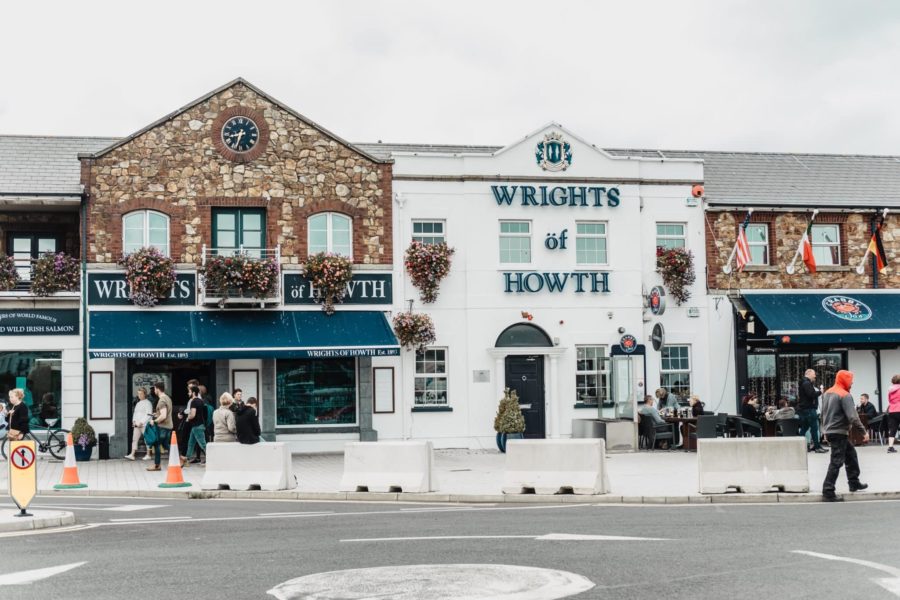
After exploring the cliffs, many visitors experience another important part of local culture: the traditional Irish pub.
Pubs in Howth combine cozy interiors with maritime character. Wooden beams, fireplaces, and shelves of Irish whiskey create welcoming spaces where locals gather to relax.
A pint of Guinness remains the classic choice, though many pubs now serve craft beers brewed across Ireland.

Some evenings feature traditional Irish music sessions, where musicians gather informally with fiddles and flutes.
Food is also a major part of the pub experience. Seafood chowder, fish and chips, and hearty Irish stews are common menu items.
For many travelers, ending the day in a harbor pub becomes one of the most memorable moments of visiting Howth.


Food in Howth
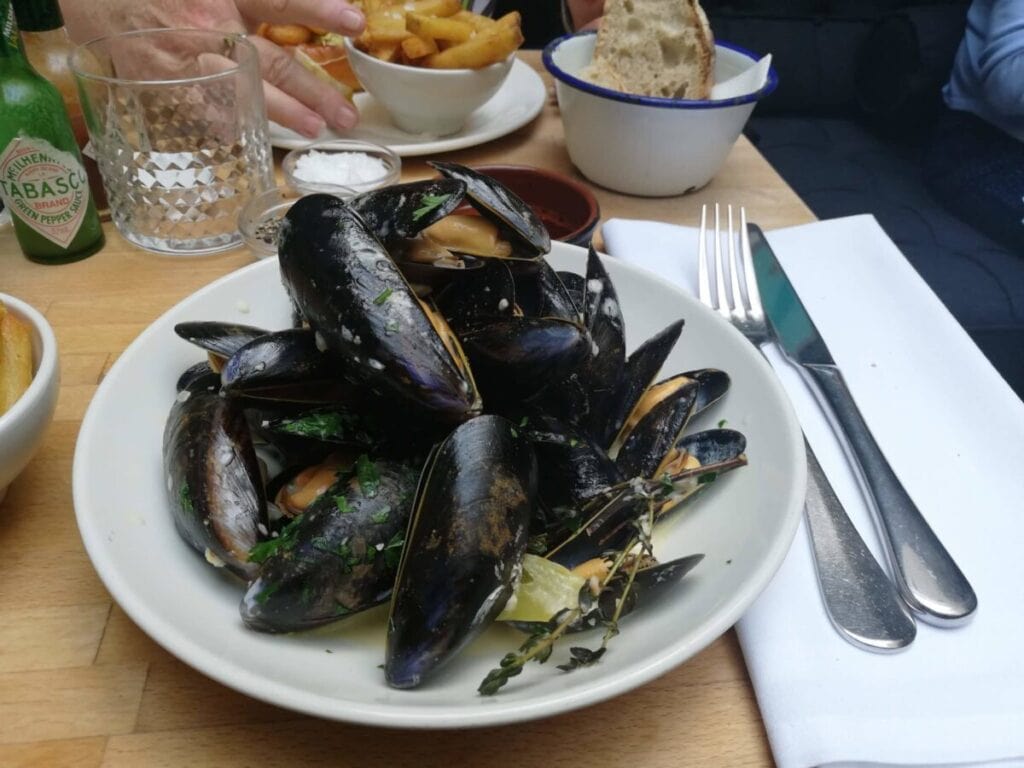
Howth is widely considered one of the best places near Dublin to enjoy fresh seafood. Because the harbor remains an active fishing port, many restaurants receive daily catches directly from local boats.
One of the most popular meals is fish and chips eaten beside the harbor. Crispy battered fish served with thick chips tastes especially good after a long walk along the cliffs.
Seafood chowder is another favorite dish. The creamy soup typically contains several varieties of fish along with mussels and vegetables.
Restaurants also serve lobster, crab, oysters, and prawns, often presented on large seafood platters. The combination of fresh seafood and scenic harbor views makes dining in Howth a highlight of any visit.


Where to Park in Howth (Car Park Guide)
If you plan to drive, knowing where to park in Howth can make your visit much easier.
The most convenient car park is located near Howth Village and the harbor, placing you close to restaurants, East Pier, and the trailheads for the cliff walks.
Another useful option is the Howth Summit car park, which sits at the top of the peninsula. From here you can easily access sections of the Cliff Path Loop, Black Linn Loop, and Tramline Loop.
Street parking is sometimes available in residential areas, though spaces can be limited during busy weekends. Many visitors avoid parking altogether by taking the DART train, which arrives directly in Howth Village.
Getting to Howth
The easiest way to reach Howth is by DART train from Dublin. Trains depart from Connolly, Tara Street, and Pearse stations and take about 30 minutes to reach the peninsula. Visitors should make sure they board a train heading specifically to Howth rather than Malahide, as both lines share part of the route. Driving from Dublin takes a similar amount of time along the coastal road through Clontarf and Sutton.

Getting Around Howth
Once you arrive, the best way to explore Howth is on foot. Most attractions—including Howth Village, East Pier, and the cliff trails—are within walking distance of the train station. Some visitors take taxis to Howth Summit to begin hiking from higher ground, though this is optional.
Travel Costs in Howth
Howth can be explored on a moderate budget. A DART train ticket from Dublin usually costs only a few euros each way. The cliff walks themselves are free.
Meals vary depending on the restaurant, with fish and chips costing around €10–€15 and seafood dinners ranging from €20–€40. Accommodation in guesthouses or small hotels usually costs €100–€200 per night.
Best Time to Visit Howth
Summer offers the warmest weather and longest daylight hours, making it ideal for hiking and outdoor dining.
Spring brings wildflowers along the cliffs, while autumn offers quieter trails and beautiful coastal light.
Winter visits can feel dramatic and windswept but provide a peaceful atmosphere.

3 Day Howth Itinerary
Day 1
Explore Howth Village, walk East Pier, and hike the Cliff Path Loop.
Day 2
Visit Howth Castle, explore the Black Linn Loop, and enjoy seafood in the harbor.
Day 3
Relax at Balscadden Bay Beach, walk part of the Tramline Loop, and watch sunset over Dublin Bay.
FAQ
Is Howth worth visiting?
Yes. It offers some of the best coastal scenery near Dublin.
What is the most popular walk in Howth?
The Cliff Path Loop is the most famous route.
Are there easier trails?
Yes. The Tramline Loop is a gentler walking route.
Is there a beach in Howth?
Yes, Balscadden Bay Beach is a small bay beach near the village.
Where should I park in Howth?
Use the Howth Village car park or Howth Summit car park.
Can you reach Howth by train?
Yes, the DART train from Dublin takes about 30 minutes.
With its dramatic cliff scenery, charming harbor, and famous walking routes like the Cliff Path Loop, Black Linn Loop, and Tramline Loop, Howth offers a perfect combination of nature, history, and coastal culture just outside Dublin.
Join 7,500 Ireland travellers in my Ireland Uncovered Facebook Group and 1,897 on my XYUandBEYOND PAGE
Start Planning Your Trip
👉 Public Transportation in Ireland
👉 Hidden Gems in Ireland – 32 Secret places to visit
👉 Answering all your travel questions about Ireland
👉What to pack for your Ireland trip
👉 Northern Ireland Public Transportation
Explore our other travel guides
➡️ Browse Ireland’s Wild Atlantic Way guides
➡️ Browse the Guide to Ireland’s Hidden Heartlands
➡️ Browse the Guide to Donegal
➡️ Browse the Guide to Northern Ireland