
Historic Women of Ireland: 19 Powerful Figures Who Shaped the Nation
Ireland is often introduced through its landscapes green expanses, ruined abbeys, and Atlantic coastlines but that version of Ireland is only surface-level. To understand the country properly, you have to look at the women who shaped it.

Through time spent in Irish heritage sites, local archives, and conversations with historians and residents, these narratives reveal far more than surface-level history. Travelling across Irish towns and regions, from the medieval core of Kilkenny to the rawness of Connemara, it becomes clear that Irish history is not simply a record of conflict or colonisation. It is a layered, lived narrative shaped just as much by women whose influence operated through culture, language, resistance, and community.
- Historic Women of Ireland: 19 Powerful Figures Who Shaped the Nation
- Who are the most important historic women of Ireland?
- What Defines Historic Women of Ireland? Context, Scope, and Meaning
- Mythology and Early Irish Women: Power Before Recorded History
- Medieval to Early Modern Ireland: Adaptation, Authority, and Resistance
- Cultural Revival, Literature, and Revolutionary Women of Modern Ireland
- Irish Women in Science and Innovation
- Living Irish History: Culture, Food, and Everyday Experience
- Ireland, Witchcraft, and the Reality of Butter Witches
- How Irish Women’s History Differs from the Rest of Europe
- Why Historic Irish Women Still Matter Today
- FAQ: Historic Women of Ireland
Who are the most important historic women of Ireland?
The most important historic women of Ireland include Grace O’Malley, Constance Markievicz, Mary Robinson, Lady Gregory, and Hanna Sheehy-Skeffington, all of whom shaped Irish history through leadership, activism, and cultural influence.
The phrase historic women of Ireland does not refer only to a small group of well-documented figures. It spans mythological rulers, Gaelic-era landholders, revolutionary activists, writers, educators, scientists, and women whose names never entered formal records but whose actions sustained communities through famine, suppression, and social change.

Some, like Grace O’Malley, occupy a space between history and legend, while others remained embedded in oral tradition until recent efforts began restoring their place within Irish historical narrative.
What becomes immediately noticeable when you spend time in Ireland is how present these stories still are. They are not confined to museums or academic discussion. They appear in conversation, in literature, and in everyday awareness.
Standing near a statue of Constance Markievicz in Dublin, the lack of ceremony is striking but ask about her, and the depth of local knowledge reveals how firmly her story remains embedded. Irish history, particularly when it comes to women, is not distant.

Understanding women in Irish history is essential to understanding Ireland’s modern identity. The country’s rapid social transformation in recent decades particularly around gender roles and equality did not emerge in isolation. It is rooted in a long pattern of women working within restrictive systems while still exerting influence through education, storytelling, political action, and cultural preservation.
From the sovereignty figures of Irish mythology to the women of the independence movement and cultural revival, there is a consistent thread of agency. Even during periods when formal power excluded them, Irish women shaped outcomes in ways that were less visible but no less significant.
This article explores famous Irish women in history alongside those less widely recognised, placing them within the contexts they lived through. It connects historical narrative with lived experience places, conversations, and cultural environments so that these stories are not abstract, but grounded in the reality of Ireland itself.)
What Defines Historic Women of Ireland? Context, Scope, and Meaning
To understand who qualifies as one of the historic women of Ireland, you have to step into a history that does not move in straight lines. Ireland’s past unfolds through overlapping layers mythology, Gaelic law, colonisation, famine, rebellion, and cultural revival and within each of these layers, women are not peripheral figures but central participants.
What becomes clear, especially when spending time outside major cities, is that Irish history is not confined to formal records. It is spoken, remembered, and carried through generations. In that living memory, women in Irish history are consistently present not always named in official documents, but deeply embedded in how communities understand themselves.
The definition of Irish female historical figures is therefore broader than in many European contexts. It includes not only queens, revolutionaries, and writers, but also women who preserved language, sustained families through crisis, and held communities together during periods of instability.
In counties such as Clare and Donegal, local stories still centre on women who kept education alive during hardship or maintained cultural traditions when formal systems failed. These figures rarely appear in global narratives, yet they are foundational to how Ireland understands its own past.

Historically, women in Ireland operated within a shifting framework of rights and restrictions. In early Gaelic society, under Brehon Law, women held a level of legal and economic independence that was unusual for medieval Europe. They could own property, negotiate aspects of marriage, and in certain cases initiate separation. This relative autonomy did not disappear suddenly, but it was gradually eroded with the imposition of English common law and later Victorian social structures.
This transition created a defining tension within historic women of Ireland. Women moved from a system that allowed visible participation in economic and social life to one that increasingly restricted their authority. Yet what stands out is not simply the loss of power, but the ways in which women adapted. Influence did not disappear it shifted. It moved into education, religion, domestic economies, and cultural preservation.
Religion played a complex role in this shift. The Catholic Church reinforced traditional gender expectations, but it also created one of the few structured avenues through which women could exercise authority. Women in religious orders established schools, hospitals, and charitable networks that became essential to Irish society. Their impact was institutional, long-lasting, and often under-recognised.

Equally significant was the role of women in maintaining Irish language and oral tradition. During periods when Gaeilge was suppressed, it survived within homes and communities, often carried forward by women. Storytelling, music, and folklore became mechanisms of cultural survival, ensuring that identity endured even under external pressure.
What makes Ireland distinct is how these layers coexist. Mythological figures, historical leaders, and local heroines exist within the same cultural framework. This creates a narrative where historic Irish women are not isolated figures, but part of a continuous and evolving story.

Mythology and Early Irish Women: Power Before Recorded History
Before Ireland developed written historical records, it developed something equally enduring: a narrative tradition in which female authority was visible, accepted, and deeply embedded in cultural identity. This is not a minor detail it sets the foundation for how women are understood throughout Irish history.
Queen Medb
In Irish mythology, women are not confined to passive or symbolic roles. They are rulers, strategists, and decision-makers. Queen Medb of Connacht is one of the clearest examples. Her leadership in the Táin Bó Cúailnge is not framed as unusual or controversial. She commands armies, directs strategy, and pursues power without apology.

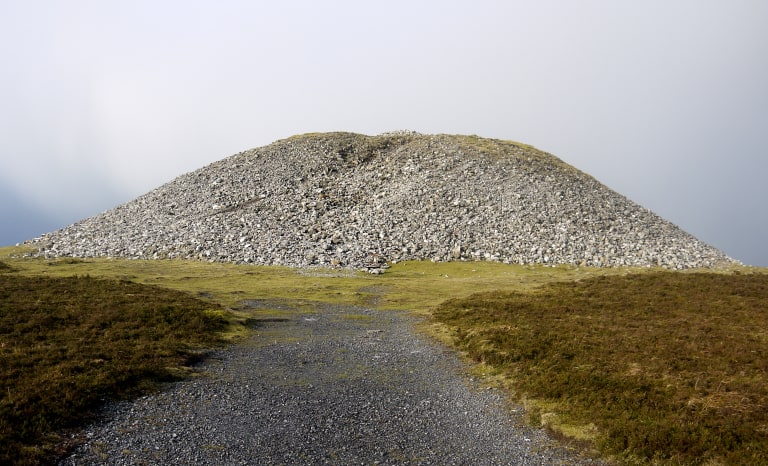
Legend says Queen Medb (Maeve) is buried upright in a 5,000-year-old stone cairn atop Knocknarea mountain in County Sligo, Ireland, facing her enemies in Ulster (Northern Ireland).
The Morrígan
The Morrígan represents another dimension of this early worldview. Associated with war, fate, and transformation, she embodies the connection between women and the forces that shape life and death. Her presence reflects a belief system where female power is both natural and necessary.

St Brigid
Brigid occupies a unique position as both a pagan goddess and a Christian saint. This dual identity reflects Ireland’s ability to absorb cultural change while maintaining continuity. Her associations with healing, poetry, and craft highlight the enduring value placed on female knowledge and creativity.
At Brigid’s Holy Well in County Kildare, visitors tie ribbons or cloth strips to a nearby tree as a symbol of prayer or wish, while the holy well in Liscannor, County Clare, offers a quieter coastal setting where similar clootie offerings are made in honor of Saint Brigid’s healing power. Both sites draw pilgrims seeking her blessing for health and renewal, continuing an ancient tradition of devotion and hope.

Macha
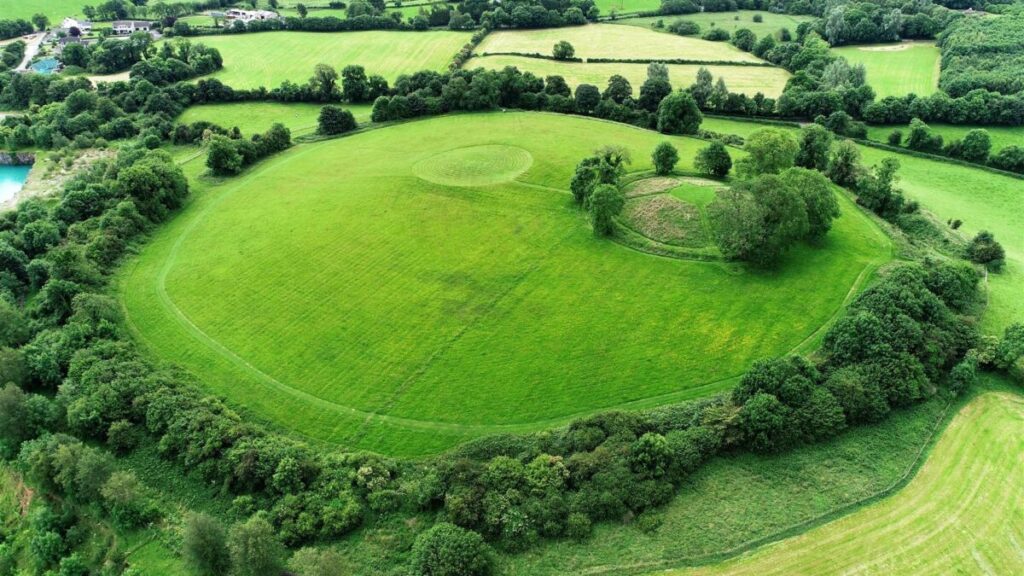
In Irish mythology, Macha is a formidable goddess of sovereignty, war, and fertility, deeply tied to the province of Ulster, horses, and the land itself. A master shapeshifter often appearing as a crow or raven, she is connected to sacred sites such as Navan Fort (Eamhain Mhacha) and Armagh (Ard Mhacha), which bear her name and echo her enduring power.
What these narratives reveal is not a simplified image of strength, but a complex understanding of female authority. Women in Irish mythology are powerful, but they are also multifaceted capable of leadership, anger, vulnerability, and transformation.
Importantly, these early representations do not disappear as Ireland transitions into recorded history. They remain embedded in cultural consciousness, influencing how women in Irish history are perceived long after mythology gives way to documented events.
Medieval to Early Modern Ireland: Adaptation, Authority, and Resistance
As Ireland moved into recorded history, the visibility of women did not disappear it adapted to changing political and social realities.
Grace O’Malley
Grace O’Malley stands as one of the most compelling examples of female authority in early modern Ireland. Operating along the Wild Atlantic Way near Westport in the 16th century, she controlled maritime trade routes, commanded fleets, and maintained political influence in a period defined by instability and expansion.
Her leadership was not symbolic it was operational, strategic, and sustained. The Atlantic coastline she navigated was unforgiving, and her ability to control it reflects both practical skill and political intelligence.

Her meeting with Elizabeth I is often highlighted not simply for its symbolism, but for what it represents: a negotiation between two powerful women operating within male-dominated systems. Her refusal to conform to expected displays of submission reflects a broader pattern of autonomy seen throughout historic women of Ireland.
Devorgilla
Devorgilla (Dearbhforghaill), a 12th-century noblewoman, is often remembered in simplified terms as a figure associated with the events leading to the Norman invasion of Ireland. However, modern historians offer a more nuanced view, noting that she was also a powerful religious patron who funded the Nuns’ Church at Clonmacnoise and died a respected widow at Mellifont Abbey in 1193, aged 85. Far from a mere tragic beauty, Derbforgaill’s true legacy is one of complexity, piety, and political agency.

Constance Markievicz
By the early 20th century, this pattern of influence re-emerges in a modern political context through Constance Markievicz. Her role in the 1916 Easter Rising and subsequent political career demonstrates how women moved from indirect influence into formal leadership.
Walking through Dublin, particularly around St Stephen’s Green, her presence feels immediate rather than historical. She was not a symbolic participant she was actively involved in military action and later became one of the first female cabinet ministers in the world.

Between these high-profile figures lies a wider network of influence. Noblewomen managed estates, facilitated alliances, and maintained economic stability within their regions. These roles required negotiation, authority, and resilience, even if they were rarely recorded in detail.
Visiting castles and historical sites across Ireland often reveals how incomplete traditional narratives can be. The focus tends to fall on male figures, while the women who lived, managed, and sustained these environments are mentioned only briefly. Yet when examined more closely, their influence becomes impossible to ignore.

The issue is not absence it is visibility. Irish history has often been recorded through a male lens, resulting in women’s contributions being minimised or reframed. However, recent scholarship and public history initiatives are beginning to restore these narratives, recognising the central role women played in shaping Irish society.
Cultural Revival, Literature, and Revolutionary Women of Modern Ireland
By the late 19th century, Ireland’s struggle shifted from survival to identity. Independence was no longer only political it became cultural, linguistic, and intellectual. This transformation created space for women to shape Ireland in ways that extended beyond activism, influencing how the country understood itself.
In cities like Dublin and Galway, this legacy remains visible. Conversations frequently return to literature, theatre, and language, reflecting a culture that places storytelling at the centre of national identity. This environment did not develop by chance. It was shaped by women who ensured that Irish voices particularly those rooted in tradition were preserved and elevated.
Lady Augusta Gregory
Lady Augusta Gregory played a central role in this transformation. Through collecting folklore and co-founding the Abbey Theatre, with William Butler Yeats and Edward Martyn, and the Irish Literary Theatre, she helped formalise Ireland’s oral traditions into a recognised literary and cultural movement. Her work ensured that rural narratives, mythology, and Irish identity were not lost during a period of rapid change.


Maud Gonne
Maud Gonne represents the intersection of politics and symbolism. While often framed through her connection to literary figures, her involvement in nationalist movements reflects a deeper political engagement. Her legacy remains complex, shaped by both activism and controversy, which only adds to its historical significance. You can see her grave in Glasnevin Cemetery.

Hanna Sheehy-Skeffington
Hanna Sheehy-Skeffington was a suffragette & Irish nationalist. She co-founded the Irish Women’s Franchise League in 1908 with the aim of obtaining women’s voting rights. highlights another dimension of this period. While Ireland pursued independence, she fought for women’s rights within that emerging nation. Her activism reveals a critical truth: national freedom did not automatically create gender equality. Women had to actively claim their place within the new political structure.

Kate O’Brien
Kate O’Brien used literature to challenge social norms. Her work explored themes of female autonomy and identity in a society heavily shaped by conservative values. Rather than direct political action, her influence operated through cultural disruption, reshaping how women were represented and understood.

Mary Robinson
Mary Robinson marked a turning point in modern Irish leadership. As Ireland’s first female president, she transformed the role into one that was outward-looking and globally engaged. Her focus on human rights, equality, and the Irish diaspora reflected a country redefining itself on the international stage.

Mary McAleese
Mary McAleese continued this trajectory, emphasising reconciliation and social inclusion, particularly in relation to Northern Ireland. Her presidency focused on building bridges both politically and socially reflecting a modern Ireland navigating complex identities.

Modern Irish female leaders such as Mary Robinson and Mary McAleese extended the legacy of historic women of Ireland into global diplomacy, human rights, and social reform.
What connects all of these women is not simply participation in history, but influence over how Ireland defines itself. They shaped not only events, but the narrative through which those events are understood.
Irish Women in Science and Innovation
The contribution of Irish women to science is often underrepresented, yet it forms an essential part of women in Irish history.
Agnes Mary Clerke
Agnes Mary Clerke was a pioneering science writer who translated complex astronomical developments into accessible knowledge. Without formal academic training due to the limitations placed on women she became one of the most respected scientific voices of her time.
Her work, A Popular History of Astronomy During the Nineteenth Century, helped document major discoveries and shaped public understanding of astronomy.

Jocelyn Bell Burnell
Jocelyn Bell Burnell’s discovery of pulsars in 1967 represents one of the most significant astronomical breakthroughs of the 20th century. Although she was overlooked for the Nobel Prize, her later recognition and decision to fund underrepresented students in science reflects both achievement and advocacy.
Aoife McLysaght
Aoife McLysaght’s work in genetics, including contributions to the human genome project, places her among the leading scientific figures in modern Ireland.
Alice Perry
Alice Perry broke barriers as the first woman in Ireland or the UK to graduate with an engineering degree, later holding a public engineering role in Galway.

Edith Stoney and Jane Stephens
Edith Stoney’s work in medical physics during World War I and Jane Stephens’ contributions to marine biology demonstrate how Irish women contributed internationally to scientific advancement.
Together, these figures expand the definition of historic Irish women, showing influence not only in culture and politics, but in global scientific progress.
Living Irish History: Culture, Food, and Everyday Experience
The legacy of historic women of Ireland is not confined to the past. It is visible in everyday life.
Across Ireland, particularly in smaller towns, community spaces reflect traditions shaped over generations. Cafés, markets, and local businesses often operate in ways that emphasise connection over transaction continuing a form of social organisation historically maintained by women.
Food carries memory. Recipes such as soda bread, Boxty and traditional stews reflect adaptation during hardship, particularly during the Great Famine. These are not just dishes, but records of resilience and resourcefulness.
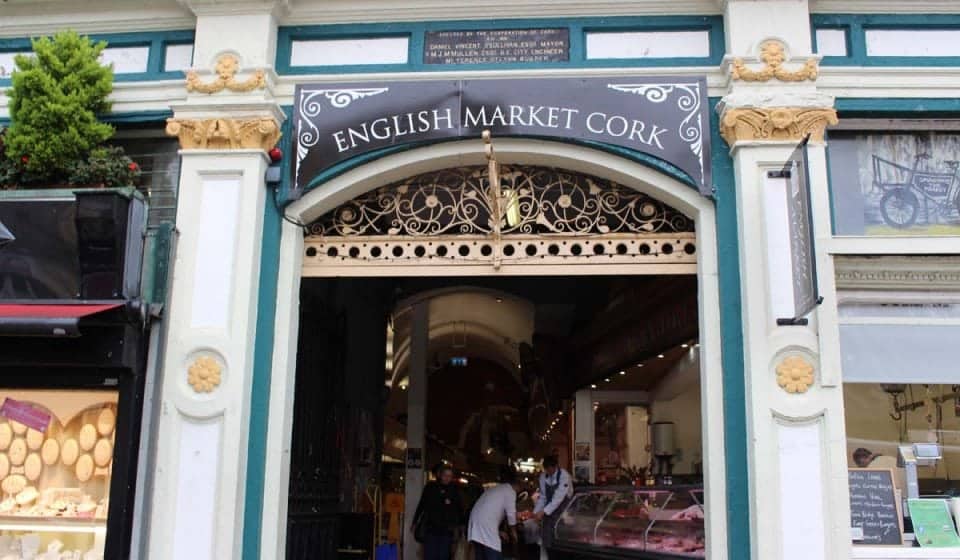
Markets in places like Limerick and Cork’s English Market continue traditions where women participated in local economies, often outside formal systems. These spaces allowed independence, connection, and continuity.
Ireland, Witchcraft, and the Reality of Butter Witches
One of the most significant distinctions in Irish women’s history lies in Ireland’s relationship with witchcraft.
Across Europe, the 15th to 17th centuries saw widespread witch trials driven by fear, religious control, and social tension. Women were disproportionately targeted, often for existing outside accepted norms. Ireland presents a clear contrast.
The most notable case, involving Alice Kyteler of Kilkenny did not lead to widespread persecution. Instead, belief in the supernatural remained integrated within everyday life.

This is where butter witches become important. These figures were believed to influence dairy production spoiling butter or transferring its richness. In a rural economy, this belief had real implications, yet it did not result in systematic punishment.
Communities responded through rituals, charms, and local practices rather than formal trials. This reflects a fundamentally different cultural approach: belief was managed socially, not criminalised.
Irish “witchcraft” folklore and fairies remained local, practical, and embedded in daily life. It did not escalate into the large-scale hysteria seen elsewhere in Europe.
This distinction highlights a broader theme women in Ireland, even when associated with supernatural belief, remained part of community structures rather than being excluded or persecuted.
How Irish Women’s History Differs from the Rest of Europe
Ireland’s historical narrative stands apart not because it lacks complexity, but because of how its elements interact.
Mythology and history exist within the same framework, allowing figures like Medb or the Morrígan to remain culturally relevant. Female authority is therefore not an exception it is part of the foundation.
Ireland’s colonial history also shaped women’s roles differently. Women were involved not only in social life, but in cultural preservation and resistance. Their contributions were tied to national survival.
The strength of oral tradition ensured that women’s influence persisted even when not formally recorded. Stories, language, and memory carried their impact across generations. Finally, Ireland’s avoidance of large-scale witch persecutions reflects a less fear-driven approach to belief and authority.
Together, these factors create a historical narrative where historic women of Ireland are not marginal figures they are central to understanding the country.

Why Historic Irish Women Still Matter Today
The legacy of historic women of Ireland continues to shape modern Irish identity.
Their influence appears in culture, education, politics, and community life. They represent patterns of resilience, adaptation, and influence that remain relevant today.
Understanding these women provides more than historical knowledge it reveals how Ireland functions, how it remembers, and how it continues to evolve.
For visitors, this understanding adds depth to the experience of Ireland. For those with Irish heritage, it offers a connection to a history that is both complex and deeply human. Irish women were never outside history. They were central to it.

FAQ: Historic Women of Ireland
What makes historic women of Ireland unique?
Historic Irish women shaped mythology, culture, and politics while Ireland avoided the widespread witch persecutions seen elsewhere in Europe.
Who is the most famous Irish woman in history?
Grace O’Malley is widely recognised for her leadership and resistance.
Did women have rights in early Ireland?
Under Brehon Law, women had notable rights including property ownership and legal protections.
What were butter witches in Ireland?
Butter witches were part of Irish folklore and were believed to influence butter production without leading to persecution.
If you are interested in reading more about Women and their history in Europe here are a few articles:
Walk the Suffragette Trail in the UK
Fontevraud Abbey burial place of Eleanor of Acquitaine
A Haunting history of Witch trials in England
Most haunted places in Ireland
Fethard Tipperary – home to several Sheela-n-Gigs
Start Planning Your Trip
👉 Public Transportation in Ireland
👉 Hidden Gems in Ireland – 32 Secret places to visit
👉 Answering all your travel questions about Ireland