
How to Get Around Ireland: A Complete Guide to Transport and Travel Tips
Ireland’s transport system includes national railways, city buses, tram systems, rural transport networks, airport coaches and ferry connections. Understanding transport in Ireland makes it much easier to plan journeys between cities, towns and rural areas.

Many visitors wonder how to get around Ireland without a car, and can be intimidated about driving in Ireland especially when planning trips between cities, towns and rural destinations. Fortunately, Ireland’s public transport network makes travelling without a car easier than many people expect. After traveling extensively across Ireland by train, bus and rental car, I’ve found that each transport option has advantages depending on your itinerary
Over the past decade, Ireland has invested heavily in improving public transport Ireland, expanding regional bus routes, modernising rail services, and strengthening rural transport through programmes such as Local Link.

From my experience researching before we moved here and using the system, Ireland’s transport network works best when you understand how the different services connect. Trains usually provide the fastest intercity travel, buses fill in regional gaps, and local transport services help reach rural destinations. If you prefer not to drive, read our detailed guide to public transportation in Ireland including trains and buses.
Before you pack, check the carry-on baggage rules for your airline.
Best Way to Travel Around Ireland
The best way to travel around Ireland depends on your itinerary. Renting a car provides the most flexibility for visiting rural areas like the Wild Atlantic Way, while trains and buses are ideal for traveling between major cities such as Dublin, Cork, and Galway.
- How to Get Around Ireland: A Complete Guide to Transport and Travel Tips
- Best Way to Travel Around Ireland
- Is It Easy to Travel Around Ireland?
- Quick Guide to Transport in Ireland
- How to Get Around Ireland: Car vs Public Transport
- Renting a car in Ireland
- Getting Around Ireland: Trains, Buses and Public Transport
- Understanding Transport in Ireland
- Train Travel in Ireland: Irish Rail and InterCity Routes
- DART: Dublin’s Coastal Railway
- The Luas Tram System
- Dublin Public Transport: Buses, Luas and DART
- Buses in Ireland: Intercity, Regional and Private Coaches
- Rural Transport and Local Link
- Travel Times Between Major Cities in Ireland
- Domestic Flights in Ireland
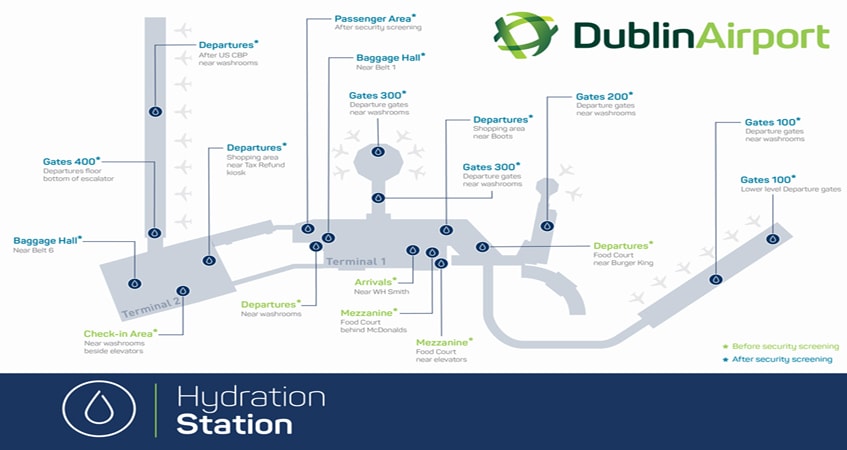
- Dublin Airport Transport
- Taxis and Rideshares in Ireland
- Ferry Transport from Ireland
- How to Get Around Ireland Without a Car
- Practical Tips for Using Public Transport in Ireland
- 1. Book train tickets early
- Which Is Better: Car Rental or Public Transport in Ireland?
- FAQ About Transport in Ireland
- Sample Ways to Travel Around Ireland
- Best Apps for Public Transport in Ireland
- Driving in Ireland articles
- Exploring the fascinating regions of Ireland
Is It Easy to Travel Around Ireland?
Yes, traveling around Ireland is relatively easy, but the best way to get around depends on where you plan to go. Ireland has a reliable public transportation network that connects major cities such as Dublin, Cork, Galway, and Belfast through trains and long-distance buses. These services are comfortable and convenient for city-to-city travel.
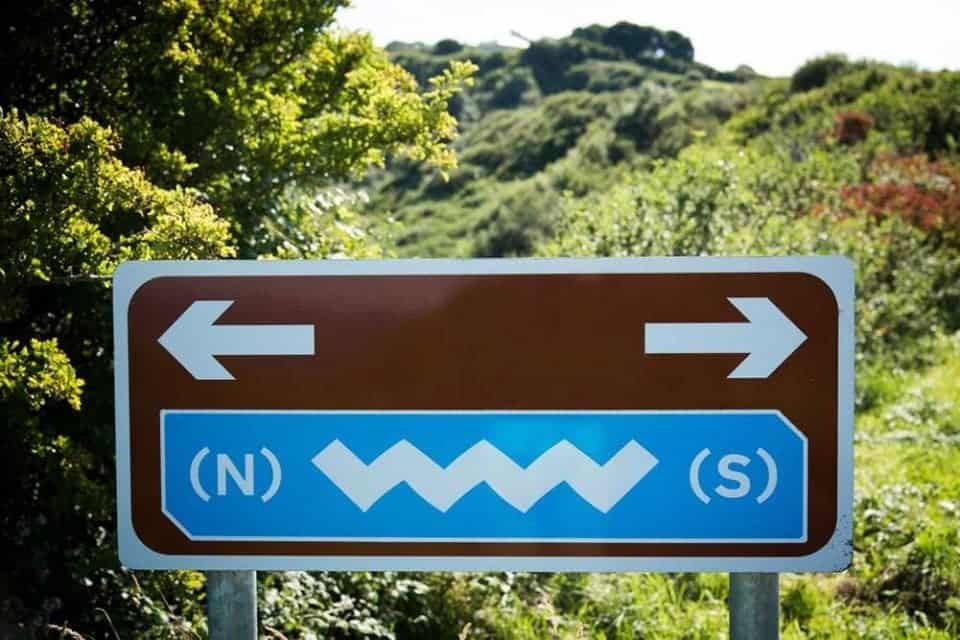
However, many of Ireland’s most scenic destinations are located in rural areas that are not well served by public transport. Famous routes such as the Wild Atlantic Way, the Dingle Peninsula, and parts of County Donegal can be difficult to reach without a car. Because of this, many visitors choose to combine different transportation options during their trip using trains or buses between major cities and renting a car when they want to explore the countryside.
Overall, Ireland is a manageable country to travel around, and with a little planning visitors can easily see both the cities and the spectacular landscapes that make the island so famous.


Quick Guide to Transport in Ireland
| Transport Type | Best For |
| Trains (Irish Rail) | Fast travel between major cities |
| Buses (Bus Éireann) | Regional routes and smaller towns |
| Luas Tram | Travel within Dublin |
| DART | Coastal rail in Dublin |
| Local Link | Rural transport and villages |
| Airport Coaches | Dublin Airport transport |
| Domestic Flights | Flying internally quickly from region to region |
| Ferries to Ireland | How to get a ferry from or to Ireland |
| Renting a Car | The best way to see the best of Ireland |
How to Get Around Ireland: Car vs Public Transport
Renting a car in Ireland
While public transporation including trains and buses connect Ireland’s largest cities, the country’s real magic lies beyond the major transportation routes. Tiny fishing villages, scenic coastal roads, historic castles, and hidden beaches are scattered throughout the countryside. Renting a car in Ireland gives travelers the freedom to discover these places at their own pace. For many visitors, an Ireland road trip becomes the highlight of their entire trip.
Renting a car is one of the best ways to explore Ireland’s countryside. Scenic drives like the Wild Atlantic Way and the Ring of Kerry are much easier with your own vehicle. However, car rental insurance rules in Ireland can be confusing for visitors. For a detailed breakdown of insurance, costs, and credit card coverage, see our complete guide to renting a car in Ireland.
Getting Around Ireland: Trains, Buses and Public Transport
People often ask what the best transport option is depending on the journey.
Best transport for major cities
- Train travel is usually fastest between Dublin, Cork, Galway and Limerick.
Best transport for budget travel
- Intercity buses and private coaches are often cheaper than trains.
Best transport for rural areas
- Local Link and regional buses are often the only public transport options.
Best transport for tourists
Combine train + bus + local transport to reach most destinations.

Understanding Transport in Ireland
Most public transport services across the Republic of Ireland operate under the national brand Transport for Ireland (TFI).
TFI coordinates:
- National rail services
- City bus networks
- Dublin’s tram system
- Rural transport programmes
- Integrated ticketing systems
The system is regulated by the National Transport Authority, which plans routes, sets fares, and oversees transport development across the country.
Tip from experience: If you plan to use multiple types of public transport Ireland, getting a Leap Card is usually the easiest and cheapest way to pay fares in Dublin and many surrounding areas.

Train Travel in Ireland: Irish Rail and InterCity Routes
Rail travel remains one of the most efficient ways to move between Ireland’s cities.
The national railway network is operated by Iarnród Éireann, commonly known as Irish Rail.
InterCity Rail Services
InterCity trains connect Dublin with major cities across the country.
The main routes include:



Dublin – Cork
Dublin – Galway
Dublin – Limerick
Dublin – Waterford
Dublin – Sligo
Dublin – Westport
Dublin – Killarney, Farranfore and Tralee are the nearest train stations to the Dingle Peninsula
These trains are modern, comfortable and generally reliable. In my experience, the Dublin–Cork and Dublin–Galway routes are among the most popular and tend to fill up quickly during weekends and holidays.

Tip
Booking train tickets online in advance can significantly reduce the cost of train travel Ireland.
Commuter Rail
Commuter services run from towns surrounding Dublin into the city centre, connecting places like:
- Drogheda
- Dundalk
- Maynooth
- Kildare
- Bray
These trains are particularly important for daily commuters.

DART: Dublin’s Coastal Railway
The DART (Dublin Area Rapid Transit) is a coastal electric railway also operated by Iarnród Éireann.
The line runs between:
Malahide
Bray
Greystones
For visitors, the DART is one of the best ways to explore coastal towns near Dublin.

Personal tip: If you want a scenic journey using Dublin public transport, the DART trip between Dun Laoghaire and Bray is particularly beautiful on a clear day.
The Luas Tram System
Dublin’s modern tram network is called Luas.
The system has two main lines.
Red Line
Tallaght / Saggart → Docklands
Green Line
Brides Glen → Broombridge
The Luas connects residential suburbs with business districts, universities and major transport hubs.
Tip
During peak hours, trams can be extremely busy. If possible, try travelling outside the busiest commuting times.

Dublin Public Transport: Buses, Luas and DART
The majority of daily public transport journeys in Ireland occur within the capital city.
The primary bus operator is Dublin Bus.
Dublin Bus Network
Dublin Bus operates:
- City centre routes
- Suburban routes
- High frequency corridors
- Night services
Another operator in the Dublin network is Go-Ahead Ireland, which operates several commuter routes under the TFI system.

Personal observation: Dublin’s bus network can look complicated at first because of the number of routes. However, once you learn the main corridors, it becomes easier to navigate.
Tip: Use transport apps or journey planners when navigating Dublin public transport, especially if you are unfamiliar with the routes.
Buses in Ireland: Intercity, Regional and Private Coaches
Outside Dublin, buses are the primary way many people travel between towns.
The main national operator is Bus Éireann.

Bus Éireann Services
Bus Éireann operates:
- Regional bus routes
- Intercity coach services (Expressway)
- Rural transport connections
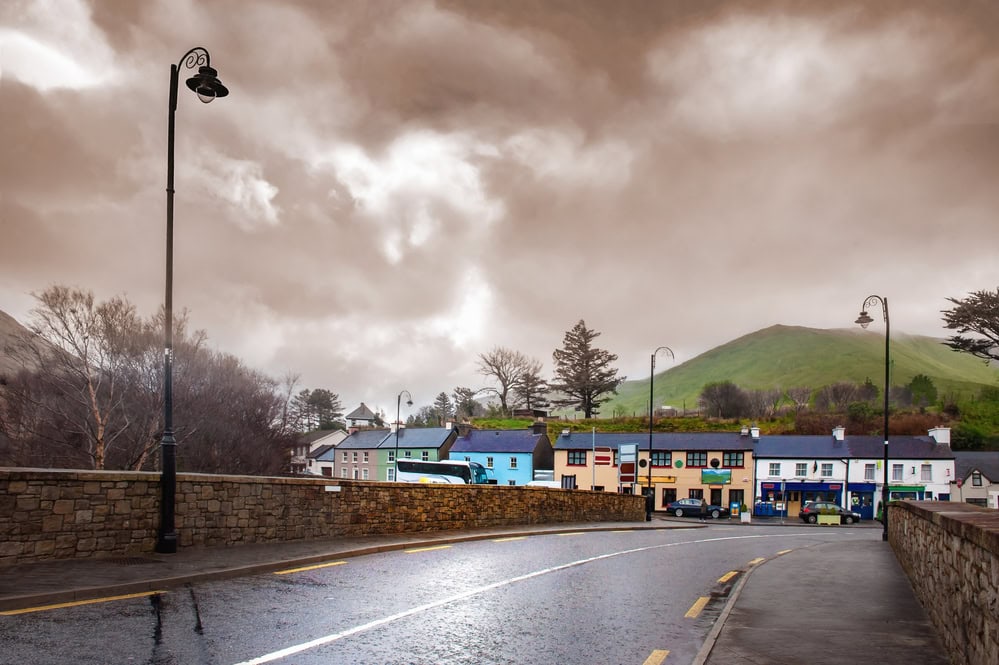
The Expressway network links cities such as:

Private Coach Operators
Several private companies also operate long-distance routes across Ireland.
These include:
GoBus – between Dublin and Galway
Matthews Coach Hire –commuters and private hire
In many cases, these coaches are the fastest option between certain cities.
Rural Transport and Local Link
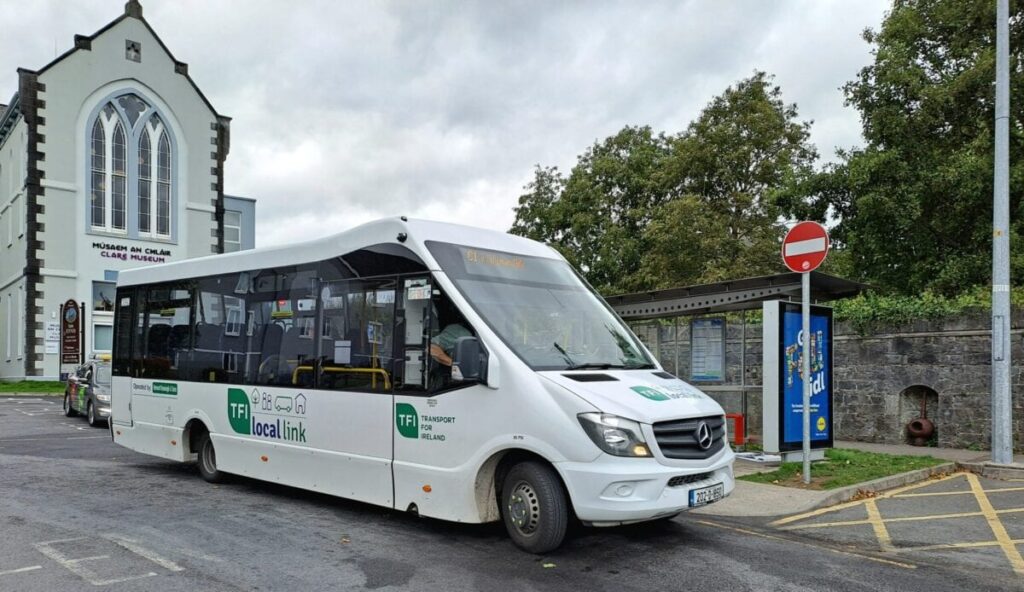
One of the most important improvements to public transport Ireland in recent years has been the expansion of rural transport services.
These services are provided through the Local Link network.
Local Link operates across every county and provides:
- Scheduled rural bus routes
- Demand-responsive transport
- Community transport for older passengers
Personal observation: Local Link services are extremely useful for reaching smaller towns and villages that have no rail service.
Tip: Check the Local Link timetable in advance because many routes run only a few times per day.

Travel Times Between Major Cities in Ireland
Ireland is a relatively small country, which makes it easy to travel between major cities by train, bus, or car. Most intercity journeys take only a few hours, making it possible to explore several regions during a single trip. The table below shows approximate travel times between some of Ireland’s most popular destinations.
| Route | Train Time | Bus Time | Driving Time |
|---|---|---|---|
| Dublin to Galway | 2.5 hours | 2.5–3 hours | 2–2.5 hours |
| Dublin to Cork | 2.5 hours | 3–3.5 hours | 3 hours |
| Dublin to Belfast | 2 hours | 2.5 hours | 2 hours |
| Dublin to Killarney | 3.5 hours | 4–4.5 hours | 4 hours |
| Galway to Cork | 3.5 hours | 4–5 hours | 2.5–3 hours |
These travel times make it relatively easy to combine several destinations in one itinerary. For example, many visitors travel from Dublin to Galway by train, then explore the west coast before continuing south toward Kerry or Cork.

For travelers planning to explore rural areas such as the Wild Atlantic Way, renting a car can significantly reduce travel time compared with buses or trains.
Domestic Flights in Ireland
Ireland’s domestic flight network is modest but serves an important role in connecting remote regions to the capital. The main airports involved include Dublin Airport on the east coast, which acts as the primary hub, alongside smaller regional airports such as Kerry Airport near Killarney in the southwest, Donegal Airport in the northwest, and Ireland West Airport near Knock in County Mayo.
These regional airports primarily offer daily flights to and from Dublin, catering to passengers who need to reach the capital quickly or who live in areas where road travel can be time-consuming due to distance or terrain.
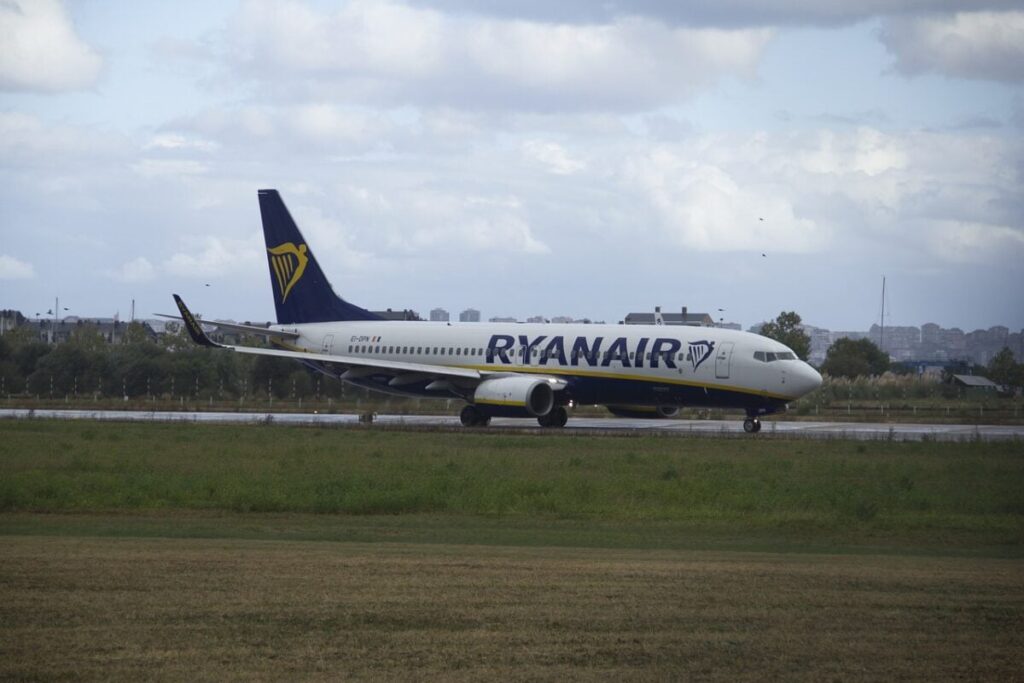
When it comes to pricing, flying within Ireland can be quite reasonable if you book in advance. Airlines like Ryanair and Aer Lingus Regional operate most of these routes using a dynamic pricing model, meaning fares start low but increase as seats fill up and the travel date approaches.
It is not uncommon to find one-way tickets for under €30 when booking several weeks ahead, though last-minute tickets can cost significantly more. That said, because Ireland is a relatively small country with good motorways and rail links, domestic flights are often used more for convenience or necessity rather than as the default travel option for most journeys.
Personal Tip: Ryanair is cheap because it is no frills and you have to make sure you have boarding passes on your phone (no paper passes, and ensure your luggage meets their sizing requirements).
Dublin Airport Transport
Dublin Airport is the busiest airport in Ireland. There is currently no rail station at the airport, so Dublin airport transport mainly relies on buses and coaches.
Main Airport Transport Options
Dedicated airport coaches include:
Other services include:
Bus Éireann regional connections
Taxi services
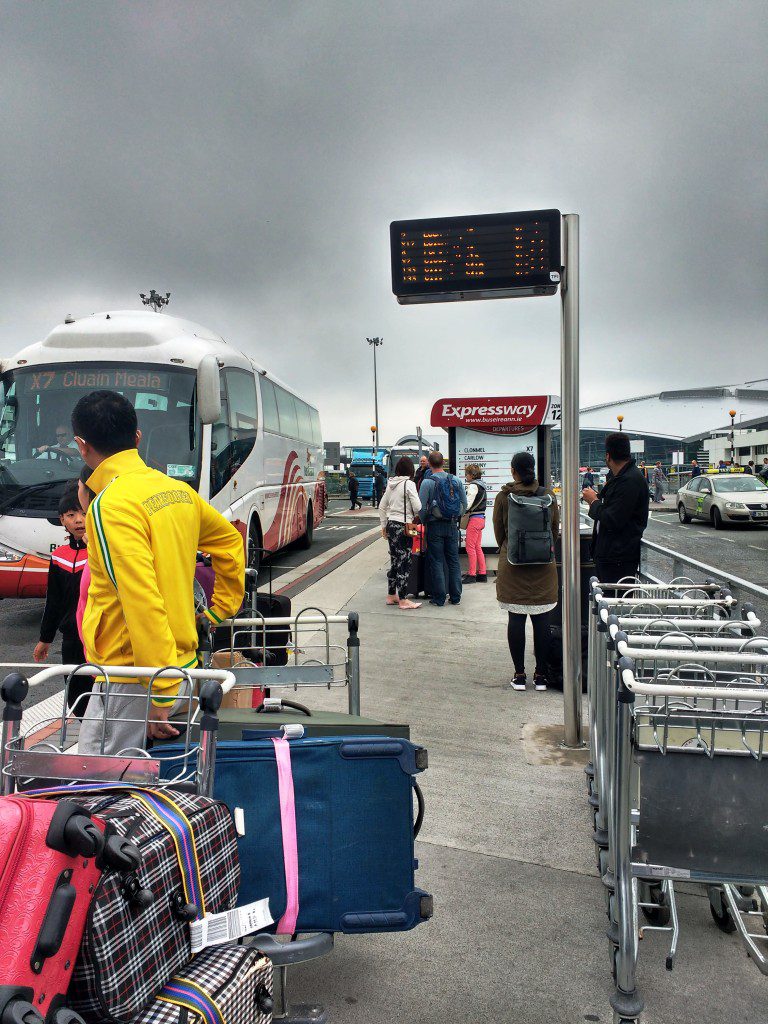
Tip: Airport coaches often run 24 hours per day, making them the most reliable option for early flights. On a regular basis we would get a bus from the airport to Donegal and the drive would take around 3 to 4 hours.
Taxis and Rideshares in Ireland
Taxis are widely available in Ireland’s cities and larger towns, particularly in Dublin, Cork, Galway, and Belfast. Licensed taxis can be hailed on the street, found at taxi ranks near train stations and popular attractions, or booked through mobile apps. The most common taxi app in Ireland is Free Now, which works similarly to Uber and allows you to request a ride, track the driver, and pay through the app.

Traditional taxi companies can also be booked by phone or through hotel reception desks. While Uber technically operates in Ireland, it mainly connects passengers with licensed taxis rather than private rideshare drivers as it does in some other countries. Taxi fares are metered and can increase during late-night hours, weekends, and holidays. For short city trips or airport transfers taxis are convenient, but they can become expensive for longer journeys, which is why most travelers rely on trains, buses, or rental cars when traveling between cities.
Ferry Transport from Ireland
Because Ireland is an island, ferry travel remains an important part of international transport. We have taken ferries from Dublin to France, and from England to Ireland both Belfast, Dublin and Rosslare. Ferry ports are usually located outside city centres, so travellers often need to take a bus, taxi or connecting train to reach the port.Major ferry operators include:
These services connect Irish ports with:
Great Britain
France – how to take a ferry to France from Ireland
The Isle of Man

How to Get Around Ireland Without a Car
Trains are the fastest way to travel between Ireland’s major cities such as Dublin, Cork, Galway and Limerick.
Regional buses
Bus Éireann and private coach operators connect many towns that do not have rail services.
Local Link rural transport
Local Link services provide connections to villages and rural communities.
Dublin public transport
Dublin’s bus network, Luas tram system and DART railway make travelling within the capital straightforward.
Personal advice: Ireland’s transport network if you want to travel without renting a car works best when you combine different modes of transport rather than relying on just one.
For example:
Train → Bus → Local Link
This combination can reach many places that appear difficult to access at first.

Practical Tips for Using Public Transport in Ireland
1. Book train tickets early
Advance fares can be significantly cheaper.
2. Use integrated ticketing
Leap Cards simplify payments across many transport services.
3. Check timetables carefully
Some rural services operate only a few times per day.
4. Allow extra time when transferring
Connections between buses and trains may require some planning.
5. Travel outside peak hours if possible
City transport is busiest during commuting times.

Which Is Better: Car Rental or Public Transport in Ireland?
Whether renting a car or using public transport in Ireland is better depends largely on your itinerary and travel style. Renting a car offers the greatest flexibility, especially if you plan to explore rural areas such as the Wild Atlantic Way, the Ring of Kerry, Connemara, or County Donegal.
Many of Ireland’s most scenic destinations are difficult to reach by bus or train, so having your own vehicle allows you to travel at your own pace and visit smaller villages and coastal viewpoints along the way. However, public transportation works well between major cities like Dublin, Cork, Galway, and Belfast, where trains and buses run regularly and driving can be more stressful due to traffic and parking. Travelers who prefer not to drive on the left side of the road may find public transport a convenient option for city-to-city travel, while those who want to explore Ireland’s countryside in depth will usually find that renting a car provides the best overall experience.
FAQ About Transport in Ireland
Is public transport good in Ireland?
Yes, Ireland has an expanding network of trains, buses, trams and rural transport services that connect most cities and towns.
Can you travel Ireland without a car?
Yes, it is increasingly possible to travel Ireland without a car using trains, buses, trams and Local Link rural transport.

Sample Ways to Travel Around Ireland
Example 7-Day Ireland Transport Plan (Without Renting a Car)
Travelers who prefer not to drive can still see many of Ireland’s highlights using trains, buses, and organized day tours. A typical itinerary might begin with several days in Dublin, where visitors can use public transport such as the Luas tram, Dublin Bus, and the DART coastal train. From Dublin, the train to Galway takes about two and a half hours and is one of the most comfortable ways to travel across the country.
Galway is an excellent base for day tours to the Cliffs of Moher and Connemara National Park. Travelers can then continue by train or bus to Cork or Killarney to explore the southwest of Ireland. While some remote areas are harder to reach without a car, combining trains, buses, and guided tours allows visitors to experience much of Ireland’s scenery without needing to drive.



Overall, transport in Ireland offers a wide range of options including trains, buses, trams and rural transport services. With a little planning, it is entirely possible to explore much of the country without needing a car.
Ireland’s transport network continues to expand and improve, offering more ways to move between cities, towns and rural areas than ever before.
From train travel in Ireland and regional buses to trams, rural transport programmes and ferry routes, the country provides a diverse transport network that supports commuters, residents and visitors alike.
Whether you are navigating Dublin public transport, catching a coach for Dublin airport transport, or planning to travel Ireland without a car, understanding the available services will make your journey easier and more efficient.
With a little planning, Ireland is a country that can be explored comfortably using public transport alone.
Best Apps for Public Transport in Ireland
Using transport apps can make travelling around Ireland significantly easier, particularly in large cities such as Dublin where multiple transport services operate.
Transport for Ireland (TFI) Journey Planner
The TFI Journey Planner is one of the most useful tools for navigating public transport in Ireland. It allows you to plan routes using trains, buses, trams and walking directions across the country.
Google Maps
Google Maps works well for many public transport routes in Ireland, especially within Dublin and other major cities. It can provide real-time bus and train information in many areas.
Irish Rail App
The Irish Rail app is helpful for checking train timetables, booking tickets and receiving service updates for intercity and commuter rail services.
Dublin Bus App
The Dublin Bus app provides real-time arrival information, route maps and service updates for buses operating across the capital.
Leap Card App
If you use a Leap Card, the Leap Top-Up app allows you to check your balance and add credit directly from your phone.

Driving in Ireland articles
Guide for first-time drivers in Ireland
How to visit Glenveagh without a car
Travelling in Ireland without a car
A guide to Public Transportation in Ireland
Start Planning Your Trip
👉 Public Transportation in Ireland
👉 Hidden Gems in Ireland – 32 Secret places to visit
👉 Answering all your travel questions about Ireland
👉What to pack for your Ireland trip
👉 Northern Ireland Public Transportation