
A Reduced-Mobility Visitor’s Guide to Ireland’s West Coast Highlights
Large stretches of the Wild Atlantic Way are genuinely accessible for wheelchair users, reduced-mobility travellers and visitors with buggies. The Cliffs of Moher in County Clare has the best step-free infrastructure on the route, with designated disabled parking, two free buggy shuttles, and 800 metres of paved paths. Other Wild Atlantic Way highlights such as Connemara National Park, Sligo and Yeat’s grave, the Burren, Achill Island, Mizen Head, the Kerry Cliffs near Portmagee, and Donegal’s Glenveagh National Park and Slieve League each offer at least one low-effort, car-adjacent viewpoint, even where the full site is not wheelchair accessible.

I have lived in Donegal for years now, and I have brought more friends, family and visiting writers to these six stretches of the Wild Atlantic Way than I can count. Every single time, the first question from someone using a wheelchair, walking with a stick, or pushing a child in a buggy is the same: how far is the walk from the car park. It is the right question. Ireland markets this coast as wild, rugged and untamed, and that branding does not always sit well with step-free access.
This accessible Wild Atlantic Way guide answers that question properly, site by site, using the details that matter most: car park distance, wheelchair hire, accessible toilets, step-free visitor centres, and the lowest-effort viewpoints. I cover eight of the most visited stops on Ireland’s west coast, including County Clare’s Cliffs of Moher and the Burren, the Kerry Cliffs on the Skellig Ring, Connemara National Park, Achill Island, Mizen Head in West Cork, and County Donegal’s Glenveagh National Park and Slieve League cliffs. By the end you will know exactly where to park, what tickets cost, where the nearest accessible toilet is, and which views you can reach without a long or steep walk.
Along the way I have woven in a little Irish folklore, since several of these landscapes (the Burren’s portal tombs and the Skellig Ring’s monastic islands especially) carry centuries of story alongside their geology. If you are planning a longer road trip along the west coast, from the Aran Islands off Galway Bay to the Skellig Ring near the Star Wars filming locations of County Kerry, this guide gives you the accessibility groundwork to build a realistic itinerary around.

- A Reduced-Mobility Visitor's Guide to Ireland's West Coast Highlights
- How this guide was put together
- Skellig Ring (Kerry Cliffs and Portmagee): Accessible Wild Atlantic Way Highlight
- Cliffs of Moher: The Most Accessible Stop on the Wild Atlantic Way
- Connemara National Park: Accessible Wild Atlantic Way Stop in County Galway
- Achill Island: Accessible Beaches on the Wild Atlantic Way
- The Burren: Accessible Folklore and Limestone Landscape in County Clare
- County Sligo – the most underrated area on the WAW
- Mizen Head: Accessible Wild Atlantic Way Stop in West Cork
- How to Plan an Accessible Wild Atlantic Way Road Trip: Step by Step
- County Donegal: Wheelchair Access at the Wild Atlantic Way's Northern Anchor
- Accessible Wild Atlantic Way: Beyond These Sites
- Frequently Asked Questions: Accessible Wild Atlantic Way
How this guide was put together
Every detail below has been checked against official visitor centre, National Parks and Wildlife Service (NPWS), and Office of Public Works (OPW) information, alongside recent on-the-ground visitor reports, current as of June 2026. Distances, opening arrangements and facilities at outdoor attractions can change with weather, building works or staffing, so where a phone number is given, it is worth a quick call ahead if you are travelling a long way for a specific feature. Always, check your accommodation for accessible rooms before you book, if the BnB doesn’t mention it emails and ask.
Skellig Ring (Kerry Cliffs and Portmagee): Accessible Wild Atlantic Way Highlight
The Skellig Ring is an 18 kilometre loop off the main Ring of Kerry, taking in Portmagee, Valentia Island and the Kerry Cliffs, the closest mainland viewpoint to the UNESCO World Heritage island of Skellig Michael. It is spectacular, and also one of the hillier stops on this list, so it is worth planning carefully if walking is difficult.
How far is the walk from the car park?
At the Kerry Cliffs, it is roughly a 10-minute, fairly steep uphill walk (around 400 to 500 metres) from the car park to the main viewing platforms.
The Kerry Cliffs has a large, free-to-use gravel car park reached directly off the Skellig Ring road near Portmagee. From there, an access path, gravel in places and more compact in others, climbs uphill to the viewing platforms over roughly 10 minutes.
The final approach to the highest viewing point is the steepest section. Wheelchair users can reach the lower platforms but will likely need someone to assist with the climb, particularly on the way back down.
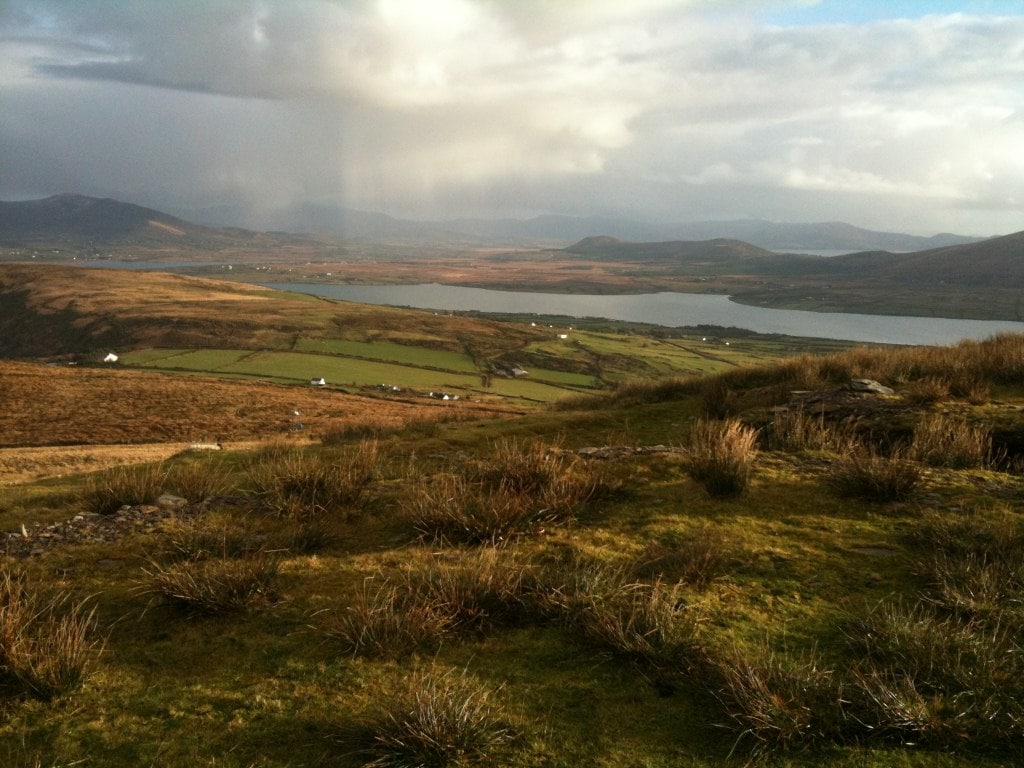
If you would rather skip the walk altogether, Coomanaspig Pass, just beside the Kerry Cliffs car park, is one of the highest points in Ireland reachable directly by car, with sweeping views over the Iveragh Peninsula from the road itself.

Can you hire a wheelchair at the Kerry Cliffs?
Quick answer: There is no on-site wheelchair hire scheme at the Kerry Cliffs or elsewhere on the Skellig Ring. Bring your own wheelchair or mobility scooter if you will need one.
Unlike larger, purpose-built attractions such as the Cliffs of Moher, the Kerry Cliffs is a family-run working farm site with a small ticket booth and viewing platforms rather than a full visitor centre, so there is no loan or rental wheelchair available on site.
If you need a wheelchair for the day, the nearest hire options are typically through mobility equipment suppliers in Killarney or Tralee. It is worth booking ahead of your visit, as stock is limited in rural Kerry. A companion who can help push on the steeper sections will make a real difference here, as the gravel and incline are the main barriers rather than the distance itself.

Are there accessible toilets at the Kerry Cliffs?
Quick answer: Yes. There are clean toilets in the car park at the Kerry Cliffs, though provision is more modest than at larger Wild Atlantic Way attractions.
Visitor accounts consistently describe a car park with clean toilet facilities at the Kerry Cliffs site. As facilities here are smaller scale than a national-park visitor centre, it is sensible to check accessible-toilet availability by phone if this is essential for your visit.
Further round the Ring, Portmagee village (a five minute drive from the cliffs) has pubs and cafes with standard toilet facilities, and Valentia Island’s Skellig Experience Centre also has visitor facilities.

Is the Skellig Ring visitor centre step-free?
Quick answer: There is no large visitor centre at the Kerry Cliffs itself, just an outdoor viewing site with a ticket kiosk and a small carriage cafe. The nearby Skellig Experience Centre on Valentia Island has standard step-free visitor facilities.
The Kerry Cliffs experience is essentially outdoor: a car park, ticket booth, a converted train-carriage cafe, and a network of paths to fenced viewing platforms. There is no indoor exhibition space to navigate, which simplifies things, but also means there is no step-free indoor refuge from wind or rain.
For an indoor, more accessible introduction to the Skellig story, the Skellig Experience Centre on Valentia Island, a short road crossing away, covers the monastic history of the islands in a standard visitor-centre format. You can take a wheelchair accessible boat tour to Skellig Michael to see the Island close up.

Best low-walk viewpoints on the Skellig Ring
- Coomanaspig Pass: reachable entirely by car, right beside the Kerry Cliffs car park, one of the highest road-accessible viewpoints in Ireland, with views over the Iveragh Peninsula without leaving the car park area.
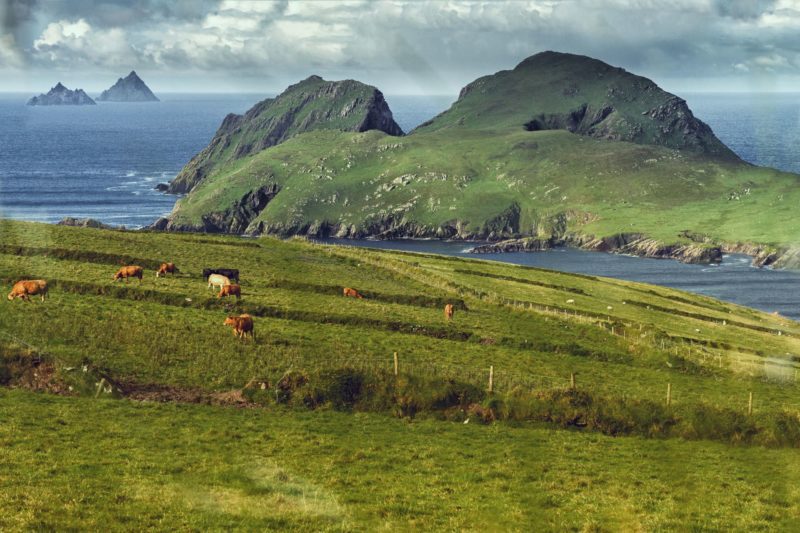
- Kerry Cliffs lower viewing platform: the first platform reached after the initial climb gives a strong view of Skellig Michael, Little Skellig and Puffin Island without needing to reach the very top.
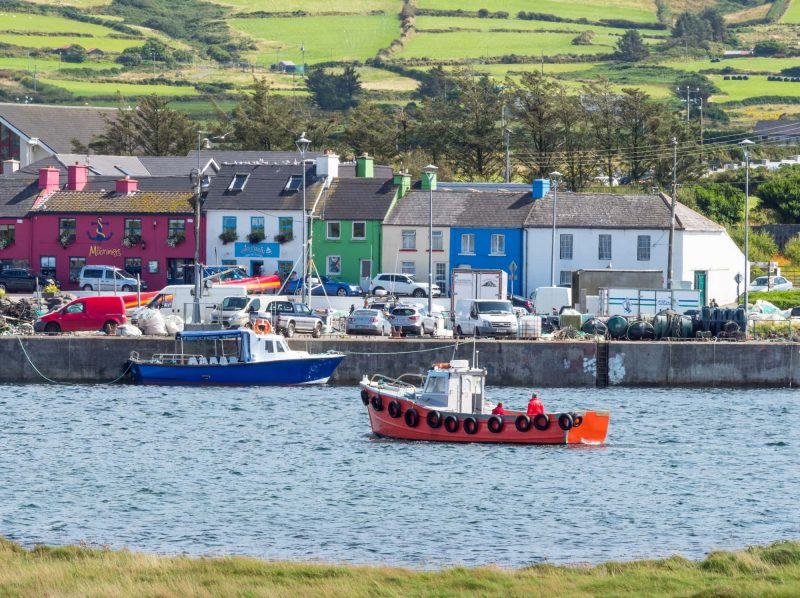
- Portmagee harbour: flat, level village streets with views across to Valentia Island, a good low-effort stop to pair with a cliffs visit.
Tickets, parking and where to eat near the Kerry Cliffs
Admission to the Kerry Cliffs is 5 euros per person, paid at the on-site ticket box, and includes parking. Parking itself is free and the gravel car park is large, so finding a space is rarely an issue even in peak season.
On site, a converted train-carriage cafe serves drinks and snacks, with both indoor and outdoor seating (the outdoor benches can be windy, so the carriage and double-decker bus seating are worth knowing about). For a fuller meal, the short drive into Portmagee village brings you to harbourside pubs serving fresh local seafood, including chowder and pub classics, in a flat, easily walkable village centre.
For accommodation, Portmagee has guesthouses and small hotels right on the harbour, a sensible base if you want to explore the Skellig Ring without a long drive each day. It is worth phoning ahead to confirm step-free rooms, since many of West Kerry’s older guesthouses have stairs.
On a personal note, I always tell first-time visitors not to skip Coomanaspig Pass even if the climb to the upper Kerry Cliffs platform is not possible that day. I have sat in the car at that viewpoint in driving rain and still come away thinking it was one of the best views of the whole Wild Atlantic Way.

Cliffs of Moher: The Most Accessible Stop on the Wild Atlantic Way
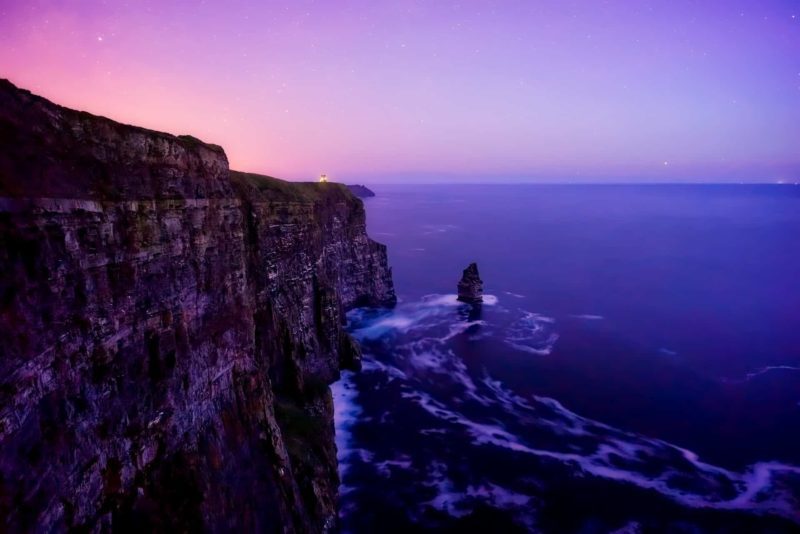
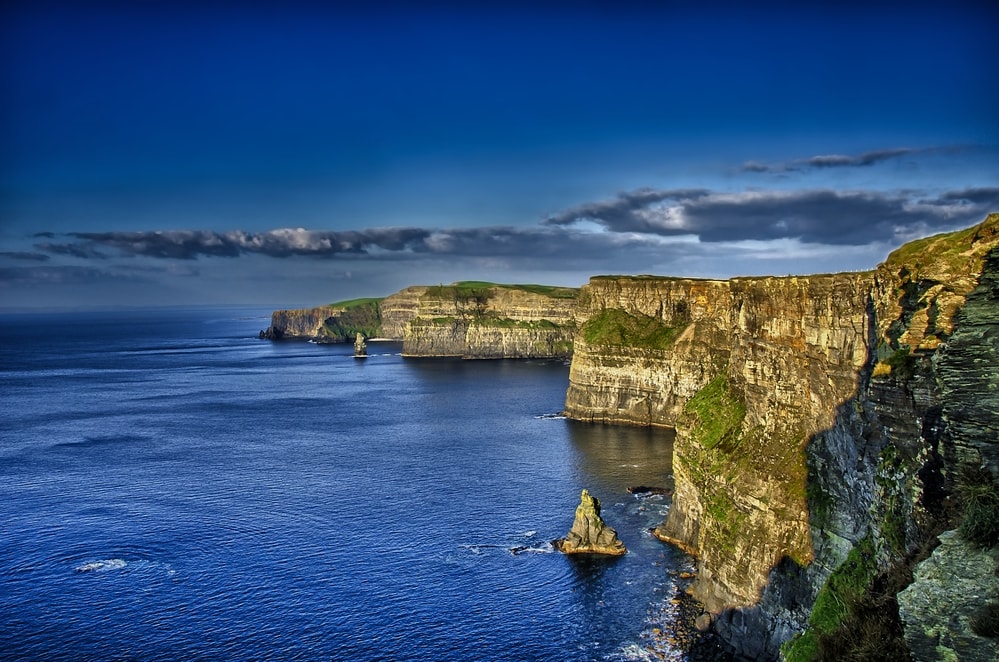
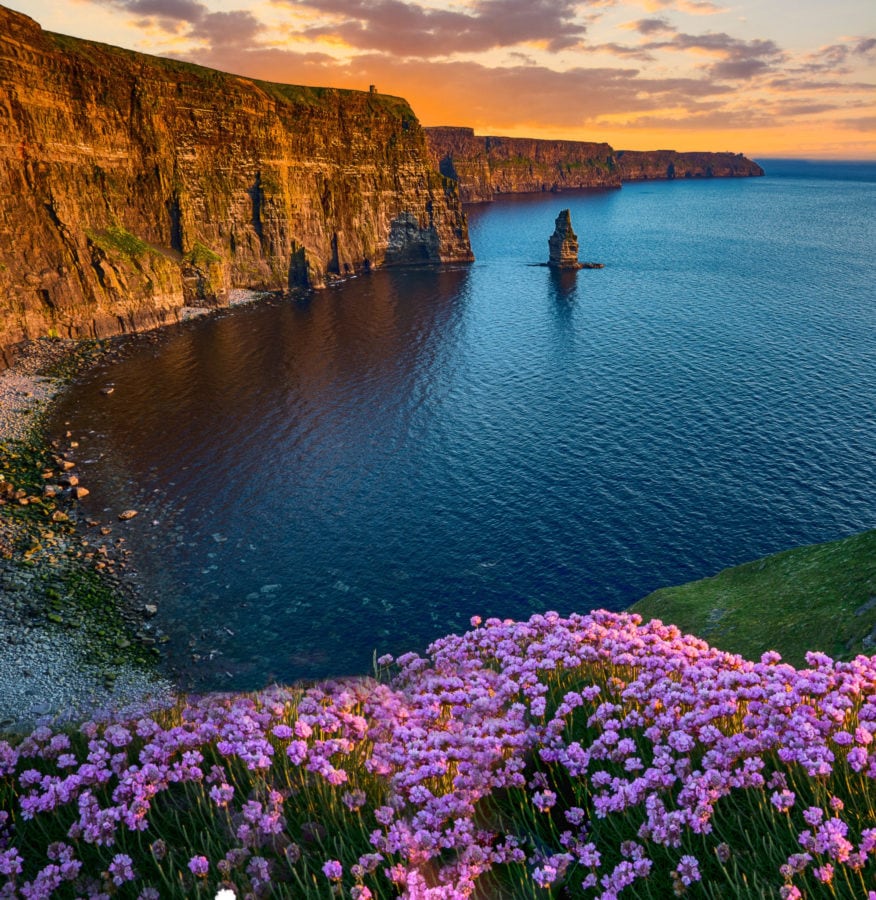
The Cliffs of Moher in County Clare is one of Ireland’s most visited natural attractions, and helpfully, also one of the most genuinely accessible. The site has invested heavily in step-free routes, accessible parking and an on-site shuttle, which makes it a strong choice for visitors who cannot manage long or steep walks.
How far is the walk from the car park at the Cliffs of Moher?
Quick answer: As little as five minutes on a flat, paved path from accessible parking bays to the main viewing platform, though the standard car park involves a longer, steeper walk if you do not have a disabled parking permit.
The site is split into two zones: the main car park, where coaches and most rental cars park, and the Visitor Centre and cliff edge area. These are separated by a road crossing and a noticeably steep, roughly 10-minute uphill path for a fit walker.
Designated disabled parking is available much closer to the action, with spaces in both the main car park and the coach park, plus additional bays directly beside the Visitor Centre at the closest point to the pedestrian crossing. From accessible parking, the walk to the main viewing platform is short and flat.
If you arrive without a permit but have mobility difficulties, there is a dedicated drop-off zone directly beside the Visitor Centre entrance, and staff can usually advise on the best route on the day.

Can you hire a wheelchair at the Cliffs of Moher?
Quick answer: Yes. Wheelchairs can be borrowed free of charge from the Car Park office and from the Visitor Centre front desk, and there is also a staffed electric buggy service for longer distances.
Wheelchairs are available to borrow at two points on site: the Car Park office and the Visitor Centre front desk. There is no need to book ahead, though arriving early in peak season is sensible.
The Lifts of Moher are two staff-operated electric buggies that run hop-on, hop-off style between the viewing platforms and O’Brien’s Tower, specifically aimed at visitors with limited mobility. They are subject to availability rather than a fixed schedule.
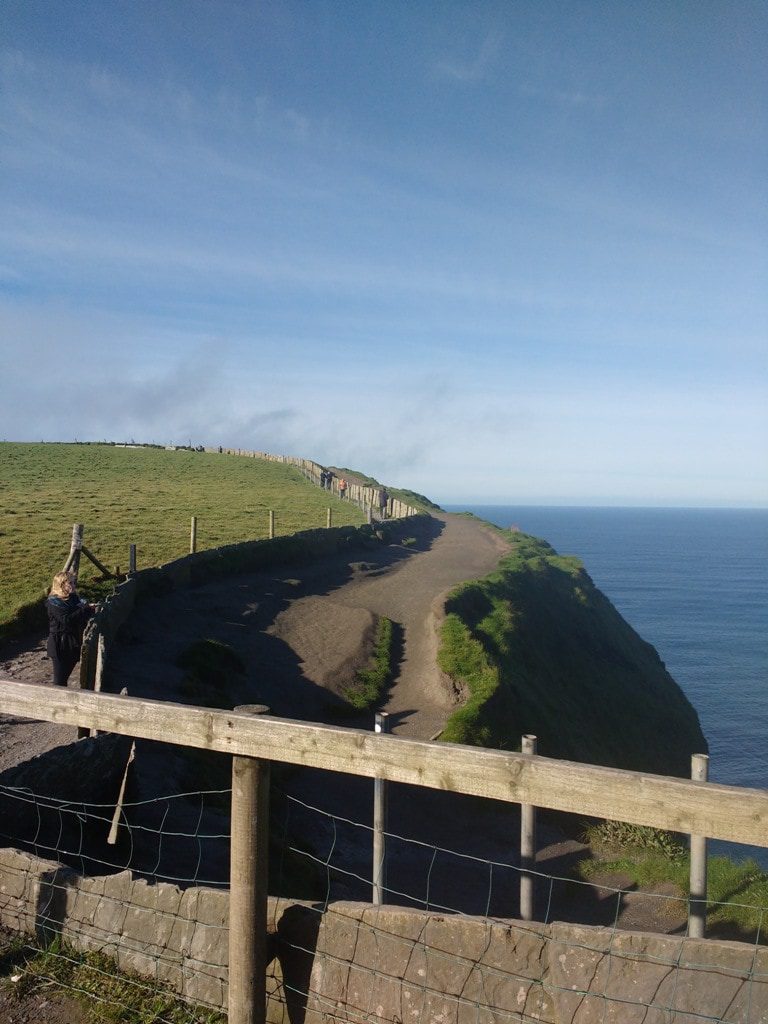
All the main paths between the Visitor Centre and the principal viewing platforms are hard-surfaced and described by the operator as fully accessible for both wheelchairs and buggies, covering some 800 metres of paved pathway.

Are there accessible toilets at the Cliffs of Moher?
Quick answer: Yes. Accessible toilets are available on both floors of the Visitor Centre, plus additional toilets near the coach park and, at peak times, in the car park across the road.
The Visitor Centre has toilets on the ground floor and first floor, with accessible cubicles on both levels, and a lift connects the floors. Baby-changing facilities are located within the ground-floor accessible toilet.
Additional toilets are available beside the coach park entrance, and extra unisex facilities open in the main car park, on the opposite side of the road from the cliffs, during busy periods.
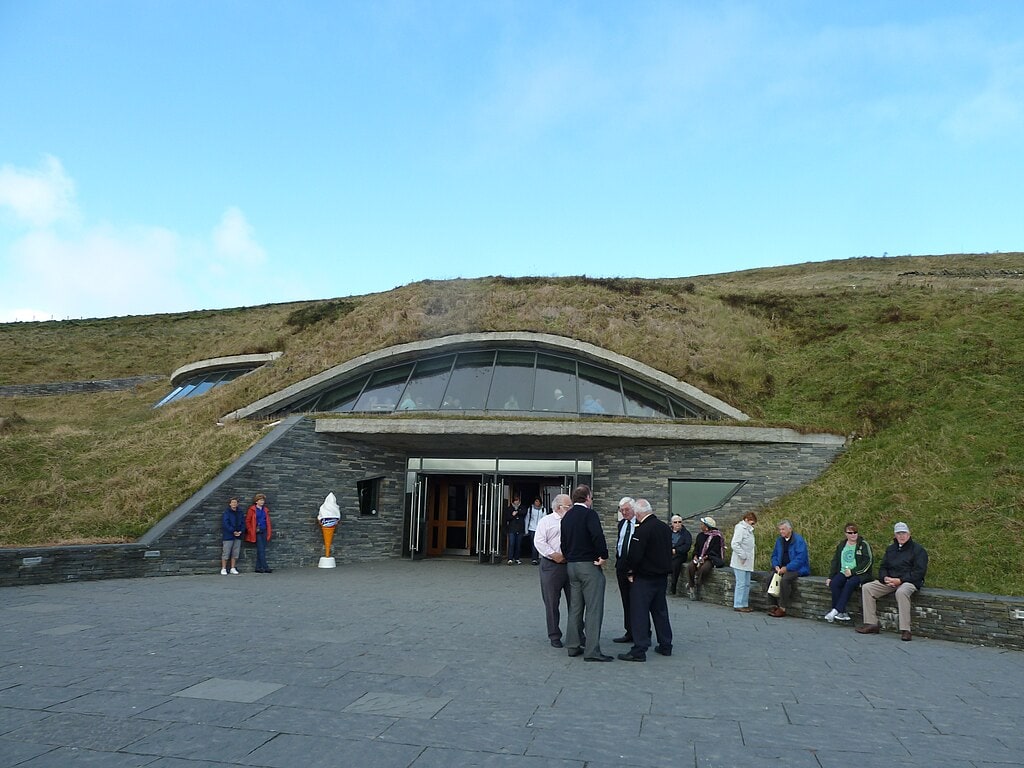
Is the Cliffs of Moher Visitor Centre step-free?
Quick answer: Yes, entirely. The Visitor Centre is fully wheelchair accessible, with a lift to the first floor, staggered reception counters, and tactile flooring cues at ramps and stairwells.
The Visitor Centre is built into the hillside and is described by the operator as entirely wheelchair accessible, with disabled access onto the outdoor pathways from three separate exits.
A lift connects the ground and first floors, and front-desk counters are staggered in height to suit wheelchair users. Tactile floor surfaces mark the start and end of ramps and stairwells. Induction loops for hearing aids are fitted at the front desk, the Ledge Theatre, the help desk, and the gift shop.
The one notable exception is O’Brien’s Tower itself. As a protected historic structure built in 1835, it has no lift, and the viewing platform on the roof is reached only by a narrow spiral staircase. The ground-level area around the tower, however, remains accessible.

Best low-walk viewpoints at the Cliffs of Moher
- Main viewing platform, beside the Visitor Centre: the flagship view of the cliffs, reached via flat paved paths just steps from accessible parking, no climbing required.
- First-floor exit of the Visitor Centre: reachable by lift, commonly cited as offering one of the best framed views for wheelchair users without going outdoors onto sloped paths at all.
- Lifts of Moher buggy stops: the electric shuttle extends your reach toward O’Brien’s Tower and the upper paths without the physical effort of the incline.
Tickets, parking and where to eat near the Cliffs of Moher
As of 2026, online admission for adults is 12 euros at peak times (11am to 4pm) and 8 euros off-peak, with students and seniors paying 10 euros peak and 6 euros off-peak. Children under 12 go free, up to a maximum of four per family. Admission includes secure parking, wifi, access to O’Brien’s Tower, and the interactive Cliffs exhibition. Booking online in advance is recommended in peak season.

Two on-site cafes and a craft and retail street cover everything from a quick coffee to a sit-down lunch, all within the step-free Visitor Centre complex. For something further afield, nearby Doolin and Liscannor have a strong choice of pubs and restaurants, many step-free at ground level, ranging from casual seafood chowder spots to Hotel Doolin, Ireland’s first certified carbon-neutral hotel, which also runs Fitz’s Pub on site.
For accommodation, Liscannor’s boutique Cliffs of Moher Hotel and the Doolin Inn plus the wider Doolin area offer a strong range of options from budget bed and breakfasts to four-star stays, most with free parking, though it is always worth confirming step-free access directly with smaller guesthouses before booking.

I have taken visitors here in driving Atlantic rain and in still summer sunshine, and the Lifts of Moher buggy genuinely changes the experience for anyone who cannot manage the incline. It is the one site on this list where I would say accessibility has been built in rather than retrofitted.
Connemara National Park: Accessible Wild Atlantic Way Stop in County Galway
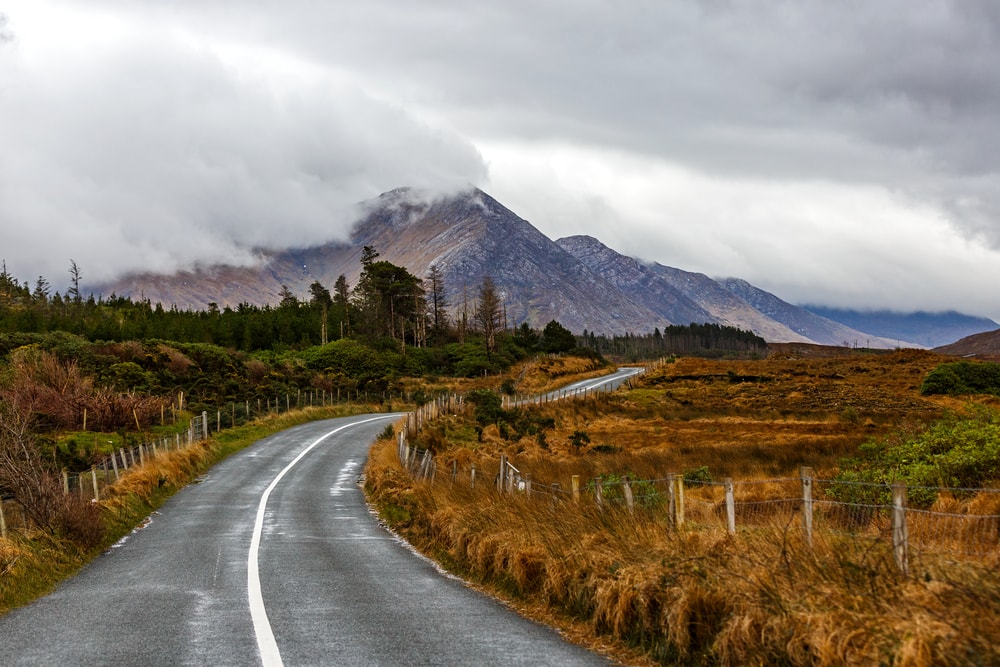
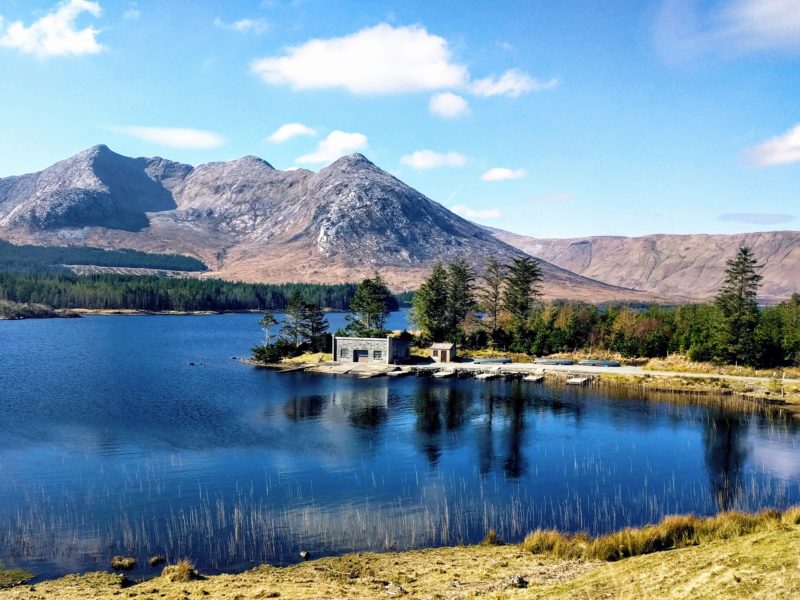
Connemara National Park, near Letterfrack in County Galway, is best known for the Diamond Hill hike, which is genuinely demanding and not wheelchair-friendly. But the Visitor Centre and the start of one looped trail offer a worthwhile, much gentler alternative for visitors who cannot manage the mountain.
How far is the walk from the car park at Connemara National Park?
Quick answer: Parking is right beside the Visitor Centre, so there is effectively no walk to reach the building itself, but beyond that, the park’s trails involve gravel paths and inclines that are difficult for wheelchair users.
You cannot drive into the park itself. The road takes you directly to the Visitor Centre car park, which is the start point for every trail. This means there is no separate long walk-in before you even reach facilities, unlike some other sites on this list.
The car park is described by visitors as small and can fill up quickly in peak season, so arriving early or late in the day improves your chances of a close space.
The Sruffaunboy Loop, the park’s most level walking trail, is partially wheelchair accessible, with gravel paths and some inclines suited to motorised wheelchairs or manual wheelchairs with assistance. The Diamond Hill trail, by contrast, is moderate to strenuous and not considered wheelchair accessible at any point.
Can you hire a wheelchair at Connemara National Park?
Quick answer: No wheelchair hire or loan scheme is advertised on site. Bring your own, and consider a motorised wheelchair if you plan to attempt the Sruffaunboy Loop, since the gravel surface is hard going for manual wheelchairs.
Connemara National Park does not publicise an on-site wheelchair rental or loan service in the way the Cliffs of Moher does, so you will need to bring your own mobility equipment.
Trail surfaces are gravel and can be uneven, with kissing gates designed to keep livestock out acting as a further obstacle on some paths, worth bearing in mind for both manual wheelchair users and those using mobility scooters.
Staff at the Visitor Centre reception can give up-to-date, on-the-day advice on which sections of trail are currently passable, since conditions change with weather.

Are there accessible toilets at Connemara National Park?
Quick answer: Yes. Accessible toilets are available at the Visitor Centre, though not out on the trails themselves.
The Visitor Centre complex includes public toilets with accessible provision, a water refill station, a cafe, and a small park information desk and shop. Once you are out on the trails, there are no toilet facilities until you return to the Visitor Centre, so it is worth planning your visit, and your fluid intake, accordingly.
Is the Connemara National Park visitor centre step-free?
Quick answer: Mostly, but not entirely. The Visitor Centre is on two floor levels with no internal lift, though each level can be reached separately and step-free from outside.
The Visitor Centre building has two different floor levels and no internal elevator connecting them. However, each level has its own external, step-free access point, so you can reach both without using internal stairs.
Entry to the park, the exhibition, and the film shown in the Visitor Centre are all free of charge, with no ticket queue or barrier to navigate. The cafe, picnic areas and toilets are all part of the same step-free Visitor Centre complex.


Best low-walk viewpoints at Connemara National Park
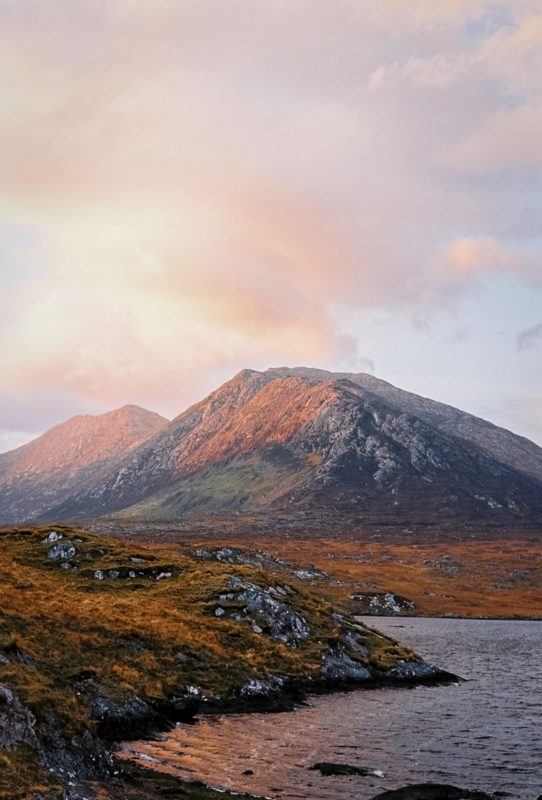
- Visitor Centre forecourt and car park: level ground with open views toward the Twelve Bens mountain range, no walking required beyond stepping out of the car.
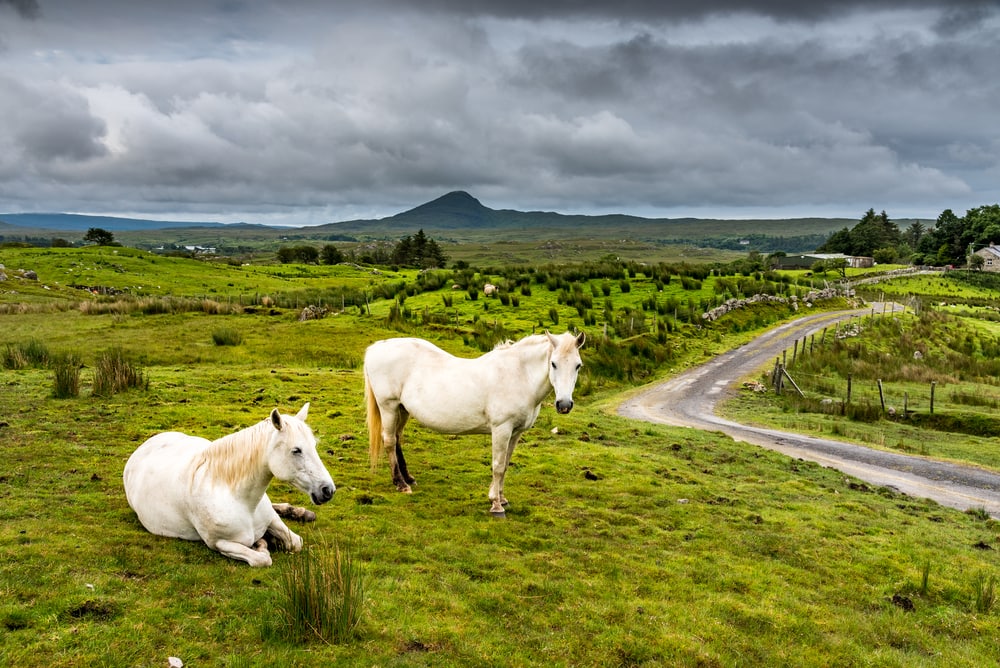
- Start of the Sruffaunboy Loop: even if you cannot complete the full loop, the first stretch from the Visitor Centre gives views of Diamond Hill, Ballynakill Harbour and Connemara ponies on relatively manageable ground.
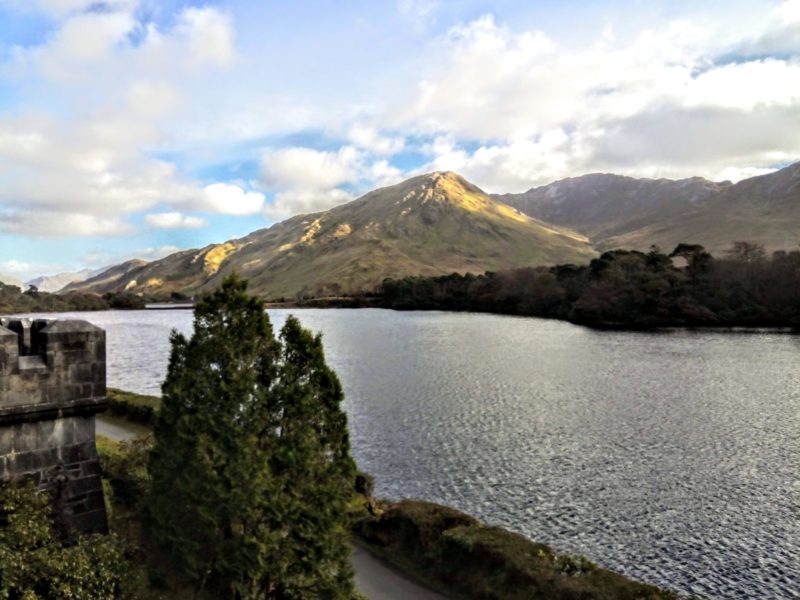
- Kylemore Abbey grounds (nearby, separate site): a short drive away, Kylemore Abbey’s lakeside walks and walled Victorian garden offer flatter, more formal accessible paths as an alternative to the National Park’s wilder terrain.

Tickets, parking and where to eat near Connemara National Park
Entry to Connemara National Park is completely free, including the exhibition and film. Parking at the Visitor Centre is free of charge. The on-site cafe covers light lunches and coffee in a step-free setting.
For a fuller meal, Letterfrack village, a short drive away, has a handful of pubs and cafes at ground level, and Kylemore Abbey has its own restaurant and tea rooms with accessible seating overlooking the lake. The Delphi Lodge in Leenaun is wheelchair accessible as is the Townhouse in Letterfrack.
For accommodation, Letterfrack and the wider Connemara area have a range of guesthouses and small hotels, several of which advertise ground-floor or lift-accessible rooms. As with most rural Wild Atlantic Way towns, phoning ahead to confirm step-free access is the most reliable approach.


Achill Island: Accessible Beaches on the Wild Atlantic Way
Ireland’s largest island, connected to the mainland by a bridge. Achill is a Wild Atlantic Way highlight for its beaches and the scenic Atlantic Drive. Accessibility here varies a great deal by exact location. Some beaches are genuinely easy, others involve narrow cliff roads and limited, often unpaved parking.

How far is the walk from the car park on Achill Island?
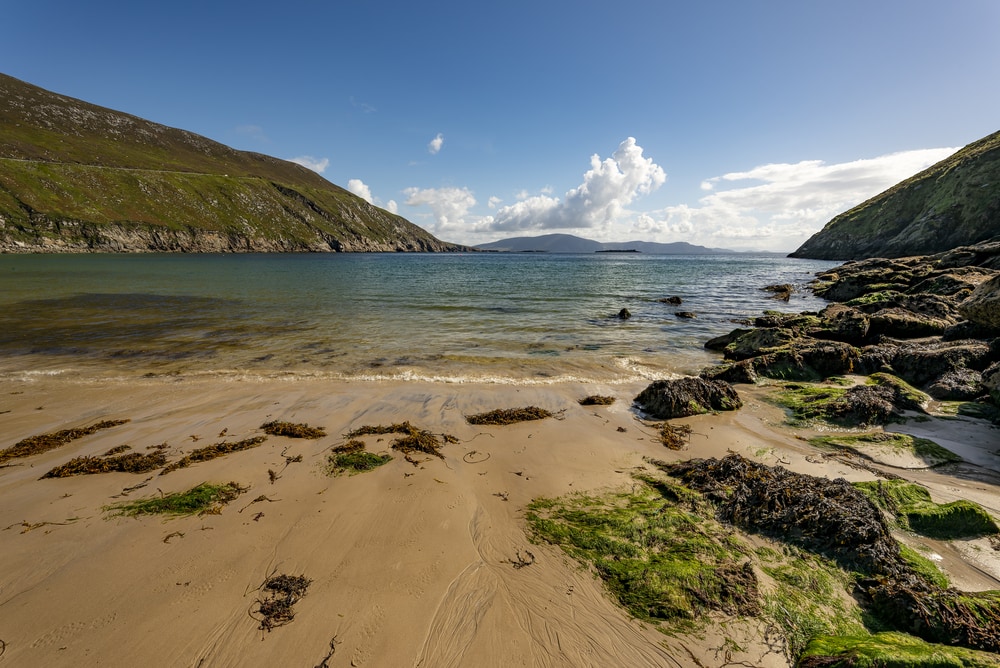
Quick answer: At Keel Beach, the walk from the car park is relatively flat and short. At Keem Bay, it is also short from the car park, but the car park itself is reached via a steep, narrow clifftop road and fills quickly in summer.
Keel Beach has an ample, free car park with a relatively flat approach to the sand, making wheelchair access to the beach itself reasonably straightforward in good weather.
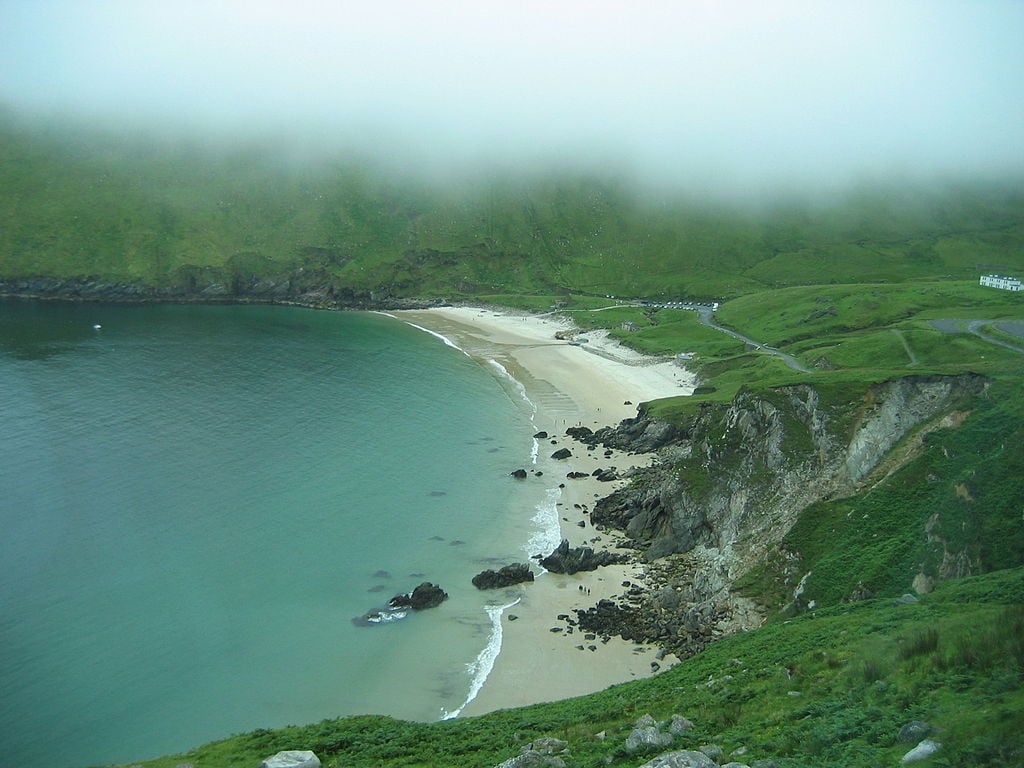
Keem Bay’s car park sits at the very end of the Atlantic Drive, after a dramatic but narrow and winding clifftop road. Once parked, the approach to the beach is short, but the car park itself is limited to roughly 50 spaces and is known to fill by around 11am in summer with no overflow option.
Golden Strand near Dugort has a car park, but the beach itself is not considered wheelchair accessible.
The Atlantic Drive itself is a paved, if narrow, 20 kilometre looped road with well-marked viewpoints you can stop at directly from the car, useful if walking any distance is difficult, since several of the island’s best views do not require leaving the roadside.

Can you hire a wheelchair on Achill Island?
Quick answer: There is no dedicated wheelchair hire service on Achill Island itself. Bring your own, or arrange hire in Westport or Castlebar on the mainland before crossing the bridge.
Achill is a rural island without large-scale visitor infrastructure, so there is no on-site rental scheme at its beaches or viewpoints, unlike purpose-built attractions such as the Cliffs of Moher. Beach wheelchairs on Achill Island are available to use free of charge through Achill Tourism. The chairs can be booked in advance for use at Keel Beach or Silver Strand (Dugort), and they come equipped with wheelchair-friendly beach mats for better accessibility.
Some self-catering accommodation on the island is specifically listed as wheelchair accessible, which is worth checking if you are staying overnight and need step-free lodging as a base. If you need to hire equipment, the nearest larger towns with mobility equipment suppliers are Westport and Castlebar, both on the mainland. Anvil House B&B is completely wheelchair accessible full Irish breakfast options are available. Seaview Cottage is also wheelchair accessible and you have the whole place to yourself.

Are there accessible toilets on Achill Island?
Quick answer: Toilets are available at the main beaches, but accessible-toilet provision is patchy. Keem Bay has none directly at the beach, while Keel village has standard facilities.
At Keem Bay, there are no wheelchair-accessible toilets at the beach itself; the nearest accessible facility is at the neighbouring campground. At Golden Strand near Dugort, there is a car park but, as with the beach access itself, accessible toilet provision is limited.
Keel village, the island’s main hub, has shops, pubs and restaurants with standard toilet facilities, and is generally the most reliable spot for accessible toilets on the island.
Is there a step-free visitor centre on Achill Island?
Quick answer: There is no single island visitor centre. The closest equivalent is the Achill Experience, Aquarium and Visitor Centre near Keel, which operates as a standard step-free indoor attraction.
Achill does not have one central National Park-style visitor centre the way Connemara or the Burren do. Instead, information and indoor facilities are spread across village-based attractions.
The Achill Experience, Aquarium and Visitor Centre near Keel Beach is the nearest thing to a formal indoor visitor attraction on the island and operates with standard accessible building facilities.
The Deserted Village at Slievemore, by contrast, has no visitor centre, no guides and no entry fee. You walk among the ruins on rough, uneven ground, which is not realistically accessible for wheelchair users, though the site is steeped in folklore about the families who left during the Famine years.

Best low-walk viewpoints on Achill Island
- Atlantic Drive roadside viewpoints: the Spanish Armada Viewpoint and several other marked stops along the 20 kilometre loop can be enjoyed directly from, or just beside, the car, no significant walk needed.
- Keel Beach: a long, flat Blue Flag beach with relatively easy approach from its car park, and views across to the Minaun Cliffs.
- Keem Bay car park viewpoint: even without descending fully to the sand, the clifftop road and car park area give a dramatic horseshoe-bay view that is considered one of the iconic photo spots on the island.

Tickets, parking and where to eat on Achill Island
All beach car parks on Achill are free of charge, including Keel and Keem Bay. The Achill Experience, Aquarium and Visitor Centre charges a standard family-attraction admission fee, with full accessible facilities on site.
Keel village has the widest spread of dining, from casual cafes and chip shops to pub restaurants serving local seafood, most at step-free ground level. For something more relaxed, several Atlantic Drive viewpoints make excellent picnic stops if you have brought your own food, since formal cafe options thin out the further you travel along the loop.
Accommodation on Achill ranges from campsites to guesthouses and a handful of hotels in Keel and Dooagh, with some self-catering cottages specifically advertised as wheelchair accessible. As an island reliant on tourism, most hosts are used to accessibility questions, so it is worth asking directly about door widths, bathroom layout and parking when booking.


The Burren: Accessible Folklore and Limestone Landscape in County Clare
The Burren in County Clare is a 350 square kilometre karst limestone landscape, famous for its wildflowers, megalithic tombs and stark scenery. Be aware there are three distinct sites people mean when they say the Burren: Burren National Park’s hiking trails near Corofin (largely not accessible), the Burren Centre in Kilfenora (fully accessible indoor exhibition), and the Poulnabrone Dolmen (partially accessible, short uneven walk).
A quick note on Irish folklore in the Burren
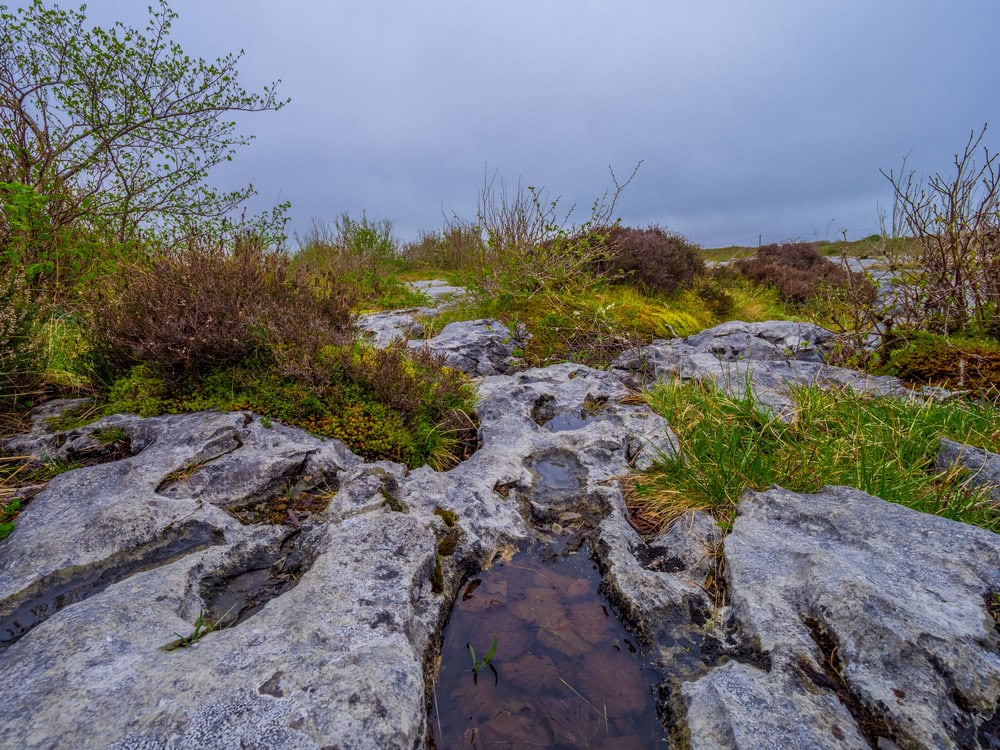
The Burren is one of the richest places in Ireland for Irish folklore layered directly onto the landscape. Poulnabrone Dolmen, a 5,200 to 5,800 year old portal tomb, takes its name from the Irish Poll na mBrón, meaning the hole of sorrows, a name long associated with local stories of grief and burial rites. Excavations found the remains of 33 people along with a stone axe, arrowheads and quartz crystals. Local folklore also tells of wolves once roaming the forests that originally covered this now-bare limestone, before Neolithic farmers cleared the land and the thin soil washed away to reveal the stone beneath. I find this is the detail that turns a stark grey landscape into something visitors actually remember.

How far is the walk from the car park in the Burren?
Quick answer: At Poulnabrone Dolmen, it is about a 250 metre walk from the car park across uneven limestone ground. At the Burren Centre in Kilfenora, parking is right in front of the building with no real walk at all. Burren National Park’s official trails are not wheelchair accessible.
Poulnabrone Dolmen has a free car park, with a roughly 250 metre walk to the monument along a gravel path. The ground is largely level after an initial downhill stretch, but becomes uneven limestone near the dolmen itself, which can be difficult for wheelchairs and very tricky in wet weather.
The Burren Centre in Kilfenora has parking directly in front of the building, with free parking also available at the Square nearby, meaning there is effectively no distance to cover to reach the entrance.
Burren National Park’s official trail network, accessed mainly from Gortlecka Crossroads near Corofin, is explicitly described by park management as rugged, uneven, and not wheelchair accessible. This applies even to the shortest, easiest-graded routes.
A free Park and Ride shuttle runs from the Corofin Information Point to the national park trailhead during summer months, which removes some walking but does not change the accessibility of the trails themselves once there.

Can you hire a wheelchair in the Burren?
Quick answer: No wheelchair hire is available at Poulnabrone Dolmen or within Burren National Park. The Burren Centre in Kilfenora does not advertise an on-site hire scheme either, so bring your own equipment.
None of the Burren’s free outdoor archaeological sites, including Poulnabrone, have visitor centres or hire desks, so any mobility equipment needs to travel with you.
Nearby Caherconnell Stone Fort, just one kilometre from Poulnabrone, has a fully wheelchair-accessible car park beside its own visitor centre and may be worth contacting directly if you need accessibility advice for the immediate area, as the two sites are often visited together.
The Burren and Cliffs Explorer shuttle bus connects towns and key attractions across North and West Clare in season, which can reduce the amount of independent walking or transferring you need to do between sites.

Are there accessible toilets in the Burren?
Quick answer: There are no toilets at Poulnabrone Dolmen itself. The Burren Centre in Kilfenora has accessible toilets as part of its fully accessible building.
Poulnabrone Dolmen has information boards and is usually staffed by an OPW site warden, but there is no shop, cafe or toilet block on site, so plan your facilities stop before or after visiting.
The Burren Centre in Kilfenora has multiple bathrooms, including accessible provision, alongside its tea rooms and exhibition space. Caherconnell Stone Fort, near Poulnabrone, also has visitor facilities including toilets if you are combining the two stops.

Is the Burren visitor centre step-free?
Quick answer: The Burren Centre in Kilfenora is fully accessible and step-free. Burren National Park itself has no large visitor centre, only a small seasonal information point in Corofin.
The Burren Centre in Kilfenora is described as fully accessible, with an exhibition covering the Burren’s geology, archaeology, flora and the celebrated Kilfenora Ceili Band tradition, narrated by naturalist Eamon de Buitlear, a good indoor, weatherproof option if outdoor terrain is a concern.
Burren National Park’s official access point is a small information point in Corofin with seasonal opening, rather than a large interpretive centre. The park’s trailheads themselves have no building at all, just a car park and signage.
Entry to Burren National Park’s trails and to Poulnabrone Dolmen is free. The Burren Centre in Kilfenora charges an admission fee for its exhibition, around 7 euros for adults at time of writing, though it is worth checking current pricing before you travel.

Best low-walk viewpoints in the Burren
- Poulnabrone Dolmen from the car park edge: the dolmen is visible from much of the surrounding limestone pavement, so even a partial approach along the gravel path gives a clear view of one of Ireland’s most photographed monuments.
- R477 coastal road, the Burren Scenic Drive: much of the Burren’s distinctive grey limestone landscape can be appreciated directly from the car along this signed scenic route, without leaving the vehicle.
- The Burren Centre exhibition and grounds, Kilfenora: a fully accessible way to understand the Burren’s geology and history indoors, paired with the adjacent 12th-century Kilfenora Cathedral and High Crosses, both reachable on level village streets.
Tickets, parking and where to eat in the Burren
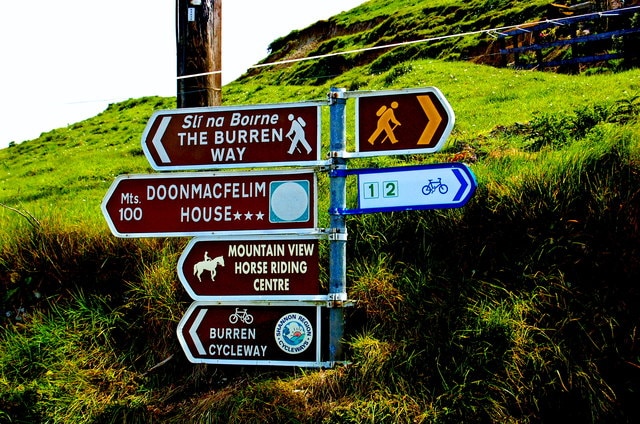
Poulnabrone Dolmen and Burren National Park’s trails are entirely free, with free parking at both. The Burren Centre in Kilfenora charges around 7 euros admission for adults, with free parking directly outside.
The Burren Centre’s own Tea Rooms serve breakfast, lunch and snacks in a step-free setting, and Kilfenora village itself has pubs and a grocery shop within level walking distance. For something more memorable, the village is also a noted spot for traditional Irish music sessions most evenings in season.
Accommodation in the Burren ranges from farmhouse bed and breakfasts to country house hotels around Ballyvaughan, Lisdoonvarna and Corofin. As with most of rural County Clare, ground-floor or lift-accessible rooms exist but are not guaranteed, so confirming directly with the property before booking is the safest approach. The Wild Atlantic Way Lodge is fully wheelchair accessible with amazing breakfast offerings. The Clybaun Hotel is also wheelchair accessible and is in Salthill Galway and is around 13km from the Burren.
I have brought visitors to Poulnabrone more times than I can count, and I always tell them the same thing standing at that car park edge: even if you cannot make the final stretch over the limestone, you are still looking at a 5,800 year old burial monument from less than 100 metres away. That is not a consolation prize. That is the view.

County Sligo – the most underrated area on the WAW
County Sligo sits between Mayo to the south and Donegal to the north on the Wild Atlantic Way, and offers two of the most rewarding low-effort stops on the entire route for reduced-mobility visitors: the Yeats grave and churchyard at Drumcliffe, which is genuinely wheelchair accessible with a car park right beside the gate, and Carrowmore Megalithic Cemetery, where a newly upgraded visitor centre (opened April 2026) sits in a free car park four kilometres from Sligo town, even if the grassy paths between the tombs themselves remain limited for wheelchair users.
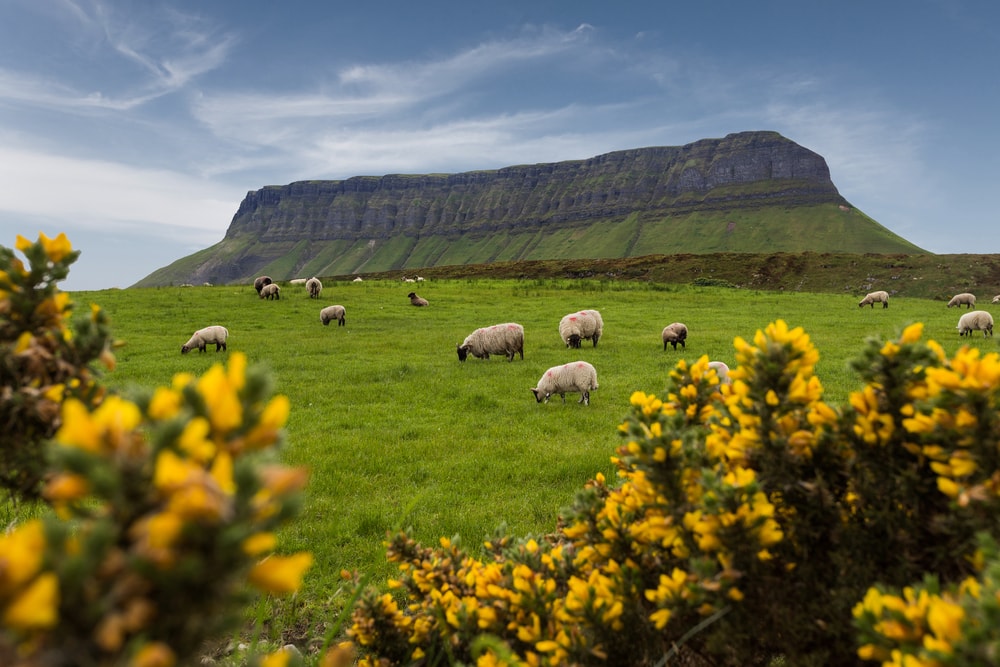
Benbulben, the flat-topped mountain that defines Sligo’s skyline and inspired much of W.B. Yeats’s later poetry, can be seen in its full dramatic profile directly from the N15 road and from the Drumcliffe churchyard without leaving the car or crossing any uneven ground.
How far is the walk from the car park in Sligo?
Quick answer: At Drumcliffe, the car park is right beside the churchyard gate effectively no walk at all. At Carrowmore Megalithic Cemetery, the visitor centre is at the car park entrance, but the path between the tombs involves uneven grass and has limited wheelchair access.
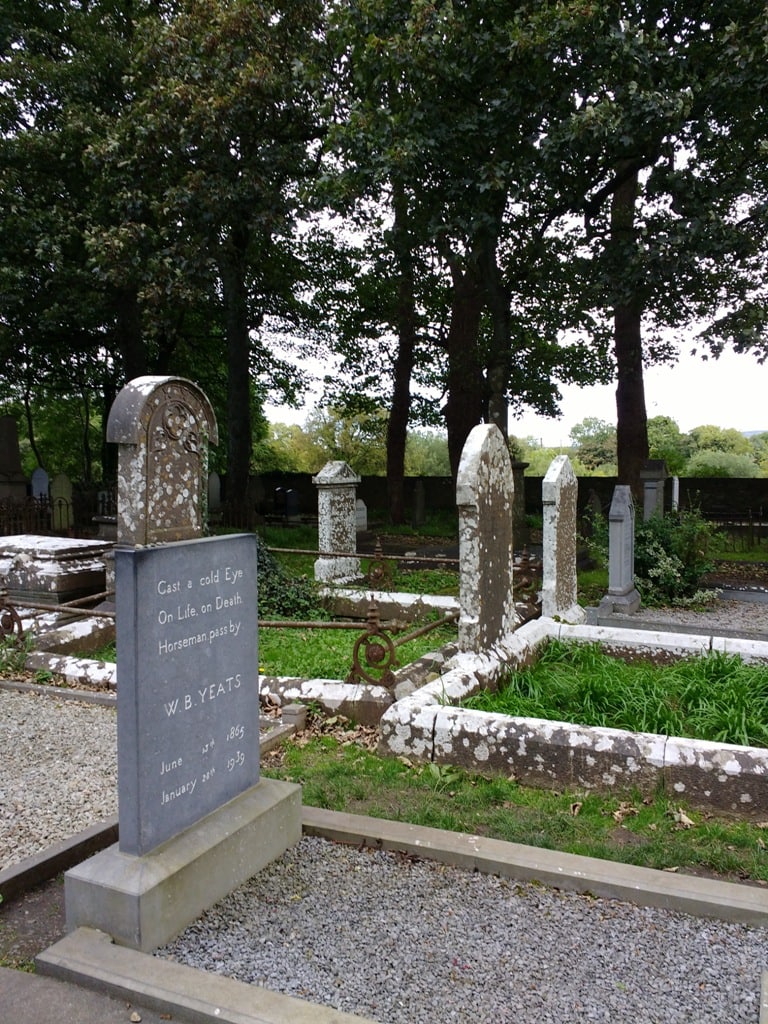
At Drumcliffe, you park for free directly beside St Columba’s Church, step through the gate, and W.B. Yeats’s grave is immediately to your left on flat, paved paths. The whole churchyard is compact from the gate to the grave takes under two minutes on level ground, with Benbulben rising directly behind you. It is one of the most genuinely effortless accessible stops on the Wild Atlantic Way.

At Carrowmore Megalithic Cemetery, four kilometres west of Sligo town off the R292, the free car park is right at the entrance and the newly upgraded visitor centre is step-free. The site contains more than 35 passage tombs dating back 6,000 years, arranged across open fields. The paths between the monuments are grassy and uneven, and the OPW and site management explicitly describe wheelchair access as limited. The visitor centre and its exhibition are accessible; reaching the tombs themselves across the field is the challenge.

Can you hire a wheelchair in Sligo?
Quick answer: No dedicated wheelchair hire is available at either Drumcliffe or Carrowmore. Bring your own equipment. Sligo town, eight minutes from Carrowmore, has mobility equipment suppliers if you need to hire ahead of your visit.
Neither site has an on-site wheelchair hire scheme. Drumcliffe’s compact, flat churchyard means a standard wheelchair or mobility scooter is well suited to the visit. At Carrowmore, the uneven terrain between tombs means even a powered wheelchair will struggle beyond the visitor centre.
Are there accessible toilets in Sligo?
Quick answer: At Drumcliffe, wheelchair-accessible toilets are available during Pink Clover Café opening hours. At Carrowmore, the newly upgraded visitor centre includes toilet facilities check with the OPW on accessible provision as the refurbishment was completed in April 2026.
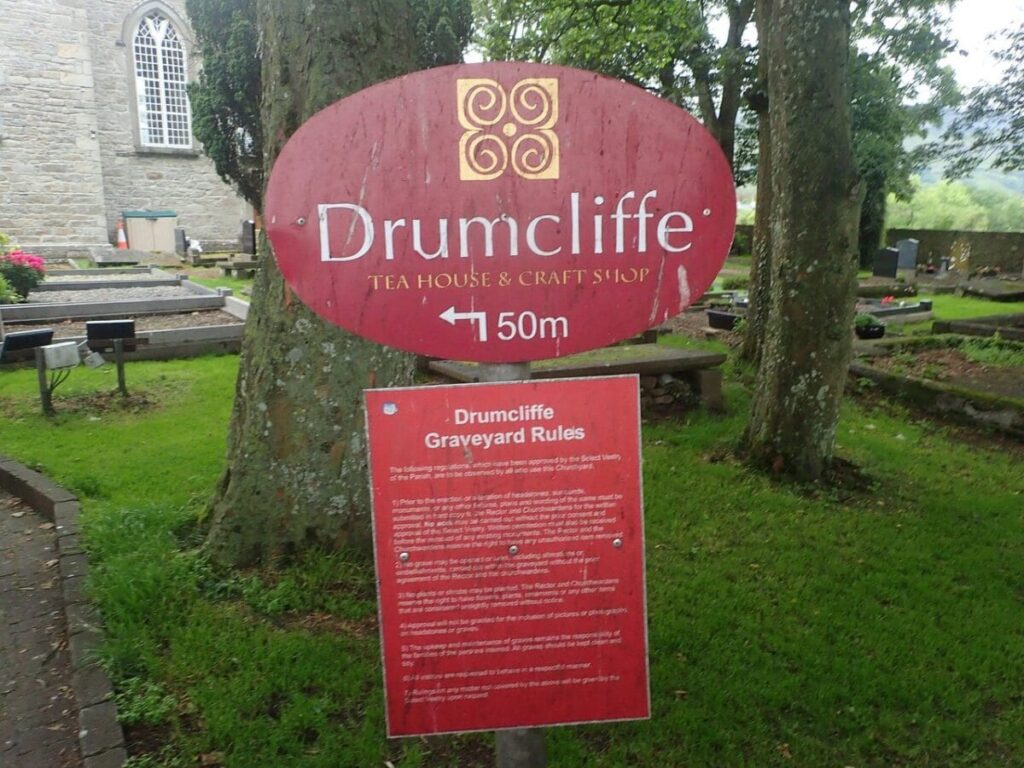
Drumcliffe’s accessible toilet is located beside the Pink Clover Café, which is open during visitor centre hours. If you’re visiting outside café hours, plan your facilities stop in Sligo town beforehand. At Carrowmore, the April 2026 visitor centre upgrade included enhanced accessibility and visitor amenities it is worth phoning the site directly on 071 916 1534 to confirm current accessible toilet provision before travelling.

Is the visitor centre step-free in Sligo?
Quick answer: Drumcliffe’s churchyard paths and main entry ways are wheelchair accessible, with a side ramp into the church building itself. Carrowmore’s newly upgraded visitor centre is described as having enhanced accessibility as part of its 2026 refurbishment.
At Drumcliffe, the churchyard is flat and accessible, the paths to the grave and the 10th-century High Cross are level, and the church itself has a side ramp —ask a staff member for assistance. Entry to the churchyard and grave is free; the café and craft shop are beside the car park.
At Carrowmore, the visitor centre cottage has been significantly upgraded with the April 2026 refurbishment, including improved accessibility alongside new interpretation displays. The site is managed by the OPW and entry costs €5 for adults, with the site open daily from Easter to October, 10am–5pm.

Best low-walk viewpoints in Sligo
- Drumcliffe churchyard: the grave of W.B. Yeats, the 10th-century High Cross, and the full Benbulben profile are all reachable from the car park gate on flat, accessible ground the single most effortless cultural stop on the Sligo section of the Wild Atlantic Way.
- Benbulben from the N15: the mountain’s distinctive flat-topped silhouette is visible directly from the road between Sligo town and Drumcliffe. Several lay-bys allow you to stop and take in the view without leaving the car.
- Carrowmore visitor centre forecourt: even if the field paths are too uneven to navigate, the approach to the visitor centre gives views across the tomb landscape toward Knocknarea mountain, with Queen Maeve’s Cairn visible on the summit one of the great mythological skylines in Ireland.


Mizen Head: Accessible Wild Atlantic Way Stop in West Cork
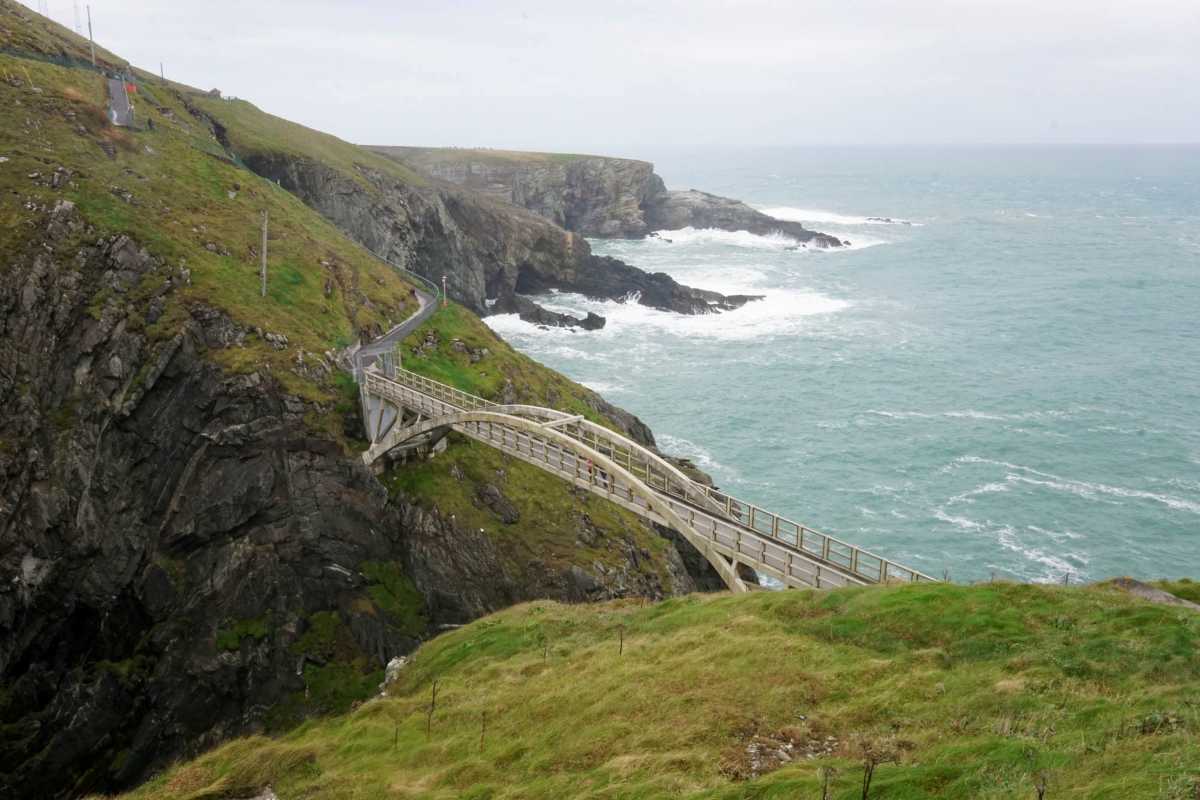
Mizen Head, at Ireland’s most south-westerly point in County Cork, is known for its dramatic arched suspension bridge linking the mainland to the old signal station. The visitor centre itself is accessible, and usefully, there is a step-free ramped alternative to the famous 99 steps, though the paths beyond the bridge remain genuinely challenging.
A note for film fans
Mizen Head has its own small place in popular culture alongside its maritime history. Scenes for Star Wars: Episode VIII were filmed nearby at Brow Head, and the visitor centre now has a small exhibit recognising the connection, including photos of cast and crew who visited local pubs during filming. It is a nice, unexpected addition for anyone road tripping the Wild Atlantic Way with a film-loving family in tow.
How far is the walk from the car park at Mizen Head?
Quick answer: From the visitor centre to the bridge and signal station is around a 15-minute walk. You can use a ramped path alongside the historic 99 steps, but the route is still steep in places and the bridge itself can be a hard push.
Free parking with dedicated coach bays is available at the site, with ample space outside of peak summer. It is not possible to see the bridge from the car park itself; you need to walk the path to reach it.
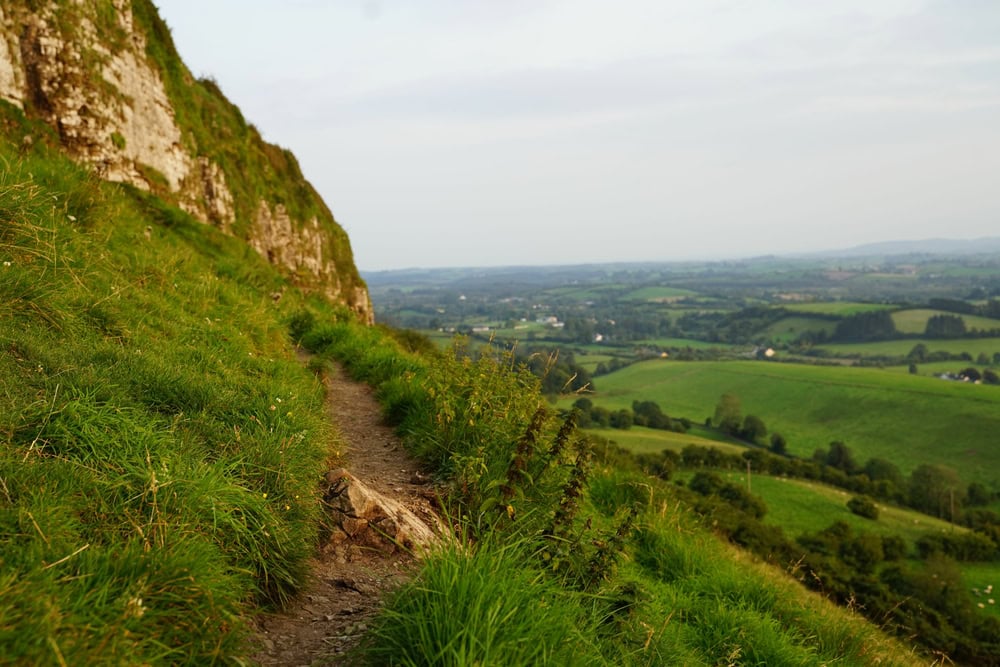
Between the visitor centre and the signal station there are 99 steps in total. An alternative ramped path runs alongside the bridge for those who cannot use the steps, and is described as stroller and wheelchair accessible.
That said, multiple visitor accounts note the ramped route is still a steep, hard push in a wheelchair, particularly on the return uphill journey, and that some side paths to specific cliff viewpoints have steps or gradients too steep for wheelchairs regardless of the main ramp.
One reviewer who uses an electric wheelchair reported a largely positive experience on the main paths, while manual wheelchair users and companions pushing a manual chair should expect a genuine physical effort, especially in wind.
Can you hire a wheelchair at Mizen Head?
Quick answer: No wheelchair hire is advertised on site at Mizen Head. Bring your own, and ideally have a companion able to assist on the ramped sections.
There is no mention of an on-site loan or hire wheelchair scheme at Mizen Head’s visitor centre, unlike the Cliffs of Moher.
Given that the ramped path to the bridge is workable but physically demanding, an electric or powered wheelchair will generally cope better here than a manual chair, based on visitor reports.
Entry for wheelchair users follows the standard admission structure, and staff are reported as helpful when contacted in advance. It is worth calling ahead if you have specific access needs, particularly around weather and wind exposure on the bridge.
Are there accessible toilets at Mizen Head?
Quick answer: Yes. There is an accessible toilet at the visitor centre, and the cafe and shop areas are also accessible.
The visitor centre near the car park is described as accessible except for one room upstairs; the cafe, shop and an accessible toilet are all part of the accessible ground-floor area.
The separate Mizen Information and e-Centre in Goleen village also lists public toilets and an accessible hot desk among its facilities, if you are passing through Goleen on the way to or from the head.
Is the Mizen Head visitor centre step-free?
Quick answer: Yes. The visitor centre itself, including the cafe, shop and audio-visual room, is fully step-free, with level entrances. It is the outdoor paths beyond it (the bridge and cliff walks) that involve steps and steep gradients.
The visitor centre is described as fully accessible, with level entrances, wheelchair-friendly restrooms, and an accessible audio-visual room for exhibition content.
The original 1910 bridge design and its 99 steps are not wheelchair-compatible on their own, but the ramped path alongside it means you do not need to use the steps to reach the bridge crossing, which was rebuilt in 2011 as a 50-metre concrete structure.
Several of the shorter, steeper side-paths off the main route to specific cliff viewpoints do have steps and gradients that are genuinely not accessible. These are separate from the main bridge route and are easy to simply skip.

Best low-walk viewpoints at Mizen Head
- Observation platform near the visitor centre: looks down over the bridge to the signal station and up the coast toward the Beara Peninsula. The path to this platform is flat, with a seat available, making it the easiest substantial view on site.
- Bridge crossing via the ramped path: for those who can manage a steep but step-free route, crossing the bridge itself, rather than just viewing it, gives access to the signal station exhibits and a wider sweep of coastline.
- Car park and approach road: the drive in along the narrow but well-maintained road to Mizen Head already takes in dramatic coastal scenery before you even reach the car park, useful if walking further is not an option that day.

Tickets, parking and where to eat at Mizen Head
As of the 2026 season, adult admission is 7.50 euros, with seniors and students at 6 euros, children under 14 at 4.50 euros, and children under 5 free. A family ticket for two adults and up to four children is 25 euros, and group rates apply for parties of 10 or more. Tickets are sold at the desk on arrival only; there is no online booking. Parking is free, with dedicated coach bays.
The Mizen Cafe in the main visitor centre building serves homemade soups, sandwiches and cakes in a step-free setting. For something further afield, the village of Goleen and the harbour village of Crookhaven both have traditional pubs serving food, a short drive from the headland.
Accommodation in this part of West Cork is mostly bed and breakfasts and small guesthouses around Goleen, Schull and Crookhaven, with Skibbereen and Bantry offering a wider hotel choice slightly further afield. As with the rest of this rural coastline, confirming step-free access directly with the property is the most reliable approach. The Romantic Hideway in Goleen is wheelchair accessible with a beachfront location and the entire property is yours. Beacon View in Skibbereen is also wheelchair accessible and the house is all yours and you can bring your dog.
Of everywhere on this list, Mizen Head is the one I describe to friends as feeling the most like the edge of Europe. Even from the flat observation platform near the visitor centre, without crossing the bridge at all, you get a real sense of standing at Ireland’s most south-westerly point.

How to Plan an Accessible Wild Atlantic Way Road Trip: Step by Step
Pulling these eight sites together into one road trip takes a bit of sequencing, especially across a county spread as wide as Donegal in the north down to West Cork in the south, with the Aran Islands off Galway Bay as a possible detour in between. Here is the planning sequence I actually use with visitors.
- Pick your anchor sites first. Decide which two or three of the Cliffs of Moher, the Burren, Connemara, Achill, the Kerry Cliffs, Mizen Head, Glenveagh and Slieve League matter most to you, since this Wild Atlantic Way road trip covers well over 500 kilometres end to end and trying to do all eight in under a week is exhausting for any traveller, let alone one managing mobility limits.
- Phone ahead for any site with limited accessible parking. The Cliffs of Moher, Connemara National Park, and Keem Bay on Achill all have a finite number of accessible bays or a small car park that fills early in peak season. A quick call the day before, or even that morning, avoids a wasted detour.
- Pack for wind, not just rain. Several of these sites sit on exposed headlands where wind can make a ramped or paved path far harder to manage than the gradient alone would suggest. This applies especially at the Kerry Cliffs, Mizen Head and the Cliffs of Moher.
- Build in buffer time between stops. Distances on the Wild Atlantic Way look short on a map but Irish coastal roads are narrow and winding, and accessible viewing points often take longer to reach on foot than able-bodied estimates suggest.
- Confirm accessible rooms when booking accommodation, not after arrival. Rural Irish guesthouses vary enormously in step-free provision, and a phone call asking specifically about door widths, bathroom layout and ground-floor availability saves disappointment.
- Treat car-based viewpoints as a valid day out, not a fallback. At every location in this guide, at least one genuinely impressive view is reachable directly from, or very close to, the car. You do not have to reach the most photographed viewpoint to have a worthwhile visit.

County Donegal: Wheelchair Access at the Wild Atlantic Way’s Northern Anchor
This guide covers six Wild Atlantic Way highlights further south in detail, but the route itself begins in County Donegal, at Malin Head, and runs the full length of Ireland’s west coast down through Sligo, Mayo, Galway, Clare, Kerry and Cork to West Cork. Donegal deserves its own mention here, not as an afterthought but because its two best-known natural attractions, Glenveagh National Park and the Slieve League cliffs, both have genuine wheelchair-accessible viewpoints that are not always obvious from how they get marketed.
A note on scope
I have written a separate, dedicated guide to Accessible Donegal, which covers the county in far more depth, including Donegal Town as a base, Glencolmcille, Inishowen, Doagh Famine Village, accessible beaches such as Rossnowlagh and Portsalon, and accommodation options. That piece is written more broadly for slower travellers, mature visitors and anyone managing fatigue or stamina limits, rather than specifically for wheelchair users. The two sections below cover the wheelchair-specific detail, the exact parking distances, ticket prices and step-free viewpoints, for Donegal’s two biggest Wild Atlantic Way draws, since that is the gap a broader slow-travel guide does not always need to fill.

Is Glenveagh National Park wheelchair accessible?
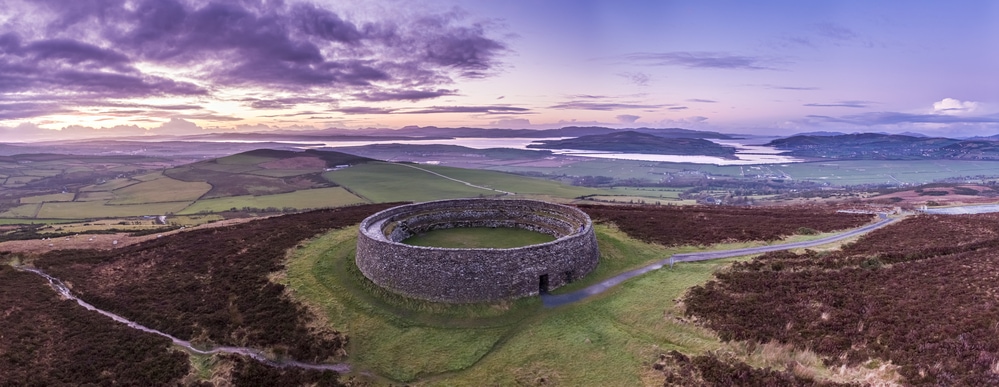
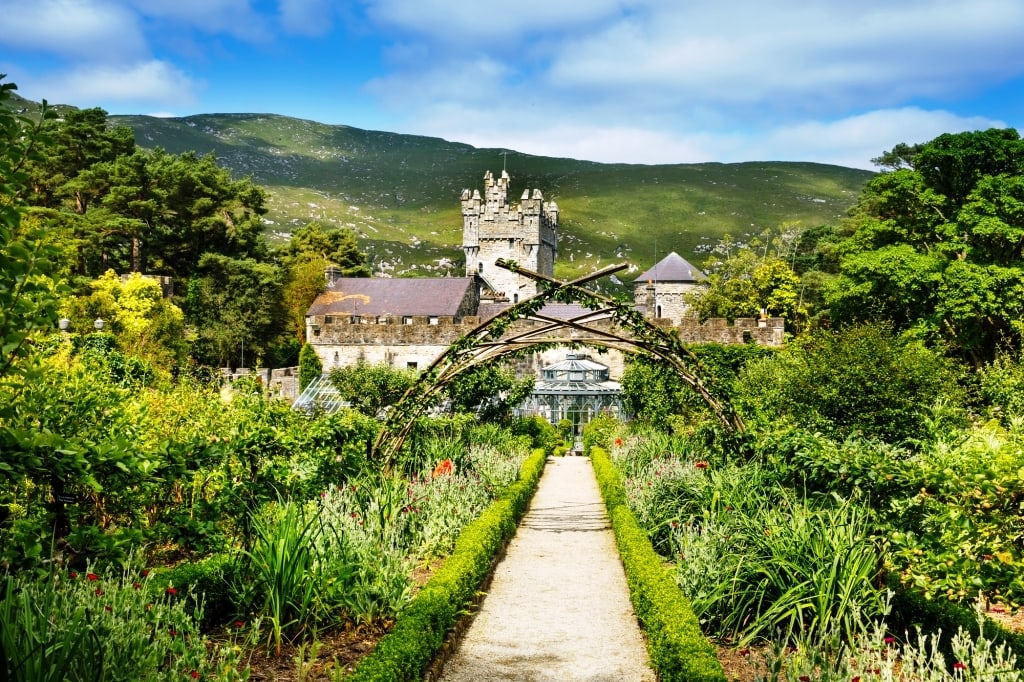
Quick answer: Yes, to a strong standard for a working national park. Designated accessible parking sits beside the Visitor Centre, both electric shuttle buses to the castle have full wheelchair access, and the Visitor Centre, toilets and castle gardens are wheelchair accessible, though parts of the gardens involve steps and uneven ground.
Cars are not permitted beyond the Glenveagh Visitor Centre car park, which is free, with designated accessible spaces close to the building. From there, the castle and gardens sit roughly 4 kilometres further into the park, a distance that rules out walking for most wheelchair users but is fully covered by the shuttle service.
Both electric shuttle buses that run between the Visitor Centre and the castle have full wheelchair access. As of the 2026 season, an adult return ticket is 5 euros, a single is 3 euros, and children under 6 travel free. The shuttle also serves the start of two walking routes on weekends and bank holidays.
Blue Badge holders can request permission to park closer to the castle itself, though space there is very limited and is only granted in special circumstances, so the shuttle remains the more reliable option for most visitors.
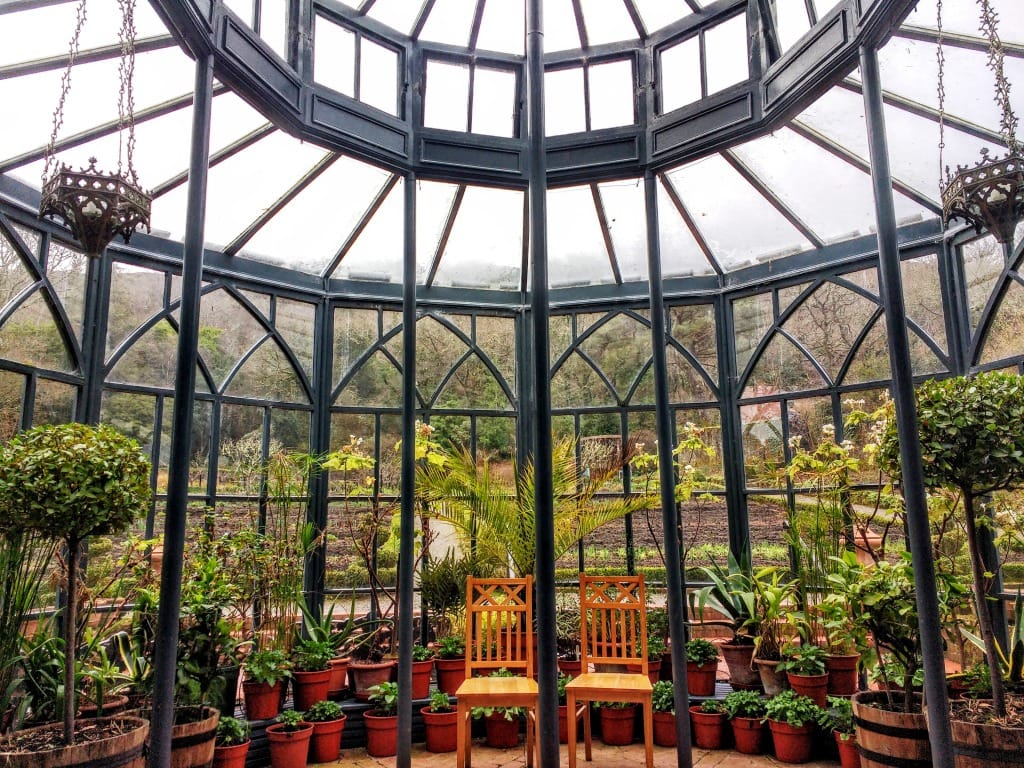
The Visitor Centre itself, including its exhibition space, toilets and tearooms, is wheelchair accessible, and the castle gardens are accessible along their main trail, though some sections involve steps and steep, uneven ground that are genuinely not passable for wheelchair users. Entry to the park, the Visitor Centre exhibition and the gardens is free. A self-guided castle tour is 10 euros for adults, with a family ticket at 30 euros.
Glenveagh is roughly 24 kilometres, about 30 minutes, from Letterkenny, making it a realistic half-day stop on a wider Donegal or Wild Atlantic Way itinerary.

Is Slieve League wheelchair accessible?
Quick answer: The main Bunglas viewpoint, widely regarded as the best view of the cliffs, is wheelchair accessible and reachable directly by car to the upper car park. The longer cliff and pilgrim paths beyond that point are not.

Slieve League works on a tiered parking system that changes with the season. In peak summer, a shuttle bus runs from the Visitor Centre in Teelin, 4 kilometres from the cliffs, to the upper car park beside the Bunglas viewing platform. Disabled cardholders and taxis retain access to drive directly to the upper car park even when the general public is required to use the shuttle, which is the detail that makes this site workable for wheelchair users despite the seasonal restrictions.
Outside peak season, you can drive directly to the upper car park yourself once a parking ticket has been purchased at the Ranger Station, 2 kilometres from the cliffs. As of 2026, parking at the Ranger Station is 10 euros for 2 hours or 15 euros for a full day. Parking at the Visitor Centre itself, 4 kilometres from the cliffs, is free, for those happy to take the shuttle the rest of the way.
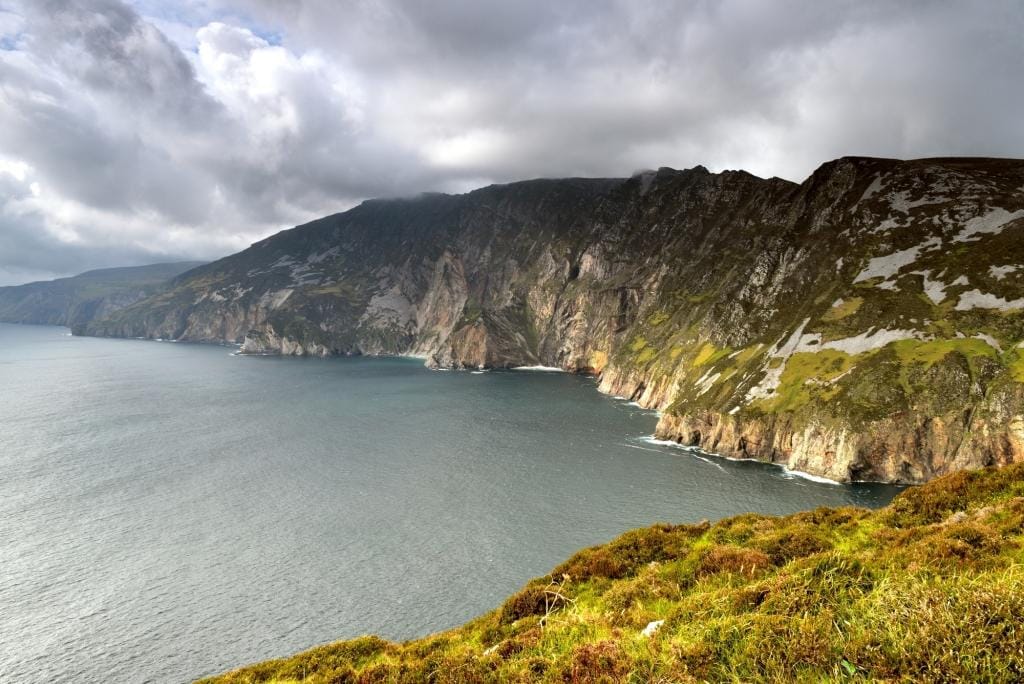
The viewing platform at the upper car park, Bunglas Point, is wheelchair accessible and gives the classic, widely photographed view across Donegal Bay toward Sligo. This is the same viewpoint most visitors are aiming for regardless of mobility, so reaching it by accessible parking is not a consolation option, it is the main event.
Beyond the viewing platform, the Cliff Path Walk and the separate Pilgrim’s Path both involve narrow, steep, unfenced terrain that is not accessible for wheelchair users and is genuinely demanding even for fit walkers. There are no toilets at the viewing point itself; facilities are at the Visitor Centre and Ranger Station only, so plan accordingly before making the drive up.
It is worth phoning the Slieve League Cultural Centre directly in advance of your visit, particularly in peak season, to confirm current shuttle arrangements and disabled access to the upper car park, since the seasonal system changes from year to year.


Donegal versus the rest of this guide
Compared with the Cliffs of Moher, Donegal’s two big sites are rougher around the edges in terms of formal accessible infrastructure, there is no equivalent of the Lifts of Moher buggy or an on-site wheelchair loan scheme at either Glenveagh or Slieve League. What they do offer is something the Cliffs of Moher cannot: genuinely uncrowded, dramatic Atlantic scenery reachable by accessible parking, often with nobody else around. If you are weighing up where to spend limited time and energy on a Wild Atlantic Way trip, Slieve League’s Bunglas viewpoint at 601 metres is, properly reached, one of the most dramatic accessible coastal views in Ireland, considerably higher than the Cliffs of Moher itself, just with far less visitor infrastructure built up around it.
For the wider Donegal picture, including where to base yourself, accessible beaches, and a slower-paced approach to the county that goes well beyond these two sites, see the full Accessible Donegal guide.
For dramatic cliff scenery on the Wild Atlantic Way, the Cliffs of Moher vs Slieve League vs Kerry Cliffs each offer a very different experience in terms of accessibility and facilities. Slieve League’s paths can be uneven and exposed, so those with mobility challenges or a fear of heights should take care, though the lower viewing point at Bunglass is manageable for most visitors.

Accessible Wild Atlantic Way: Beyond These Sites
Between the Skellig Ring, the Cliffs of Moher, Connemara, Achill, the Burren, Mizen Head and now Donegal’s Glenveagh and Slieve League, this guide covers eight of the Wild Atlantic Way’s most visited stops in genuine accessibility detail. The full route runs the entire length of Ireland’s west coast, from Malin Head in the north down through Sligo, Mayo, Galway, Clare, Kerry and Cork to Kinsale, so there is plenty more ground for a longer road trip to cover.
If you have time, a detour to the Aran Islands from Doolin or Galway is well worth considering, though be aware that the islands themselves involve a ferry crossing and largely unpaved terrain, so accessibility there depends heavily on which part of which island you plan to visit, and on confirming gangway width and tide-dependent access directly with the ferry operator in advance.

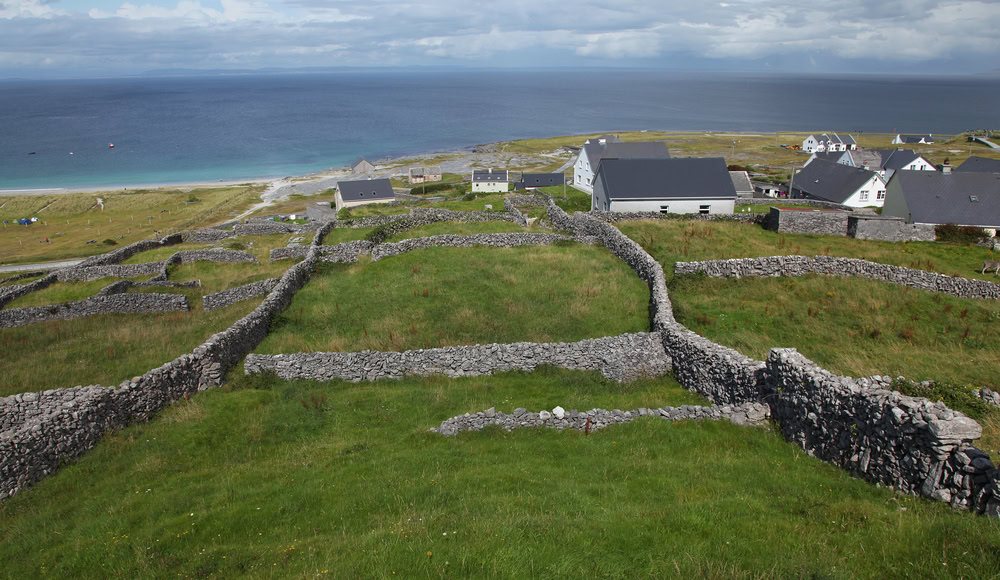
For travellers with mobility challenges or those using wheelchairs, visiting the Aran Islands requires some careful planning but can still be a rewarding experience. Accessible passenger assistance is available on the ferries if requested in advance, and some accessible taxis and guided tours operate on the islands. However, accessibility varies considerably once you arrive.
The villages and many of the main roads are paved and can be explored with a wheelchair or mobility scooter, but much of the islands’ appeal lies in their rugged landscapes and ancient sites. Attractions such as Dún Aonghasa, the Black Fort, and many early Christian ruins are reached via uneven tracks, steep gradients, rough limestone, or steps, making them inaccessible to most wheelchair users. Fortunately, there are still plenty of spectacular coastal viewpoints, beaches, cafés, craft shops, and scenic drives that can be enjoyed without tackling difficult terrain. If you need step-free accommodation or accessible transport, book well ahead and confirm facilities directly, as fully accessible options remain limited.
Frequently Asked Questions: Accessible Wild Atlantic Way
Is the Wild Atlantic Way wheelchair accessible?
Parts of it are genuinely accessible, and parts are not. The Cliffs of Moher in County Clare has the strongest step-free infrastructure on the entire route, with paved paths, accessible parking, free wheelchair loans and an electric buggy shuttle. Other major stops, including Connemara National Park, the Burren, Achill Island, Mizen Head and the Kerry Cliffs, each have at least one low-effort, car-accessible viewpoint, even where the full site involves uneven or steep terrain. Checking site by site, as this guide does, is the most reliable way to plan.
Which is the most accessible cliff walk in Ireland?
The Cliffs of Moher is widely considered the most accessible cliff attraction in Ireland, with around 800 metres of paved, wheelchair-friendly pathway, designated disabled parking close to the Visitor Centre, and a free electric buggy service for visitors with limited mobility.
Do you need to book Cliffs of Moher tickets in advance for accessible parking?
Booking online in advance is recommended for entry, especially in peak season, though disabled parking bays are allocated on arrival to vehicles displaying a valid permit rather than through separate online booking. Phoning ahead is worthwhile if you have specific access needs.
Are the Aran Islands accessible for wheelchair users?
Accessibility on the Aran Islands varies significantly by location and is generally more limited than at mainland sites such as the Cliffs of Moher, since much of the terrain is unpaved limestone. The islands are reached by ferry from Doolin or Rossaveal, and the crossing itself, along with onward transport on the islands, should be checked directly with operators if you have mobility needs.
What is the easiest Wild Atlantic Way stop for someone who cannot walk far?
Based on this guide, the Cliffs of Moher offers the easiest combination of accessible parking, step-free paths and on-site mobility support. For visitors who want a view reachable entirely from the car, Coomanaspig Pass beside the Kerry Cliffs and the Atlantic Drive on Achill Island are both strong options.
Is County Clare or County Kerry better for an accessible Wild Atlantic Way trip?
County Clare, with the Cliffs of Moher and the Burren, generally offers more developed accessible infrastructure than County Kerry’s Skellig Ring, which remains a more rural, working-farm style attraction at the Kerry Cliffs. Many accessible-travel-guides-ireland-uk-europelers combine both as part of a longer Wild Atlantic Way road trip, prioritising County Clare for guaranteed step-free access and County Kerry for its closer Skellig Michael views.
Are Glenveagh National Park and Slieve League wheelchair accessible?
Both offer genuine wheelchair access to their best viewpoints, though neither matches the Cliffs of Moher for formal infrastructure. Glenveagh’s Visitor Centre, toilets and electric shuttle buses to the castle are all wheelchair accessible, and the shuttle covers the 4 kilometres that would otherwise rule out the castle and gardens for most wheelchair users. At Slieve League, the main Bunglas viewpoint is wheelchair accessible by car, with disabled cardholders retaining access to the upper car park even during peak-season shuttle restrictions. For a fuller picture of accessible Donegal beyond these two sites, including beaches, accommodation and a slower-paced approach to the wider county, see my dedicated Accessible Donegal guide.
Does Irish folklore feature at any of these sites?
Yes, particularly in the Burren, where Poulnabrone Dolmen carries the Irish name Poll na mBrón, meaning the hole of sorrows, tied to its history as a 5,800 year old burial site. Achill Island’s Deserted Village at Slievemore also carries strong folklore and Famine-era history, though its uneven terrain makes it one of the less accessible sites in this guide.
accessible-travel-guides-ireland-uk-europe on the Wild Atlantic Way is absolutely possible, and in places like the Cliffs of Moher, genuinely well supported. The key, as with most accessible-travel-guides-ireland-uk-europe, is knowing the specifics in advance rather than discovering them at the car park door. I hope this guide gives you exactly that, the practical groundwork to plan an Irish west coast road trip that matches what you and your travel companions can actually manage, without missing out on the views that make this coastline worth the journey in the first place.
Explore our accessible-travel-guides-ireland-uk-europe guides to Donegal, Galway City, Galway, Dingle, Westport, Mayo, Waterford, Wicklow and Dublin. If you’re working out what your trip will actually cost, read my How Much Does a Trip to Ireland Cost? 2026/27 Budget Breakdown for a full pricing breakdown by category.
Join 7,500 Ireland travellers in my Ireland Uncovered Facebook Group and 1,897 on my XYUandBEYOND PAGE
These are the most useful official and practical resources for planning an accessible Ireland trip. Verify details before travel as information changes.
- Irish Rail Passenger Assistance book support for train travel including boarding, alighting, and connections
- Transport for Ireland (TFI) accessibility information across public transport
- Dublin Bus and Bus Éireann accessibility statements route and vehicle information
- National Transport Authority (NTA) taxi regulation and wheelchair-accessible vehicle information
- Euan’s Guide crowdsourced real-world accessibility reviews for attractions, restaurants, and venues across Ireland
- Hidden Disabilities Sunflower information on where the scheme is recognised in Ireland
This guide is part of a wider Accessible Ireland travel series, offering realistic, first-hand advice for limited-mobility travel across Ireland.
➡️Accessible Causeway Coast Route
➡️Accessible Wild Atlantic Way
If you encounter changes (e.g., temporary lift closures or construction), please let me know so I can update this page promptly.