
Accessible Derry: Real Tips for Limited Mobility in Northern Ireland
Derry is one of the most manageable historic cities in Ireland and Northern Ireland for travelers with limited mobility, but only if you approach it realistically. Many travel guides focus heavily on the history, murals, and city walls without talking honestly about gradients, fatigue, weather exposure, or how physically tiring older cities can become after a few hours of constant walking. The reality is far more balanced.

After years of visiting Derry in different seasons and weather conditions, what stands out most is how adaptable the city can be for slower travel. The compact centre means you can experience a surprising amount without needing to cover huge distances, while the riverside layout provides calmer, flatter areas that work well for wheelchair users, travelers with chronic pain conditions, mobility scooter users, and anyone who prefers a slower pace.
At the same time, Derry is still an old walled city. Some streets are steep, pavements narrow unexpectedly, and wet Atlantic weather changes the physical effort required far more than most visitors anticipate. Accessibility here is not about everything being perfectly step free. It is about knowing which areas work best, where fatigue builds quickly, and how to structure your day so the city feels enjoyable rather than exhausting.
This guide focuses on the real experience of visiting Derry with limited mobility. It covers accessible attractions, wheelchair accessible areas, parking, public transport, walking distances, terrain realities, seating availability, and practical pacing advice based on repeated visits over the years.
If you are looking for a realistic guide to accessible Derry rather than idealised tourism marketing, this is what you actually need to know.

- Accessible Derry: Real Tips for Limited Mobility in Northern Ireland
- Why Derry Works Well for Slower Travel
- Is Derry Wheelchair Accessible?
- Accessible Walking Around Derry’s Historic City Walls
- The Peace Bridge and Riverside Walks
- Accessible Museums and Attractions in Derry
- Exploring the Bogside Murals with Limited Mobility
- Accessible Parking in Derry
- Accessible Public Transport in Derry
- What Most Guides Miss About Accessible Derry
- Best Time to Visit Derry for Accessibility
- Accessible Accommodation in Derry
- Suggested Low-Exertion Itinerary for Derry
- FAQs About Accessible Derry
- Visiting Derry with Limited Mobility
Why Derry Works Well for Slower Travel
Derry is one of the few historic cities in Ireland where slower travel genuinely improves the experience. The city centre is compact enough that many major attractions sit close together. The Guildhall, Peace Bridge, riverside walks, museums, cafés, murals, and city walls can all be reached without constantly moving long distances across the city. That compactness matters enormously when mobility or energy levels are a concern.
Many visitors discover that Derry works best when approached slowly. Instead of trying to rush between landmarks, the city rewards time spent sitting along the River Foyle, listening to local conversations in pubs and cafés, or watching Atlantic weather roll across the hills surrounding the city.
Derry also works particularly well as an overnight destination because it allows slower travelers to spread attractions across multiple days instead of compressing everything into one exhausting itinerary.

Is Derry Wheelchair Accessible?
Derry is partly wheelchair accessible, but realistic expectations matter. Many modern attractions and public areas work well for wheelchair users and travelers with limited mobility. The Peace Bridge, riverside promenades, Guildhall, shopping districts, and several museums all offer relatively accessible layouts with smoother surfaces and step-free sections.
However, the city still presents challenges because of its age and geography. Some areas include steep gradients, uneven paving, older entrances, and narrow pavements. The terrain changes constantly as you move between the riverside and the historic walled centre.
The biggest accessibility challenge in Derry is not usually distance. It is elevation. Even short walking segments can feel surprisingly tiring because streets rise and fall more than many visitors expect. Wet weather also changes accessibility dramatically. Historic paving stones and sloped streets become slippery quickly during rain or damp Atlantic conditions.
That said, Derry is far more manageable than many travelers initially fear because attractions cluster closely together and short taxi rides are inexpensive and easy to arrange.
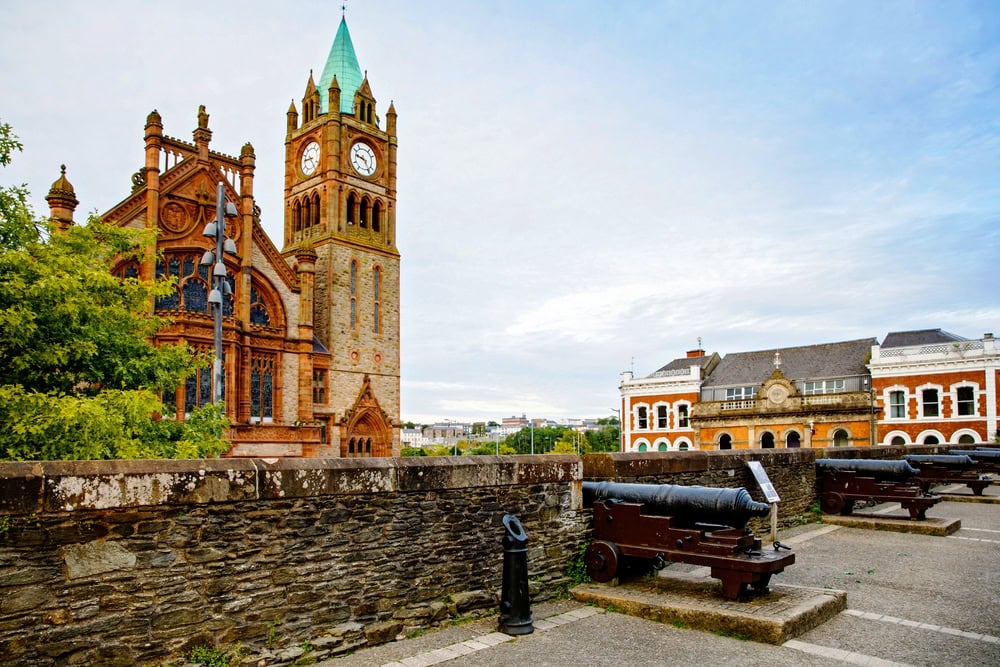
Accessible Walking Around Derry’s Historic City Walls
The city walls are one of Derry’s defining attractions and also one of the areas visitors worry about most from an accessibility perspective.
The walls form roughly a one-mile circuit around the old city and provide panoramic views across the River Foyle, the Bogside, St Columb’s Cathedral, and the surrounding hillsides.
Many people assume the walls are completely inaccessible because they are historic fortifications, but the reality is more nuanced. Some sections are relatively manageable while others involve uneven surfaces, steeper gradients, narrow passages, and occasional steps. You do not need to complete the full circuit to enjoy the experience.
In reality, shorter sections usually work much better for travelers with limited mobility. Certain viewpoints provide excellent scenery without requiring long periods of walking or continuous uphill movement.
Surface conditions vary considerably depending on weather. Dry mornings can feel manageable while wet afternoons make some stone surfaces slippery and physically tiring. Wind exposure also affects energy levels far more than many travelers expect.
Bench availability along the walls is limited in some areas, so it helps to combine wall walks with nearby cafés or museum stops where you can sit properly and recover energy indoors.
Crowds also change the experience completely. During busy afternoons and summer weekends, large tour groups can create stop-start movement that becomes draining surprisingly quickly. Early mornings are dramatically calmer and far easier to navigate.

The Peace Bridge and Riverside Walks
The Peace Bridge is one of the easiest and most genuinely accessible experiences in Derry.
The bridge itself is modern, smooth surfaced, step free, and wide enough for wheelchairs, mobility scooters, and slower walkers to move comfortably without stress. Gradients are manageable and the nearby riverside promenades provide some of the calmest walking areas in the city.
Walking distances here are flexible and easy to shorten depending on energy levels. Crossing the bridge slowly takes roughly ten to fifteen minutes, while riverside walks can be extended or reduced very easily without pressure. Surface conditions are generally smooth and well maintained, particularly compared to the older historic areas higher up in the city.
Benches are available along sections of the promenade, and cafés nearby make it easy to pause frequently without climbing hills or navigating busy traffic.
For many travelers with limited mobility, the riverside becomes the most relaxing part of Derry. It provides space to slow down and absorb the atmosphere of the city without constantly negotiating uneven streets or crowds.
At sunset, the riverfront becomes particularly beautiful as the changing Atlantic light reflects across the River Foyle and the city walls begin glowing above the water.

Accessible Museums and Attractions in Derry
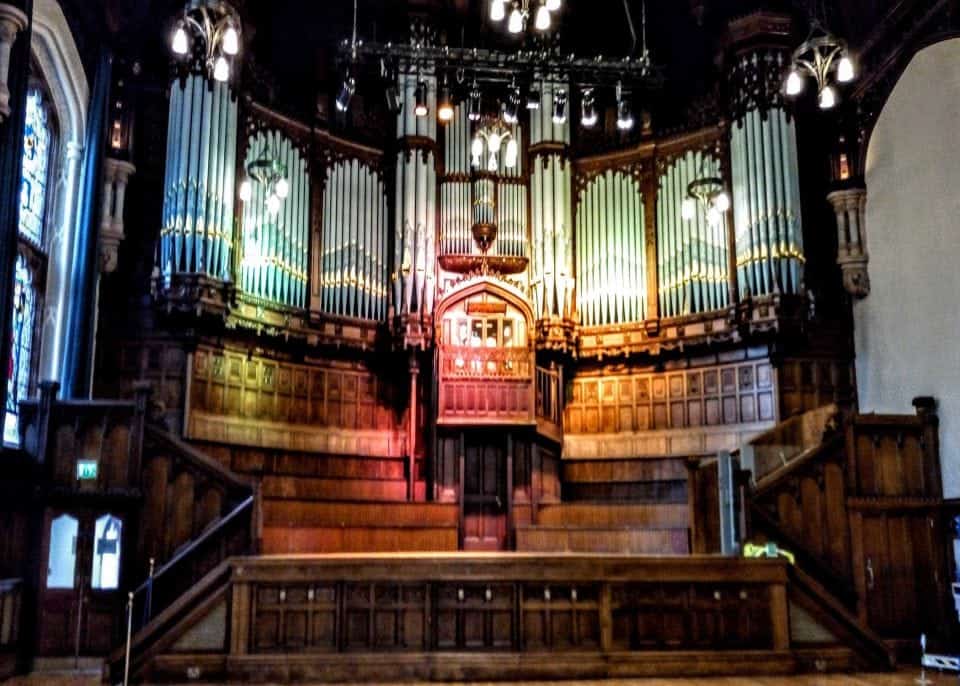
The Guildhall is one of the best accessible attractions in Derry and an excellent introduction to the city’s history. The building includes lifts, accessible toilets, wide circulation areas, and seating throughout. The exhibitions provide insight into Derry’s political and social history while the stained-glass windows and architecture make the building itself worth visiting.

Its location also works well for slower travelers because it sits close to riverside walks and accessible parking.
The Museum of Free Derry is one of the city’s most important cultural attractions and provides essential context for understanding The Troubles and Bloody Sunday. Accessibility is generally good, though the emotional intensity of the museum can become mentally tiring alongside physical fatigue.

This is something many accessibility guides overlook completely. Emotional exhaustion matters too. Heavy historical subjects combined with crowded indoor spaces can drain energy quickly even when walking distances are short.
Allowing time afterward for a quiet coffee or riverside break makes a major difference.
The Tower Museum also works well for slower-paced exploration. Lift access is available and the exhibitions are compact enough to explore comfortably without covering huge distances. The upper viewing areas are especially worthwhile because they allow visitors to appreciate the city’s geography and historic layout without needing to climb multiple steep streets themselves.

Exploring the Bogside Murals with Limited Mobility
The Bogside murals are among the most important political murals anywhere in Ireland or Northern Ireland and remain one of Derry’s defining attractions.
The murals themselves sit relatively close together, but the terrain still matters. Expect gradual inclines, uneven pavements, exposed wind, and limited seating in some areas.
Large guided tours can become physically tiring because movement speeds are fixed and stopping opportunities are limited. Travelers with limited mobility often find independent exploration easier because it allows for flexible pacing and frequent pauses.
Taxi use also makes a huge difference here. One of the smartest accessibility strategies in Irish cities is often using inexpensive taxi rides to conserve energy for attractions rather than exhausting yourself between locations.
For travellers exploring Northern Ireland beyond the Causeway Coast, a Belfast black taxi tour provides important context about the region’s recent history and identity.


Accessible Parking in Derry
Parking logistics matter far more than most travel guides acknowledge. Historic city centres become physically tiring very quickly when parking is poorly planned or walking distances are underestimated.
Some of the most practical parking areas for accessible exploration include the Foyleside Shopping Centre car park, Strand Road parking, and riverside parking near the Guildhall. Several of these areas provide lifts, accessible spaces, and relatively level access into the city centre. However, gradients outside the parking areas still vary considerably.
Choosing parking close to your first attraction usually matters more than finding the cheapest parking option. Preserving energy early in the day makes the rest of the experience far more enjoyable.
Arriving early also helps enormously, especially during festivals, weekends, and summer holidays when crowds and traffic increase significantly.
Accessible Public Transport in Derry
Public transport accessibility in Derry has improved significantly over the years.
Most city buses now use low-floor accessible vehicles, though practical realities still matter. Weather exposure at bus stops, crowding, uneven pavements, and slower rural connections can all increase fatigue levels.

The train route between Belfast and Derry is one of the most scenic rail journeys anywhere in Ireland and works particularly well for travelers who want to avoid driving fatigue.
Once inside the city, taxis remain one of the easiest and least physically demanding transport options.
The most manageable approach for many travelers combines shorter walks, occasional taxis, riverside breaks, and carefully chosen attractions rather than relying entirely on public transport or attempting long walking days.

What Most Guides Miss About Accessible Derry
Why Atlantic Weather Matters More Than Walking Distance
Weather affects mobility in Derry more than distance itself. Cold Atlantic wind drains energy rapidly, particularly for travelers managing pain conditions, fatigue issues, or reduced stamina. A short riverside walk during strong wind can feel far more exhausting than a much longer indoor museum visit.
Rain also changes surface safety very quickly. Historic paving stones, wall sections, and sloped streets become slippery almost immediately during damp weather.

Why Crowds Create Fatigue Faster Than Terrain
Crowds increase exhaustion faster than hills. Busy pedestrian streets force constant adjustments in movement and concentration. Stopping, sidestepping groups, and navigating around tours creates both mental and physical fatigue much faster than many visitors anticipate. Quiet mornings completely transform accessibility in Derry.
Why Slower Travelers Often Enjoy Derry More
Derry rewards slower pacing. The city’s atmosphere comes from conversation, storytelling, music, riverside views, layered history, and changing weather. Trying to rush through all the landmarks often removes the very thing that makes Derry memorable in the first place. Some of the best moments happen during pauses rather than sightseeing itself.
The Hidden Exhaustion of Northern Irish Driving
Many visitors arrive in Derry already tired. Driving across Northern Ireland can become mentally exhausting because of narrow roads, changing weather, unfamiliar signage, tourist traffic, and constant concentration. This is one reason Derry works far better as an overnight destination than as part of an aggressive day-trip itinerary.

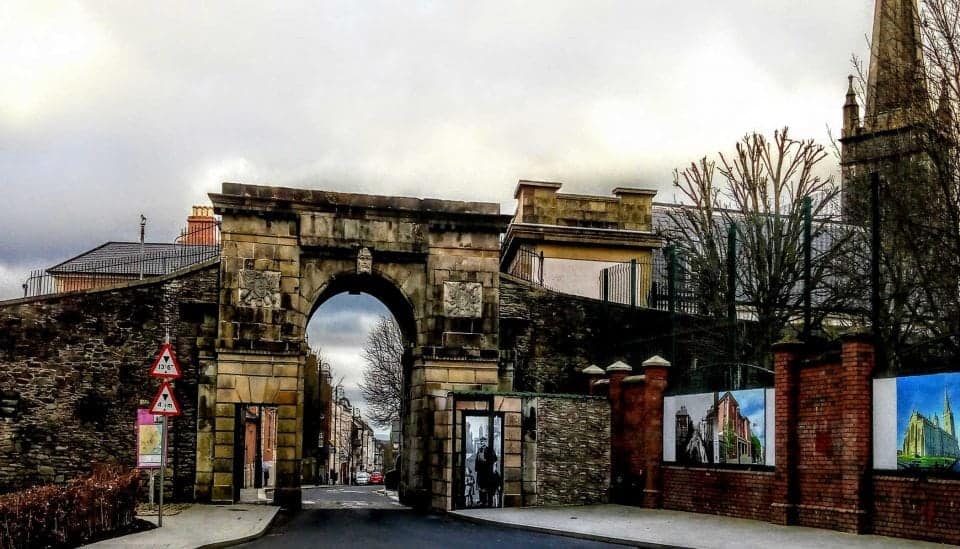
Best Time to Visit Derry for Accessibility
Spring and early autumn usually provide the best balance between manageable weather, lighter crowds, easier parking, and calmer streets.
Summer brings festivals and atmosphere but also heavier congestion and busier attractions.
Winter can feel atmospheric and beautiful, but shorter daylight hours, stronger wind, and wet conditions make accessibility more weather dependent.
Regardless of season, early mornings remain the easiest time to explore the city comfortably.

Accessible Accommodation in Derry
When booking accommodation in Derry, ask specifically about lift access, walk-in showers, accessible bathrooms, step-free entrances, parking availability, and room location within the property.
Staying near the riverfront often works better than staying inside the steepest historic sections of the city because evening walks become easier and terrain is flatter overall.
Modern hotels generally provide easier accessibility than older guesthouses, which may include narrow staircases, smaller bathrooms, and limited lift access due to historic building layouts. Reducing physical stress inside your accommodation makes a major difference over several travel days.

Suggested Low-Exertion Itinerary for Derry
Start the morning near the Guildhall before the city becomes busy. Explore the exhibitions slowly before crossing the Peace Bridge and spending time along the riverside promenade.
Stop for a long lunch or coffee break before choosing either the Bogside murals, the Museum of Free Derry, or the Tower Museum depending on energy levels and weather conditions.
Finish the afternoon with a relaxed riverside dinner rather than trying to force additional sightseeing late in the day when fatigue tends to build.
This slower pacing allows Derry’s atmosphere to emerge naturally without turning the city into an endurance challenge.
FAQs About Accessible Derry
Is Derry wheelchair accessible?
Partly. Many major attractions and riverside areas are accessible, though some historic streets and wall sections remain uneven or steep.
Is Derry suitable for travelers with limited mobility?
Yes. Derry’s compact layout, riverside paths, and accessible museums make it one of the more manageable historic cities in Northern Ireland.
Are the Derry Walls accessible?
Some sections are accessible while others involve steps or uneven surfaces. Shorter sections usually work best for slower travelers.
Is parking easy in Derry?
It is manageable with planning. Arriving early and parking close to your first attraction reduces fatigue significantly.
What is the easiest accessible area in Derry?
The Peace Bridge and riverside promenades are generally the easiest low-exertion areas in the city.
Visiting Derry with Limited Mobility
Derry does not need to be rushed to be appreciated.

This is a city built around memory, conversation, music, layered history, and changing Atlantic light. Some of the most rewarding experiences happen while sitting beside the River Foyle watching weather move slowly across the hills rather than racing between attractions.
Use taxis when needed. Build long breaks into the day. Choose meaningful attractions instead of trying to see everything. Let the city unfold slowly.
With realistic expectations, flexible pacing, and thoughtful planning, Derry can become one of the most rewarding accessible destinations anywhere in Ireland or Northern Ireland.
This guide is part of a wider Accessible Ireland travel series, offering realistic, first-hand advice for limited-mobility travel across Ireland.
➡️Accessible Causeway Coast Route
➡️Accessible Wild Atlantic Way
If you encounter changes (e.g., temporary lift closures or construction), please let me know so I can update this page promptly.
Start Planning Your Trip
👉 Public Transportation in Ireland
👉 Hidden Gems in Ireland – 32 Secret places to visit
👉 Answering all your travel questions about Ireland