
Is Slieve League Safe or Dangerous? What You Need to Know Before You Visit
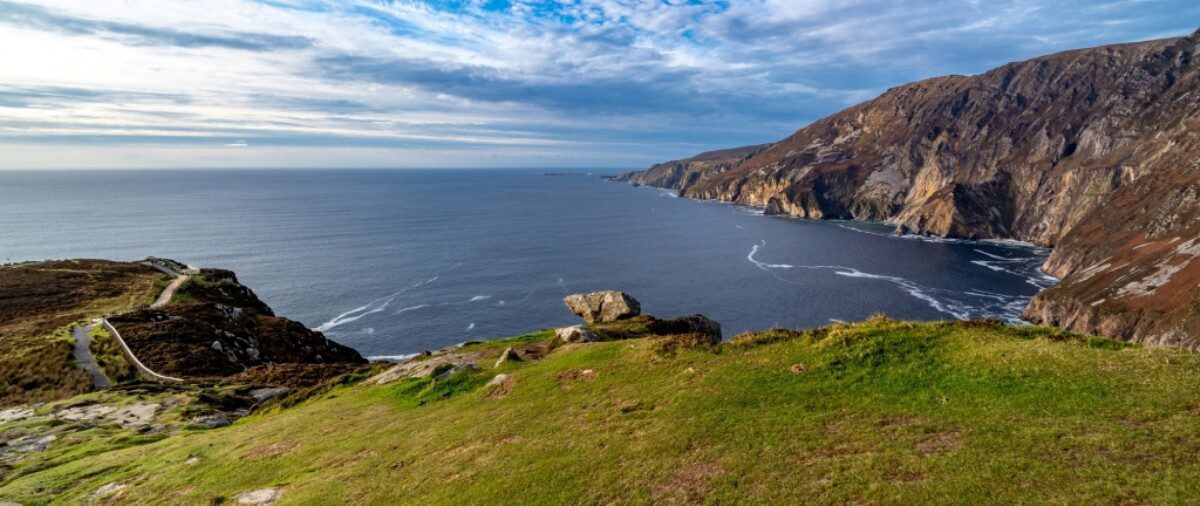
Slieve League (Sliabh Liag) in County Donegal is home to some of the highest sea cliffs in Europe, rising almost 600 metres (1,972 feet) above the Atlantic Ocean. With such dramatic scenery, many travellers wonder before visiting: Is Slieve League safe? Is it dangerous? Can you fall off the cliffs?
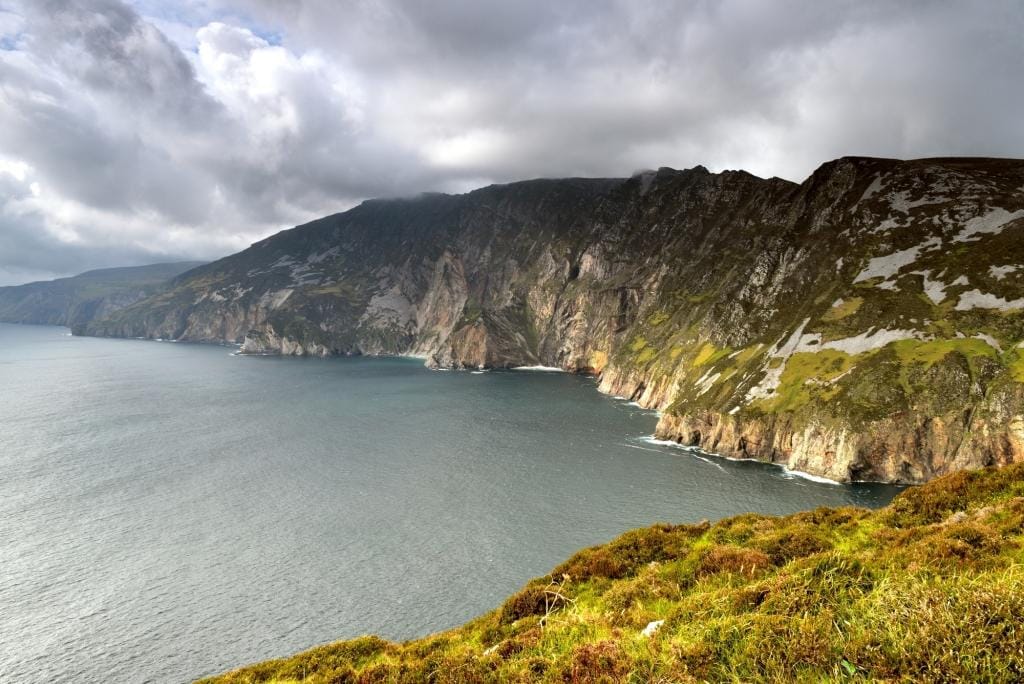
These questions are especially common among families, older travellers, and first-time visitors to Donegal. The cliffs look intimidating in photos, but the experience of visiting them is often very different from what people expect.
I have visited Slieve League along the Wild Atlantic Way many times taking family and friends to see this incredible place. What surprised me the first time was how accessible the main viewing area was. While the cliffs are undeniably dramatic, the majority of visitors experience them from wide paths and clearly visible viewpoints.
Understanding the real risks and the exaggerated ones helps you enjoy Slieve League safely. If you’re deciding which cliffs to visit in Ireland, this comparison of Slieve League, Cliffs of Moher, and Kerry Cliffs breaks down what each one is really like. If you are undaunted by a great hike here is my Slieve League Hiking guide.
Quick Answer: Is Slieve League Safe?
Yes, Slieve League is safe for most visitors if you stay on marked paths and avoid standing near cliff edges.
The main viewpoint at Bunglass is easily accessible and regularly visited by families, older travellers, and casual tourists. While the cliffs are extremely high, the realistic risk is low for visitors who keep a safe distance from the edge and pay attention to weather conditions.

- Is Slieve League Safe or Dangerous? What You Need to Know Before You Visit
- Quick Answer: Is Slieve League Safe?
- What Makes Slieve League Feel Dangerous
- Weather Conditions & Wind Reality
- How to see the Carrigan Head Watchtower at Slieve League
- The Pilgrim’s Path Risk Level
- Visiting Slieve League With Kids
- Visiting Slieve League With Dogs
- How to Get to Slieve League, Where to Park, and Visiting Without a Car
- Slieve League Safety Tips for Visitors
- Slieve League Safe to Visit?
- FAQ: Slieve League Safety
- Donegal Travel Guides on This Site
What Makes Slieve League Feel Dangerous
The first impression many visitors have of Slieve League is that the cliffs look steeper and more exposed than many other coastal viewpoints in Ireland.

Several factors contribute to this feeling:
The cliffs drop almost vertically into the Atlantic Ocean
There are very few fences or barriers
Some hiking routes follow exposed ridges. If you love the outdoors, check out my guide to the best hiking in Europe.
Social media photos often show people sitting near cliff edges
Ireland’s wild landscapes are generally left natural, which means visitors are expected to rely on common sense rather than protective railings.
However, most tourists never go near the narrow ridge routes. The majority stay around the Bunglass viewing area, where the terrain is wide and clearly marked.
Because of this, Slieve League can appear more dangerous online than it actually feels in person.
Weather Conditions & Wind Reality
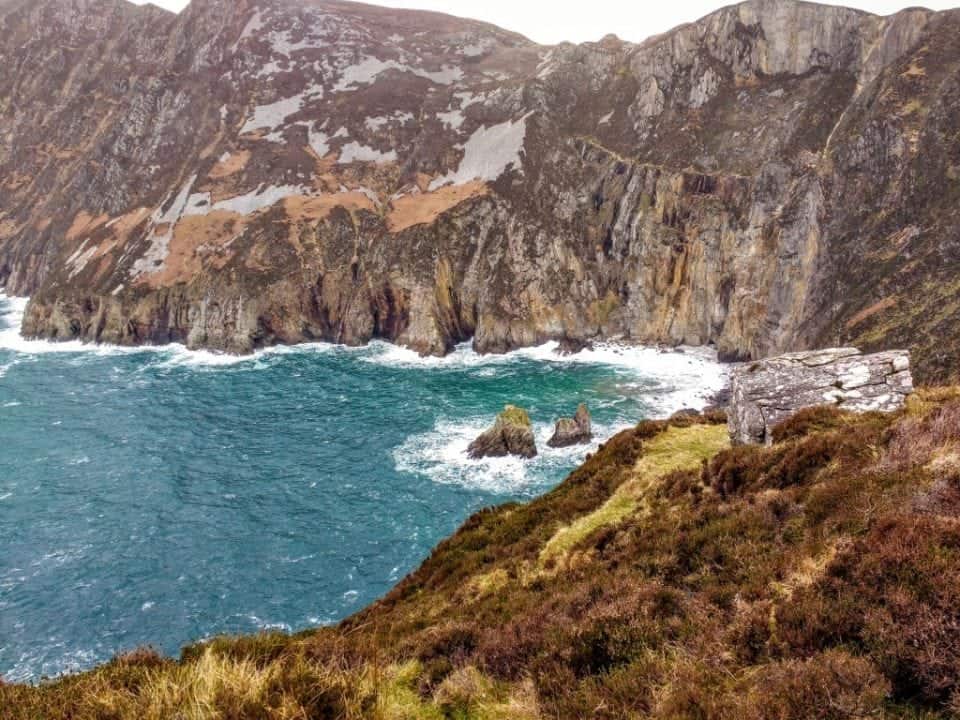
Weather is the most important safety factor when visiting Slieve League cliffs.
Because the cliffs face directly into the Atlantic Ocean, conditions can change quickly. Even if the weather is calm inland, the coast can experience strong winds or sudden fog. Many times we have taken family to visit and a fog has rolled in and visibility is pretty low.

During my visit, the weather was clear but noticeably windier once I reached the viewpoint. It wasn’t unsafe, but it made it clear why visitors should stay away from the cliff edge.
Common weather conditions at Slieve League include:
Strong Atlantic winds
Sudden fog or mist
Rain showers moving in quickly
Wet and slippery ground

For safe hiking at Slieve League, it’s best to:
- Wear shoes with good grip
- Check the weather forecast beforehand
- Avoid exposed areas in strong wind
- Stay on marked walking paths
In poor visibility, sticking to the main viewpoints is the safest option.

How to see the Carrigan Head Watchtower at Slieve League
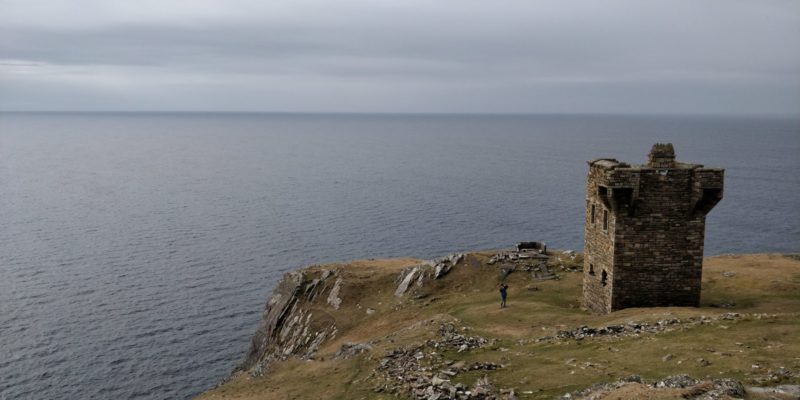
Start at the main Slieve League cliff-top car park. Walk along the paved path toward the Bunglass viewpoint, the main viewing area for the cliffs. The safest and easiest place to see the watchtower is just beyond Bunglass on the marked cliff path. Continue a short distance along the Pilgrim’s Path, then look back toward Carrigan Head,the ruined Napoleonic-era watchtower sits on the rocky headland below and is clearly visible from the trail.
If you want to hike closer: Experienced hikers sometimes continue further along the Pilgrim’s Path toward Carrigan Head for a closer view. This section becomes rough, narrow, and uneven, with steep drops and no formal barriers, so it should only be attempted in good weather with proper hiking footwear and care.
Important: The watchtower cannot be reached by car, and the terrain is rugged, so sturdy footwear and caution are essential.
The Pilgrim’s Path Risk Level
The Pilgrim’s Path is one of the traditional hiking routes to Slieve League and is often recommended for visitors who want a longer walk.
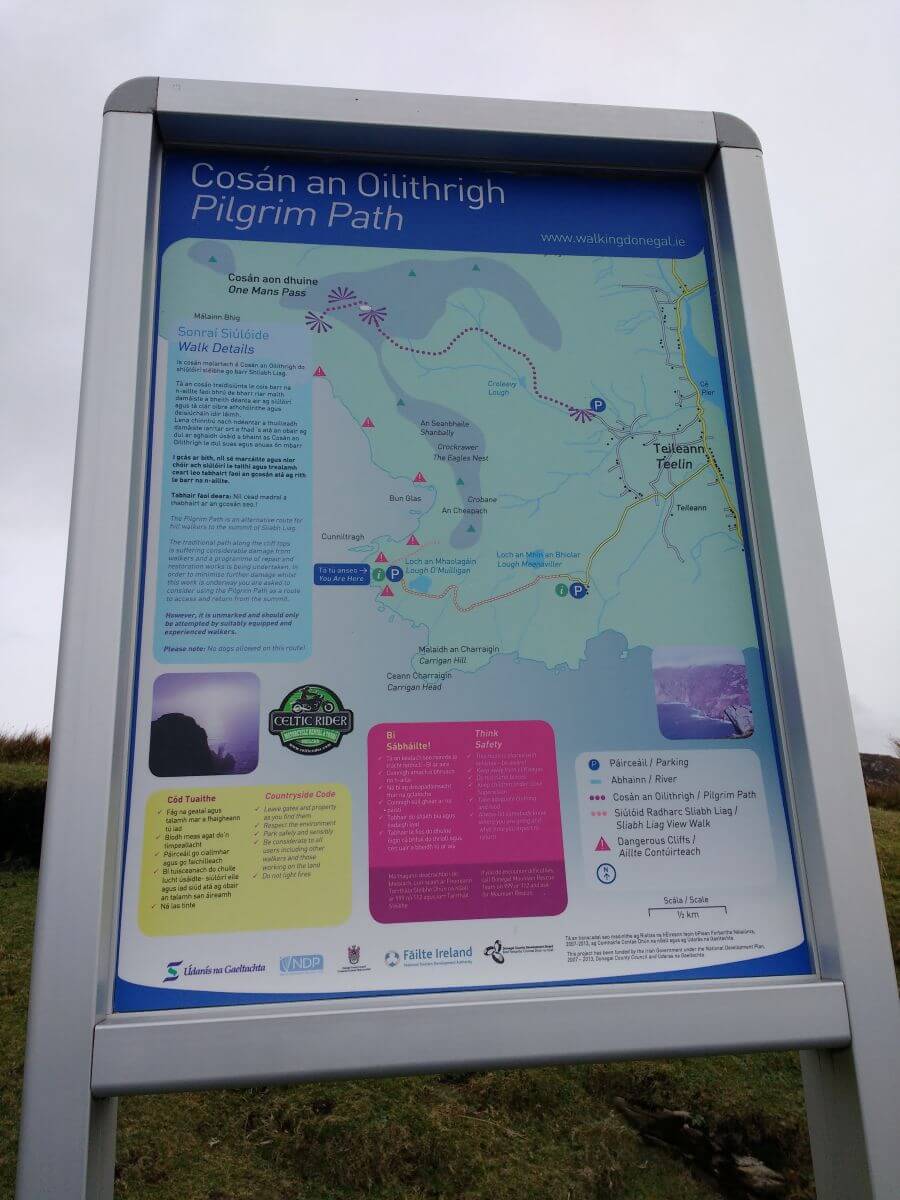
This route has been used for centuries by pilgrims traveling to the cliffs.
In terms of difficulty, the Pilgrim’s Path is usually considered:
Moderately challenging but not dangerous in good weather.
The trail involves:
A steady uphill climb
Uneven terrain
Some steep grassy sections
Importantly, the Pilgrim’s Path does not involve narrow cliff-edge walking, which surprises many first-time visitors.
For hikers with basic fitness and proper footwear, the trail is manageable. However, during heavy rain or strong winds, it can become slippery and more difficult.

Bunglass Viewing Area Safety
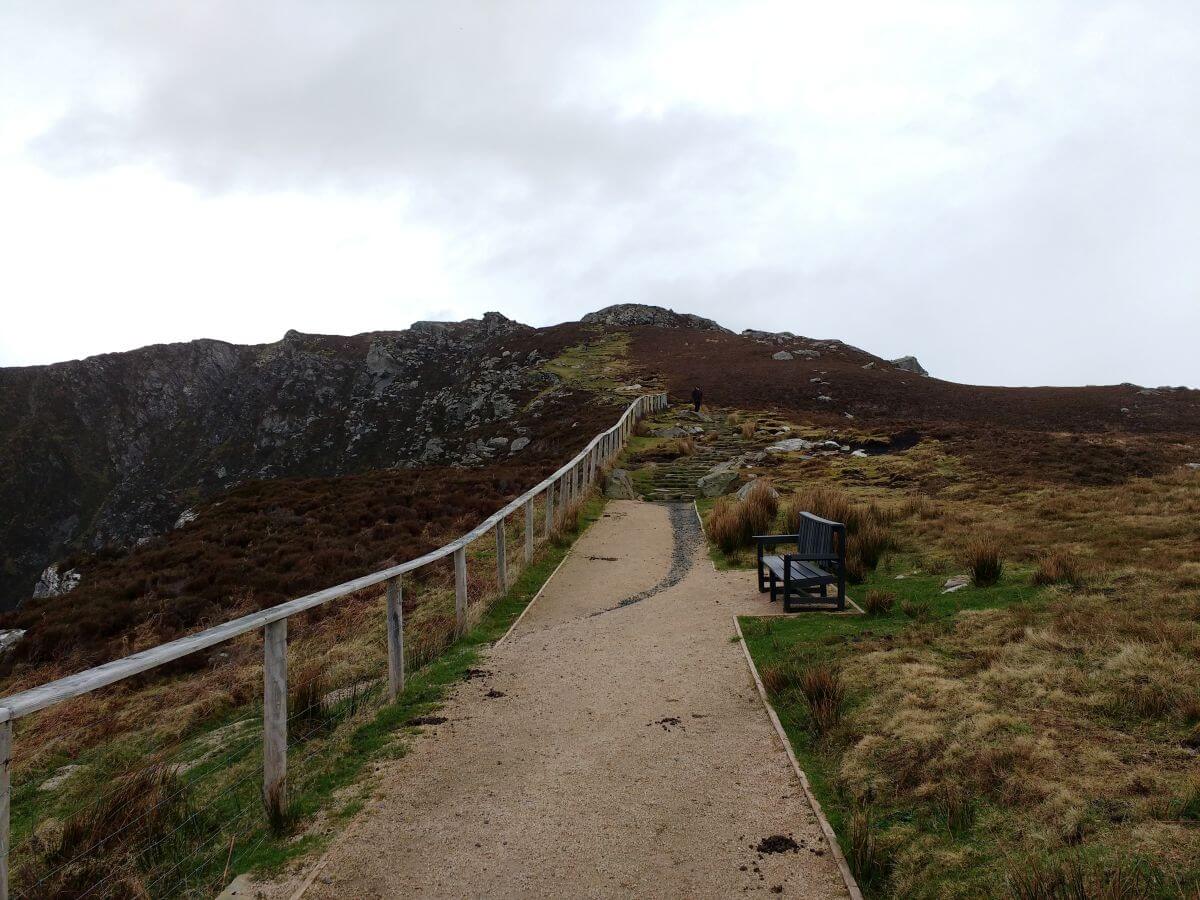
Most visitors experience Slieve League from the Bunglass viewing area, which is the easiest place to access the cliffs.
You can drive or take a shuttle to the Bunglass car park, and from there it’s only a short walk to the main viewpoints.
In terms of Slieve League viewpoint safety, this area is generally considered very safe for typical visitors.
The reasons include:
- Wide walking paths
- Clear viewpoints
- No technical hiking required
- Easy access from the parking area
When I visited, the atmosphere felt relaxed. Visitors were walking around, taking photos, and enjoying the views without needing hiking experience.
The only real risk occurs when people move too close to the cliff edge for photos.
Simply staying a few metres back from the edge makes the visit comfortable and safe.

Visiting Slieve League With Kids
Many families include Slieve League in their Donegal travel plans.
The cliffs can be visited safely with children, especially if you stay around the Bunglass viewing area.
Parents should keep in mind a few simple precautions:
- Keep young children within arm’s reach near viewpoints
- Avoid windy days
- Stick to main paths
- Avoid narrow ridge routes such as One Man’s Pass
For most families, the visit involves a short walk to the viewpoints and time enjoying the scenery rather than a long hike.
Because of the dramatic landscape, it can actually be a memorable stop for kids exploring the Wild Atlantic Way.

Visiting Slieve League With Dogs
Dogs are allowed at Slieve League, but owners should take extra care near cliff areas.
The landscape is open and unfenced, so dogs should ideally be kept on a leash when near viewpoints.
Important tips for visiting Slieve League with dogs:
- Use a leash near cliff edges
- Avoid very windy conditions
- Bring water, as facilities are limited
This helps prevent accidents and keeps both pets and visitors safe.
Is Slieve League Safe in Winter?
Slieve League can be visited throughout the year, but winter conditions require extra awareness.
Possible winter hazards include:
Stronger winds
Wet or muddy paths
Occasional ice on higher ground
Reduced daylight hours
If visiting during winter, it’s safest to remain around the Bunglass viewing area rather than attempting longer hiking routes.
The views can still be spectacular, especially on clear winter days. This photo is me visiting in November it was bloody cold.

Can You Fall Off Slieve League Cliffs?
Like any cliff environment, it is technically possible to fall if someone walks too close to the edge.
However, incidents at Slieve League are very rare.
When accidents do occur, they usually involve situations where visitors:
- Stand directly on the cliff edge
- Take risky photographs
- Attempt narrow ridge routes in poor weather
For people who stay on the main paths and viewpoints, the realistic risk is extremely low.
Realistic Risk vs Social Media Hype
Online photos often focus on the most dramatic areas of Slieve League, such as One Man’s Pass or people sitting close to cliff edges.
These images can give the impression that the entire site is dangerous.
In reality:
- Most visitors stay around safe viewpoints
- The main areas are easy to access
- The majority of people do not attempt exposed hikes
When approached with basic outdoor awareness, Slieve League is far less intimidating than it appears online.
During my own visit, the cliffs felt wild and impressive rather than dangerous. As long as you respect the landscape and avoid unnecessary risks near the edge, the experience is both safe and unforgettable.

How to Get to Slieve League, Where to Park, and Visiting Without a Car
Slieve League cliffs are located in County Donegal on Ireland’s northwest coast, along the Wild Atlantic Way. The closest village to the cliffs is Teelin, which acts as the main gateway for visitors. If you find yourself hungry make sure and stop at the Rusty Mackerel in Teelin for a beautiful pint of Guinness and you can even stay above the pub and enjoy a few drinks and some traditional music.

Driving to Slieve League
The easiest way to reach the cliffs is by car. From the village of Teelin, follow the signs for Slieve League (Sliabh Liag) and drive toward the visitor area.
The journey times are approximately:
Donegal Town: about 1 hour
Killybegs: about 40 minutes
Sligo: about 2 hours
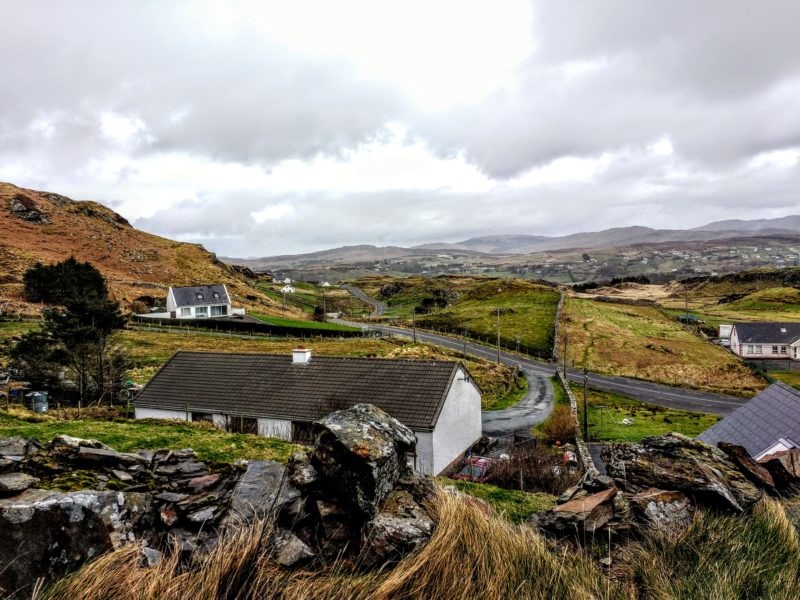
The road becomes narrower as you approach the cliffs, but it is manageable for most vehicles.
How do you park at Slieve League?
There are two main parking options when visiting Slieve League.
1. Lower Car Park (Visitor Centre Area)
This is the main parking area near the Sliabh Liag Cliff Experience & Visitor Centre. Many visitors park here and either walk or take the shuttle bus up to the cliffs.

2. Bunglass Car Park (Upper Car Park)
You can drive further up the mountain to the Bunglass viewpoint car park, which is the closest parking area to the cliffs. From here, it’s only a short walk to the main viewpoints.
Access to the upper road can sometimes be restricted during peak season, which is why the shuttle service operates.

Slieve League Shuttle Bus
During busy months (typically late spring through early autumn), a shuttle bus runs between the lower car park and the Bunglass viewing area.
The shuttle helps reduce traffic on the narrow mountain road and is a convenient option if you prefer not to drive up yourself.

How Much Does It Cost to Visit Slieve League?
One of the best things about visiting Slieve League is that the cliffs themselves are free to visit.
However, there may be small costs for:
Parking at the visitor centre: Parking at the Slieve League cliffs (Sliabh Liag) in Donegal generally costs €10-€15 for the upper parking area, while parking at the lower Visitor Centre is free.
Shuttle bus tickets: for a full guided tour and shuttle bus from €30, Self-guided tour shuttle bus only from €8.00
Visitor centre facilities
Prices can vary slightly depending on the season, but overall Slieve League remains one of the most affordable major natural attractions in Ireland.
Visiting Slieve League Without a Car
Reaching Slieve League without a car is possible, but it requires more planning because public transport in this part of Donegal is limited.
Options include:
Taxi from Killybegs or Donegal Town
Many visitors take a taxi from nearby towns such as Killybegs.
Guided Tours
Some Wild Atlantic Way tours include Slieve League as part of a day trip.
Boat Tours
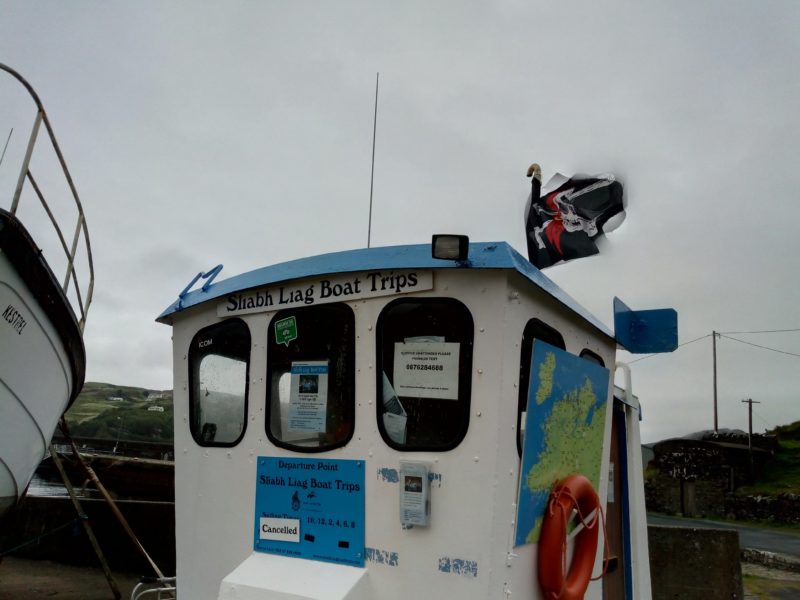
Slieve League cliffs cruise. Travel from Killybegs Harbour towards the impressive Slieve League cliffs. Along the way, pass by St John’s Point lighthouses, Rotten Island, Fintra Bay, and Benbulbin in Sligo.
Local Shuttle Services
During the tourist season, local shuttle services sometimes operate from nearby villages.
Because Donegal is rural, renting a car is usually the easiest and most flexible way to visit Slieve League. It allows you to explore other nearby attractions such as Malin Beg, Silver Strand Beach, and Glencolmcille.
Slieve League Safety Tips for Visitors
Slieve League is one of the most spectacular places along Ireland’s Wild Atlantic Way, but like any dramatic coastal landscape, it’s important to approach it with a little awareness. Following a few simple safety tips will help you enjoy the cliffs while minimizing risk.
Stay on Marked Paths
The safest way to explore Slieve League is by sticking to the clearly visible walking paths and viewing areas, especially around the Bunglass viewpoint. These paths are designed to give visitors incredible views without requiring dangerous cliff-edge walking.
Avoid creating your own routes across grassy areas near the cliffs, as the ground can sometimes be uneven or slippery.
Keep a Safe Distance From Cliff Edges
One of the most important Slieve League safety tips is to stay well back from the cliff edge. The cliffs rise almost 600 metres above the Atlantic Ocean and many areas are unfenced.
While it may be tempting to get closer for photos, keeping a few metres away from the edge significantly reduces risk.

Check the Weather Before You Visit
Weather conditions can change quickly along the Atlantic coast. Strong winds, rain, or fog can reduce visibility and make walking conditions more difficult.
Before visiting Slieve League, check the local forecast and avoid exposed areas if conditions are poor.
Wear Proper Footwear
Even if you’re only planning to visit the viewpoints, it’s best to wear comfortable shoes with good grip. Some paths around the cliffs can be uneven or muddy, especially after rain.
Good footwear becomes even more important if you plan to hike routes like the Pilgrim’s Path.
Supervise Children Carefully
Slieve League can be a fantastic place to visit with kids, but parents should keep children close near viewpoints. Because the cliffs are largely unfenced, young children should always remain within arm’s reach when near the edge.
Sticking to the main viewing paths is the safest approach for families.

Keep Dogs on a Leash
If you’re visiting Slieve League with a dog, it’s best to keep them on a leash near cliff areas. The open landscape can encourage dogs to run ahead, which may bring them too close to the edge.
Keeping pets under control helps ensure a safe visit for everyone.
Avoid Exposed Routes in Poor Conditions
Some hiking routes at Slieve League, such as One Man’s Pass, involve narrow ridges and should only be attempted by experienced hikers in good weather.
If winds are strong or visibility is poor, it’s best to remain around the Bunglass viewing area, where the paths are wider and easier to navigate.
Following these simple Slieve League safety tips allows you to enjoy one of Ireland’s most dramatic coastal landscapes with confidence while respecting the natural environment.

Slieve League Safe to Visit?
So, is Slieve League safe or dangerous?
For most visitors, Slieve League is safe and accessible, especially if you stay on marked paths and avoid cliff edges. The main viewing areas are suitable for families, older travellers, and anyone exploring Donegal along the Wild Atlantic Way.
The cliffs themselves are dramatic, but the real danger only comes from taking unnecessary risks near the edge or visiting during extreme weather.
With a little common sense and awareness of your surroundings, Slieve League becomes what it truly is: one of the most spectacular coastal viewpoints in Ireland rather than a dangerous destination.
FAQ: Slieve League Safety
Is Slieve League dangerous?
Slieve League is not dangerous for most visitors if they stay on marked paths and avoid cliff edges. The main viewpoints are wide and commonly visited by families and tourists.
Can you fall off Slieve League cliffs?
Yes, like any cliff environment it is possible if someone stands too close to the edge. However, accidents are rare and usually involve risky behaviour.
Is Slieve League safe with kids?
Yes. Many families visit Slieve League safely by staying around the Bunglass viewing platform and keeping children close near viewpoints.
Is Slieve League safe in bad weather?
Strong winds and fog can reduce visibility and make paths slippery. During poor weather, it is best to remain near the main viewpoints rather than hiking exposed routes.
Donegal Travel Guides on This Site
Planning Your Trip to Donegal
Is Donegal Worth Visiting? – A complete overview of the county and what makes it special.
Things to Do in Donegal – The best attractions, landscapes, and places to explore across the county.
Staying in Donegal Town – A guide to what to see, where to stay and where to eat in Donegal Town.
Do you need a car in Donegal? – A practical, trustworthy guide to transport, itineraries, safety, and when a car is essential versus buses or tours.
Staying in a castle in Donegal – enjoy a stay at the luxury resort of Lough Eske Castle.
All the best Restaurants in Donegal Town – from an award winning Indian cuisine restaurant to burgers and fish and chips
Hidden Gems in Donegal: 16 Quiet Spots Locals Love: From hidden beaches to National Parks here are 16 of Donegal’s hidden gems.
Best time to visit Donegal: What is the best season to come to Donegal?
Start Planning Your Trip
👉 Public Transportation in Ireland
👉 Hidden Gems in Ireland – 32 Secret places to visit
👉 Answering all your travel questions about Ireland