
35 Must-See Places in Ireland: First-Timer’s Guide
Picture yourself standing atop ancient castle walls, Atlantic waves crashing below as sunset paints the sky in shades of gold and purple. Or imagine sitting in a centuries-old pub, the warmth of a turf fire at your back while traditional Irish music fills the air. These aren’t just tourist experiences – they’re moments of pure Irish magic that will stay with you forever.

Ireland may be compact enough to explore in a few weeks, but every corner of this enchanted island holds centuries of history, legend, and natural wonder. This carefully curated guide reveals the absolute must-see places in Ireland for first-time visitors, from iconic landmarks to hidden gems that many tourists miss.
Ireland may be small, but it’s packed with unforgettable landscapes, rich history, and welcoming towns that are best explored over a little more time. A 10-day itinerary gives you the chance to dive deeper, combining iconic sights with off-the-beaten-path experiences.
- 35 Must-See Places in Ireland: First-Timer's Guide
- How to Use This Guide
- Ancient Mysteries: Walking in the Footsteps of Kings and Druids
- Natural Wonders: Where Land Meets Legend
- Castle & Manor Experiences: Living Like Irish Royalty
- Cultural Treasures: Living History and Irish Traditions
- Hidden Gems: Off-the-Beaten-Path Discoveries
- Kylemore Abbey (Connemara)
- The Beara Peninsula (Cork/Kerry)
- Lough Gur (County Limerick)
- Inishmurray Island (County Sligo)
- Ardmore Cliff Walk (County Waterford)
- The Choctaw Monument (County Cork)
- Birr Castle Gardens (County Offaly)
- Mysteries of the Midlands (County Offaly)
- The Cooley Peninsula (County Louth)
- Practical Planning Tips
- Creating Your Perfect Irish Journey: Final Tips and Resources
- Final Words of Wisdom
- Exploring the fascinating regions of Ireland
How to Use This Guide
I’ve organized Ireland’s most captivating destinations into five themed sections:
• Ancient Mysteries: Prehistoric sites and sacred places
• Natural Wonders: Dramatic landscapes and coastal views
• Castle & Manor Experiences: Historic residences and ruins
• Cultural Treasures: Living history and Irish traditions
• Hidden Gems: Off-the-beaten-path discoveries
For each location, you’ll find:
• Why it’s special
• Best time to visit
• Photography tips
• Local insights
• Practical planning advice
Whether you have a week or a month to explore, this guide will help you create your perfect Irish journey. Let’s begin with Ireland’s most ancient mysteries…
Ancient Mysteries: Walking in the Footsteps of Kings and Druids
Ireland’s ancient sites aren’t just historic monuments – they’re portals to a mystical past where myth and history intertwine. These sacred places have witnessed over 5,000 years of Irish history, and many still hold their secrets.
Newgrange & Knowth (County Meath)
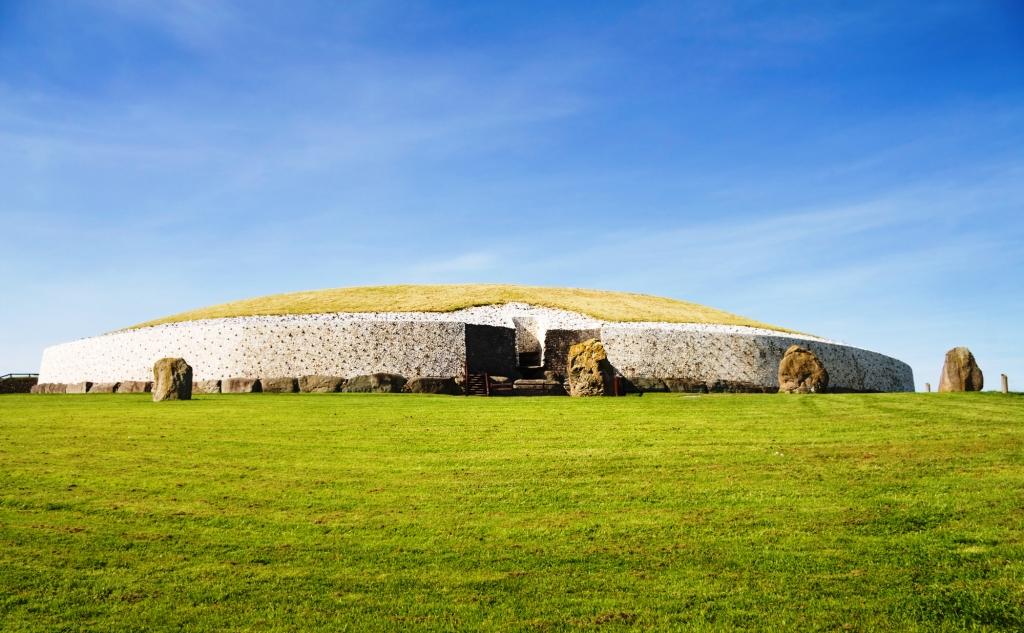
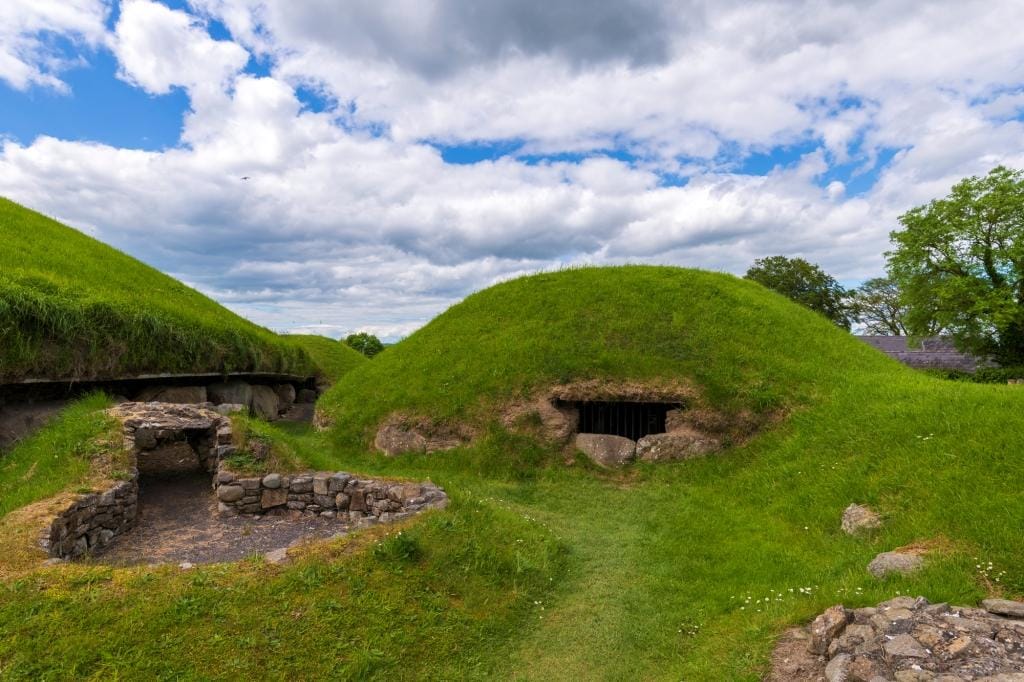
More ancient than the pyramids, Newgrange is Ireland’s most extraordinary prehistoric site. This massive burial mound, built around 3200 BC, reveals the astronomical brilliance of Ireland’s ancient inhabitants. During the winter solstice, sunlight illuminates the inner chamber through a perfectly aligned roof box – a feat of engineering that still amazes scientists today.
UNESCO World Heritage Site: Brú na Bóinne – Archaeological Ensemble of the Bend of the Boyne: The three main prehistoric sites of the Brú na Bóinne Complex, Newgrange, Knowth and Dowth, are situated on the north bank of the River Boyne 50 km north of Dublin. This is Europe’s largest and most important concentration of prehistoric megalithic art. The monuments there had social, economic, religious and funerary functions.
Visitor Tips:
• Book winter solstice tickets through the annual lottery
• Visit at opening time (9:00 AM) to avoid crowds
• Allow 3-4 hours to see both Newgrange and Knowth
• Photography isn’t permitted inside the chambers
Local Secret: Visit in late September or early October when morning mist creates ethereal photo opportunities
Hill of Tara (County Meath)

The sacred seat of Ireland’s High Kings the Hill of Tara offers panoramic views across the Plains of Meath. Standing atop this ancient ceremonial site, you can see about 20% of Ireland’s landscape – the same view that helped ancient kings rule their realm.
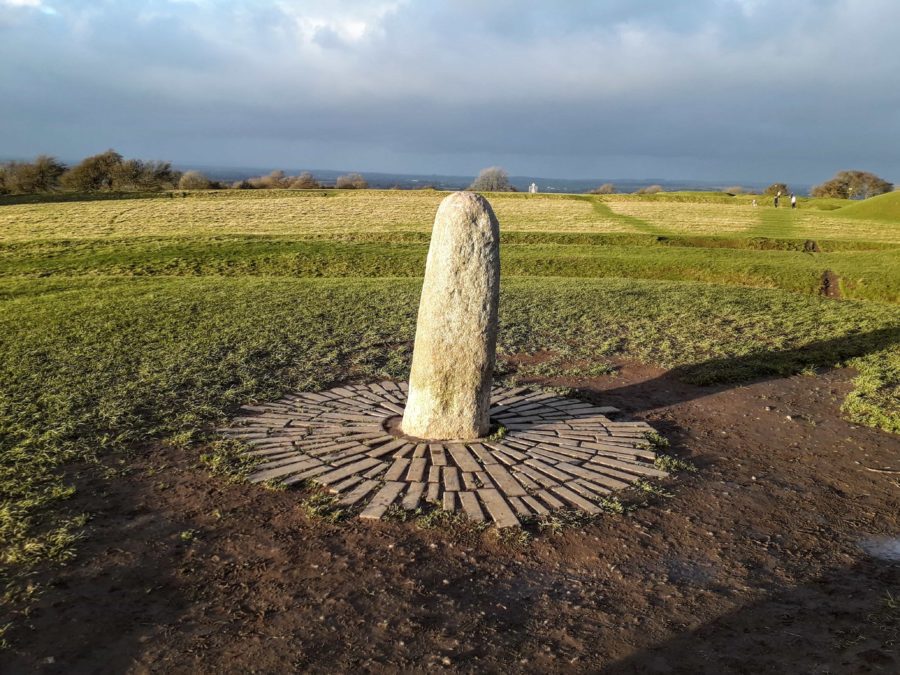
According to the Discovery Programme’s comprehensive archaeological survey (2024), the Hill of Tara spans over 100 hectares of archaeological complexity. Heritage Ireland’s official documentation confirms it served as the seat of 142 kings, with archaeological evidence of continuous use from the Neolithic to the 12th century.
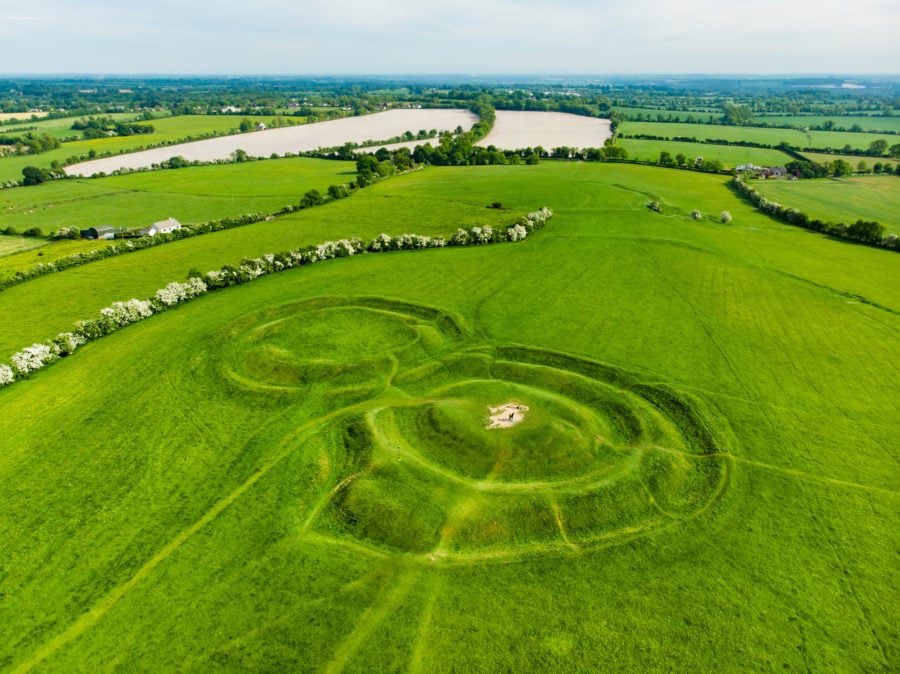
Recent ground-penetrating radar studies by the Royal Irish Academy (2023) revealed previously unknown ceremonial structures beneath the surface, further confirming Tara’s significance as ancient Ireland’s most important political and spiritual center.
Key Features:
• The Stone of Destiny (Lia Fáil)
• The Mound of the Hostages (Ireland’s oldest visible monument)
• Royal Enclosure
• Ancient ceremonial pathways
Photography Tip: Arrive for sunrise to capture the mysterious mounds emerging from the morning mist.
Stone Circles of Cork and Kerry
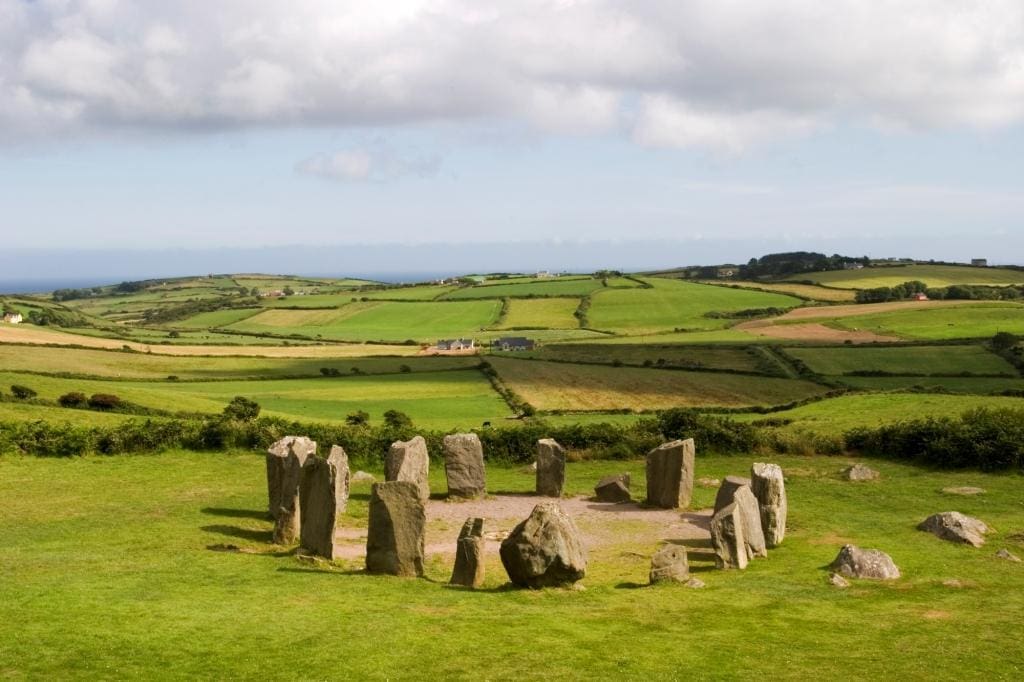
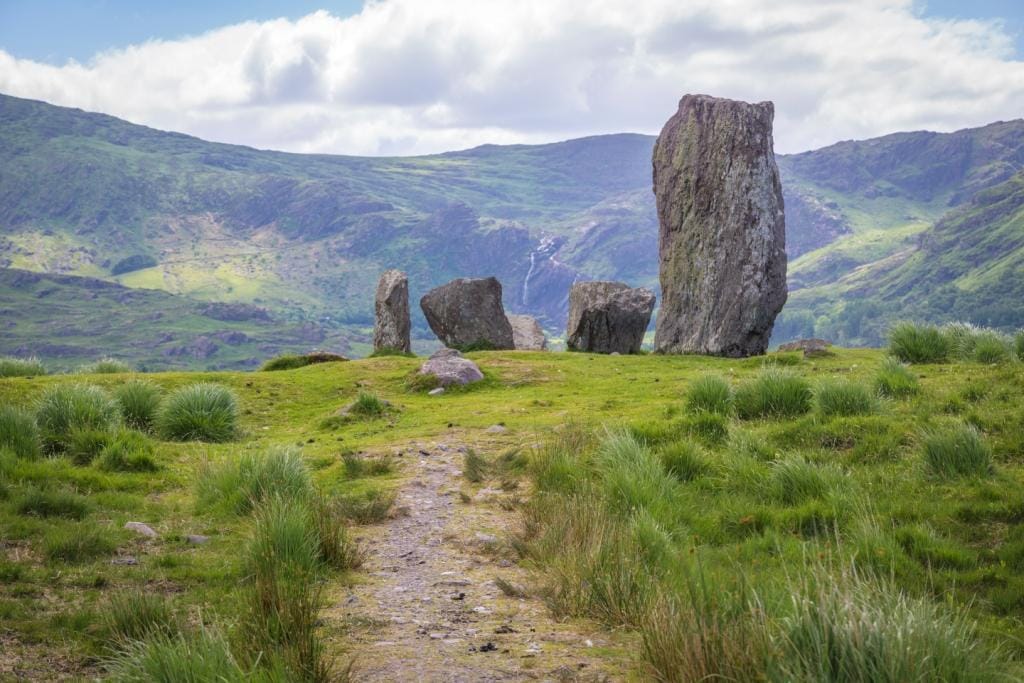
While Stonehenge and Avebury draws crowds in England, Ireland’s stone circles offer more intimate encounters with prehistoric astronomy. The Drombeg Circle (Cork) and Uragh Stone Circle (Kerry) stand in spectacular settings that showcase both ancient engineering and natural beauty.
Must-See Circles:
• Drombeg (Cork) – Aligned with the winter solstice sunset
• Uragh (Kerry) – Dramatic lakeside setting
• Beaghmore (Tyrone) – Complex of seven circles
Best Time: Visit at sunset for atmospheric photos and fewer tourists.
Rock of Cashel (Tipperary)
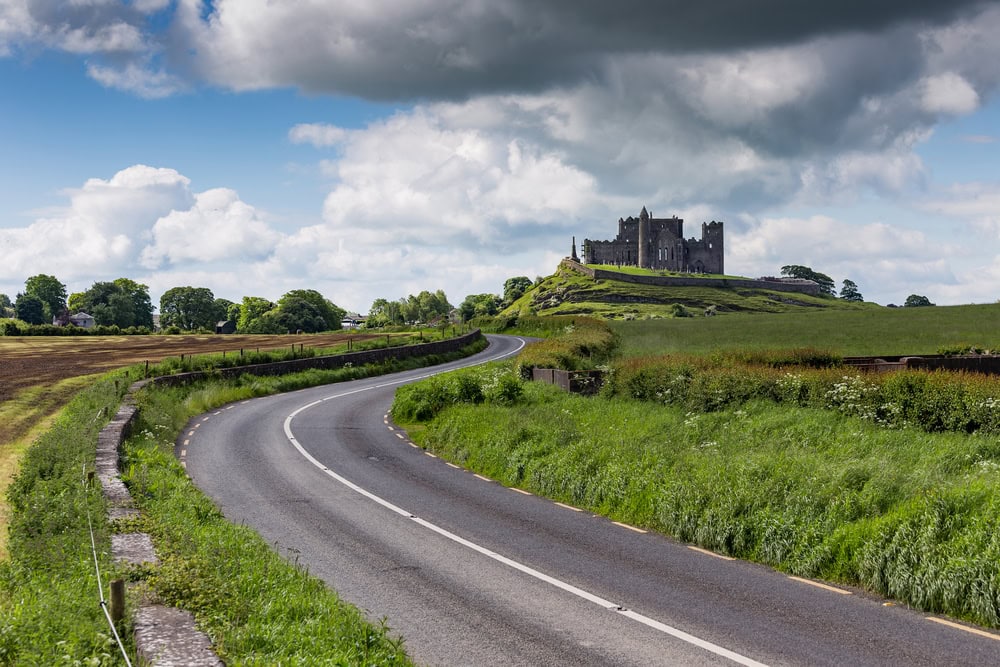
Rising dramatically from the Tipperary plains, this ancient royal site combines prehistoric power with early Christian heritage. St. Patrick himself is said to have converted the King of Munster here in the 5th century.
Don’t Miss:
• Round Tower (12th century)
• Cormac’s Chapel – rare Romanesque architecture
• Gothic Cathedral
• Ancient Celtic crosses
Planning Tip: Book the first tour of the day to see Cormac’s Chapel (limited daily visitors allowed). Don’t forget to visit the ruins of Hore Abbey that can be seen from the Rock.
Grianan of Aileach (Donegal)
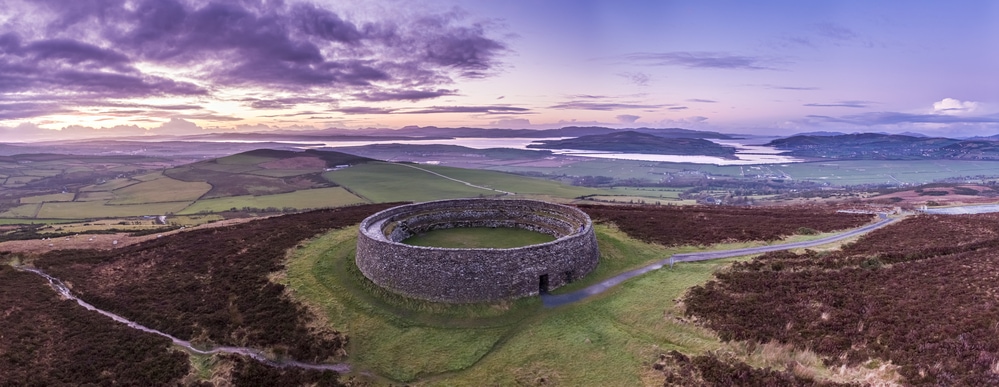
This hilltop fort In Donegal offers 360-degree views across three counties and Lough Foyle. Built on a site dating back to 1700 BC, it’s one of Ireland’s most impressive ring forts.
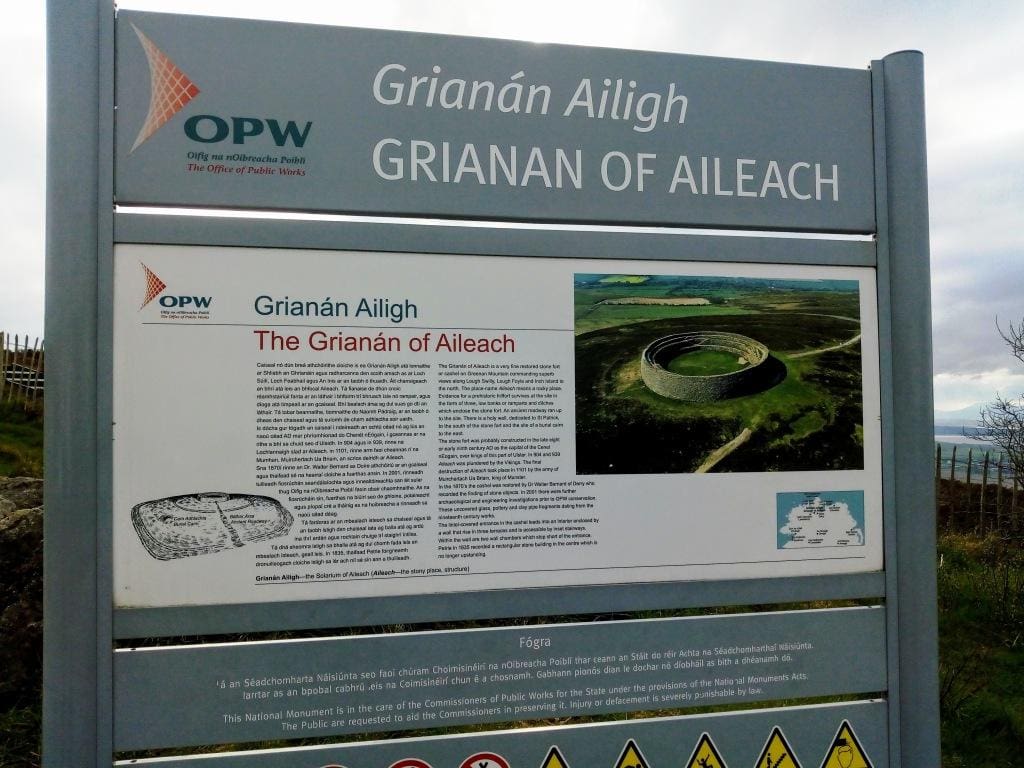
Highlights:
• Ancient stone fort architecture
• Panoramic views
• Prehistoric ritual significance
• Links to the legendary Tuatha Dé Danann
Local Tip: Visit on a clear day for views stretching to the Sperrin Mountains.
Natural Wonders: Where Land Meets Legend
Ireland’s landscapes aren’t just beautiful – they’re alive with stories. Each cliff, beach, and mountain path holds tales of giants, heroes, and ancient gods. Here are the most spectacular natural wonders that no first-time visitor should miss.
Cliffs of Moher (County Clare)
The Geological Survey Ireland’s 2024 report details how these majestic cliffs formed over 320 million years ago during the Upper Carboniferous period. According to Fáilte Ireland’s latest tourism data (2025), the cliffs attract over 1.5 million visitors annually, making them Ireland’s most visited natural attraction. The National Parks & Wildlife Service has designated the area as a Special Protection Area, home to over 20 species of nesting seabirds, including globally significant colonies of Atlantic Puffins and Guillemots.
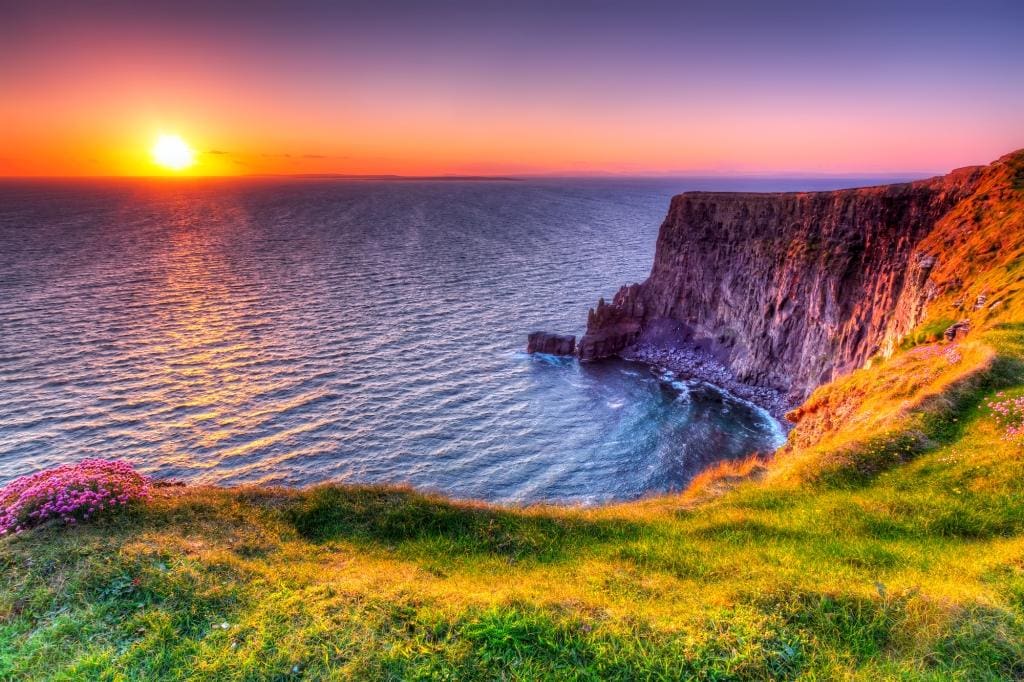
Rising 214 meters (702 feet) above the Atlantic, these iconic cliffs are Ireland’s most visited natural wonder – and for good reason. They feature in countless films, from “The Princess Bride” to “Harry Potter,” but no screen can capture their true majesty.
Essential Experiences:
• O’Brien’s Tower viewpoint
• Coastal walk to Hag’s Head
• Cliffs of Moher boat tour
• Visitor center’s interactive exhibits
Insider Tips:
• Visit before 11 AM or after 4 PM to avoid tour buses
• Book boat tours from Doolin for unique perspectives
• Check weather forecasts – morning fog often clears by afternoon
Photography Tip: The Cliffs face west, making sunset the optimal time for photos.
The Giant’s Causeway (County Antrim)
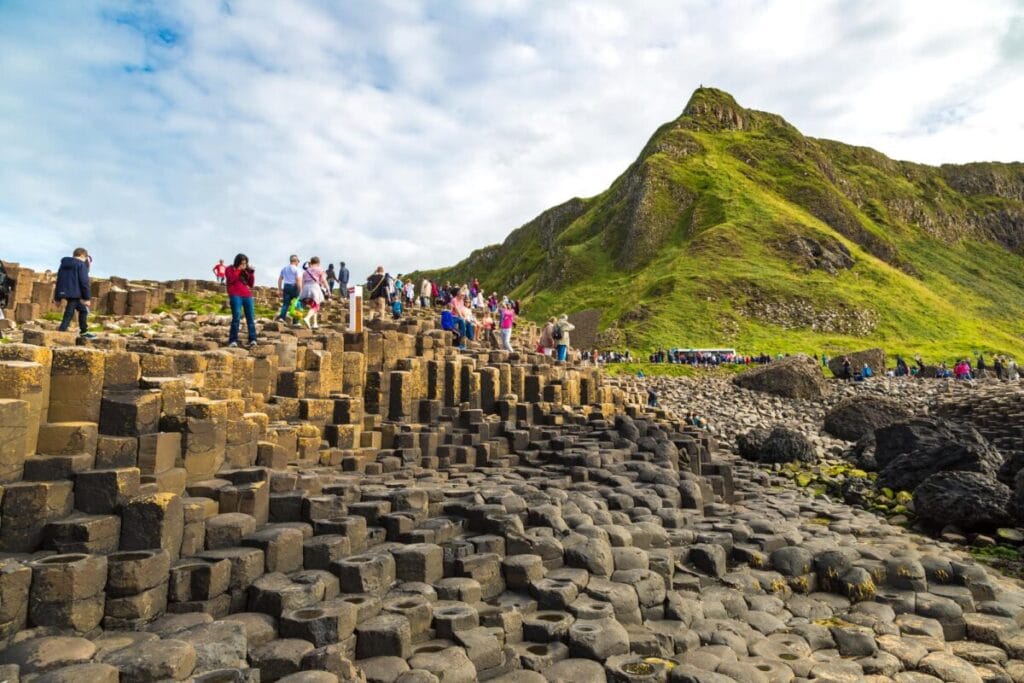
40,000 hexagonal basalt columns create Northern Ireland’s most dramatic coastline along the incredible Causeway Coast. While geologists explain them as volcanic formations, local legend claims they were built by giant Finn MacCool as a pathway to Scotland.
According to UNESCO’s World Heritage documentation, the Giant’s Causeway represents one of Earth’s most remarkable geological formations, designated for both its natural and cultural significance. The National Trust’s visitor data shows it attracts over 1 million visitors annually, making it Northern Ireland’s most visited natural attraction. The Geological Survey of Northern Ireland confirms the site contains approximately 40,000 interlocking basalt columns, formed by volcanic activity 60 million years ago.
Must-See Features:
• The Grand Causeway
• Giant’s Boot
• Wishing Chair
• Shepherd’s Steps
Planning Tips:
• Download the free audio guide app before visiting
• Last entry 1 hour before sunset
• Combine with Bushmills Distillery visit
Local Secret: Visit during low tide to explore hidden formations.
Skellig Islands (County Kerry)

These remote, rocky islands along the Wild Atlantic Way rose to fame as Luke Skywalker’s hideout in Star Wars, but their real history is even more fascinating. Ancient monks built stone beehive huts and precipitous stairs on Skellig Michael, creating one of Europe’s most extreme monasteries.
UNESCO’s World Heritage listing (updated 2024) recognizes Skellig Michael as an outstanding example of early Christian architecture. The Office of Public Works maintains strict visitor limitations of 180 people per day to protect the site’s integrity. According to BirdWatch Ireland’s 2025 survey, the island hosts one of Europe’s largest gannet colonies and significant populations of puffins, making it a vital seabird sanctuary in the North Atlantic.
Know Before You Go:
• Only 180 visitors permitted daily
• Book boat trips months in advance
• Weather often cancels landings
• Requires good physical fitness, 650 steps to the top with no railings and no facilities
Alternative: If boats are full, visit the Skellig Experience Centre on Valentia Island.
Connemara National Park (County Galway)
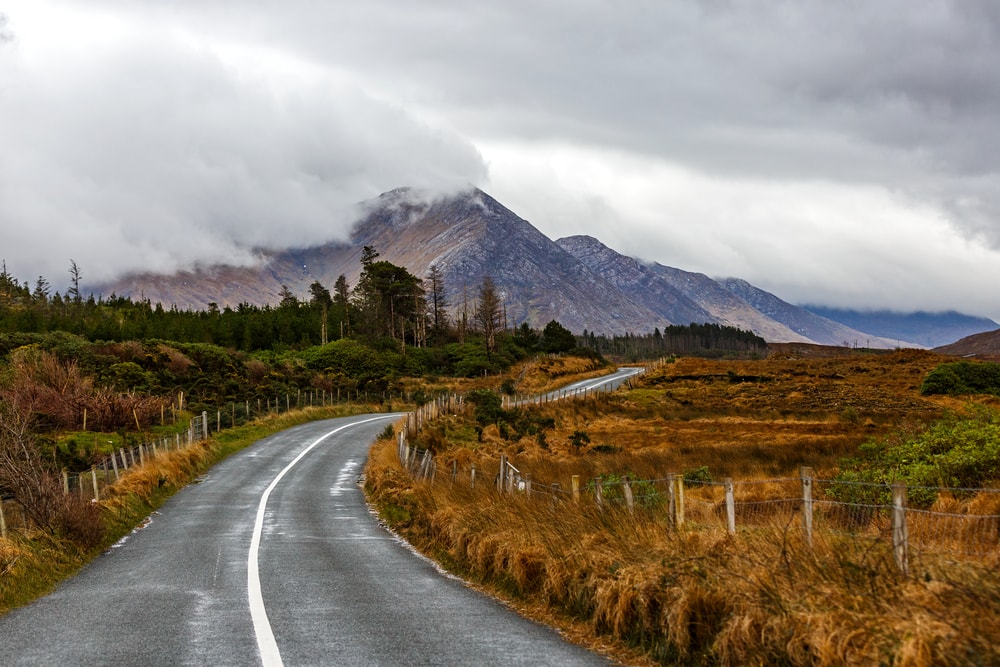
Where mountains, bogs, and beaches create Ireland’s wildest landscape that’s Connemara. The park’s Diamond Hill trail offers views across the Twelve Bens mountains and the Atlantic coastline.
Highlights:
• Diamond Hill loop walk
• Victorian walled garden
• Connemara ponies
• Blanket bog ecology
Best Time: April-June for wildflowers and fewer crowds.
The Burren (County Clare)
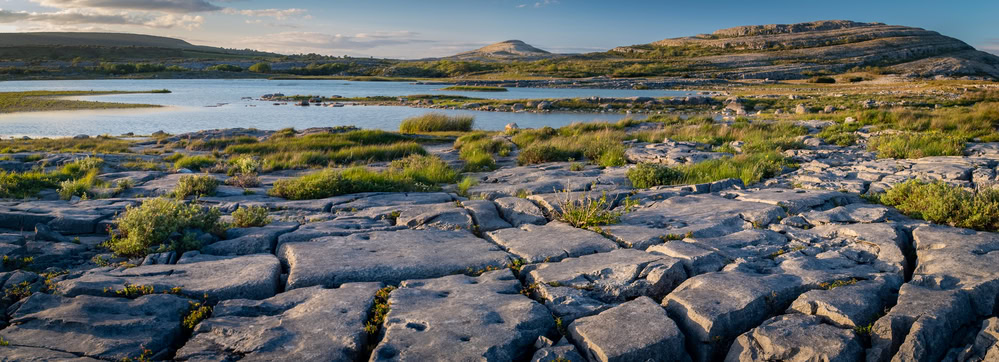
This lunar-like limestone landscape of the Burren seems otherworldly, yet supports Arctic, Alpine, and Mediterranean plants growing side by side – a botanical paradox that exists nowhere else in Europe. The Burren and the Cliffs of Moher form A UNESCO Global Geopark which has an area of 530 km2, it is bounded by Atlantic coastal cliffs (10-200 m high) to the west, the Gort lowlands to the East and by low hilly terrain to the south.
UNESCO’s Global Geopark documentation highlights the Burren’s unique geological significance, featuring glacially-carved limestone dating back 350 million years. The National Biodiversity Data Centre’s 2024 survey identified over 70% of Ireland’s native plant species within its borders, including rare Arctic-Alpine and Mediterranean species growing side by side. The Burren Programme reports successful conservation efforts, with traditional farming practices maintaining this exceptional landscape’s biodiversity
Don’t Miss:
• Poulnabrone Dolmen
• Ailwee Cave
• Burren Perfumery
• Ancient stone forts
Seasonal Tip: Visit in May-June when rare flowers bloom in the limestone cracks.
Slieve League Cliffs (County Donegal)

Nearly three times higher than the Cliffs of Moher but far less crowded, these majestic sea cliffs of Slieve League offer Ireland’s finest coastal hiking.
While the dramatic sea cliffs of Cliffs of Moher are Ireland’s most famous, many travellers find Slieve League even more breathtaking thanks to their wild, uncrowded beauty and towering height but visitors should take care near the cliff edges, especially in windy or wet conditions, as parts of Slieve League can be dangerous if proper caution isn’t used.
Experience Options:
• Pilgrim’s Path hike
• One Man’s Pass (for experienced hikers)
• Boat tours from Teelin
• Ti Linn café viewpoint
Local Tip: Start at the lower car park and walk to the upper viewing area – the approach builds anticipation and offers better photo opportunities.
Castle & Manor Experiences: Living Like Irish Royalty
From crumbling ruins to restored luxury hotels, Ireland’s castles tell tales of Celtic kings, Norman invaders, and powerful dynasties. Here are the most impressive castles and historic manors for your Irish adventure.

Ashford Castle (County Mayo)
This 800-year-old castle-turned-luxury-hotel represents the pinnacle of Irish hospitality. Even if you’re not staying overnight, you can experience its grandeur through afternoon tea or estate activities. Here in Ireland you can visit haunted Castles and there are many Castle hotels you can stay in.
Signature Experiences:
• Traditional afternoon tea in the Connaught Room
• Falconry at Ireland’s oldest falconry school
• Victorian walled garden tours
• Lake cruises on Lough Corrib
Visitor Tip: Book estate activities in advance, even if you’re not a hotel guest. €5 for adults and €3.50 for children
Blarney Castle (County Cork)

Home to the famous Blarney Stone, this 15th-century castle offers more than just the gift of eloquence. Its extensive grounds include fascinating themed gardens and hidden caves.
Beyond the Blarney Stone:
• Poison Garden (featuring dangerous plants)
• Witch’s Kitchen
• Wishing Steps
• Rock Close mystical garden
Time-Saving Tip: Visit before 10 AM or after 4 PM to avoid long queues for the Blarney Stone.
Kilkenny Castle (County Kilkenny)
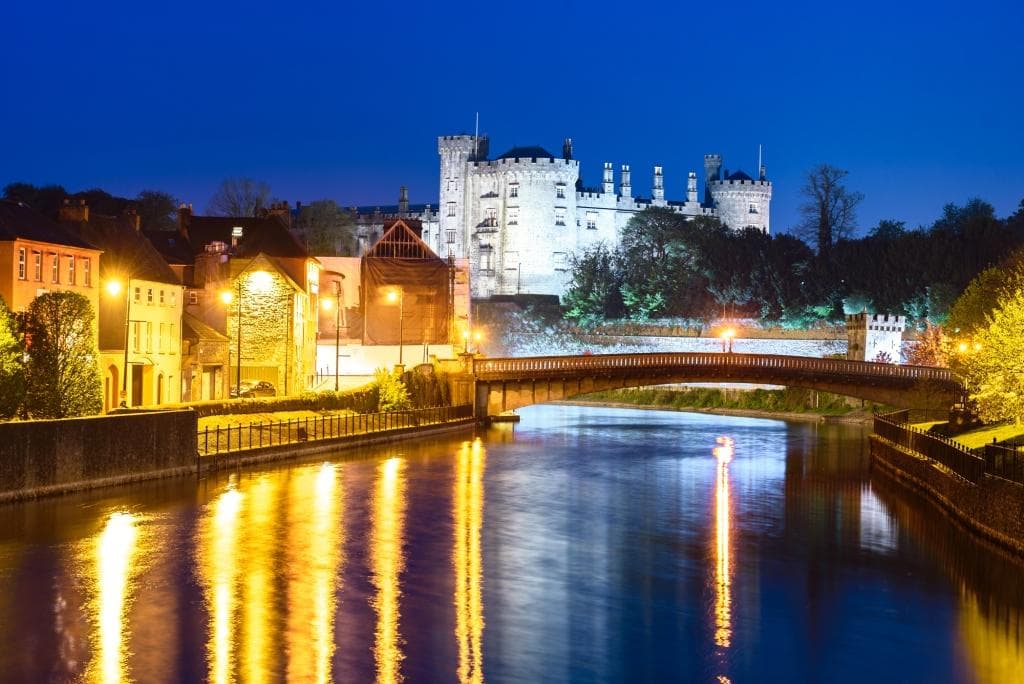
This magnificently restored Norman fortress dominates Ireland’s Medieval City. Unlike many castles, Kilkenny’s lavish interiors survive intact, offering glimpses of aristocratic life through the centuries.
Highlights:
• Picture Gallery’s restored ceiling
• Medieval foundations tour
• Formal gardens and park
• Butler family history
Special Access: Book a behind-the-scenes tour to see areas normally closed to visitors.
Dunluce Castle (County Antrim)
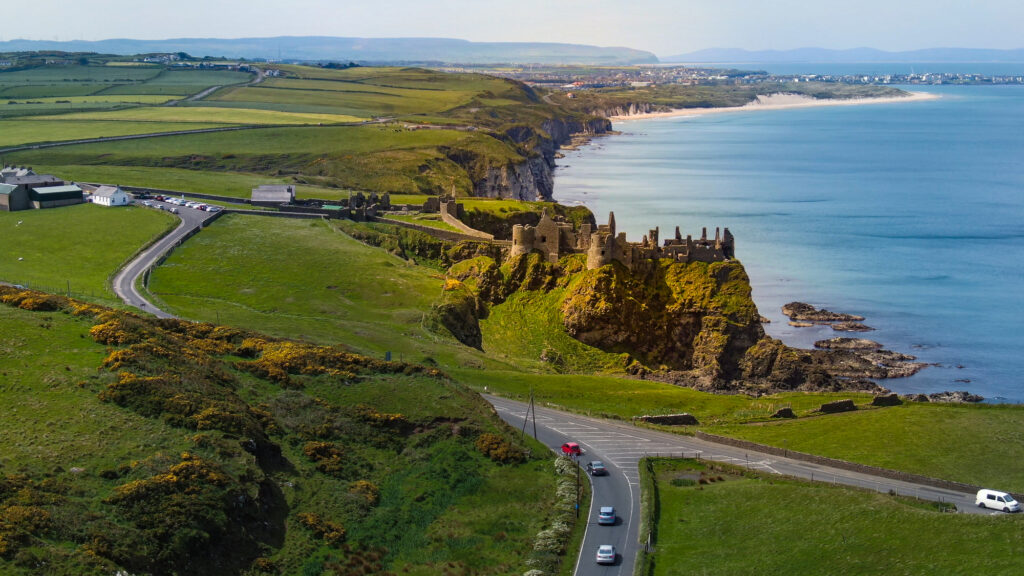
Perched dramatically on coastal cliffs, the romantic ruins of Dunluce not only inspired C.S. Lewis’s Cair Paravel in “The Chronicles of Narnia” but were featured on a Led Zeppelin album cover. Local legend claims part of the kitchen once fell into the sea during a stormy dinner party.
Must-See Features:
• Merchant’s house ruins
• Sea caves below
• Manor house remains
• Game of Thrones filming location
Photography Tip: Visit at sunset when the ruins are backlit by golden light.
Cahir Castle (County Tipperary)
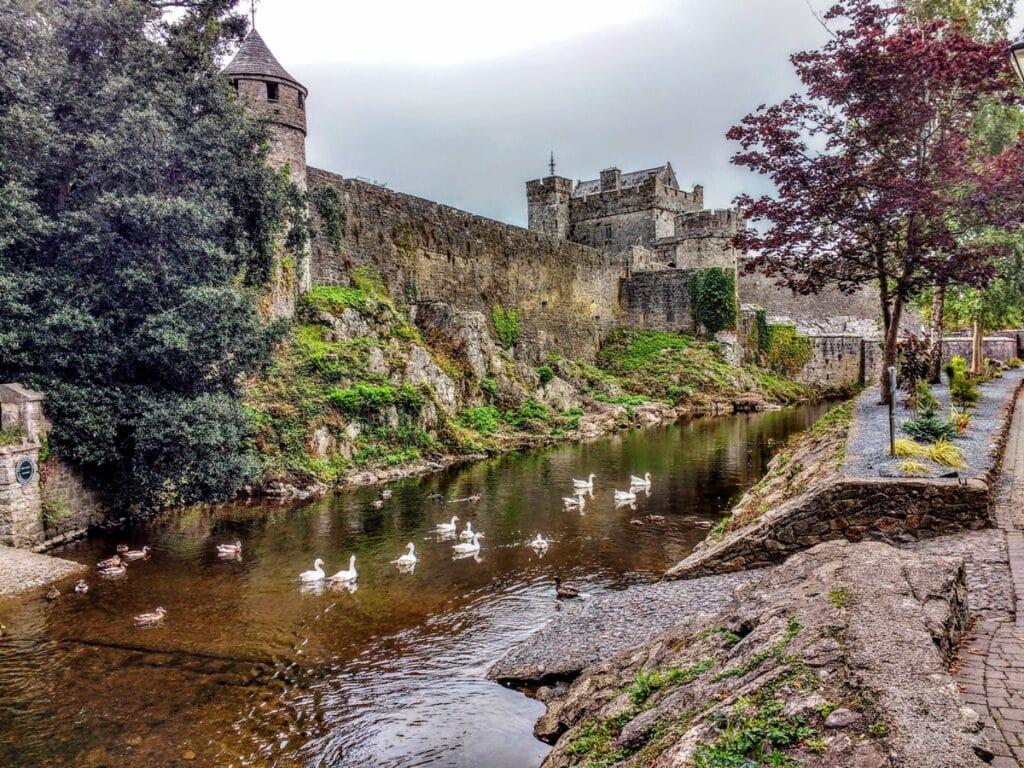
One of Ireland’s largest and best-preserved castles, Cahir Castle offers authentic medieval experiences without the tourist crowds of more famous sites.
Don’t Miss:
• Original defensive features
• Working portcullis
• Cannon ball from 1599 siege
• Audio-visual show
Family Tip: Kids love the working medieval defenses and warfare exhibits.
Bunratty Castle & Folk Park (County Clare)
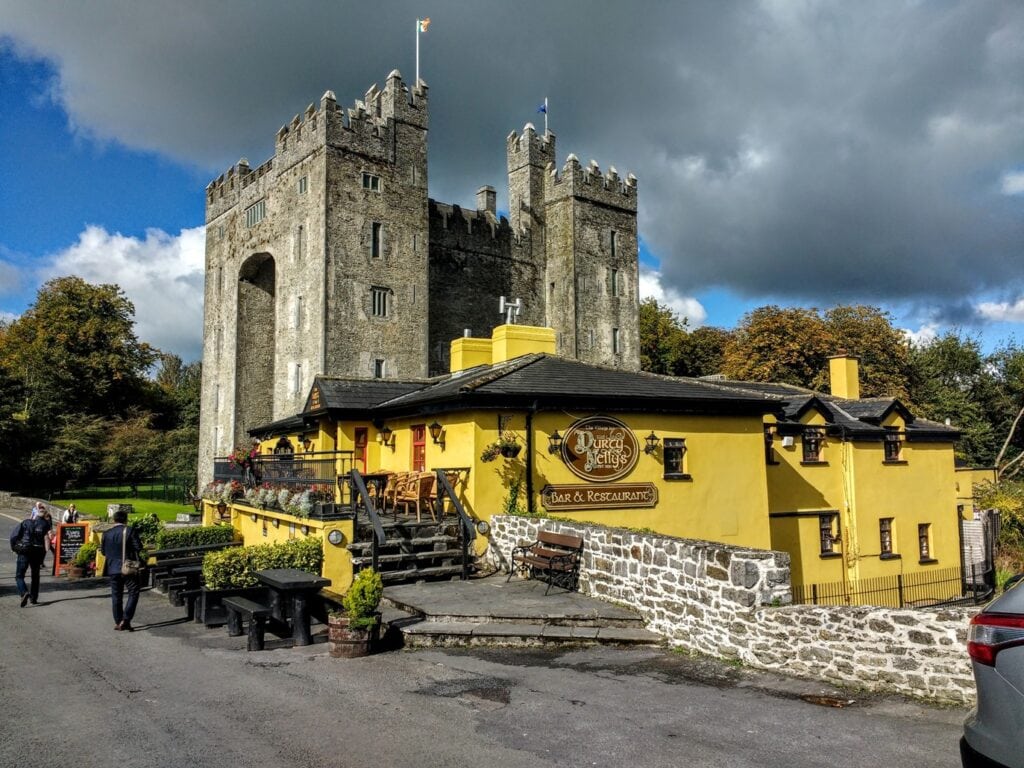
Experience both a restored medieval castle a famous pub (Durty Nellys) and a living history village showing 19th-century Irish life.
Unique Experiences:
• Medieval banquet dinners
• Traditional Irish night shows
• Folk park demonstrations
• Fairy village
Planning Tip: Book evening banquets at least one month ahead in peak season.
Dublin Castle (Dublin)
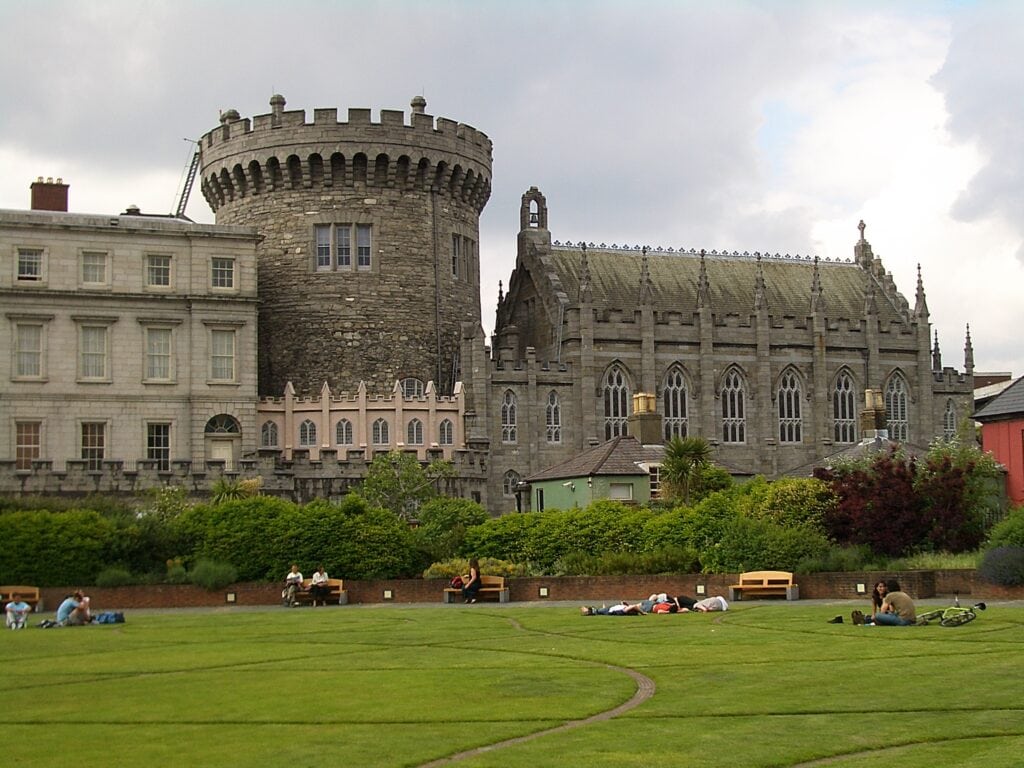
The heart of Irish governance for centuries, Dublin Castle combines medieval tower, Georgian palace, and modern state apartments.
The National Archives’ medieval records reveal Dublin Castle’s evolution from Viking fortification to seat of British rule. The Irish Architectural Archive documents its transformation through various architectural styles, from medieval fortress to Georgian palace. According to Dublin Castle’s official records (2025), the site now hosts over 100 state events annually while welcoming nearly 400,000 visitors each year
Highlights:
• Medieval undercroft
• State apartments
• Chapel Royal
• Chester Beatty Library
Insider Tip: The guided tour provides access to additional rooms and better historical context.
Cultural Treasures: Living History and Irish Traditions
Ireland’s culture isn’t confined to museums – it’s alive in bustling markets, cozy pubs, and ancient libraries. Here are the places where you can experience authentic Irish culture firsthand.
Trinity College & The Book of Kells (Dublin)

Home to Ireland’s most precious manuscript and one of the world’s most beautiful libraries, Trinity College offers a glimpse into both medieval artistry and Georgian architecture. The Book of Kells pages are only turned over every day, so on some days you may not see the illuminated pages – they can be seen at the Abbey, of Kells where the book was first found.
Must-See Features:
• The Long Room library
• Book of Kells exhibition
• Science Gallery
• College squares and buildings
Time-Saving Tip: Book tickets online and arrive before 10 AM to avoid long queues.
Guinness Storehouse (Dublin)
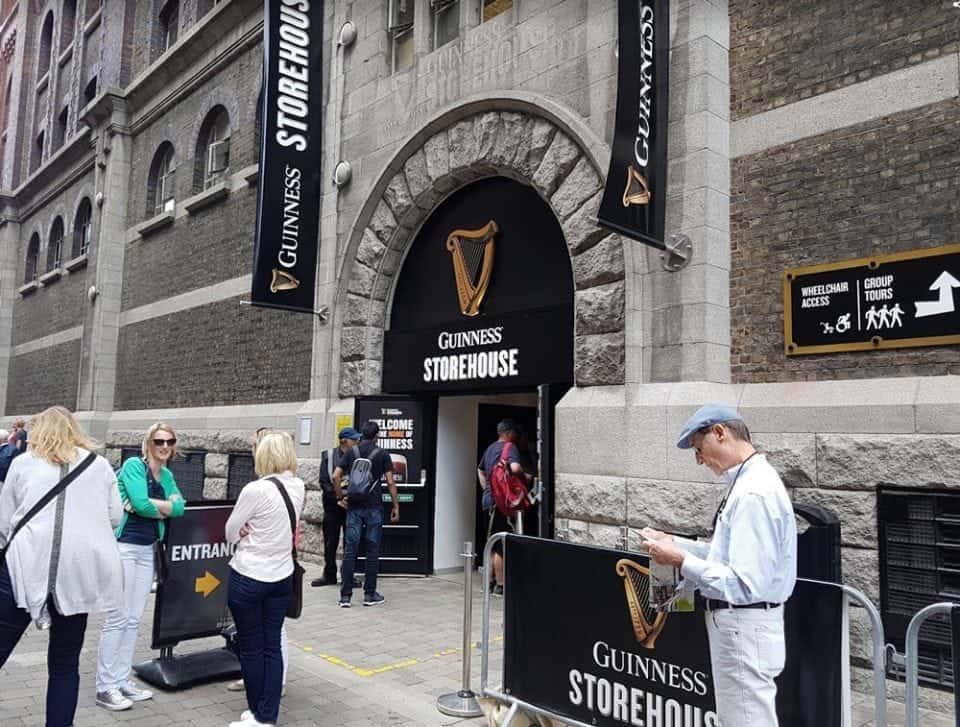
More than just a brewery tour, this seven-story experience tells the story of Ireland’s most famous export and its role in Dublin’s history. If I’m honest it’s a pretty expensive experience when you don’t get to see them making the stout and costs around €48 per person – an Irish tourist trap really.
Don’t Miss:
• Perfect pint pouring class
• Gravity Bar views
• Food pairing experiences
• Historic advertising exhibits
Insider Tip: Book “Connoisseur Experience” for intimate tasting session in private bar.
Kilmainham Gaol (Dublin)
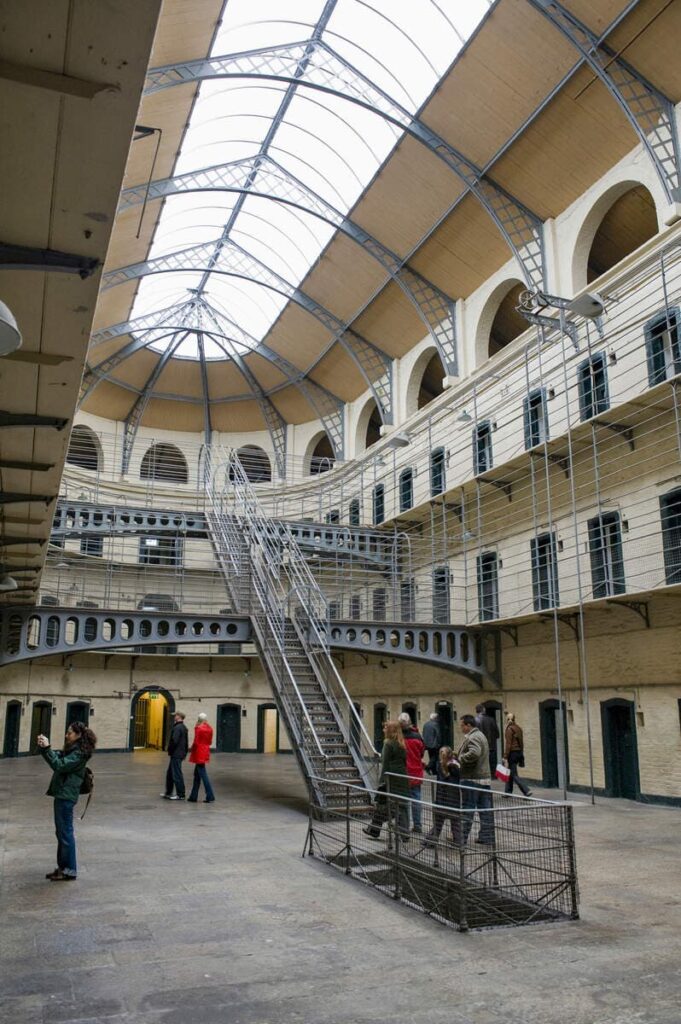
This former prison provides powerful insights into Ireland’s fight for independence. The guided tour brings to life some of Irish history’s most poignant moments.
Key Features:
• East Wing Victorian corridor
• Execution yard
• Museum exhibits
• Political history displays
Booking Essential: Tours often sell out weeks in advance.
Traditional Music in Ennis (County Clare)
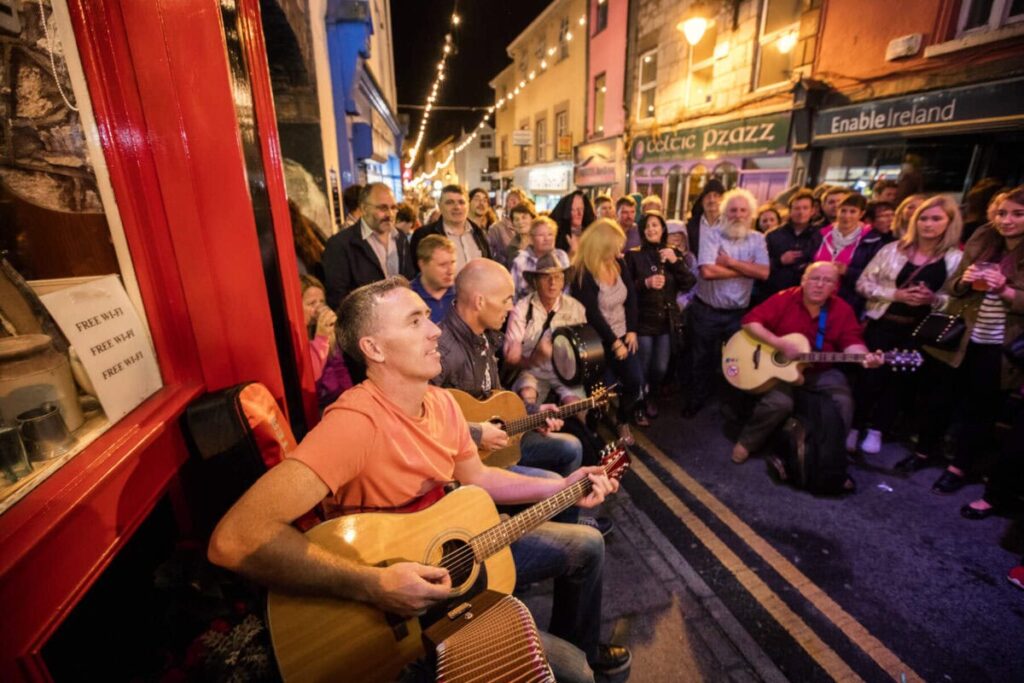
Known as the traditional music capital of Ireland, Ennis offers the country’s most authentic pub session experiences and a fabulous traditional music festival.
The Traditional Music Archive of Ireland (2025) identifies Ennis as having the highest concentration of regular traditional music sessions in the country, with over 40 weekly scheduled performances. According to Comhaltas’s annual festival report, the town hosts over 400 traditional music events annually. The Irish Traditional Music Archive’s historical documentation reveals that Ennis’s musical heritage dates back to the famous Thomond Feis of 1897, establishing its reputation as a crucial center for preserving and promoting traditional Irish music.
Best Venues:
• Cruise’s Pub
• Knox’s Pub
• Ciarán’s Bar
• The Old Ground Hotel
Local Tip: Sessions usually start after 9:30 PM; arrive early to get a good seat.
Cobh Heritage Centre (County Cork)
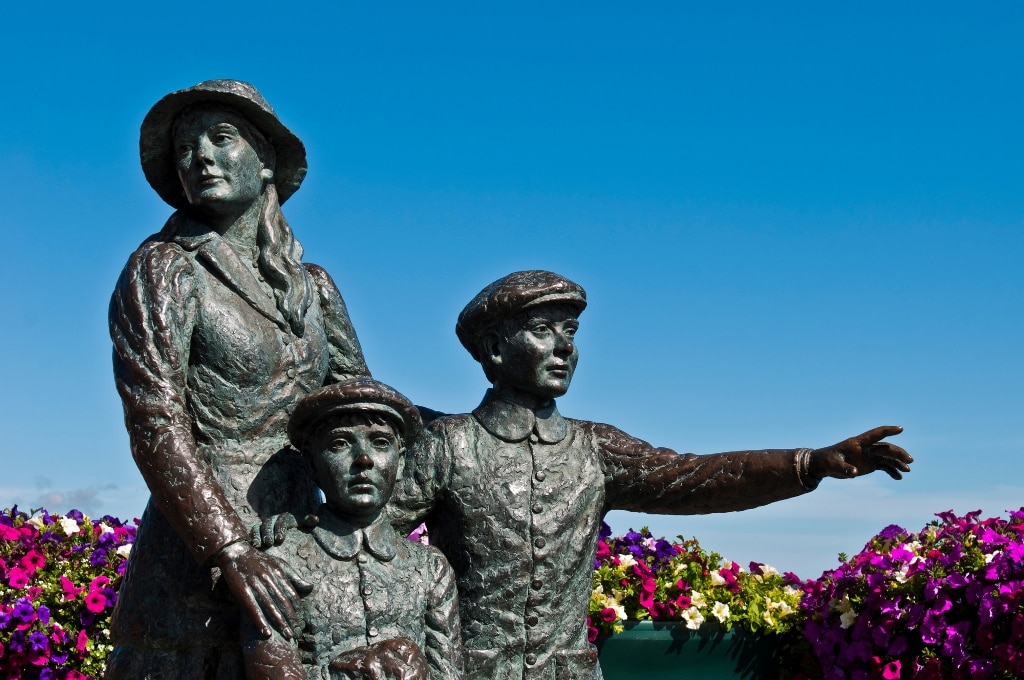
The departure point for millions of Irish emigrants and the Titanic’s last port of call, Cobh tells the story of Ireland’s diaspora.
Exhibition Highlights:
• Titanic Experience
• Emigration stories
• Queenstown Story
• Annie Moore statue
Interactive Experience: Try the emigrant database to trace your Irish ancestors.
Merchants’ Arch and Temple Bar (Dublin)
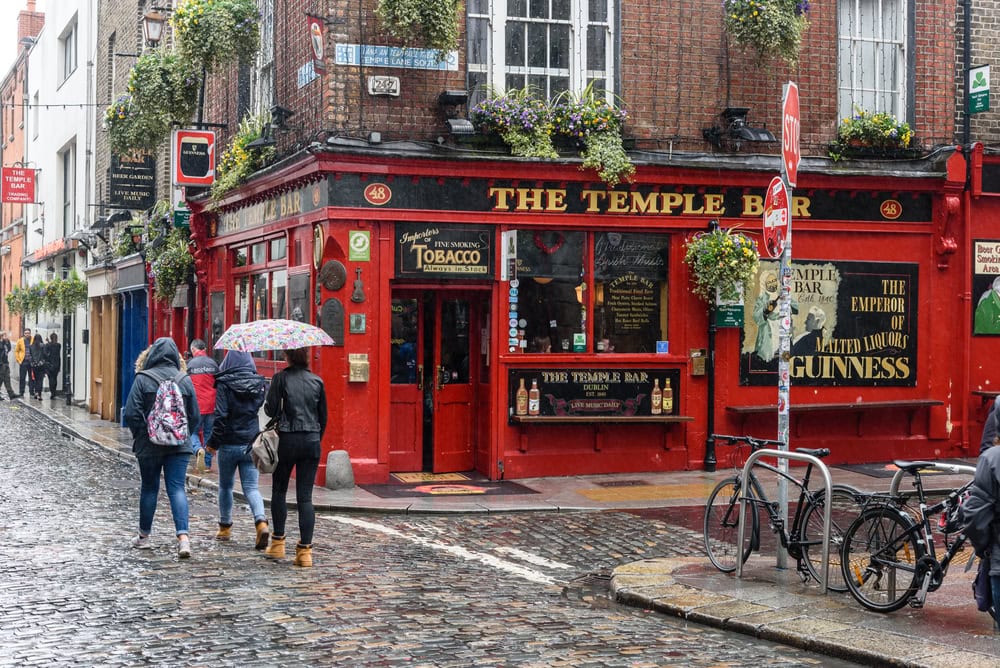
While touristy, Temple Bar remains Dublin’s cultural quarter, with its best traditional music venues and street performances.
Must-Visit Spots:
• The Temple Bar Pub
• Merchants’ Arch Bar
• Meeting House Square
• Weekend food markets
Local Alternative: Visit on weekday afternoons for a more authentic experience.
Galway City (County Galway)
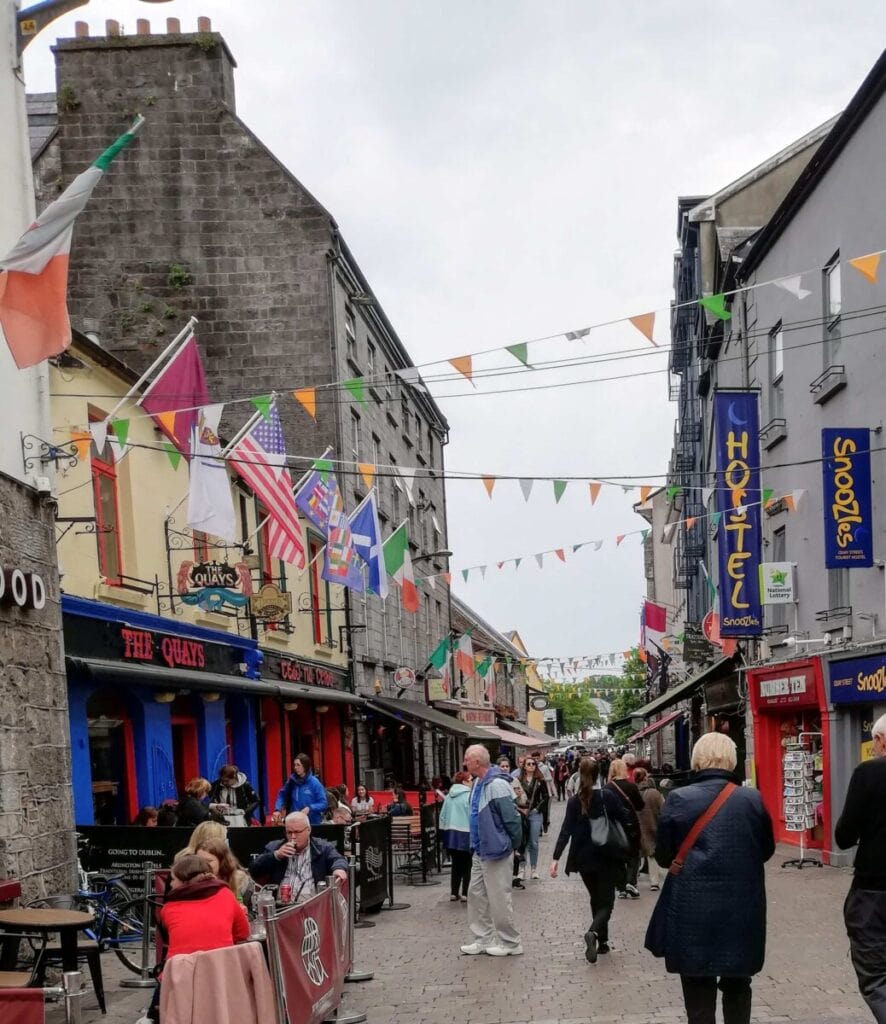
Galway City is Ireland’s cultural heart combines street performances, traditional music, and contemporary arts in a medieval setting.
Cultural Highlights:
• Buskers on Shop Street
• Spanish Arch
• Druid Theatre
• Galway Arts Centre
Best Time: Visit during the Galway International Arts Festival (July).
Cnoc Suain Cultural Experience (Connemara)
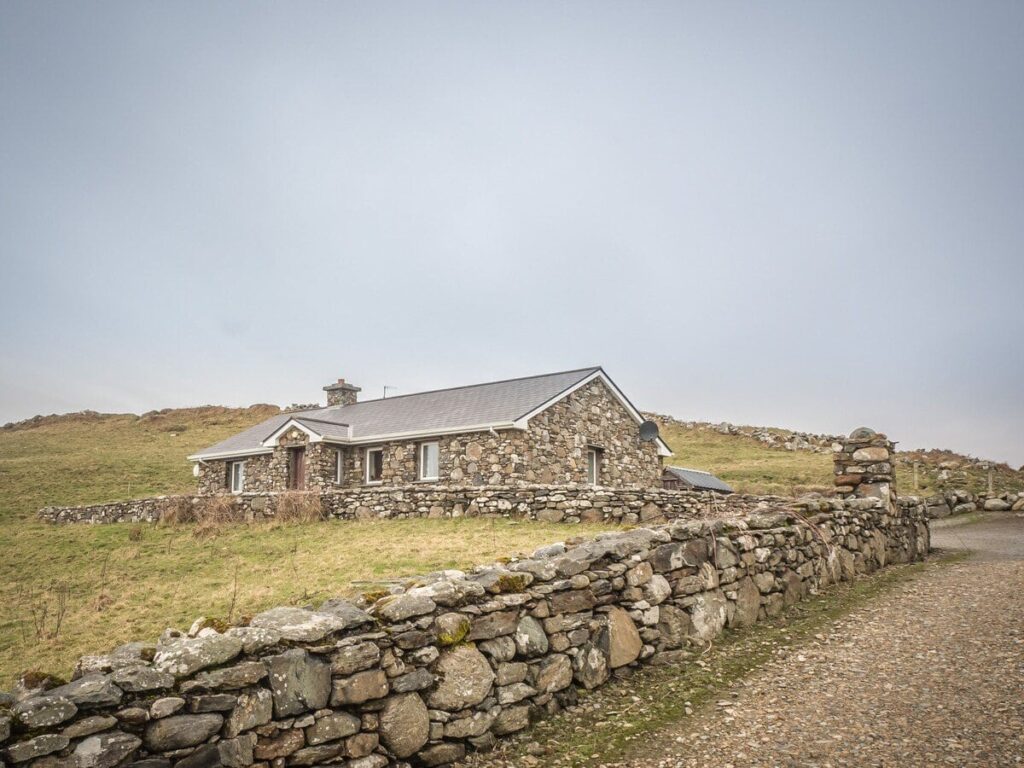
This restored 17th-century hill-village offers immersive experiences in traditional Irish culture, music, and sustainable living.
Authentic Experiences:
• Traditional music workshops
• Bog ecology tours
• Irish language basics
• Traditional cooking demonstrations
Booking Required: Arrange visits in advance through their website.
Hidden Gems: Off-the-Beaten-Path Discoveries
Beyond the famous sites lie Ireland’s true treasures – places where tour buses rarely venture and authentic experiences await. Here are the lesser-known spots that will make your Irish journey unique.
Kylemore Abbey (Connemara)
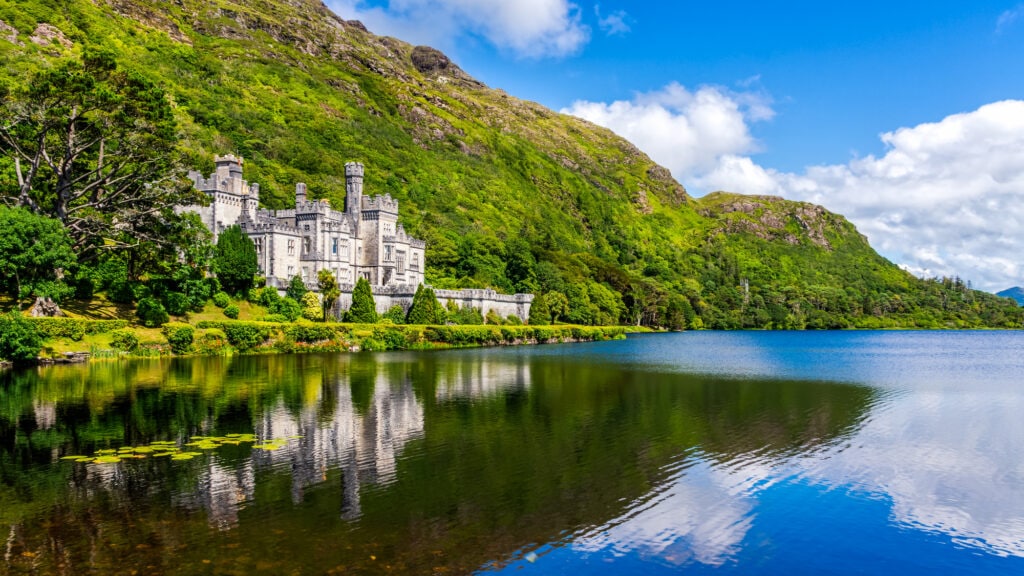
While tourists flock to Blarney, this Gothic castle-turned-abbey offers equally stunning architecture with a fraction of the crowds.
Hidden Highlights:
• Victorian walled garden
• Gothic church
• Lake walks
• Working Benedictine abbey
Photography Tip: Morning mist over the lake creates ethereal photo opportunities.
The Beara Peninsula (Cork/Kerry)
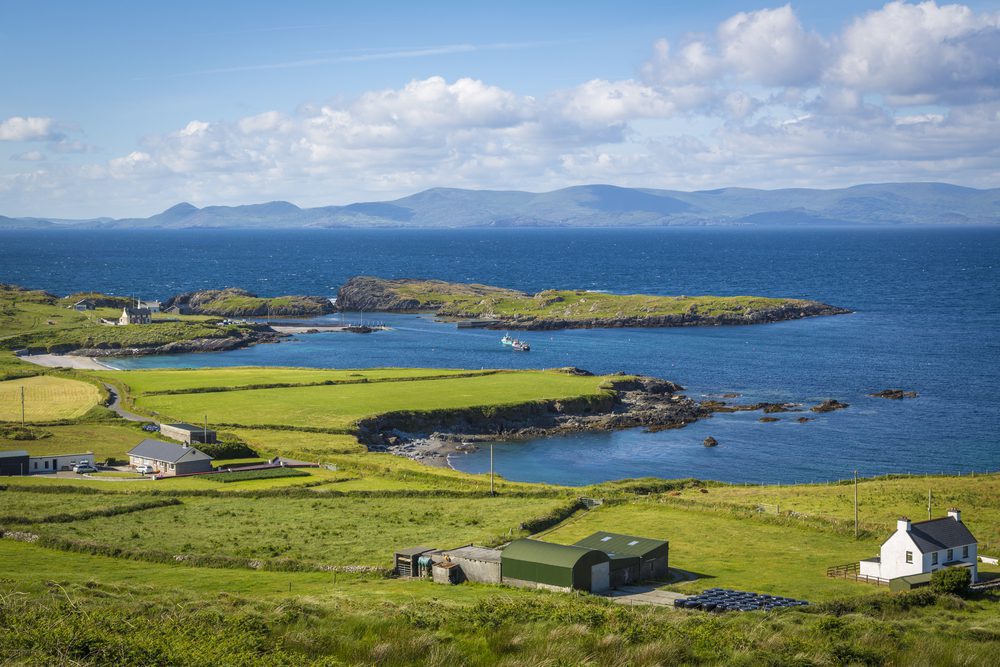
Less traveled than the Ring of Kerry but equally beautiful, the Beara Peninsula offers authentic Irish experiences without the crowds.
Secret Spots:
• Dursey Island cable car
• Gleninchaquin Park
• Copper mines
• Stone circles
Local Tip: Follow the Beara Way walking trail for the best hidden viewpoints.
Lough Gur (County Limerick)
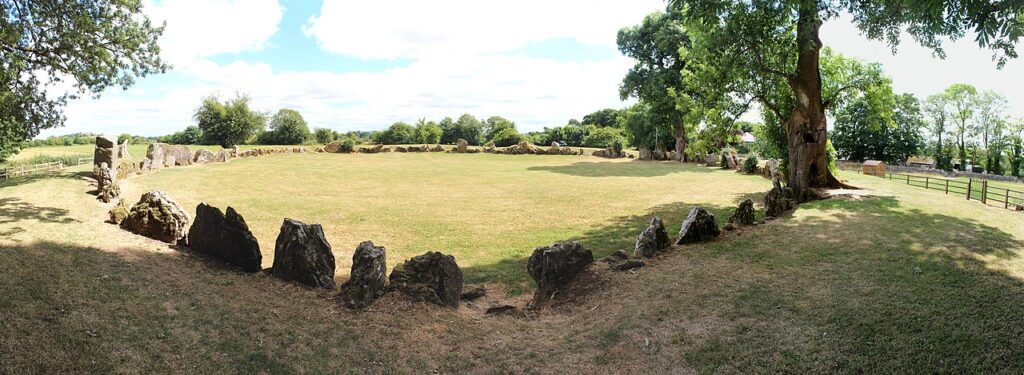
This archaeological landscape contains Ireland’s largest stone circle and evidence of 6,000 years of continuous habitation.
Unique Features:
• Grange stone circle
• Ancient settlement remains
• Living history demonstrations
• Lake legends and folklore
Best Time: Visit during summer solstice celebrations.
Inishmurray Island (County Sligo)
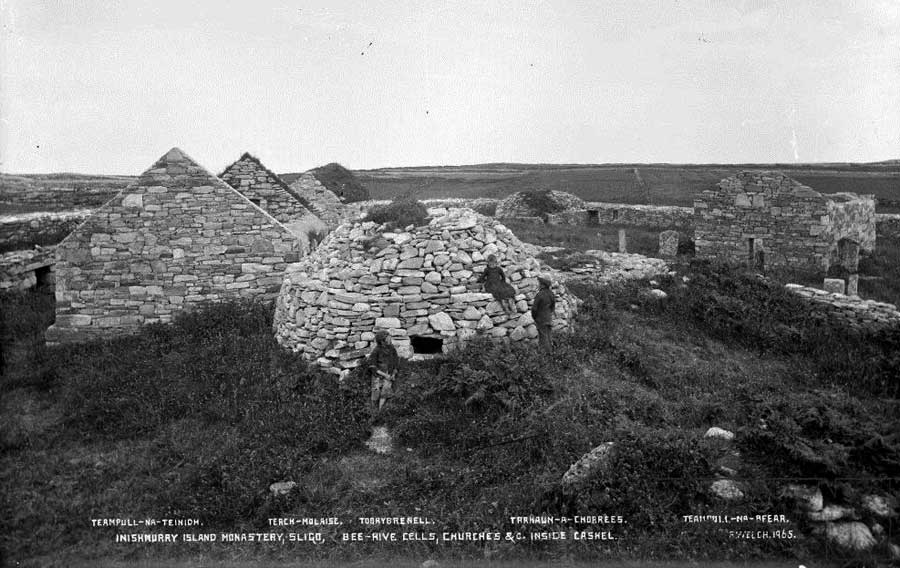
This abandoned island off the coast of Sligo holds one of Ireland’s best-preserved early Christian monasteries, though it requires some effort to visit.
Essential Information:
• Boat trips weather-dependent
• Early Christian beehive huts
• Ancient cursing stones
• Poitín (moonshine) history
Planning: Book boat trips through local operators in Mullaghmore.
Ardmore Cliff Walk (County Waterford)
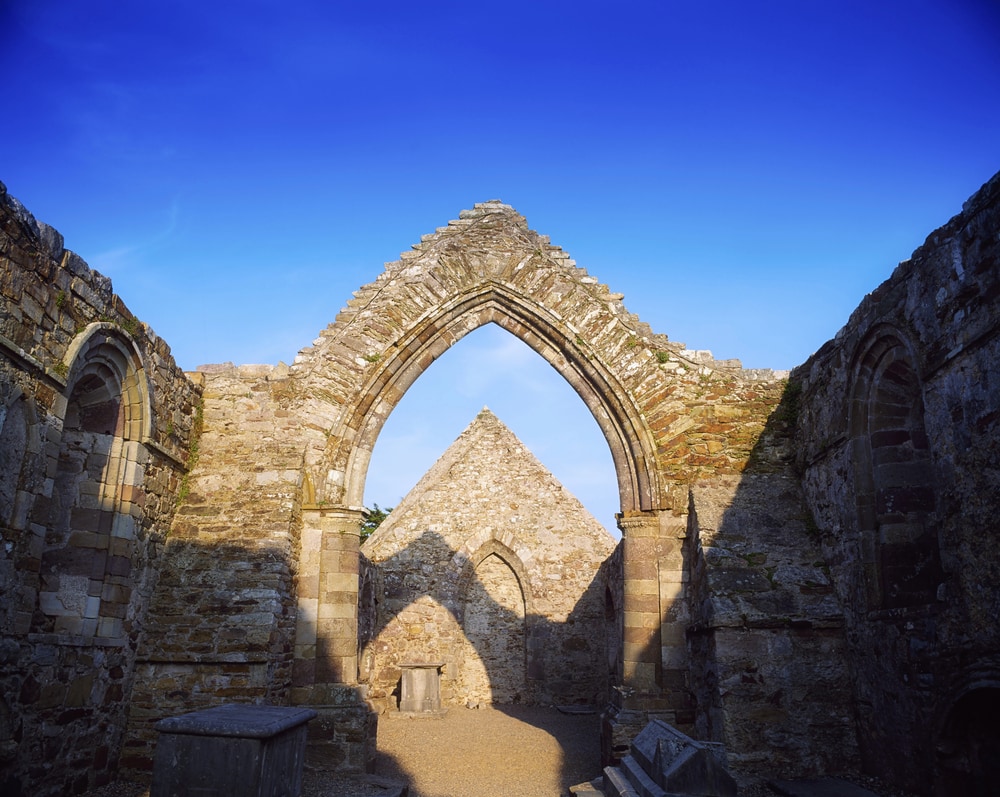
A 4km coastal path combining dramatic cliffs, early Christian sites, and shipwreck views.
Trail Highlights:
• Round tower
• St. Declan’s Well
• Shipwreck viewpoint
• Ram’s Head cove
Walking Tip: Allow 2-3 hours for the full loop with photo stops.
The Choctaw Monument (County Cork)
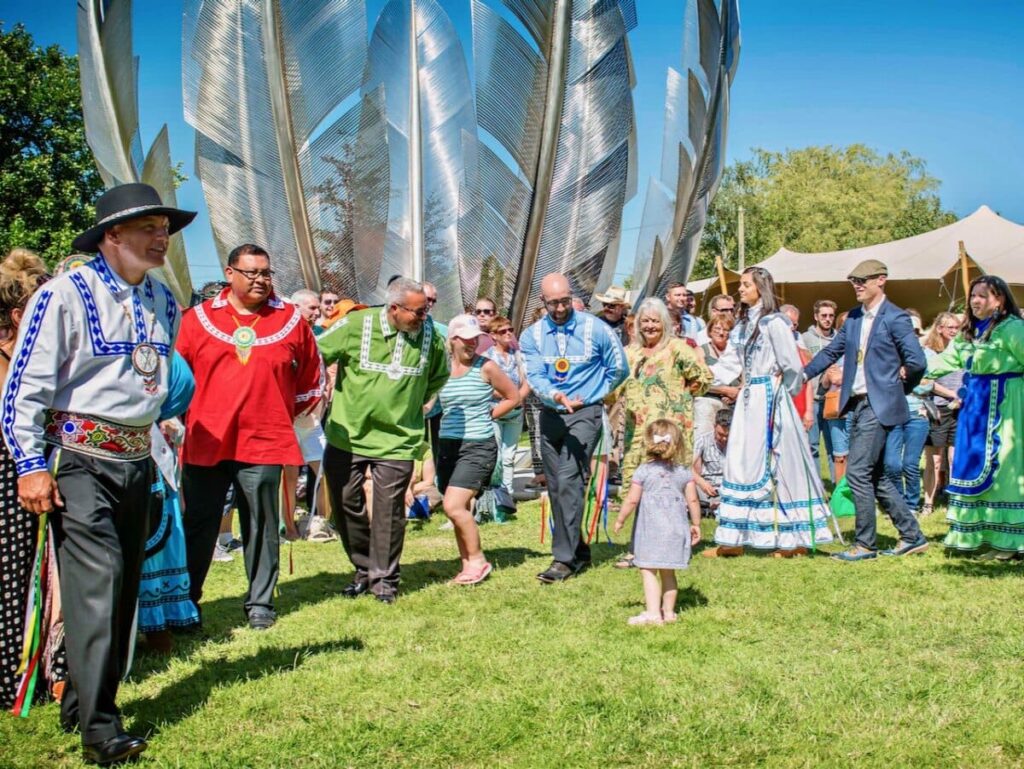
This striking sculpture commemorates the Choctaw Nation’s generous donation to Ireland during the Great Famine, despite their own recent hardships.
Site Features:
• “Kindred Spirits” sculpture
• Memorial garden
• Historical information
• Cultural connection story
Location Tip: Combine with a visit to Midleton Distillery.
Birr Castle Gardens (County Offaly)

Home to Ireland’s historic great telescope nicknamed the Leviathan and magnificent gardens.
Unique Attractions:
• Great Telescope
• Science Centre
• Formal gardens
• Treehouse adventure area
Family Tip: Great for combining science and nature interests.
Mysteries of the Midlands (County Offaly)
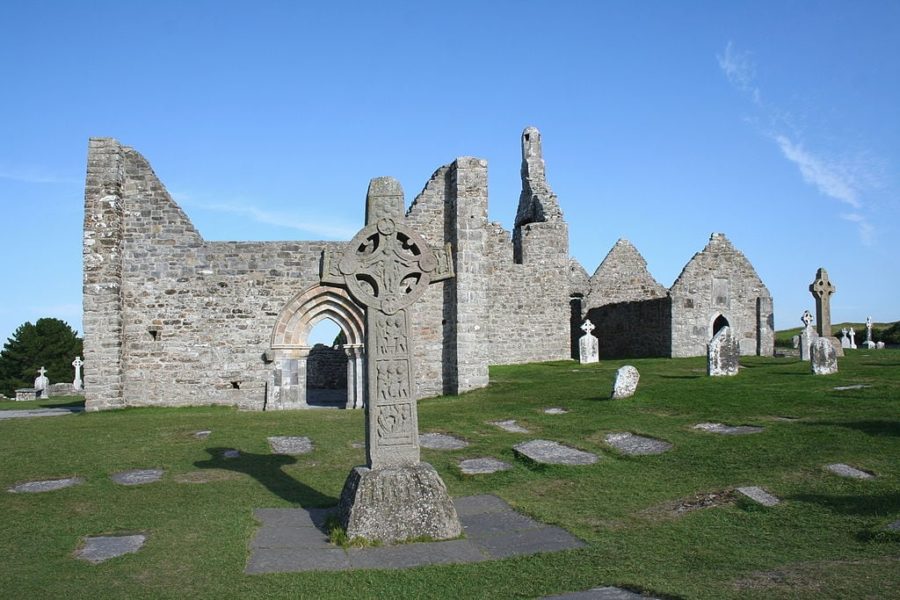
The often-overlooked Irish Midlands hide ancient bogs, whiskey heritage, and monastic sites.
Hidden Treasures:
• Clonmacnoise
• Tullamore D.E.W. Distillery
• Lough Boora Discovery Park
• Clara Bog
Travel Tip: Base yourself in Tullamore for easy access to all sites.
The Cooley Peninsula (County Louth)

Setting of Ireland’s greatest epic, the Táin Bó Cúailnge, this peninsula offers mythology, mountains, and medieval sites.
Highlights:
• Carlingford medieval town
• Slieve Foy mountain
• Proleek Dolmen
• Táin Way walking trail
Seasonal Event: Visit during the Táin March festival (June).
Practical Planning Tips
• Best Time to Visit: April-October for optimal weather
• Transportation: Rent a car for hidden gems access
• Accommodation: Mix hotels with B&Bs for local insights
• Time Needed: Allow 2-3 weeks for comprehensive exploration
• Weather: Pack layers and rain gear regardless of season
Creating Your Perfect Irish Journey: Final Tips and Resources
Ireland’s magic lies not just in its destinations but in the unexpected moments between them – the friendly chat with a local in a village pub, the rainbow appearing over a ancient stone circle, or the impromptu music session that turns into an unforgettable evening.

Planning Your Route
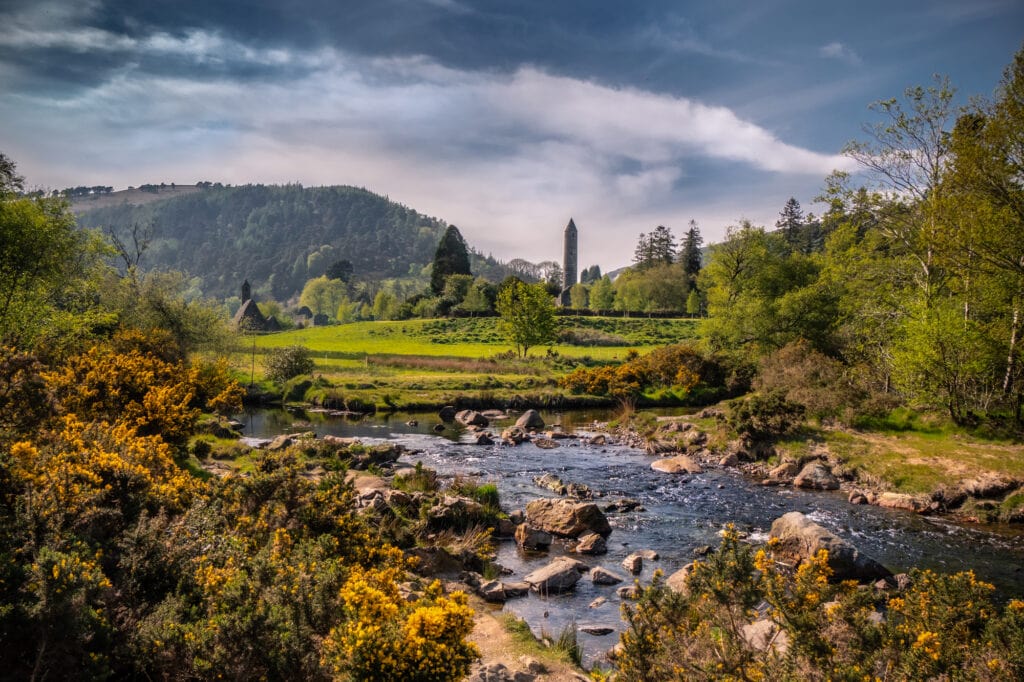
• 1 Week: Focus on Dublin and one other region, visit Kilkenny, Co Waterford for Viking history, Glendalough and the ancient Monastery, Powerscourt and the gardens, Copper Coast and County Wexford.
• 2 Weeks: Cover the highlights of the Wild Atlantic Way and the Ancient East and if time explore Ireland’s Hidden Heartlands
• 3 Weeks: Experience all five regions at a comfortable pace
• 4+ Weeks: Include hidden gems and longer stays in favorite spots
Seasonal Considerations
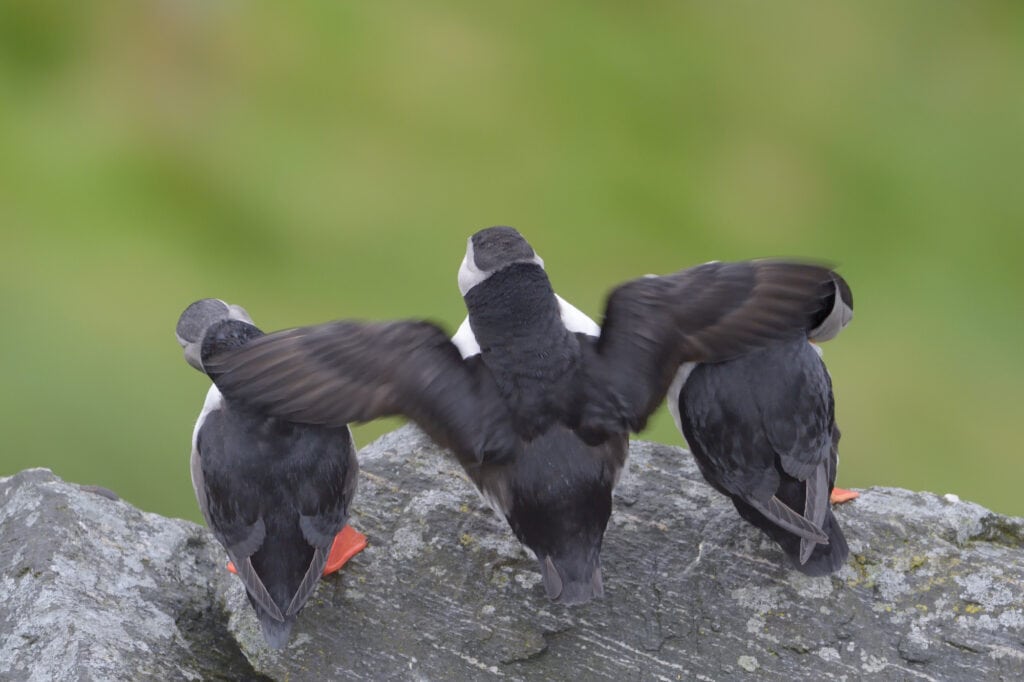
• Spring (March-May): Fewer crowds, beautiful wildflowers, variable weather, puffin sighting
• Summer (June-August): Peak season, longest daylight, busiest sites
• Autumn (September-October): Gorgeous colors, harvest festivals, mild weather
• Winter (November-February): Atmospheric castle visits, winter solstice at ancient sites
Money-Saving Tips
• Heritage Card: Free entry to state-managed heritage sites
• Eating out: Many corner shops like Spar offer a fantastic selection of take out foods
• B&B Networks: Book through associations for better rates
• Off-Peak Travel: Visit shoulder season for significant savings
Local Etiquette
• Pub Culture: Round-buying is common; join the tradition
• Timing: Irish time is relaxed; embrace “Irish Time”
• Greetings: First-name basis is normal, even in formal situations
• Tipping: 10-15% in restaurants; not expected in pubs
Essential Apps and Resources
• Transport: Irish Rail, Bus Eirean, Dublin Bus, Local Link
• Weather: Met Éireann app
• Navigation: Google Maps (download offline areas)
• Heritage: Heritage Ireland app
Final Words of Wisdom
Ireland reveals itself to those who take time to explore. While this guide covers the must-see attractions, leave room in your itinerary for spontaneous discoveries. Strike up conversations with locals, take that intriguing side road, and remember that in Ireland, the journey itself is often the destination.
Whether you’re planning an Irish road trip from Dublin City to the rugged shores of West Cork, or dreaming up day trips to the Aran Islands, Ireland’s rich history and diverse landscapes offer endless possibilities for exploration. From the dramatic cliffs of Mizen Head to the pastoral scenes of County Mayo, each region tells its own story.

The Dingle Peninsula alone could fill an entire bucket list with its ancient sites and stunning coastal views. Your Irish road journey might begin as a simple itinerary, but it will evolve into something far more meaningful – a deep connection with a land where every stone wall and misty morning holds centuries of tales waiting to be discovered. Let Ireland’s ancient rhythms guide your path, and remember that the best stories often unfold on the unplanned detours between destinations.
Join 7,500 Ireland travellers in my Ireland Uncovered Facebook Group and 1,897 on my XYUandBEYOND PAGE
Bookmark this Accessible Ireland hub for updates and dive into the detailed guides to build an itinerary that fits your energy, comfort, and interests.
➡️Accessible Giant’s Causeway Northern Ireland
Start Planning Your Trip
👉 Public Transportation in Ireland
👉 Hidden Gems in Ireland – 32 Secret places to visit
👉 Answering all your travel questions about Ireland
👉What to pack for your Ireland trip
👉 Northern Ireland Public Transportation
I really enjoyed my time in Northern Ireland and I am hoping to visit Ireland and explore more of the beautiful country soon. I think I’d never be short of things to do, having read your guide 🙂
This is an amazing collaborative list. Thanks for putting it together. Definitely saving this. Never heard of coasteering.
Nice and interesting posts about Ireland. Good collaboration.
Very useful for planning a trip to ireland. Thank you 🙂
Nice expression on Ireland nice visited places. keep continuing your nice travel experience
Thanks for sharing.
Ireland is a world special country. Travelling Ireland is totally majestic. Love to visit there specially northern Ireland. I heard a lots of thing about northern Ireland beauty.