
One Week in Ireland: A Complete 7-Day Road Trip Itinerary
I have driven every road in this itinerary more than once. Ireland gets under your skin in a way that is hard to explain until you have experienced it yourself, and one week is just enough time to feel the shape of the country without feeling like you have been chasing your own tail the whole time. This is the itinerary I give friends who are visiting for the first time and want to cover real ground, see genuine Ireland, and still have time to stop at a pub and enjoy some traditional music and craic.

One week is not enough for Ireland. I want to be honest about that from the start. But it is enough to fall completely in love with it, which is the whole point. Prefer the east coast instead? My 7 Days in Ireland: The Ultimate Eastern Ireland Itinerary shares the same Dublin and Wicklow opening, then heads to the Boyne Valley, Kilkenny, and Waterford rather than south to Cork and Kerry.
- One Week in Ireland: A Complete 7-Day Road Trip Itinerary
- Before You Go: Planning Your One Week in Ireland
- Do I Need a Visa for Ireland?
- Is One Week Enough for Ireland?
- Best Time to Visit Ireland for a Road Trip
- One Week in Ireland: 7-Day Itinerary Overview
- Days 1 and 2: Dublin
- Day 3: Wicklow and Kilkenny
- Day 4: Rock of Cashel, Cork and Blarney Castle
- Where to Stay in Cork
- Day 5: Killarney and the Ring of Kerry
- Day 6: Adare, Bunratty Castle and the Cliffs of Moher
- Day 7: Athlone and Back to Dublin
- One Week in Ireland: What It Will Cost
- Practical Tips for Driving in Ireland
- Related Ireland Itineraries and Guides
- One Week in Ireland: FAQs
Before You Go: Planning Your One Week in Ireland
You Need a Car
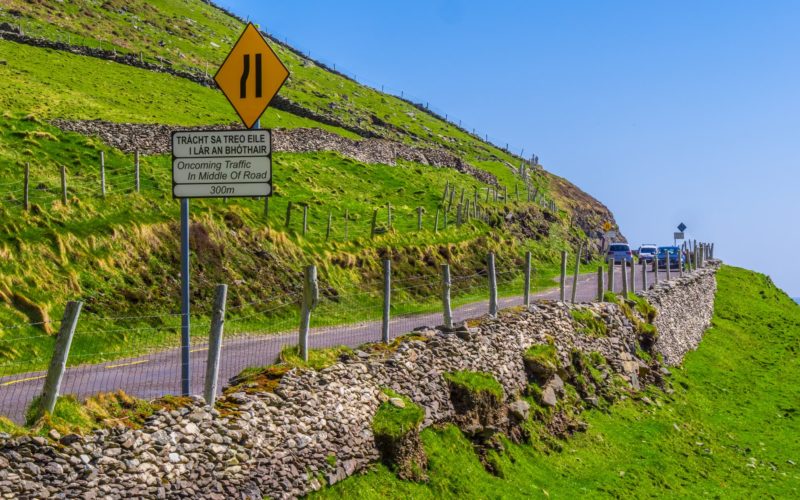
This is not optional. Public transport outside Dublin is patchy at best and non-existent in the places you most want to reach. A rental car transforms a week in Ireland from a visit to a few towns into an actual road trip itinerary. Book early, book small (the roads are narrower than you expect), and if you are not used to driving on the left, take thirty minutes on a quiet road before you attempt anything else. Insurance and taxes push prices up in Ireland so budget accordingly, and look for operators who include all costs upfront with no surprises at the desk.
Automatics are available if you prefer not to deal with a manual gearbox on unfamiliar roads. Given that Irish country roads will require you to think quickly about passing places, hedgerows and the occasional wandering sheep, removing the gear-change from the equation is not a bad idea.
Do I Need a Visa for Ireland?
Citizens of the EU, UK, USA, Canada, Australia and New Zealand do not need a visa to enter Ireland for short stays. If you are travelling from another country, check with the Irish Naturalisation and Immigration Service before booking. Note that Ireland is not part of the Schengen Area, so a Schengen visa does not cover entry to Ireland.
What Side of the Road Do You Drive on in Ireland?
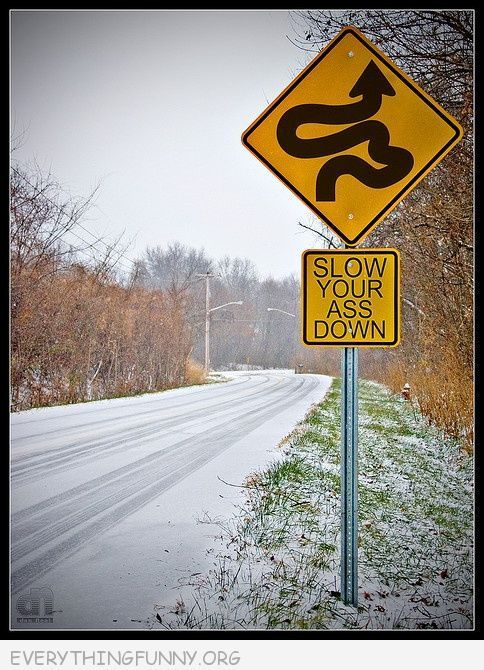
The left. If you are arriving from the USA, Canada, Australia or continental Europe, you will be driving on the opposite side to what you are used to. Most people adapt within an hour or two, but the first roundabout of the trip is always the most interesting moment. Take it slowly. If you are over 60 check out our guide for driving in Ireland for tips.
Is One Week Enough for Ireland?
It is enough for a very good first trip that will guarantee you come back. You will not see Donegal, the Dingle Peninsula, the Aran Islands, Galway city or the Causeway Coast in Northern Ireland on this route. Accept this gracefully, use it as motivation, and plan a return trip before you have even boarded the plane home. If you want to explore Galway and Connemara, our 3 Days in Galway guide shows exactly how to add it to either end of this trip.
Best Time to Visit Ireland for a Road Trip
Ireland is visitable year-round. Summer (June to August) gives you the longest days, the best weather odds and the largest crowds. Shoulder season, particularly May and September, is often the sweet spot: good light, manageable visitor numbers, and the countryside still green. Winter is quiet and dramatic and surprisingly rewarding if you dress properly, which in Ireland means waterproofs at all times regardless of the forecast.
One Week in Ireland: 7-Day Itinerary Overview
Days 1 and 2 are spent in Dublin, with an optional day trip to Northern Ireland. Day 3 takes you through Wicklow and into Kilkenny. Day 4 covers the Rock of Cashel, Cork and Blarney Castle. Day 5 is Killarney and the Ring of Kerry. Day 6 runs through Adare, Bunratty and the Cliffs of Moher. Day 7 is the journey back to Dublin, with a stop in Athlone if time allows.
Days 1 and 2: Dublin
Most transatlantic flights arrive into Dublin in the early morning after an overnight crossing. The temptation is to push straight through the day, but the smarter move is to take things gently on arrival. Check in to your hotel, leave bags if the room is not ready, and find somewhere good for breakfast. Then just walk.
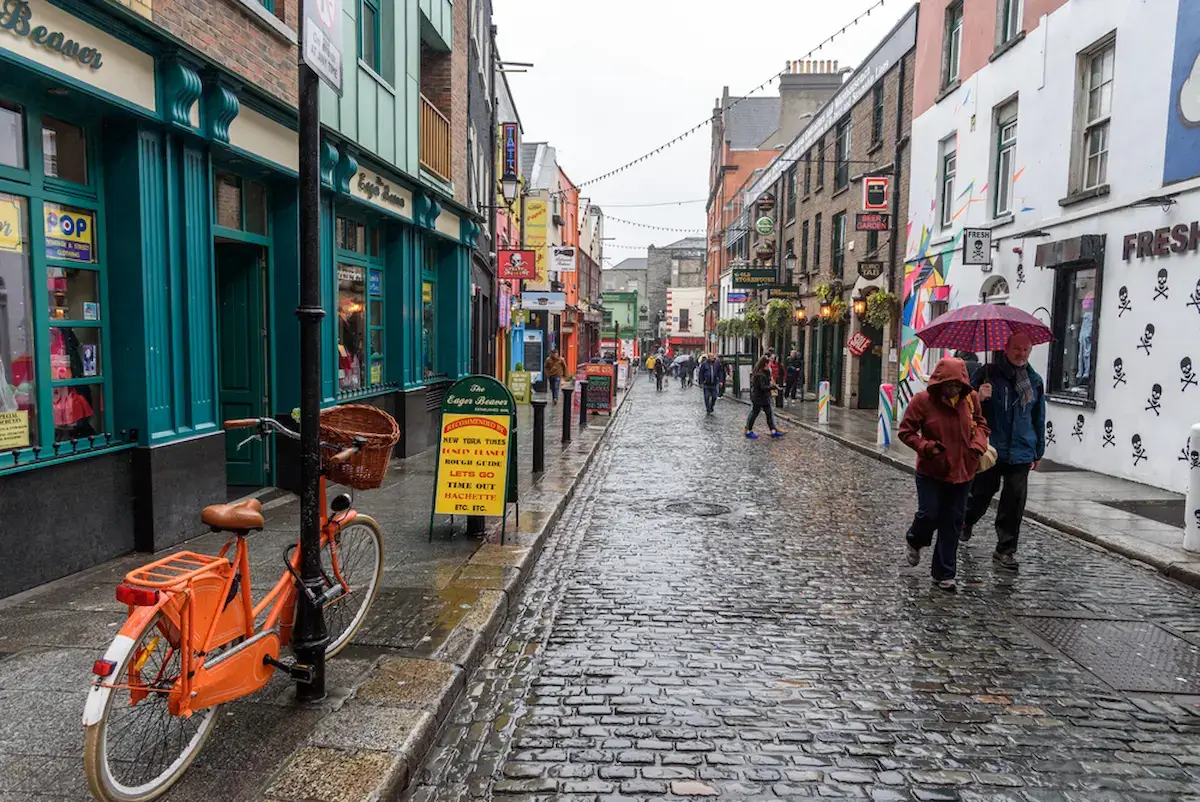
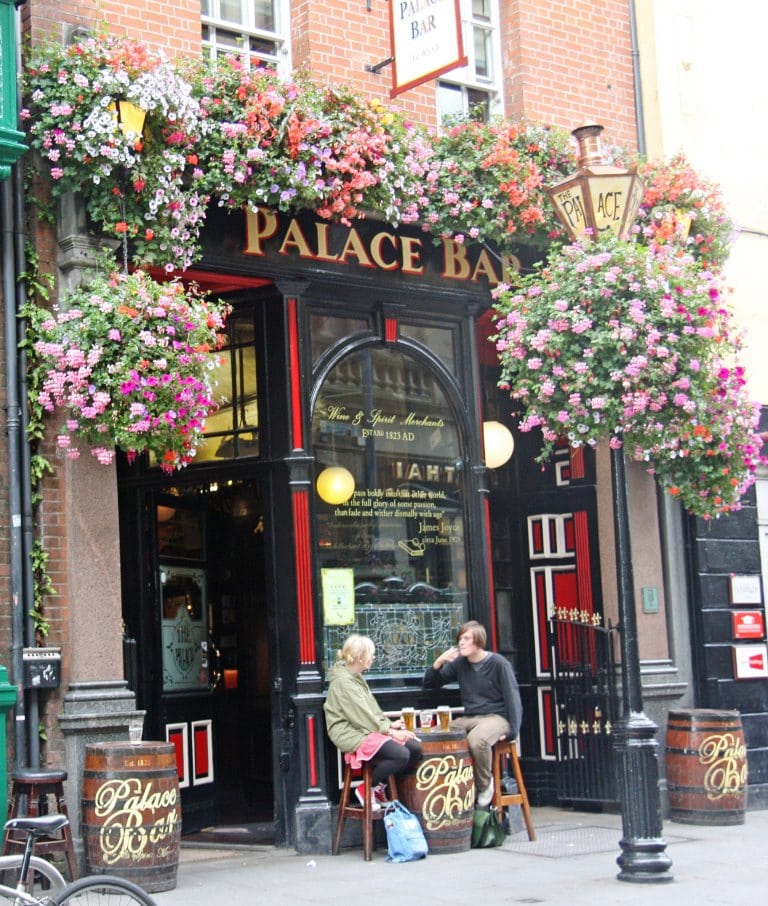
Dublin rewards wandering. The city is compact enough that you can cover a lot on foot without a plan, and some of the best things you will see, a mural, a Victorian pub front, a covered market lane, are not in any guidebook.
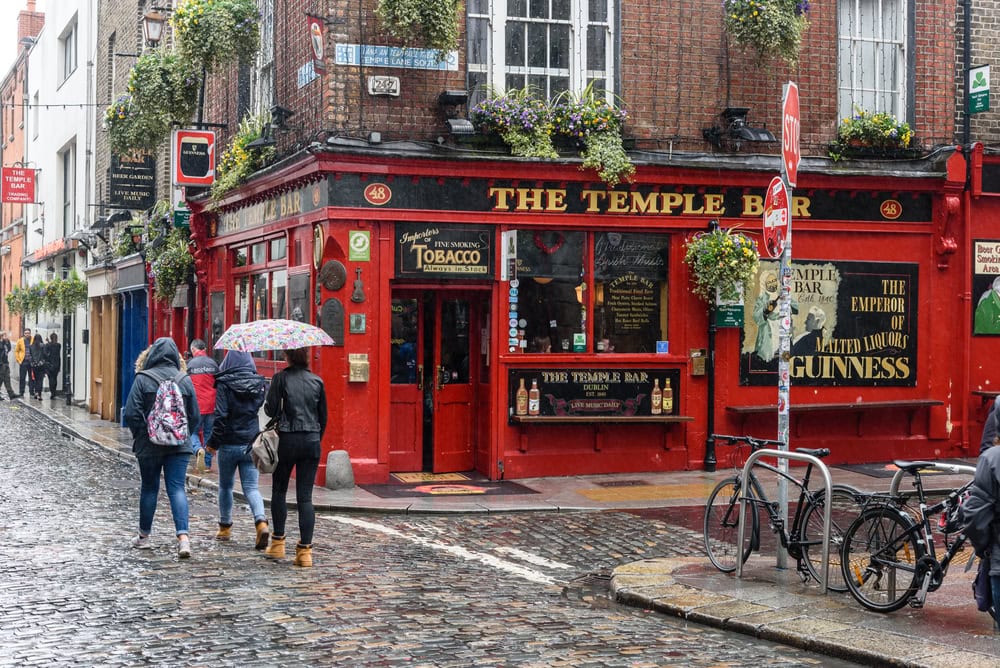
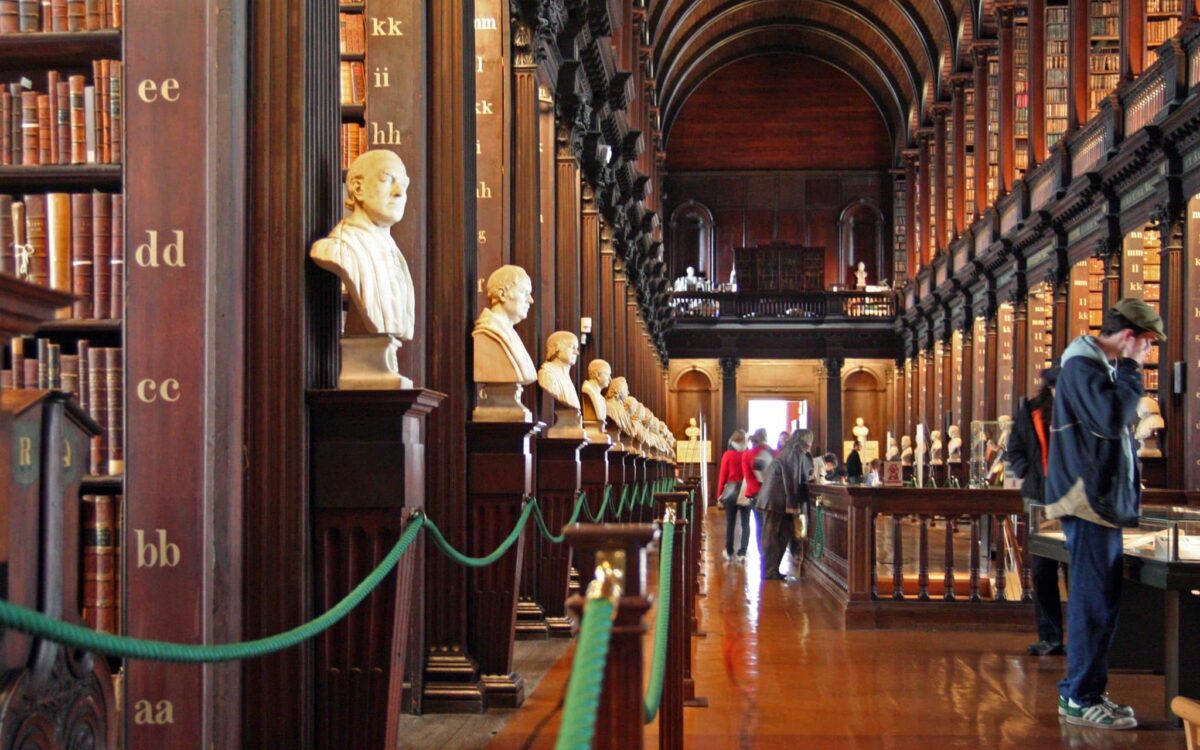
The GPO on O’Connell Street is where the 1916 Rising began, and the marks left by British gunfire on the exterior columns are still visible. Inside, the free exhibition on the Easter Rising is genuinely excellent and far better than many paid attractions. The Ha’penny Bridge is the most photographed spot in the city for good reason. Temple Bar is loud and touristy but worth walking through at least once, ideally before the evening crowds arrive. Trinity College and the Long Room library are worth the entry fee, though the queues for the Book of Kells can be significant in summer. Christchurch Cathedral and the mummies at St. Michan’s Church are the kind of unexpectedly memorable things that Dublin does very well.
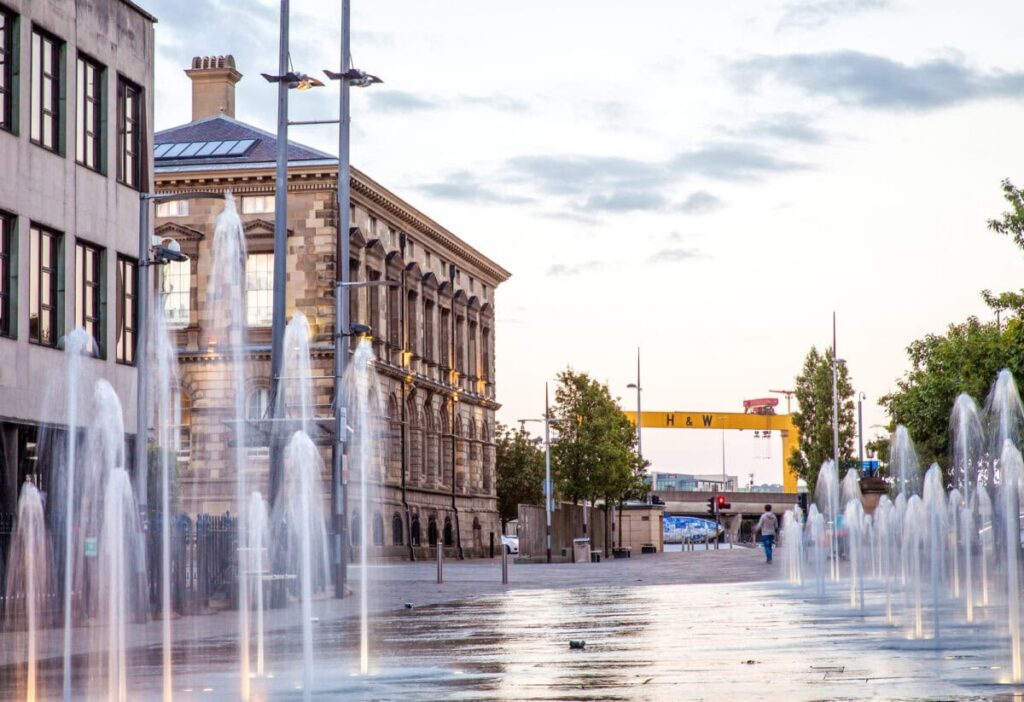
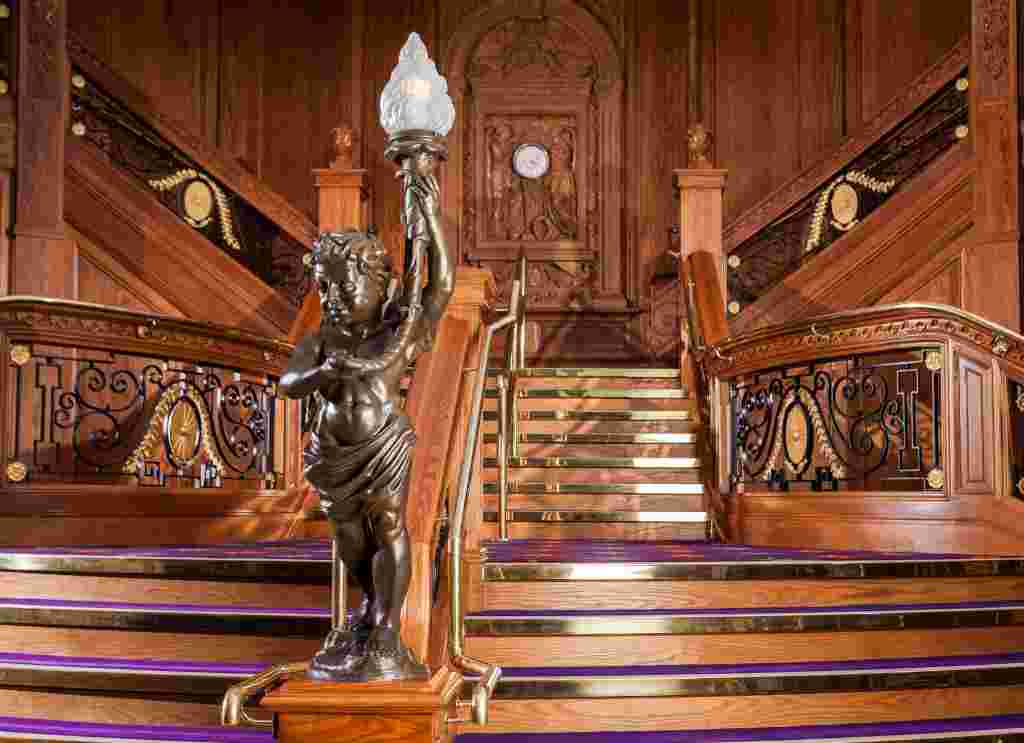
If you have a second day in Dublin and want to use it for a day trip to Northern Ireland, the drive to Belfast takes about two hours from Dublin city centre. The Titanic Belfast museum is one of the best visitor attractions on the island, and the Causeway Coast with the Giant’s Causeway is a further hour north of the city. It is a long day but a genuinely rewarding one. Our Causeway Coastal Route itinerary covers the detail if you want to plan it properly.
For evenings in Dublin, the pub culture is something you should engage with properly rather than just observing. O’Donoghue’s on Merrion Row has live music seven nights a week and photos covering every inch of the walls documenting the musicians who have played there, among them Christy Moore and Phil Lynott. The Cobblestone near Smithfield describes itself as a drinking pub with a music problem, which is exactly right. The Brazen Head on the south quays claims to be Ireland’s oldest pub, trading since 1198, and while that claim is contested, the atmosphere is not. You can find some authentic pubs to visit in our article on the best pubs in Dublin.
I stayed in the city centre on every Dublin visit and it made everything easier. Temple Bar itself is overpriced, but the surrounding streets give you walkable access to everything. The Wynn’s Hotel on Abbey Street puts you five minutes from Trinity College, Temple Bar and Henry Street and includes a full Irish breakfast, which is the only way to properly start a day in Ireland.


Dublin Ticket Prices
Trinity College and the Book of Kells costs approximately €18 to €23 per adult depending on the season. Book online to save queuing time. The Long Room alone, without the Book of Kells, is a separate lower-priced ticket option.
The Guinness Storehouse costs from €20 per adult when booked online, higher at the door. The rooftop Gravity Bar with its panoramic view over Dublin is the highlight. Book ahead in summer as it sells out regularly.
The GPO Exhibition inside the GPO on O’Connell Street is free to enter.

Accessibility in Dublin
Dublin city centre is broadly accessible for wheelchair users, with dropped kerbs and good pavement quality on the main streets. The LUAS tram system is fully accessible. Some of the older attractions, including St. Michan’s and Christchurch, have limited accessibility due to their historic building constraints. Trinity College’s main buildings are partially accessible and the Book of Kells exhibition is reached by steps, though a lift is available. Always check individual attractions in advance if accessibility is a priority.

Day 3: Wicklow and Kilkenny
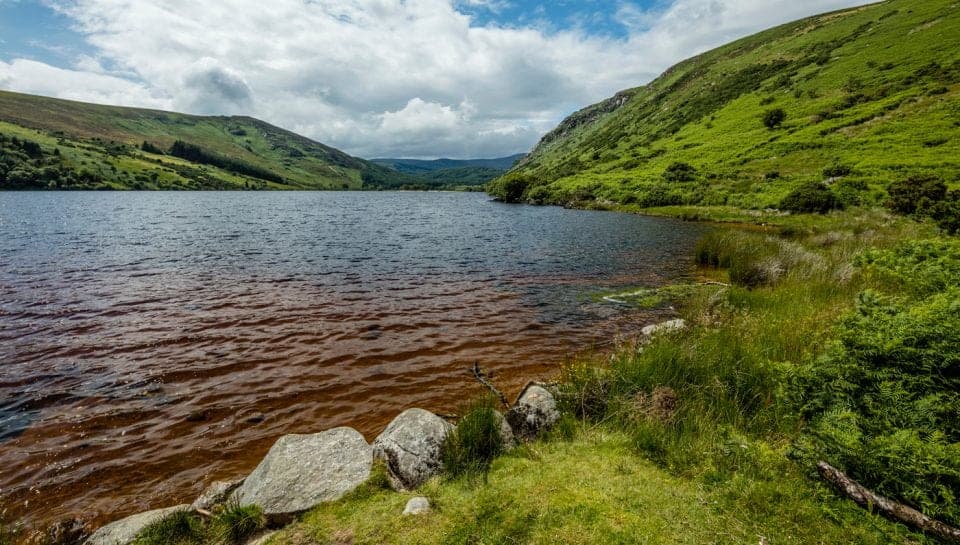
Collect your rental car early and head south out of Dublin towards County Wicklow. The drive into the Wicklow Mountains takes you through scenery that shifts quickly from suburban Dublin into something genuinely wild. The Guinness Lake, officially Lough Tay, sits in a hollow in the hills looking implausibly cinematic, its dark water surrounded by white sand that makes the colour contrast startling. You can see it from the road near Luggala, and you will want to stop.
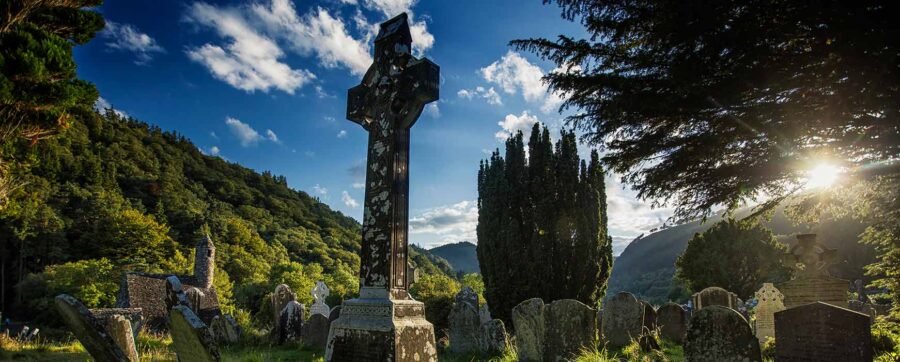
Glendalough is the main event in Wicklow and it earns every bit of the attention it receives. The monastic ruins founded by Saint Kevin in the 6th century sit in a glacial valley between two lakes, with a round tower rising above them that is in extraordinary condition for something over a thousand years old. Even on a busy summer day, you can find a quiet corner along the upper lake and feel completely removed from the modern world. The walk around the upper lake takes about an hour and is worth every step.
The Glendalough Visitor Centre has a solid exhibition covering the history of the monastic settlement and the life of Saint Kevin. Start there if you want proper context before you walk the site.


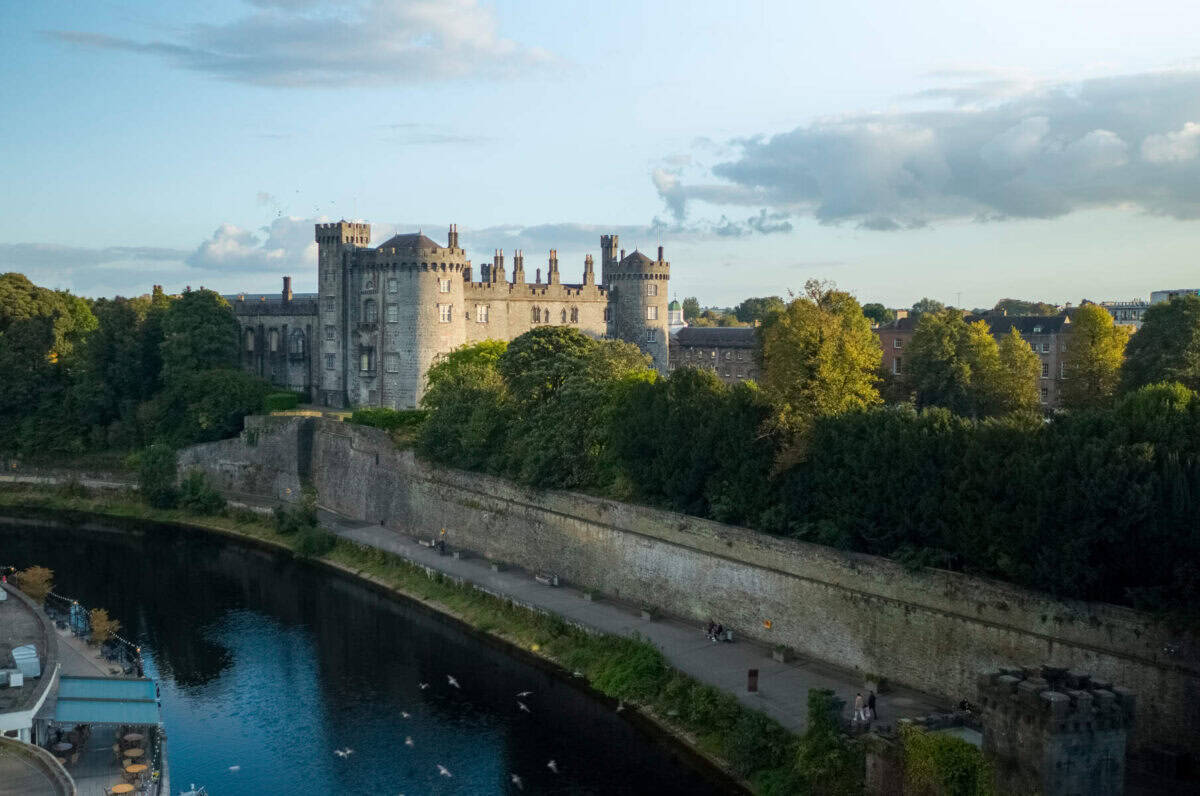
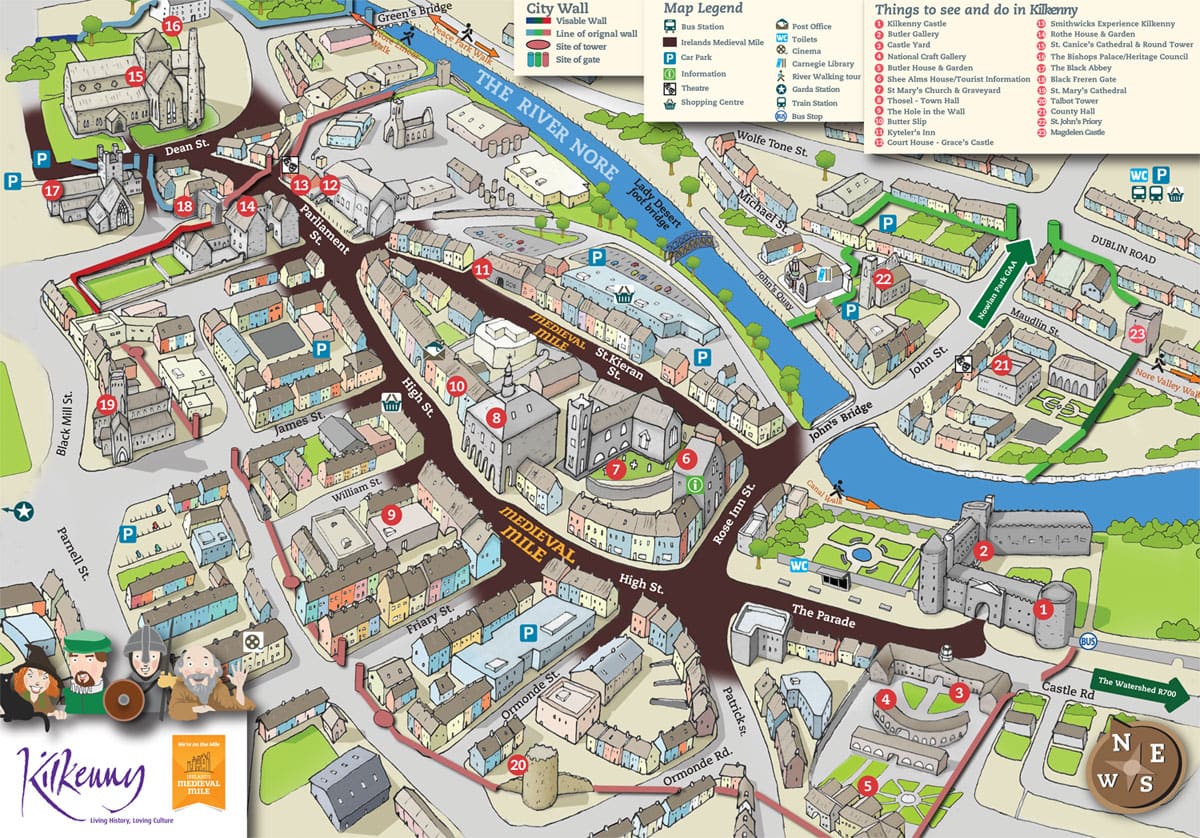
From Glendalough, drive south to Kilkenny for the night. Kilkenny is one of Ireland’s best medieval cities and it deserves more time than a single evening, but even a few hours on foot through the city’s lanes gives you a real flavour of what makes it special. Leave the car at the hotel and walk. Kilkenny Castle sits above the River Nore and its grounds are free to enter. The castle interior requires a ticket but is beautifully restored. The Medieval Mile that runs from the castle up to St. Canice’s Cathedral passes more intact medieval architecture per square metre than almost anywhere else in Ireland. Kyteler’s Inn on St. Kieran’s Street claims to be haunted by Ireland’s first accused witch, which adds a pleasingly dark note to dinner.
For a deeper look at what Kilkenny has to offer, our Kilkenny itinerary guide covers the city in detail.

Glendalough and Kilkenny Ticket Prices
The Glendalough Visitor Centre costs €5 for adults, €3 for children and students, and €13 for a family of four. The monastic ruins outside the visitor centre are free to enter at any time and are never closed.
Kilkenny Castle interior entry is approximately €8 for adults, €4 for children, and €18 for a family. The castle grounds are free to enter.
Accessibility in Wicklow and Kilkenny
The Glendalough Visitor Centre is accessible for wheelchair users. The monastic site itself has uneven terrain and gravel paths, and the upper lake walk is not suitable for wheelchairs. Kilkenny Castle’s ground floor is accessible, though the upper floors involve stairs. The castle grounds are navigable on firm paths. You can read our Accessible Wicklow Guide here.
Day 4: Rock of Cashel, Cork and Blarney Castle
This is a long day but a deeply rewarding one. Leave Kilkenny and head southwest towards Cashel in County Tipperary.
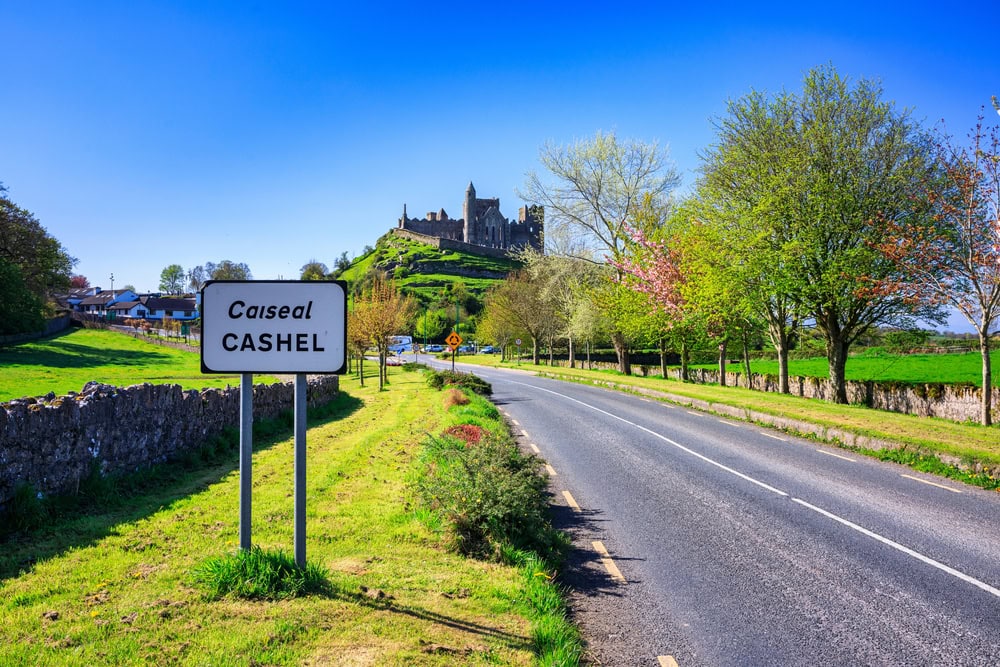
The Rock of Cashel rises from the Tipperary plain in a way that is genuinely dramatic, a cluster of medieval buildings on a limestone outcrop that was the seat of the Kings of Munster for centuries. Saint Patrick is said to have baptised the King of Munster here in the 5th century. The cathedral, round tower and Cormac’s Chapel, which contains the only surviving Romanesque frescoes in Ireland, are all extraordinary. Give it two hours at minimum. The guided tour included with entry is worthwhile, and Cormac’s Chapel requires a separate guided visit with limited tickets available only on site. Call ahead if this is a priority as tour times can change. The views from the Rock over the surrounding Tipperary plain are among the best in the country.
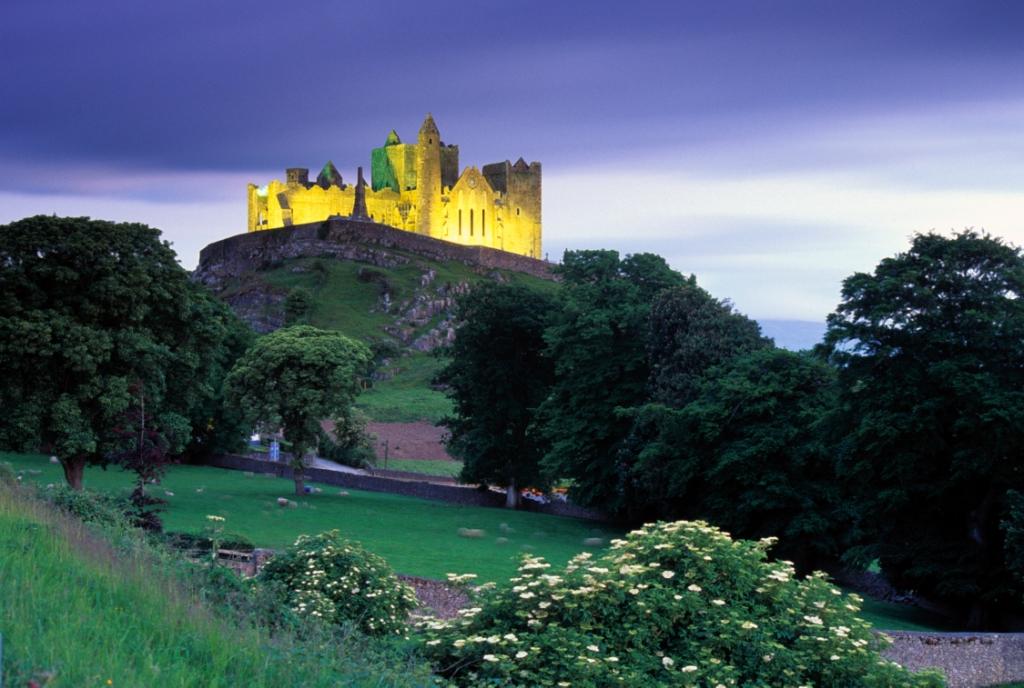
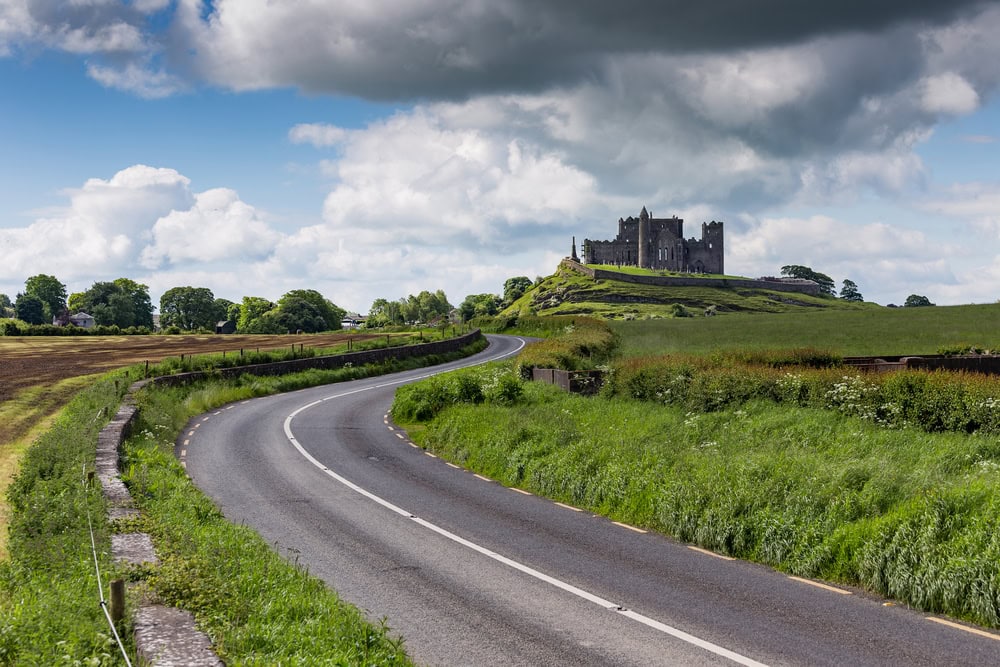
Cashel town itself is small and quietly charming with some genuinely good places to eat. Stop here for lunch before heading south.
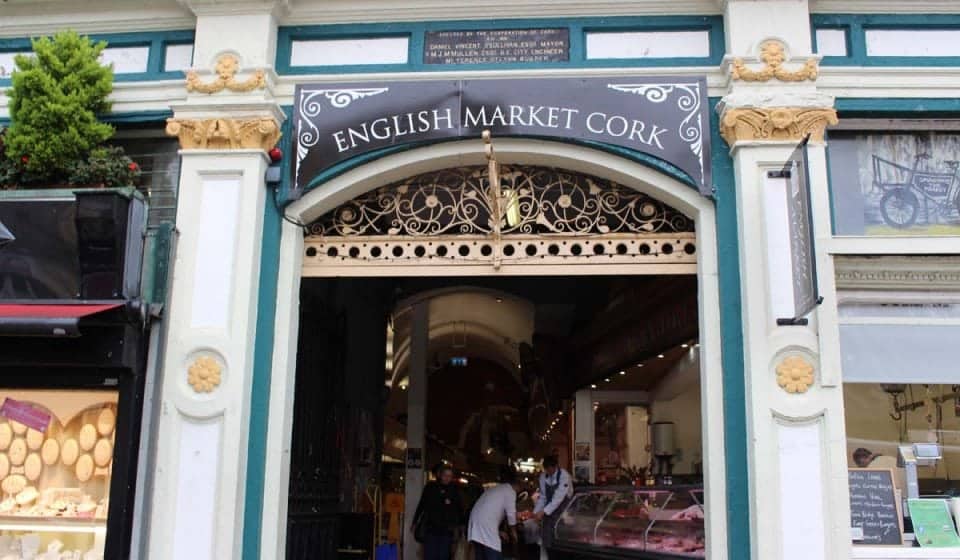
From Cashel, continue to Cork, Ireland’s second city. Cork has a young, creative energy quite different from Dublin, and the English Market is the best single expression of it. This Victorian covered market has been trading since 1788 and is still where Cork people buy their food. The quality and variety on the stalls is exceptional. If it is lunchtime, eat here. In the evening, the Sin É pub on Coburg Street is the real thing: traditional music seven nights a week, no frills, and locals who have been coming for decades.

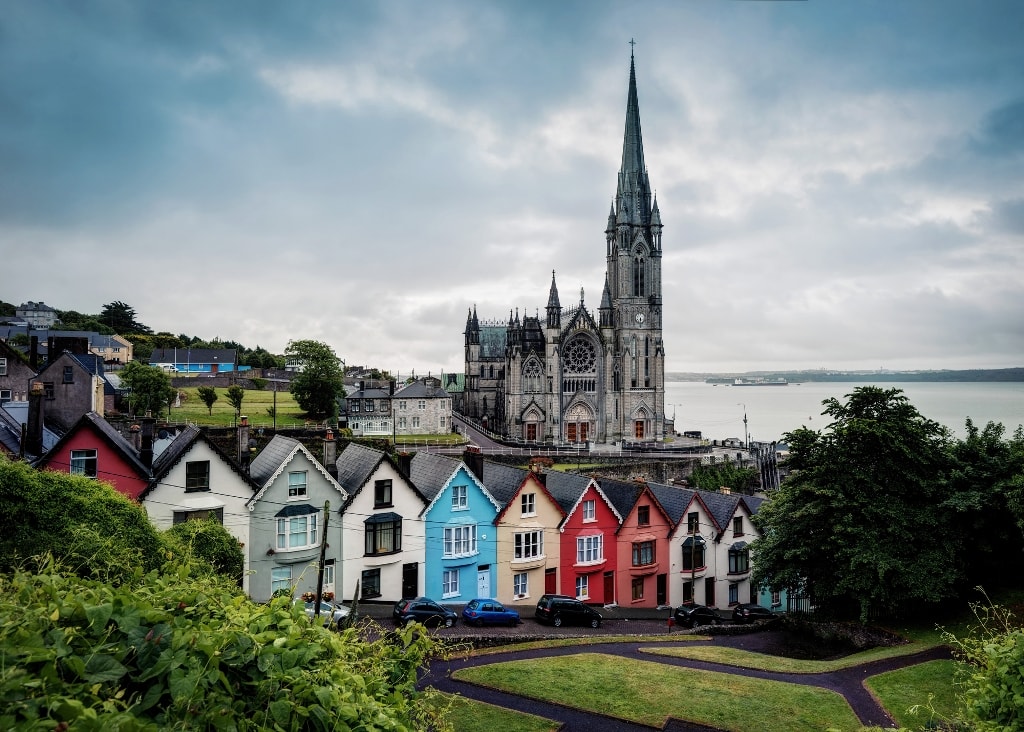
If time allows, Cobh is a worthwhile half-hour detour from Cork. The colourful harbour town was the Titanic’s last port of call in 1912 and has a moving museum about both the ship and the broader history of Irish emigration. In summer the light on the water and the painted houses on the hillside make it one of the most photogenic places in the country.
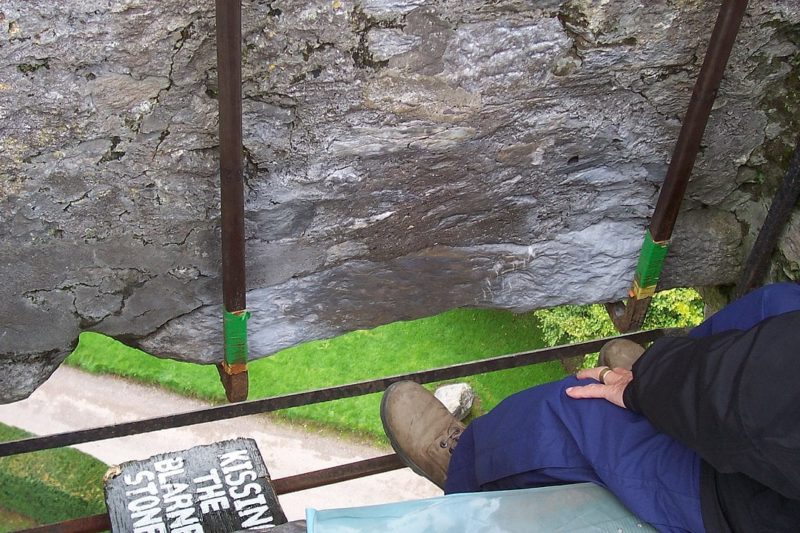
Blarney Castle is 16 minutes north of Cork and worth including if your schedule allows. Yes, it is one of the more tourist-heavy experiences in Ireland. Yes, the queue to kiss the Blarney Stone in summer can test your patience. But the castle itself is genuinely impressive, and the gardens surrounding it are beautiful and largely ignored by visitors fixated on the stone. The Poison Garden alone is worth the visit.
Rock of Cashel and Blarney Castle Ticket Prices
The Rock of Cashel costs €8 for adults, €6 for seniors, and €4 for students and children. Entry includes a tour at a time given on arrival. The guided tour of Cormac’s Chapel requires a separate ticket available only on site.
Blarney Castle costs approximately €20 to €25 per adult. A family pass for two adults and two children is around €60. Book online to secure your preferred entry time and avoid queues. Opening hours run roughly 9am to 6pm April to September and 9.30am to 5pm October to March, but check the official website before visiting as hours vary.
Where to Stay in Cork
Hotel Isaacs on MacCurtain Street occupies a converted Edwardian tobacco factory and sits in the heart of the city. Jurys Inn on Anderson’s Quay overlooks the River Lee and is a reliable central option. Both are close to secure car parks, which matters when travelling with luggage.
Accessibility in Cork and at Blarney
Cork city centre is reasonably accessible, with the main commercial streets on flat ground. The English Market has level access from the Grand Parade entrance. Blarney Castle’s tower and stone-kissing platform involve steep, narrow spiral staircases and are not accessible for wheelchair users or those with limited mobility. The gardens are partially accessible. Staff will waive the entry charge for visitors with a disability if you alert them on arrival.
Day 5: Killarney and the Ring of Kerry
Leave Cork and head west to Killarney, about 90 minutes by road. Killarney is the gateway to some of the most spectacular scenery in Europe, and the Ring of Kerry is the reason most people come.
The Ring of Kerry is a 179-kilometre circular driving route that takes in sea cliffs, mountain passes, island views and a string of small towns. The full loop takes the better part of a day if you stop properly, which you will. Drive the route anticlockwise, the direction recommended for most touring traffic, and the views open up progressively as you round each headland.
The highlights include the Ladies View above the Killarney lakes, the Gap of Dunloe, Caherdaniel with its views towards the Skellig Islands, and the stretch of coast between Waterville and Cahirciveen that is as dramatic as anything in Ireland. The Skelligs themselves, an extraordinary early medieval monastic settlement perched on a sea stack eight miles offshore and a UNESCO World Heritage Site, are visible on a clear day from several points on the route.

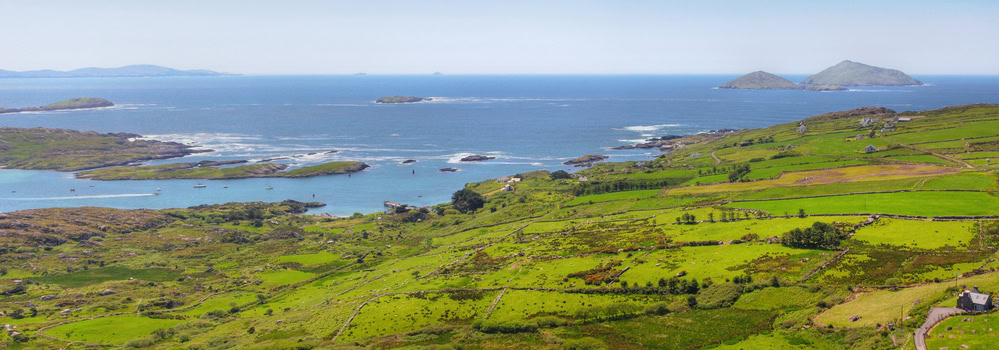
I have driven the Ring of Kerry three times and it is never the same twice. The weather changes everything, and the light in Kerry at different times of year is a different thing altogether. Go in evening light if you can time it.
Killarney town has a good range of restaurants and pubs near the national park entrance. The evening jaunting car tours are genuinely enjoyable as a way to see the national park grounds at a relaxed pace after a full day of driving. They typically depart at around 4.15pm and cost approximately €35 per person, usually including the jaunting car, guide, a drink and food.
Our Ring of Kerry driving guide covers every stop on the route with timings and photography tips.
Killarney Ticket Prices
The Ring of Kerry is a free driving route with no admission charge. Killarney National Park is free to enter. Muckross House and Gardens within the park costs approximately €9 for adults, €7 for students and seniors, €4 for children, and €22 for a family of four.
Accessibility on the Ring of Kerry
The Ring of Kerry is a driving route and is accessible for anyone travelling by car. The jaunting cars in Killarney National Park can accommodate visitors with some mobility limitations; call ahead to discuss specific needs. The national park’s main paths around the lakes are broadly accessible on firm surfaces.
Day 6: Adare, Bunratty Castle and the Cliffs of Moher
This is a big day covering a lot of ground, but each stop is distinct enough that it never feels relentless.
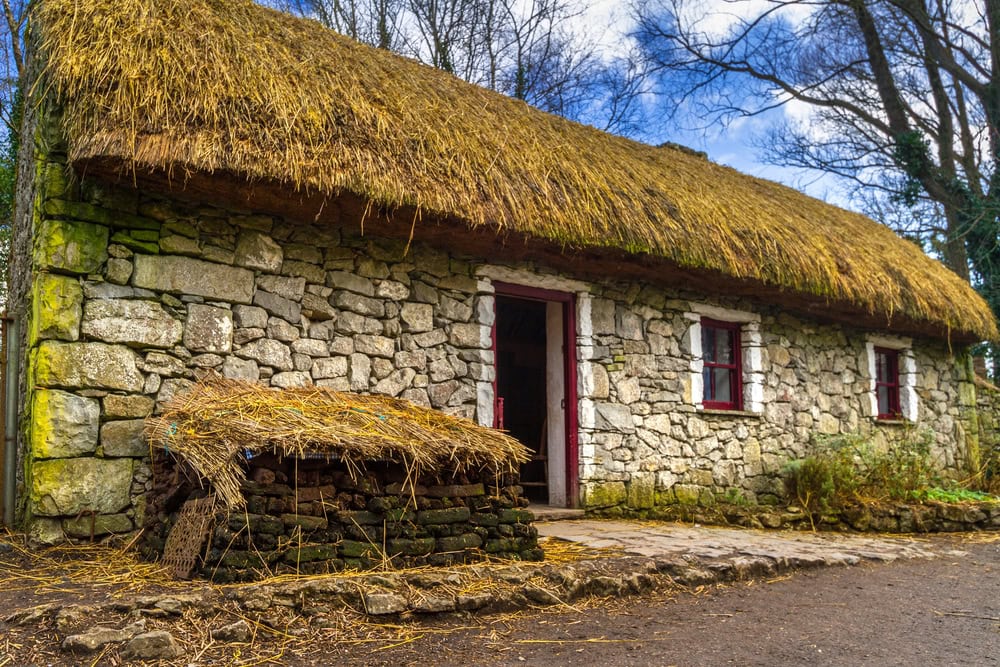
Head north to Adare in County Limerick, about 90 minutes from Killarney. Adare is the kind of village that looks as though someone designed it as an idealised version of Ireland, all thatched cottages, a ruined Trinitarian priory, and a Norman castle beside the River Maigue. It was laid out in the 19th century by the Earls of Dunraven and is extraordinarily pretty. Stop for lunch here.
From Adare, Bunratty Castle is about 35 minutes north on the road towards Shannon. Bunratty is my personal favourite castle in Ireland, and I say that having stood inside a lot of Irish castles. The 15th-century tower house is authentically restored and the great hall, the solar, the tapestries and furnishings all give you a real sense of what medieval lordship looked and felt like.
The Folk Park surrounding it recreates a 19th-century Irish village using actual buildings brought from other sites that were facing demolition. The smell of a turf fire in one of the farmhouses, the chickens in the yard, the costumed staff going about period-specific work: it is immersive in a way that feels entirely natural rather than staged. The Irish Wolfhounds roaming the grounds are an unexpected delight.

The castle closes at 4pm daily to prepare for the evening medieval banquets. The folk park stays open until 5.30pm. The medieval banquet is an excellent evening: four courses, unlimited wine, singers performing throughout. It runs twice nightly at 5.30pm and 8.45pm and lasts about two and a half hours. Book ahead as it sells out.
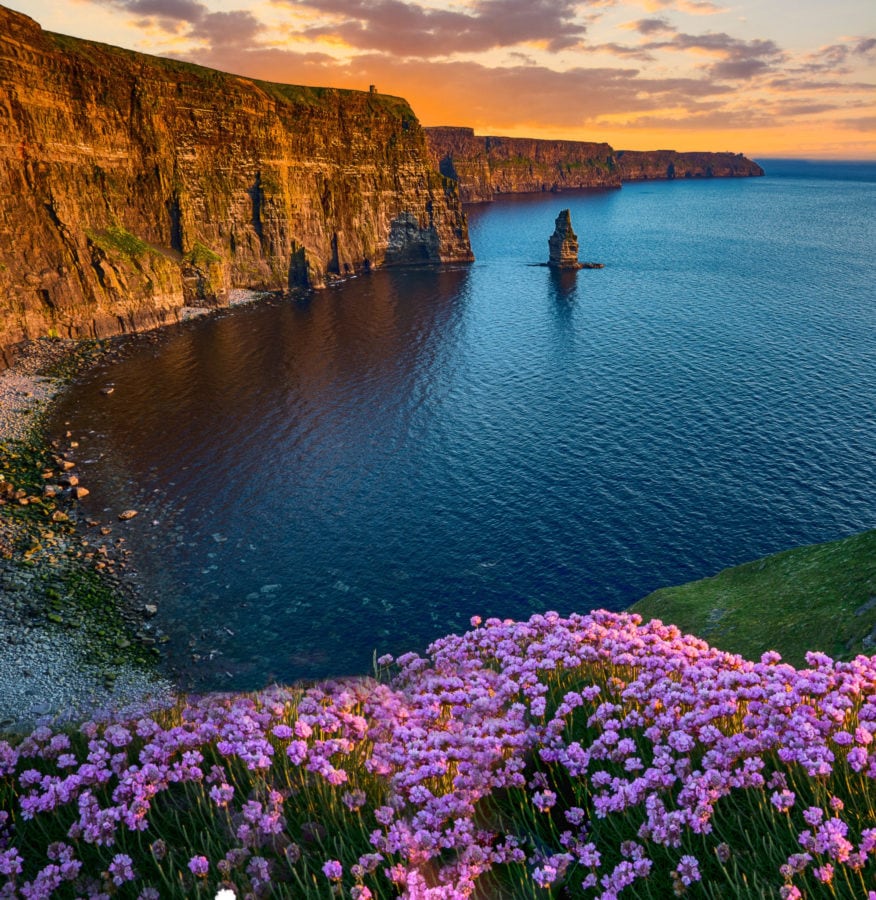
After Bunratty, the Cliffs of Moher are about an hour’s drive further north along the Wild Atlantic Way into County Clare. Try to time this for late afternoon or early evening in summer. The crowds thin out, the light turns golden, and the 214-metre cliff faces above the Atlantic look extraordinary. O’Brien’s Tower at the northern end of the site has stood since 1835 and the view from the top is one of the finest in Ireland. Stay until the light fades if you can.
For more on the area around the Cliffs, our Cliffs of Moher visitor guide covers everything you need to know.
Bunratty Castle and Cliffs of Moher Ticket Prices
Bunratty Castle and Folk Park costs approximately €15.25 for adults, €10.50 for children aged 4 to 18 and seniors, with children under 3 free. Book online for the best prices. The castle park is open from 9.30am with the castle closing at 4pm and the folk park at 5.30pm. The Medieval Banquet costs approximately €80 to €93 per adult including a four-course dinner and entertainment.
The Cliffs of Moher costs €12 for adults, €10 for students and seniors, and is free for children under 12. The admission fee covers car parking, entry to the visitor centre, the interactive exhibition, O’Brien’s Tower and all viewing areas. Book online in advance, particularly in summer.
Accessibility at Bunratty and the Cliffs of Moher
Bunratty Castle itself poses accessibility challenges due to its narrow spiral staircases, but the folk park is designed for easier navigation for visitors with limited mobility or wheelchair users.
The Cliffs of Moher visitor centre is fully wheelchair accessible with a lift to the first floor. The walkway near the visitor centre is fully accessible, and the site operates Lifts of Moher electric buggies for visitors with limited mobility, subject to availability. Wheelchairs are also available to borrow on site. The best view for wheelchair users is from the exit on the first floor of the visitor centre.
Day 7: Athlone and Back to Dublin
Your departure day will depend on your flight time. Dublin Airport is roughly three hours from the Cliffs of Moher, so factor that in when planning how much you can fit into the morning.
If you have an afternoon or evening flight, Athlone in County Westmeath is a natural stopping point roughly halfway between Clare and Dublin. The town sits astride the River Shannon and has a solid Norman castle on the bank that is free to enter. Sean’s Bar claims to be the oldest pub in the world, trading since 900 AD. The claim is disputed in the cheerful way these things always are in Ireland, but the bar itself is a wonderfully atmospheric place to sit with a pint of Guinness and think about what you have seen over the past week.


If your flight is early, get to Dublin the previous evening and stay near the airport or city centre. The N4 from Athlone into Dublin can slow considerably in morning rush hour traffic.
One Week in Ireland: What It Will Cost
The following estimates cover two people travelling together in 2025 to 2026, sharing accommodation and splitting car rental.
| Expense | Estimated Cost Per Person |
| Return flights from the US | $1,000 to $1,500 |
| Car rental for 7 days (full insurance) | €200 to €300 |
| Accommodation (7 nights, mid-range) | €700 to €1,120 |
| Food and drink (€50 to €70 per day) | €350 to €490 |
| Attraction entry and activities | €150 to €250 |
| Petrol and parking | €80 to €120 |
| Contingency and shopping | €150 to €200 |
| Total (excluding flights) | €1,630 to €2,480 |
Ireland is not a cheap destination. But it rewards spending on the right things: a good meal in a Cork restaurant, the medieval banquet at Bunratty, an evening in a genuine trad pub rather than a tourist bar.
Practical Tips for Driving in Ireland
Irish roads are narrower than visitors from North America or continental Europe generally expect. The N roads (national primary routes) are fine. The R roads (regional routes) are where it gets interesting, and the L roads (local roads) are where you slow down, tuck in and accept that a tractor will materialise from somewhere impossible at the least convenient moment.
Sheep have right of way in Kerry, Connemara and any upland area. This is not an official rule but it is the reality.
Petrol stations outside major towns can be sparse, particularly in the west. Fill up when you see a station rather than assuming there will be another one shortly.
Speed limits are in kilometres per hour. Motorways run at 120km/h, national roads at 100km/h, regional and local roads at 80km/h, and built-up areas at 50km/h. These limits are enforced by speed cameras, particularly on national routes.
If you are planning your packing list, our Ireland packing guide covers exactly what you need for Irish weather across all seasons.
Related Ireland Itineraries and Guides
If one week has left you wanting more, here are the guides to help you plan a return trip or extend this one.
Our Dublin attractions guide covers everything worth seeing in the city across two days, including the lesser-known spots most visitors miss.
For the history of the women who shaped modern Ireland, our historic women of Ireland guide is the essential read, and pairs naturally with a visit to Glasnevin Cemetery where many of them are buried. Our Glasnevin Cemetery guide covers that visit in full.


If Kilkenny caught your attention and deserves more time, our [Kilkenny itinerary] gives you two full days in the medieval city.
The west of Ireland that this itinerary does not reach, Galway, Connemara and the Wild Way Atlantic coastline of Mayo, is covered in our 3 Days in Galway guide and our Donegal itinerary.
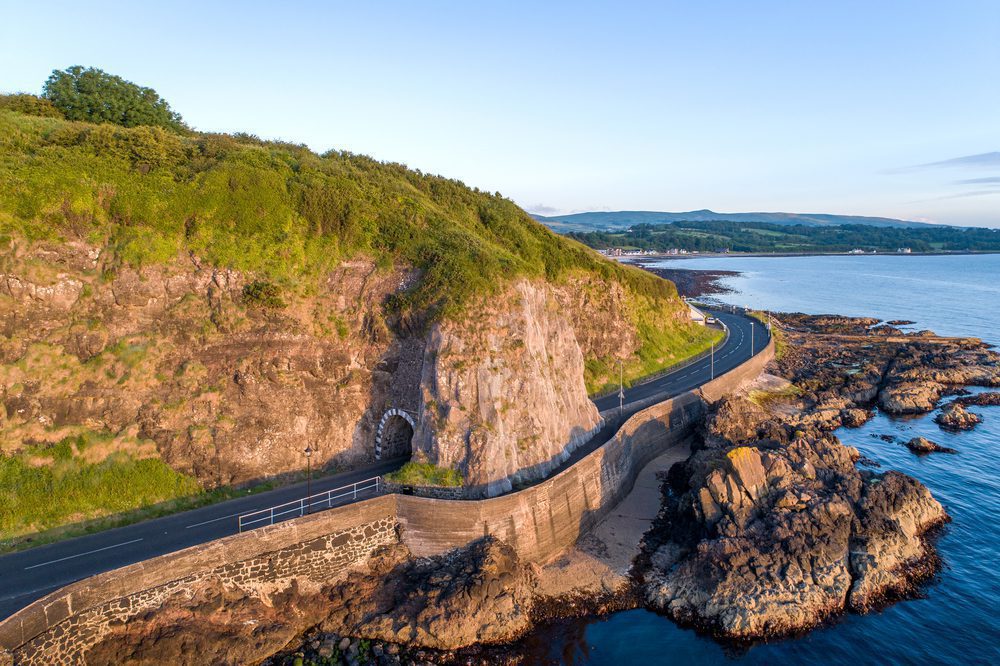
For the north of the island, our Causeway Coastal Route itinerary is the definitive guide to Northern Ireland’s most spectacular driving route.
One Week in Ireland: FAQs
Do I need a car for a week in Ireland? For this itinerary, yes. Public transport is good within Dublin and between major cities, but the Cliffs of Moher, the Ring of Kerry, Glendalough and Bunratty are all significantly harder to reach without your own vehicle. For a Dublin-only trip, you do not need a car at all.
Do I need a visa to visit Ireland? Citizens of the EU, UK, USA, Canada, Australia and New Zealand do not need a visa for short stays in Ireland. If you are travelling from another country, check with the Irish Naturalisation and Immigration Service before booking. Ireland is not part of the Schengen Area.
What side of the road do you drive on in Ireland? The left. If you are from the USA, Canada, Australia or most of continental Europe, this means driving on the opposite side to home. Most visitors adapt quickly, but allow yourself time to settle into it before tackling busy roads.
Is one week enough time to see Ireland? It is enough for an excellent first trip covering Dublin, the midlands, the south, Kerry and Clare. You will not reach the west (Galway, Connemara, Mayo) or the north (Causeway Coast, Donegal) on this route. Both deserve a return trip.
What is the best base for a week in Ireland? This is a moving road trip itinerary. If you preferred day trips from a single base, Killarney gives the best access to Kerry, Cork and Clare, though you sacrifice Wicklow and Kilkenny.
When is the best time to visit Ireland for good weather? May, June and September offer the best balance of weather, daylight and manageable crowds. July and August have the longest days but the most visitors. Irish weather changes quickly enough that a grey morning can become a spectacular afternoon.
Is Ireland expensive compared to the UK? Ireland is broadly comparable to the UK for accommodation and food, and somewhat more expensive in tourist hotspots like Killarney and the Cliffs of Moher in peak season. Dublin is generally more expensive than most UK cities outside London.
Is Ireland accessible for wheelchair users? Accessibility varies significantly. Modern visitor centres like the Cliffs of Moher are excellent. Many historic castles, including Blarney and parts of the Rock of Cashel, have limited accessibility due to their structure. Dublin’s main transport and modern attractions are well set up for wheelchair users. Contact individual attractions in advance to discuss specific requirements.
How much does a week in Ireland cost? Budget approximately €1,630 to €2,480 per person excluding flights, covering accommodation, car rental, food, drinks and attraction entry at a mid-range level. Return flights from the US add roughly $1,000 to $1,500 per person.
Do I need to book attractions in advance? In summer (July and August) yes, particularly for the Cliffs of Moher, Blarney Castle, the Book of Kells and the Guinness Storehouse. In shoulder season, a few days’ notice is generally sufficient for most attractions.
What should I pack for Ireland? Waterproof layers are essential regardless of the season. Comfortable walking shoes with ankle support are important for sites like Glendalough and the Rock of Cashel. Layers work better than heavy coats because Irish weather can deliver all four seasons in a single afternoon. Our [Ireland packing guide] has the full list.
Join 7,500 Ireland travellers in my Ireland Uncovered Facebook Group and 1,897 on my XYUandBEYOND PAGE
If you’re planning more trips like this, explore my full Story Travel guide to film locations, literary sites and historic places across Ireland and the UK.
If you’re planning a full relocation, don’t forget to read our guide on moving a pet to Europe, which covers everything from paperwork to flights.