
3 Days in Galway: The Ultimate Itinerary for Castles, Connemara, Villages and Hidden Gems
Galway is one of the most captivating regions in Ireland. Located on the country’s wild Atlantic coast, it combines dramatic landscapes, ancient history, traditional culture, and lively towns filled with music and welcoming pubs.
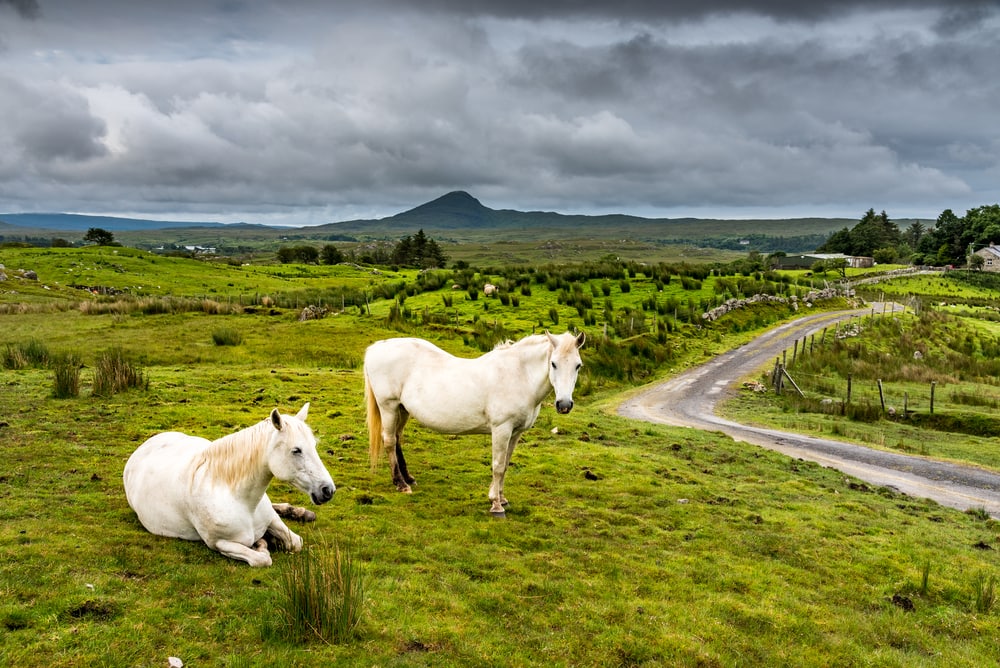
This 3 day Galway Itinerary gives you enough time to explore some of the most beautiful areas of western Ireland. From the mountains and lakes of Connemara to the limestone landscapes of the Burren, the region offers a remarkable variety of scenery and historic sites.
Within a short distance of Galway City you can discover medieval castles, ancient dolmens over 5,000 years old, charming fishing villages, coastal drives, Celtic crosses, and hidden ruins scattered across the countryside.
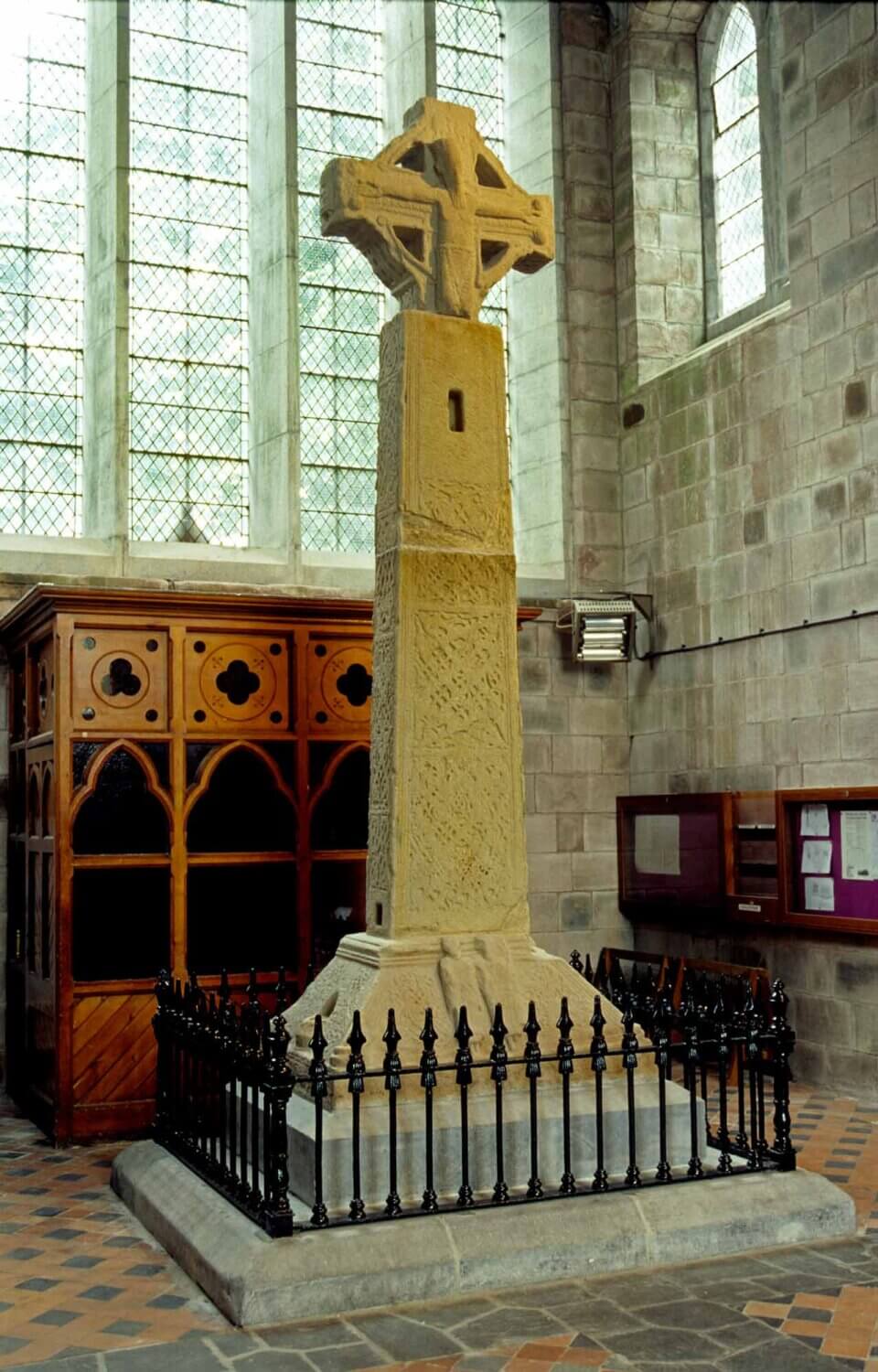
This guide provides a complete 3-day Galway itinerary designed for travelers both with a car and without acar, with historic castles, coastal villages, scenic drives, and traditional pubs, there are countless things to do in Galway for travelers exploring Ireland’s west coast.
You will also find recommendations for:
- Where to stay in Galway
- The best pubs and restaurants
- Historic sites and hidden gems
- Villages and coastal landscapes
- Scenic drives and walking routes
Whether you are visiting Ireland for the first time or planning a deeper exploration of the Wild Atlantic Way, this guide will help you experience the very best of Galway and its surrounding countryside. Much of this itinerary follows sections of the Wild Atlantic Way near Galway, one of the most scenic coastal routes in Europe.
- 3 Days in Galway: The Ultimate Itinerary for Castles, Connemara, Villages and Hidden Gems
- How to Spend 3 Days in Galway
- Why Galway Is One of Ireland’s Best Regions to Visit
- Where to Stay in Galway
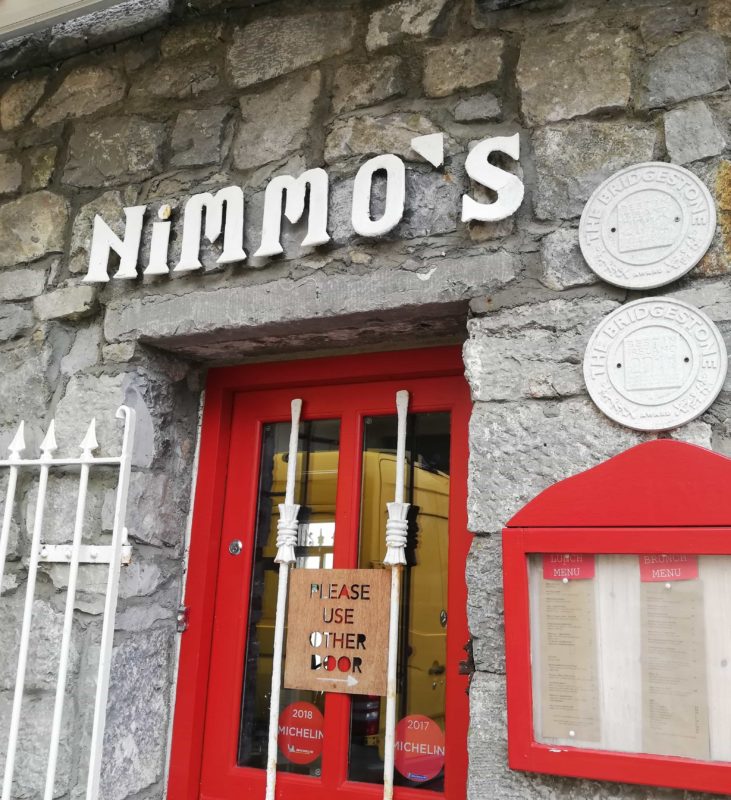
- Where to Eat in Galway
- Best Time to Visit Galway
- Day 1 in Galway: Connemara Castles, Mountains, and Scenic Landscapes
- Kylemore Abbey and the Landscapes of Connemara
- Clifden and the Sky Road: A Classic Connemara Experience
- Day 3 in Galway: Kinvara, Dunguaire Castle, and the Burren
- Poulnabrone Dolmen and Ancient Sites in the Burren
- Day 3 in Galway: Cong, Ashford Castle, and Athenry
- Best Scenic Drives Around Galway
- Galway Hidden Gems
- Visiting Galway Without a Car
- Map of This 3 Day Galway Itinerary
- Interactive Map: 3 Days Around Galway
- People Also Ask: Galway Travel Questions
- Why Galway Is One of Ireland’s Most Rewarding Destinations
How to Spend 3 Days in Galway
If you have three days in Galway, the ideal itinerary includes exploring Connemara, the Burren, and historic villages nearby. Here are 3 routes from Galway City to explore. Many of these destinations are also popular Galway day trips, easily reachable from Galway City.
Day 1 – Connemara
- Aughnanure Castle
- Oughterard village
- Connemara National Park
- Kylemore Abbey
- Clifden and the Sky Road
Day 2 – Coastal Villages and The Burren
- Kinvara village
- Dunguaire Castle
- Ballyvaughan harbor
- Poulnabrone Dolmen
- Optional: Cliffs of Moher
Day 3 – Medieval Villages and Lakes
- Cong village and Cong Abbey
- Ashford Castle estate
- Scenic drive along Lough Corrib
- Athenry medieval town
Travelers without a car can visit most of these destinations using guided day tours from Galway City or regional buses.
If you are deciding where to base yourself in western Ireland, this comparison of Galway vs Cork breaks down nightlife, food, scenery, atmosphere, and day trips to help you choose the right city for your trip


Why Galway Is One of Ireland’s Best Regions to Visit
Galway has long been considered the cultural heart of Ireland’s west coast. Unlike larger cities such as Dublin, Galway maintains a strong connection to traditional Irish life, language, and landscape.
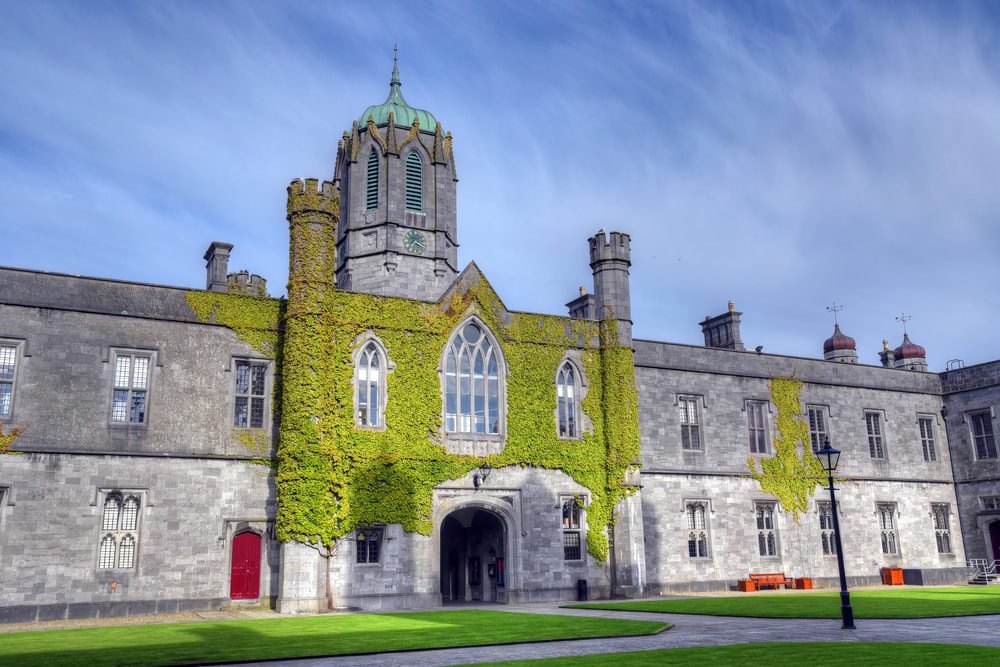
A visit to Galway City is the perfect starting point for any Galway road trip, offering a mix of history, culture, and lively atmosphere along the banks of the River Corrib. One of the best places to begin exploring is the Galway City Museum, often simply referred to as the city museum, where exhibits highlight the city’s maritime heritage, medieval past, and cultural traditions.
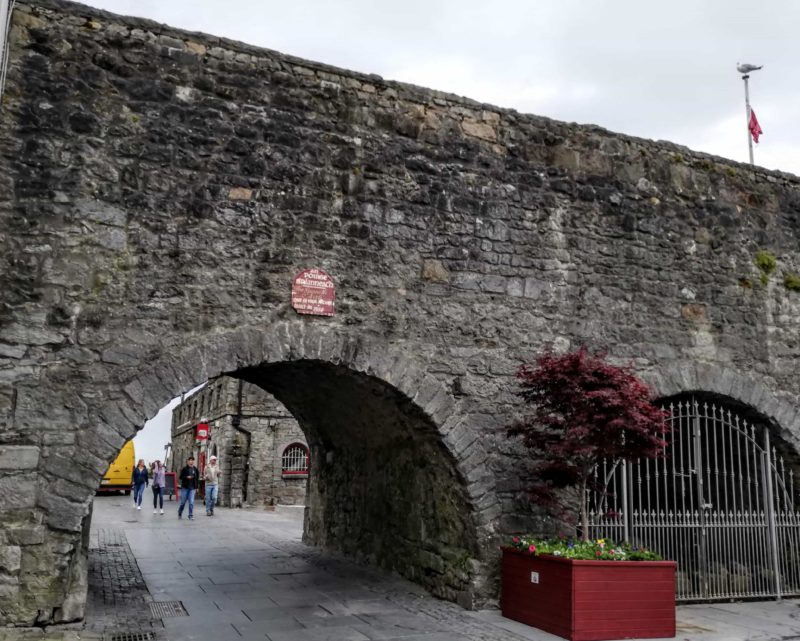
Just beside the museum stands the historic Spanish Arch, a remnant of the old city walls that once protected Galway’s busy trading port. From here, visitors can stroll along the river toward the impressive Galway Cathedral, one of the largest and most striking buildings in the city, known for its beautiful stone architecture and stained glass windows.
After exploring these landmarks, many travelers like to end the day in one of the city’s traditional pubs, where they can enjoy live music and sample a glass of Irish whiskey while soaking up Galway’s famously welcoming atmosphere.
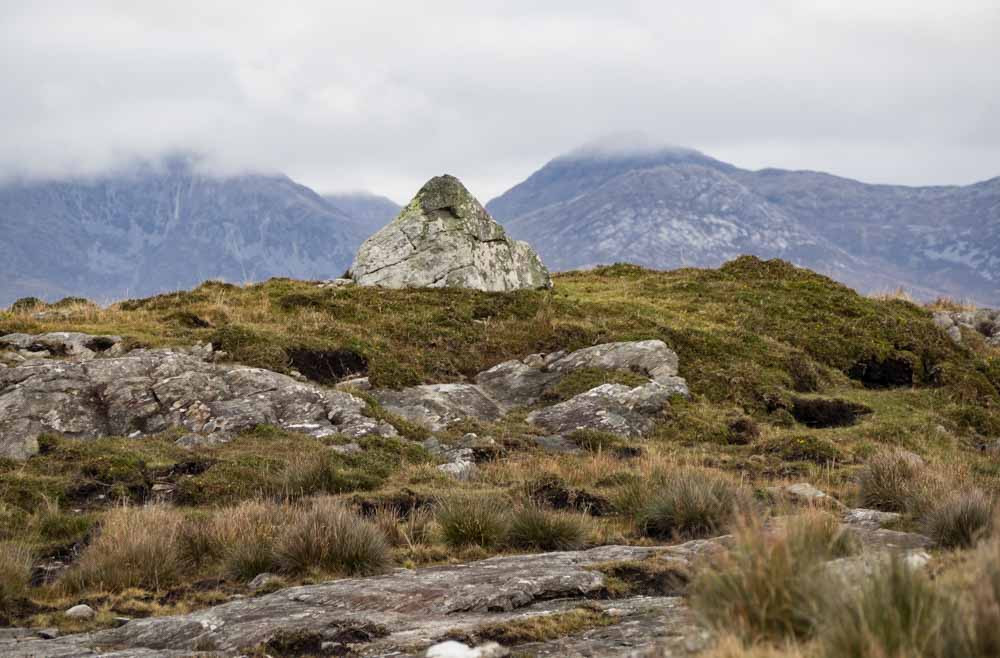
Within a relatively small area, visitors can experience several completely different landscapes. To the west lies Connemara, a region known for its mountains, lakes, and vast boglands stretching toward the Atlantic Ocean. South of Galway is the Burren, a unique limestone landscape filled with prehistoric monuments and rare plants.
The area also contains an extraordinary number of historical sites. Travelers can explore medieval castles, monastic ruins, ancient dolmens, Celtic crosses, and centuries-old villages that still feel deeply connected to Ireland’s past.
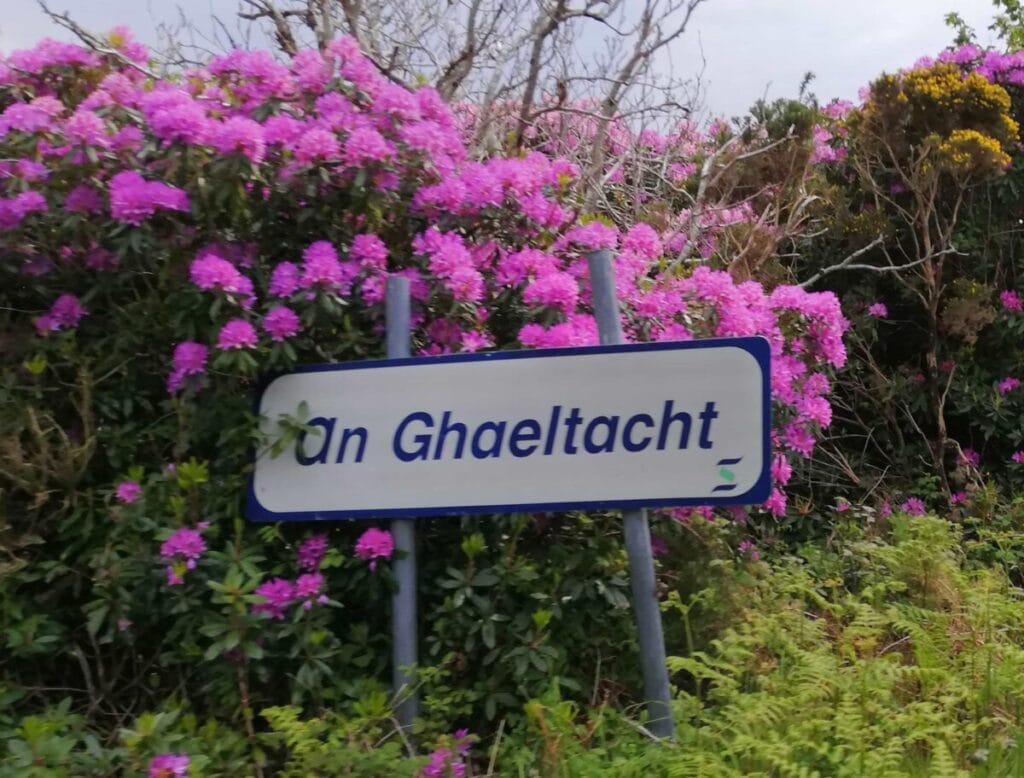
Another defining feature of the region is its strong Gaelic heritage. Many communities in Connemara are part of the Gaeltacht, where Irish Gaelic remains the primary spoken language.
Combined with a thriving food scene, welcoming pubs, and spectacular coastal drives along the Wild Atlantic Way, Galway offers one of the most authentic travel experiences in Ireland.
For travelers seeking a mix of nature, history, culture, and traditional Irish hospitality, Galway is an ideal destination.
Where to Stay in Galway
Choosing the right place to stay can significantly shape your experience when exploring Galway and the surrounding region.
Galway City
For most visitors, staying in Galway City is the most convenient option. The city offers easy access to restaurants, pubs, and transportation while still being close to major attractions such as Connemara and the Burren.
Popular areas include the Latin Quarter, known for its lively atmosphere, and neighborhoods near Eyre Square, which provide convenient access to buses and tours.
Connemara Villages
Travelers seeking quieter scenery may prefer staying in Connemara villages such as Clifden or Letterfrack. These areas offer immediate access to hiking trails, beaches, and scenic coastal drives.
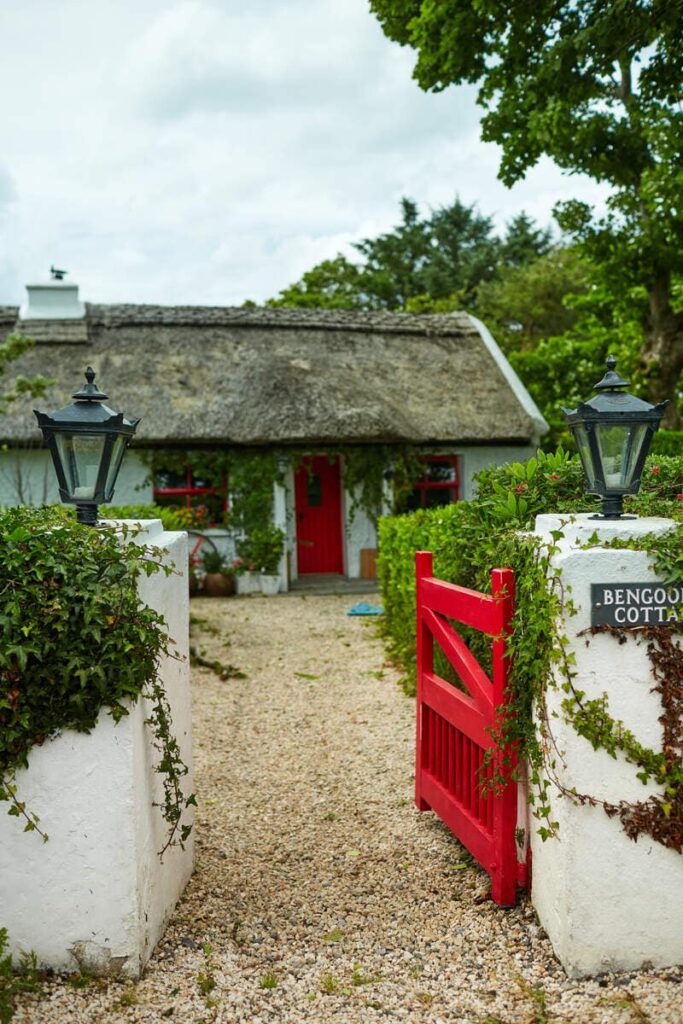
Connemara accommodations often include small boutique hotels, traditional guesthouses, and countryside cottages overlooking the Atlantic.
Castle Stays
For a unique experience, some travelers choose to stay in historic Castle estates such as Ashford Castle, one of Ireland’s most famous luxury hotels. Guests can enjoy falconry experiences, lakeside walks, and elegant dining within a centuries-old castle setting.
Nearby The Lodge at Ashford Castle offers a more affordable alternative while still allowing visitors to explore the estate.
Traditional Bed and Breakfasts
Throughout the Galway region, family-run bed and breakfasts remain a popular choice. These accommodations often provide home-cooked Irish breakfasts and friendly hosts who offer valuable local travel tips.
Where to Eat in Galway
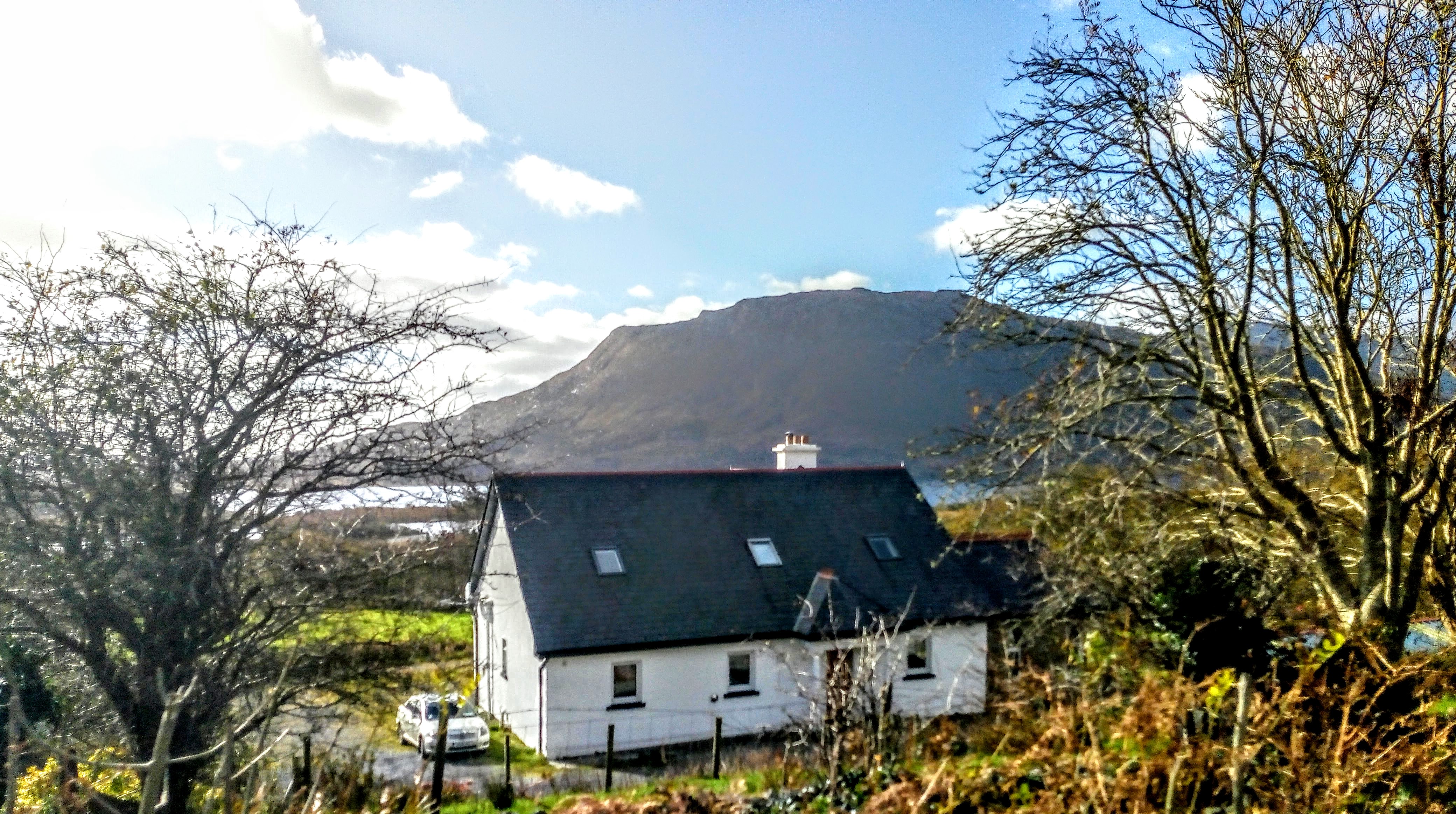
Galway has become one of Ireland’s most exciting food destinations. Thanks to its location along the Atlantic coast, the region has access to some of the freshest seafood in Europe.
Local specialties often include:
- Atlantic salmon
- Galway Bay oysters
- Mussels and seafood chowder
- Irish lamb dishes

Traditional Pubs
Many of the best meals in Galway are served in historic pubs.
Lowry’s Bar in Clifden is known for its welcoming atmosphere and hearty Irish dishes. It’s a perfect place to enjoy lamb stew or fresh seafood while listening to traditional music.
Green’s Bar in Kinvara is another historic pub dating back to the 1800s that serves excellent local seafood.

Seafood Restaurants
For seafood lovers, EJ Kings in Clifden is widely considered one of the best restaurants in Connemara.
The menu frequently includes freshly caught fish such as hake, mussels cooked in garlic and wine, and Galway Bay oysters.
Mitchell’s Restaurant is another excellent option offering refined seafood dishes in a relaxed setting.

Lunch Stops During Road Trips
While exploring villages and countryside areas, small cafés and harbor restaurants often provide memorable meals.
Pier Head Restaurant in Kinvara is a great example, offering fresh seafood dishes with views of the harbor.
Galway’s food scene reflects the region’s strong connection to the land and sea, making dining an important part of the travel experience.

Best Time to Visit Galway
Galway can be visited year-round, but the experience changes depending on the season.
Spring and autumn are often considered the best times to visit Galway, offering good weather and fewer crowds.
Spring brings blooming landscapes and comfortable temperatures, making it an excellent time for hiking in Connemara and exploring historic sites.
Summer offers the warmest weather and the longest daylight hours. It is also festival season in Galway, with events such as the Galway International Arts Festival filling the city with performances and street entertainment.
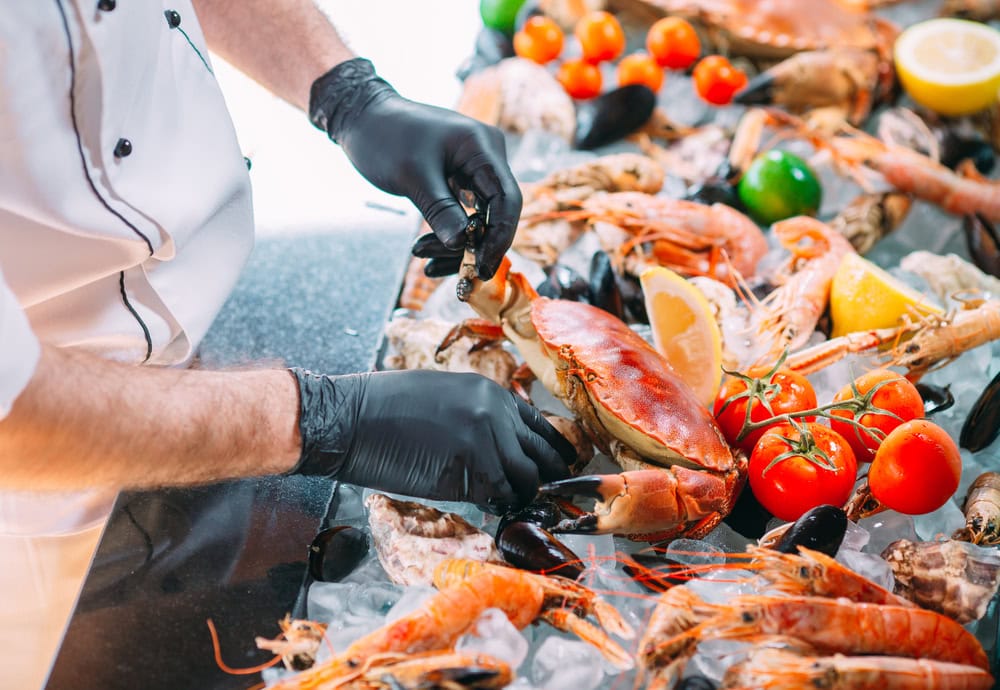
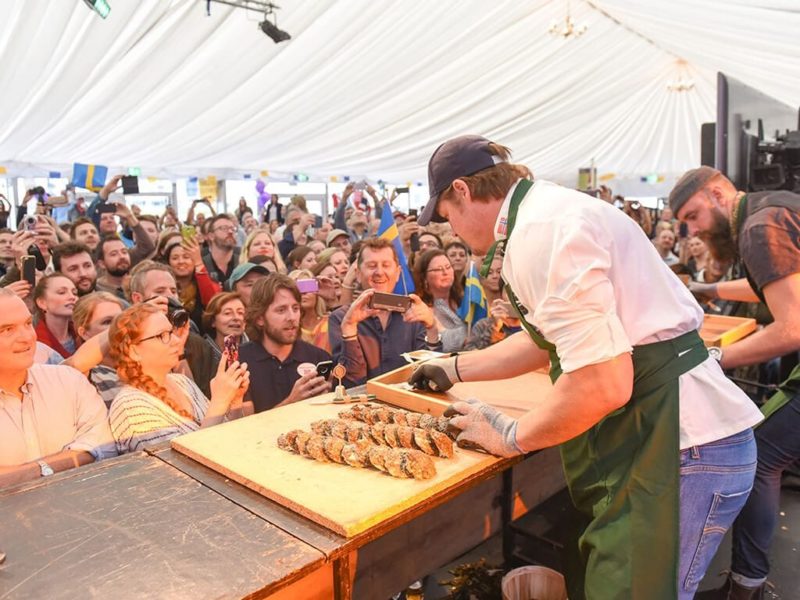
Autumn is another beautiful time to visit. The countryside takes on golden colors, and the famous Galway International Oyster Festival celebrates the region’s seafood traditions.
Winter provides a quieter atmosphere with cozy pubs and traditional music sessions. While weather conditions can be unpredictable, Galway’s cultural charm remains strong throughout the year.
Day 1 in Galway: Connemara Castles, Mountains, and Scenic Landscapes
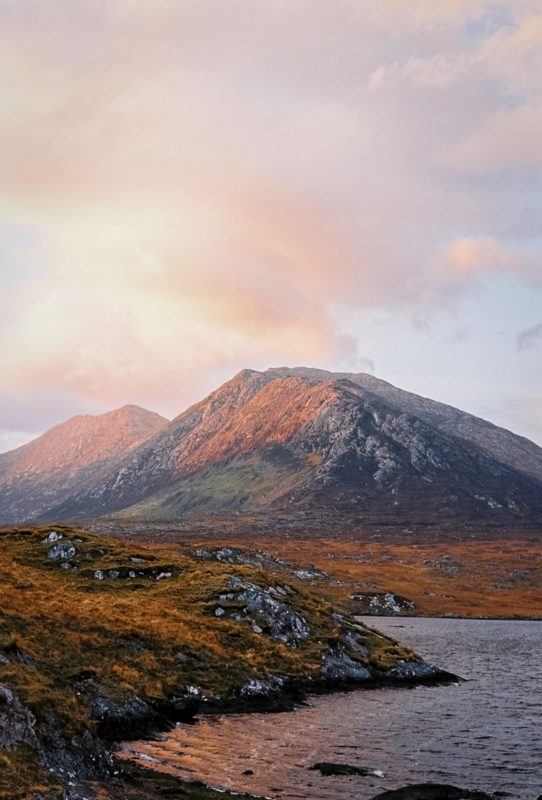
Your first day around Galway should focus on exploring Connemara, one of the most breathtaking regions in Ireland. Located northwest of Galway City, Connemara is known for its rugged mountains, quiet lakes, vast peat bogs, and Atlantic coastline. The area is also part of the Wild Atlantic Way, making it a highlight of many Irish road trips.
Travelers with a car can explore Connemara freely along scenic roads, while those without a car can join Connemara day tours departing from Galway City.
Aughnanure Castle
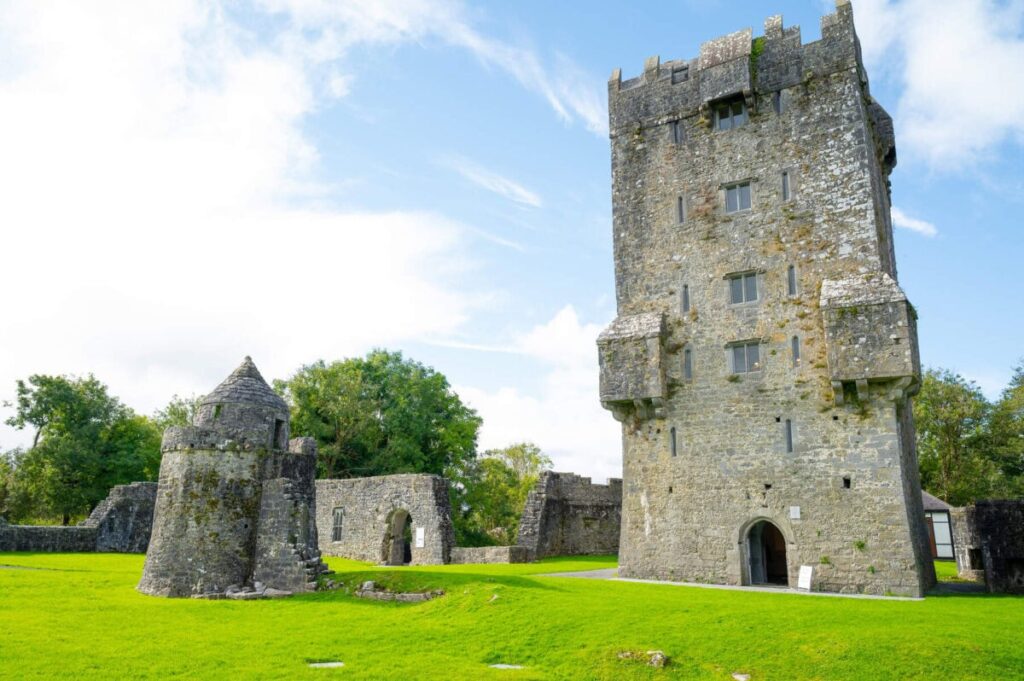
Aughnanure Castle is one of the best castles near Galway, offering a glimpse into the region’s medieval past. Begin your day at Aughnanure Castle, located about 40 minutes from Galway City. This well-preserved 16th-century tower house once belonged to the powerful O’Flaherty clan, who ruled much of the surrounding region during medieval times.
The castle stands beside the River Drimneen and still retains many of its defensive features. Visitors can climb the narrow stone staircases and explore the upper chambers, which once served as living quarters and banquet halls. Because it is slightly off the main tourist routes, Aughnanure Castle often feels peaceful compared to more famous Irish castles.
Oughterard Village
After visiting the castle, continue to the village of Oughterard, located on the shores of Lough Corrib. This small town is often described as the gateway to Connemara and makes a pleasant stop for coffee or a relaxed walk along the lakeshore.
A traditional pub worth visiting is Powers Thatch, a charming thatched-roof pub that perfectly captures the atmosphere of rural Ireland.
Connemara National Park
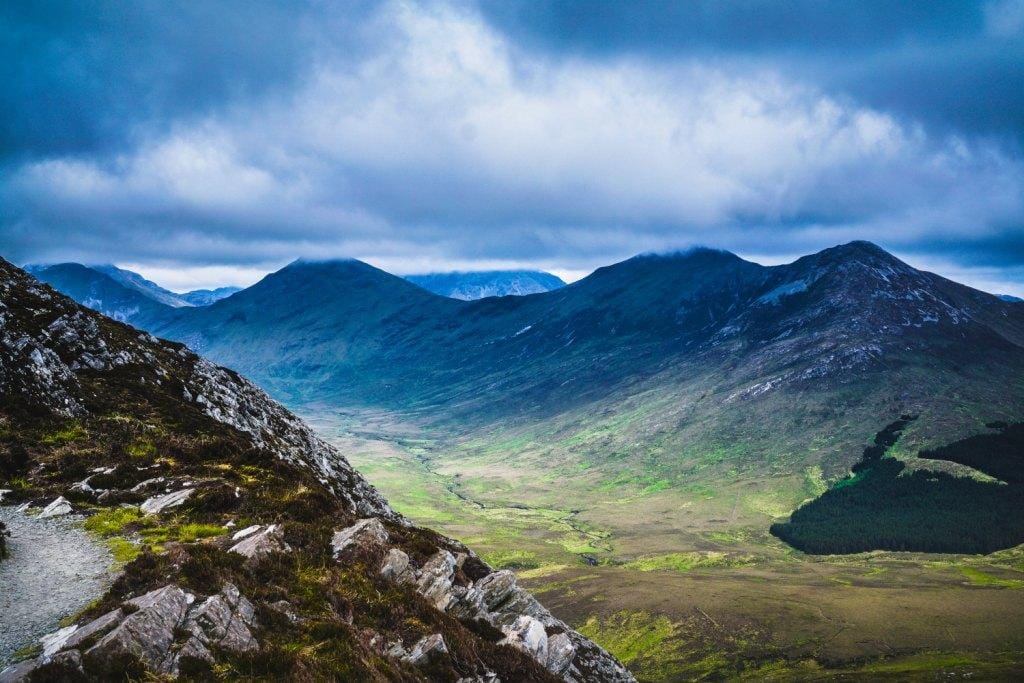
Next, continue deeper into Connemara to reach Connemara National Park. This protected landscape covers thousands of hectares of mountains, bogland, and woodland.
One of the most popular activities here is the Diamond Hill walk, a trail that typically takes between two and three hours to complete. The hike gradually climbs above the surrounding countryside before reaching a summit with sweeping views across the Atlantic Ocean and the Twelve Bens mountain range.
Even visitors who prefer shorter walks can enjoy the lower trails and visitor center.
Connemara’s wild scenery offers a dramatic introduction to the landscapes that make western Ireland so memorable.

Kylemore Abbey and the Landscapes of Connemara
After exploring Connemara National Park, continue toward one of Ireland’s most famous landmarks: Kylemore Abbey.
Situated beside a peaceful lake and surrounded by forested hills, Kylemore Abbey looks like a scene from a storybook. The building was originally constructed in the 1860s by Mitchell Henry, a wealthy politician and businessman who created the estate as a private residence.
Today the abbey is home to a community of Benedictine nuns and is one of the most visited historic sites in the region.


The Victorian Walled Garden
One of the most remarkable features of Kylemore Abbey is its Victorian walled garden, located a short distance from the main building. Carefully restored over many years, the garden contains beautiful flower beds, historic greenhouses, and traditional vegetable plots.
Visitors can wander through the garden paths while learning about the horticultural history of the estate.
The Neo-Gothic Church
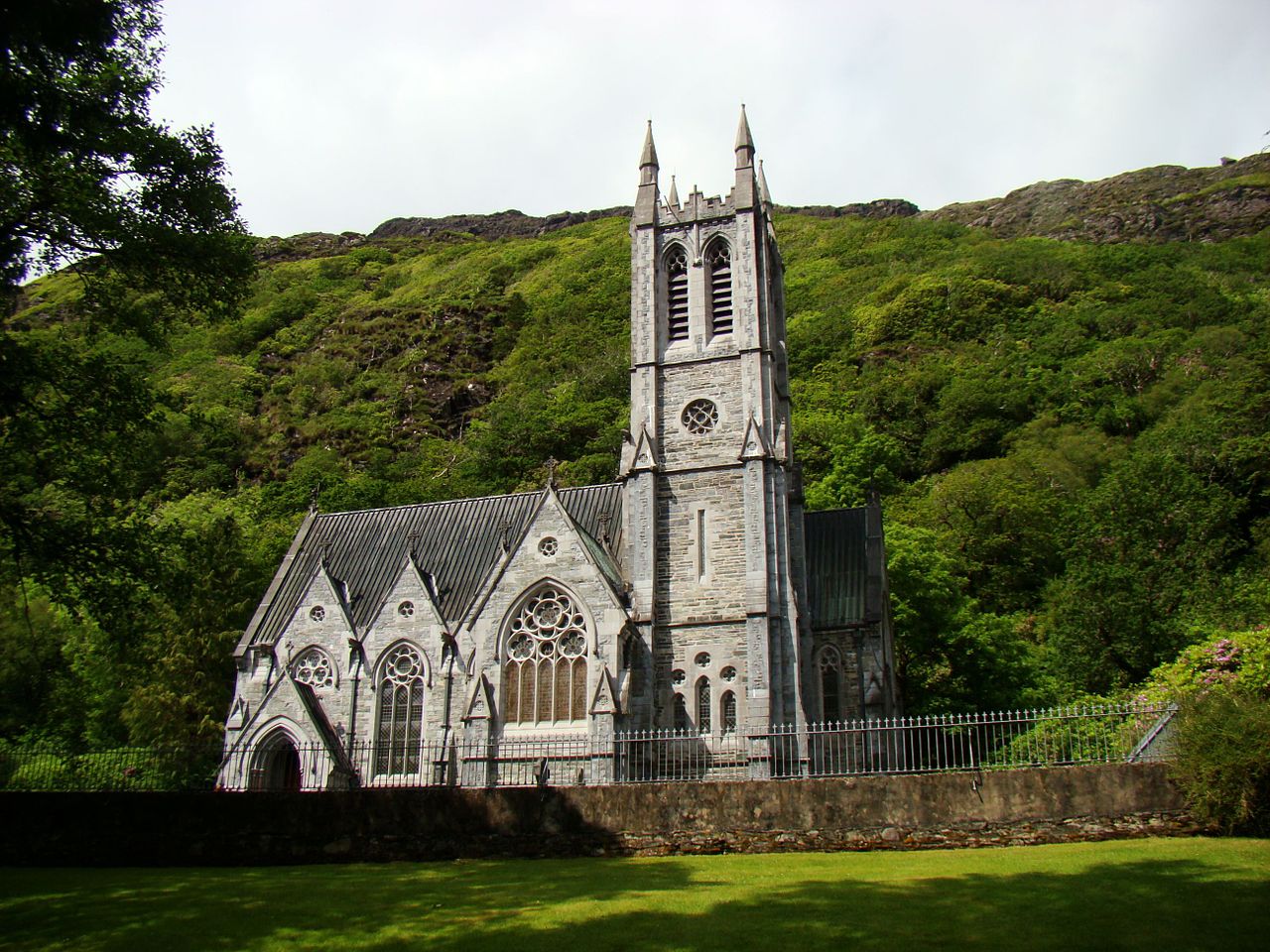
A short walk from the abbey stands a small neo-Gothic church, built as a romantic memorial by Mitchell Henry for his wife. Although modest in size, the church features intricate stone carvings and stained glass windows that add to the beauty of the surrounding landscape.
Woodland Walks and Lakeside Views
The Kylemore estate also offers peaceful woodland trails along the lake, allowing visitors to explore the surrounding countryside at a relaxed pace.
These quiet paths provide excellent opportunities for photography, particularly on calm days when the abbey’s reflection appears in the water.
Kylemore Abbey remains one of the most iconic places to visit near Galway and is a highlight of any Connemara itinerary.


Clifden and the Sky Road: A Classic Connemara Experience
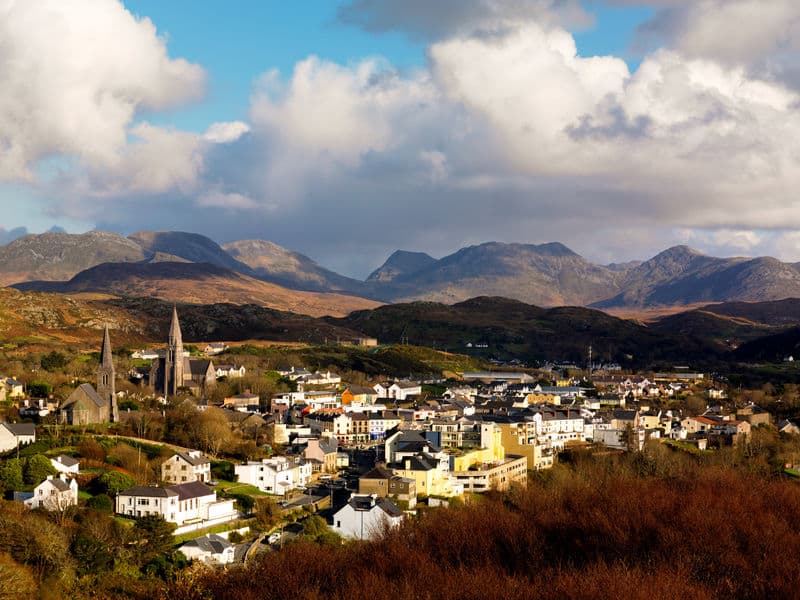
After visiting Kylemore Abbey, continue west to the lively town of Clifden, often referred to as the capital of Connemara. Despite its small population, Clifden has a vibrant atmosphere filled with traditional pubs, local art galleries, and excellent restaurants. This Connemara itinerary explores some of the most spectacular landscapes in western Ireland.
The town has long attracted writers and artists drawn to the dramatic landscapes surrounding it.
Dining and Traditional Pubs
One of the villages in Connemara, Cliffden, is also known for its welcoming pubs and strong food scene.
Lowry’s Bar offers a classic Irish pub experience with traditional dishes and a warm atmosphere. Visitors often gather here for live music sessions in the evening.
EJ Kings is widely regarded as one of the best seafood restaurants in the region, serving dishes made with freshly caught Atlantic fish.
Another excellent option is Mitchell’s Restaurant, which specializes in high-quality seafood prepared with simple but refined techniques.
Spending an evening in Clifden provides a perfect ending to your first day exploring Connemara.
Day 3 in Galway: Kinvara, Dunguaire Castle, and the Burren
Your second day on your Galway road trip takes you south of Galway into a completely different landscape. While Connemara is defined by mountains and boglands, this region is known for the remarkable limestone terrain of the Burren.
Kinvara Village
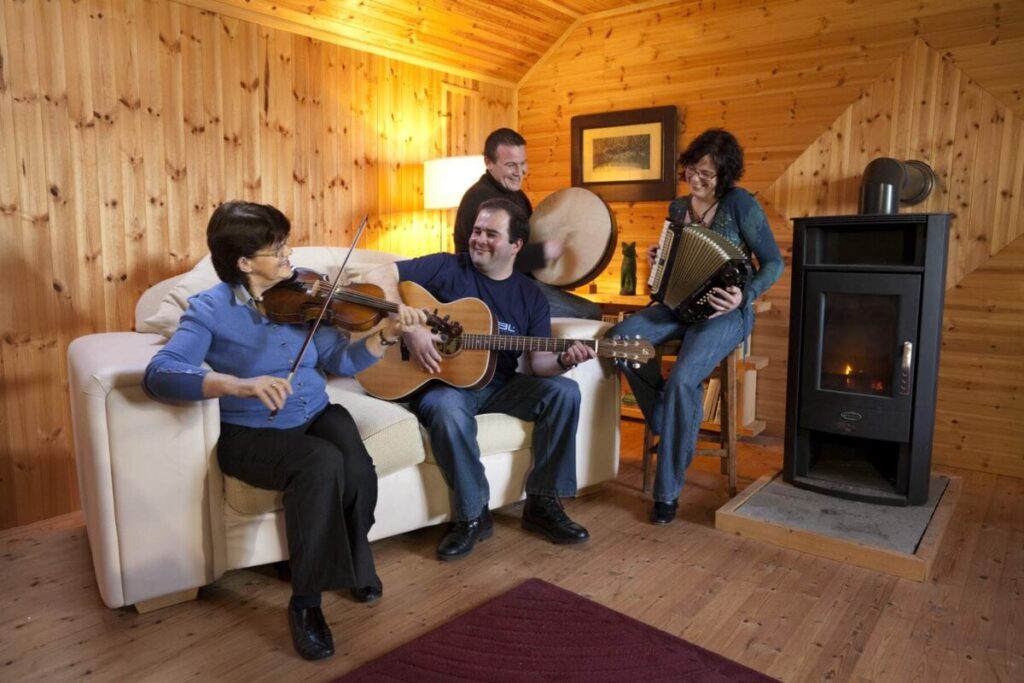
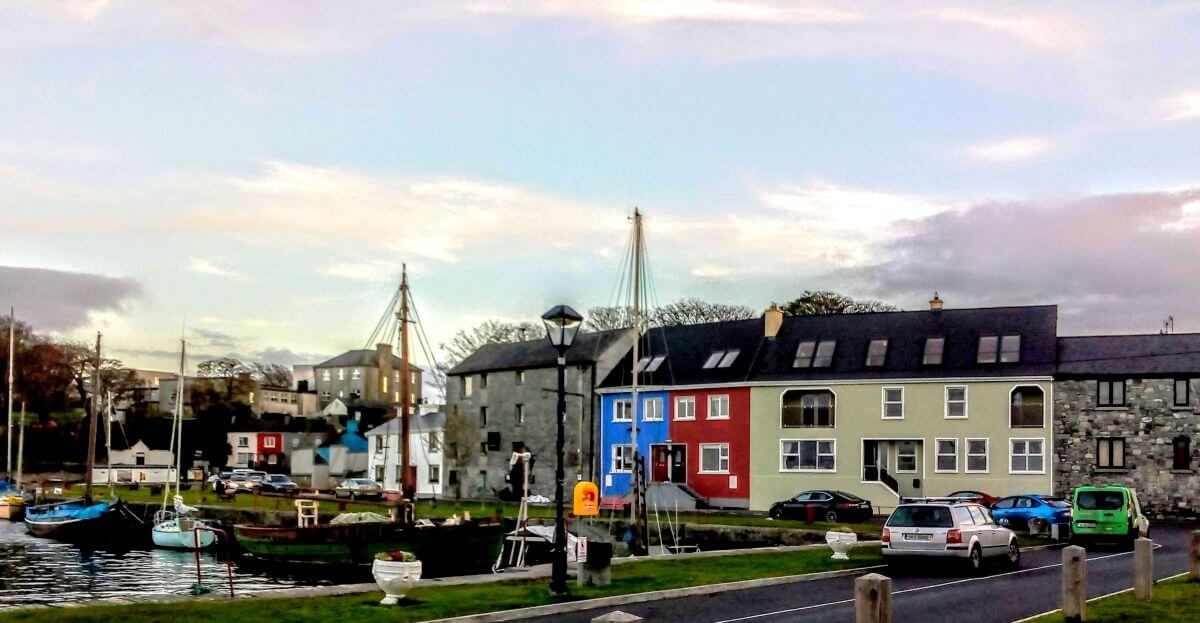
Start the day in Kinvara, a colorful fishing village located on the southern edge of Galway Bay. The village has a relaxed atmosphere and is famous for its traditional Irish music sessions.
During summer months, pubs in Kinvara often host musicians playing fiddle, accordion, and traditional Irish songs.
Dunguaire Castle
Just outside the village stands Dunguaire Castle, one of the most photographed castles along the Wild Atlantic Way. Built in the 16th century by the O’Hynes clan, the castle sits dramatically on the edge of the bay.
Its reflection in the calm water creates a striking view, particularly during sunrise or sunset.

Ballyvaughan
Continuing south along the coast, the village of Ballyvaughan provides a pleasant stop for coffee or lunch. The harbor area offers beautiful views across Galway Bay, and several small cafés serve locally sourced seafood dishes.
This part of the coastline marks the beginning of the Burren region, a landscape unlike anywhere else in Ireland.
Poulnabrone Dolmen and Ancient Sites in the Burren
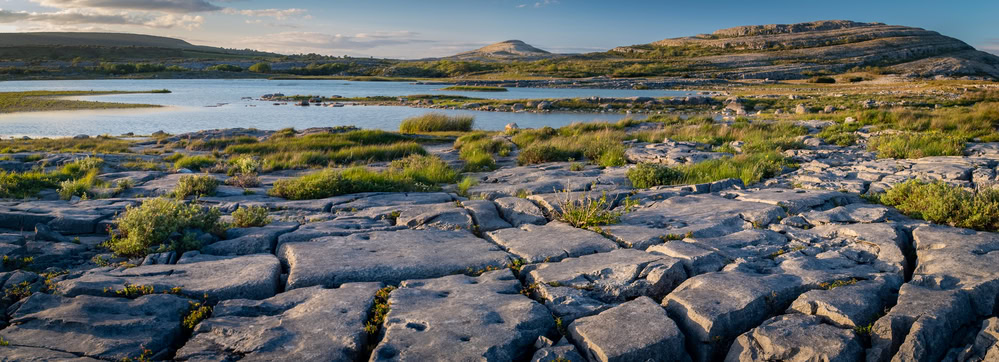
The Burren is one of Ireland’s most unusual landscapes. Instead of green fields and forests, the region is covered with vast limestone pavements stretching across the hills.
Despite its rocky appearance, the Burren contains a remarkable variety of plant species and ancient archaeological sites.
Poulnabrone Dolmen
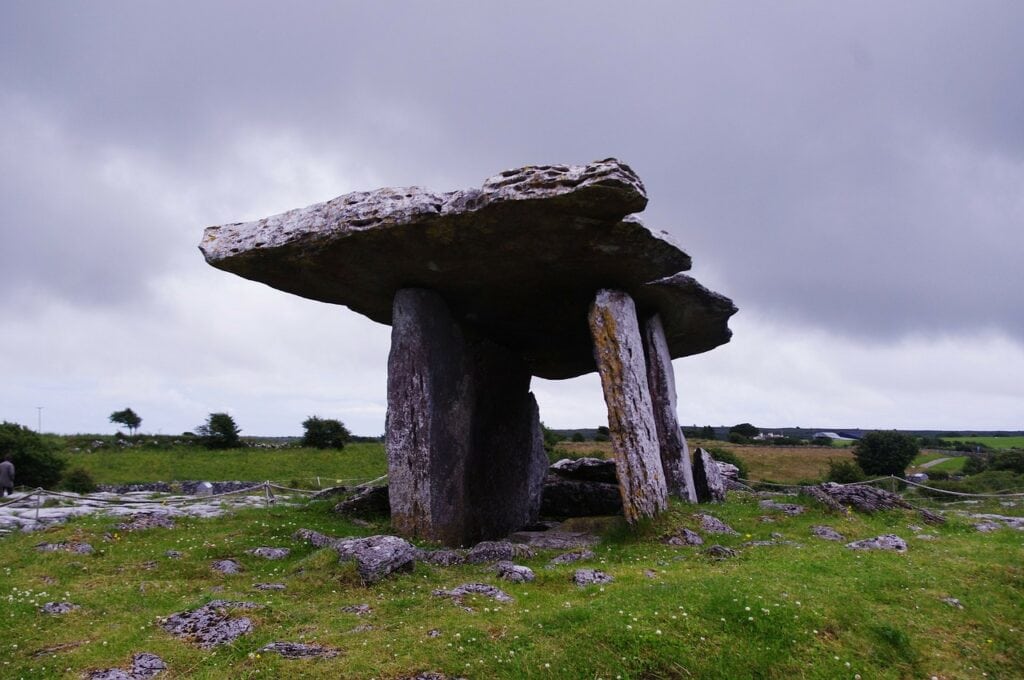
One of the most famous prehistoric monuments in Ireland is located here: Poulnabrone Dolmen.
This portal tomb dates back over 5,000 years, making it older than the Egyptian pyramids. The structure consists of a large stone cap balanced on upright stones, forming a distinctive triangular shape.
Archaeological excavations discovered human remains and burial objects beneath the monument, suggesting it served as an important ceremonial site in prehistoric Ireland.
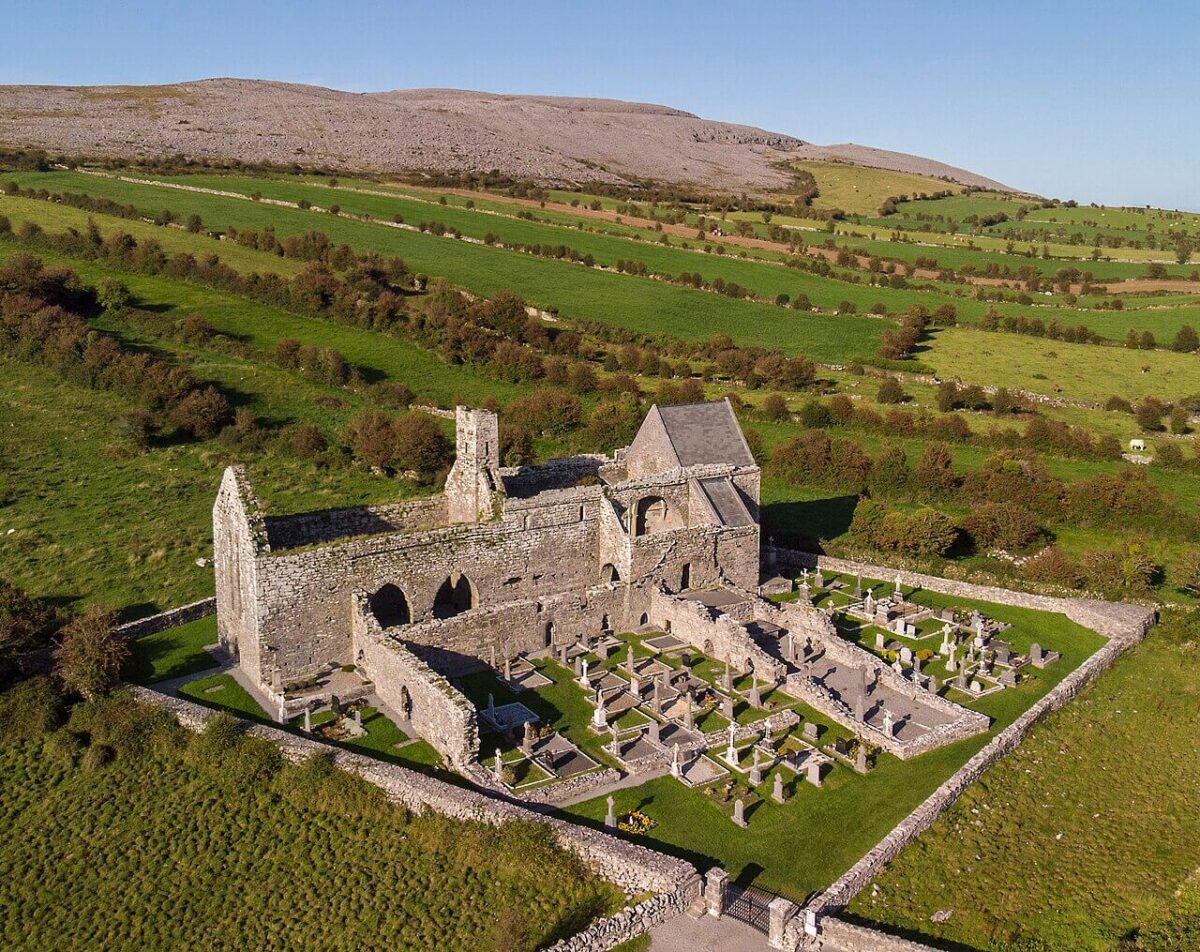
Corcomroe Abbey
Another hidden historical treasure in the Burren is Corcomroe Abbey, a medieval monastery founded by Cistercian monks in the 12th century.
The abbey contains impressive stone carvings and well-preserved tombs, including the tomb of King Conor O’Brien of Thomond.
Surrounded by limestone hills and quiet farmland, Corcomroe Abbey remains one of the most atmospheric historic sites in the region.
Exploring the Burren reveals how Ireland’s natural landscapes and ancient history are deeply intertwined.
Day 3 in Galway: Cong, Ashford Castle, and Athenry
Your final day focuses on historic villages and lakeside scenery north of Galway.
Cong Village
The village of Cong sits between Lough Corrib and Lough Mask, surrounded by woodland and rivers. It is widely considered one of the most beautiful villages in Ireland.
Cong Abbey
The village’s most famous landmark is Cong Abbey, the ruins of a 12th-century Augustinian monastery. Visitors can explore the stone cloisters and walk along peaceful riverside paths beside the abbey.


Ashford Castle
Nearby stands the magnificent Ashford Castle, originally built in the 13th century. Today it operates as one of Ireland’s most luxurious hotels.
Even visitors who are not staying overnight can explore parts of the estate, including woodland walking trails and lakeside views along Lough Corrib for around €5.00.

Athenry
Finish your day in Athenry, a beautifully preserved medieval town east of Galway. The town still retains sections of its original defensive walls and historic market square.
A visit to Athenry Castle provides insight into the region’s medieval history. Before leaving, stop at The Arch Bar, a traditional Irish pub known for its welcoming atmosphere.
Best Scenic Drives Around Galway
Exploring Galway by car allows travelers to experience some of the most beautiful landscapes along Ireland’s west coast.
Several scenic routes stand out as particularly memorable.
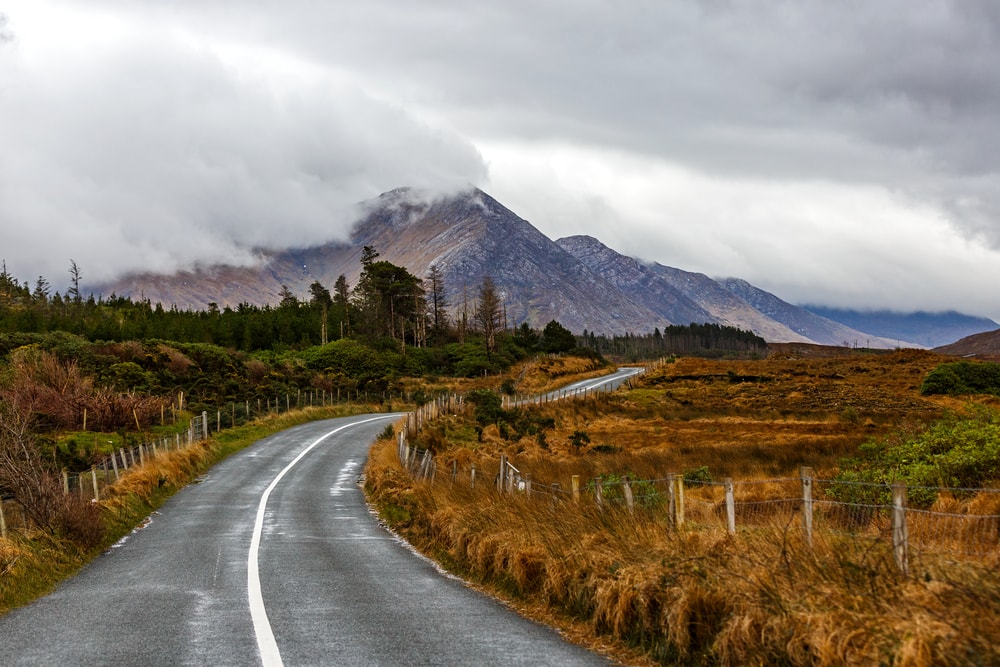
The Sky Road
Just outside Clifden lies one of the most spectacular scenic routes in Ireland: the Sky Road. This circular drive climbs above the coastline, offering sweeping views across the Atlantic Ocean and nearby islands. The road passes through rolling hills and quiet farmland before reaching several viewpoints overlooking the rugged coastline.
Sunset is one of the best times to drive the Sky Road, when the evening light illuminates the ocean and surrounding mountains.
Connemara Loop
The Connemara Loop passes through lakes, mountains, and remote coastal villages including Roundstone and Ballyconneely.
Driving along Lough Corrib provides a quieter experience, with peaceful countryside roads leading toward Cong and Ashford Castle.
Burren Coastal Drive
Another excellent route is the Burren Coastal Drive between Kinvara and Ballyvaughan, where limestone hills meet the Atlantic shoreline.
These scenic drives reveal the remarkable diversity of landscapes surrounding Galway.

Galway Hidden Gems
Beyond famous attractions, Galway also hides many lesser-known locations that reward curious travelers. Villages such as Roundstone, Kinvara, and Cong are among the most beautiful villages near Galway.
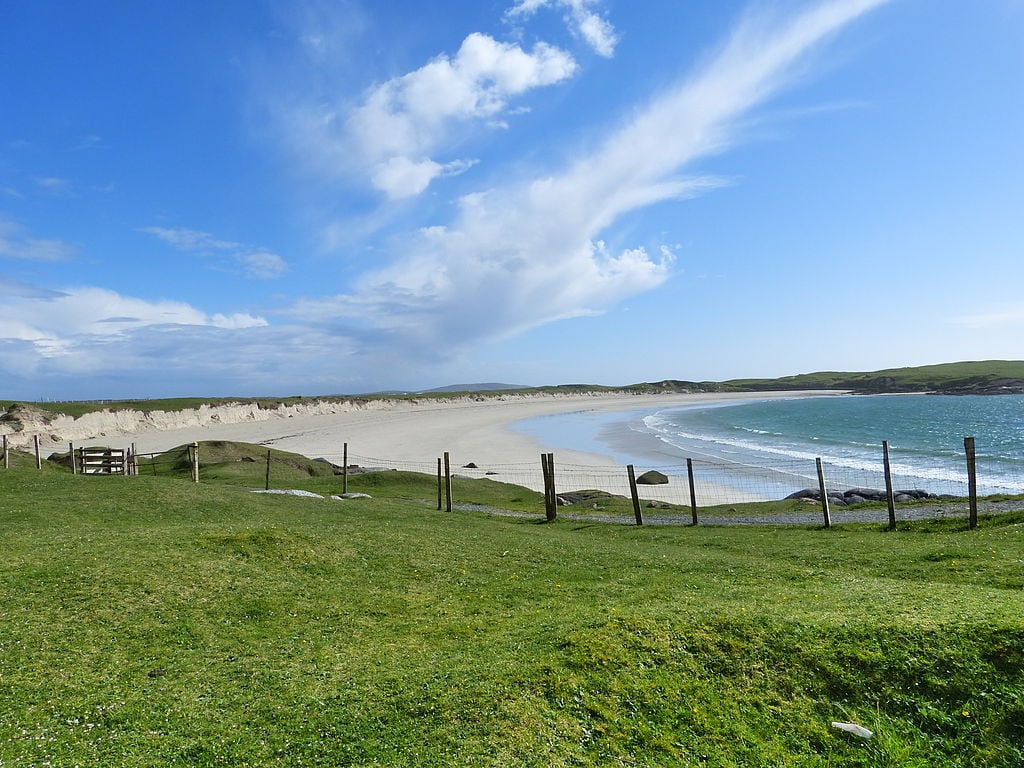
Roundstone village is one of Connemara’s most picturesque settlements, overlooking a quiet harbor and surrounded by rugged coastal scenery.
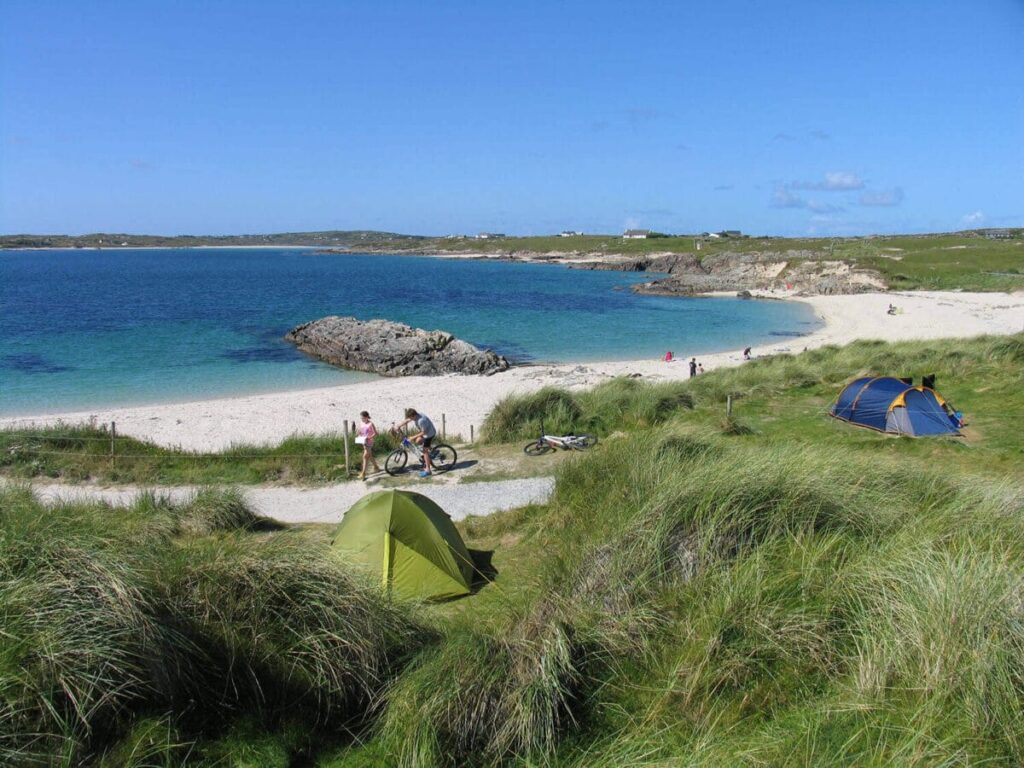
Nearby Dog’s Bay beach features brilliant white sand formed from crushed seashells, creating one of the most beautiful beaches in Ireland.
The Gaeltacht village of Spiddal is another charming stop along the coast, known for craft shops, traditional music sessions, and views across Galway Bay.
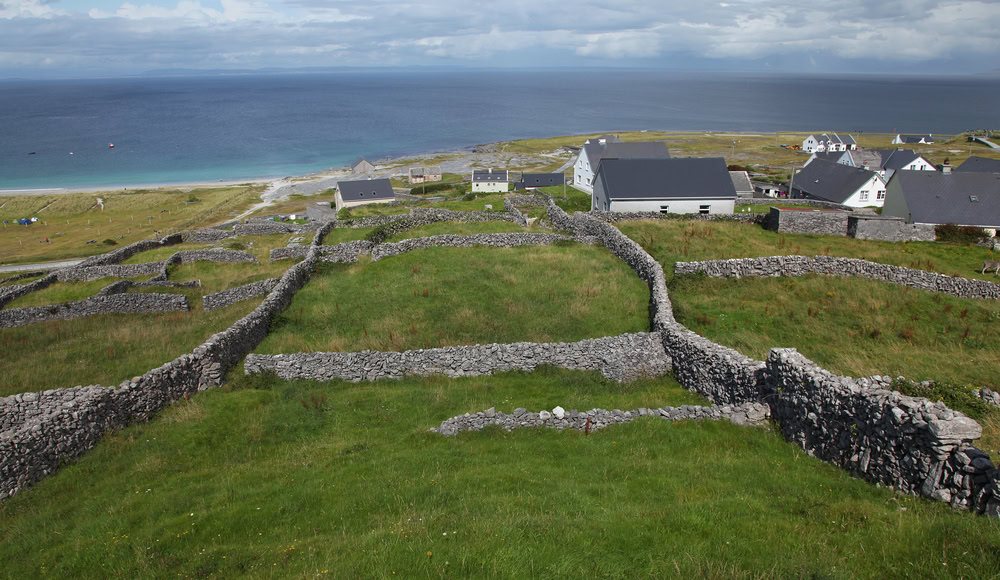
The island of Inis Oírr, part of the Aran Islands, offers a glimpse into traditional Irish island life with stone cottages, coastal cliffs, and the ruins of O’Brien’s Castle.
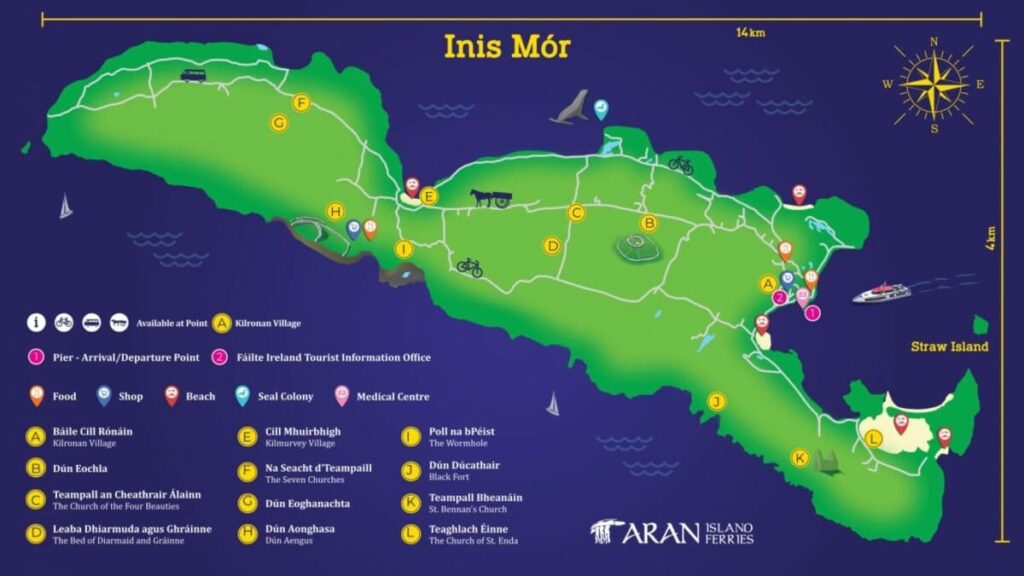
Across Connemara travelers can also find ancient Celtic crosses and early Christian ruins, often hidden beside quiet country roads or small rural cemeteries. These hidden sites add depth and authenticity to any Galway itinerary.
Visiting Galway Without a Car
Although having a car makes exploring easier, travelers without a car can still experience most of the region’s highlights.
Several companies operate day tours from Galway City to Connemara, the Burren Geopark Park, and the Cliffs of Moher.
Regional buses also connect Galway with towns such as Clifden, Kinvara, and Cong, though schedules may be limited in rural areas.
Cycling is another option for exploring areas close to Galway City, particularly along the coast toward Salthill and Spiddal.
With careful planning, travelers without a car can still enjoy an excellent Galway itinerary.

Map of This 3 Day Galway Itinerary
Interactive Map: 3 Days Around Galway
This map shows the driving routes and stops for the 3-day Galway itinerary including Connemara, the Burren, and historic villages such as Cong and Athenry.
Route Key
People Also Ask: Galway Travel Questions
Is Galway worth visiting in Ireland?
Yes, Galway is widely considered one of the best places to visit in Ireland. The city is known for its lively atmosphere, traditional Irish music, colorful streets, and welcoming pubs. Beyond the city, the surrounding region offers spectacular landscapes including Connemara’s mountains, the Burren’s limestone terrain, and coastal villages along the Wild Atlantic Way.
Galway also provides access to historic landmarks such as Kylemore Abbey, Aughnanure Castle, and Cong Abbey, as well as prehistoric monuments like Poulnabrone Dolmen. This combination of culture, history, and natural beauty makes Galway one of the most rewarding destinations in Ireland.
How many days do you need in Galway?
Most travelers find that three days in Galway is the perfect amount of time to experience both the city and the surrounding countryside.
During a three-day visit you can explore:
- Connemara National Park and Kylemore Abbey
- Coastal villages such as Kinvara and Clifden
- The Burren landscape and Poulnabrone Dolmen
- Historic towns like Cong and Athenry
Travelers with more time can also visit the Aran Islands or explore additional scenic routes along the Wild Atlantic Way.
Do you need a car in Galway?
Renting a car makes it easier to explore the countryside around Galway, especially regions such as Connemara and the Burren where public transport is limited.
However, it is still possible to enjoy many of the area’s highlights without driving. Several companies operate guided day tours from Galway City to popular destinations including Connemara, Kylemore Abbey, the Cliffs of Moher, and the Aran Islands.
Regional buses also connect Galway with towns such as Clifden, Kinvara, and Cong, although schedules may be less frequent in rural areas.
What are the best day trips from Galway?
Galway is surrounded by some of the most beautiful landscapes in Ireland, making it an excellent base for day trips.
Some of the best day trips from Galway include:
- Connemara National Park and Kylemore Abbey
- The Burren and Poulnabrone Dolmen
- The Cliffs of Moher
- The Aran Islands
- Cong village and Ashford Castle
These destinations can be reached by car, tour bus, or in some cases by public transport.
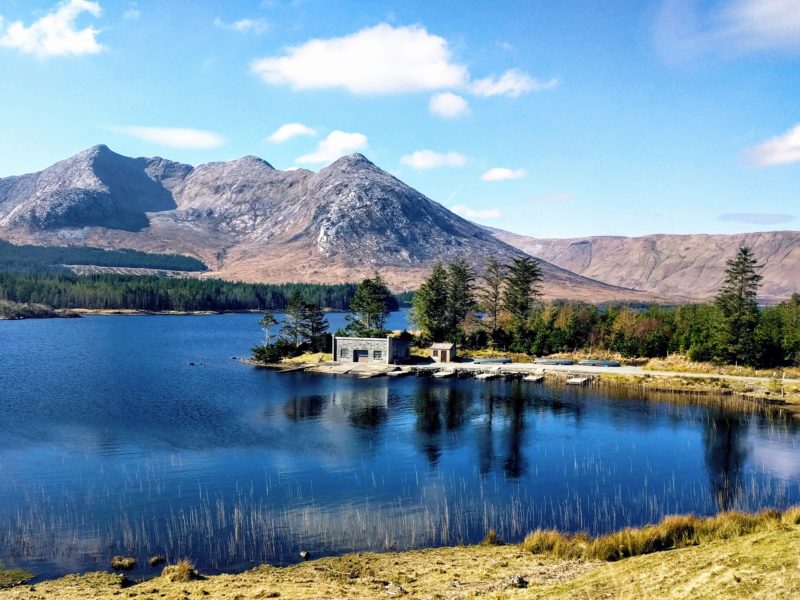

What villages should you visit near Galway?
The Galway region is known for its charming villages, many of which preserve traditional Irish culture and architecture.
Some of the most beautiful villages near Galway include:
- Clifden, the lively capital of Connemara
- Kinvara, a colorful harbor village beside Dunguaire Castle
- Roundstone, a quiet fishing village surrounded by coastal scenery
- Spiddal, a Gaeltacht village known for crafts and traditional music
- Cong, one of the most picturesque villages in Ireland
Exploring these smaller towns allows visitors to experience the authentic atmosphere of the west of Ireland.

Why Galway Is One of Ireland’s Most Rewarding Destinations
Galway offers an extraordinary combination of dramatic landscapes, ancient history, vibrant villages, and welcoming local culture. My Galway travel guide will help you decide which areas you may want to visit or come back to see.
Within three days visitors can explore:
• The wild mountains and lakes of Connemara
• Historic landmarks like Kylemore Abbey and Aughnanure Castle
• Traditional villages including Clifden, Kinvara, and Cong
• The prehistoric landscapes of the Burren
• Ancient monuments such as Poulnabrone Dolmen
• Medieval towns like Athenry
Along the way you will encounter lively pubs, exceptional seafood, scenic coastal drives, and quiet countryside roads filled with history.
Whether traveling with a car or exploring by tour from Galway City, this Galway itinerary offers the perfect introduction to the landscapes, villages, and historic sites of western Ireland and one of the most authentic and memorable travel experiences in Ireland.
For anyone looking to experience the beauty, culture, and heritage of the west coast, spending three days in Galway is an unforgettable journey.
Explore a few of my Ireland itineraries below:
👉 An Itinerary for exploring Wicklow
👉 An Itinerary for exploring Kilkenny
👉 A 10 Day Itinerary to discover Ireland
👉 5 Historical Places to visit near Dublin
👉Causeway Coastal Route Itinerary
👉 Celtic Symbols a road trip itinerary
Join 6,519 Ireland travellers in my Ireland Uncovered Facebook Group and 1,897 on my XYUandBEYOND PAGE
This guide is part of a wider Accessible Ireland travel series, offering realistic, first-hand advice for limited-mobility travel across Ireland.
➡️Accessible Causeway Coast Route
➡️Accessible Wild Atlantic Way
If you encounter changes (e.g., temporary lift closures or construction), please let me know so I can update this page promptly.
Start Planning Your Trip
👉 Public Transportation in Ireland
👉 Hidden Gems in Ireland – 32 Secret places to visit
👉 Answering all your travel questions about Ireland