
Celtic Symbols Road Trip Ireland: Complete 5–7 Day Itinerary
What is the best Celtic symbols road trip in Ireland?
The best Celtic symbols road trip in Ireland is a 5–7 day route starting in Dublin and covering Newgrange, the Hill of Tara, Kells, Monasterboice, the Dingle Peninsula, Cork, and Ardmore. This route allows you to experience the most important Celtic symbols including the triskele, Celtic cross, and Ogham stones directly within their original landscapes.
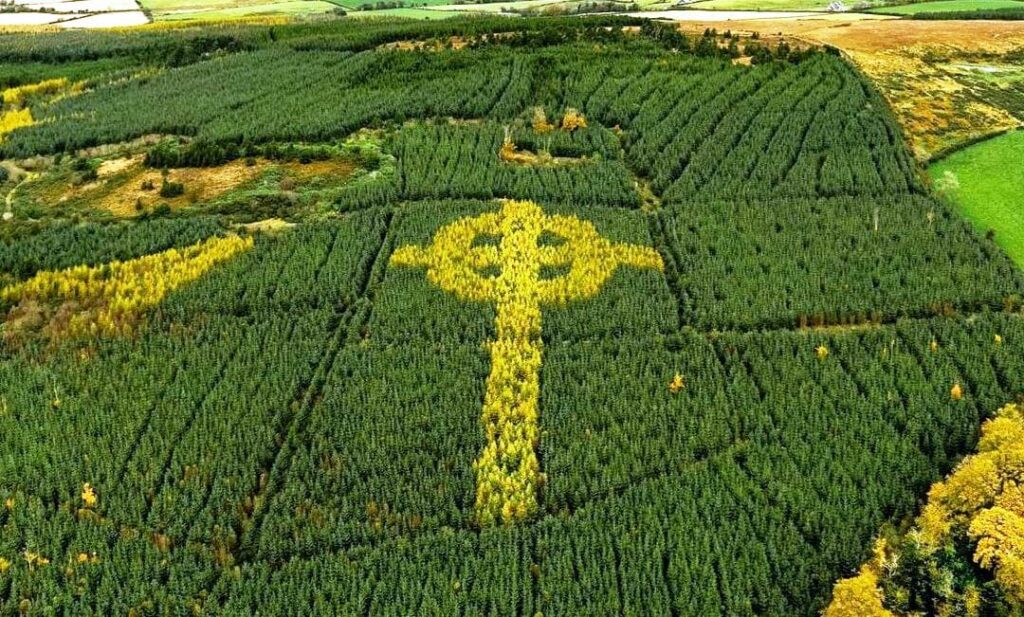
Having personally visited each of these locations, this route stands out because it combines prehistoric monuments, early Christian sites, and remote archaeological landscapes into one cohesive journey.
Why take a Celtic symbols road trip in Ireland?
A Celtic symbols road trip offers something that books and online guides cannot: context.
From experience, the biggest difference is scale and atmosphere. At sites like Newgrange and Monasterboice, the symbols are not just visual they are part of the environment. Light, weather, and landscape all play a role in how they are experienced.
Seeing these symbols in person in Ireland reveals that they were never meant to be isolated designs. They were embedded in daily life, belief systems, and natural surroundings.
- Celtic Symbols Road Trip Ireland: Complete 5–7 Day Itinerary
- What is the best Celtic symbols road trip in Ireland?
- Why take a Celtic symbols road trip in Ireland?
- Day 1: Dublin to Newgrange (Prehistoric Symbol Origins)
- Day 2: Hill of Tara and Kells (Symbolism of Power and Manuscripts)
- Day 3: Monasterboice (Celtic Cross in Context)
- Day 4–5: Dingle Peninsula (Ogham Stones and Early Identity)
- Day 6: Cork (Largest Ogham Collection)
- Day 7: Ardmore (Coastal Symbolism)
- Where can you see Ogham stones in Ireland?
- What is the best route for this road trip?
- How long do you need for a Celtic symbols road trip?
- Why this road trip gives the best understanding of Celtic symbols meaning
- Frequently Asked Questions about a Celtic Symbols Road Trip
- Exploring the fascinating regions of Ireland
Day 1: Dublin to Newgrange (Prehistoric Symbol Origins)
Why visit Newgrange?
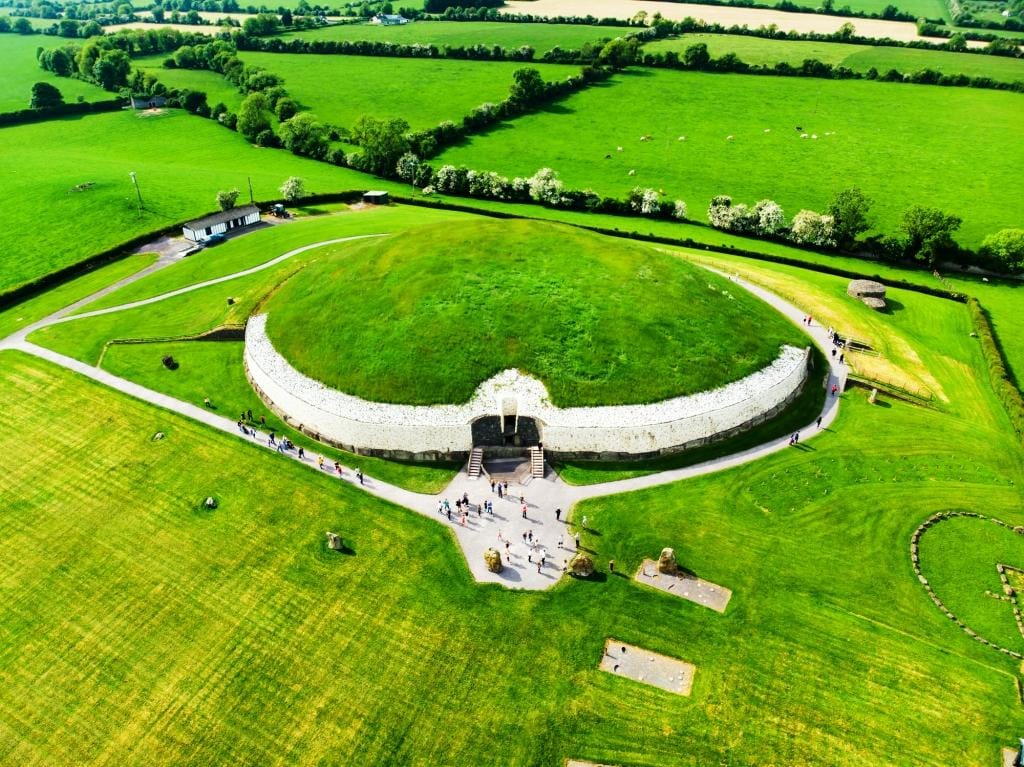
Newgrange is one of the oldest archaeological sites in Europe and contains spiral carvings that predate Celtic culture.
What you’ll experience
Standing in front of the entrance stone, the triskele carvings are immediately striking. In person, they feel more deliberate and precise than they appear in photographs. The alignment with the winter solstice sunrise makes it clear that these symbols were tied to astronomical observation, not just decoration.
Personal insight: Walking through the passage itself adds another layer. The space is narrow, quiet, and controlled when the chamber is illuminated (or even described during tours), you begin to understand how powerful this experience would have been for ancient communities.

Day 2: Hill of Tara and Kells (Symbolism of Power and Manuscripts)
Hill of Tara
The Hill of Tara is less about visible symbols and more about symbolic meaning tied to landscape and kingship.
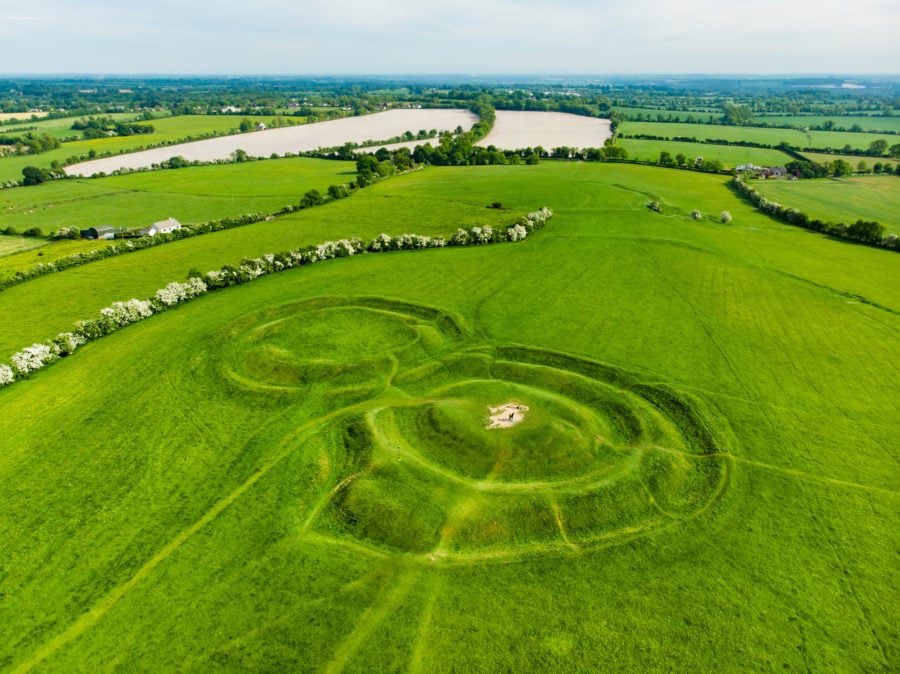
Personal insight: What stands out here is the openness of the site. Unlike Newgrange, Tara feels expansive and exposed. This reinforces its role as a ceremonial and symbolic centre rather than a place of enclosed ritual.
Kells
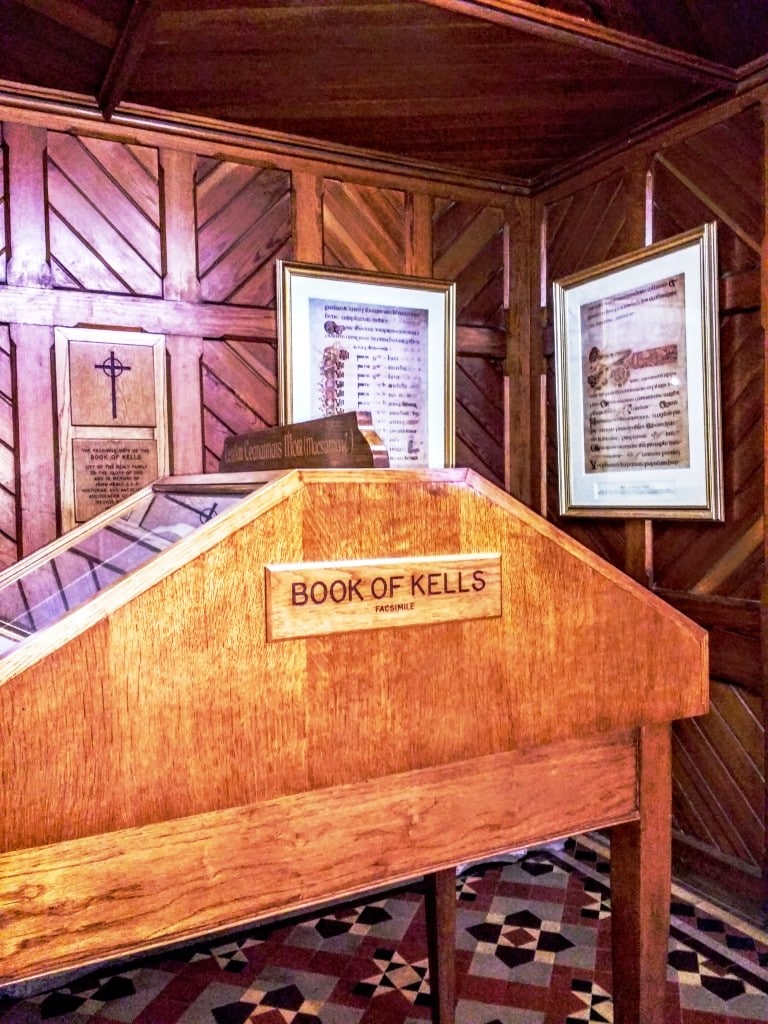
Kells represents the transition from stone symbolism to manuscript art.

What you’ll experience
Intricate knotwork and symbolic patterns associated with the Book of Kells, and since this is where the book was found in Ireland there are copies of the book to see. In the Churchyard you will find some ancient Celtic Crosses.
Personal insight: Seeing the site itself gives context to the manuscript tradition. It becomes clear that the same symbolic language used in stone was adapted into written and illustrated form.
Day 3: Monasterboice (Celtic Cross in Context)
Why visit Monasterboice?
Monasterboice in County Louth is one of the best-preserved sites for understanding the Celtic cross.

What you’ll experience
High crosses featuring detailed carvings that combine:
- Biblical storytelling
- Celtic knotwork
- Circular symbolism
Personal insight: Seeing the Muiredach’s Cross in person is very different from images. The level of detail is far greater, and the carvings feel layered almost like a narrative you can follow panel by panel. The quiet setting also adds to the sense that these were central community monuments.

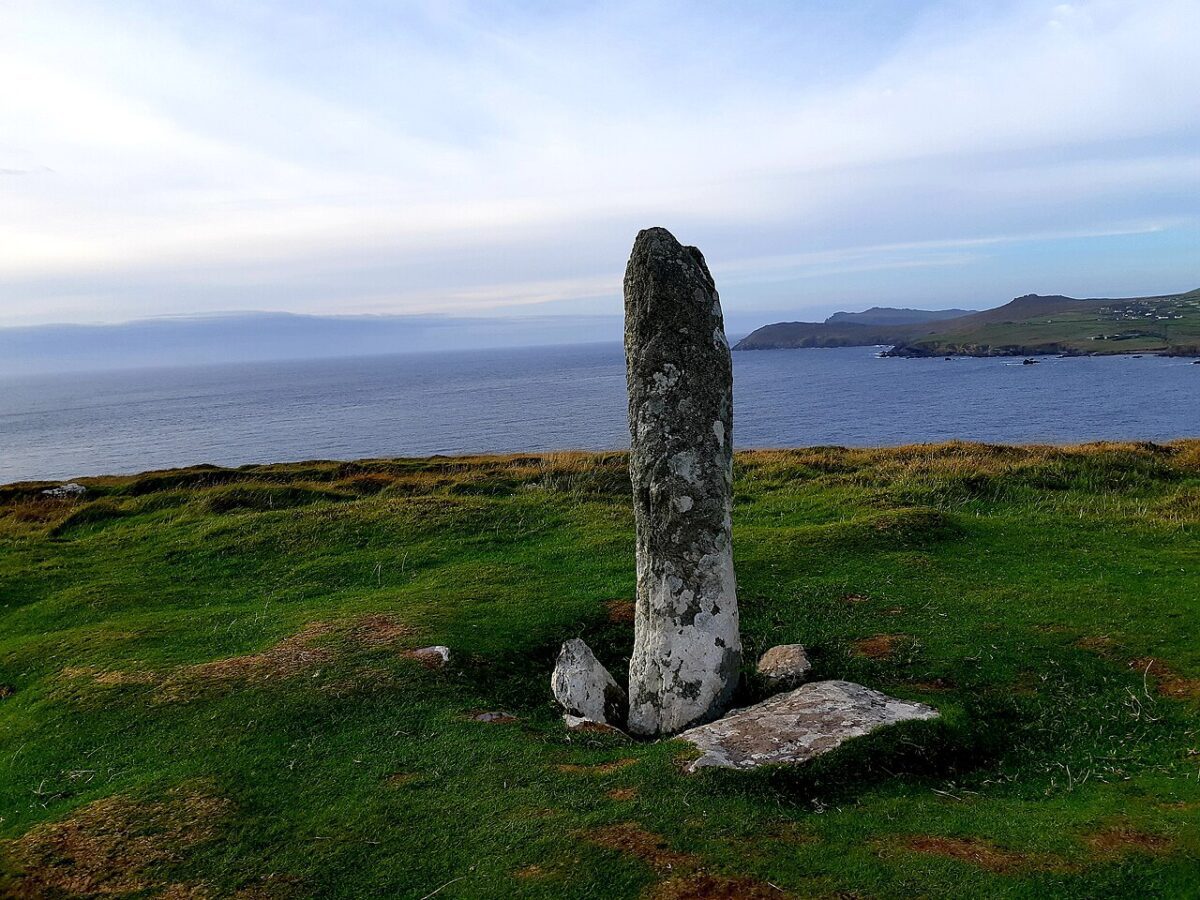
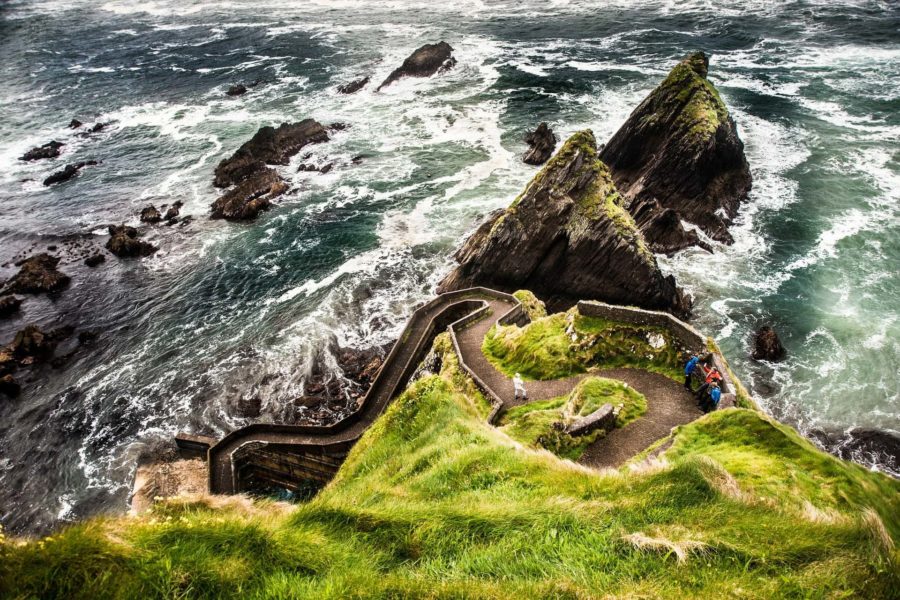
Day 4–5: Dingle Peninsula (Ogham Stones and Early Identity)
Why visit Dingle Peninsula?
The Dingle Peninsula contains one of the highest concentrations of Ogham stones in Ireland. For travelers seeking authentic Irish landscapes, it’s Dingle vs the Ring of Kerry each offering stunning views, but Dingle wins for those who want fewer tour buses and a bit more craic.
Key sites
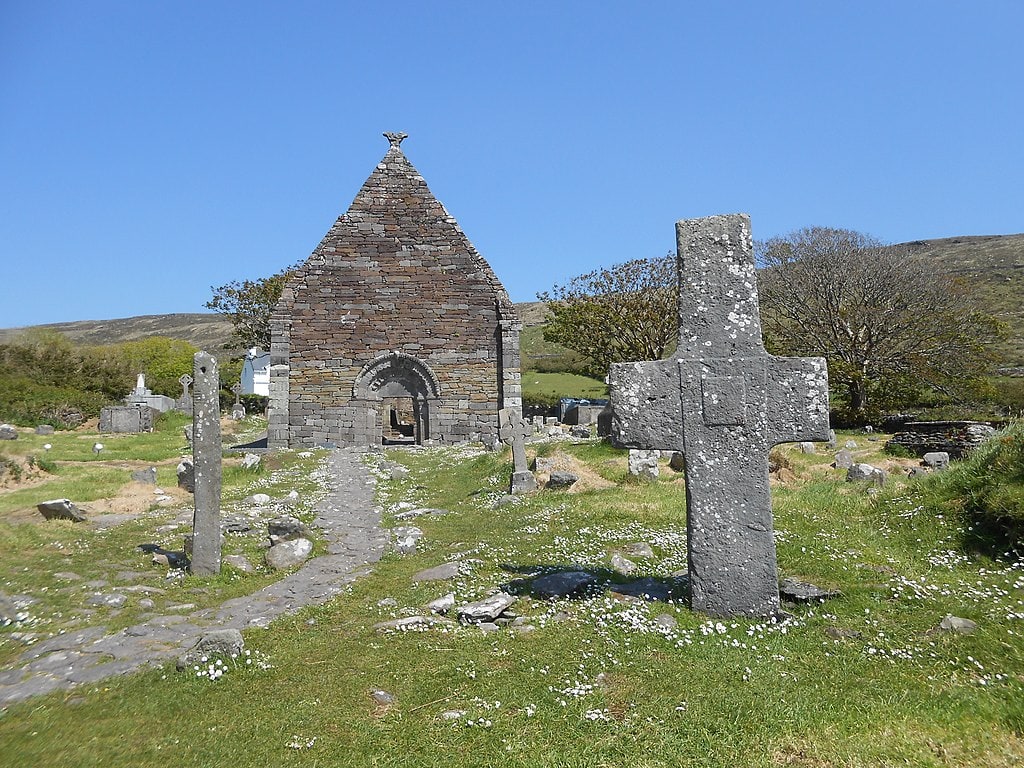
Kilmalkedar Church
Reask Monastic Site
What you’ll experience
Ogham stones carved with early Irish script, often located near monastic ruins or ancient boundaries.
Personal insight: These sites feel much more remote than others on the route. Finding Ogham stones in quiet, open landscapes makes their purpose clearer they were markers of identity and territory, not decorative objects. The simplicity of the carvings contrasts strongly with the complexity of Celtic knotwork.
Day 6: Cork (Largest Ogham Collection)
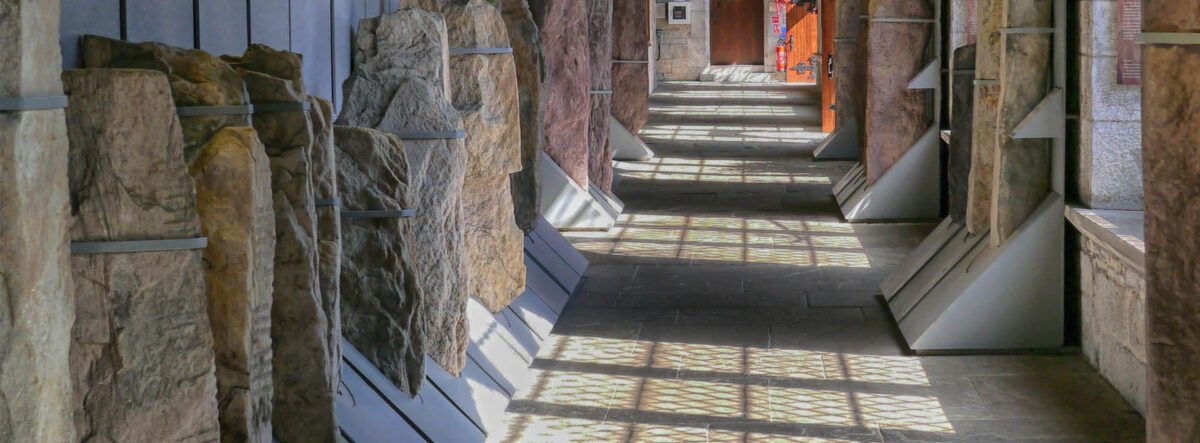
Why visit University College Cork?
Cork University houses the largest collection of Ogham stones in Ireland.
What you’ll experience
Multiple Ogham stones displayed together, allowing for comparison of inscriptions.
Personal insight: Seeing these stones side by side makes patterns more noticeable. It also highlights regional differences that are harder to spot when visiting isolated stones in the landscape.
Day 7: Ardmore (Coastal Symbolism)
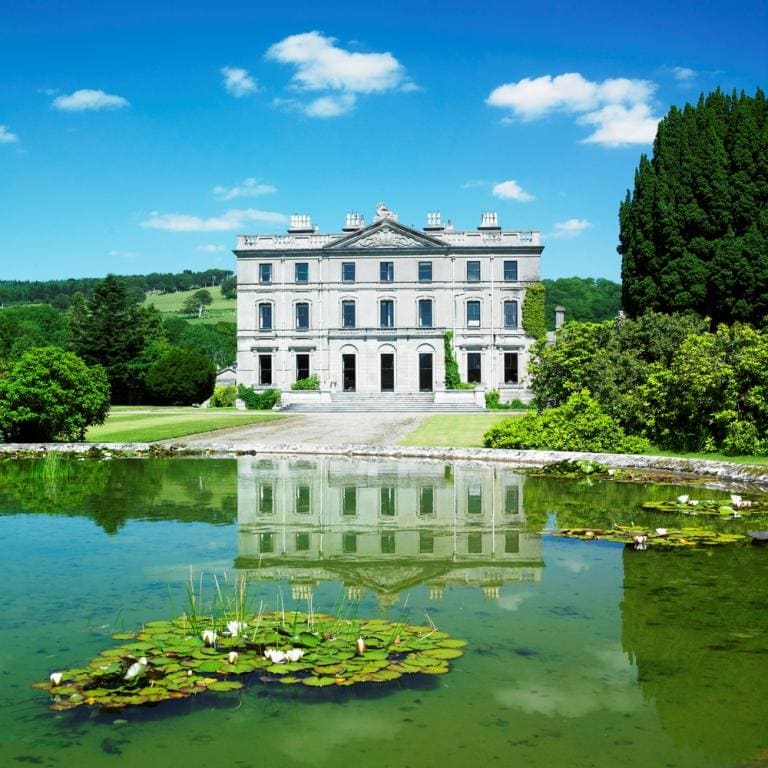
Why visit Ardmore Cathedral?
Ardmore in County Waterford combines Ogham stones, early Christian architecture, and coastal scenery.

What you’ll experience
A quieter site where symbolism, landscape, and history intersect.
Personal insight: The coastal setting changes the experience completely. The combination of sea, ruins, and stone carvings creates a stronger sense of how these symbols existed within everyday life rather than as isolated artifacts.
Where can you see Ogham stones in Ireland?
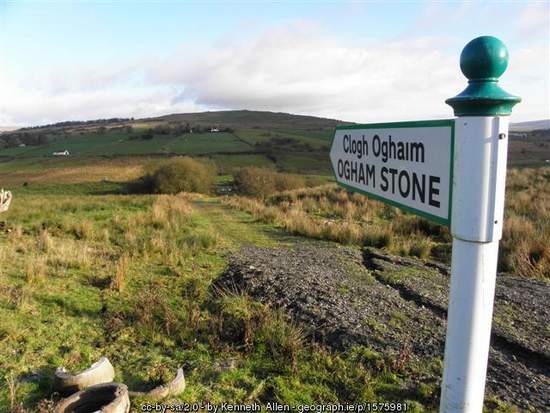
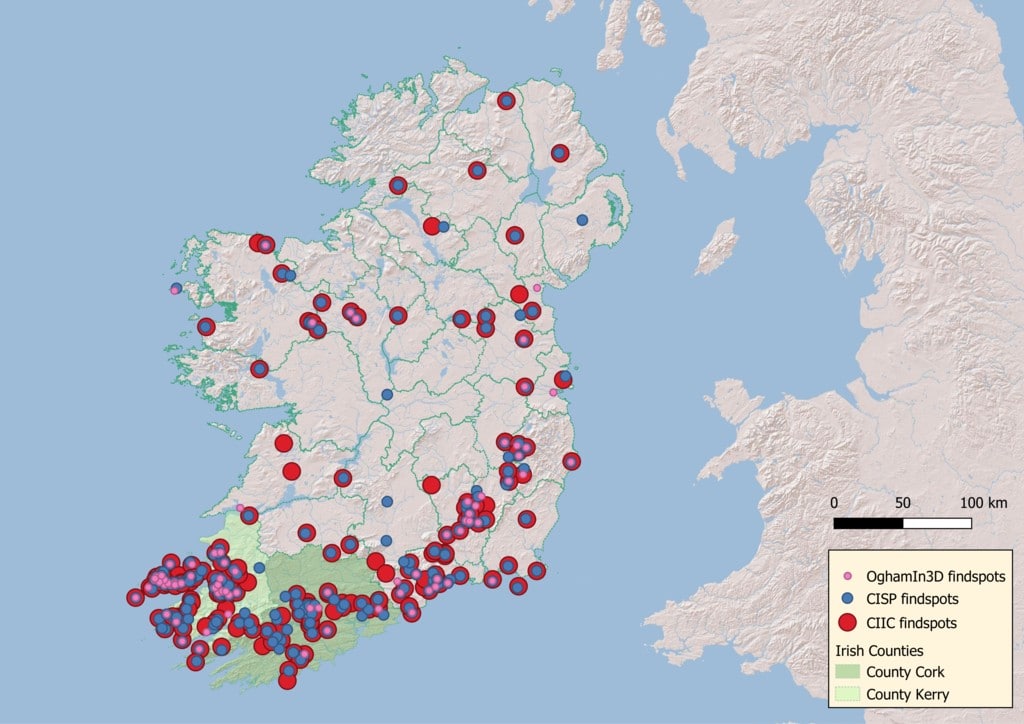
Ogham stones are primarily found in southern Ireland, especially in Kerry, Cork, and Waterford. Based on first-hand visits, the most accessible and meaningful locations are the Dingle Peninsula, University College Cork, and Ardmore.
These sites show how Ogham was used in real contexts marking land, commemorating individuals, and connecting identity to place.
What is the best route for this road trip?
The most efficient route is:
Dublin → Newgrange → Hill of Tara → Kells → Monasterboice → Dingle Peninsula → Cork → Ardmore
This route avoids unnecessary backtracking and connects the most important Celtic symbol sites in a logical sequence.
How long do you need for a Celtic symbols road trip?
You need at least 5 to 7 days to complete this itinerary comfortably.
From experience, rushing these sites reduces their impact. Taking time to walk the landscapes, not just view the monuments, makes a significant difference.
Why this road trip gives the best understanding of Celtic symbols meaning
Visiting these sites reveals that Celtic symbols are not just designs they are part of a wider system that includes landscape, belief, and identity.
Experiencing them in sequence from prehistoric carvings to early Christian monuments creates a deeper and more complete understanding than studying them individually.
Ireland may be small, but it’s packed with unforgettable landscapes, rich history, and welcoming towns that are best explored over a little more time. A 10-day itinerary gives you the chance to dive deeper, combining iconic sights with off-the-beaten-path experiences. Take a look at our 10-day Ireland itinerary to start planning your journey.

Frequently Asked Questions about a Celtic Symbols Road Trip
What is the best place to see Celtic symbols in Ireland?
The best place to see Celtic symbols is Newgrange for prehistoric carvings and Monasterboice for Celtic crosses. Together, they provide the clearest understanding of Celtic symbolism.
Are Celtic symbols only found in Ireland?
No, Celtic symbols are found across regions such as Scotland and Wales. However, Ireland contains some of the most important and well-preserved examples.
What are Ogham stones used for?
Ogham stones were used as memorial markers and boundary indicators. They often recorded names and were closely tied to identity and territory.
Is Newgrange older than Celtic culture?
Yes, Newgrange dates to around 3200 BCE, long before the Celtic period. Its symbols were later adopted into Celtic traditions.
Can you visit all Celtic symbol sites in one trip?
Yes, most major sites can be visited within 5 to 7 days by car. This itinerary is designed to cover the most important locations efficiently.
Is a guided tour necessary?
No, but guided tours especially at Newgrange can provide valuable context that enhances understanding.
This guide is based on first-hand travel experience across Ireland’s Celtic heritage sites, combined with historical research and established archaeological knowledge. It reflects both practical insights and accurate cultural context.
Join 7,500 Ireland travellers in my Ireland Uncovered Facebook Group and 1,897 on my XYUandBEYOND PAGE
Explore a few of my Ireland itineraries below:
👉 An Itinerary for exploring Wicklow
👉 An Itinerary for exploring Kilkenny
👉 A 10 Day Itinerary to discover Ireland
👉 5 Historical Places to visit near Dublin
👉Causeway Coastal Route Itinerary
👉 Celtic Symbols a road trip itinerary
Explore a few of my Ireland itineraries below:
👉 An Itinerary for exploring Wicklow
👉 An Itinerary for exploring Kilkenny
👉 A 10 Day Itinerary to discover Ireland
👉 5 Historical Places to visit near Dublin
👉Causeway Coastal Route Itinerary
👉 Celtic Symbols a road trip itinerary