
Irish legends and Folklore: Gods, Heroes, and Dark Creatures
Irish myths and ancient legends are known worldwide and traditional Irish stories have inspired poets, artists, writers and creatives for centuries. Irish fairy tales, leprechauns, banshees the ancient Sidhe the Tuatha de Danaan and old Irish tales have been used throughout pop culture from movies to fantasy novels. I’ve grown up with these tales, stories told to me when I was a child and being fascinated by all things mythical and exploring Ireland’s thin places as an adult.

Irish folk tales and Irish storytelling has been the bedrock of Irish culture since the dawn of time. Irish folklore has travelled with the Irish as they emigrated across the globe taking with them the tales, songs, legends and myths of Ireland along with their hopes and dreams.
Celtic mythology story
Celtic legends were passed between towns and villages in ancient Ireland and through generations via the bards and seanchaí the traditional Gaelic storytellers and historians. In those ancient times, stories were not written down and long poems and songs contained the wisdom of Irish folklore and the tales of Irish heroes. Folks travelling to Ireland often want to visit the places of legends, Irish fairies and stories of ancient times.
- Irish legends and Folklore: Gods, Heroes, and Dark Creatures
- Celtic mythology story
- Frequently Asked Questions about Irish Folklore and Mythology
- Irish Mythology – Irish fables and legends
- Mythological Cycle: Where Gods Walked
- Mythological Irish horror folklore and Celtic Demons
- Celtic mythology in Ireland
- The Ulster Cycle (1st Century BCE–1st Century CE)
- Ulster Cycle: Warrior Trails
- The Fenian Cycle – Fionn’s Footsteps (3rd–6th Century CE)
- The Cycles of the Kings – Mixed: 5th–12th Century CE
- Great Irish Legends and Myths
- Further Reading
Frequently Asked Questions about Irish Folklore and Mythology
Where is the Irish National Folklore collection?
The Irish National Folklore Collection (NFC) is one of the most important archives of traditional culture in the world. It contains a vast collection of Irish folklore, including stories, songs, proverbs, customs, and beliefs gathered mainly from the 1930s to the 1950s. The collection is housed at University College Dublin (UCD) in the Delargy Centre for Irish Folklore and the National Folklore Collection.
What role do fairies play in Irish mythology?
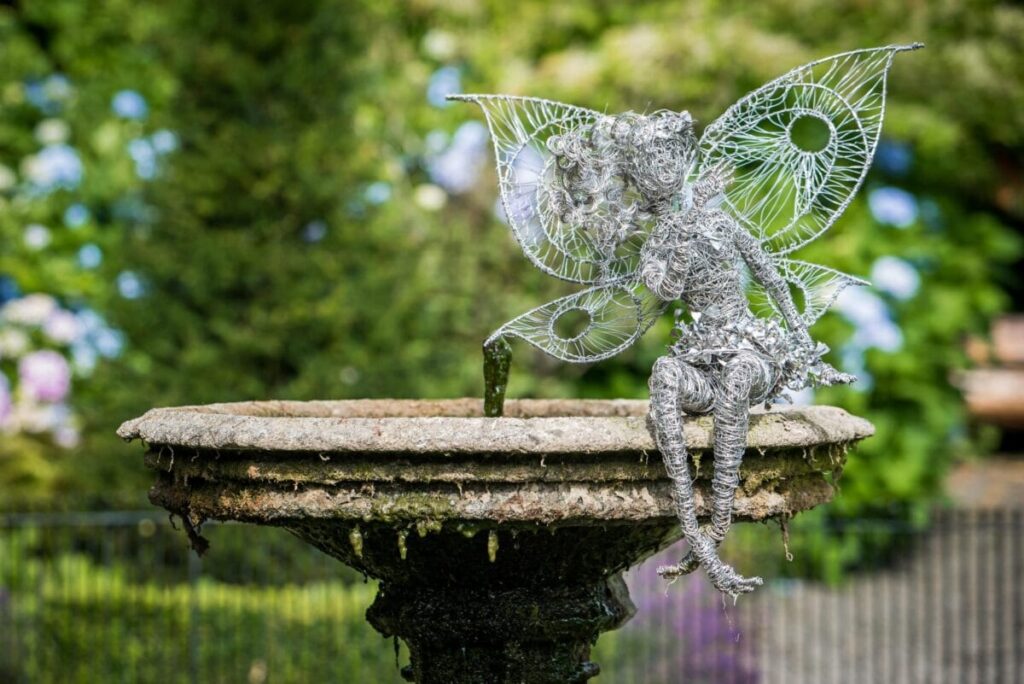
Fairies in Irish folklore—often called the Sleágh Maithe or “Good People”—were believed to live in a hidden realm adjacent to ours. According to historian Katharine Briggs, rural communities saw them as guardians of ancient forts and burial mounds (as reported in her Encyclopedia of Fairies). I’ve visited Coole Park in County Galway, where local guides recounted stories of banished fairies beneath oak trees. In summer twilight, the soft glow of glowworms and whispered wind through fairy paths creates a haunting sense of connection to those old tales.
Who were the Tuatha Dé Danann?
The Tuatha Dé Danann (‘People of Danu’) appear in the 11th-century Lebor Gabála Érenn (Book of Invasions), but linguistic analysis of their names (e.g., Dagda = ‘Good God’) suggests Iron Age origins (500–400 BCE). Archaeologists link their mythical capital, Tara in County Meath, to a ceremonial site used from 3000 BCE (UCD Archaeology Report, 2021).

What is the significance of Saint Patrick in Irish mythology?
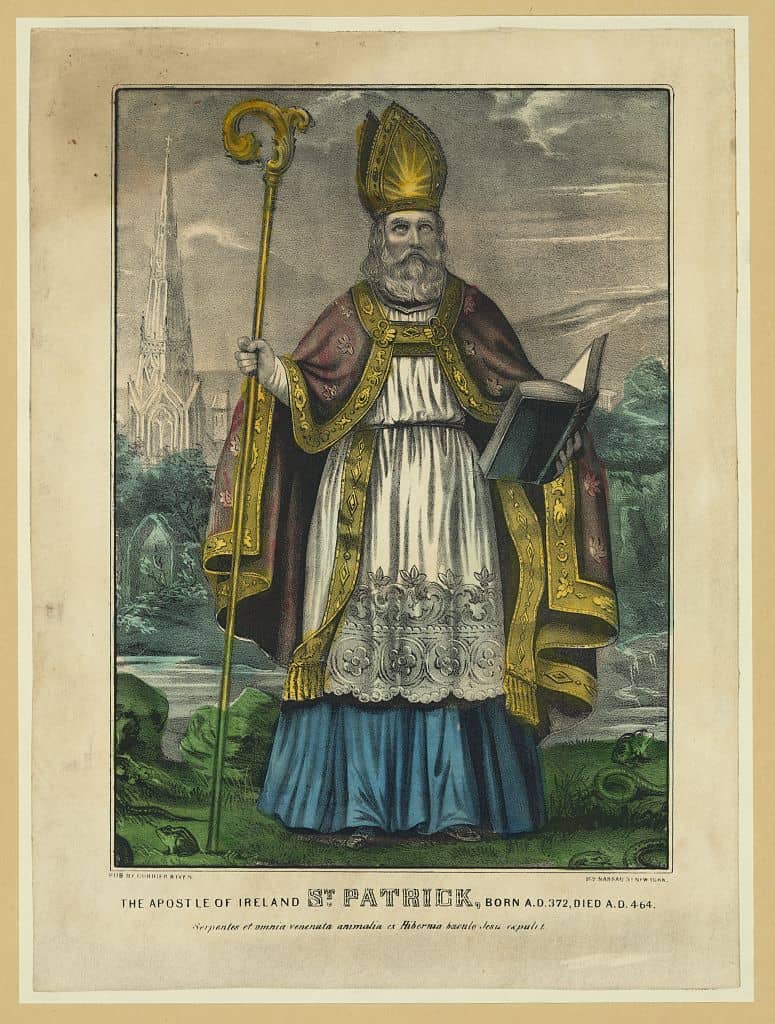
Saint Patrick is widely revered as the patron saint of Ireland and is credited with bringing Christianity to the island. His legend is intertwined with many Irish myths and folk tales.
Irish Mythology – Irish fables and legends
Irish mythology dates back thousands of years to when the Celts arrived in Ireland. Unlike other cultures whose myths detail how their world came into being Irish myths are about how the people of Ireland arrived from somewhere else.
Irish mythology falls into 4 different cycles. Each of the cycles is unique to their time and are filled with different stories. This was done by researchers in an attempt to understand the chaotic stories of Irish folklore. The four Irish myth cycles are Mythological, Ulster, Fenian, Historical/Kings.
Mythological Cycle: Where Gods Walked
The Mythological Cycle (Iron Age, 500 BCE–400 CE) centers on the Tuatha Dé Danann, preserved in the 11th-century Lebor Gabála Érenn.
Origins:
Oral traditions likely date to Iron Age Ireland (500 BCE–400 CE).
First written in 11th–12th century Christian monasteries, preserving pagan lore.
Hill of Tara (Teamhair), Co. Meath
Why Go? The Tuatha Dé Danann’s throne site. Look for the Lia Fáil (Stone of Destiny) – said to roar when touched by a true king.
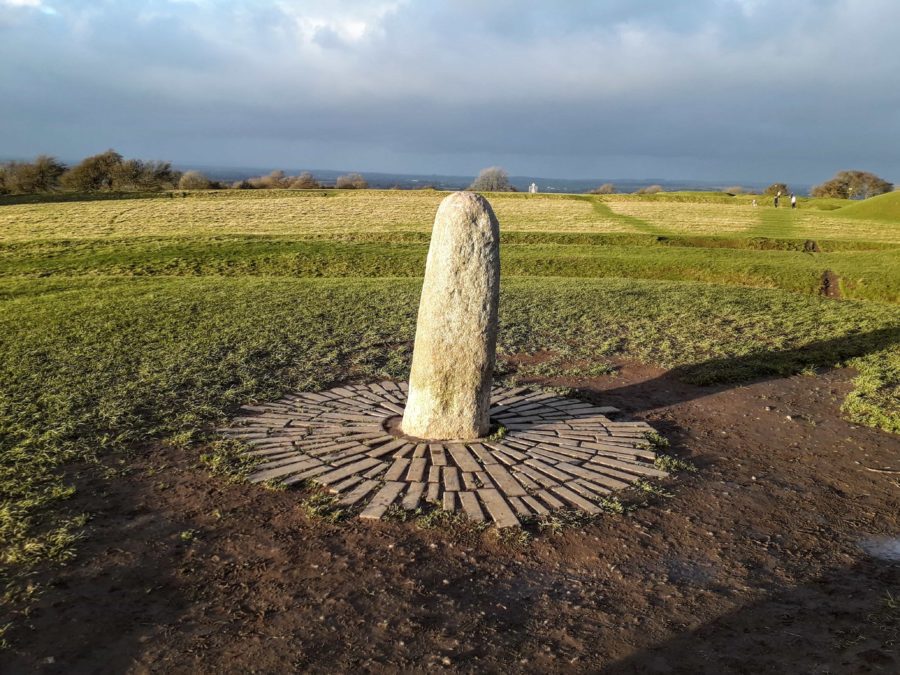
Locals Tip: Visit at sunrise for fewer crowds. The Tara visitor center has AR displays of the mythical palace.
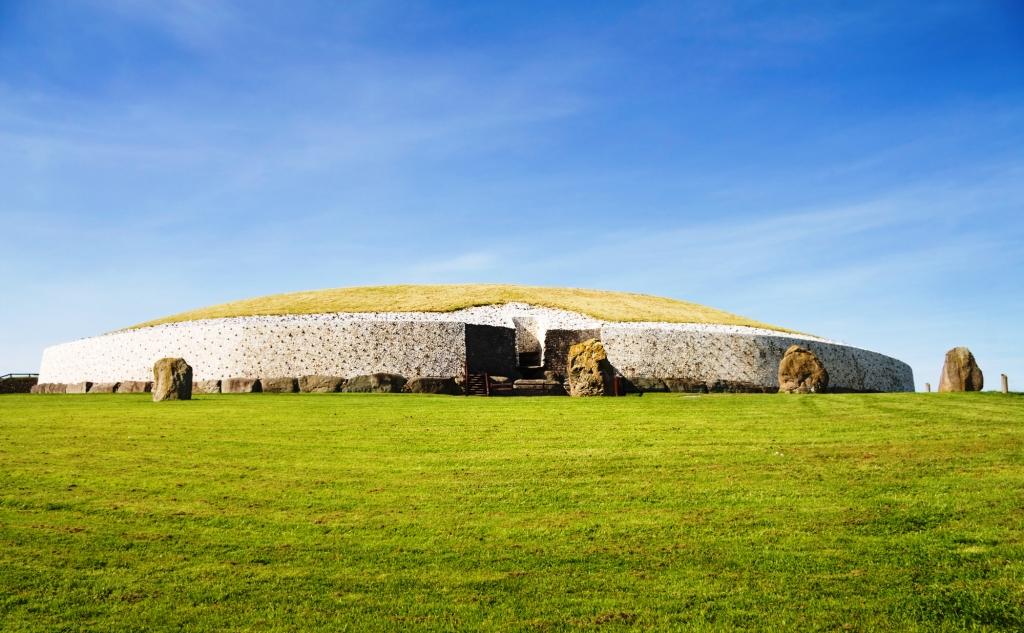
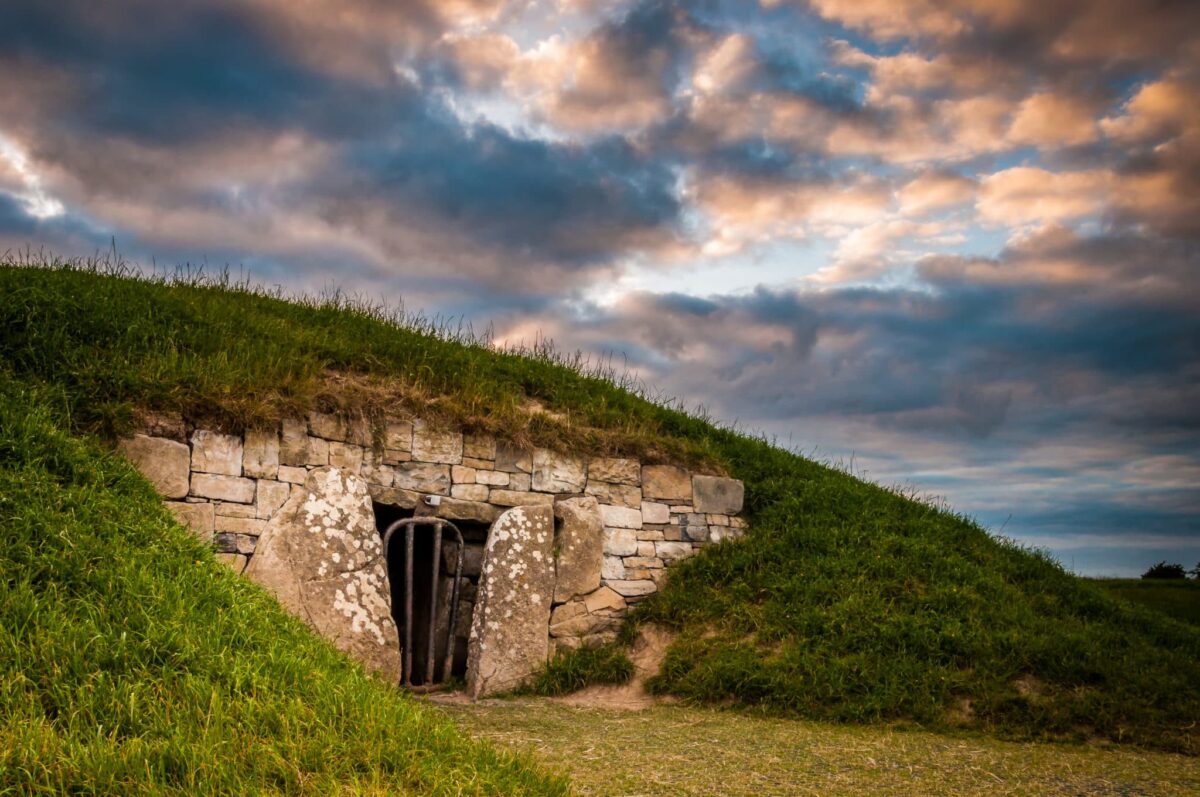
Newgrange (Brú na Bóinne), Co. Meath
Don’t Miss: Book ahead for the solstice lottery (only 60 enter annually).
Mythological Irish horror folklore and Celtic Demons
Irish mythology is rich with various supernatural beings, including demons. While the concept of “demon” in Irish mythology doesn’t always align perfectly with the modern understanding of malevolent supernatural entities, several mythological figures fit within a broader, more flexible definition. Here are some notable examples:
Bean Sídhe (Bean Sídhe)
The woman of death or the banshee in Irish folklore is said to wail and shriek when there will be a death in your family. Others believe that each family in Ireland has its own Banshee.

Púca (Pooka)
Ancient Irish tales tell of the Púca a shape-shifting creature that can be benevolent or malevolent. While not always strictly a demon, the Púca can cause significant harm and chaos. It often appears as a dark horse or goat and enjoys leading travelers astray or causing mischief.
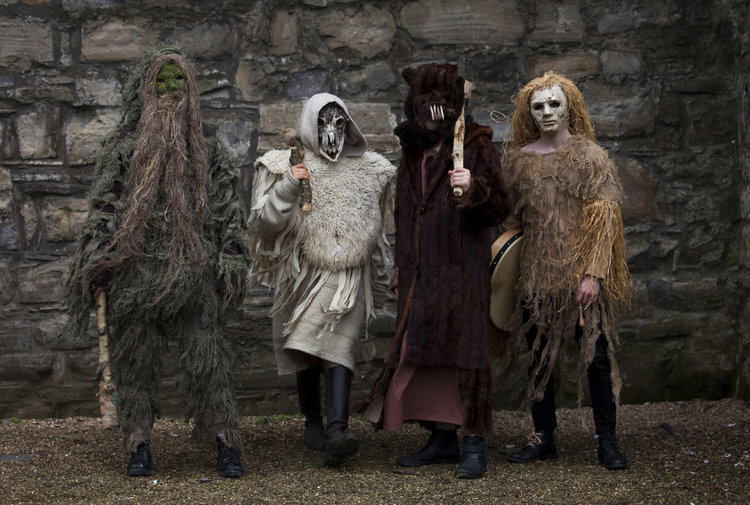
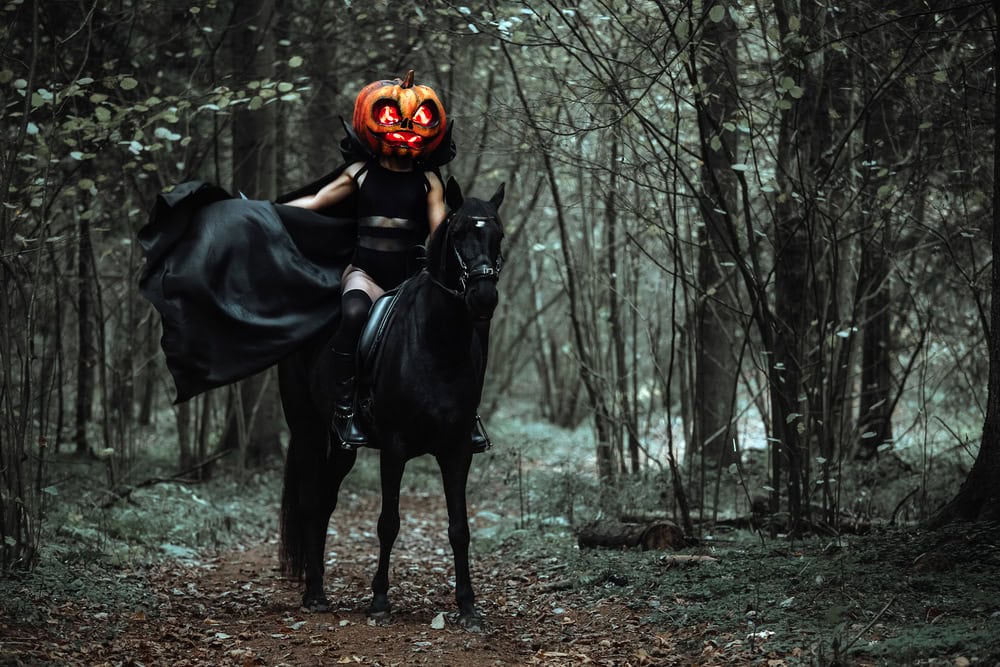
Dullahan (Dark Headless Horseman)
The Dullahan, a headless rider often carrying his head under one arm, is one of the most feared beings in Irish mythology. He is a harbinger of death, riding a black horse and stopping at the house of someone who is about to die. His presence is deeply ominous, and he is considered a dark, demonic force. This myth is also known as the Headless Horseman in the USA.
Sluagh (Host of the Unforgiven Dead)
The Sluagh are restless spirits, often seen as the souls of the damned or unrepentant dead. They are depicted as a swarm of dark, bird-like creatures that travel on the wind, capturing souls and causing mischief. Their presence is feared and associated with malevolence.

Fomoire (The Ancient Evil ones)
Fomoire, in Irish myths and stories are a race of demonic beings who posed a threat to the inhabitants of Ireland until they were defeated by the Tuatha Dé Danann. The name Fomoire may mean “demons from below (the sea),” and their leader Balor had one huge deadly eye.
The Merrow (Irish Mermaids)
Not always evil, but some merrows (mermaids) lure sailors to their deaths with enchanting songs. Male merrows are hideous, while females are stunningly beautiful.

Balor
Balor, the king of the Fomorians, is often considered a demonic figure in Irish mythology. With his evil eye that can kill with a glance, he represents destruction and death. Balor is a formidable enemy of the Tuatha Dé Danann, the other major group of deities in Irish mythology.
Celtic mythology in Ireland
These mythological beings highlight the rich and varied tapestry of Irish folklore, where the lines between gods, spirits, and demons are often blurred. Each creature embodies different aspects of fear, power, and the supernatural, contributing to the complex mythology of Ireland.
The Fir Bolgs
The Fir Bolgs were descended from the Nemedians (originally from Greece) and lived in Greece and when they escaped slavery they stole boats and landed in Ireland, free men and women.

It was in Uisneach, that became the sacred centre of Ireland that the Fir Bolgs divided the country into five provinces. The Fir Bolgs possessed Ireland for thirty-seven years before being defeated by the Tuatha De Danann at the first Battle of Moytura.

As the legends recounted in the Lebor Gabála (Book of Invasions) the Fir Bolgs built Dun Aengus after they sought refuge on the island. They named the fort after their chieftain, Aenghus, King of the Clann Umoir.
Battle of Moytura
The Battle of Moytura (Cath Maige Tuired) is one of the most pivotal conflicts in Irish mythology, pitting the Tuatha Dé Danann against the monstrous Fomorians for control of Ireland. The first battle, Mag Tuired Conga, saw the Tuatha Dé Danann defeat the Fir Bolg, but the more famous Second Battle of Moytura was a cataclysmic clash against the Fomorian forces led by the baleful Balor of the Evil Eye.
The Battle of Moytura took place in two locations in Ireland: the Second Battle occurred on a ridge above Lough Arrow in County Sligo, and the First Battle is said to have taken place near Cong in County Mayo

The Tuatha Dé Danann, guided by the cunning Lugh Lamhfada (Lugh of the Long Arm), triumphed when Lugh slew Balor with a sling-stone through his deadly eye, shattering Fomorian power forever. This victory secured the Tuatha Dé Danann’s rule over Ireland, symbolizing the triumph of skill and order over chaos and brute force. The battle’s aftermath also saw the rise of the Dagda as a wise ruler and the Morrígan’s prophecy of sovereignty, weaving destiny into the land’s mythic history.
Ceasair – the first goddess of Ireland
Ceasair, a mysterious and often overlooked figure in Irish mythology, is regarded by some traditions as the first goddess to set foot in Ireland, predating even the arrival of the Tuatha Dé Danann. According to the Lebor Gabála Érenn (Book of Invasions), she was a granddaughter of the biblical Noah who led a group of women to Ireland to escape the Great Flood—only to perish when the waters finally reached the island.

The Children of Lir
The Children of Lir is one of Ireland’s most haunting legends, blending sorrow, magic, and endurance. When the jealous Aoife, their stepmother, cursed the four children of King Lir, she transformed them into swans, shores of Lough Derravaragh in Co Westmeath, condemning them to wander Ireland’s lakes and seas for 900 years—until the sound of a Christian bell broke the spell.

The Wooing of Etain
The Wooing of Étaín is a captivating Irish myth of love, transformation, and perseverance. The story begins when Midir, a nobleman of the Tuatha Dé Danann, wins the beautiful Étaín as his bride, sparking jealousy in his first wife, Fuamnach, who uses dark sorcery to turn Étaín into a butterfly.

Dream of Aengus
Aengus was the son of the gods, the Dagda and Boann. Boann was the wife of Nechtan at the time and had a secret affair that led to the conception of Aengus. To prevent this secret from getting out, the Dagda cast a spell making the sun stand still for nine months. This meant Aengus was effectively conceived and born within one day.
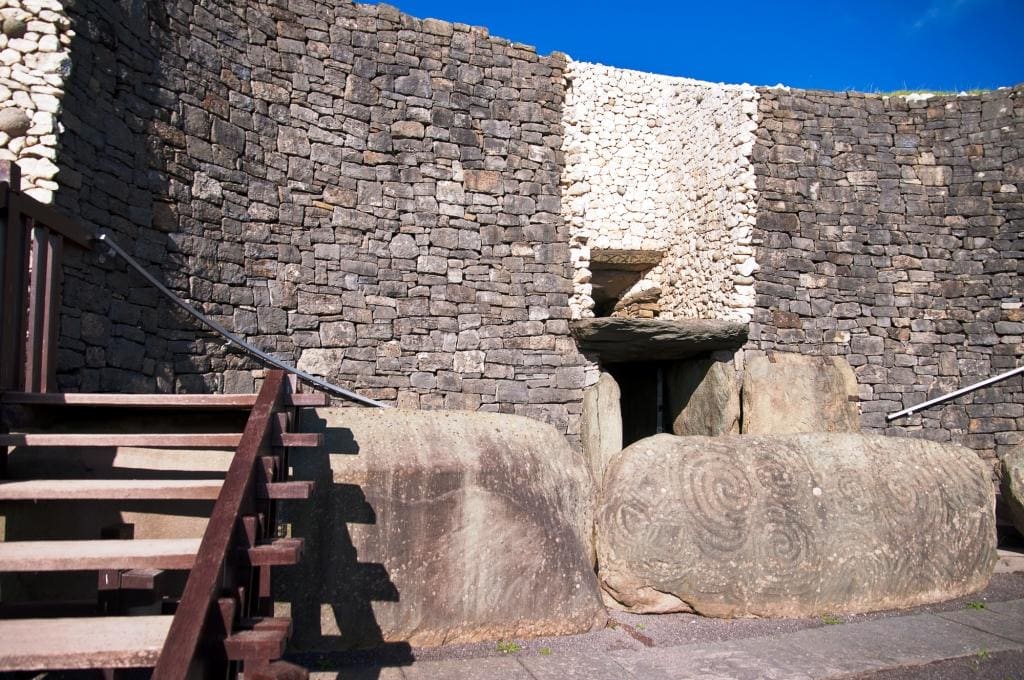
When Aengus grew up and returned home he discovered that The Dagda (his true father) has shared all the land between his 4 brothers who are legitimate leaving nothing for him. Aengus is furious and plays a trick to take away the Dagda’s home of Brú na Bóinn (Newgrange), which is now famous for its passage tombs.
The Ulster Cycle (1st Century BCE–1st Century CE)
Folklorists say the Ulster Cycle took place around the first century and this particular cycle introduces the warriors and battles of Irish folklore.
Archaeology Link: Emain Macha (Navan Fort, Armagh), Cú Chulainn’s legendary home, shows Iron Age ritual activity.
Ulster Cycle: Warrior Trails
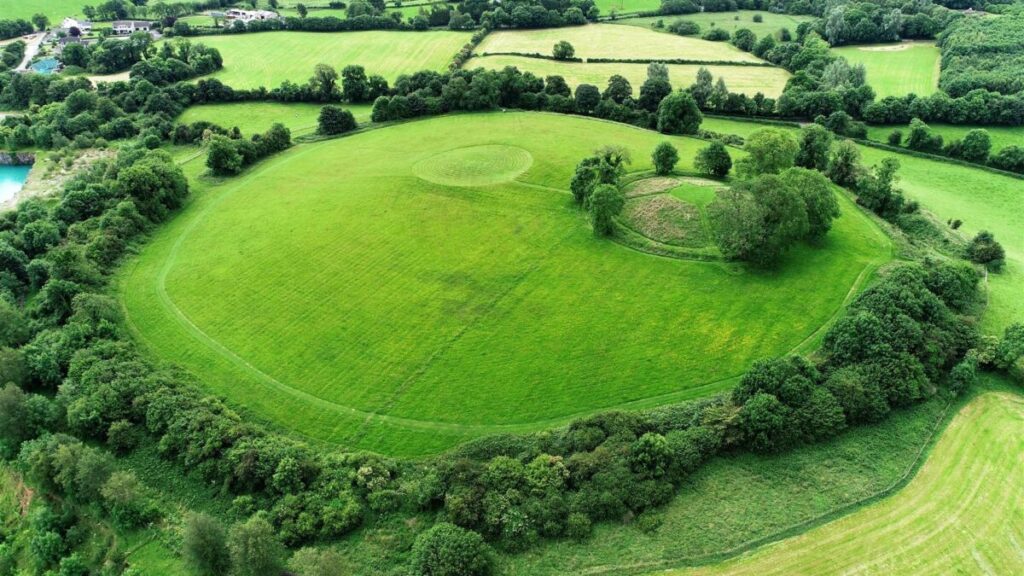
Navan Fort (Emain Macha), Co. Armagh
Cú Chulainn’s HQ: The Red Branch Warriors’ base in the Táin. The 40m-wide Iron Age structure matches mythic descriptions.
Hidden Gem: The nearby Armagh Planetarium has a 3D myth retelling.
The Cooley Peninsula, Co. Louth
Drive the Táin Trail (marked brown signs)
Battlefield of Legend: Where Cú Chulainn single-handedly held off Queen Medb’s army. Stop at Proleek Dolmen – locals say it’s his burial stone.

The Birth of Cu Chulainn
The Birth of Cú Chulainn is a tale of divine prophecy and supernatural destiny. Originally named Sétanta, he was the son of Dechtire, sister of King Conchobar mac Nessa, and possibly the god Lugh of the Tuatha Dé Danann, who appeared in a mystical vision.
As a child, Sétanta displayed extraordinary strength and courage, earning his legendary name Cú Chulainn (“Hound of Culann”) after killing the smith Culann’s ferocious guard dog in self-defence and vowing to take its place as protector. His birth and early feats foreshadowed his fate as Ulster’s greatest hero, marked by tragedy, divine favour, and unmatched warrior prowess. The Morrígan, the phantom queen, was said to have whispered his destiny at his cradle, binding him to a short, glorious, and doomed life. Táin Bó Cúailnge (“Cattle Raid of Cooley”)

The Death of Cu Chulainn
The Death of Cú Chulainn is one of the most tragic and heroic tales in Irish mythology. As Ulster’s greatest warrior, Cú Chulainn faced his end through a web of fate, betrayal, and supernatural forces. When the sorceress Queen Medb of Connacht raised an army against Ulster, she conspired with Cú Chulainn’s enemies—including the vengeful Lughaidh and the witches of the Morrígan—to weaken him. Cú Chulainn’s death marked the fall of Ulster’s golden age, blending heroism, doom, and the inescapable will of the gods.
The Fenian Cycle – Fionn’s Footsteps (3rd–6th Century CE)
The Fenian Cycle of Irish mythology tends to focus on the great warriors of the time. These included the Irish stories of Fionn Mac Cumhaill and Cuchulainn.
Key Texts: Acallam na Senórach (“Colloquy of the Elders”), Fiannaíocht poems
Origins:
Oral tales of Fionn mac Cumhaill likely began late Roman/early Christian era. Written down 12th–15th centuries, blending pagan heroism with monastic edits.
Almu (Hill of Allen, Co. Kildare) Hill of Allen (Almu), Co. Kildare

Fionn’s Fort: The Fianna’s training ground. Little remains, but the views explain why he chose it. This matches Fionn’s fortress in texts and archaeology.
Local Lore: The nearby Bog of Allen hides “Fionn’s missing thumb” (a glacial erratic boulder).
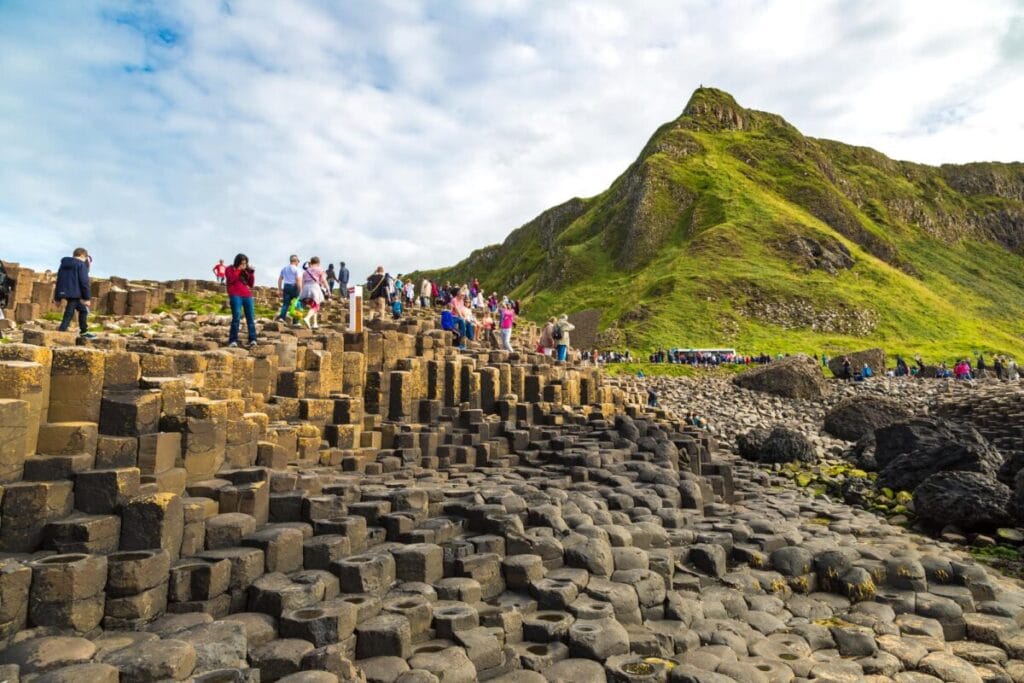
Finn McCool’s Handiwork: The basalt columns “prove” his duel with Scottish giant Benandonner. Check out the Finn McCool’s Footprint rock formation.
The Cattle Raid of Cooley
Oldest Copy: Book of the Dun Cow (c. 1106 CE), housed at the Royal Irish Academy.
Archaeology: Excavations at Navan Fort (Emain Macha) reveal Iron Age weapons matching Táin battle descriptions (Armagh County Museum, 2019).
Finn MacCool and the Salmon of Knowledge
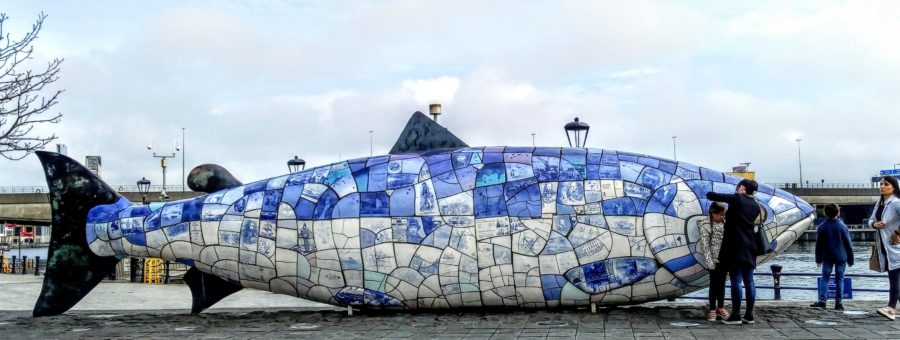
According to Irish legend, the Salmon of Knowledge (Bradán Feasa) held the entire world’s wisdom after eating hazelnuts from the sacred Well of Segais. The poet Finnegas, who spent years trying to catch it, finally succeeded but tasked his young apprentice, Fionn mac Cumhaill (Finn McCool), with cooking it. When Fionn accidentally burned his thumb on the salmon’s juices and sucked it to ease the pain, he absorbed its boundless knowledge.
Legend of the Giant’s Causeway
The Giant’s Causeway is a legendary Irish tale explaining the origin of the striking hexagonal basalt columns along Northern Ireland’s coast. According to myth, the giant Finn McCool (Fionn mac Cumhaill) built the causeway as a bridge to Scotland to challenge his rival, the Scottish giant Benandonner.
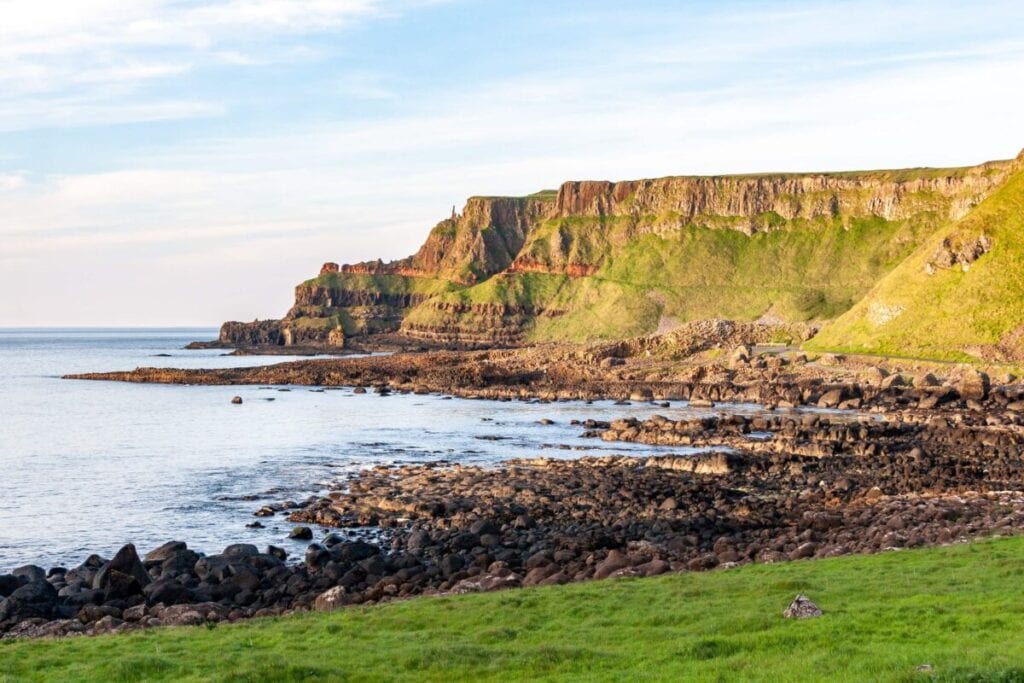
When Benandonner crossed to fight, Finn—realizing his foe was far larger—retreated and was disguised as a baby by his quick-thinking wife, Oonagh. Seeing the “baby,” Benandonner panicked, imagining how enormous Finn must be, and fled back to Scotland, destroying the causeway behind him to escape.
The geological formation on the Antrim Coast (actually 60 million years old) remains a marvel, but the legend keeps the magic alive—blaming giants for nature’s wonders.
The Cattle Raid of Cooley
The Cattle Raid of Cooley (Táin Bó Cúailnge) is the epic centrepiece of Irish mythology, recounting Queen Medb of Connacht’s ruthless invasion of Ulster to steal the legendary brown bull, Donn Cúailnge. When a curse weakens Ulster’s warriors, the teenage hero Cú Chulainn single-handedly holds off Medb’s army through ferocious combat, supernatural feats, and tragic duels with former allies.

The war ends in mutual ruin—Medb secures the bull, but it kills her prized white bull and dies itself, symbolizing the futility of greed and pride. The Táin blends brutal warfare, divine curses, and Cú Chulainn’s heartbreaking heroism, defining Irish lore’s grandeur and tragedy.
The Morrigan and the Oweynagat
The Morrigan is the Celtic Goddess of war a shape-shifting goddess who used her powers to predict and cause the death of warriors.

Oweynagat, or the ‘Cave of the Cats’, is a mystical and archaeologically rich natural limestone fissure located near Rathcroghan, Co. Roscommon, the ancient royal capital of Connacht. More than a mere cave, it is one of Ireland’s most significant mythological sites, described in medieval texts as the Uaimh na gCat, a gateway to the Otherworld.

It was believed to be the abode of the fearsome Morrígan, a goddess of war and sovereignty, and was associated with supernatural creatures and the starting point of the cattle raid of Cooley. Today, its narrow, dark entrance, marked by an Ogham stone, leads into a passage steeped in a potent blend of pre-Christian legend, early medieval history, and enduring folklore, making it a powerful monument to Ireland’s deep cultural landscape.
The Cycles of the Kings – Mixed: 5th–12th Century CE
The historical Cycle of Irish myths tends to date to after Saint Patrick’s arrival in Ireland and is influenced by Christianity. The Irish legends and tales in this cycle centre around the Kings of Ireland and the stories moved from pagan supernatural tales to more actual historical stories.
Key Texts: Baile Chuinn Chétchathaig (“Conn’s Ecstasy”), Buile Shuibhne (“Madness of Sweeney”)
Origins: Mixes pseudo-history (e.g., Tara’s High Kings) with Christian-era propaganda.
Manuscript Evidence: Rawlinson B502 manuscript (12th c.) ties myth to real dynasties like the Uí Néill.
Kings’ Cycle: Royal Sites
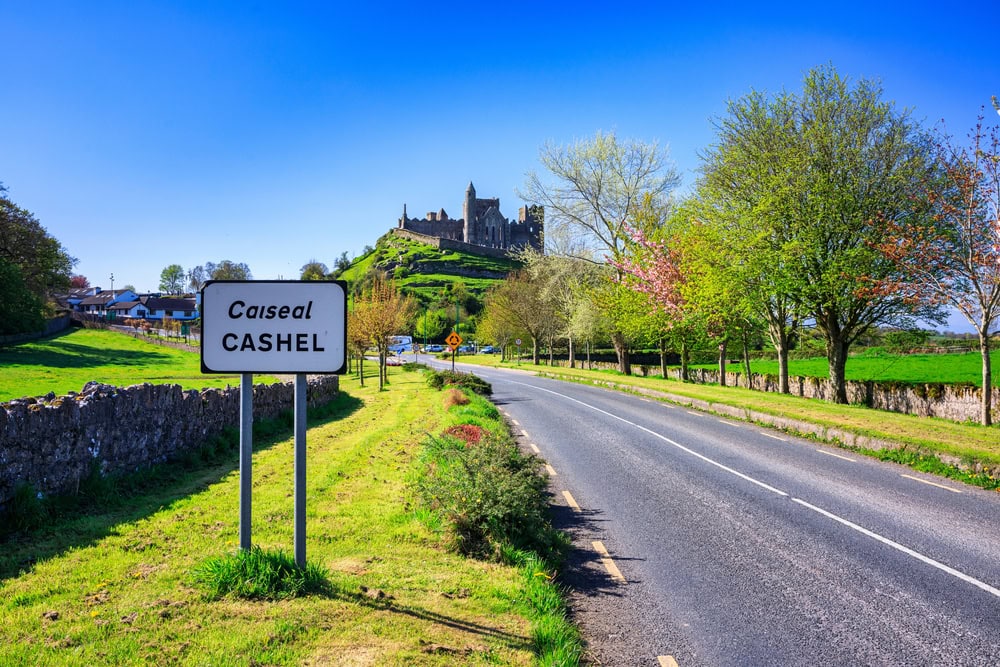
Coronation Spot: Where the Kings of Munster ruled. The Baile Chuinn text calls it “Ireland’s pulse.”
Secret: The round tower’s doorway aligns with the summer solstice sunset.
Tullylagan Hill, Co. Tyrone
Suibhne’s Madness: In Buile Shuibhne, the king flees here as a bird-man. The Gortin Glen Forest Park nearby has a “Sweeney’s View” trail.
Grainne’s cave, Sligo
The cave is one of the highest in Ireland but it is on private property in the cliffs of Annacuna, which are at the back of the Gleniff Horseshoe in Sligo and it is a very dangerous climb. If you are going to try to climb it, make sure you get the owner’s permission. (There is also a Grainne and Diarmuid related Sea Stack on the Loophead Trail.)
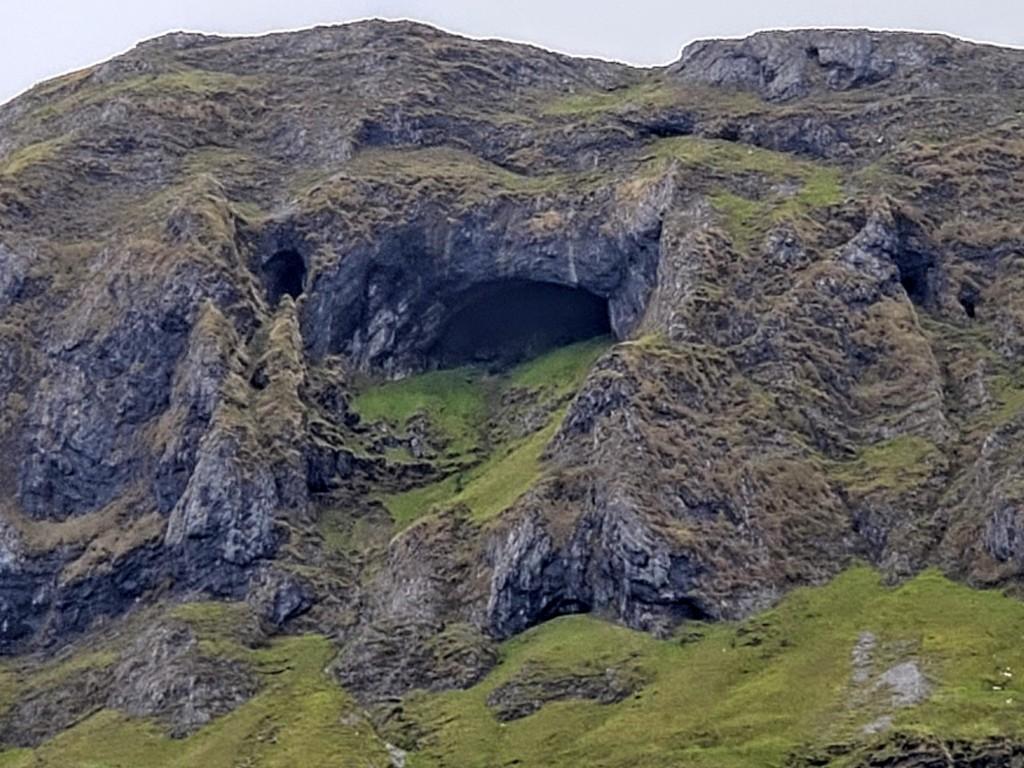
The Pursuit of Diarmuid and Grainne
The Pursuit of Diarmuid and Gráinne is a tragic Irish tale of love, betrayal, and vengeance. When the aging warrior Fionn mac Cumhaill is set to marry young Gráinne, she instead falls for his loyal warrior, Diarmuid. Forced by a geis (magical oath), Diarmuid flees with her, evading Fionn’s wrath for years with the help of the god Aengus Óg. Years later, Fionn pretends to forgive them—but when Diarmuid is mortally wounded by a boar, Fionn refuses to save him, letting his jealousy prevail. Though he relents too late, Diarmuid dies, leaving Gráinne in grief.
Niall of the Nine Hostages
Historians seem to believe that there was a person who lived in roughly the same time period as Niall but that many of the stories and legends surrounding this ancient Irish King have been exaggerated over the years.
Irish myth has it that he was descended from the first high king of Ireland Conn of the Hundred Battles, who may have lived in the middle of the 2nd century. There are no records but it is thought that he fought his way to become King of Tara in the late 4th or early 5th century.
Ruling from Tara, Niall decided that in order to bring peace to Ireland and strengthen his ability to rule that he would take hostages from the provinces. This included the 5 provinces of Ireland (Connaught, Munster, Leinster, Ulster and Meath) and the other four were a Gaul, a Saxon, a Briton and a Scot.
Great Irish Legends and Myths
Tír na nÓg
Tír na nÓg is the land of eternal youth, a paradise that is inhabited by the Tuatha in Irish mythology. The most popular legend about this mythical land is that of Oisin and Niamh.
One day when Oisin was out hunting out of nowhere a beautiful woman on a white horse appeared and told Oisin that she wanted to take him to Tír na nÓg.

Oisin had fallen in love with this beautiful woman and he agreed to travel with her. They spent 3 years in Tír na nÓg but he began to be homesick and it was told that he could visit Ireland as long as his feet never touch Irish soil.
Niamh reluctantly lets him return on her magical horse but when Oisin arrived in Ireland he discovered that 300 years had passed he was so shocked he fell from his horse to the ground. As he touched the ground he instantly aged and died.
Leprechauns: Folk Tale or Ancient Belief?
Leprechauns are the symbol of Ireland and said to roam Ireland before humans arrived and of course to have a pot of gold buried at the end of the rainbow. Leprechauns are a friendly type of fairy but it is said that they cannot be trusted.
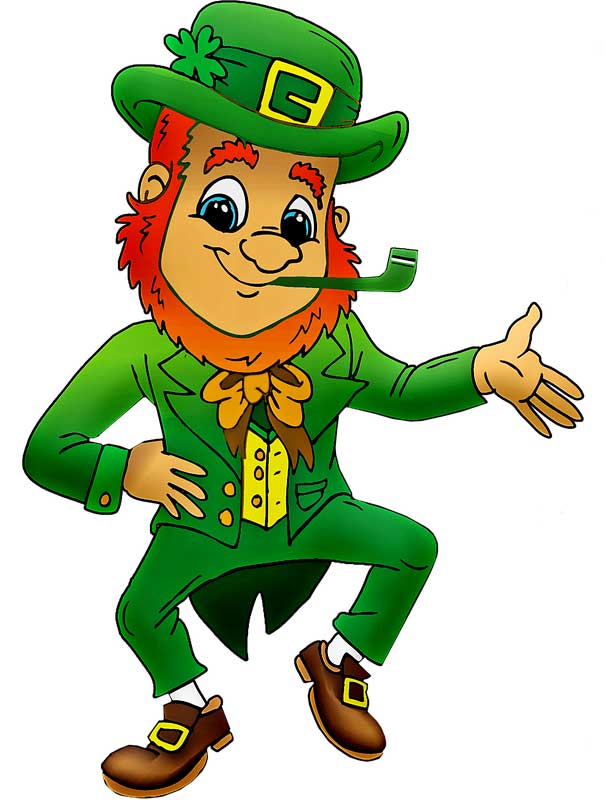
Medieval Texts: Macgnímartha Finn (12th c.) describes lúchorpáin (“small bodies”) as solitary shoemakers.
Archaeology: No physical evidence, but fairy forts (ringed enclosures) dot Ireland (e.g., Rathcroghan, Co. Roscommon).
Irish mythology is a living tapestry of heroism, magic, and dark enchantments—where gods walked the land, heroes defied fate, and creatures like the Dearg Due whispered warnings from the shadows. Whether you walk the Hill of Tara or lose yourself in Lady Gregory’s retellings, these stories remain Ireland’s heartbeat.
Further Reading
For those eager to dive deeper into Irish mythology—from the tragic vampire tale of the Dearg Due to the epic battles of Cú Chulainn—these books offer rich retellings and scholarly insights:
The Táin (trans. Ciaran Carson)
UCD Folklore Collection digital archive link
Irish Folk and Fairy Tales by W.B. Yeats – A lyrical collection of banshees, púcas, and otherworldly beings, including haunting vampire-like figures.
Gods and Fighting Men by Lady Gregory – The definitive English-language retelling of the Tuatha Dé Danann and Fianna cycles, with vivid portrayals of mythic heroes.
Irish Vampire Legends by Bob Curran – Explores the Dearg Due and other blood-drinking entities in Irish folklore, backed by historical accounts.
