
A Move to France: Pros and Cons Every Expat Should Know
Updated: August 20, 2025
Living in France was a dream I thought would never come true. The allure of fresh croissants from village boulangeries, weekend visits to magnificent châteaux, and the promise of a more balanced lifestyle drew me into the dream. Like many expatriates before me, I harboured romantic notions of seamlessly integrating into French society, perhaps renovating a charming countryside property and beginning the Good Life with chickens in the back yard and acres of ground to turn into a glamping business – sorry got carried away there that stuff was never my dream.
The reality of moving abroad to France, as I’ve discovered over three years of expat life through housesitting arrangements across rural France, is far more complex. While the dream elements certainly exist—there truly is nothing quite like a perfectly buttery croissant eaten while overlooking lavender fields (or in my case across from a castle) — the practical challenges of establishing a new home in France can be formidable.

Whether you’re a digital nomad exploring remote work options, someone seeking French citizenship after five years of residence, or a family considering immigration with children’s education in mind, the visa requirements, residence permits, and French tax obligations create layers of complexity that romantic notions rarely address. From navigating work visa applications to understanding retirement visa options, each path to living abroad in France presents unique challenges.
This comprehensive guide draws from my personal journey as a Canadian expat, extensive research into French immigration systems, and conversations with fellow expats who’ve navigated everything from securing rental properties to enrolling children in French schools. Whether you’re considering a temporary adventure with a student visa or planning permanent relocation, understanding both the enchanting possibilities and practical realities will help you make an informed decision about whether France aligns with your life goals.

- A Move to France: Pros and Cons Every Expat Should Know
- Move to France my French Journey
- The Biggest Cons of Living in France
- 1. The Language Barrier is Real and Challenging
- 2. Cost of Living Can Be Shocking
- 3. Healthcare System: Great in Theory, Frustrating in Practice
- 4. Doctor Shortage Crisis
- 5. Driving Challenges: Priorité à Droite
- 6. Banking Bureaucracy Nightmare
- 7. Employment Challenges for Non-French Speakers
- 8. Visa Renewal and Residence Permit Complexities
- 9. French Tax System Complexity
- 9. Strike Culture Disruption
- 10. Limited Public Transportation Outside Major Cities
- 11. Housing Market Complications
- 12. Time-Consuming Administrative Processes
- 13. The Sacred Lunch Hour Shutdown
- 14. Digital Banking and Investment Limitations
- 15. Integration Challenges after Initial Honeymoon Period
- 16. Don’t bring your electrical items from the USA or North America
- 17. Shopping in France
- The 13 Major Pros of Living in France
- 1. Exceptional Work-Life Balance
- 2. World-Class Healthcare (Once You're In)
- 3. Affordable Higher Education
- 4. Rich Historical and Cultural Heritage
- 5. Stunning Natural Diversity
- 6. Food and Wine Culture
- 7. Strong Job Security
- 8. Central European Location
- 9. Excellent Transportation Infrastructure
- 10. Strong Social Safety Net
- 11. Cultural Sophistication and Arts
- 12. Path to European Citizenship
- 13. Digital Connectivity and Remote Work Potential
- Housing in France: Renting vs. Buying
- Education Structure
- Practical FAQs for Future Expats
- Final Verdict: Is France Right for You?
Move to France my French Journey
I moved to France from Ireland (I have dual Canadian and Irish citizenship) during the pandemic and spent three years navigating life as an expat here. My biggest ongoing challenge? Learning French. As a Canadian, you might think I learned French in school—after all, it’s our second official language. But the reality of daily French communication is vastly different from high school lessons.
The fantasy many North Americans and Britons harbor about “living the good life” in France often clashes with reality. While shows about château renovations paint an idyllic picture, the truth involves hidden costs, language barriers, complex bureaucracy, and a high cost of living that can quickly turn dreams into stress.
Note: This guide reflects personal experiences primarily in rural Mayenne and Brittany. Urban experiences, particularly in Paris, Lyon, or Marseille, or the French Riviera may differ significantly.

The Biggest Cons of Living in France
1. The Language Barrier is Real and Challenging
Communication without French ranges from difficult to nearly impossible, especially in rural areas. While expat communities exist in regions like Brittany, Normandy, and the Dordogne, true integration requires French fluency.
I’ve encountered both incredibly helpful locals in Lassay-les-Châteaux who patiently help with my language skills, and dismissive individuals who openly show disdain for English-speaking foreigners. The historical tension between the French and British still surfaces in many areas.
Tip: Start learning French before you arrive. Consider intensive courses or language exchange programs once you’re there.

2. Cost of Living Can Be Shocking
According to INSEE (National Institute of Statistics), France ranks among Europe’s more expensive countries, particularly for housing and transportation.
Key Cost Factors:
- Housing: Rental prices in desirable areas can consume 40-50% of income
- Groceries: Expect 20-30% higher costs than North America
- Transportation: Fuel prices averaging €1.60-€1.80 per liter (as of 2025)
- Taxes: Combined income and social charges can reach 45-60% for middle-income earners
Source: Service-Public.fr – Official French government information
3. Healthcare System: Great in Theory, Frustrating in Practice
France’s healthcare system ranks highly internationally, but accessing it as a new resident involves significant bureaucracy. You must live in France for three months before qualifying for universal coverage through CPAM (Caisse Primaire d’Assurance Maladie).

My Experience: It took three years to receive my Carte Vitale (health insurance card), partly because CPAM required legal documentation proving my name change from Helen Faith to Faith Helen—even though all my official documents use Faith.
Important: Use your maiden name for all French healthcare documentation. The system operates on birth certificate names, regardless of your current legal name.
Source: Ameli.fr – Official French health insurance website
4. Doctor Shortage Crisis
France faces a severe physician shortage, particularly in rural areas. Finding a médecin traitant (family doctor) often involves year-long waiting lists. Don’t expect your doctor to arrange specialist appointments—that’s your responsibility.

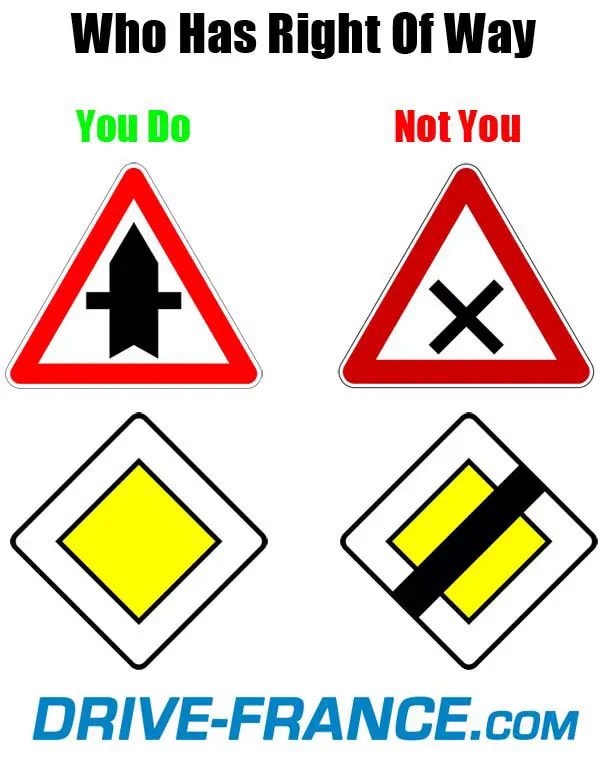
5. Driving Challenges: Priorité à Droite
While the French drive on the right (not left, as incorrectly stated in many guides), rural driving presents unique challenges. The ancient “priorité à droite” rule gives right-of-way to vehicles entering from the right, even on major roads—a rule dating from horse-and-cart days that still applies.
Critical Safety Tip: Watch for priorité à droite signs, especially in rural areas, and always check roads to your right.
Source: Code de la Route – Official French driving regulations
6. Banking Bureaucracy Nightmare
Opening a French bank account requires extensive documentation and can take months. You’ll need:
- Valid passport or EU ID
- Proof of address (rental contract/utility bill)
- Proof of residence status (visa/titre de séjour for non-EU citizens)
- Sometimes several months of rent paid upfront
7. Employment Challenges for Non-French Speakers
While France’s employment laws provide excellent worker protections—35-hour work weeks, 25+ vacation days, strong job security—finding employment without fluent French remains extremely difficult outside major international companies.
8. Visa Renewal and Residence Permit Complexities
Visa renewals must begin six months before expiration, yet new residence permits often arrive three months late, leaving you temporarily unable to leave the country during the process. This cycle repeats every renewal period, whether you hold a work visa, student visa, or are pursuing the path to French citizenship.

For digital nomads, France doesn’t yet offer a dedicated digital nomad visa like Portugal or Estonia, making long-term remote work arrangements challenging. Those seeking the retirement visa option face additional documentation requirements.
Source: Official France Visa Information
9. French Tax System Complexity
French tax obligations begin immediately upon establishing residence, regardless of your visa type. The system includes:
- Income tax (up to 45% for high earners)
- Social charges (approximately 17.2% on investment income)
- Wealth tax on assets exceeding €1.3 million
- Complications with maintaining brokerage accounts and investments from the United States or other countries
Many expats discover their foreign financial institutions close accounts once French residence is established due to compliance complexities.
Source: Direction Générale des Finances Publiques
9. Strike Culture Disruption
French strike culture can severely disrupt daily life. Transportation strikes, in particular, can ground flights and halt trains with little warning, making travel planning challenging—especially problematic for digital nomads who need reliable connectivity for work.

10. Limited Public Transportation Outside Major Cities
Despite France’s reputation for excellent trains, traveling between smaller cities can take all day. The TGV network serves major routes well, but regional connections often require multiple transfers and lengthy journeys.
11. Housing Market Complications
France lacks a centralized MLS (Multiple Listing Service), requiring you to work with multiple real estate agents. Many rural properties are in poor condition, as French buyers typically prefer newer constructions over renovation projects.
Renovation Reality: Expect extremely high costs and very limited availability of quality materials and fittings. Most expats we knew who bought a fixer upper spent double what the building cost and travelled to England to get supplies like decent paint and tiles. Many old French houses have very minimal electrical, a septic system that will need replacing and no heating.

12. Time-Consuming Administrative Processes
Simple tasks that take minutes in other countries can require hours or days in France. From changing your address to transferring utilities, administrative processes often involve multiple office visits and extensive paperwork—a particular challenge during your first years before obtaining permanent residence.
13. The Sacred Lunch Hour Shutdown
Nearly everything closes from 12:00-14:00 daily, including tourist attractions and shops. This work-life balance priority, while culturally important, can frustrate expats used to continuous business hours.

14. Digital Banking and Investment Limitations
Many international banks close accounts once you establish French residence. Opening new brokerage accounts in France often requires significant minimum deposits and offers limited investment options compared to United States markets.
15. Integration Challenges after Initial Honeymoon Period
The novelty of living abroad wears off after the first year, revealing deeper cultural differences in communication styles, social expectations, and professional relationships that require ongoing adaptation over time.
16. Don’t bring your electrical items from the USA or North America
In a spectacularly expensive miscalculation, a woman named Susan, owned an American luxury Range/Oven that she wanted shipped to France. Susan embarked on the financially and logistically absurd quest to ship the behemoth from Texas to her charmingly petite Parisian kitchen.
After navigating a gauntlet of customs brokers, freight forwarders, and exorbitant import taxes, her triumph was brutally short-lived. The moment she tried to plug in her culinary prize, she was met with a pathetic hum and the cold reality of her folly: a 120-volt appliance staring down a 230-volt European outlet. The internal electronics were instantly fried, rendering the $12,000 stove a monolithic, 1500-pound paperweight, a permanent monument to the staggering stupidity of ignoring fundamental electrical incompatibility and the existence of perfectly good, voltage-appropriate appliances already available on the continent.
17. Shopping in France
Shopping in France offers a brutal cultural lesson for those accustomed to North American and British shops, chiefly because the very concept of ‘customer service’ has no true French translation—it is a phantom, a foreign notion as mythical as a friendly smile in a Parisian boutique.
Venture outside the curated luxury of the capital’s grand magasins, and you’ll find that fashion, much like the patience of a shopkeeper, has often died a quiet death, leaving behind a landscape of dated, practical garments that suggest the nation’s legendary chic is a resource hoarded exclusively by the urban elite.
The 13 Major Pros of Living in France
1. Exceptional Work-Life Balance
France truly operates on “work to live” rather than “live to work.” The 35-hour work week remains standard, with generous vacation policies and strong worker protections.
Benefits:
- Minimum 25 paid vacation days annually
- Legal right to disconnect from work communications
- Extensive parental leave policies
- Protected lunch breaks
2. World-Class Healthcare (Once You’re In)
Despite access challenges, French healthcare quality ranks among the world’s best. Universal coverage provides 70-100% reimbursement depending on treatment type.

Special Benefits:
- ALD (Affection de Longue Durée) provides 100% coverage for chronic conditions
- Prescription costs remain reasonable compared to North America
- No medical bankruptcy concerns
Source: World Health Organization Healthcare Rankings
3. Affordable Higher Education
French public universities offer exceptional value for international students:
2025 Tuition Fees:
- Bachelor’s level: €2,770/year
- Master’s level: €3,770/year
- Doctoral level: €380/year
- EU residents pay significantly less (€170-€601/year)
Source: Campus France – Official agency for international student mobility

4. Rich Historical and Cultural Heritage
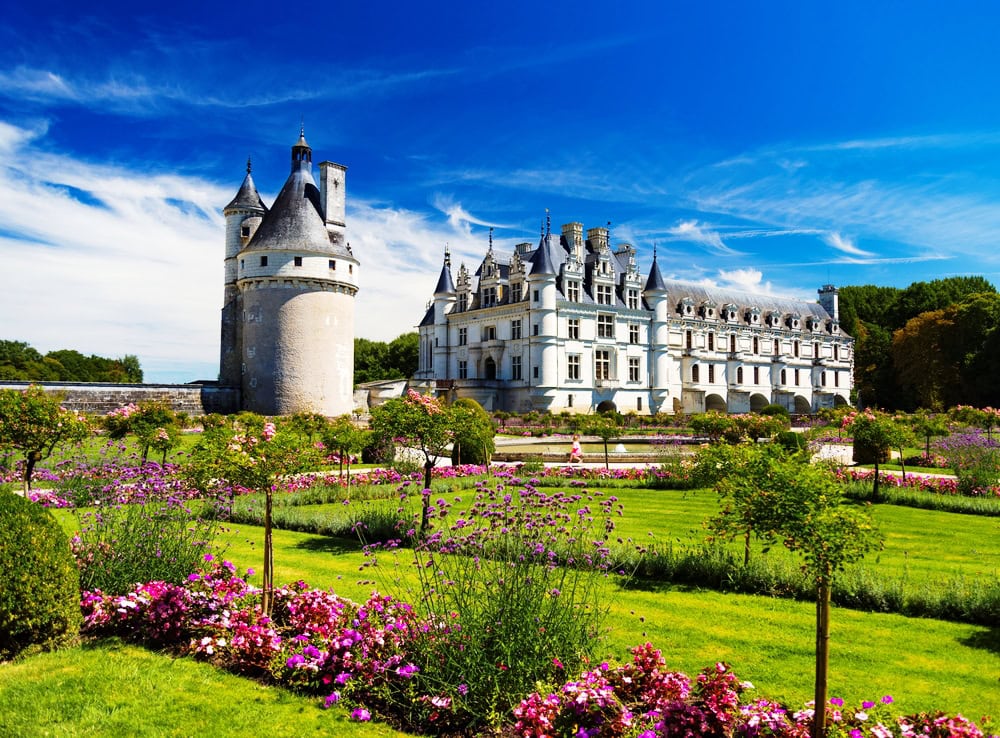
Living surrounded by centuries of history creates daily wonder. Medieval villages, Gothic cathedrals, Renaissance châteaux, and world-class museums offer endless exploration opportunities.
Cost Advantage: Unlike many countries, French historical sites remain remarkably affordable, with most cathedrals and churches free to visit. However you should be aware that many of the historical sites you may want to visit are closed between 12 and 2 for lunch.
5. Stunning Natural Diversity
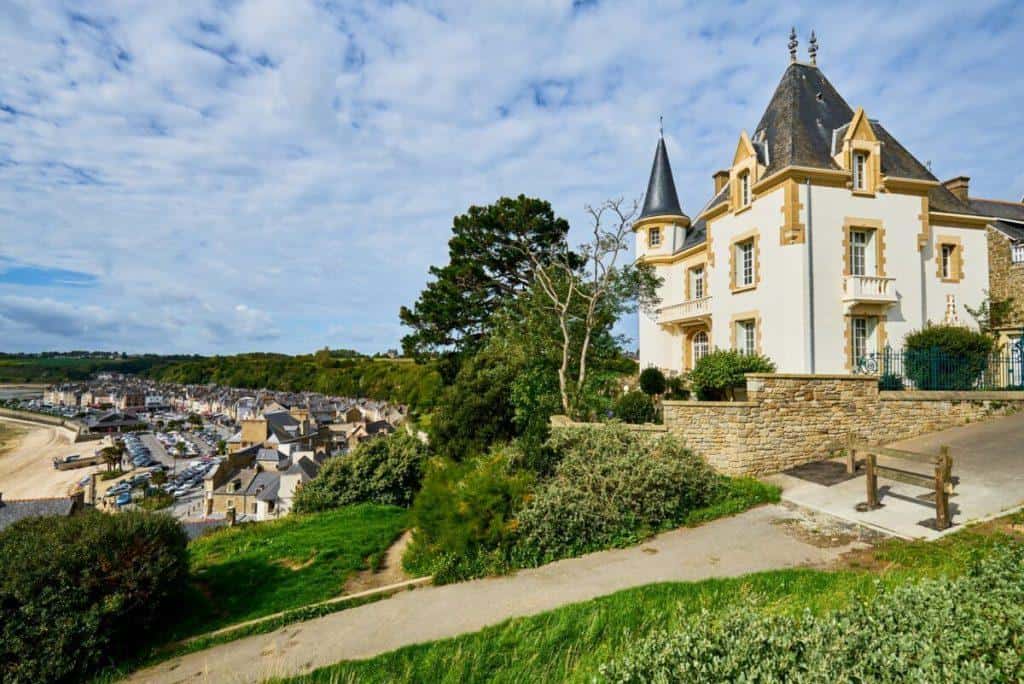
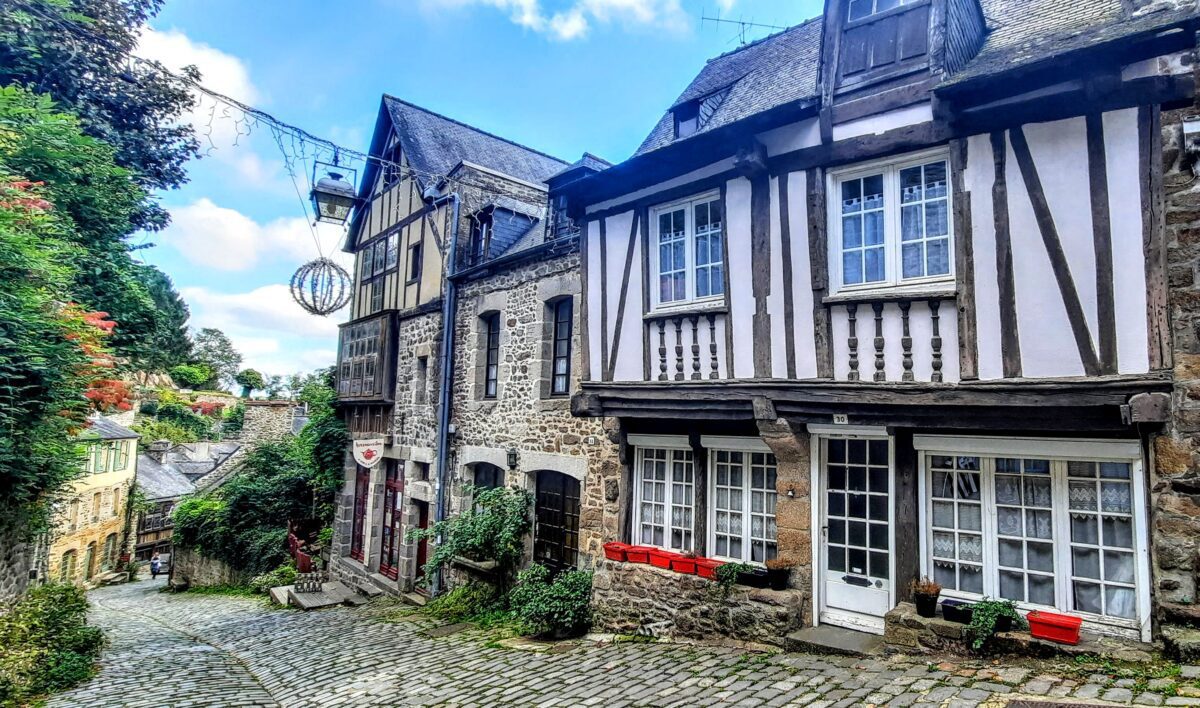
From Provence’s lavender fields to the French Riviera’s beaches, the Alps’ peaks to Brittany’s rugged coastline, the Normandy beaches and amazing medieval places like Dinan and Josselin, France offers incredible landscape variety within relatively small distances.
6. Food and Wine Culture
While not every meal reaches gourmet heights, France’s commitment to food quality, local markets, and culinary tradition creates a genuinely different relationship with eating and drinking.

Reality Check: Rural areas may have limited restaurant options, and local grocery stores can have incredibly rotten products on the vegetable bins, but local boulangeries and marchés (markets) maintain high standards.
It is also very difficult for foodies to wander or live in rural France as everything is very seasonal and most French people grow their own vegetables. As an example unless it was spring time green onions were not found anywhere in our rural area.

7. Strong Job Security
French employment contracts heavily favour workers. Permanent contracts (CDI) provide exceptional job security, making arbitrary dismissal nearly impossible.
8. Central European Location
France’s position makes European travel incredibly accessible. Weekend trips to Italy, Spain, Germany, or the UK become routine possibilities.

9. Excellent Transportation Infrastructure
While regional connections can be slow, France’s TGV network and highway system provide efficient long-distance travel within the country.
10. Strong Social Safety Net
France’s extensive social programs provide security through unemployment benefits, family allowances, housing assistance, and retirement pensions.
11. Cultural Sophistication and Arts
Living in France means daily exposure to architectural beauty, artistic heritage, and cultural events that many tourists only glimpse briefly.

12. Path to European Citizenship
After five years of legal residence, you can apply for French citizenship, providing EU passport benefits and unrestricted access to 27 European countries—invaluable for those committed to long-term European living.
13. Digital Connectivity and Remote Work Potential
While France lacks a dedicated digital nomad visa, its excellent internet infrastructure and central European location make it attractive for remote workers who can secure proper work authorization.
Housing in France: Renting vs. Buying
Renting Property in France
The rental market in France operates differently from many countries, with extensive tenant protections but complex requirements for securing housing.
Required Documentation:
- Photo ID (passport, residence permit, driver’s license)
- Last three rent receipts or proof of current address
- Employment contract or proof of employment status
- Three most recent pay slips (or two years of accounts if self-employed)
- Most recent French tax notice (once available)
- Guarantor information (often required for expats)
Rental Market Reality: Landlords often request 2-3 months’ rent as deposit, plus first month’s rent in advance. Competition for desirable properties is intense, particularly in cities like Paris, Lyon, and Nice.

Expat Challenges:
- Limited rental history in France disadvantages new arrivals
- Guarantor requirements often necessitate French residents or significant additional deposits
- Lease terms typically favour long-term tenancy (minimum one year)
Buying Property in France
French property purchase offers more stability but involves complex procedures and significant costs beyond the purchase price.
Financing Options:
- French banks offer mortgages to both residents and non-residents
- Typical deposit requirements: 20-25% of purchase price
- Self-employed individuals need three years of audited accounts
- Age restrictions apply (difficulty obtaining mortgages over 65)
Additional Costs to Consider:
- Notary fees: 7-8% of property value for older properties, 2-3% for new builds
- Property taxes (taxe foncière): varies by location but typically €800-€2,000 annually
- Ongoing maintenance: Budget 1-2% of property value annually
My Observation: Many expats discover that paying cash provides significant advantages in negotiations and eliminates financing complexities. Rural properties often require extensive renovation, with costs potentially exceeding purchase prices.
Property Types:
- Rural properties: Often charming but may lack modern amenities
- Village houses: Better services but limited availability
- New constructions: Higher prices but lower maintenance
- Apartments: Common in cities, subject to copropriété (building management) fees
Sources: FNAIM – National Federation of Real Estate Professionals, Notaires de France
French Education System: Schools for Expat Children
Public School System (École Publique)
France’s public education system is highly regarded internationally and free for all resident children, regardless of nationality or visa status. However, I heard many stories of terrible school experiences from expat children who were essentially ignore and bullied by teachers in the public school system – this may have been a rural instead of a city area though.
Education Structure
- École maternelle (ages 3-6): Nursery/pre-school, optional but recommended
- École élémentaire (ages 6-11): Primary school, compulsory
- Collège (ages 11-15): Middle school, leads to Diplôme National du Brevet
- Lycée (ages 15-18): High school, leads to Baccalauréat
Language Integration: Most expat children adapt to French instruction within 6-12 months, though initial support varies by school. Some regions offer specific integration programs (CASNAV) for non-French speakers.

Private and International Schools
Private Catholic Schools: Common alternative offering similar curriculum with potentially smaller class sizes and more individualized attention.
International Schools: Available in major cities, offering instruction in English or bilingual programs:
- Higher costs (€10,000-€25,000 annually)
- Limited locations outside major metropolitan areas
- Often maintain curriculum standards from students’ home countries
Homeschooling (Instruction en Famille)
Legal in France but strictly regulated since 2021 reforms. Requires annual authorization and regular inspections. Many expat families choose this option temporarily while children adjust to French language requirements.
Key Considerations for Expat Families:
- School supplies: Specific lists provided by schools, often expensive
- School calendar: Different from many countries (long summer break, frequent two-week holidays)
- Extracurricular activities: Often organized through separate associations rather than schools
- University preparation: French baccalauréat system differs significantly from other national systems
My Advice: Research your local school options before moving. Rural areas may have limited choices, while cities offer more variety. Consider your children’s ages—younger children typically adapt more easily to French instruction.
Sources: Ministère de l’Éducation Nationale, AEFE – Agency for French Education Abroad
Practical FAQs for Future Expats
Do I need to speak French to live in France?
Short answer: Yes, especially outside major international cities. While expat communities exist, basic French is essential for healthcare, bureaucracy, shopping, and social integration. Even simple interactions like grocery shopping or visiting the post office become challenging without basic French skills.

What’s expat life really like in France?
Honest reality: It can be rewarding but exhausting. Expect a steep learning curve with bureaucracy, genuine cultural differences in communication styles, and periods of frustration.
How expensive is it actually?
Regional variation matters enormously: Paris rivals London or New York for costs. Rural areas offer better value but with trade-offs in services and employment opportunities. Budget 20-30% more than similar North American locations for most expenses.
Is the healthcare really that good?
Quality vs. Access: Once you’re established in the system, healthcare quality and coverage are excellent. The challenge lies in initial access, finding doctors (especially specialists), and navigating the administrative requirements. We did find an English speaking Doctor but many folks we know in France have had terrible experiences with Doctors who refuse to speak English even when they can.
What visa options exist for different situations?
Visa options depend on your circumstances:
- Work visa: Requires job offer from French employer
- Student visa: For enrolled university students, can lead to post-graduation work opportunities
- Retirement visa: For those with sufficient passive income (no official minimum, but approximately €1,500/month recommended)
- Family reunification: For spouses/children of French residents or citizens
- Investor visa: For those making significant business investments
Important: France doesn’t currently offer a dedicated digital nomad visa, making remote work arrangements challenging for non-EU citizens. After five years of legal residence, you can apply for French citizenship and EU passport benefits.
How do taxes work for expats in France?
French tax obligations begin once you establish residence (generally after 183 days annually in France). The system is complex:
- Income tax: Progressive rates up to 45%
- Social charges: 17.2% on investment income
- Wealth tax: On assets exceeding €1.3 million
Critical issue: Many brokerage accounts and banks in the United States and other countries close accounts once French residence is established due to compliance requirements.
Final Verdict: Is France Right for You?
After three years of French living, I can honestly say that moving abroad to France has been the most frustrating experience of my life. The bureaucratic nightmares are real—establishing basic services takes months, not weeks. The time invested in learning systems, language, and cultural nuances is substantial.
However, the quality of life, cultural richness, and daily beauty of French living create compensation that many expats find worthwhile. Weekend visits to medieval villages, casual wine tastings, and the simple pleasure of a perfectly executed morning croissant become part of your routine rather than special occasions.

For Digital Nomads: France’s lack of a dedicated digital nomad visa and complex tax obligations make it challenging for short-term remote workers. However, those who can navigate the visa requirements often find the infrastructure and location ideal.
For Families: The excellent education system and family-friendly policies make France attractive for those moving abroad with children, though the adjustment period requires patience and commitment.
For Retirement: The retirement visa option, combined with excellent healthcare and quality of life, appeals to many, though the bureaucracy and French tax obligations require careful financial planning particularly if your country of origin (as in the USA) has dual taxation.

Timeline Expectations: The first few years involve constant learning and occasional frustration. Year three or four may bring competence and comfort. Those who stay five years often pursue French citizenship and permanent European status.
My Recommendation: Come with realistic expectations, solid financial resources (budget significantly more than your research suggests), and genuine commitment to learning French and embracing French systems.
The decision ultimately depends on what you value most: efficiency and familiarity, or cultural immersion and lifestyle quality.

Important Note: Every expat journey is unique. Connect with other immigrants in your target area, read recent posts from expat communities, and visit extensively before making permanent moving decisions. Immigration is a major life change that affects every aspect of daily living, from finances to relationships to career prospects.
France offers extraordinary opportunities for those prepared to invest the time and effort required. Whether it’s right for you depends on your personal tolerance for complexity, commitment to cultural adaptation, and long-term life goals.

For anyone dreaming of moving to France, the country offers a stunning array of lifestyles beyond the romantic Paris postcards. Imagine trading bustling boulevards for the sun-drenched pleasures of the South of France, where the air is perfumedd by sprawling lavender fields and the Italian border charm of Menton.

History enthusiasts can lose themselves in the half-timbered charm of medieval towns like Rouen in Normandy, while the rugged coastlines and Celtic heritage of Brittany in places like Dinan and Josselin provide a dramatic contrast. And no matter which region you choose, your days will be enriched by the unparalleled joy of exploring local markets for exquisite French Cheese and savoring the simple perfection of French food at every turn.
Disclaimer: This guide reflects personal experiences and should not be considered legal or financial advice. Always consult official sources and professionals for visa, healthcare, and legal matters.
Sources and Further Reading:
- Service-Public.fr – Official French government information
- INSEE – French National Statistics
- AMELI – French Health Insurance
- France-Visas – Official visa information
- Campus France – International student information