
Best 14 Days Itinerary for Ireland and Scotland Itinerary
| A 14-day Ireland and Scotland itinerary works best starting in Dublin, driving south and west through Kerry and Galway, then flying to Edinburgh and exploring the Highlands. You need two currencies (euros in Ireland, sterling in Scotland), a car for rural areas, and flights booked between the two countries in advance. No visa is required EU passport holders. |

Planning an Ireland and Scotland itinerary is one of the most rewarding travel challenges you can take on and one of the most common sources of stress for first-time visitors. Two countries, two currencies, unpredictable weather, and a genuinely astonishing number of things to see. The pitfalls are real, but they are all avoidable if you know what you are doing.
Most visitors from North America have a maximum of two weeks. That is enough time to do both countries justice if you plan the route carefully and resist the urge to cram in too much. I have been guiding visitors around Ireland for years, and the single biggest mistake I see is underestimating travel time and overloading the itinerary.
This guide gives you a practical, day-by-day 14-day Ireland and Scotland itinerary built around real travel times, genuine recommendations, and the knowledge that comes from living here. If you want the full background on timing your trip, read my companion guide on the best time to visit Scotland and Ireland first.
| Ireland welcomes over 11 million overseas visitors each year (Failte Ireland). Scotland attracts approximately 3.5 million international tourists annually (VisitScotland). The Edinburgh Festival Fringe is the world’s largest arts festival, with over 3 million attendances across August. Newgrange in County Meath predates Stonehenge by approximately 500 years and has held UNESCO World Heritage status since 1993. |
- Best 14 Days Itinerary for Ireland and Scotland Itinerary
- Before You Book: What You Need to Know About This Ireland and Scotland Itinerary
- Your 14-Day Ireland and Scotland Itinerary at a Glance
- How to Plan This Itinerary: Step by Step
- Ireland: Days 1 to 7
- Scotland: Days 8 to 14
- Organised Tours: If You Prefer Not to Drive
- Accessible Travel in Ireland and Scotland: A Destination-by-Destination Guide
- Frequently Asked Questions: Ireland and Scotland Itinerary
- Your Ireland and Scotland Itinerary
Before You Book: What You Need to Know About This Ireland and Scotland Itinerary
Two Countries, Two Currencies
Scotland uses pound sterling. Ireland uses the euro. These are two entirely separate currency systems and you need both. Let your bank know you are travelling to both countries before you leave. Credit and debit cards work almost everywhere, but carry a small amount of cash in each currency for rural areas, markets, and the occasional car park that does not take cards. American Express is less widely accepted than Visa or Mastercard in both countries.
Passports and Visas
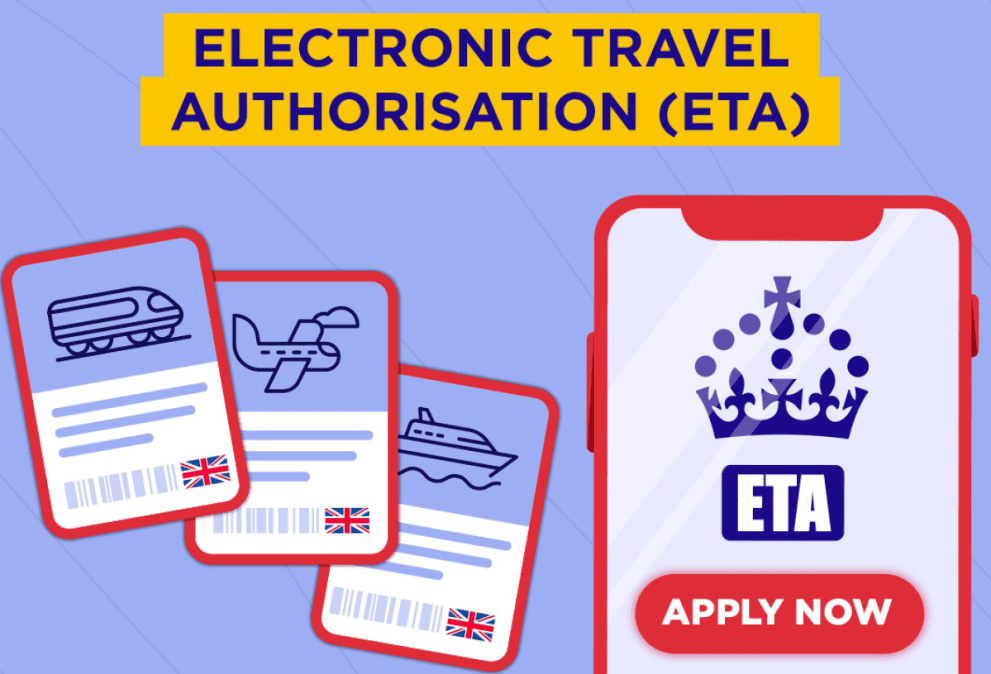
With a US, Canadian, or Australian passport you can spend up to 90 days in each country without a visa. For a two-week trip you are well within that limit. EU passport holders can travel freely between Ireland (an EU member) and Scotland (which is part of the UK post-Brexit) but may need to show their passport at the border crossing, depending on which route you take. The UK’s new Electronic Travel Authorization (ETA) requires visitors from non-European countries to secure pre-travel permission online before entering the United Kingdom.

Driving in Ireland and Scotland
Both countries drive on the left. If you are coming from North America or continental Europe this takes adjustment allow yourself a day to settle into it before attempting rural roads. Renting a car in Ireland can be expensive: always check whether your credit card or existing travel insurance covers rental vehicles, as the additional collision damage waiver can add significantly to your bill. I have consistently recommended My Irish Cousin to visitors they deliver the car directly to you and allow you to drop it at various airports around Ireland, which saves considerable hassle.
Roads in rural Ireland and the Scottish Highlands are frequently single-track with passing places. Budget more time than Google Maps suggests. On the Ring of Kerry or the roads of Skye, what looks like 20 minutes can take 45.

Getting Between Ireland and Scotland
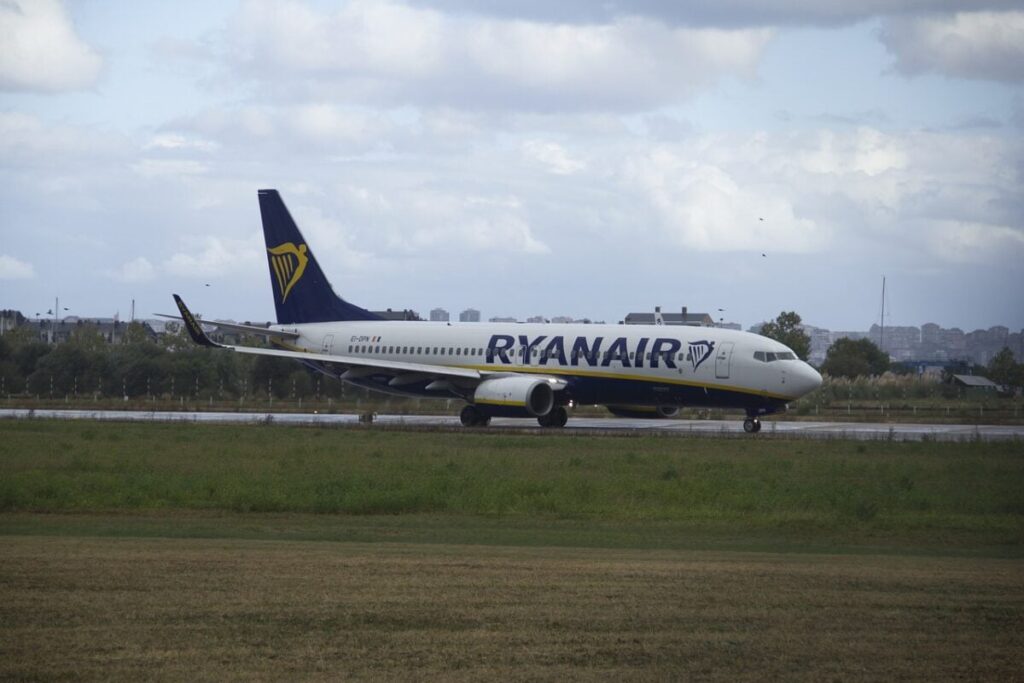
Flights between the two countries are the fastest and most affordable option. Ryanair, Aer Lingus, EasyJet, and Loganair all operate routes between Dublin, Shannon, Donegal, Londonderry, and Cork to Edinburgh and Glasgow. Prices can go as low as 25 euros one way when booked in advance. Flights to Inverness, Aberdeen, and Dundee are also available depending on your departure airport.
If you are taking a car, the ferry from Belfast to Cairnryan in Scotland takes approximately two and a quarter hours and is operated by Stena Line and P&O Ferries. However, if you plan to rent a car and return it in Scotland, expect a cross-border fee of approximately 500 US dollars plus a one-way drop fee of similar size. For most travellers, flying and renting a separate car in Scotland is the more cost-effective option.
Flying Into the Right Airport
The itinerary below begins in Dublin. If you prefer to start in Scotland, the route works equally well in reverse fly into Edinburgh and out of Dublin or Shannon. From North America, direct flights to Dublin are available from New York, Boston, Chicago, Toronto, and Los Angeles. For Scotland, Glasgow and Edinburgh both have strong transatlantic connections.


Your 14-Day Ireland and Scotland Itinerary at a Glance
Here is the full route in summary before we go into each day in detail:
- Day 1: Arrive Dublin — city exploration
- Day 2: Ireland’s Ancient East — Newgrange, Tara, Glendalough
- Day 3: Kilkenny, Rock of Cashel, onward to Killarney
- Day 4: Ring of Kerry
- Day 5: Bunratty Castle, Doolin, Cliffs of Moher
- Day 6: Wild Atlantic Way north to Galway
- Day 7: Galway city, then fly to Edinburgh
- Days 8 to 9: Edinburgh — castle, Old Town, Royal Mile
- Day 10: Highlands day trip — Loch Ness, Glencoe, Ben Nevis
- Days 11 to 12: Isle of Skye
- Day 13: Return via Inverness and Cairngorms
- Day 14: Depart from Edinburgh

How to Plan This Itinerary: Step by Step
- Book your transatlantic flights first. Fix your arrival and departure airports before anything else. Dublin in, Edinburgh out is the cleanest route.
- Book your internal flight between Ireland and Scotland. Shannon to Edinburgh is the most useful connection for this route. Book this as soon as your transatlantic flights are confirmed.
- Arrange your Irish car rental. Do not pick the car up at Dublin Airport driving out of Dublin in a left-hand-drive country on your first day is unnecessarily stressful. Take a taxi or bus to your city centre hotel and collect the car the following morning when you are ready to head east.
- Book accommodation in Dublin, Killarney or Kerry, and Galway in advance, especially in summer. These fill quickly.
- Book Edinburgh accommodation separately. During August the city hosts the Edinburgh Festival Fringe and the Royal Edinburgh Military Tattoo — prices are significantly higher and availability is limited. Book months ahead if your trip falls in August.
- Arrange your Scottish car rental. Pick it up in Edinburgh after you have had a day or two exploring the city on foot.
- Pre-book key attractions. Newgrange in particular sells out months ahead. Titanic Belfast, the Edinburgh Military Tattoo, and popular Highland tours also benefit from advance booking.


Ireland: Days 1 to 7
| Day 1: Arrive in Dublin |
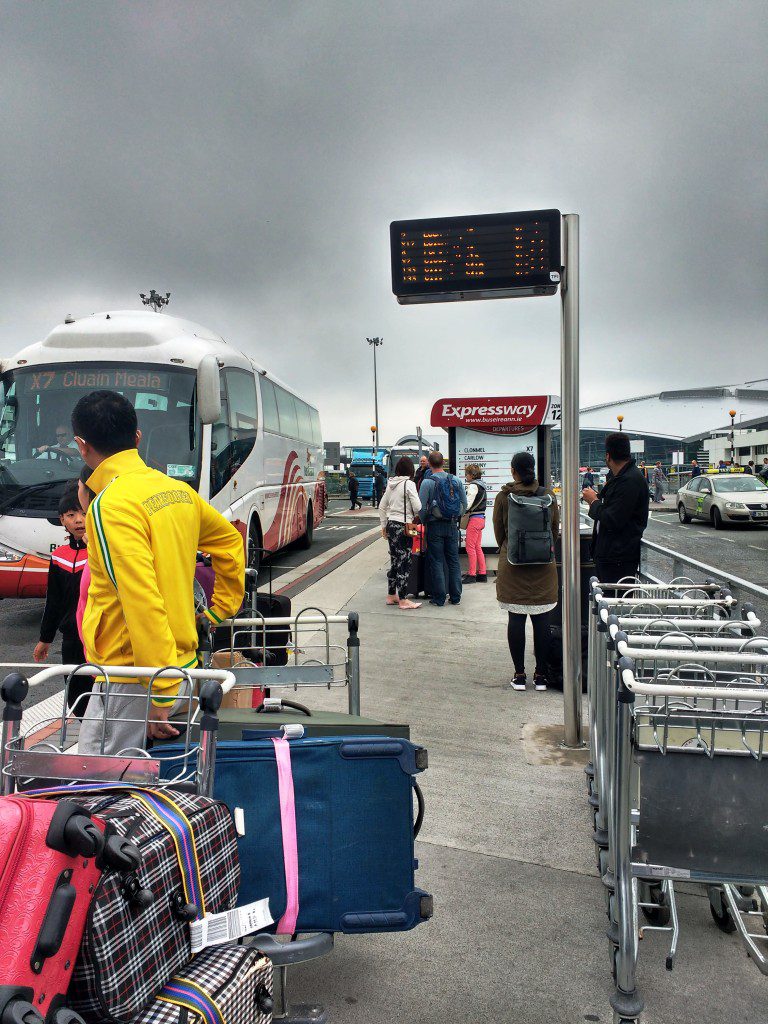
You will almost certainly arrive tired. Do not fight it and do not try to drive anywhere. Take the Aircoach or Dublin Bus from the airport to your city centre hotel, drop your bags, and explore on foot or by hop-on hop-off bus. The hop-on hop-off is genuinely useful on day one take the full loop first without getting off to get your bearings, then jump off on the second round at the stops that interest you most.
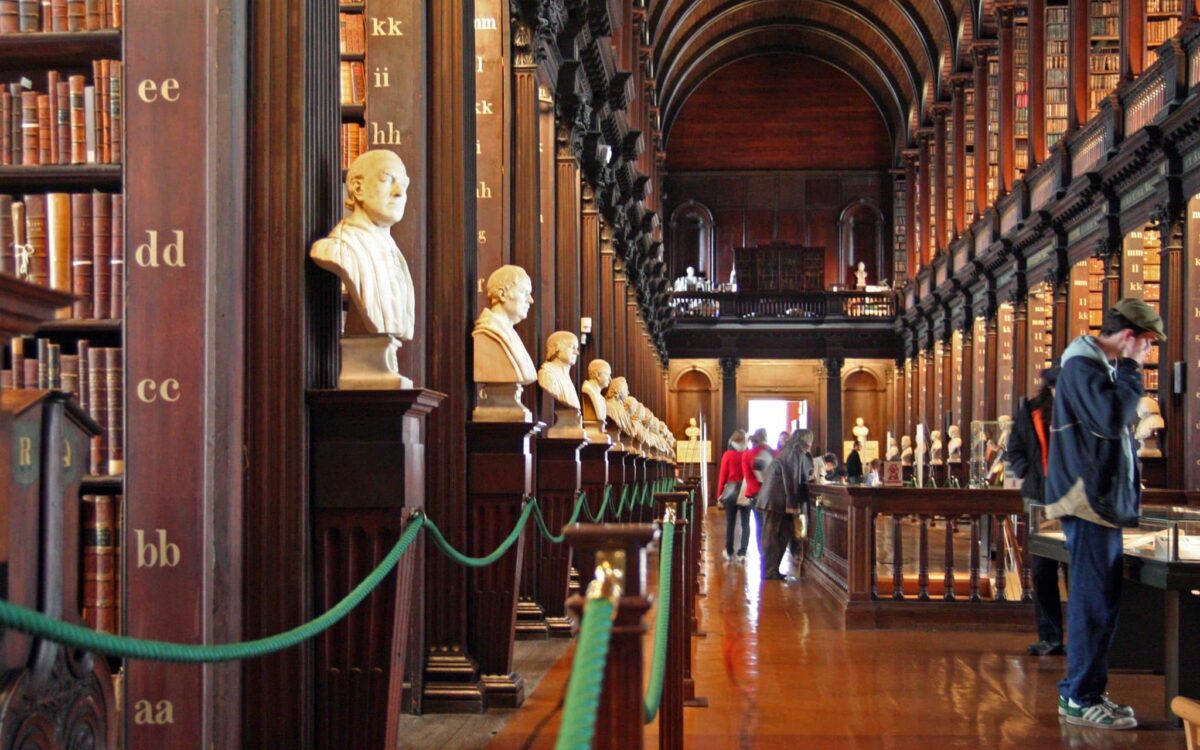
What to see on Day 1: Trinity College and the Book of Kells, St Patrick’s Cathedral, Christ Church Cathedral, the Ha’penny Bridge, Molly Malone Statue, Temple Bar, and St Stephen’s Green. If you have the energy, the Guinness Storehouse is best visited late afternoon when the morning crowds have thinned.
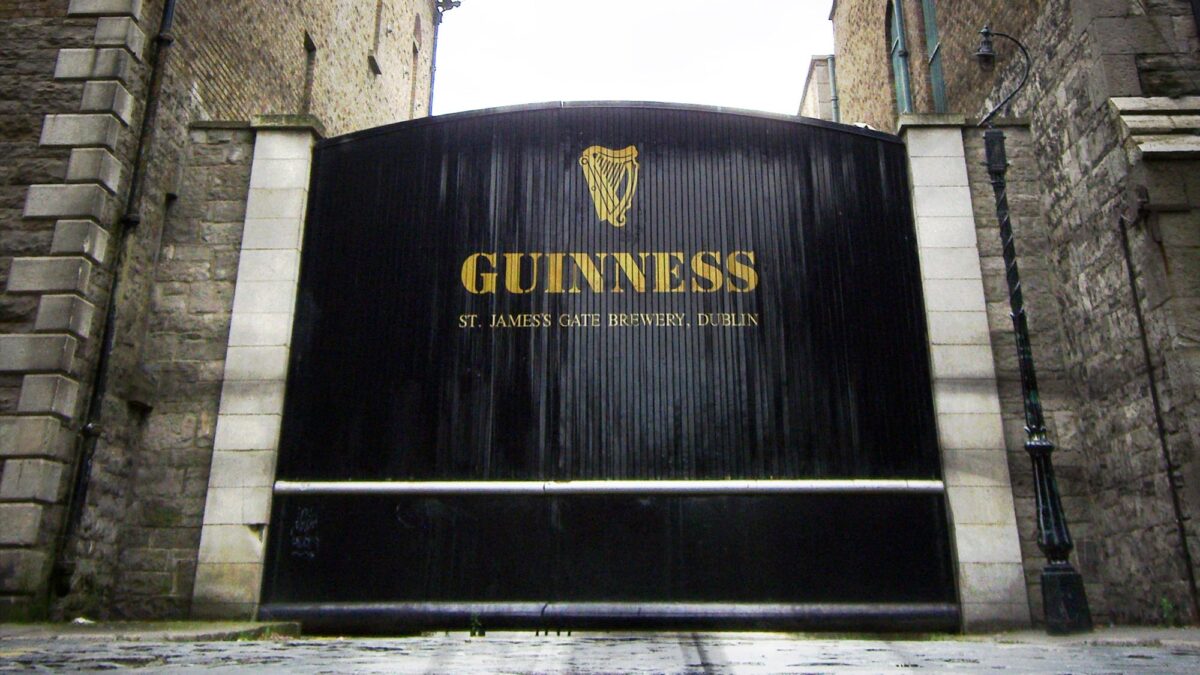
Guinness Storehouse tickets: Book online at guinness-storehouse.com approximately 26 to 30 euros. Cheaper online than at the door, and the rooftop Gravity Bar is included.
Parking in Dublin: Do not drive in Dublin city centre. If you must have a car with you from day one, use a park-and-ride facility on the M50 motorway and take the Luas tram in. The city centre has accessible parking marked with blue badges the Dublin City Council website lists all designated spaces.
Where to eat: Fallon and Byrne on Exchequer Street for a casual lunch or early dinner. For traditional Irish food in a genuine setting, try The Stag’s Head on Dame Court one of the finest Victorian pub interiors in Dublin and much less of a tourist trap than Temple Bar.
Where to stay: The Maldron Hotel Parnell Square is central, accessible, and good value. The Merrion on Merrion Street is the finest address in the city. Both have parking options nearby.


| Day 2: Ireland’s Ancient East: Newgrange, Tara, and Glendalough |
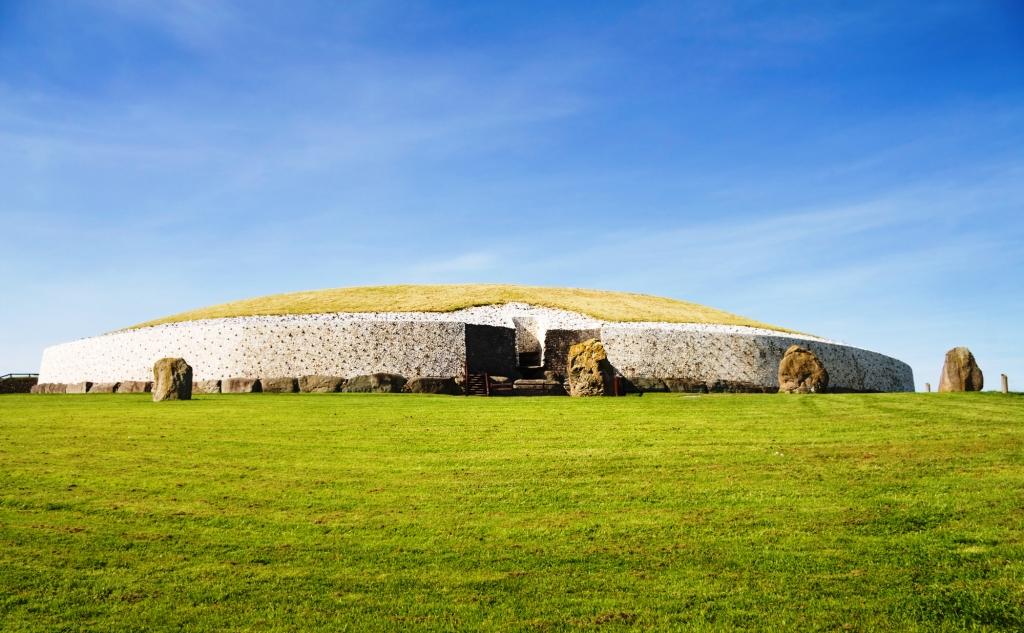
Collect your rental car this morning and head north to Newgrange in County Meath. This passage tomb was built around 3,200 BC — older than Stonehenge and the Egyptian pyramids. Tours are strictly timed and ticketed from the visitor centre at Bru na Boinne. Book well in advance as this is one of Ireland’s most popular sites and slots fill months ahead, particularly in winter when the solstice alignment draws waiting lists of years.
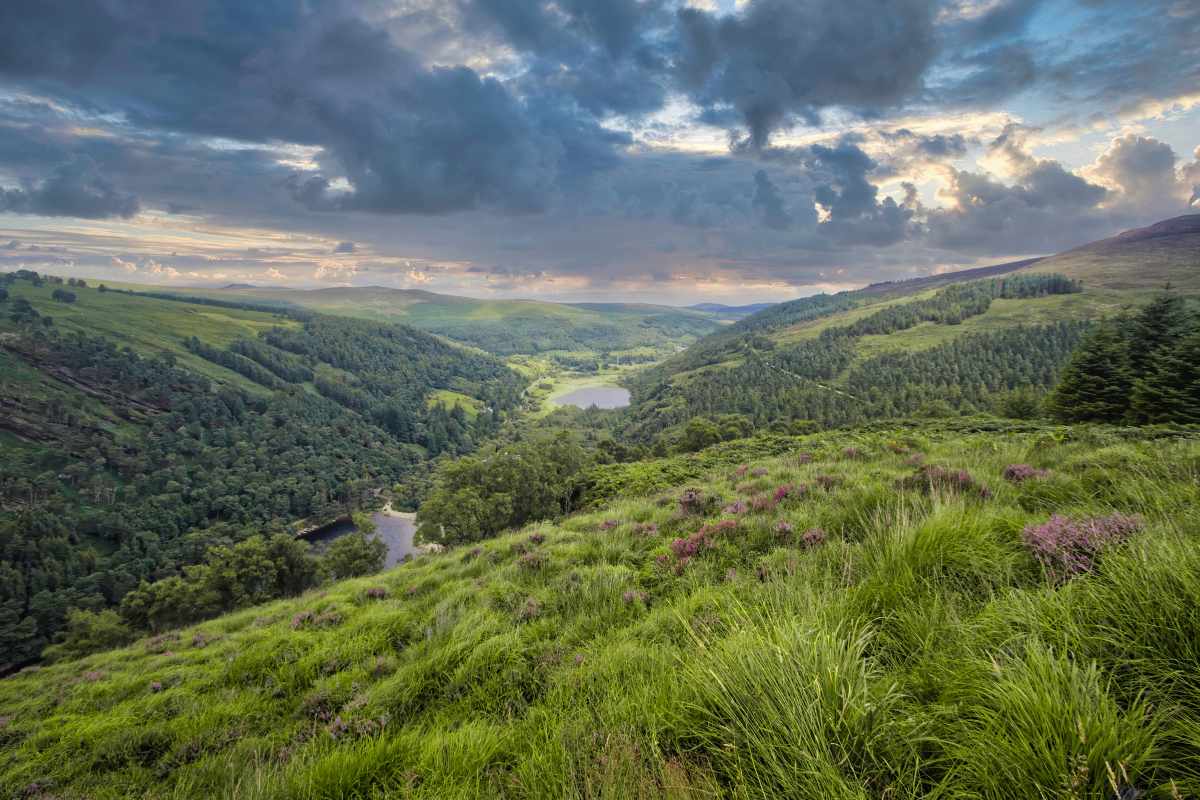
After Newgrange, spend an hour at the Hill of Tara the ancient seat of the High Kings of Ireland, free to visit and steeped in Celtic mythology. Then drive south to Glendalough in the Wicklow Mountains, approximately an hour away. The early medieval monastic city set in a glacial valley is one of the most atmospheric places in Ireland and entry to the grounds is free.
Ticket costs: Newgrange adult tickets approximately 8 to 12 euros. Glendalough grounds free; visitor centre approximately 5 euros. Parking at both sites is available and charged separately approximately 4 euros.
Accessibility: Newgrange visitor centre is fully accessible. The passage tomb itself involves stooping and confined spaces and is not suitable for wheelchair users. The outer mound area and grounds are accessible. Glendalough has accessible parking and flat paths around the main monastic enclosure.
Where to stay: Book a hotel near Glendalough for the night. The Glendalough Hotel is directly beside the site and has accessible rooms.


| Day 3: Kilkenny, Rock of Cashel, and on to Killarney |
Drive south to County Tipperary. On your way make a stop in Medieval Kilkenny, Kilkenny Castle is a well-preserved Norman castle in the centre of a beautifully compact medieval city and is worth two hours of your time. Walk the Medieval Mile between the castle and St Canice’s Cathedral the route takes you past Black Abbey, Rothe House, and some of the finest medieval streetscapes in Ireland.
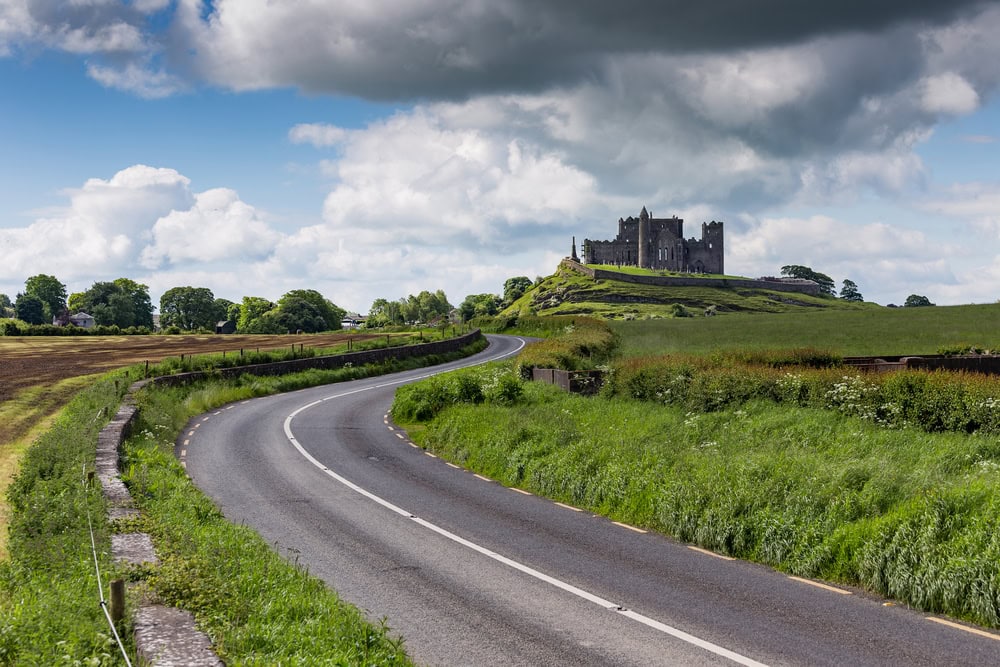
From Kilkenny, the Rock of Cashel is approximately an hour’s drive and is non-negotiable. The cluster of medieval buildings on a limestone outcrop rising from the Tipperary plain is one of Ireland’s most iconic silhouettes. Allow 90 minutes. Then drive on to Killarney approximately two hours and check in for the night.

Optional stop: The English Market in Cork city centre is a covered Victorian food market and one of the finest in Ireland. Worth 45 minutes if your energy holds.
Ticket costs: Kilkenny Castle approximately 8 euros. Rock of Cashel approximately 8 euros. Both have car parks with accessible spaces.
| Day 4: Killarney and the Ring of Kerry |
The Ring of Kerry is a 179-kilometre circular route around the Iveragh Peninsula with views that are genuinely jaw-dropping. Drive it clockwise (the direction tour buses travel anticlockwise, so going clockwise means you meet them head-on in passing places rather than chasing them). Allow a full day and plan several stops Moll’s Gap, Ladies View, Sneem, and Waterville are all worth pausing at.
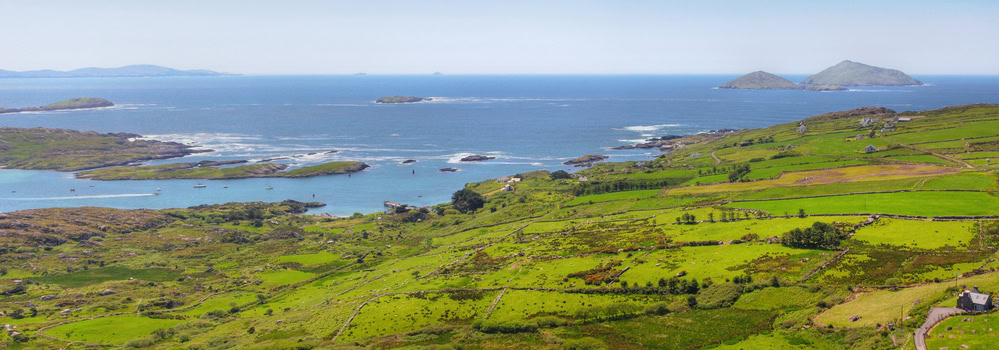
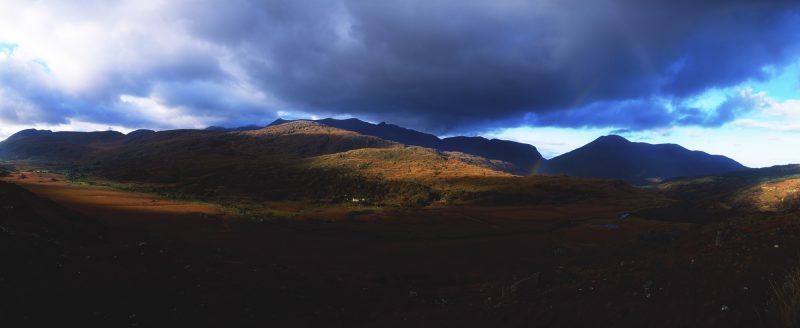
Killarney National Park itself is free to enter and the lakes, woodland, and Ross Castle make it worth a morning before or after the ring road. Jaunting car rides (horse-drawn carriages) are a traditional way to see the grounds and are enjoyed by visitors of all ages and mobility levels.
Parking: Most Ring of Kerry viewpoints have small car parks. Arrive early at popular spots as they fill by mid-morning in summer. Killarney town centre has a large accessible car park off Park Road.


| Day 5: Bunratty Castle, Doolin, and the Cliffs of Moher |
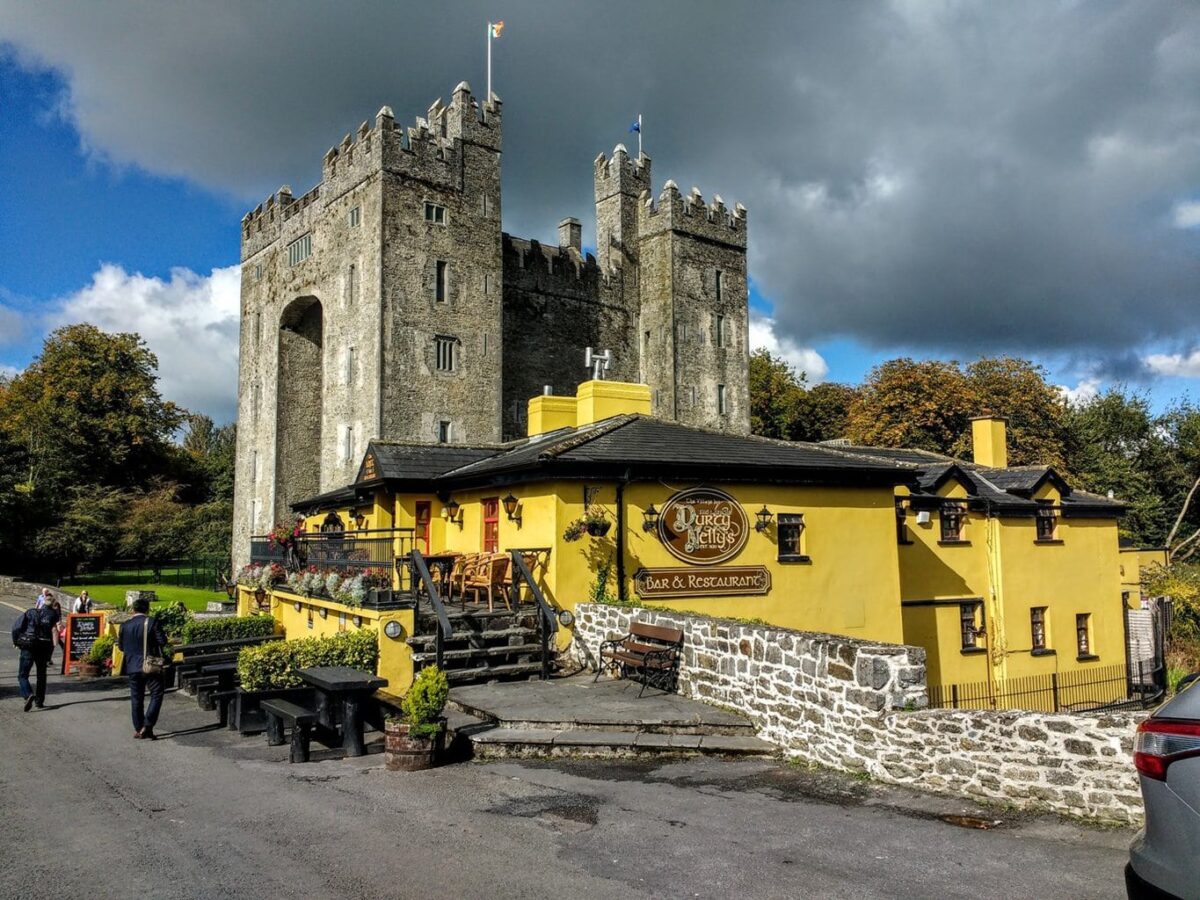
Drive north through County Clare. Bunratty Castle near Limerick is a fully restored 15th-century tower house with a living history folk park around it. It is popular with families and is genuinely worth two hours. Then head to the Cliffs of Moher 214 metres of sheer Atlantic cliff stretching for eight kilometres. Go in the late afternoon if possible when the morning tour buses have departed.
Cliffs of Moher parking and access: The visitor centre car park charges approximately 8 euros per car. Accessible parking spaces are available directly in front of the visitor centre. The clifftop path is partially accessible; the visitor centre is fully accessible with a lift to the upper viewing level. Book visitor centre entry online approximately 9 euros for adults.
Where to stay: Book a hotel in Doolin village for the night. Doolin is a legendary traditional music village every pub has a session in the evening and it is one of the most authentic music experiences in Ireland. The Doolin Inn has accessible rooms.
| Day 6: Wild Atlantic Way North to Galway |
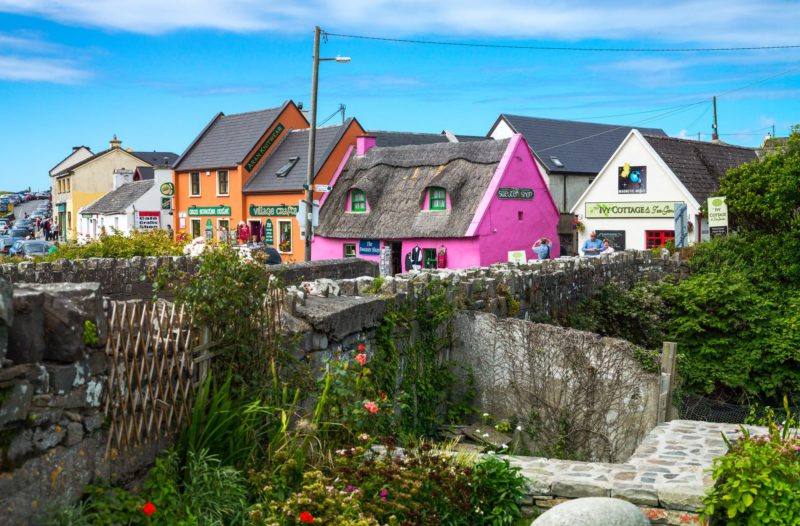
Take the coastal road north through the Burren a remarkable limestone landscape of craggy pavements, rare wildflowers, and ancient dolmens. Poulnabrone Dolmen is a portal tomb dating to 4,200 BC and is free to stop at roadside. Continue through Kinvara and along the southern shore of Galway Bay into Galway city.

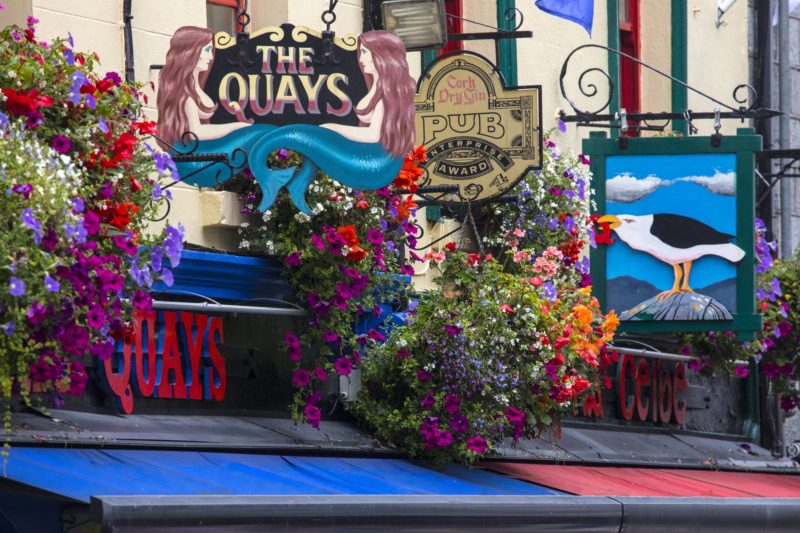
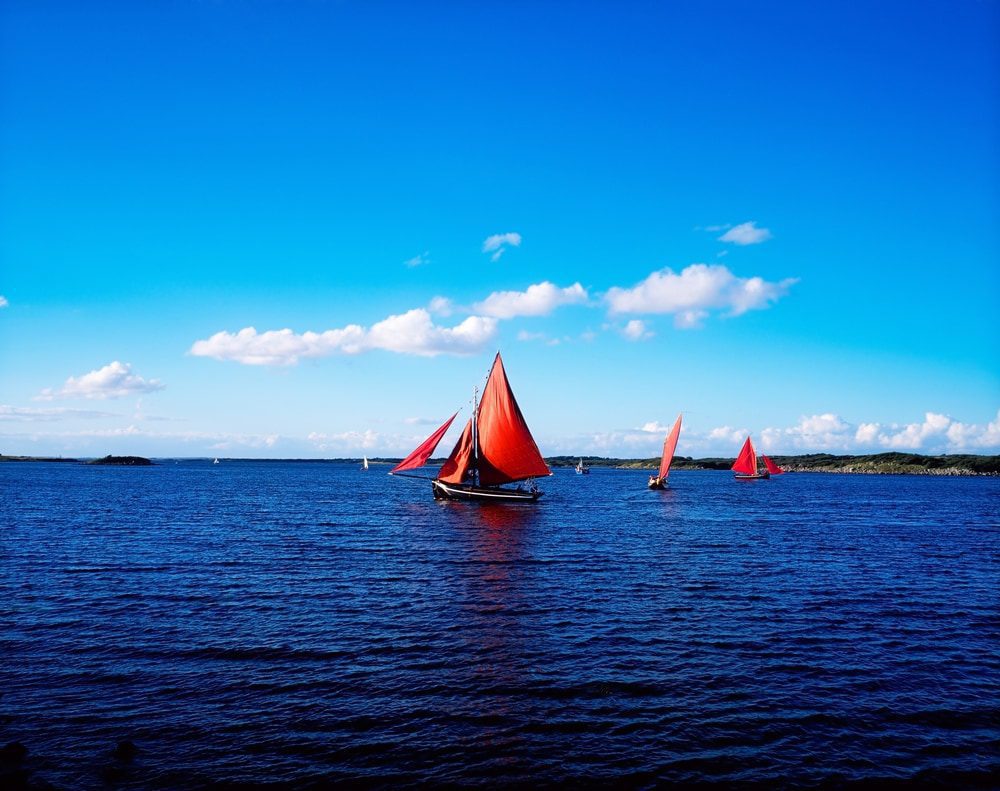
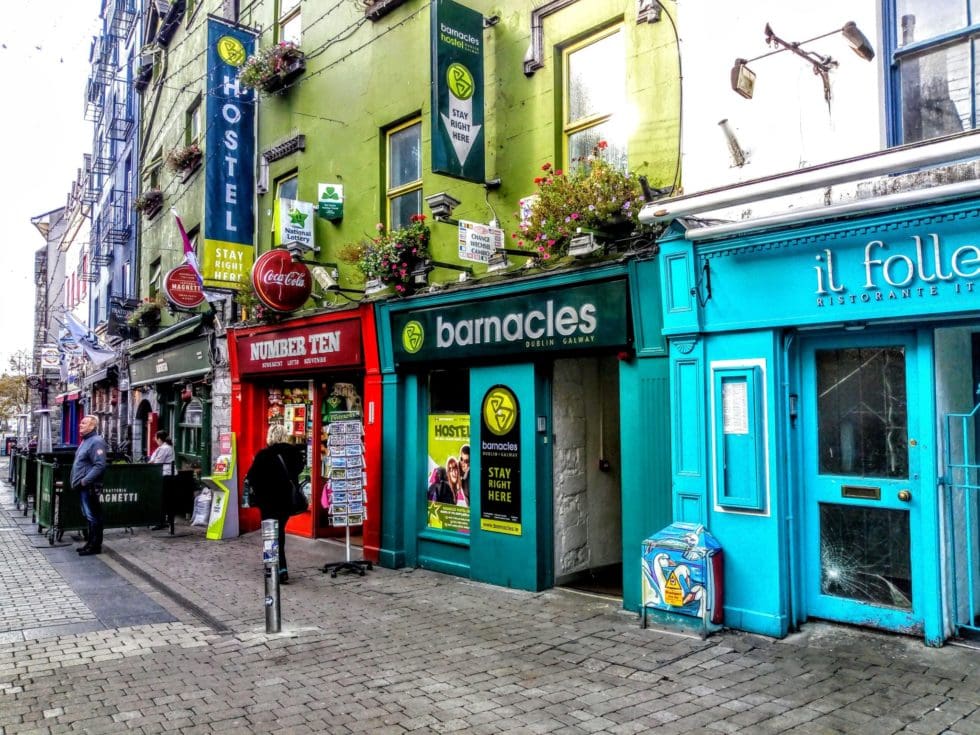
Spend the afternoon in Galway. Walk Shop Street and Quay Street, visit the Spanish Arch, browse the Saturday market beside St Nicholas’ Collegiate Church if your timing allows, and get into a pub for traditional music in the evening. Ard Bia at Nimmos on the Spanish Arch is an excellent dinner choice creative food in a relaxed waterside setting.
My honest note on Galway: I love this city, but in July and August the Latin Quarter becomes very loud in the evenings with student crowds. If you are a light sleeper or travelling with young children, choose accommodation on the quieter western or eastern edges of the centre.
Where to stay: The G Hotel has accessible rooms and is well located. The Hardiman on Eyre Square is more traditional and very central. Both have parking.


| Day 7: Galway to Shannon and on to Edinburgh |
This is a transition day. Drop your rental car at Shannon Airport arrange this with your car hire company in advance as drop-off points vary and catch your flight to Edinburgh. Flights from Shannon to Edinburgh take approximately one hour and 20 minutes.
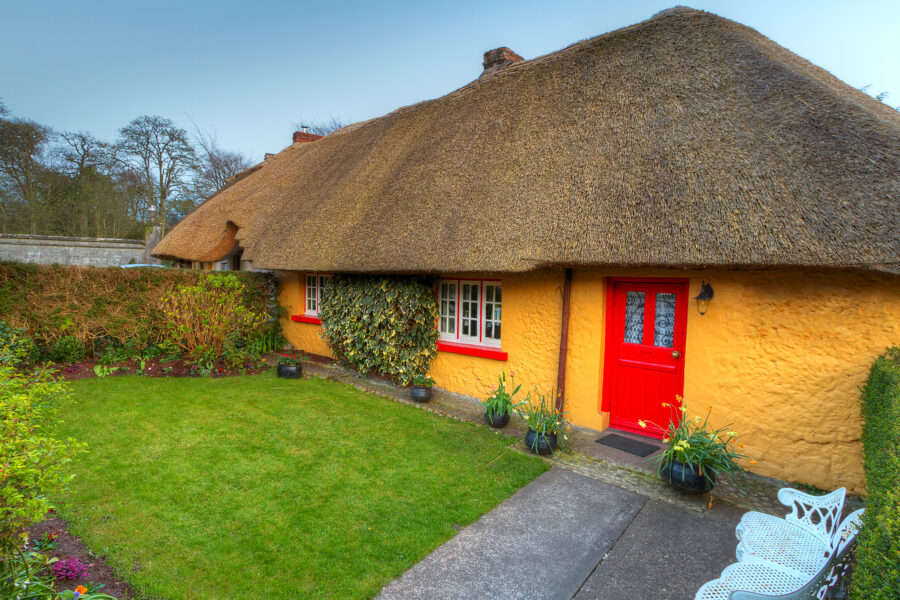
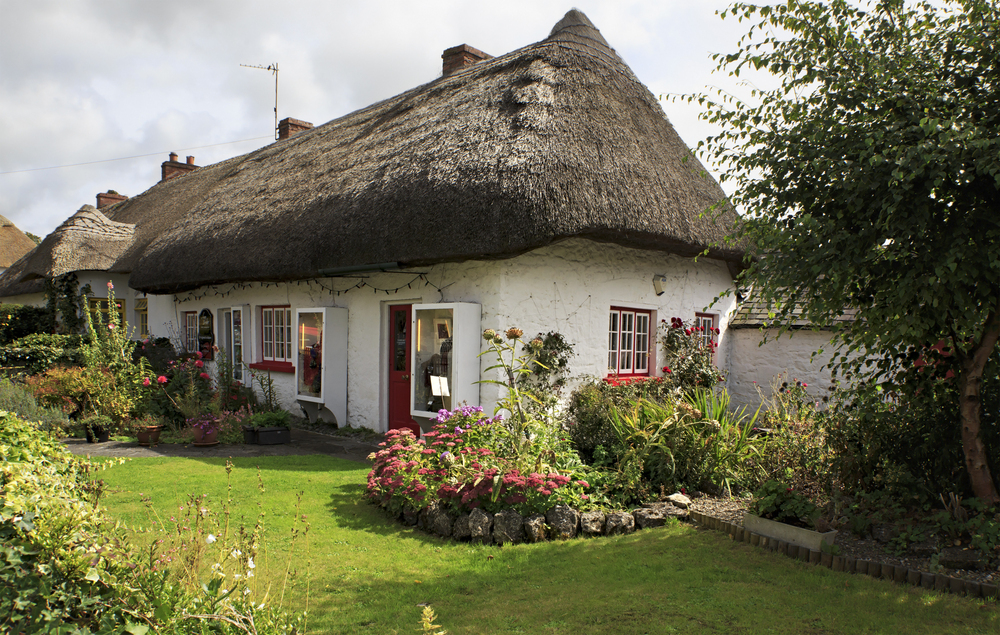
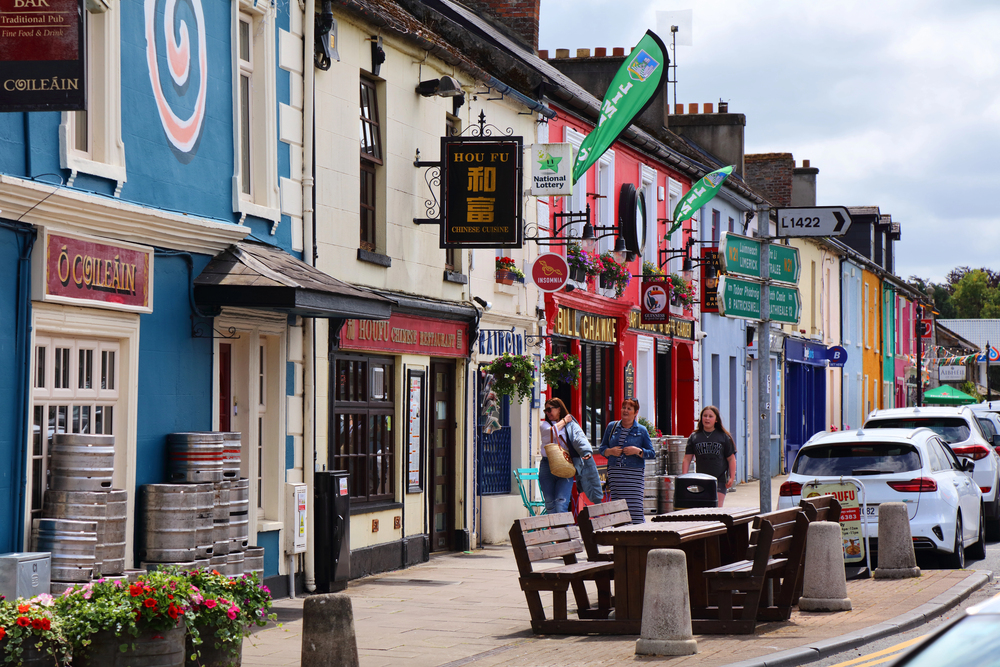
If you have time before your flight, the village of Adare in County Limerick is 20 minutes from Shannon Airport and is one of the most photographed villages in Ireland. Its thatched cottages, medieval priory ruins, and good lunch options make it a perfect final Irish stop.
Scotland: Days 8 to 14
| Days 8 to 9: Edinburgh Castle, Old Town, and Beyond |
Arrive into Edinburgh and take a taxi or the Airlink 100 bus to your city centre hotel. Do not collect a rental car yet, Edinburgh is best explored on foot and driving in the Old Town is genuinely unpleasant.
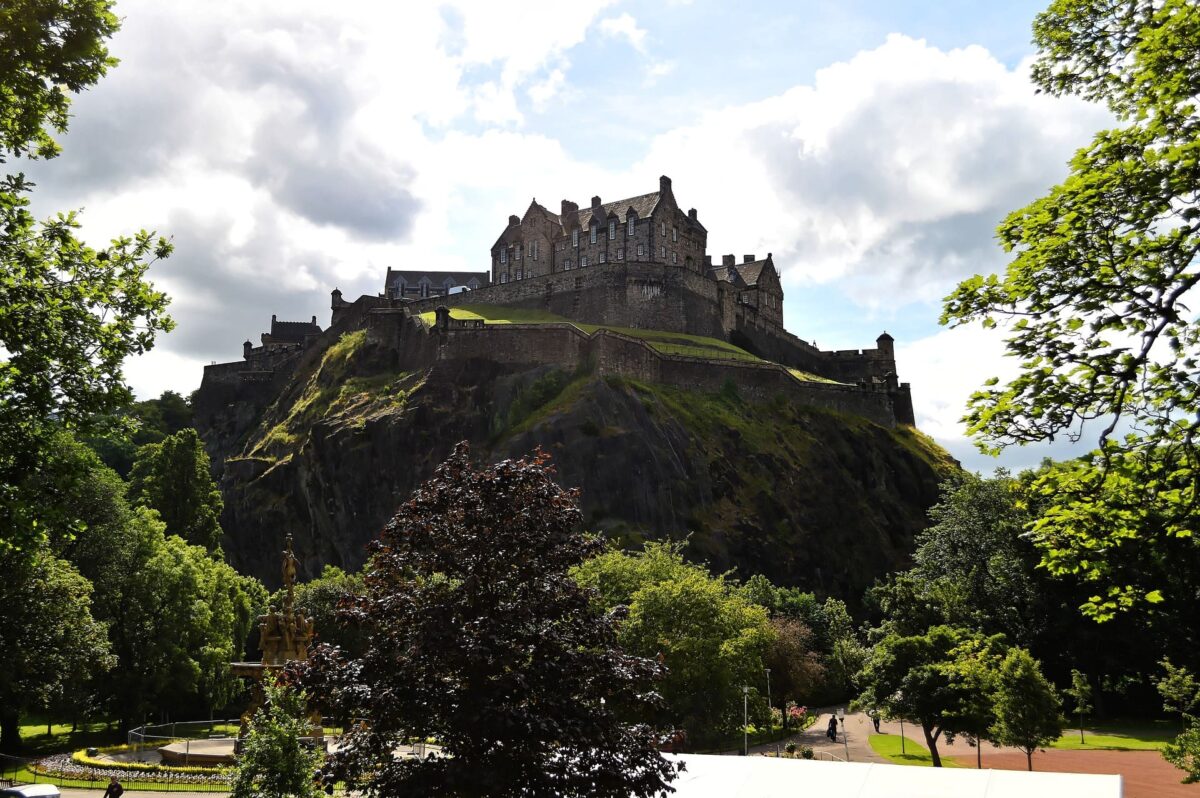
Edinburgh is one of the most beautiful cities in Europe. The Old Town, a UNESCO World Heritage Site rises steeply from Waverley Station to Edinburgh Castle on its volcanic rock. Two full days here is the minimum.
Edinburgh Castle
Edinburgh Castle houses the Scottish Crown Jewels, the Stone of Destiny, and the National War Museum of Scotland. The 12th-century fortress has a long and dramatic history and the views over the city from the battlements are extraordinary. Book tickets online adult entry approximately 17 to 22 pounds. A courtesy vehicle is available for visitors who cannot manage the steep cobbled approach.
The Royal Mile
The Royal Mile runs 1.8 kilometres from Edinburgh Castle down to the Palace of Holyroodhouse. It is lined with closes (narrow alleyways), independent shops, whisky tasting rooms, and historic buildings. St Giles’ Cathedral on the High Street is free to enter and is the oldest religious building in the city, built in the 12th century and rebuilt in the 15th after fire destroyed much of Edinburgh in 1385.
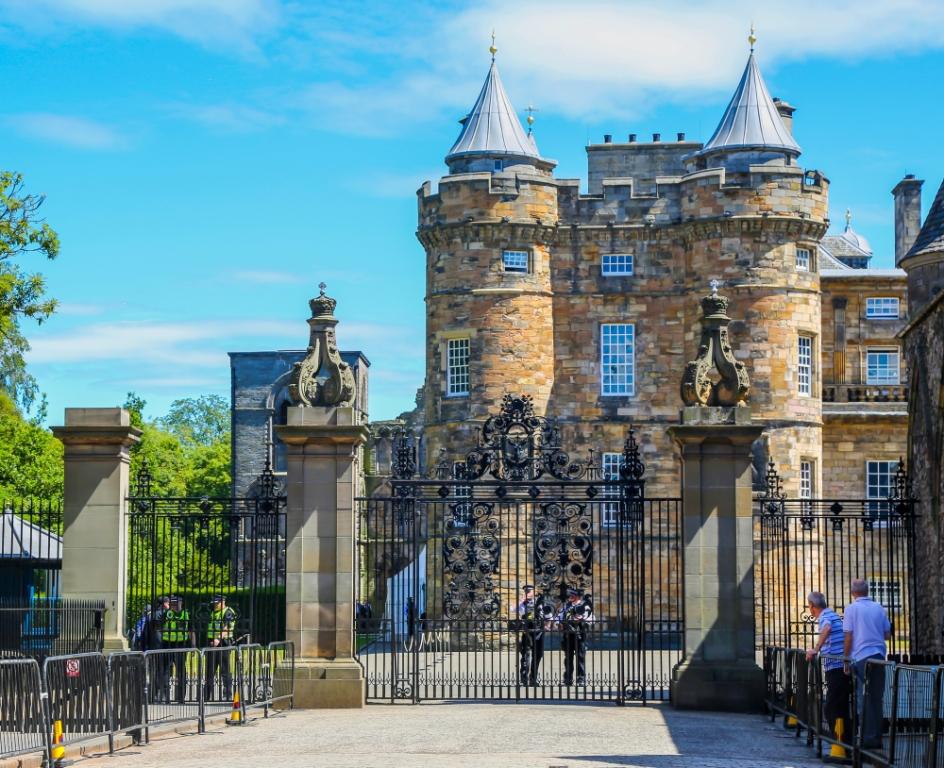
Palace of Holyroodhouse
At the foot of the Royal Mile, Holyroodhouse is the official Scottish residence of the King and was famously home to Mary Queen of Scots. Adult entry is approximately 18 to 20 pounds. The palace is accessible and has a car park. Note: the palace closes to the public when the King is in residence, typically for one week in late June or early July.
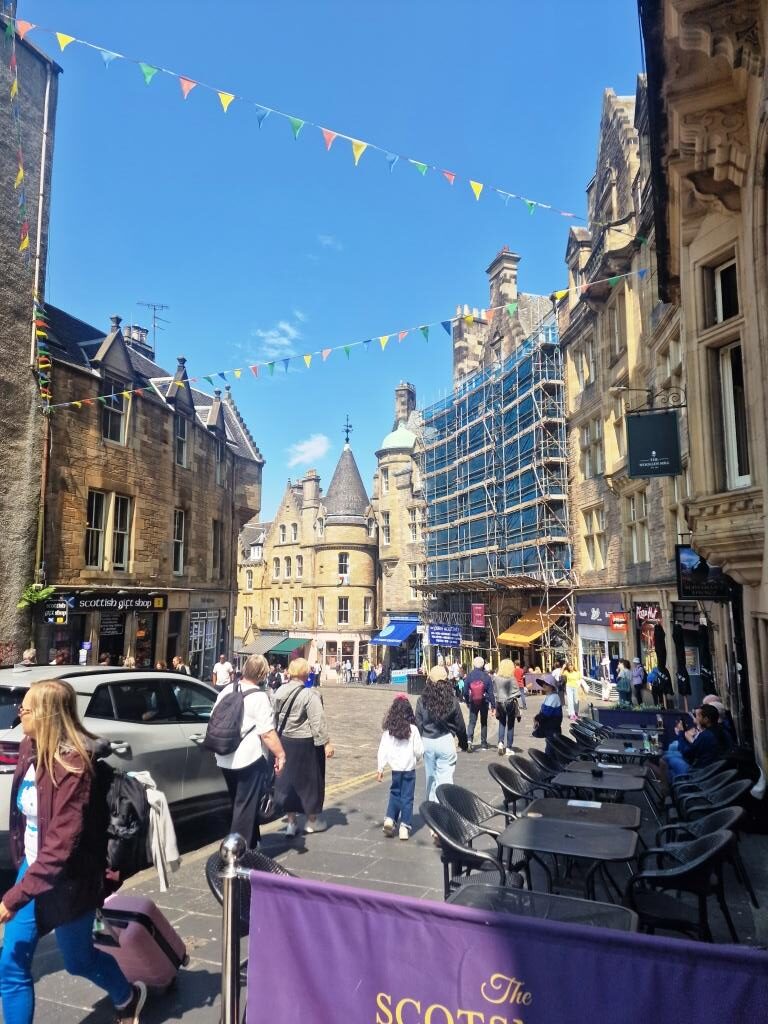
Victoria Street and the Grassmarket
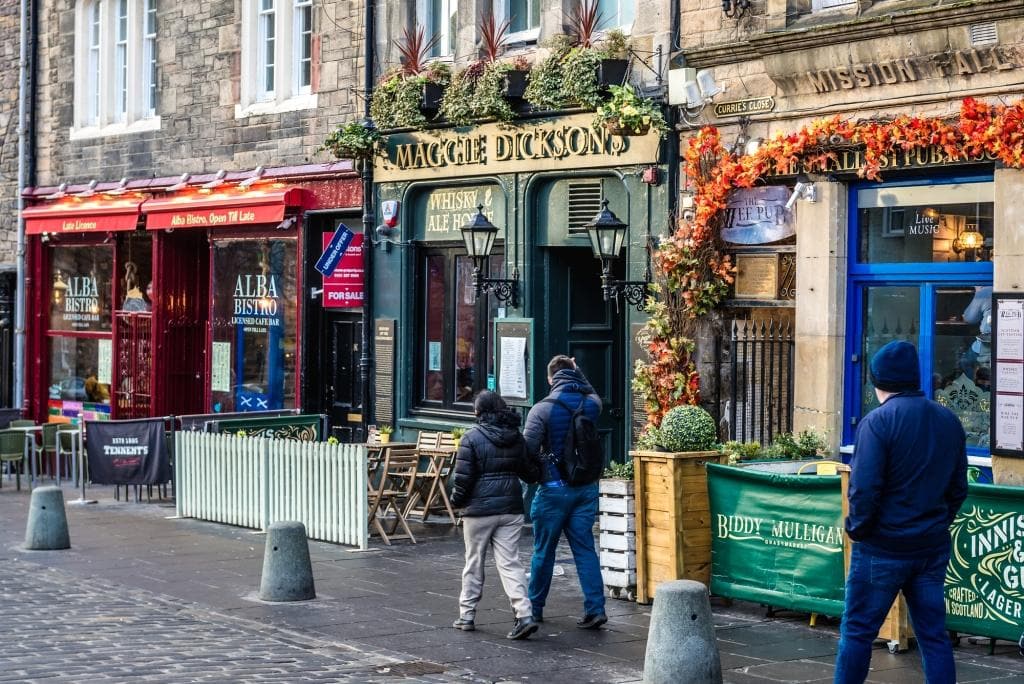
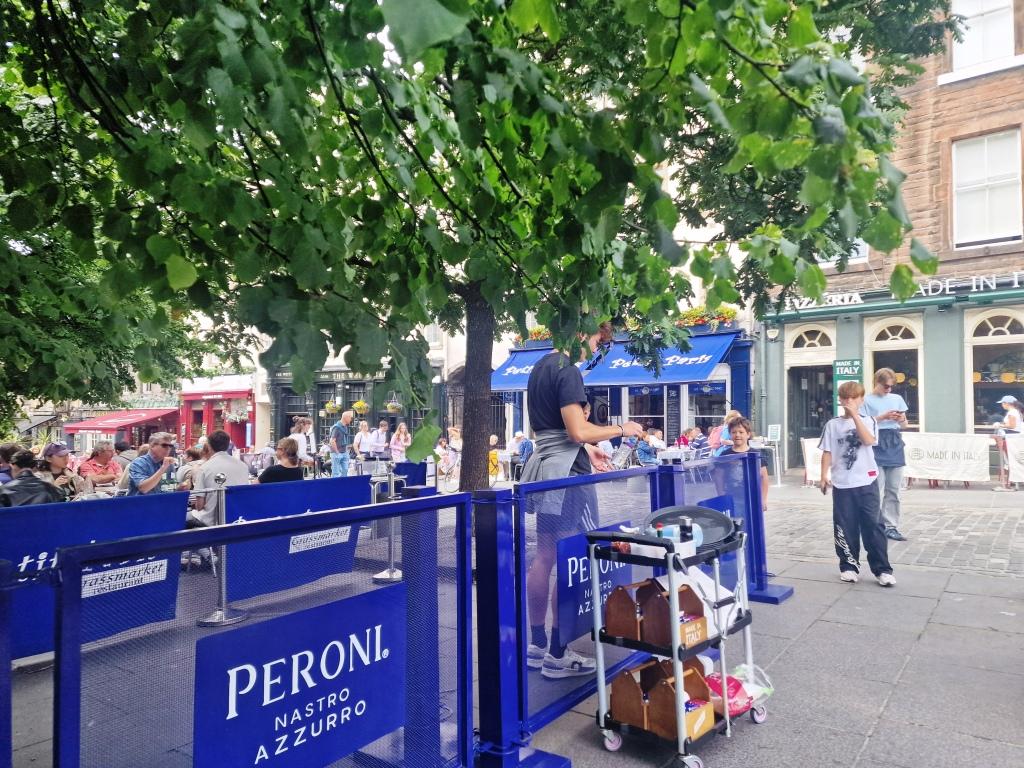
Victoria Street’s curved row of colourful shopfronts is one of the most photographed streets in Scotland. The Grassmarket below it has excellent independent restaurants, artisan beer bars, and a Saturday market. It also sits directly beneath the castle rock, giving some of the best views of the fortress from street level.
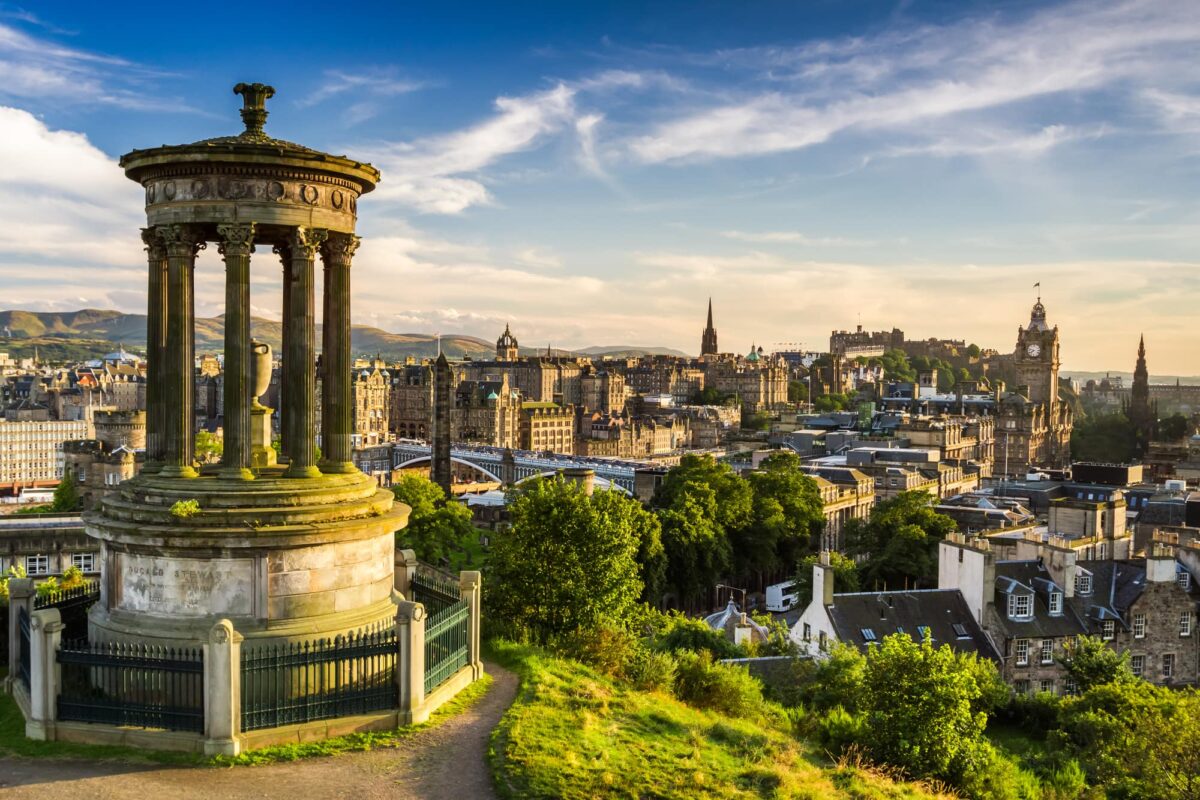
Free Things to Do in Edinburgh
The National Museum of Scotland on Chambers Street is free and is excellent, allow at least three hours. The Scottish National Gallery on the Mound is free and holds one of the finest collections of European painting in the UK. Arthur’s Seat, the ancient volcano in Holyrood Park, is a free 45-minute hike with panoramic views of the city. Calton Hill, a shorter walk with iconic Edinburgh skyline views, is also free.
The Royal Edinburgh Military Tattoo
If your trip falls in August, the Royal Edinburgh Military Tattoo on the castle esplanade is one of the most memorable live events in Europe. Military bands, international performers, and pyrotechnics against a floodlit castle. Tickets range from 28 to 75 pounds and sell out many months in advance. Fully accessible seating is available, contact the box office when booking.
Parking in Edinburgh: The Old Town’s steep hills and cobblestones present challenges for drivers. The NCP car park on Castle Terrace is the most convenient for the castle and is accessible. The open-top bus tour is an excellent accessible way to cover the main sights if walking is difficult.
Where to stay: The Balmoral Hotel at the top of Princes Street is the classic Edinburgh address. The Grassmarket Hotel is good value and well located. For mid-range, the Ibis Edinburgh Centre Royal Mile is accessible and central. Book early for August — prices during Festival season are significantly higher across the board.
Where to eat: The Kitchin in Leith holds a Michelin star and is outstanding. For casual dining, Hendersons on Hanover Street has served excellent vegetarian food since 1962 and is fully accessible. The Grassmarket area has a strong cluster of good independent restaurants within easy walking distance of the castle.

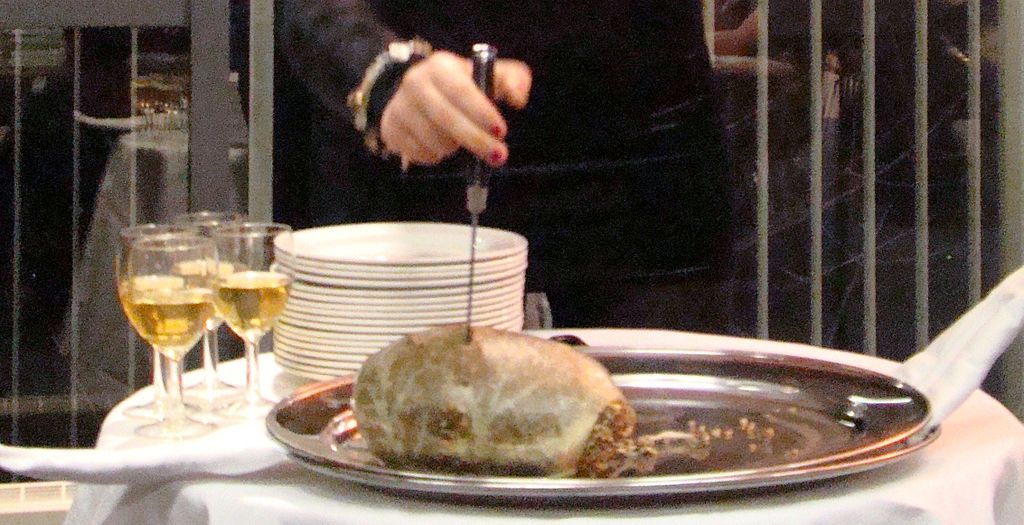
| Day 10: The Highlands: Loch Ness, Glencoe, and Ben Nevis |
Collect your rental car today and head north. This is a long but spectacular day. The route from Edinburgh takes you past Stirling Castle (worth a brief stop for the views), across the high moorland of Rannoch Moor, and through Glencoe.
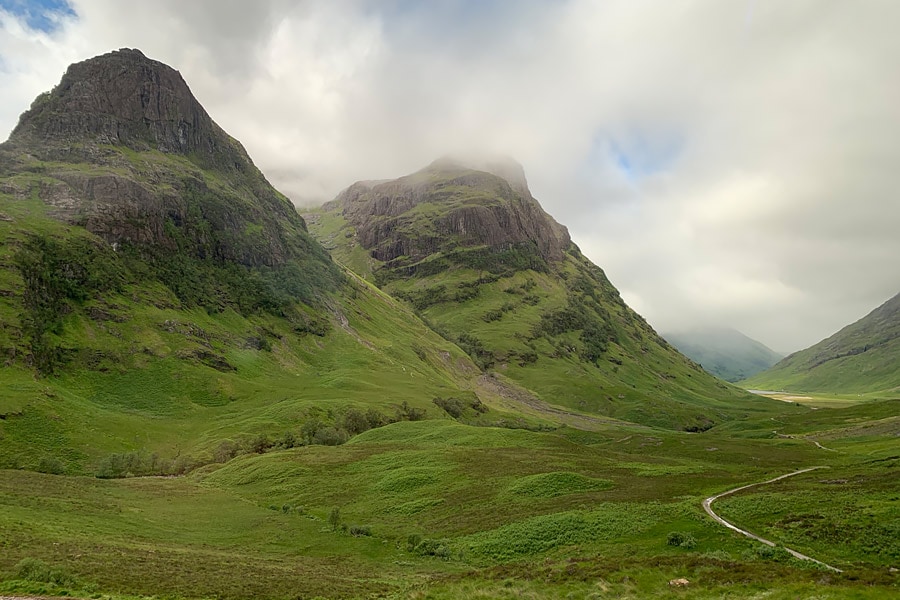
Glencoe
The Valley of Glencoe is one of the most dramatic landscapes in Scotland a wide glacial valley flanked by mountains, with a history that matches the atmosphere. The MacDonald clan was massacred here in 1692 in an act of betrayal by the Campbell clan acting on government orders. The National Trust for Scotland visitor centre explains the history well. Entry to the valley itself is free; the visitor centre charges a small fee for National Trust non-members.
Ben Nevis and Fort William
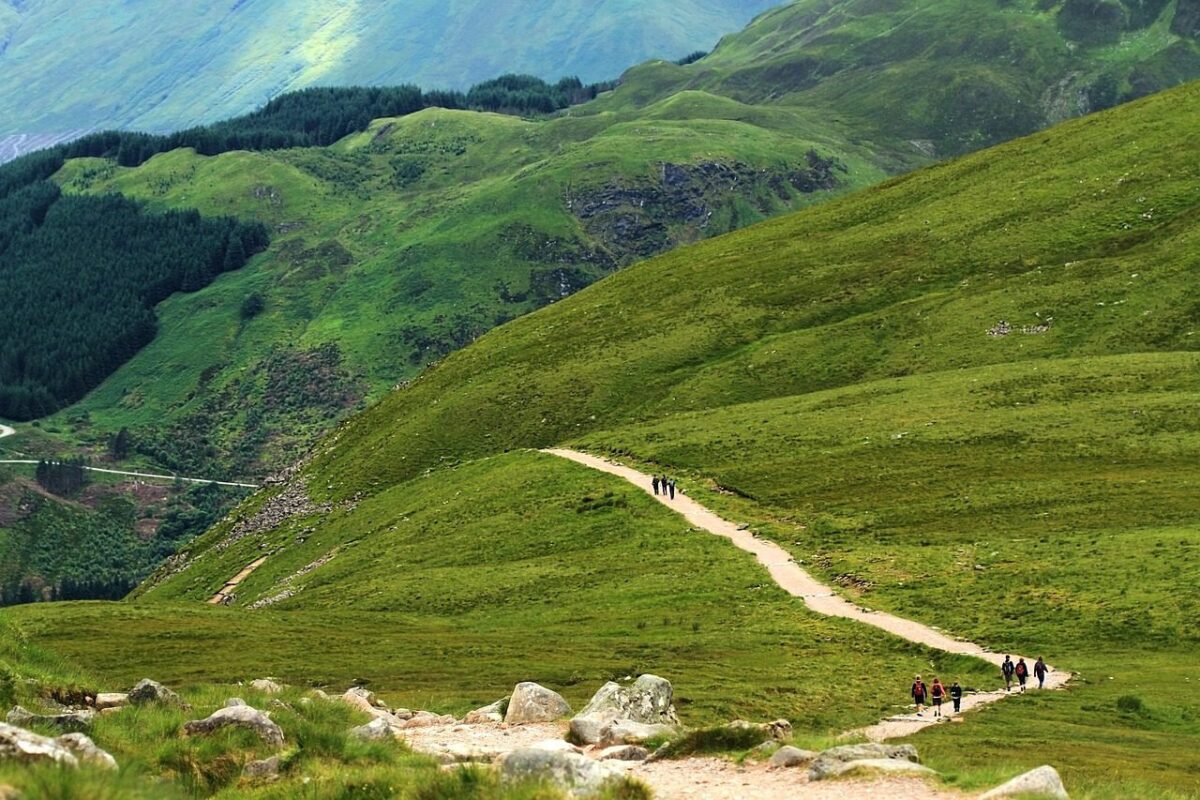
Ben Nevis at 1,345 metres is the highest mountain in the British Isles. You will drive past it on the approach to Fort William. The town of Fort William is a useful lunch stop with good cafes and shops along the High Street.
Loch Ness
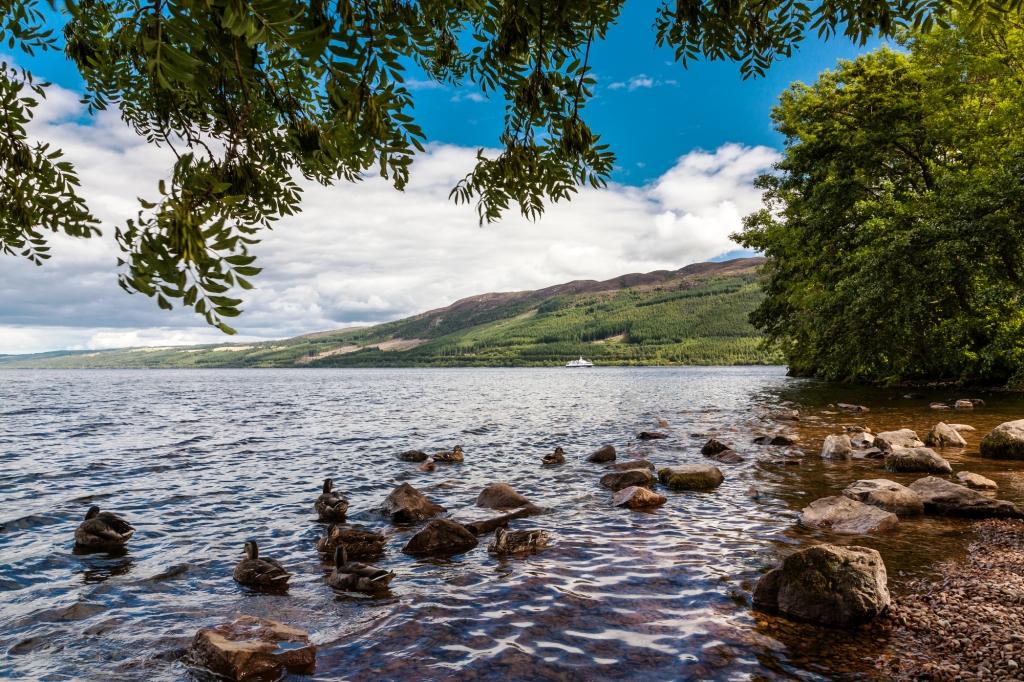
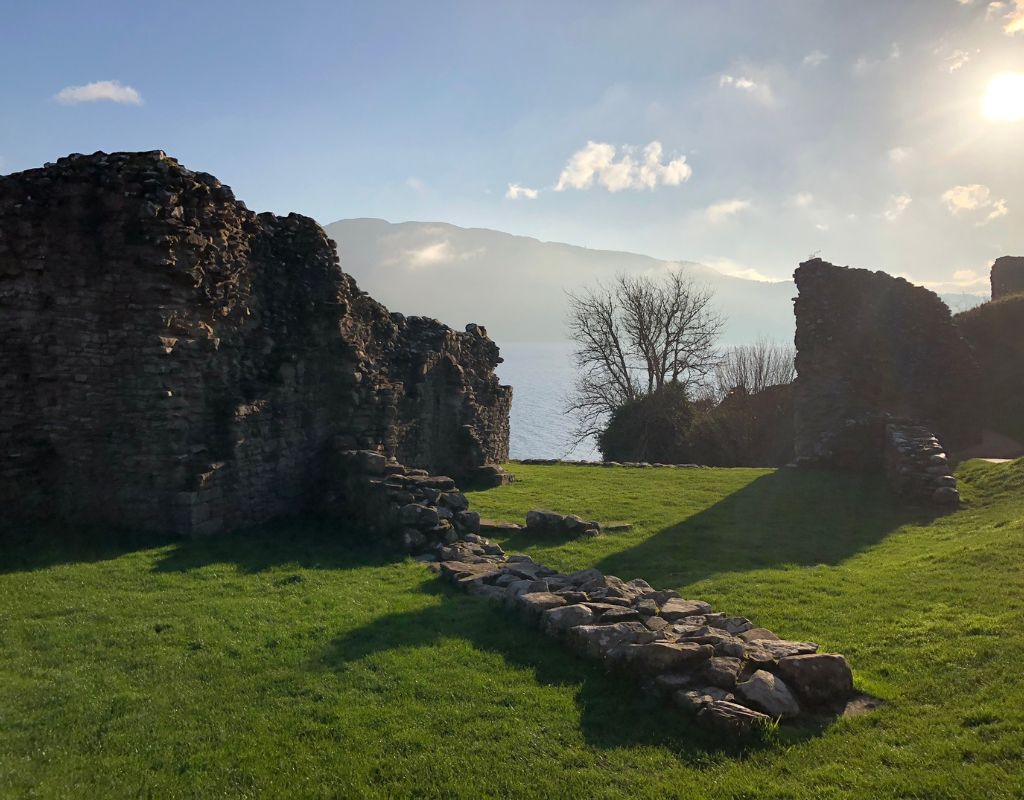
Drive north from Fort William along the Great Glen to Loch Ness. The Loch Ness Centre at Drumnadrochit has recently been fully redeveloped and is a compelling visit covering the science, history, and folklore of the loch and its famous inhabitant. Adult tickets approximately 15 to 18 pounds. The centre is accessible and has a car park with accessible spaces. Urquhart Castle on the loch shore is atmospheric and worth 45 minutes; adult entry approximately 10 pounds.
Return route: Drive back to Edinburgh via Inverness and the A9, stopping briefly in Pitlochry if energy allows. Arriving Edinburgh approximately 8pm.
| Days 11 to 12: Isle of Skye |
Head north from Edinburgh, past Stirling and through the Highlands, to the Isle of Skye. Skye is connected to the mainland by the Skye Bridge at Kyle of Lochalsh no ferry required. The drive from Edinburgh takes approximately three and a half hours.
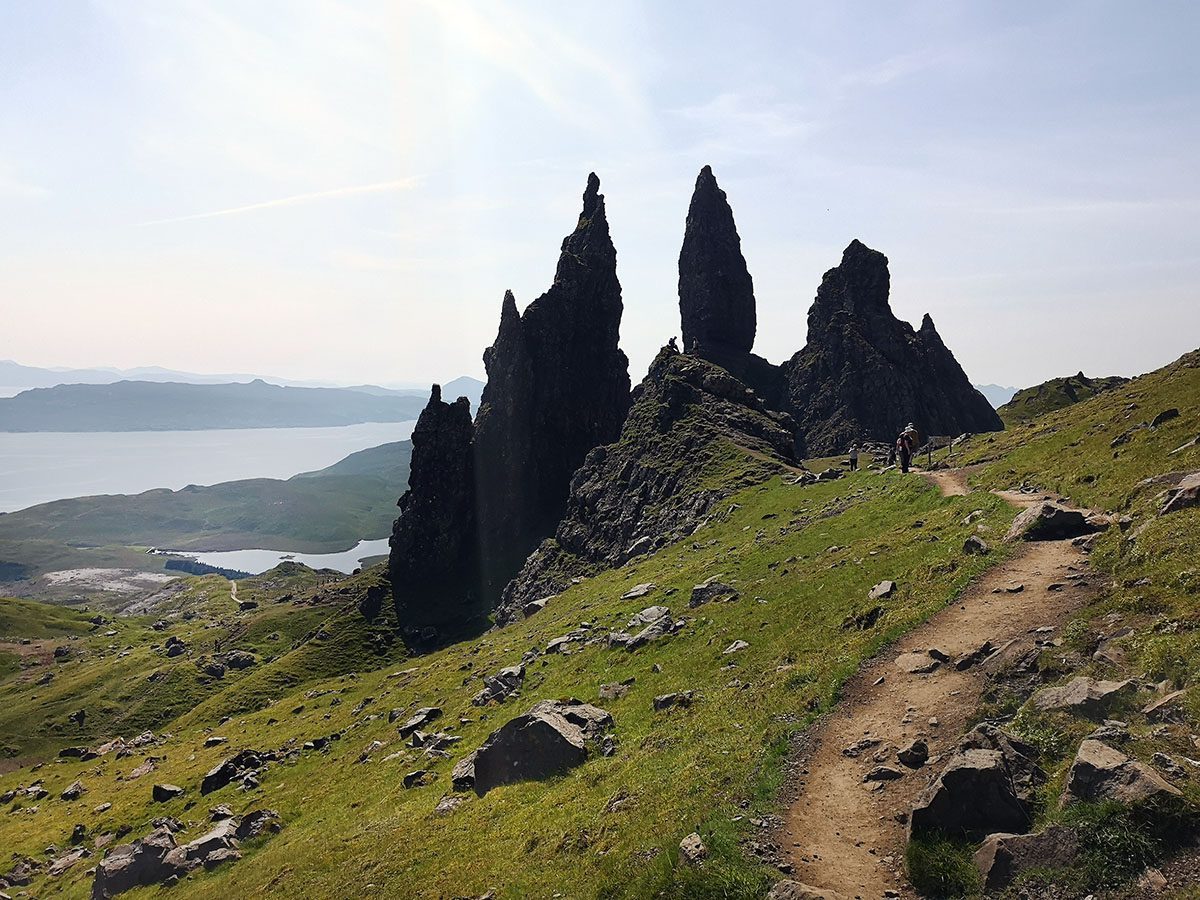
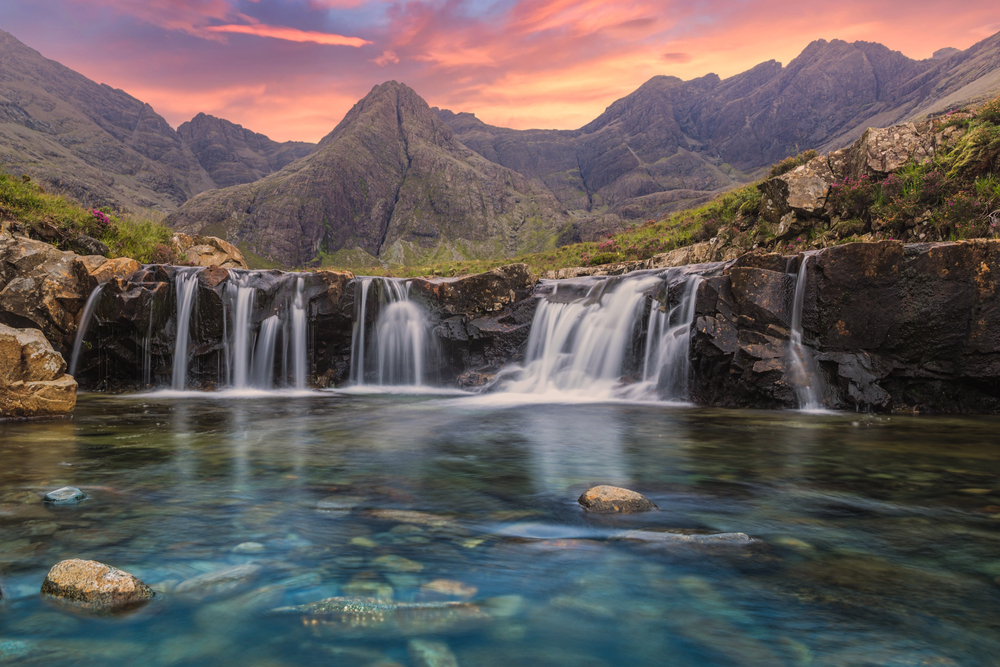
Spend two days here. The island’s landscape is unlike anywhere else in Britain black volcanic ridges, sea lochs, waterfalls, and the kind of empty horizon that recalibrates something in you. The main highlights are the Old Man of Storr, the Quiraing, the Fairy Pools at Glenbrittle, Dunvegan Castle, and the coastal village of Portree.

Portree
Portree is Skye’s main town and is centred around a small harbour with brightly coloured buildings. It has good restaurants, a supermarket, a pharmacy, and accessible flat walking around the harbour area. The Isles Inn and the Bosville Hotel are reliable accommodation options.
The Old Man of Storr and the Quiraing
The Old Man of Storr is a distinctive rock pinnacle on the Trotternish Ridge, reached by a steep rocky trail taking approximately 45 minutes to the top. The Quiraing further north on the same ridge is even more dramatic and offers a flatter walking route across the plateau. Neither is suitable for wheelchairs, but both can be appreciated significantly from their car parks.
The Fairy Pools
A series of crystal-clear pools and waterfalls at the foot of the Black Cuillin mountains. The path is approximately four kilometres round trip on uneven ground. The car park charges approximately 5 pounds. Very popular in summer — arrive before 9am or after 5pm.
Parking on Skye: Most major viewpoints have car parks charging 3 to 5 pounds. They fill quickly in summer. An honesty box system operates at several smaller sites. Portree town centre has accessible parking near the harbour.
Where to eat on Skye: The Oyster Shed near Carbost serves fresh local shellfish directly from a roadside shack extraordinary value and completely informal. The Edinbane Inn is an excellent gastropub with accessible ground-floor seating.
| Days 13 to 14: Return via Inverness and Cairngorms, Depart Edinburgh |
Drive south from Skye via Eilean Donan Castle on Loch Duich one of Scotland’s most photographed castles, and free to view from the outside. From there head east to Inverness and then south through the Cairngorms National Park.
The Cairngorms
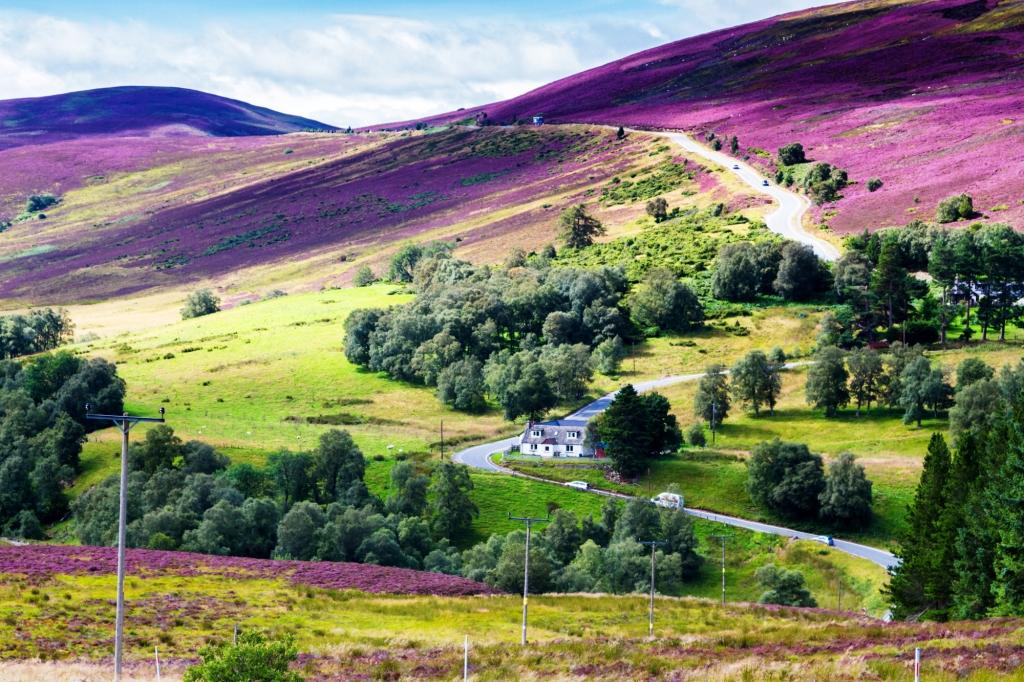
The Cairngorms is the largest national park in the UK 4,500 square kilometres of mountain, forest, and river. The A9 south from Inverness passes through the heart of it. Stop at Pitlochry for lunch a Victorian spa town with good independent restaurants, a theatre, and whisky distillery tours. The Moulin Inn just above the town is one of the oldest pubs in Scotland and serves excellent food.
Iona, Mull, and Extended Island Options
If you have more than 14 days or want to replace the Highlands day trip with something different, consider a 3 to 5 day extension to the western islands. A ferry from Oban takes you to Mull, and from Mull a small ferry crosses to Iona the birthplace of Celtic Christianity and the ancient burial ground of Scottish kings. Staffa island, home to Fingal’s Cave and its extraordinary basalt columns that mirror the Giant’s Causeway in Northern Ireland, can also be reached by small boat from Mull.
Final departure: Return your rental car at Edinburgh Airport and fly home, or take a final night in Edinburgh before your transatlantic flight. If flying back via Dublin, Ryanair and Aer Lingus operate frequent Edinburgh to Dublin routes for typically 30 to 80 euros.

Organised Tours: If You Prefer Not to Drive
Self-driving gives you the most flexibility, but organised tours are an excellent option if you are not comfortable driving on the left, travelling solo, or simply want someone else to handle the logistics.
Rabbie’s Tours (rabbies.com) offers small-group tours covering both countries with knowledgeable guides. Their Scotland tours are particularly well run.
Wild N’ Happy (wildnhappy.ie) offer adventure-focused tours combining both countries with activities including hiking and cycling.
Haggis Adventures (haggisadventures.com) specialise in budget-friendly tours with a focus on Scotland, with Ireland options available.
Paddywagon Tours (paddywagontours.com) cover both Ireland and Scotland on guided coach itineraries — a strong option for solo travellers.


Accessible Travel in Ireland and Scotland: A Destination-by-Destination Guide
I travel with a mobility challenge. That means the accessibility notes throughout this guide come from direct experience, not from ticking a box on a press trip checklist. What follows is an honest, destination-by-destination assessment of what works, what does not, and where the view from the car park is worth the journey in itself. For a full deep-dive, read my dedicated guide to accessible travel in Ireland.
Accessible Dublin
Dublin city centre is largely flat and manageable with a walking aid or wheelchair. The main challenge is the cobbled streets in Temple Bar and parts of the old city beautiful to look at, punishing to navigate. Stick to the smoother pavements of Grafton Street, St Stephen’s Green, and the quays along the River Liffey for easier going.

The DART coastal rail service and the Luas tram system are both accessible, with level boarding, designated wheelchair spaces, and audio announcements. Dublin Bus has a wheelchair-accessible fleet across most routes. Most major museums the National Museum of Ireland, the Chester Beatty Library, the Hugh Lane Gallery are fully step-free with accessible toilets and hearing loops. Trinity College has accessible entrances and the Book of Kells exhibition is step-free throughout.

Guinness Storehouse accessibility: Fully accessible across all seven floors via lift. Accessible parking is not available on site — use the NCP car park on Thomas Street nearby, which has Blue Badge spaces.
Hop-on hop-off bus: The Dublin City Sightseeing bus has accessible vehicles book in advance and confirm at time of booking. This is one of the best ways to cover the city comfortably without worrying about distance or uneven ground.
Accessible Ireland’s Ancient East
Newgrange visitor centre at Bru na Boinne is fully accessible, with step-free pathways, accessible toilets, and a shuttle bus to the monument site. The passage tomb interior itself involves a narrow entrance and stooping it is not accessible for wheelchair users. The outdoor mound and surrounding landscape are accessible. Kilkenny Castle is partially accessible the ground floor state rooms are step-free, but upper floors involve stairs. The castle grounds and rose garden are accessible and beautiful.
The Rock of Cashel sits on a limestone rock reached by a pathway from the car park below. The pathway involves a moderate incline; a drop-off point closer to the entrance is available on request. The site itself has uneven stone surfaces manageable with a walking aid but challenging for powerchairs. The car park has accessible spaces.
Glendalough in the Wicklow Mountains has accessible parking, a flat path around the main monastic enclosure, and accessible toilets at the visitor centre. The upper lake walk involves rough terrain and is not suitable for wheelchairs.


Accessible Kerry and the Wild Atlantic Way
The Ring of Kerry is a driving route and is therefore accessible from the car for the most part. Viewpoints vary some have smooth surfaces, others are on rough ground. Moll’s Gap has a cafe and a viewpoint that is reachable on foot over a short flat section. Ladies View has a small car park and a viewpoint accessible from the roadside.
The Cliffs of Moher visitor centre is fully accessible with a lift to the upper level. The accessible viewing platform on the cliff edge has been specifically designed for wheelchair users and gives a dramatic view of the full cliff face. The lower cliff path beyond the platform becomes uneven go as far as is comfortable and no further. The shuttle from the car park to the visitor centre entrance is flat and accessible.
Killarney National Park has accessible paths around the lower lakes and near Ross Castle. The jaunting cars (horse-drawn carriages) are a genuinely useful option for visitors who cannot walk the longer routes drivers are accustomed to helping passengers in and out.


Accessible Galway
Galway city centre is compact and largely flat, which makes it one of the more accessible cities on this itinerary. Shop Street, Quay Street, and the Spanish Arch area are on smooth surfaces. The Saturday market beside St Nicholas’ Church involves some uneven cobbles around the stalls but is generally navigable.
The G Hotel has fully accessible rooms and an accessible entrance. The Hardiman on Eyre Square also has accessible rooms confirm specific requirements when booking. Eyre Square itself is flat and has accessible seating throughout.
Accessible Edinburgh
Edinburgh is the most challenging city on this itinerary for mobility-impaired travellers, and I want to be direct about that. The Old Town is built on a volcanic ridge and the streets the Royal Mile, the closes, the Grassmarket approach are steep and frequently cobbled. This is not a city that was designed with accessibility in mind, and no amount of goodwill from the tourist board changes the gradient.
That said, there is a great deal that is accessible. The courtesy vehicle at Edinburgh Castle handles the steep approach. The National Museum of Scotland on Chambers Street is fully step-free across all floors. The Scottish National Gallery is accessible. Princes Street Gardens at the foot of the castle is largely flat. The open-top bus tour covers the main sights from a height and is one of the best accessible options in the city.
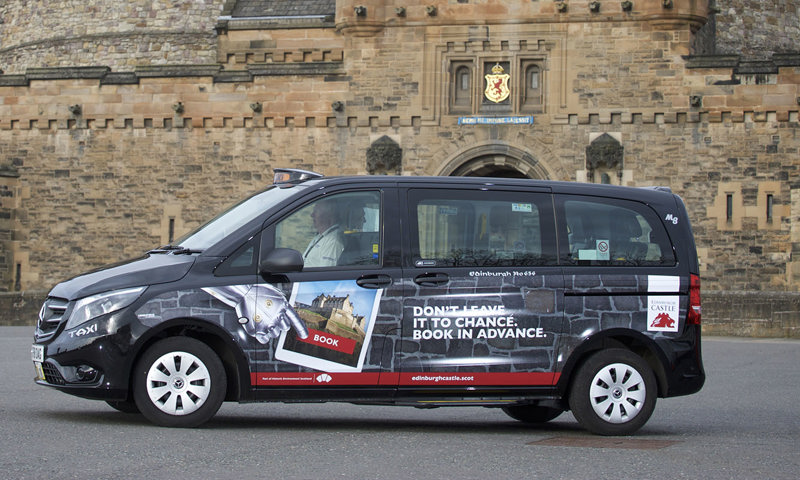
Accessible taxis (WAVs : wheelchair-accessible vehicles) are available from the main ranks at Waverley Station and on Princes Street. Book in advance for evenings and Festival period.
Edinburgh Castle accessibility in detail: The courtesy vehicle runs on request from the main gate to the upper courtyard. The Crown Jewels exhibition, Great Hall, and National War Museum are all accessible. The Scottish National War Memorial involves steps. Accessible toilets are located throughout the site.
Accessible Scottish Highlands and Isle of Skye
I will be honest: the Highlands and Skye are the least accessible part of this itinerary for wheelchair users, and the most rewarding for those who can manage some uneven terrain with a walking aid. The landscapes are so dramatic that even a limited range of movement delivers extraordinary experiences.
Glencoe is largely viewable from the road and from the National Trust visitor centre car park, which has accessible spaces and flat ground immediately adjacent. The valley itself is visible without leaving the car.
The Loch Ness Centre at Drumnadrochit is fully accessible step-free throughout with accessible toilets and a car park with Blue Badge spaces. A boat cruise on the loch is available from Drumnadrochit; confirm accessibility with the operator when booking as vessel designs vary.
On Skye, Portree harbour is flat and accessible. The Old Man of Storr car park gives a dramatic view of the pinnacle without requiring the walk. The Fairy Pools car park is on level ground and the first section of the path is relatively smooth before it becomes rough. Dunvegan Castle has accessible ground floor rooms and accessible parking the gardens have some uneven surfaces but the main paths are manageable.
Blue Badge parking, both countries: In Ireland, Blue Badge holders park free on yellow lines for up to three hours and use designated disabled bays without charge. In Scotland the same permit applies under UK rules. Always carry your badge and a clock card. The Citizens Information Ireland guide to the disabled parking card has full details for Irish use. For Scotland, the Blue Badge Scotland page covers local rules.

Frequently Asked Questions: Ireland and Scotland Itinerary
How many days do I need for an Ireland and Scotland itinerary?
A minimum of 10 days gives you a meaningful taste of both countries. 14 days is the ideal length for a combined trip. Three weeks allows you to add Northern Ireland, extend your time on Skye, or travel the Wild Atlantic Way more thoroughly.
Is it better to start in Ireland or Scotland?
Starting in Ireland and ending in Scotland (Dublin in, Edinburgh out) works well for most travellers because Irish roads require more adjustment than Scottish ones for drivers coming from abroad, and it is easier to settle in the east of Ireland before tackling the narrow roads of Kerry or the Highlands. That said, the itinerary works equally well in reverse.


Do I need a visa to visit both Ireland and Scotland?
US, Canadian, and Australian passport holders do not need a visa for either country. You can stay up to 90 days in each. EU citizens can enter Ireland freely but should carry a passport for the crossing into Scotland (UK) rather than relying on a national ID card. The UK’s new Electronic Travel Authorization (ETA) requires visitors from non-European countries to secure pre-travel permission online before entering the United Kingdom.
What is the best time of year for this 14-day itinerary?
May, June, and September offer the best balance of weather, daylight, and crowd levels for this route. July and August are warmest but busiest. For full detail on timing, read the companion guide on the best time to visit Scotland and Ireland.
Should I rent a car or take tours?
A rental car gives you the most flexibility and is the best option for exploring rural Ireland and the Scottish Highlands. However, if you are not comfortable driving on the left, organised tours from operators like Rabbie’s or Paddywagon are an excellent alternative and remove the logistical stress entirely.
How expensive is a 14-day Ireland and Scotland trip?
Budget varies widely depending on accommodation level, but a reasonable mid-range estimate for two people is 150 to 250 euros per day all-in (accommodation, food, transport, and entry fees). Peak season in July and August adds a significant premium on accommodation, particularly in Edinburgh during Festival month.
Can I do this itinerary without including Northern Ireland?
Yes, and this itinerary does exactly that. Northern Ireland, Belfast, the Causeway Coast, and the Titanic Museum deserves at least three to four additional days. If your schedule allows, it is worth extending the trip to include it. The Causeway Coastal route between Belfast and Derry is one of the most scenic drives in Europe.
What is the single biggest mistake people make on this itinerary?
Underestimating travel time and over-scheduling. Rural roads in both countries take significantly longer to drive than mapping apps suggest, particularly on the Ring of Kerry or in the Highlands. Build in one or two genuinely free half-days and your trip will feel like a holiday rather than a relay race.
Your Ireland and Scotland Itinerary
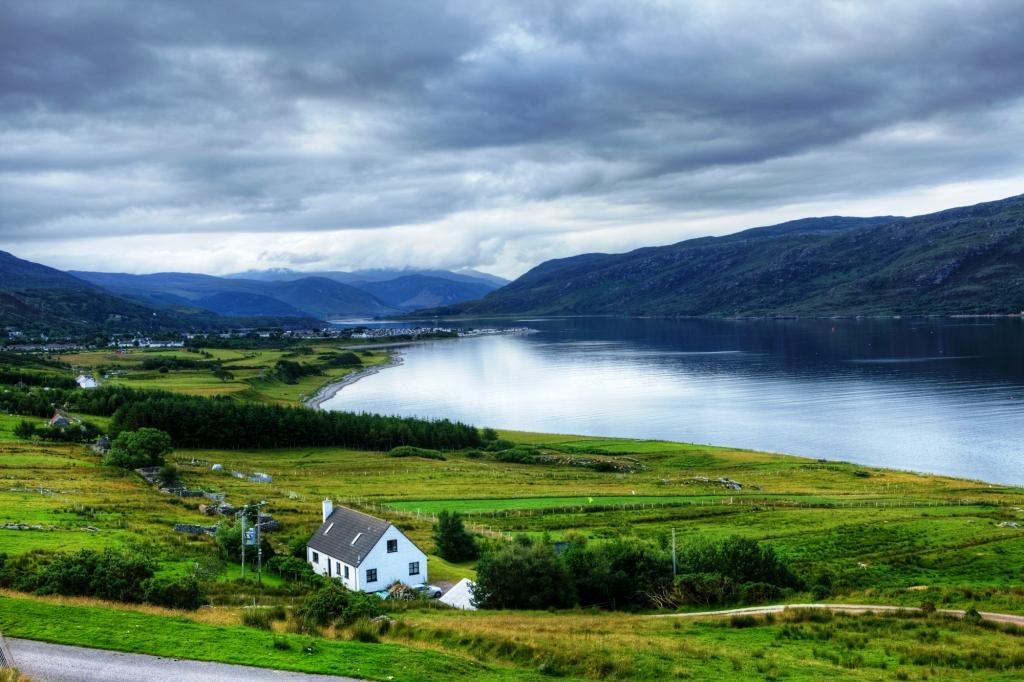
A 14-day Ireland and Scotland itinerary is genuinely achievable and genuinely extraordinary. Two weeks is long enough to feel the rhythm of both countries the slower pace of rural Ireland, the drama of the Highlands, the living history in Edinburgh and Dublin without the frantic pace that mars so many European trips.
The practical details matter: get the car sorted early, pre-book Newgrange and the Military Tattoo if they fall on your route, carry both currencies, and build flexibility into every day. The rest will take care of itself.
Explore more of the region with guides to England, Scotland, Wales, Northern Ireland, or the full United Kingdom Travel Guide.
Join 6,519 Ireland travellers in my Ireland Uncovered Facebook Group and 1,897 on my XYUandBEYOND PAGE
You might enjoy some of my other Scottish posts:
Best things to do in Inverness
42 Places to visit in the Highlands