
Rosslyn Chapel Tours: Discovering Scotland’s Most Mysterious Church
The moment you step into Rosslyn Chapel, you enter a different century. Seven miles south of Edinburgh, in the village of Roslin, this medieval masterpiece rises from the landscape like an illuminated manuscript made real. While tourists stream through Edinburgh Castle’s gates, here time moves at a medieval pace, allowing visitors to discover one of Scotland’s most enigmatic landmarks.

Built in 1446, Rosslyn Chapel – its medieval spelling preserved while the village name modernized to “Roslin” – guards its secrets behind walls adorned with over 1,100 intricate carvings. Like walking into a medieval puzzle box, every turn reveals another layer of mystery. Ceiling bosses flower overhead like stone gardens, while wall carvings read like a mason’s diary in stone. As morning light creeps across these ancient walls, it highlights different stories – each carving as crisp as the day it was carved, each waiting to be decoded.
While many tourists focus on Edinburgh’s Royal Mile or Highland castles, this architectural masterpiece offers something uniquely compelling. Whether drawn by its historic significance, mysterious symbolism, or its role in The Da Vinci Code, visitors discover more than just a medieval chapel – they find a portal to Scotland’s enigmatic past
Important Tip: You cannot take photos inside the Chapel. My interior photos are taken from the Guide Book I purchased at the Chapel and with the Courtesy of the official Rosslyn. Chapel site

A Journey Through Time
Rosslyn Chapel is a masterpiece of medieval stonework, filled with intricate carvings and enigmatic symbolism. The nave, the chapels main area, is covered by a barrel-vaulted ceiling adorned with stars, flowers, and geometric patterns. Its walls are crowded with sculpted figures, biblical scenes, and mysterious motifs.


The Apprentice Pillar
The most famous features are its pillars, particularly the Apprentice Pillar, a spiraling marvel wrapped in serpentine vines and often linked to the Tree of Life. According to legend, it was carved by a talented apprentice who was later murdered by his jealous masterrepresented by the nearby, plainer Master Pillar. Other pillars throughout the chapel display carvings of angels, saints, and the recurring Green Men, eerie foliate faces symbolizing rebirth.

Lady Chapel
At the eastern end lies the Lady Chapel, a smaller space dedicated to the Virgin Mary, with a raised platform and steps leading to an altar decorated with possible Crucifixion scenes. Nearby, the sacristy holds carvings of musical angels, some holding medieval instruments, adding to the chapels mystical atmosphere.

The Crypt
Beneath the chapel, rumors persist of a hidden crypt, though its exact location remains uncertain. Some believe secret steps descend from near the sacristy, possibly leading to buried treasures or even Templar relics, though no definitive proof has been found.
The chapels walls and arches are covered in further symbolism, from depictions of the Seven Deadly Sins to possible Masonic imagery. The west end, near the entrance, bears the Roslin familys coat of arms, while the interior as a whole blends Christian iconography with pagan and esoteric themes. With its countless uninterpreted carvings and enduring legends, Rosslyn Chapel remains a captivating puzzle, inspiring theories about lost knowledge, hidden chambers, and ancient secrets.

Location & Getting There
Rosslyn Chapel sits at Chapel Loan in the historic village of Roslin. There are several different ways to get there.
By Car: Take the A701 from Edinburgh towards Penicuika scenic 20-25 minute journey. Free parking is available on-site.
Public Transport: Lothian Buses 37 and 139 run regularly from Edinburgh’s city center (30-40 minutes). From Edinburgh Waverley station, take a connecting bus or taxi (20-25 each way).
Active Travel: For the adventurous, a pleasant 1.5-hour walk or cycle via the Bush Estate path offers beautiful countryside views.

Tickets and Timing
Adult admission is 11.50, seniors and students 9.50, and children 5-17 enter free with a paying adult. Book online or at the entrance, but plan for at least two hours – between the guided tour, personal exploration, and visitor center, time disappears quickly here.
Recommended Rosslyn Chapel Tours
Guided Day Tours
This summer, I joined both of these popular tours to experience different perspectives of Rosslyn Chapel. Each revealed something unique about this mysterious place. You can take private tours that are day tour with a chauffeur or choose a group tour. Many of the tours have a departure point in the City Centre.
Private Tour to Stirling Castle, Kelpies and Rosslyn Chapel
Embark on a journey through Scotlands rich history, where myth and majesty come alive. Gaze in awe at The Kelpies, the worlds largest equine sculptures, standing as a striking tribute to the regions industrial heritage. Then, ascend to Stirling Castle, perched regally above the city, where royal tales echo through its grand halls. Explore the castles lavish palace, and take in breathtaking views of the Wallace Monument and the rolling foothills of the Highlands.
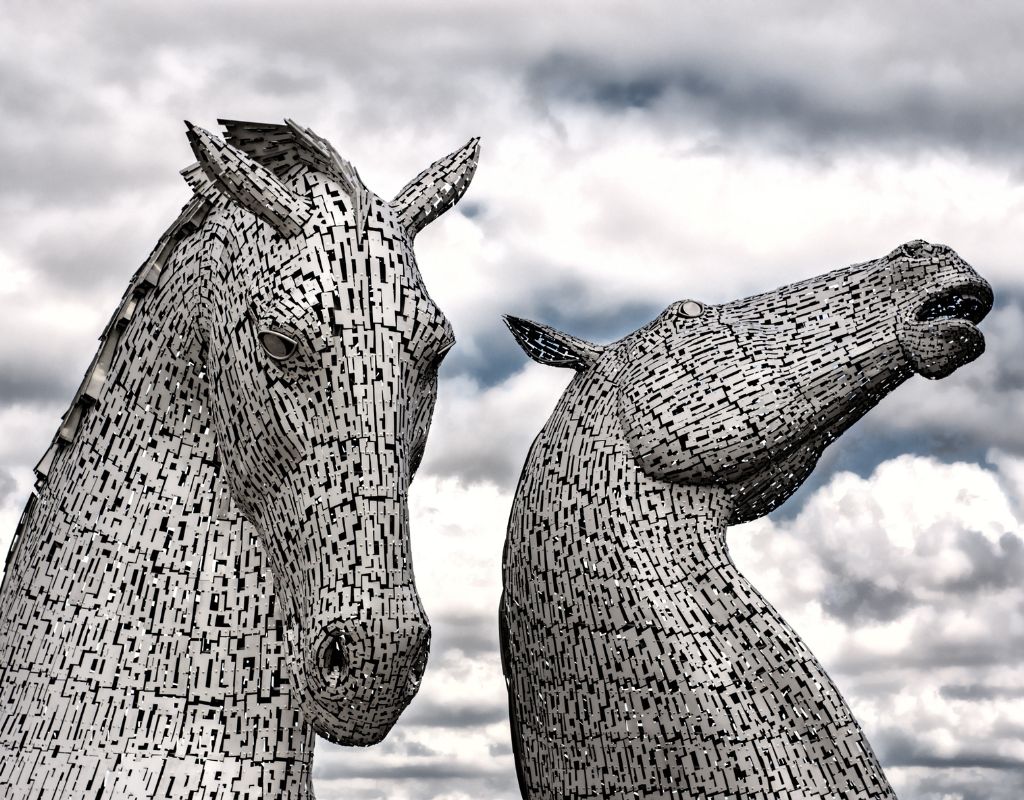
Let your expert guide transport you to the era of the Wars of Independence, where the legends of William Wallace and Robert the Bruce unfold. Delve into the mysteries of the Holy Grail at Rosslyn Chapel, a masterpiece of intricate craftsmanship shrouded in centuries of intrigue.
Half-Day Da Vinci Code Tour
“Stop here,” our guide whispered, positioning our small group beneath the chapel’s famous ceiling. “Look up at that particular boss – see how it differs from the others?” This allowed us to spot the distinctive carving that featured in The Da Vinci Code. This four-hour tour weaves through the Pentlands, starting at the ancient Castlelaw Hill Fort before reaching Rosslyn Chapel.
Scottish Borders Day Tour
A 1-day Rosslyn Chapel, Dunfermline Abbey and Stirling Castle tour from Edinburgh. “Each stone tells two stories,” explained our guide on the full-day borders tour. “The one carved into it, and the one about why it survived.” As we traveled from Melrose Abbey to Rosslyn Chapel, he shared tales of Knights Templar, Robert the Bruce, and the master masons who left their mark on Scotland’s history.
Both tours include skip-the-line entry and guides who know the chapel’s secrets inside and out. The half-day tour suits Da Vinci Code enthusiasts and those with limited time, while the full-day border experience provides deeper historical context.
From Tours to Treasures
After experiencing the chapel with expert guides, I spent time exploring on my own. “Everyone finds their own favorite spot,” the guides say. Mine turned out to be the legendary Apprentice Pillar.
Standing before this masterpiece of medieval craftsmanship, I watched other visitors circle it slowly, each finding different details in its spiraling patterns. A young architecture student spent nearly an hour sketching its curves, while her mum read the story of its creation – how a master mason, seeing his apprentice’s superior work, struck the boy dead in a fit of jealousy. “It’s like a medieval crime scene,” the student whispered.

Moving through the chapel reveals new wonders. Over 110 Green Men peek out from leafy corners, their expressions changing with the light. An American couple beside me were astounded when our guide pointed out carvings of corn and aloe vera – plants that shouldn’t have been known in Scotland until long after Columbus’s voyage. “Look up,” the husband said to his wife, “but also look down. The stories are everywhere.”

The recently restored Lady Chapel drew a small crowd during my visit. As afternoon sun streamed through stained glass, an elderly Scottish woman shared memories of seeing the chapel before its restoration. “The transformation is miraculous,” she said, watching light paint medieval patterns across the ancient stone floor. “Just like the masons intended.” Her words made me wonder about those original craftsmen and their vision for this extraordinary place.

A Legacy of Survival
That vision began with Sir William St Clair, third Prince of Orkney, in 1446. Walking through the chapel today, it’s hard to believe this was meant to be just one part of a much grander cruciform church. The ambitious project lasted forty years, ending with Sir William’s death, but what remains is extraordinary enough. Named the Collegiate Chapel of St. Matthew, it was designed to be both a family chapel and a center of learning – a medieval masterpiece that still teaches us today.
“It’s a miracle it survived at all,” our guide explained, describing how during the Scottish Reformation of 1560, angry mobs destroyed Catholic imagery across Scotland. While other churches were stripped bare, Rosslyn’s carvings remained untouched, protected by the St Clair family’s careful political maneuvering. A visiting historian in our group noted the irony: “What was built as Catholic symbolism now survives as art history.”
The chapel’s story of survival continues into modern times. During my first visit in the early 2000s, plastic sheets protected visitors from water damage. Today, thanks to a 13 million restoration project, sunlight streams through a pristine roof onto clean stone. An elderly couple beside me remembered those darker days. “We used to worry it wouldn’t survive,” the wife whispered, “but look at it now.”
What makes Rosslyn unique is how it lives in the present while honoring its past. During my visit, I watched tourists with cameras sharing space with local worshippers lighting candles. A father explained medieval masonry to his daughter while a woman sat quietly in prayer. This delicate balance between active church and historical monument keeps the chapel’s original purpose alive – not just preserving history, but creating a space where people can still connect with it.
Modern Fame and Cultural Impact
When Dan Brown’s The Da Vinci Code thrust Rosslyn Chapel into the global spotlight in 2003, everything changed. “Before the book, we’d get maybe a dozen visitors a day,” explains Margaret, a local volunteer. “Now people come from all over the world.” The subsequent film adaptation further cemented the chapel’s place in popular culture, though many visitors note that even Hollywood couldn’t capture its true atmosphere.

This surge in popularity brought both opportunity and challenge. The increased tourism helped fund a crucial £13 million restoration project, saving the chapel from serious water damage. However, it also meant implementing careful management strategies to protect the ancient stones from modern crowds. Today, the chapel maintains a delicate balance between its roles as tourist attraction and working church.
Beyond The Da Vinci Code, Rosslyn’s atmospheric interior has attracted numerous filmmakers. Productions like The Awakening, Outlander, and countless documentaries have featured the chapel, drawn by its unique combination of verified history and enduring mystery. Each production faces the same challenge: how to capture on camera what can only truly be experienced in person.

Despite its newfound fame, Rosslyn Chapel refuses to become merely a film location or tourist stop. During my visit, I watched local worshippers light candles in one corner while a documentary crew filmed in another – a perfect illustration of how this medieval sanctuary continues to serve both its ancient purpose and its modern audience.
The Sir Walter Scott Connection at Rosslyn Chapel
Sir Walter Scott, the famous Scottish historical novelist, poet, and playwright, had a significant connection to Rosslyn Chapel, which he helped bring back into public awareness in the early 19th century. His writings played a key role in reviving interest in the chapel, which had fallen into relative obscurity after the Reformation.

Scott featured Rosslyn Chapel in his 1805 poem “The Lay of the Last Minstrel”, where he described it as a place of mystery and legend. His romantic portrayal of the chapelalong with its associations with the Knights Templar, Freemasonry, and hidden treasures helped spark a resurgence of fascination with the site. Later, Rosslyn became linked with the Holy Grail legends partly due to its intricate carvings and secretive aura.
Rosslyn Hayride Memorial
The memorial outside Rosslyn Chapel in Scotland is known as the “Rosslyn Hayride Memorial.” It commemorates the Rosslyn Hayride, a tragic event during World War II. On 16 December 1943, a Royal Air Force (RAF) Vickers Wellington bomber (LN514) crashed near Rosslyn Chapel during a training flight. The plane was part of the 20 Operational Training Unit (OTU) based at RAF Lossiemouth. The crew members killed were all under the age of 21. The name comes from the aircrafts call sign, “Hayride,” which was painted on its side.

The Legend of the Sealed Vault & the Chalice
One of the most enduring legends surrounding Rosslyn Chapel involves a sealed underground vault (sometimes called the “apprentice pillars crypt”) said to contain sacred relicspossibly even the Holy Grail (the chalice used by Christ at the Last Supper).
Legend holds that over a century later, when Sir William constructed Rosslyn Chapel, he built a vast underground vault to safeguard the enigmatic treasure of the Templar refugees. This fabled hoard has been speculated to include: the head of Christ, the Ark of the Covenant, the Holy Rood, the Holy Grail, or even the lost scrolls from Jerusalems Temple.
In the late 18th century, Sir James St. Clair (a descendant of the chapels founders) ordered an excavation beneath the chapel to uncover the rumored vault.

As workers broke through the floor near the Apprentice Pillar, they reportedly found a staircase leading down to a sealed chamber. When they opened it, a rush of wind (or some say a spectral guardian) burst forth, extinguishing their torches. Terrified, they fled and resealed the vault.
Some versions claim that inside was a chalice (possibly the Grail) or even treasures brought back from the Crusades by the Templars.
This legend has fueled speculation that Rosslyn Chapel was designed to protect sacred relics, much like in “The Da Vinci Code” (which later popularized the idea of Rosslyns Grail connection). However, no conclusive evidence has ever been found to support the existence of the vault or its contents.
Planning Your Visit
Photography and Souvenirs
While interior photography isn’t permitted, the Chapel’s guidebook offers excellent photos of the intricate carvings. I found purchasing one helped me spot details I’d missed during my visit – it’s like having a piece of Rosslyn’s mystery to study at home.
Best Times to Visit
After multiple visits, I’ve discovered the chapel reveals different faces throughout the day. Early mornings – especially weekdays – offer the most serene experience. “The carvings look different every hour,” a regular visitor told me, “but sunrise is magical.” Opening times are 9:30 AM Monday-Saturday and noon on Sundays, with last entry 45 minutes before closing.
Tours and Exploring
The first guided tour at 10am attracts photographers hoping to capture the morning light through the east windows. Join one – our guide pointed out details I’d missed on three previous visits, including a tiny musician carved near the ceiling that most guidebooks don’t mention. Audio guides are available in several languages if you prefer exploring at your own pace.

Visitor Centre and Refreshments
Save the excellent exhibition for after your chapel visit; the displays make more sense once you’ve seen the real thing. Late afternoon brings smaller crowds, perfect for quiet contemplation. The cafe stays open until closing time, offering window seats and patios with stunning countryside views – ideal for reflecting over a Scottish scone

Beyond the Chapel: Local Attractions & Dining
Roslin Castle and Glen
A short walk from the chapel leads to the impressive ruins of 14th-century Roslin Castle. The wooded path offers stunning views of both structures, with the castle’s crumbling walls framing perfect photographs of the chapel. Roslin Glen, with its towering trees and rushing water, provides a natural complement to the chapel’s architectural splendor. These ancient paths, once walked by medieval pilgrims, create an atmospheric extension of your chapel visit.


Local Dining
The Original Rosslyn Inn, just two minutes from the chapel, offers traditional Scottish fare in a 17th-century setting. For a historic dining experience, consider the Sheep Heid Inn in nearby Duddingston (15-minute drive) – Scotland’s oldest pub, dating to 1360. The Laird & Dog in Musselburgh rounds out the local options with an impressive whisky selection and seasonal Scottish menu.

Making the Most of Your Visit
The Chapel’s Enduring Appeal
Rosslyn Chapel works its magic in different ways for each visitor. Art enthusiasts discover new details in the intricate carvings with each visit, while historians piece together clues about medieval craft and culture. Mystery seekers trace the paths of Knights Templar legends, and those seeking spiritual connection find quiet corners for contemplation. This layered experience ensures that no two visits are quite the same.

Accessibility
The chapel welcomes visitors of all abilities. Ramps provide wheelchair access, and guides are experienced in assisting visitors with different needs. The visitor center features accessible facilities, and designated parking spaces are available near the entrance. If you have specific requirements, the staff can arrange accommodations in advance.
Practical Tips
Take advantage of the free guided tours – guides point out easily missed details
Bring a notebook – sketching is allowed and helps you notice carving details
Visit on weekdays if possible for a quieter experience
Consider weather when planning – rainy days often mean fewer visitors
Don’t rush – the chapel reveals its secrets slowly
As my afternoon at Rosslyn Chapel drew to a close, I realized three hours had passed in what felt like minutes. The chapel has that effect – there’s always one more carving to examine, one more detail to understand. Even after spending a full day here, I left wanting to come back for more.

Whether you’re drawn by Dan Brown’s fiction, medieval history, or architectural beauty, Rosslyn Chapel offers something profound to every visitor. As I left on my final visit, watching sunset paint the ancient stones in gold, I understood why this place has captured imaginations for centuries. It’s more than just a tourist stop – it’s a journey through time that stays with you long after you’ve returned home.
Ready to plan your visit? Book tickets at www.rosslynchapel.com and prepare to discover your own connection to this remarkable place.
Explore more of the region with guides to England, Scotland, Wales, Northern Ireland, or the full United Kingdom Travel Guide.