
Unusual Foods Around the World – Bizarre Delicacies
One of the greatest pleasures of traveling is experiencing the incredible diversity of global cuisine—especially dishes that might seem unusual or even shocking to Western palates. As food-loving travelers, we’re always on the hunt for unique flavors and culinary traditions that tell the story of a place. After all, food is more than just sustenance; it’s a window into culture, history, and local life.
We often get asked about the most bizarre foods or the weirdest things people eat that we’ve encountered on our journeys. While we haven’t tried everything, we firmly believe that no dish should be labeled “weird” without giving it a fair chance. What seems strange to one culture might be a daily staple—or even a delicacy—in another.

Of course, calling something “weird food” can be a bit judgmental. Many Westerners don’t realize how much food preferences have evolved over time. What we consider unusual today might have once been a necessity—peasant food born from scarcity or a luxury reserved for the elite. Take lobster, for example: once dismissed as “poor man’s food,” it’s now a high-end dining staple.
So, before dismissing a dish as strange, why not embrace the adventure? You might just discover your new favorite meal—or at least a great story to tell. After all, isn’t that what travel and eating! is all about?
Would you dare to try some of the world’s most unusual foods? Let us know in the comments!
- Unusual Foods Around the World – Bizarre Delicacies
- Dare to Eat These? The Most Unusual Foods Worldwide
- Silkworm Larvae in South Korea
- Cuy koowee in Peru
- Cobra Snake in Vietnam
- Sannakji South Korea
- Percebes in Portugal
- Chapulines, Ant Eggs and Worms in Mexico
- Isaw – Chicken Buttholes in Taiwan
- Balut Philippines
- Hákarl Iceland
- Century Egg China
- Surströmming Sweden
- Rocky Mountain Oysters USA/Canada
- Tuna Eyeballs Japan
- Witchetty Grub Australia
- Bird’s Nest Soup China/Southeast Asia
- Casu Marzu in Italy
- Alpaca in Peru
- Arctic Edibles
- Escamoles from Guanajuato, Mexico
- Fried Hornets in Northern Myanmar
- Bugs in China
- Dare to Eat These? The Most Unusual Foods Worldwide
Dare to Eat These? The Most Unusual Foods Worldwide
From fertilized duck eggs in the Philippines to fermented shark in Iceland, the world is full of bizarre delicacies that challenge our culinary comfort zones. These are some of the most unique dishes in the world—like crispy hornets, century eggs, and jellied moose nose—offer a fascinating glimpse into different cultures and survival traditions. Whether you’re an adventurous eater or just curious, these foods prove that “weird” is often a matter of perspective!
Silkworm Larvae in South Korea
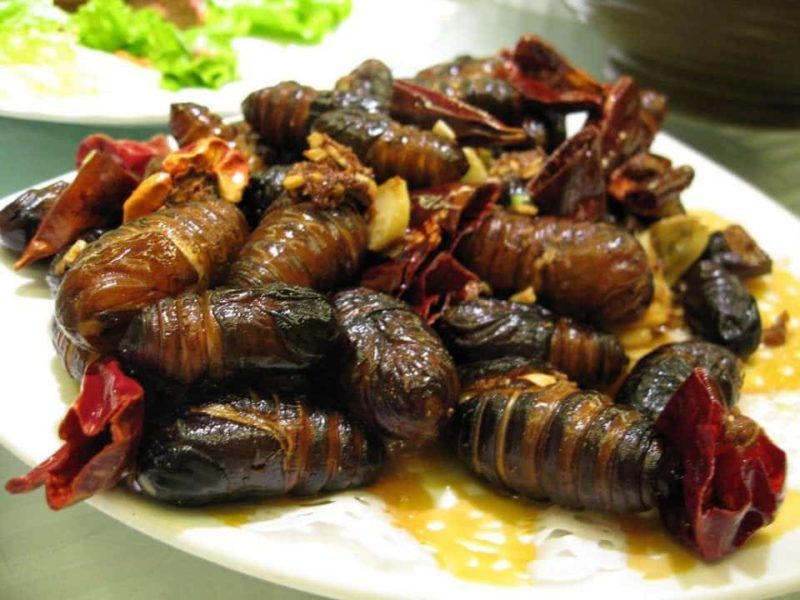
One of the most unusual foods I’ve ever eaten was silkworm larvae, aka bundaegi, in South Korea. You can find it canned in most supermarkets but old women cook it on the street in giant vats of a fragrant brow broth. They smell worse than they look and they don’t look too appetizing but they taste surprisingly nutty. If you can get past the smell they taste surprisingly not bad. I wouldn’t say they are delicious masheketa but they are definitely a good source of protein and dirt cheap! So be sure to give them a try when you visit South Korea.
Cuy koowee in Peru
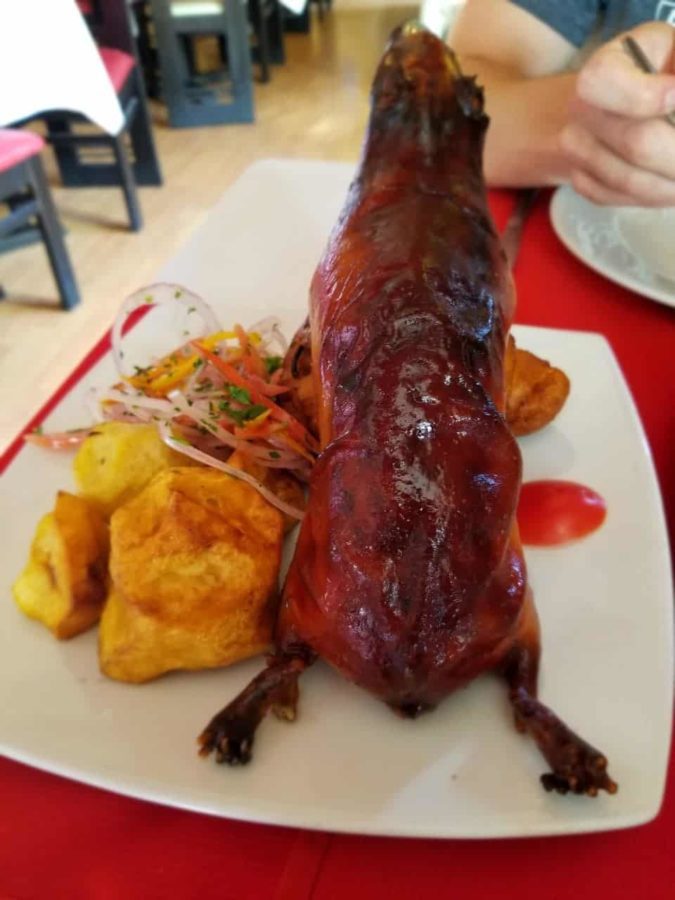
We knew the moment we arrived in Cusco, Peru that we’d have to decide whether we wanted to try the local specialities of the Andes: alpaca and guinea pig.
So we opted for Cuy which arrived looking horrid. The restaurant quickly diced it up for us, but we had to ask them to get the head out of our sight before we could bring ourselves to dig in. The meat was tougher and more sinewy than we expected and there was more fatty skin than meat. Thank goodness we’d ordered another dish as well so we could have another flavour palette and switch on and off with the guinea pig.
Cobra Snake in Vietnam
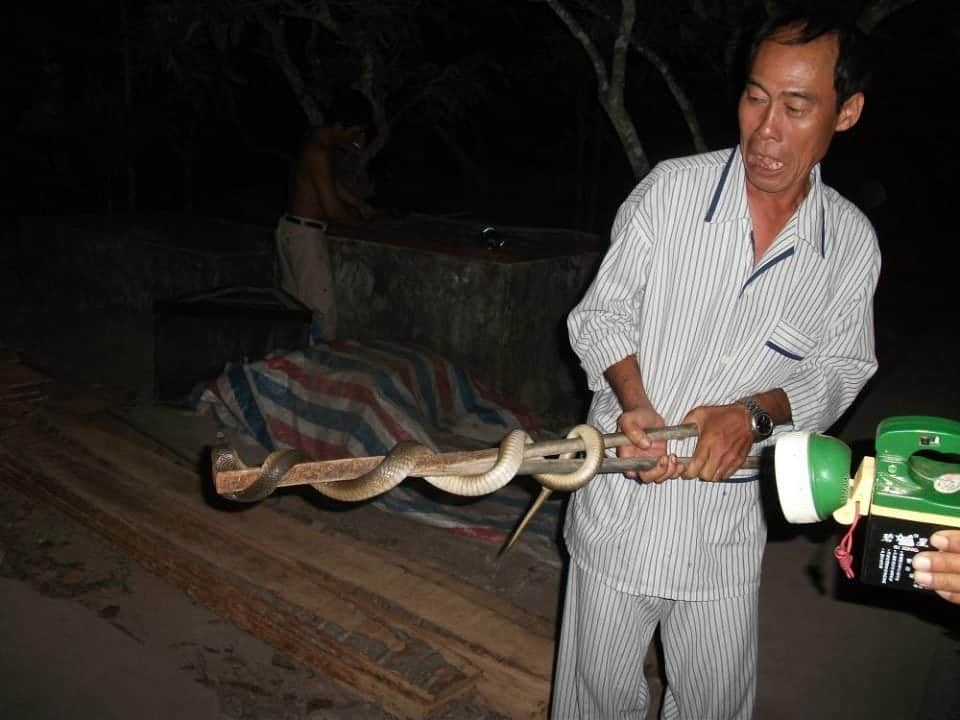
While in Vietnam years ago I came across an opportunity to eat a cobra snake. A real delicacy and supposedly something that gives you superhuman vitality is eating the heart while it is still beating. After catching the snake and beheading it, the chef dropped the heart into a shot of vodka still beating and I shot it. Did it work? Not sure but I’m here to tell the tale and life has been as exciting if not more so since doing it. Written by Rob at Stop Having a Boring Life
Sannakji South Korea
When I lived in Seoul, South Korea for a few months, I got to know the Korean food culture quite well and soon learned about one of the local delicacies – live octopus! Obviously, I was quite reluctant to try this dish, but in my last weeks in the country, I felt like it was part of the real cultural experience and I should give it a try.
I was a little bit afraid to try, especially since I’ve learned that quite a few Koreans die every year from eating living octopus – if you don’t chew enough, tentacles might get stuck in your throat and you’d choke! After having a small piece in my mouth, I chewed as much as I could before swallowing. The texture was weird, although the taste was not very strong and extreme. It was an interesting experience. However, I have to admit that I might rather prefer simple, boring sushi next time. Written by Patrick from the German Packpacker

Percebes in Portugal
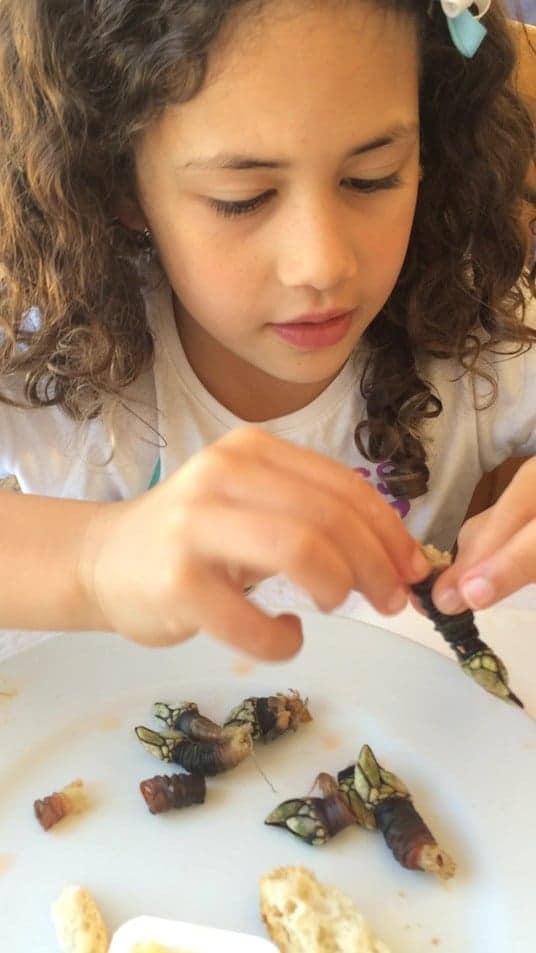
We’ve travelled the world and tried a lot of weird food things…from black garlic in Japan to snail soup in Morocco, but the most unusual food that we’ve tasted so far has to be, Percebes, a rare seafood delicacy popular in Portugal
Percebes or goose barnacles are crustaceans that live and grow on rocks and ships in the Atlantic Ocean and are very difficult to harvest. Percebes are considered to be a delicacy in both Portugal and Spain and are a rare treat because they’re quite dangerous to acquire. Written by From Lou Lou and Jaf at Pint Sized Gourmets.
Chapulines, Ant Eggs and Worms in Mexico
Right next to Teotihuacan – the famous archaeological remains near Mexico City, there’s one of these restaurants that don’t go unnoticed: La Gruta.
If you want to play tourist, try their Xoconostle margaritas, the homemade mole, chapulines crickets and grasshoppers, escamoles ant eggs, white worms, huitlacoche and quelites quesadillas, ram barbecue and elote cake for dessert. From Inma at A World to Travel

Isaw – Chicken Buttholes in Taiwan
I was in town to visit one of my favourite foodie friends and he did an incredible job of organizing an overview of the city for us. We tried everything from street noodles to Michelin-star restaurants.
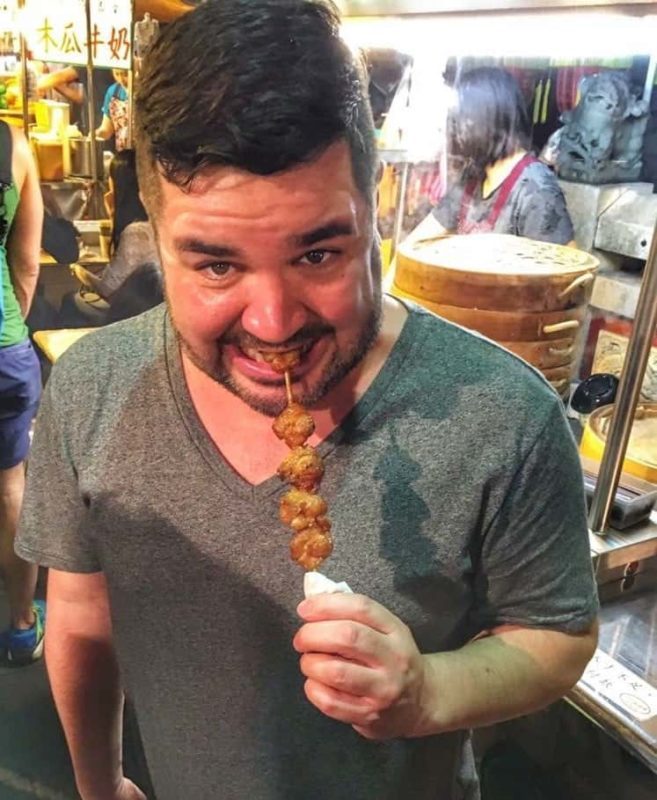
One night he took us to Shilin night market, the largest and most famous night market in Taipei. There we found carts selling everything imaginable. One cart we found was offering skewers with a translation that said “chicken anus”. I thought maybe the translation was incorrect until my friend told me that no, in fact, they were offering grilled chicken buttholes on a stick.
They didn’t think I would try them so of course, I had to, for the photo if nothing else. The actual taste wasn’t that bad- grilled meat is grilled meat. Mostly it tastes about the same. But years later I’m still left wondering- what was the crunchy bit? Nathan rom Foodie Flashpacker
Balut Philippines
If you’re looking for a true Filipino street food adventure, balut is the ultimate test of bravery. This fertilized duck egg, with its partially formed embryo inside, is a beloved late-night snack. Crack the top, sip the broth, then sprinkle a little salt or vinegar before digging into the rich, creamy yolk and tender duckling. No photo because I’m terribly squeamish and it was just gross.
Hákarl Iceland
What is the most exotic food in the world? Some would say Iceland’s fermented shark. Viking traditions live on in hákarl, Iceland’s infamous fermented shark. The Greenland shark’s toxic meat is buried for months to break down its urea, resulting in a pungent, ammonia-rich delicacy. Brave eaters compare the taste to very strong blue cheese—with a lingering fishy punch. It’s often chased with a shot of brennivín Icelandic schnapps to help wash it down. Not for the faint of nose!

Century Egg China
Don’t let its eerie appearance fool you—century egg is a Chinese delicacy with a cult following. Preserved in clay and ash for weeks, the egg transforms into a dark, jelly-like treat with a creamy, sulfuric yolk. Some say it tastes like hard-boiled egg with a funky, cheese-like twist. Sliced over congee or paired with pickled ginger, it’s an acquired taste worth exploring.

Surströmming Sweden
Widely considered the world’s stinkiest food, Sweden’s surströmming is fermented Baltic herring with a smell so potent it’s often opened underwater to contain the odour. The taste? Intensely fishy, salty, and sour—best enjoyed on crisp bread with potatoes, onions, and sour cream. Just make sure to eat it outdoors unless you want your kitchen to smell like a fishing dock for weeks!

Rocky Mountain Oysters USA/Canada
Don’t be fooled by the name—Rocky Mountain oysters are not seafood! These deep-fried bull testicles are a cowboy delicacy in the Canadian and American West, with a mild, slightly gamey flavour and a tender-chewy texture. Often served with cocktail sauce or ranch dressing, they’re a staple at rodeos and county fairs. A true test of your adventurous eating spirit!

Tuna Eyeballs Japan
In Japan, no part of the fish goes to waste—including giant tuna eyeballs. Steamed or simmered, these massive orbs have a texture similar to squid or octopus, with a rich, fatty flavour. They’re often served in izakayas Japanese pubs as a savory, slightly gelatinous snack. A little unsettling at first glance, but surprisingly tasty!
Witchetty Grub Australia
A protein-packed bush tucker treat, witchetty grubs are fat, wood-eating larvae traditionally eaten raw or lightly roasted by Indigenous Australians. When cooked, they’re said to taste like buttery almonds with a slightly earthy finish. High in nutrients, they’re a survival food turned gourmet curiosity. Would you try one live, or opt for the roasted version?

Bird’s Nest Soup China/Southeast Asia
One of the world’s most expensive foods, bird’s nest soup is made from the solidified saliva of swiftlet birds. The nests are painstakingly harvested from caves, then simmered into a delicate, slightly sweet broth with a gelatinous texture. Prized for its supposed health benefits, it’s a luxury dish fit for emperors—and modern-day foodies with deep pockets.

Casu Marzu in Italy
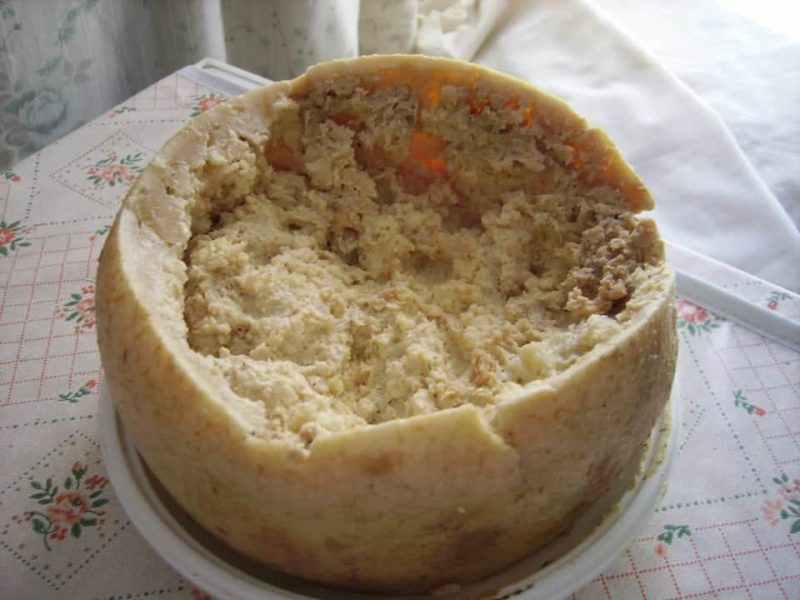
Have you ever heard of Casu Marzu? It is a special type of traditional sheep’s milk cheese, that originally comes from Sardinia. It also has different variations across other Italian regions. Casu Marzu is created by fermentation and decomposition, which is brought about by the digestive action of the live larvae. The insects are introduced to the cheese, which helps to break some of the cheese fats and makes it really soft. Sounds yummy, right?
The cheese was quite tasty and had an interesting texture. When my Italian hosts were cutting a piece off, we could see the moving worms at the top of the cheese block. Some people clear the larvae before consuming the cheese, as I did, but others decide not to. It’s still safe to eat the cheese like this. Agnieszka from Woldering Around
Alpaca in Peru
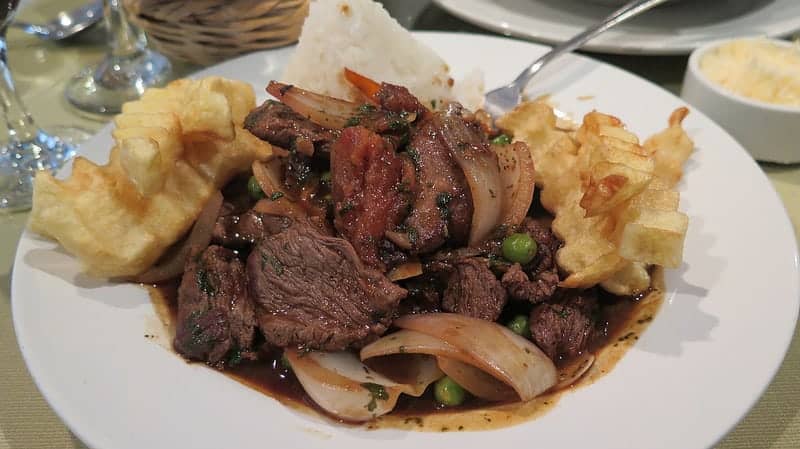
My husband and I spent 2 months in Peru without ever trying Cuy. Alpacas are arguably cuter than guinea pigs, but we’d read that they’re only ever eaten after they’ve lived long, fruitful, happy lives because they’re used for fur and labour until then. So we felt less guilty eating an alpaca than a guinea pig. We had just failed our Inca Trail trek and were killing time in Ollantaytambo before heading to Machu Picchu when we wandered into a small restaurant and saw a familiar dish on the menu: Lomo saltado, a delicious traditional Peruvian stew. Only this time, with alpaca. So we thought, what the heck. We tried it.
And you know what? It was tough, chewy, and gross. It tasted exactly like you’d expect old alpaca to taste like. Scratch this one off your must-try list and go hug a fluffy live alpaca instead! Lia and Jeremy from Practical Wanderlust
Arctic Edibles
Spending time in the Canadian Arctic, the local food scene isn’t exactly what one might think of nor is it easy to discover. It consists of traditional indigenous foods from the land, harvested for centuries for survival and prepared simply if at all. Over the course of 2017, I was lucky enough to try a few since it’s not a simple matter of going to a market or restaurant.
Seal is eaten often raw, boiled and fried, but the most interesting would be the raw brain. ‘Inuit ice cream’ as they called it, it was chopped up like tartar almost immediately after the kill. There is a mild nuttiness and a smooth creamy texture, it is quite pleasing on the palate if you can remove the idea of what you are eating from your mind.
Muktuk or Maktaaq is the skin and first layer of blubber on the narwhal, beluga or bowhead whale. Muktuk is craved by the Inuit population and is vital to their diet containing more vitamin C than an orange. Neutral in flavour, anyone who enjoys sushi would like this. BUT, there is a textural issue. The layer of blubber almost melts in your mouth leaving an oily residue and the skin is like hard rubber. Jason from Edible Adventure Travel

Escamoles from Guanajuato, Mexico
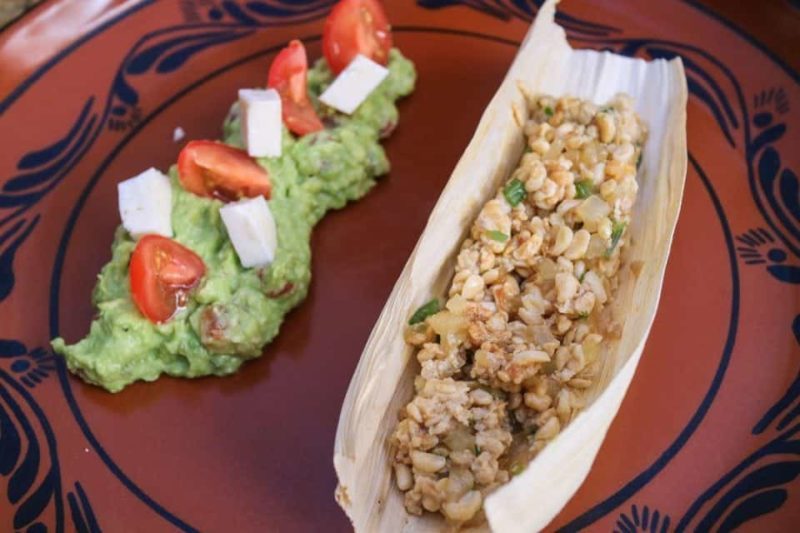
Escamoles ant eggs may seem disgusting at first glance, but they are actually quite tasty! In Guanajuato, Mexico, escamoles are considered a delicacy and are widely known as Mexican caviar. These edible larvae are harvested from the roots of agave plants, which are only grown in a hot and arid climate. Because they are difficult to collect and are only available between February and May, escamoles can get very expensive.
Oftentimes, escamoles are pan-fried with onion and chilli and eaten by themselves. Or you can also add them to tacos or omelettes. They have a surprisingly nutty and buttery taste. Next time, you’re in Guanajuato or Central Mexico, you gotta give it a try! Cat and Kev from For Two Plz
Fried Hornets in Northern Myanmar
Trekking in off-the-beaten-track locations and staying with the local folk’s means that you eat like locals. We were trekking in Shan State, Northern Myanmar with another couple and a guide. Our dinner was communal and included black tea from the local plantation, eggs, vegetables and fried hornets.
The Hornets had a slightly crunchy texture, they required a little chewing. The taste was almost chicken-like, especially when drowned in hot sauce and mixed in with a fried egg.
The hornet is a subset of the wasp and eats pests like aphids. They also have a sweet tooth and like sugar, tree sap and other insects, like bees. They’re a big source of protein and the locals that we stayed with take their protein where they can find it. And that’s a method supported by the World Health Organization WHO, which recommends that we eat more insects. Sarah and Nigel from A Social Nomad
Bugs in China
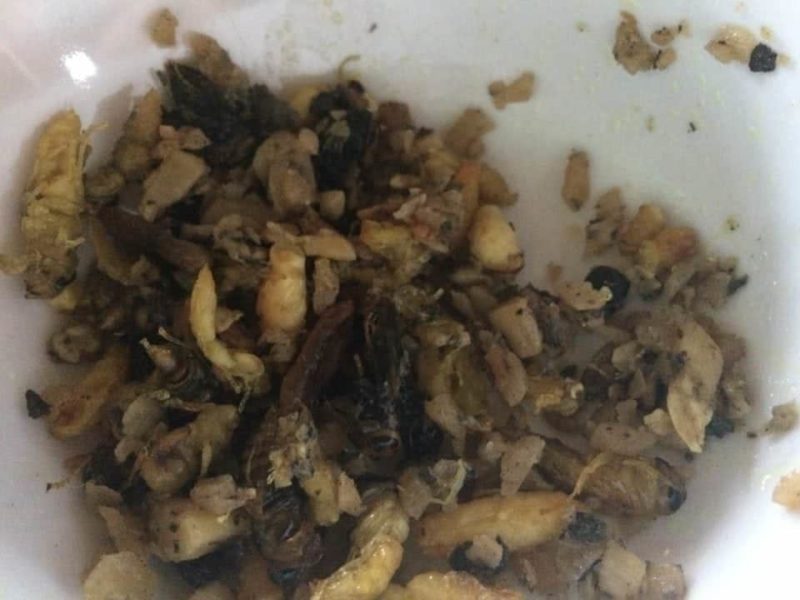
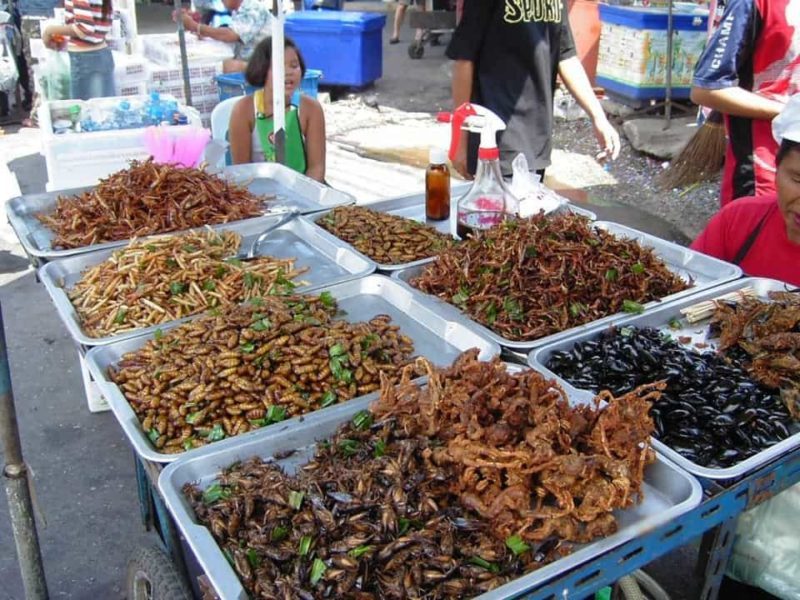
If anyone asked me to describe an unusual meal I would have to say a buffet of bugs in China. Like many countries, China has endured great famines. During these times of devastation and social upheaval societies struggle to survive, frequently eating whatever they can. This has resulted in a culture that offers what Westerners would consider unusual foods, mainly insects, as a perfectly acceptable menu option. It turns out that insects are low in fat and high in protein and fibre.
Renowned chefs are now experimenting with different insect recipes designed to appeal to the affluent tastemakers. So don’t be surprised if the buffet of unusual foods you saw on a Chinese side street now appears in a fashionable bistro served with a side of sheep penis! Talek from Travels with Talek
Food is more than just sustenance—it’s a reflection of culture, history, and survival. What may seem strange to one person is a cherished tradition to another. From fermented shark in Iceland to crispy tarantulas in Cambodia, these unusual dishes challenge our palates and expand our culinary horizons. Some are delicacies, others born from necessity, but all offer a fascinating glimpse into how different cultures make the most of their resources.
So, the next time you travel, why not step out of your comfort zone? You might just discover that “weird” food is surprisingly delicious—or at least an unforgettable story to tell. After all, adventure tastes better when it’s unexpected!
Which of these would you be brave enough to try?
