
Finding the Secret Waterfall in Donegal: A Local’s Guide to Largy
My search for the secret waterfall that only Donegalers knew about came about when I first moved to County Donegal. Before it was a pin on every Google Maps itinerary, I navigated back roads with vague directions, the sense of mystery making the final discovery all the more rewarding. That feeling of finding something truly secret is what so many seek on their trip to Ireland.

Today, the cat is out of the bag. While you likely won’t have it to yourself, the magic of this place—officially called Largy Waterfall—remains. Based on my first-hand experience from before the crowds and many visits since, this guide will help you plan a safe, respectful, and unforgettable trip to this iconic waterfall Donegal spot.
- Finding the Secret Waterfall in Donegal: A Local’s Guide to Largy
The Location and Nature of the Secret
The object of your search is officially named Largy Waterfall, a stunning cascade that plunges from a rocky outcrop into a roofless sea cave on the wild North Atlantic. It is located on the outskirts of the small hamlet of Largy, which sits on the R263 road—the main route connecting the fishing town of Killybegs to the cultural gem of Glencolmcille. It is a place that feels powerfully remote, a testament to the untamed nature of County Donegal, Ireland.
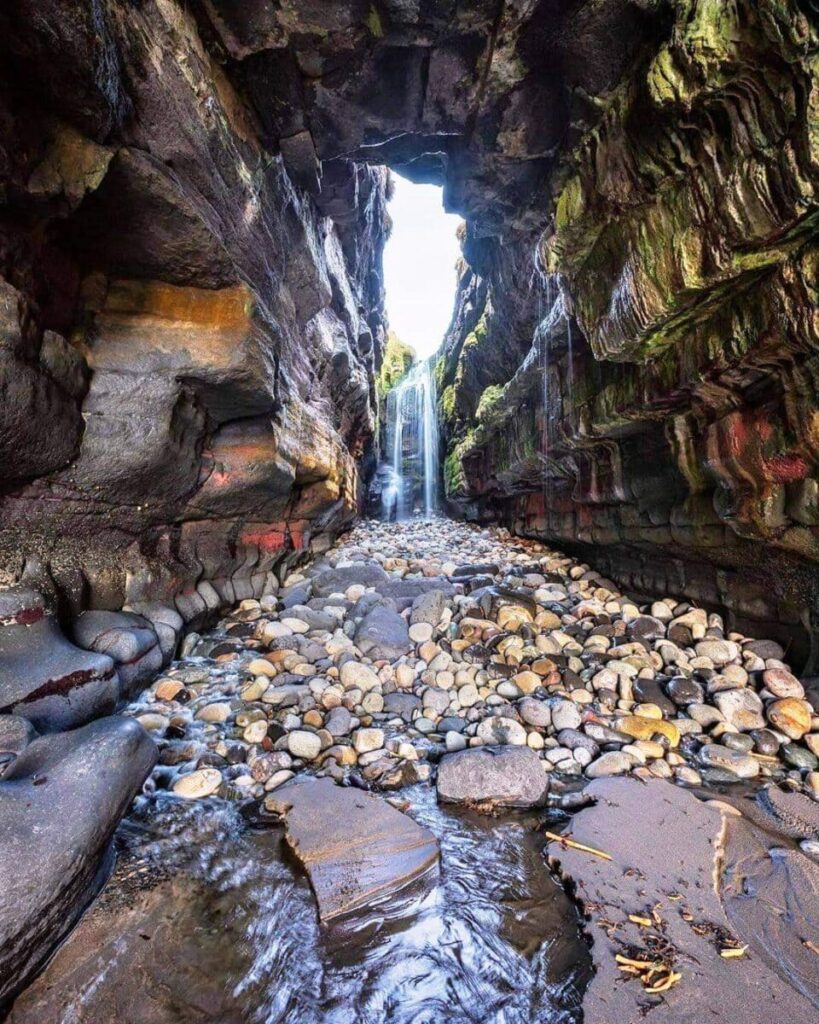
Crucially, every visitor must understand two fundamental facts. First, this magnificent secret waterfall is situated on privately owned land. Public access is a privilege granted by the goodwill of the landowner, a generosity that comes with the responsibility to tread lightly. Second, the waterfall’s cave is entirely submerged at high tide. The timing of your visit is therefore not a matter of convenience but of safety; the spectacle can only be safely witnessed during a low tide window.
Planning Your Visit with Safety and Respect
My early trip was one of intuition and luck, but today’s visitor must be meticulous in planning. Before you even set out on your trip to find the secret waterfall, your first stop should be a reliable tide forecast website for the Killybegs area. To safely enjoy the walk, take your photographs, and return without fear of being cut off by the incoming sea, you must aim to arrive at the site a full two to three hours before the predicted low tide. This is the single most important piece of advice for a safe and enjoyable experience. You cannot visit the site without a car as it is impossible to get to by public transportation.
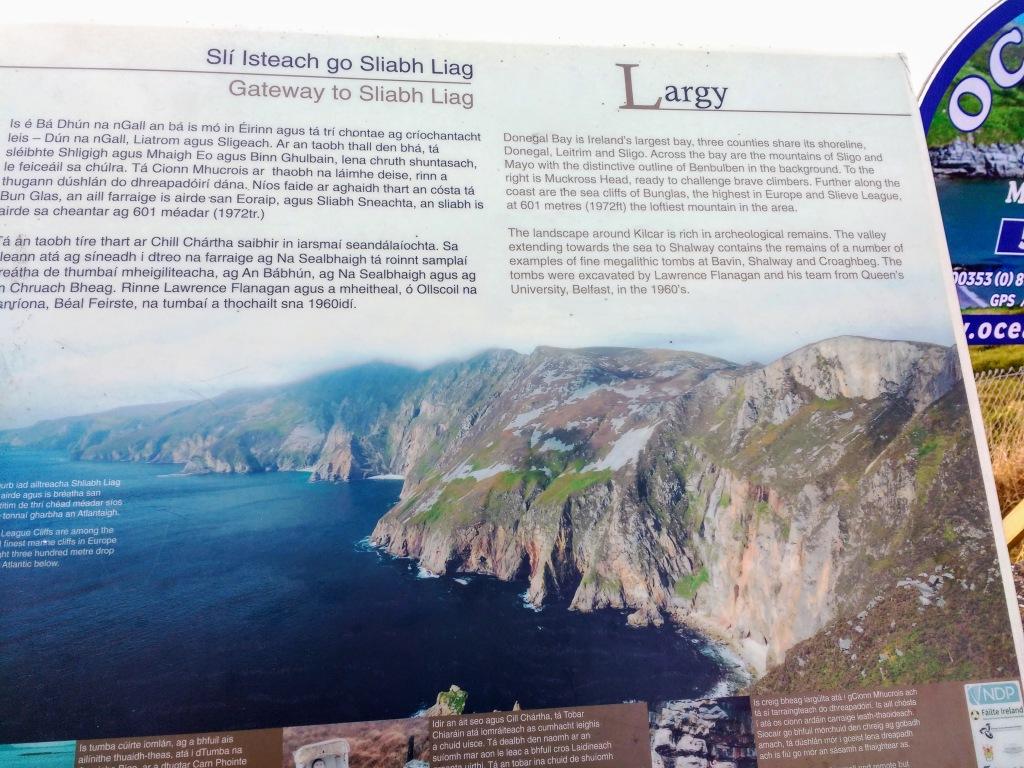
Upon arrival, you will need to park at the designated Largy Viewing Point. It is essential to know that parking here is extremely limited. If you find the car park full, you must accept that this is not your day and return at another time. Under no circumstances should you park on the verges of the R263. This road is narrow, busy with tourist and local traffic, and has blind corners. Illegally parked cars create a severe hazard for emergency vehicles and agricultural machinery and show deep disrespect to the people who call this beautiful place home.
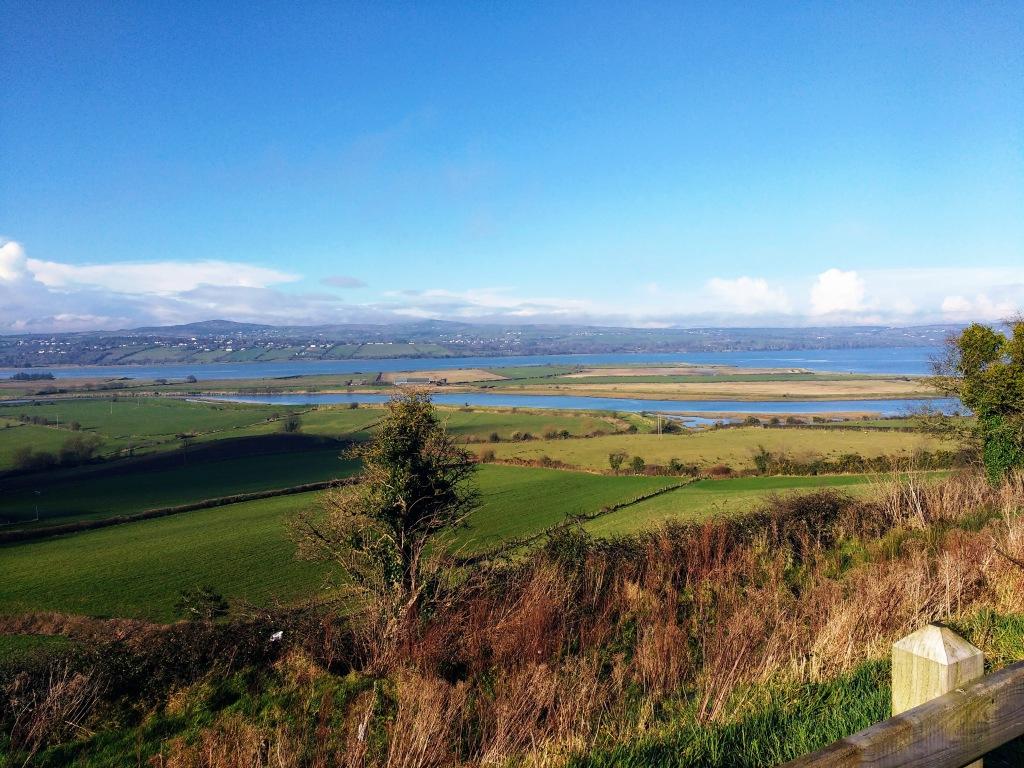
The walk itself requires proper attire. The path, once you leave the lane, is a natural, rugged coastline of often-slippery rocks and damp ground. My own first visit taught me that denim and standard trainers are a recipe for discomfort and potential slips. Sturdy, waterproof hiking boots with a deep grip are an absolute non-negotiable for this adventure. The weather in this part of Ireland is famously dynamic, so wearing windproof and waterproof layers will ensure you remain comfortable no matter what the Atlantic sky decides to do.
Finding it on Google Maps
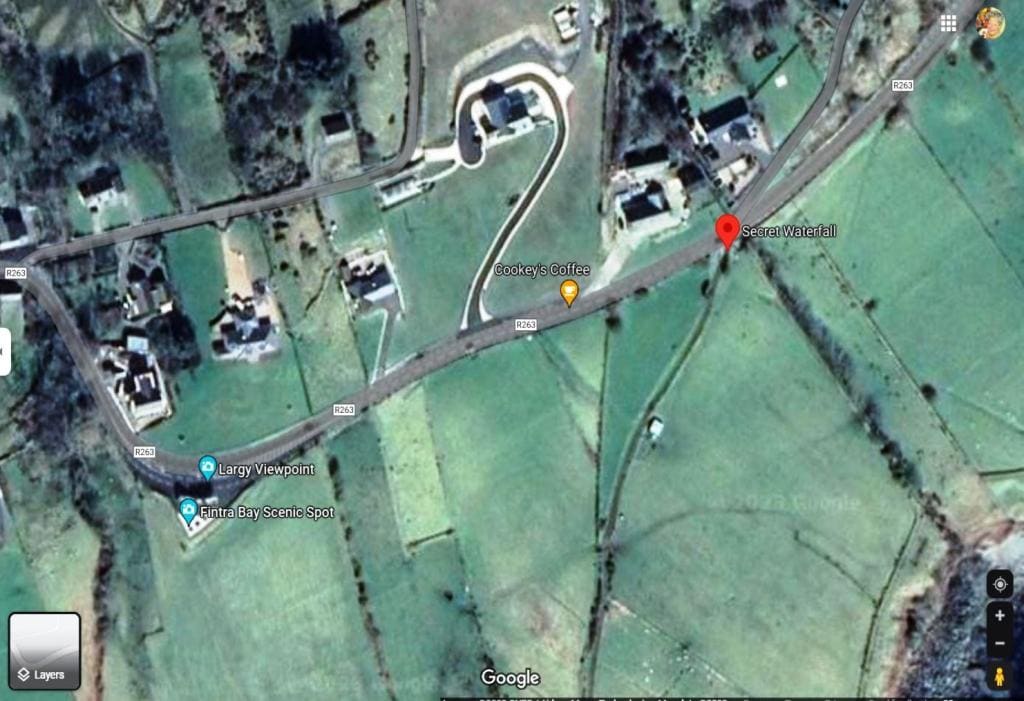
While I found it without digital help, it’s much easier today. However, do not rely solely on Google Maps for directions on the narrow roads or to find the exact path. Use it to navigate to “Largy Viewing Point” for parking. The pin for the secret waterfall itself is often inaccurate and should not be used for final navigation—follow the instructions below instead.

1. Check the Tide Times First
This is the golden rule for visiting any coastal waterfall Donegal is famous for. The cove floods at high tide.
- Action: Use a reliable tide forecast for Killybegs. Plan to arrive at least 2-3 hours before low tide.
2. Parking Responsibly
- Location: The only appropriate parking is at the Largy Viewing Point.
- The Reality: Spaces are extremely limited. If the lot is full, you must leave and return another time. Parking on the narrow R263 is illegal and dangerous.
Local Tip: There is usually a coffe pod parked at the Viewpoint so stop off and grab a great coffee.

The Walk to the Secret Waterfall: A Step-by-Step Guide
The Path to Discovery
From the Largy Viewing Point, the journey to the secret waterfall begins on foot. You must walk approximately 250 metres north along the R263 road towards the direction of Killybegs and Fintra Beach. This stretch of road requires your utmost attention as there is no footpath, and you must be vigilant of passing cars.
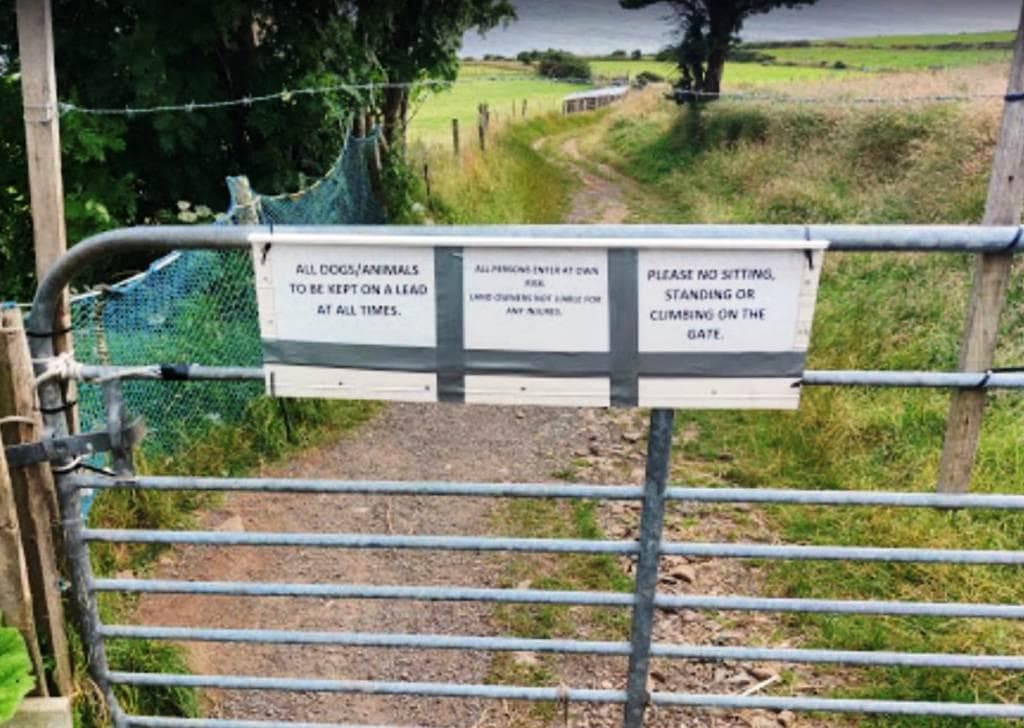
Your landmark is a gate on your left-hand side, about halfway along this short walk. Here, you will find clear signage from the landowner outlining the conditions of access. Please take a moment to read these rules carefully. They remind visitors that they enter at their own risk, that dogs must be kept on a leash, and that the gate must be closed behind you. Most importantly, they implore us to leave no trace of our visit.
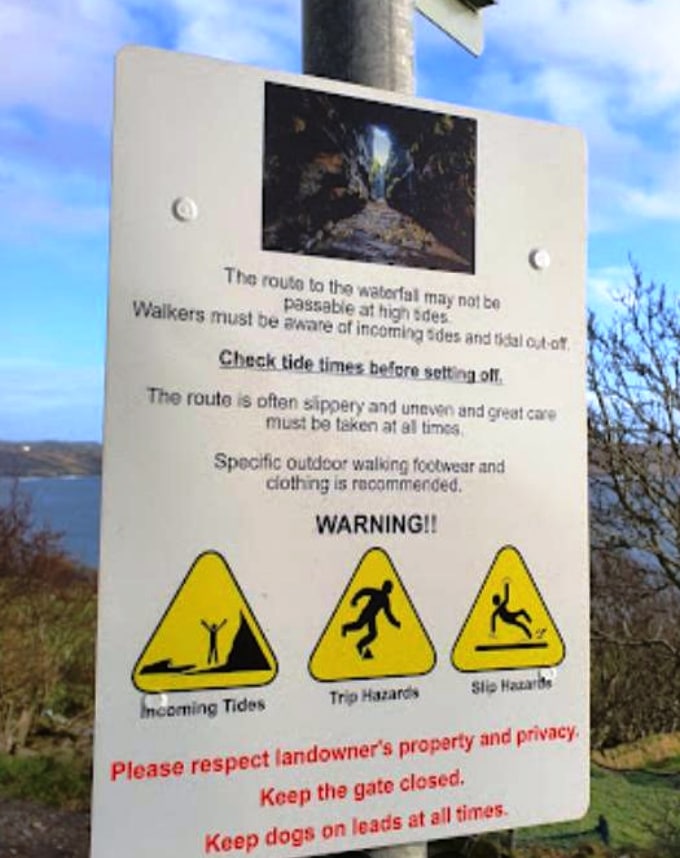
Once through the gate, a farm track leads you roughly 300 metres towards the sound of the ocean. When you reach the coast, the path ends, and your careful navigation of the rocky shoreline begins. This final 20-minute stretch requires you to pick your own way along the coast. The rocks are uneven and can be treacherously slick with seaweed and spray. Take your time, watch your footing, and soon the magnificent sight and thunderous sound of the secret waterfall in its cave will reward your efforts.
Secret Waterfall important tips
Park at the Largy Viewing Point (if a space is available).
Find the Gate: Walk approximately 250 meters north on the R263 road (back towards Killybegs). Please be incredibly careful; there is no footpath.
Respect the Signs: At the gate, you will see signs from the landowner. Read them carefully. They outline the rules: you enter at your own risk, dogs must be on a leash, close the gate behind you, and leave no trace.
The Walk: Once through the gate, follow the track for about 300m to the coast. From there, navigate along the rocky coastline for another 15-20 minutes to reach the secret waterfall cave. There is no defined path; the rocks are jagged and slippery.
Practicing “Leave No Trace”
The landowner’s generosity is why we can enjoy this secret spot.
- Carry In, Carry Out: Take all your litter, including food wrappers and dog waste bags, back with you.
- Leave It as You Found It: Do not disturb rocks or build cairns.
- Control Your Dog: Keep your dog on a leash at all times.
Exploring the Surrounding Area
The Slieve League Peninsula is packed with incredible sights. Make a day of it!
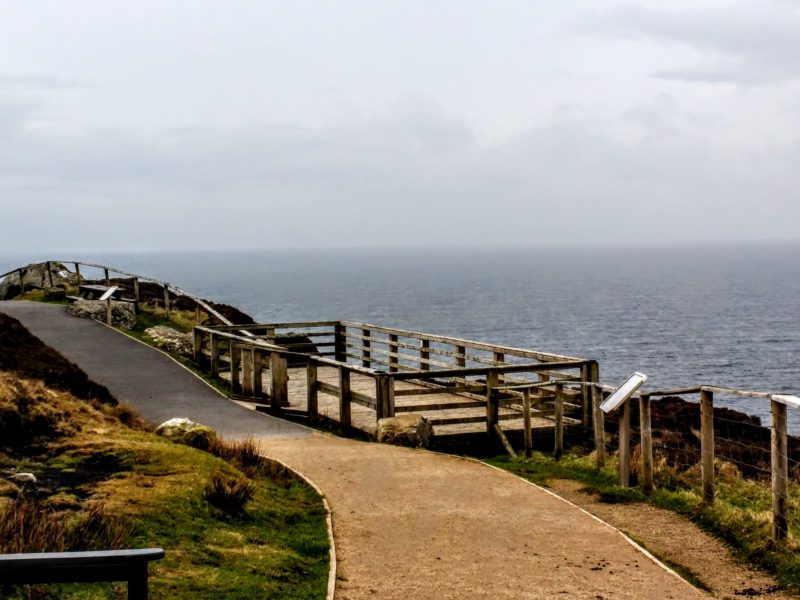
Slieve League Cliffs (Sliabh Liag): Some of the highest sea cliffs in Europe. The Bunglass Viewpoint is the main access point.


The Rusty Mackerel: A quintessential Irish pub in Teelin. Perfect for a warm meal and a pint after your adventure.

Teelin Pier: Departure point for spectacular boat tours of the Slieve League Cliffs from the sea.
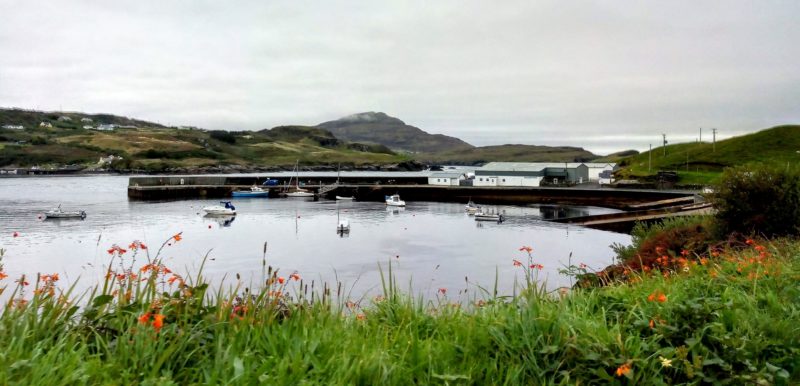
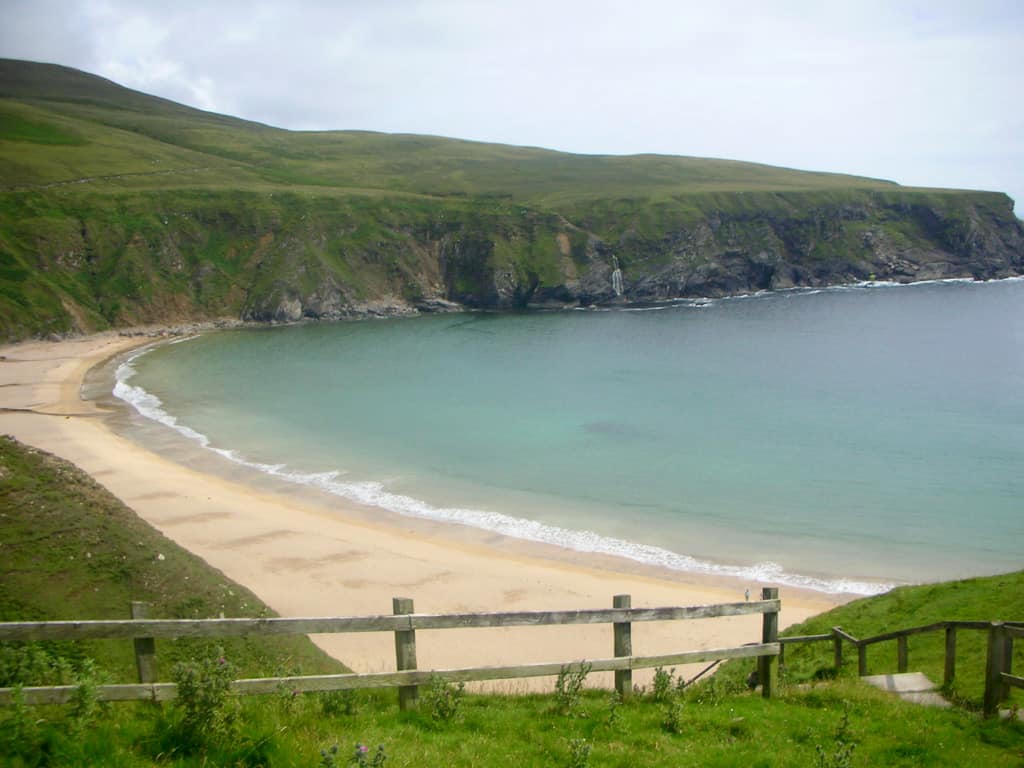
Silver Strand (Malin Beg): A stunning, secluded horseshoe beach accessed by a long staircase, well worth the effort.
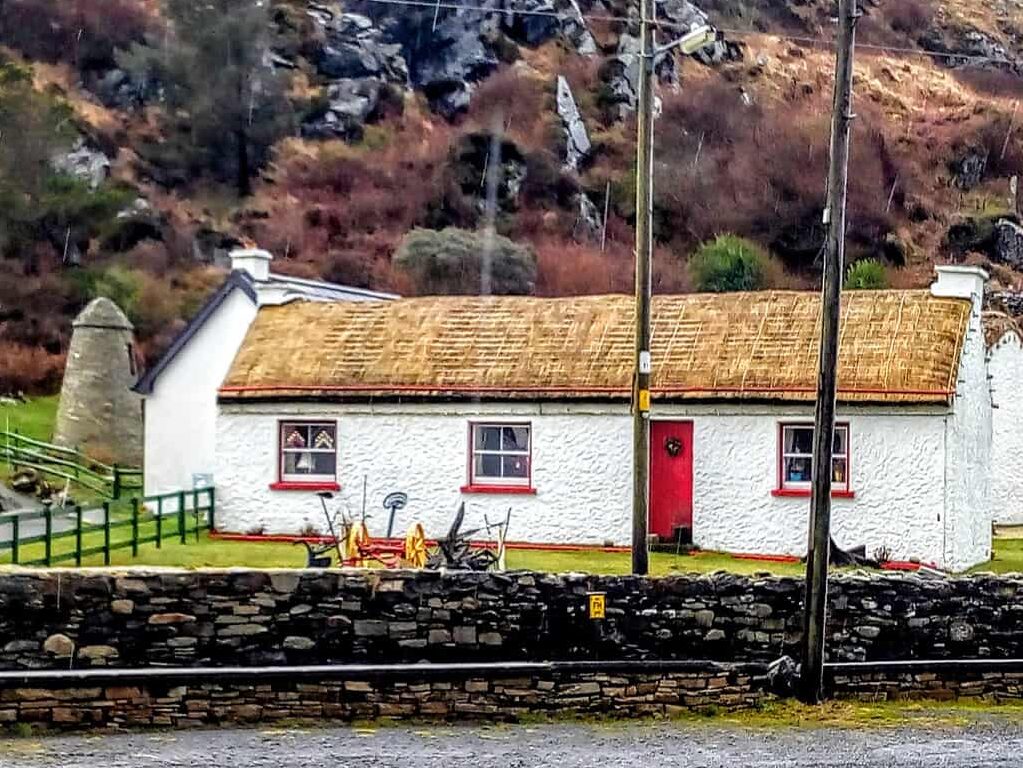
Glencolmcille and the Folk Village: The heart of the village is its renowned Folk Village (An Clachán), an open-air museum featuring thatched cottages that vividly illustrate life in rural Ireland through the centuries.
An Unforgettable Sunset and Local Gems
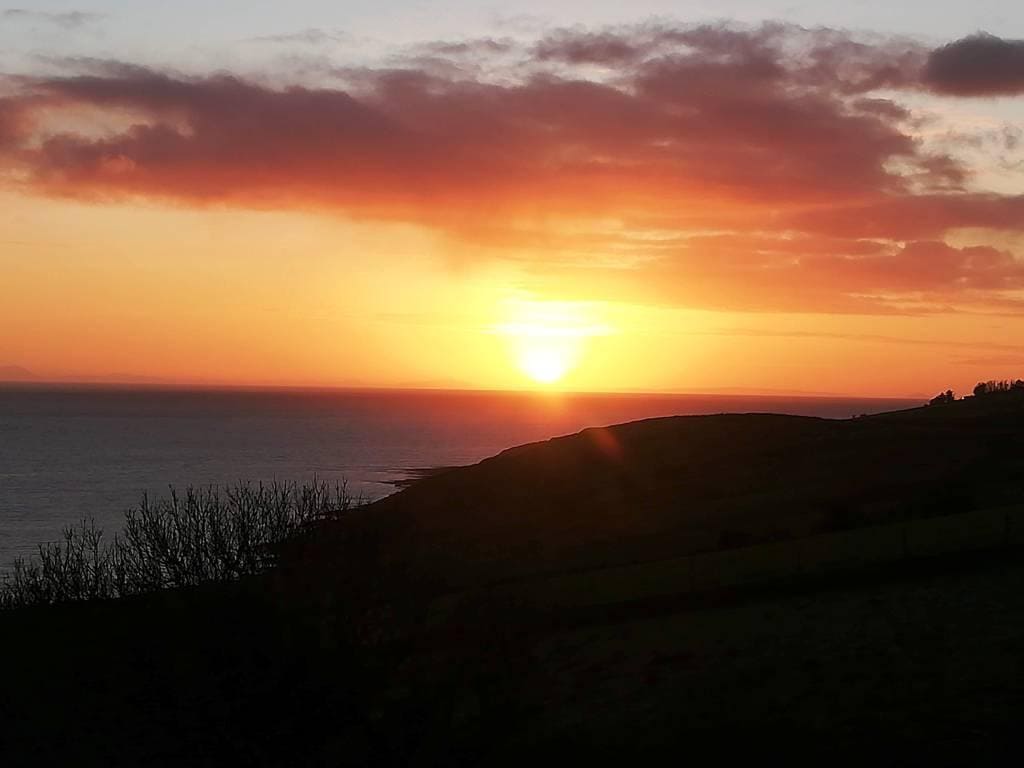
After your visit to the waterfall, I highly recommend a return to the Largy Viewing Point later in the day. While the morning light is perfect for exploring, the evening transforms this spot into one of the most spectacular sunset vistas in all of Donegal. To stand there as the sun dips below the Atlantic horizon, painting the sky in hues of orange and pink, is the perfect, peaceful end to an adventurous day.
This region of Ireland is brimming with wonders that can fill your itinerary. The mighty Slieve League Cliffs, among the highest sea cliffs in Europe, dominate the peninsula and offer hiking and viewing opportunities that are simply breathtaking. Personally I think this area beats the Cliffs of Moher hands down.
Slán go fóill… until next time, may the tides lead you back
Explore More Donegal Guides
If you’re planning a trip around the county, you might also enjoy these guides:
Best time to visit Donegal – A guide to our 4 seasons in one day when visiting
Things to Do in Donegal – The county’s most spectacular landscapes and attractions
Donegal Travel Guide – Tips for exploring Ireland’s wild northwest
Donegal without a Car – Ways to explore Donegal without a car
Is Donegal worth visiting? Yes. It is wild, spacious, deeply local and unforgettable if you approach it the right way
Donegal Hidden Gems – Discover the places that only locals know
Stay Connected
Share your Irish adventures with us:
• Facebook: Ireland Uncovered: Hidden Gems and local tips
• Blog Comments: Tell us about your discoveries
• Updates: Subscribe for seasonal travel tips
Slán go fóill! (Goodbye for now!)