
A Literary Pilgrimage: Visiting the Grave of W.B. Yeats in Drumcliff, Sligo
W.B Yeats, whose poem said “tread softly, for you tread on my dreams”
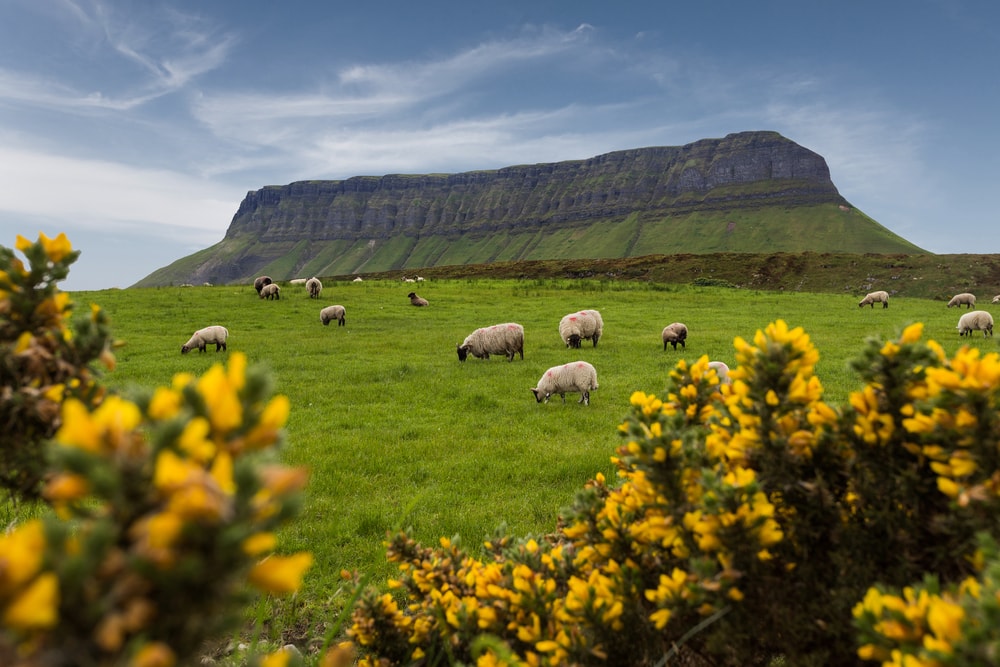
The imposing limestone ridge of Benbulben dominates the landscape of County Sligo, on the Wild Atlantic Way a silent sentinel watching over what is known as Yeats Country. For fans of Ireland’s famed poet, William Butler Yeats, a visit to this corner of the northwest is a pilgrimage, and its spiritual endpoint is the simple, poignant grave in the shadow of the mountain.
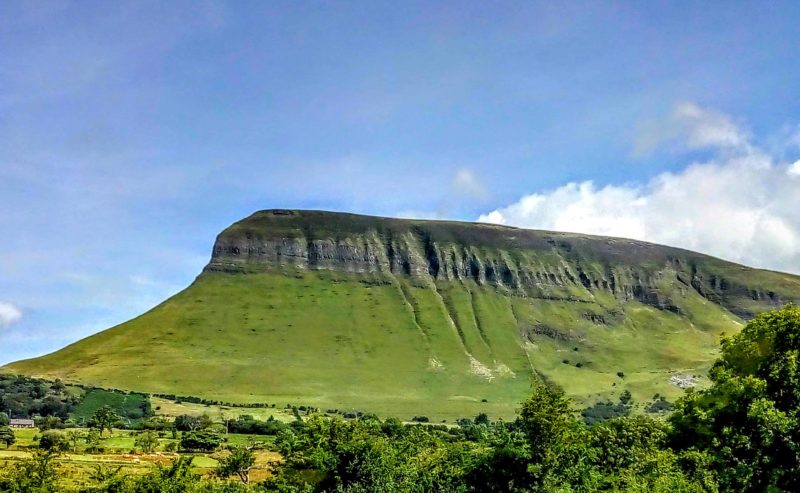
Finding the final resting place of the Nobel laureate is surprisingly straightforward. The grave is located in the churchyard of St. Columba’s Church in Drumcliff, just off the N15 road, a mere 15-minute drive from Sligo Town. We parked easily in the small lot (it’s free, as of our visit in September 2025) and stepped out into the quiet air, the bulk of Benbulben making the entire scene feel hushed and significant.
Note: The Irish name is Drom Cléibh and Drumcliff and Drumcliffe are used interchangeably
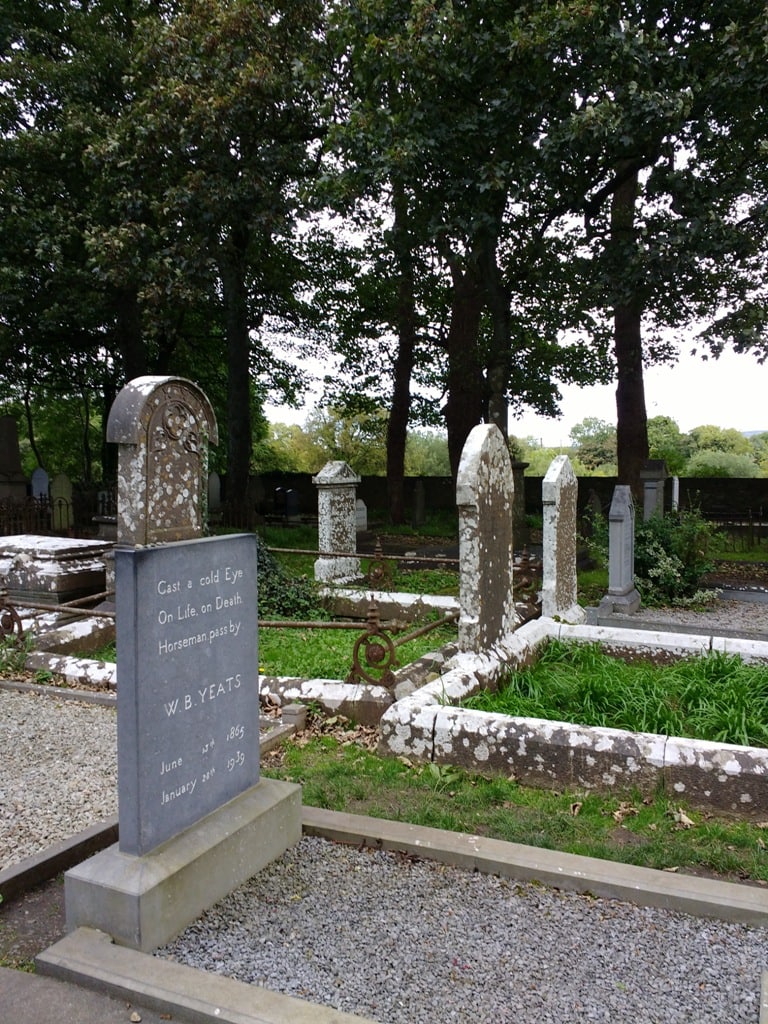
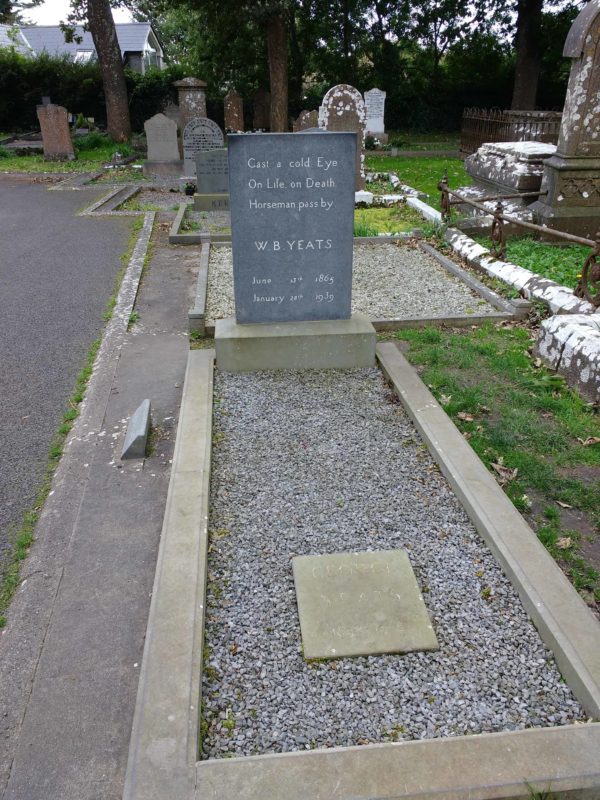
This isn’t a grandiose mausoleum; it’s a simple, well-kept Irish churchyard. The headstone is modest and can be easy to miss among the others. Look for the dark stone with the famous epitaph carved in clear, uncompromising letters:
Cast a cold Eye
On Life, on Death.
Horseman, pass by!
These words are the final lines from his poem “Under Ben Bulben,” and Yeats himself instructed that they be inscribed on his grave. Standing there, reading them in this place, is a powerful moment for any literature lover.
A Man of Sligo, Resting in Sligo – Yeat’s Grave
While Yeats died in Menton, France, in January 1939, his remains were repatriated and finally laid to rest here in Drumcliffe in 1948. Bringing him home to Sligo was a fitting end for a man whose heart and poetry were forever tied to this landscape. His grandfather had been the rector here at St. Columba’s, forever linking the Yeats family to this very ground.
The task of returning Yeats’s bones to Ireland was formally executed by the Irish Minister for Foreign Affairs at the time, Seán MacBride. MacBride was not only a government official but also the son of Maud Gonne, the revolutionary and muse to whom Yeats dedicated much of his poetry, adding a layer of personal significance to the affair.
The process was delayed primarily by World War II. Yeats died in France in January 1939. Plans for a temporary burial in France until he could be returned to Sligo were already in place, but the outbreak of the war in September 1939 made the immediate repatriation of a non-combatant’s remains logistically impossible and a very low priority.
The occupation of France and the ensuing years of conflict meant that the issue could not be revisited until long after the war ended, leading to the nearly nine-year delay before his final reinterment in Drumcliff in September 1948.
A layer of intrigue surrounds Yeats’s final repatriation. While it’s long been known his body was moved from France to Ireland in 1948, questions about the process have persisted. The controversy gained new traction in 2015 when French documents were uncovered, reigniting debate over whether the correct remains were actually exhumed and transferred.
Some experts cited in The Irish Times argue the records suggest a significant procedural error, while official bodies maintain the rightful bones lie in Drumcliff . This historical mystery means that visitors to the grave are not just paying respects to a literary giant, but are also standing before a fascinating, unresolved puzzle that continues to captivate scholars and fans alike. As an anthropologist, I find this intersection of bureaucratic record-keeping, memory, and burial rites to be a compelling addition to the site’s layered history.
The grave is often adorned with tokens left by visitors—pens, coins, and small stones—a quiet testament to his enduring legacy.

More to See in Drumcliffe Churchyard: A Site of Ancient and Modern History
While the grave of Irish Poet W.B. Yeats is the main draw for many, to leave after only seeing that is to miss the layers of history that make this location so profound. Drumcliff is a place where Ireland’s ancient past and its rich literary heritage converge. As an anthropologist, I find the interplay between the 6th-century monastic site and the 20th-century poet’s grave utterly fascinating—a testament to how Ireland’s cultural identity is continuously woven from old and new threads.

The Drumcliff High Cross (9th Century)
Just a short walk from Yeats’s grave stands one of the finest examples of a Celtic High Cross in Ireland. This towering sandstone cross, dating from the 9th or possibly early 10th century, is a masterpiece of early Christian artistry. Take your time to walk around it and examine the intricate panels depicting biblical scenes. You’ll see Adam and Eve’s temptation, the sacrifice of Isaac, and Daniel in the lions’ den, among others.

These carvings were the Bible for a largely illiterate population, a stone sermon telling stories of faith, sacrifice, and redemption. The circle connecting the arms, a quintessential Celtic feature, is thought to represent eternity or a halo. The cross’s remarkable preservation, especially the detailed south face, offers a direct and powerful connection to the skilled artisans and devout community that flourished here over a thousand years ago.
The Remains of the Round Tower
Near the cross, you’ll find the foundation of a round tower, all that remains after the upper sections were struck by lightning in 1396. These towers are iconic features of Irish monastic settlements, and their exact purpose is still debated by historians. Were they bell towers, lookouts, repositories for sacred relics, or places of refuge during Viking raids? The most likely answer is all of the above. The stump at Drumcliff, though modest, fires the imagination.

Standing beside it, you can almost picture the complete, soaring stone tower that would have dominated the skyline, a beacon of learning and faith in early medieval Ireland and a symbol of the monastery’s importance.
Drumcliffe Church – St. Columba’s Church (c. 1809) & The Holy Well
The current Church of Ireland building, while more modern, sits on hallowed ground. It was built in the early 19th century, but it stands on the site of a much earlier church associated with the monastery [3]. The serene atmosphere inside is a welcome contrast to the often-busy churchyard. Also, ask locally about the location of St. Columba’s Holy Well (Tobar Cholmcille).


Many ancient monastic sites have associated holy wells, which were often places of pilgrimage and “pattern days” (patron saints’ days). Finding it requires a bit of a hunt, but it connects you to the even older, pre-Yeats traditions of this landscape.


The Drumcliff Tea House & Craft Shop
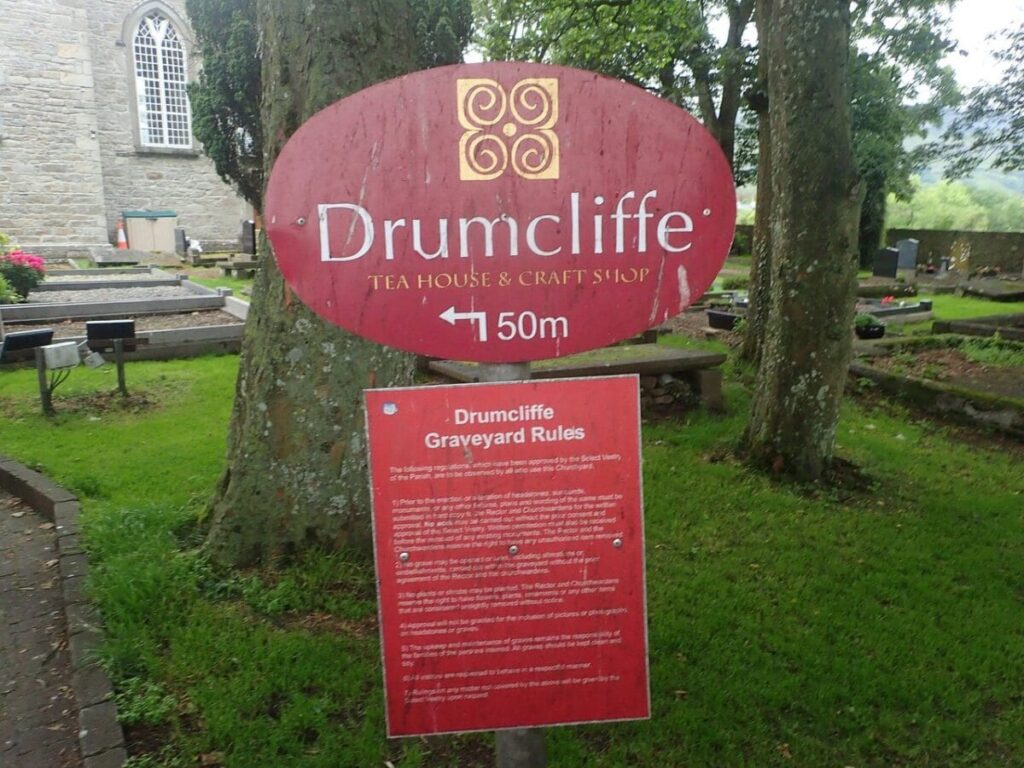
No Irish pilgrimage is complete without a cup of tea. The on-site Tea House is a delightful spot to process the history you’ve just absorbed. As a former restaurateur, I always appreciate a place that does simple things well. They offer excellent coffee, a proper pot of tea, and delicious homemade scones with jam and cream. It’s also a wonderful craft shop featuring work from local Sligo artists and producers—the perfect place to find a meaningful souvenir that supports the local economy. It’s a living part of the community, continuing the tradition of Drumcliff as a place of gathering.
Putting It All Together: Your visit to Drumcliff becomes a journey through time:
- The 6th Century: St. Columba establishes his monastery.
- The 9th Century: The High Cross is carved and raised.
- The 10th-12th Centuries: The round tower is built.
- The 19th Century: The current church is constructed; the Yeats family is in residence.
- The 20th Century (1948): W.B. Yeats is laid to rest in the churchyard.
- The 21st Century: Visitors from all over the world come to connect with it all.
This layered history is what makes a stop here so much more than a quick photo opportunity. It’s a deep, quiet dive into the very heart of Irish culture.

Planning Your Visit to Yeats’s Grave
Location: St. Columba’s Church, Drumcliff, Co. Sligo, F91 E8C2 (Easy to find right on the N15 main road)
Parking: There is a free dedicated car park.
Admission: Access to the churchyard is free and open to the public.
Accessibility Note (September 2025): The path from the car park to the grave is a flat, packed gravel surface. The churchyard itself is grassy and can be soft underfoot after rain, but the grave is located close to the path and is accessible for those with mobility concerns.
Final Thoughts
Visiting the grave of W.B. Yeats is less about a dazzling spectacle and more about paying homage to a literary giant in the land that inspired him. It’s a quiet, thoughtful stop on any tour of Ireland’s west—a chance to connect the powerful words on the page with the powerful landscape that shaped them. For any fan of poetry and history, it’s an essential and moving experience.