
Christmas in Europe: 30 Best Places to Spend Christmas (With Market Dates)
| Quick answer The best places to spend Christmas in Europe are Vienna, Strasbourg, Colmar and Nuremberg for traditional Christmas markets; Rovaniemi in Finnish Lapland for snow and Santa; London and Paris for big-city lights; Prague, Budapest and Kraków for value; and Málaga or Malta for winter sun. Most markets open between mid-November and late November 2026, and many close on 23 or 24 December. |
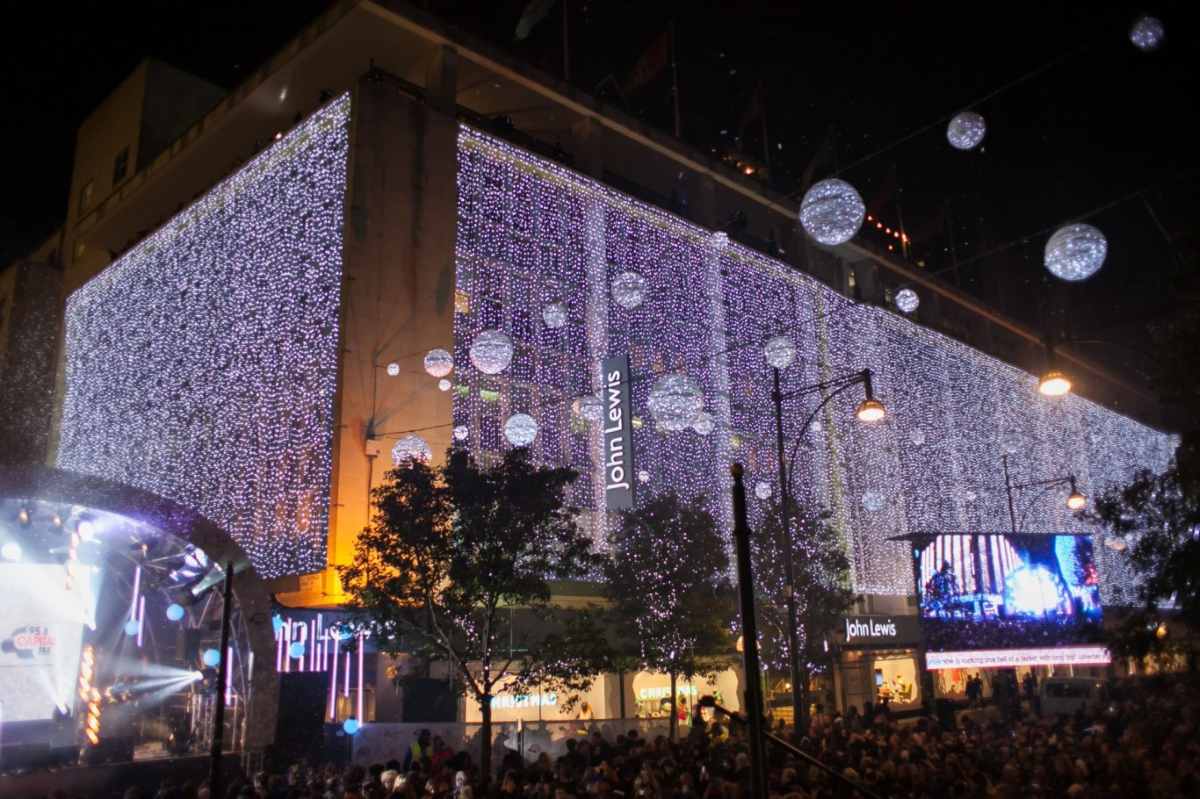
I’ve spent Christmases in London, where I lived for ten years, in France, where I lived for three, in Spain, in Paris, in Dublin and in Belfast, close to where I live now on the Causeway Coast. What I’ve learned is that Christmas in Europe isn’t one thing. It’s Glühwein in a medieval square in Germany, the Three Kings parade in Andalucía, a pub session in Ireland and the Yule Lads in Iceland.
- Christmas in Europe: 30 Best Places to Spend Christmas (With Market Dates)
- Christmas in Europe 2026: Fast Facts
- Best Places for Christmas in Europe: Quick Picks
- Europe’s Christmas Market Dates 2026
- Map: The 30 Best Places for Christmas in Europe
- Europe’s Best Christmas Markets 2026: The Traveller Vote
- The Classic Christmas Market Cities
- For Snow, Santa and the Northern Lights
- Big-City Christmases: Paris, London and the Capitals of the North-West
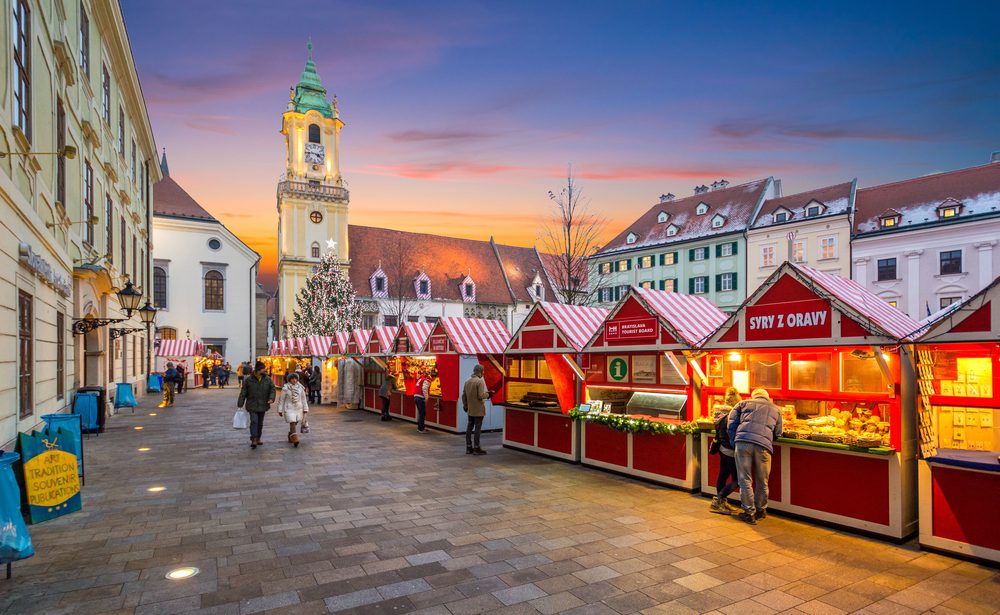
- A Warmer Christmas in Southern Europe
- When Do Christmas Markets in Europe Close?
- December Weather at a Glance
- Christmas Eve or Christmas Day? How Europe Celebrates
- What to Eat and Drink at a European Christmas Market
- Practical Tips for a Christmas Trip in Europe
- Accessible Christmas Markets in Europe
- Frequently Asked Questions About Christmas in Europe
- My Thoughts on Christmas in Europe
- You Might Also Like
Christmas in Europe 2026: Fast Facts
| Market season: early November to early January; the busiest stretch is late November to 23 December First big markets to open: Vienna’s Schönbrunn (6 Nov) and City Hall (13 Nov) markets Best weeks to go: the last week of November and the first two weeks of December, on weekdays Christmas Day: most markets, shops and much public transport close; plan ahead Main celebration: 24 December in most of central and northern Europe, 25 December in Ireland and the UK Best value: Kraków, Bratislava, Budapest, Prague, Zagreb and Riga Most reliable snow: Finnish Lapland and the Alps Not happening in 2026: the Dublin Castle Christmas market |
This guide covers 30 of the best places to spend Christmas in Europe, grouped by the kind of Christmas you want, with checked 2026 dates, honest tips and the practical things other lists leave out.
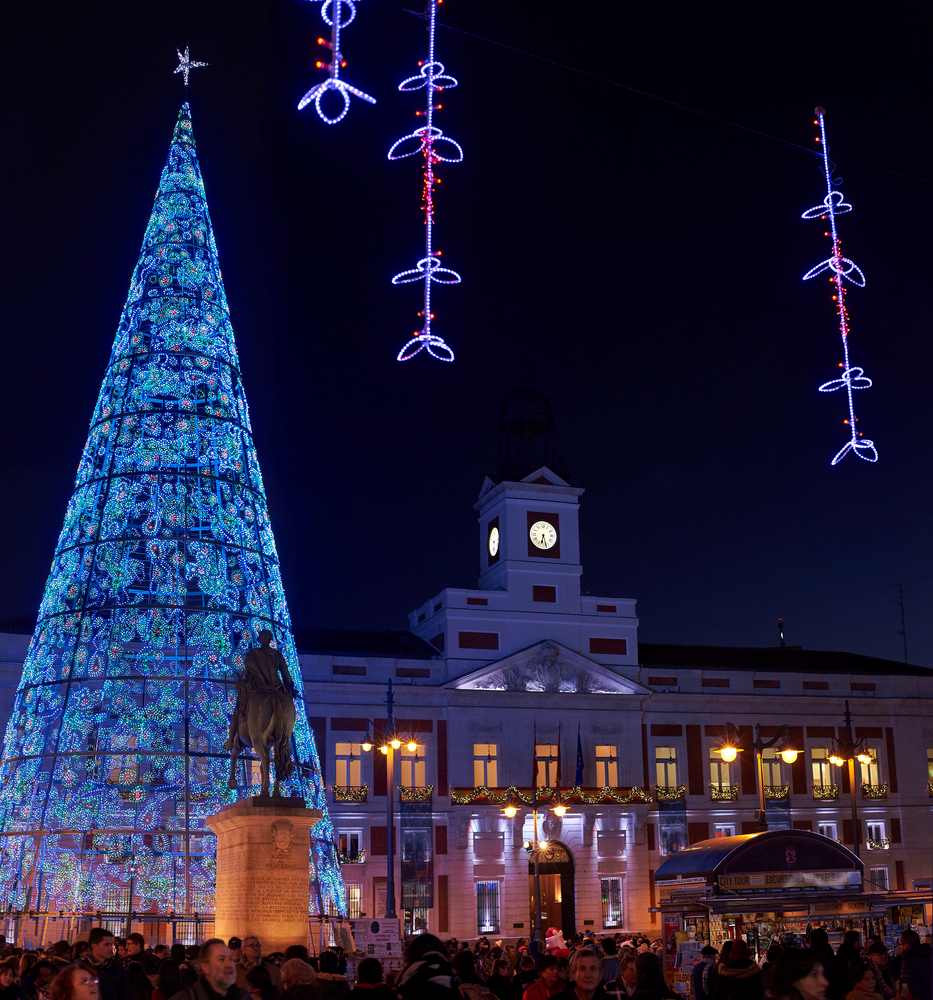
Best Places for Christmas in Europe: Quick Picks
| If you want… | Go to |
| The classic Christmas market | Vienna, Strasbourg, Nuremberg, Colmar |
| Snow, Santa and children’s magic | Rovaniemi and Finnish Lapland |
| A romantic weekend | Bruges, Colmar, Salzburg, Tallinn |
| The best value | Kraków, Budapest, Prague, Bratislava |
| Big-city lights and shopping | London, Paris, Copenhagen |
| Pubs, music and traditions | Dublin, Belfast, Edinburgh |
| Winter sun | Málaga, Lisbon, Valletta |
| Something unusual | Gengenbach, Reykjavík, Kraków’s nativity contest |
| Rain-proof markets | Zurich (inside the main station), Copenhagen’s Tivoli |

Europe’s Christmas Market Dates 2026
Checked against organisers and official tourism sites on 29 October 2026. “Confirmed” means the organiser had published dates; “Expected” means they hadn’t yet, so the dates follow last year’s pattern. Always check before you book.
| # | Place | 2026 dates | Status |
| 1 | Vienna, Austria | Rathausplatz 13 Nov–26 Dec; Schönbrunn 6 Nov–6 Jan | Confirmed |
| 2 | Strasbourg, France | 27 Nov–24 Dec | Confirmed |
| 3 | Colmar, France | 23 Nov–29 Dec | Confirmed |
| 4 | Nuremberg, Germany | 27 Nov–24 Dec | Confirmed |
| 5 | Dresden, Germany | 25 Nov–24 Dec | Confirmed |
| 6 | Cologne, Germany | Cathedral market 16 Nov–23 Dec | Confirmed |
| 7 | Gengenbach, Germany | 2026 dates TBC (late Nov–23 Dec in 2025) | Expected |
| 8 | Salzburg, Austria | Residenzplatz 19 Nov–1 Jan | Confirmed |
| 9 | Prague, Czech Republic | 28 Nov–6 Jan | Confirmed |
| 10 | Budapest, Hungary | 13 Nov–1 Jan | Confirmed |
| 11 | Kraków, Poland | 27 Nov–3 Jan | Confirmed |
| 12 | Bratislava, Slovakia | 27 Nov–3 Jan | Confirmed |
| 13 | Zagreb, Croatia | 28 Nov–7 Jan | Confirmed |
| 14 | Tallinn, Estonia | 20 Nov–6 Jan | Confirmed |
| 15 | Riga, Latvia | 27 Nov–3 Jan | Confirmed |
| 16 | Zurich, Switzerland | 19 Nov–24 Dec | Confirmed |
| 17 | Bolzano, Italy | 27 Nov–6 Jan | Confirmed |
| 18 | Bruges, Belgium | 20 Nov–3 Jan | Confirmed |
| 19 | Rovaniemi and Finnish Lapland, Finland | Santa Claus Village open all year; Santa’s Office 30 Nov–3 Jan | Confirmed |
| 20 | Reykjavík, Iceland | Market expected 28 Nov–23 Dec | Expected |
| 21 | Copenhagen, Denmark | Tivoli 13 Nov–3 Jan | Confirmed |
| 22 | Paris, France | Tuileries 14 Nov–3 Jan; Champs-Élysées 22 Nov–4 Jan | Confirmed |
| 23 | London, England | Winter Wonderland 19 Nov–3 Jan | Confirmed |
| 24 | Edinburgh, Scotland | 14 Nov–3 Jan | Confirmed |
| 25 | Dublin, Ireland | TwinkleTown 20 Nov–31 Dec | Confirmed |
| 26 | Belfast, Northern Ireland | Expected 14 Nov–22 Dec | Expected |
| 27 | Venice, Italy | Market expected 28 Nov–6 Jan | Expected |
| 28 | Málaga, Spain | Lights expected from 27 Nov (TBC) | Expected |
| 29 | Lisbon, Portugal | Wonderland Lisboa expected 27 Nov–early Jan | Expected |
| 30 | Valletta, Malta | 2026 TBC (5 Dec–4 Jan in 2025) | Expected |
Map: The 30 Best Places for Christmas in Europe
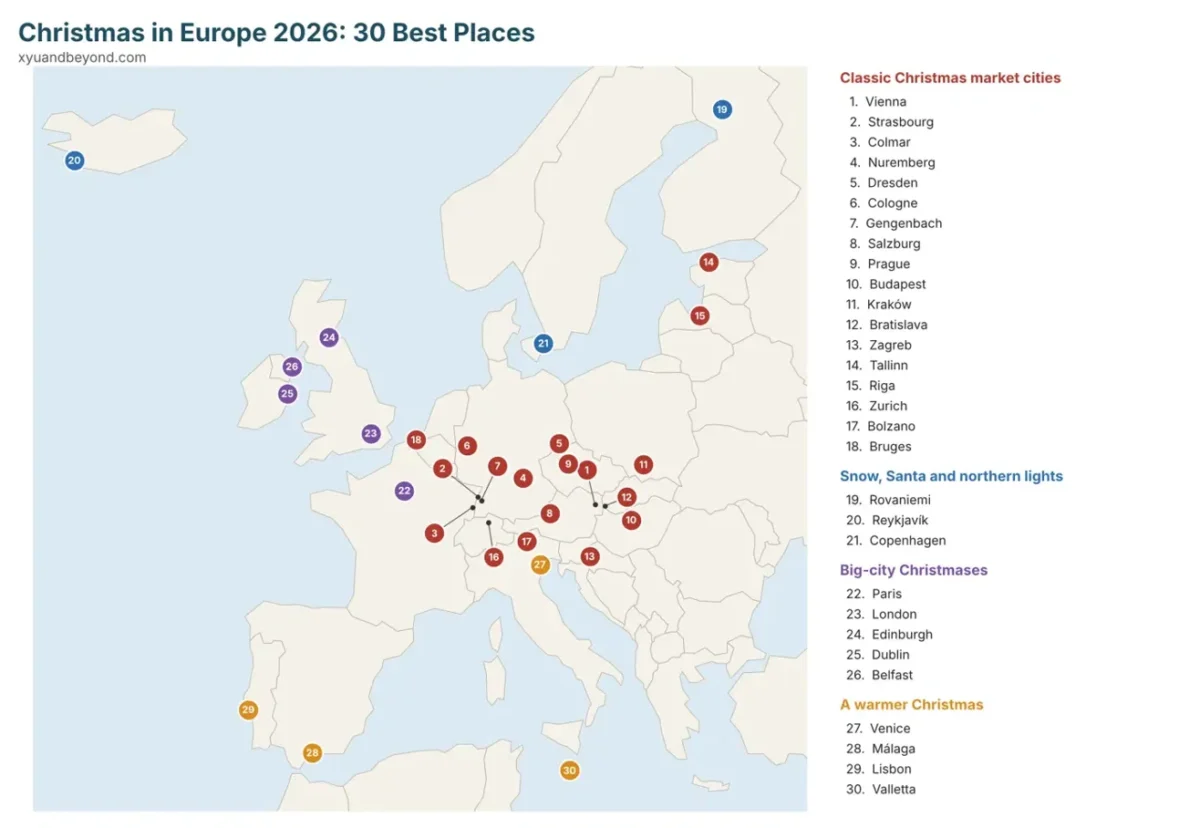
The numbers match the list below. Red pins are the classic market cities, blue are snow and northern lights, purple are the big cities, and orange are warmer Christmases. Clusters you can combine by train: Strasbourg, Colmar and Gengenbach; Vienna, Bratislava and Budapest; Nuremberg, Prague and Dresden; and Cologne with Bruges.
Europe’s Best Christmas Markets 2026: The Traveller Vote
Every autumn, European Best Destinations runs a public vote for Europe’s best Christmas markets, and you’ll see the results quoted everywhere. For 2026, more than 800,000 people voted. The top five were Craiova (Romania), Zurich, Riga, Lisbon and Debrecen (Hungary). Vienna came 8th, Paris 10th, Edinburgh 11th, Prague 14th, Bruges 15th, Dresden 16th, Nuremberg 17th and Cologne 20th.
Eleven of the places in this guide made the top 20. It’s a popularity vote rather than an inspection, so smaller cities with enthusiastic local support can do very well. I’ve used it as one guide among many, alongside history, atmosphere, value and how easy each place is to reach.
The Classic Christmas Market Cities
These are the places that made the Christmas market famous: wooden chalets, mulled wine, gingerbread and a giant tree in a medieval square.
1. Vienna, Austria
2026 dates: Rathausplatz 13 Nov–26 Dec; Schönbrunn 6 Nov–6 Jan (confirmed). Best for: Elegance and choice.
Vienna does Christmas on a grand scale, with more than a dozen markets running at once. The big one is the Wiener Christkindlmarkt in front of the neo-Gothic City Hall (Rathausplatz), open 13 November to 26 December 2026, 10am–10pm, with the Eistraum ice rink alongside until 6 January. Its roots go back to the 1600s, when it was known as the Thomas Market, and each year a different Austrian region donates the giant tree, a tradition that began in 1959.
For something calmer, go to the market in front of Schönbrunn Palace (6 November 2026 to 6 January 2027), or Spittelberg’s narrow Biedermeier lanes (13 November to 23 December), which are better for crafts than for crowds. Most Viennese markets charge a deposit on your Glühwein mug, which you get back when you return it or keep as a souvenir.

2. Strasbourg, France
2026 dates: 27 Nov–24 Dec (confirmed). Best for: History and atmosphere.
Strasbourg calls itself the Capitale de Noël, and the Christkindelsmärik in Place Broglie has been held since 1570, making it one of the oldest Christmas markets in Europe. Today more than 300 chalets spread across the old town, and the 2026 season runs from 27 November to 24 December, usually 11:30am–9pm and closed on Christmas Day. The great tree in Place Kléber is the centrepiece.
It draws nearly two million visitors, so weekends are packed. Come midweek, stay in the old town, and do the cathedral square early in the morning. Strasbourg’s specialities are vin chaud blanc (mulled white wine), bredele biscuits and pain d’épices.

3. Colmar, France
2026 dates: 23 Nov–29 Dec (confirmed). Best for: Fairy-tale looks.
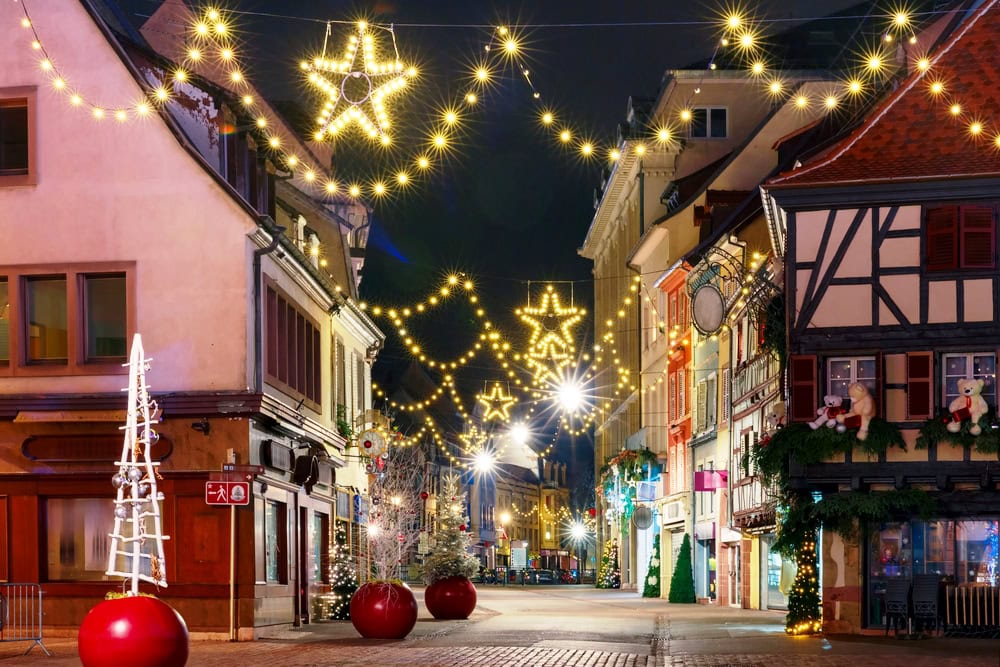
Colmar, half an hour south of Strasbourg by train, is the prettier and smaller of the two. Six markets fill its half-timbered squares from 23 November to 29 December 2026, with a gourmet market at Place de la Cathédrale running until 3 January. The children’s market in La Petite Venise, beside the canals, is the one people photograph.
Many visitors do Strasbourg and Colmar together. If you can, stay a night in Colmar so you see it after the day-trippers leave.
4. Nuremberg, Germany
2026 dates: 27 Nov–24 Dec (confirmed). Best for: German tradition.
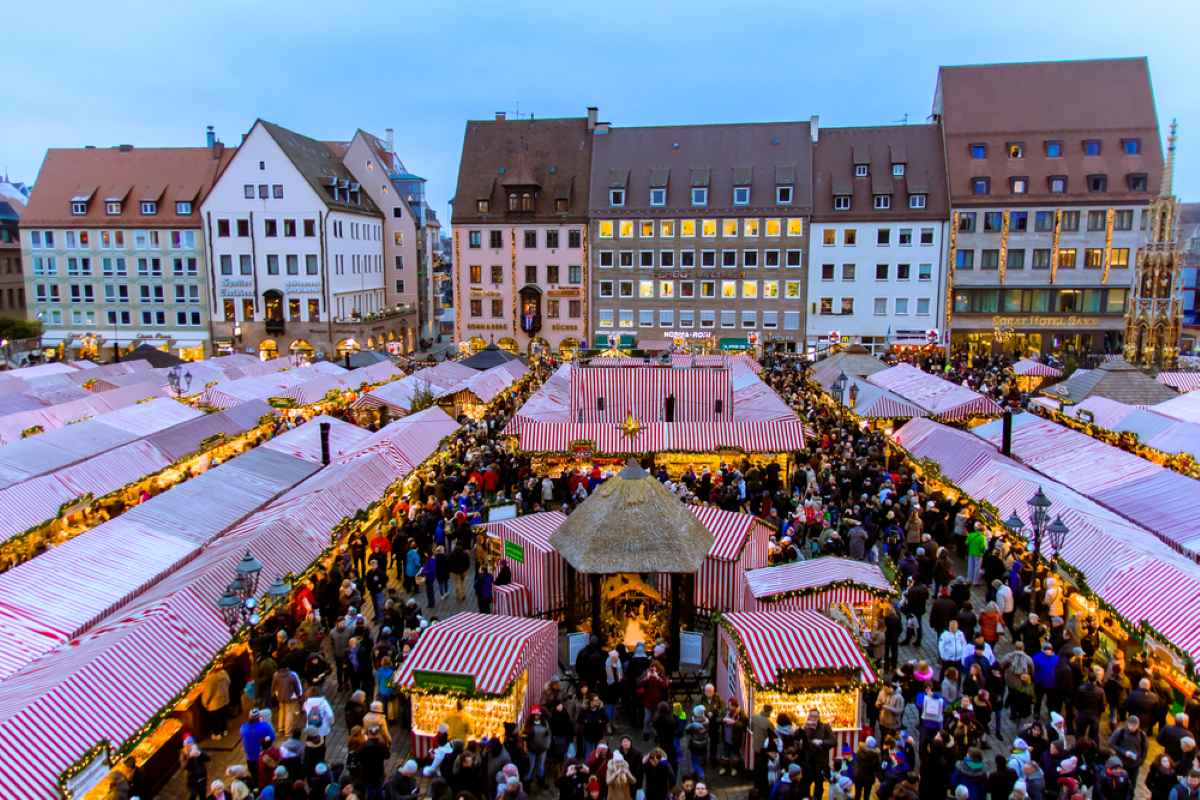
The Nuremberg Christkindlesmarkt is Germany’s best-known Christmas market, documented since the 17th century. In 2026 it opens on Friday 27 November with the Christkind’s prologue from the church balcony at 5:30pm, and runs to midday on Christmas Eve. Around 180 stalls fill the Hauptmarkt, with a separate children’s market and a sister-cities market nearby.
Eat Nürnberger Rostbratwürste, three small sausages in a roll, and buy Lebkuchen gingerbread and the prune-figures called Zwetschgenmännle. The market is open 10am–9pm, so it’s easy to visit in the quieter mornings.

5. Dresden, Germany
2026 dates: 25 Nov–24 Dec (confirmed). Best for: Stollen and history.
Dresden’s Striezelmarkt, in the Altmarkt, was first recorded in 1434, which makes it one of the oldest in Germany. The name comes from Striezel, the old word for Stollen, the city’s famous fruit bread. It runs from 25 November to 24 December 2026, and in early December a giant Stollen weighing several tonnes is paraded through the streets at the Stollenfest.
Dresden has several other markets too, including a medieval market in the Stallhof. Some carry on into early January.

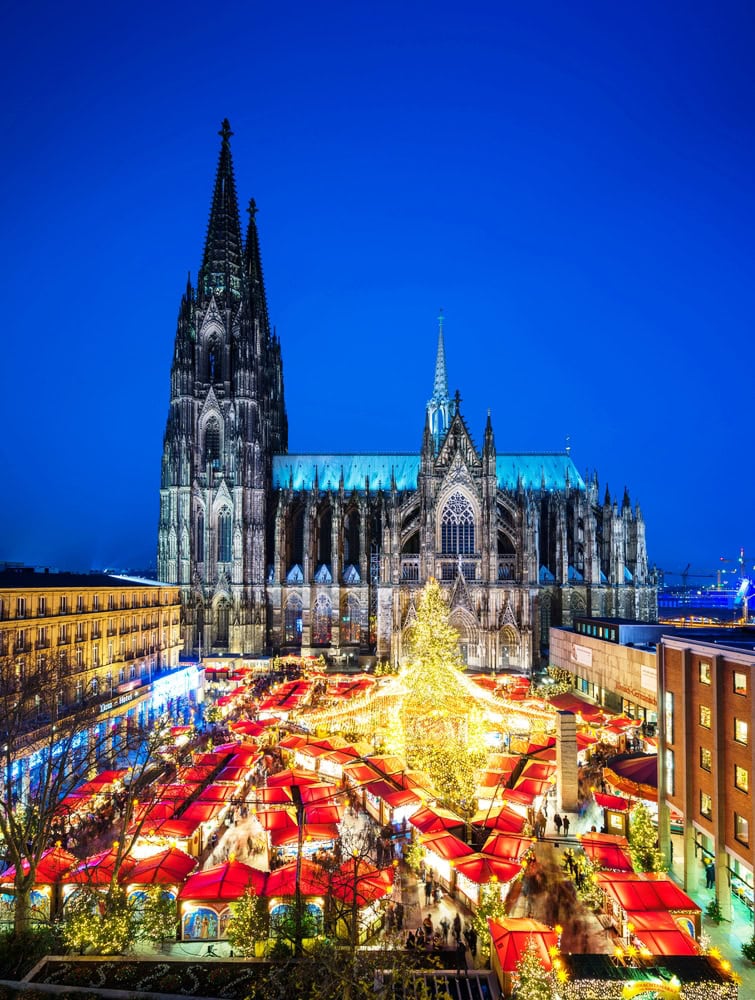
6. Cologne, Germany
2026 dates: Cathedral market 16 Nov–23 Dec (confirmed). Best for: Variety and a cathedral backdrop.
Cologne has around half a dozen Christmas markets, and the one at the foot of the cathedral on Roncalliplatz is the most dramatic, running 16 November to 23 December 2026. Heinzels Wintermärchen in the old town is themed on Cologne’s legendary house elves, the Heinzelmännchen, and its Heumarkt site with an ice rink stays open until 10 January. There’s also a floating harbour market by the Chocolate Museum.
Cologne is easy to reach by train from Brussels, Amsterdam and Paris, which makes it a good first market if you’re new to Germany.
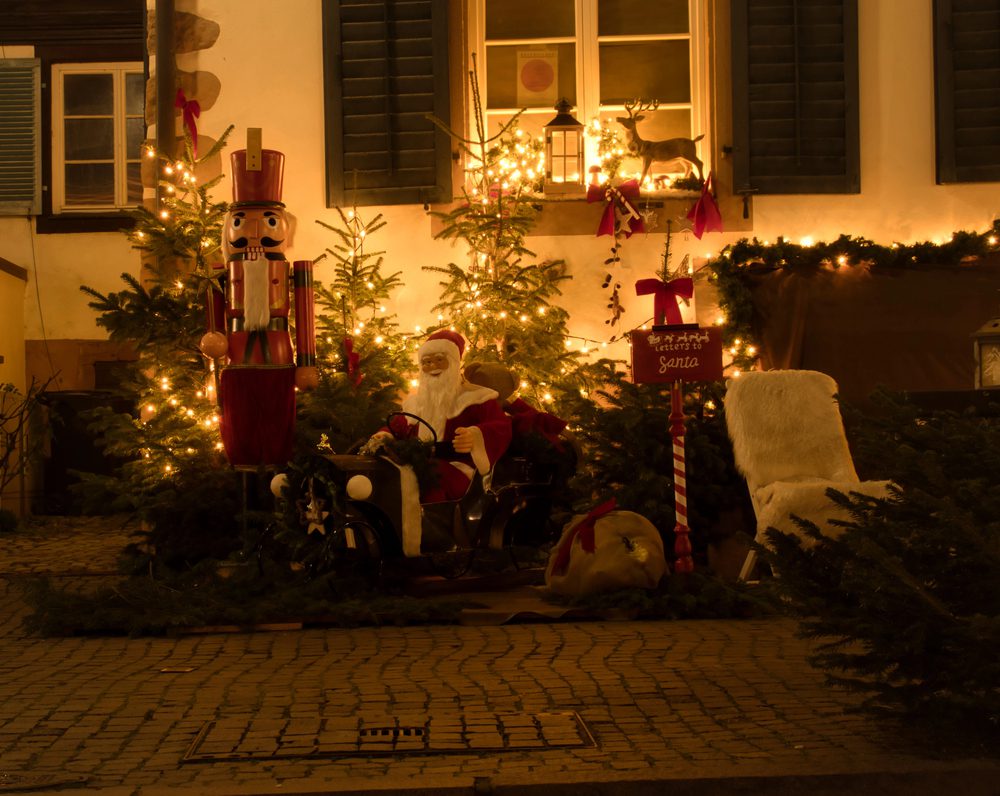
7. Gengenbach, Germany
2026 dates: 2026 dates TBC (late Nov–23 Dec in 2025) (expected). Best for: Something different.
This small Black Forest town turns its 18th-century town hall into a giant Advent calendar. Each evening of Advent at 6pm, one of its 24 windows is opened to reveal a new artwork, and past windows have featured illustrations by Marc Chagall and Andy Warhol. A small market of around 60 stalls fills the square below. In 2025 the market ran 28 November to 23 December; the 2026 dates hadn’t been published when I checked.
8. Salzburg, Austria
2026 dates: Residenzplatz 19 Nov–1 Jan (confirmed). Best for: Music and mountains.
Salzburg’s Christkindlmarkt fills Cathedral Square and Residenzplatz from 19 November 2026 to 1 January 2027, with the fortress lit above it. There’s also a market at Hellbrunn Palace (19 November to 24 December) and an Advent market inside Hohensalzburg Fortress on weekends.
For many visitors the real draw is that “Silent Night” was first sung in nearby Oberndorf on Christmas Eve 1818. The little Silent Night Chapel stands on the site, and it’s an easy half-day trip.

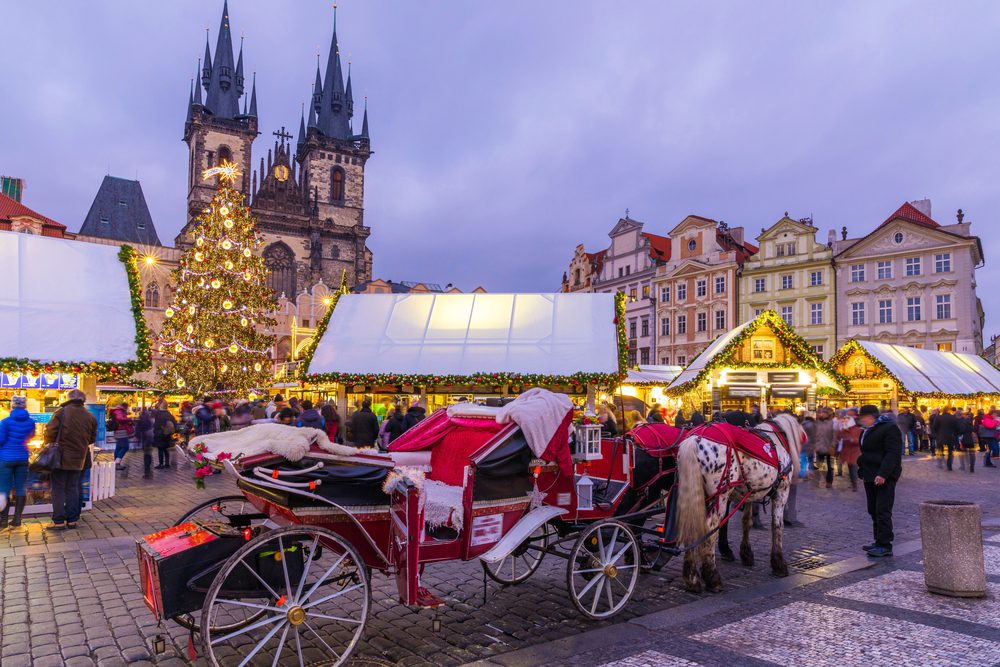
9. Prague, Czech Republic
2026 dates: 28 Nov–6 Jan (confirmed). Best for: Value and Gothic scenery.
Prague’s Old Town Square market, framed by the Týn Church and the astronomical clock, runs from 28 November 2026 to 6 January 2027, 10am–10pm, with a second market in Wenceslas Square. The huge tree is the city’s centrepiece.
One honest tip: the trdelník, the sugar-coated chimney cake sold everywhere, isn’t a traditional Czech pastry, whatever the signs say (but who cares they taste delicious). Try svařák (mulled wine), klobása sausages, braided vánočka bread and the little Christmas biscuits called cukroví instead. In Czech homes, the carp bought live from street tubs before Christmas is the traditional Christmas Eve dinner.


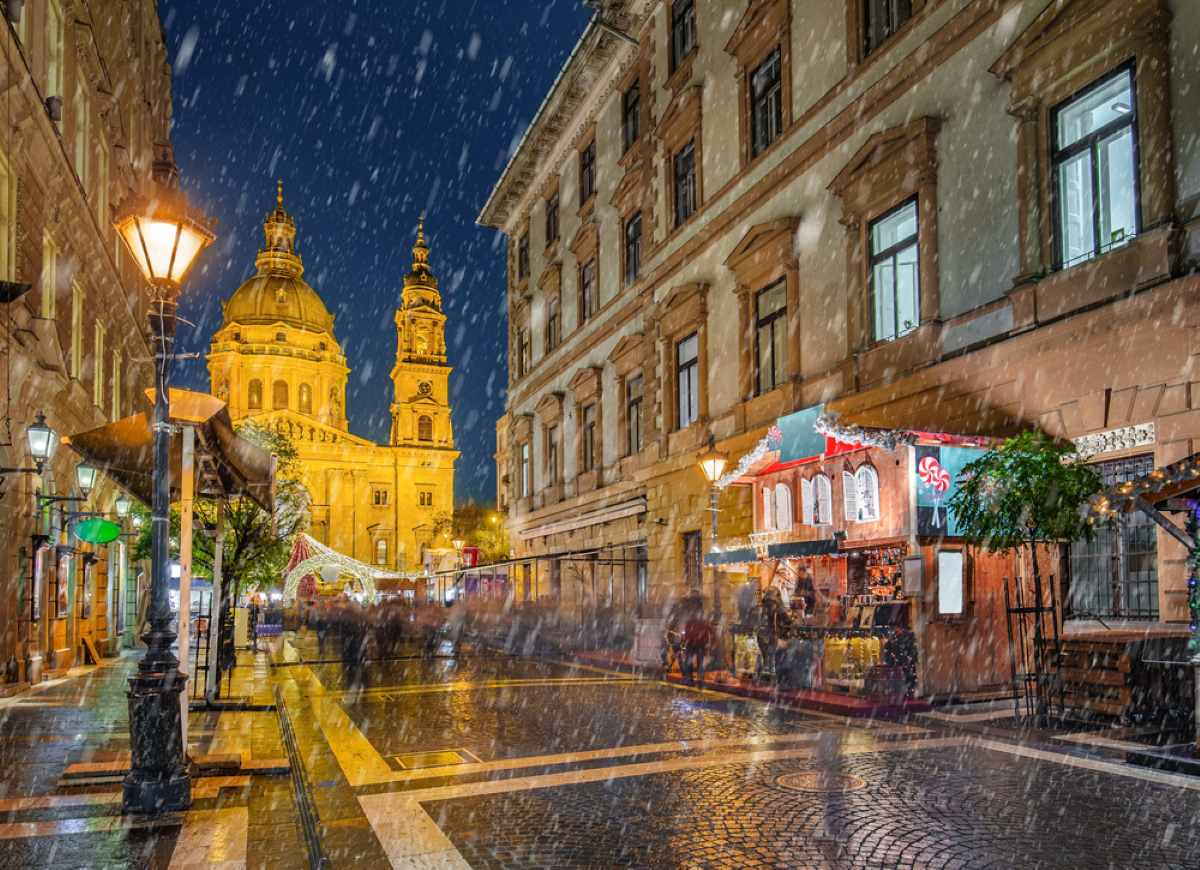
10. Budapest, Hungary
2026 dates: 13 Nov–1 Jan (confirmed). Best for: Food and light shows.
Budapest has two big markets, both running from 13 November 2026 to 1 January 2027. Vörösmarty Square is the traditional one, with craft stalls, while the market outside St Stephen’s Basilica adds a light show projected onto the basilica and a small ice rink.
This is one of the best food markets in Europe: lángos fried bread, kürtőskalács chimney cake (genuinely Hungarian, unlike Prague’s version), stuffed cabbage and mulled wine. Both markets stay open, with shorter hours, over Christmas itself.
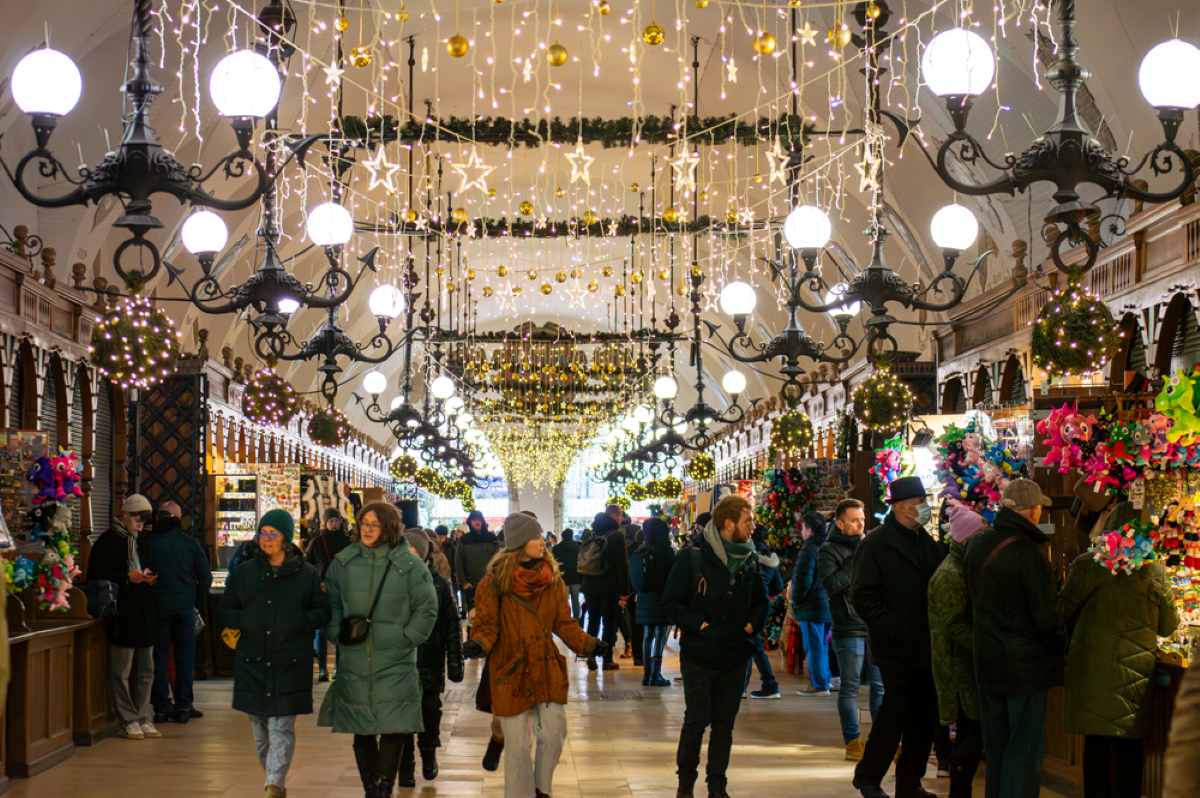
11. Kraków, Poland
2026 dates: 27 Nov–3 Jan (confirmed). Best for: Budget and nativity scenes.
Kraków’s market fills the Rynek Główny, one of Europe’s largest medieval squares, from 27 November 2026 to 3 January 2027. The highlight is unique to the city: on the first Thursday of December (3 December in 2026), makers carry their szopki, glittering nativity scenes built like miniature churches, to the Mickiewicz monument for a famous competition. The tradition is on UNESCO’s list of intangible cultural heritage.
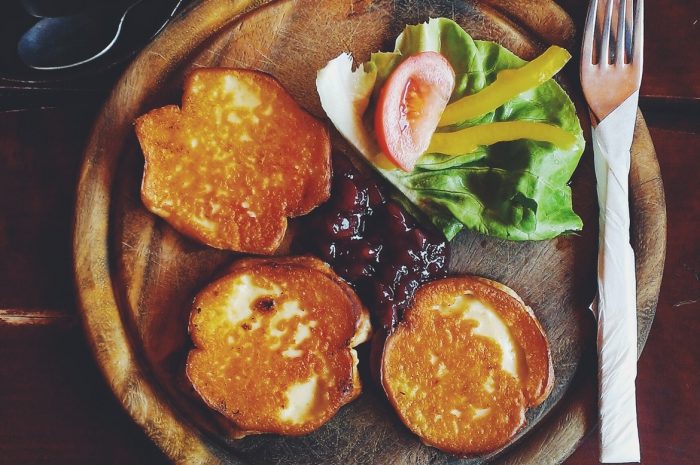
I loved Krakow – its deep sense of history, the ancient streets and the glorious food. It’s also one of the cheapest markets in this list. Try oscypek, smoked sheep’s cheese grilled and served with cranberry jam.
12. Bratislava, Slovakia
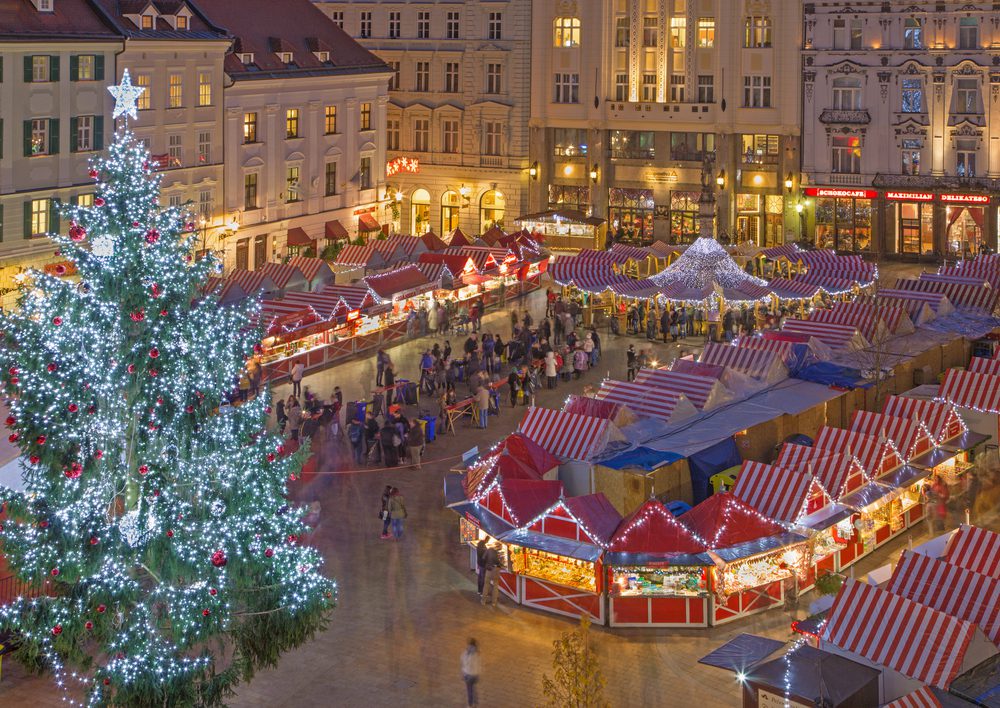
2026 dates: 27 Nov–3 Jan (confirmed). Best for: A day trip from Vienna.
Bratislava’s market spreads through the Main Square and Františkánske Square from 27 November 2026 to 3 January 2027, closing on Christmas Day. It’s compact, friendly and much cheaper than Vienna, which is only an hour away by train, so the two combine easily. Look for lokše, potato pancakes filled with duck fat, poppy seeds or jam.
13. Zagreb, Croatia
2026 dates: 28 Nov–7 Jan (confirmed). Best for: Festive food and lights.
Advent in Zagreb runs from 28 November 2026 to 7 January 2027 across more than 25 locations, linked by lights through the squares and parks of the upper and lower towns. Entry is free. It’s more about eating and drinking than shopping, with the food zone in Strossmayer Park the favourite. Use a ride-hailing app rather than street taxis, which have a reputation for overcharging visitors.

14. Tallinn, Estonia
2026 dates: 20 Nov–6 Jan (confirmed). Best for: Medieval snowscapes.
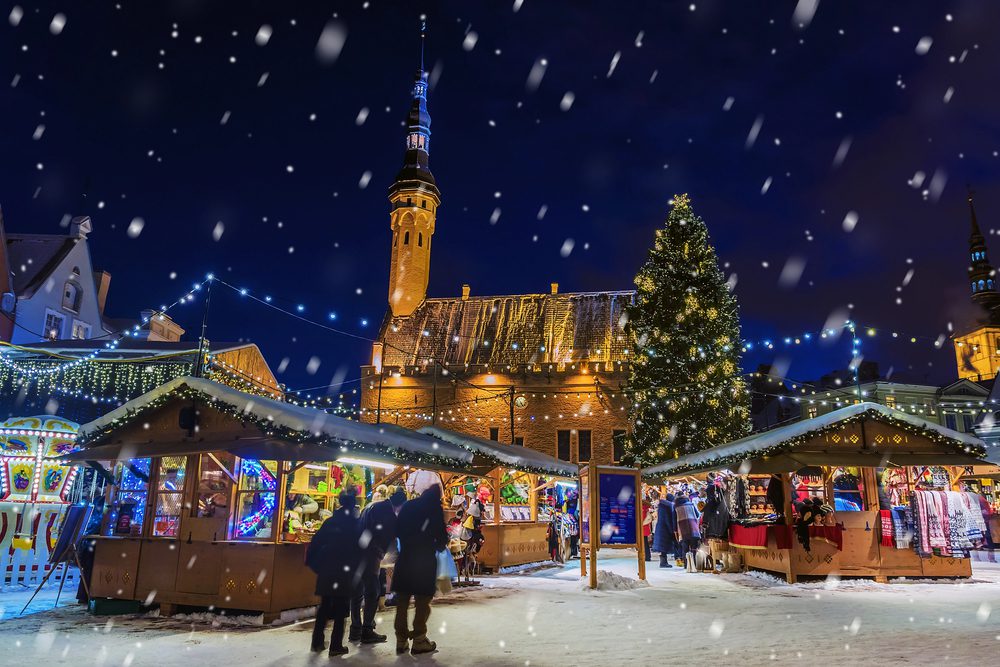
Tallinn’s market sits in the medieval Town Hall Square from 20 November 2026 to 6 January 2027. Tallinn claims to have put up the world’s first public Christmas tree here, in 1441. Riga makes the same claim for 1510, and the friendly rivalry is part of the fun. With its walls, towers and frequent snow, the old town is as close to a Christmas card as Europe gets.

15. Riga, Latvia
2026 dates: 27 Nov–3 Jan (confirmed). Best for: The first Christmas tree story.
Riga’s market fills Dome Square from 27 November 2026 to 3 January 2027. A plaque in the cobbles outside the House of the Blackheads marks the spot where, the city says, a merchants’ guild set up the first decorated Christmas tree in 1510. Warm up with Riga Black Balsam stirred into hot blackcurrant juice.

16. Zurich, Switzerland
2026 dates: 19 Nov–24 Dec (confirmed). Best for: Rain-proof markets.
Zurich has one of Europe’s biggest indoor Christmas markets, inside the main railway station (19 November to 24 December 2026), under a giant tree hung with Swarovski crystals. Outdoors, the Wienachtsdorf by the Opera House runs from 20 November to 23 December, and the Singing Christmas Tree on Werdmühleplatz, a tiered stand of choirs, is a lovely surprise. Switzerland is expensive, so budget more here than anywhere else on this list.

17. Bolzano, Italy
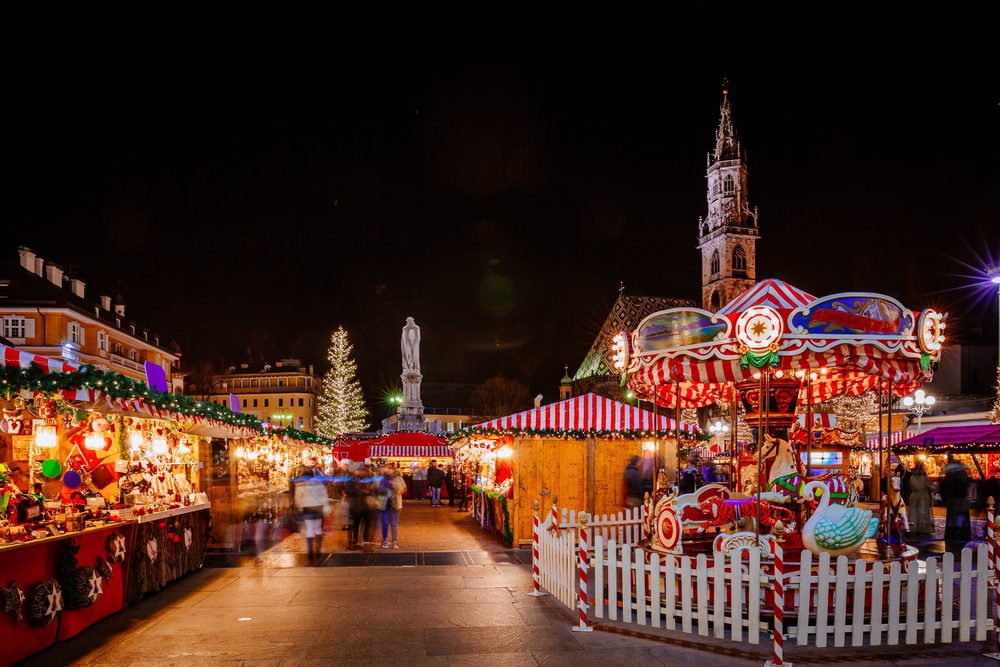
2026 dates: 27 Nov–6 Jan (confirmed). Best for: Alpine Italy.
In South Tyrol, where German and Italian cultures meet, Bolzano’s Christkindlmarkt in Piazza Walther runs from 27 November 2026 to 6 January 2027. It’s Italy’s best-known Christmas market, with Alpine crafts, speck, Zelten fruit bread and mulled wine, and the Dolomites as a backdrop.
18. Bruges, Belgium
2026 dates: 20 Nov–3 Jan (confirmed). Best for: A romantic weekend.
Bruges’ market fills the Markt and Simon Stevinplein from 20 November 2026 to 3 January 2027, as part of its Winter Glow festival of lights, which continues to 14 February. The ice rink has moved to King Albert I Park, under a canopy. With canals, chocolate shops and Belgian beer, Bruges is an easy weekend from London by Eurostar to Brussels.

For Snow, Santa and the Northern Lights
If a white Christmas matters most, head north.
19. Rovaniemi and Finnish Lapland, Finland
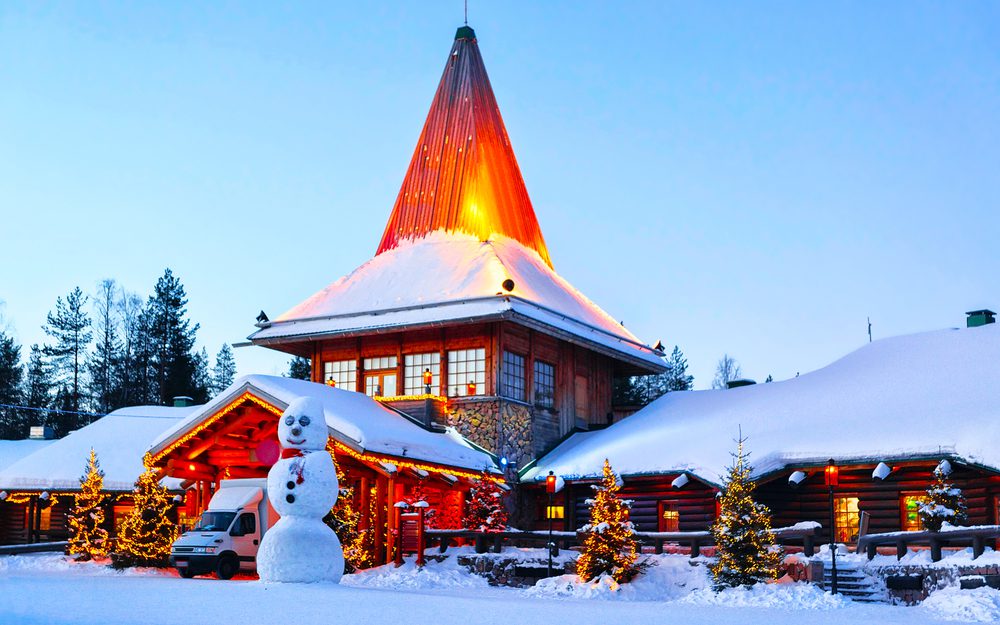
2026 dates: Santa Claus Village open all year; Santa’s Office 30 Nov–3 Jan (confirmed). Best for: Children and real snow.
Rovaniemi sits on the Arctic Circle and calls itself the official hometown of Santa Claus. Santa Claus Village is open all year, including Christmas Day, and you can cross the Arctic Circle line, post a card at Santa’s Main Post Office and meet Santa himself. Expect queues of an hour or more in December, and note that you can’t take your own photos with Santa; the official photos are pricey.
Beyond the village, Finnish Lapland offers husky and reindeer safaris, snowmobiling and the chance of the northern lights. Around the solstice, the sun barely rises, so most of your day will be blue twilight. Book flights and accommodation very early; December is Lapland’s busiest month.
20. Reykjavík, Iceland
2026 dates: Market expected 28 Nov–23 Dec (expected). Best for: Folklore and the northern lights.
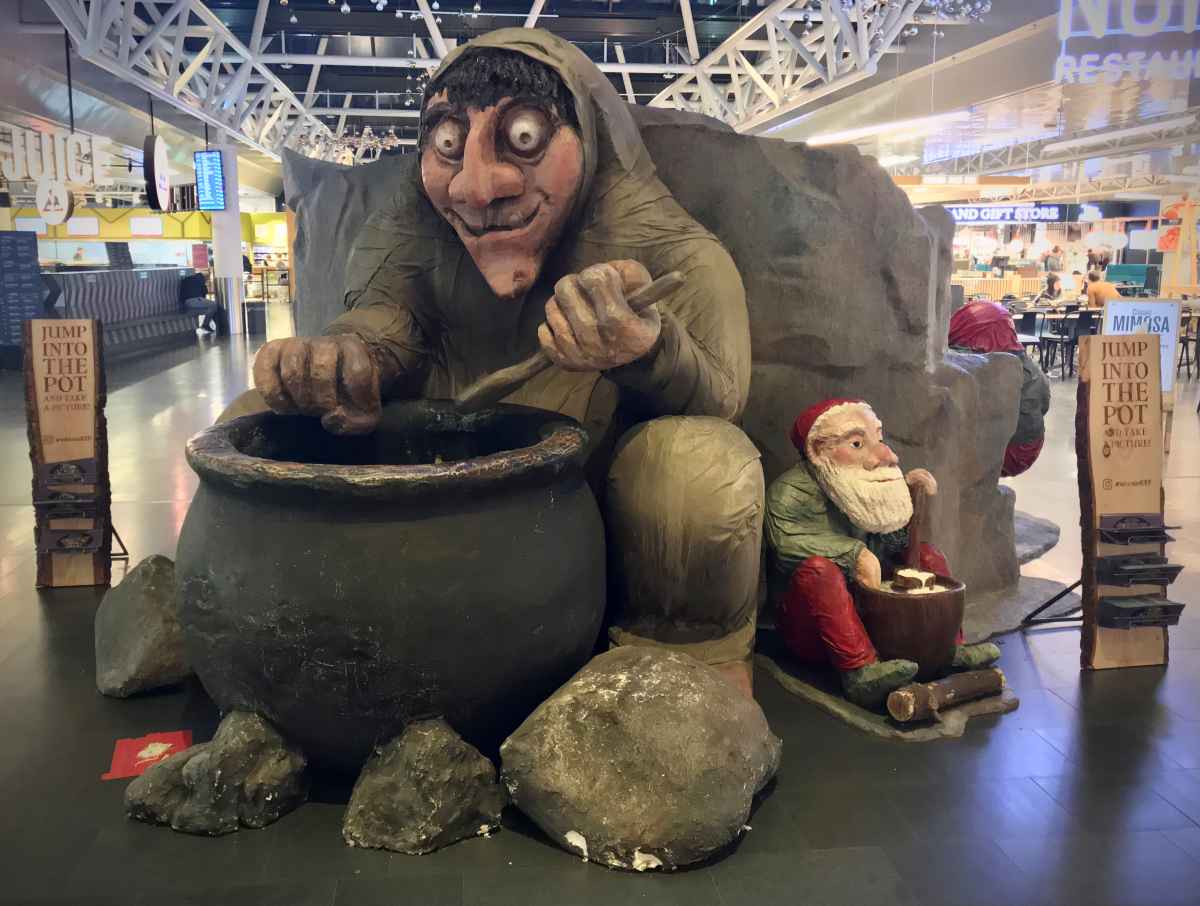
Iceland has some of Europe’s strangest Christmas folklore. Instead of one Santa, there are 13 Yule Lads, troll brothers who arrive one per night in the 13 nights before Christmas, leaving gifts in children’s shoes, or a potato for the naughty. Their mother, the ogress Grýla, and the Yule Cat, which is said to eat anyone without new clothes for Christmas, are part of the story too.
Reykjavík’s small Christmas market (Jólakvosin) is expected around Austurvöllur and Ingólfstorg from late November to 23 December. Christmas Eve at 6pm is the main celebration, when the church bells ring and the city goes quiet. Many shops close early, so plan meals ahead.

21. Copenhagen, Denmark
2026 dates: Tivoli 13 Nov–3 Jan (confirmed). Best for: Hygge and Tivoli.
Christmas in Tivoli, the 19th-century amusement park in the heart of Copenhagen, runs from 13 November 2026 to 3 January 2027, with lights, rides and market stalls; you need an entry ticket. The city’s other Christmas markets run from 14 November to 20 December, including along the colourful harbour at Nyhavn. Try æbleskiver, small round pancakes dusted with sugar, with gløgg.

Big-City Christmases: Paris, London and the Capitals of the North-West
Fewer chalets, more lights, theatre, shop windows and pubs.
22. Paris, France
2026 dates: Tuileries 14 Nov–3 Jan; Champs-Élysées 22 Nov–4 Jan (confirmed). Best for: Lights and window displays.
Paris is about lights, shop windows and walking, not one big market. In 2026 the Tuileries market returns (14 November to 3 January), the Champs-Élysées gets its first market in nearly ten years (22 November to 4 January, with about 200 chalets), and the small market by Notre-Dame in Square René Viviani runs 26 November to 27 December.
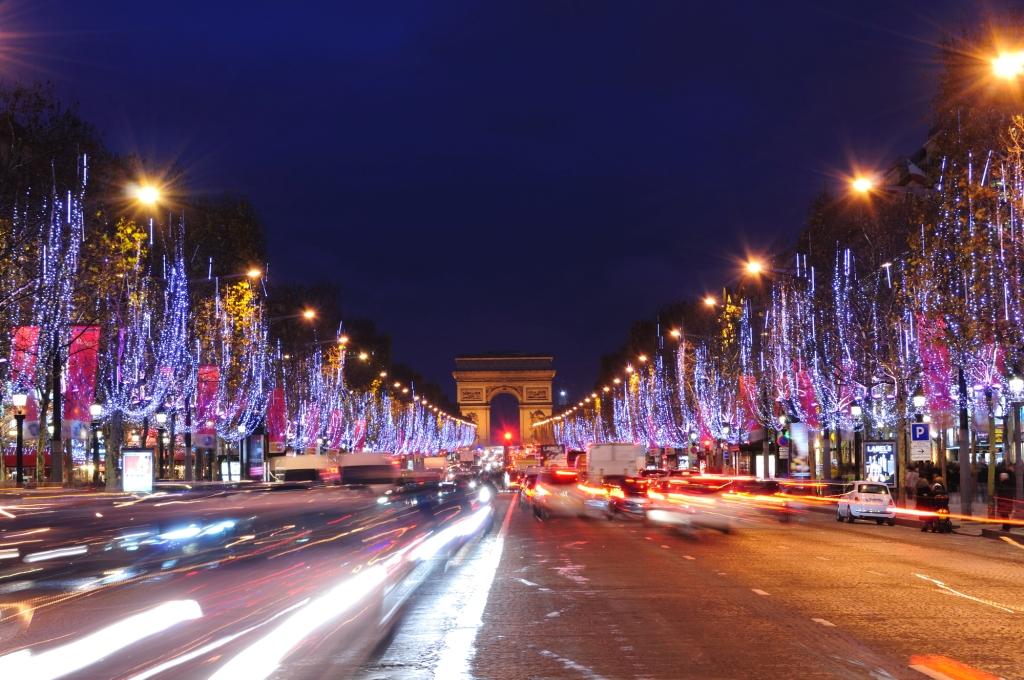
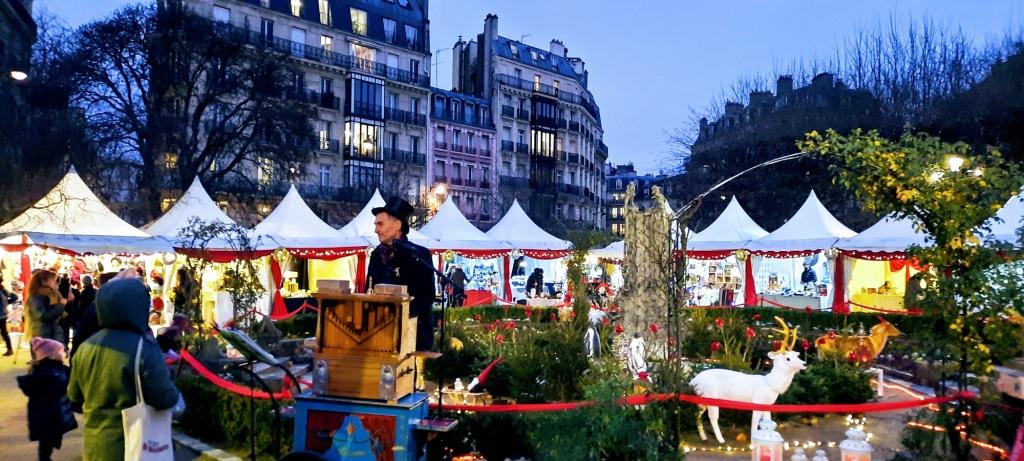
I spent a Christmas in Paris staying on the Left Bank. I loved the market beside Shakespeare and Company, the carousel at the Hôtel de Ville, the department store windows on Boulevard Haussmann and walking the Seine at dusk. The honest part: the food was poor despite good reviews, coffee at Café de Flore and Les Deux Magots was eye-wateringly expensive, the Louvre was closed the day I went, and the litter in the streets was a shock. Go for the atmosphere, check opening days, and eat where locals eat. I lived in France for three years, and Christmas in the regions felt far more traditional than in the capital. More in our guide to French Christmas traditions.
23. London, England
2026 dates: Winter Wonderland 19 Nov–3 Jan (confirmed). Best for: Big-city sparkle.
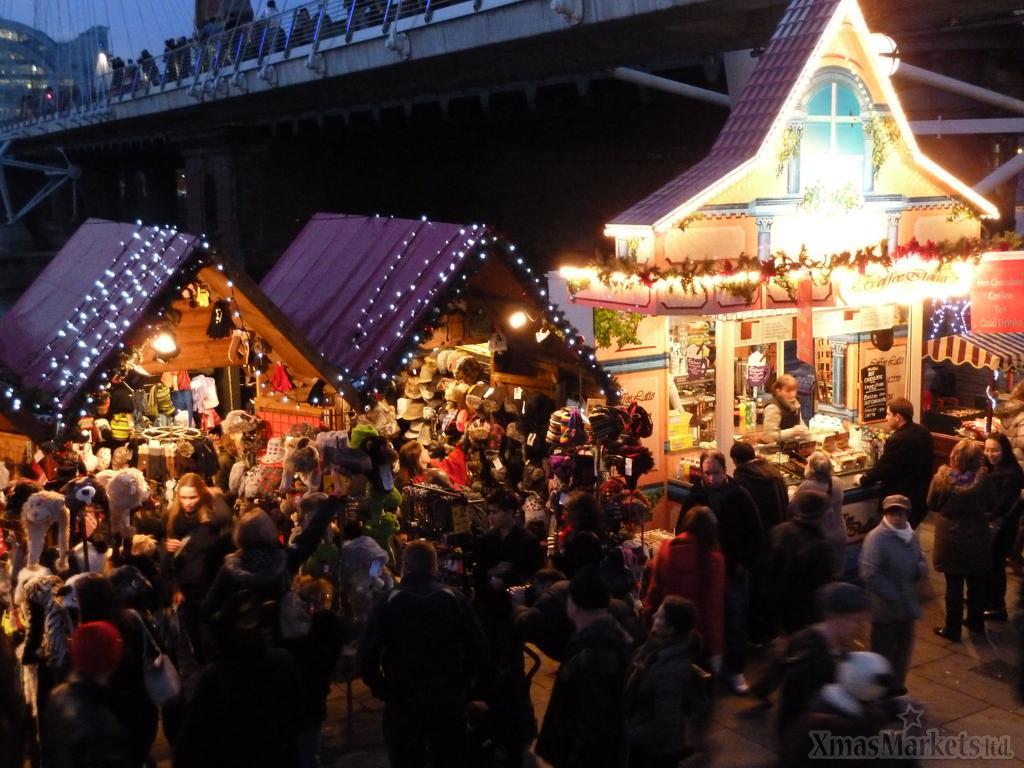
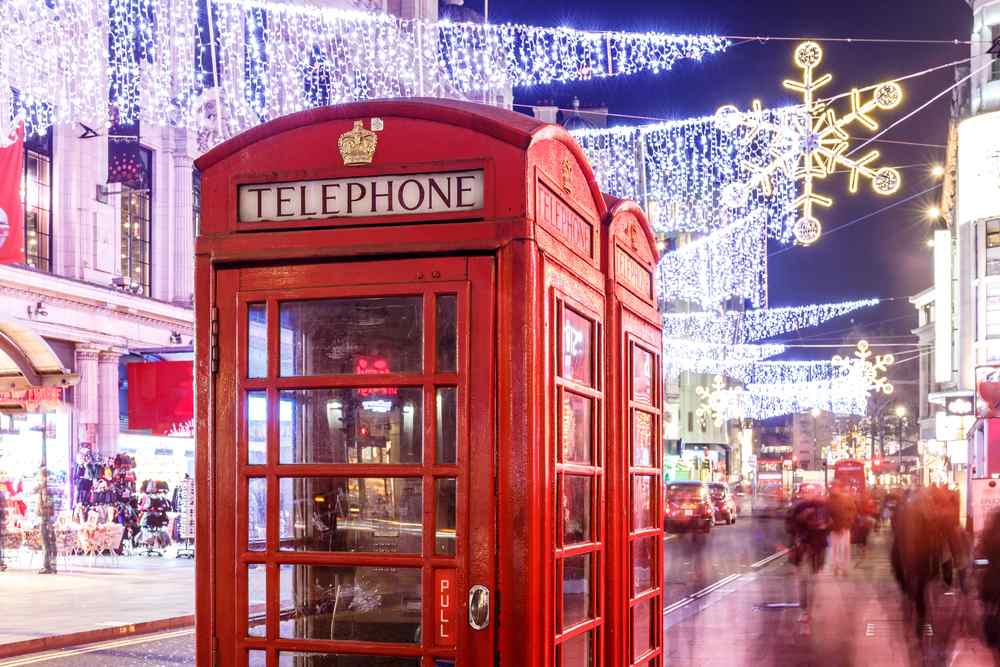
I lived in London for ten years, and Christmas there is about the lights on Regent Street and Oxford Street, the tree in Trafalgar Square (a gift from Norway every year since 1947), ice rinks at Somerset House and the Natural History Museum, and pantomime. Hyde Park Winter Wonderland, a huge funfair with markets and shows, runs from 19 November 2026 to 3 January 2027. The Southbank Centre Winter Market along the Thames is better for food and atmosphere.
Be warned: on Christmas Day, London’s Underground, buses and trains do not run. Plan where you’ll eat and how you’ll get there. Full details in our guide to Christmas in London.


24. Edinburgh, Scotland
2026 dates: 14 Nov–3 Jan (confirmed). Best for: Christmas plus Hogmanay.
Edinburgh’s Christmas market fills East Princes Street Gardens below the castle from 14 November 2026 to 3 January 2027, with around 70 stalls, a big wheel and a helter-skelter. It’s free to enter; rides are ticketed. Stay on for Hogmanay, Scotland’s New Year, with the torchlight procession and the street party under the castle. Book hotels early for both.

25. Dublin, Ireland
2026 dates: TwinkleTown 20 Nov–31 Dec (confirmed). Best for: Pubs, music and traditions.
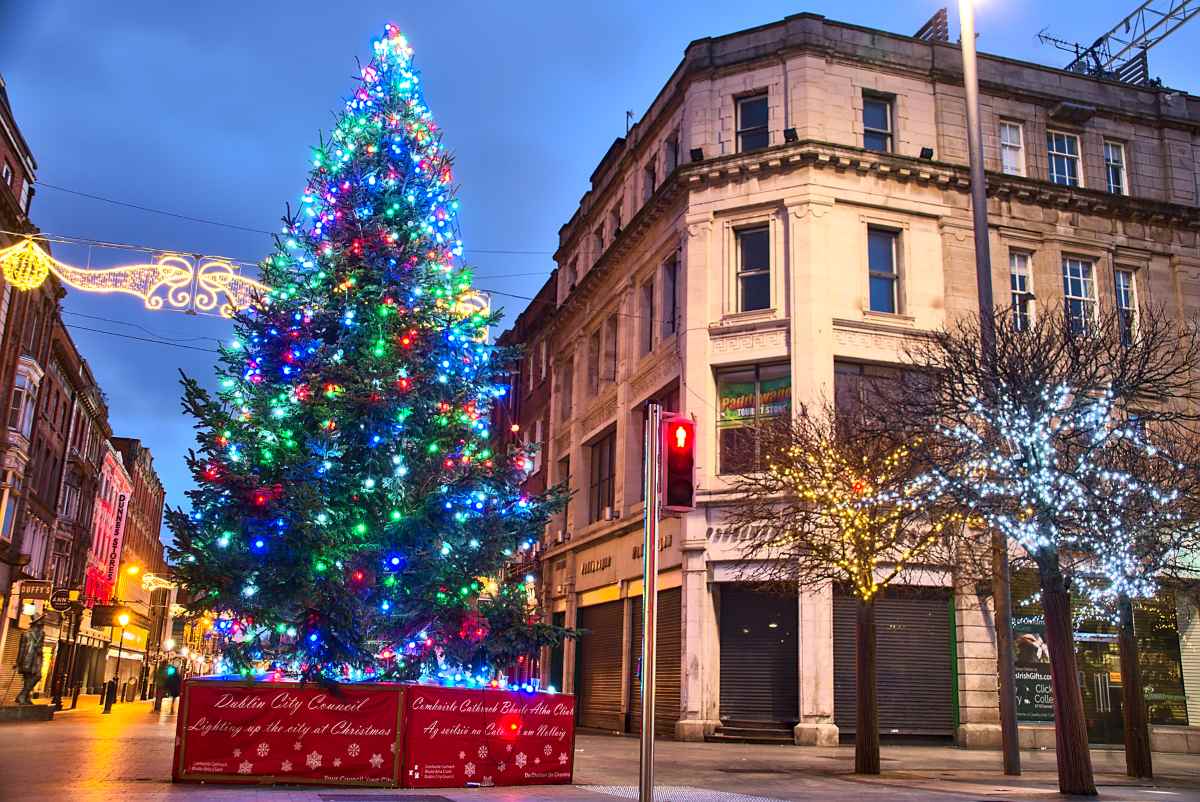
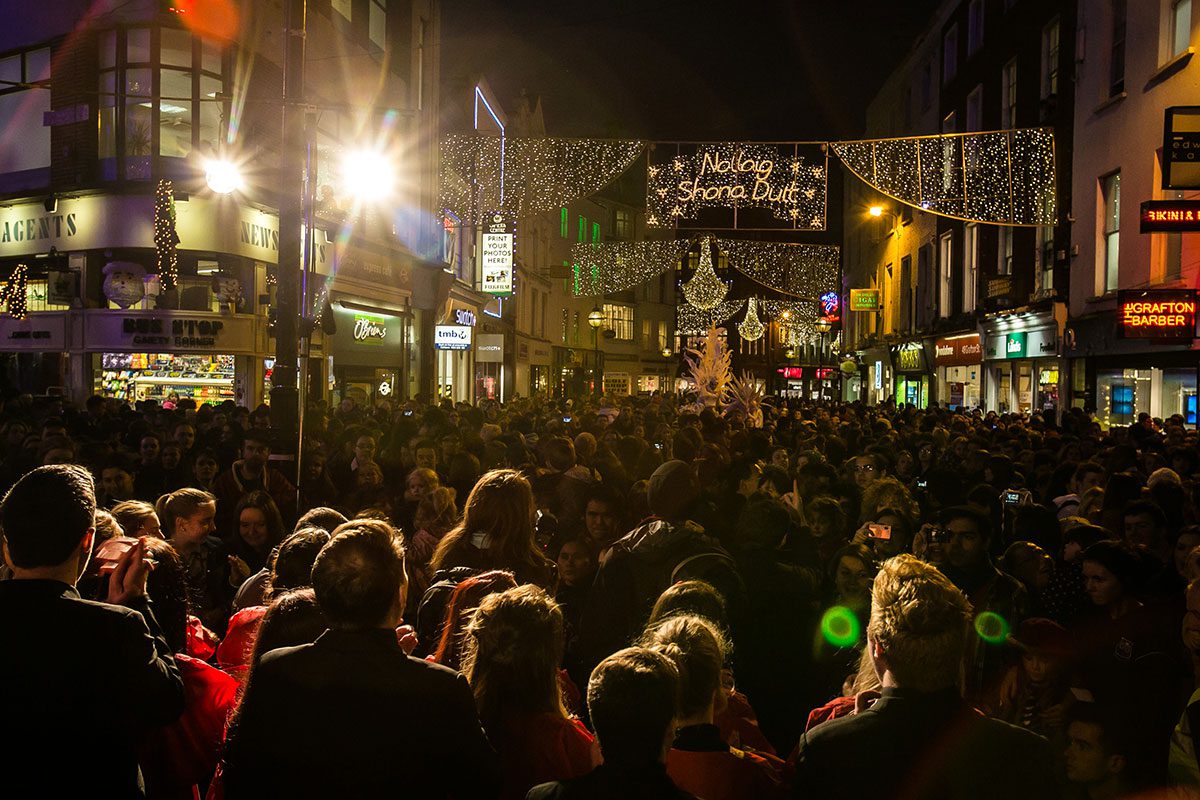
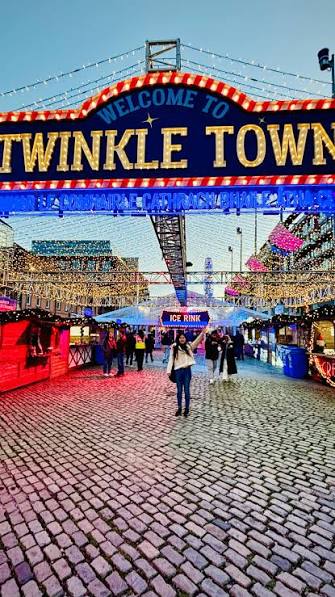
Dublin is different this year: the Dublin Castle market isn’t running in 2026 because the Castle is hosting Ireland’s EU Presidency. Instead, TwinkleTown fills Smithfield Square (20 November to 31 December) and St Patrick’s Park (27 November to 23 December), and Everwinter takes over the RDS. Add the Moving Crib on Parnell Square, a trad session in a fire-lit pub and the Christmas Day swim at the Forty Foot. There’s no public transport and no pubs open on Christmas Day. Our full guide: Christmas in Ireland.
26. Belfast, Northern Ireland
2026 dates: Expected 14 Nov–22 Dec (expected). Best for: A friendly city break.
I live on the Causeway Coast, and Belfast at Christmas is one of my favourite city breaks. The Christmas market in the grounds of City Hall, with around 100 chalets, is expected to run from 14 November to 22 December 2026, and the lights are switched on at City Hall on Saturday 14 November. Belfast is smaller and cheaper than Dublin, and the two are linked by the Enterprise train. See Christmas in Belfast.

A Warmer Christmas in Southern Europe
Not everyone wants frost. These places swap snow for mild days, light shows and some of Europe’s oldest Christmas customs.
27. Venice, Italy
2026 dates: Market expected 28 Nov–6 Jan (expected). Best for: A quiet, romantic Christmas.
Venice in December is misty, quiet and far less crowded than in summer. A small market is expected in Campo Santo Stefano (28 November to 6 January), though some recent years saw little or nothing, so check with the city before you plan around it. The joys are elsewhere: the tree in St Mark’s Square, Murano glass, fritole doughnuts, and midnight Mass at St Mark’s Basilica. Pack waterproof shoes, as acqua alta can flood the lower squares for a few hours at a time. Italian children also wait for La Befana, the kindly witch who brings sweets on the night of 5 January.

28. Málaga, Spain
2026 dates: Lights expected from 27 Nov (TBC) (expected). Best for: Winter sun.
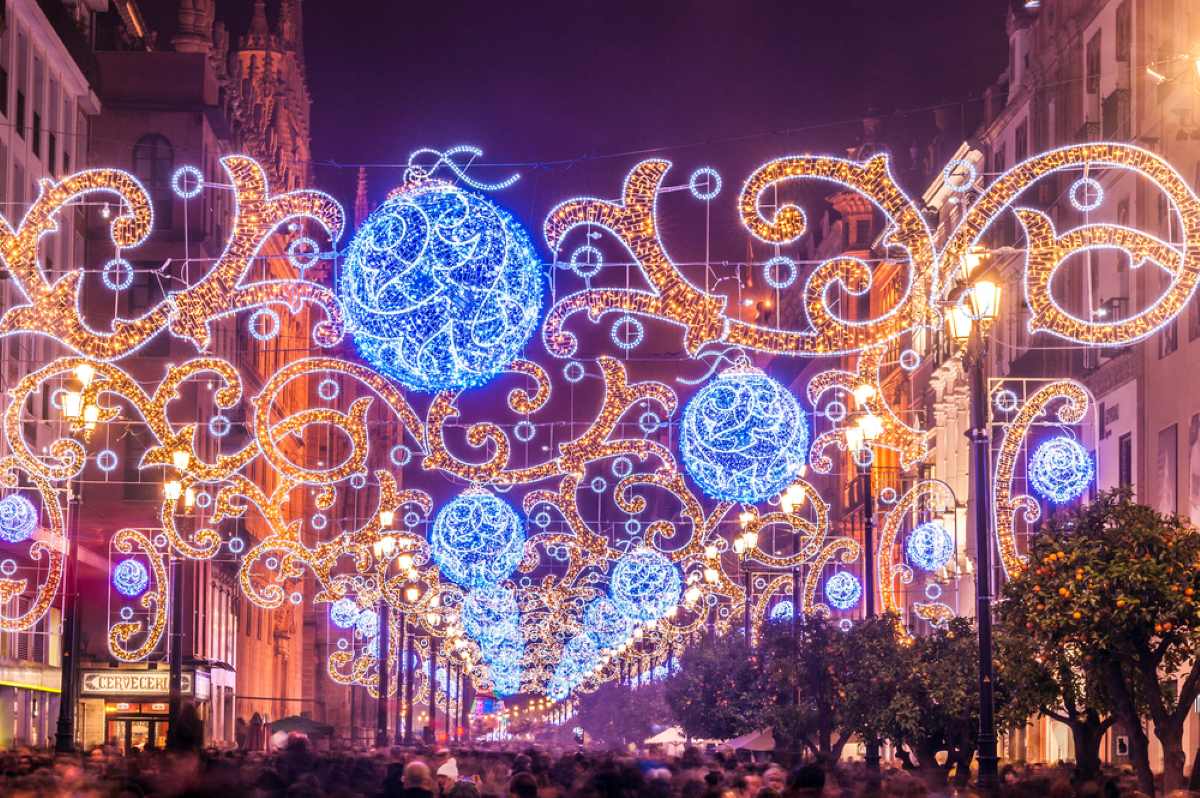
If you’d rather have sunshine than snow, Málaga is famous for the Christmas light show on Calle Larios, with music and lights several times a night. In 2025 the lights ran from 28 November to 4 January, with shows at 6:30pm, 8:30pm and 10pm. The 2026 switch-on is expected on Friday 27 November but hadn’t been confirmed by the council when I checked. Expect daytime temperatures in the high teens.
Having lived in Andalucía, I’d say the real Spanish Christmas comes on 5 and 6 January, with the Three Kings parades and roscón de reyes. More in our guide to Christmas in Spain.

29. Lisbon, Portugal
2026 dates: Wonderland Lisboa expected 27 Nov–early Jan (expected). Best for: Mild weather and a big free market.
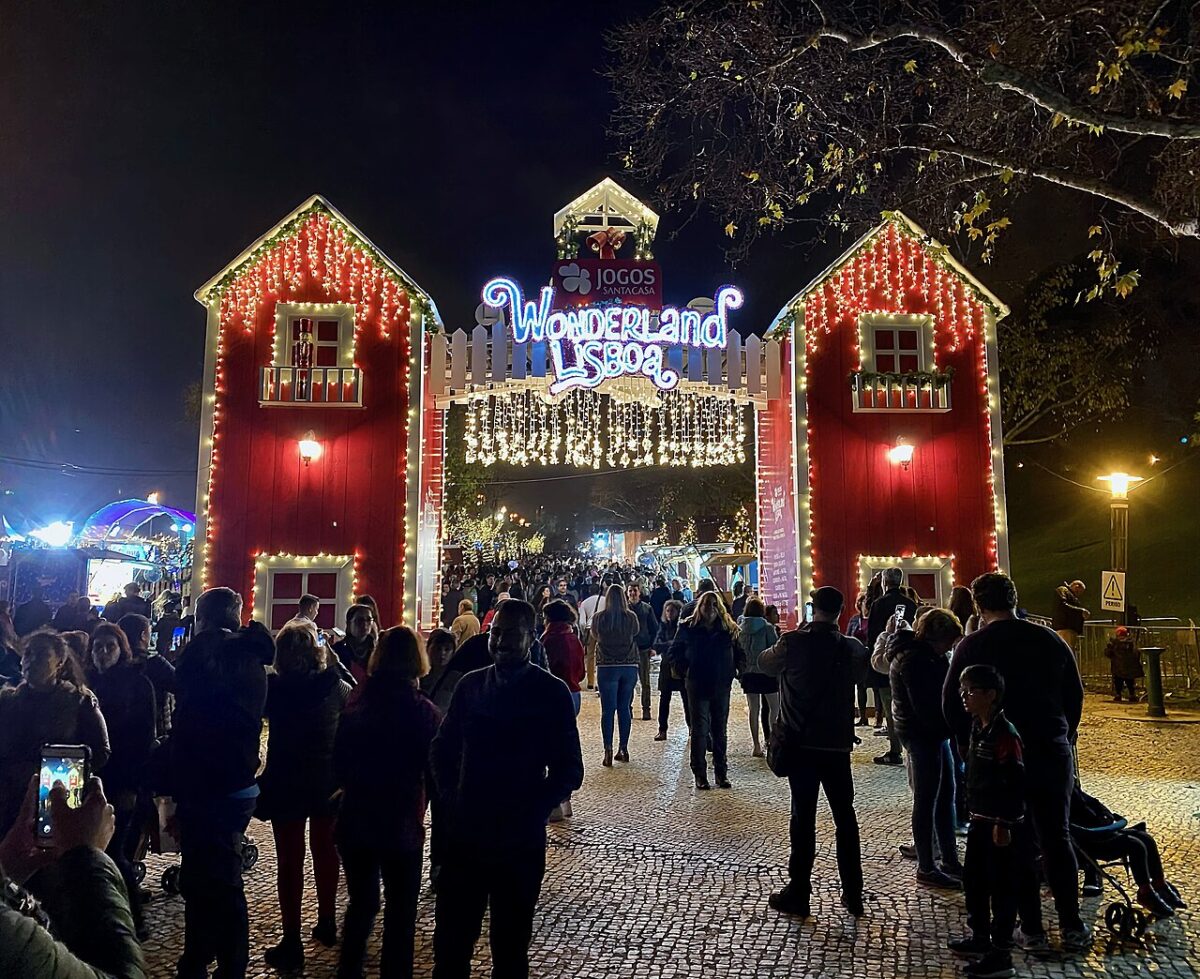
Lisbon was voted fourth-best Christmas market in Europe in the 2026 European Best Destinations traveller poll, and more than 1.2 million people visited Wonderland Lisboa last season. It fills Parque Eduardo VII, at the top of Avenida da Liberdade, with a Christmas market, a giant wheel, an ice rink and rides. Entry was free in 2025, when it ran from 28 November to 4 January; the 2026 edition is reported to open on Friday 27 November, but the organiser hadn’t confirmed it when I checked.
Days are mild, usually in the mid-teens, but evenings on the hill can be cold and windy. Eat bolo rei, the Portuguese king cake, and hot roasted chestnuts from the street carts.
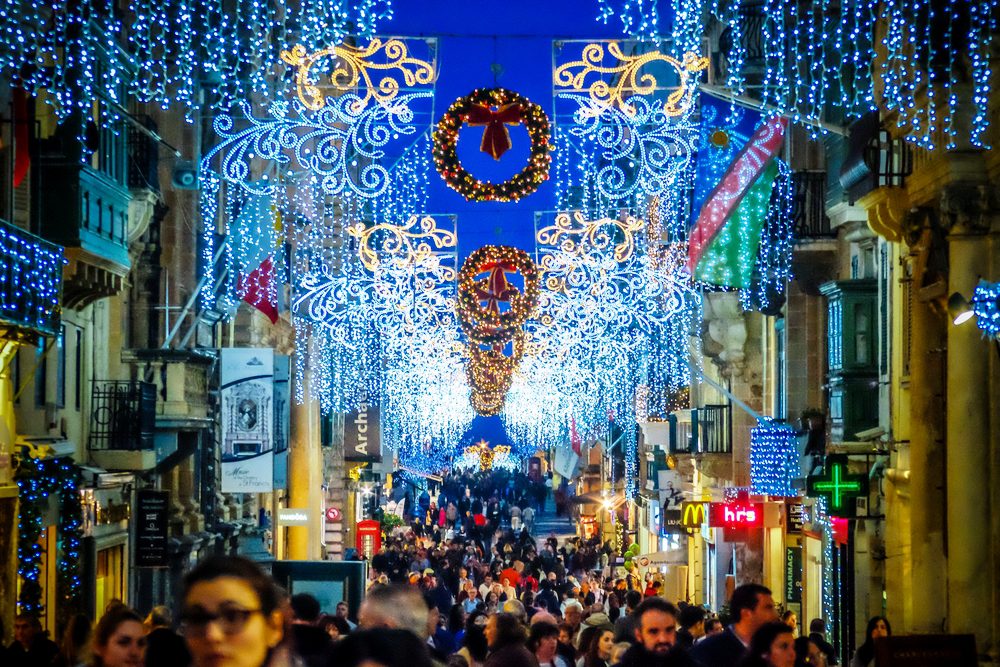
30. Valletta, Malta
2026 dates: 2026 TBC (5 Dec–4 Jan in 2025) (expected). Best for: Mild weather and cribs.
Malta has a deep Christmas tradition of presepju, elaborate nativity cribs, which you’ll see in churches and homes. In 2025, Valletta and Floriana hosted Fairyland, a Christmas village with a market, ice rink and big wheel, from 5 December to 4 January; the 2026 dates hadn’t been announced when I checked. December highs are usually around 16–17°C, so it’s a gentle place for a winter break.
When Do Christmas Markets in Europe Close?
This catches out a lot of visitors. Many markets, especially in Germany and France, close on 23 December or at lunchtime on Christmas Eve, and almost all close on Christmas Day. If you want markets and Christmas Day in the same trip, choose a city whose markets run into January:
- Open into January: Vienna (Schönbrunn), Salzburg, Prague, Budapest, Kraków, Bratislava, Zagreb, Tallinn, Riga, Bolzano, Bruges, Copenhagen’s Tivoli, Edinburgh and London’s Winter Wonderland.
- Closing before Christmas: Nuremberg and Dresden (midday on 24 December), Strasbourg (24 December), Cologne’s cathedral market and Zurich (23 or 24 December).
- Christmas Day transport: in London, the Underground and buses don’t run on 25 December, and in Ireland there’s no public transport at all. Elsewhere, expect reduced services. Book taxis or plan to walk.
December Weather at a Glance
Typical December daytime highs and night-time lows, rounded. Expect variation, especially in the Alps and the north.
| Place | Average high | Average low | Snow likely? |
| Rovaniemi | −6°C | −13°C | Yes, almost always |
| Tallinn / Riga | 0–2°C | −4°C | Often |
| Kraków / Prague | 2–3°C | −3°C | Sometimes |
| Vienna / Budapest / Nuremberg | 3–4°C | −1°C | Sometimes |
| Reykjavík | 3°C | −2°C | Often, with wind and rain |
| Strasbourg / Cologne / Copenhagen | 5°C | 0–1°C | Occasionally |
| Paris / Edinburgh / Venice | 7–8°C | 1–3°C | Rarely |
| London / Dublin / Belfast | 8–9°C | 3–4°C | Rarely; rain is likely |
| Lisbon | 15°C | 9°C | No |
| Málaga / Valletta | 16–18°C | 9–11°C | No |
In the far north, the bigger issue is light. Around the winter solstice, Rovaniemi gets only about two hours of daylight, and Reykjavík about four hours of daylight.

Christmas Eve or Christmas Day? How Europe Celebrates
| When | Where |
| St Nicholas, 5–6 December | The Netherlands, Belgium, parts of Germany, Austria, Czechia and Alsace |
| Christmas Eve, 24 December | Germany, Austria, Switzerland, Scandinavia, Iceland, Czechia, Poland, Hungary, Slovakia, France (the réveillon dinner) |
| Christmas Day, 25 December | Ireland, the UK, Malta |
| Three Kings, 5–6 January | Spain (gifts from the Reyes Magos), Italy (La Befana), and Epiphany customs across Europe |
In Ireland, 6 January is also Nollaig na mBan, Women’s Christmas. Read more in Little Christmas in Ireland, and for more customs, Christmas around the world.

What to Eat and Drink at a European Christmas Market
After 30 years in food, including two decades walking markets for new product ideas, Christmas markets are where I always end up eating my way round. These are the ones worth seeking out:
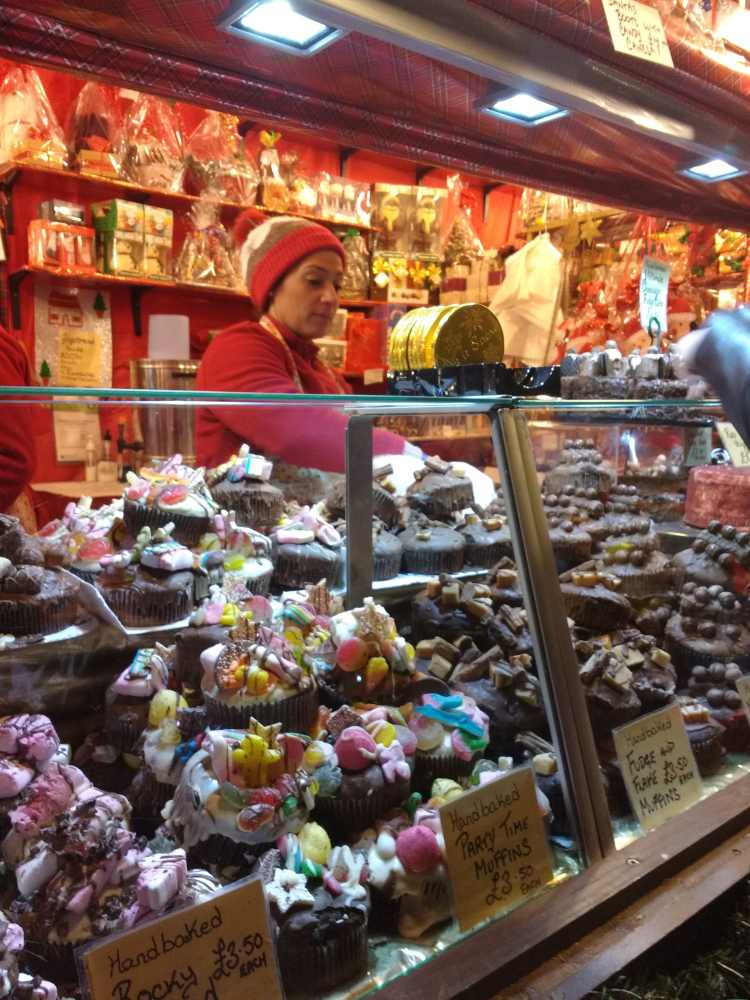
Mulled wine everywhere: Glühwein (Germany and Austria), vin chaud (France, with white versions in Alsace), svařák (Czechia), forralt bor (Hungary), gløgg (Denmark).

Germany: bratwurst, Lebkuchen gingerbread, Stollen and roasted almonds.
Austria: Kaiserschmarrn and punch made with rum or fruit.
Hungary: lángos and kürtőskalács chimney cake.
Poland: grilled oscypek cheese with cranberry jam, and pierogi.
Denmark: æbleskiver pancake balls.
Italy: panettone, pandoro, Zelten fruit bread in South Tyrol and fritole in Venice.
Spain: turrón and polvorones, and roscón de reyes on 6 January.

The mug deposit: at most German, Austrian and Swiss markets you pay a small deposit (Pfand) on your mug. Return it for your money back, or keep it; collectors look for each year’s design.
Practical Tips for a Christmas Trip in Europe
- Book hotels early. Strasbourg, Colmar, Lapland and Edinburgh at Hogmanay sell out months ahead.
- Go midweek. Weekend crowds at the famous markets can be overwhelming.
- Combine cities by train: Strasbourg and Colmar; Vienna and Bratislava; Salzburg and Munich; Cologne, Aachen and Brussels. See our guide to the best train journeys in Europe.
- Carry some cash. Most stalls take cards now, but not all.
- Dress for standing still: thermal layers, waterproof boots and gloves you can eat in.
- Check opening days for museums and attractions around 24–26 December and 1 January.
Accessible Christmas Markets in Europe
Accessible travel is a big part of what I write about. The honest picture is that many markets are on historic cobbled squares, crowded and uneven, and Strasbourg, Colmar, Prague, Tallinn and Bruges can be hard going in a wheelchair or with a walking aid. Some tips:
- Visit on weekday mornings, when there’s room to move between stalls.
- Larger, flatter modern sites such as London’s Winter Wonderland are easier, and Zurich’s market inside the main railway station is indoors and level.
- Edinburgh’s market is in a sloping garden; check the organiser’s access information.
- Look for sensory-friendly sessions, which some events, including Dublin’s TwinkleTown, now offer.
More in our Accessible Europe guide.
Frequently Asked Questions About Christmas in Europe
Where is the best place in Europe to spend Christmas?
For classic Christmas markets, Vienna, Strasbourg, Colmar and Nuremberg are the strongest choices. For snow and Santa, go to Rovaniemi in Finnish Lapland. For a big-city Christmas, London and Paris are best for lights and shop windows, and for winter sun, Málaga, Lisbon or Malta. Prague, Budapest and Kraków give the best value.
What is the best Christmas market in Europe in 2026?
In the 2026 European Best Destinations traveller vote, with more than 800,000 votes, the top five were Craiova in Romania, Zurich, Riga, Lisbon and Debrecen in Hungary. For the classic Christmas market experience, Vienna, Strasbourg, Nuremberg and Dresden remain the most famous, and all four also made the top 20.
When do the Christmas markets in Europe open in 2026?
Most open between mid-November and the end of November 2026. Vienna’s Schönbrunn market opens on 6 November and the City Hall market on 13 November, Cologne’s cathedral market on 16 November, Strasbourg and Nuremberg on 27 November, and Prague on 28 November. Many German and French markets close on 23 or 24 December, while Vienna, Prague, Budapest, Tallinn, Bruges and others run into early January.
Are Christmas markets open on Christmas Day?
Most are not. German markets such as Nuremberg and Dresden close at lunchtime on Christmas Eve, and Strasbourg, Edinburgh, Bratislava and many others close on Christmas Day. Some markets that run into January, including Vienna’s Schönbrunn market and Budapest’s markets, open with shorter hours over Christmas. Always check the market’s own website.
Which is the oldest Christmas market in Europe?
Several cities claim the title. Vienna traces a December market to 1298, Bautzen in Germany to 1384, and Dresden’s Striezelmarkt was first recorded in 1434. Strasbourg’s Christkindelsmärik dates from 1570 and is often called the oldest in France.
What is the best time to visit Christmas markets in Europe?
The last week of November and the first two weeks of December give you the widest choice of open markets with fewer crowds. Weekday mornings and early afternoons are the quietest. The weekends just before Christmas are the busiest and the most expensive for hotels.
Where can I get a white Christmas in Europe?
Snow is most reliable in Finnish Lapland, including Rovaniemi, and in the Alps around Salzburg, Innsbruck and the Swiss and Italian mountains. Tallinn, Riga and Reykjavík often have snow too. Snow in Vienna, Prague, Paris, London or Dublin at Christmas is possible but rare.

Which European Christmas markets are cheapest?
Kraków, Bratislava, Budapest, Prague, Zagreb and Riga are the best value, with food, mulled wine and hotels costing noticeably less than in Germany, Austria, France or Switzerland. Zurich is the most expensive city on this list.
Do Europeans celebrate Christmas on 24 or 25 December?
It depends on the country. In Germany, Austria, Switzerland, Scandinavia, Iceland, the Czech Republic, Poland, Hungary and Slovakia, the main celebration and gift-giving are on the evening of 24 December. In Ireland and the UK, it’s 25 December. In Spain, children traditionally get gifts from the Three Kings on 6 January, and in Italy from La Befana on the night of 5 January.

What do you eat and drink at a European Christmas market?
Mulled wine is everywhere: Glühwein in Germany and Austria, vin chaud in France, svařák in Prague and gløgg in Denmark. Typical food includes bratwurst, Lebkuchen gingerbread and Stollen in Germany, lángos and chimney cake in Budapest, oscypek cheese in Kraków and æbleskiver in Copenhagen. Many German and Austrian markets charge a deposit on your mug, which you get back when you return it.
Can I visit Santa in Lapland at Christmas?
Yes. Santa Claus Village in Rovaniemi, Finland, on the Arctic Circle, is open every day of the year, including Christmas Day, and visiting Santa there is free, although official photos cost extra. In December expect queues of an hour or more, and book flights and accommodation as early as possible. There is also a Lapland event at the Doagh Famine Village in Donegal for those travelling Ireland.

Is the Dublin Castle Christmas market on in 2026?
No. Christmas at the Castle is not running in 2026 because Dublin Castle is the main venue for Ireland’s Presidency of the Council of the EU. Dublin’s main markets are TwinkleTown at Smithfield Square and St Patrick’s Park, and Everwinter at the RDS.
Are European Christmas markets accessible for wheelchair users?
Partly. Many markets sit on historic cobbled squares that are crowded and uneven, especially in Strasbourg, Colmar, Prague, Tallinn and Bruges. Weekday mornings are much easier, large modern sites such as Hyde Park Winter Wonderland are flatter, and Zurich’s market inside the main railway station is indoors and level. Check each city’s accessibility information before you go.
My Thoughts on Christmas in Europe
If you’ve never done a European Christmas, start with one classic market city and give it time, rather than racing between five. Stand in a square with a mug of something hot, listen to a choir, buy one good thing from a maker, and eat what the locals are eating. Then let the next year take you somewhere completely different: Lapland snow, the Three Kings in Spain or a fire-lit pub in Ireland. That’s the joy of Christmas in Europe: no two countries do it the same way.
Join 7,500 Ireland travellers in my Ireland Uncovered Facebook Group and 1,897 on my XYUandBEYOND page
You Might Also Like
- Christmas in Ireland 2026: Dublin, Markets and What’s Open
- Christmas in Belfast: A Festive Guide
- The Ultimate Christmas in London
- Best Christmas Markets in England
- Celebrating Christmas in Spain
- French Christmas Traditions: Joyeux Noël
- Irish Christmas Traditions
- Little Christmas in Ireland: Nollaig na mBan
- Christmas Around the World
- Europe Travel Guide
- Global Food Guides