
Ancient Corinth & New Corinth: A Journey Through Time
When you visit Corinth in the Peloponnese Islands of Greece, you embark on an unforgettable journey through history. A short trip from Athens brings you to the stunning Corinth Canal, an engineering marvel that connects the Aegean Sea to the Ionian Sea.

The city of Corinth is home to the archaeological site of ancient Corinth, where you’ll see remnants of a once thriving metropolis, including the Frankish Tower and Doric temples dedicated to ancient gods. A guided tour reveals the history of Corinth and its significance as one of the most famous city states of antiquity. The archaeological site of Ancient Corinth is currently on Greece’s Tentative List for UNESCO World Heritage designation. This prestigious tentative status recognizes the site’s outstanding universal value as a major center of Greek and Roman civilization.
Just 3 km northeast, New Corinth (modern Greek – Korinthos) was rebuilt after earthquakes, serving as a vibrant gateway to the Peloponnese. While the ancient city whispers of philosophers and merchants, modern visitors can explore museums before relaxing by the Corinthian Gulf, where layers of history meet contemporary Greek life.
Don’t miss the opportunity to explore Acrocorinth, which offers a great view of the surrounding landscape and the Gulf of Corinth. This important historical site is not just about ancient ruins; it’s also a place where myths come to life, where you’ll hear tales of a monster with the body of a lion and the tail of a serpent.
- Ancient Corinth & New Corinth: A Journey Through Time
History of Corinth
Founded in the 8th century BCE, Ancient Corinth rose to prominence as a powerful city-state, dominating trade routes between the Aegean and Adriatic. By the 4th century BCE, it became a key player in Greek politics, clashing with Athens during the Peloponnesian War (431–404 BCE) and later flourishing under Roman rule. The archaeological site today reveals its grandeur—from the Temple of Apollo (6th century BCE) to the bustling Roman Agora—making it a cornerstone of classical studies.
Modern Corinth, known as Korinthos in modern Greek, is situated near the ruins of the ancient city. The area is also famous for the Corinth Canal, a manmade waterway completed in the late 19th century that connects the Gulf of Corinth with the Saronic Gulf.

How can I visit ancient Corinth from Athens?
The trip from Athens to ancient Corinth is quite straightforward and can be done by car or public transport. If you choose to drive, the distance is about 80 kilometers, taking approximately 1.5 hours. Alternatively, you can take a train from Athens to the modern city of Corinth, which takes about 1 hour, followed by a short taxi ride to the archaeological site.

Tours of Corinth
Nafplio Half Day Shared Tour to Ancient Corinth and the Corinth Canal
Ancient Epidaurus Theater and Canal of Corinth Private Tour from Corinth
Ancient & Modern Corinth: A 3,000-Year Journey Through History
Why Corinth Belongs on Your Greek Itinerary
Just 90 minutes from Athens, Corinth offers unparalleled layers of history:
Ancient Corinth: Walk among 6th-century BCE temples where St. Paul preached and merchants traded silk from China

Acrocorinth: Climb this triple-walled fortress where Greek myths say the sun god Helios kept his palace
Corinth Canal: Witness ships squeeze through this 19th-century engineering marvel first attempted by Emperor Nero

Key Sites & Costs (2024)
| Site | Highlights | Cost |
| Ancient Corinth | Temple of Apollo, Roman Agora, St. Paul’s Bema | €8 (includes museum) |
| Acrocorinth | Panoramic views, Aphrodite’s Sanctuary | Free |
| Isthmia | Poseidon’s Temple, Olympic-style stadium | Free |
Pro Tip: Buy the €15 combo ticket covering Ancient Corinth + Acrocorinth + Museum.
I’ve always been fascinated by places where legends and history overlap, and Corinth is one of those rare sites where you can literally walk through both. This isn’t just another archaeological site—it’s a city where Greek myths come to life alongside tangible historical remains.

Standing in the shadow of Acrocorinth, it’s easy to imagine why ancient Greeks believed this massive rock was gifted to the sun god Helios. The climb to the top rewards you with panoramic views that explain why every empire—from the Romans to the Ottomans—fought to control this fortress. Down in the ancient city, the Temple of Apollo’s surviving columns make you wonder how a 6th-century BCE structure still feels so imposing today.

The Corinth Canal is where myth and human ambition collide. Engineers first attempted this waterway in Nero’s time, but it wasn’t until 1893 that the dream became reality. Watching ships squeeze through the narrow passage, you realize why this shortcut between the Aegean and Ionian Seas was worth millennia of effort.
For history buffs, the connection to St. Paul adds another layer. Walking through the Agora, you can stand at the exact spot (the Bema) where he defended his teachings. Nearby, the Peirene Fountain still flows—just as it did when locals told visitors it was created by Pegasus’ hoof.


What I love most about Corinth is how raw it feels. Unlike more polished ancient sites, here you’ll find:
Crumbling Roman shops where merchants once haggled
Byzantine churches built right into the old city walls
Quiet corners where you can piece together 3,000 years of history without crowds

Practical tip: Come early to explore Acrocorinth in the cool morning hours, then hit the archaeological museum when the midday sun gets intense. Don’t skip the short drive to ancient Isthmia—the starting line of the original Isthmian Games still visible in the dirt.
Things to do in Corinth
Corinth, both ancient and modern, offers a wealth of historical, cultural, and natural attractions. Here’s a guide to the top things to do and see in Corinth, including their locations, costs, and what makes them special:
Acrocorinth: Myths, Fortresses, and Panoramic Views
Acrocorinth (Acropolis of Corinth)
Location: About 4 kilometers (2.5 miles) south of Ancient Corinth, atop a steep hill. Cost: Free to enter.
Acrocorinth is a massive fortress that served as the acropolis of ancient Corinth. It offers stunning panoramic views of the surrounding region, including the Isthmus and the Gulf of Corinth.
The site features ruins from multiple periods, including ancient Greek, Roman, Byzantine, and Ottoman structures.

Towering over the ruins is Acrocorinth, the largest and highest acropolis in mainland Greece. Fortified since ancient times, it was later expanded by Byzantines, Franks, Venetians, and Ottomans. The climb is steep, but the sweeping views are unmatched.
At the summit lies the Sanctuary of Aphrodite, once famed for its temple courtesans. According to legend, this hilltop was gifted to Helios after a divine dispute with Poseidon, while the nearby Isthmus was awarded to the sea god.
Poseidon and Corinth
According to myth, Poseidon and Helios (the sun god) had a dispute over the patronage of Corinth. To resolve the conflict, the giant Briareos (an ally of Zeus) intervened and awarded the Acrocorinth (the citadel of Corinth) to Helios and the Isthmus to Poseidon.

The Sanctuary of the God Poseidon at Isthmia
About 16 kilometers (10 miles) east of Corinth, near the modern village of Kyras Vrysi, lies the Sanctuary of Poseidon at Isthmia. This was one of the most important religious sites in ancient Greece dedicated to Poseidon.

Excavations at Isthmia have revealed the remains of the Temple of Poseidon, a theater, baths, and other structures. The sanctuary was a major center of worship for Poseidon and hosted the Isthmian Games, one of the four Panhellenic Games of ancient Greece (alongside the Olympics, Pythian Games, and Nemean Games).
Sanctuary of Aphrodite
The sanctuary was situated atop Acrocorinth, a steep hill overlooking the ancient city of Corinth. The Sanctuary of Aphrodite was renowned throughout the ancient world. According to legend, the temple housed sacred courtesans (hierodules) who served the goddess. The cult of Aphrodite in Corinth was closely tied to the city’s prosperity and its role as a major trading hub.

The Temple of Aphrodite
The temple was a grand structure, typical of ancient Greek religious architecture. It likely featured columns, statues, and altars dedicated to the goddess. The exact design and size of the temple are not fully known, as only ruins remain today, the ruins of the Sanctuary of Aphrodite are part of the larger archaeological site of Acrocorinth. Visitors can explore the remains of the temple and other structures on the hill.

Heraion of Perachora (Sanctuary of Hera)
A secluded 8th-century BCE sanctuary to Hera on a remote cape, with ruins overlooking the turquoise Gerania Gulf.

Julius Caesar and Corinth
Julius Caesar had a significant connection to Corinth, particularly in the context of the city’s reconstruction and its role in the Roman Empire.
In 146 BCE, the Roman general Lucius Mummius destroyed Corinth after the city led the Achaean League in a revolt against Roman rule. The city was razed, its men killed, and its women and children sold into slavery. Corinth lay in ruins for nearly a century.

In 44 BCE, Julius Caesar refounded Corinth as a Roman colony, naming it Colonia Laus Iulia Corinthiensis (“The Praiseworthy Julian Colony of Corinth”). This was part of Caesar’s broader plan to strengthen Roman control over Greece and the eastern Mediterranean.
Corinth and Christianity: St. Paul’s Legacy
For Christian travelers, Corinth holds deep significance. In the Agora, St. Paul was brought before the Roman proconsul Gallio and defended his mission (Acts 18). His letters to the Corinthians remain foundational Christian texts.

The Church of St. Paul in modern Corinth and the transformed Bema stand as powerful reminders of the city’s early Christian legacy.
Modern Corinth (Korinthos)
Located just 3km northeast of the ancient city, New Corinth (Korinthos) was rebuilt after devastating earthquakes. Today, it blends a modern seaside charm with easy access to ruins, beaches, and museums.

Enjoy fresh seafood at waterfront tavernas along the Corinthian Gulf, or unwind on the sandy shores of Pefkias and Kalamia beaches. The nearby ruins of Lechaion Port, now partially submerged, are a unique snorkeling spot.

Corinth Canal
Location: About 4 kilometers (2.5 miles) east of modern Corinth. Cost: Free to view; additional costs for boat tours or bungee jumping.

Visitors can walk along the pedestrian bridges to watch ships pass through the narrow waterway or take a boat tour for a closer look. The canal is also a popular spot for bungee jumping, offering a thrilling experience with stunning views.

Beaches of Corinth
The beaches of Corinth offer a mix of relaxation and history, nestled along the sparkling waters of the Corinthian Gulf and Saronic Gulf. On the northern coast near New Corinth, sandy stretches like Pefkias Beach and Kalamia Beach provide family-friendly swimming spots with shallow waters and tavernas serving fresh seafood.

For a more rugged escape, the Loutraki area boasts pebbled coves with clear turquoise waters, backed by views of the Peloponnese mountains. Meanwhile, near Ancient Corinth, the historic port of Lechaion—once a bustling naval hub—now lies in quiet ruins by the shore, blending archaeology with seaside tranquility. The submerged remains of Corinth’s major commercial harbor, now a snorkelling spot with visible Roman docks and columns just offshore. Best explored with a guided dive.
Hidden Gems of Corinth
Corinth is brimming with hidden gems beyond its famous ruins, offering unique experiences for history buffs, nature lovers, and adventurers. Here are some lesser-known treasures:
Diolkos (Ancient Ship Road)
Location: Near the Corinth Canal. Cost: Free to view.
The Diolkos was an ancient paved road used to transport ships overland across the Isthmus of Corinth.
It’s one of the earliest examples of a “railway” system and highlights the ingenuity of ancient engineers.
Visitors can see the remains of the road and imagine how ships were hauled across the isthmus.

Feneos Valley & Lake Doxa
A serene alpine valley in mountainous Corinthia, dotted with ancient shrines (like the Sanctuary of Demeter) and the stunning Lake Doxa, circled by hiking trails.

Sikyon’s Ancient Theater
Near Corinth, this 4th-century BCE theatre is acoustically perfect yet rarely visited. Nearby, the Roman baths and mosaics are equally impressive.

Tenea’s Lost City
Recently excavated Hellenistic-Roman city (allegedly founded by Trojan captives), with mosaic floors and a mysterious past.

Corinth is a treasure trove of ancient history, natural beauty, and modern attractions. From exploring the ruins of Ancient Corinth and Acrocorinth to marveling at the Corinth Canal and relaxing on nearby beaches, there’s something for everyone. Most archaeological sites are affordable to visit, and many natural attractions are free, making Corinth a budget friendly destination with rich cultural and historical significance.
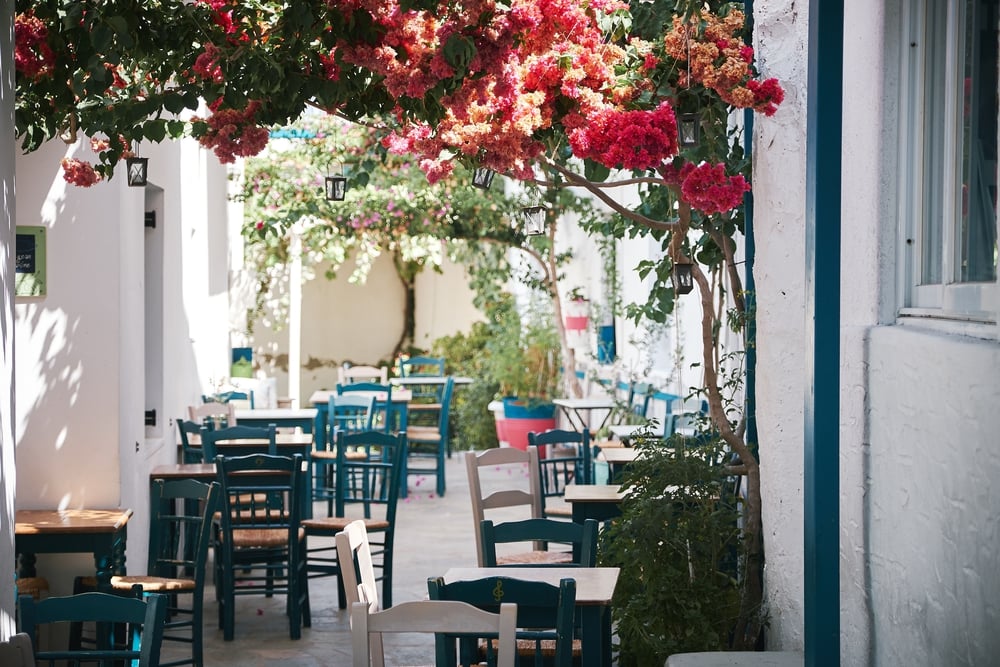
While my time in Corinth was a profound journey into the heart of ancient history, it also opened my eyes to the incredible diversity of experiences that Greece has to offer. This visit has undoubtedly inspired a long list of future adventures, from witnessing the iconic sunsets of Santorini and wandering the streets of Corfu to exploring the inland villages of Naxos and the enchanting port of Chania. For those dreaming of a move to Greece or an extended trip sailing around Greece, this country truly embodies the essence of romantic Greece, offering a perfect blend of awe-inspiring history and breathtaking beauty at every turn.