
Shibden Hall: A Complete Guide to Anne Lister’s Yorkshire Home
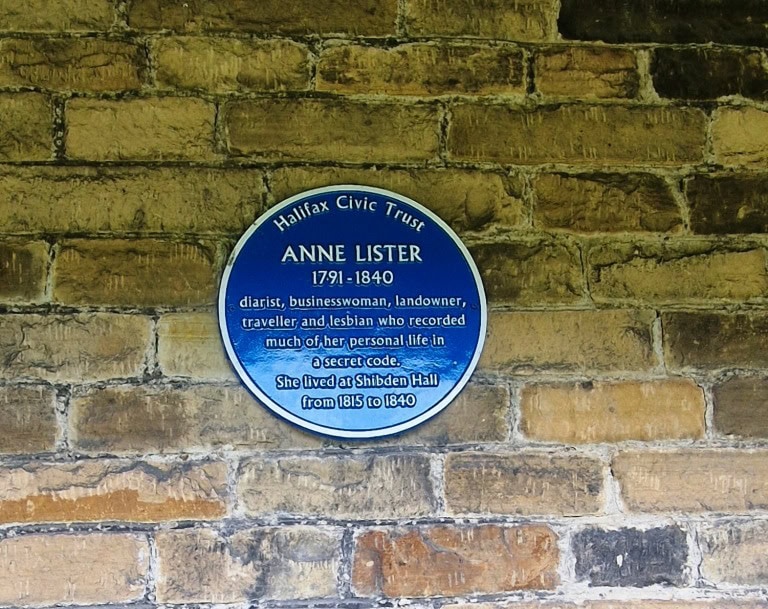
Shibden Hall is a 15th-century manor house in Halifax, West Yorkshire, and the former home of Anne Lister, the pioneering 19th-century landowner, diarist, and lesbian icon whose coded journals inspired the BBC drama Gentleman Jack. It is open to visitors as part of the Calderdale Museums network. Adults pay GBP10, and the grounds and park are free to access.
- Shibden Hall: A Complete Guide to Anne Lister's Yorkshire Home
- Why Visitors Should Make the Journey to Shibden Hall
- What Is Shibden Hall? A Definition Worth Knowing
- Who Was Anne Lister? The Woman Behind Gentleman Jack
- Anne Lister's Diaries: The Historical Record
- What to See Inside Shibden Hall
- Shibden Park: The Grounds, Lake, and Land Train
- Practical Information for Visiting Shibden Hall
- How to Plan Your Visit to Shibden Hall: Step by Step
- The History of Shibden Hall: Six Centuries in Brief
- Bankfield Museum and Other Nearby Attractions
- Frequently Asked Questions About Shibden Hall
- Why Shibden Hall Belongs on Your Yorkshire Itinerary
Why Visitors Should Make the Journey to Shibden Hall
Shibden Hall is not just another English country house. It is the home of one of the most remarkable women in British history, a woman whose story would have been deeply familiar to any Irish person who has ever felt the weight of a society trying to silence them.
Anne Lister, born in 1791, owned and transformed this hall, coded her most private thoughts into an elaborate cipher, lived as she chose regardless of convention, and documented everything. When those diaries were finally decoded and published, the world got its first clear, first-person account of a lesbian life in the early 19th century. For visitors from Ireland, a country with its own complex and hard-won relationship with LGBTQ+ rights and women’s autonomy, that story lands with particular resonance.
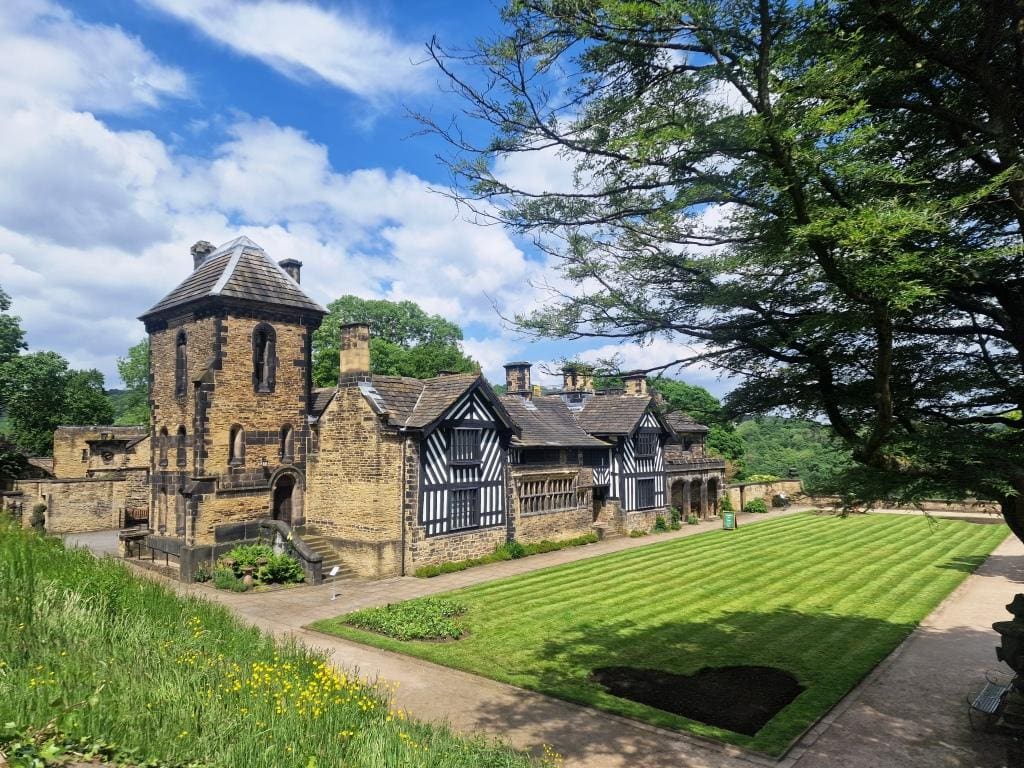
I first came to Anne Lister’s story while living in Yorkshire, watching the extraordinary BBC series Gentleman Jack on a rainy afternoon with nowhere else to be. By the end of the first episode, I had already looked up bus routes to Halifax. And when I finally walked down the path from the car park and saw that half-timbered facade sitting in the valley, I understood completely why Lister fought so hard to keep it.
Shibden Hall is a Calderdale Museums site and has been designated a Grade II* listed building by Historic England, recognising its outstanding architectural and cultural significance.
What Is Shibden Hall? A Definition Worth Knowing
Shibden Hall is a Grade II* listed medieval manor house located in the Shibden Valley, near Halifax in West Yorkshire, England. Built around 1420, it was home to the Lister family from 1615 until it was gifted to the Halifax Corporation in 1933. Today it operates as a museum and public park under Calderdale Council. It is internationally recognised for its association with Anne Lister, a 19th-century landowner, industrialist, traveller, and diarist who is often described as the first modern lesbian.
A Grade II listed building is a structure in England and Wales legally protected due to its special architectural or historical interest, meaning any alterations or demolition require special consent.

Who Was Anne Lister? The Woman Behind Gentleman Jack
Anne Lister was born in Halifax in 1791 and inherited Shibden Hall from her uncle James Lister in 1826. She ran the estate with precision, modernised its coal mining operations, invested in infrastructure, and redesigned its gardens according to picturesque landscape principles. She was also, by any contemporary measure, a feminist who refused almost every social constraint placed on women of her era.
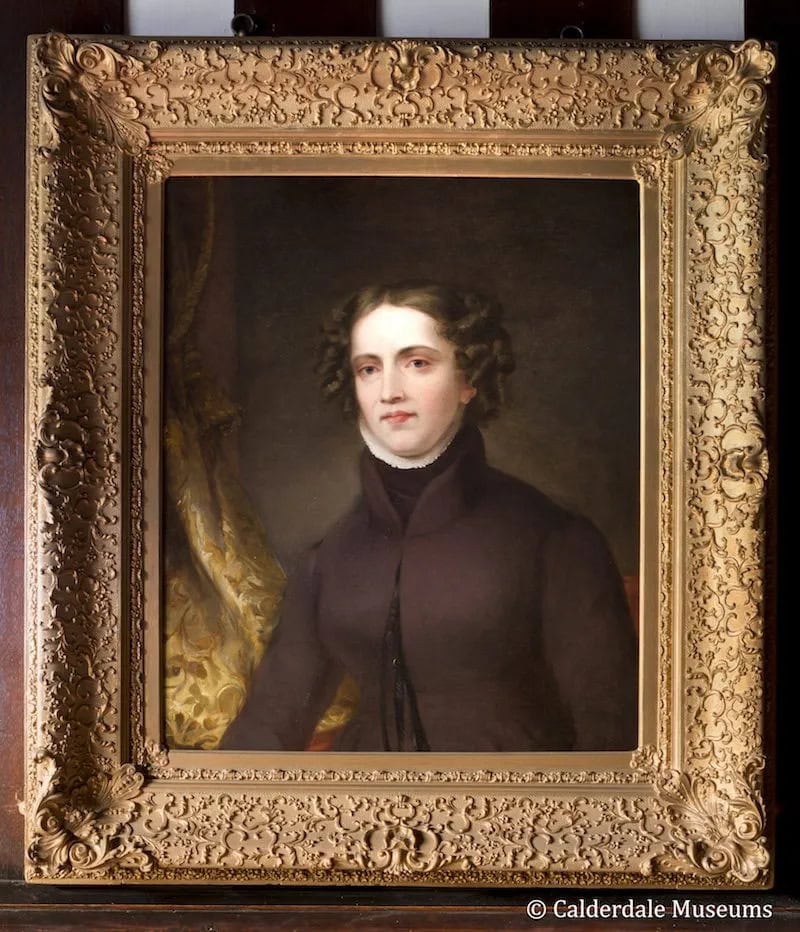
She dressed in black, masculine-style clothing, travelled extensively across Europe and the Middle East, negotiated business contracts in her own name, and maintained long-term romantic relationships with women throughout her adult life. All of this she documented in extraordinary detail across 26 volumes of diaries containing more than five million words.
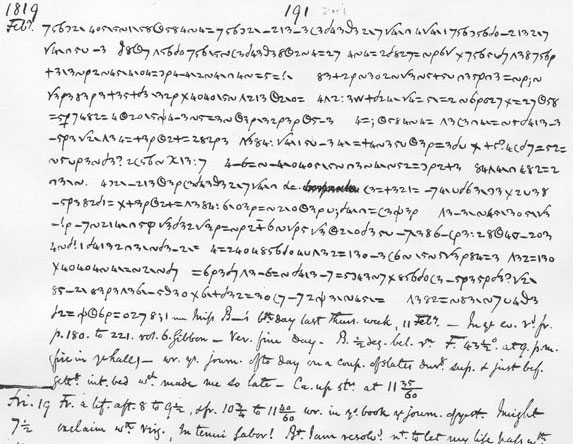
A significant portion of those diaries was written in a private cipher she developed herself, combining Greek letters, mathematical symbols, and punctuation marks. The coded sections documented her romantic and sexual relationships with women with candour and precision. One of the hall’s interpreters told me, quite rightly, that someone should make a travel programme from Lister’s diaries, given how well-travelled and observant she was.
Her final relationship was with Ann Walker, to whom she was notionally married in Holy Trinity Church, Goodramgate, York in 1834. That church is now celebrated as the site of the first recorded lesbian marriage in Britain. When Anne Lister died in 1840 in Georgia while travelling, Ann Walker was left Shibden Hall. Anne Lister was brought home and laid to rest at Halifax Minster.
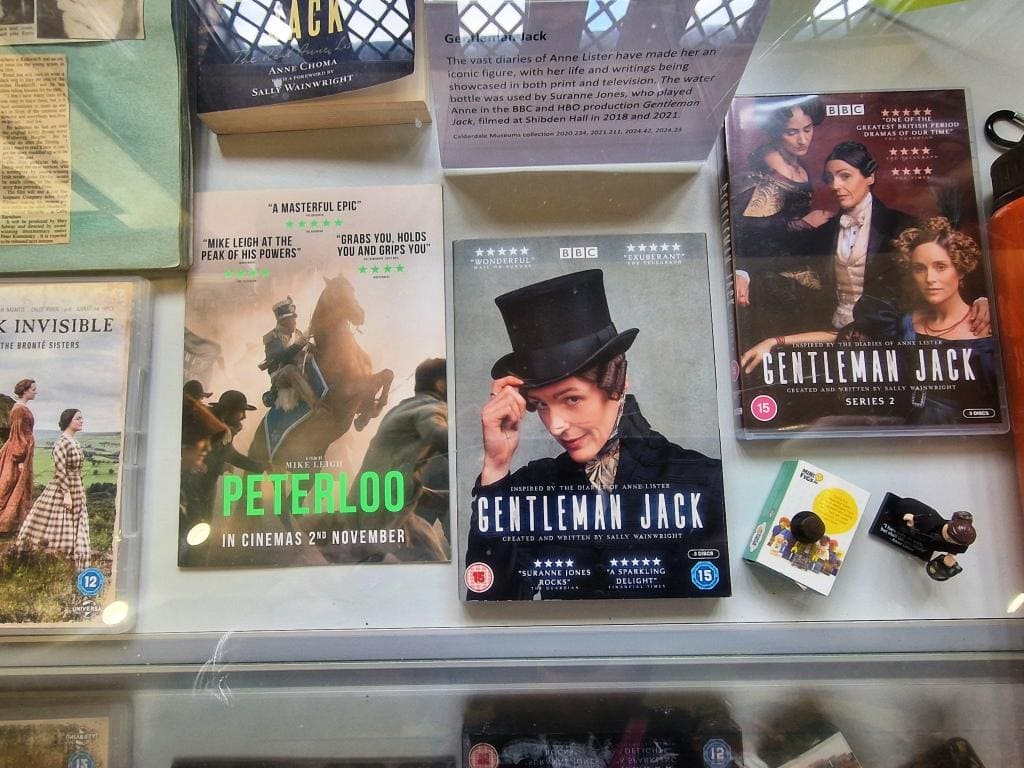
Anne Lister is prominently featured in the TV series Gentleman Jack, created by Sally Wainwright and first broadcast on the BBC in 2019, which brought her story to a global audience.

Anne Lister’s Diaries: The Historical Record
The diaries span Anne Lister’s life from 1806 until her death in 1840. They record her daily activities, financial dealings, estate management, travels, thoughts, and relationships with unusual frankness. After her death, the diaries were hidden behind panels at Shibden Hall. They were rediscovered in the 1890s by John Lister, a relative and the last resident of the hall, who cracked part of the code with a friend. Recognising the controversial nature of the content, John Lister chose not to publish them at the time.
It was not until the 1980s that historian Helena Whitbread fully transcribed the diaries. She published the first volume, I Know My Own Heart: The Diaries of Anne Lister 1791 to 1840, in 1988, followed by a second volume in 1992. Whitbread’s work established Anne Lister as a primary source of lasting importance for both LGBTQ+ history and women’s history.
What to See Inside Shibden Hall
Shibden Hall’s most recognisable feature is its Tudor half-timbered facade, which gives the hall its distinctive black-and-white appearance. Inside, the experience is layered across different historical periods, each room furnished to reflect how the house evolved across six centuries.
The Great Hall
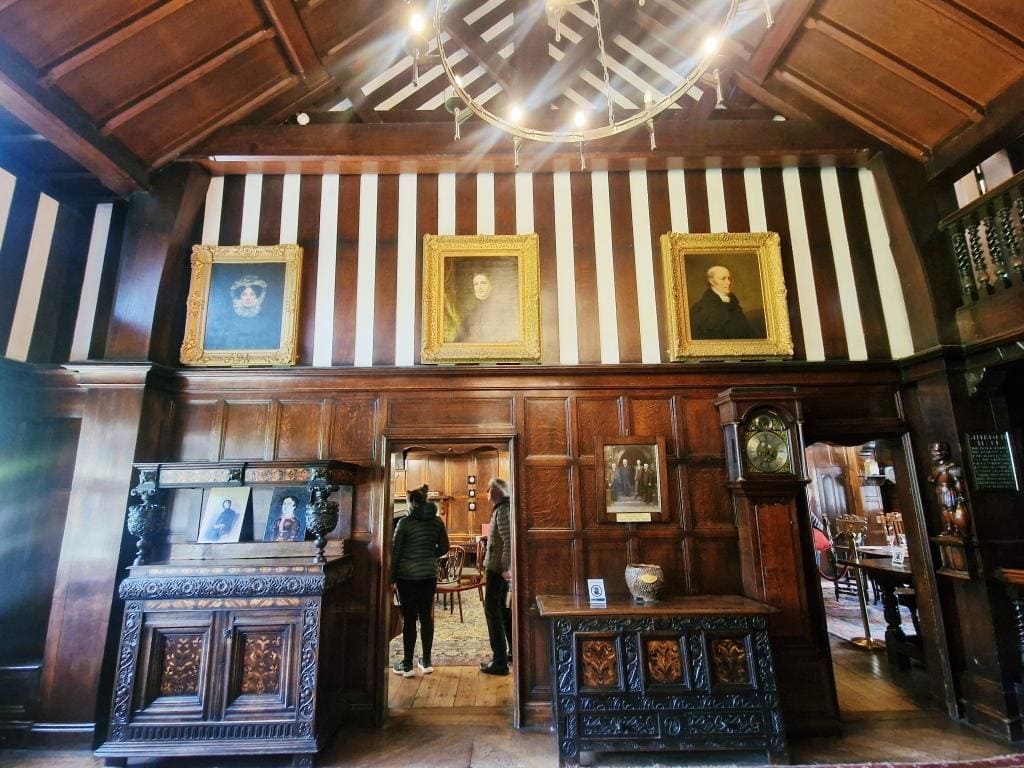
You enter the house through the front door directly into the Great Hall, the central room of the medieval structure. A large fireplace dominates the space, flanked by heavy oak beams and period furnishings. Above the doorway leading deeper into the house hang portraits of successive generations of the Lister family. On my visit, the light was low and golden through the leaded windows, and the room felt genuinely inhabited rather than preserved under glass.
Anne Lister’s Study
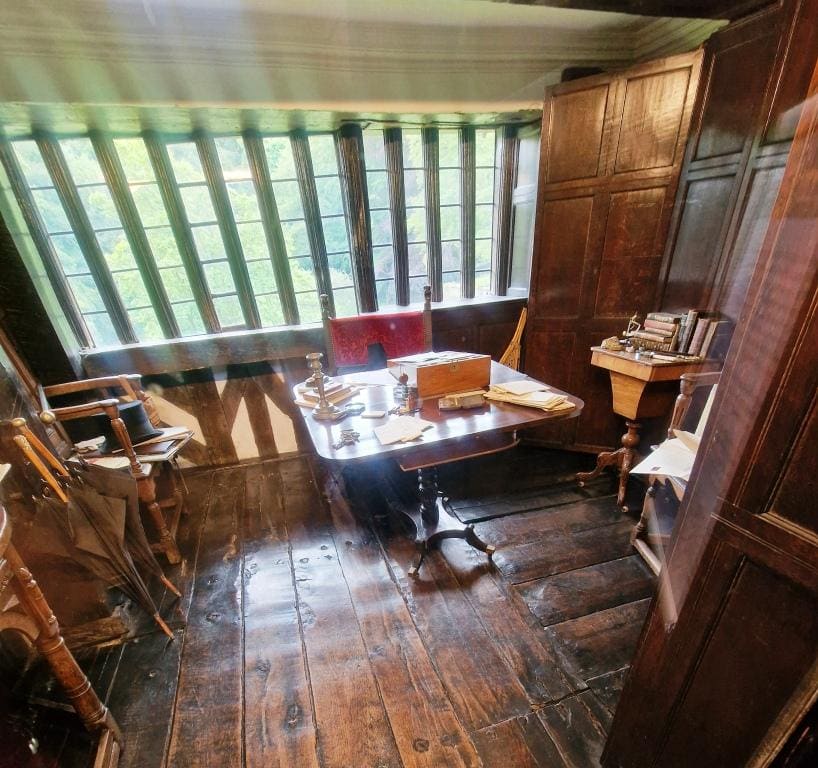
This room contains personal artefacts and exhibits related to Lister’s life, including objects that illustrate her intellectual interests and her role as estate manager. It is one of the most absorbing rooms in the house.
The Diary Room
On the upper floor, a room is dedicated to the history of the Lister family and includes sections from Anne Lister’s diaries alongside contextual interpretation. The coded script is displayed alongside its plain-text translation, which makes the private nature of the record viscerally real.

The Bedrooms and Living Quarters
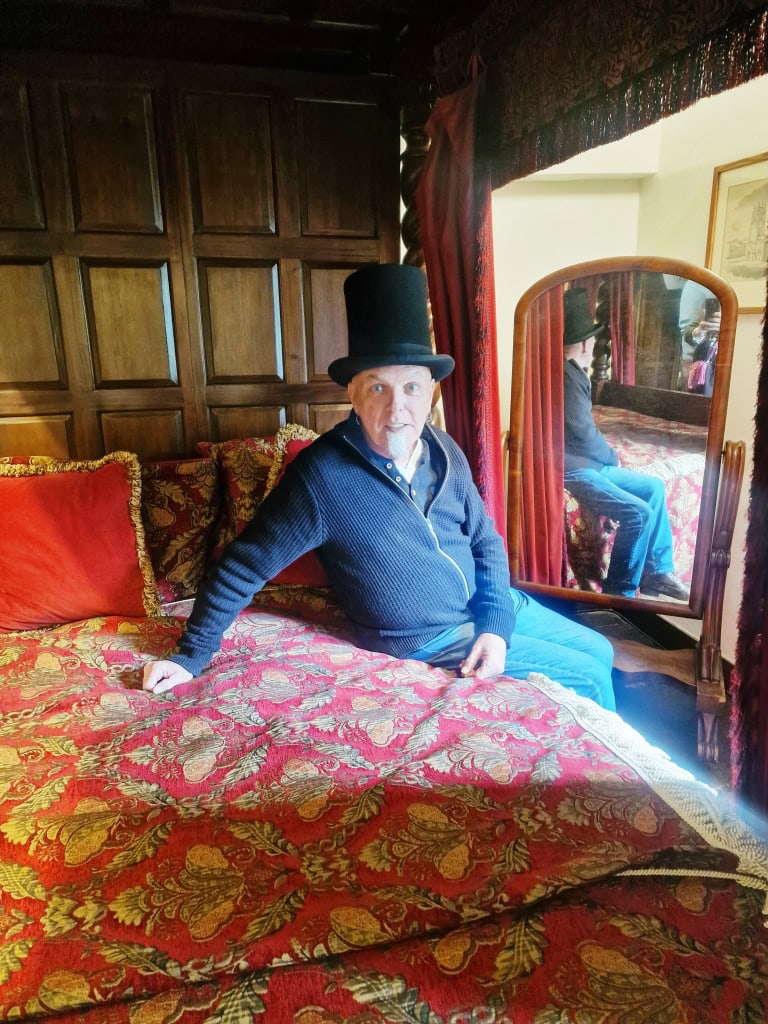
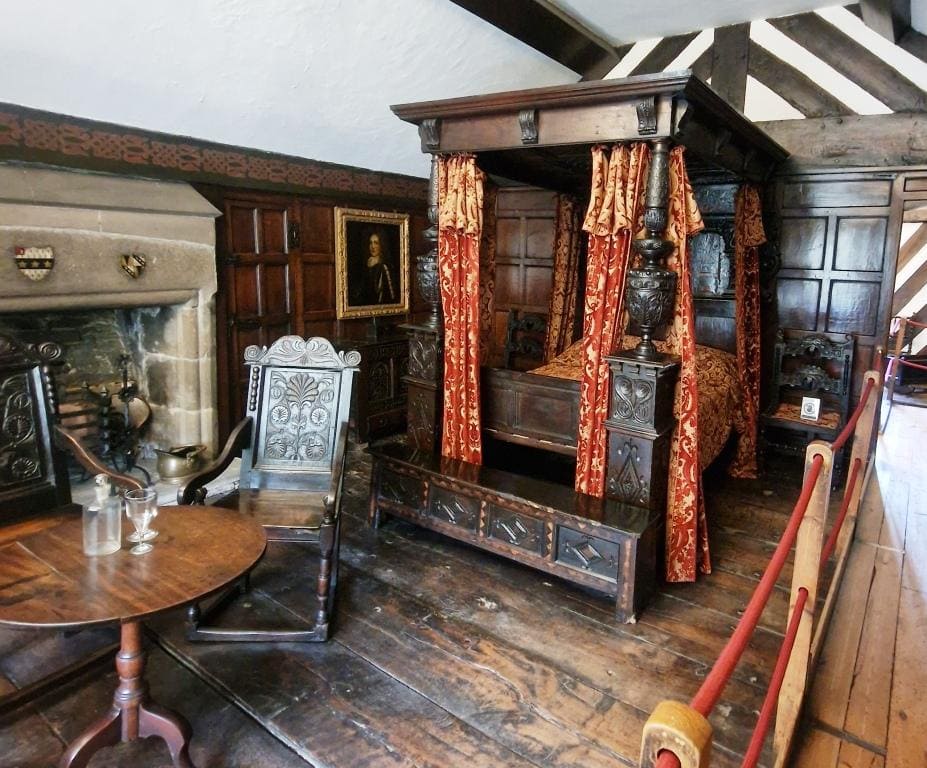
Period-appropriate furniture, textiles, and decorative arts fill the upper rooms. Visitors are invited to sit on Anne’s bed and to try on a replica top hat for photographs. My husband could not resist. The informality of that invitation tells you something about how the hall approaches its subject: Lister was a person, not a monument, and the hall treats her as such.
The Tower
Added in the 16th century, the tower provides views across the surrounding Shibden Valley and demonstrates the defensive thinking of the period alongside its aesthetic function.

Historic Artefacts and Docents
The hall contains a wide range of artefacts including fine art, ceramics, textiles, furniture, and personal items from various periods. There are typically two or three docents in the house on any given day who are genuinely knowledgeable and generous with their time and information. One of them provided some of the most interesting contextual detail I encountered on the whole visit.
The Aisled Barn, Stables and Workshops
Behind the main hall sits a 17th-century aisled barn, a structure whose design echoes that of a medieval church, with a central nave, flanking aisles, and aisle-posts supporting the roof trusses rather than standard triangular frames. It is a genuinely unusual piece of vernacular architecture.
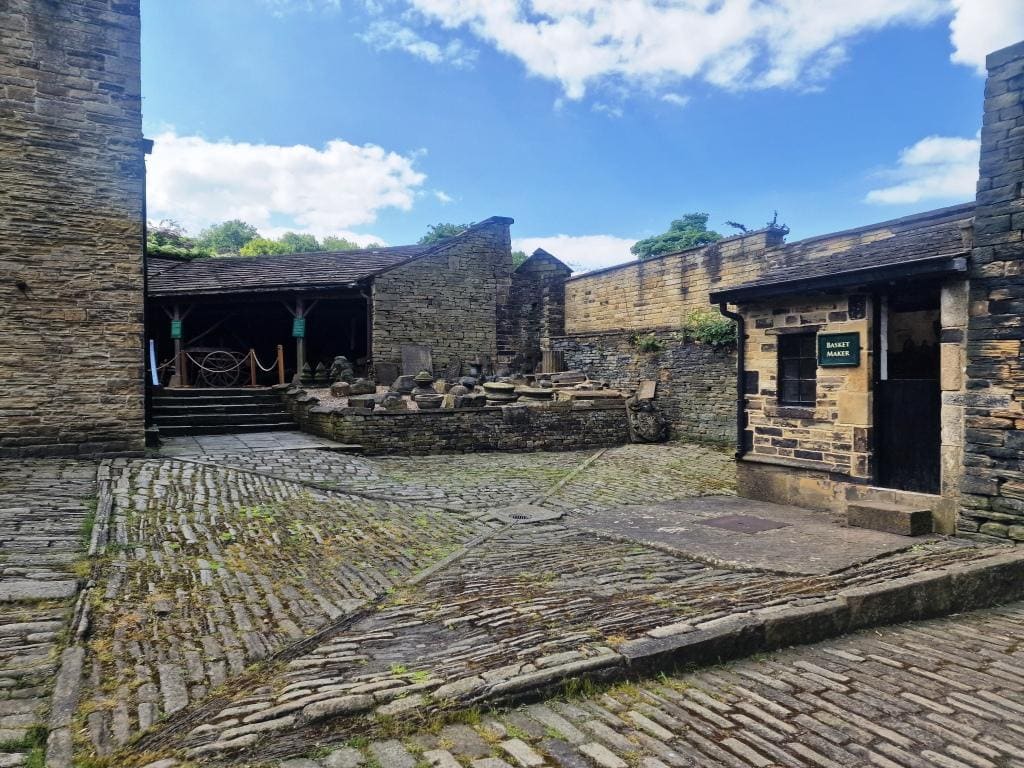
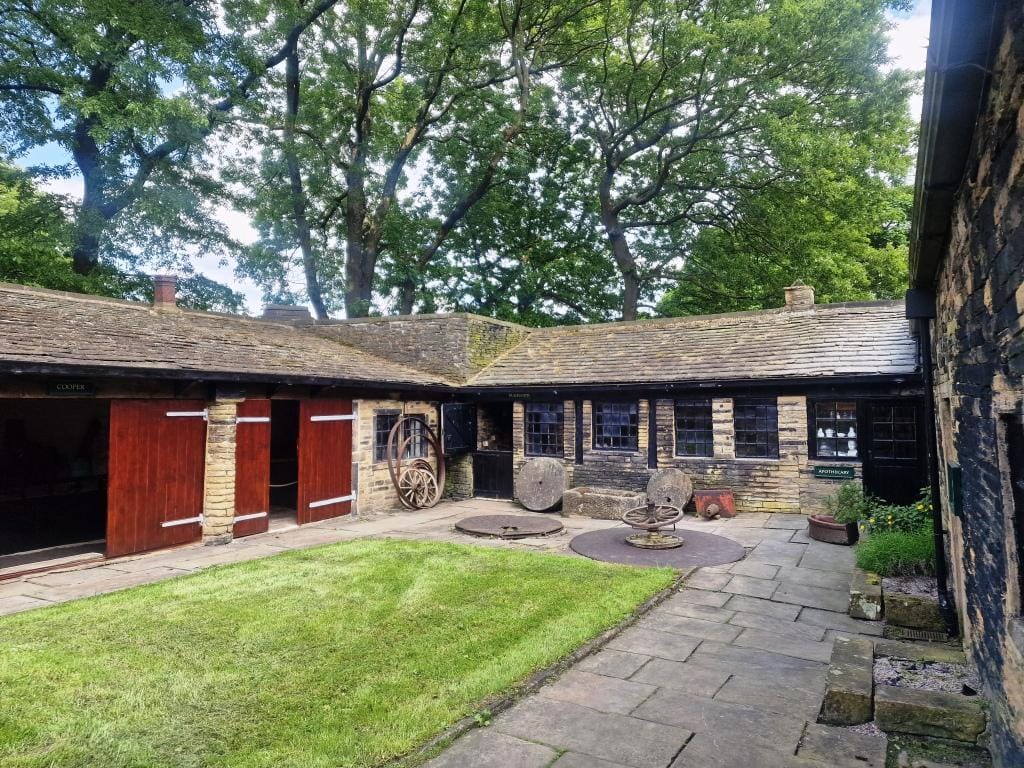
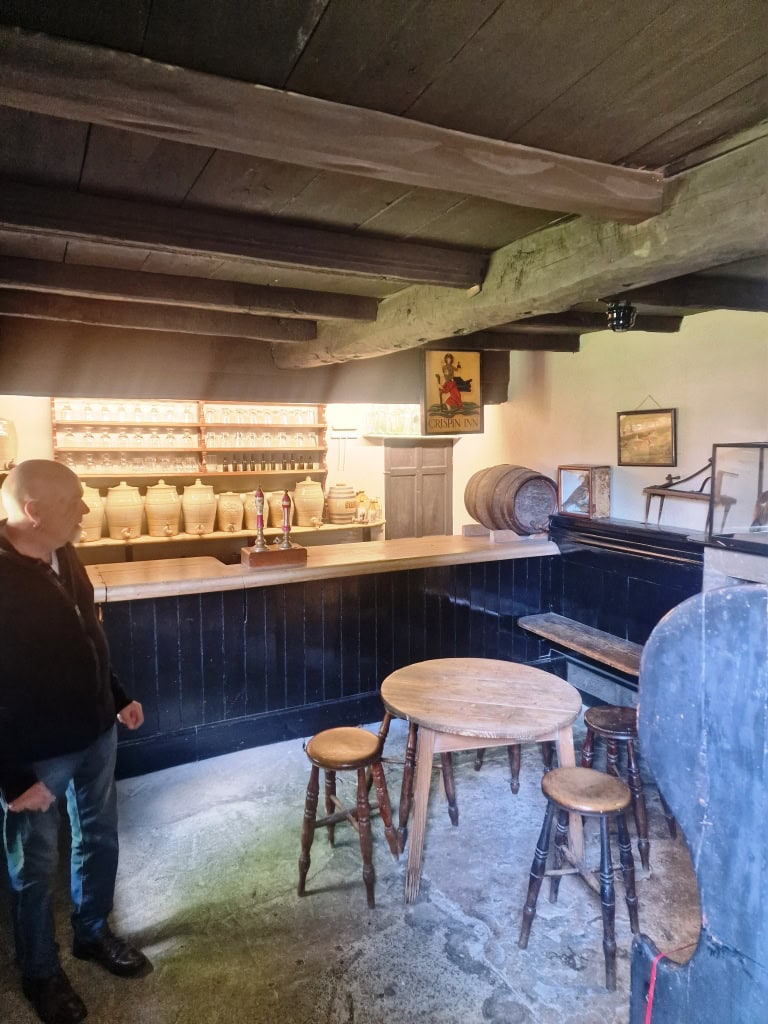
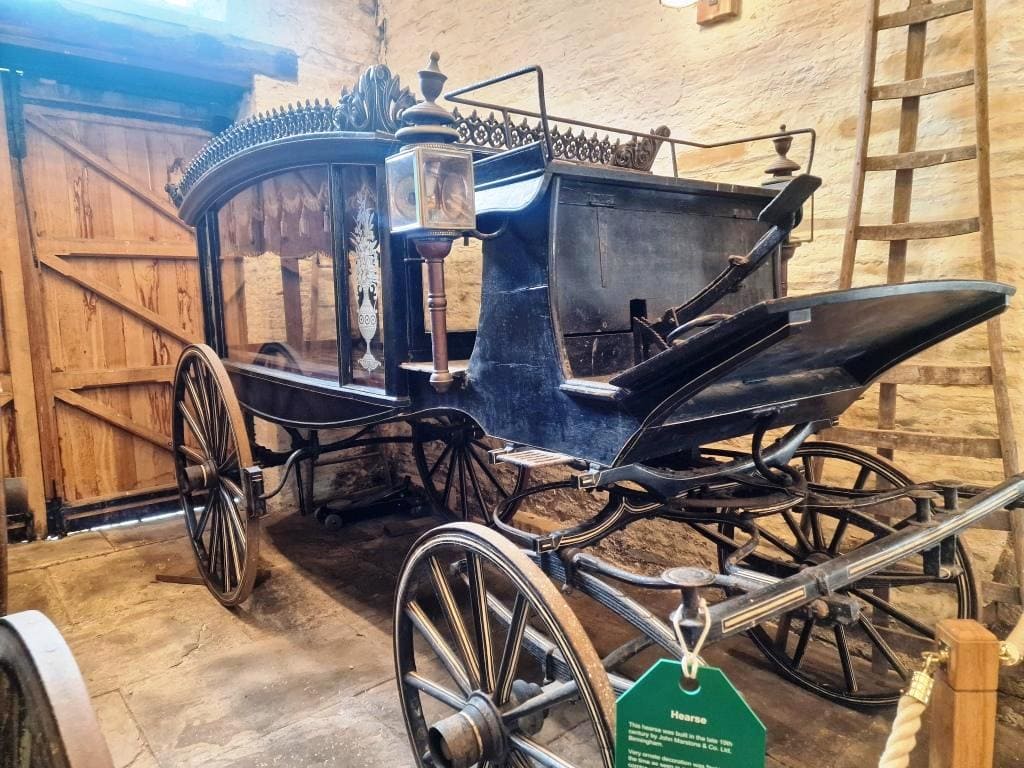
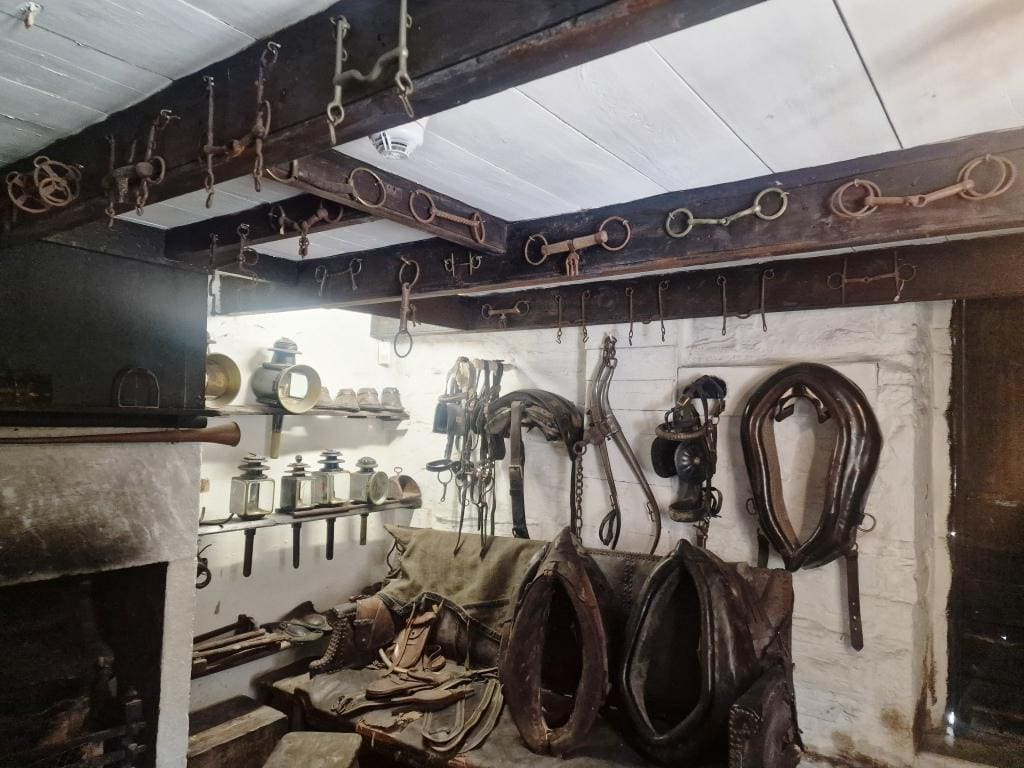
The barn and associated outbuildings house a carriage collection and displays related to traditional crafts including blacksmithing, coopering, wheelwrighting, and saddlery. There is also a recreated brewhouse where estate workers’ ale was produced, set up to resemble a working pub. Occasional live craft demonstrations are held throughout the year. The stables include horse stalls, tack rooms, and equipment that trace the role of horses in the working life of the estate.
Shibden Park: The Grounds, Lake, and Land Train
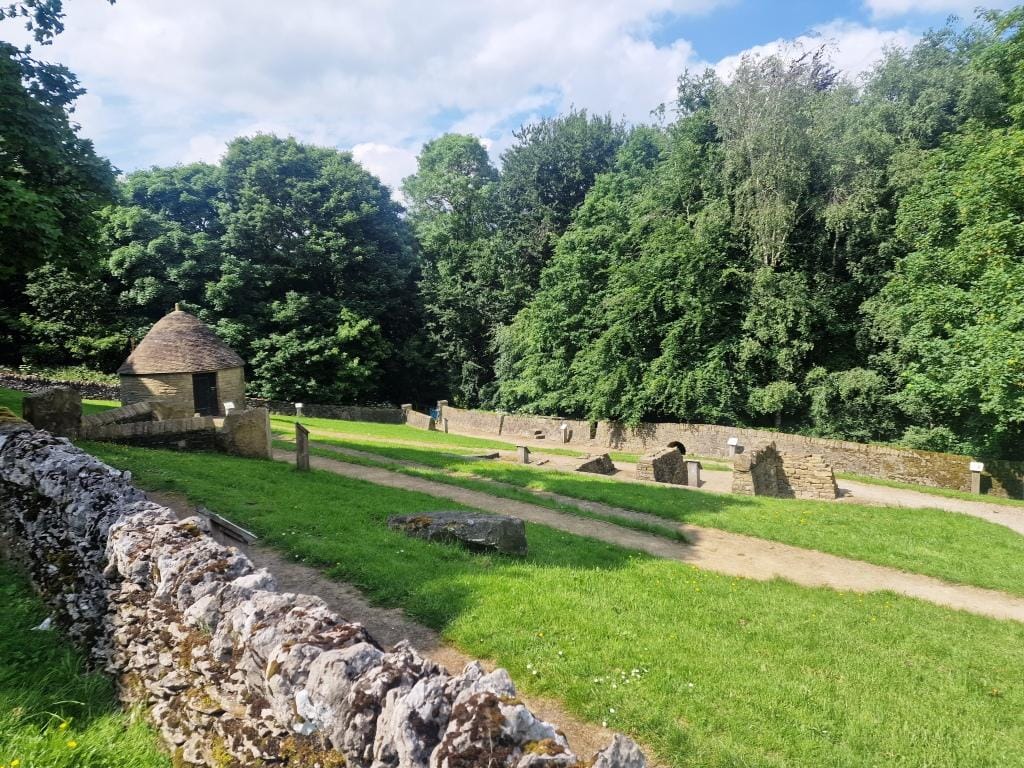
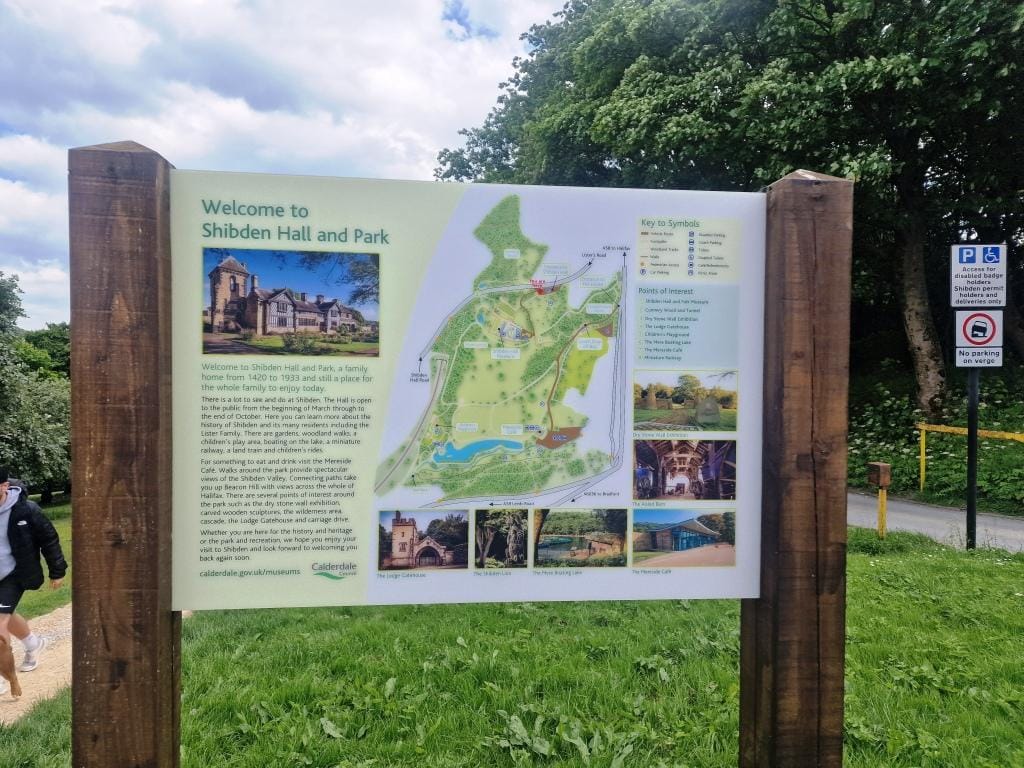
The park that surrounds Shibden Hall is free to enter and is actively used by local families, dog walkers, and anyone who needs a good lungful of West Yorkshire air. Anne Lister herself designed much of the parkland, drawing on the picturesque movement and introducing terraced gardens, a boating lake, and ornamental features throughout the grounds.

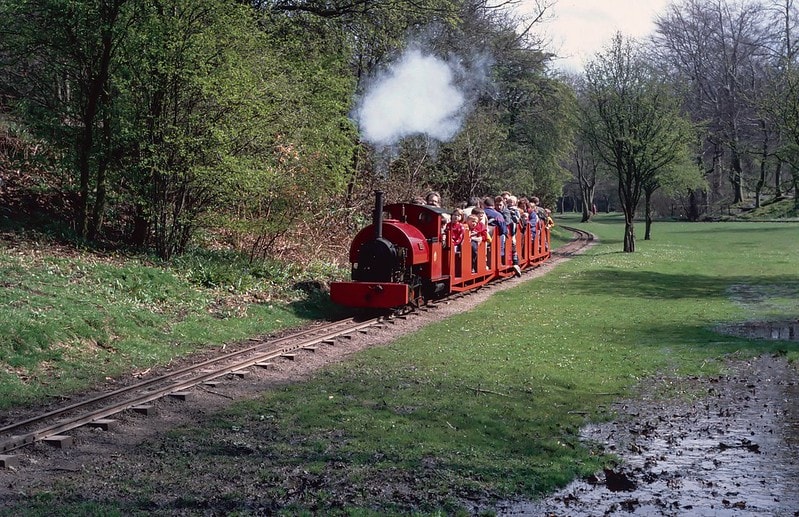
The boating lake offers rowing boats and pedalos for hire. The miniature railway circles the lower section of the park, passing through the picnic area, over two bridges spanning the Red Beck, through woodland, and back via a tunnel to the station near the bottom car park. The cost is GBP2 per person.
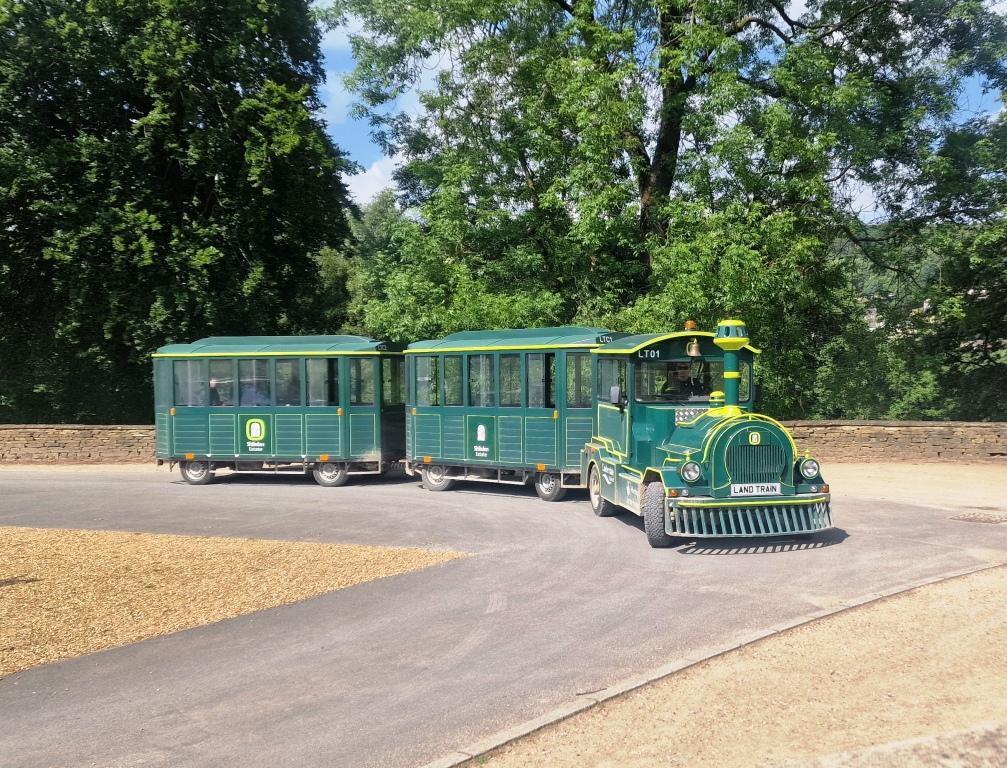
There is also a Land Train route that runs from near the cafe, along the lake, over the hill through woodland, past the wildlife pond with a view of the hall itself, and back down to the cafe. The Land Train costs £2.50 per person and is ideal for visitors with mobility challenges, older visitors, or anyone accompanying young children. A children’s play area is located near the hall, and walking paths and nature trails wind through the wider park.
Sections of the grounds include a demonstration of dry stone walling, and visitors can participate in learning that traditional craft themselves. I found this unexpectedly absorbing, and there is something pleasing about the fact that the same agricultural landscape Lister managed is still being interpreted for visitors in a practical, hands-on way.
Practical Information for Visiting Shibden Hall
Opening Hours
Shibden Hall is open Monday to Friday from 10am to 5pm, and Saturday and Sunday from 11am to 5pm. Timed entry to the hall may be in operation to manage visitor numbers, particularly during busy periods. Always confirm current opening times via the official Calderdale Museums website before you travel.
Admission Prices
Current admission prices are as follows:
- Adults: GBP10.00
- Concessions (under 16, over 65, and students): GBP7.50
- Family tickets: GBP27.50
The park and grounds are free to access. Prices may be subject to change, so check the official website or contact Calderdale Museums before your visit.
Getting to Shibden Hall
To reach Shibden Hall from London, the fastest option is to take a direct train from London King’s Cross to Halifax, which typically takes around two and a half to three hours. From Halifax railway station, the hall is a 25-minute walk or a short five-minute taxi ride. If you’re coming from York, board a direct train from York to Halifax, usually with one change in Leeds, taking just over an hour; upon arrival in Halifax, follow the same short taxi or uphill walk to the hall. Alternatively, from either city you could drive via the M1 and M62 from London (approx. 4 hours) or the A64 and M62 from York (approx. 1 hour 15 minutes) with free parking available at the hall’s own car park.
Getting Around Halifax by Public Transport
There are frequent buses every 15 minutes or better from Monday to Saturday running between Halifax and Bradford, Halifax and Todmorden/Burnley, and Halifax and Brighouse, all passing Shibden Hall. Up-to-date timetables are available from West Yorkshire Metro. Services that stop at Shibden Hall include: frequent services 548, 549, and 592; regular services 255, 508, 533, 534, 590, and 681; and less frequent services 226 and 682.
Car Parking
There are two car parks at Shibden Hall. The first is at the top of a small hill and operates as a pay-and-display facility with around 20 spaces. The second is closer to the hall itself and includes dedicated disabled parking spaces alongside a small number of standard spaces.
Accessibility
The Land Train is a practical solution for visitors who cannot manage long walks across the park. Historic England has confirmed that the hall and grounds are accessible to wheelchair users, though the historic nature of the building means some areas may present challenges. If you have specific accessibility requirements, contact Calderdale Museums in advance.
The Shibden Park Miniature Railway is a charming family attraction that operates on a ¾-mile circular track within the lower grounds of Shibden Park, taking passengers past the scenic boating lake, a picnic area, and across features like two bridges, a diamond crossing, and a tunnel. As of the latest available information, the fare to ride this miniature railway is £1.30 for all passengers, though it is always wise to carry a little extra cash in case prices have changed.
Where to Stay Near Shibden Hall
Shibden Mill Inn: A four-star inn within easy reach of the hall, rated 9 out of 10 by guests.

Shears Inn: A three-star inn rated 7 out of 10, a solid budget-friendly choice.

Holdsworth House Hotel: A beautiful Grade II* Listed Jacobean manor, Holdsworth House Hotel offers 33 luxury rooms and an award-winning restaurant. The Holdsworth has facilities for disabled guests.

How to Plan Your Visit to Shibden Hall: Step by Step
Book accommodation. Stay in Halifax itself or within 15 minutes of the hall. The Shibden Mill Inn is particularly atmospheric.
Check opening times and book ahead. Visit the Calderdale Museums website to confirm hours and check whether timed entry is in effect.
Watch Gentleman Jack first. Even one or two episodes will dramatically enrich your experience of the hall and its rooms.
Plan your transport. Check West Yorkshire Metro bus timetables if you are not hiring a car. Services are frequent on the main routes.
Allow a full day. The hall, barn, workshops, and park together take at least three to four hours. The cafe is on site for lunch.
Visit Bankfield Museum in Halifax. This museum holds an extensive display on Anne Lister’s diaries, personal artefacts, and her role in LGBTQ+ history, and rounds out the Shibden experience perfectly.
The History of Shibden Hall: Six Centuries in Brief
Shibden Hall was built around 1420 as a medieval manor house. Its earliest owners were the Savile family, prominent West Yorkshire landowners. In 1615 the Lister family acquired the property, and their stewardship would define the hall for the next three centuries.
During the Tudor and Stuart periods the hall was extended, with timber-framed additions and ornate plasterwork that remain some of its most striking interior features. The Georgian era brought further changes reflecting the classical tastes of the period. The most significant Victorian-era transformation was carried out by Anne Lister herself following her inheritance in 1826. She added Gothic Revival elements, improved the water and drainage systems, and reshaped the parkland according to picturesque principles.
After Anne Lister’s death in 1840 the hall passed to Ann Walker, and eventually to the Lister family line of John Lister, who gifted it to Halifax Corporation in 1933. It has operated as a public museum and park ever since, maintained by Calderdale Council and recognised by Historic England as a site of national significance.
Bankfield Museum and Other Nearby Attractions
Halifax’s Bankfield Museum houses a comprehensive display on Anne Lister, including diary pages, personal artefacts, and contextual exhibitions about her life as a diarist, landowner, and LGBTQ+ pioneer. It is well worth pairing with a Shibden visit and is free to enter.
The West Yorkshire Archive Service is located adjacent to Shibden Hall and holds original documents related to the Lister family and the estate. Researchers and those with a serious interest in primary sources may wish to enquire in advance about access.
Halifax itself has a compelling town centre with the Piece Hall, a Georgian cloth trading hall that now functions as a cultural and retail hub, and a strong independent food and drink scene.


Frequently Asked Questions About Shibden Hall
What is Shibden Hall and why is it famous?
Shibden Hall is a medieval manor house in Halifax, West Yorkshire, built around 1420. It is famous primarily as the home of Anne Lister, a 19th-century landowner and diarist whose coded journals documented her life as a lesbian woman with unprecedented candour. Those diaries inspired the BBC drama Gentleman Jack and established Lister as a foundational figure in LGBTQ+ history.
Is Shibden Hall worth visiting?
Yes, without question. The story of a woman who lived entirely on her own terms in a society that expected something very different carries a particular weight. The hall itself is beautifully preserved, the park is free, the staff are excellent, and the entire visit can be done as a day trip from Leeds or Manchester if needed. I would recommend it without reservation.
What are the opening hours and admission prices for Shibden Hall?
Shibden Hall is open Monday to Friday from 10am to 5pm and Saturday to Sunday from 11am to 5pm. Admission is GBP10 for adults, GBP7.50 for concessions (under 16, over 65, and students), and GBP27.50 for a family ticket. The park and grounds are free. Always confirm current prices on the Calderdale Museums website before visiting.
Who was Anne Lister and why is she called the first modern lesbian?
Anne Lister was a Yorkshire landowner born in 1791 who inherited Shibden Hall in 1826. She wrote more than five million words across 26 diary volumes, a significant portion of which was coded in a private cipher. Those coded sections documented her romantic and sexual relationships with women in explicit and detailed terms, providing the earliest known first-person account of a lesbian life in the modern historical record. She is referred to as the first modern lesbian because of the self-awareness, consistency, and candour with which she described and lived her identity.

How do I get to Shibden Hall from Halifax city centre?
Several bus services run directly past Shibden Hall from Halifax, including frequent services 548, 549, and 592. Buses run every 15 minutes or better on weekdays. Journey planners and current timetables are available from West Yorkshire Metro. By car, Shibden Hall is a short drive from the Halifax city centre along the A58.
Is Shibden Hall accessible for visitors with mobility difficulties?
The park offers the Land Train (GBP2.50 per person) as a practical way to navigate the grounds without extended walking. The second car park near the hall has dedicated disabled parking. The historic nature of the building means some areas may be challenging for wheelchair users, but Historic England has confirmed the site’s commitment to accessibility. Contact Calderdale Museums directly before your visit if you have specific requirements.
What is the connection between Shibden Hall and Gentleman Jack?
Gentleman Jack is a BBC drama series created by Sally Wainwright, first broadcast in 2019, based directly on Anne Lister’s diaries. It was partly filmed at Shibden Hall and brought Lister’s story to an international audience. The success of the series significantly increased visitor numbers to the hall and reignited academic and public interest in Lister’s diaries and legacy.
Can I visit Shibden Hall as a day trip from Leeds or Manchester?
Yes. Halifax is approximately 15 miles from Leeds and around 25 miles from Manchester. By train, Halifax is around 20 minutes from Leeds and around 45 minutes from Manchester Victoria. From Halifax station, bus services run directly to Shibden Hall. A day trip allowing four to five hours at the site is entirely feasible from either city.
Why Shibden Hall Belongs on Your Yorkshire Itinerary
Shibden Hall is one of the most genuinely moving heritage sites in the north of England, and that is not something I say lightly after years of visiting historic houses across the UK and Europe. What makes it different is Anne Lister herself: a woman whose intelligence, ambition, and absolute refusal to be reduced by her era are written into every room, every archive, and every path through the park.

For LGBTQ+ visitors and women the resonance is particular. We know what it is to have histories that were hidden, coded, or nearly lost. We know what it costs to assert an identity in a culture that would prefer you to be quiet about it. Shibden Hall is a place that honours the people who refused.

If you are planning a visit to Yorkshire, Shibden Hall deserves a full day of your time. Read the diaries, or at least Helena Whitbread’s translations. Watch Gentleman Jack. And when you walk down that path from the car park and see the hall sitting in the valley, know that the woman who shaped that landscape was, in every meaningful sense, ahead of all of us. For more guides to remarkable women’s history sites across the UK and Ireland, visit xyuandbeyond.com.
If Yorkshire’s on your route, start with the Yorkshire Travel Guide for the wider picture before diving into individual stops.This is just one part of a much bigger country see the full England Travel Guide for everywhere else worth building into your trip.
Accessible UK Broader guide to accessible rail travel, National Trust accessibility schemes, and city-by-city notes.
Accessible London Compared to many older European capitals, London is genuinely one of the more accessible large cities you can visit.
Accessible Bath Discover how to explore an accessible Bath including the Roman Baths, and other attractions.
Accessible Cotswolds many of the lovely Cotswolds villages and towns are accessible.
Accessible Edinburgh Accessible Edinburgh travel is entirely possible, but it rewards realistic planning far more than an aggressive checklist.
Accessible Historic sites in England Discover accessible historical sites in England including castles, Roman ruins, cathedrals, museums, and heritage attractions with realistic tips for limited mobility and hidden disabilities.
Accessible York Explore the great city of York with tops for what sites are accessible and how to visit.
If Yorkshire’s on your route, start with the Yorkshire Travel Guide for the wider picture before diving into individual stops.This is just one part of a much bigger country see the full England Travel Guide for everywhere else worth building into your trip, and my United Kingdom travel Guide for a broader picture of the whole country. Explore more of the region with guides to Scotland, Wales, Northern Ireland. If you are a foodie take a look at my Global Food Guide.
Wow, there’s so much good information here! I love how picturesque this area looks and I feel like it would be really fun to spend a day here exploring all the fun things to do.
It’s a great place to explore for every age and Yorkshire is amazing when its sunny lol
Hi Faith, i was very happy to meet a fellow Canadian who loves Yorkshire as much as I do! Great post with tons of very useful information.
Great to chat with you Tanya and good luck on your move to Yorkshire
What a dream! I’ve been to England three times, but have yet to visit Yorkshire and really would love to. Saving this for my trip planning. The miniature railway looks SO FUN!
Yorkshire has everything from ancient medieval streets and viking adventures in York to gorgeous hikes in the dales. Tons of history as well with the Shambles and ancient abbeys stunning churches. It’s the best place to visit in the UK amongst many lol.
Pictures often inspire me to visit a destination. You have some awesome pics to share.
Thank you that means a lot especially when I can inspire someone to visit such a cool place.
Great guide! I love Shibden Hall and Park! It’s been a while since I last visited it, but I would love to go back 🙂
It is fabulous and I loved the whole area some great pubs to sit by the fire in or enjoy a beer garden in the summer. Sitting by the parks lake is pretty nice as well enjoying a great cup of coffee.
The outdoor staircase definitely caught my attention. More important though is the story–very glad that people no longer have to write their stories in code for fear of their true selves being found out.
Truer words Anne’s diaries were a revelation and the show Gentleman Jack really brought home how much further we have come and how much more we have to go
What a beautiful place! This is right up my alley – I love visiting historic homes when I’m in the UK. I’ll admit I don’t know much about Anne Lister but I’ll have to check into her work. Lovely photos!
It is a lovely place and has something for everyone. If you can see if you can watch Gentleman Jack on youtube it was a British show all about Anne Lister and filmed at Shibden Hall.