
Irish Heritage Card: What It Is, What It Costs, and Whether You Should Buy One
| Should You Buy the Irish Heritage Card? Yes, if you plan to visit three or more paid OPW heritage sites. A single adult card costs 40 euros and covers unlimited entry to more than 50 state-managed castles, abbeys, historic houses, and archaeological sites across Ireland for one full year. For most visitors spending a week or more in Ireland, it pays for itself within the first two or three stops. |

- Irish Heritage Card: What It Is, What It Costs, and Whether You Should Buy One
- Why the Irish Heritage Card Deserves a Place in Your Travel Plans
- What Is the Irish Heritage Card?
- How Much Does the Irish Heritage Card Cost?
- Should You Buy the Irish Heritage Card? An Honest Assessment
- What Heritage Sites Are Included on the Irish Heritage Card?
- How to Buy the Irish Heritage Card: Step-by-Step
- Free Heritage Sites and Free Admission Days
- Can You Use an English Heritage Card in Ireland?
- Irish History, Folklore, and What You Will Actually Find at These Sites
- A Sample Heritage Card Itinerary: Dublin to Waterford
- Frequently Asked Questions: Irish Heritage Card
- Final Word on the Irish Heritage Card
Why the Irish Heritage Card Deserves a Place in Your Travel Plans
Ireland is not short of things to see. Castles. Ancient passage tombs. Friary ruins draped in ivy. Georgian manor houses sitting in manicured parkland. The country has been layered with history for more than five thousand years, and the Office of Public Works (OPW) manages more than fifty of those sites on behalf of the Irish state.
If you are planning a trip to Ireland and want to explore the country’s historic places without paying an entry fee at every gate, the Irish Heritage Card is the most practical solution available. This article explains exactly what the card covers, what it costs, how to buy it, and whether it is genuinely worth the money. It also covers the English Heritage cross-border arrangement that many visitors from Britainand elsewhere do not know about.
I have lived in Ireland for years, grown up in Northern Ireland, and taken visitors to nearly every site on the OPW list. What follows is an honest, experience-based guide to getting the most from the Heritage Card.

What Is the Irish Heritage Card?
The Irish Heritage Card is an annual pass issued by the Office of Public Works, the Irish government body responsible for managing the country’s built and natural heritage. Purchasing one card gives you free, unlimited entry to all OPW fee-paying heritage sites across the Republic of Ireland for twelve months from the date you buy it.
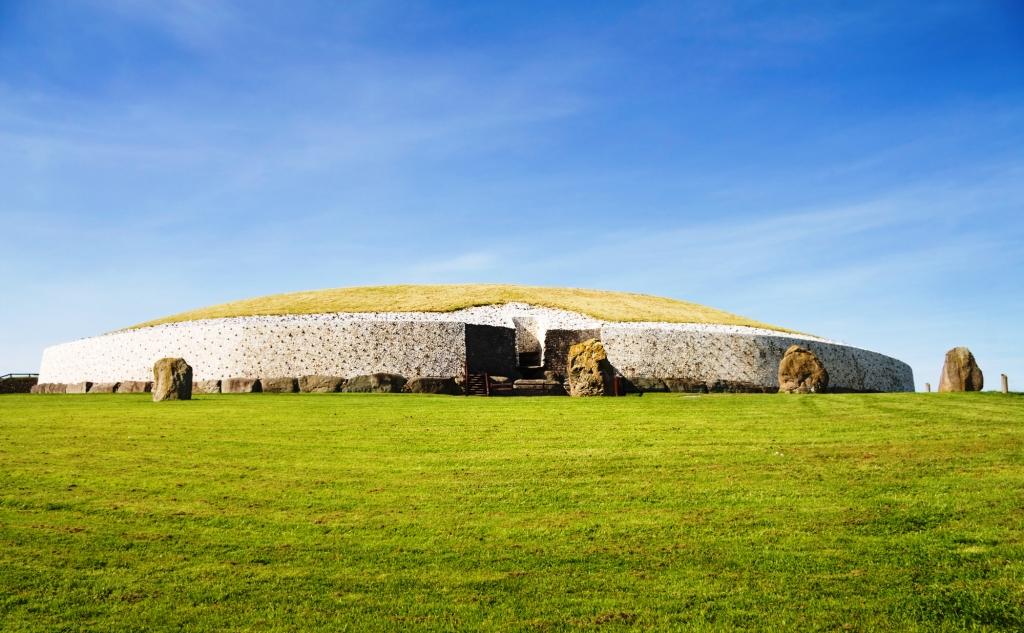
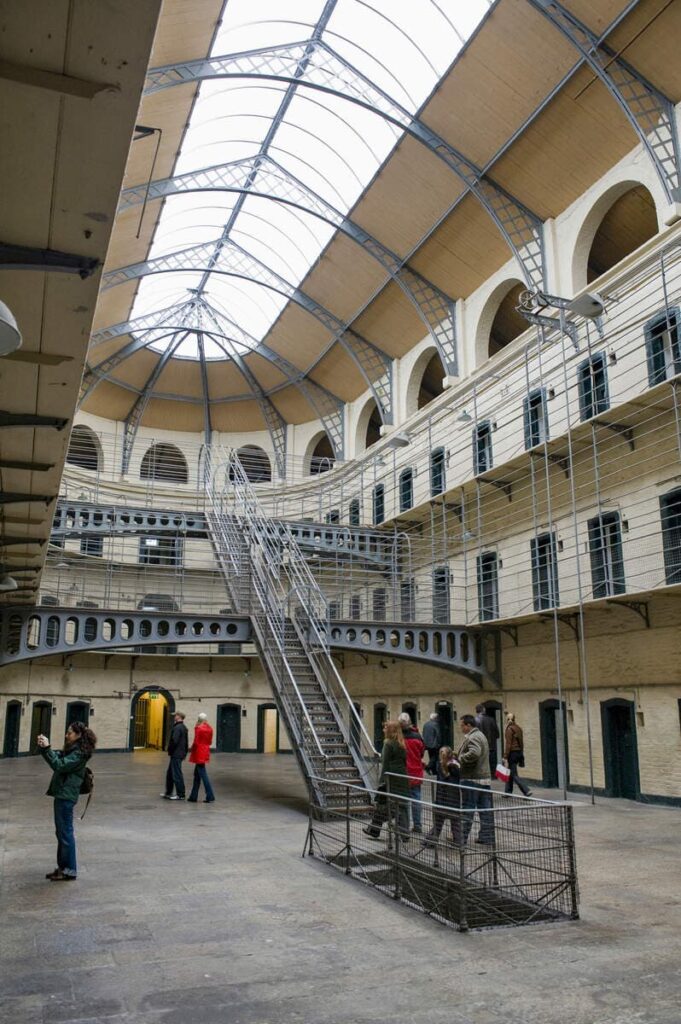
There are currently more than 50 sites on the list. They range from world-famous landmarks like Newgrange and Kilmainham Gaol to quieter, less-visited gems like Ormond Castle in Carrick-on-Suir and Parke’s Castle on the shores of Lough Gill in Leitrim.
The card is personal and non-transferable. It is available for adults, seniors, children, and families. It covers the entry fee only; parking charges or special exhibition fees at some sites may still apply.
How Much Does the Irish Heritage Card Cost?
The card represents strong value even for a relatively short visit. Here are the current prices:
| Card Type | Price (2024) |
| Adult | 40 euros |
| Senior (over 60) | 30 euros |
| Child (under 18) | 10 euros |
| Family (2 adults, up to 5 children) | 90 euros |
| Children under 6 | Free |
To put that in context, a single adult visit to Kilmainham Gaol costs around 9 euros. Entry to Newgrange (Bru na Boinne) costs around 14 euros for an adult. Two visits to those two sites alone accounts for more than half the cost of an adult card. A typical week-long itinerary taking in Dublin Castle, Kilmainham Gaol, Kilkenny Castle, Glendalough, Jerpoint Abbey, Rock of Cashel, and Cahir Castle would cost around 60 to 70 euros in individual entry fees. The Heritage Card costs 40 euros.
Should You Buy the Irish Heritage Card? An Honest Assessment
The short answer is yes, for most visitors planning a week or more in Ireland. The longer answer depends on what kind of traveller you are and what your itinerary looks like.
Buy the card if:
- You are spending five days or more in Ireland and plan to visit at least three or four heritage sites.
- You are travelling as a family. The family card at 90 euros for two adults and up to five children is genuinely exceptional value.
- You are doing a road trip around the country and want the flexibility to stop in at sites without worrying about the cost.
- You have a deep interest in Irish history, folklore, and archaeology and expect to visit multiple sites on a single trip or across return visits within a year.

You might skip the card if:
- Your visit is focused entirely on one region and you only plan to see one or two sites.
- You are spending most of your time in pubs, on beaches, or doing outdoor walks that do not involve paid entry. Much of Ireland’s most beautiful landscape is entirely free.
- You are visiting solely to see some of the sites that are already free of charge, such as Dunamase Castle or the ruined Donegal Abbey.
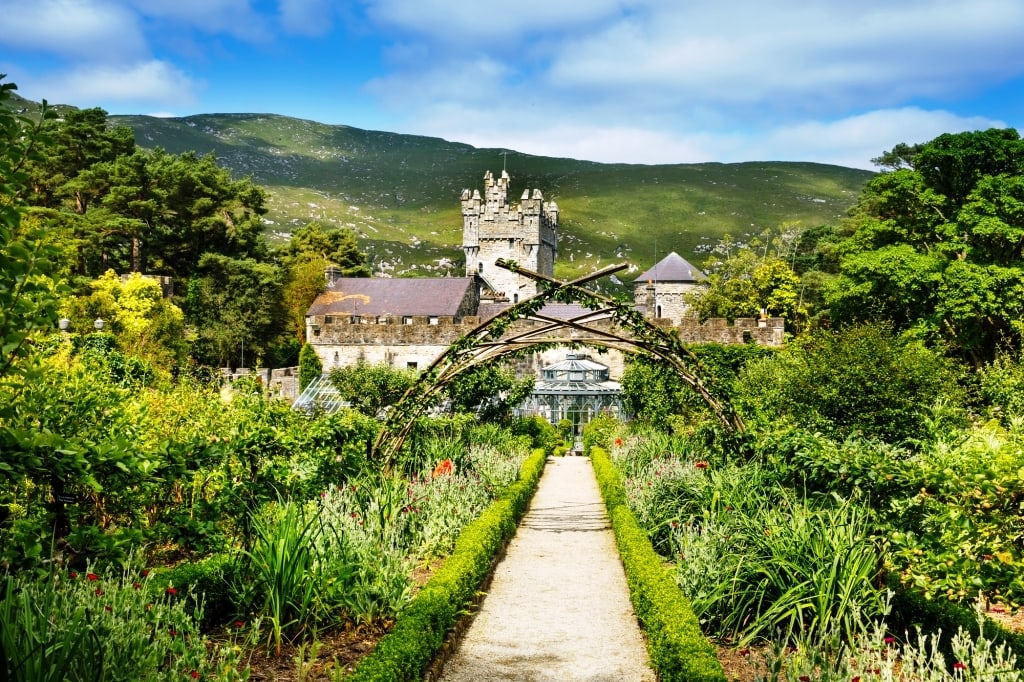
Personal note: I have taken visitors and friends to the majority of sites on the OPW list over the years, including a memorable rainy afternoon at Glenveagh Castle in Donegal when we had the formal gardens almost entirely to ourselves. The card paid for itself that weekend alone. For anyone doing even a modest tour of Ireland, I would call it an essential purchase.
What Heritage Sites Are Included on the Irish Heritage Card?
The following sites accept the Irish Heritage Card. Opening seasons vary, so it is always worth checking current hours on the Heritage Ireland website before you travel. Sites marked as open January to December are open year-round, though hours may be reduced in winter.
Leinster
Leinster is the eastern province of Ireland, encompassing 12 counties: Carlow, Dublin, Kildare, Kilkenny, Laois, Longford, Louth, Meath, Offaly, Westmeath, Wexford, and Wicklow.
Dublin Castle (Dame Street, Dublin 2, open year-round) is the historic seat of British rule in Ireland and now a government complex with beautifully restored State Apartments. Kilmainham Gaol (Kilmainham, Dublin 8, open year-round) is one of the most visited and most moving sites in the country. The prison held the leaders of the 1916 Rising in its final weeks before their execution. Casino Marino (Dublin 3) is a remarkable neo-classical folly: one building, sixteen richly decorated rooms, and a name that simply means ‘small house’ in Italian.

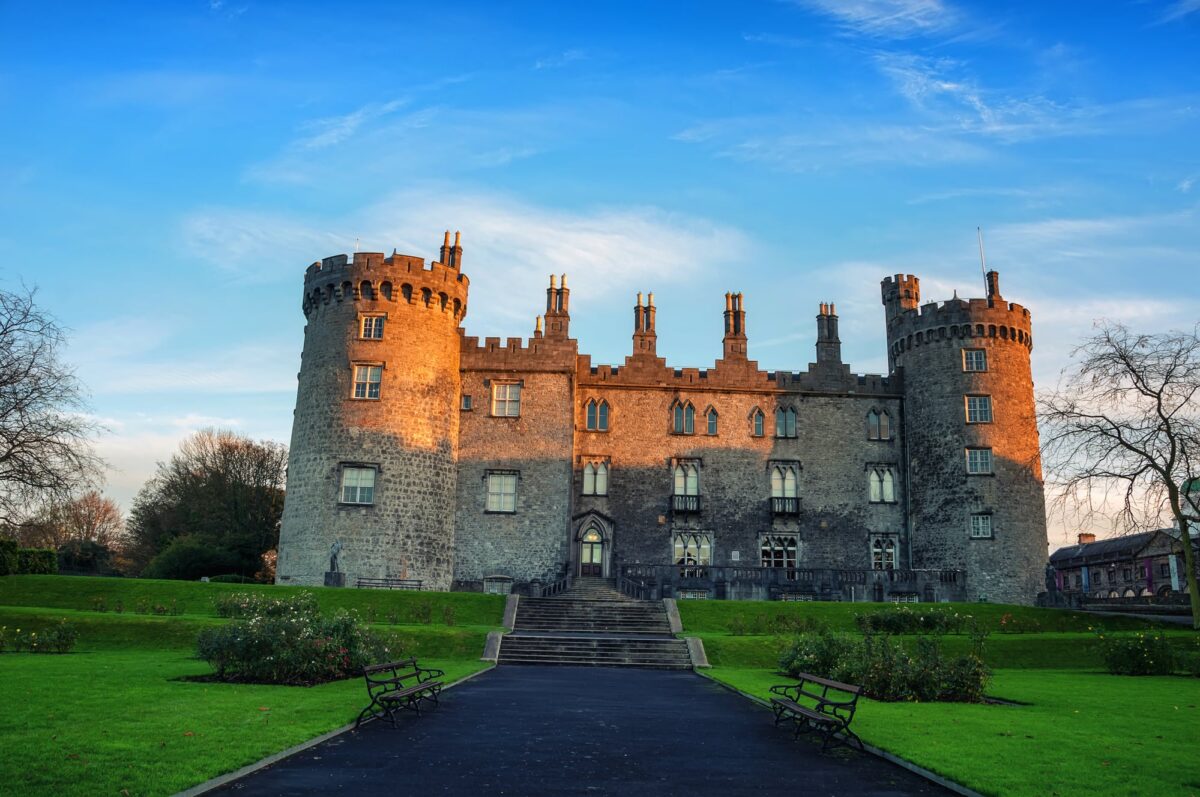
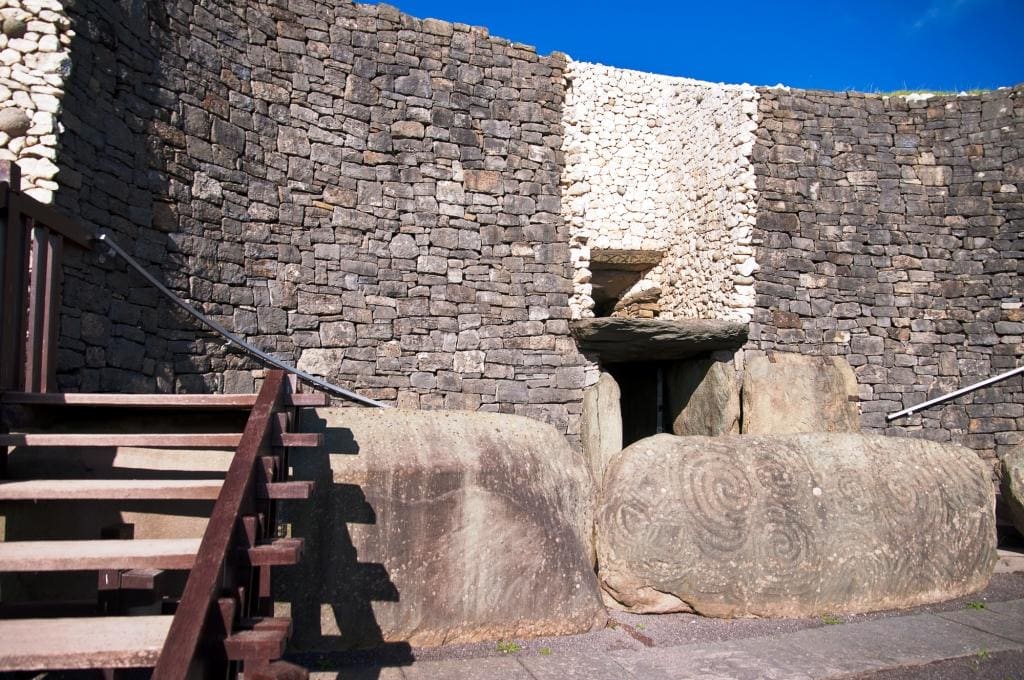
Kilkenny Castle (Kilkenny City, open year-round) sits at the heart of one of Ireland’s most beautiful medieval cities. Glendalough Visitor Centre (Co. Wicklow, open year-round) is the gateway to a sixth-century monastic settlement in a glacial valley, one of the most photographed sites in Ireland. Jerpoint Abbey (Thomastown, Co. Kilkenny, open year-round) has some of the finest carved stonework of any medieval site in the country. Newgrange and Knowth at Bru na Boinne (Co. Meath, open year-round) are passage tombs older than Stonehenge and the Egyptian pyramids.

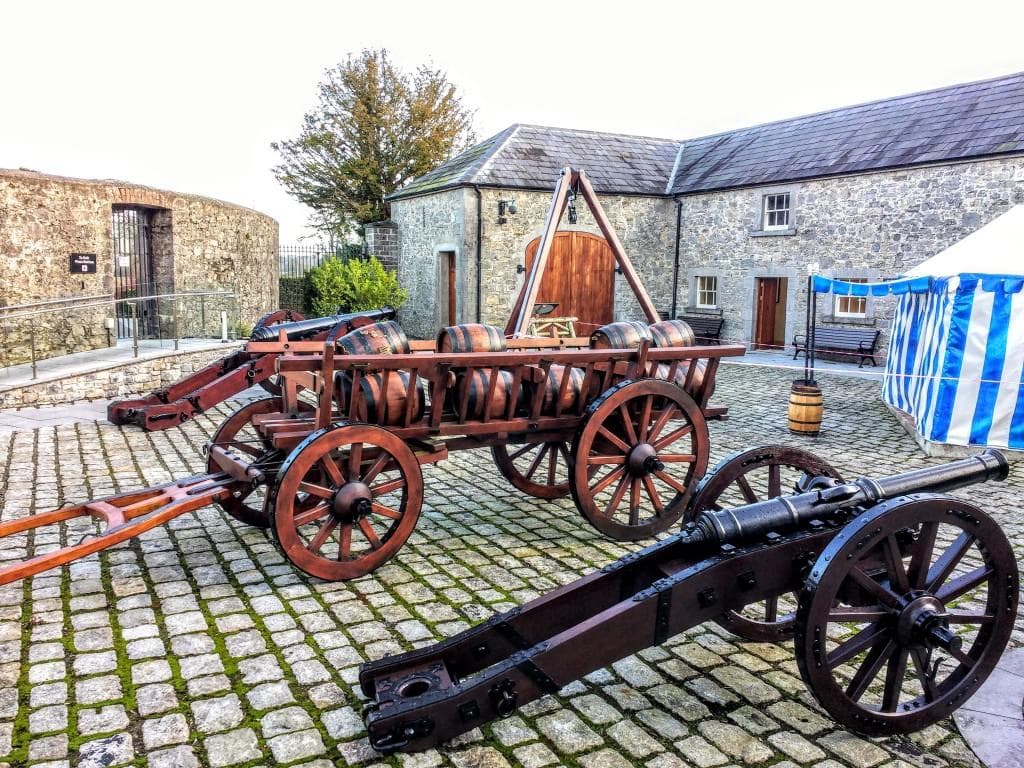
Other Leinster sites include Trim Castle (Co. Meath, open year-round), Hill of Tara (Co. Meath), Old Mellifont Abbey (Co. Louth), Rathfarnham Castle (Dublin 14, open year-round), Castletown House (Co. Kildare, open March to mid-December), Emo Court (Co. Laois, open late May to early October), Dunmore Cave (Co. Kilkenny, open mid-March to October), Battle of the Boyne at Oldbridge Estate (Co. Meath, open year-round), JFK Memorial Park and Arboretum (Co. Wexford, open year-round), Reginald’s Tower (Waterford, open year-round), and Tintern Abbey (Co. Wexford, open March to October).
Munster
Munster is one of the four traditional provinces of Ireland, located in the country’s south and southwest. It is Ireland’s largest province by land area and comprises six counties: Clare, Cork, Kerry, Limerick, Tipperary, and Waterford.
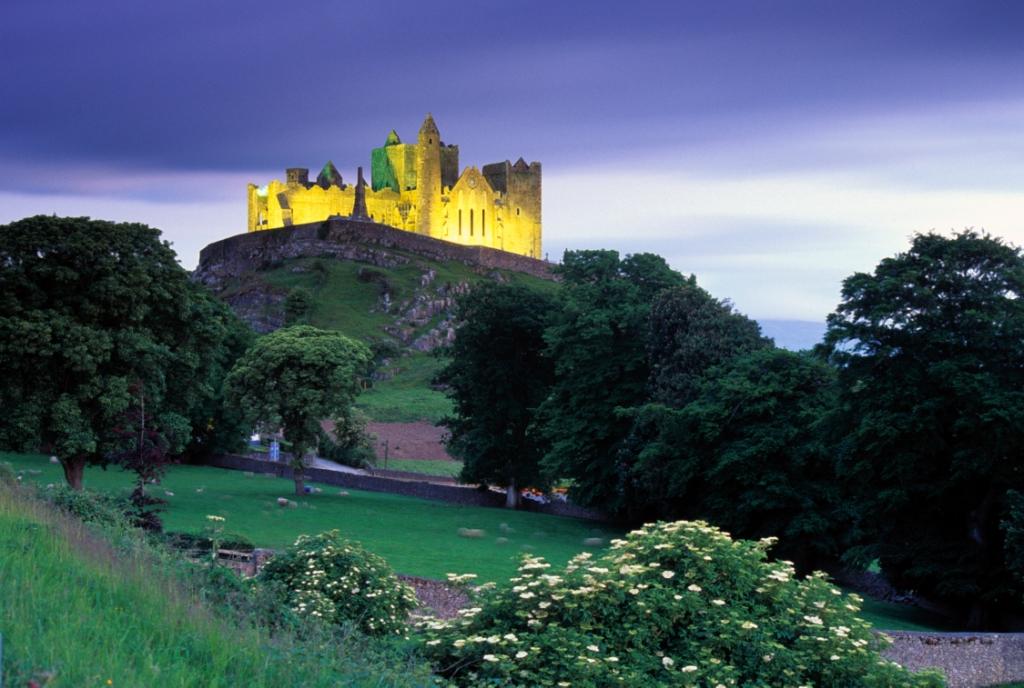
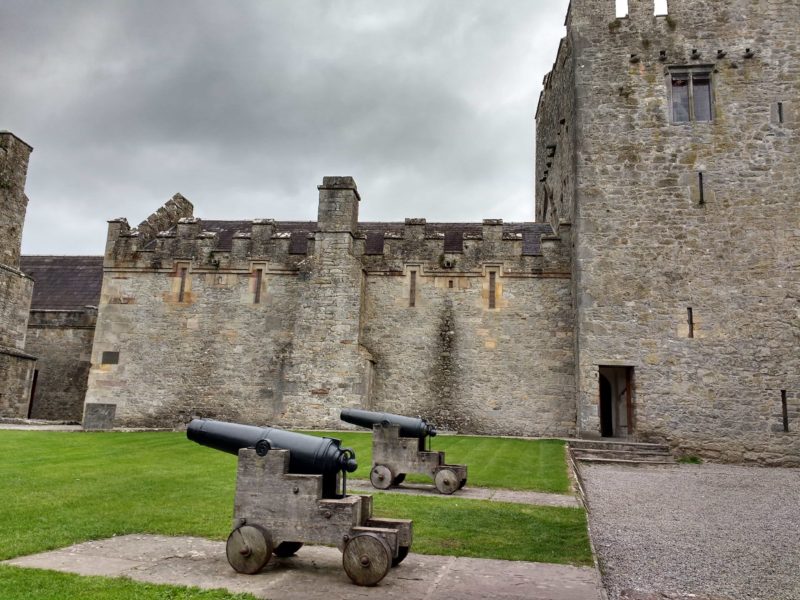
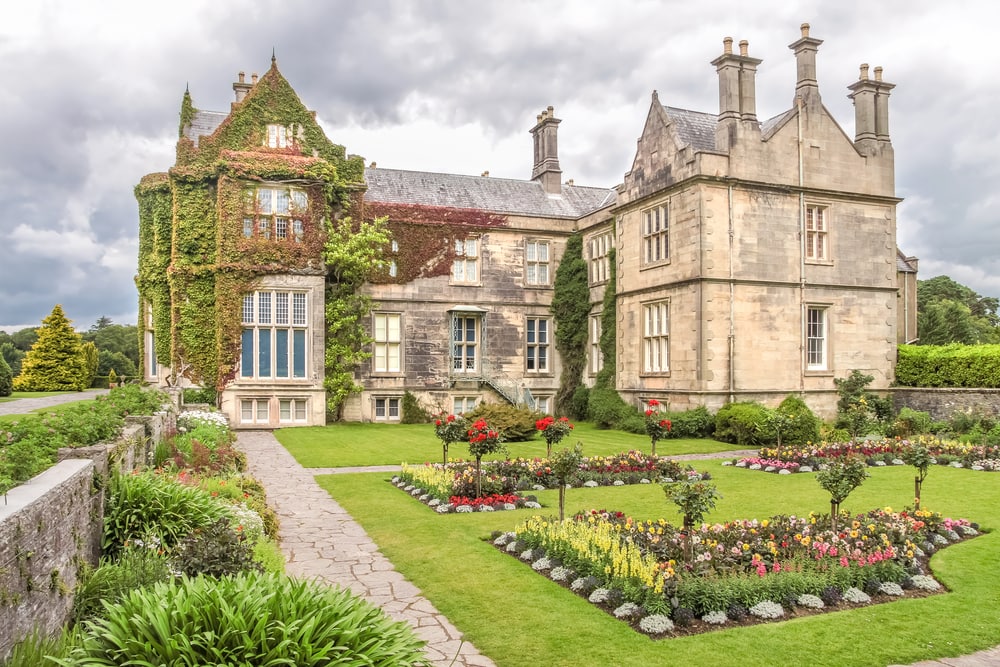
Rock of Cashel (Co. Tipperary, open year-round) is the dramatic cliff-top fortress associated with Saint Patrick and a symbol of early Christian Ireland. Cahir Castle (Co. Tipperary, open year-round) is one of the largest and best-preserved medieval castles in the country. Muckross House and Gardens (Killarney National Park, Co. Kerry, open year-round) is a magnificent Victorian mansion on the shores of Lough Leane.
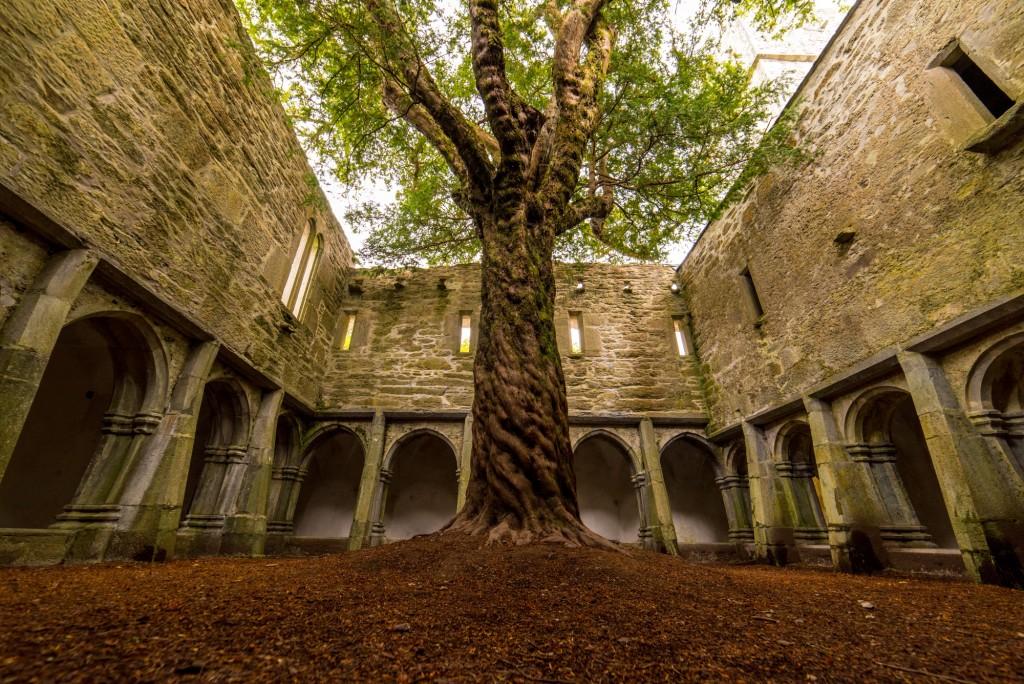
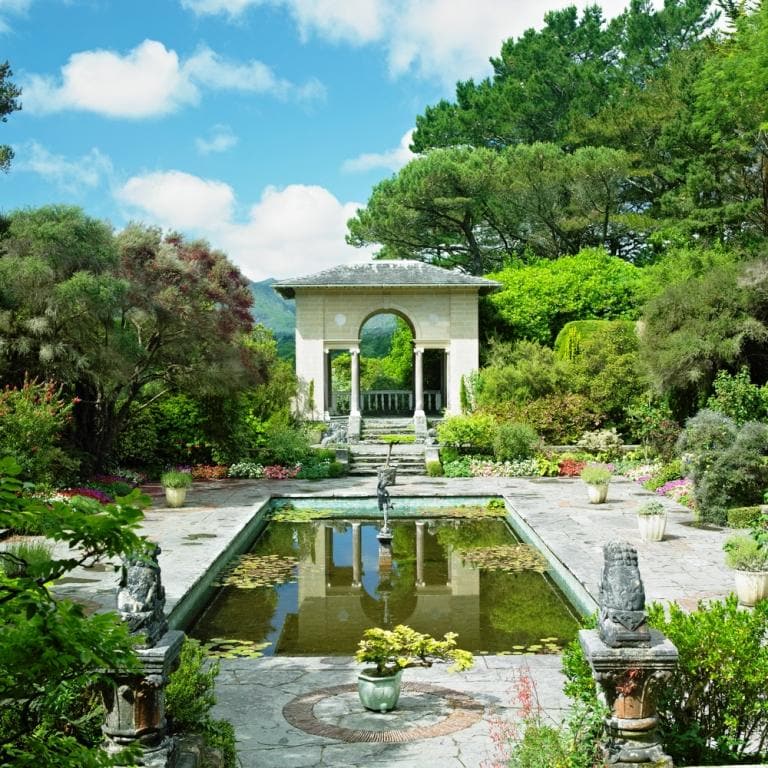
Further Munster sites include Charles Fort (Kinsale, Co. Cork, open year-round), Derrynane House in Co. Kerry (mid-March to early December), Doneraile Court (Co. Cork), Ilnacullin on Garinish Island (Co. Cork, open April to November), Ardfert Cathedral (Co. Kerry, open late March to late September), Ross Castle (Killarney, open March to early November), Gallarus Oratory (Dingle, Co. Kerry), Adare Castle (Co. Limerick, open June to September), Desmond Castle Kinsale (open June to September), Roscrea Castle (Co. Tipperary, open late March to late September), Ormond Castle (Co. Tipperary, open late March to early November), and Ennis Friary (Co. Clare, open April to November).

Connacht
Contains 5 counties. It features a rugged, dramatic coastline (including the Wild Atlantic Way), the Aran Islands, and Galway City.
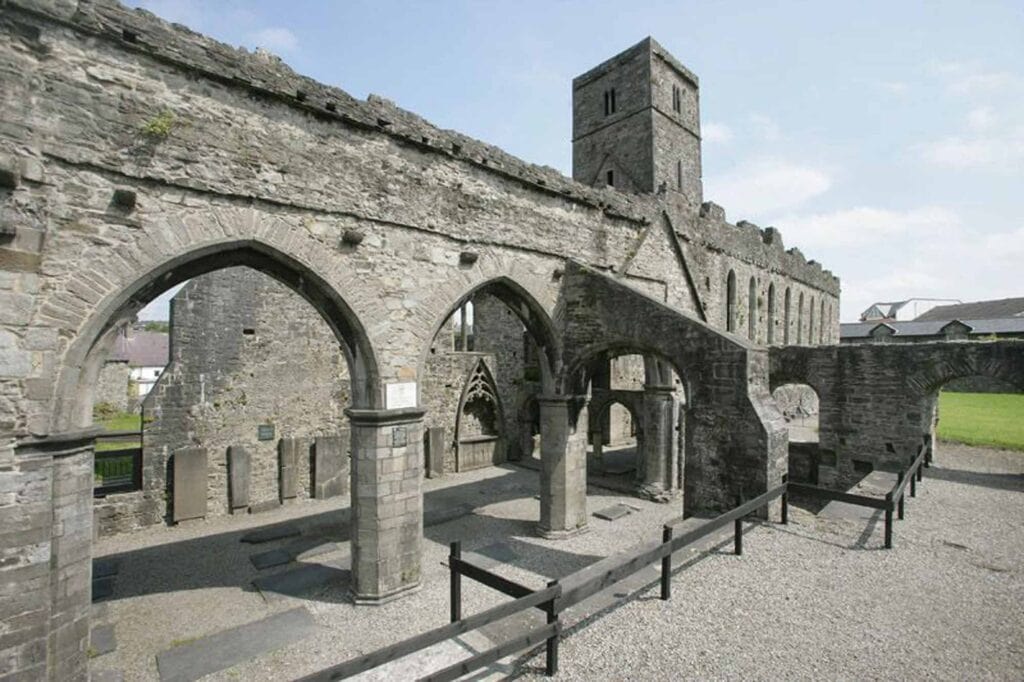
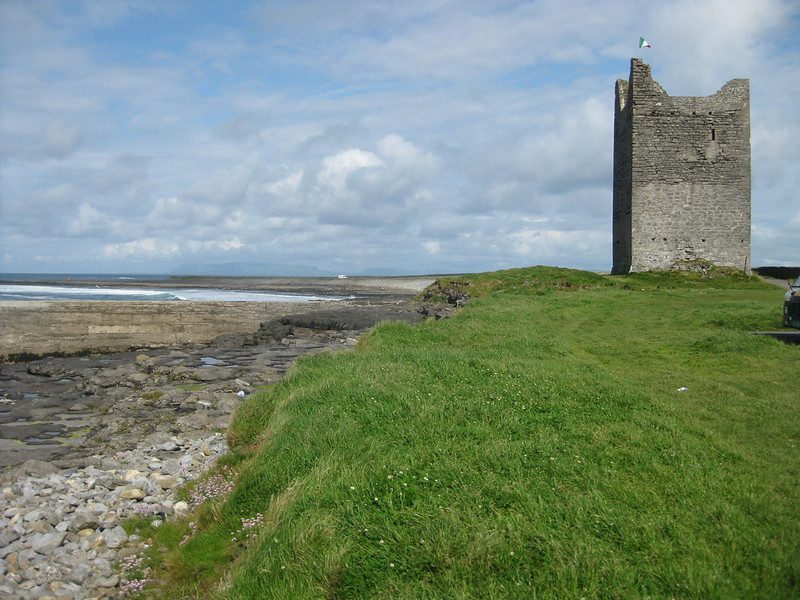
Connacht sites include Aughnanure Castle (Co. Galway, open late February to late November), Athenry Castle (Co. Galway, open late March to early October), Portumna Castle (Co. Galway, open year-round), Dun Aonghasa on the Aran Islands (Co. Galway, open year-round), Carrowmore Megalithic Cemetery (Co. Sligo, open late March to early November), Sligo Abbey (Co. Sligo, open late March to October), Parke’s Castle (Co. Leitrim, open late March to early October), Rathcroghan Visitor Centre (Co. Roscommon, open year-round), Boyle Abbey (Co. Roscommon, open late March to late September), Ceide Fields (Co. Mayo, open mid-March to October), and Ionad Culturtha an Phiarsaigh in Connemara (open year-round).


Ulster (Republic of Ireland)
Contains 12 counties. Six of these counties make up Northern Ireland, while three are located in the Republic of Ireland. Features major cities like Belfast. The 3 are Donegal, Cavan and Monaghan.
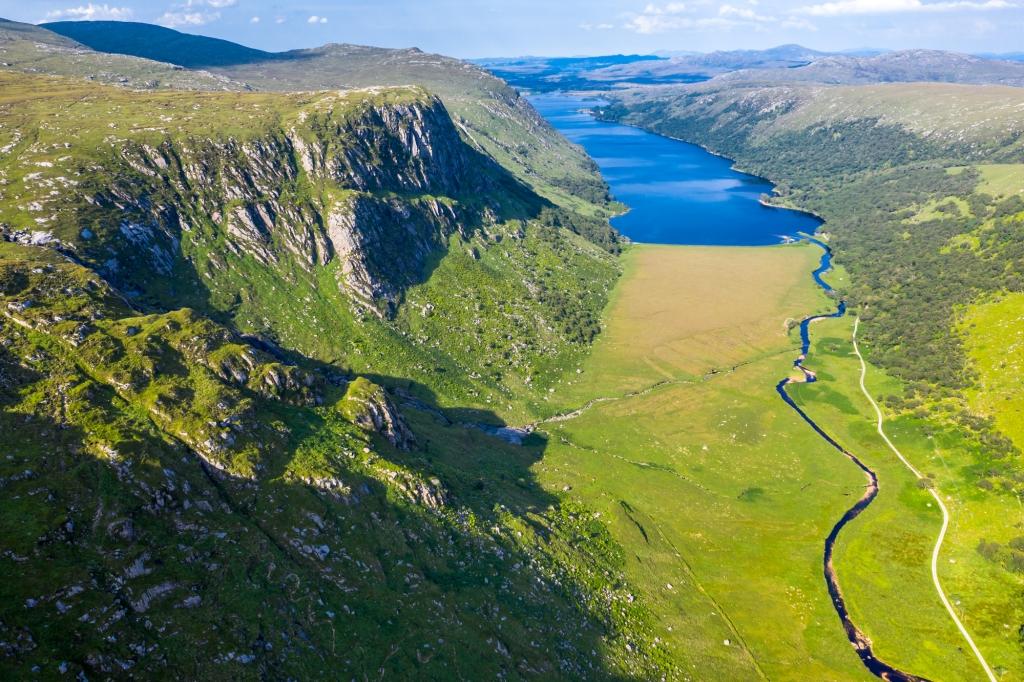
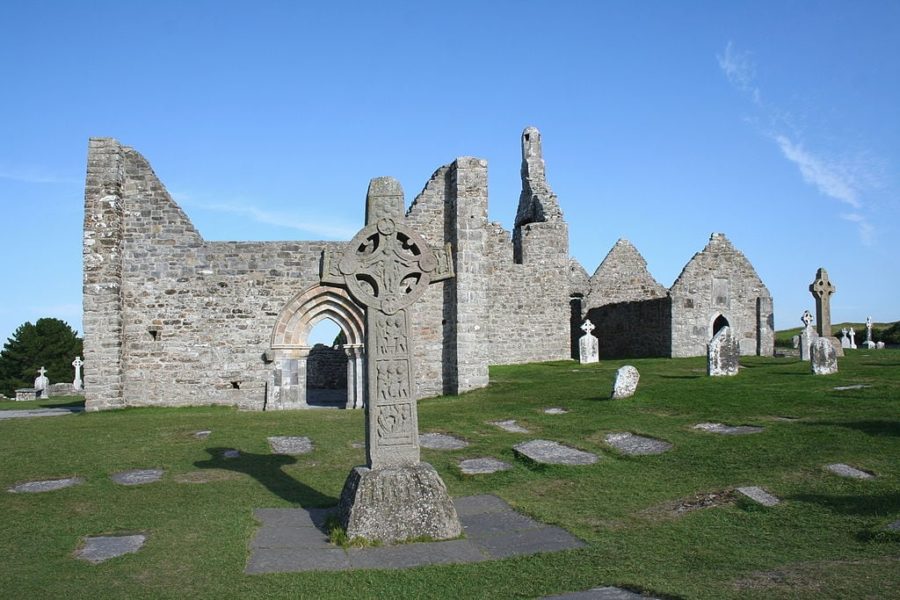
In Donegal, Glengveagh Castle (open year-round) is a stunning baronial castle in a glacial valley surrounded by one of Ireland’s finest gardens. Donegal Castle (Donegal Town, open year-round) is the restored stronghold of the O’Donnell clan, the ruling family of Donegal for centuries. Glebe House and Gallery (Churchill, Co. Donegal, open late May to early November) contains a remarkable personal art collection including works by Picasso, Renoir, and Jack B. Yeats. Doe Castle and Clonmacnoise (Co. Offaly, open year-round) round out the Leinster-Ulster crossover sites.

How to Buy the Irish Heritage Card: Step-by-Step
There are two ways to buy the card. The easiest is to purchase it at the first OPW site you visit; the card activates on that day. You can also order it online in advance, though allow around 20 days for postal delivery to an overseas address.
Visit the Heritage Ireland website to check the current prices and confirm which sites you want to visit.
Decide whether you want to buy on arrival or order online. If ordering online, allow at least three weeks before your trip for delivery outside Ireland.
On arrival in Ireland, if purchasing at a site, bring some cash. Not all OPW visitor centres have card payment facilities, particularly at smaller or seasonal sites.
Keep your card with your travel documents. It is non-transferable and tied to the named cardholder.
Check the opening dates of your chosen sites before you travel. Some sites are seasonal and may be closed outside their stated months, regardless of whether you hold a card.

Free Heritage Sites and Free Admission Days
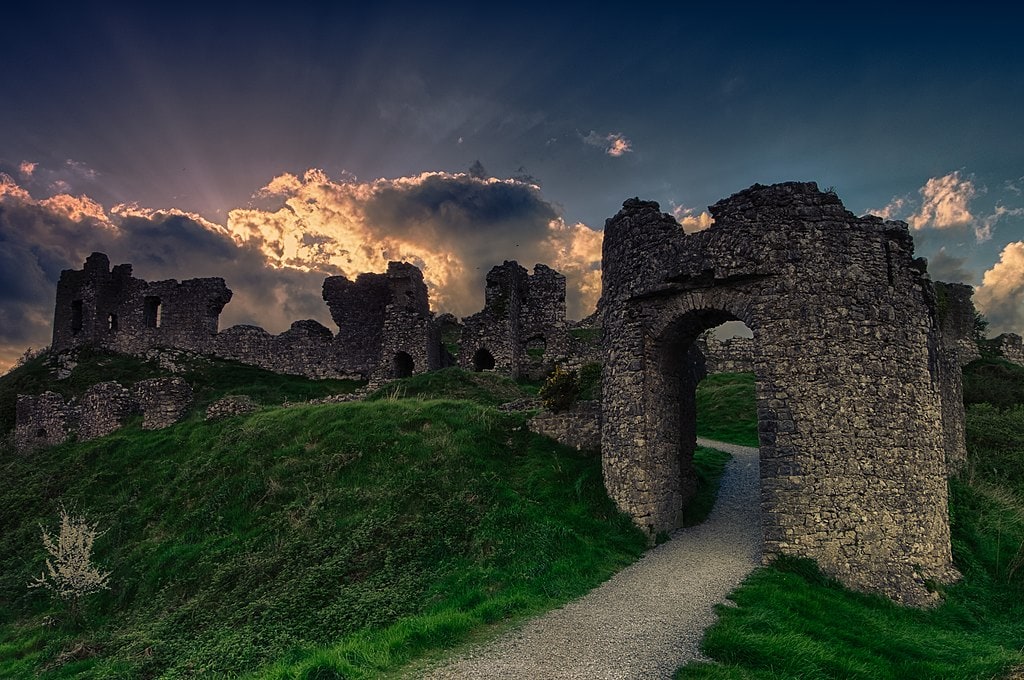
Not every OPW site charges an entry fee. Some of Ireland’s most spectacular ruins are completely free, Heritage Card or not. Dunamase Castle in Co. Laois, for example, is free to visit and sits dramatically on a rocky outcrop with sweeping views across the midlands. The ruined Franciscan Abbey in Donegal Town is also free and is worth a quiet hour of your time.
On the first Wednesday of each month, many OPW Heritage Sites offer free admission to individual visitors and families. You can find the participating sites and current details on the Heritage Ireland website.
You can also download the full Irish Heritage Card brochure here, which includes opening times, site details, and a map.

Can You Use an English Heritage Card in Ireland?
Yes, and this is one of the best-kept secrets for visitors combining a trip to Ireland with time in England or Scotland. Thanks to a reciprocal agreement between English Heritage and the OPW, full members of English Heritage can use their card for free entry at all OPW Heritage Card sites in the Republic of Ireland.
This arrangement works in reverse too. If you hold an Irish Heritage Card and are planning to visit England, it is worth checking whether your card gives you any reciprocal access to English Heritage sites under the current terms of the partnership.
For visitors travelling to Northern Ireland, note that the OPW Heritage Card does not cover sites there. Northern Ireland’s historic properties are managed by the Department for Communities, and many are accessible via the National Trust or through Historic Environment Scotland membership depending on the site. A separate British Heritage Pass is available for visitors to Northern Ireland, England, Scotland, and Wales.

Irish History, Folklore, and What You Will Actually Find at These Sites
One of the things that makes touring OPW sites so rewarding is the depth of Irish folklore and history that runs through nearly every location. Ireland has one of the richest oral and mythological traditions in Europe, and the landscape holds physical traces of that tradition in stone and earth.
Rathcroghan in Co. Roscommon, for example, is the legendary seat of Queen Medb of Connacht, one of the most powerful figures in Irish mythology. The site encompasses a vast complex of earthworks and ancient monuments, many of them linked to the great Iron Age epic the Tain Bo Cuailnge. Standing in that field, the myths become very immediate.

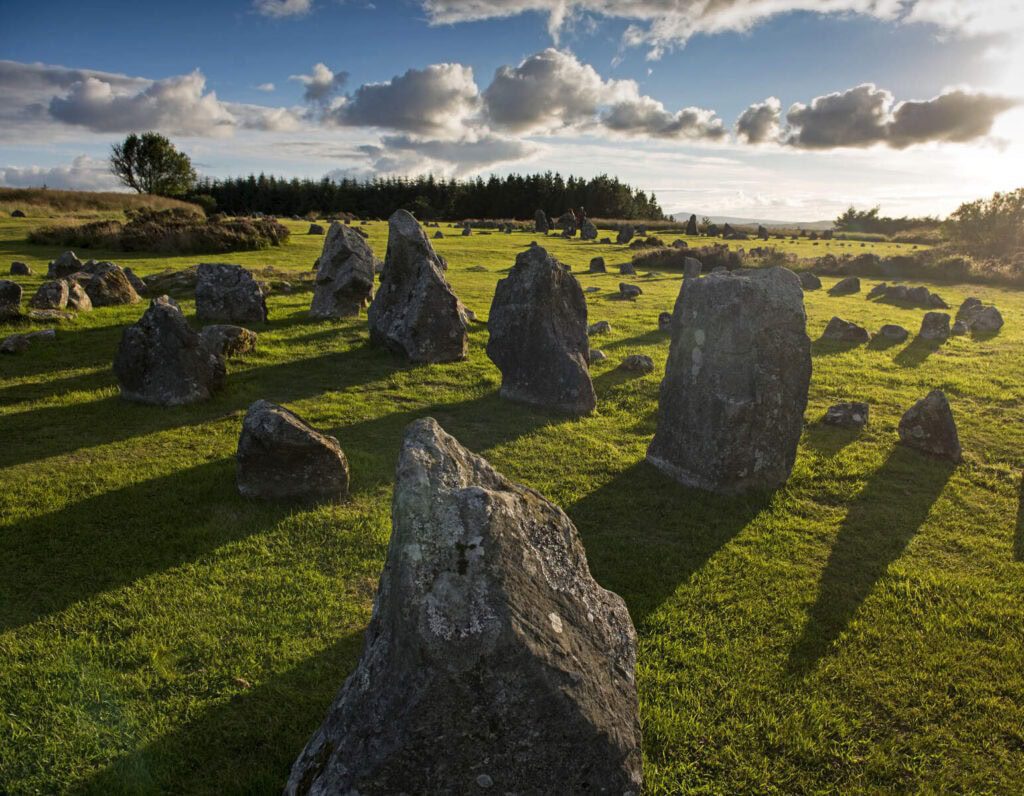
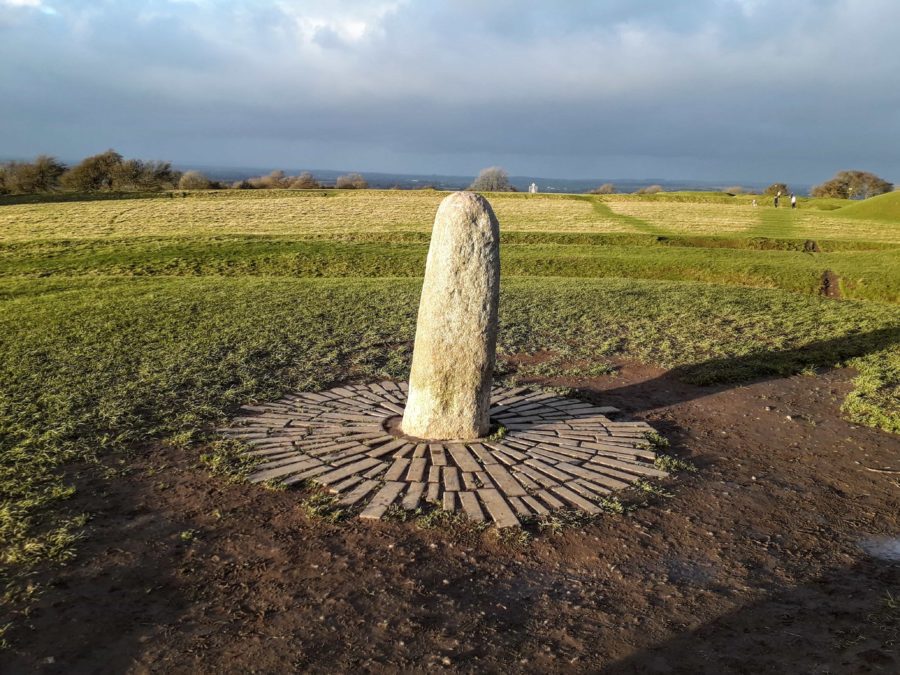
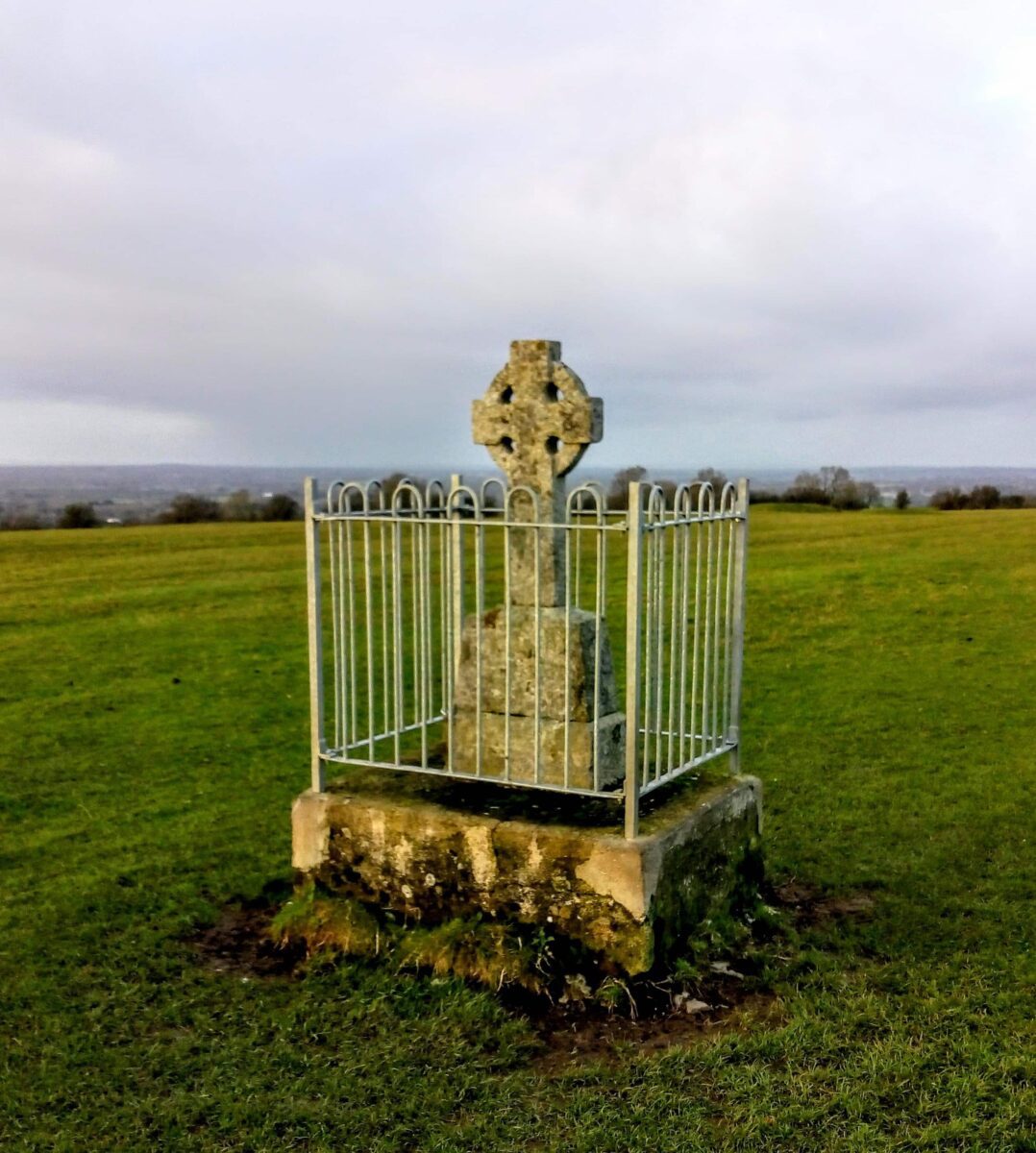
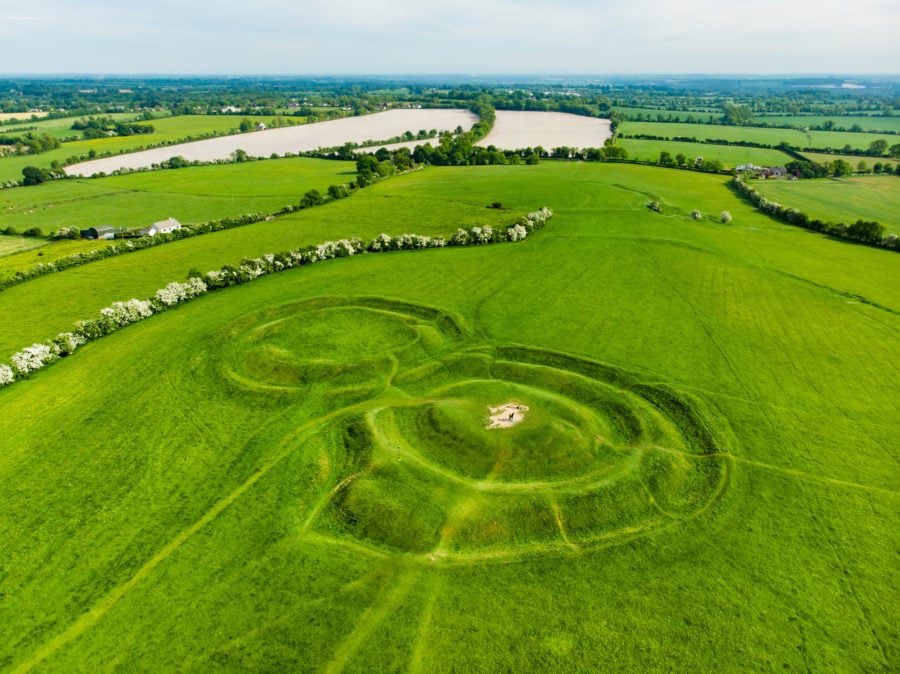
The Hill of Tara in Co. Meath was the seat of the High Kings of Ireland and holds powerful associations with both Irish folklore and sovereignty. Clonmacnoise on the Shannon is one of the most important early Christian monasteries in Europe, founded in the sixth century and a centre of scholarship and art for centuries. Newgrange predates all of it, built by a Neolithic people about whom we know relatively little beyond the extraordinary precision of what they left behind.
For anyone with an interest in Irish folklore, history, or archaeology, the Heritage Card is not merely a money-saving device. It is a key to a genuinely remarkable country.
A Sample Heritage Card Itinerary: Dublin to Waterford
To make the value calculation concrete, here is a typical south-east itinerary and what it would cost without the card versus with it.
Without the card, entry to Dublin Castle, Kilmainham Gaol, Kilkenny Castle, Glendalough Visitor Centre, Jerpoint Abbey, JFK Memorial Park and Arboretum, Dunmore Cave, and Reginald’s Tower in Waterford comes to approximately 53 euros for a single adult. The adult Heritage Card costs 40 euros and remains valid for a full year, meaning every additional site you visit during the year is free.
Even if this is your only trip to Ireland, the saving is immediate. If you return within twelve months, the card continues to work. For a family, the numbers become even more compelling.

Frequently Asked Questions: Irish Heritage Card
1. What is the Irish Heritage Card and who issues it?
The Irish Heritage Card is an annual pass issued by the Office of Public Works (OPW), the Irish state body responsible for managing historic properties, national monuments, and parks across the Republic of Ireland. It gives the cardholder free, unlimited entry to all fee-paying OPW heritage sites for twelve months from the date of purchase. There are currently more than 50 sites on the list.
2. How much does the Irish Heritage Card cost in 2026/27?
The current prices are: Adult 40 euros, Senior (over 60) 30 euros, Child (under 18) 10 euros, Family (two adults, up to five children) 90 euros. Children under 6 are free at all OPW sites regardless of whether a card is held.
3. Where can I buy the Irish Heritage Card?
You can buy the Heritage Card at any OPW site on your first visit, or you can order it online through the Heritage Ireland website. If ordering online, allow approximately 20 days for delivery to an overseas address. Note that some smaller or rural OPW sites may not have card payment facilities, so bring cash if you plan to purchase on arrival.
4. Which are the most popular sites included in the Irish Heritage Card?
The most visited OPW sites tend to be Kilmainham Gaol in Dublin, Newgrange and Knowth at Bru na Boinne in Co. Meath, Kilkenny Castle, Rock of Cashel in Co. Tipperary, Glendalough in Co. Wicklow, Dublin Castle, Cahir Castle, Muckross House in Killarney, and Glenveagh Castle in Co. Donegal. All of these are included in the Heritage Card.

5. Can I use an English Heritage membership card in Ireland?
Yes. Full members of English Heritage can use their membership card for free entry at all OPW Heritage Card sites in the Republic of Ireland, under a reciprocal agreement between the two organisations. If you are planning a trip that combines England and Ireland, this arrangement makes English Heritage membership particularly good value.
6. Are there any sites that are free without a Heritage Card?
Yes. Some heritage sites in Ireland are already free of charge regardless of whether you hold a card. These include Dunamase Castle in Co. Laois and the ruined Franciscan Abbey in Donegal Town. In addition, many OPW sites offer free admission to individual visitors and families on the first Wednesday of each month. Check the Heritage Ireland website for the current list of participating sites and dates.

7. Does the Irish Heritage Card cover sites in Northern Ireland?
No. The Irish Heritage Card is issued by the OPW and covers only sites in the Republic of Ireland. Northern Ireland’s heritage sites are managed by different bodies, including the National Trust and Historic Environment. A separate British Heritage Pass is available for visitors to Northern Ireland and Great Britain.
8. Is the Irish Heritage Card valid for more than one visit to the same site?
Yes. The Heritage Card allows unlimited entry to all included sites for the full twelve months of its validity. If you visit Glendalough three times in a year, you pay nothing beyond the initial card cost. This makes it particularly valuable for visitors who live within reach of Ireland and travel regularly, or for anyone spending an extended period in the country.
Final Word on the Irish Heritage Card
The Irish Heritage Card is one of the genuinely good deals in Irish travel. For the price of two or three individual site entries, you get unlimited access to more than fifty of the country’s most historically significant places for a full year. Whether you are in Ireland for a week or planning to return regularly, the card earns its cost quickly.
What makes it more than a money-saving device is what the sites themselves offer. Ireland’s heritage runs deep, from Neolithic passage tombs to Norman castles to the prisons where the founders of the modern Irish state spent their final days. The Irish Heritage Card is your pass into all of that.
Join 7,500 Ireland travellers in my Ireland Uncovered Facebook Group and 1,897 on my XYUandBEYOND PAGE
Start Planning Your Trip
👉 Public Transportation in Ireland
👉 Hidden Gems in Ireland – 32 Secret places to visit
👉 Answering all your travel questions about Ireland