
30 Best Roman Ruins in Britain: The Ultimate Guide
The best Roman ruins in Britain are Hadrian’s Wall and its forts Housesteads, Vindolanda, Chesters and Birdoswald in Northumberland and Cumbria; the Roman Baths in Bath; Fishbourne Roman Palace in West Sussex; Verulamium in St Albans; and Caerleon in South Wales. Beyond those headline sites, dozens more forts, villas, city walls and amphitheatres survive from Scotland down to the Isle of Wight.
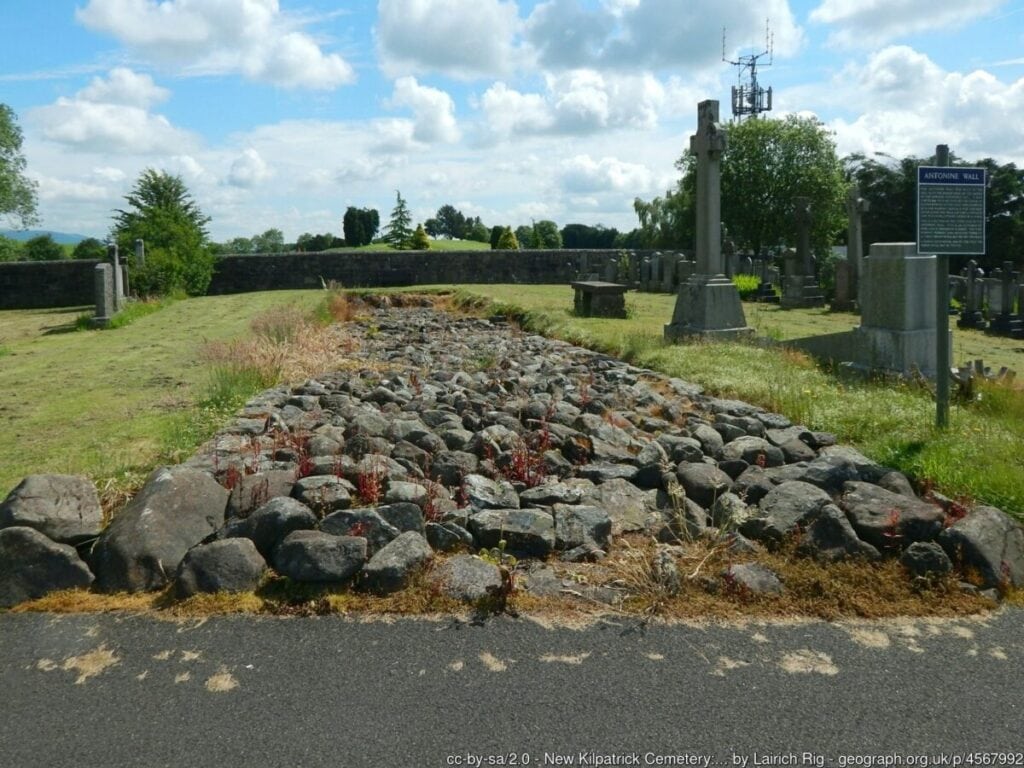
There are dozens of Roman ruins in Britain, dotted right across the country from Scotland to Wales. From Hadrian’s Wall, the heritage site most people have heard of, to many lesser-known Roman forts, villas, palaces and city walls, Roman Britain left an extraordinary footprint. Wales has some of the best-preserved sites in the country, and even Scotland can boast Roman ruins dating to the 1st and 2nd centuries.
I’ve walked sections of Hadrian’s Wall myself, spent time at Vindolanda and around the wider Northumberland Roman frontier, stood in the mosaic rooms at Chedworth and Caerleon, picked my way around the walls at Silchester, and spent a great deal of time exploring Roman London over the years. This guide blends that first-hand experience with the practical details prices, hours, how to get there for every site below.

- 30 Best Roman Ruins in Britain: The Ultimate Guide
- When did the Romans arrive in Britain?
- When did the Romans leave Britain?
- What was the Roman legacy in Britain?
- Quick reference: Roman ruins in Britain at a glance
- Roman Ruins in Northern England: Hadrian's Wall Country
- Roman Ruins in Yorkshire and the North West
- Roman Ruins in Southern England
- Roman Ruins in the Midlands and West of England
- Roman Ruins in Wales
- Roman Ruins in Scotland
- Where else to see Roman Britain
- Related guides on this site
- Frequently Asked Questions
| Fast Facts: Roman Ruins in Britain Roman rule in Britain lasted from AD 43 to AD 410 367 years Hadrian’s Wall was added to the UNESCO World Heritage List in 1987; it now forms part of the wider “Frontiers of the Roman Empire” World Heritage Site alongside the Antonine Wall (added 2008) Free to visit: Burgh Castle, Chester Roman Amphitheatre, the Silchester walls, York’s City Walls, Tomen y Mur, Brecon Gaer, Caerwent, Littlecote Villa, Dorchester Roman Town House, the London Roman amphitheatre, and Verulamium Park (museum and theatre charge separately) Best mosaics: Chedworth, Bignor, Lullingstone and Littlecote Largest Roman building still standing in Britain: Chester’s Roman Amphitheatre Largest Roman residence in Britain: Fishbourne Roman Palace, West Sussex Oldest surviving Roman structure in Britain: the Roman Pharos (lighthouse) at Dover Castle, AD 43 |
When did the Romans arrive in Britain?
During the Gallic Wars, Gaius Julius Caesar invaded Britain twice in 55 and 54 BC. Caesar planned to attack the Britons from Dover, but in 54 BC he actually landed six miles from his intended landing spot, after the Britons lined up on the shore to repel the invaders. The Britons followed the Romans down the coastline and fought fiercely, but were eventually overwhelmed. After a year of fighting with little success, Caesar withdrew to Gaul; he was assassinated in 44 BC and never returned to Britain.

It was Emperor Claudius who ordered the full invasion of Britain in AD 43, sending an army of around 40,000 men. Many British tribes, recognising the overwhelming size and power of the Roman army, made peace treaties rather than fight. The Britons were relatively quiet for a decade or more as Roman rule brought roads, towns and trade into the areas where troops were stationed.
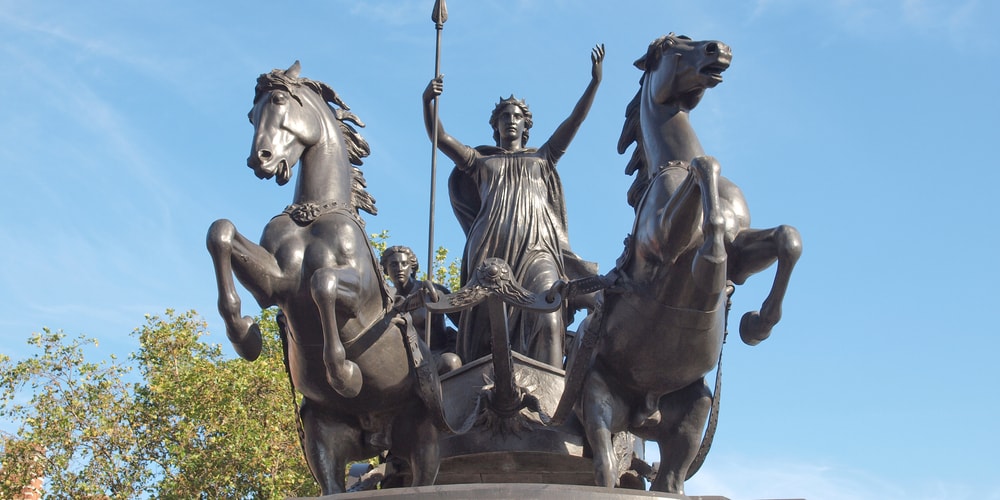
In AD 61, Boudica, queen of the Iceni, declared war on the Romans after being stripped of her lands and mistreated by Roman officials. She burned Colchester, St Albans and London to the ground before being defeated at the Battle of Watling Street, when Roman legions returned from campaigning against the Druids in Anglesey, Wales.
Clashes continued for years across Britain, and the Romans never gained full control of the country. Legions were based at Chester, Caerleon and York, and the Romans pushed north into Scotland before eventually giving up; in AD 122, Emperor Hadrian ordered the construction of Hadrian’s Wall to mark the northern frontier. When Hadrian died in AD 138, his successor Antoninus Pius briefly pushed the frontier further north, building the Antonine Wall between the Clyde and the Forth but by around 160 AD it was abandoned, and Hadrian’s Wall again became the boundary of Roman Britain.
Most of southern Britain settled into Roman order. Towns sprang up for the first time York, Chester, St Albans, Bath, Lincoln, Gloucester and Colchester among them all linked by a network of military roads radiating out from London, which carried goods and luxuries from across the Roman Empire.

When did the Romans leave Britain?
By AD 407, only a handful of Roman garrisons remained in Britain, and one of them proclaimed a soldier, Constantine III, Emperor of the Western Roman Empire. Constantine gathered a garrison and crossed the Channel to campaign in Gaul, leaving Britain undefended and the local population finally ended Roman rule by AD 409–410. With no Roman army left to defend them against the Saxons, Scots, Picts and Angles, the Britons appealed to Emperor Honorius for help and were turned down. That marked the end of Roman Britain, and the beginning of the Anglo-Saxon period.

What was the Roman legacy in Britain?
The Romans introduced Britain to brick and stone building, public baths, sanitation, running hot water, theatres, formal medicine and education, and organised road networks the foundations of what the Romans considered civilisation. A system of private wealth followed too: country villas with underfloor heating (hypocausts), mosaic floors and glazed windows sprang up for the Romano-British elite, many of which survive as the ruins below.
Quick reference: Roman ruins in Britain at a glance
| Site | Region | Price (2026) | Managed by |
| Hadrian’s Wall | Northumberland/Cumbria | Free (path); forts charge | English Heritage / Trust |
| Housesteads Roman Fort | Northumberland | £11.30 adult | English Heritage |
| Chesters Roman Fort | Northumberland | £10.80 adult | English Heritage |
| Vindolanda | Northumberland | £10.00 (1-yr ticket) | Vindolanda Trust |
| Birdoswald Roman Fort | Cumbria | £9.90 adult | English Heritage |
| Arbeia Roman Fort | South Shields | Free | Tyne & Wear Museums |
| York City Walls | North Yorkshire | Free | City of York Council |
| Aldborough Roman Town | North Yorkshire | £5.00 | English Heritage |
| Ribchester Roman Fort | Lancashire | Free site; museum charges | Ribchester Roman Museum Trust |
| Mamucium, Manchester | Greater Manchester | Free | Manchester City Council |
| Chester Roman Amphitheatre | Cheshire | Free | English Heritage |
| Roman Baths, Bath | Somerset | From £28 (family £57) | Bath & North East Somerset Council |
| Silchester Roman Walls | Hampshire | Free | English Heritage / Hampshire CC |
| Fishbourne Roman Palace | West Sussex | £15.00 adult | Sussex Past |
| Verulamium Museum & Theatre | Hertfordshire | £6.00 museum / £3.00 theatre | St Albans City & District Council |
| Bignor Roman Villa | West Sussex | Around £10 adult | Tupper family / private trust |
| Lullingstone Roman Villa | Kent | £8.10 adult | English Heritage |
| Roman Lighthouse, Dover Castle | Kent | £24.00 adult (castle) | English Heritage |
| Colchester Castle | Essex | £10.00 adult | Colchester + Ipswich Museums |
| London Roman Amphitheatre | London | Free | Guildhall Art Gallery |
| Burgh Castle | Norfolk | Free | Norfolk Archaeological Trust |
| Chedworth Roman Villa | Gloucestershire | £11.00 adult | National Trust |
| Viriconium, Wroxeter | Shropshire | £8.20 adult | English Heritage |
| Littlecote Villa and Mosaic | Berkshire | Free | Littlecote House Hotel |
| Dorchester Roman Town House | Dorset | Free | Dorset Council |
| Caerleon (Isca) | South Wales | Free (museum) | Cadw / National Museum Wales |
| Brecon Gaer | Powys | Free | Private farmland |
| Tomen y Mur | Gwynedd | Free | Cadw |
| Caerwent | Monmouthshire | Free | Cadw |
| Antonine Wall | Central Scotland | Free | Historic Environment Scotland |
Prices are per adult unless stated and change seasonally always check the official site before visiting.
Roman Ruins in Northern England: Hadrian’s Wall Country
Hadrian’s Wall
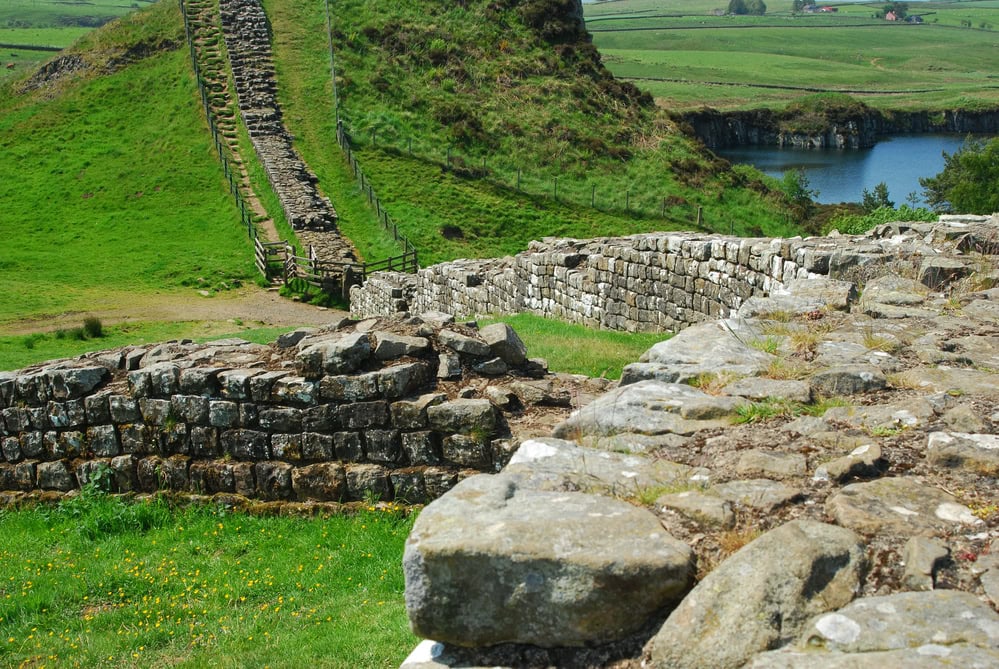
Hadrian’s Wall is a monumental Roman fortification that crosses the entire width of northern England, stretching 117 kilometres between the North and Irish Seas. Built around AD 122 during the reign of Emperor Hadrian, the Wall marked the northern edge of Roman Britain and, for much of its history, the northern boundary of the Empire itself. It was added to the UNESCO World Heritage List in 1987 alongside the Antonine Wall in Scotland, and it’s one of the best-known Roman ruins anywhere in Britain.
Visiting Hadrian’s Wall today is genuinely moving I’ve walked several sections of it myself, and much of the wall still stands, particularly in the central stretches (most of the stone near the coasts was plundered centuries ago for other buildings). Foundations, ditches, ramparts and earthworks are still clearly visible, and it’s easy to see why it inspired Game of Thrones‘ Wall. Committed walkers can follow the Hadrian’s Wall Path, a National Trail running the full length of the wall, which typically takes about a week end to end. For a shorter visit, the ruined forts of Vindolanda and Housesteads (Vercovicium) are the best places to get a real sense of frontier life.
Housesteads Roman Fort (Vercovicium)
Perched high on a dramatic escarpment in Northumberland, Housesteads is widely considered the best-preserved fort on the entire wall, and it’s one of the stops I’d point you to first. Known to the Romans as Vercovicium, it was built around AD 124 and garrisoned by roughly 800 infantry auxiliaries soldiers drawn from as far away as Belgium and Germany. Unlike many wall forts built for cavalry, Housesteads was an infantry base.
Visitors can explore remarkably intact ruins, including the commanding officer’s house (praetorium), barracks, granaries and a well-preserved communal latrine system that still gets a laugh from most tour groups. The on-site museum, established in 1903, displays inscriptions, sculptures and everyday Roman artefacts found on site. English Heritage manages Housesteads; adult admission is around £11.30, with National Trust and English Heritage members going free.

Chesters Roman Fort
Set beside the River Tyne, Chesters showcases the best-preserved Roman cavalry fort and bathhouse complex in Britain. Originally built to house a 500-strong cavalry unit, the fort’s remarkably intact bathhouse still shows its original hypocaust underfloor heating and changing rooms, where soldiers once prepared for duty. The commanding officer’s house reveals just how comfortable senior Roman officials expected to live, even on the edge of the empire, while the Victorian-era Clayton Museum on site houses an impressive collection of altars, jewellery and inscriptions gathered from digs along this stretch of the wall. English Heritage manages the site; adult admission is around £10.80. Both Chesters and Housesteads also feature in our Northumberland Coastal Road Trip: Ultimate 5-Day Itinerary Guide, if you’re planning to combine the coast with the Wall.

Vindolanda
Vindolanda was built around AD 85 predating Hadrian’s Wall itself and it’s one of the most popular Roman sites in Britain, alongside the Wall. I’ve spent time here myself, and it’s easy to lose an entire day: excavations happen on site every single season, drawing volunteers from around the world, and the site’s anaerobic (oxygen-free) soil conditions preserve organic finds in astonishing detail.

Beyond the fort itself, Vindolanda contains a post-Roman mausoleum, a church, a pre-Hadrianic bathhouse complex, and barracks and military offices dating right through to the Severan dynasty (AD 193–235). The museum displays one of Britain’s largest collections of ancient leather, alongside the famous Vindolanda writing tablets Britain’s oldest surviving handwritten documents, and genuinely one of the most human finds from Roman Britain: birthday party invitations, letters from soldiers asking for socks and underwear, payment requests and troop deployment lists.


A combined ticket (around £10) gives unlimited access to both the Vindolanda site and the separate Roman Army Museum for a full year, making it good value if you’re spending any time in the wider Northumberland Roman frontier. For a full walking itinerary linking these sites together, see our dedicated Hadrian’s Wall Walk: Vindolanda and Roman Sites Visitor Guide.
Birdoswald Roman Fort
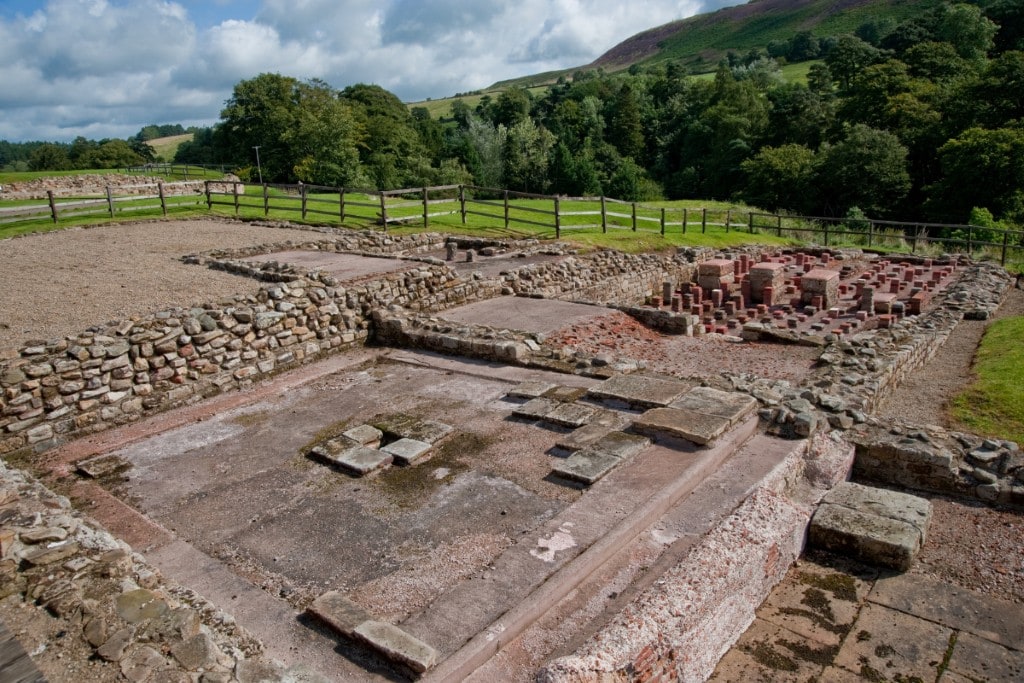
Birdoswald, originally known as Banna, sits towards the western end of Hadrian’s Wall near Carlisle in Cumbria. Founded around AD 112, it’s one of the best-preserved forts along the wall, and unusually, it continued to be occupied after the Romans abandoned it around AD 500 a farmhouse still stands on the edge of the ruins today.
The fort sits atop a hill with sweeping views across the Cumbrian countryside, with the River Irthing running through steep cliffs below. The stretch of wall running through Birdoswald is the longest intact section anywhere along its length, and Willowfield Bridge, which once carried the wall across the river, can still be traced. Birdoswald is managed by English Heritage; entry is around £9.90 for adults and £6 for children, and there’s a good visitor centre covering the fort’s history.
Arbeia Roman Fort, South Shields
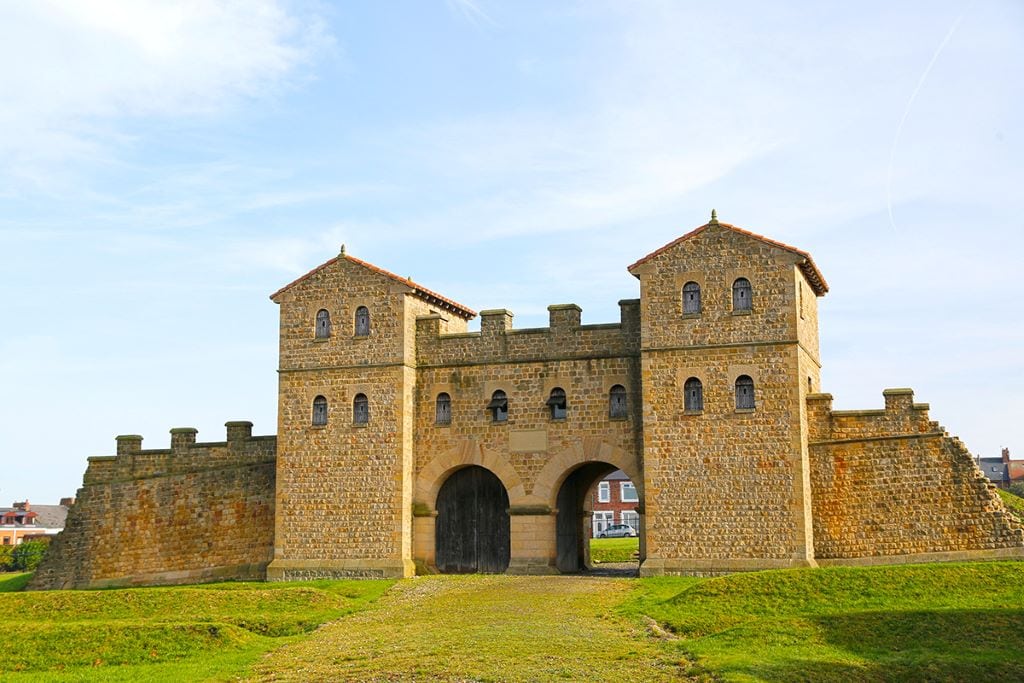
Arbeia sits at South Shields in northeast England, about 10 miles east of Newcastle, overlooking the south bank of the River Tyne. It was a garrison and supply base for Hadrian’s Wall, strategically placed at the eastern end of the frontier now itself part of the UNESCO World Heritage Site. The fort’s Latin name comes from the Arab troops from Mesopotamia once stationed here on the northern edge of the empire.
The free museum on site displays fragments of letters written to the garrison, leather footwear and jewellery, alongside gravestones and personal items from the wealth of finds excavated here since the late 19th century. The fort’s imposing west gate has been reconstructed, and visitors can step inside a rebuilt barracks block and commanding officer’s house to get a real sense of scale. Arbeia is a 10-minute walk from South Shields Interchange and is free to visit.
Roman Ruins in Yorkshire and the North West
Roman Ruins in York: The City Walls
York’s City Walls encircle the city and have defended it for nearly 2,000 years, in one form or another though in Roman times the walls were much smaller than what stands today. Over the centuries the walls have been upgraded, fallen into disrepair and been rebuilt more than once, but their foundations still form part of the existing circuit.
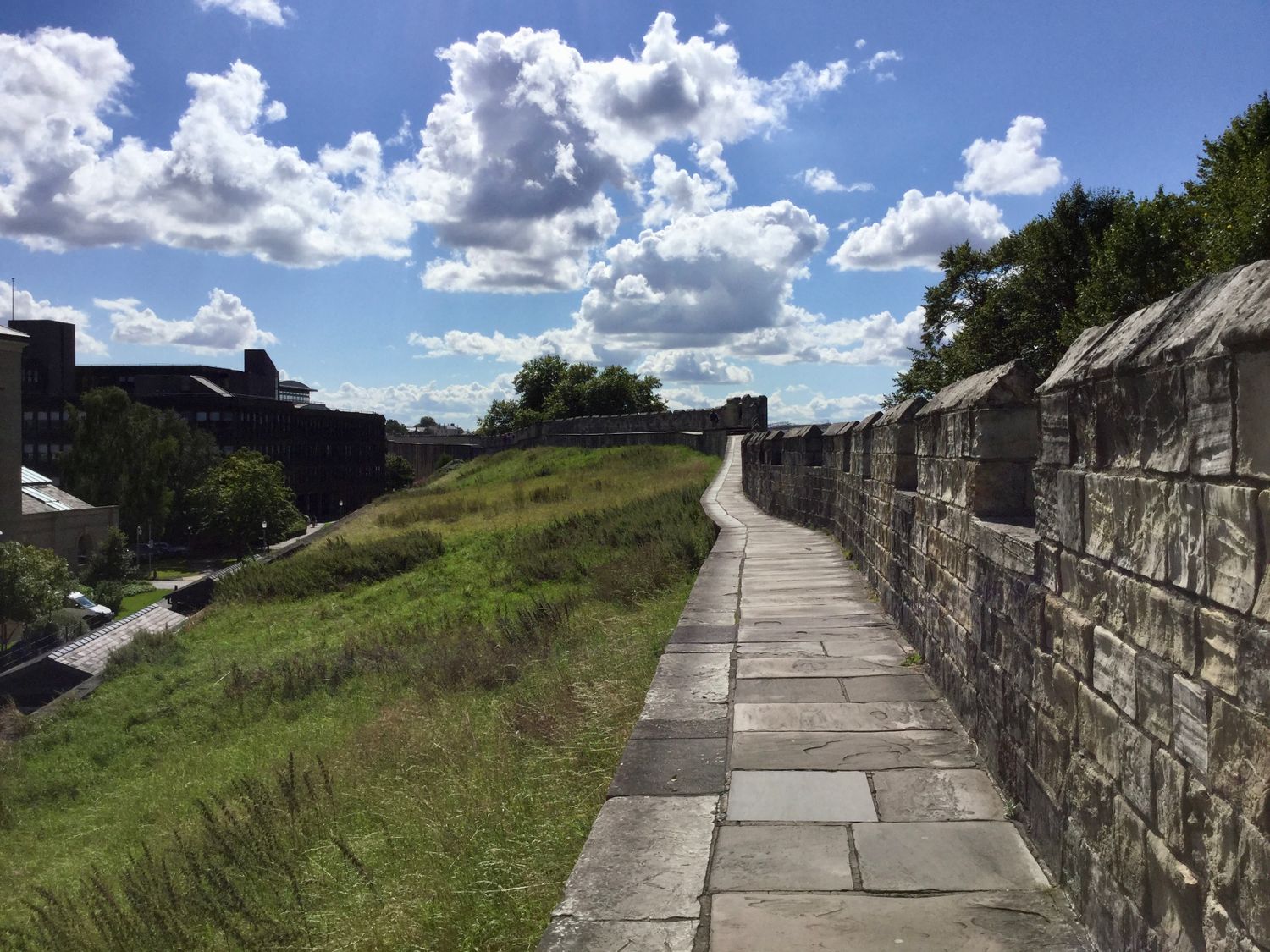
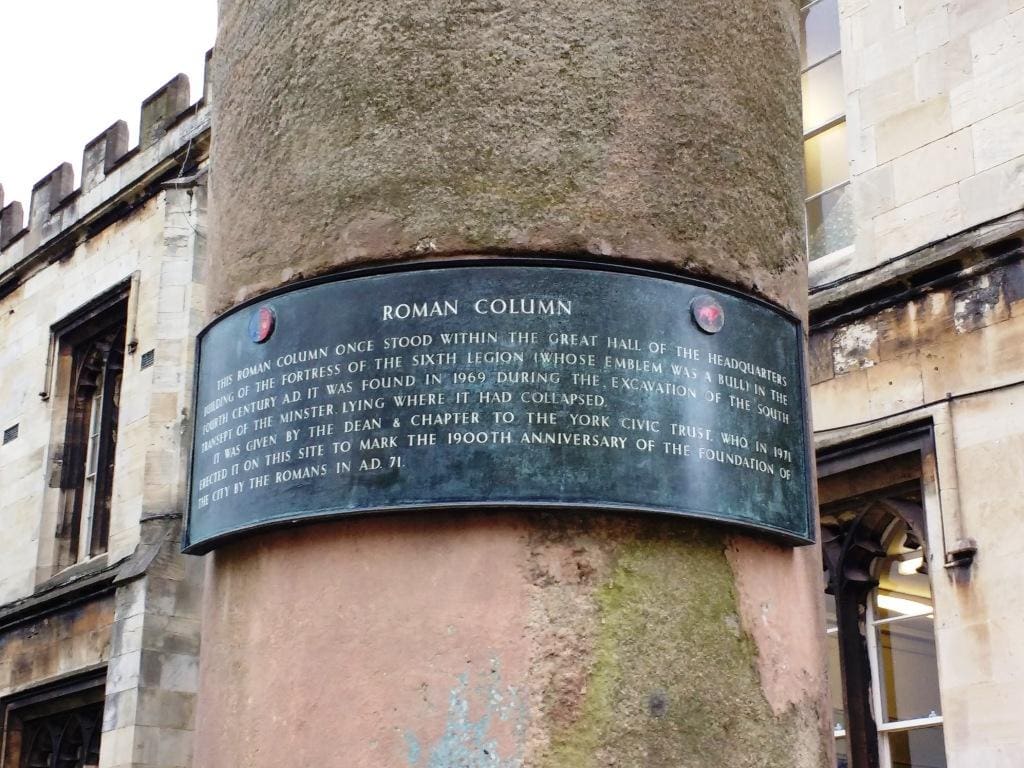
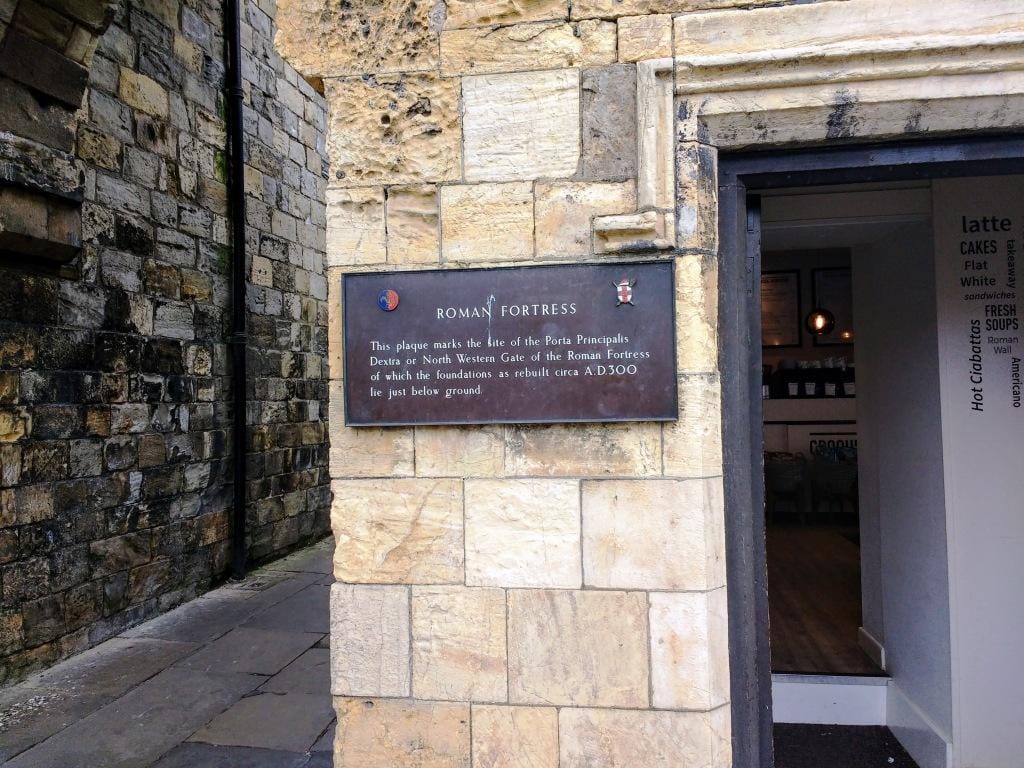
The most intact surviving Roman structure is the Multangular Tower in the Museum Gardens, mostly built between AD 209 and 211 during the visit of Emperor Septimius Severus, and heightened again around AD 300. The change in stone and style is clearly visible on the tower the bottom six metres are genuinely Roman. Walking the full 2.8-mile circuit of the walls, which is free and open daily from 8am until dusk, is one of the best things to do in York, with some of the finest views of York Minster along the way.

Aldborough Roman Town
Today, Aldborough is a sleepy North Yorkshire village a mile from the market town of Boroughbridge all stone cottages, a 14th-century church and a maypole on the green. During Roman occupation, however, it was Isurium Brigantum, the tribal capital of the Brigantes, Britain’s largest Celtic tribe, from around AD 160.
The visible ruins are modest, but you can see a corner of the ancient defences, two mosaic pavements still in their original positions, and a small museum with Roman finds from the site. English Heritage manages Aldborough, charging around £5 per visitor. The easiest way to visit is as a day trip from York regular buses run to Boroughbridge, and if driving, park in the free car park there, since there’s no parking directly at the ruins.


Ribchester Roman Fort (Bremetennacum Veteranorum)
Excavations at Ribchester in 1969 uncovered occupation evidence stretching from the mid-1st to the late-2nd centuries AD, including several distinct building phases. By the time the Domesday Book was compiled in 1086, the site was already known by a version of its modern name recorded as Ribelcastre, or ‘Roman fort on the River Ribble’ even though the actual Roman name, Bremetennacum Veteranorum, had been forgotten in the intervening five centuries.
The Ribchester Roman Museum is Lancashire’s only dedicated Roman antiquities museum, set in a picturesque village on the banks of the Ribble that was once a Roman cavalry fort and settlement.
Mamucium, Manchester
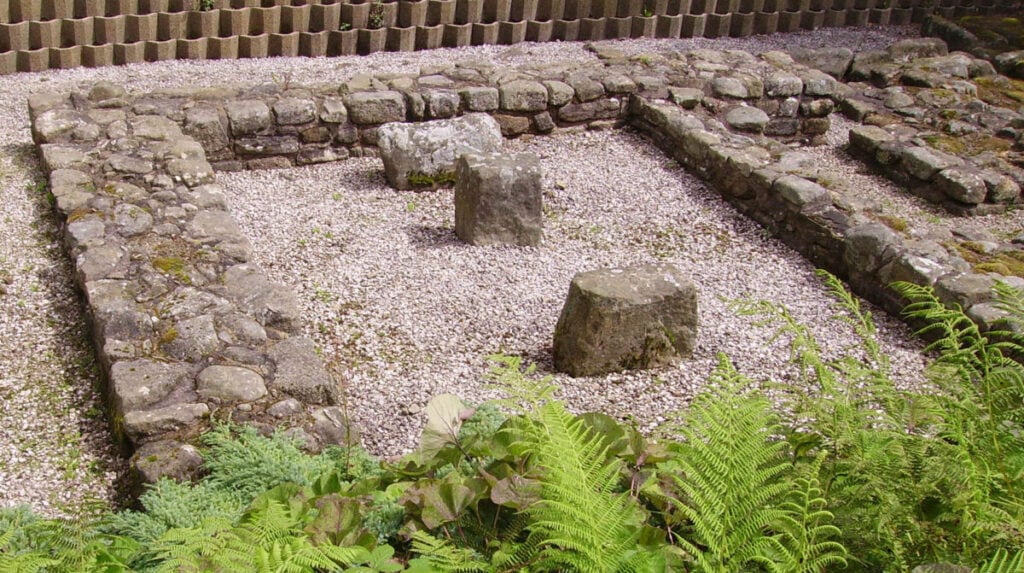
In Manchester’s Castlefield area, only steps from the Museum of Science and Industry, sits Mamucium a Roman fort built on a rocky outcrop where the Rivers Irwell and Medlock meet. It was established in AD 79 for its strategic position, first in timber, then rebuilt and enlarged in stone. After the Roman withdrawal around AD 410, the fort was left to decline as the modern city grew up around it.
Part of what makes Mamucium worth a stop is the sheer contrast with its surroundings a pub, shops and apartment blocks now ring Britain’s first Urban Heritage Park, and the stone foundations feel genuinely startling against the modern skyline. Walk a little further southwest through the park and you’ll find a reconstructed section of the fort standing on its excavated foundations. Entry is free, year-round.

Chester Roman Amphitheatre
Chester’s Roman Amphitheatre is the largest of its kind ever uncovered in Britain, and a genuine gap in most ‘Roman Britain’ round-ups. Built in the 1st century AD alongside the Roman fort of Deva Victrix, it was originally one of two stone amphitheatres on the site, each with wooden seating, and could hold several thousand spectators for gladiatorial contests, wrestling and less gloriously cockfighting.
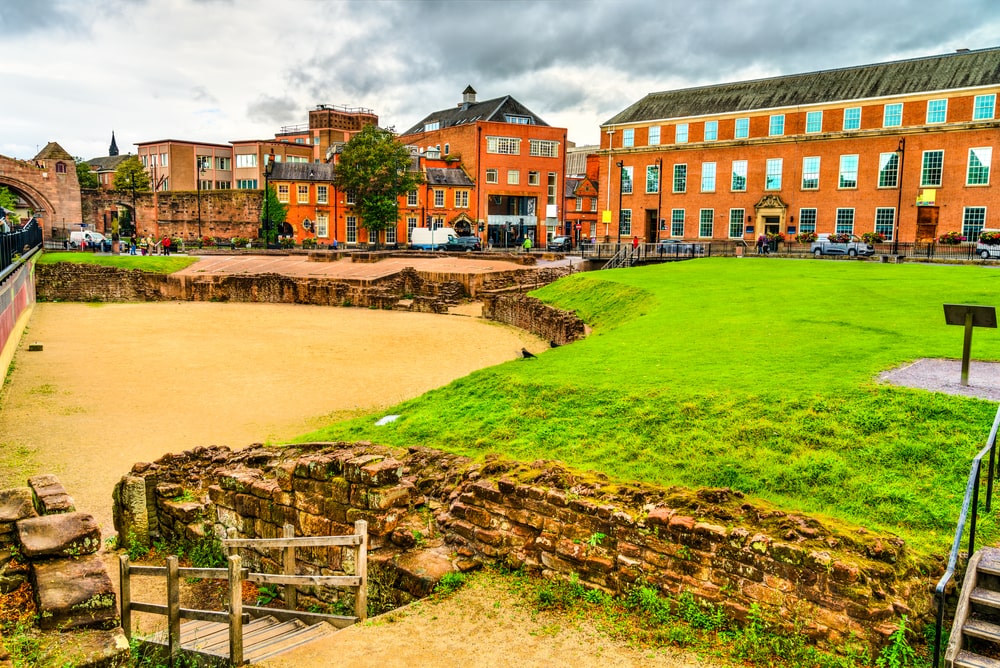
Today only a semicircle of the original structure survives, comprising a central pit and stone walls, but informative panels and a mural help bring the scale to life. Much of the amphitheatre’s stone was later reused to build Chester’s medieval city walls, which still ring the centre. Look for the remains of a shrine to the goddess Nemesis near the north entrance. Managed by English Heritage, the amphitheatre is free to visit during daylight hours, and sits a short walk from Chester’s Roman Gardens and the interactive Dewa Roman Experience.


Roman Ruins in Southern England
Roman Baths, Bath
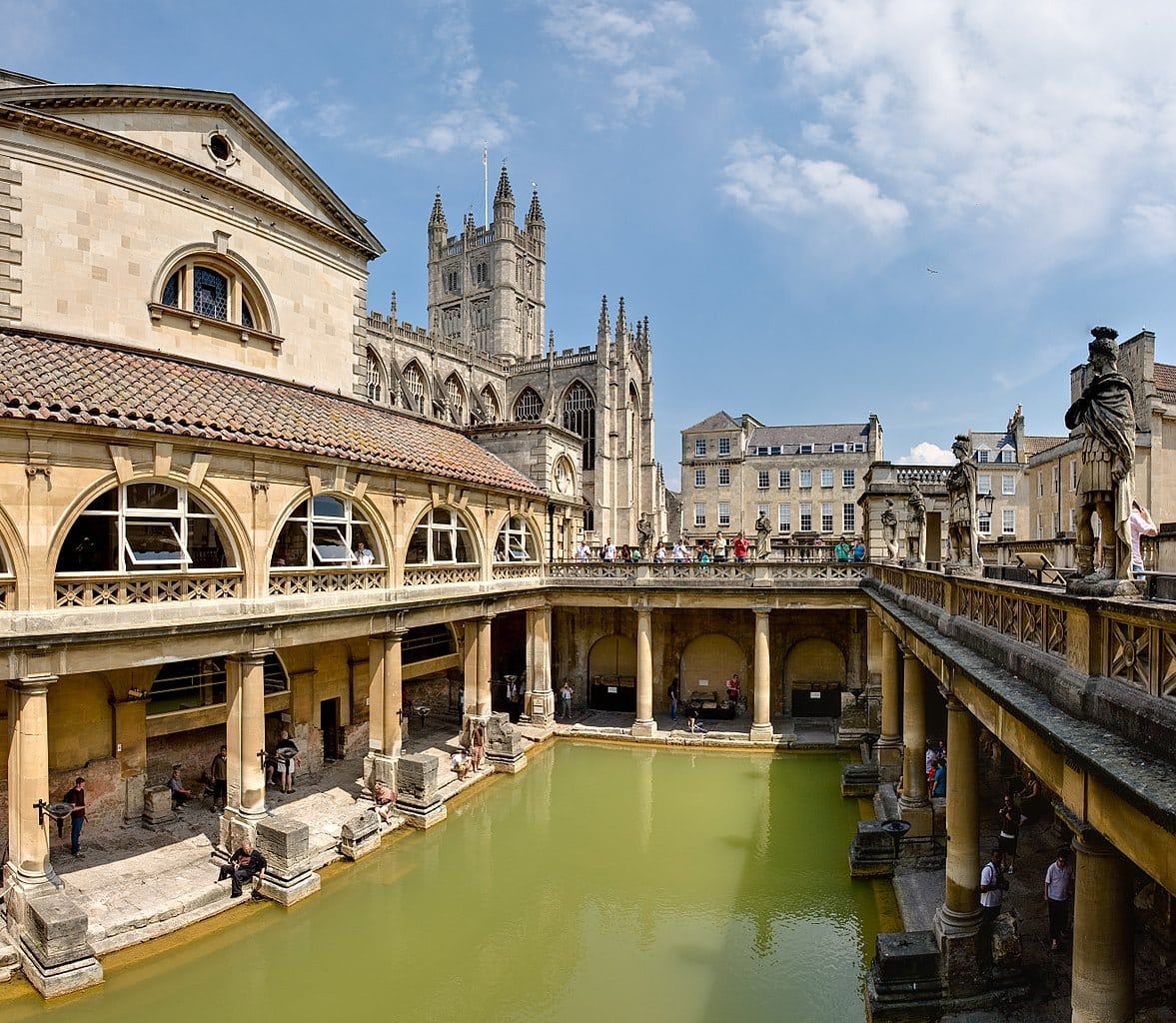
In the heart of Bath a city named for exactly this sit some of the best-preserved Roman remains anywhere in the world. The baths are fed by a naturally heated underground spring, and those steaming hot springs still supply the site today. I’ve visited myself, and walking the ancient pavements past the original plunge pools and changing rooms is one of those rare places where Roman Britain feels genuinely alive rather than roped-off.

Alongside the baths, you can see the ruins of the Temple of Sulis Minerva and a bronze sculpture of the goddess the temple was dedicated to, plus a wide display of Roman artefacts recovered on site. Free audio guides bring the experience to life, with a dedicated children’s trail voiced by Michael Rosen. A visit takes a good hour or more; family tickets start around £57 for four. Afterwards, the Georgian Pump Rooms next door are the classic spot for afternoon tea, or you can try the neighbouring Thermae Bath Spa, fed by the same natural spring the Romans used two thousand years ago sadly, there’s no bathing in the Roman ruins themselves.
Silchester Roman Walls (Calleva Atrebatum)
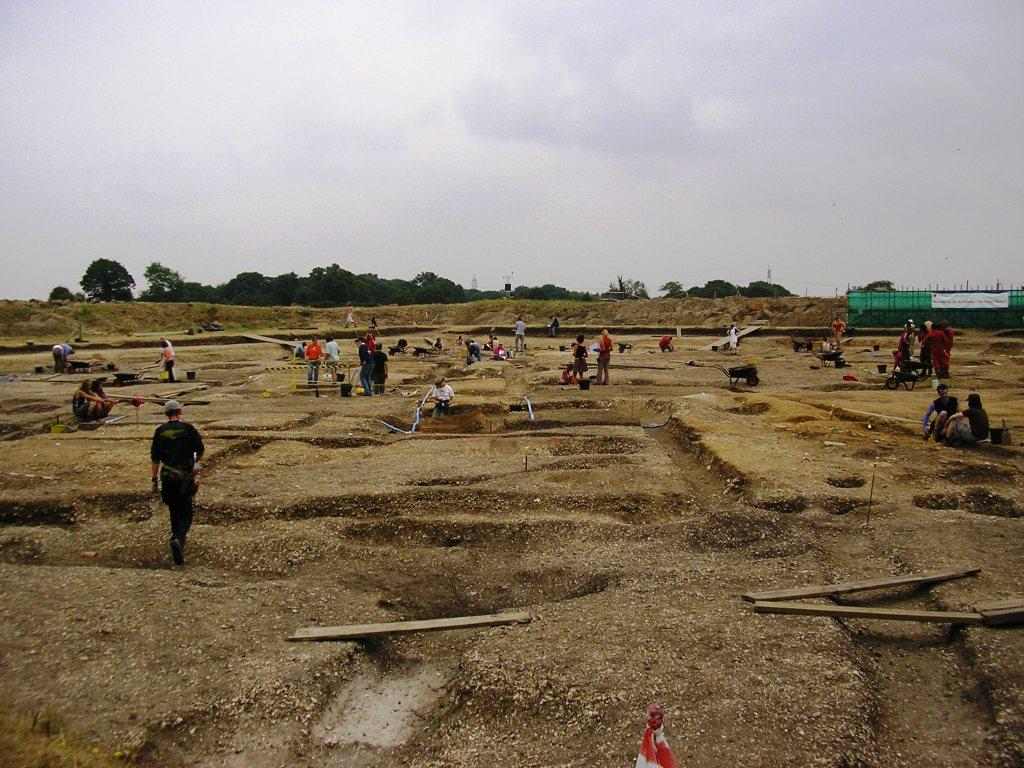
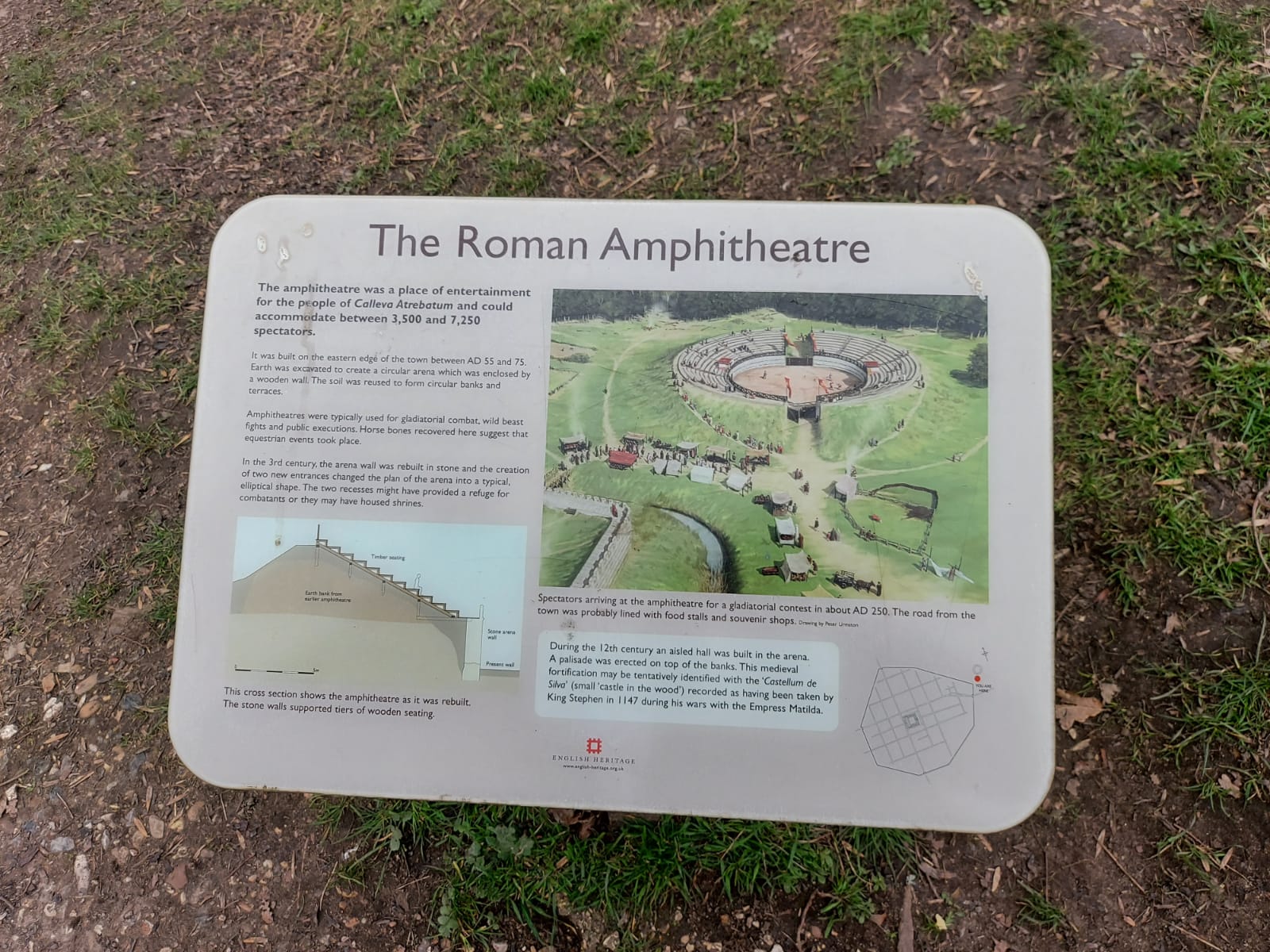
Silchester, in the Hampshire countryside near Reading, is one of the rare Roman towns in Britain never built over by later houses or streets it was abandoned after the Roman withdrawal and simply left to the fields, which is exactly why it still holds its shape today. I’ve walked the site and its walls myself, and it rewards a bit of imagination: the paths aren’t especially well signposted, and at first glance there isn’t a huge amount standing, but tracing the full circuit of the walls and picturing the vanished town beneath the grass is genuinely worthwhile.


In 2014, in the final week of a dig season, archaeologists uncovered what they believe to be the largest Iron Age hall ever found in Britain a huge timber structure roughly 8 by 50 metres, possibly the home of the British chieftain Commius, based on a finely worked Iron Age brooch found deliberately placed in its foundations. The first Roman buildings on the site were light military structures; historians believe the town was later burned down, possibly during the Boudican revolt. Silchester’s walls and site are free and open at all times; check English Heritage or Hampshire County Council for parking and access details. For a full walking route around Calleva and more on its excavation history, see our dedicated guide, Walking Roman Silchester: Explore a Roman City and Walls.


Fishbourne Roman Palace
Fishbourne, near Chichester in West Sussex, is the largest known Roman residence in Britain and one of the biggest gaps in most round-ups of Roman ruins. Discovered entirely by accident during the digging of a water main trench in 1960, nine seasons of excavation revealed a site that grew from a military supply base at the time of the AD 43 invasion into a genuinely palatial residence by the end of the 1st century, built around AD 75.

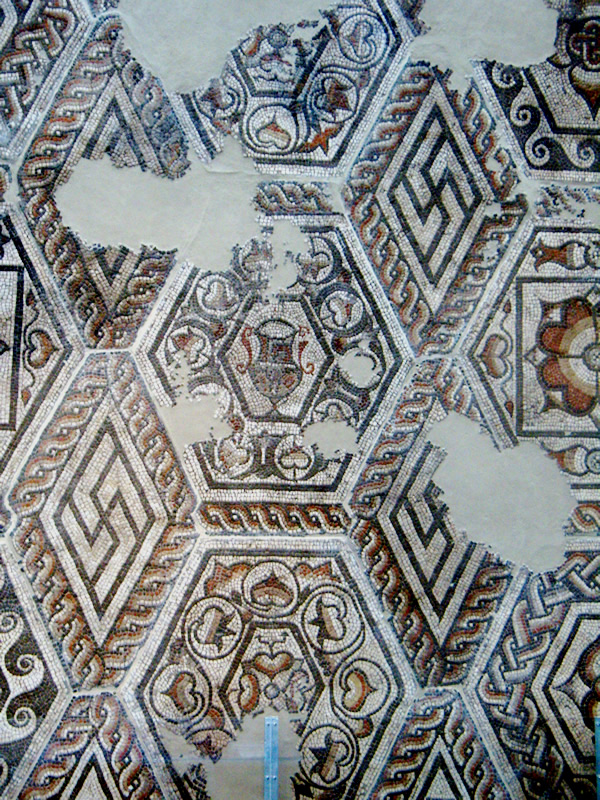
The surviving wing houses the largest collection of in-situ Roman mosaics in Britain, alongside underfloor heating systems, corridors and courtyard gardens the earliest ornamental gardens ever found in the country, since recreated on site. Historians still don’t know for certain who the palace belonged to, though the local Romano-British king Togidubnus is the leading candidate. The Collections Discovery Centre holds more than 300,000 excavated artefacts. As of late 2026, adult admission is around £15, with family tickets from £28; the site is open daily, with free parking and a short walk from Fishbourne train station.

Verulamium, St Albans
Verulamium was one of the largest cities in Roman Britain, ranking behind only Londinium and today it’s a strange one, oddly under-visited given how much survives. Much of the city now lies beneath modern St Albans, but the excavated remains sit within Verulamium Park: sections of the original city walls and the London Gate, a mosaic floor made of around 220,000 tiny stone tesserae still in its original position over a visible hypocaust heating system, and the only Roman theatre in Britain you can still visit a horseshoe-shaped venue built around AD 140 that could seat 2,000 spectators for anything from religious processions to wild beast shows.

The Verulamium Museum, at the edge of the park, displays recent finds including the Sandridge Hoard of 159 Roman gold coins, alongside recreated Roman rooms and some of the finest mosaics outside the Mediterranean. The museum and the Roman theatre (a short walk away, on the Gorhambury Estate and open Fridays and Saturdays only) charge separately museum admission is around £6 for adults, theatre entry around £3 though joint tickets are sometimes available. The park itself, including the walls and mosaic pavement, is free to walk.


Bignor Roman Villa
Bignor, in the West Sussex countryside, was discovered entirely by accident in 1811 when a local farmer’s plough struck a stone. What followed is one of the richest mosaic collections in Britain: a 4th-century villa with a famous frieze of cupids dressed as gladiators, alongside depictions of Venus, Ganymede being carried off by Jupiter’s eagle, Medusa, and a set of the Four Seasons. The villa has remained in the care of the same local family’s trust since its discovery, which gives it a slightly different, more personal feel than the larger English Heritage or National Trust sites nearby.


Lullingstone Roman Villa
Set in the Darent Valley in Kent, Lullingstone is one of the best-preserved Roman villas in Britain, and one of the most quietly significant. Construction began around AD 100, and the villa reached its most luxurious phase in the mid-4th century, when its owners possibly connected to Pertinax, briefly Roman Emperor in AD 193 added a grand new dining room with mosaics of Europa and the Bull and Bellerophon killing the Chimera.
What makes Lullingstone genuinely unusual is its house-church: wall paintings discovered in an upper room here are among the earliest surviving physical evidence of Christianity anywhere in Roman Britain, sitting directly above what had been a pagan shrine to water nymphs. Two skeletons found in coffins on site, including one thought to be a Roman gambler, are also on display. English Heritage manages the site; adult admission is around £8.10, with a family ticket around £21.

Roman Lighthouse, Dover Castle
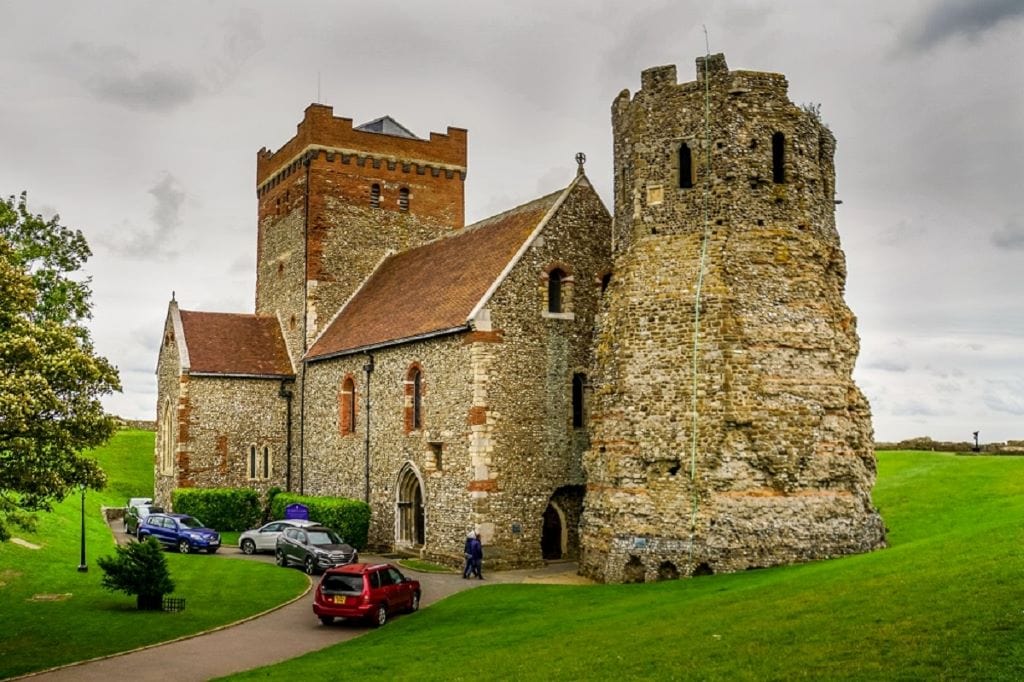
Dover Castle has played a role in English history for well over 2,000 years a hill fort stood here around 800 BC, the Great Tower was begun by Henry II in the 12th century, and its tunnels were used for wartime planning in the 20th. But its oldest structure by far is the Roman Pharos, a lighthouse dating to AD 43 that is the most complete standing Roman building in England and one of only three surviving Roman lighthouses from the whole former empire. It later served as the bell tower for the adjoining Anglo-Saxon church, St Mary in Castro take a look inside, and look up.
Beyond the lighthouse and church, Dover Castle has plenty to fill a full day: the Castle Keep, the Secret Wartime Tunnels built for Operation Dynamo, the WWII Underground Hospital and the Medieval Tunnels. English Heritage manages the site; adult admission is around £24, with free entry for members.
Roman Ruins of Colchester
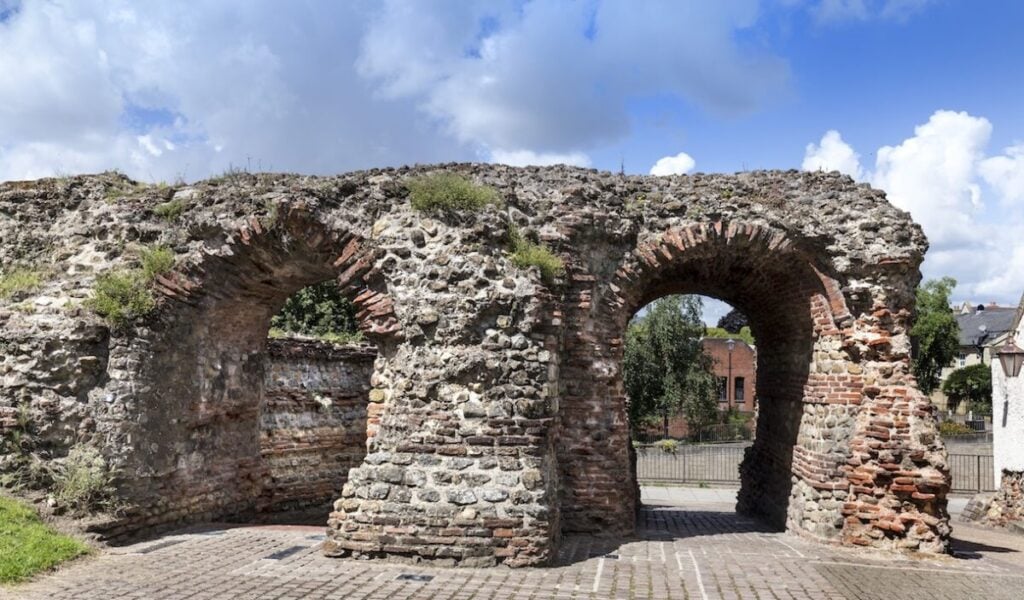
Colchester calls itself Britain’s First City, and it’s a genuinely underrated stop, rarely drawing international tourists despite being under an hour by train from London’s Liverpool Street. Roman remains are scattered right through the historic centre, including stretches of the old Roman wall and a street literally named Roman Road. In its heyday the city had three theatres and a Roman chariot-racing circus. Colchester Castle, one of the town’s most recognisable landmarks, was built directly on the foundations of the Temple of Claudius, still visible on guided tours of the castle.
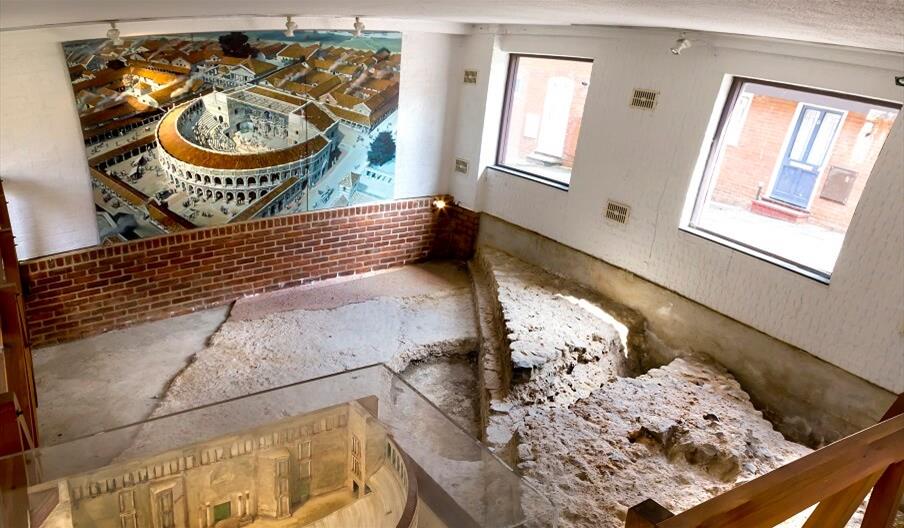
Elsewhere in town, the foundations of one of Colchester’s Roman theatres survive under a modern building on Maidenburgh Street, visible through a glass pavement the theatre could originally seat 3,000 and is mentioned in Tacitus’s account of Boudica’s attack on the city in AD 60. It was rediscovered during excavations in 1981. Colchester Castle is open daily (Monday–Saturday 10am–5pm, Sunday 11am–5pm), with adult admission around £10; no booking is needed.
London Roman Amphitheatre
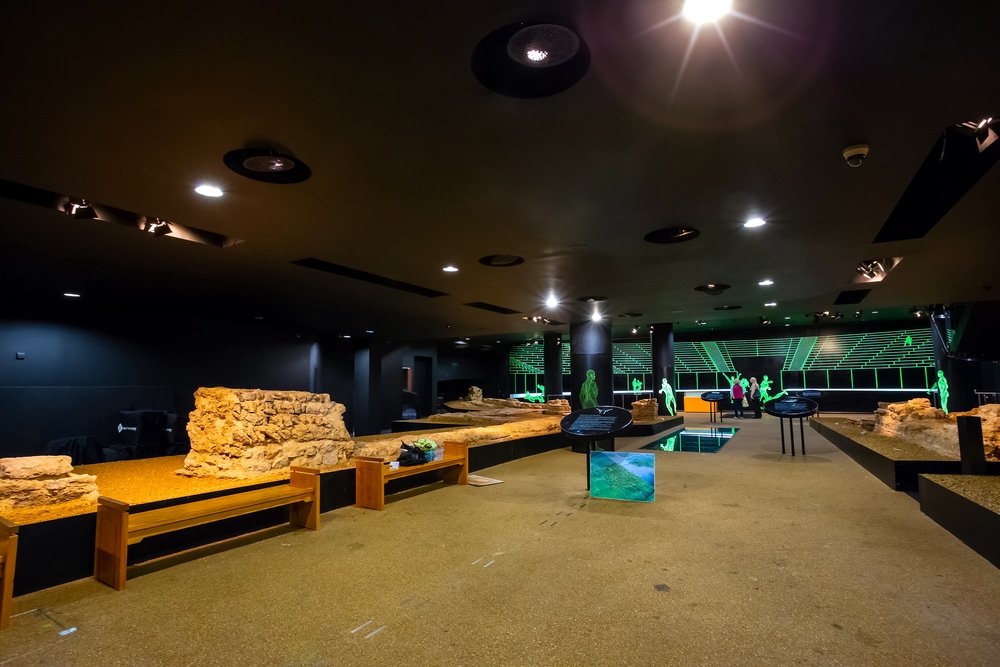
In 1988, Museum of London archaeologists made an unexpected discovery during preparation for a new gallery building: London’s only Roman amphitheatre, buried beneath what is now Guildhall Yard. It opened to the public for the first time in almost 2,000 years in 2002. I’ve spent a great deal of time exploring Roman London over the years, and this is one of the more surprising finds it’s easy to walk past the Guildhall Art Gallery without realising an entire arena sits beneath it. The remains, including timber drainage and the arena wall, are viewable free of charge inside the gallery basement.
Burgh Castle, Norfolk Broads
Burgh Castle is one of the best-preserved Roman monuments in the country, built in the 3rd century AD. Enter through the eastern gate for a stunning view across Breydon Water a genuinely lovely spot to watch the sunset over the Norfolk Broads. Originally enclosing about six acres, the fort’s walls were around 3.5 metres wide at the base, tapering to 1.5 metres at their full height of roughly 4.5 metres.
Centuries of stone-robbing have exposed the mortared flint rubble core of the walls, though they were originally faced inside and out with cut flint and tile in alternating bands a well-preserved stretch of that original facing survives along the outside of the south wall. The site now has signage and a large free car park, and there’s no charge to visit, though donation boxes are dotted around. A large adjoining field is popular with dog walkers. Burgh Castle village itself sits just outside Great Yarmouth, with several holiday parks nearby, making it an easy add-on to a Norfolk Broads trip.

Roman Ruins in the Midlands and West of England
Chedworth Roman Villa
Chedworth, tucked into the Cotswolds, has some of the most complete Roman mosaics anywhere in England, and it’s one of the sites I’ve visited and would send anyone straight to. The villa complex includes bathhouse rooms, a full hypocaust underfloor heating system, and a nymphaeum a shrine built around a natural spring that’s still fed by the same water today. Suspended walkways let you walk directly over the mosaics rather than viewing them from a distance, and there’s a small on-site museum with finds from the excavations. National Trust manages the site; adult admission is around £11. Chedworth also features in our Best Cotswolds Villages and Secret Places Only Locals Know, alongside the Roman road at Ermin Way near Northleach if you want to extend the theme into a wider Cotswolds day.


Viriconium, Wroxeter
Wroxeter Viriconium to the Romans was once the fourth-largest city in Roman Britain, close in scale to Pompeii. Founded in the mid-1st century AD as a legionary fortress, it remained inhabited right through to the 7th century. Modern archaeological techniques have revealed extraordinary detail about the city’s layout in recent years, reshaping how historians understand Roman urban Britain more broadly.
Visitors can wander the remains of the bathhouse and explore a full-scale reconstructed Roman townhouse, built using only materials and techniques the Romans themselves would have had. Some scholars believe Emperor Hadrian personally ordered the construction of the site’s baths and forum, based on the timing of the works. English Heritage manages the site; adult admission is around £8.20.

Littlecote Villa and Mosaic
Tucked into the grounds of the Grade I Tudor manor Littlecote House Hotel near Hungerford in Berkshire, Littlecote is one of the more unexpectedly beautiful Roman ruins in Britain. Above-ground remains were discovered in the 1720s; the villa itself dates to the 1st century AD, with later additions including a bakery and brewery around AD 120.

Around AD 360 the original villa was largely demolished, with only three walls retained to form a new building which contains the villa’s real showpiece, a mosaic depicting Orpheus surrounded by four female deities, possibly representing the Four Seasons. Rediscovered in 1977 after being reburied and lost for over two centuries, only about half the mosaic survived weathering; the missing panels were carefully replaced in modern terracotta. Littlecote is free to explore, with plenty of on-site parking and a short walk to the field.
Dorchester Roman Town House
The Roman Town House in Dorchester was found almost by accident. Colliton Park, now home to Dorset County Council’s headquarters, was acquired by the council in the early 1930s; investigative work ahead of construction uncovered the remains of a Roman townhouse in the late 1930s, and the council’s building plans were amended to accommodate it. It’s now a Grade I listed building and scheduled monument.

The house is an L-shape of two ranges: the South Range, rooms 1–7, with stone and flint walls, and the West Range, rooms 8–18, which retains an original Roman mosaic tiled floor. A glass-and-steel cover building was added in the late 1990s to protect the remains, built on the original foundations. It’s the only complete Roman townhouse surviving anywhere in Britain, dating from the 4th century AD, and it’s free to visit year-round during daylight hours.
Roman Ruins in Wales
Caerleon (Isca)
Caerleon, just outside Newport in South Wales, was one of the most important Roman military sites in Britain I’ve visited myself, and the scale of it still surprises most first-time visitors. Today you can see the ruins of Caerleon’s Roman baths, amphitheatre and barracks, plus a dedicated museum of Roman artefacts excavated here, including jewellery, weapons, coins and a human skeleton found on site.
Of the original bath complex, only one pool survives, now under cover in a museum-like setting alongside a good display of Roman mosaics. The amphitheatre, entirely grassed over today, can’t be walked through underground the way the Colosseum can, but you can walk across the top of it; the barracks are in ruins, but the ground plan including the soldiers’ dormitories and public toilets is still clearly visible. All three sites sit close together and are walkable from each other. There’s no entry fee, though booking a time slot is recommended for the baths and museum; the amphitheatre and barracks stay open until sunset.

Brecon Gaer (Bannium/Cicucium)
The remains of this Roman fort sit behind a working farm off the A40 in Aberyscir, near Brecon simply walk through the farmyard and a gate to reach it, with no charge to visit. This was the territory of the Silures, a tribe that gave the Romans real trouble before eventually settling at Caerwent. The fort visible today dates from around AD 140 and once housed soldiers of the Second Legion.
You can trace the gatehouses and the fort’s distinctive shape, though the headquarters, bathhouse and barracks remain buried beneath the grass. Excavations near the fort have turned up several tombstones, including one for Candidus, a young cavalryman, now held in the Brecknock Museum in Brecon.
Tomen y Mur
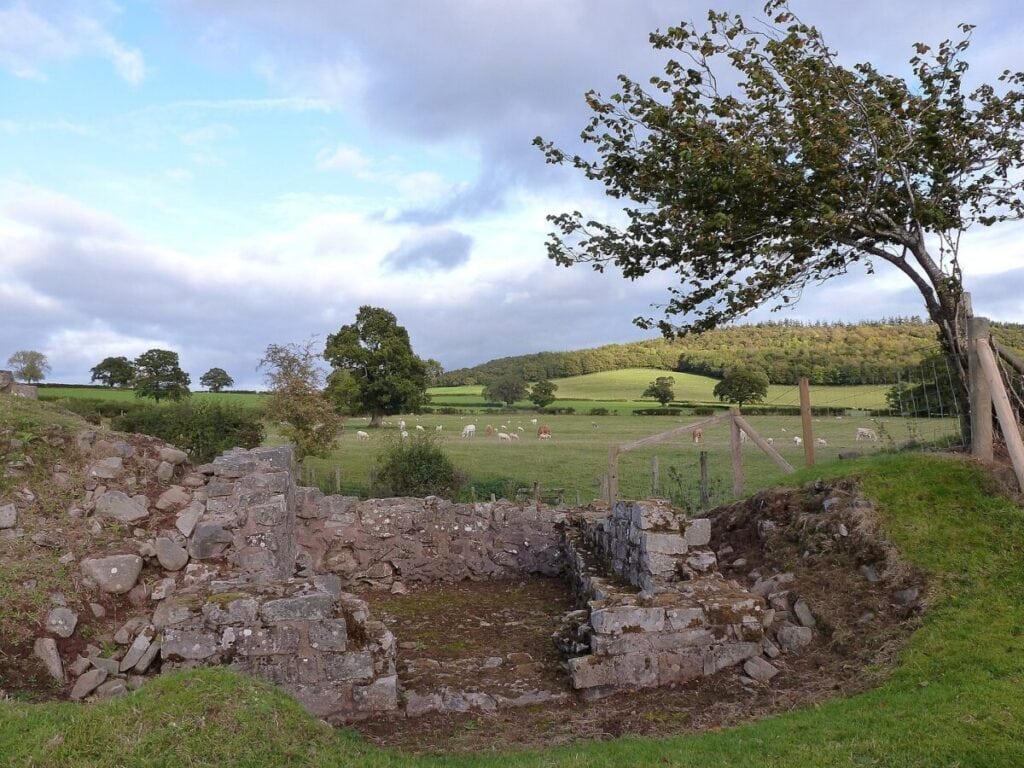
A 1st-century Roman fort in Snowdonia, Tomen y Mur was built by General Gnaeus Julius Agricola in AD 78 as part of his campaign against the Ordovices, a Celtic tribe resisting Roman rule. The shape of the surrounding landscape suggests the site once held a bathhouse, a mansio (guesthouse for visiting officials), a temple, a military amphitheatre and a training field at one point, four Roman roads converged here.
The Romans abandoned the fort around AD 140. A thousand years later, the Normans built a castle motte within its walls during a Welsh uprising in 1095 so the ruins now layer Roman and medieval history in a single earthwork.

Caerwent Roman Town
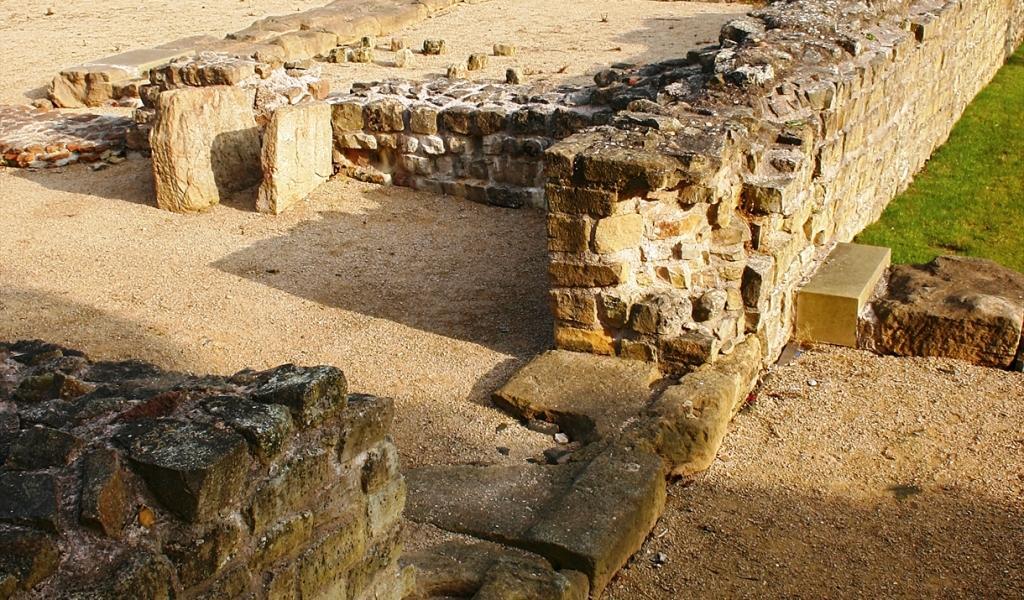
Caerwent Venta Silurum to the Romans is one of Wales’s genuine hidden gems, near Caerleon (Isca), one of Britain’s most important Roman towns. Established around AD 75–80 as the tribal capital of the Silures, Caerwent retains fourth-century walls standing up to 17 feet (5.2m) high, along with several excavated houses, a forum basilica and a Romano-British temple. The Silures, once fierce opponents of Rome, became thoroughly Romanised here, running a busy town laid out on a typical grid plan, complete with public baths and a marketplace.
Roman Ruins in Scotland
Antonine Wall
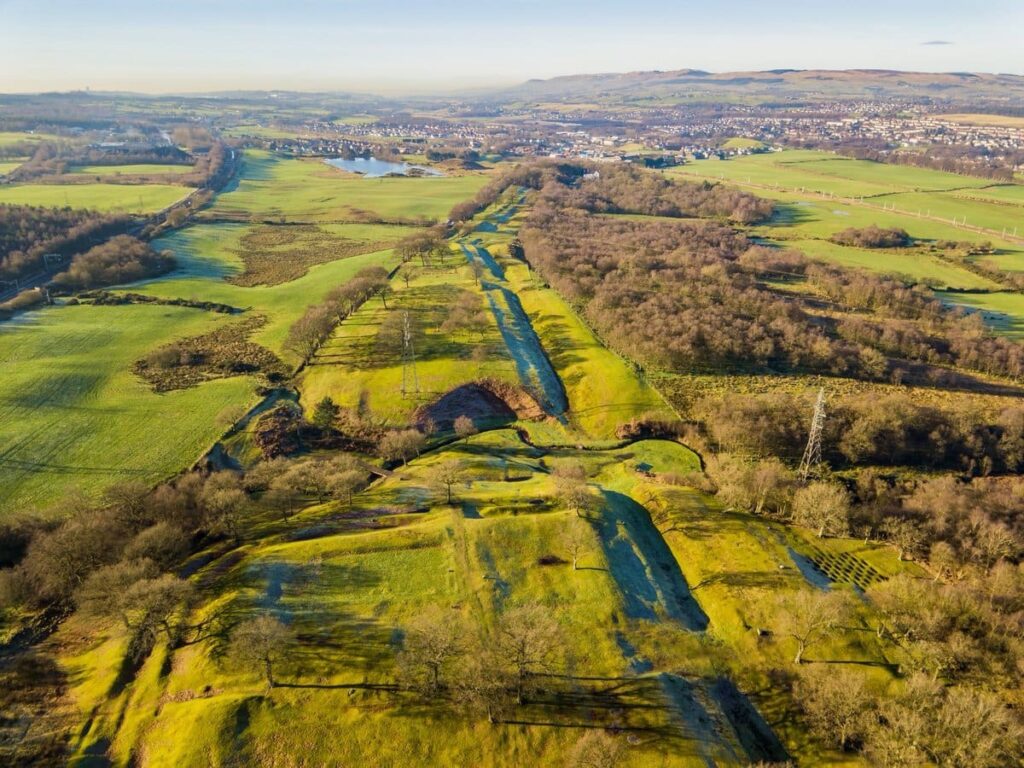
The Antonine Wall was built by the Roman army under Emperor Antoninus Pius sometime after AD 142, marking the northwestern border of the empire at its furthest extent. Built some twenty years after Hadrian’s Wall to the south, it became briefly the northernmost frontier of the entire Roman Empire, before being abandoned around AD 160 in favour of Hadrian’s Wall.
The wall stretched roughly 63 kilometres (39 miles), standing about 3 metres (10 feet) high and 5 metres (16 feet) wide, running from Bowness on the Firth of Forth to Old Kilpatrick on the Clyde. Unlike Hadrian’s Wall, it was built from turf rather than stone, but substantial lengths of both the wall and its forts survive. One of the best viewing points is near Bonnybridge, where the line of the Antonine Ditch and Wall can be clearly traced for a quarter of a mile through Seabegs Wood, south of the Forth and Clyde Canal the ditch here is still around 40 feet wide, and the rampart survives to a height of 4 feet in places. Historic Environment Scotland cares for the wall, which is free to visit.
Where else to see Roman Britain
Beyond the sites above, several British museums hold major Roman collections worth building into a wider trip the World Museum in Liverpool among them. The Roman ruins scattered across Britain stand as timeless witnesses to a remarkable era of history: they capture the imagination with their scale, and offer real insight into the lives of the people soldiers, officials, traders and enslaved workers alike who called Roman Britain home.
Related guides on this site
- Hadrian’s Wall Walk: Vindolanda and Roman Sites Visitor Guide
- Northumberland Coastal Road Trip: Ultimate 5-Day Itinerary Guide
- Walking Roman Silchester: Explore a Roman City and Walls
- Best Cotswolds Villages and Secret Places Only Locals Know
Also add a reciprocal link back to this hub from each of those four posts that reciprocal linking was still outstanding as of this rebuild.
Frequently Asked Questions
What is the best-preserved Roman ruin in Britain?
Housesteads Roman Fort (Vercovicium) on Hadrian’s Wall is generally considered the best-preserved fort, while the Roman Baths in Bath are among the best-preserved Roman remains anywhere in the world, not just Britain.
How long were the Romans in Britain?
The Romans controlled Britain for 367 years, from the invasion ordered by Emperor Claudius in AD 43 to the final Roman withdrawal around AD 409–410.
Are there Roman ruins in Scotland?
Yes the Antonine Wall, built after AD 142 between the Firth of Forth and the Clyde, is Scotland’s major Roman monument and part of the same UNESCO World Heritage Site as Hadrian’s Wall.
What’s the largest Roman building still standing in Britain?
Chester’s Roman Amphitheatre is the largest Roman amphitheatre ever uncovered in Britain. For residential buildings, Fishbourne Roman Palace in West Sussex is the largest known Roman residence in the country.
Can you visit Roman ruins in Britain for free?
Yes sites including Burgh Castle, Chester Roman Amphitheatre, the Silchester walls, York’s City Walls, Tomen y Mur, Brecon Gaer, Caerwent, Littlecote Villa, Dorchester Roman Town House, the London Roman amphitheatre and Verulamium Park are all free to enter (some attached museums charge separately).
What’s the oldest Roman structure in Britain?
The Roman Pharos (lighthouse) at Dover Castle dates to AD 43, the year of the Claudian invasion, making it the oldest Roman structure standing in Britain today.
Which Roman ruins in Britain are best for families?
Vindolanda, Fishbourne Roman Palace and the Roman Baths in Bath all run dedicated children’s activities and trails, alongside museums with hands-on displays, making them the easiest full days out with kids.
Is Hadrian’s Wall worth visiting?
Yes it’s the largest and most complete Roman monument in Britain, a UNESCO World Heritage Site, and the forts along it (Housesteads, Chesters, Vindolanda, Birdoswald) each offer a genuinely different slice of frontier life.
Caerwent?????!!!!!
Thank you Dave for letting me know about Caerwent – I’ve added this great site to my list.
Hello. I like and appreciate this series on archeological sites in Britain. However, in order to be effective as an educational tool some corrections should be made. I would like to point out that there are some grammatical errors. Also, the series of events regarding the Roman invasions of Britain are not correctly stated.
1. The Britons were not fighting Caesar/the Romans in 33 BC. Caesar’s Gallic Wars were long over with by then.
2. Julius Caesar invaded Britain in 55 and then again in 54 BC without success – he did not defeat “one tribe at a time”.
3. The Emperor Claudius ordered the invasion of Britain in 43 AD which, over a period of time, was successful.
4. The arrival of the Angles, Saxons and Jutes took place in the 5th century after the Roman withdrawal in 409-410 AD.
5. “Roman withdrawal from Britain in the Fifth Century because Caesar had neglected his war with the Gauls and they rose up against his armies and overthrew their rule. The Roman army did not return to Britain for over 90 years.” This is completely wrong: Caesar was assassinated March 15, 44 BC; he did not neglect his war with the Gauls – he conquered them; the Gauls (long Romanized) did not rise up against Roman rule – they were attacked during the barbarian invasions of the Fifth century when the Western Roman Empire was under attack and eventually fell in 476 AD. The 90 years referred to indicates the time lag between Julius Caesar’s invasion in 54 BC and the invasion ordered by Claudius in 43 AD.
I hope my observations have been useful.
All the best.
Prof. Lawrence Casati
Thank you Professor your observations were incredibly useful and I really appreciate the time you took to correct my errors. I have made changes to the piece and have done much better research on the times which I hope you will approve of. Thanks again Faith
Lawrence seems to feel unappreciated. OMG I should have said Professor Lawrence. Heavens above, the site was developed, I think, to help travellers, and as a future traveller, I loved the experience. I will visit many of these sites. I hope Larry won’t be there.
LOL I’m glad you appreciated it, I am not a historian but I do understand the rigourous nature of those that are, but as you said my interest was in providing fascinating roman sites for those of us who love history to visit.