
27 Best Things to Do in Whitby, Yorkshire
| Whitby at a Glance: Whitby, on the North Yorkshire coast of England offers visitors abbey ruins, Dracula history, sandy beaches, whale watching, Victorian jet jewellery, Captain Cook heritage, ghost walks, goth festivals, and some of the finest fish and chips in England. It is compact enough to explore on foot and rich enough in history and character to fill several days. |
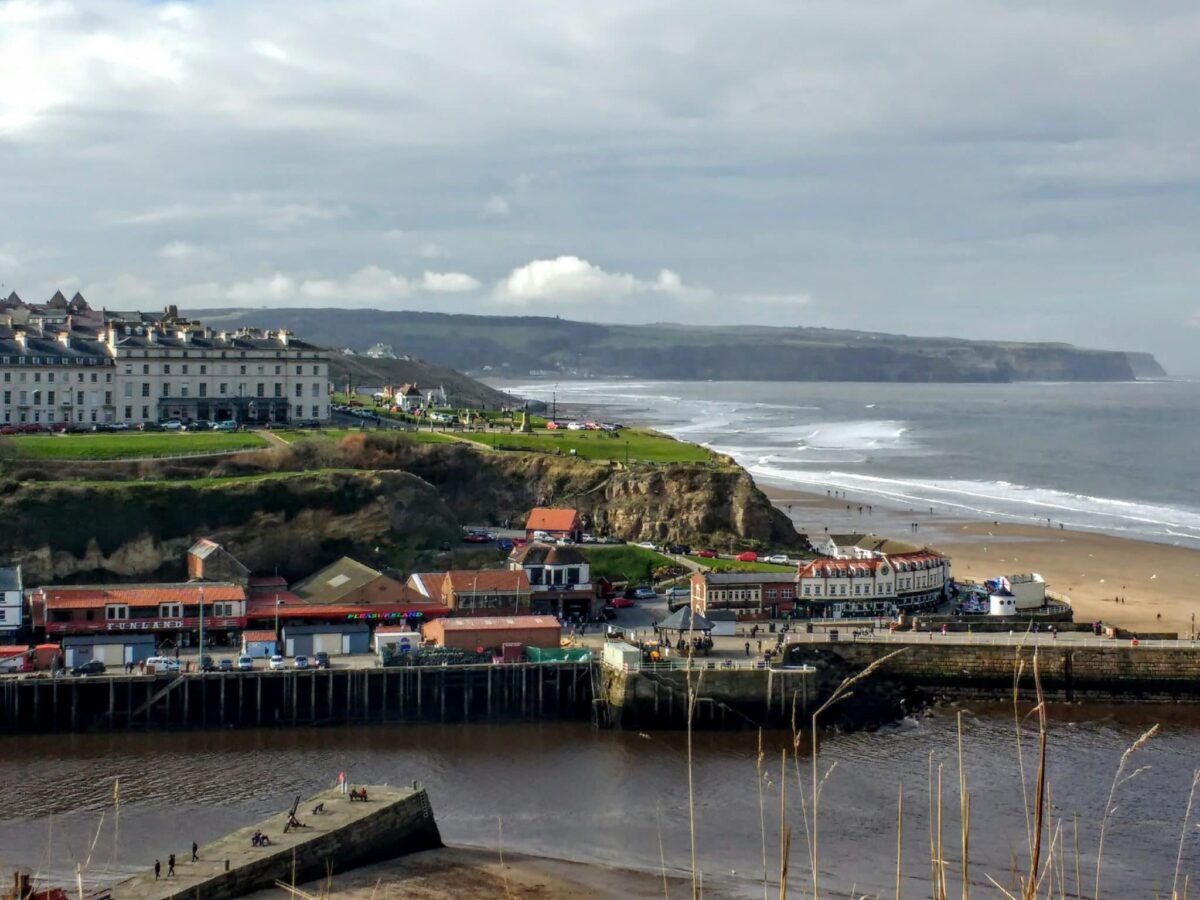
Whitby sits on the North Yorkshire coast where the River Esk meets the North Sea. It is a compact, walkable town split in two by the river, with a harbour at its heart, 199 stone steps climbing the east cliff to the ruins of a medieval abbey, and a sandy beach stretching all the way to the village of Sandsend. The population hovers around 13,000 but visitor numbers routinely exceed one million per year, and once you arrive it is not hard to understand why.
The town carries layers of history that sit comfortably on top of one another: Viking settlement, medieval Christianity, Captain Cook, the whaling industry, Bram Stoker, jet jewellery, and a goth subculture that has made it a pilgrimage destination for fans from all over the world. This guide covers every major attraction, the best places to eat, how to get there and where to stay, with the kind of practical detail that comes from repeated visits rather than a single press trip.
How to Get to Whitby
By Car: From London, Whitby is roughly four hours by road. My strong recommendation, however, is to take the train north first and pick up a hire car in York or Scarborough. York is a city that deserves its own visit, home to the Shambles (one of the oldest medieval streets in England) and extraordinary Viking heritage. Collecting a car on the outskirts of York rather than in the centre will save you the considerable frustration of city centre traffic.
By Train: Direct services run to Whitby but depending on your starting point you may need to change, typically at Middlesbrough. The York to Whitby journey takes between two and a half and three and a half hours. It is a scenic route worth taking at least once, though having a car in Whitby gives you the freedom to explore the surrounding villages and moors at your own pace. Check current timetables at National Rail before you travel.
Getting Around Whitby
Whitby is small enough that walking covers most of what you want to see. The Abbey sits on the headland and involves a climb, but it is manageable if you take your time. There is a hop-on hop-off sightseeing bus that runs in season, with local guides who bring the town to life as the open-top bus navigates the narrow streets and climbs up to the Abbey. A hop-on pass is well worth having if you have limited mobility or limited time.
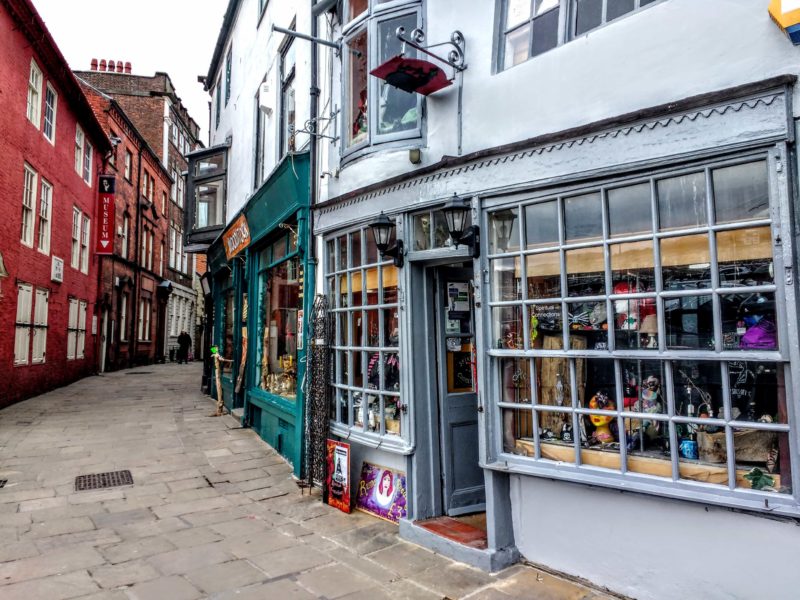
About Whitby: A Town With Extraordinary Depth
Whitby was founded around 656 AD when the Christian King of Northumbria established the first monastery here under the Abbess Hilda. The early English poet Caedmon, considered the first named poet in the English language, lived and worked at the monastery then known as Streanaeshealth. The monastery was destroyed by Viking raiders and a second was not founded until 1078. It was the Norse settlers who gave Whitby its name, derived from the Old Norse for “white settlement.”

Between 1750 and 1840 Whitby grew wealthy on the whaling industry, with around 55 ships operating from the harbour. Captain James Cook served his seafaring apprenticeship here and went on to chart the coasts of New Zealand, Australia, Hawaii and Newfoundland. His ships were built in Whitby. The town also has a long history of smuggling: rum and brandy arrived by sea and were moved through a network of tunnels to evade the excise men.
Today tourism and fishing are the economic cornerstones of modern Whitby. The town may be best known internationally for its connection to Bram Stoker and Dracula, but as a writer who has spent time in the parts of Ireland that also inspired Stoker, I find it fascinating that the setting which gave Dracula its unforgettable atmosphere is so thoroughly, defiantly English. The windswept headland, the crumbling gothic ruins, the narrow streets and the grey North Sea were all that Stoker needed.

Things to Do in Whitby: The Complete Guide
Whitby Abbey and Bram Stoker’s Dracula
The ruins of Whitby Abbey are the defining image of this town, and they are genuinely one of the most atmospheric sites in the whole of England. Standing on the East Cliff headland, the great skeleton of the 13th-century Benedictine church looms over the town and the sea, visible for miles in every direction. I have stood at the foot of the 199 steps looking up at it in January fog and in summer sun and it is arresting every single time.

Bram Stoker arrived in Whitby in July 1890, staying at Mrs Veazey’s guesthouse at 6 Royal Crescent (still standing today, though privately owned). He had come for a rest following a theatrical tour of Scotland and was at that point working on a vampire story set in Austria, with the central character named Count Wampyr. A walk into the public library at the end of Whitby Quay changed everything. There Stoker found a book by William Wilkinson detailing his time in Wallachia and Moldavia, with a footnote explaining that “Dracula in the Wallachian language means Devil.” The name, the setting, the abbey, the graveyard, the 199 steps: Whitby gave the novel its soul.
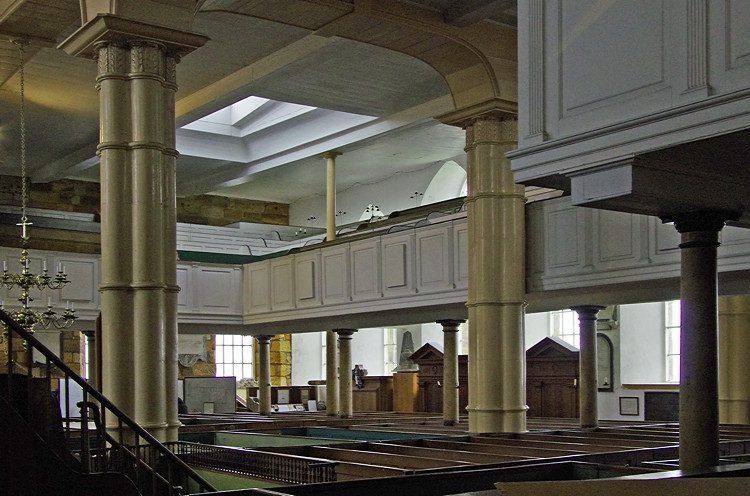
The graveyard of St Mary’s Church, which sits just below the Abbey, is where Stoker found the names for many of his characters. It is free to wander and well worth doing quietly. The Church itself, built around 1100, is older than the Abbey ruins above it. Inside, the box pews are crammed into every corner in a way that reflects centuries of practical addition rather than any unified design vision, and the building can apparently seat up to 3,000 people.
Tickets for Whitby Abbey cost around €14.00 per adult and 8.50 for children aged 5 to 17. English Heritage members and Overseas Visitor Pass holders enter free. You cannot access the grounds or visitor centre without a ticket, though the Abbey is visible from a distance and the 199 steps themselves are free to climb. More information at English Heritage.

The 199 Steps
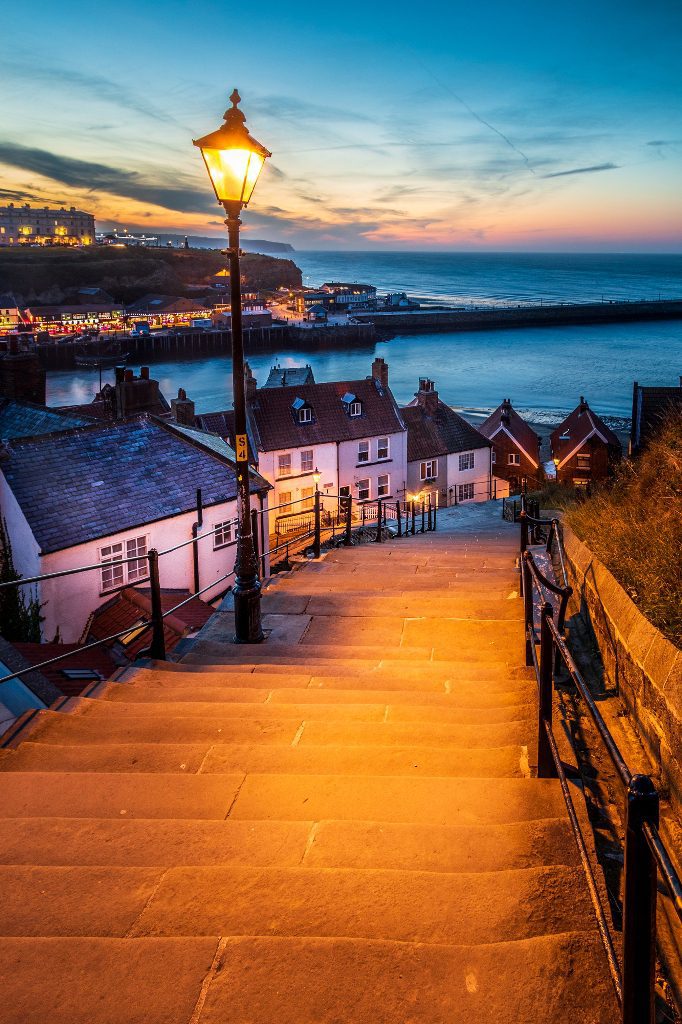
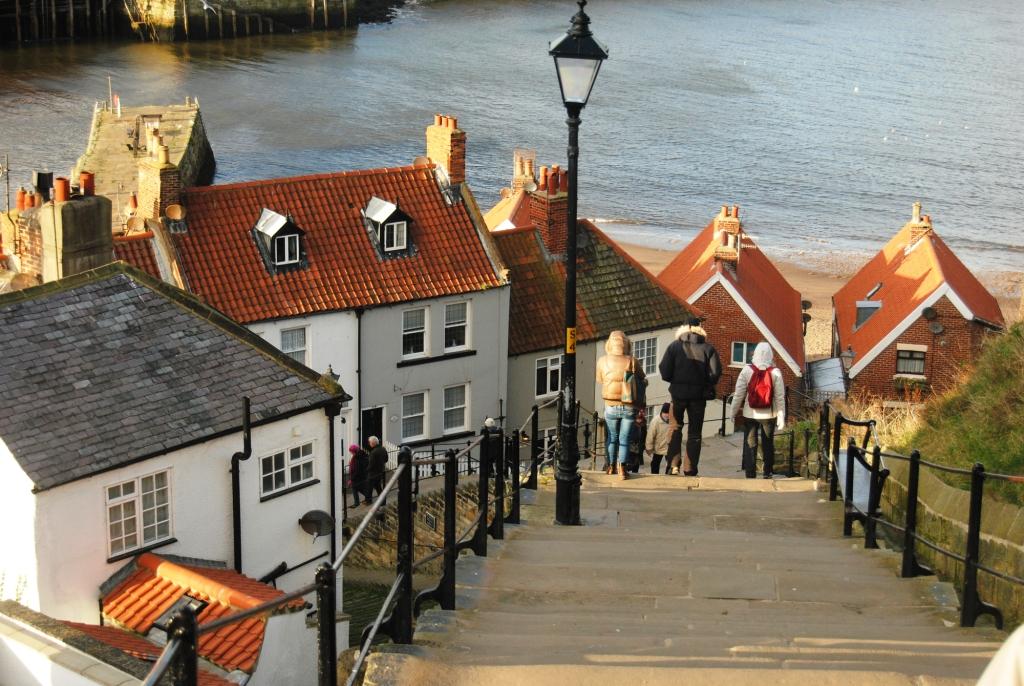
The 199 steps that climb from the town to St Mary’s Church were first built in 1320 out of wood. The stone replacements date from 1774. This was historically the route taken by pallbearers carrying coffins up to the churchyard. Today they function as a landmark, a fitness challenge and one of the most photographed spots in Yorkshire. Climb them slowly, pause often, and the views out over the harbour and rooftops become something you will not forget.
The Dracula Experience
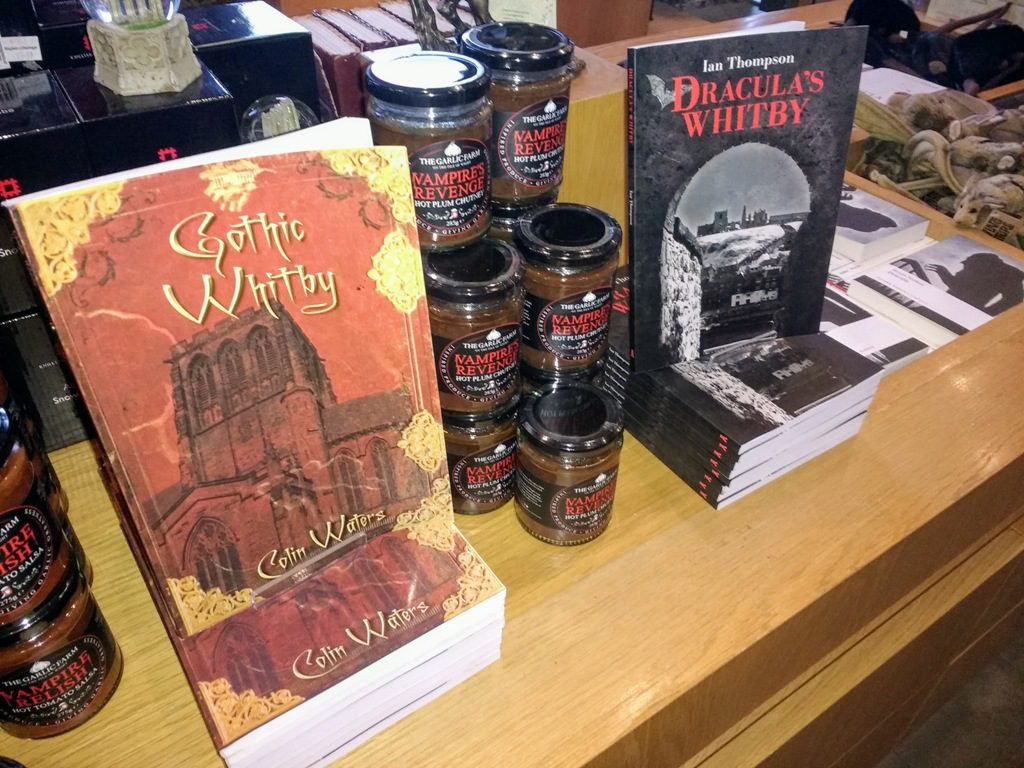
If the Abbey inspires the imagination, The Dracula Experience gives it full theatrical treatment. This live-actor tour uses special effects and Whitby’s own streets and spaces to tell the Stoker story. It is well done, genuinely creepy in places, and great fun for adults and older children. I took a group of friends who had varying enthusiasm going in and universal enthusiasm coming out.

Whitby Goth Weekend and Tomorrow’s Ghosts Festival
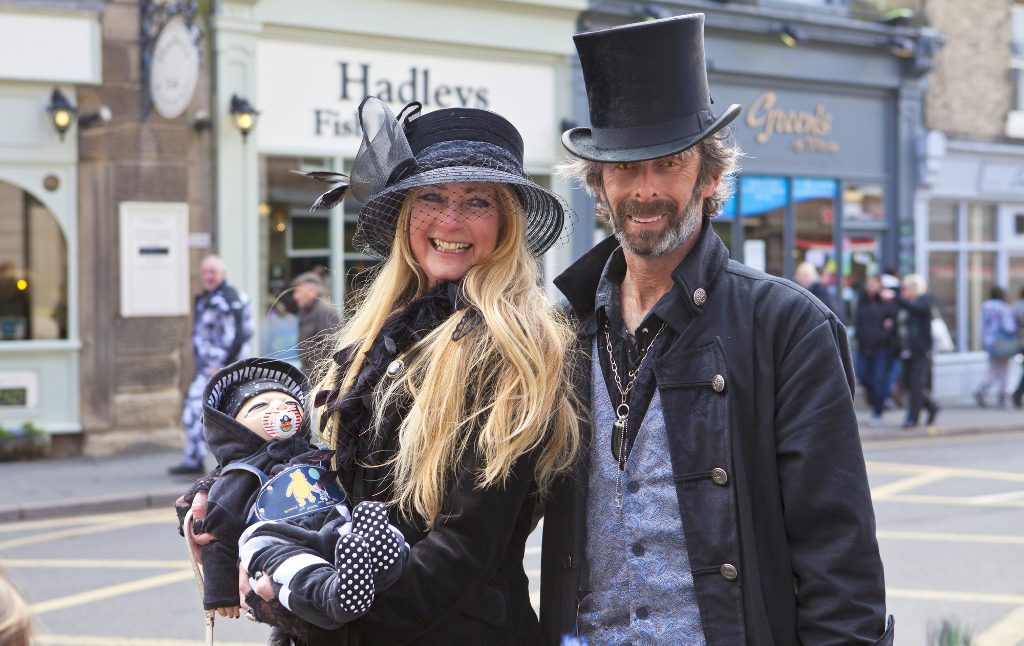
Whitby Goth Weekend is the world’s longest-running goth festival, held twice a year in spring and autumn. What started as a small gathering in 1994 now draws thousands of visitors from across the world, all in elaborate dress, to celebrate gothic music, art and subculture. The Bizarre Bazaar market that accompanies the festival is one of the UK’s most established alternative markets and worth visiting in its own right for the craftsmanship on display.
Tomorrow’s Ghosts Festival runs at the opposite ends of summer, bookending the season. Between the two festivals there are goths in Whitby for a remarkable chunk of the year. I want to be direct about this for anyone who has not experienced goth culture before: it is a music and fashion subculture, and the people who attend are among the most welcoming and creative you will encounter anywhere. If you happen to be in Whitby during either event, treat yourself to a wander through the crowds.
Captain Cook in Whitby
Captain James Cook’s connection to Whitby is as significant as Stoker’s, just rather less Gothic in character. Cook served his seafaring apprenticeship in Whitby, and the ships that carried him on his voyages of exploration were built here. His expeditions mapped the coasts of New Zealand, the eastern coast of Australia, Hawaii and Newfoundland, and he is the figure through whom European contact with those places is historically defined.
Captain Cook Memorial Museum
The Captain Cook Memorial Museum occupies the oldest surviving building in Whitby with a direct connection to Cook. Beautifully restored, it shows daily life in the 18th century through original colours, period-accurate furnishings drawn from contemporary inventories, and gardens planted with specimens from Cook’s era. The upper floors trace his career across the globe. It is a first-rate small museum and never feels rushed.

The Captain Cook Experience
The Captain Cook Experience is a 25-minute boat trip around Whitby Harbour and along the coast towards Sandsend aboard a 40% scale replica of HMS Endeavour, the barque Cook sailed on his 1768 scientific expedition. The trip offers excellent views of the Jurassic coast and a reasonable chance of spotting seals and seabirds. With luck you may see dolphins.
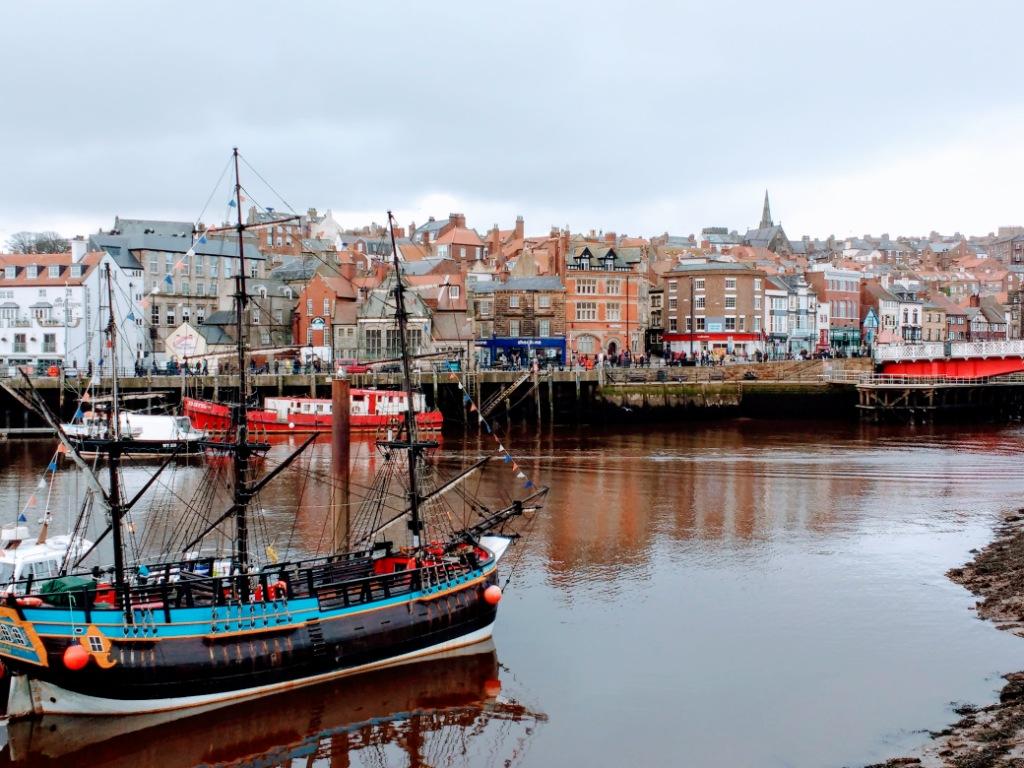
Captain Cook Memorial Statue
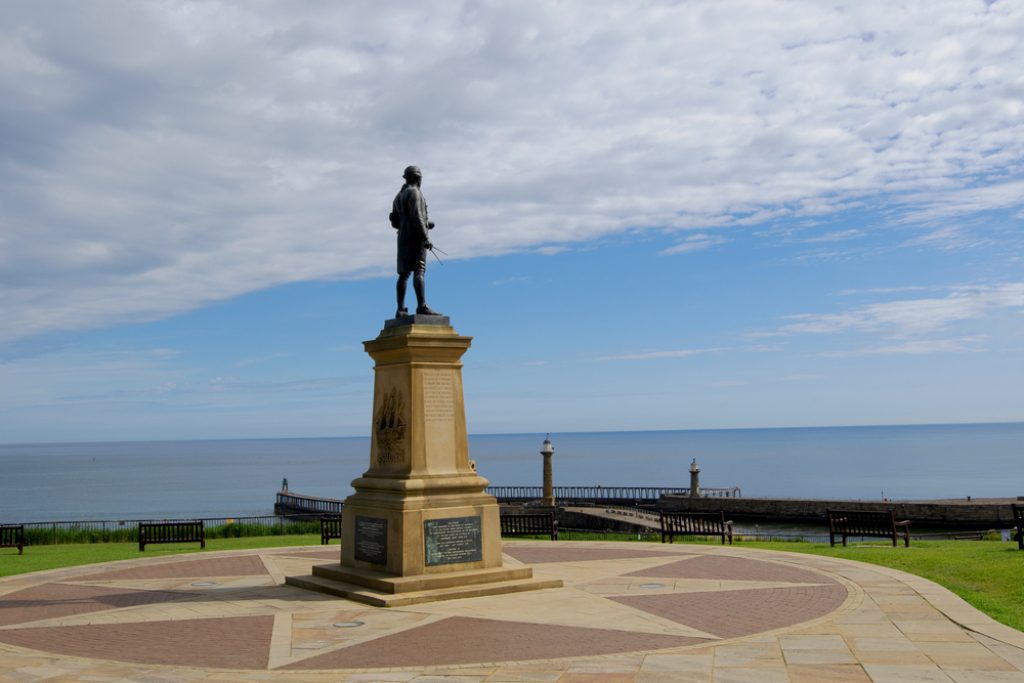
The bronze statue of Cook presented to Whitby in 1912 stands in Crescent Gardens overlooking the harbour and the North Sea. The plinth carries his coat of arms on the front and a carving of his ship Resolution on the back. It is a good starting point for orienting yourself when you first arrive on the West Cliff.
Whitby Ghost Walks
Ghost walks are one of the more underrated things to do in Whitby, particularly on an autumn evening when the mist rolls in off the sea. Rose Rylands, a locally born storyteller with deep knowledge of the coast, runs guided walking tours that draw on local folklore, maritime history and genuine mystery. Dr Crank’s Ghost and Dracula Walk is another well-regarded option, covering some of Whitby’s most infamous hauntings from the Burning Girl to the lighthouse.
Speaking as someone with a background in anthropology and a long personal interest in folklore, I find Whitby’s ghost walk tradition more grounded than most. The stories draw on actual historical events and real locations rather than manufactured atmosphere. The town does not need embellishment.

Whale Watching from Whitby
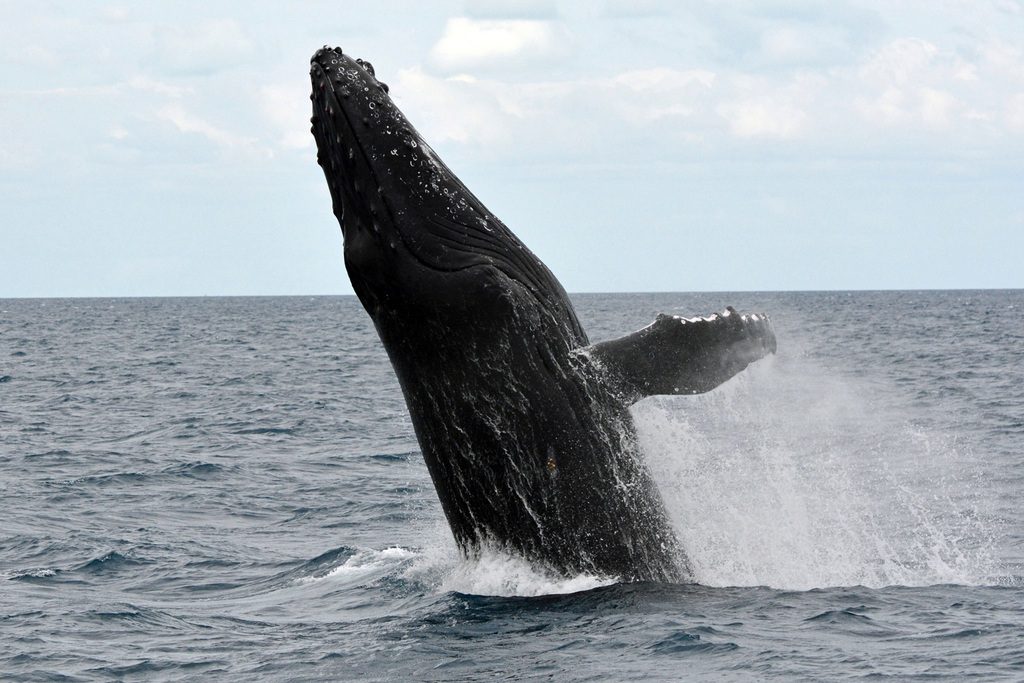
Whitby was a major whaling port until the industry closed in 1837. Today the whales are watched rather than hunted, and the season typically runs through September into early October. Peak season offers the best chances of sightings, while the later weeks appeal more to dedicated wildlife watchers who may also catch migrating birds including various shearwaters, skuas, short-eared owls and honey buzzards. Tours are generally unsuitable for children under 12.
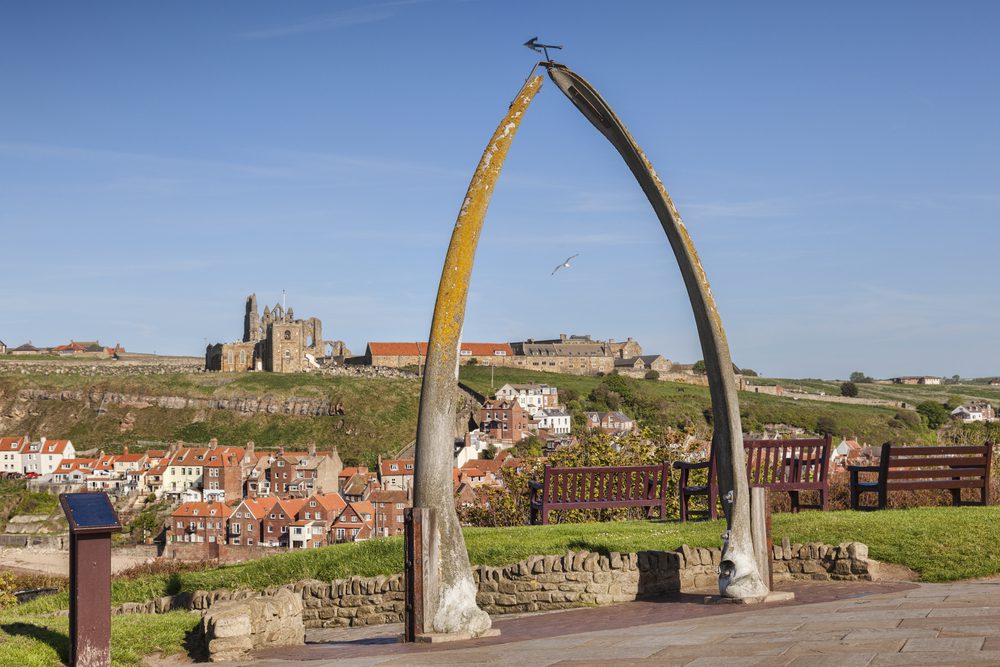
The Whale Bone Arch
At the east end of West Cliff Beach you will find the Whale Bone Arch, a genuine set of whale bones gifted to Whitby in 2003 by its sister city Anchorage, Alaska, and donated by the Inuit of Alaska. The current arch is a replacement for one that stood on the same spot for generations. It frames a striking view across the bay and is one of those oddly moving small monuments that rewards a moment of quiet attention.
Whitby Museum and Pannett Park
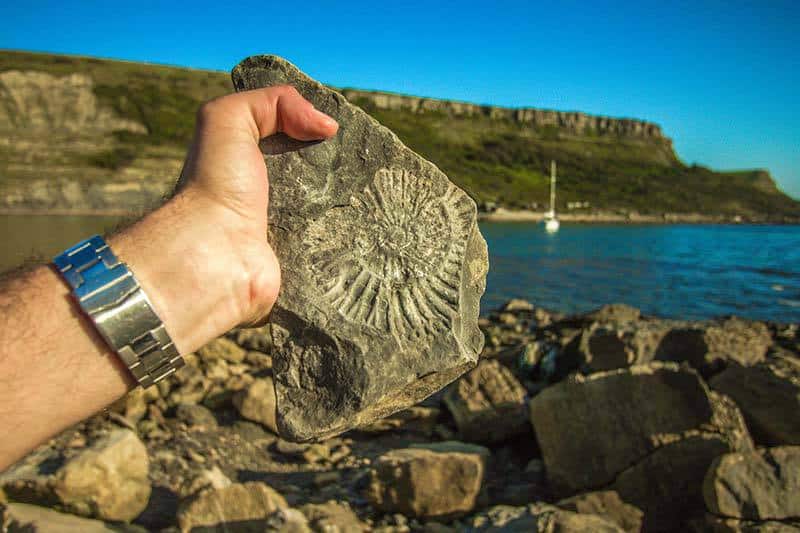
Pannett Park is a well-maintained Victorian park close to the town centre with good views, a children’s play area and seasonal planting. It houses both the Whitby Museum and the Pannett Art Gallery. The museum was first established in the early 1800s to display fossils brought to Whitby by sea captains, and its Victorian aesthetic has been carefully preserved. The collection spans the Jurassic era through maritime history and local folklore.

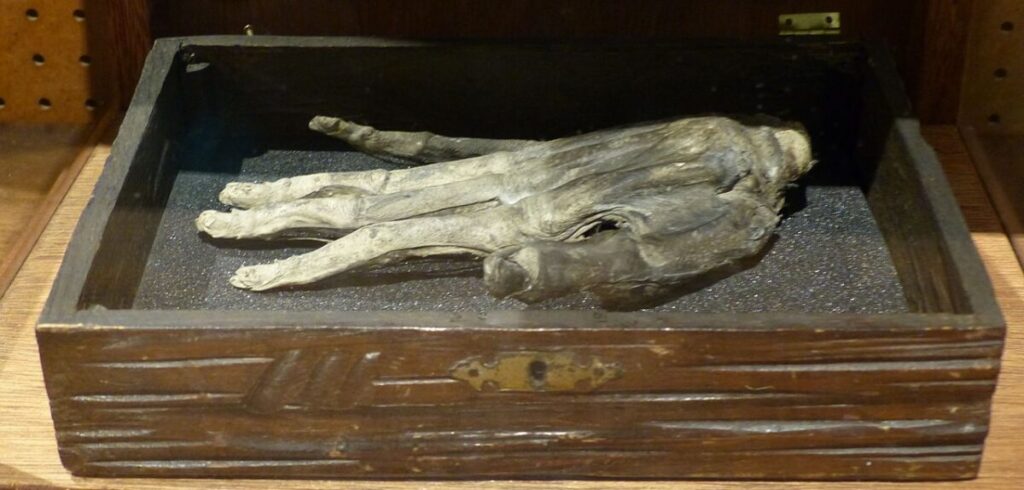
The star exhibit, and one of the most genuinely strange objects I have encountered in any museum, is the Hand of Glory: a mummified human hand said in legend to have been used by burglars to send their victims into a deep sleep. Whether or not the legend is true, the hand itself is real and unsettling. The museum also houses rotating exhibitions in its modern wing.
Whitby Jet
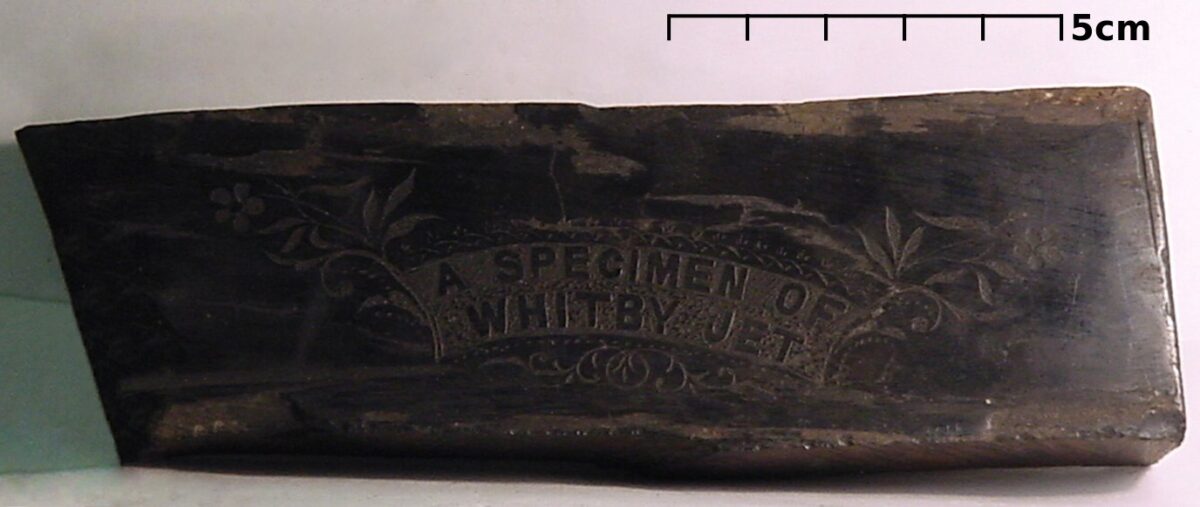
Whitby Jet is a natural gemstone formed from the compressed fossilised wood of the prehistoric Monkey Puzzle tree. Deposits are found along a two-mile stretch of coastline between Robin Hood’s Bay and Boulby. Bronze Age craftsmen worked with jet as long as 4,000 years ago, and the stone experienced its most famous period of fashion during the Victorian era when Queen Victoria wore it as mourning jewellery after the death of Prince Albert.
You will find jet in various forms in most of the shops along Church Street, from raw pieces to finely worked jewellery. Not all of it is genuine Whitby Jet; ask sellers to confirm provenance if authenticity matters to you.

Museum of Whitby Jet
The Museum of Whitby Jet opened in 2019 after a long restoration of an iconic Church Street building. Curated by jet expert Rebecca Tucker, it holds some of the finest examples in the world including the largest piece of Whitby Jet ever found. Admission is free. The on-site Albert’s Eatery provides a relaxed place to eat while surrounded by the jewellery collection.
Whitby Lighthouses
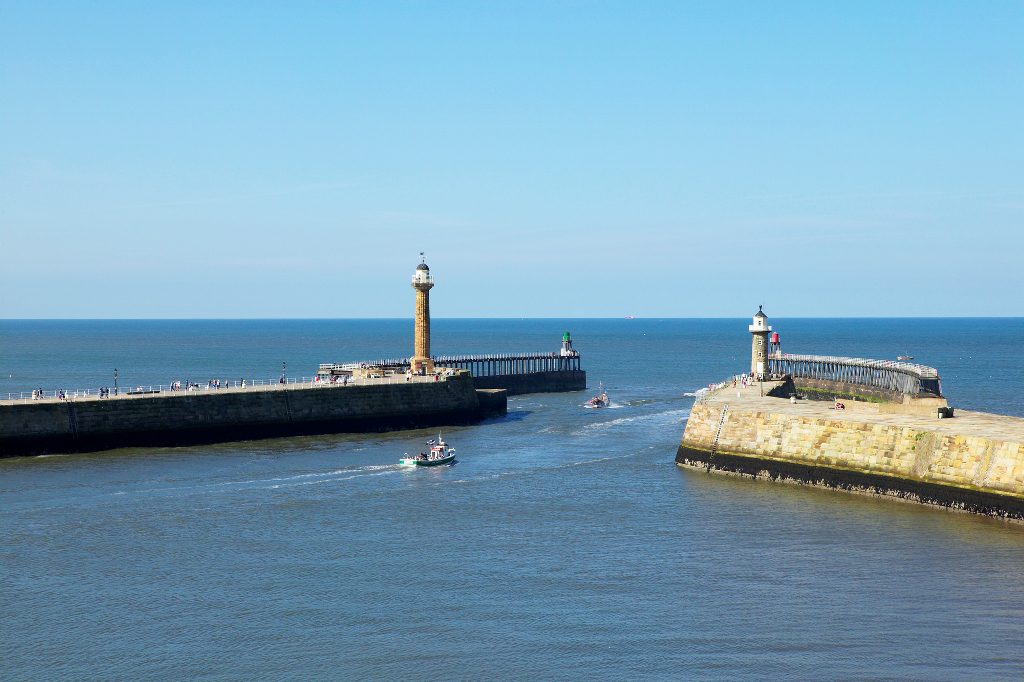
The two lighthouses at the ends of the East and West Piers are Grade II listed structures. The West Lighthouse is open to visitors for a modest entry fee of around 1.50 per adult, operated by Trinity House, the charity dedicated to the safeguarding of seafarers. The view from the top out over the harbour mouth, the town and the coast is excellent and costs almost nothing.
Whitby Lifeboat Museum
Based on the site of the old operational lifeboat station used from 1895 to 1957, the Lifeboat Museum is run entirely by volunteers and admission is free. The collection includes paintings, photographs, medals and artefacts from famous rescues and shipwrecks. It is a quietly moving place that reflects how dangerous the North Sea has always been and how much courage the lifeboat crews required.

Whitby Beach and Crabbing
Whitby has beaches on both sides of the River Esk. West Cliff Beach is the main beach, a Blue Flag sandy stretch with colourful beach huts, deckchair hire, a children’s paddling pool and donkey rides. The water is cold but swimmable in summer. Tate Hill Beach on the east side is smaller, sheltered and allows dogs throughout the year.
Crabbing from the harbour boardwalk is a Whitby tradition for all ages. Known locally as doggering, it involves nothing more than a string, a piece of bait and patience. Crabbing kits are available from most of the nearby shops for around five pounds. The crabs go back in. It is deeply unserious and entirely enjoyable.

Whitby Brewery
Whitby Brewery is a local microbrewery in the shadow of the Abbey. After a visit to the ruins, a cold beer and a pizza here is a perfectly calibrated reward. They run 45-minute brewery tours that cover the brewing process, ingredients and history, followed by a tasting of three ales. Check details and book at Whitby Brewery.

The Swing Bridge
The Swing Bridge across the River Esk connects the east and west halves of the town. The current bridge dates from 1908 and spans 75 feet. It earns its name by swinging open to allow larger vessels to pass through the harbour. If you happen to be standing on it when it swings, you will be briefly marooned on a rotating platform in the middle of the river, which is a mild and entirely entertaining inconvenience.

North Yorkshire Moors Railway
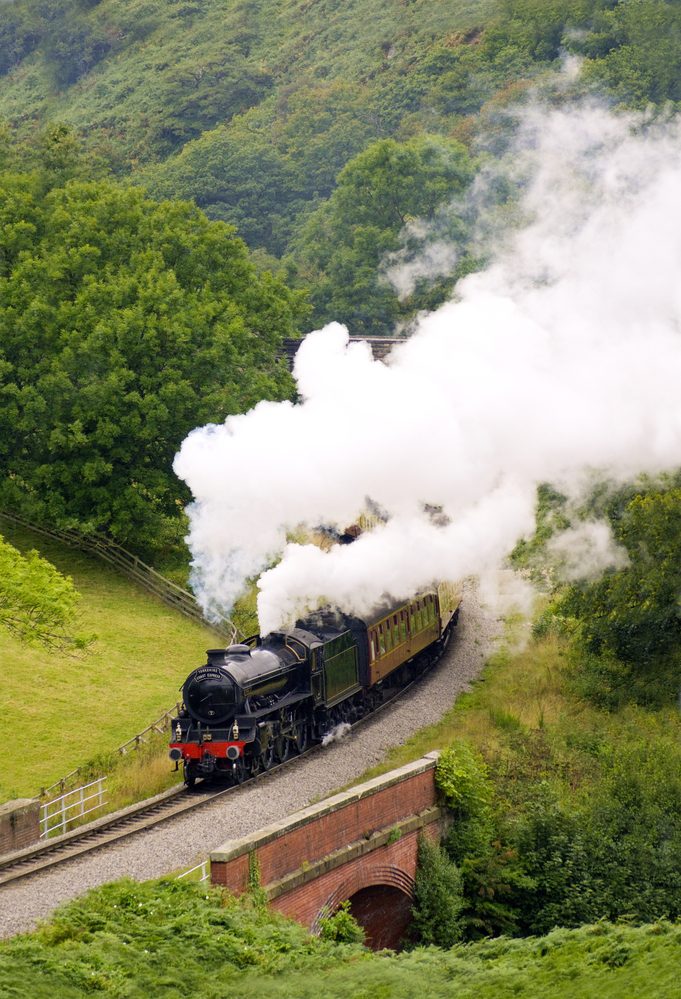
One of the great pleasures near Whitby is riding the North Yorkshire Moors Railway, a heritage steam and vintage diesel railway that runs between Whitby and Pickering. It operates daily from early April through October and on selected weekends in winter. Stops along the route include Goathland, which served as Hogsmeade Station in the first Harry Potter film and as Aidensfield in the long-running drama Heartbeat. The moorland scenery through which it passes is extraordinary.
Where to Eat in Whitby
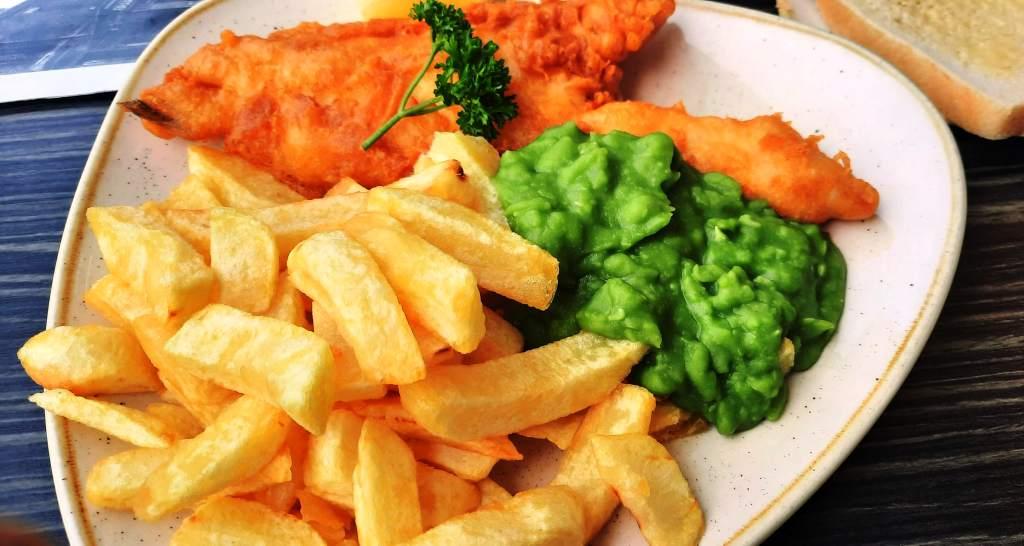
Whitby’s food culture is built around the sea, and it is built well. The fish here is genuinely fresh and the fish and chip restaurants range from good to exceptional. Beyond the classics there is a strong independent food scene worth exploring.
The Magpie Cafe
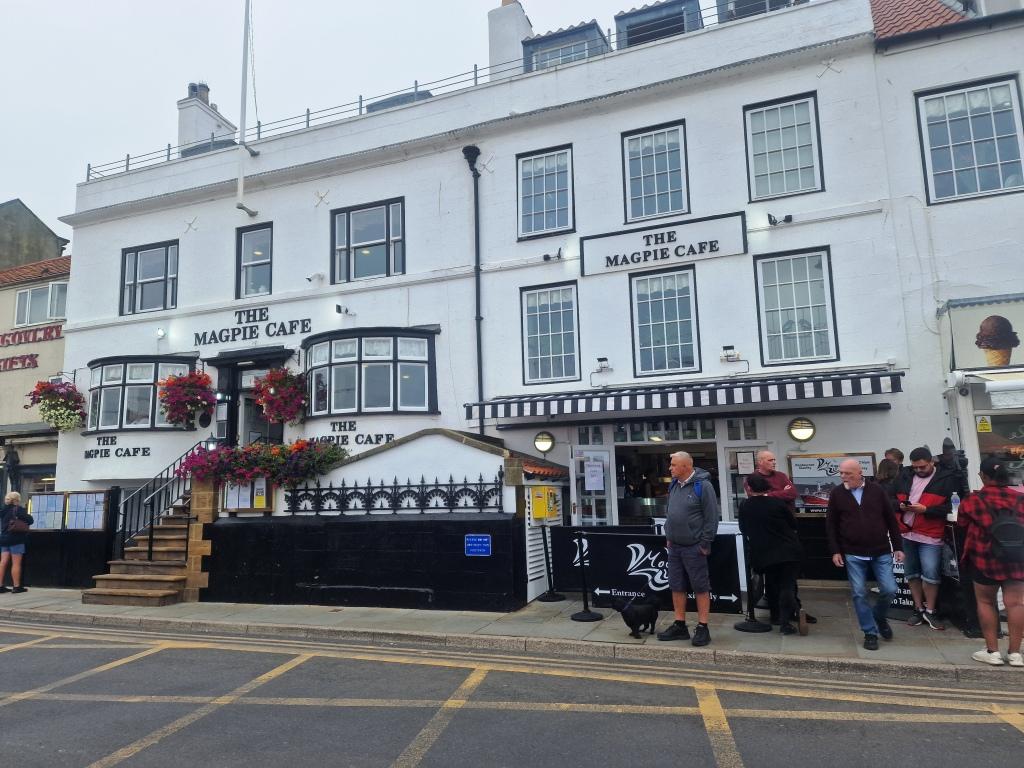
The Magpie Cafe on Pier Road is Whitby’s most celebrated fish restaurant and has been for decades. It overlooks the harbour from a distinctive black and white building. Expect queues at peak times and do not be put off by them: the fish is worth it. The selection of fresh Whitby fish and seafood is extensive and the quality is consistent.

Quayside Restaurant
The Quayside Restaurant on Pier Road occupies a building that dates to the 1820s, originally used as a bathhouse by local fishermen and later as the town library. It is widely believed to be where Bram Stoker did his research for Dracula. Today it serves award-winning sustainable fish and chips alongside grilled fresh fish, gluten-free options, homemade salads and the Fusco Brothers’ own gelato.

Whitby Lemon Buns
Whitby’s most local delicacy is the lemon bun, made by Botham’s since 1865. It is a sweetened bread dough with sultanas, topped with a thick layer of lemon glace icing. There is no legend of a lemon-laden shipwreck or a Mediterranean lemon trade to explain the local enthusiasm: it is simply a very good bun. The Whitby way to eat one is to split it and flip the bottom half over the top with the icing, avoiding the structural mess of eating it upright.

Black Horse Inn
The Black Horse on Church Street, close to the 199 Steps, dates to the 16th century and houses what is believed to be one of the oldest public-serving bars in Europe. It holds Cask Marque accreditation and CAMRA recognition, with up to five real ales on at any time including regulars such as Whitby’s Black Dog, Taylor’s Landlord and Adnams Bitter, alongside rotating guest ales. A proper pub in the best sense.
Albert’s Eatery at the Whitby Jet Museum
Albert’s Eatery occupies the restored Wesley Hall on Church Street as part of the Museum of Whitby Jet. It offers everything from prosecco breakfasts to Sunday roasts, light lunches and evening dinners, with a specialism in fresh seafood cooked to order. Dining surrounded by antique Whitby Jet jewellery and the architecture of the old hall is a genuinely distinctive experience.

Beacon Farm Ice Cream
For real dairy ice cream made on the farm, Beacon Farm Ice Cream Parlour and Tea Rooms in Sneaton, just outside Whitby, is a proper Yorkshire indulgence. No artificial colours or preservatives: natural fruit pastes and traditional methods produce ice cream that tastes as good as it should. The views over the harbour from the tearoom are a bonus.
Where to Stay in Whitby
Saltmore Estate
For luxury, the Saltmore Estate is an 80-acre coastal property five minutes from Whitby with landscaped grounds, an indoor pool, spa and sauna, and pet-friendly rooms. The Brasserie uses local, seasonal produce with a focus on Whitby’s fish and landed meat. It is a genuinely comfortable base for exploring the wider area and it has accessible rooms.

The Angel Hotel
The Little Angel in Whitby offers a bed and breakfast with one bedroom and one bathroom. Guests enjoy a garden, bar, and free WiFi.
For the full range of accommodation options including B and Bs and self-catering, Booking.com and Viator carry strong selections for the Whitby area.
How to Plan Your Visit to Whitby: Step by Step
- Book accommodation early. Whitby is small and popular. During Goth Weekend and in peak summer the town fills up weeks in advance. Self-catering on the outskirts gives you more space and flexibility.
- Get a car. You can reach Whitby by train but a car unlocks the moors, the coast road to Scarborough, Robin Hood’s Bay, and the villages inland. Pick it up in York or Scarborough rather than struggling with city traffic.
- Plan for the Abbey first. Start your first morning at the Abbey before the crowds arrive. The 199 steps can be taken slowly or avoided by bus or car.
- Walk Church Street. The east side of the harbour, along Church Street and up toward the Abbey, is where most of the independent shops, Whitby Jet dealers and historic pubs are concentrated. Allow a morning or afternoon.
- Take a ghost walk. Book in advance in peak season. The evening walks reward a second day in town and reframe everything you have already seen.
- Eat at the Magpie or Quayside. Both require patience with queues at busy times. Go early for lunch or take a late sitting if possible.
- Factor in the North Yorkshire Moors Railway. Even a one-way trip on the steam train adds a full dimension to any visit. Pickering is the other end and worth exploring in its own right.
Frequently Asked Questions About Things to Do in Whitby
How many days do you need in Whitby?
Two full days is the minimum to cover the main attractions without rushing. Three days is ideal if you want to include a day trip on the North Yorkshire Moors Railway, a whale watching boat trip, or an excursion along the coast to Robin Hood’s Bay. Whitby rewards slow exploration far more than a single day visit.
Is Whitby worth visiting if you are not interested in Dracula?
Completely. Dracula is one strand of a much richer town. The Captain Cook heritage, the Abbey history, the beach, the food culture, the Museum of Whitby Jet, the Lifeboat Museum and the landscape alone justify the visit. The Dracula angle adds atmosphere but is not the point of Whitby.

Is Whitby accessible for people with limited mobility?
The town centre and harbour area are largely accessible, and most of the west-side attractions including the beach, the lighthouse, the Captain Cook statue and the restaurants can be reached without stairs. The 199 steps to the Abbey are a challenge, but there is a bus from town to the Abbey and a small car park behind the ruins. The hop-on hop-off sightseeing bus is a practical option for those who cannot walk long distances.
When is Whitby Goth Weekend?
Whitby Goth Weekend runs twice a year, typically in late April or early May and again in late October or early November. Tomorrow’s Ghosts Festival fills the gaps in spring and autumn. Exact dates vary year to year, so check the official websites before booking if you specifically want to attend.
Can you see Whitby Abbey for free?
The Abbey is visible from a distance throughout the town and from the 199 steps and St Mary’s Churchyard, which are free to access. You cannot walk the ruins or enter the visitor centre without paying admission. Adult tickets are around 14.00. English Heritage members and Overseas Visitor Pass holders enter free.



What is Whitby Jet and where can you buy it?
Whitby Jet is a natural gemstone formed from fossilised Monkey Puzzle wood found in the coastal cliffs between Robin Hood’s Bay and Boulby. It is lightweight, takes a high polish and has been worked by craftspeople for 4,000 years. Victorian mourning jewellery made Whitby Jet famous internationally. You can buy genuine Whitby Jet from specialist dealers on Church Street. Always ask for confirmation of provenance, as imitation jet is widely sold alongside the real thing.
What is the best fish and chip restaurant in Whitby?
The Magpie Cafe and Quayside Restaurant are the two most consistently praised fish and chip restaurants in Whitby, both with long track records and strong local reputations. Both are on Pier Road with harbour views. The Magpie tends to draw longer queues at peak times. Both are genuinely excellent.
My take on things to do in Whitby
Whitby is the kind of place that stays with you long after you leave. I have taken many people there over the years, some of them sceptical that a small Yorkshire seaside town could justify the journey, and I have yet to take anyone who was not converted by the end of the first day. The combination of genuine history, dramatic landscape, excellent food and a palpable sense of the uncanny is unusual in a town of this size.
The things to do in Whitby range from the deeply historical to the simply pleasurable, and they layer well together. You can spend a morning at the Abbey, an afternoon wandering Church Street and the Jet museum, an evening on a ghost walk, and wake up the next morning to walk the beach before the town stirs. That rhythm suits Whitby perfectly.
If you enjoy North Yorkshire, you may also like our guides to 31 awesome things to do in Scarborough and the most stunning towns and villages in Yorkshire, both available on xyuandbeyond.com.
Accessible UK Broader guide to accessible rail travel, National Trust accessibility schemes, and city-by-city notes.
Accessible London Compared to many older European capitals, London is genuinely one of the more accessible large cities you can visit.
Accessible Bath Discover how to explore an accessible Bath including the Roman Baths, and other attractions.
Accessible Cotswolds many of the lovely Cotswolds villages and towns are accessible.
Accessible Edinburgh Accessible Edinburgh travel is entirely possible, but it rewards realistic planning far more than an aggressive checklist.
Accessible Historic sites in England Discover accessible historical sites in England including castles, Roman ruins, cathedrals, museums, and heritage attractions with realistic tips for limited mobility and hidden disabilities.
Accessible York Explore the great city of York with tops for what sites are accessible and how to visit.
England is far more diverse than many visitors expect, from historic cathedral cities and rugged coastlines to literary landscapes, ancient folklore, seaside towns, castles, and national parks. Explore more of the region with guides to England, Scotland, Wales, Northern Ireland, a London Travel Guide or the full United Kingdom Travel Guide.