
The Lions of Trafalgar Square: History and Hidden Secrets
Trafalgar Square sits at the heart of London’s civic life an open-air stage for art, protest, celebration, and everyday city bustle. The four bronze lions at the base of Nelson’s Column are among the capital’s most-photographed sculptures, but their story is richer (and stranger) than most visitors realise. This guide blends essential history with practical tips and a few lesser-known details to help you make the most of your visit to Trafalgar Square London.
- The Lions of Trafalgar Square: History and Hidden Secrets
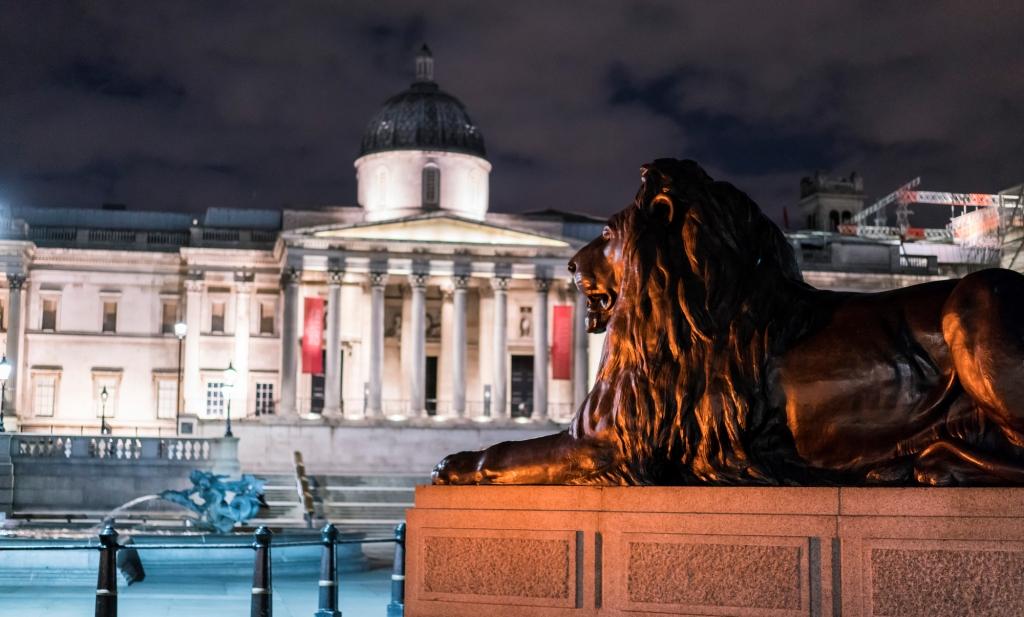
The Trafalgar Square Lions
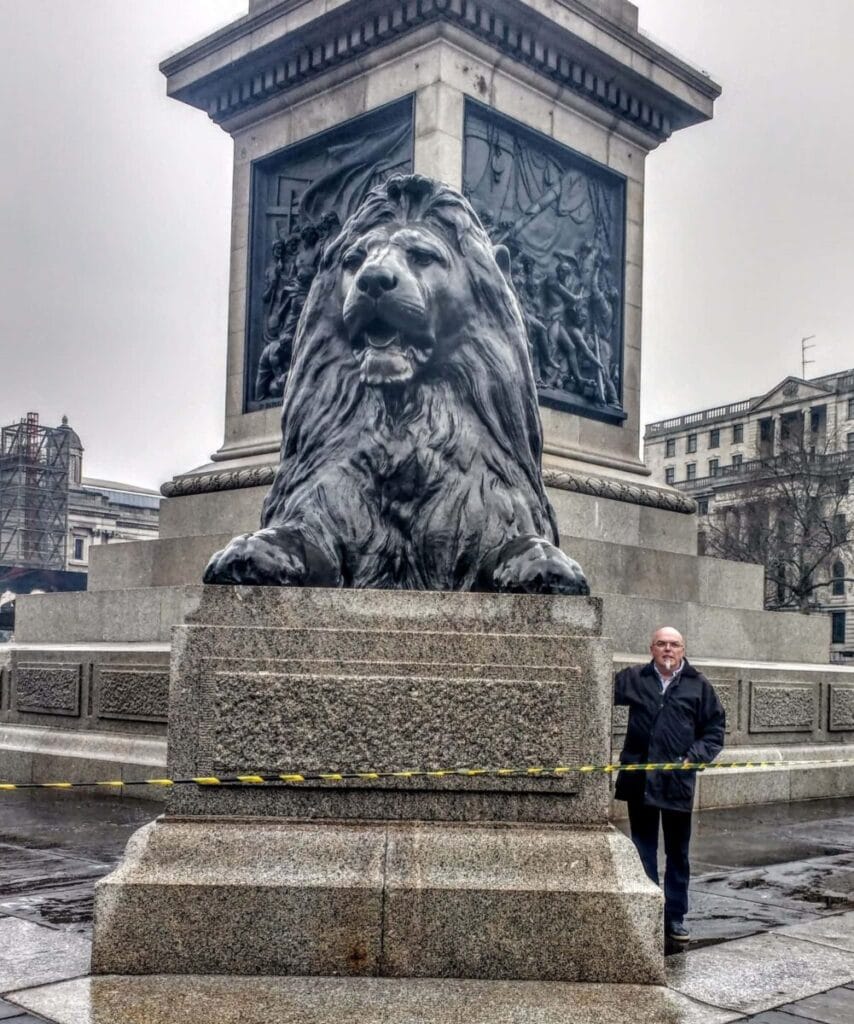
Number: Four monumental bronze lions, installed in 1867, completing the long-intended scheme for the column’s base.
Designer and casting: Sir Edwin Landseer (design), renowned for animal painting; bronze casting by Baron Carlo Marochetti (late 1866–1867).
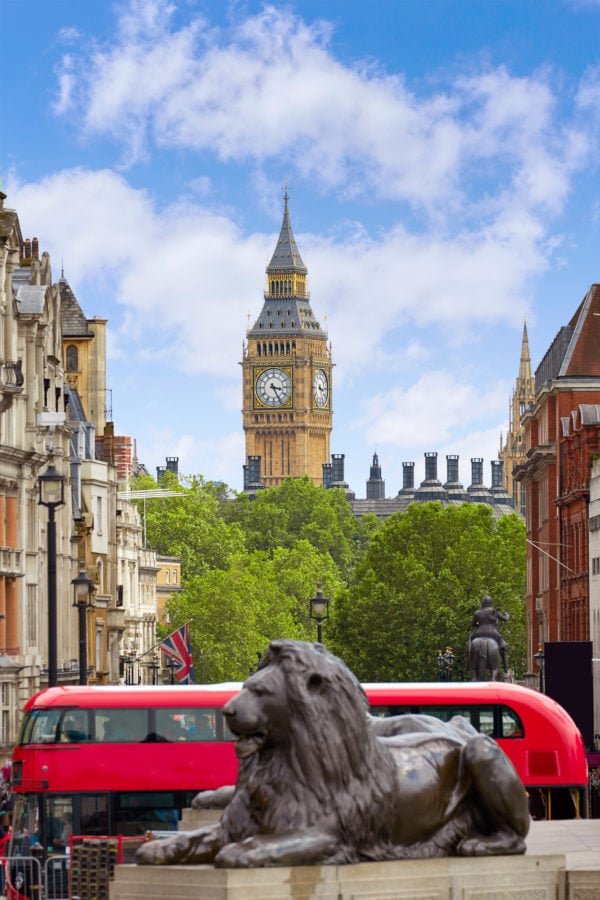
What to look for: Landseer studied lions at London Zoo and worked from a lion carcass; observers note the slightly stylised anatomy—particularly the paws and the reclining backs, which some consider more feline than leonine. Each lion is roughly 20 feet long and about 11 feet high. Please don’t climb—contact damages the bronze.
Before Landseer: Thomas Milnes’s “First Lions”
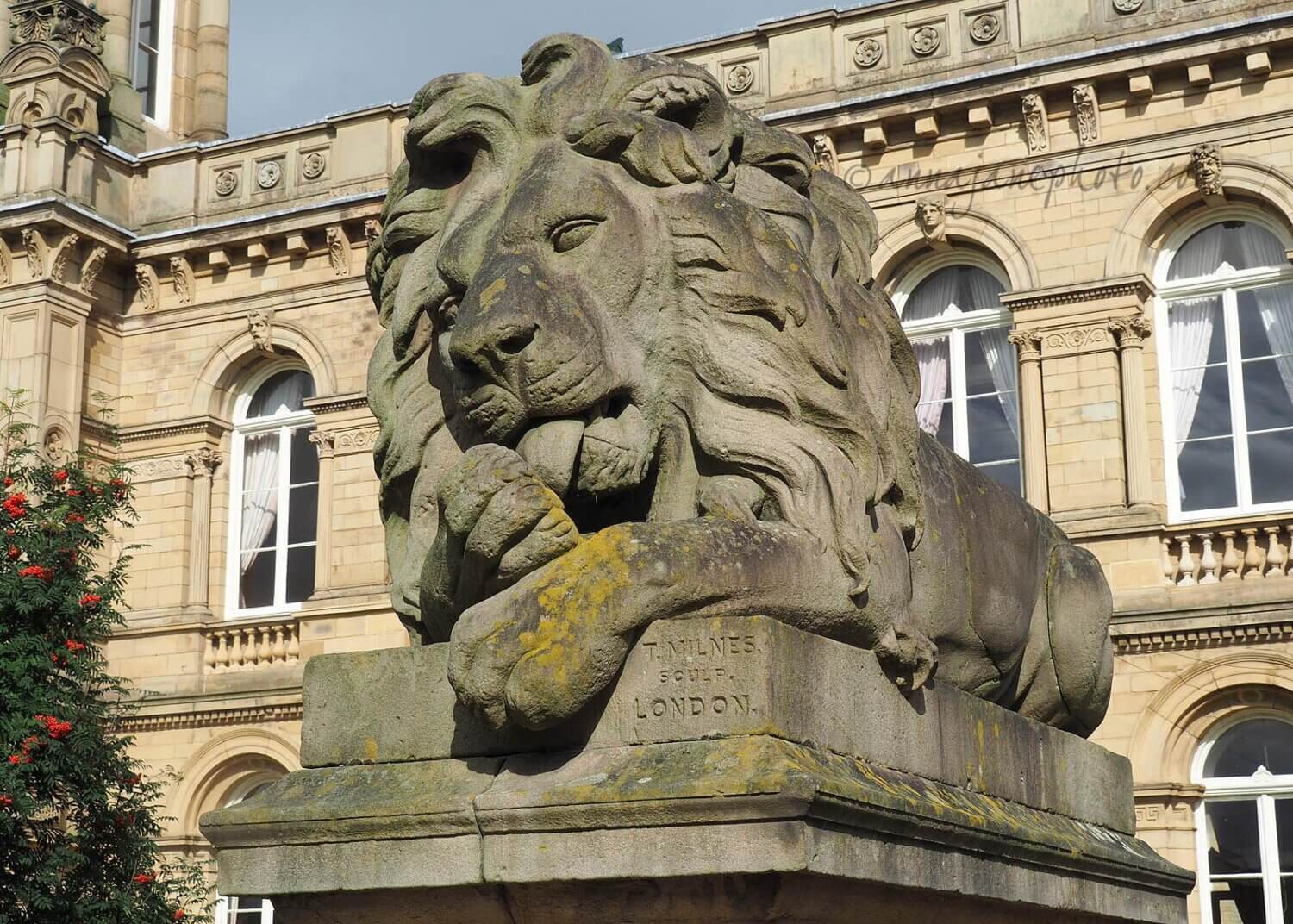
In 1858, sculptor Thomas Milnes produced four full-scale sandstone lions for the base of Nelson’s Column—allegories of Peace, War, Vigilance, and Determination. They were ultimately rejected as insufficiently imposing for the memorial. The set was purchased by industrialist Sir Titus Salt and relocated to Saltaire, his model village near Bradford, where the sandstone lions were installed on pedestals in 1869 and remain today.
How the Bronze Lions Were Made
Landseer accepted the 1858 commission despite being a painter rather than a sculptor. He sketched at the London Zoo and, famously, studied a lion carcass from the menagerie to understand form and texture. Baron Carlo Marochetti, an experienced founder, translated the full-size models into bronze. Each lion weighs around seven tons; the casts were completed from late 1866, and the quartet took their places around Nelson’s Column in 1867. Look closely at the manes: the modelling shifts from tight curls to broader flows to catch natural light from different angles.
What the Lions Mean Today
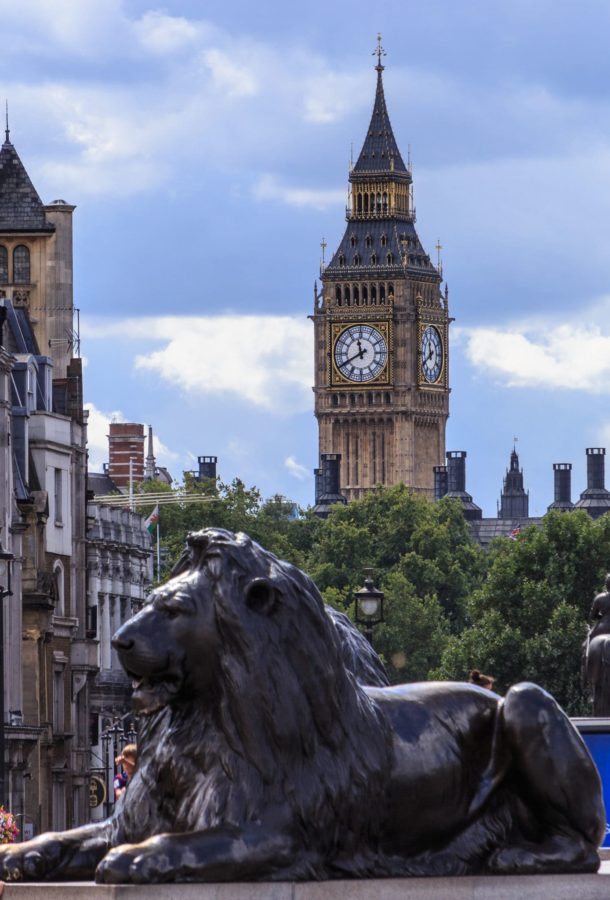
Beyond guarding the column, the lions embody Victorian ideas of national strength and vigilance. They’ve also become the city’s unofficial living room: backdrops for celebrations, vigils, and everyday meetups. The mild stylisation—especially the paws and the reclining backs—gives them a distinctive, approachable character, turning high monumental art into something Londoners casually interact with (please resist climbing, which damages the bronze).
Quick Timeline
- 1840–1843: Nelson’s Column designed by William Railton; column completed.
- 1858: Thomas Milnes sculpts four sandstone lions (Peace, War, Vigilance, Determination); later rejected.
- 1867: Landseer–Marochetti bronze lions installed at the column’s base.
- 1869: Milnes’s sandstone lions installed at Saltaire, near Bradford.
What is the significance of Trafalgar Square?
Trafalgar Square commemorates Vice-Admiral Horatio Nelson’s victory over the combined French and Spanish fleets at the Battle of Trafalgar (1805). The space evolved through the 1820s–1840s as a civic square; Nelson’s Column became its centrepiece in the early 1840s. Guardian beasts at the base were envisaged from the outset, but the lions arrived later.
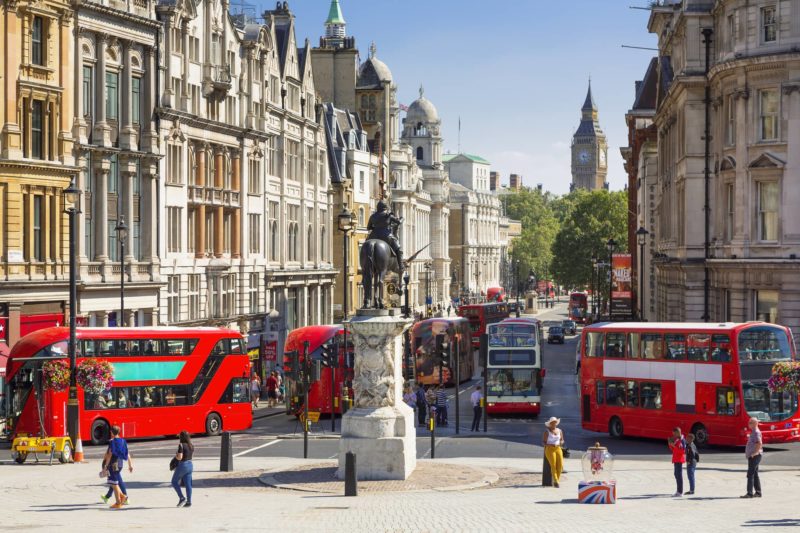
How to get to Trafalgar Square London
The square is a short walk from several Tube stations: Charing Cross (Bakerloo/Northern; National Rail), Embankment (Bakerloo/Circle/District/Northern), Leicester Square (Northern/Piccadilly), and Piccadilly Circus (Bakerloo/Piccadilly). Plan your route with Transport for London.
What to see in Trafalgar Square London
- St Martin-in-the-Fields
- Trafalgar Square Lions
- Lord Nelson’s Column
- The World’s Smallest Police Phone Box
- Fountains of Trafalgar Square
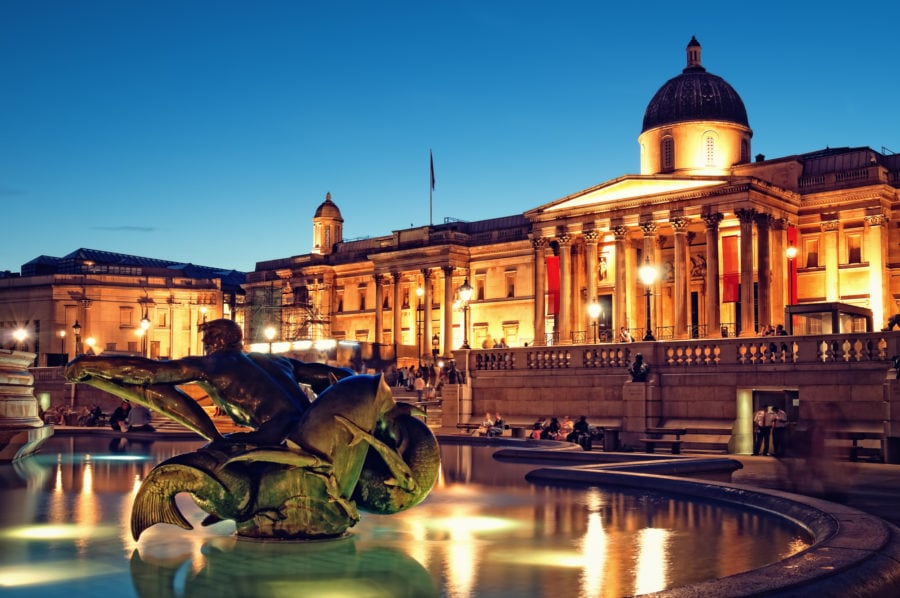
- National Gallery
- Trafalgar Square Christmas market
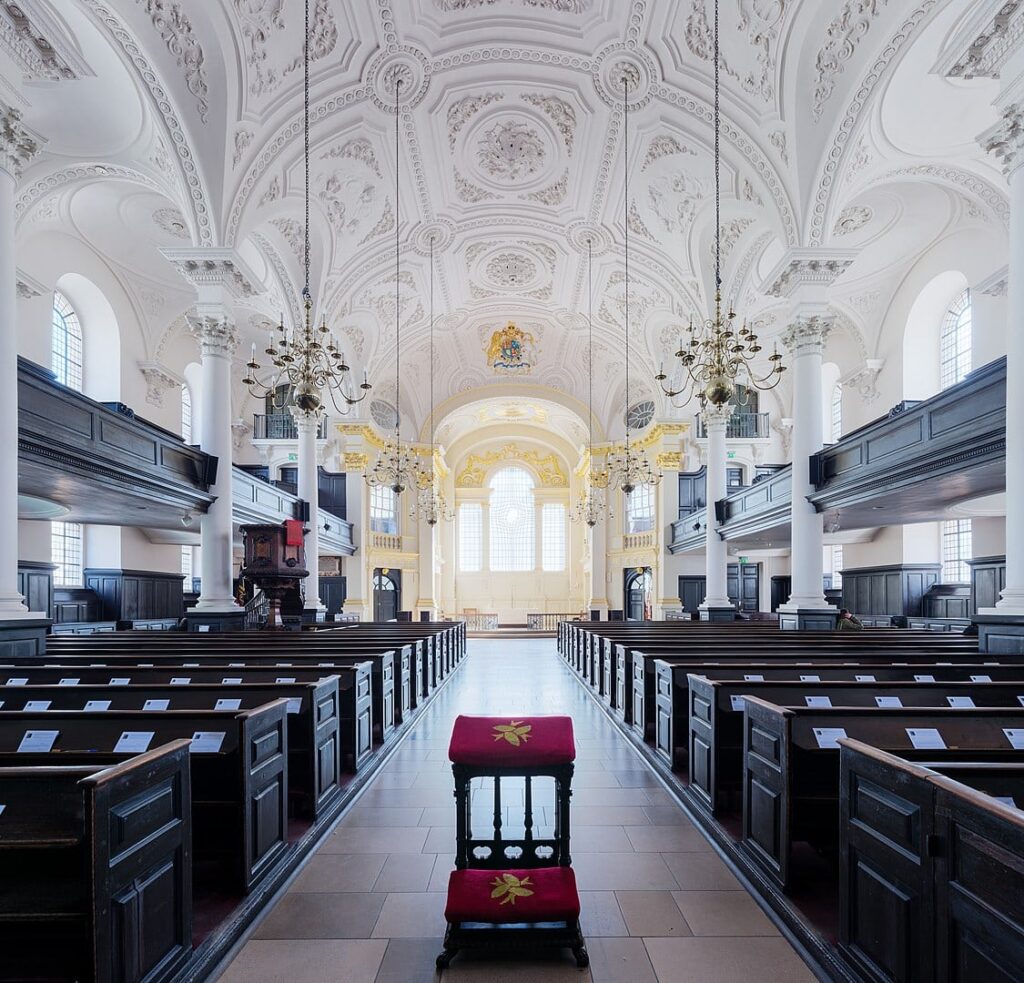
St Martin-in-the-Fields
The elegant neoclassical church on the north-east corner of the square, known for world-class chamber concerts and its welcoming Café in the Crypt.
From the square, you’re minutes from Covent Garden, Chinatown, the West End theatres, Whitehall and Parliament Square, The Mall and Buckingham Palace and you can even glimpse the London Eye. It’s an ideal starting point for a London walking day.
Don’t forget to check out some street food vendors and “caffs” to try some authentic English food
Trafalgar Square pigeons
Feeding pigeons in the square has been curtailed by local byelaws and active management, reducing mess and damage to stonework and sculpture. Please follow on-site guidance to help preserve the square’s heritage features.
Trafalgar Square Statues
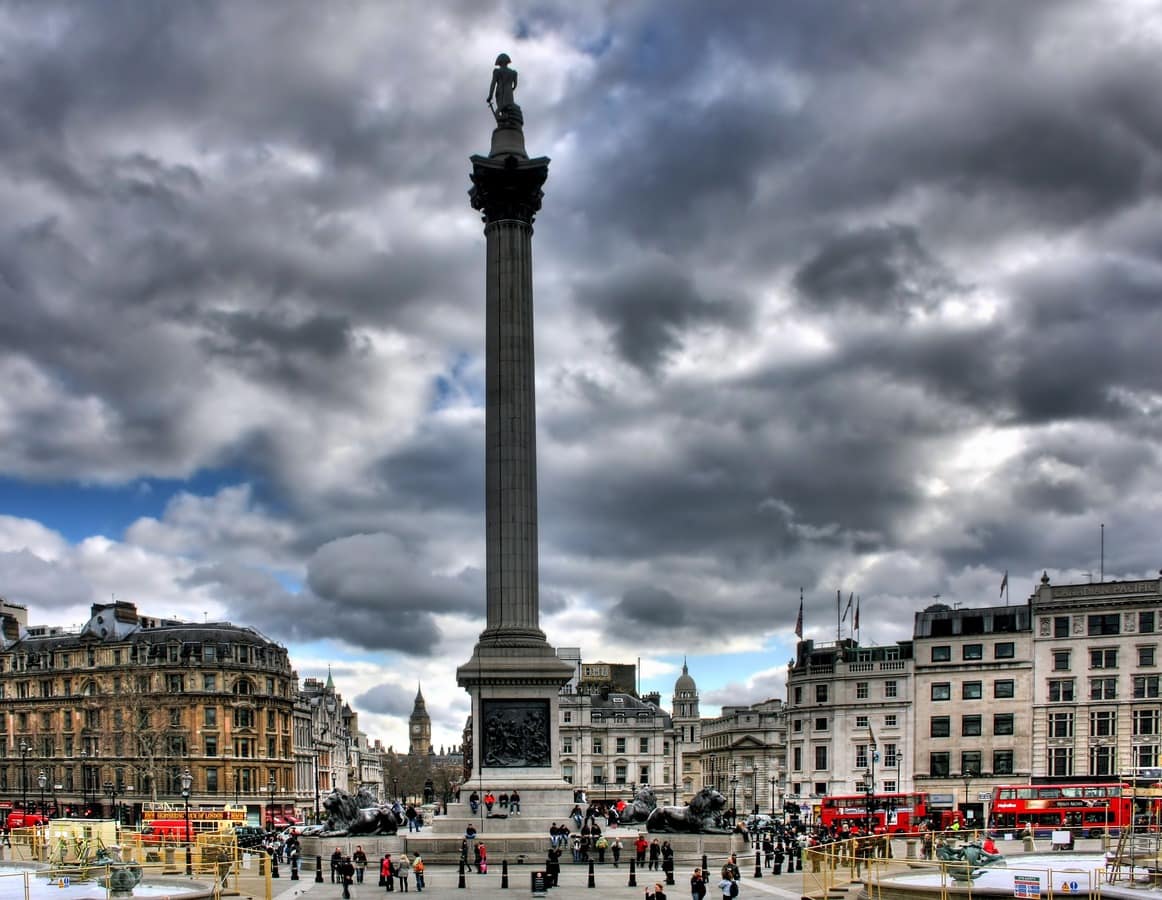
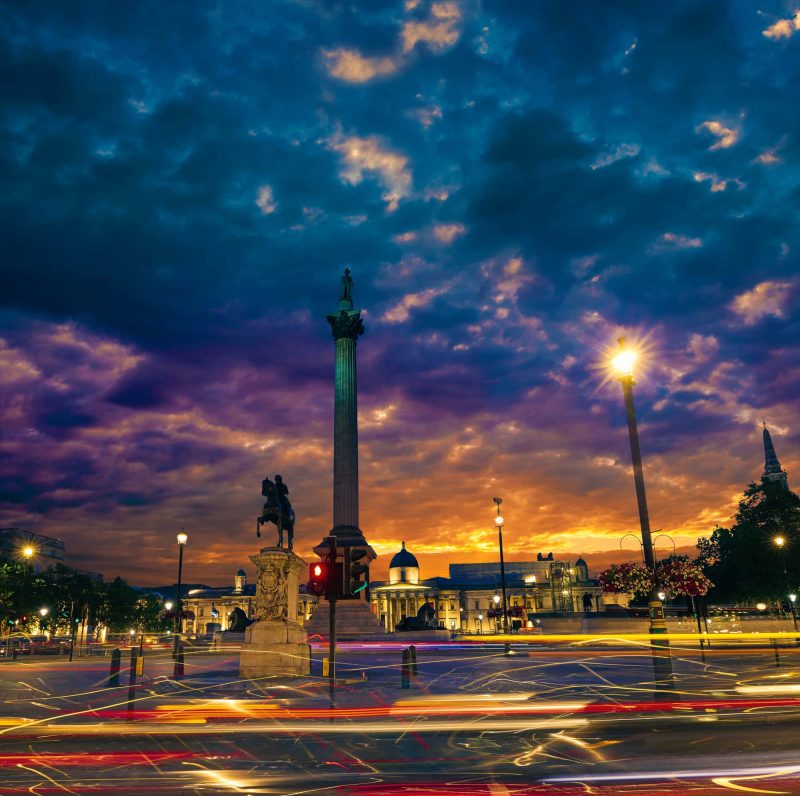
Lord Nelson’s Column
William Railton won the competition to design the monument in 1840; the column and statue were completed in 1843. Including its base, Nelson’s Column stands just over 52 metres (about 169 feet 6 inches) tall. The column is Dartmoor granite; the statue of Nelson by E.H. Baily is Craigleith sandstone. Bronze reliefs at the base depict St Vincent, the Nile, Copenhagen, and Nelson’s death aboard Victory (by Musgrave Watson, William F. Woodington, John Ternouth, and John Edward Carew).
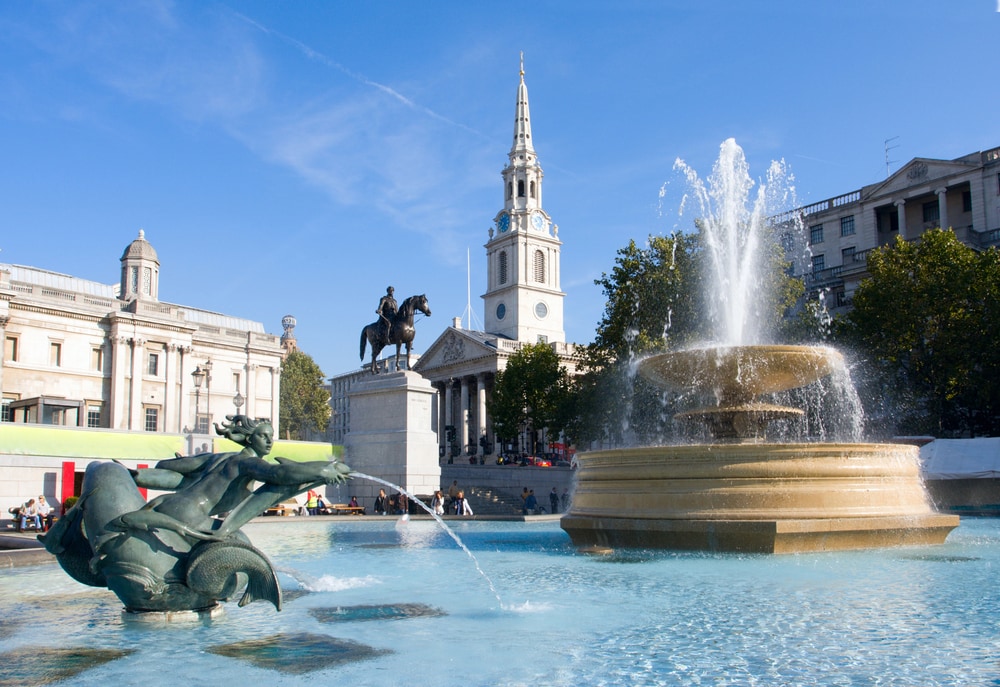
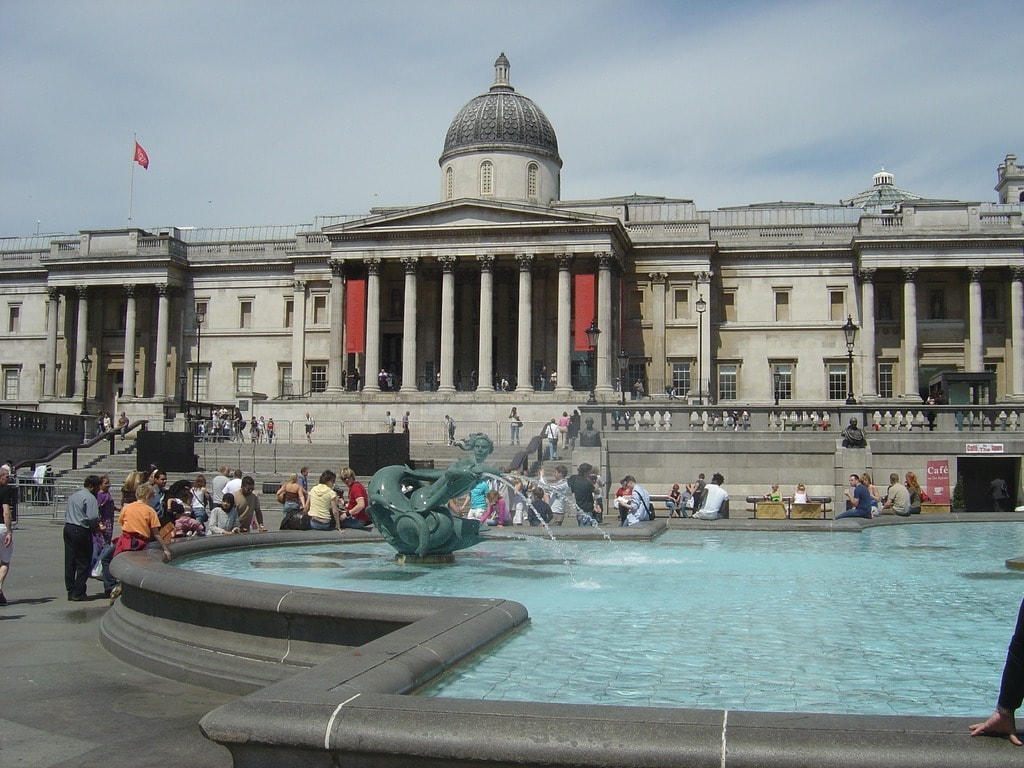
The Fountains of Trafalgar Square
The original 1845 fountains helped to break up large crowds and enhanced the square’s design. In the late 1930s, Sir Edwin Lutyens created the current pair of grander fountains. Two earlier fountain basins were gifted to Canada; they now stand in Ottawa and Regina.
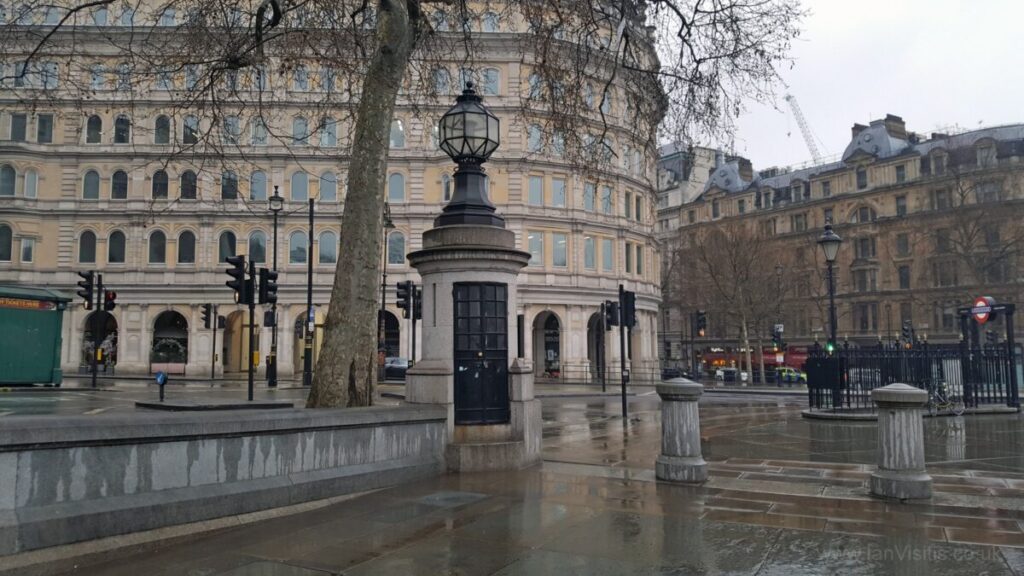
The World’s Smallest Police Phone Box
Not a “station,” but a compact police communications point. A wooden phone box stood here from 1919; in 1926 a permanent telephone line was set inside a hollowed lamppost base. Today it serves as a tiny store for cleaning kit—and a fun footnote in London policing lore.
Conservation and Care of Nelson’s Column and the Lions
Listed status: Nelson’s Column and its sculptures are Grade I listed; any work is carefully overseen to preserve their historic significance.
- Routine maintenance: The Greater London Authority (GLA) and partners commission regular condition surveys. Stonework is inspected and repointed as needed; the bronze lions are periodically cleaned and waxed to protect their patina from pollutants and weathering.
- Protection measures: Clear “no climbing” messaging, event planning that limits contact with vulnerable fabric, bird-control measures, and monitoring during major events reduce risk of damage.
Why it matters: London’s climate, air quality, and heavy footfall can accelerate wear. Proactive conservation keeps the reliefs’ details, the lions’ bronze surfaces, and the sandstone figure of Nelson legible for future generations.
FAQs
What is the meaning of Trafalgar Square? It is named after the Battle of Trafalgar (1805), Nelson’s decisive victory during the Napoleonic Wars.
How many lions are in Trafalgar Square? Four—monumental bronze sculptures placed around the base of Nelson’s Column.
Who is atop the column? Vice-Admiral Horatio Nelson, carved by E.H. Baily.
Accessibility: Getting Around and Into the Attractions
- On the square: Trafalgar Square is largely level and open, with step-free routes across the plaza and dropped kerbs at approaches. During events, accessible routes are signposted by stewards.
- Step-free journey planning: Use TfL’s tools to plan step-free routes and check lift status.
National Gallery: Step-free access, lifts, and accessible facilities; check entrance arrangements and any works before you go.
National Portrait Gallery: The National Portrait Gallery sits just off the north-east corner of the square and is free to enter (charges apply for some special exhibitions).
St Martin-in-the-Fields: Step-free routes, lift access, and accessible toilets.
Nearby facilities: Accessible toilets are available within the museums; Westminster lists public conveniences.

Visiting the Milnes Lions in Saltaire
If the “first lions” intrigue you, plan a day trip to Saltaire (a model Victorian village and UNESCO World Heritage Site). The sandstone lions sit on pedestals near Salts Mill, offering a revealing counterpoint to Landseer’s bronzes—more allegorical, less muscular, and firmly of their earlier moment in taste. Combine it with time in Salts Mill, which houses galleries, shops, and a celebrated bookshop.
Spot the Details: A Mini Tour Around the Plinths
North lion: Classic head-on portrait with long sightlines down Charing Cross Road.
East lion: Morning light grazes the mane beautifully; frame St Martin-in-the-Fields behind.
South lion: Align your shot with Whitehall and the Cenotaph.
West lion: Late-afternoon golden light from The Mall side sculpts the bronze volumes.
National Portrait Gallery
Just off the north-east corner; free to enter (charges for some exhibitions).
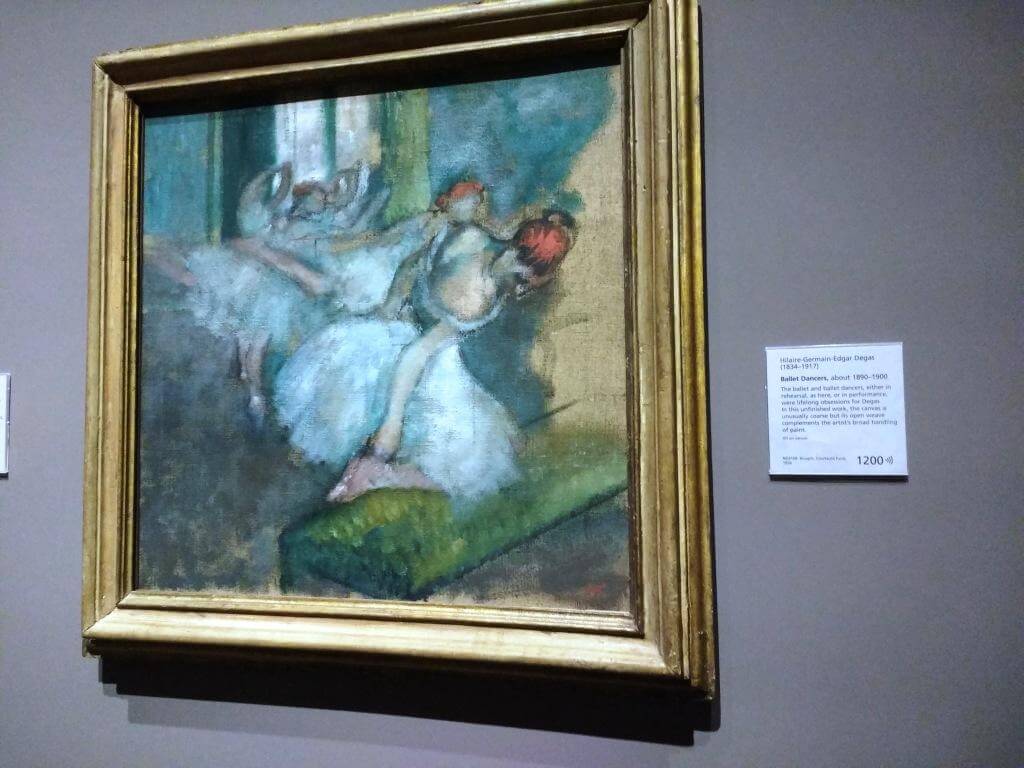
National Gallery
Dominating the north side; world-class collection with free general entry (fees apply to some exhibitions). Plan time for Renaissance and Impressionist highlights.
Practical Tips for Your Visit
- Respect the monuments: avoid climbing the lions and plinths; follow on-site guidance and barriers.
- Time your visit: early morning or later evening light is superb for photos; weekday mornings are generally quieter.
- Nearby highlights: Covent Garden, Whitehall, The Mall, and the West End are all a short stroll away.
From Thomas Milnes’s rejected sandstone cats to Landseer’s famous bronze guardians, the lions tell a layered story about taste, ambition, and craft in Victorian London. Careful conservation and improved accessibility make it easier than ever to explore the square, its museums, and its memorials. Plan a step-free route, time your visit for softer light, and treat the monuments with care you’ll come away with sharper photos, a clearer sense of Britain’s naval past, and a few “hidden secrets” most visitors miss.
Explore more of the region with guides to England, Scotland, Wales, Northern Ireland, or the full United Kingdom Travel Guide.
Accessible UK Broader guide to accessible rail travel, National Trust accessibility schemes, and city-by-city notes.
Accessible London Compared to many older European capitals, London is genuinely one of the more accessible large cities you can visit.
Accessible Bath Discover how to explore an accessible Bath including the Roman Baths, and other attractions.
Accessible Cotswolds many of the lovely Cotswolds villages and towns are accessible.
Accessible Edinburgh Accessible Edinburgh travel is entirely possible, but it rewards realistic planning far more than an aggressive checklist.
Accessible Historic sites in England Discover accessible historical sites in England including castles, Roman ruins, cathedrals, museums, and heritage attractions with realistic tips for limited mobility and hidden disabilities.
Accessible York Explore the great city of York with tops for what sites are accessible and how to visit.