
Complete Guide to Visiting the House of the Virgin Mary in Ephesus
We visited the House of the Virgin Mary in Ephesus after landing in Turkey on a cruise. We decided against booking a tour from the cruise ship and used several other sources to find local tour guides. These local tour guides were literally a tenth of the price of the cruise ship and they were superb. Whether it was in Ephesus, Egypt, Greece, Rome or Malta I would highly recommend doing this type of tour.

Getting to Ephesus
Our cruise ship docked at Selcuk in Turkey and from there we arranged to be picked up by a local tour guide. The guide spoke perfect English and we were joined on the tour by 8 Americans. The tour was in a van with air conditioning and we were going to visit Ephesus, check out a silk carpet site, and leather manufacturers, as well as see Ephesus and several other sites along the way to visit Mary’s House.
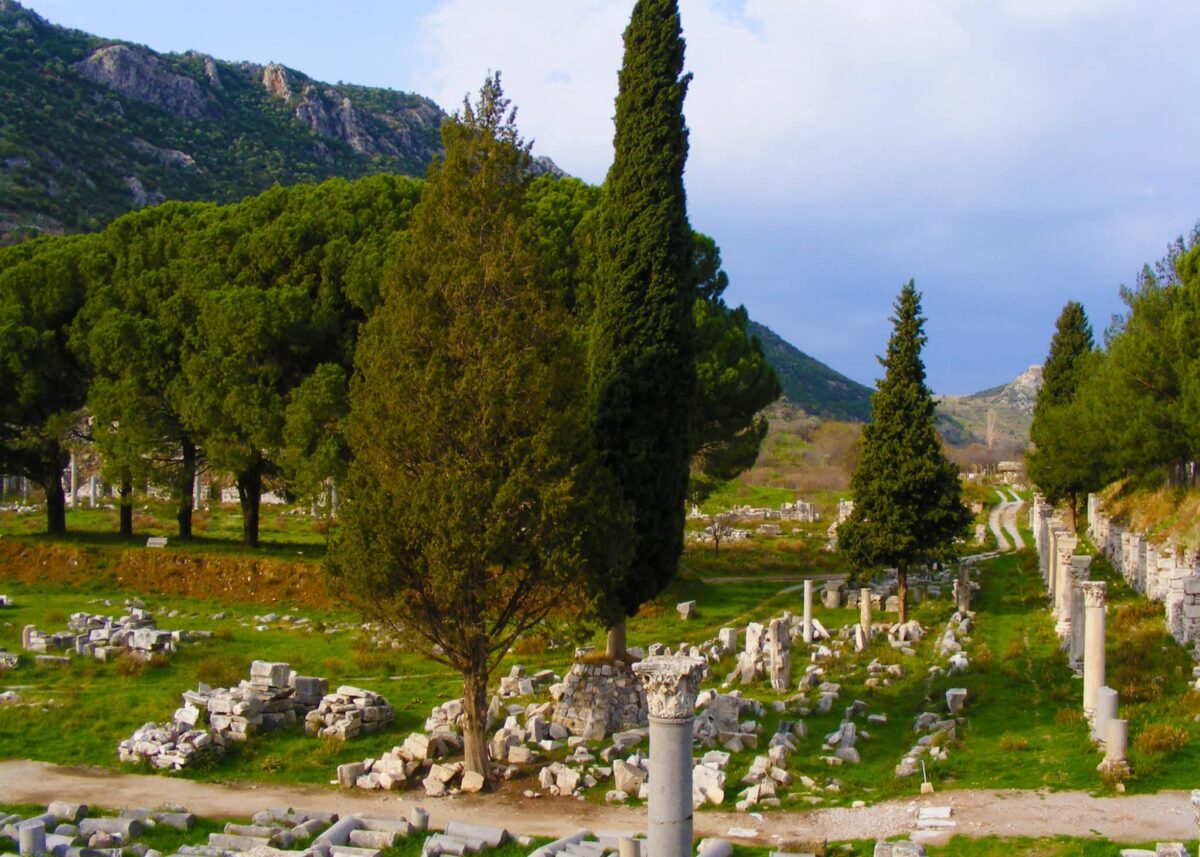
The House of the Virgin Mary is located on the top of Mount Koressos near Ephesus in Turkey. A long winding beautiful drive up the mountains brings you to the site.
Getting to the House of Mary
From Izmir Airport
Distance: 80 km (50 miles), Taxi: ~60-90 minutes, approximately 1200-1500 TL, Private transfer: Book in advance, similar price to taxi but guaranteed rate, Public bus: Take HAVAŞ airport shuttle to Selçuk, then local minibus to site, Rental car: Follow D550 highway to Selçuk, then follow signs to Meryemana
From Selçuk
Distance: 8 km (5 miles), Local minibus (dolmuş): Departs hourly from Selçuk bus station, Taxi: 15-20 minutes, around 300-400 TL, Organized tours: Available from tour agencies in town center, Walking: Not recommended due to steep incline
From Ephesus Ruins
Distance: 4 km (2.5 miles), Taxi: 10 minutes, approximately 200-250 TL, Combined tours: Many include both sites, Walking: Possible but challenging due to heat and elevation
Parking
Free parking available, Large lot can accommodate cars and buses, Short walk to entrance, Handicap spaces near entrance
Tips for visiting the House of Mary
- Best visited early morning or late afternoon to avoid crowds and heat
- Book return transport in advance if using taxi
- Many visitors combine with Ephesus tour
- Local guides available at entrance
- Site is at elevation – prepare for cooler temperatures
Accessibility
- Paved paths throughout site
- Some steep sections
- Wheelchair accessible with assistance
- Golf cart service available for elderly or disabled visitors
The house of the Blessed Virgin Mary is close to the ancient ruins of the city of Ephesus, yet despite the huge popularity of the latter, many people do not take the detour to visit the house where the Mother of God Mary is believed to have lived and died. The drive up the mountain is absolutely stunning and the site is beautifully peaceful and serene. It would be an absolute shame if you are taking Ephesus Tours to miss this site.
Guided Tour of Ephesus and Mary’s House: Specifically designed for cruise guests, this tour lets you see three major attractions: the House of Virgin Mary, the Ephesus ruins, and the Temple of Artemis. You won’t have to plan any of the logistics. Direct transfers from Kusadasi Port save you the hassle of figuring out transportation, and your attraction tickets are included as well. You will also be served a traditional Turkish lunch.
Read more about – Private or Group: Ephesus, House of Mary WITH ENTRY TICKETS+LUNCH

House of Virgin Mary entrance fee
The 2025 entrance fee for the House of the Virgin Mary is 500 Turkish Liras per person (approximately €12.50 Euros)
Credit card payments (Visa and Mastercard) are still accepted at the box office
Operating Hours:
- Open daily 8:30 AM to 5:00 PM
- Ticket office closes at 4:30 PM
Mass Times:
- Monday to Saturday:
- November to March: 5:45 PM
- April to October: 7:00 AM (morning mass)
- Sunday: 10:30 AM (in English)
Holy Rosary:
Sunday: 10:00 AM
Monday to Saturday:
12:00 PM
5:15 PM (November to March)
6:15 PM (April to October)
Visit what’s left of one of the Wonders of the World – the Temple to Artemis in Ephesus
Historical Background of Mary’s House
The historical foundation of Mary’s House in Ephesus begins with biblical references, specifically John 19:26-27, where Jesus entrusted his mother’s care to John the Apostle. According to early Christian tradition, John later brought Mary to Ephesus around 37-48 AD, where she lived until her Assumption. This account is supported by various early Church documents, including the Acts of the Council of Ephesus (431 AD), which references Mary’s presence in the city.
The modern discovery of Mary’s House stems from the remarkable visions of Blessed Anne Catherine Emmerich, a German Augustinian nun who lived from 1774 to 1824. Despite never having traveled beyond her native Germany, Emmerich provided detailed descriptions of Mary’s house in Ephesus, which were meticulously recorded by German writer Clemens Brentano. These accounts led to the site’s discovery in 1881 by a French priest, Abbé Julien Gouyet, following Emmerich’s precise directions. A subsequent expedition by clergy from Smyrna (modern-day İzmir) in 1891 further confirmed the location.
Archaeological studies have revealed fascinating details about the structure. While the current building dates primarily to the 13th century, excavations have uncovered foundations from the 1st century AD and a 4th-century church built over the original house. The architectural style combines both Roman and Byzantine elements, reflecting its long history of use and renovation. Recent archaeological findings in 2022-2025 have continued to uncover evidence supporting the site’s ancient origins.
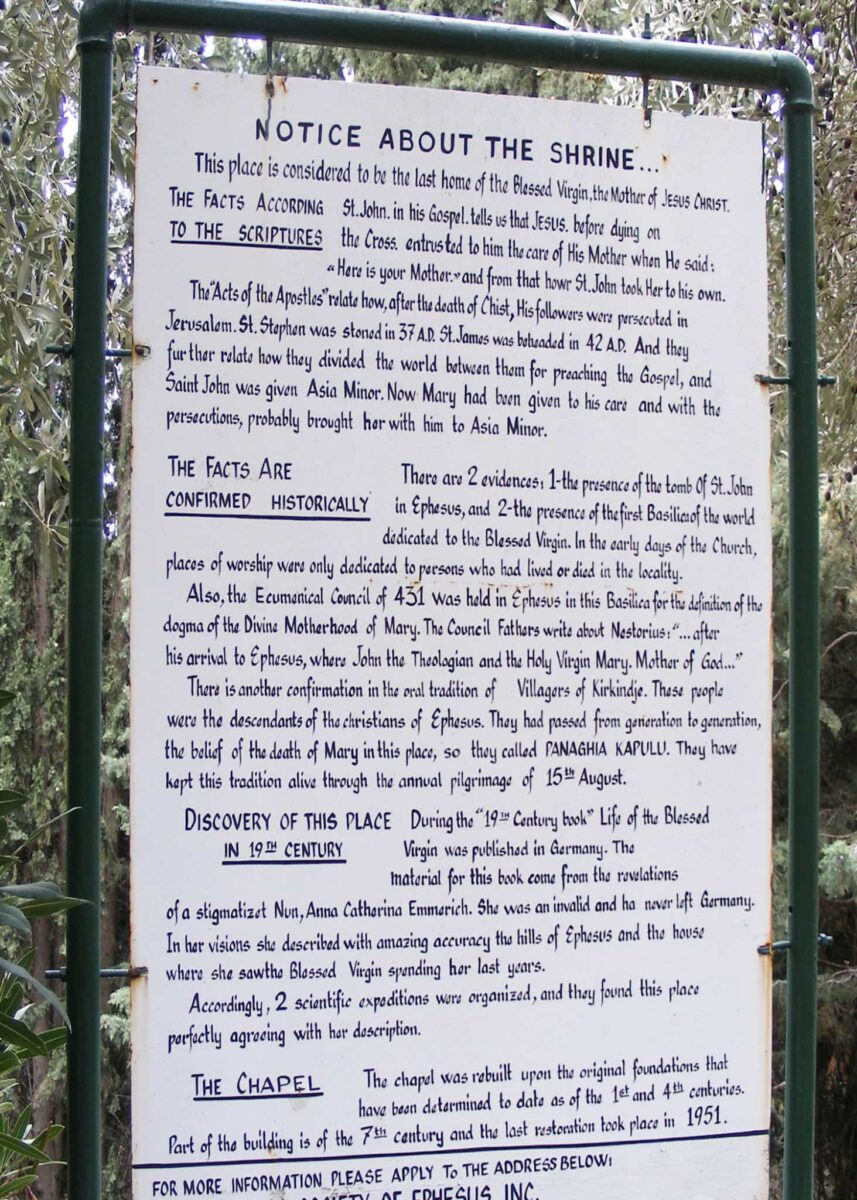
The Catholic Church’s recognition of the site has evolved over time, marked by significant papal visits: Pope Paul VI in 1967, Pope John Paul II in 1979 (who officially declared it a shrine), and Pope Benedict XVI in 2006. While the Vatican has not officially pronounced this as the site of Mary’s Assumption, its recognition as a place of pilgrimage has strengthened its religious significance. The Church maintains the site through the Dernek organization, established in 1951 for its preservation and maintenance.
Scholarly research continues to examine the historical validity of Mary’s presence in Ephesus. Archaeological evidence suggests continuous religious use of the site since the 1st century AD. Historians point to the strong early Christian community in Ephesus and the existence of one of the earliest churches dedicated to Mary (the Church of Mary) in the city as supporting evidence. Contemporary studies have also revealed fascinating connections between architectural elements of the house and 1st-century Jewish-Christian worship spaces.
The site holds unique cultural significance as a rare example of interfaith veneration. Muslims, who revere Mary (Meryem Ana) as the mother of Prophet Jesus (Isa), frequently visit the shrine. Historical records indicate continuous pilgrimage activity since the Byzantine period, with documented visits from both Christian and Muslim pilgrims throughout the Ottoman era. Today, the Turkish government recognizes and protects the site as a national treasure, demonstrating its importance beyond religious boundaries.
The House of the Virgin Mary in Selçuk has been visited by three previous popes – Pope Paul VI in 1967, Pope John Paul II in 1976 and Pope Benedict XVI in 2006.
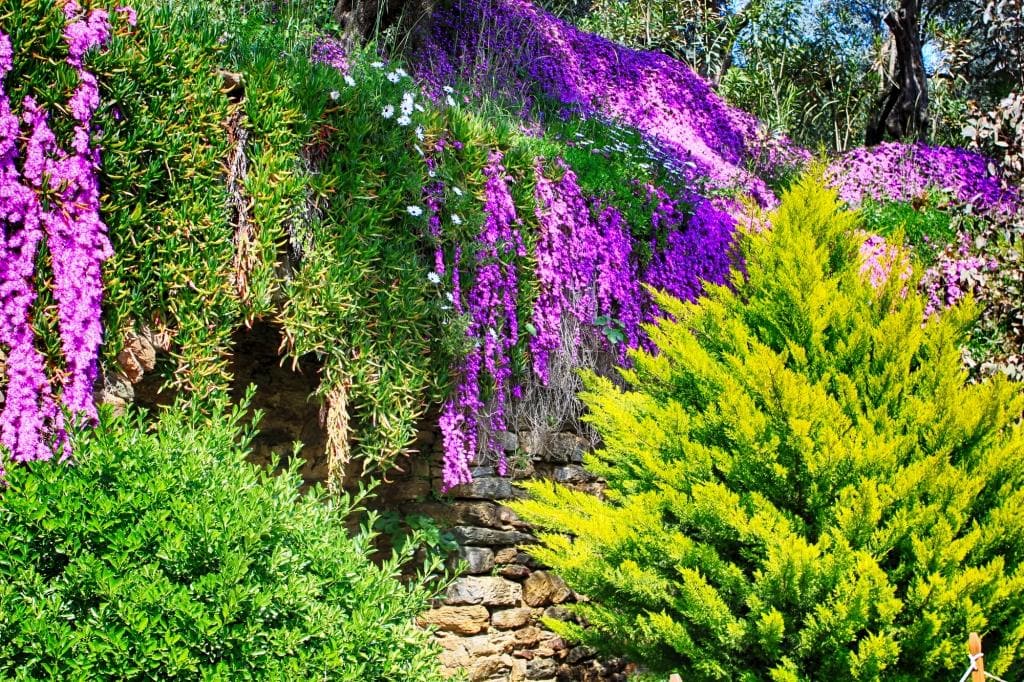
There has been a steady flow of pilgrims to the site for many years. Up high in the mountains, the area is particularly beautiful and immensely peaceful. If Mary did live here you can see why when you visit. You will also notice a lot of Turkish guards who the government places at the site to protect it.
The road to Mary’s house slopes steeply towards Ephesus and is surrounded by Cyprus trees and mountains the landscape of Turkey lies before you in incredible vistas. Apparently, Mary preferred this remote, peaceful area and was brought here by the Disciple John where she stayed until her Assumption into heaven.
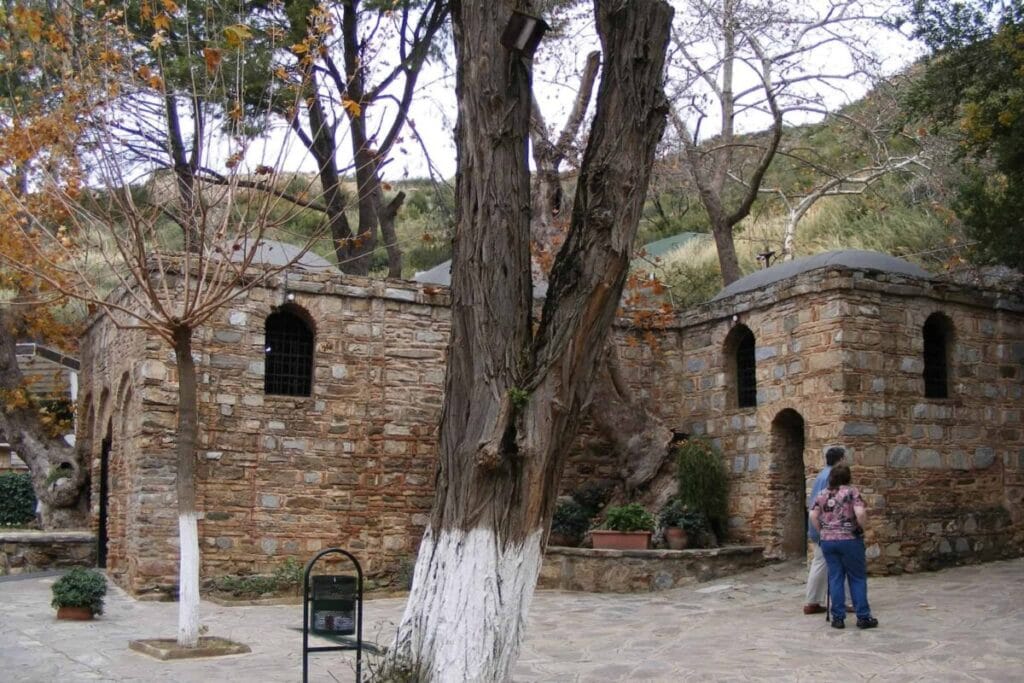
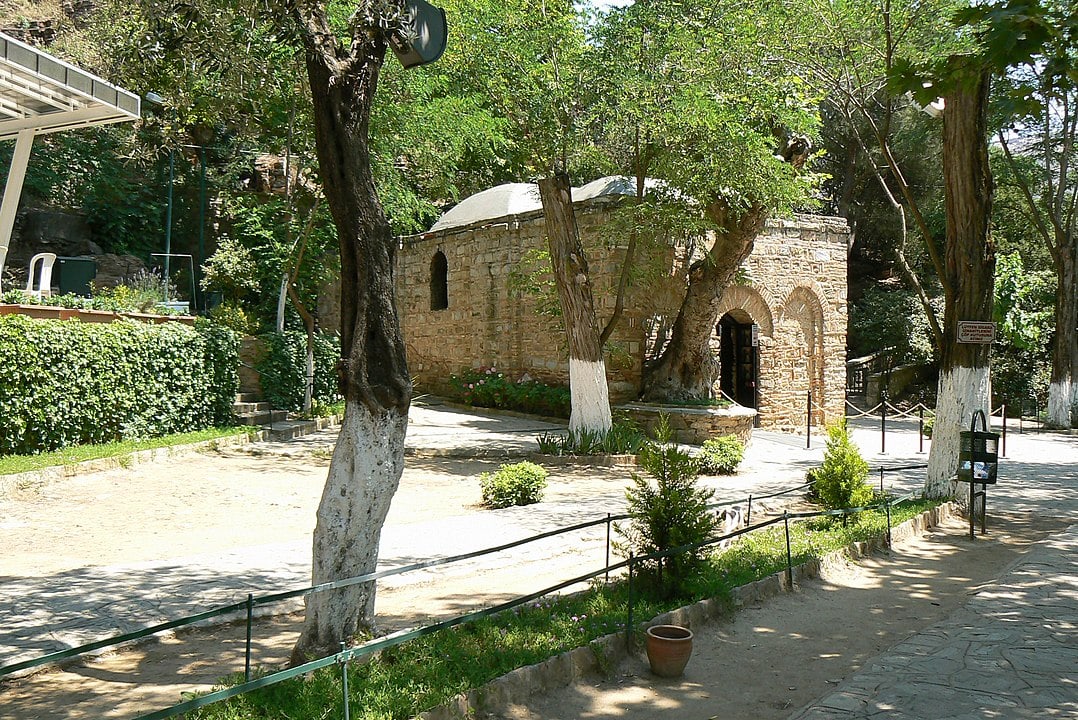
The house of the Virgin Mary was made entirely of stones and dates back to the 4th Century AD.
The house is a two-story structure which contained an anteroom, bedroom and prayer room which is considered the Christian Church area. There is also a fireplace room which is used as a Muslim Chapel.
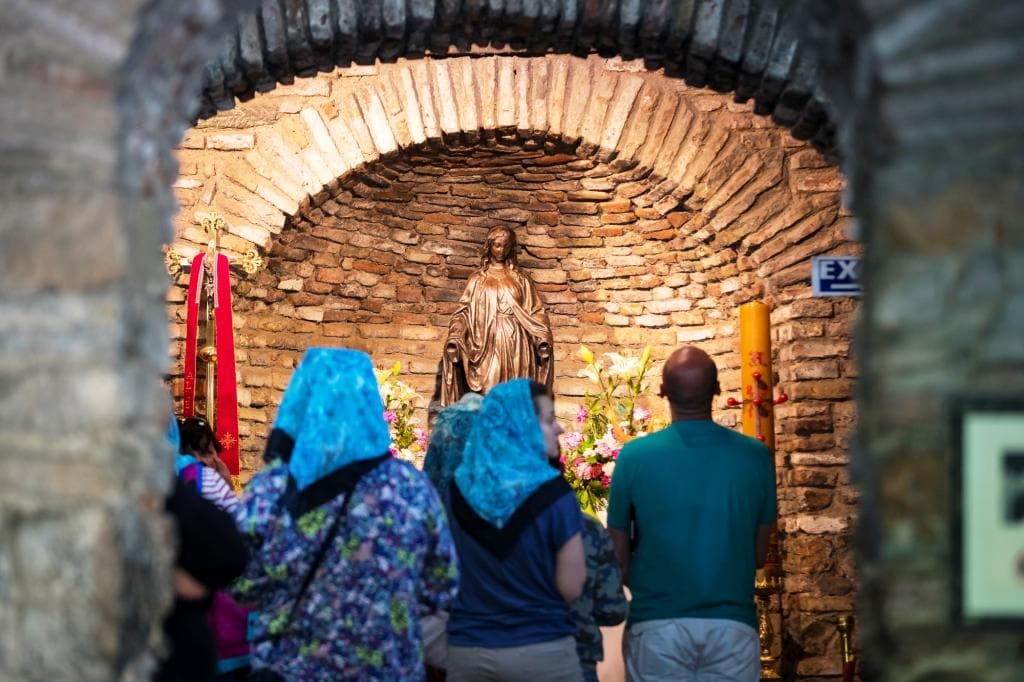
It is a sacred place for Muslims and since Mary (Meryem Ana) is spoken of in the Quran Muslims come to visit as well as Christians. It does feel like a very spiritual place and will stay in your memory for a long time to come, whether you believe or not.
The property was restored in the 1940s after it had fallen into ruins. These days only the central part of the house and a room to the right of the altar are open to pilgrims. The house was declared the Shrine of the Virgin Mary by Pope John-Paul II in the 1980s. Every year a pilgrimage and ceremony take place to honour Mary’s Assumption.
Sister Marie de Mandat-Grancey: Guardian of Mary’s House
Sister Marie de Mandat-Grancey (1837-1915) was born into French nobility as Adèle Louise Marie de Mandat-Grancey at the family château in Burgundy. Though she could have lived a life of privilege, she chose instead to join the Daughters of Charity of St. Vincent de Paul in 1858, dedicating herself to serving the poor and sick.
The path that led Sister Marie to Mary’s House began in 1886 when she was assigned to the French Naval Hospital in Smyrna (modern-day İzmir), Turkey. It was here that she first encountered the writings of Anne Catherine Emmerich, specifically “The Life of the Blessed Virgin Mary.” Deeply moved by Emmerich’s detailed visions of Mary’s final home, Sister Marie became convinced of their authenticity.
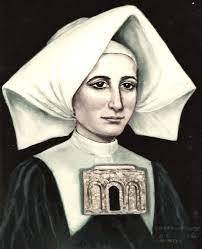
In July 1891, Sister Marie organized and financed the first expedition to search for the house. She assembled a team that included Catholic priests Eugène Poulin and Henri Jung, along with local guides. Using Emmerich’s descriptions as their map, the group discovered ruins on Mount Koressos (Bulbul Mountain) that matched the mystic’s account with remarkable accuracy.
Understanding the site’s significance, Sister Marie took extraordinary steps to protect it. She used her family inheritance to purchase the property and the surrounding mountain in December 1892. This act was particularly remarkable as it was unusual for a Catholic nun to own property, especially in Ottoman Turkey. She obtained special permission from her religious superiors and worked through complex Ottoman legal systems to secure the site’s future.
Sister Marie’s dedication to the shrine went far beyond its discovery and purchase. She organized and funded the initial archaeological excavations and the first restoration efforts. She established a system for maintaining the site and protecting it from looters. Despite significant obstacles, including limited resources and political tensions in the region, she persevered in her mission to preserve the house for future generations.
Today, Sister Marie’s legacy continues through the ongoing preservation of Mary’s House. Her cause for beatification was opened by the Catholic Church in 2011, recognizing her as a Servant of God. The Daughters of Charity still maintain an active presence at the shrine, continuing the work she began. Her remarkable story demonstrates how one person’s dedication can preserve a significant piece of religious heritage.
The Vatican has recognized Sister Marie’s crucial role in preserving this holy site. During his visit in 2006, Pope Benedict XVI specifically mentioned her contributions, highlighting how her actions helped create a place where Christians and Muslims could pray together in mutual respect.
It is generally agreed by historians and religious experts that Saint John the Evangelist, Saint Paul and the Virgin Mary spent time living in the ancient city of Ephesus and Mary’s last home in Turkey is one of the top visited attractions in the country.
The House of the Virgin Mary
The parking lot leads up to the house and you will see a cafe, souvenir shops and then the first landmark is the baptism pool and a seating area for monthly services.
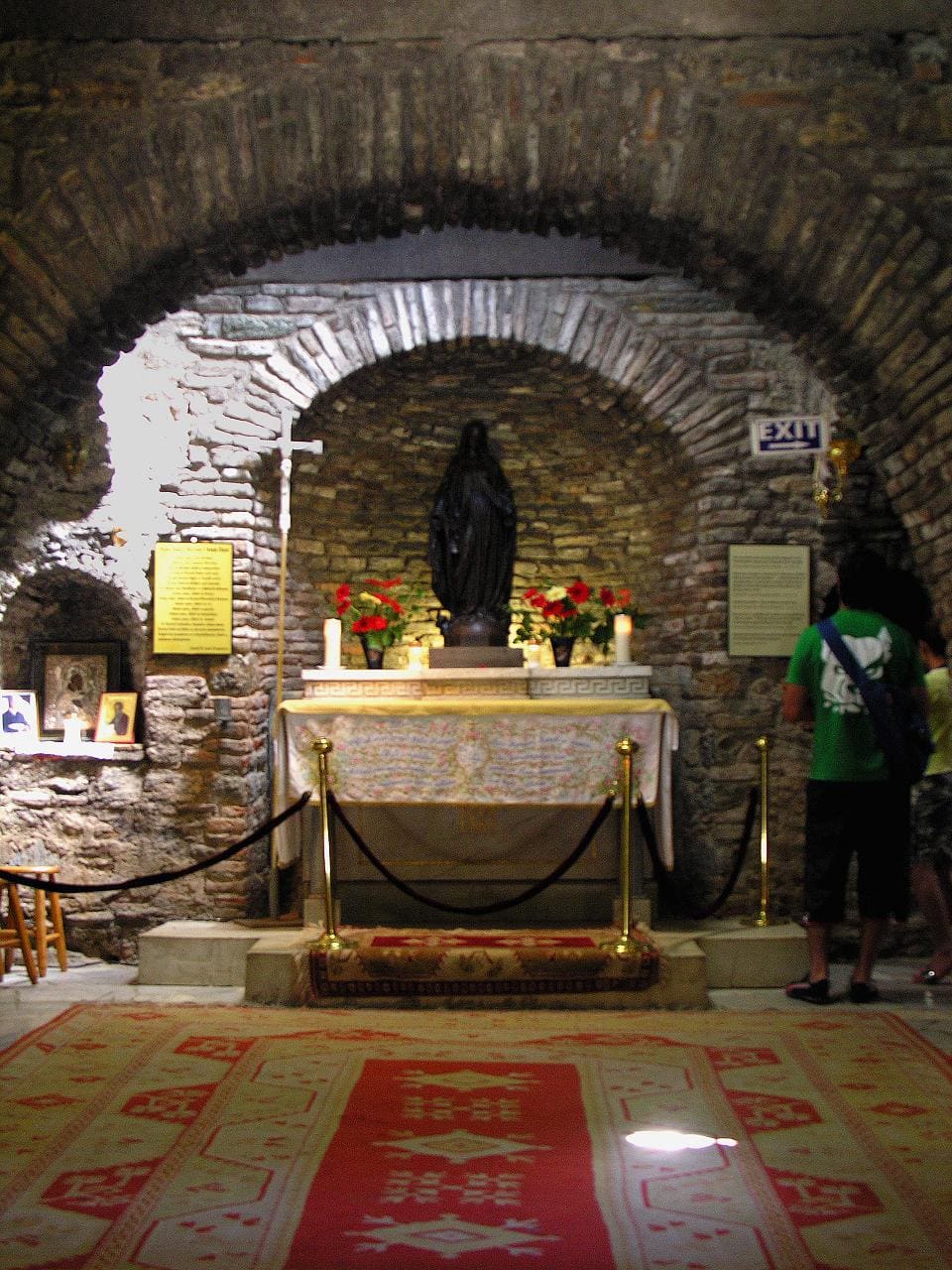
The House of the Virgin is very small and quite humble made from plain stones and bricks it feels almost anti-climactic.
The house itself has been restored as authentically as possible. The bottom section of the house is the original building and stones. There is a metal door that you walk through and you can pick up a candle before moving onto the main area where a statue of the Virgin Mary stands.
House of virgin Mary dress code? Naturally, as a place of worship, silence is expected and a conservative dress code is in place.
Outside you can visit the holy waters where there are 3 metal taps. You are encouraged to take a drink and make a wish. Local legends say that each tap represents an aspect of life – wealth, health and fertility. Of course, they are not labelled so if you believe you may be taking a chance.
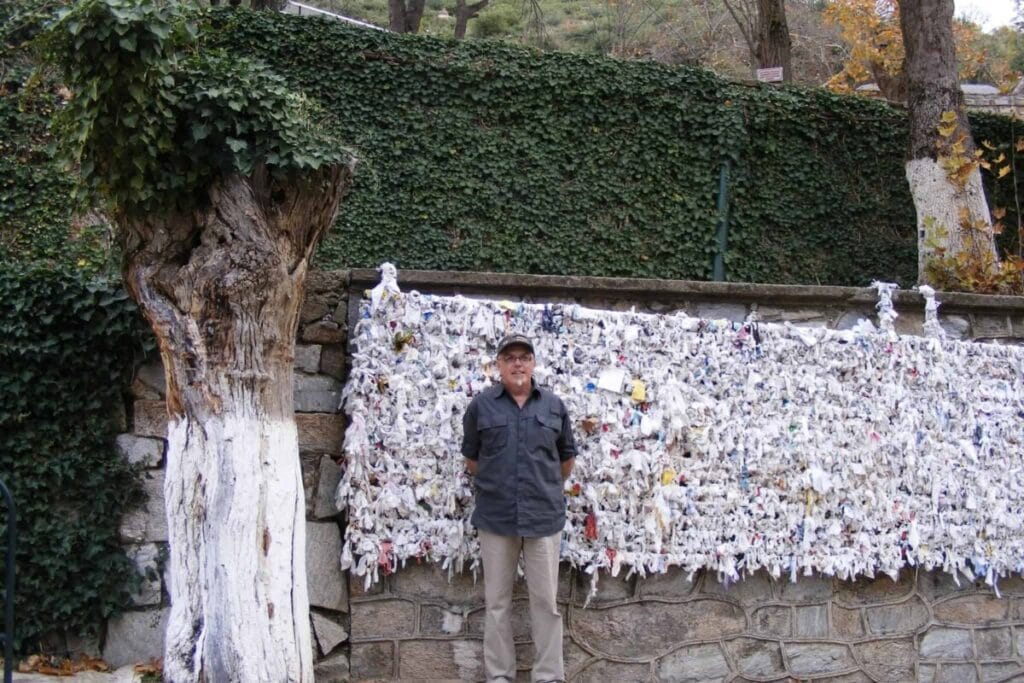
Outside the shrine is the “Water of Mary”, a wishing well of sorts that is believed to be the source of miracles. Pilgrims tie their personal wishes and worries on paper or fabric in the hope that its miraculous powers will give them some comfort. Pilgrims can also drink the water from the well as it is believed it can heal all ills.
The House of Mary in Ephesus is a fascinating site that attracts visitors from all over the world. Whether you’re interested in history, religion, or simply beautiful architecture, this ancient house has something for everyone. From its stunning views of the Aegean Sea to its rich cultural and religious significance, it’s no wonder that so many people come to explore this unique destination each year. So why not make your own journey to the House of Mary Ephesus today and discover all that this remarkable place has to offer? You won’t be disappointed!
Have you ever travelled to Turkey? It is a place that should be on everyone’s bucket list as it is absolutely magical.
You might also like.
The Sacred Temple of Artemis at Ephesus
Turkish Coffee: 7 things you should know for the perfect cup