
Holy Cross Abbey Ireland sacred place of True Cross Relics
Holy Cross Abbey Tipperary is only 15 km away from the Rock of Cashel and it is truly one of Ireland’s hidden gems. It is far less crowded than the Rock and has been a principal place of pilgrimage in Ireland for over 800 years. Holycross Village where the Holy Cross Abbey is found is a tranquil, and picturesque medieval village straddling the River Suir in the middle of County Tipperary.
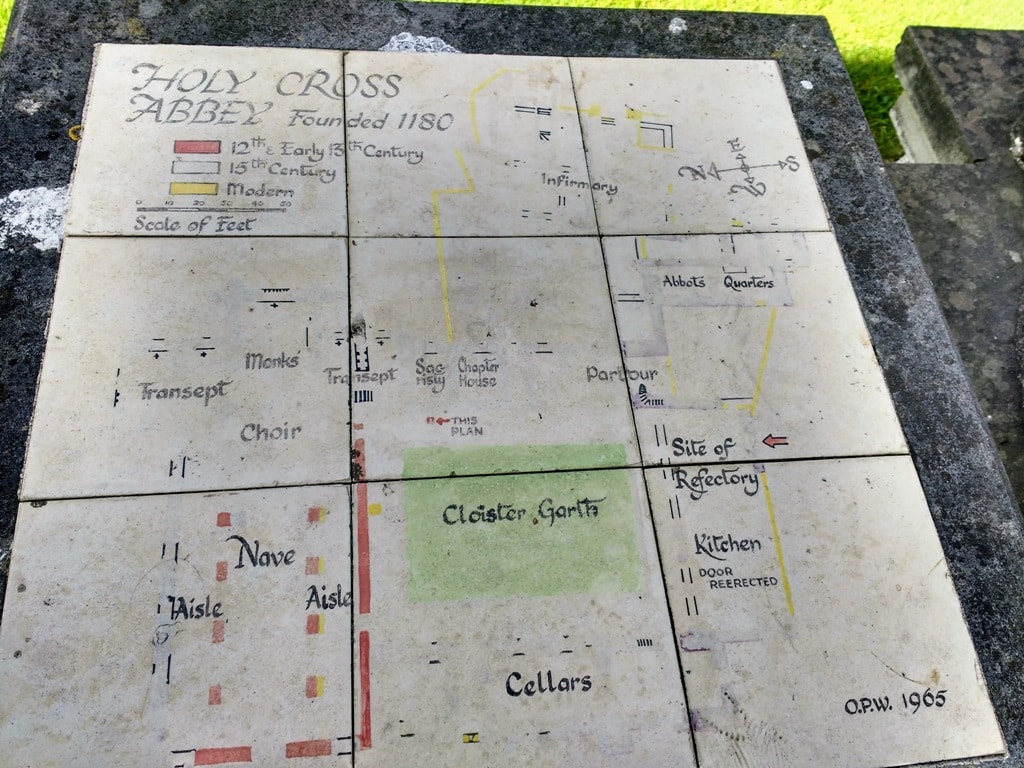
Holycross is a very special and sacred place where you can walk in the footsteps of ancient Monks. Experience firsthand, the beautifully restored 12-century Cistercian Abbey through local guides, where the story of Holycross, spans 10 centuries of a changing social, political and religious landscape, in the very heart of Ireland.
History of Holy Cross Abbey
Home of the sacred relic of the True Cross location Holy Cross Abbey was founded by Dónal Mór Ó Briain, King of Limerick, in 1182AD. The name Holy Cross comes from the relic of the ‘true cross’ or ‘holy rood’ that was believed to be gifted to the Abbey by the Plantagenet Queen Eleanor of Aquitane, widow of King John, in return for the monk’s kindness in burying her son who was murdered nearby in 1233.

It is more likely that the original relic at Holycross was probably the same relic presented in 1110 by Pope Pascal II to Muirchertach Ó’Briain, Domhnall’s grandfather. The relic was likely gifted to the abbey either in 1169 or 1181/2 by Domhnall Mór Ó’ Briain.
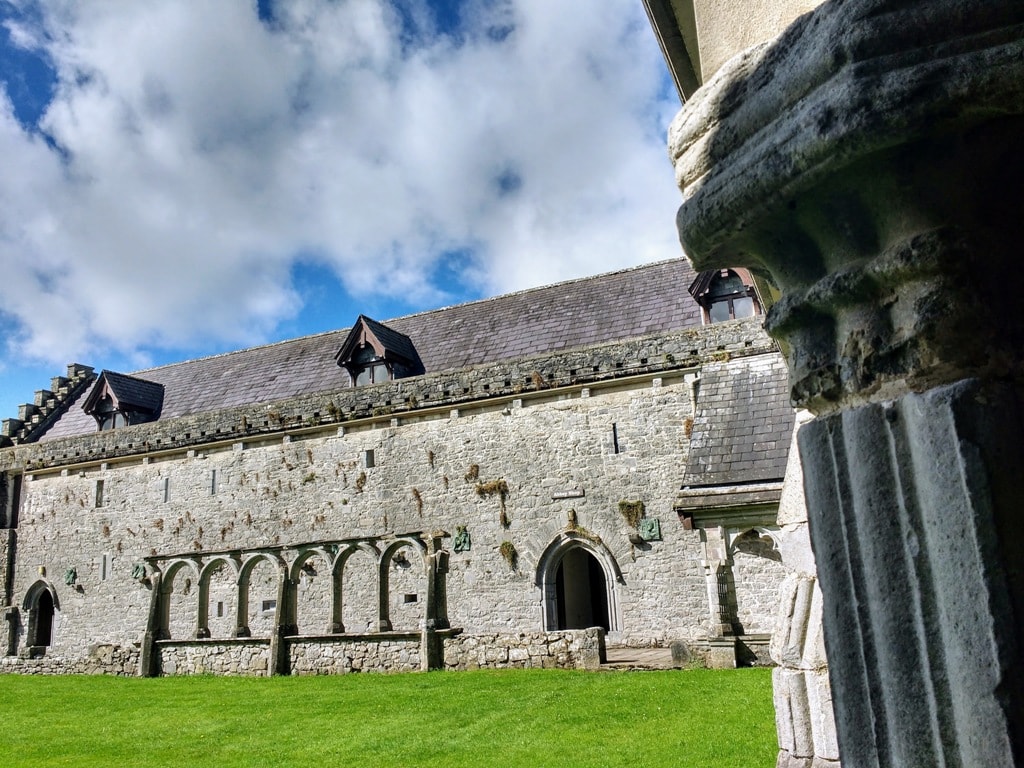
Legends of Holy Cross – Eleanor of Aquitaine and the Relic of the True Cross
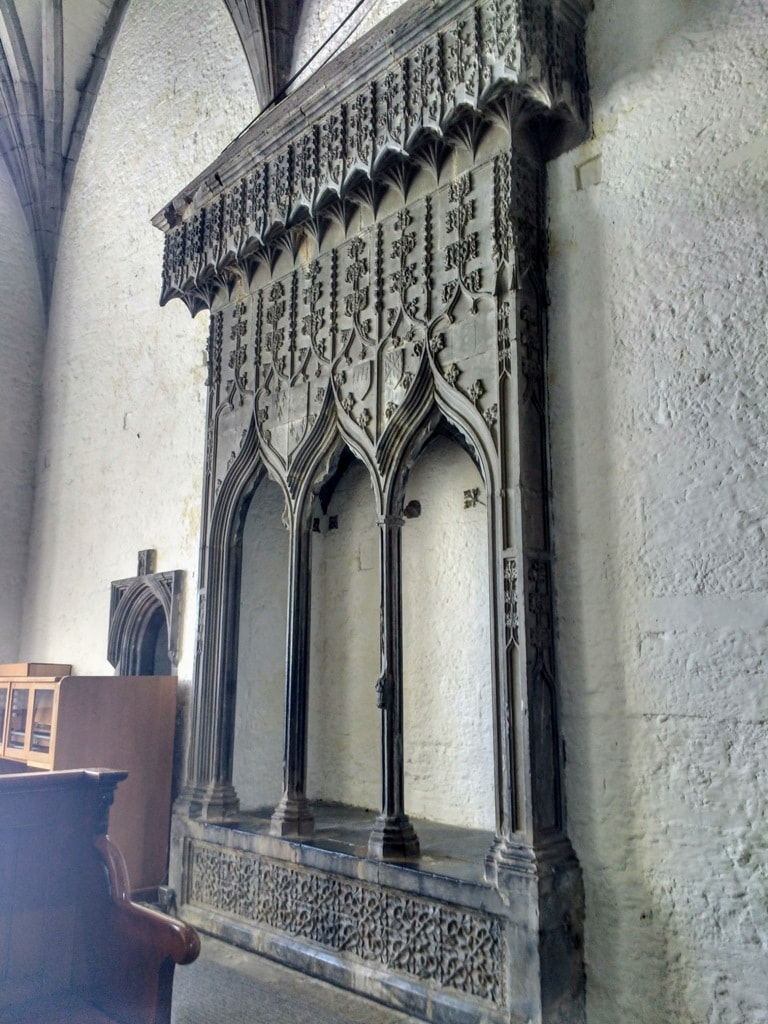
Legends and folk tales say that the relic was a gift from Eleanor of Aquitaine say that ‘Pierce the fair’, was Eleanor’s son by her second husband Le Brun, Count of La Marche and the half brother of Henry III of England. A local legend says that the limestone sedilia structure in the Church is the burial canopy. The legend says that Pierce was in Ireland collecting taxes and was murdered by the O’Fogarty Clan who half-buried his body in the woods not far from the Abbey.

Two years after the murder a blind monk had three dreams instructing him to go to the wood where he would recover a great treasure that would bring the Abbey fame and where he would be miraculously cured of his blindness.
With the blessing of the abbot he and a guide set out and found the scene as described in the visions. Nearby, they found a hand protruding from the ground, and on one finger of the hand was a gold ring. The body was brought back to Holycross and buried and the young man’s mother upon hearing the news gifted the abbey a relic of the true cross. In the place where the prince was buried a spring appeared, and this became known as the Good Woman’s Son’s Well. The legend has never been written about in the history books so it may or may not be true.

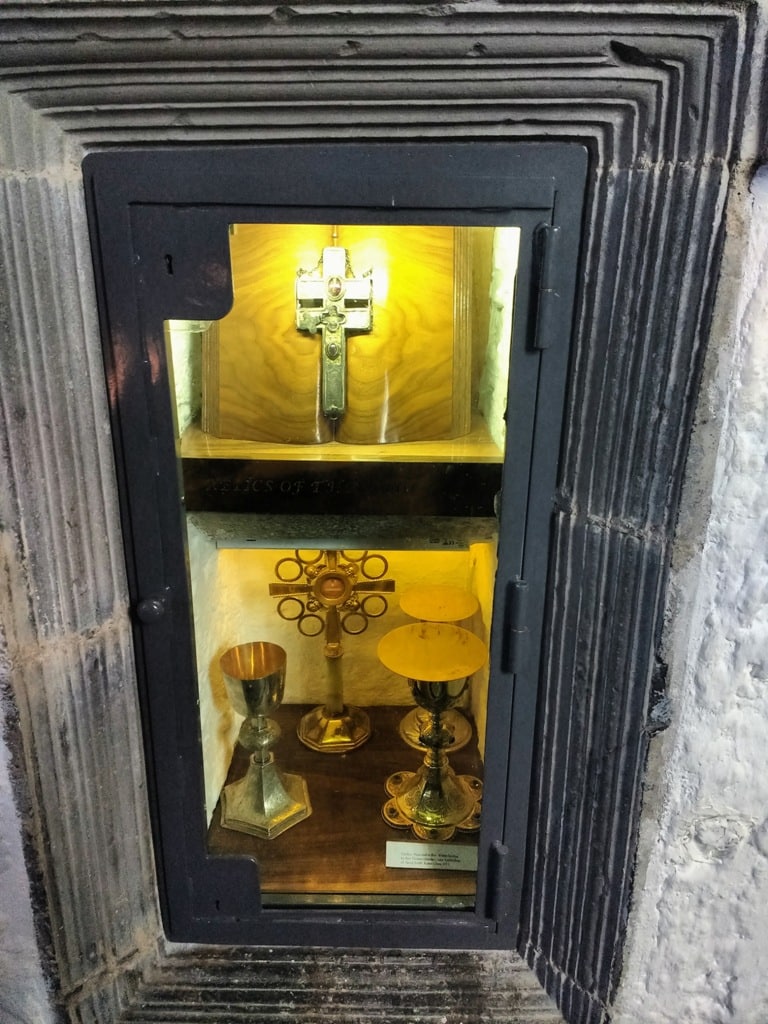
The relic of the True Cross was set in Gold and adorned with precious gems and folks made the pilgrimage from miles around and from all over Europe to view this true relic and hope their prayers to it would come true.
The relic brought massive wealth to Holy Cross Abbey as those who came on pilgrimage would stay for 2 nights free but their donations to the Abbey assisted in making the Abbey one of the richest in Ireland.
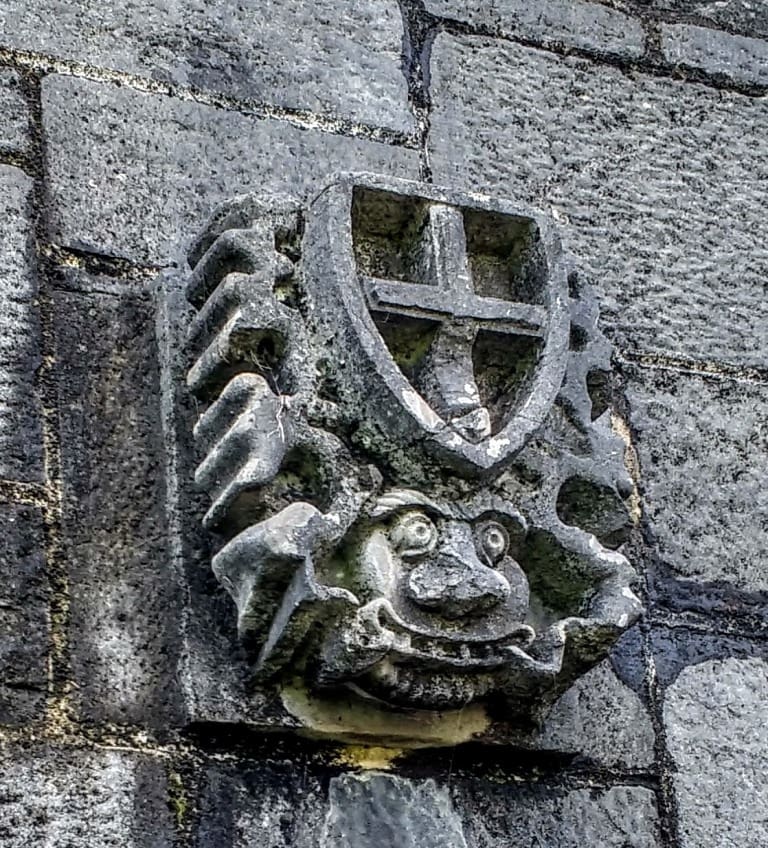
The Butler’s and Holy Cross Abbey
Around 1400AD the Butlers of Ormond were patrons and many renovations were carried out. A second relic, the Ormond Relic, was enshrined in the Abbey. Many of the unique architectural features date from the 15th-century rebuild.
It is believed by historians that through the generosity of pilgrims the Earl of Ormond re-modelled Holy Cross to attract more pilgrims. Alterations were often designed to make the relics more visible and accessible.
The reformation began the decline of the religious community at Holycross. In 1534 Willian Dywer, then Abbot resigned his office and by the 17th century Holy Cross had fallen into ruins.

Restoration of Holy Cross Abbey
The abbey and its church remained in ruins until the 1970’s when a special act of allowed for its re-consecration and restoration. This began one of the most elaborate restoration projects in Ireland and in 1971 the project began with no government funding. The restoration was very faithful to the original. All materials used such as the oak, slates and slabs were mainly from Irish sources.
The Ormond Relic of the True Cross was gifted back to the Abbey by the Ursuline Nuns, in Blackrock, Cork. In 1985 a priest was again in residence providing daily religious services and pastoral care for parishioners, pilgrims and visitors to the Abbey.

The Highlights of a visit to Holycross Abbey
It has the widest range of window patterns and tracery of any medieval building in Ireland. No two windows are the same.
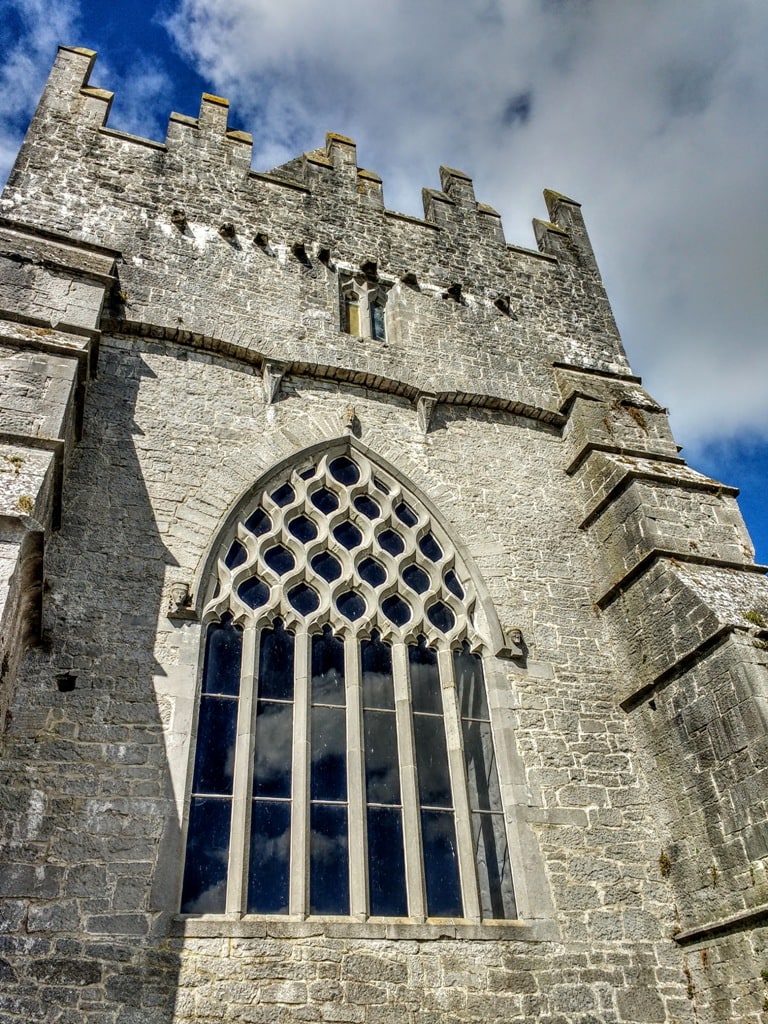
The sanctuary and the north transept have the finest ribbing of the period.
Tourists can ring what is reputedly to be the oldest church bell in Ireland. It was manufactured over 750 years ago, probably around 1225 AD.
Admire the only surviving medieval chapter house doorway in Ireland.

The arcading of the cloister is beautifully executed.
There is also a whispering arch.
True Cross Relics
Good Woman’s Tomb
This is one of the finest examples of medieval furniture in Ireland. It is carved out of blue Tipperary limestone with pillared arches and is thought to be either a sedilia which was seating for the Bishops or a tomb for the remains of Eleanor’s dead son, and even a shrine for the True Cross.
The Whispering Arch
Hearing Confessions… The “Whispering Arch” in Holycross Abbey is said to have been used by the monks to hear the confession of sins not only privately but to keep the spread of disease to a minimum. There’s a little channel carved out in the arch which allows a whisper spoken on 1 side to be heard on the other side while maintaining a safe distance.

Waking Bier of the Monks
The ‘Waking Bier of the Monks’, situated between the two south transept chapels may have been used as a shrine for one of the relics of the True Cross.

Holy Cross Abbey is one of those sacred places in Ireland that emanates peace and tranquillity. Situated beside a river and an ancient ruined watermill Holy Cross Abbey would be a shame to miss on your trip to Ireland.
Start Planning Your Trip
👉 Public Transportation in Ireland
👉 Hidden Gems in Ireland – 32 Secret places to visit
👉 Answering all your travel questions about Ireland
👉What to pack for your Ireland trip
👉 Northern Ireland Public Transportation
There are 26 counties in the Republic of Ireland and you can start discovering them all
Carlow – Ceatharlach Four lakes though the lakes are now gone
Dublin -Baile Átha Cliath Town of the hurdled ford
Kildare – Cill Dara Church of the oak
Kilkenny – Cill Chainnigh Church of Cainnech a saint
Laois – Laois Named after the Uí Laoighis tribe
Longford – An Longfort The fortress or ship port
Louth -Lú – Named after the god Lugh
Meath – An Mhí The middle once the heart of Ireland
Offaly – Uíbh Fhailí Descendants of Failí a tribal name
Westmeath – An Iarmhí West Meath
Wexford – Loch Garman Lake of Garman a mythical figure
Wicklow – Cill Mhantáin Church of the toothless one a monk
Clare – An Clár The plank a bridge across the River Fergus
Kerry – Ciarraí People of Ciar a tribe named after a dark-haired warrior
Limerick – Luimneach Bare spot or bare marsh
Tipperary – Tiobraid Árann Well of Ara a spring near the River Ara
Waterford – Port Láirge Lárag’s port a Viking leader
Galway – Gaillimh Stony river named after the River Corrib
Mayo – Maigh Eo Plain of the yew trees
Roscommon – Ros Comáin Wood of Comán a saint
Sligo – Sligeach Shelly place plentiful shellfish in the river
Cavan – An Cabhán – The hollow
Donegal – Dún na nGall Fort of the foreigners
I am trying to get information on hand made woven chairs and benches I believe were available to buy from the Abbey. Do you have any info on that?
I’ve looked for you but haven’t heard of anything so I’m asking friends who live in the area and hopefully they will get back to me. Was this near Holy Cross you saw them? The Abbey itself only really sells Catholic and Christian type products