
Living in the Yucatán as an Expat: 14 Tips From a Year in Chelem
Is the Yucatán a good place for expats? Yes, if you can handle heat and humidity. It has a large, established community of Canadian and American expats and snowbirds, centred on Mérida and the Gulf coast villages. The state is rated Level 1 (“exercise normal precautions”) by the US State Department, the Gulf coast is far quieter than the Caribbean side, and it is generally cheaper than Canada or the US. The trade-offs are the summer heat, hurricane season, tap water you can’t drink, and plumbing that can’t take toilet paper.
We moved to the Yucatán, specifically Chelem, as part of our retirement plan. As boomers on a limited income we were looking for somewhere affordable to retire, and after a lot of searching we decided the Yucatán’s Gulf coast was the best place in Mexico for us. So we sold everything we owned and got on the first flight to Mérida.
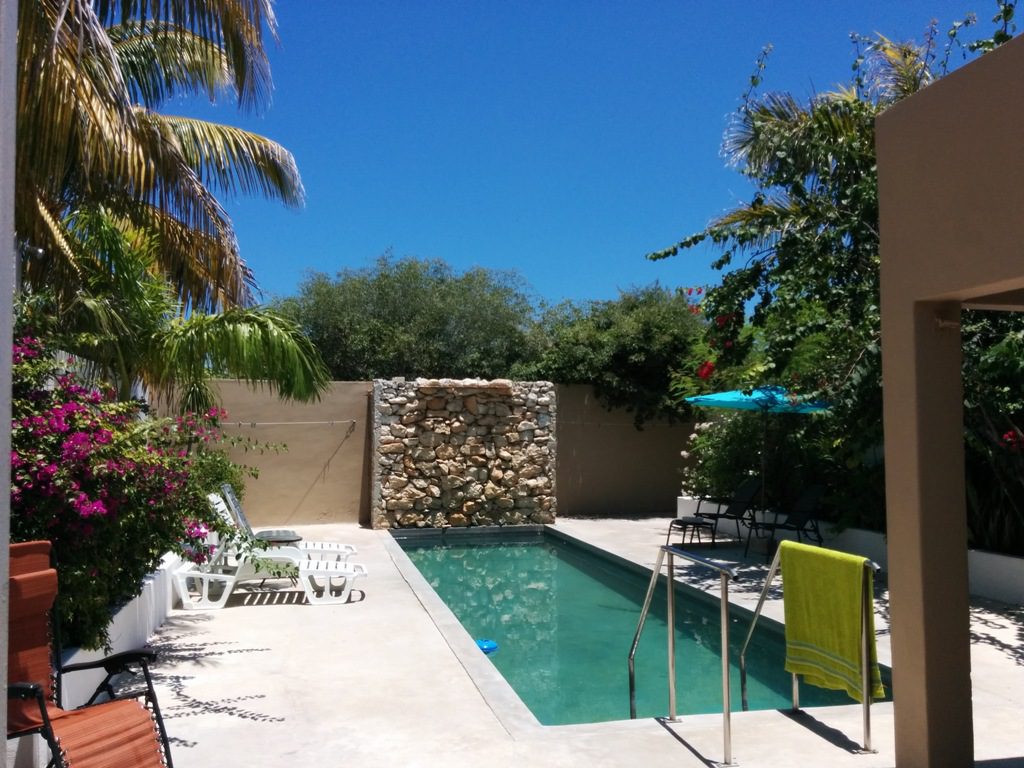
We had researched living in Mérida as an expat, but we wanted to be out of the city and near the beach. Mérida is easy to live in, but the summer heat is punishing: we saw temperatures over 45°C. From Mérida we headed to the Progreso area and then on to Chelem, where we had booked a short-term apartment at the Bullpen, which sounds terrible but was an excellent place to touch down.
I ended up living in Chelem for over a year. There is a lot of negativity about retiring to Mexico, and uprooting yourself and moving to a new country is never easy, but I found being an expat here a relatively easy thing to do. Our friends and family in Canada all wanted to visit, so I wrote this guide so they would know what to expect. It is for anyone wondering what life is really like for expats in the Yucatán, and especially on the Gulf coast. For the full village story, see my guide to living in Chelem.
- Living in the Yucatán as an Expat: 14 Tips From a Year in Chelem
- Fast Facts: Living in the Yucatán (Chelem and the Gulf Coast)
- 1. Getting There: Flights, the Tren Maya and Airport Transfers
- 2. Choose Between Mérida and the Coast, and Rent Before You Buy
- 3. Where Expats Live in the Yucatán
- 4. Finding the Expat Community
- 5. Expect Contrasts, and Know That It Is Safe
- 6. Deal With the Bugs (and Love the Geckos)
- 7. Plan for the Heat, Air Conditioning and Hurricane Season
- 8. Never Drink the Tap Water
- 9. Don't Flush the Toilet Paper
- 10. Tipping, Change and Gas Stations
- 11. Getting Around: Collectivos, Taxis, Uber and Buses
- 12. What Things Actually Cost, Including Buying a House
- 13. Shopping and Food: What Is Different From Home
- 14. Sort Out Your Visa and Healthcare Before You Go
- Frequently Asked Questions About Living in the Yucatán
- Is Living in the Yucatán Worth It?
Fast Facts: Living in the Yucatán (Chelem and the Gulf Coast)
| Where I lived | Chelem, a fishing village on the Gulf of Mexico in Yucatán state, about 40 km north-west of Mérida and just beyond Progreso |
| Nearest airport | Mérida International (MID), roughly a 45-minute drive from Chelem |
| Direct flights from Canada | WestJet Toronto–Mérida (about three a week when checked in 2026); new seasonal WestJet Calgary–Mérida from 17 Dec 2026 to 1 Apr 2027 |
| Airport transfer to Chelem | Roughly 950–1,200 pesos by airport taxi or shuttle; cheaper by bus and collectivo (see Tip 1) |
| Expat community | Large and established, mainly Canadians and Americans, in Mérida, Progreso and the coastal villages such as Chelem and Chuburná (see Tip 4) |
| Best months | Roughly October to March; the coast is quiet and mild. Summers are hot and humid |
| Hurricane season | 1 June to 30 November; the northern coast is exposed (see Tip 7) |
| Safety | Yucatán is one of only two Mexican states rated Level 1 by the US State Department (June 2026) |
| Minimum wage | 315.04 pesos a day in 2026 (up 13% from 278.80) |
| Tap water | Not drinkable. Buy 20-litre garrafones of purified water |
| Toilet paper | Goes in the bin, not the toilet |
| Staying longer than 180 days | You need a residency visa, applied for at a Mexican consulate before you travel (see Tip 14) |
1. Getting There: Flights, the Tren Maya and Airport Transfers
The Gulf of Mexico side of the Yucatán is very quiet, at least in winter, which is a big part of why so many expats and snowbirds come here. There are two main ways to arrive.
- Fly direct to Mérida. WestJet flies non-stop from Toronto, and we found some incredible deals. Skyscanner showed about three flights a week in 2026, and WestJet has announced a new seasonal Calgary–Mérida route running 17 December 2026 to 1 April 2027 (Riviera Maya News). Schedules change, so check with WestJet before you plan around them.
- Fly into Cancún and go overland. When we came, the bus was the way to go: about four hours to Mérida on a good express coach that cost around $60 Canadian. The Tren Maya now links Cancún Airport with Mérida’s Teya station in roughly 3½ hours, and fares were reduced in 2026. Check current prices and book on the official Tren Maya ticket site.
Mérida’s airport is small, much like a regional Canadian airport, and easy to navigate. Many of the staff speak English, which is very helpful when you arrive tired.

Getting from Mérida airport to Chelem
Chelem is around a 45-minute drive from the airport. Your options:
Airport to Mérida Centro (Public Bus): Around 8 MXN if you walk 10–15 minutes outside the airport property to catch a public SITUR bus. (An airport taxi for this first leg costs significantly more, typically around 300 MXN or more).
Mérida Centro to Coast (Auto Progreso / Local Bus to Progreso/Chelem): Generally around 50–70 MXN for the bus to Progreso, plus a short local taxi or colectivo to Chelem.
Alternative (Private Shuttle/Taxi Direct): A direct taxi or private transfer from the airport all the way to Chelem costs about 480–600+ MXN (or much higher for private door-to-door services like Wayak)
2. Choose Between Mérida and the Coast, and Rent Before You Buy
Mérida is a wonderful city with culture, restaurants and every North American shop you might miss, and living there is easy. But it is a long way from the sea and the heat is fierce. We wanted to be near the beach, so we based ourselves on the Gulf coast in Chelem, next door to Chuburná, a favourite expat enclave with a village square, shops, restaurants and collectivos, and a quick run into Mérida when we needed the city.
Whichever you pick, rent first. Long-time local expat advisers recommend renting a furnished place month-to-month for at least six months and making sure your stay includes May, so you experience the worst of the heat before you commit (Yucatán Today). Don’t rush to buy: Mérida has also lost some of its old price advantage and is now closer to the national average cost of living, according to a Yucatán finance executive quoted by Por Esto.
3. Where Expats Live in the Yucatán
Most expats end up in one of a few places. Which one suits you depends mostly on how you feel about heat, city life and the sea.
- Mérida: the state capital and the biggest expat hub, with a large North American community, shops, culture and hospitals. It is also the hottest option, being inland.
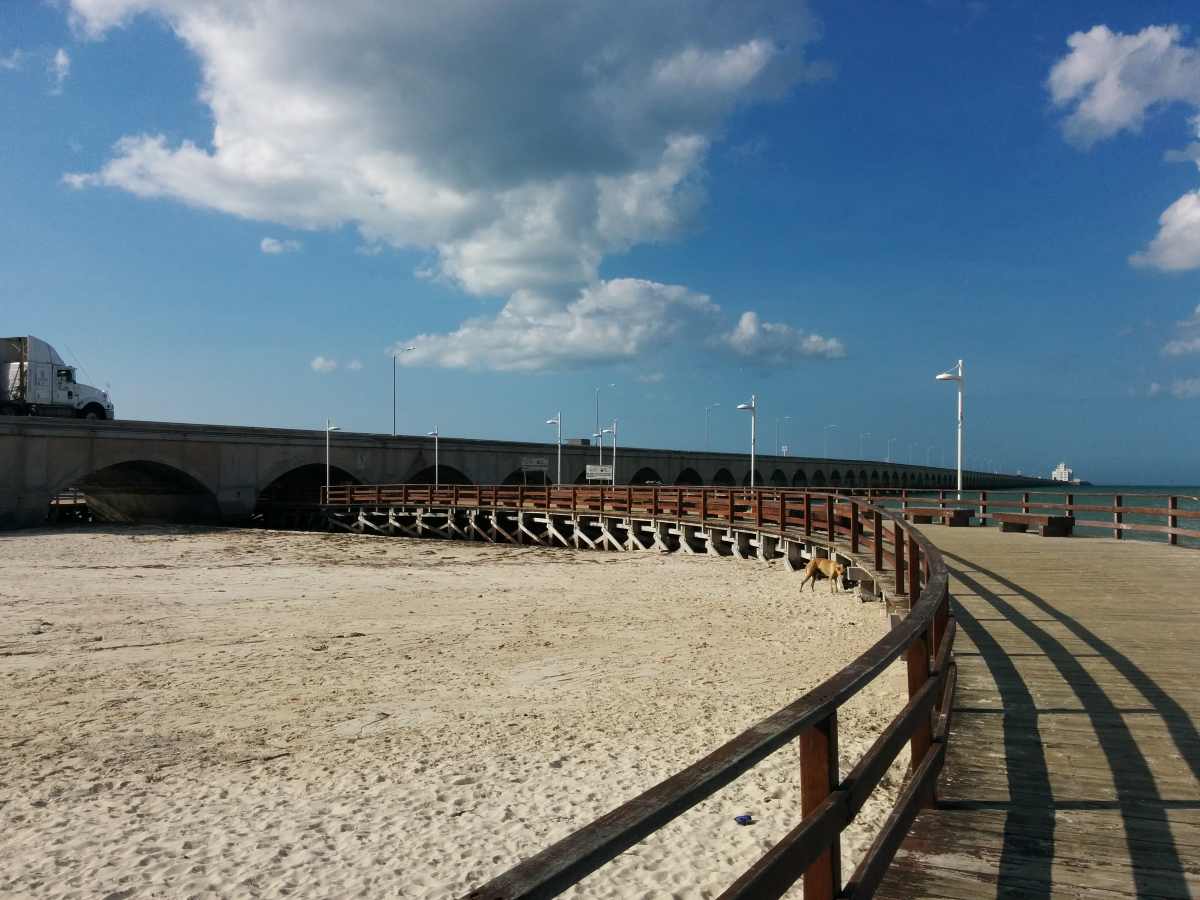
- Progreso: the port town on the coast, about an hour from Mérida by bus. It has a boardwalk (the malecón), a bus terminal near it, and the larger-town services the villages send you to.
- Chelem: the small, older fishing village where I lived, with a range of shops, restaurants and collectivos. Prices to rent and buy are cheaper than in some other areas, and to reach it you head west on the overpass before entering Progreso.
- Chuburná: right next door to Chelem and a favourite expat enclave, with many of the restaurants and bars run by retired expats.
- Chicxulub Puerto and the wider coast: more small villages along the same road, with the Muelle Market at Chixculub, and further afield beaches such as Celestún that are described as cosier and more secluded.
If you can, spend time in two or three before you choose. A Chelem or Chuburná rental will feel very different from a flat in Mérida’s historic centre.
4. Finding the Expat Community
The community is easy to find, and it is one of the best things about living here. Expat websites such as Yucatán Living and the Yucatán Times cover events, news, facilities and hospitals, and there are several expat Facebook groups where you can get the latest advice, meet people and buy or sell things (Expatra). Mérida has an English-language library that local expat advisers suggest as one of your first stops (Yucatán Today).
On the coast, the community gathers around the expat-run restaurants and bars in Chelem and Chuburná, the village square in the evenings, and the weekly markets and food groups listed in Tip 13. Many Canadians arrive as snowbirds for the winter, when the weather is at its best and the coast is quiet. Local expat advisers also suggest learning some Spanish, whatever the size of the community around you.

5. Expect Contrasts, and Know That It Is Safe
Progreso, Chelem, Chuburná, Chicxulub and the other small villages along the coast are by no means rich. You will see real poverty, garbage on the roads, run-down houses and shacks, and lots of street dogs. Don’t let it put you off. Many Mexicans live on very little: the national daily minimum wage is 315.04 pesos in 2026 (about US$17), after nine years of double-digit rises, but it is still a modest income (Mexperience). As an expat you can do what you can to help, but you can’t fix it, and it is slowly getting better. What constantly amazed me was the spirit, kindness and generosity of the people.
We were very lucky to live in the safest part of Mexico. In June 2026 the US Embassy rated only Yucatán and Campeche at Level 1, “exercise normal precautions”, while most other states are rated higher (Riviera Maya News). To help keep it that way you will see a big police and army presence. Standard precautions still apply, and it is worth reading the current US State Department advisory for Mexico before you travel.
Is Chelem safe? Is Progreso safe?
I lived in Chelem for over a year, in a quiet village where neighbours gather in the square in the evenings, and I felt safe. The ratings above are set at state level rather than town level, so they apply to Progreso and the villages along the coast too, but no rating is a guarantee. Use the same common sense you would anywhere: don’t walk deserted streets alone at night, keep valuables out of sight, and pay attention to local advice.
The safest places to live in Mexico
If safety is your first filter, start with the two Level 1 states, Yucatán and Campeche. Yucatán is also the one with a large, established expat community and direct flights from Canada. It is no longer the cheapest option, but it is still generally cheaper than Canada or the US.
6. Deal With the Bugs (and Love the Geckos)
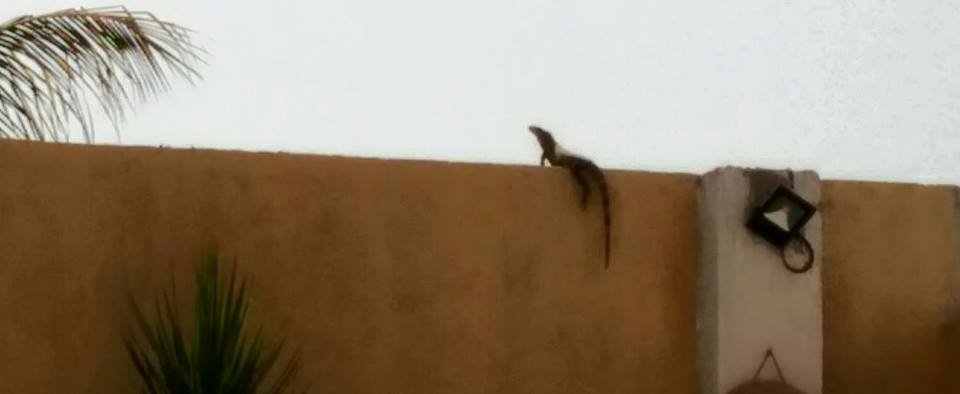
Yes, there are a lot of bugs, but they are easy to manage. Spray the house (remove any pets first) and take preventative steps before they get inside. “Bugs” does not include geckos and lizards: you need those, because they eat the bugs. This is Godzilla, our local iguana, and as it gets dark you can hear the lizards chittering as they go to work on the mosquitoes.
In mosquito season you will want screens, nets and a repellent you trust. DEET is the most reliable, but some people prefer to avoid it, and there are plenty of alternatives. Mosquito-borne illnesses such as dengue do occur in Mexico, so cover up at dusk and don’t leave standing water around the house.
7. Plan for the Heat, Air Conditioning and Hurricane Season
Chelem can be a difficult place to live because the heat and humidity can be overwhelming. It is not easy living in the Yucatán if you don’t like heat and humidity, but it can be an amazing place to retire if you have air conditioning. Budget for it, and expect it to make a real difference to your electricity bill.
The Gulf coast is also exposed in hurricane season, which runs from 1 June to 30 November. In October 2024, Hurricane Milton passed as a Category 5 storm roughly 35 miles north-north-west of Progreso before turning towards Florida (Crisis24), and forecasters warned of a storm surge of 4 to 6 feet above ground along the northern Yucatán coast (National Hurricane Center). If you rent or buy near the water, ask about flooding and shutters, and keep your documents and an evacuation plan ready. Mérida, being inland, is far less exposed.
Weather in Progreso and Chelem by month
The coast is hot all year with a dry winter and a wetter summer. These are average daily highs for Progreso from 1991–2020 (Climate-Zone):
| January–February | About 27–29°C. The coolest, driest months and the best time to visit |
| March–April | About 31–32°C and heating up, with very little rain |
| May–June | About 33°C. The hottest months on the coast, and humidity climbs as the rains begin |
| July–September | About 32°C with the heaviest rainfall, and the peak of hurricane season |
| October–November | About 29–31°C. Rain tails off and the weather starts to turn comfortable |
| December | About 28°C. Dry, mild and busy with snowbirds |
Inland Mérida is hotter than the coast: the airport station averages highs near 38°C in April and May (Time and Date). That difference is part of why the coast appealed to us.
8. Never Drink the Tap Water
No, you can’t drink the tap water here; you must use bottled or purified water. You can wash dishes with tap water and take a shower, and we brushed our teeth with it (just don’t swallow). There are many freshwater wells and some houses have two or three, so water from the well is cheap and there is no city charge. Drinking water comes in 20-litre garrafones, which cost around 15 pesos when we lived there, and is not a bad investment at all.
9. Don’t Flush the Toilet Paper
You can’t flush toilet paper, which horrifies most expats who are used to extensive sewer systems and hotels where you can flush everything. The Yucatán has a very low water table and sits on porous limestone, so it is almost impossible to build a proper septic system with a leach field. Most older homes have concrete pipes running to a concrete tank, and all the wastewater ends up there.
Mexicans are the cleanest people I have ever known, and they use bleach and heavy household cleaners. Unfortunately that kills the bacteria a cesspit needs to work and can cause plenty of problems. Put the paper in the bin beside the toilet, and go easy on the bleach.
10. Tipping, Change and Gas Stations
Tipping is always an interesting exercise. These are the amounts we used when we lived there:
- Grocery baggers: around 5 pesos for a student, 10 pesos for an older person.
- Parking-lot helper: an older gentleman will help you reverse out with your groceries, and 5 pesos is worth it.
- Restaurants: 5–15%. Us gringos tend to tip more because we don’t pay attention to the change we have.
- Gas station: tip the attendant who washes your windows and buffs them front and back at least 10 pesos.
Watch your change. You don’t want to look hyper-vigilant and expect to be ripped off, but count it. This happens less in bigger stores and less again when you pay by card.
At the gas station, check that the pump is zeroed before the fuel starts. It is best to hand over the amount you want in cash rather than asking for a full tank or paying by card. Even so, please don’t be obnoxious about it.
11. Getting Around: Collectivos, Taxis, Uber and Buses
Collectivos
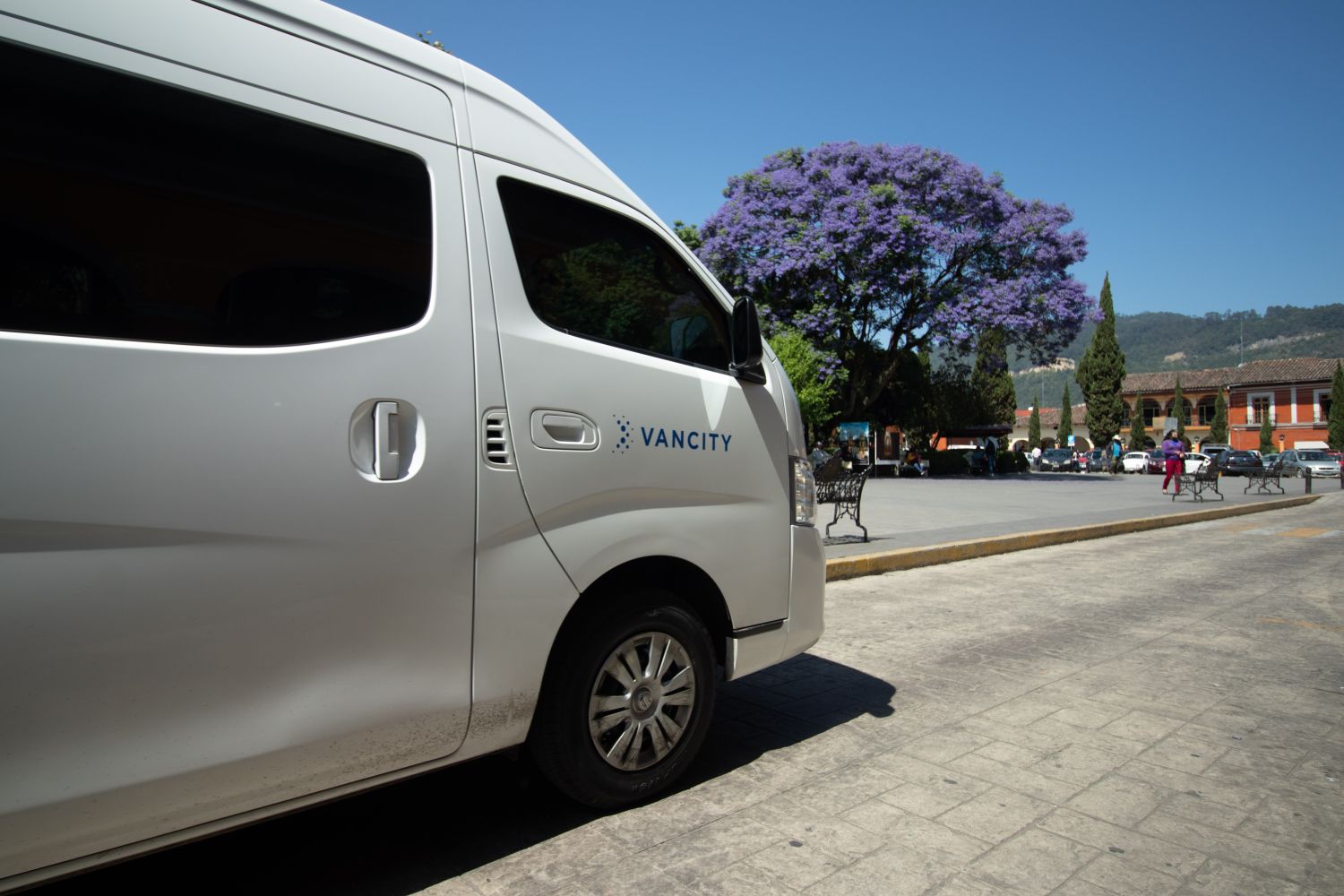
Collectivos are the small van-style buses that run between the villages and towns. In Chelem there is a “main” stop by the square where you can catch one to Chuburná, Chicxulub, Yucalpetén or Progreso, or you can simply flag one down. Jump on, grab a seat and hang on. When your stop is coming up, stand and tell the driver you want to get off. You pay when you get off, not when you get on, and the fare was around 9 pesos when we lived there (expect a little more now).
Taxis, Uber and buses
Taxis are incredibly reasonable, but always ask the price before you get in. Uber also works on this stretch of coast: the average fare shown for a Chuburná–Chelem ride is around 80 pesos (Uber). For Mérida, Autoprogreso buses run regularly between Progreso and the city centre. If you plan to explore, renting a car is good value in the Yucatán.
12. What Things Actually Cost, Including Buying a House
Booze is cheap here, and it comes in full litre bottles. When we lived there Alan bought a bottle of Jameson whiskey for 260 pesos ($20 Canadian, versus about $60 at home) and a bottle of Bacardi Añejo rum for $8 Canadian. A can of Guinness was around $2 and a can of the well-reputed Cerveza around $1, if that. Naturally you will want to stock up on tequila for margaritas at home. Prices have risen since then, but the gap with Canadian liquor prices is still big.
For everyday food, Yucatán market prices reported in late 2025 were about 22–28 pesos a kilo for tortillas, 40–48 pesos a dozen for eggs and 60–75 pesos a kilo for whole chicken (Por Esto). Fruit and vegetables are cheapest at local markets.
Housing is the biggest variable. Rentals in the Chelem and Chuburná area range from about US$800 to US$5,000 a month depending on the house and season, and prices for buying are lower than in many other coastal areas. In 2026 listings, houses in Chelem village with two or three bedrooms were being offered from roughly 3.2 to 4.5 million pesos (Mercado Libre). Always rent for a while before buying. Foreigners who buy within 50 km of the coast, which includes Chelem and Progreso, generally do so through a bank trust (fideicomiso) rather than holding title directly, so use a reputable Mexican notary and lawyer.
13. Shopping and Food: What Is Different From Home
From food to real estate it helps to know the tips from people who live there. These are the food hacks I picked up as I got used to Mexican products and the differences in basic items from North American or European brands.
- Eggs: don’t be surprised when most Mexican eggs are not refrigerated. They are not washed and treated as they are in Canada and the US, so they keep their natural protective coating. If you buy eggs from the fridge, keep them in the fridge; if you buy them off the shelf, keep them out of it.
- Butter: Mexican butter has a distinctive odour and taste that most non-Mexicans don’t like. Lurpak (Danish) and Challenge (from the USA) are available in the better grocery stores, and Kirkland unsalted is available at Costco. Some say Mexican unsalted (“sin sal”) butter is better, and many recommend the LaLa brand.
- Deli meats and hot dogs: deli meats are a rare find, and there is no such thing as an Italian deli. Some are available in the better grocery stores. Avoid FUD hot dogs and pick up hot dogs at Costco if you really need a fix, or try Anita the Sausage Lady, who makes hot dogs and sausages from scratch.
- Bread: in the shop you grab a big flat metal tray and a pair of tongs, load up your choices and take it to the desk for a price sticker. Much of the bread is sweet (pan dulce), which is probably why the butter is unsalted. Packaged bread is sweet too, and can be off-putting in a ham sandwich. Bimbo, which owns Wonder Bread, is the choice for plain white bread, and the whole-wheat and whole-grain options actually taste pretty good and seem to have much less sugar.
- Cheese: Oaxacan cheese is very similar to mozzarella, and Manchego is similar to Cheddar but not quite the same. Most expats go to Costco and buy a large block of Cheddar and freeze it along with their Kirkland butter.
- Deliveries and rubbish: in many neighbourhoods the daily bread, water garrafones, fish, tortillas and tamales are delivered by people on bikes and motos. The propane gas truck also passes through, and you will recognise it by the high-pitched recorded voice singing “Flete, flete el gas!” In Progreso, private pick-up of all your rubbish bags was around 15 pesos when we lived there. In Chelem and Chuburná the rubbish is supposedly collected twice a week, though many complain it sometimes happens once a week and sometimes once a month.

Food and supply resources (as of when we lived there)
These were the places and groups we relied on. Businesses and market days change, so confirm before you go.
- Merida Food Hunt (Facebook page): an amazing resource for where to find spices, herbs, meats and other items.
- Merida Epicure (Facebook page): anything to do with food, from restaurant reviews to cooking classes.
- Slow Food Market Yucatán: Saturdays in Mérida 9am–1pm and Wednesdays 6pm–9pm.
- Natural Thangs Farmers’ Market: Monday mornings, except during the off-season, generally the end of May until September.
- Muelle Market: Chixculub.
- Anita the Sausage Lady: Italian sausage, bratwurst, salami and more, sold at Natural Thangs, Muelle and the Gypsy Market, and sometimes from her house.
- Rancho Haltun Xiki: a working farm providing organic produce and meat, including lamb, mutton, turkey, chicken, duck and eggs.


14. Sort Out Your Visa and Healthcare Before You Go
Visas and residency
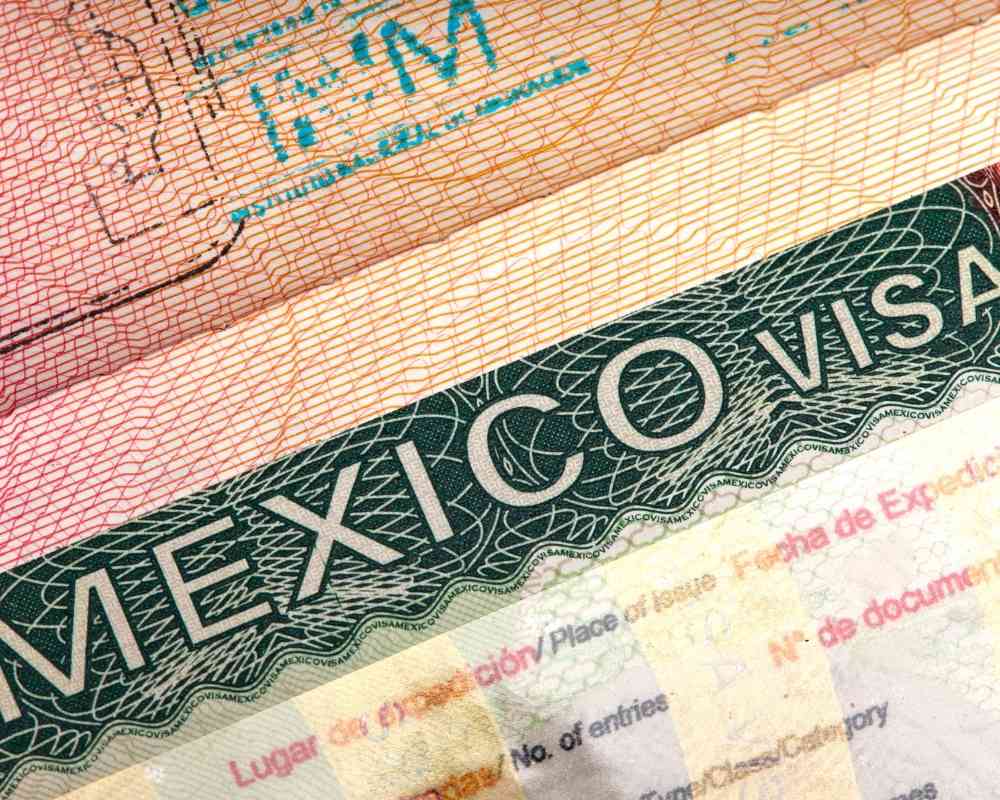
Tourists and short-stay visitors normally get a visitor permit (FMM) of up to 180 days. To live in Mexico longer you need a residency visa, and the rules have tightened. Since mid-2025 Mexican consulates have based the financial requirements for a Temporary Resident visa on the UMA index rather than the minimum wage. For 2026 that works out at roughly US$4,300–4,400 a month in income over the previous six months, or roughly US$74,000 in savings or investments averaged over the previous twelve months, though it varies from consulate to consulate (Migaku). After four years of temporary residency you can apply for permanent residency (SmartAsset).
If you are retiring on a limited income like we were, check the thresholds with your nearest Mexican consulate first, before you sell your house. Requirements change, often yearly.
Healthcare
Mérida has both public and private hospitals. Private hospitals such as Clínica de Mérida and Star Médica are paid out of pocket, so many expats carry international health insurance, and you should not count on Medicare or your home health plan being accepted (Yucatán Living). Some expats join the public IMSS scheme, but pre-existing conditions can be excluded, so read the terms first. In May 2026 Mérida also opened a new public Hospital Agustín O’Horán with 667 beds and 83 specialties (Por Esto). In an emergency in Mexico, dial 911.

Frequently Asked Questions About Living in the Yucatán
Is it safe to live in the Yucatán as an expat?
Yucatán is one of only two Mexican states rated Level 1, “exercise normal precautions”, by the US State Department (June 2026); Campeche is the other. I lived in Chelem for over a year and saw a visible police and army presence. Normal precautions still apply: avoid deserted streets at night, keep an eye on your change and check the current travel advisory before you go.
Is Chelem safe? Is Progreso safe?
I lived in Chelem for over a year in a quiet village and felt safe. US State Department ratings are set by state, so the Level 1 rating for Yucatán covers Progreso and the coastal villages, but no rating is a guarantee. Use normal precautions: avoid deserted streets at night, keep valuables out of sight and follow local advice.
What are the safest places to live in Mexico?
Yucatán and Campeche are the only two Mexican states rated Level 1, “exercise normal precautions”, by the US State Department (June 2026). Yucatán, where Mérida, Progreso and Chelem are, also has a large established expat community and direct flights from Canada, and it is generally cheaper than Canada or the US.

Are there many expats in the Yucatán, and where do they live?
Yes. The Yucatán has a large, established community of mainly Canadian and American expats and snowbirds. Most live in Mérida or on the Gulf coast in Progreso and villages such as Chelem, Chuburná and Chicxulub. Expat websites, Facebook groups and Mérida’s English-language library are good places to meet people.
Can you drink the tap water in the Yucatán?
No. Use bottled or purified water for drinking. Water comes in 20-litre garrafones, which cost around 15 pesos when we lived there. Tap water was fine for washing dishes and showering, and we brushed our teeth with it without swallowing.
Why can’t you flush toilet paper in the Yucatán?
The Yucatán has a very low water table and sits on porous limestone, so many older homes use concrete pipes and tanks rather than proper septic systems with leach fields. Toilet paper and heavy bleach-based cleaners can block these systems and kill the bacteria they need, so paper goes in the bin beside the toilet.
How do you get from Mérida airport to Chelem?
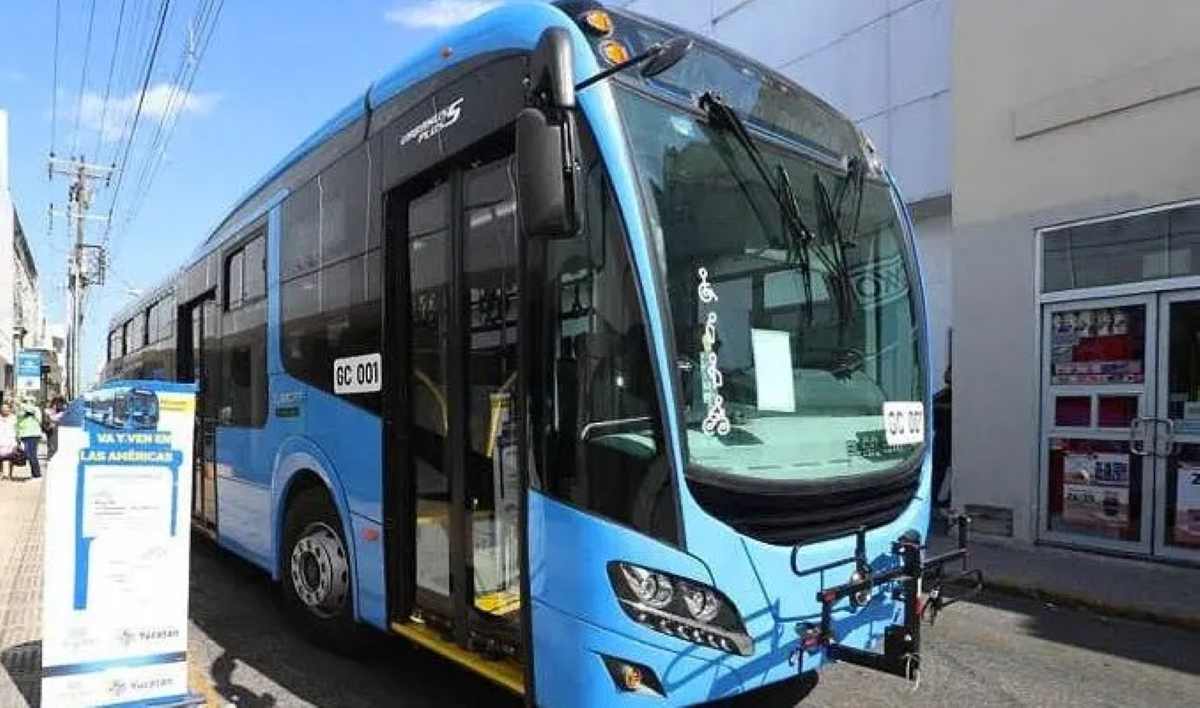
Chelem is about a 45-minute drive from Mérida airport. An airport taxi or shuttle costs roughly 950 to 1,200 pesos. The cheapest route is the Va y Ven bus into central Mérida (about 45 pesos), an Autoprogreso bus to Progreso (about 30 pesos) and then a taxi or collectivo to Chelem. Always agree the fare before you get in a taxi.
How much does it cost to live in the Yucatán?
It depends mostly on housing. Rentals in the Chelem and Chuburná area range from about US$800 to US$5,000 a month, and everyday food is cheap at local markets: in late 2025 tortillas were about 22 to 28 pesos a kilo and eggs 40 to 48 pesos a dozen. Alcohol is far cheaper than in Canada. Mérida is no longer as cheap as it once was and is now close to the national average cost of living.
Can foreigners buy a house in Progreso or Chelem?
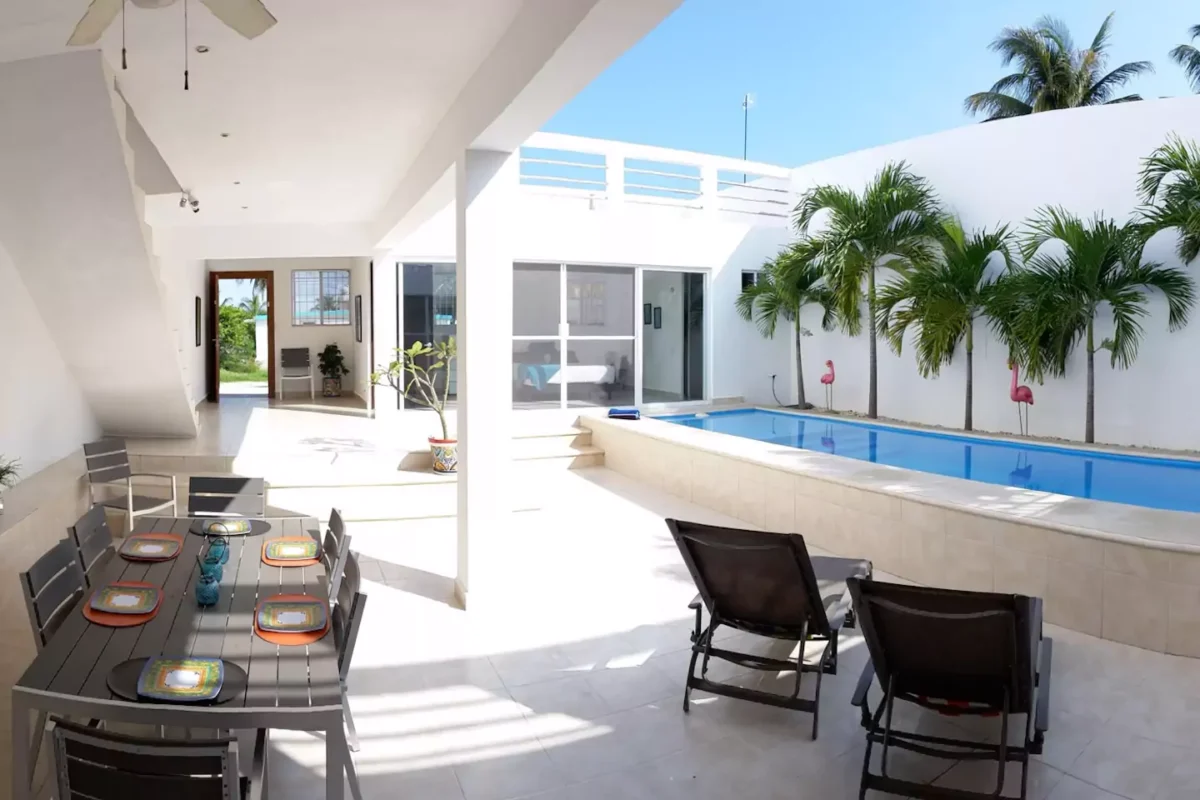
Yes. In 2026, houses in Chelem village with two or three bedrooms were listed from roughly 3.2 to 4.5 million pesos. Foreigners buying within 50 km of the coast generally do so through a bank trust (fideicomiso), so use a reputable Mexican notary and lawyer, and rent for a while before you buy.
Do you need a visa to live in the Yucatán?
You can stay up to 180 days on a visitor permit (FMM). To live in Mexico longer you need a residency visa, applied for at a Mexican consulate. For a Temporary Resident visa in 2026 the financial requirement is roughly US$4,300 to 4,400 a month in income over six months or about US$74,000 in savings over twelve months, varying by consulate, so confirm with your consulate before you move.
What is the weather like in Progreso and Chelem by month?
The coast is hot all year. Average daily highs run from about 27 to 29°C in January and February, rise to about 33°C in May and June, and stay around 32°C through the wetter, stormier months of July to September before easing to about 28°C in December. Inland Mérida is hotter than the coast.
Is the Yucatán too hot to live in, and what about hurricanes?
The heat and humidity can be overwhelming from spring through autumn, and Mérida has hit over 45°C in summer, so air conditioning is essential and the coast is the more comfortable place to be. Hurricane season runs from 1 June to 30 November, and the northern coast is exposed to storm surge, so ask about flooding and shutters before you rent or buy near the water.
Is Living in the Yucatán Worth It?
For us it was. It is not easy if you don’t like heat and humidity, but with air conditioning, a little planning and a sense of humour about the toilet paper, it can be an amazing place to retire.
More on Mexico: Living in Chelem: the expat life · Moving to Mexico · Living in Mexico · Best day trips from Mérida · Mexico’s best drinks · Lucas de Gálvez Market, Mérida · Yucatan Food · Mayan Ruins of Uxmal · Day of the Dead · Best Mexican Foods · Mayan Aluxes · Mayan Traditional Dresses · Food Lovers Guide to Oaxaca
Thanks for this honest and detailed post about your life in Yucatan. It’s one of the most amazing places in Mexico!
Im a single 51 year old African American who is retired veteran. Where will be a great place to live Yucatan. I would like to be close to a grocery store to purchase food. Thanks
Hi Eddie, I would suggest Progreso it may not be the prettiest town ever in Mexico but there is a solid expat groups there that ranges in age with most being from the US and Canada. There is a great men’s organization there that meets up every month and gets involved in a lot of different activities. There are grocery stores there and its easy to get a taxi from say Bodega where most folks shop and the taxi is cheap. Plus there are stores and the mercado in centro and lot of restaurants and bars. Faces for example does some great live music in season from jazz to great blues and rock music played mainly by local expats. The beach is very nice as well with lots to do. If you want a little more quiet Chelem or Chuburna but you will need a car to get to the bank and stores. Running a car is cheap though the insurance costs around 300 US a month although they can be expensive to buy as used cars don’t lose their value like in the US. Join Yucatan Beach Friends on facebook that’s where everyone hangs out and they are real friendly and very helpful with information.
What are the prettiest towns for living on the coast? Looking to move from Medellin.
I have to admit that it all depends on your definition of “pretty”. Most of the coastal areas are small villages and not necessarily pretty in traditional terms. Chelem and Chuburna are nice but not so much pretty. However, there are a lot of ex-pats and some great places to eat and socialize but you have to remember they are very small fishing villages and so the folks who are locals are for the most part much poorer than the transplanted ex-pats. Telchac and Uaymitun have beautiful gulf views and lovely beaches but no real pretty towns or villages along that upper side of the coast.
Hello, we are a family of 5 who is seriously considering a complete change in pace in life, My husband will continue to work in Canada and commute on days off, and the kids and I will stay in Mexico. We are looking at the Progreso area as a place to call home for at min 6-12 months. of course it is all in the thought stage but any extra information, other blogs to follow, anywhere i can get information on the schools in the area ( i have one going into Grade 10 and one going into Grade 7) Also my oldest is now graduated and will be coming with us, for part or the whole time, is there opportunity for him to work locally ( I know it wont pay much he just needs something to do) We would be looking at the smaller towns or just the outskirts of Progeso as we prefer slower paced life. Any extra info you have would be great, and thanks for all you have provided.
Hi Taunia – I would strongly suggest joining the FB group Yucatan Beach Friends. The majority of the folks on their are expats from Canada and the US and they now live in Progreso, Chelem and Chuburna. I personally know of at least 6 or more families with children aged from around 6 up to teenagers although I have to say there were not a lot of teenagers around. Progreso is an easy place to live, there are schools in the town for all ages including secondary and if you don’t have a vehicle it is pretty easy to get around with local buses and walking.
Personally I would suggest Chelem or Chuburna near the beach – if you rent second or third row back from the beach you will find it a much cheaper rent and just as easy to get to the beach. Chuburna has an area called gringo Gulch which is a high populations of expats and they are all pretty friendly. Chelem and Chuburna basically sit side by side and many can’t tell where one stops and the other begins. They are both very laid back places with lots of expats. Jill who runs the Bullpen has two boys my guess is they are between 10 and 15, she moved to Chelem from the US around 6 years ago and has lots of experience with the school systems and knows pretty much everybody. Most of the little restaurants in Chelem are run by expats from Canada and the US. I have posts here about both locations.
However I will say if you rent at the beach (Chelem or Chuburna) you will need a car to get into Merida and Progreso for supplies, school and shopping things like that. Cars are expensive as they retain their value but insurance compared to Canada is laughably cheap, as in we insured our car for around $250 Canadian a year fully comp and with rescue service…lol…Fixing a car is just as cheap a whole new paint job for example will cost around $300 Canadian, we had a tie rod replaced for around $150 bucks when in Canada it was well over $1500. Check out my articles on both Chelem and Chuburna to see I keep them updated and you will see a few names there plus the best place to meet people is the Farmer’s Market and the Gypsy Market held in Chuburna they have sort of rolled them both together now.
I am not sure about jobs for the older boy as both Chelem and Chuburna are pretty poor and have no real work available. He may find a little job in one of the restaurants but it is highly unlikely. The rule is always hire Mexicans first which is understandable. Spanish would also need to be spoken as well.
Hope that helps a little but trust me Yucatan Beach Friends is amazing and they are so supportive you can also check out yucatanliving.com they are based in Merida but have some great local info and all in English.
good luck and have fun – Faith
Insurance s 300$/month? Or 250$/year? Which is it?
Apologies for the mix up it was $300 per year, it pretty much astonished me as a Canadian since we paid that a month in Canada.
Looking to retire in less than a year. Have talked with several Mexican friends and they all talk glowingly about Yucatan. We will be living in a (approx. 60′) boat which will be our only home. This will allow us to travel to the U.S. easily. Do you have any info regarding Marinas or public boat areas in the general Merida area we might find attractive?
Also, what is required to establish residency in the Merida area?
I have enjoyed reading the information you have provided. Thank you.
Don
Hi Don, There are a lot of sailboats in the Gulf Coast, Merida is around an hour sometimes less from the coast so my guess is the closest actual marina would be the Yucalpetén Marina. You can find more information on it here https://yucatantoday.com/progreso-marinas-and-water-sports/?lang=en this is a pretty nice marina quite large and has some good hotels and amenities nearby. I think you would need a car though as getting to a grocery store from here would be a chore. I did write a piece on how to get your mexican residencea you will find that herehttps://xyuandbeyond.com/move-to-mexico/. I would suggest you go on Facebook and find the group Yucatan Beach Friends and join it. This is a great knowledgeable group for the area from Sisal down to Chuburna and the folks are incredibly helpful. There will probably be some boaters on there who can help as well.
We go to Playa Del Carmen twice a year from Toronto, your website is great, thank you DK
We were in Chelem in October this year (2019) and our realtor said that not flushing the toilet paper is not so true anymore. It’s for the very old houses.
Yes I know many of the newer houses that you didn’t have to do this with, however, since most beach houses are not new I don’t know a single property on the area that didn’t have this as a rule. Probably more precautionary than necessary but since 3 out of the 4 houses we rented didn’t know where the septic system was I am guessing they had this as a general rule.
My husband and I have travelled many times through out the Yucatan and have been seriously thinking of retiring there in the near future. We have thought of the north Merida area, Progresso, Chelem but also Izamal. We loved Izamal but can’t seem to find any expat blogs on living there…do you have any insight into living in Izamal? Also what is it like to move there with a dog? Are there decent vet services around? Thank you.
I personally don’t know of anyone living in Izamal but I have a few ideas you can check out. Look for these groups on Facebook – Expats in the Yucatan, Yucatan Living which is a Facebook group but also a magazine as well and Ex-pats in the Yucatan. These groups once you join are very friendly and you can ask questions there to find out more information. You can also try Yucatan beach friends a Facebook group as well it covers the beaches up and down the Yucatan from North Merida to Chuburna and I am sure if anyone knows about Izamal they will be in that group. I do know there are plenty of great vets in the area as we used to do spay/neuter clinics around Merida and Izamal and the whole area has some amazing vets. Hope that helps a little.
Hello, Linda! Surprising to see someone else from Gimli here. I am doing some research and have had my eye on the Yucatan for several years. y friend here has a itme share in Chelem so I’m pumping her for info. Other friends go to Progreso every year except this year of course. Maybe we’ll meet up there sometime. You can check my fb page if you like.
Hello, What area in Yucatan would you suggest for a young married couple? My fiancé and I are thinking of living in Mexico for about a year after we get married. We don’t need to be on the beach, but we would love to be close enough to go whenever we want. Where can we have access to some fun and safe night life as well? We are also looking for a good community of young couples and/or families that we can be a part of. Any suggestions would be appreciated.
Personally, for affordability and safety, I would highly recommend Merida. Close enough to the beach but with a very active cultural city. You can enjoy music, dance, theatre, ballet, opera and so much more and it’s very affordable. There is a great artistic vibe in Merida so you will see lots of art studios and creatives living here. Merida is one of the safest cities in Mexico and it is very affordable for renting and just living. You have the best of all worlds here from any of the great box stores like Costco, fast food places and real authentic Mexican dining from Michelin starred to street food. Transportation is easy with local buses and taxi’s, there is tons of free entertainment and if you love a bike ride they close down the Paseo (the main street) for bikers, walkers, and roller skating on Sundays – it’s the day every family comes out to enjoy just hanging out. Check out my friend Cassie’s website Mexico Cassie, she moved her family from the UK to Merida and has tons of information on her site about everything from cenotes to visit too where to get great food and what to do in Merida.
Hi Faith, I just retired and am considering relocating from the WDC area in the US, to the Merida area. I’m wondering if there are many older expats living in the area and if so which neighborhoods are best for someone looking to establish new friend circles. Where am I more likely to meet more mature expats. Do you know of any Facebook/blog groups I could join for resources and advice? Will greatly appreciate any information you can give me. Thanks!
Hi Rosalind, there are loads of retired expats living in Merida and the beach areas of Chelem, Chuburna and so on. One of the best FB groups is https://www.facebook.com/groups/1539315832853656 which is English speaking expats and Snowbirds in Merida – a really helpful group There are also the following groups you can take a look at these all deal with Merida and the beaches areas https://www.facebook.com/groups/332213263872124/ https://www.facebook.com/groups/149764935124571/ https://www.facebook.com/groups/1462447507169136 Once you join a few you will see lots more groups, there’s almost a group for everyone and everything in the area. These groups are brilliant for meeting folks and getting to know the various areas to live, how to renovate or buy property and lots of spin-off groups that meet monthly or weekly. There are quite a few women’s groups that meet for support and lunch as well that post on these FB groups and there are lots of single ladies who live in the area because it is just so safe so you will have a great retirement if you choose the area – just be aware that it is hot LOL and I mean hot as in average temperatures of 30+ and very high humidity.
How strict are they when trying to move my household goods into Mexico when I retire there? I read things had to be itemized with model and serial numbers ..lotta work .. everyone says to sell everything.. not always that easy ..
It is pretty strict and you must have a permanent or temporary resident visa to import your household goods, but it can be done. Have a read of this which will explain it more adequately than I can. https://yucatanmagazine.com/to-import-or-not-to-import-your-stuff-to-mexico-that-is-the-question/
Hi, please let me know about the crime rates in Chelem and the surrounding areas, if I purchased a home there for vacationing are there management and security services that would ensure my appliances, furniture, and other valuables would be there when I came down to vacation? Would it be safe if my wife and kids wanted to vacation there? Any information would be appreciated. Thanks
Yes you will find plenty of management services in Chelem and the surrounding area. The crime in the area is that of poverty and as such leads to break-ins of property and theft of valuables however the crime is non-violent. Extremely rarely does anyone get hurt and I don’t remember a case where it has ever happened. It is the safest place in Mexico to vacation and I can assure you that your wife and kids will be safe and have plenty of friends to hang out with when they vacation. I would recommend joining some Facebook groups to virtually meet folks before you get there, or rent a property for a while and see what you think yourself. I highly recommend joining some Facebook groups that are specific to the area. For example this one is for future ex-pats wanting to come to Progreso https://www.facebook.com/groups/149764935124571/ This is for Americans in Progreso https://www.facebook.com/groups/960760817299202/ further down the beach you can find Chelem and Chuburna and here is a group for that https://www.facebook.com/groups/ChelemAmigos you will find a wealth of information from the folks that post in these groups and they are super friendly and helpful.
Hello my name is John and I would like to know how long does it take to get a permanent or temporary visa ? My wife and I will be moving from Canada. Thank you
Hi John, currently with the world situation visas can take a lot longer than usual given that many of the consulates are closed. It used to take a few months to obtain a Visa once you had all your paperwork together – but now from what I understand it may take 6 months or longer.
Thank you for this article. I’m curious If you can direct me to any informational resources on the following places: Chiapias, Zihuatanejo, Guerrero and Oaxaca. I’m especially interested in the state of Oaxaca and will be visiting as soon as I get my visa.